
- Home
- »
- Beauty & Personal Care
- »
-
Menopause Skin Care Market Size Report, 2026-2033GVR Report cover

Menopause Skin Care Market (2026 - 2033)
Size, Share & Trends Analysis Report By Product (Face Skin Care, Body Skin Care), By Life Stage (Perimenopause, Menopause, Post-menopause), By Price Tier, By Distribution Channel, By Region, And Segment Forecasts
Market Size, 2025
$1.3BMarket Estimate, 2026
$1.5BMarket Forecast, 2033
$2.9BCAGR, 2026–2033
10.3%Menopause Skin Care Market Summary
The global menopause skin care market size was valued at USD 1.3 billion in 2025 and is projected to grow from USD 1.5 billion in 2026 to USD 2.9 billion by 2033, at a CAGR of 10.3% from 2026 to 2033. The market in North America dominated with a revenue share of 37.2% in 2025. Growing consumer awareness of hormone-related skin changes is significantly influencing the development of the market.
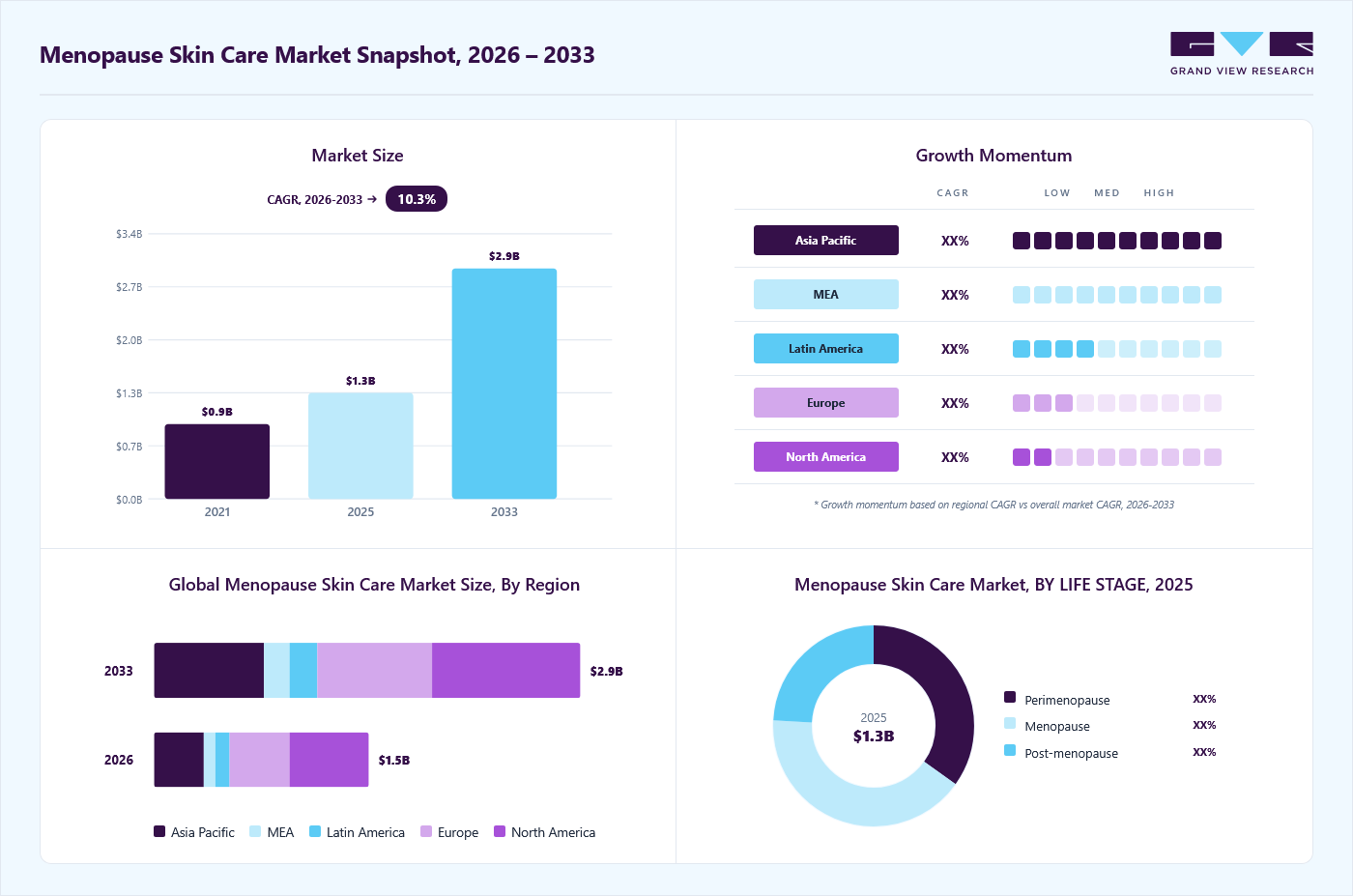 Source: Grand View Research, IR Documents, Primary Interviews, Paid DatabasesTo learn more about this report,
 Download Free Sample Report
 Key Market Trends & Insights
- By product: Face skin care segment held the largest market share of 62.8% in 2025.
- By life stage: Menopause segment held the largest market share of 41.0% in 2025.
- By price tier: Mid-tier segment held the largest market share of 44.3% in 2025.
- By distribution channel: Online/e-commerce segment held the largest market share of 27.8% in 2025.
Regional Highlights
- Largest regional market: North America (37.2% revenue share, 2025)
- By country: The U.S. held the largest market share in 2025
Market Size & Forecast
- Market size in 2025: USD 1.3 Billion
- Estimated market size in 2026: USD 1.5 Billion
- Projected market size by 2033: USD 2.9 Billion
- CAGR (2026-2033): 10.3%
Three ways to get this report
Buy it, customize it, or ask a question.Ask an Analyst
Analyst response in 1 business day
- AccessReport author, directly
- Reply timeWithin 1 working day
- No sales callDirect answer only
- FormatEmail reply
- CostFree, no cost
Get the Full Report
What the study covers
- FormatsPDF · Excel · Dashboard
- Timeline2026–2033 annual, 2025 base
- Coverage20+ countries, 5 regions
- Companies10+ key players profiled
Customize the Report
20% free customization
- IncludeCountries, segments, points
- TailorTo your product definition
- ExtendDeeper competitor detail
- OrA fully bespoke study
- Turnaround5–10 working days
Women are increasingly educating themselves about how menopause affects skin concerns such as dryness, loss of elasticity, sensitivity, and uneven tone, leading to a stronger demand for targeted skincare solutions. According to an article by Galderma, over 50% of women report noticing menopause-related skin changes, while many begin observing these changes in their 40s. At the same time, more than 30% of women indicate they would have preferred earlier education on menopause-related skin concerns, reflecting a growing need for awareness and proactive skincare adoption. This trend is encouraging consumers to seek products formulated with clinically supported ingredients that address multiple concerns caused by hormonal changes, supporting the expansion of the market.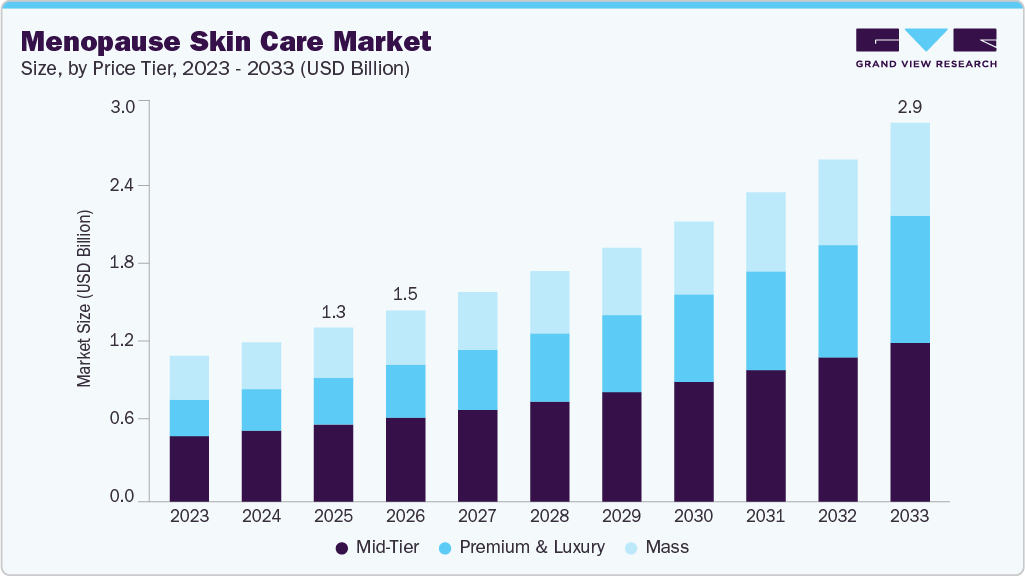 To learn more about this report, Download Free Sample Report
 Formulation innovation is also playing a critical role in shaping the menopause skin care market, as brands increasingly develop products tailored to the specific biological changes associated with menopause. Consumers are actively seeking dermatologist-backed, clinically tested, and sensitive-skin-friendly formulations that deliver hydration, barrier repair, and skin renewal without irritation. According to an article by Personal Care Insights, menopausal consumers in the U.S. are prioritizing products that support skin barrier function and collagen maintenance, reflecting a shift away from short-term cosmetic fixes toward long-term skin health solutions. This is particularly relevant as declining estrogen levels during menopause are associated with reduced collagen production and increased skin dryness, prompting demand for formulations that restore skin strength and elasticity.
In addition, product development is increasingly aligned with multi-benefit performance, as consumers prefer streamlined routines that address multiple concerns simultaneously. Skincare brands are responding by introducing formulations that combine hydrating agents, firming actives, and soothing ingredients within a single product, reducing the need for complex multi-step regimens. Industry insights also indicate that a significant proportion of menopausal consumers are seeking products specifically labeled or marketed for menopause-related skin concerns, highlighting a growing preference for targeted and condition-specific solutions. This trend is further supported by rising demand for fragrance-free, hypoallergenic, and clinically validated formulations, as skin sensitivity tends to increase during menopause. As a result, formulation strategies across the market are increasingly centered on efficacy, safety, and long-term skin resilience, driving continuous innovation across both premium and mass-market product segments.
The market is also gaining momentum through greater clinical research and inclusivity in skincare product development. Brands are increasingly conducting studies that include menopausal women to better understand specific skin concerns and develop targeted solutions. This has led to the introduction of new product lines and formulations designed specifically for menopause-related skin conditions, including creams, serums, and treatment products focused on improving skin firmness, hydration, and texture. In addition, ingredient transparency and science-backed claims are becoming key purchasing factors, as consumers seek reassurance about product safety and effectiveness.
Digital education and community-driven content are further accelerating demand within the market. Online platforms, dermatology experts, and health-focused content creators are helping normalize conversations around menopause and its impact on skin health. This increased visibility is encouraging women to adopt specialized skincare routines earlier and explore products tailored to their changing skin needs. As awareness continues to rise and brands expand targeted product offerings, the demand for menopause-specific skincare solutions is expected to grow steadily across both premium and mass-market segments.
Brand Market Share Insights
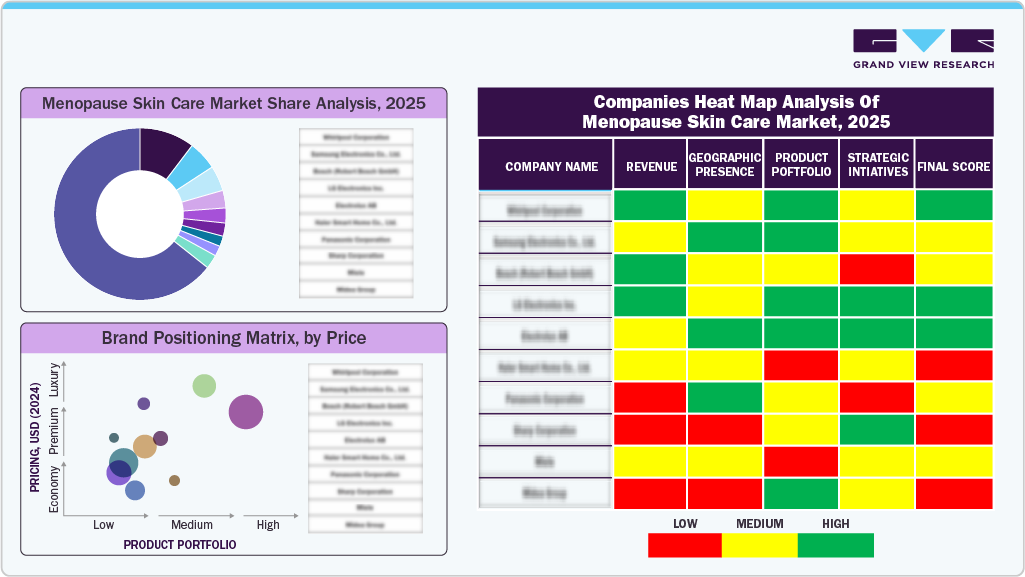
The menopause skin care market is characterized by strong competition among multinational beauty companies, dermatology-focused brands, and emerging science-led skincare labels. Leading players such as L'Oréal, Procter & Gamble, Estée Lauder Companies, Unilever, and Shiseido maintain market presence through broad skincare portfolios, global distribution, and continuous innovation focused on aging and sensitive skin concerns. At the same time, specialized brands are gaining traction by offering targeted, hormone-aware formulations supported by clinical research and ingredient transparency. The expansion of e-commerce and direct-to-consumer channels is further intensifying competition, enabling brands to reach wider audiences while leveraging digital platforms to educate consumers and promote menopause-specific skincare solutions.
 To learn more about this report, Download Free Sample Report
 Consumer Insights
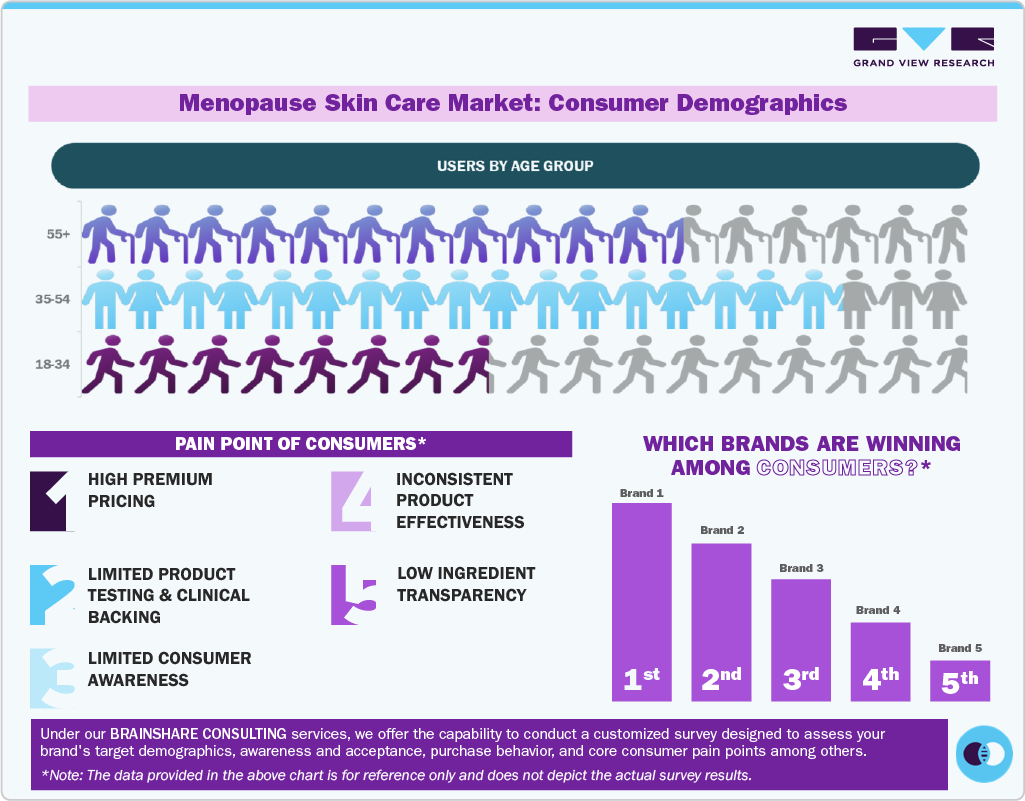
Consumer behavior in the menopause skin care market is increasingly shaped by awareness of structural skin changes caused by hormonal decline. During menopause, reduced estrogen levels directly affect skin density, hydration, and elasticity. According to a survey by Galderma, skin thickness can decrease by approximately 1.13% per year after menopause, contributing to visible signs such as sagging and increased fragility. In addition, reduced sebaceous gland activity leads to lower natural oil production, making the skin feel drier and less resilient. These changes are driving demand for products that focus on restoring skin strength, improving elasticity, and supporting long-term skin integrity rather than only surface-level cosmetic improvements.
 To learn more about this report, Download Free Sample Report
 Meanwhile, menopause-related changes are also influencing consumer preference toward high-efficacy, clinically supported skincare solutions. Research indicates that up to 70% of women experience increased skin dryness during menopause, making hydration-focused products a key area of demand. This has led to a growing adoption of formulations designed to replenish moisture, reinforce the skin barrier, and reduce sensitivity. Consumers are also seeking products that address uneven tone and dullness associated with slower skin regeneration during menopause. As awareness continues to rise, these physiological changes are encouraging earlier and more consistent use of targeted skincare products, strengthening demand for specialized, science-backed solutions within the market.
Product Insights
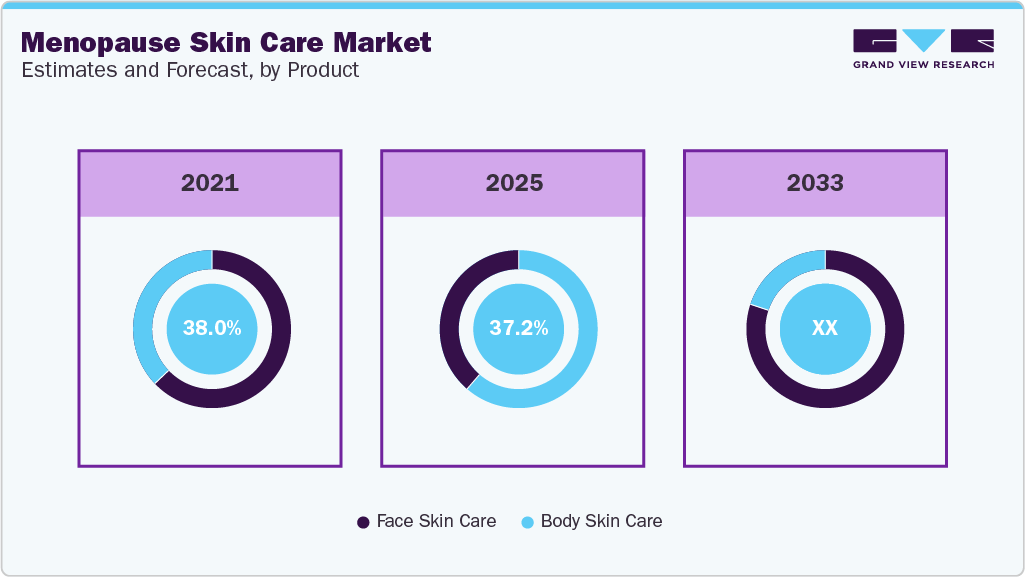
Face skin care products accounted for the largest market share of 62.8% in 2025, driven by the high occurance of menopause-related facial skin concerns such as dryness, loss of firmness, fine lines, and uneven skin tone. Facial skin is typically the first area where hormonal changes become visibly noticeable, prompting consumers to adopt targeted skincare routines focused on hydration, elasticity, and skin barrier repair. Products such as moisturizers, serums, and treatment creams are widely used in daily morning and nighttime regimens, supporting consistent demand. In addition, these formulations are often designed to deliver active ingredients in a controlled and gentle manner, making them suitable for sensitive and hormonally affected skin, while also supporting long-term skin health and visible improvement.
 To learn more about this report, Download Free Sample Report
 Body skin care segment is anticipated to grow at a CAGR of 9.7% from 2026 to 2033, driven by the increasing demand for anti-aging and skin-firming solutions for larger body areas. As menopause accelerates visible signs of skin aging, such as sagging, crepey texture, and loss of elasticity beyond the face, consumers are actively seeking body care products that offer tightening, smoothing, and toning benefits. This has led to rising adoption of firming creams, collagen-support formulations, and elasticity-enhancing lotions designed specifically for areas such as the arms, thighs, and abdomen. In addition, growing interest in appearance maintenance and age-related skin correction is encouraging consumers to invest in performance-driven body care products.
Life Stage Insights
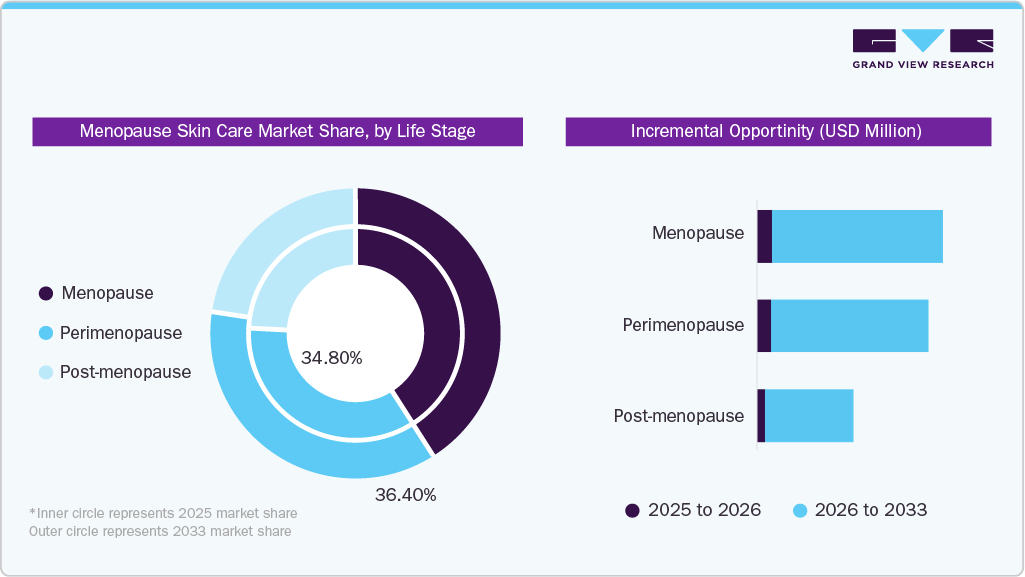
Menopause skin care segment accounted for a revenue share of 41.0% in 2025, driven by the high demand for products specifically formulated to address hormonal skin changes experienced during this stage. Consumers in menopause actively seek skincare solutions that provide a balanced combination of effectiveness and skin tolerability, as skin tends to become thinner, drier, and more sensitive. Products designed for this segment are widely used to manage concerns such as loss of elasticity, dryness, uneven tone, and increased sensitivity while minimizing irritation. In addition, menopause-focused skincare is commonly available in formats such as creams, serums, and lotions that can be easily incorporated into daily routines, often alongside complementary ingredients that support hydration, barrier repair, and long-term skin health.
 To learn more about this report, Download Free Sample Report
 The demand for skin care products during the perimenopause phase is set to grow at a CAGR of 10.9% from 2026 to 2033, driven by the increasing demand for routine transition products that help consumers adapt from general skincare to age-specific regimens. As skin behavior becomes less predictable during perimenopause, many consumers seek products that can be used consistently across changing skin conditions without requiring frequent product switching. This has led to rising demand for adaptable formulations that address multiple concerns, such as occasional breakouts, dryness, and early fine lines, within a single routine. In addition, brands are positioning perimenopause skincare as a bridge category, offering solutions that gradually introduce consumers to more targeted and treatment-oriented products, thereby supporting sustained product adoption and segment growth.
For instance, in October 2025, Skinbetter Science launched Mystro Revive Renewing Serum, designed to address skin changes linked to perimenopause and menopause. The formula focuses on concerns such as dryness, loss of firmness, and dullness, using a combination of plant-based ingredients and advanced skincare technology, supported by clinical testing.
Price Tier Insights
Mid-tire segment accounted for a revenue share of 44.3% in 2025, driven by strong consumer demand for affordable yet performance-oriented skincare solutions. Many consumers seek products that deliver visible benefits such as hydration, firmness, and skin smoothing without the higher price points associated with premium brands. Mid-tier products strike a balance between quality and cost, offering formulations that include effective active ingredients while remaining accessible for regular, long-term use. In addition, widespread availability across pharmacies, supermarkets, and online platforms supports higher adoption, as consumers prefer products that combine value, convenience, and consistent performance for managing menopause-related skin concerns.
Premium & luxury segment is expected to grow at a CAGR of 13.3% from 2026 to 2033, driven by increasing consumer preference for high-performance, science-backed formulations that address advanced skin concerns such as loss of firmness, dryness, and uneven tone. Consumers in this segment are willing to invest in products that offer visible and long-lasting results, often choosing formulations enriched with clinically tested actives and advanced delivery systems. In addition, brands are introducing rich, multi-functional creams and serums that combine hydration, skin renewal, and anti-aging benefits within a single routine, while premium positioning through sophisticated packaging and personalized skincare experiences further strengthens demand in this segment.
Distribution Channel Insights
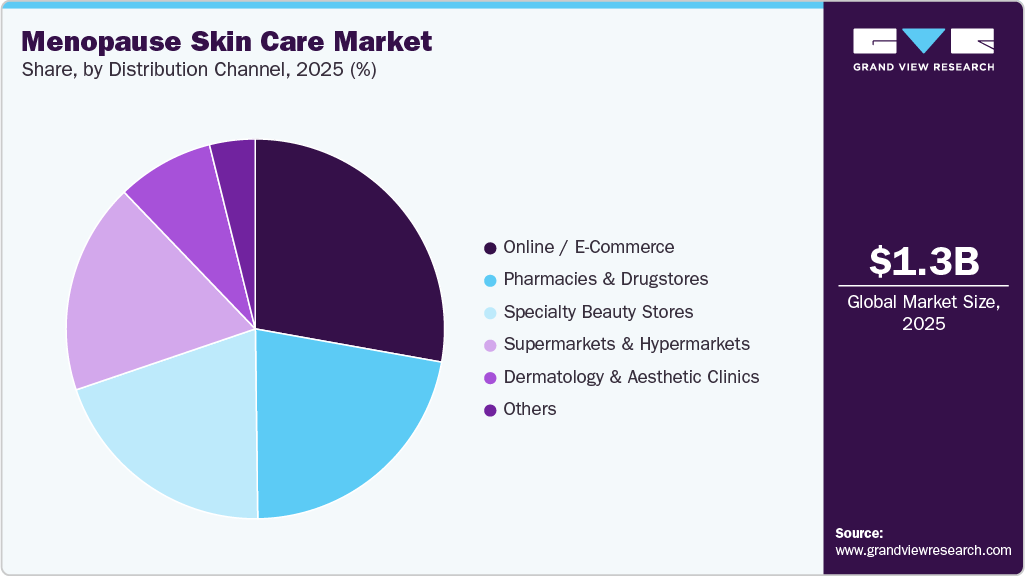
The sale of menopause skin care through online/e-commerce channels accounted for 27.8% in 2025. Many consumers prefer purchasing menopause-related skincare online due to the sensitive nature of the topic, allowing them to explore products discreetly while accessing a broader range of niche and dermatology-focused brands. E-commerce platforms offer detailed product information, ingredient breakdowns, and educational content that help consumers understand menopause-specific skin concerns and select appropriate solutions. In addition, the availability of subscription-based skincare services, personalized product recommendations, and direct-to-consumer brand websites is further encouraging repeat purchases, while digital health and skincare education content continues to support informed decision-making and sustained online channel growth.
 To learn more about this report, Download Free Sample Report
 The sale of menopause skin care through dermatology & aesthetic clinics is expected to grow at a CAGR of 12.7% from 2026 to 2033, driven by increasing consumer reliance on professional guidance and medically supervised skincare solutions. Many consumers experiencing complex menopause-related skin changes, such as severe dryness, sensitivity, and loss of elasticity, prefer consulting dermatologists for personalized treatment recommendations. Clinics offer access to clinically formulated products and treatment-based skincare regimens that are often perceived as more effective and reliable than over-the-counter options. In addition, aesthetic clinics frequently combine product sales with in-clinic procedures and consultations, encouraging consumers to adopt comprehensive skincare routines. The growing presence of specialized menopause-focused treatments and professional skincare programs within these settings is further supporting the expansion of this distribution channel.
Regional Insights
North America Menopause Skin Care Market Trends
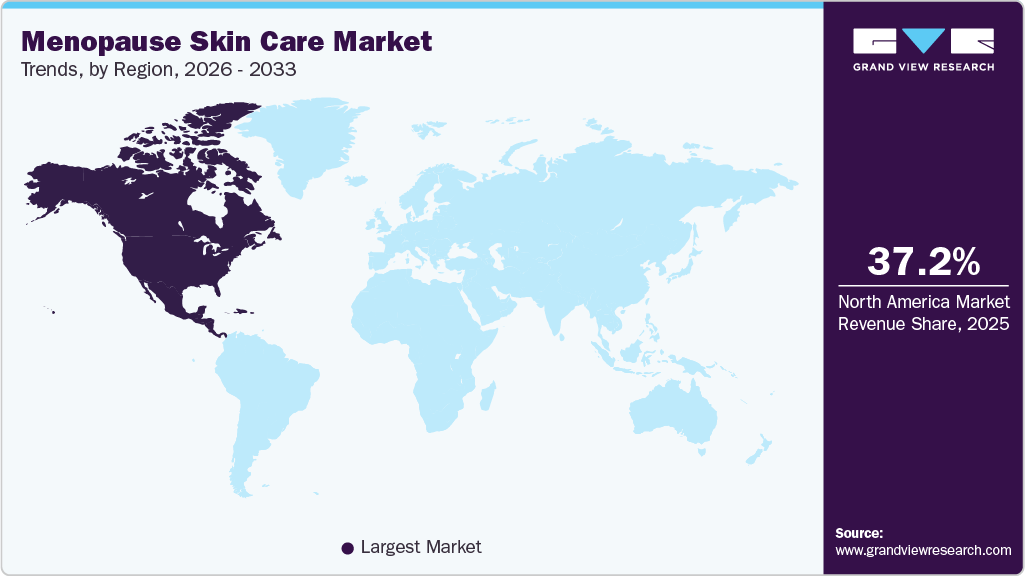
The North American menopause skin care market accounted for the largest share of 37.2% in 2025. The industry is driven by high consumer awareness of menopause-related skin changes and strong spending on specialized skincare solutions across the region. Consumers in the U.S. and Canada are increasingly adopting targeted skincare routines that address concerns such as dryness, loss of firmness, sensitivity, and uneven skin tone associated with hormonal changes. The market is also supported by a well-developed beauty and personal care industry, with widespread availability of menopause-focused products across pharmacies, specialty retailers, and online platforms. In addition, the presence of advanced skincare technologies, strong brand competition, and continuous product innovation is enabling companies to introduce clinically supported formulations tailored to menopausal skin, further strengthening market growth across North America.
 To learn more about this report, Download Free Sample Report
 U.S. Menopause Skin Care Market Trends
The menopause skin care industry in the U.S. accounted for a revenue share of 82.5% on the North America market in 2025. The market is driven by high consumer awareness and proactive adoption of skincare solutions tailored to hormonal skin changes. Consumers in the U.S. are increasingly incorporating targeted products into daily routines to manage concerns such as dryness, loss of elasticity, sensitivity, and uneven skin tone associated with menopause. The market is also supported by strong demand for clinically validated and dermatologist-recommended formulations, with many consumers prioritizing product efficacy and safety. In addition, the presence of a highly developed beauty and personal care ecosystem, including specialty retailers, dermatology clinics, and e-commerce platforms, enables wide product availability and continuous innovation, further strengthening the growth of the menopause skin care market across the U.S.
Canada menopause skin care industry is expected to grow at a CAGR of 11.5% from 2026 to 2033. The market is driven by increasing consumer focus on skin hydration, sensitivity management, and long-term skin health during menopause. Consumers in Canada are actively adopting skincare products that address concerns such as dryness, loss of firmness, and irritation caused by hormonal changes. The market is also supported by a strong preference for gentle, fragrance-free, and dermatologist-recommended formulations that are suitable for sensitive and aging skin.
Europe Menopause Skin Care Market Trends
Europe menopause skin care market accounted for a revenue share of 28.0% in 2025, driven by the region’s aging female population and increasing focus on age-specific skincare solutions. A significant proportion of women in Europe are entering or experiencing menopause, which is creating sustained demand for products tailored to hormonal skin changes such as thinning skin, dryness, and reduced elasticity. In addition, consumers across the region show a strong preference for premium and high-quality skincare products, often prioritizing formulation quality, product origin, and brand heritage. The market growth is also supported by the increasing influence of wellness-oriented lifestyles, where skincare is viewed as part of overall health and self-care during menopause. Furthermore, the expansion of specialty beauty retailers and online platforms across Europe is improving product accessibility, enabling consumers to explore a wider range of menopause-specific skincare offerings and supporting continued market growth.
The menopause skin care industry in the UK accounted for a revenue share of around 24.6% on the Europe market in 2025, driven by rising awareness of menopause-related skin changes and increasing consumer focus on targeted skincare routines. Consumers in the UK are actively seeking products that address concerns such as dryness, sensitivity, loss of firmness, and dullness associated with hormonal changes. The market is also supported by strong engagement with skincare education through digital platforms, where consumers research product benefits and ingredient suitability before purchasing. In addition, the growing presence of pharmacy-led skincare brands, specialty beauty retailers, and online platforms is improving access to menopause-specific products, while continuous product innovation is encouraging consumers to adopt more structured and treatment-oriented skincare routines.
Germany menopause skin care industry is expected to grow at a CAGR of 13.4% from 2026 to 2033, driven by strong consumer preference for clinically tested and pharmacy-grade skincare products that address hormonal skin changes. German consumers place high importance on product safety, efficacy, and dermatological validation, leading to increased adoption of formulations designed to manage concerns such as dryness, sensitivity, and loss of skin firmness during menopause. The market is also supported by the country’s well-established pharmacy retail network, where consumers frequently purchase scientifically formulated skincare products.
Asia Pacific Menopause Skin Care Market Trends
The Asia Pacific menopause skin care industry is expected to grow at a CAGR of 12.2% from 2026 to 2033. The region’s growth is driven by the rapid expansion of the region’s aging female population and increasing life expectancy, which is creating a larger consumer base experiencing menopause-related skin concerns. In addition, rising disposable incomes across emerging economies such as China, India, and Southeast Asian countries are enabling consumers to spend more on specialized skincare products rather than basic personal care. The market is also supported by the strong influence of beauty-tech innovation, including skin analysis tools, AI-based recommendations, and personalized skincare solutions that enable consumers select products tailored to their changing skin needs.
The menopause skin care industry in China accounted for a revenue share of around 25.7% on the Asia Pacific market in 2025, driven by increasing consumer focus on anti-aging and skin maintenance routines as the population ages. Chinese consumers are placing strong emphasis on preserving skin firmness, hydration, and radiance, leading to higher adoption of targeted skincare products designed for hormonally changing skin. The market is also supported by the rapid expansion of domestic beauty brands that offer competitively priced, science-backed formulations tailored to local skin concerns. In addition, the strong influence of digital beauty platforms, livestream commerce, and ingredient-focused education is encouraging consumers to adopt structured skincare routines and invest in specialized menopause-related skincare products, further strengthening market growth across China.
India menopause skin care industry is expected to grow at a CAGR of 14.2% from 2026 to 2033, driven by the increasing shift toward self-care and wellness-focused lifestyles among middle-aged consumers. Menopause is increasingly being viewed as a phase requiring dedicated health and beauty management, encouraging women to invest in specialized skincare products rather than relying on general-purpose solutions. The market is also supported by the expansion of pharmacy-led and clinic-recommended skincare, where consumers seek guidance for managing hormonally driven skin concerns. In addition, rising participation of women in the workforce and higher financial independence are enabling greater spending on premium and treatment-oriented skincare products.
Central & South America Menopause Skin Care Market Trends
The Central & South America menopause skin care industry is expected to grow at a CAGR of 12.0% from 2026 to 2033. The market is driven by the rising focus on skin hydration and repair solutions among menopausal consumers in the region. As hormonal changes lead to increased dryness and reduced skin elasticity, consumers are actively seeking products that restore moisture balance and improve skin comfort in warm and humid climates. The market growth is also supported by the increasing popularity of affordable yet effective skincare products, with consumers favoring formulations that deliver visible results without premium pricing.
Middle East & Africa Menopause Skin Care Market Trends
The Middle East & Africa menopause skin care industry is expected to grow at a CAGR of 9.1% from 2026 to 2033. The increasing influence of medical tourism and aesthetic treatment hubs across countries such as the UAE and South Africa drives the Middle East & Africa menopause skin care market. Many consumers visiting dermatology clinics and aesthetic centers are introduced to post-treatment skincare regimens, including products designed to manage menopause-related skin concerns such as sensitivity, dryness, and uneven texture. This is encouraging the adoption of clinically positioned skincare products for ongoing use at home. In addition, the growing awareness of skin longevity and preventive aging care is prompting consumers to invest in early and consistent skincare routines, while expanding access to international brands through premium retail environments and digital platforms continues to support the growth of menopause-focused skincare solutions across the region.
Key Menopause Skin Care Companies:
The following key companies have been profiled for this study on the menopause skin care market
- L'Oréal S.A.
- Womaness
- Estée Lauder Companies Inc.
- No7 Menopause Skincare
- Shiseido Company, Limited
- Unilever PLC
- Johnson & Johnson Services, Inc.
- Pause Well-Aging
- Stripes Beauty
- State of Menopause
Recent Developments
-
In March 2026, Sirona launched a dedicated menopause care range in India, expanding its women’s wellness portfolio into a largely underserved segment. The collection includes products such as a cooling mist for hot flashes, a phytoestrogen-based cream for skin hydration and elasticity, an intimate care cream for dryness, and a home-use test kit to help assess menopause. With this move, the brand aims to provide accessible, science-backed solutions for women navigating menopause, while tapping into a growing but underdeveloped category with a large potential consumer base.
-
In August 2025, Marcelle launched the Revival+ Vitality menopause skincare collection, designed specifically to address skin changes caused by hormonal shifts such as dryness, loss of firmness, and reduced elasticity. Developed with input from menopausal women and formulated using dermatologist-recommended ingredients, the range includes targeted products like a day cream and an eye and lip treatment. Backed by clinical testing, the collection reflects the brand’s focus on offering science-based, sensitive-skin-friendly solutions while bringing greater attention to the skincare needs of women during menopause.
Menopause Skin Care Market Report Scope
Report Attribute
Details
Market size in 2025
USD 1.3 billion
Estimated Market size in 2026
USD 1.5 billion
Projected Market size by 2033
USD 2.9 billion
Growth rate
CAGR of 10.3% from 2026 to 2033
Base year for estimation
2025
Historical data
2021 - 2024
Forecast period
2026 - 2033
Quantitative units
Revenue in USD million/billion and CAGR from 2026 to 2033
Report coverage
Revenue forecast, company ranking, competitive landscape, growth factors, and trends
Segments covered
Product; life stage; price tier, distribution channel, region
Regional scope
North America; Europe; Asia Pacific; Central & South America; Middle East & Africa
Country scope
U.S.; Canada; Mexico; Germany; UK; France; Italy; Spain; China; India; Japan; Australia & New Zealand; South Korea; Brazil; South Africa
Key companies profiled
L'Oréal S.A.; Womaness; Estée Lauder Companies Inc.; No7 Menopause Skincare; Shiseido Company, Limited; Unilever PLC; Johnson & Johnson Services, Inc.; Pause Well-Aging; Stripes Beauty; State Of Menopause
Customization scope
Free report customization (equivalent up to 8 analysts working days) with purchase. Addition or alteration to country, regional & segment scope.
Pricing and purchase options
Avail customized purchase options to meet your exact research needs. Explore purchase options
Global Menopause Skin Care Market Report Segmentation
This report forecasts revenue growth at global, regional & country levels and provides an analysis of the latest trends and opportunities in each of the sub-segments from 2021 to 2033. For this study, Grand View Research has segmented the menopause skin care market based on product, life stage, price tier, distribution channel, and region.
-
Product Outlook (Revenue, USD Million, 2021 - 2033)
-
Face Skin Care
-
Lotions, Face Creams & Moisturizers
-
Cleansers & Face Wash
-
Facial Serums
-
Sunscreen / Sun Care (Face)
-
Others (Face)
-
-
Body Skin Care
-
Lotions, Creams & Moisturizers
-
Body Sunscreen / Sun Care
-
Body Oil & Serums
-
Others (Body)
-
-
-
Life stage Outlook (Revenue, USD Million, 2021 - 2033)
-
Perimenopause
-
Menopause
-
Post-menopause
-
-
Price Tier Outlook (Revenue, USD Million, 2021 - 2033)
-
Mass
-
Mid-Tier
-
Premium & Luxury
-
-
Distribution Channel Outlook (Revenue, USD Million, 2021 - 2033)
-
Supermarkets & Hypermarkets
-
Pharmacies & Drugstores
-
Specialty Beauty Stores
-
Dermatology & Aesthetic Clinics
-
Online / E-Commerce
-
Others
-
-
Regional Outlook (Revenue, USD Million, 2021 - 2033)
-
North America
-
U.S.
-
Canada
-
Mexico
-
-
Europe
-
Germany
-
UK
-
France
-
Italy
-
Spain
-
-
Asia Pacific
-
China
-
India
-
Japan
-
Australia & New Zealand
-
South Korea
-
-
Central & South America
-
Brazil
-
-
Middle East & Africa
-
South Africa
-
-
Frequently Asked Questions About This Report
The face skin care led with a 62.8% revenue share in 2025.
Menopause held the largest revenue share 41.0% in 2025.
Mid-tier held the largest share (over 44.3%%) in 2025.
North America dominated with a 37.2% revenue share in 2025.
The global menopause skin care market size was valued at USD 1.3 billion in 2025 and is expected to reach USD 1.5 billion in 2026.
The global menopause skin care market is expected to witness a compound annual growth rate of 10.3% from 2026 to 2033 to reach USD 2.9 billion by 2033.
Face skin care products accounted for the largest market share of 62.8% in 2025, driven by a higher consumer focus on visible signs of aging, such as dryness, wrinkles, and loss of firmness during menopause. Frequent daily use of facial creams, serums, and treatments, along with targeted formulations, drives consistent consumption and repeat purchases.
Some key players operating in the menopause skin care market L'Oréal S.A.; Womaness; Estée Lauder Companies Inc.; No7 Menopause Skincare; Shiseido Company, Limited; Unilever PLC; Johnson & Johnson Services, Inc.; Pause Well-Aging; Stripes Beauty; State Of Menopause
The menopause skin care market is driven by increasing awareness of hormone-related skin changes such as dryness, sensitivity, and loss of elasticity, prompting demand for targeted, age-specific formulations. Rising consumer spending on premium skincare, expanding product lines focused on menopausal needs, and greater visibility through digital health platforms.
About the Author(s)
Beauty & Personal Care Research Team
Consumer Goods · Beauty & Personal CareThis report was authored by the beauty & personal care research team at Grand View Research - comprising two research analysts, one senior research analyst, and one industry expert - with specialized expertise in the beauty & personal care segment of the consumer goods industry. All findings are based on proprietary consumer goods databases, executive interviews, and regulatory analysis, subject to internal peer review prior to publication.
Last Updated:
Speak to Analyst

Customize this report to your needs - add regions, segments, or data points, with 20% free customization.
Or view our licence options:


ISO 9001:2015 & 27001:2022 Certified
We are GDPR and CCPA compliant! Your transaction & personal information is safe and secure. For more details, please read our privacy policy.


