
- Home
- »
- Clothing, Footwear & Accessories
- »
-
Men’s Underwear Market Size & Share Report, 2026 - 2033GVR Report cover

Men's Underwear Market (2026 - 2033)
Size, Share & Trends Analysis Report By Type (Briefs, Boxer Brief, Trunks, Boxers), By Fabric (Cotton, Polyester, Modal, Nylon), By Price Range, By Region (North America, Europe, Asia Pacific, MEA), And Segment Forecasts
Market Size, 2025
$42.9BMarket Estimate, 2026
$45.2BMarket Forecast, 2033
$68.9BCAGR, 2026–2033
6.2%Men's Underwear Market Summary
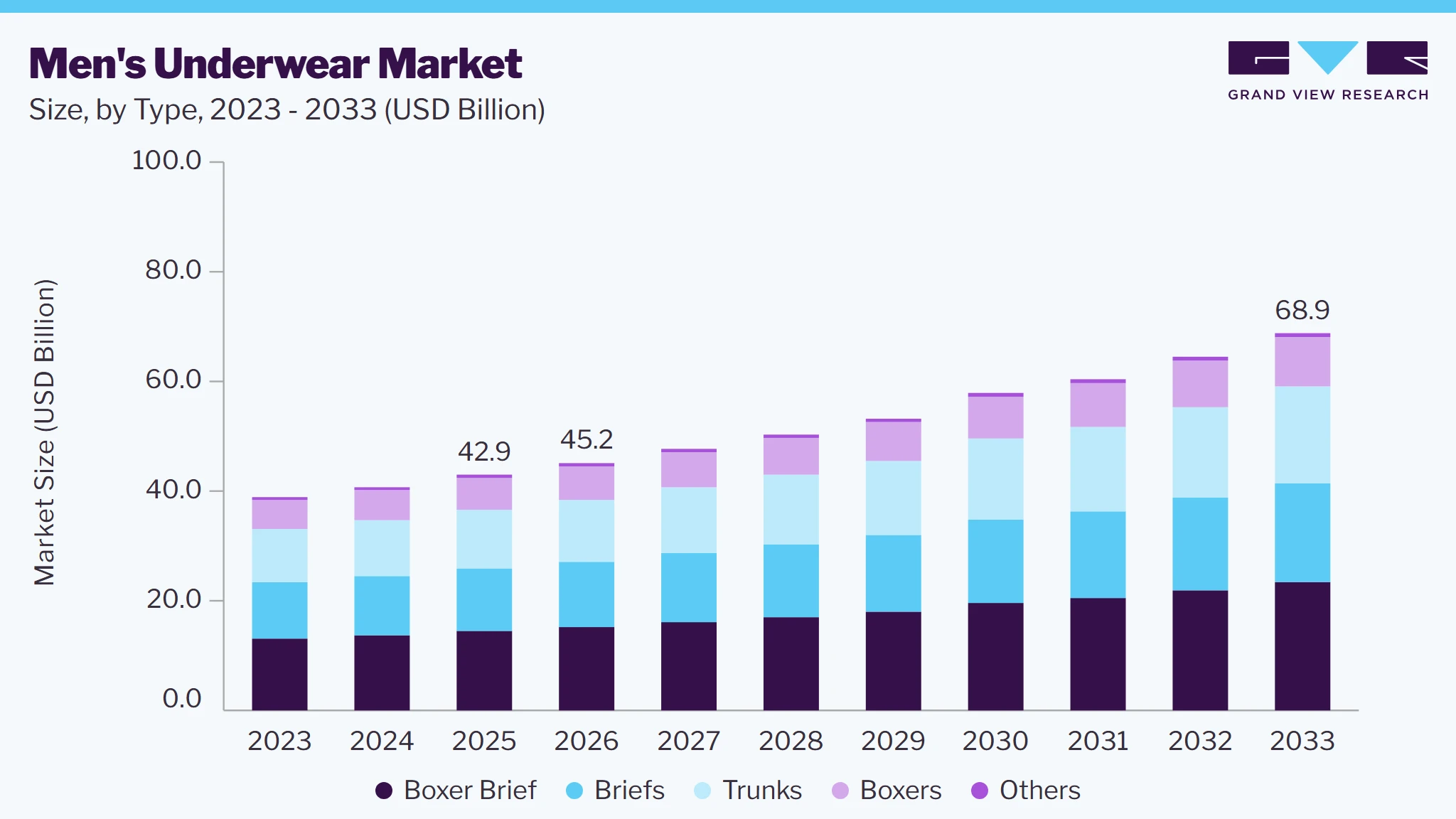
The global men’s underwear market size was valued at USD 42.9 billion in 2025 and is projected to grow from USD 45.2 billion in 2026 to USD 68.9 billion by 2033, growing at a CAGR of 6.2% from 2026 to 2033. Asia Pacific dominated the market, accounting for the largest global share of 42.3% in 2025. Increasing awareness about health, best fit, and personal hygiene coupled with the growing millennial population is expected to drive the growth.
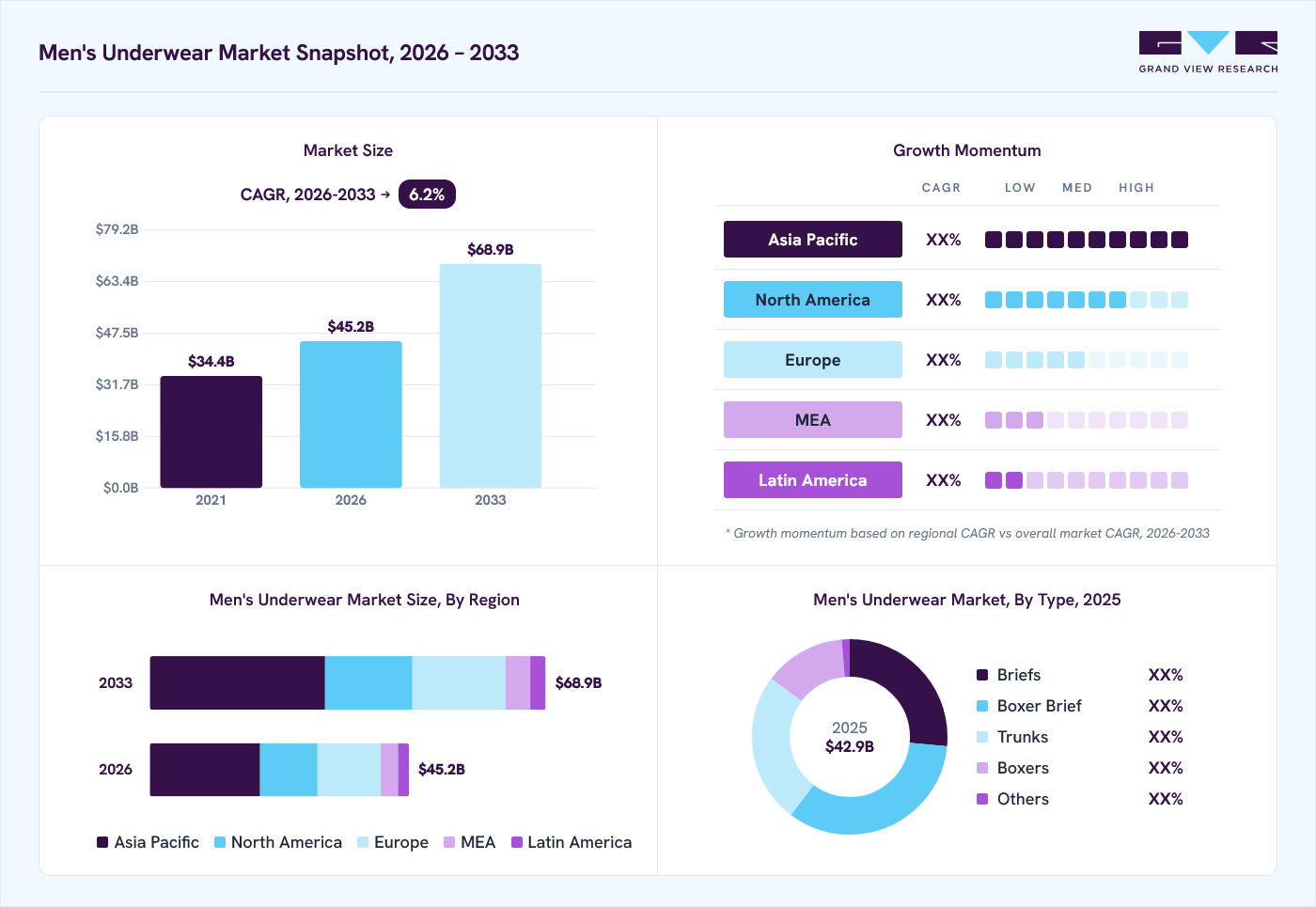 Source: Grand View Research, IR Documents, Primary Interviews, Paid DatabasesTo learn more about this report,
 Download Free Sample Report
Key Market Trends & Insights
- By type: Boxer Brief segment held the largest revenue share of 33.7% in 2025.
- By fabric: Cotton segment held the largest revenue share of 68.4% in 2025.
- By price range: Price below USD 10 segment held the largest revenue share of 53.4% in 2025.
Regional Highlights
- Largest regional market: Asia Pacific (42.3% revenue share, 2025)
- By country: China held the largest share of Asia Pacific in 2025.
Market Size & Forecast
- Market size in 2025: USD 42.9 billion
- Estimated market size in 2026: USD 45.2 billion
- Projected market size by 2033: USD 68.9 billion
- CAGR (2026-2033): 6.2%
Three ways to get this report
Buy it, customize it, or ask a question.Ask an Analyst
Analyst response in 1 business day
- AccessReport author, directly
- Reply timeWithin 1 working day
- No sales callDirect answer only
- FormatEmail reply
- CostFree, no cost
Get the Full Report
What the study covers
- FormatsPDF · Excel · Dashboard
- Timeline2026–2033 annual, 2025 base
- Coverage20+ countries, 5 regions
- Companies10+ key players profiled
Customize the Report
20% free customization
- IncludeCountries, segments, points
- TailorTo your product definition
- ExtendDeeper competitor detail
- OrA fully bespoke study
- Turnaround5–10 working days
Improving fashion trends, increasing disposable income, and changing consumer lifestyles along with preferences are the factors expected to boost market growth. Increasing concern regarding the fabric used for manufacturing underwear is one of the major factors driving the market. The availability of products in a variety of fabrics such as cotton, polyester, nylon, rayon, silk, and cotton blends is driving the product demand. Manufacturers focus on intimate product designs and patterns such as thongs, C-string, tanga, and jockstraps among others to cater to a larger consumer base.Global men’s underwear market has been negatively impacted, due to the unforeseen COVID-19. In the U.S., overall apparel sales witnessed a decline of around 19.0% from 2019 to 2020, with the overall decline amounting to around USD 42.0 billion in 2020, according to an article published in March 2021 in The Under fashion Club, Inc., a non-profit organization supporting the intimate apparel industry.
 To learn more about this report, Download Free Sample Report
However, the article also revealed that the sales of men’s undergarments (including underwear bottoms and undershirts) increased by 2.0% in 2020. In countries across the Asia Pacific, there was a decline in men’s underwear sales in 2020. An article by Your Life Choices, Australia’s most established and trusted digital publication, in October 2022 revealed that the sales of men’s underwear in Australia dropped during 2020.
Similarly, in India, Jockey International Inc. witnessed a decline of around 4.0% in its revenue from underwear sales from 2019 to 2020. However, the market is expected to gradually return to pre-pandemic levels as people resume normal life, and the demand for men’s underwear is expected to grow. This is anticipated to impact positively during the forecast period.
Millennials are driving the demand in the men’s underwear market as they are more receptive to new and different products than other generations. The high demand for new and innovative products in terms of color, fabric, print, and style among millennials is creating opportunities for manufacturers. The introduction of products with new color shades by brands such as Jockey, Garçon Model, and N2N among others is anticipated to encourage consumers to choose products other than the conventional hues. The rise in modern retailing stores such as supermarkets, specialty stores, pharmacies, and discounters is projected to propel product visibility and reach.
Companies are focusing on R&D to make products suitable for all shapes and sizes. Innovation in advance tailoring along with new fabric types such as modal, viscose, or merino wool, which help reduce moisture and regulate temperature, is driving the market competition. For Instance, Saxx offers 3D hammock-shaped pouches that prevent friction caused by skin-against-skin with the help of mesh panels and unexposed stitching to avoid chafing. They have also created a 3D shaping around thighs, glutes, hamstring, and quads by using nine panels of fabric for better fit, feel, and functionality.
Market Dynamics
The men’s underwear market is witnessing steady growth driven by evolving consumer preferences toward comfort, functionality, premium fabrics, and body-conscious apparel. Modern consumers increasingly view underwear as an essential component of everyday wear rather than a basic commodity, leading to growing demand for products offering superior fit, moisture management, breathability, and durability. Product innovations in fabric technology, rising awareness regarding personal hygiene, increasing disposable incomes, and the expansion of e-commerce platforms are further supporting market growth. In addition, the growing influence of athleisure and active lifestyles is encouraging consumers to seek performance-oriented underwear solutions that combine comfort with style.
The increasing consumer preference for premium, comfortable, and performance-driven innerwear is a major driver of the men’s underwear market. Modern consumers are placing greater emphasis on fabric quality, ergonomic design, moisture-wicking properties, stretchability, and odor-control features when purchasing underwear. Rising health and hygiene awareness, coupled with increasing participation in fitness activities and active lifestyles, has accelerated demand for products that provide enhanced comfort throughout the day.
Furthermore, the growing influence of fashion-conscious younger consumers is encouraging brands to introduce innovative designs, premium materials such as modal and bamboo blends, and specialized product categories including athletic underwear and seamless constructions. As disposable incomes continue to rise across both developed and emerging economies, consumers are increasingly willing to spend on premium innerwear products, supporting higher-value sales and market expansion.
Intense competition from private-label brands, local manufacturers, and low-cost imports remains a significant challenge for the men’s underwear market. The presence of numerous regional and unorganized players often results in aggressive pricing strategies, making it difficult for premium brands to maintain margins while preserving market share. In price-sensitive markets, consumers frequently prioritize affordability over brand loyalty, limiting premium product penetration.
Additionally, the widespread availability of counterfeit and imitation products poses a challenge to established manufacturers. These products often mimic branded offerings at significantly lower prices, creating pricing pressure and potentially damaging brand reputation. Fluctuations in raw material costs, particularly cotton and synthetic fibers, further increase production expenses and create profitability challenges for manufacturers operating in highly competitive environments.
Opportunity - Expansion of Sustainable and Direct-to-Consumer Offerings
The growing consumer focus on sustainability and ethical sourcing presents significant opportunities for the men’s underwear market. Consumers are increasingly seeking environmentally responsible products made from organic cotton, recycled polyester, bamboo fibers, and other sustainable materials. This trend is encouraging manufacturers to adopt transparent supply chains, eco-friendly production processes, and sustainable packaging solutions to differentiate their offerings.
Simultaneously, the rapid growth of direct-to-consumer (DTC) business models and digital retail platforms is enabling brands to engage directly with consumers, gather purchasing insights, and offer personalized product recommendations. Subscription-based underwear services, customization options, and digital-first marketing strategies are gaining traction, particularly among younger consumers. As online retail penetration continues to expand globally, brands that effectively combine sustainability, innovation, and personalized customer experiences are expected to capture significant growth opportunities in the coming years.
Analyst Perspective
The Men’s Underwear market is evolving from a basic apparel category into a comfort- and performance-driven segment, with consumers increasingly prioritizing fit, fabric innovation, and functionality over brand familiarity alone. Premium and mid-premium products featuring moisture-wicking, anti-odor, and stretch-performance fabrics are gaining share, particularly among younger consumers and working professionals. Boxer briefs continue to outperform traditional styles due to their versatility and comfort. E-commerce and D2C channels are accelerating category growth by enabling subscription models, personalized sizing, and broader product discovery. Additionally, demand for sustainable materials such as organic cotton and modal is rising, prompting manufacturers to differentiate through fabric technology and value-added features rather than price competition.
Type Insights
Based on type, the Boxer Brief segment led the market with the largest revenue share of 33.7% in 2025 and is expected to grow at the fastest CAGR over the forecast period. Boxer briefs dominate the men's underwear market due to their ability to combine the support of briefs with the comfort and coverage of boxers, making them suitable for a wide range of daily activities. Consumers increasingly prefer boxer briefs because they offer enhanced fit, reduced chafing, improved mobility, and compatibility with both casual and athletic apparel. Growing awareness regarding comfort, hygiene, and performance-oriented innerwear has further accelerated demand for boxer briefs across different age groups. Additionally, manufacturers continue to introduce innovative designs featuring moisture-wicking fabrics, ergonomic fits, and seamless construction, which have strengthened consumer preference for this category. The rising influence of premium innerwear brands and increasing demand for multifunctional underwear are expected to support the segment’s continued market leadership and growth.
Trunks are estimated to register the fastest CAGR of 6.6% from 2026 to 2033. Trunks are gaining popularity among millennials and Generation X as they are more versatile and suitable for everyday wear including dressing up and even sportswear. Trunks are lean and shorter than boxer briefs which allow the legs and thighs to look muscular and slimmer. This factor is driving the popularity of these products among the younger generation. Trunks are the best fit for sports, water adventures, as well as everyday wear, which is projected to drive the product demand.
Price Range Insights
Based on price range, the price < USD 10 segment led the market with the largest revenue share of 53.4% in 2025, due to its broad affordability and high purchase frequency among mass-market consumers. Value-priced underwear is widely available through supermarkets, hypermarkets, discount retailers, convenience stores, and online marketplaces, making it the preferred choice across both developed and emerging economies. The availability of multi-pack offerings, promotional discounts, and private-label brands further enhances consumer value while encouraging repeat purchases. Additionally, strong demand from price-sensitive consumers, coupled with the expansion of organized retail and e-commerce platforms, continues to support the segment's leading market position.
Fabric Insights
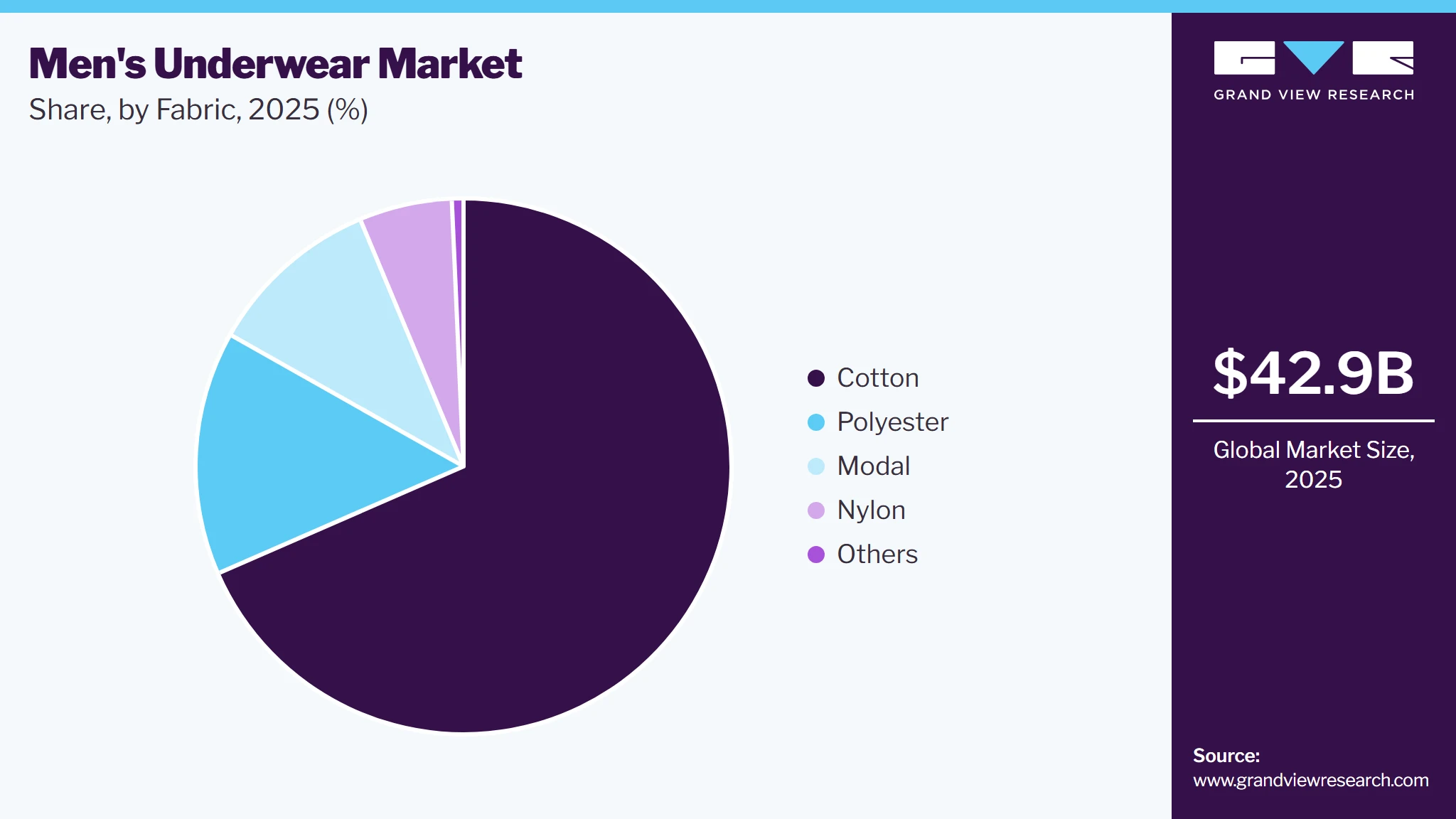
Based on fabric, the cotton segment led the market with the largest revenue share of 68.4% in 2025, owing to its superior comfort, breathability, softness, and skin-friendly properties. The fabric is highly preferred for everyday wear because it effectively absorbs moisture, provides adequate ventilation, and minimizes the risk of skin irritation compared to many synthetic alternatives. Increasing consumer preference for comfortable and durable innerwear, particularly in regions with warm and humid climates, continues to support demand for cotton-based products. Furthermore, the availability of cotton underwear across all price ranges, coupled with growing interest in natural and sustainable textile materials, has reinforced its strong market position. Continuous innovations such as combed cotton, organic cotton, and cotton-blend fabrics are also enhancing product performance while maintaining the comfort characteristics valued by consumers.
 To learn more about this report, Download Free Sample Report
Modal fabric is anticipated to register the fastest CAGR of 6.6% during the forecasted period. It is a type of rayon and second-generation regenerated cellulosic fiber which is around 50.0% more absorbent than cotton. It is the softest fabric in the segment. Shrink resistance, high wet strength, and absorbent properties of the fabric make it more durable during multiple washes and even tumble drying. Modal fabric can be easily dyed in vivid colors, making it more versatile. The softness, lightweight, and top-notch ventilation offered by the product provide a luxury feel, influencing the purchasing decision of consumers.
Regional Insights
Asia Pacific dominated the Men’s Underwear market with the largest revenue share of 42.3% in 2025. Asia Pacific accounted for the largest share of the men’s underwear market owing to its large population base, rising disposable incomes, rapid urbanization, and growing consumer spending on apparel and personal care products. The increasing influence of fashion trends, expanding middle-class population, and growing awareness regarding comfort, hygiene, and premium innerwear have significantly boosted demand across the region. Additionally, the presence of major textile manufacturing hubs, widespread retail networks, and the rapid growth of e-commerce platforms have improved product accessibility. Rising demand for branded and performance-oriented underwear among younger consumers continues to support market growth across Asia Pacific.
 To learn more about this report, Download Free Sample Report
China Men’s Underwear Market Trends
The Men’s Underwear market in the China held the largest share of about 32.8% in the Asia Pacific region in 2025. China's leading position in the Asia Pacific men’s underwear market is driven by its large consumer base, rising disposable income levels, and increasing preference for branded apparel products. Rapid urbanization and growing fashion consciousness among younger consumers have encouraged greater spending on premium and stylish innerwear. The country's well-established textile manufacturing industry and extensive e-commerce ecosystem have further strengthened product availability and affordability. In addition, growing awareness regarding personal hygiene, comfort, and fabric quality has increased demand for high-performance and premium underwear products, supporting continued market growth throughout the forecast period.
Europe and North America markets are majorly driven by the presence of prominent players and high demand for different fabrics, designs, and patterns. Companies are focusing more on innovation and the quality of the designs and fabrics. High preference for premium brands as well as limited editions in North America and Europe has contributed to the significant growth of the global market.
Key Companies & Market Share Insights
Companies focus on product innovations to meet the rising product demand and to set trends. Strategic initiatives such as mergers and acquisitions help key players to gain a foothold in developing economies.
-
In September 2022, Jockey International Inc.’s official licensee, Page Industries Ltd expanded its retail flagship store in New Delhi, India. The two-storied store is spread across 2,500 square ft. with designated areas for men, women, and kids
-
In August 2022, Tommy Hilfiger expanded its retail footprint by opening a new store in Bonn, Germany. The historical building is designed to provide the best in-store experience for its customers and features underwear and other accessories for men
-
In August 2022, Calvin Klein revealed the ‘Autumn 2022’ campaign featuring the latest underwear and jeans collections. The collection is designed for everyday wear with a modern style to offer wireless comfort with a blend of recycled materials
-
In April 2022, Hanes brand, Inc. launched the new ‘X-Temp Total Support Pouch’ men’s underwear with cooling fabric and breathable mesh panels with quick-drying and moisture-wicking performance
Some of the key companies in the global Men’s Underwear Market include:
-
Phillips-Van Heusen Corporation
-
Hanesbrands Inc.
-
Jockey International Inc.
-
Ralph Lauren Corporation
-
Levi Strauss & Co.
-
American Eagle Outfitters Inc.
-
Naked Brand Group Inc.
-
Perry Ellis International Inc.
-
HUGO BOSS
-
Berkshire Hathaway Inc. (Fruit of the Loom)
Competitive Benchmarking
Category
Operating Strategies
Competitive Edge
Weakness
Established Players (Hanesbrands Inc.; Jockey International Inc.; Phillips-Van Heusen Corporation; Ralph Lauren Corporation; HUGO BOSS; Berkshire Hathaway Inc. (Fruit of the Loom))
- Expand product portfolios across briefs, boxers, boxer briefs, trunks, performance underwear, and premium innerwear categories while strengthening omnichannel retail presence.
- Invest in fabric innovation, comfort technologies, moisture-wicking materials, sustainability initiatives, and premium brand positioning to enhance consumer loyalty and drive repeat purchases.
- Strong brand recognition, extensive retail and distribution networks, and long-standing consumer trust in the innerwear category.
- Significant manufacturing scale, sourcing capabilities, and marketing resources enable broad product availability across mass-market and premium segments.
- High exposure to raw material price fluctuations, labor costs, and intense competition from emerging direct-to-consumer brands.
- Slower adaptation to rapidly changing fashion trends and evolving consumer preferences compared to digitally native competitors.
Emerging & Fashion-Focused Players (American Eagle Outfitters Inc.; Levi Strauss & Co.; Perry Ellis International Inc.; Naked Brand Group Inc.)
- Focus on lifestyle-oriented and fashion-driven underwear collections targeting younger consumers through trend-based designs, premium fabrics, and direct-to-consumer channels.
- Leverage e-commerce, influencer marketing, social media engagement, and subscription-based or online-exclusive product offerings to strengthen customer acquisition and retention.
- Greater agility in responding to changing fashion trends, body-fit preferences, and consumer demand for premium comfort and style.
- Strong digital engagement capabilities and ability to connect with younger demographics through brand storytelling and lifestyle marketing.
- Smaller scale and lower category dominance compared to established innerwear specialists.
- Greater dependence on discretionary consumer spending and fashion cycles, which can result in demand volatility during economic downturns.
Men’s Underwear Market Report Scope
Report Attribute
Details
Market size value in 2025
USD 42.9 billion
Market size value in 2026
USD 45.2 billion
Revenue forecast in 2033
USD 68.9 billion
Growth rate
CAGR of 6.2% from 2026 to 2033
Base year for estimation
2025
Historical data
2021 - 2024
Forecast period
2026 - 2033
Quantitative units
Revenue in USD million/billion, and CAGR from 2026 to 2033
Report coverage
Revenue forecast, company ranking, competitive landscape, growth factors, and trends
Segments covered
Type, fabric, price range, region
Regional scope
North America; Europe; Asia Pacific; Central & South America; Middle East & Africa
Country scope
U.S.; Canada; Mexico; Germany; UK; France; Italy; Spain; Rest of Europe; China; Japan; India; South Korea; Australia & New Zealand; Rest of Asia Pacific; Brazil; Rest of CSA; Saudi Arabia; Rest of MEA
Key companies profiled
Phillips-Van Heusen Corporation; Hanes brands Inc.; Jockey International Inc.; Ralph Lauren Corporation; Levi Strauss & Co.; American Eagle Outfitters Inc.; Naked Brand Group Inc.; Perry Ellis International Inc.; HUGO BOSS; Berkshire Hathaway Inc. (Fruit of the Loom)
Customization scope
Free report customization (equivalent up to 8 analysts' working days) with purchase. Addition or alteration to country, regional & segment scope.
Pricing and purchase options
Avail customized purchase options to meet your exact research needs. Explore purchase options
Global Men’s Underwear Market Segmentation
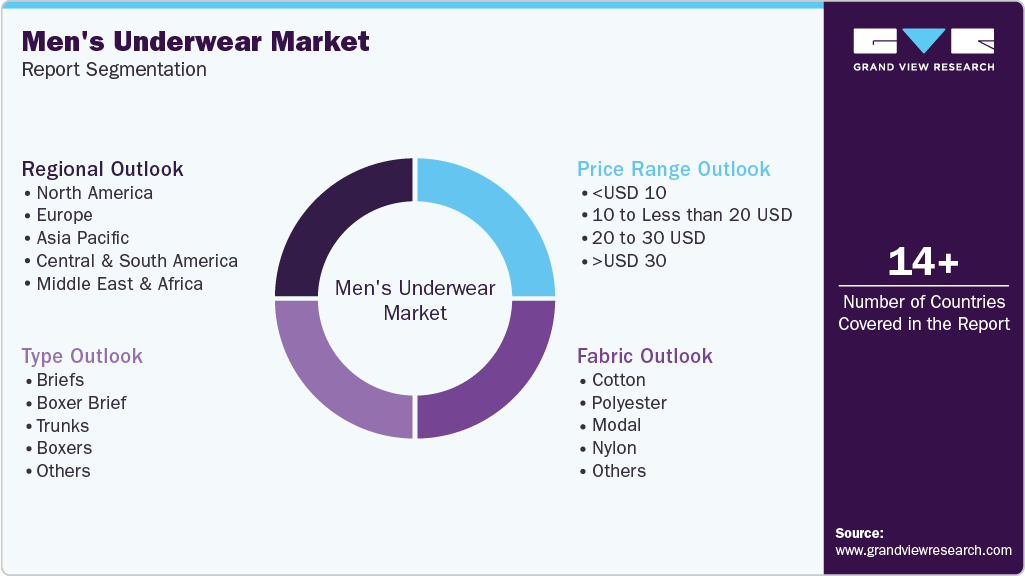
This report forecasts revenue growth at the global, regional, and country levels along with provides an analysis of the latest industry trends and opportunities in each of the sub-segments from 2021 to 2033. For this study, Grand View Research has segmented the global Men’s Underwear Market report based on type, fabric, and region:
 To learn more about this report, Download Free Sample Report
-
Price Range Outlook (Revenue, USD Million, 2021 - 2033)
-
< USD 10
-
10 to Less than 20 USD
-
20 to 30 USD
-
>USD 30
-
-
Type Outlook (Revenue, USD Million, 2021 - 2033)
-
Briefs
-
Boxer Brief
-
Trunks
-
Boxers
-
Others
-
-
Fabric Outlook (Revenue, USD Million, 2021 - 2033)
-
Cotton
-
Polyester
-
Modal
-
Nylon
-
Others
-
-
Regional Outlook (Revenue, USD Million, 2021 - 2033)
-
North America
-
U.S.
-
-
Europe
-
Germany
-
U.K.
-
-
Asia Pacific
-
China
-
India
-
-
Central & South America
-
Brazil
-
-
Middle East & Africa
-
Saudi Arabia
-
-
Research Methodology
The men's underwear market figures in this report are based on a proven research process that combines executive interviews with secondary research from proprietary databases, company filings, and recognized regulatory and institutional sources. Market size is built through value-chain sizing - reconciling supply-side and demand-side estimates - and triangulated with bottom-up and top-down approaches. Every estimate passes multiple levels of expert validation before publication, with each men's underwear segment quantified using the revenue-capture definitions in the table below.
Segment Definition
Segment - Type
Revenue capture definition
Briefs
This segment covers men's underwear products designed with a close-fitting silhouette that provides full front and rear coverage with high-cut leg openings. The scope includes classic briefs, low-rise briefs, mid-rise briefs, and premium variants sold through mass-market, specialty, and online retail channels across all price categories.
Boxer Brief
This segment includes men's underwear combining the fitted structure of briefs with the extended leg coverage of boxers. The scope covers performance boxer briefs, compression styles, athletic variants, seamless products, and everyday-use offerings manufactured using different fabric blends and distributed through various retail and e-commerce channels.
Trunks
This segment encompasses men's underwear characterized by a shorter leg length and square-cut design. The scope includes low-rise trunks, fashion trunks, performance trunks, and premium designer products. Market estimates cover products offered across economy, mid-range, and premium categories through both offline and online distribution networks.
Boxers
This segment covers loose-fitting men's underwear designed for comfort and breathability. The scope includes woven boxers, knit boxers, traditional loose-fit styles, and modern tailored boxer products. It also includes products marketed for sleepwear, casual wear, and everyday use across multiple consumer income groups and sales channels.
Others
This segment includes men's underwear categories not classified under briefs, boxer briefs, trunks, or boxers. The scope covers jockstraps, thongs, bikinis, compression underwear, specialty support garments, and emerging product formats. Market assessment includes both niche and mainstream offerings available across global retail platforms.
Segment - Fabric
Revenue capture definition
Cotton
This segment covers men's underwear manufactured predominantly using natural cotton fibers and cotton-rich blends. The scope includes combed cotton, organic cotton, ring-spun cotton, and stretch cotton products across all underwear types. Market estimates account for products sold through value, mid-tier, and premium market categories globally.
Polyester
This segment includes men's underwear manufactured using polyester fibers either as a primary material or blended with other fabrics. The scope covers moisture-wicking, quick-drying, performance-oriented, and durable underwear products designed for sportswear and daily use applications across various distribution and pricing channels.
Modal
This segment covers men's underwear produced using modal fibers derived from regenerated cellulose materials. The scope includes pure modal and modal-blend products known for softness, breathability, and lightweight construction. Market coverage includes premium, luxury, and comfort-focused underwear offerings distributed through specialty and mainstream retail channels.
Nylon
This segment includes men's underwear manufactured using nylon fibers and nylon-based blends. The scope covers lightweight, stretchable, seamless, and performance-oriented products designed for activewear and daily wear applications. Market sizing incorporates products available across economy to premium price ranges and multiple distribution formats.
Others
This segment covers men's underwear manufactured using fabrics other than cotton, polyester, modal, and nylon. The scope includes bamboo fibers, spandex blends, microfiber, wool, silk, recycled materials, and innovative textile compositions. Market estimates encompass specialty, sustainable, and emerging fabric-based underwear products offered across global markets.
Estimation Model
01
Male Consumer Base Layer
Who potentially purchases men's underwear?02
Retail Access & Purchasing Power Layer
Who has access and ability to purchase branded underwear?03
Category Adoption Layer
Who actively purchases men's underwear products?04
Monetisation Layer
How much revenue is generated?Begin with the global male population within the underwear-buying age group (typically 15–64 years). Filter for economically active and apparel-consuming males to identify the core consumer base for men's underwear products.
Apply country-level apparel expenditure, organized retail penetration, e-commerce accessibility, urbanization rates, and disposable income levels to derive the addressable market capable of purchasing men's underwear through online and offline channels.
Apply category penetration rates, replacement frequency, brand adoption, and premiumization trends across briefs, boxer briefs, trunks, boxers, and other styles. Demand is influenced by comfort preferences, fabric innovation, athletic lifestyles, and increasing awareness of personal grooming and hygiene.
Multiply active purchasers by annual units purchased and blended average selling prices across product types and fabric categories. Revenue is further supported by premium products, multipack offerings, performance underwear, and direct-to-consumer sales channels.
Delivered Customizations
This report has been delivered with the following In-depth customizations
Client Request
Customization Delivered
Value Adds
Cross-Segmentation Analysis of Underwear Types, Fabrics, Consumer Preferences & Regional Demand
Detailed cross-segmentation analysis of the global men's underwear market across type (briefs, boxer briefs, trunks, boxers, and others) and fabric (cotton, polyester, modal, nylon, and others), mapped against consumer demographics, lifestyle preferences, climate conditions, and regional purchasing patterns. The study further evaluates how demand differs across North America, Europe, Asia Pacific, Latin America, and Middle East & Africa.
Identifies where traditional cotton briefs continue to dominate volume demand versus where boxer briefs and trunks are gaining share among younger consumers. Highlights the rapid adoption of modal and performance fabrics in premium segments, while helping clients understand region-specific opportunities driven by disposable income growth, fashion consciousness, and changing lifestyle.
Brand Share Analysis & Competitive Positioning Benchmarking
Comprehensive benchmarking of global, regional, and premium underwear brands including PVH (Calvin Klein), Hanesbrands, Jockey, Fruit of the Loom, American Eagle, HUGO BOSS, Ralph Lauren, Levi Strauss, and other emerging digital-native brands. The assessment compares brand positioning across affordability, premium lifestyle appeal, product innovation, sustainability initiatives, fabric technology, and omnichannel presence.
Helps distinguish mass-market volume leaders from premium value creators and fashion-led brands. Reveals how leading players compete through product innovation, celebrity endorsements, premium collections, comfort technologies, and direct-to-consumer strategies.
Price-Tier, Consumer Segment & Retail Channel Opportunity Mapping
Assessment of the market across economy, mid-range, premium, and luxury price bands, mapped against consumer segments including value-conscious buyers, premium lifestyle consumers, fitness-oriented users, and fashion-conscious millennials and Gen Z shoppers. The analysis further evaluates channel performance across supermarkets, department stores, specialty apparel retailers, brand-exclusive stores, e-commerce platforms, and D2C channels.
Identifies where growth is being driven by premiumization versus affordability. Highlights how online channels are accelerating premium underwear adoption through broader assortment availability, subscription models, targeted marketing, and personalized shopping experiences, while offline retail remains important for brand discovery and impulse purchases.
Frequently Asked Questions About This Report
The global Men's Underwear market size was valued at USD 42.9 billion in 2025 and is estimated at USD 45.2 billion in 2026.
The global Men's Underwear market is expected to grow at a CAGR of 6.2% from 2025 to 2033, reaching USD 68.9 billion by 2033.
The Boxer Brief segment led the market with a 33.7% revenue share in 2025, owing to its combination of support, comfort, and versatility.
Key factors include growing consumer preference for comfort-oriented innerwear, increasing demand for premium and performance fabrics, rising awareness of hygiene and personal grooming, expanding athleisure trends, and growing adoption of sustainable and moisture-wicking underwear products.
Asia Pacific dominated the market with a 42.3% revenue share in 2025, driven by its large male population, rising disposable incomes, expanding e-commerce penetration, and increasing demand for branded innerwear products.
Asia Pacific is the fastest-growing regional market and is projected to expand at a CAGR of 6.8% during the forecast period.
The Cotton segment held the largest revenue share of 68.4% in 2025, supported by its breathability, softness, affordability, and widespread consumer preference. The Modal segment is expected to witness the fastest growth during the forecast period, expanding at a CAGR of 6.6%.
The Below USD 10 segment accounted for the largest market share of 53.4% in 2025, driven by high-volume demand across mass-market consumers. However, the USD 10 to Less than USD 20 segment is projected to be the fastest-growing price category, registering a CAGR of 6.7% through 2033.
Key players include Hanesbrands Inc., PVH Corp., Jockey International Inc., Fruit of the Loom, Inc., Tommy John, Inc., SAXX Underwear Co., Ralph Lauren Corporation, Levi Strauss & Co., Mack Weldon, and Under Armour, Inc..
About the Author(s)
Clothing, Footwear & Accessories Research Team
Consumer Goods · Clothing, Footwear & AccessoriesThis report was authored by the clothing, footwear & accessories research team at Grand View Research - comprising two research analysts, one senior research analyst, and one industry expert - with specialized expertise in the clothing, footwear & accessories segment of the consumer goods industry. All findings are based on proprietary consumer goods databases, executive interviews, and regulatory analysis, subject to internal peer review prior to publication.
Last Updated:
Speak to Analyst

Customize this report to your needs - add regions, segments, or data points, with 20% free customization.
Or view our licence options:


ISO 9001:2015 & 27001:2022 Certified
We are GDPR and CCPA compliant! Your transaction & personal information is safe and secure. For more details, please read our privacy policy.


