
- Home
- »
- Renewable Energy
- »
-
Microbial Fuel Cells Market Size & Share Report, 2024-2030GVR Report cover

Microbial Fuel Cells Market (2024 - 2030)
Size, Share & Trends Analysis Report By Type (Mediator, Mediator-Free), By Application (Power Generation, Wastewater Treatment), By Region, And Segment Forecasts
Market Size, 2023
$15.8MMarket Estimate, 2026
$22.4MMarket Forecast, 2030
$36.4MCAGR, 2024–2030
12.7%Microbial Fuel Cells Market Summary
The global microbial fuel cells market size was valued at USD 15.8 million in 2023 and is projected to grow from USD 22.4 million in 2026 to USD 36.4 million by 2030, at a CAGR of 12.7% from 2024 to 2030. Asia Pacific dominated the market, accounting for a revenue share of 45.0% in 2023. Growing concerns about global warming and climate change are driving the demand for alternative sustainable fuel sources, fueling the market.
 Source: Grand View Research, IR Documents, Primary Interviews, Paid DatabasesTo learn more about this report,
 Download Free Sample Report
 Key Market Trends & Insights
- By type, the mediator microbial fuel cell segment led the market with the largest revenue share of 60.91% in 2023.
- Based on application, the wastewater treatment segment held the largest share of 57.48% in the microbial fuel cells market, in terms of revenue, in 2023.
Market Size & Forecast
- 2023 Market Size: USD 15.8 Million
- 2030 Projected Market Size: USD 36.4 Million
- CAGR (2024-2030): 12.7%
- Asia Pacific: Largest market in 2023
Three ways to get this report
Buy it, customize it, or ask a question.Ask an Analyst
Analyst response in 1 business day
- AccessReport author, directly
- Reply timeWithin 1 working day
- No sales callDirect answer only
- FormatEmail reply
- CostFree, no cost
Get the Full Report
What the study covers
- FormatsPDF · Excel · Dashboard
- Timeline2024–2030 annual, 2023 base
- Coverage20+ countries, 5 regions
- Companies10+ key players profiled
Customize the Report
20% free customization
- IncludeCountries, segments, points
- TailorTo your product definition
- ExtendDeeper competitor detail
- OrA fully bespoke study
- Turnaround5–10 working days
Furthermore, governmental initiatives to reduce and eliminate carbon emissions are expected to propel the market. The market is witnessing a significant shift towards sustainability, driven by increasing environmental awareness and stringent government regulations. A growing emphasis on renewable energy sources has led to heightened interest in MFCs as an alternative to conventional energy generation methods. MFC technology, which generates electricity from organic and inorganic materials using microbial action, is becoming increasingly attractive due to its dual benefits of energy production and waste treatment. This trend is particularly strong in regions such as North America and Europe, where there is substantial investment in research and development for sustainable technologies.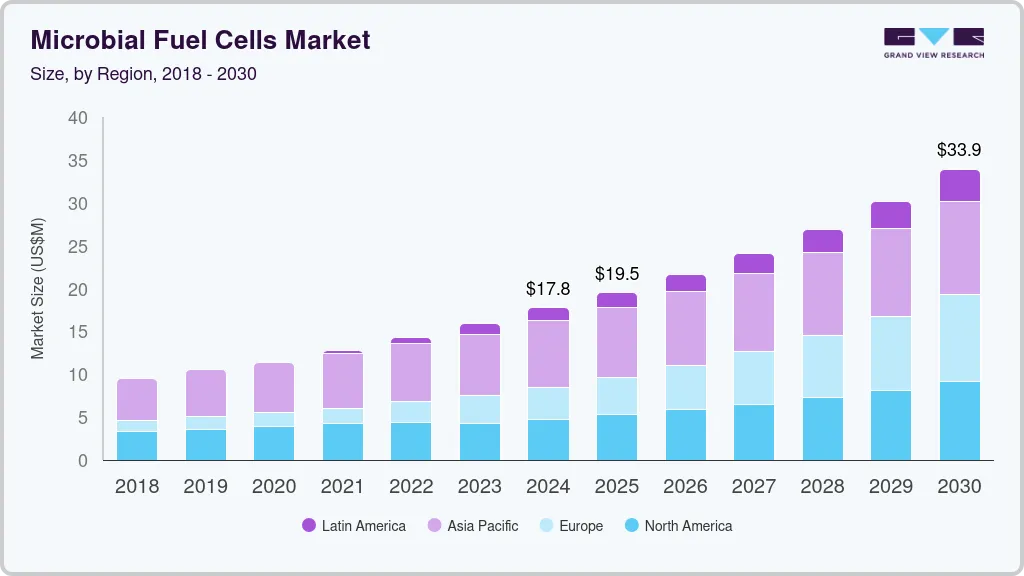 To learn more about this report, Download Free Sample Report
 Drivers, Opportunities & Restraints
One of the primary drivers of the microbial fuel cell market is the rising demand for effective wastewater treatment solutions. MFCs offer a unique advantage by simultaneously treating wastewater and generating electricity, making them highly appealing for industries and municipalities facing strict environmental regulations. As the world grapples with water scarcity and pollution, the ability of MFCs to convert organic pollutants in wastewater into clean water and electricity is driving their adoption. This dual-functionality not only addresses environmental concerns but also provides a cost-effective solution for energy generation, further propelling market growth.
The market presents significant opportunities in developing countries where energy infrastructure is still evolving. These regions often face challenges such as unreliable electricity supply and inadequate waste management systems. MFC technology, with its potential for decentralized energy generation and waste treatment, could play a crucial role in addressing these issues. Moreover, the integration of MFCs with other renewable technologies, such as solar or wind, could create hybrid systems that enhance energy efficiency and sustainability. This makes the MFC market ripe for investment, particularly in regions looking to leapfrog traditional energy solutions.
Despite its potential, the microbial fuel cell market faces challenges that could hinder its growth. One of the key restraints is the relatively low power output of current MFC technologies, which limits their application in large-scale energy generation. Additionally, the complexity of maintaining the microbial environment within the cells, along with issues related to the durability and longevity of the systems, adds to operational costs. These technical challenges, coupled with a lack of standardization in MFC design and implementation, may slow down the widespread adoption of this technology, particularly in markets where high energy output is a critical requirement.
Type Insights
The mediator microbial fuel cell segment led the market with the largest revenue share of 60.91% in 2023. In a mediator microbial fuel cell, a chemical mediator is used to facilitate the transfer of electrons from the microbial cells to the anode, which is a critical step in generating electricity. The mediator, often a redox-active compound, penetrates the microbial cell membrane and shuttles electrons from the microbial metabolism to the anode, where they can then flow through an external circuit to the cathode, producing an electric current. This type of MFC is particularly effective for microbes that do not naturally transfer electrons directly to the anode, making it a versatile option for various applications. Their ability to generate higher power outputs compared to mediator-free systems, makes them more suitable for specific industrial applications.
A mediator-free microbial fuel cell is a more advanced and eco-friendly variant of the traditional MFC, which eliminates the need for an external chemical mediator to facilitate electron transfer. In this system, specific types of microorganisms, known as exoelectrogens, are capable of directly transferring electrons to the anode, without the need for a mediator. This direct electron transfer process simplifies the overall design of the MFC, reduces operational costs, and minimizes the environmental impact since no additional chemicals are required. The key driver for the adoption of Mediator-Free MFCs is their sustainability and cost-effectiveness. These systems are particularly attractive for large-scale applications, such as wastewater treatment, where reducing chemical usage and operational complexity are crucial.
Application Insights
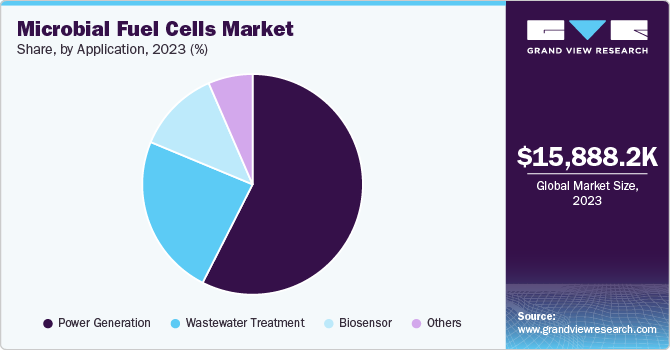
Based on application, the wastewater treatment segment held the largest share of 57.48% in the microbial fuel cells market, in terms of revenue, in 2023, which can be attributed to its dual role in treating wastewater and generating electricity. This capability aligns with global efforts to adopt sustainable and energy-efficient technologies, particularly in industries and municipalities managing wastewater. By converting organic waste into bioelectricity, MFCs reduce reliance on traditional energy sources and help lower operational costs for wastewater treatment facilities. Additionally, advancements in MFC technology, including improved electrode materials and microbial efficiency, have enhanced scalability, making the technology more accessible for large-scale applications.
 To learn more about this report, Download Free Sample Report
 The dominance of this segment is further supported by increasing regulatory pressures to meet strict effluent discharge standards and incentives for adopting green technologies. Industries producing high-strength wastewater, such as food processing, paper and pulp, and chemical manufacturing, benefit significantly from the integration of MFCs, which provide both compliance and cost savings. Government funding and support for sustainable technologies, combined with the economic and environmental advantages of MFCs, have solidified the wastewater treatment segment's leadership in the market.
Regional Insights
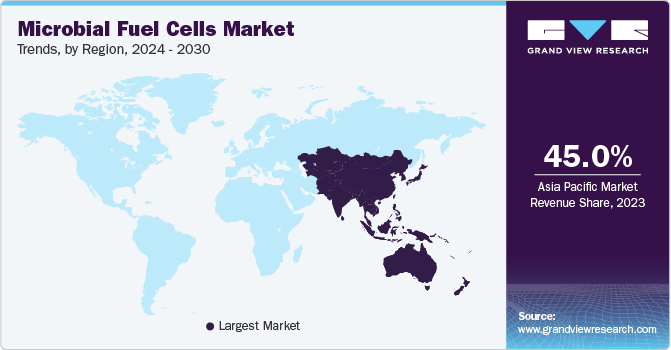
Asia Pacific dominated the global Microbial Fuel Cells market and accounted for the largest revenue share of 45.00% in 2023, driven by rapid industrialization and urbanization. Countries such as China and India are facing significant environmental challenges due to the increased generation of wastewater and the rising demand for clean energy. MFCs provide a sustainable solution to these issues by offering an integrated approach to energy production and waste management.
 To learn more about this report, Download Free Sample Report
 North America Microbial Fuel Cells Market Trends
In North America, the growth of MFCs is driven by strong governmental support and significant investment in renewable energy research and development. The region's focus on sustainability and environmental protection has led to increased funding for innovative technologies like MFCs, which are seen as a promising solution for both energy generation and wastewater treatment.
U.S. Microbial Fuel Cells Market Trends
In the U.S., the MFC market is driven by the country’s commitment to energy innovation and environmental stewardship. Federal and state governments are offering incentives and grants to support clean energy projects, including MFCs, as part of broader efforts to combat climate change and reduce dependence on fossil fuels. The U.S. also faces growing pressure to improve wastewater treatment systems, especially in urban areas, where aging infrastructure is a concern.
Europe Microbial Fuel Cells Market Trends
Europe’s strong research and development ecosystem, supported by collaborations between academia, industry, and government, is fostering the innovation and deployment of MFC technology across various applications, particularly in wastewater treatment and renewable energy generation, spurring the MFC market in the region.
Asia Pacific Microbial Fuel Cells Market Trends
The Asia Pacific government initiatives aimed at promoting renewable energy and improving wastewater infrastructure are propelling the market. Additionally, the lower operational costs of MFCs compared to traditional wastewater treatment methods make them particularly appealing in cost-sensitive markets within the region
Key Microbial Fuel Cells Company Insights
The microbial fuel cells market is characterized by a competitive landscape with several key players driving innovation and market growth. Major companies in this sector are investing heavily in research and development to enhance the performance, cost-effectiveness, and sustainability of their products.MICRORGANIC TECHNOLOGIES, SAINERGY TECH INC, CAMBRIAN INNOVATION, JSP ENVIRO, Electrochem Solutions and Emefcy Ltd (US), CASCADE Clean Energy, Inc., Electro-Active Technologies Inc, Frontis Energy, Kurita water industries ltd, and AQUACYCL.
Key Microbial Fuel Cells Companies:
The following are the leading companies in the microbial fuel cells market. These companies collectively hold the largest market share and dictate industry trends.
- MICRORGANIC TECHNOLOGIES
- SAINERGY TECH INC
- CAMBRIAN INNOVATION
- JSP ENVIRO
- Electrochem Solutions and Emefcy Ltd (US)
- CASCADE Clean Energy, Inc.
- Electro-Active Technologies Inc
- Frontis Energy
- Kurita water industries ltd
- AQUACYCL
Recent Developments
-
In January 2024, Northwestern University developed a new type of fuel cell that harnesses energy from soil microbes, potentially offering a sustainable alternative to traditional batteries. This MFC, roughly the size of a book, can power underground sensors for applications in green infrastructure and precision agriculture. The innovation is significant as it avoids the toxic materials used in conventional batteries, which can harm the environment. The researchers demonstrated the fuel cell's capabilities by powering sensors that detect touch and measure soil moisture, with the device generating 68 times the energy required for operation.
-
In January 2022, Kurita Water Industries Ltd developed and upsized a microbial power generation cell, designed to convert organic matter in wastewater into electricity. This advancement aims to enhance the practical use of microbial fuel cells in wastewater treatment systems. The new cell addresses environmental concerns associated with traditional wastewater treatment methods, which often produce significant CO2 emissions. By utilizing electricity-producing microbes, the microbial fuel cell not only treats wastewater but also generates electricity, thereby reducing overall emissions.
Microbial Fuel Cells Market Report Scope
Report Attribute
Details
Market size in 2023
USD 15.8 million
Estimated market size in 2026
USD 22.4 million
Projected market size by 2030
USD 36.4 million
Growth rate
CAGR of 12.7% from 2024 to 2030
Actual data
2018 - 2023
Forecast period
2024 - 2030
Quantitative units
Revenue in USD Thousand, and CAGR from 2024 to 2030
Report coverage
Revenue forecast, competitive landscape, growth factors and trends
Segments covered
Type, application, region
Regional scope
North America; Europe; Asia Pacific; Central & South America; Middle East & Africa
Country Scope
U.S.; Canada; Mexico; Germany; France; UK; Italy; Spain; China; India; Japan; South Korea; Australia; Brazil; Argentina; Saudi Arabia; South Africa
Key companies profiled
MICRORGANIC TECHNOLOGIES, SAINERGY TECH INC, CAMBRIAN INNOVATION, JSP ENVIRO, Electrochem Solutions and Emefcy Ltd (US), CASCADE Clean Energy, Inc., Electro-Active Technologies Inc, Frontis Energy, Kurita water industries ltd, AQUACYCL
Customization scope
Free report customization (equivalent up to 8 analyst’s working days) with purchase. Addition or alteration to country, regional & segment scope
Pricing and purchase options
Avail customized purchase options to meet your exact research needs. Explore purchase options
Global Microbial Fuel Cells Market Report Segmentation
This report forecasts revenue growth at global, regional, and country levels and provides an analysis of the latest industry trends in each of the sub-segments from 2018 to 2030. For this study, Grand View Research has segmented the global microbial fuel cells market report based on the type, application, and region:
 To learn more about this report, Download Free Sample Report
 -
Type Outlook (Revenue, USD Thousand, 2018 - 2030)
-
Mediator Microbial Fuel Cell
-
Mediator-Free Microbial Fuel Cell
-
-
Application Outlook (Revenue, USD Thousand, 2018 - 2030)
-
Power Generation
-
Wastewater Treatment
-
Biosensor
-
-
Regional Outlook (Revenue, USD Thousand, 2018 - 2030)
-
North America
-
U.S.
-
Canada
-
Mexico
-
-
Europe
-
UK
-
Germany
-
France
-
Italy
-
Spain
-
-
Asia Pacific
-
China
-
India
-
Japan
-
Australia
-
South Korea
-
-
Central & South America
-
Brazil
-
Argentina
-
-
Middle East & Africa
-
Saudi Arabia
-
South Africa
-
-
Frequently Asked Questions About This Report
The global microbial fuel cells market is expected to grow at a CAGR of 12.7% from 2024 to 2030, reaching USD 36.4 million by 2030.
Asia Pacific dominated with a 45.0% revenue share in 2023.
Growing concerns of global warming and climate change is driving the demand for alternative sustainable fuels sources, fueling the microbial fuel cells market. Furthermore, governmental initiatives to reduce and eliminate carbon emissions is expected to propel the market.
The global microbial fuel cells market size was valued at USD 15.8 million in 2023 and is estimated at USD 22.4 million for 2026.
Key players operating in the microbial fuel cell market include MICRORGANIC TECHNOLOGIES, SAINERGY TECH INC, CAMBRIAN INNOVATION, JSP ENVIRO, Electrochem Solutions and Emefcy Ltd (US), CASCADE Clean Energy, Inc., Electro-Active Technologies Inc, Frontis Energy, Kurita water industries ltd, AQUACYCL
About the Author(s)
Renewable Energy Research Team
Energy & Power · Renewable EnergyThis report was authored by the renewable energy research team at Grand View Research - comprising two research analysts, one senior research analyst, and one industry expert - with specialized expertise in the renewable energy segment of the energy & power industry. All findings are based on proprietary energy & power databases, executive interviews, and regulatory analysis, subject to internal peer review prior to publication.
Last Updated:
Speak to Analyst

Customize this report to your needs - add regions, segments, or data points, with 20% free customization.
Or view our licence options:


ISO 9001:2015 & 27001:2022 Certified
We are GDPR and CCPA compliant! Your transaction & personal information is safe and secure. For more details, please read our privacy policy.


