
- Home
- »
- Medical Devices
- »
-
Middle East Cosmetic Surgery & Procedure Market Report, 2033GVR Report cover

Middle East Cosmetic Surgery & Procedure Market (2025 - 2033) Size, Share & Trends Analysis Report By Procedure Type (Invasive, Non-invasive), By Gender (Male, Female), By Age Group, By Country, And Segment Forecasts
Market Size & Trends
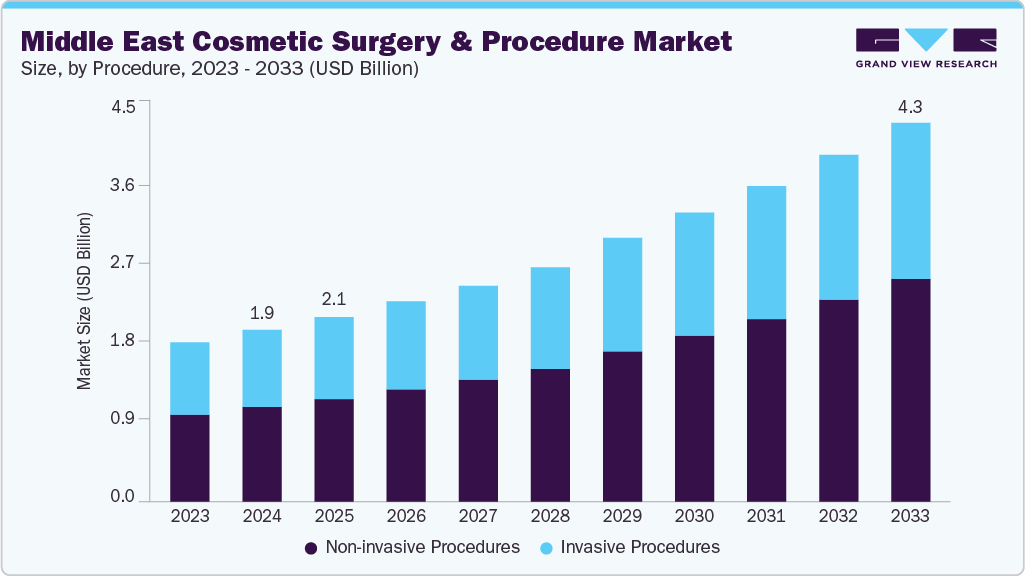
The Middle East cosmetic surgery and procedure market size was estimated at USD 1.93 billion in 2024 and is expected to reach USD 4.27 billion by 2033, growing at a CAGR of 9.39% from 2025 to 2033. This is driven by a growing acceptance of cosmetic procedures, especially among young people, and a flourishing medical tourism industry in countries such as the UAE. There is an increased demand for procedures such as liposuction, which is preferred for faster recovery times, and a growing interest in facial and nasal surgeries. Moreover, technological advancements and the establishment of high-standard, regulated clinics attract patients from around the world to countries such as the UAE.
 Source: Grand View Research, IR Documents, Primary Interviews, Paid DatabasesTo learn more about this report,
 Download Free Sample Report
 Growing Acceptance of Cosmetic Procedures:
Shifting beauty cultures, increasing disposable incomes, and the influence of social media together make aesthetic treatments increasingly socially acceptable. For instance, according to April 2025 news reports, in Iran, rhinoplasty or nose job has experienced a phenomenal jump in popularity, with numerous women opting for the procedure as a means of improving their looks and their social standing.
Despite economic adversity, numerous individuals, including women, undergo such operations for social and professional purposes at the instigation of accessibility and affordability. According to an article published in February 2024, Tehran has become the globe's "nose job capital," with approximately 200,000 rhinoplasties undergone each year, the highest per capita among all cities in the world. The growth of cosmetic surgery in Iran is driven by various cultural, economic, and social factors. Rhinoplasty has become a significant socio-cultural phenomenon and is often viewed as a rite of passage, especially for women. It is an affordable process, with the cost ranging from USD 1,200 to USD 3,500, which is much less compared to other nations, including the U.S. This cost has enabled the affordability of cosmetic surgery among a broader population, such as students and young professionals.
Improvements in surgical techniques and the introduction of less invasive procedures have enhanced the safety and appeal of cosmetic treatments across the Middle East. As societal attitudes evolve, the demand for these procedures is expected to rise further, contributing to the rapid growth of the cosmetic surgery industry in the region.
Case Study: Cosmetic Aesthetics Among Middle Eastern Patients
Background:
The Middle East has historically influenced global beauty standards, starting with ancient plastic surgery in Persia circa 3000 BC and going on through the Egypt of queens such as Nefertiti. Iran and the UAE at the forefront of a booming cosmetic surgery industry. Iran has one of the world's highest rates of cosmetic procedures, while Dubai boasts the most concentrated number of cosmetic surgeons per population, with 47 for every 1 million citizens. In Lebanon, where economic times are poor, there are about 1.5 million cosmetic procedures undertaken annually in a population of 6 million.
Middle Eastern patients also represent a significant patient population in the U.S. It is estimated that there are approximately 3.7 million Americans who claim Arab heritage and have come from Lebanon, Syria, Palestine, Egypt, and Iraq. These patients have unique aesthetic concerns based upon a combination of ethnic, cultural, and personal factors that need to be taken into consideration to produce optimal outcomes.
Key Insights:
A continuing medical education (CME) event hosted international roundtable discussions centered on ethnic diversity in cosmetic aesthetics. The Middle Eastern patient roundtable, conducted in Dubai, uncovered several key considerations:
-
Ethnic Diversity: Middle Easte population is incredibly varied, including people from Arabs, Persians, Turks, Kurds, and Armenians. The diverse facial features and proportions within and among these groups necessitate tailored assessments.
-
Beauty Standards: Middle Eastern patients typically prefer natural-looking enhancements. Women often seek full, oval faces, almond-shaped eyes, prominent cheeks, and well-defined lips and jawlines. Cultural practices, such as hijab wearing, can also influence the desired facial shape and aesthetic goals.
-
Common Aesthetic Concerns: Major concerns include dark under-eye circles, midface sagging, jowling, and nose shape. While younger women often focus on skin quality and facial proportions, older patients are more inclined toward rejuvenation and lifting procedures.
-
Treatment Approaches:
-
Skin: Patients generally prefer lighter, even-toned skin and frequently seek treatment for hyperpigmentation and melasma through topical solutions, lasers, or combination therapies.
-
Upper Face: Treatments often focus on temple and forehead contouring, eyebrow shaping, and addressing dynamic lines via fillers and neuromodulators.
-
Midface: Infraorbital hollows and cheek volume are treated through precise filler placement, often taking a holistic approach to restore a youthful look.
-
Lower Face: High G’ fillers are used to define the chin and jawline, with limited interest in masseter reduction.
-
Cultural Considerations: Religious beliefs and modesty practices can shape treatment priorities but generally do not deter Middle Eastern women from pursuing cosmetic procedures. For instance, those who wear hijabs may place more emphasis on eye and upper-face treatments.
Conclusions:
Middle East patients are an evolving and expanding demographic in the cosmetic surgery field, both within the region and internationally. Achieving successful aesthetic outcomes involves a thorough understanding of ethnic diversity, cultural values, and individual preferences. While historical beauty icons offer some insight, contemporary standards and personalized evaluations remain crucial. Clinicians should embrace culturally competent approaches to enhance patient satisfaction and to avoid the imposition of Western beauty ideals.
Increasing Influence of Social Media and Changing Beauty Standards:
The growing influence of social media and changing beauty standards have significantly impacted the cosmetic surgery and procedure market in the Middle East. Platforms such as Instagram, Snapchat, and TikTok have popularized beauty ideals characterized by flawless skin, defined features, and youthful appearances. Therefore, cosmetic procedures have seen an upward trend as people try to match their physical looks to these staged standards. In nations such as Saudi Arabia, Kuwait, and the UAE, the visibility of cosmetic procedures on social media has legitimized these treatments, making them more socially acceptable and accessible. Studies indicate that many people, more so women, are swayed by social media posts, such as before-and-after photographs and influencer endorsements, when considering cosmetic procedures. This follows the drive for social affirmation and the attempt to emulate the appearance of well-known celebrities and influencers.
Case Study : Influence of Social Media on Cosmetic Surgery Decisions in Al Ahsa, Saudi Arabia
Published by National Center for Biotechnology and Information, in September 2024
Background:
In recent years, the popularity of cosmetic surgery has been on the rise globally, and the Middle East is no exception. Social media platforms, such as Instagram and TikTok, have become powerful tools in shaping beauty standards and influencing individual choices. This case study explores how following social media influencers impacts the decision-making process regarding cosmetic procedures in Al Ahsa, Saudi Arabia.
Objective:
The study aimed to investigate whether exposure to social media influencers and their content, particularly before-and-after images of cosmetic procedures, affects individuals' attitudes and decisions to undergo such procedures.
Methodology:
A descriptive cross-sectional design was employed in Al Ahsa, Saudi Arabia. Data was collected using a self-administered questionnaire distributed among residents over the age of 18. The study excluded participants under 18, those who did not complete the survey, and those living outside the region.
Findings:
The results indicated a significant correlation between social media exposure and cosmetic surgery interests:
-
Popularity among influencers: 90.4% of respondents agreed that cosmetic procedures are widely popular among influencers.
-
Impact of visual content: 37.9% of participants reported that before-and-after images directly affected their desire to undergo similar procedures.
-
Gender differences: There were notable differences between male and female responses, with young women showing a stronger influence from social media content.
-
Perception of influencers: Followers were more likely to believe that influencers had undergone cosmetic enhancements themselves and felt encouraged to pursue similar transformations.
Conclusion:
This case study confirms that social media influencers play a crucial role in shaping beauty perceptions and cosmetic surgery trends in Al Ahsa. The findings highlight that visual content shared by influencers significantly influences young adults, particularly women, encouraging them to consider cosmetic procedures. These insights emphasize the growing impact of digital platforms in the healthcare and aesthetic sectors and underline the need for awareness and ethical guidelines regarding the portrayal of beauty and cosmetic interventions online.
Technological Advancements And Procedure Accessibility:
Technological innovations and better procedure availability are major drivers for the expansion of the region's cosmetic surgery and procedure market. With breakthroughs such as minimally invasive procedures, latest imaging equipment, and robotic surgery, patients benefit from increased safety, shorter recovery time, and more consistent outcomes. These advances have reduced procedural risks, treating more people to avail of treatments. In addition, enhanced accessibility via increased specialized clinics, medical tourism, and telemedicine facilities has brought cosmetic treatment within the reach of individuals outside the large cities.
Technological Advancements And Procedure Accessibility
Technological Advancement / Accessibility
Impact on Market
Instance
Minimally invasive procedures (e.g., Botox, fillers, laser treatments)
Reduced downtime, less pain, increased patient adoption
Clinics, such as Medcare in Dubai offer same-day Botox treatments with rapid recovery
Advanced imaging and 3D simulation
Improved precision, patient satisfaction, and safety
Clinics such as Enfield Royal Saudia in Riyadh use 3D imaging for facial contouring planning
Robotic-assisted surgeries
Enhanced accuracy and better outcomes
Hospitals such as Reem Hospital in Abu Dhabi incorporate robotic technology in facelift surgeries
Expansion of medical tourism
Increased patient inflow from neighboring countries
Dubai attracts cosmetic surgery patients from GCC countries. For instance, as per the report from the Dubai Health Authority (DHA) published in April 2023, 39% of medical tourists visiting Dubai were from Asian nations, 22% from Europe and the Commonwealth of Independent States, and 21% from Arab and Gulf Cooperation Council (GCC) countries in 2022.
Telemedicine and virtual consultations
Easier access for remote patients and improved follow-up care
Cosmetic centers such as Marble Medical Center in Doha offer virtual post-operative care and planning sessions.
Availability of specialized aesthetic centers
Convenience and wider reach
Clinics such as The S Clinic in Jeddah expanding to suburban areas with advanced cosmetic treatments
Source: Secondary Research, Grand View Research Analysis
Growing Medical Tourism And Regional Hubs:
With higher investments in the healthcare infrastructure, modern medical technologies, and a highly qualified workforce, nations including the UAE, Saudi Arabia, and Qatar are establishing themselves as premier destinations for high-value cosmetic procedures. The accessibility of the region and lower costs when compared to Western nations attract the patients from neighboring regions, Europe, and Asia who are in search of elective aesthetic treatments. Furthermore, favorable government policies, luxury hospitality options, and an emphasis on wellness and beauty enhance the Middle East's appeal as a medical tourism destination. The increased inflow of international and regional patients drives market expansion, higher procedure volumes, and greater awareness, fueling long-term growth in the cosmetic surgery and procedure segment.
Innovative funding is revolutionizing the Middle East to become a hub for healthcare progress and access. Between 2021 and 2023, the Middle East saw about USD 103 million worth of healthcare investment added to a worldwide total of USD 48 billion. Governments, particularly Saudi Arabia and the UAE, are heavily investing in digital health and infrastructure. Private sector investors, including the Abu Dhabi Investment Authority, are making large bets too, with significant commitments to medical tech. Growth of health tech startups worth more than USD 1.5 billion indicates the direction towards new-age solutions. These projects are improving healthcare infrastructure and driving the uptake of cutting-edge technologies such as AI, giving rise to a viable healthcare ecosystem in the region.
Affordability And Financing Options:
As cosmetic treatments become more accessible due to competitive pricing, installment payment plans, and medical financing solutions, a broader demographic, including middle-income groups and younger consumers, can consider elective aesthetic enhancements. Many regional clinics and hospitals offer flexible financing options such as zero-interest plans, deferred payments, and partnerships with financial institutions to lower the upfront cost barrier. According to Careful Trip updates, in Iran, a facelift costs between USD 2,000 and USD 5,000, while in the U.S., it can cost USD 10,000 or more. Moreover, insurers increasingly include certain non-invasive procedures in wellness packages, further encouraging patient participation. These affordability measures expand the customer base and help to normalize cosmetic treatments as a part of personal care and self-enhancement in the region.
Market Concentration & Characteristics
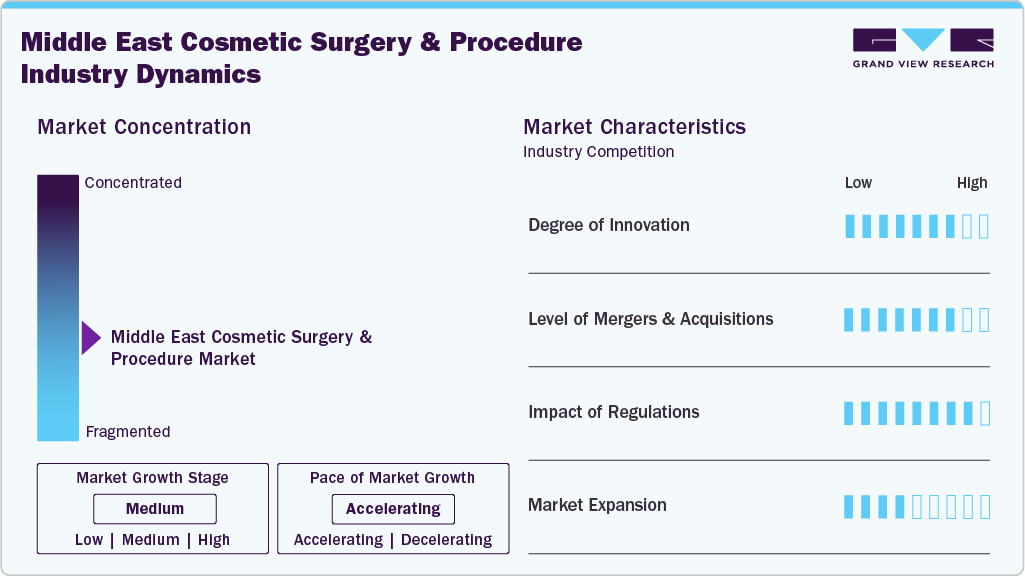
The chart below represents the relationship between industry concentration, industry characteristics, and industry participants. The industry is fragmented, with many service providers entering the market. There is a high degree of innovation, moderate level of mergers and acquisitionsactivities, high impact of regulations, and moderate expansion of industry.
The industry is experiencing a moderate degree of innovation. Treatments such as Botox injections, dermal fillers, laser skin resurfacing, and radiofrequency therapies have gained popularity due to their minimal downtime and effective results. These procedures cater to individuals seeking subtle enhancements without the need for extensive recovery periods. For instance, laser skin resurfacing has become a favored option for addressing skin imperfections and achieving a rejuvenated appearance. Moreover, 3D imaging, robotics, and minimally invasive procedures are driving the growth of cosmetic surgery in the region by enabling greater precision, faster recovery times, and better results.
 To learn more about this report, Download Free Sample Report
 M&A activities in the industry are high, driven by growing demand and consolidation among companies. For instance, in March 2024, Dubai's Swift Day Surgery Center, a subsidiary of Biolitec AG, signed a Memorandum of Understanding (MOU) with Dr. Toni Nassar, a renowned Lebanese plastic and reconstructive surgeon and the CEO of Dr. Toni Nassar Hospital in Beirut. This strategic partnership aims to introduce advanced cosmetic, aesthetic, and surgical treatments to Dubai, thereby enhancing the region's appeal as a medical tourism destination.
The regulatory landscape in the market is driven by government-led healthcare reforms, strict licensing requirements, and increasing emphasis on quality assurance and patient safety. In the UAE, the Ministry of Industry and Advanced Technology (MoIAT) requires that all cosmetic and personal care products, whether imported or locally produced, must meet established quality and safety standards before being sold. The Saudi Food and Drug Authority (SFDA) regulates cosmetic products in Saudi Arabia. All cosmetics must be registered with the SFDA’s GHAD system before being sold or distributed locally. This registration process ensures that the products comply with government-set safety standards. In addition, the SFDA requires a Certificate of Conformance (CoC) to clear products at the port.
In February 2023, Elyzee Healthcare, a leading multi-specialty surgical institution, announced the launch of its Boutique Specialty Hospital in Dubai, UAE. The hospital provides a comprehensive range of services across more than ten specialties, including aesthetic, cosmetic, dental, and surgical procedures. With an emphasis on personalized and advanced healthcare, Elyzee aims to set new standards in the region by offering state-of-the-art medical facilities and expert care. This new hospital is designed to enhance healthcare delivery in the UAE, addressing the growing demand for specialized medical services and contributing to the region’s reputation as a hub for high-quality healthcare.
Procedure Type Insights
Based on procedure type, the non-invasive segment held a significant share in 2024. This growth is primarily driven due to the benefits such as reduced recovery times, lower risk, and less visible scarring compared to traditional surgeries. In addition, advances in technology, including laser treatments, injectable fillers, and body contouring devices, have improved safety, efficacy, and patient comfort, further encouraging adoption. Moreover, medical tourism plays a crucial role, as the Middle East is emerging as a hub for high-quality, cost-competitive cosmetic treatments, attracting patients from neighboring regions seeking professional services combined with luxury healthcare experiences.
The invasive segment is expected to grow to a significant CAGR during the forecast period. This growth is attributed to the advancements in surgical techniques, and improved safety standards which have increased consumer confidence and reduced recovery times, encouraging more people to opt for these interventions. Moreover, the presence of high-quality healthcare infrastructure, internationally trained surgeons, and medical tourism opportunities has made the region a preferred destination for both residents and international patients seeking cosmetic procedures.
Gender Insights
Based on gender, the female segment held a significant share in 2024, driven by the desire to combat signs of aging, improve physical appearance, and enhance self-confidence. Individuals especially in the 30-54 age group, experience financial stability that grants them access to both invasive and non-invasive procedures. These procedures align with societal beauty standards that prioritize youthfulness and aesthetic appeal.
The male segment is expected to grow to a highest CAGR during the forecast period. This growth is attributed to the recent advancements in medical technology that have made procedures safer, more effective, and less invasive. As a result, there has been a significant increase in popularity among men seeking enhancements such as rhinoplasty, facelifts, and body contouring. Furthermore, the rising influence of social media and celebrity culture has changed perceptions, making cosmetic enhancements more acceptable and even aspirational for men.
Age Group Insights
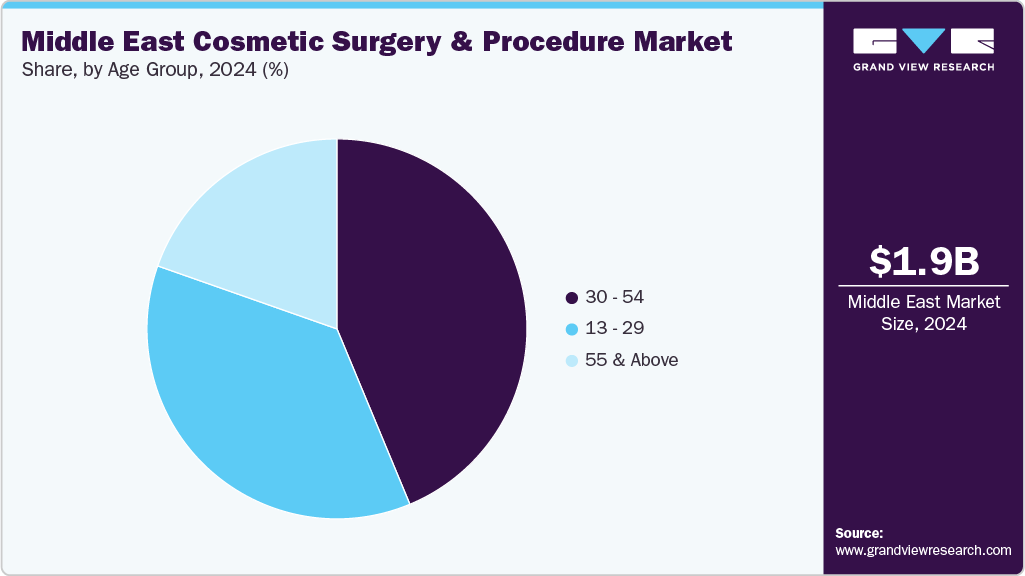
Based on age group, 30-54 segment held a significant share of 43.73% in 2024. Individuals in this age group frequently seek procedures to address signs of aging, enhance their physical appearance, or boost their self-confidence. With greater financial stability and increased disposable income, they are able to afford both invasive and non-invasive treatments. In addition, a cultural emphasis on youthfulness and beauty further motivates them to invest in cosmetic enhancements. Popular procedures include Botox injections, facelifts, and breast augmentations.
 To learn more about this report, Download Free Sample Report
 The 13-29 segment is expected to grow to the highest CAGR during the forecast period. This growth is attributed to the strong influence of social media platforms such as Instagram and TikTok. On these platforms, beauty standards are often defined by influencers and celebrities. As a result, many young people are seeking procedures such as rhinoplasty, acne treatments, acne scar treatments, and breast augmentation to match these idealized images. Moreover, the popularity of "Insta-filters" has raised expectations, with many individuals desiring features such as sharp jawlines and smooth skin, which can lead to unrealistic expectations about the results of cosmetic procedures.
Country Insights
Saudi Arabia Cosmetic Surgery and Procedure Market Trends
Saudi Arabia market is driven by evolving beauty standards, increased disposable income, and advancements in medical technology. Moreover, in April 2025, Saudi Arabia launched 28 healthcare projects in Riyadh, as part of its Vision 2030 initiative. These projects aim to enhance healthcare infrastructure and services, significantly impacting the cosmetic surgery market. With advanced technologies and state-of-the-art facilities, demand for specialized services, including cosmetic procedures, is expected to rise. The increased private sector investment and promotion of medical tourism will position Saudi Arabia as a regional hub for aesthetic treatments, benefiting both local and international patients.
UAE Cosmetic Surgery And Procedure Market Trends
The UAE is known for its advanced healthcare infrastructure and skilled professionals, which have strengthened its position in the global medical tourism market. Dubai has become a global hub for high-end cosmetic procedures, attracting both residents and international patients seeking world-class treatment. This influx is supported by the city’s advanced medical infrastructure, skilled practitioners, and a regulatory environment that promotes innovation in aesthetic medicine. In addition, the rise of medical tourism has strengthened the UAE's position in the global cosmetic surgery market. Patients from neighboring regions and beyond are drawn to the UAE for its competitive pricing, high-quality care, and the opportunity to combine treatments with leisure activities in a luxurious setting.
Key Middle East Cosmetic Surgery And Procedure Company Insights
The market is on the rise due to increased incomes, a growing trend in medical tourism, and evolving beauty standards in the area. The market in region is diverse, with a variety of local and international clinics providing various aesthetic and reconstructive services. To enhance their competitive edge, businesses are concentrating on forming partnerships, implementing advanced minimally invasive methods, expanding into new cities such as Dubai, Riyadh, and Doha, and pursuing mergers and acquisitions to access a larger patient base.
Key Middle East Cosmetic Surgery & Procedure Companies:
- Ajmal Clinics
- Mediclinic Middle East
- Mya Care
- Aster Royal Al Raffah Hospital
- Apollo Hospitals Sultanate of Oman
- The View Hospital
- Sidra Kuwait Hospital
- BellaromaDubai
- Mueller Medical Clinic
- Al Hammadi Hospitals
- Aesthetics International
Three ways to get this report
Buy it, customize it, or ask a question.Ask an Analyst
Analyst response in 1 business day
- AccessReport author, directly
- Reply timeWithin 1 working day
- No sales callDirect answer only
- FormatEmail reply
- CostFree, no cost
Get the Full Report
What the study covers
- FormatsPDF · Excel · Dashboard
- Timeline2025–2033 annual, 2024 base
- Coverage20+ countries, 5 regions
- Companies10+ key players profiled
Customize the Report
20% free customization
- IncludeCountries, segments, points
- TailorTo your product definition
- ExtendDeeper competitor detail
- OrA fully bespoke study
- Turnaround5–10 working days
Recent Developments
-
In May 2025, Kuwait announced to inaugurate its first skin bank and microsurgery laboratory, marking a significant advancement in the nation's healthcare infrastructure. These initiatives aim to enhance the treatment of severe burn cases and support complex reconstructive surgeries. The skin bank will store donated skin from deceased individuals, providing a critical resource for emergency burn surgeries and improving patient outcomes. The microsurgery lab will facilitate advanced procedures in plastic and reconstructive surgery, enhancing precision and recovery times.
-
In January 2025, ATOS Medical Center in Doha, Qatar, partnered with TISKON AI to revolutionize patient-centered healthcare by integrating advanced artificial intelligence (AI) technologies. This collaboration aims to enhance the patient experience by streamlining diagnostic processes, improving treatment accuracy, and personalizing care plans.
-
In March 2024, Dr. Toni Nassar Hospital in Beirut and Swift Day Surgery in Dubai formalized a strategic partnership through a Memorandum of Understanding (MOU), aiming to enhance the delivery of advanced cosmetic and aesthetic treatments in the UAE and the broader GCC region. The partnership is set to establish a center of excellence in aesthetic procedures, offering a comprehensive range of services from non-invasive rejuvenation therapies to complex surgical interventions, all tailored to meet the diverse needs of patients seeking personalized care and optimal results.
Middle East Cosmetic Surgery And Procedure MarketReport Scope
Report Attribute
Details
Market size in 2025
USD 2.08 billion
Revenue forecast in 2033
USD 4.27 billion
Growth Rate
CAGR of 9.39% from 2025 to 2033
Actual data
2021 - 2024
Forecast data
2025 - 2033
Quantitative units
Revenue in USD Million/Billion and CAGR from 2025 to 2033
Report coverage
Revenue forecast, company ranking, competitive landscape, growth factors, and trends
Regional Scope
Middle East
Segments covered
Procedure type, gender, age group, country
Country scope
Saudi Arabia; UAE; Kuwait, Qatar; Oman
Key companies profiled
Ajmal Clinics; Mediclinic Middle East; Mya Care; Aster Royal Al Raffah Hospital; Apollo; Hospitals Sultanate of Oman; The View Hospital; Sidra Kuwait Hospital; BellaromaDubai; Mueller Medical Clinic; Al Hammadi Hospitals; Aesthetics International
Customization scope
Free report customization (equivalent up to 8 analysts working days) with purchase. Addition or alteration to country, regional & segment scope.
Pricing and purchase options
Avail customized purchase options to meet your exact research needs. Explore purchase options
Middle East Cosmetic Surgery And Procedure Market Report Segmentation
This report forecasts revenue growth, regional and country level and provides an analysis of the latest industry trends in each of the sub-segments from 2021 to 2033 For this study, Grand View Research has segmented the Middle East cosmetic surgery and procedure market report based on procedure type, gender, age group, and country.
-
Procedure Type Outlook (Revenue, USD Million, 2021 - 2033)
-
Invasive Procedures
-
Breast augmentation
-
Liposuction
-
Nose reshaping
-
Eyelid Surgery
-
Tummy tuck
-
Others
-
-
Non-invasive Procedures
-
Botox injections
-
Soft tissue fillers
-
Chemical peel
-
Laser hair removal
-
Microdermabrasion
-
Others
-
-
-
Gender Outlook (Revenue, USD Million, 2021 - 2033)
-
Male
-
Female
-
-
Age Group Outlook (Revenue, USD Million, 2021 - 2033)
-
13-29
-
30-54
-
55 and above
-
-
Country Outlook (Revenue, USD Billion, 2021 - 2033)
-
Saudi Arabia
-
UAE
-
Kuwait
-
Qatar
-
Oman
-
About the Author(s)
Medical Devices Research Team
Healthcare · Medical DevicesThis report was authored by the medical devices research team at Grand View Research - comprising two research analysts, one senior research analyst, and one industry expert - with specialized expertise in the medical devices segment of the healthcare industry. All findings are based on proprietary healthcare databases, executive interviews, and regulatory analysis, subject to internal peer review prior to publication.
Last Updated:
Speak to Analyst -

Customize this report to your needs - add regions, segments, or data points, with 20% free customization.
Or view our licence options:


ISO 9001:2015 & 27001:2022 Certified
We are GDPR and CCPA compliant! Your transaction & personal information is safe and secure. For more details, please read our privacy policy.


