
- Home
- »
- Medical Devices
- »
-
Middle East Hospital Services Market, Industry Report, 2033GVR Report cover
![Middle East Hospital Services Market Size, Share & Trends Report]()
Middle East Hospital Services Market (2025 - 2033) Size, Share & Trends Analysis Report By Type (Inpatient Services, Outpatient Services), By Ownership (Public/Government-owned), By Country, And Segment Forecasts
- Report ID: GVR-4-68040-730-2
- Number of Report Pages: 100
- Format: PDF
- Historical Range: 2021 - 2023
- Forecast Period: 2025 - 2033
- Industry: Healthcare
- Report Summary
- Table of Contents
- Segmentation
- Methodology
- Download FREE Sample
-
 Download Sample Report
Middle East Hospital Services Market Summary
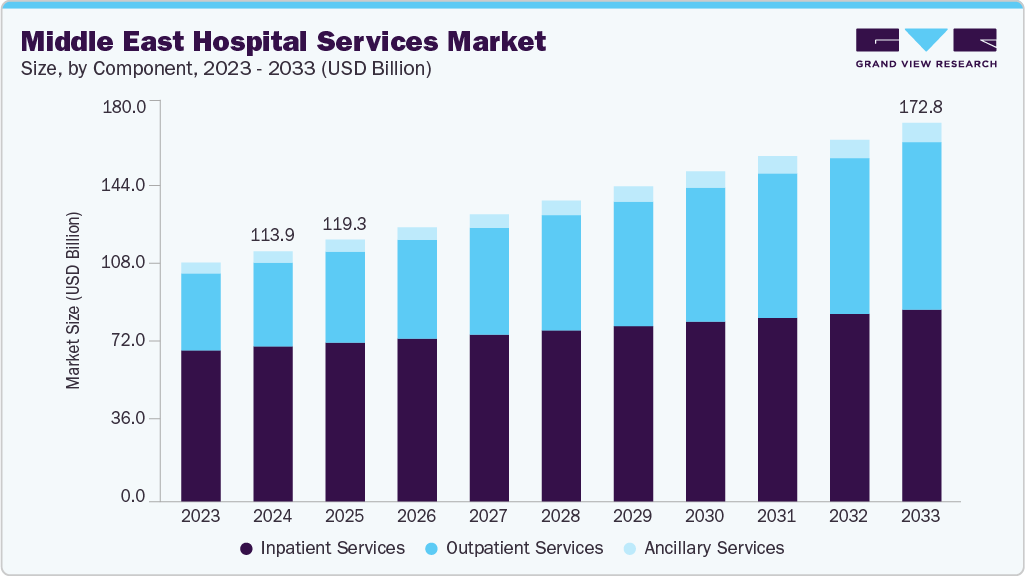
The Middle East hospital services market size was estimated at USD 113.98 billion in 2024 and is expected to reach USD 172.84 billion by 2033, growing at a CAGR of 4.7% from 2025 to 2033. This can be attributed to the rapid population growth, coupled with a rising prevalence of chronic lifestyle-related diseases such as diabetes, cardiovascular disorders, and obesity. In addition, the growing trend towards patient consumerism, rising insurance coverage, majorly in developing countries such as UAE, Qatar, Saudi Arabia, and Kuwait.
Rising Consumerization of Healthcare:
Patients increasingly expect personalized, transparent, and high-quality care in return for the growing costs of medical services. This shift pushes hospitals to adopt customer-centric strategies, such as digital health platforms for seamless appointment booking, teleconsultations, and electronic health records that improve convenience and engagement. For instance, in the UAE, major hospital groups such as Mediclinic and NMC Healthcare have introduced mobile apps and online portals that allow patients to manage appointments, access test results, and consult with physicians virtually. For instance, in May 2025, Practo launched its consumer-facing services in the UAE covering Abu Dhabi, Dubai, and Sharjah. The platform provides UAE users access to over 31,000 verified doctors and 3,000 healthcare facilities, enabling them to discover, compare, and instantly book appointments across specialties such as dentistry, dermatology, gynecology, general practice, ENT, physiotherapy, and psychiatry.
By focusing on patient experience and leveraging digital tools, hospitals in the Middle East are enhancing service delivery and gaining a competitive edge, thereby accelerating overall market growth.
Growing Awareness Regarding the Availability and Benefits of Advanced Hospital Services:
In the region, increasing public awareness about advanced hospital services has significantly boosted demand, with more patients seeking specialized treatments and modern healthcare facilities. Expanding healthcare insurance coverage, including public programs such as Saudi Arabia’s Council of Cooperative Health Insurance (CCHI) and private insurance schemes in the UAE, has dramatically enhanced affordability and accessibility. This improvement enables a larger segment of the population, including expatriates, to utilize hospital services. For instance, in May 2024, AXA and Daman entered a partnership to launch a new international private medical insurance enhancing accessibility to hospital services. This collaboration between AXA and Daman enhances health coverage by merging AXA's global insurance expertise with Daman's regional presence. It aims to improve insurance accessibility, reduce out-of-pocket expenses, and stimulate growth in the hospital services market in the region.
The Digital Health Revolution and Technology Adoption:
This trend is enhancing accessibility, efficiency, and the quality of care. Initiatives such as Saudi Arabia’s Seha Virtual Hospital, which connects 224 hospitals and offers 44 specialized services, are expanding access to advanced healthcare for remote and underserved populations. This increases patient flow and reliance on hospital networks. Similarly, nationwide electronic health record (EHR) systems, such as Jordan’s integration of more than 850 hospitals and clinics, improve interoperability, streamline patient data management, and enable coordinated care, strengthening hospital efficiency and outcomes. Furthermore, innovations such as Saudi Arabia’s AI-powered “Dr. Hua” clinic demonstrate the integration of artificial intelligence (AI) into hospital workflows. This reduces diagnostic times, optimizes resource allocation, and enhances patient experiences. These advancements position hospitals as digital innovation hubs, attract investment, and increase the demand for technologically advanced healthcare services across the region.
Rising Expansion of Home Healthcare and Medical Tourism:
The growth of home healthcare, fueled by an aging population, increasing prevalence of chronic conditions, and the need for remote care, creates strong linkages with hospitals, since patients receiving home-based monitoring and treatment often require periodic hospital visits for diagnostics, emergency admissions, or specialized interventions. For instance, in the UAE and Saudi Arabia, post-acute and long-term care facilities are increasingly integrated with hospital networks, ensuring continuity of care between home settings and tertiary hospitals.
Moreover,medical tourism is positioning countries such as Jordan, the UAE, and Turkey as regional healthcare hubs, attracting international patients for procedures ranging from cardiology and oncology to cosmetic and orthopedic surgeries. For instance, Jordan, has become a destination for high-quality yet affordable procedures, drawing patients from neighboring Arab states, Africa, and even Europe. In 2024, more than 224,000 medical tourists visited Jordan, marking a steady increase from 191,532 in 2022 and 202,592 in 2023. This growth is attributed to two main factors including the country’s world-class healthcare infrastructure and the attractiveness of its natural therapeutic offerings. Similarly, Dubai has established itself as a global hub with over 500,000 medical tourists annually, supported by state-of-the-art hospitals offering specialized packages for complex surgeries.
Growing Governmental Initiatives & Economic Diversification:
Countries such as Saudi Arabia, UAE, Qatar, and Oman channel large-scale investments into healthcare infrastructure as part of their broader transformation agendas. Public-Private Partnerships (PPPs) are being used to fast-track hospital construction, modernize facilities, and bring in international expertise, helping bridge gaps in capacity and efficiency. Substantial 2024 healthcare budgets in the UAE (USD 1.7 billion), directly boost demand for advanced hospital services by financing new projects, expanding bed capacity, and integrating digital health solutions.
For instance, Saudi Arabia’s Ministry of Health launched projects under Vision 2030 to build 35 new hospitals and upgrade existing ones, while the UAE has seen PPP-driven developments such as the King’s College Hospital London Dubai, which combines global expertise with local investment. In Qatar, Hamad Medical Corporation has expanded specialized facilities such as the National Center for Cancer Care and Research, aligning with national health strategies. Oman invests in regional hospitals such as the Sultan Qaboos Hospital expansion in Salalah to improve access outside Muscat. These initiatives demonstrate how government-led spending and PPPs create a robust, diversified healthcare ecosystem, fueling sustained growth of the hospital services market across the region.
Market Concentration & Characteristics
The market is fragmented, with many small players entering the market and launching new innovative products. The degree of innovation is medium, the level of mergers & acquisitions activities is medium, and the impact of regulations on the market is high. Moreover, the service expansion is moderate in the market.
The degree of innovation in the market is high due to improved healthcare delivery. With the integration of advanced digital health technologies such as EHRs, telehealth, and AI-driven diagnostic tools, and the adoption of novel healthcare models such as patient-centered care and value-based purchasing, hospitals are increasingly investing in innovative solutions. For instance, the Abu Dhabi Department of Health (DoH) offers the Malaffi Health Portal, a cutting-edge digital platform that extends the region’s first Health Information Exchange (HIE) Malaffi to patients. The portal empowers residents by granting them secure and convenient access via both a website and a mobile app (available on iOS and soon on Android) to their centralized medical records, including doctor visits, lab and radiology results, medications, allergies, immunizations, discharge summaries, and more
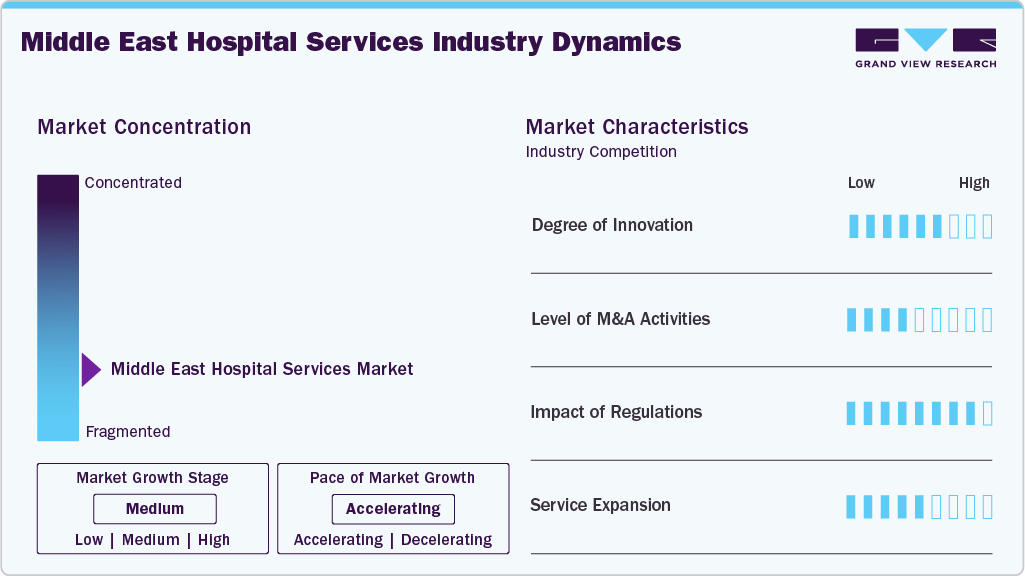
M&A activities in the industry is high, driven by growing demand and consolidation among companies. For instance, in May 2025, Al Hilal Healthcare Group, acquired Middle East Hospital in Segaya and rebranding it as Al Hilal Premier Hospital. The newly minted 65-bed hospital, situated in Segaya, embodies the Group’s ethos of "Trusted Care & Premier Experience." Under this banner, the facility now offers a broad spectrum of advanced and multidisciplinary services from cardiology, gastroenterology, neurology, and neurosurgery to bariatric surgery, obstetrics & gynecology, pediatrics, ENT, dentistry, orthopaedics, and more-all delivered in a modern, patient-centric environment.
Regulations in the industry play a critical role in shaping service quality, patient safety, and investment opportunities. Most countries in the region have strengthened their healthcare regulatory frameworks to align with international standards such as JCI (Joint Commission International), ISO, and WHO guidelines. Ministries of Health such as Saudi Arabia’s MOH, the UAE’s Department of Health (DOH) in Abu Dhabi, and the Dubai Health Authority (DHA) enforce strict rules on licensing, accreditation, staffing ratios, infection control, and patient rights, ensuring hospitals maintain high levels of care.
The market observes significant expansion to improving healthcare infrastructure in the region. For instance, in May 2025, Kuwait Hospital and SAP announced a collaboration that promotes digital transformation and innovation in Kuwait’s healthcare sector. By leveraging SAP’s advanced enterprise software and cloud-based solutions, Kuwait Hospital aims to streamline its operations, enhance patient data management, and improve overall service efficiency. This partnership is designed to strengthen areas such as EHRs, patient engagement platforms, predictive analytics, and hospital resource planning, ensuring more personalized and data-driven care. It also supports Kuwait’s national vision of modernizing healthcare infrastructure and adopting smart technologies to meet rising patient expectations and international standards.
Type Insights
The inpatient services segment dominated the market and accounted for a share of 61.95% in 2024. The need for extensive, 24/7 healthcare services provided by hospitalization, specifically for severe health problems and surgical procedures, is expected to drive the demand for the segment. In addition, population growth and aging demographics are increasing demand for specialized inpatient care, particularly for complex surgeries and geriatric services. The region is also witnessing large-scale investments in healthcare infrastructure, with countries such as Saudi Arabia, the UAE, and Qatar expanding multi-specialty hospitals, medical cities, and centers of excellence, which in turn fuel inpatient admissions.
The outpatient services segment is expected to register the fastest CAGR during the forecast period. Advancements in medical technology, such as minimally invasive surgical techniques and improved wound healing equipment, have enabled faster patient recovery, decreasing the average length of hospital stays. In addition, the rising adoption of telemedicine and remote consultation procedures boosted the outpatient services market, as patients can receive care without physically visiting the hospital.
Ownership Insights
The for-profit privately owned segment accounted for the largest share of 57.40% in 2024 and is expected to register the fastest CAGR from 2025 to 2033. This is due to the rising demand for high-quality healthcare, which is increasing due to medical tourism and the growing middle and upper class seeking premium services. To address this, governments are promoting private sector involvement through public-private partnerships (PPPs) and foreign investment. Countries such as the UAE, Saudi Arabia, and Qatar are emerging as healthcare hubs, with private hospital chains expanding specialized services in areas such as cardiology and oncology. For instance, Mediclinic Middle East and NMC Health in the UAE, along with Dr. Sulaiman Al Habib Medical Group in Saudi Arabia, are catering to the demand for advanced medical care and luxury experiences.
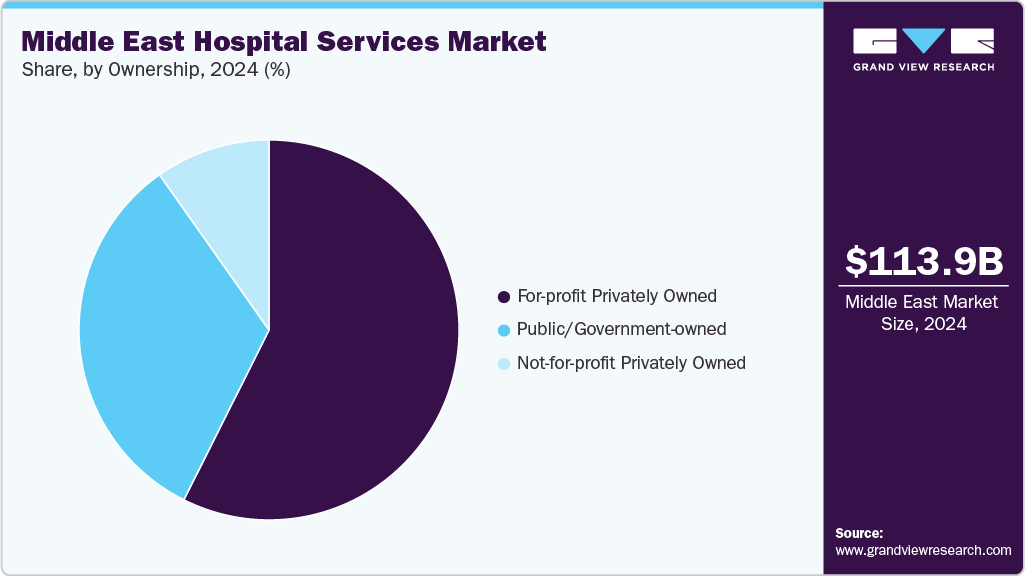
The public/government-owned segment is expected to register significant growth over the forecast period owing to the high patient volume in these settings due to low cost or affordable care compared to private settings. In addition, countries are focusing on increasing the number of public hospitals in rural areas to provide high-quality care to underserved areas. Hence, governments invest in public health to provide better workforce capacity and high-quality care.
Country Insights
Saudi Arabia Hospital Services Market Trends
In Saudi Arabia the market is driven by the growing acquisitions which strengthen the supply chain and availability of advanced medical equipment, consumables, and healthcare IT solutions. With hospitals relying heavily on high-quality devices and infrastructure to deliver specialized care, the integration of Al Hammad’s distribution network enhances the efficiency, accessibility, and affordability of critical hospital services. For instance, in August 2024, Dallah Healthcare completed the acquisition of Al-Salam Hospital in Al-Khobar and Al-Ahsa Hospital. This acquisition immediately expanded Dallah’s operational bed capacity by 37%, adding 150 beds at Al-Salam Hospital (with plans to scale up to 475 beds) and 274 beds at Al-Ahsa Hospital. As a result, the group's total bed capacity is now nearly 1,903 beds, and it will increase further when including associate facilities.
Oman Hospital Services Market Trends
Oman is anticipated to witness significant growth due to the growing population and rising prevalence of chronic diseases such as diabetes, cardiovascular conditions, and obesity, which increase the demand for specialized hospital care. In addition, the government’s focus on expanding healthcare infrastructure under Oman Vision 2040 has led to significant investments in modern hospitals, advanced medical technologies, and improved service delivery. The increase in health insurance coverage for citizens and expatriates has also widened access to private hospital services, fueling market growth.
UAE Hospital Services Market Trends
The launch of a nationwide health insurance scheme in December 2024, in the UAE marks a significant milestone in strengthening the country’s healthcare ecosystem and driving demand for hospital services. By ensuring that all residents, including expatriates, are covered under a unified insurance framework, the scheme improves accessibility and affordability of medical care across both public and private hospitals. This initiative reduces the out-of-pocket burden on patients, encourages early diagnosis and treatment, and promotes preventive healthcare utilization. For hospitals, it translates into higher patient volumes, especially in specialized and tertiary care, as more individuals can now seek advanced treatments without financial constraints.
Moreover, the scheme supports the government’s long-term goal of establishing the UAE as a leading healthcare hub by boosting investor confidence, attracting private sector participation, and enhancing the quality of care delivered. It also aligns with UAE Vision 2030, where universal healthcare coverage is a key pillar of social welfare and economic development.
Key Middle East Hospital Services Company Insights
The market is driven by a mix of leading public institutions and rapidly expanding private healthcare groups that are transforming the region’s medical landscape. Countries such as Saudi Arabia, the UAE, Kuwait, Qatar, and Oman are home to renowned players that combine advanced infrastructure, international partnerships, and technological innovation to deliver world-class care. Major private healthcare networks such as Dr. Sulaiman Al Habib Medical Group, Aster DM Healthcare, VPS Healthcare, Burjeel Holdings, and Saudi German Health are expanding their footprints across the GCC, while public institutions such as King Faisal Specialist Hospital & Research Centre in Saudi Arabia and Hamad Medical Corporation in Qatar remain central to national healthcare delivery. These companies are driving improvements in tertiary and specialty care and are supporting the region’s goals of becoming a global hub for medical tourism, research, and innovation.
Key Middle East Hospital Services Companies:
- Dr. Sulaiman Al Habib Medical Group
- Dallah Healthcare Group
- Mouwasat Medical Services
- Middle East Healthcare Company
- Dr. Soliman Abdel Kader Fakeeh Hospital
- King Faisal Specialist Hospital & Research Centre
- National Guard Health Affairs
- King Fahad Medical City
- King Saud University Medical City
- Aster DM Healthcare
- VPS Healthcare
- Burjeel Holdings
- Pure Health
- Royale Hayat Hospital
- Hamad Medical Corporation
Recent Developments
-
In April 2025, Mediclinic Middle East announced a USD 32.67 million investment to expand and upgrade its flagship Mediclinic Airport Road Hospital in Abu Dhabi. The expansion, revealed during Abu Dhabi Global Health Week, underscores the group’s commitment to meeting rising demand for specialized medical services, particularly in cardiology, oncology, neurology, and critical care. This investment aims to enhance patient capacity and introduce state-of-the-art technologies and align with Abu Dhabi’s broader vision of positioning itself as a global healthcare hub.
-
In January 2025, PureHealth acquired Hellenic Healthcare Group (HHG) for USD 2.3 billion, expanding its global footprint and solidifying its position in the healthcare sector. HHG is Greece’s largest private hospital network, giving PureHealth access to advanced European medical expertise and infrastructure. This move aligns with PureHealth’s goal of creating a large integrated healthcare platform by merging international best practices with its expanding network in the UAE and beyond.
-
In July 2024, Emirates Health Services (EHS) launched the "Digital Care Center" to enhance digital health in the UAE. This center offers integrated, technology-driven services, allowing patients to access healthcare remotely via teleconsultations and virtual clinics. It aims to improve convenience, reduce waiting times, and ensure continuous care, particularly for chronic diseases and mental health support.
-
In May 2024, IRIS announced an investment in the Middle East due to the rapid digital transformation in the hospitality sector and rising guest expectations for seamless services. With increased demand for digital ordering systems, particularly in the UAE and Saudi Arabia, IRIS aims to enhance operational efficiency and customer satisfaction while solidifying its position as a leading hospitality technology provider in the region.
Middle East Hospital Services Market Report Scope
Report Attribute
Details
Market size in 2025
USD 119.34 billion
Revenue forecast in 2033
USD 172.84 billion
Growth rate
CAGR of 4.7% from 2025 to 2033
Actual data
2021 - 2023
Forecast data
2025 - 2033
Quantitative units
Revenue in USD million/billion and CAGR from 2025 to 2033
Report coverage
Revenue forecast, company ranking, competitive landscape, growth factors, and trends
Regional scope
Middle East
Segments covered
Type, ownership, and country
Country scope
Saudi Arabia; UAE; Kuwait, Qatar; and Oman
Key companies profiled
Dr. Sulaiman Al Habib Medical Group; Dallah Healthcare Group; Mouwasat Medical Services; Middle East Healthcare Company; Dr. Soliman Abdel Kader Fakeeh Hospital; King Faisal Specialist Hospital & Research Centre; National Guard Health Affairs; King Fahad Medical City; King Saud University Medical City; Aster DM Healthcare; VPS Healthcare; Burjeel Holdings; Pure Health; Royale Hayat Hospital; Hamad Medical Corporation
Customization scope
Free report customization (equivalent up to 8 analysts working days) with purchase. Addition or alteration to country, regional & segment scope.
Pricing and purchase options
Avail customized purchase options to meet your exact research needs. Explore purchase options
Middle East Hospital Services Market Report Segmentation
This report forecasts revenue growth, regional and country level and provides an analysis of the latest industry trends in each of the sub-segments from 2021 to 2033 For this study, Grand View Research has segmented the Middle East hospital services market report based on type, ownership, and country:
-
Type Outlook (Revenue, USD Billion, 2021 - 2033)
-
Inpatient Services
-
Cardiovascular Disorders
-
Cancer
-
Musculoskeletal Diseases
-
Emergency & Trauma
-
Respiratory Disorder
-
Gastroenterology
-
CNS Disorders
-
Pregnancy and Postpartum Care
-
Urology & Nephrology Disorders
-
Others
-
-
Outpatient Services
-
Ancillary Services
-
-
Ownership Outlook (Revenue, USD Billion, 2021 - 2033)
-
Public/Government-owned
-
Not-for-profit privately owned
-
For-profit privately owned
-
-
Middle East Hospital Services Country Outlook (Revenue, USD Billion, 2021 - 2033)
-
Saudi Arabia
-
UAE
-
Kuwait
-
Oman
-
Qatar
-
-


Share this report with your colleague or friend.
Need a Tailored Report?
Customize this report to your needs — add regions, segments, or data points, with 20% free customization.


ISO 9001:2015 & 27001:2022 Certified
We are GDPR and CCPA compliant! Your transaction & personal information is safe and secure. For more details, please read our privacy policy.
Trusted market insights - try a free sample
See how our reports are structured and why industry leaders rely on Grand View Research. Get a free sample or ask us to tailor this report to your needs.













