
- Home
- »
- Animal Health
- »
-
Middle East Veterinary Pharmaceuticals Market Report, 2035GVR Report cover

Middle East Veterinary Pharmaceuticals Market (2027 - 2035)
Size, Share & Trends Analysis Report By Animal, By Product, By Drug Type, By Type, By Route of Administration, By Sales Channel, By Country, And Segment Forecasts
Market Size, 2026
$885.1MMarket Estimate, 2027
$967.3MMarket Forecast, 2035
$2,305.5MCAGR, 2027–2035
11.5%Middle East Veterinary Pharmaceuticals Market Summary
The Middle East veterinary pharmaceuticals market size was valued at USD 885.1 million in 2026 and is projected to grow from USD 967.3 million in 2027 to USD 2,305.5 million by 2035, at a CAGR of 11.5% from 2027 to 2035. Market growth is driven by factors such as expansion of commercial livestock production and national food-security priorities, persistent transboundary animal disease risks and rising biosecurity requirements, growing companion-animal healthcare expenditure and demand for specialty medicines, expansion of veterinary healthcare infrastructure and institutional animal-health investment.
Key Market Trends & Insights
- By animal: Production animals segment held the largest market share of 63.5% in 2026.
- By product: Parasiticides segment held the largest market share of 35.2% in 2026.
- By drug type: Generic segment is expected to grow at the fastest rate of 12.9% over the forecast period .
- By type: Prescription segment held the highest market share of 60.7% in 2026.
- By route of administration: Oral segment held the highest market share of 45.3% in 2026.
- By sales channel: Institutional sales segment held the highest market share of 35.8% in 2026.
Market Size & Forecast
- Market Size in 2026: USD 885.1 Million
- Estimated market size in 2027: USD 967.3 Million
- Projected market size by 2035: USD 2,305.5 Million
- CAGR (2027-2035): 11.5%
Prism AI by Grand View Research Free to tryAsk a question about the middle east veterinary pharmaceuticals marketTry asking✓Every figure cited from GVR research Prefer the report? Download free sample →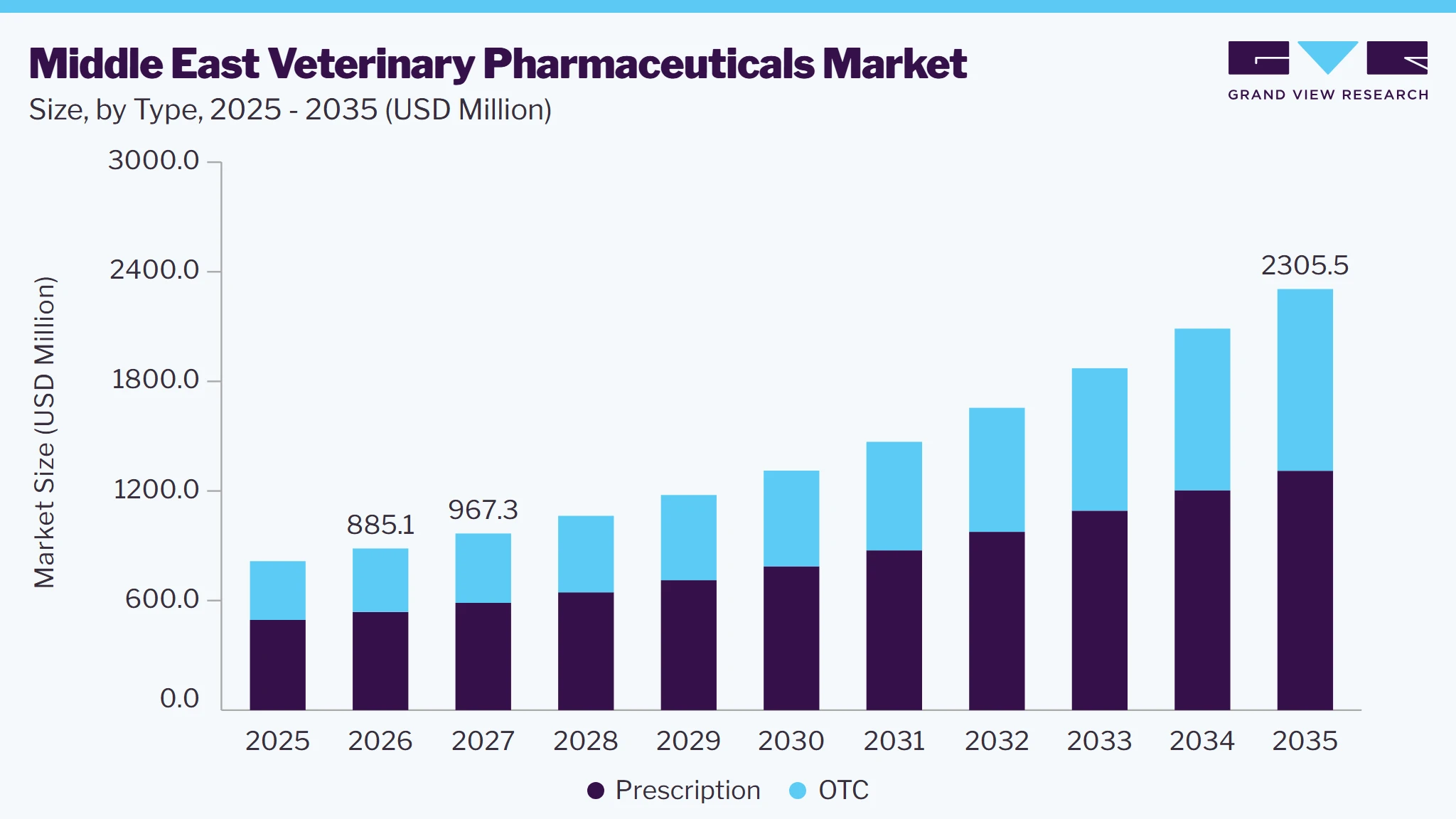 Source: Grand View Research, IR Documents, Primary Interviews, Paid DatabasesTo learn more about this report,
 Download Free Sample Report
Market Dynamics
The Middle East veterinary pharmaceuticals market is mainly shaped by two demand systems; production-animal health management linked to food security and livestock productivity, and companion-animal treatment through veterinary clinics and pharmacies. Saudi Arabia and Oman generate demand across livestock-health programs and commercial farming, while the UAE, Qatar and Bahrain combine food-animal medicine requirements with private veterinary and companion-animal channels. Kuwait serves livestock and pet treatment needs, while other middle eastern countries includes varied markets such as Türkiye, Iran, Iraq and Jordan, among others. Domestic manufacturers in Türkiye and Jordan complement multinational suppliers, while importers remain central where local manufacturing is limited. Market performance varies by animal mix, purchasing power, veterinary infrastructure and national registration requirements, making country-specific portfolios and channel coverage central to competitive positioning.
Expansion of veterinary healthcare infrastructure is converting public animal-health investment and private-sector capacity additions into wider access to diagnosis, prescribing and medicine dispensing. Government clinics, mobile veterinary units, laboratories and quarantine facilities expand institutional procurement, while private hospitals and pharmacies create recurring demand for parasiticides, anti-infectives and other medicines. For instance, in November 2025, the World Organisation for Animal Health (WOAH) reported that Saudi Arabia's 2024 network included 181 government veterinary clinics, 121 mobile clinics and 2,443 private veterinary facilities, including 1,709 pharmacies and 694 clinics. A wider care network increases treatment access and procurement touchpoints, positioning suppliers with broad therapeutic portfolios, local registrations and distributor reach to capture demand across livestock operators and companion-animal owners.
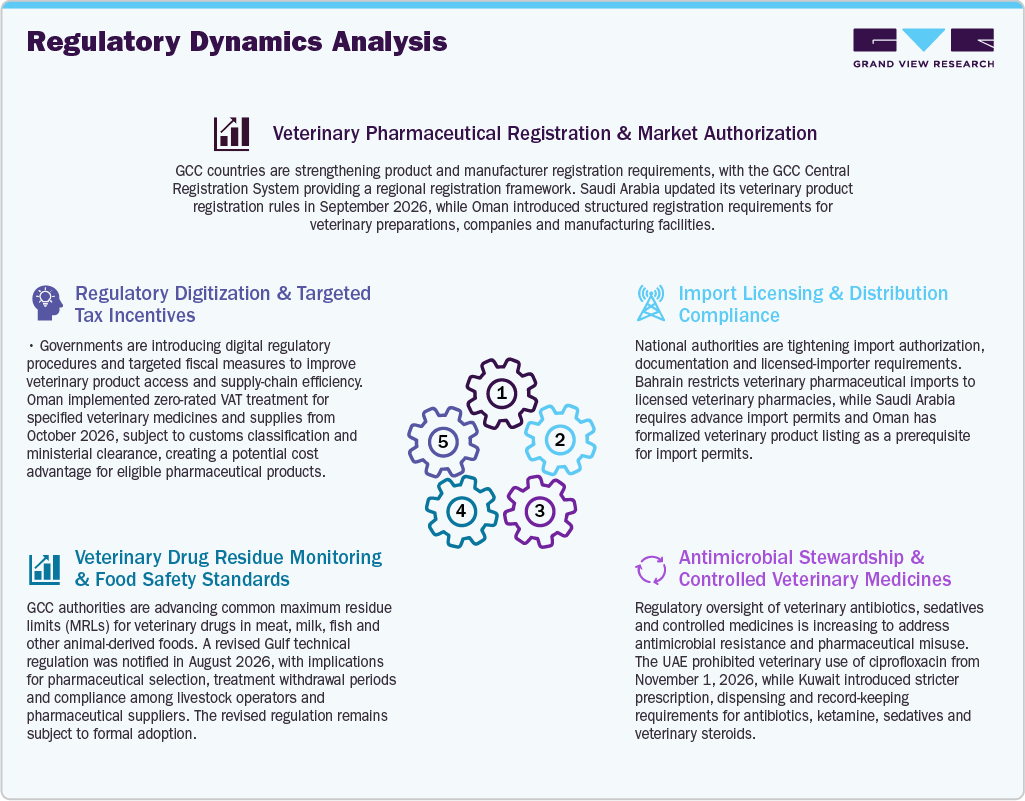
Country-level registration and import controls create duplicated compliance work for manufacturers seeking regional coverage, as product approvals, company and factory registrations, local representation, documentation and import permits are administered through separate national systems. An approval in one market does not automatically authorize sale in another, requiring suppliers to maintain country-specific dossiers and launch schedules. For instance, in August 2026, Oman required veterinary pharmaceutical manufacturers and importers to submit plans identifying the preparations, companies and factories they intended to register before registration applications opened on September 1. These requirements increase regulatory costs, extend launch preparation and complicate inventory planning. This structure favors multinationals with established regulatory teams and budgets, while raising market-entry costs for regional manufacturers and generic suppliers targeting multiple countries.
Regulatory reforms and targeted tax treatment can improve the affordability and commercial reach of eligible veterinary medicines by reducing administrative friction and the tax component of distribution costs. Product-level eligibility remains central, since concessions apply to specified customs classifications and may require clearance from the relevant ministry rather than covering every veterinary pharmaceutical. For instance, in October 2026, Oman implemented a zero-rated VAT list covering 62 veterinary product codes, including eligible veterinary medicines, subject to specified customs tariff codes and a Ministry of Agriculture, Fisheries and Water Resources clearance permit. For eligible medicines, zero-rating can lower the tax burden through the supply chain and create room for more competitive pricing. Suppliers that validate eligibility and align import documentation can improve price positioning and expand access among farms, clinics and pharmacies.
Regulatory Dynamics Analysis
 To learn more about this report, Download Free Sample Report
Regulatory oversight across the Middle East is moving toward tighter control of product authorization, import pathways, antimicrobial use and residues in animal-derived food, alongside selective digitization and fiscal facilitation. Although initiatives are advancing regional regulatory coordination, country-level registration, licensing and documentation requirements continue to influence product launch timelines and distribution access. Restrictions on selected antibiotics and controlled medicines increase compliance demands for manufacturers and veterinary prescribers, while residue standards elevate the importance of withdrawal-period guidance and responsible product selection. Suppliers with established regulatory capabilities and local distribution partnerships are better positioned to sustain market access.
Market Concentration & Characteristics
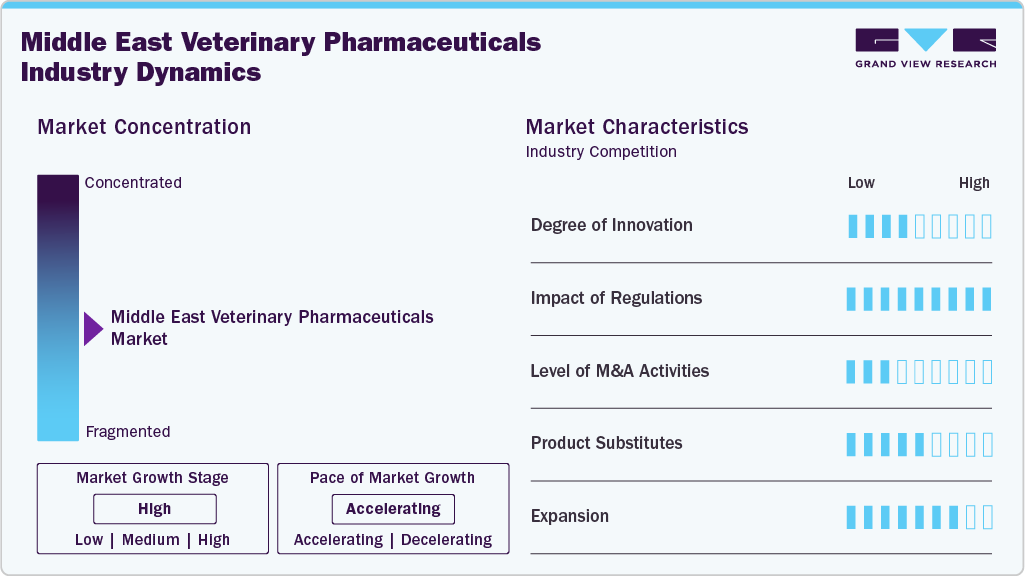
The industry is moderately fragmented, with global pharmaceutical manufacturers competing alongside regional drug manufacturers, local importers and country-specific distributors. Multinational companies hold competitive advantages through diversified therapeutic portfolios, established brands and regulatory capabilities, while domestic manufacturers compete through generic formulations, local market knowledge and pricing. Distribution remains fragmented because market access is shaped by national licensing requirements, importer networks and veterinary pharmacy coverage. Competitive concentration is higher among multinational manufacturers than across the broader supply chain, leaving opportunities for regional producers and distributors to capture country-specific demand.
The degree of innovation is low to moderate, as development is driven primarily by formulation improvements, expanded therapeutic applications, combination products and improved administration formats rather than frequent introduction of new molecular entities. Manufacturers are adapting portfolios to production-animal disease burdens and companion-animal treatment requirements, while antimicrobial stewardship is increasing interest in targeted therapies and non-antibiotic approaches. Investments in manufacturing quality and analytical capabilities support product differentiation. This environment favors companies that can adapt established therapies to regional treatment requirements and improve product availability and administration convenience, while breakthrough pharmaceutical development remains concentrated among larger developers.
 To learn more about this report, Download Free Sample Report
The impact of regulations is high, as veterinary medicines require country-specific product authorization, manufacturer registration, import permits and compliance with prescription, dispensing and residue requirements. Differences across Middle East increase documentation, local representation and shipment-clearance costs, extending commercialization timelines for companies targeting multiple countries. Restrictions on selected antimicrobials and controlled medicines add compliance requirements for manufacturers, distributors and veterinary prescribers. Larger suppliers with dedicated regulatory teams and established local partners are better positioned to manage these obligations, while smaller entrants face higher proportional compliance costs and greater market-entry complexity.
The level of mergers and acquisitions is low to moderate, as the industry remains shaped by multinational portfolio competition, regional manufacturing capabilities and distributor-led access rather than frequent large-scale consolidation. Cross-border acquisitions offer opportunities to access local product registrations, manufacturing capacity and established distribution networks, although differences in national regulations and uneven industry scale complicate integration. Strategic partnerships, licensing agreements and distribution arrangements therefore provide more flexible expansion routes than full acquisitions. This favors companies pursuing targeted country expansion, while larger transactions are more likely to involve established manufacturers or diversified animal-health businesses.
The threat from product substitutes is moderate, as pharmaceutical treatment remains necessary for many diagnosed bacterial, parasitic, inflammatory and pain-related conditions. Substitution is more feasible where therapeutic classes overlap or generic medicines offer equivalent active ingredients at lower prices. Preventive vaccination, improved biosecurity, nutrition and husbandry practices can reduce pharmaceutical consumption in selected disease settings, although vaccines and non-pharmaceutical interventions remain outside the defined market scope. Consequently, substitution pressure is greater in routine prevention and price-sensitive treatment categories, while demand for targeted medicines remains closely linked to disease incidence and veterinary prescribing requirements.
Expansion potential is high, supported by national food-security priorities, modernization of veterinary services, growth in organized livestock operations and increasing access to companion-animal healthcare. Wider clinic, pharmacy, laboratory and quarantine networks improve pharmaceutical availability, while regional manufacturers in Türkiye and Jordan provide additional supply capacity alongside multinational imports. Country-specific registration requirements and variations in purchasing power will determine the pace of expansion, making local partnerships and species-specific product portfolios important for market penetration. Suppliers combining regulatory capabilities with reliable distribution networks are better positioned to extend coverage across institutional livestock buyers and private veterinary healthcare channels.
Analyst Perspective
The Middle East veterinary pharmaceuticals market presents a structurally attractive opportunity, supported by livestock productivity priorities, food-security investments and expanding companion-animal healthcare expenditure. Production-animal medicines continue to anchor regional demand, particularly across poultry, dairy, sheep and goat farming, where recurring disease management requirements sustain pharmaceutical consumption. Multinational manufacturers maintain competitive advantages through established brands, diversified therapeutic portfolios and regulatory capabilities, while regional manufacturers in Saudi Arabia, the UAE, Jordan and Türkiye compete through generic formulations, local manufacturing and export-oriented distribution. However, fragmented registration frameworks and import compliance requirements increase commercialization costs and create uneven market access across countries. The expansion of veterinary infrastructure, regulatory modernization and targeted manufacturing investments provide additional growth avenues. Going forward, competitive positioning will depend on combining therapeutic portfolio breadth with country-specific regulatory expertise, pricing flexibility and distributor access.
Animal Insights
Based on animal, the production animals segment led the market with the largest revenue share of 63.5% in 2026. Segment growth is driven by commercial poultry, dairy, sheep, goat and camel operations that generate high-volume, recurring treatment requirements. Saudi Arabia produced 1.4 million tonnes of broiler meat and more than 9 billion table eggs in 2024, while its sheep population exceeded 22 million. Intensive flock and herd management drives repeated purchases of parasiticides, anti-infectives and other medicines, keeping aggregate production-animal consumption ahead of the companion-animal segment.
On the other hand, the companion animals segment is expected to grow at the fastest CAGR over the forecast period as pet ownership, owner spending and formal veterinary care expand in urban centres. For instance pet registration initiatives in Abu Dhabi are increasing engagement between owners and licensed clinics, where vaccinations, routine checks and ongoing treatment create recurring medicine demand. Wider availability of specialty care raises demand for dermatological, gastrointestinal, allergic and chronic-condition medicines, lifting pharmaceutical spending per animal faster than in production-animal categories.
Product Insights
Based on product, the parasiticides segment dominated the market, with a revenue share of 35.2% in 2026. Segment growth is driven by parasite control remaining a recurring requirement across sheep, goats, cattle, camels and poultry. Grazing exposure, warm conditions and intensive flock management sustain demand for anthelmintics, ectoparasiticides, endectocides and anticoccidials. Repeated herd- and flock-level treatment cycles support higher purchasing frequency than many condition-specific medicines, while parasite control remains directly linked to livestock productivity, animal welfare and disease management.
On the other hand, the other products segment is expected to grow at the fastest CAGR over the forecast period because therapeutic demand is broadening beyond the core parasitic, infectious, anti-inflammatory and pain categories. Companion-animal and equine care creates demand for dermatological, gastrointestinal, ophthalmic, hormonal, reproductive, anesthetic and sedative medicines, while livestock breeding and reproductive management add demand for hormonal and intrauterine products. Regional portfolios already span pet and equine preparations, positioning manufacturers with specialty formulations to benefit as clinical case mix diversifies.
Drug Type Insights
Based on drug type, the branded segment led the market with the largest revenue share of 54.4% in 2026. Growth is supported by veterinarian preference for established manufacturers, product familiarity and confidence in formulation consistency and supply continuity. These advantages matter in prescription and specialty treatment, where clinical outcomes and continuity of availability influence product selection. Multinational suppliers with broad portfolios and established regional distributor relationships are positioned to retain placements in veterinary hospitals and organized livestock accounts, despite price competition from generics.
On the other hand, the generics segment is expected to grow at the fastest CAGR over the forecast period, driven by commercial farms, pharmacies and distributors seeking lower-cost alternatives for frequently used medicines. Jordanian manufacturers such as Mobedco and AVICO offer broad generic portfolios across farm and companion-animal indications, expanding local supply choices and strengthening price competition. Mobedco reports up to 200 registered products, while AVICO markets competitively priced generic veterinary medicines. Wider use of these products supports affordability for volume-driven livestock buyers and budget-sensitive clinics.
Type Insights
Based on type, the prescription segment accounted for the largest revenue share of 60.7% in 2026. This is because treatment of bacterial infections, severe parasitic conditions, inflammation, pain and reproductive disorders often requires veterinary diagnosis, dose selection and supervision. Commercial farms and veterinary hospitals procure these products for conditions where inappropriate use can affect animal outcomes and food safety. The UAE's 2025 veterinary medicines law, for instance, requires a prescription for veterinary antibiotics and restricts their dispensing, supporting demand through supervised veterinary channels.
On the other hand, the OTC segment is expected to grow at the fastest CAGR over the forecast period as owners, small breeders and farm operators seek convenient access to eligible routine treatments through veterinary pharmacies, animal-health retailers and permitted online channels. Product categories legally available without a prescription support repeat purchases and reduce the need for a consultation for every replenishment. However, national product classifications, restrictions on antibiotics and local dispensing rules confine growth to approved non-prescription formulations.
Route of Administration Insights
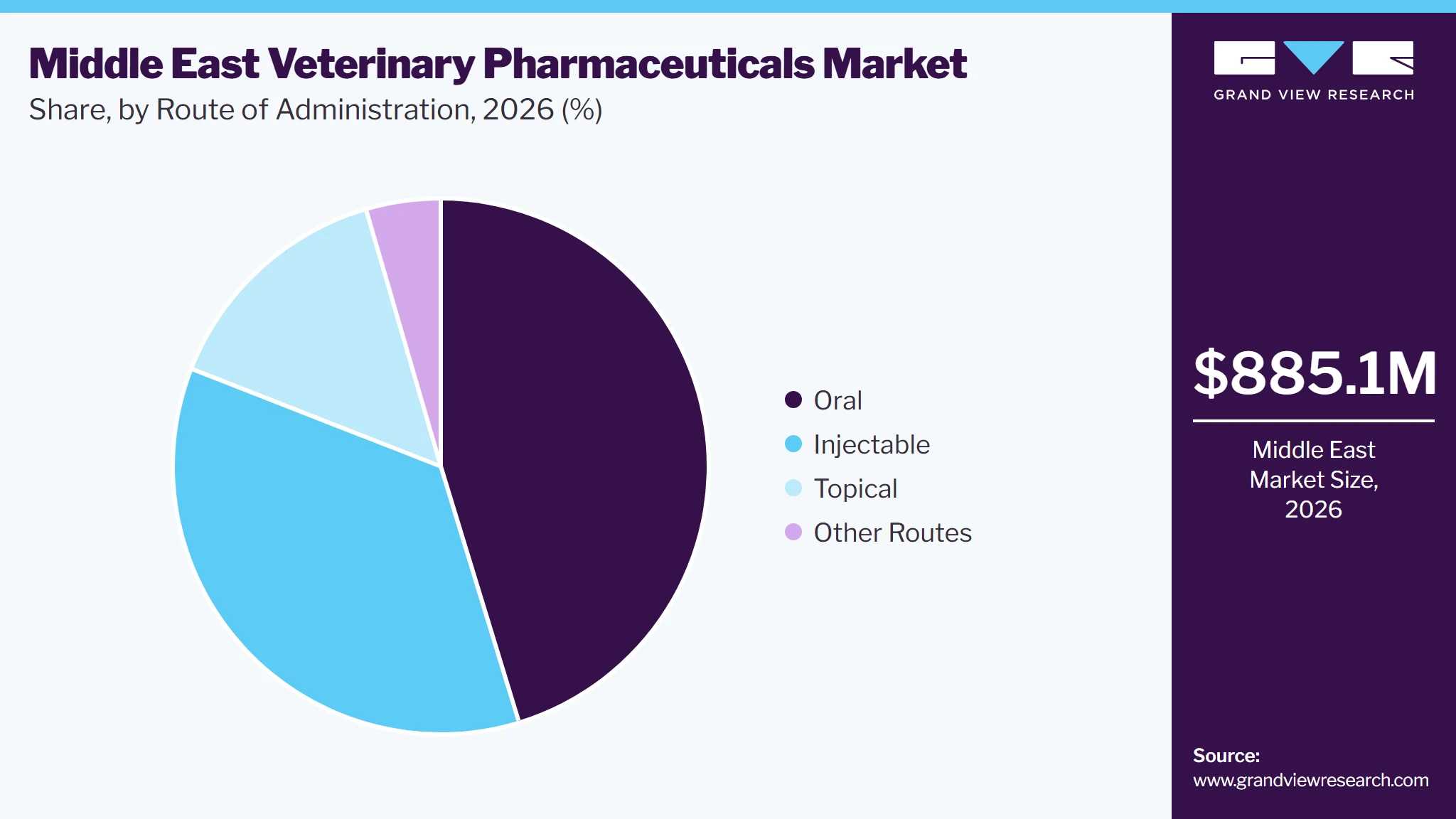
Based on route of administration, the oral segment held the largest market share of 45.3% in 2026. Growth is owed to the route offering practical administration across livestock and companion animals, with dosage forms spanning tablets, boluses, pastes, drenches, powders and solutions. Oral medicines are suited to flock and herd treatment when products can be administered through drinking water or feed, reducing handling across large populations. Their use across parasitic, infectious and supportive therapies sustains volume demand across the region.
 To learn more about this report, Download Free Sample Report
On the other hand, the other routes segment is expected to grow at the fastest CAGR over the forecast period, driven by a smaller base as veterinary practices expanding specialty treatment, reproductive management and localized care requiring ophthalmic, otic, intranasal, inhaled, rectal, vaginal/intrauterine and transdermal formulations. These delivery formats address conditions for which oral, injectable or conventional topical treatment is less suitable. Wider access to specialist services and a more diverse clinical caseload supports faster uptake, although sales remain concentrated in selected species, indications and facilities.
Sales Channel Insights
Based on sales channel, the institutional sales segment dominated the market, with a revenue share of 35.8% in 2026. Growth is owed to commercial farms, integrated poultry producers, dairy operators and public veterinary institutions procuring medicines in recurring volumes for herd and flock health programs. Concentrated production systems favour supplier contracts, distributor relationships and scheduled replenishment rather than individual retail purchases. Saudi Arabia's high broiler and egg output, alongside government-supported livestock project financing, sustains organized procurement and positions institutional buyers as a central route for high-volume pharmaceutical sales.
On the other hand, the e-commerce segment is expected to grow at the fastest CAGR over the forecast period. The growth is driven by online veterinary pharmacies, and digital marketplaces improving product discovery, price comparison and replenishment for pet owners, independent breeders and smaller animal-care operators. Digital channels extend product access beyond physical pharmacy catchments and simplify recurring purchases of eligible OTC and non-controlled medicines. Growth remains subject to prescription rules, registration requirements, storage conditions and cold-chain needs, favoring compliant platforms linked to licensed dispensing and dependable fulfilment.
Country Insights
Saudi Arabia Veterinary Pharmaceuticals Market Trends
Saudi Arabia accounted for the largest market share of 46.3% in 2026, supported by its large production-animal base, sizeable commercial poultry and dairy sectors, and extensive veterinary service and distribution network. These factors generate recurring demand for parasiticides, anti-infectives, reproductive medicines and other treatments across livestock operations, while public veterinary facilities and private pharmacies provide broad procurement and dispensing coverage. For instance, in September 2026, the Saudi Food and Drug Authority (SFDA) issued updated Registration Rules for Veterinary Product Manufacturers and their Products, updating requirements governing veterinary product and manufacturer registration. This regulatory framework favours suppliers with compliant product dossiers and local regulatory capabilities, sustaining Saudi Arabia's leading market position.
Qatar Veterinary Pharmaceuticals Market Trends
The Qatar veterinary pharmaceuticals market is expected to grow at the fastest rate over the forecast period. The market is driven by its expansion from a smaller market base and formalization of animal-health regulation, livestock disease management and medicine-import processes. Commercial dairy and poultry production, livestock breeding and companion-animal care create demand across anti-infectives, parasiticides and other therapeutic classes, while greater regulatory supervision increases the need for registered products and compliant supply. For instance, in September 2026, Qatar launched 38 new services through the OUN app, including import permits for veterinary medicines and controlled medicines, alongside veterinary quarantine procedures. Digital applications and permit tracking can streamline import administration and improve product availability, supporting faster expansion, particularly for suppliers with compliant portfolios and local distribution partners.
Key Middle East Veterinary Pharmaceuticals Company Insights
Market participants in the Middle East are pursuing portfolio expansion, regional distribution partnerships and manufacturing collaborations to strengthen pharmaceutical availability and extend geographic coverage. Global manufacturers are strengthening local market access through distributor relationships, while regional producers are expanding generic medicine portfolios to compete on pricing and product availability.
Key Middle East Veterinary Pharmaceuticals Companies
-
Zoetis Inc.
-
Boehringer Ingelheim International Gmbh
-
Merck & Co., Inc.
-
Elanco
-
Dechra
-
Ceva Santé Animale
-
Phibro Animal Health Corporation
-
Virbac
-
Bimeda Corporate
-
Biogénesis Bagó
-
Vetoquinol
-
Norbrook Laboratories
-
Montajat Veterinary Pharmaceuticals Co., Ltd.
-
Saudi Pharmaceutical Industries
-
UNIVET
-
VAPCO
Competitive Benchmarking
Category
Operating Strategies
Competitive Edge
Weakness
Established Players (Zoetis Inc., Boehringer Ingelheim International GmbH, Merck & Co., Inc., Elanco, Dechra, Ceva Santé Animale, Phibro Animal Health Corporation, Virbac, Bimeda Corporate, Biogénesis Bagó, Vetoquinol, Norbrook Laboratories)
- Established players pursue broad therapeutic portfolio development, continuous R&D investment, product lifecycle management and geographic expansion through subsidiaries and authorized distributors. Their strategies cover production and companion-animal pharmaceuticals, with portfolio diversification across parasiticides, anti-infectives, anti-inflammatory drugs and specialty therapeutics. Companies such as Dechra, Norbrook, and MSD utilize regional distribution networks to extend product availability across Middle Eastern markets.
- These companies benefit from established pharmaceutical brands, extensive product registrations, manufacturing capabilities, regulatory expertise and diversified distribution networks. Their presence across multiple countries and animal categories enables access to institutional livestock buyers, veterinary pharmacies and companion-animal healthcare providers. Their R&D infrastructure and established relationships with veterinarians provide advantages in product development, market access and portfolio positioning.
- Extensive global operations create higher regulatory, manufacturing and operating costs, while broad product portfolios require substantial investment in maintaining country-specific registrations. Competition from lower-priced regional generics can constrain pricing flexibility, particularly in high-volume livestock categories. Furthermore, dependence on local distributors in selected Middle Eastern markets can limit direct customer engagement and commercial control.
Emerging Regional Players (Montajat Veterinary Pharmaceuticals Co., Ltd., Saudi Pharmaceutical Industries, UNIVET, VAPCO)
- Regional and domestic manufacturers focus on veterinary generic formulations, local production capabilities, therapeutic portfolio expansion and regional export development. Their strategies prioritize antibiotics, anthelmintics, antiparasitics, injectables and oral pharmaceutical formulations catering to livestock and poultry healthcare requirements. UNIVET and SPI focus on domestic manufacturing capabilities, while Jordan-based VAPCO utilizes its established manufacturing operations and export network to serve international veterinary pharmaceutical markets.
- These companies benefit from regional market knowledge, comparatively cost-competitive manufacturing structures and closer access to domestic distributors and livestock operators. Their product portfolios address frequently procured therapeutic categories, enabling competition on availability, pricing and local customer requirements. VAPCO's reported export presence across more than 80 countries and UNIVET's network across the Gulf and wider MENA region provide additional geographic access.
- Compared with multinational manufacturers, regional players generally have narrower R&D resources, lower global brand recognition and more limited capabilities in developing differentiated specialty therapeutics. Their competitive positioning is also affected by country-specific registration requirements and dependence on distributor relationships for geographic expansion. Smaller portfolios can constrain their ability to compete across multiple therapeutic categories and companion-animal specialties
Recent Developments
-
In October 2026, the Emirates Drug Establishment, UAE announced a ban on veterinary use of ciprofloxacin, effective November 1, 2026, covering nine veterinary medicinal preparations. The restriction increases compliance requirements for manufacturers and importers and accelerates the need to align anti-infective portfolios with antimicrobial stewardship regulations.
-
In September 2026, Oman's Tax Authority introduced zero-rated VAT treatment for specified veterinary medicines and medical supplies, effective October 1, 2026, subject to customs classification and ministerial clearance. The measure can reduce the tax burden on eligible products, improving pricing flexibility for pharmaceutical manufacturers, importers and distributors.
Middle East Veterinary Pharmaceuticals Market Report Scope
Report Attribute
Details
Market size in 2026
USD 885.1 million
Estimated market size in 2027
USD 967.3 million
Projected market size by 2035
USD 2,305.5 million
Growth rate
CAGR of 11.5% from 2027 to 2035
Historical data
2023 - 2026
Forecast period
2027 - 2035
Quantitative units
Revenue in USD million and CAGR from 2027 to 2035
Report coverage
Revenue forecast, company ranking, competitive landscape, growth factors, and trends
Segments covered
Animal, product, drug type, type, route of administration, application, sales channel, country
Regional scope
Middle East
Country Scope
Saudi Arabia; UAE; Kuwait, Oman, Qatar; Bahrain; and Rest of Middle East
Key companies profiled
Zoetis Inc., Boehringer Ingelheim International Gmbh, Merck & Co., Inc., Elanco, Dechra, Ceva Santé Animale, Phibro Animal Health Corporation, Virbac, Bimeda Corporate, Biogénesis Bagó, Vetoquinol, Norbrook Laboratories, Montajat Veterinary Pharmaceuticals Co., Ltd., Saudi Pharmaceutical Industries, UNIVET, & VAPCO
Customization scope
Free report customization (equivalent up to 8 analysts' working days) with purchase. Addition or alteration to country, regional & segment scope.
Pricing and purchase options
Avail customized purchase options to meet your exact research needs. Explore purchase options
Middle East Veterinary Pharmaceuticals Market Report Segmentation
This report forecasts revenue growth at a country level and provides an analysis of the latest industry trends in each of the sub-segments from 2023 to 2035. For this study, Grand View Research has segmented the Middle East veterinary pharmaceuticals market report based on animal, product, drug type, type, route of administration, end use, and country:
-
Animal Outlook (Revenue, USD Million, 2023 - 2035)
-
Production Animals
-
Poultry
-
Swine
-
Bovine
-
Ovine & Caprine
-
Others
-
-
Companion Animals
-
Canine
-
Feline
-
Equine
-
Others
-
-
-
Product Outlook (Revenue, USD Million, 2023 - 2035)
-
Parasiticides
-
Anti-infectives
-
Anti-inflammatory
-
Analgesics
-
Other Products
-
-
Drug Type Outlook (Revenue, USD Million, 2023 - 2035)
-
Branded
-
Generics
-
-
Type (Revenue, USD Million, 2023 - 2035)
-
Prescription
-
OTC
-
-
Route of Administration (Revenue, USD Million, 2023 - 2035)
-
Oral
-
Injectable
-
Topical
-
Other Routes
-
-
Sales Channel Outlook (Revenue, USD Million, 2023 - 2035)
-
Institutional Sales
-
Veterinary Pharmacies & Retail
-
E-commerce
-
Other Channels
-
-
Country Outlook (Revenue, USD Million, 2023 - 2035)
-
Saudi Arabia
-
UAE
-
Kuwait
-
Oman
-
Qatar
-
Bahrain
-
Rest of Middle East
-
Research Methodology
The Middle East veterinary pharmaceuticals market figures in this report are based on a proven research process that combines executive interviews with secondary research from proprietary databases, company filings, and recognized regulatory and institutional sources. Market size is built through value-chain sizing-reconciling supply-side and demand-side estimates-and triangulated with bottom-up and top-down approaches. Every estimate passes multiple levels of expert validation before publication, with each Middle East veterinary pharmaceuticals segment quantified using the revenue-capture definitions in the table below.
Segment Definition
Market
Definition
Middle East Veterinary Pharmaceuticals Market
The market captures revenue generated from veterinary pharmaceutical products formulated, manufactured, marketed, and sold for the prevention, control, treatment, or management of diseases and health conditions in production and companion animals across the Middle East. It covers branded and generic, prescription and over-the-counter medicines administered through oral, injectable, topical, and other routes of administration.
Animal
Definition
Production Animals
This segment captures revenue generated from veterinary pharmaceutical products used in animals primarily raised for commercial production of meat, milk, eggs, fiber, or other agricultural outputs.
Poultry
This segment captures revenue generated from veterinary pharmaceutical products used in commercially raised birds for meat, egg, breeding, and other agricultural production purposes.
Swine
This segment captures revenue generated from veterinary pharmaceutical products used in pigs across breeding, nursery, growing, and finishing stages for the prevention, control, and treatment of diseases.
Bovine
This segment captures revenue generated from veterinary pharmaceutical products used in cattle and buffalo across dairy, beef, breeding, and other commercial production systems.
Ovine & Caprine
This segment captures revenue generated from veterinary pharmaceutical products used in sheep and goats raised for meat, milk, fiber, breeding, and other commercial production purposes.
Others (Production Animals)
This segment captures revenue generated from veterinary pharmaceutical products used in commercially raised production-animal species not separately classified under poultry, swine, bovine, or ovine and caprine categories.
Companion Animals
This segment captures revenue generated from veterinary pharmaceutical products intended for animals primarily kept as household pets, companions, or for recreational and other non-commercial purposes.
Canine
This segment captures revenue generated from veterinary pharmaceutical products formulated for dogs across breeds, sizes, ages, and life stages for the prevention, control, and treatment of health conditions.
Feline
This segment captures revenue generated from veterinary pharmaceutical products formulated for domestic cats across life stages and health conditions.
Equine
This segment captures revenue generated from veterinary pharmaceutical products used in horses and other domesticated equids maintained for companionship, recreation, sports, breeding, and working purposes.
Others (Companion Animals)
This segment captures revenue generated from veterinary pharmaceutical products intended for companion and specialty animals other than dogs, cats, and equines.
Product
Definition
Parasiticides
This segment captures revenue generated from veterinary pharmaceutical products intended to prevent, control, eliminate, or treat parasitic infections and infestations in animals.
Anti-infectives
This segment captures revenue generated from veterinary pharmaceutical products intended to prevent, control, or treat infectious diseases caused by bacterial, viral, fungal, or other susceptible pathogenic organisms.
Anti-inflammatory
This segment captures revenue generated from veterinary pharmaceutical products primarily intended to reduce or manage inflammation and associated inflammatory conditions in animals.
Analgesics
This segment captures revenue generated from veterinary pharmaceutical products primarily intended for the management, reduction, or relief of pain in animals.
Other Products
This segment captures revenue generated from veterinary pharmaceutical products addressing therapeutic areas not separately classified under parasiticides, anti-infectives, anti-inflammatory drugs, or analgesics.
Drug type
Definition
Branded
This segment captures revenue generated from veterinary pharmaceutical products marketed and sold under proprietary brand names owned or licensed by manufacturers or marketing authorization holders.
Generics
This segment captures revenue generated from non-originator veterinary pharmaceutical products containing active ingredients equivalent to established reference medicines and marketed primarily under generic or non-proprietary names.
Type
Definition
Prescription
This segment captures revenue generated from veterinary pharmaceutical products requiring authorization or prescription from a licensed veterinarian or other legally authorized professional under applicable country-specific regulations.
OTC
This segment captures revenue generated from veterinary pharmaceutical products legally available for purchase without a prescription from a veterinarian or other authorized professional.
Route of Administration
Definition
Oral
This segment captures revenue generated from veterinary pharmaceutical products administered through the gastrointestinal tract by mouth or other oral dosage forms.
Injectable
This segment captures revenue generated from veterinary pharmaceutical products administered through injection into an animal's body for local or systemic therapeutic purposes.
Topical
This segment captures revenue generated from veterinary pharmaceutical products applied directly to the external skin, coat, or localized external body surfaces for therapeutic purposes.
Other Routes
This segment captures revenue generated from veterinary pharmaceutical products administered through routes other than oral, injectable, or topical administration.
Sales Channel
Definition
Institutional Sales
This segment captures revenue generated from veterinary pharmaceutical products sold directly to institutional and professional animal-health customers for use in clinical, agricultural, and other organized animal-care settings.
Veterinary Pharmacies & Retail
This segment captures revenue generated from veterinary pharmaceutical products sold through physical veterinary pharmacies, animal-health retailers, specialty pet stores, and other dedicated retail outlets.
E-commerce
This segment captures revenue generated from veterinary pharmaceutical products sold through internet-based platforms directly to customers or through digital intermediaries.
Other Channels
This segment captures revenue generated from veterinary pharmaceutical products sold through procurement and distribution channels not separately represented under institutional sales, veterinary pharmacies and retail, or e-commerce.
Estimation Model
APPROACH
DESCRIPTION
TOP-DOWN APPROACH
Derive the regional market size using macro indicators such as livestock and companion-animal populations, animal production volumes, veterinary healthcare expenditure, pharmaceutical consumption patterns, and animal-health infrastructure. The regional estimate is allocated across Saudi Arabia, UAE, Kuwait, Oman, Qatar, Bahrain, and Rest of Middle East based on country-level demand indicators, followed by segmentation across animal categories, therapeutic products, drug types, routes of administration, and sales channels.
BOTTOM-UP APPROACH
Estimate the market by aggregating veterinary pharmaceutical revenues of key multinational manufacturers, regional pharmaceutical producers, domestic companies, and authorized distributors operating across the Middle East. The analysis considers company portfolios, therapeutic coverage, product registrations, country-level presence, manufacturing capabilities, import activities, and distribution networks. Revenue estimates are further adjusted for pharmaceutical product eligibility, geographic sales exposure, and channel-level commercial activities to derive country-level and regional market estimates.
DEMAND-SIDE ESTIMATION
Assess pharmaceutical demand based on production and companion-animal populations, livestock production volumes, disease prevalence, treatment incidence, treatment frequency, and average pharmaceutical expenditure per animal. The analysis considers species-specific requirements across poultry, swine, bovine, ovine and caprine, canine, feline, equine, and other animals. Veterinary service availability, organized livestock operations, adoption patterns, and prescription versus over-the-counter therapeutic medicines are incorporated to estimate consumption across key therapeutic categories.
SUPPLY-SIDE ESTIMATION MODEL
Estimate market supply by analyzing domestic veterinary pharmaceutical manufacturing, product registrations, imports, exports, and distribution activities across the region. The model considers the presence of multinational manufacturers, regional generic producers, local pharmaceutical facilities, authorized importers, and veterinary distributors. Country-specific regulatory approvals, product availability, therapeutic portfolios, and commercial distribution channels are assessed to determine the value of eligible veterinary pharmaceutical products supplied across individual Middle Eastern markets.
Delivered Customizations
This report has been delivered with the following In-depth customizations
CLIENT REQUEST
CUSTOMIZATION DELIVERED
VALUE ADDS
Pharmaceutical Portfolio & Therapeutic Opportunity Assessment
The study can be tailored to evaluate veterinary pharmaceutical opportunities across parasiticides, anti-infectives, analgesics, anti-inflammatory medicines and other therapeutic categories. The assessment covers production and companion animals, including poultry, swine, bovine, ovine & caprine, canine, feline and equine. It can further examine therapeutic demand by disease prevalence, treatment frequency, species-specific requirements, branded versus generic positioning, prescription versus OTC classification and routes of administration across the six GCC countries and Rest of Middle East.
Supports prioritization of therapeutic categories, animal species and country-level opportunities based on pharmaceutical demand, treatment requirements, competitive intensity and unmet treatment needs. Enables manufacturers to identify high-potential product categories, optimize regional portfolios and allocate commercial and R&D investments toward attractive therapeutic opportunities.
Veterinary Drug Regulatory & Commercialization Assessment
The report can be customized to evaluate country-specific regulatory and commercialization requirements across Saudi Arabia, UAE, Kuwait, Oman, Qatar, Bahrain and Rest of Middle East. Coverage includes veterinary pharmaceutical product registration, manufacturer and importer authorization, import permits, prescription classifications, antimicrobial restrictions, pharmacovigilance, manufacturing standards, veterinary drug residue requirements and applicable tax provisions. The assessment can also examine differences in registration pathways, product approval requirements and market-entry procedures across individual countries.
Helps pharmaceutical manufacturers anticipate regulatory barriers, assess country-specific commercialization complexity and determine product registration feasibility. Supports market-entry sequencing, regulatory planning, distributor selection and pricing strategies, while identifying reforms and eligible tax provisions that can improve product access and commercial viability.
Veterinary Pharmaceutical Supply Chain & Distribution Assessment
The study can assess the movement of veterinary pharmaceuticals from manufacturers and international suppliers to importers, authorized distributors, veterinary hospitals, clinics, institutional livestock buyers, veterinary pharmacies, retailers and e-commerce platforms. The analysis can examine country-level distributor networks, import dependence, local manufacturing capabilities, procurement structures, product availability, inventory management, supply-chain constraints and channel-specific purchasing behavior across production and companion-animal markets.
Provides visibility into the regional pharmaceutical commercialization pathway, supporting distributor identification, channel prioritization, supply planning and country-level market penetration strategies. Helps manufacturers identify distribution gaps, evaluate local partnership opportunities and improve product availability across institutional buyers, veterinary pharmacies and digital sales channels.
Veterinary Pharmaceutical Innovation & Product Development Assessment
The customization can evaluate pharmaceutical innovation across formulation development, drug delivery and therapeutic applications, including long-acting formulations, sustained-release medicines, combination therapies, species-specific formulations, injectable technologies and specialized dosage formats. The assessment can also examine emerging product development across antimicrobial alternatives, parasitic disease management, reproductive health, dermatological conditions, pain management and companion-animal specialty therapeutics, alongside regional manufacturing investments, licensing activities and pharmaceutical portfolio expansion.
Identifies emerging therapeutic and formulation opportunities that can improve treatment convenience, dosing efficiency, product differentiation and species coverage. Supports R&D prioritization, licensing decisions, manufacturing partnerships and product pipeline development, enabling pharmaceutical companies to address evolving livestock healthcare requirements and expanding companion-animal treatment needs across the Middle East.
About the Author(s)
Animal Health Research Team
Industry · Animal HealthThis report was authored by the animal health research team at Grand View Research - comprising two research analysts, one senior research analyst, and one industry expert - with specialized expertise in the animal health segment of the industry industry. All findings are based on proprietary industry databases, executive interviews, and regulatory analysis, subject to internal peer review prior to publication.
Last Updated:
Speak to Analyst

Customize this report to your needs - add regions, segments, or data points, with 20% free customization.
Or view our licence options:


ISO 9001:2015 & 27001:2022 Certified
We are GDPR and CCPA compliant! Your transaction & personal information is safe and secure. For more details, please read our privacy policy.


