
- Home
- »
- Agrochemicals & Fertilizers
- »
-
Mulch Film Market Size, Share & Trends Report, 2026-2033GVR Report cover

Mulch Film Market (2026 - 2033)
Size, Share & Trends Analysis Report By Raw Material (Conventional, Biodegradable), By Crop (Fruits & Vegetables, Grains & Oilseeds, Flowers & Plants), By Region, And Segment Forecasts
Market Size, 2025
$4.6BMarket Estimate, 2026
$5.0BMarket Forecast, 2033
$11.4BCAGR, 2026–2033
12.5%Mulch Film Market Summary
The global mulch film market size was valued at USD 4.6 billion in 2025 and is projected to grow from USD 5.0 billion in 2026 to USD 11.4 billion by 2033, at a CAGR of 12.5% from 2026 to 2033. Asia Pacific dominated the market, accounting for a revenue share of 46.2% in 2025. The mulch film industry is expected to experience substantial growth, as several farmers adopt these products to increase efficiency and output in food production
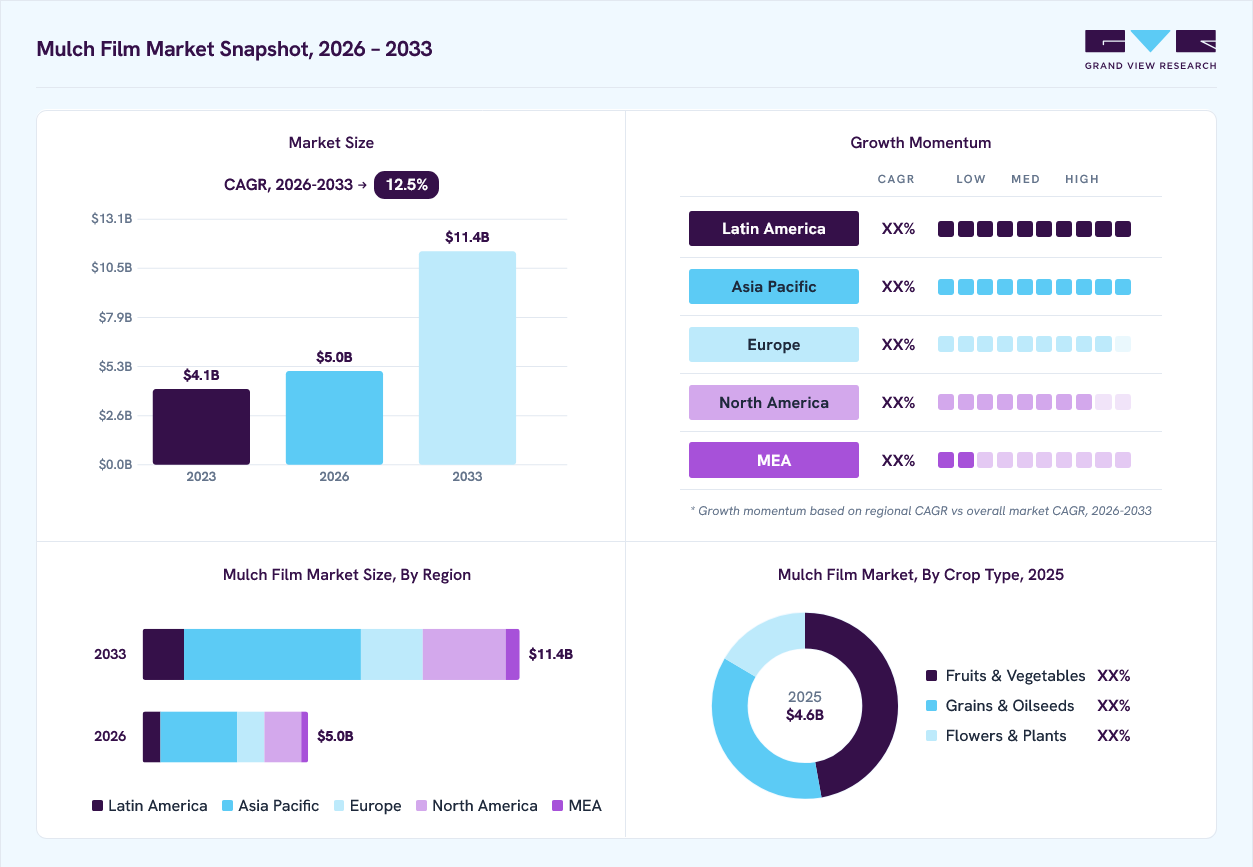 Source: Grand View Research, IR Documents, Primary Interviews, Paid DatabasesTo learn more about this report,
 Download Free Sample Report
Key Market Trends & Insights
- By raw material: Conventional dominated the raw material segment at a revenue share of 77.1% in 2025.
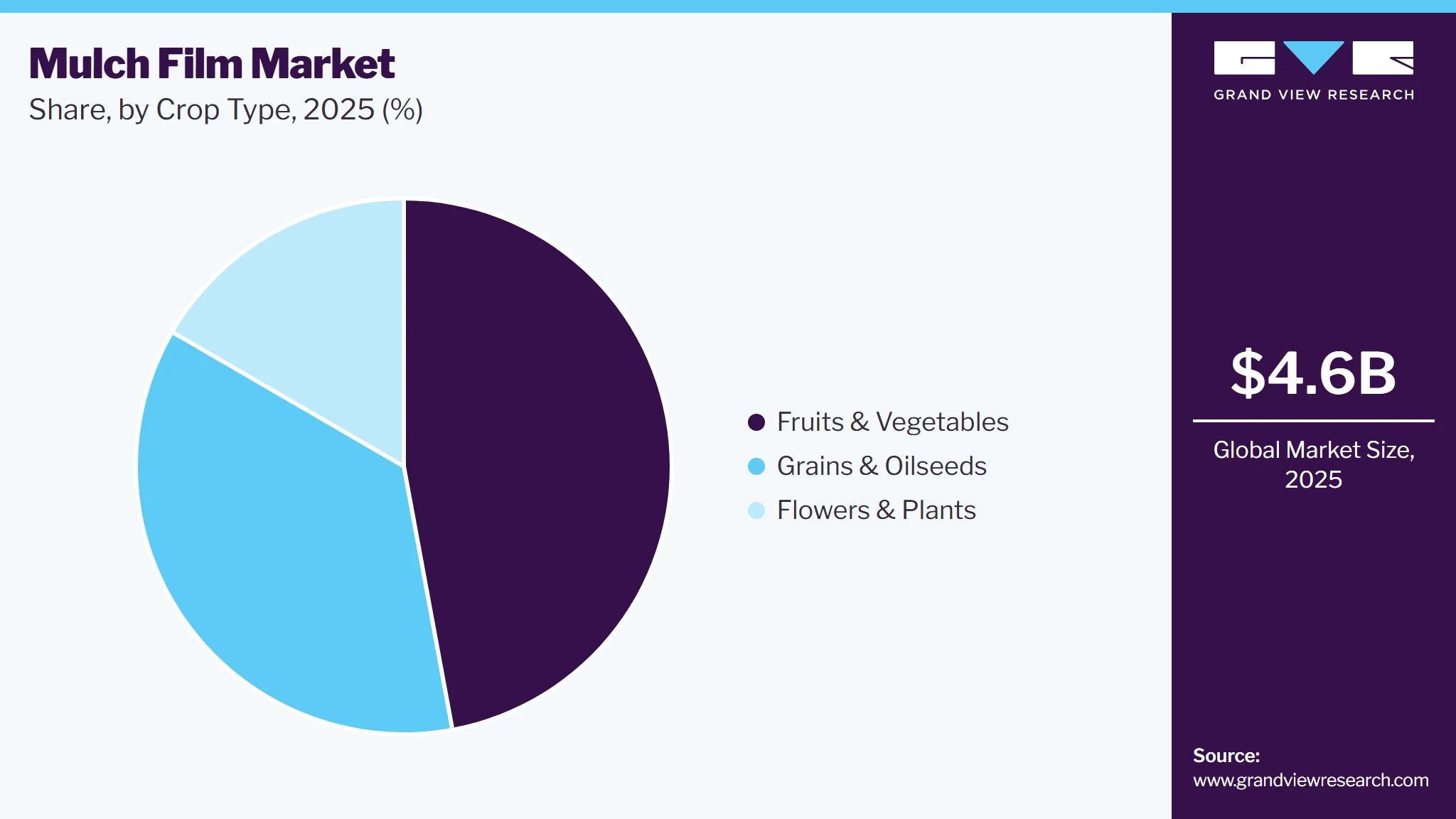
- By crop type: Fruits & Vegetables segment accounted for the largest revenue of 47.1% in 2025.
Regional Highlights
- Largest regional market: Asia Pacific (46.2% revenue share, 2025)
- By country: China held the largest market share in 2025.
Market Size & Forecast
- Market size in 2025: USD 4.6 Billion
- Estimated market size in 2026: USD 5.0 Billion
- Projected market size by 2033: USD 11.4 Billion
- CAGR (2026-2033): 12.5%
Prism AI by Grand View Research Free to tryAsk a question about the mulch film marketTry asking✓Every figure cited from GVR research Prefer the report? Download free sample →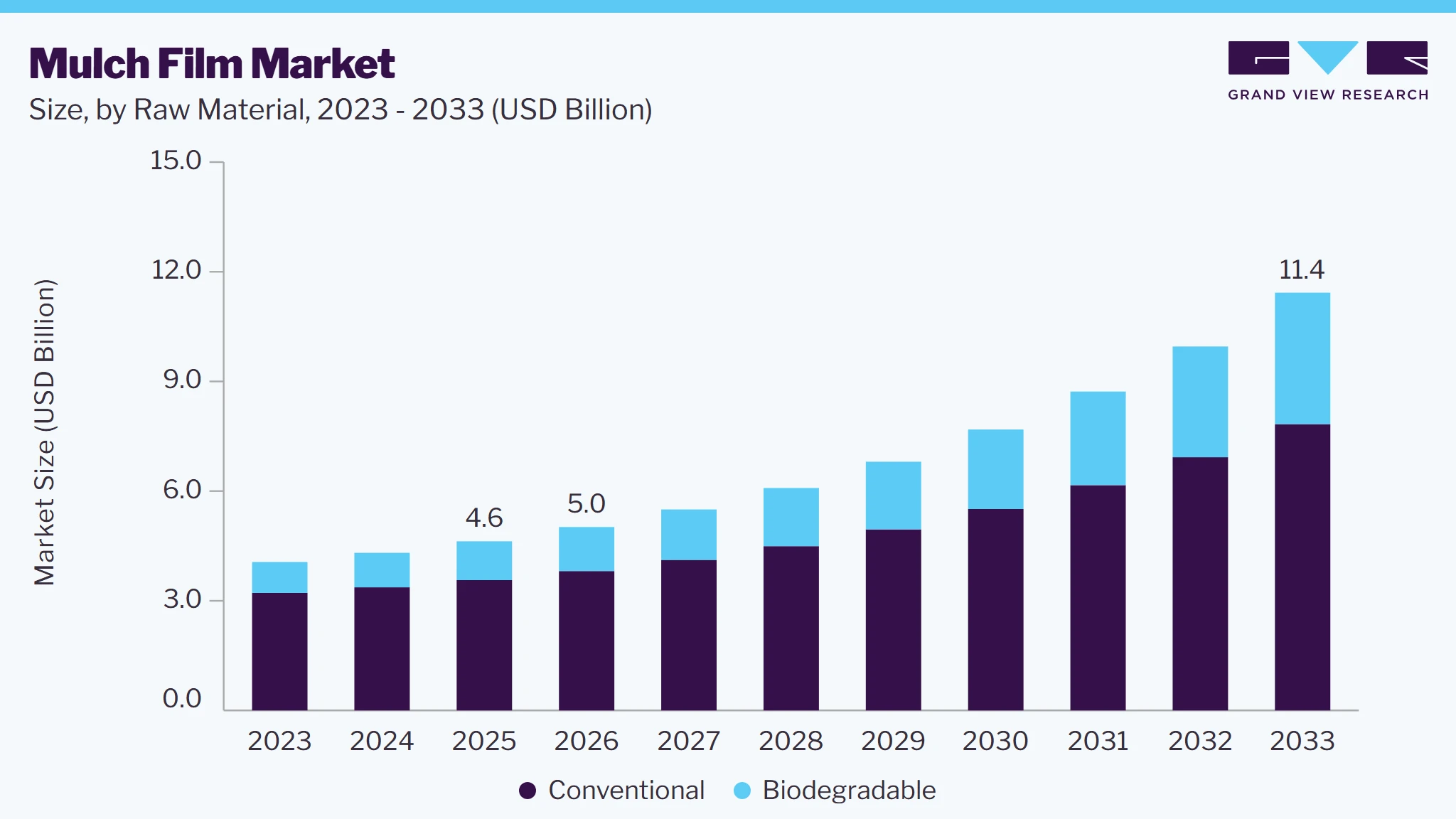 To learn more about this report, Download Free Sample Report
The market for mulch films is propelled by the growing need for improved crop yields, efficient water use, and effective weed management in agriculture. Advantages such as maintaining soil moisture, regulating temperature, and minimizing pesticide application improve the quality of crops and boost growth efficiency owing to the increasing sustainable farming practices and global food security issues.
Market Dynamics
The mulch film market is experiencing steady growth driven by the increasing adoption of modern agricultural practices, rising demand for higher crop yields, and the growing need for efficient water and weed management solutions. Mulch films are widely used in agriculture and horticulture to conserve soil moisture, regulate soil temperature, suppress weed growth, and improve crop productivity. The expansion of commercial farming, greenhouse cultivation, and protected agriculture, particularly in emerging economies, is supporting market growth. Additionally, increasing awareness regarding sustainable farming practices and resource optimization is encouraging the use of advanced mulch film products.
The increasing emphasis on improving agricultural productivity and crop quality is a major factor driving the mulch film market. Mulch films help create favorable soil conditions by reducing water evaporation, minimizing weed competition, and maintaining optimal soil temperatures, resulting in enhanced crop growth and higher yields.
The rising adoption of greenhouse farming, drip irrigation systems, and precision agriculture techniques is further accelerating demand for mulch films. Farmers are increasingly utilizing mulch films to reduce labor costs associated with weed control and irrigation while maximizing land productivity. Growing food demand due to population growth, coupled with the need to improve agricultural efficiency, is expected to support continued market expansion. In addition, government initiatives promoting modern farming technologies and water conservation practices are contributing to increased mulch film adoption across various crop segments.
The accumulation of plastic waste generated from conventional polyethylene-based mulch films remains a significant challenge for the mulch film market. Improper collection and disposal of used mulch films can lead to soil contamination, environmental pollution, and increased waste management costs for farmers and agricultural operators.
Stringent environmental regulations regarding single-use plastics and agricultural plastic waste management are creating compliance challenges for manufacturers and end users. In many regions, the lack of efficient recycling infrastructure further complicates disposal efforts. These factors may increase operational costs and limit the adoption of traditional plastic mulch films, particularly in environmentally sensitive markets.
The growing focus on sustainable agriculture and environmental protection is creating significant opportunities for the mulch film market. Increasing demand for biodegradable mulch films made from renewable and compostable materials is encouraging manufacturers to invest in product innovation and environmentally friendly solutions.
Advancements in biodegradable polymer technologies are enabling the development of mulch films that provide agronomic benefits while reducing environmental impact and disposal costs. Regulatory support for sustainable farming practices and restrictions on conventional plastic usage are further driving the adoption of eco-friendly mulch films. Opportunities are emerging from the expansion of organic farming, horticulture, and high-value crop cultivation, where sustainable agricultural inputs are increasingly preferred. Companies that develop high-performance biodegradable products and cost-effective recycling solutions are expected to gain a competitive advantage in the evolving mulch film market.
Analyst Perspective
The mulch film market is expected to witness sustained growth over the coming years, driven by increasing adoption of modern agricultural practices, growing emphasis on crop yield optimization, and rising demand for efficient water conservation solutions. As agricultural producers face mounting pressure to enhance productivity while minimizing resource consumption, mulch films are becoming an essential input for improving soil conditions, reducing weed growth, and supporting higher-quality crop production. The market is undergoing a gradual transition from conventional polyethylene-based films toward biodegradable and environmentally sustainable alternatives. Regulatory restrictions on agricultural plastic waste, coupled with growing awareness of sustainable farming practices, are encouraging manufacturers to invest in innovative biodegradable mulch film technologies.
Raw Material Insights
Based on raw material, the market has been segmented into conventional and biodegradable. Conventional dominated the raw material segment at a revenue share of 77.1% in 2025. Conventional mulch films are more affordable compared to newer, biodegradable alternatives, which is expected to drive their adoption. The growing demand for durable, long-lasting, and cost-effective multi-cultural films is a key driver in the conventional mulch films segment.
The biodegradable segment is expected to grow at the fastest CAGR over the forecast period. The biodegradable mulch films market is rapidly expanding as sustainability becomes a key focus in agriculture. Unlike traditional plastic mulch films, which are made from non-renewable resources and often contribute to long-term environmental pollution, biodegradable mulch films are designed to break down naturally in the soil after use.
Crop Insights
Based on crop type, the mulch film industry has been segmented into Fruits & Vegetables, Grains & Oilseeds, and Flowers & Plants. Fruits & Vegetables segment accounted for the largest revenue of 47.1% in 2025. Mulch films play a crucial role in enhancing the growth conditions for fruits and vegetables by regulating soil temperature, maintaining moisture levels, and reducing weed growth. These benefits allow farmers to produce healthier crops with fewer chemical interventions, aligning with consumer preferences for natural and safe food products.
 To learn more about this report, Download Free Sample Report
Moreover, Grains & Oilseeds crop type in the mulch film market plays a vital role in the rising consumption demand for mulch film. Mulch films are used in grain and oilseed cultivation to create optimal growing conditions. They help with soil moisture retention, weed suppression, and temperature regulation, which can significantly enhance crop growth and productivity.
Regional Insights
The North America Mulch Film is experiencing steady growth, driven by the well-developed financial infrastructure, coupled with government support and private sector funding, which provides agricultural businesses with the necessary resources to adopt advanced farming technologies, including mulch film.
U.S. Mulch Film Market Trends
The U.S. is a significant country in this market driven by the increasing adoption of smart farming practices. U.S. farmers are leveraging technology to enhance productivity and efficiency in crop cultivation. Advanced technologies such as precision agriculture, automated irrigation systems, and climate-smart farming tools have made it easier to monitor soil health, optimize water usage, and control weed growth.
Asia Pacific Mulch Film Market Trends
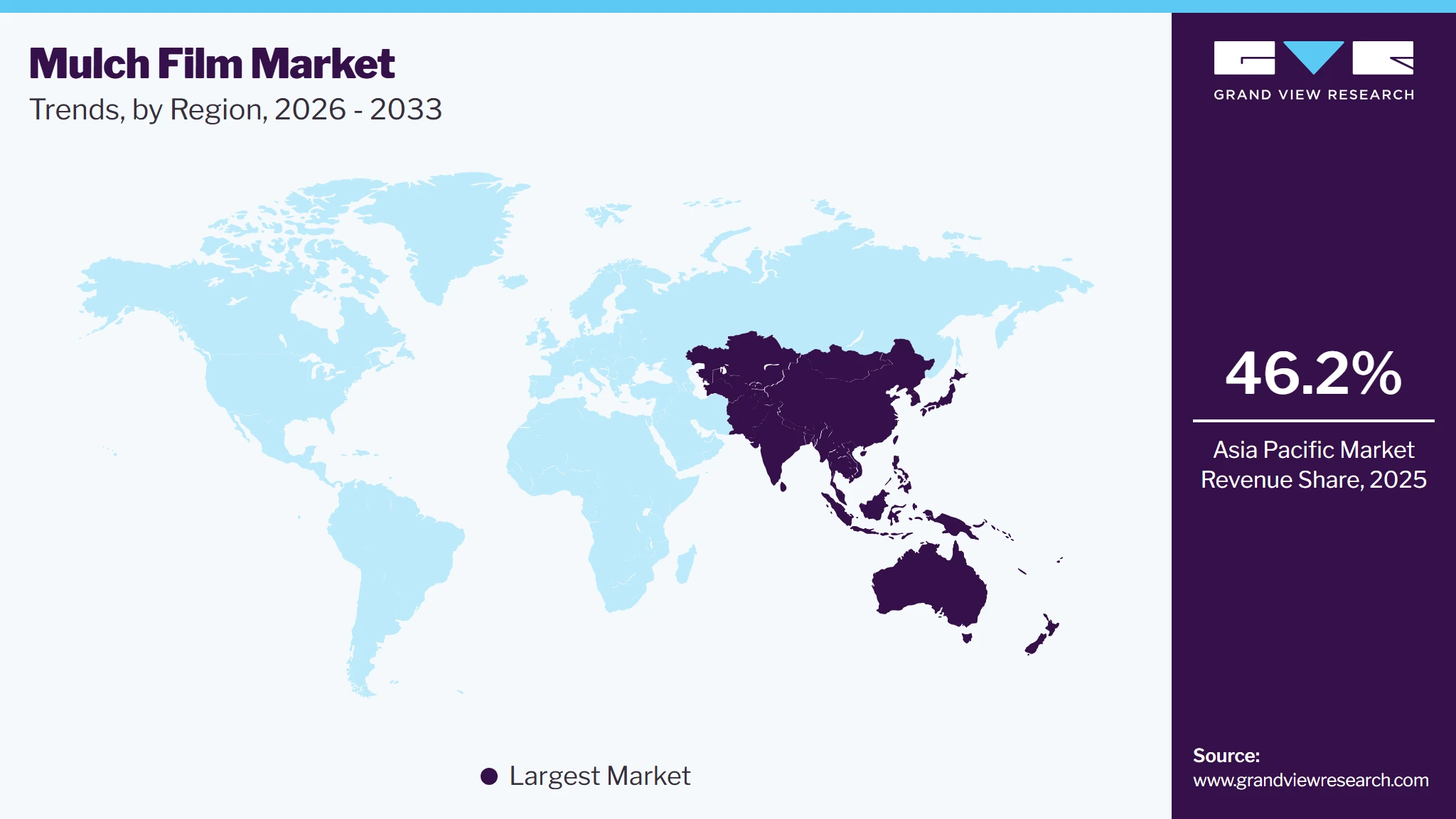
Asia Pacific accounted for 46.2% of the mulch film market revenue in 2025, making it the largest regional market. The Asia Pacific region’s rapidly growing population is one of the primary drivers behind the rising demand for mulch films in agriculture. As the population expands, there is an increasing need for higher food production to meet the demand for sustenance.
 To learn more about this report, Download Free Sample Report
China held the largest market share in Asia Pacific in 2025. With the government prioritizing food security and rural development, mulch films have become an essential tool for farmers to increase efficiency and meet the rising food demand caused by China's growing population.
Europe Mulch Film Market Trends
The Europe mulch film market is witnessing steady growth, driven by the region's demographic changes and urbanization. The push for higher productivity and efficiency in agriculture has increased the adoption of mulch films, which helps improve soil quality, conserve water, and enhance crop yields.
Key Mulch Film Company Insights
The mulch film industry is highly competitive, with several key players dominating the landscape. Major companies include BASF SE, Kingfa Sci & Tech Co Ltd, BioBag International AS, Yibiyuan Water-Saving Equipment Technology Co., Ltd., RKW SE, and Polystar Plastics Ltd, among others. The market is characterized by a competitive landscape with several key players driving innovation and market growth. Major companies in this sector are investing heavily in research and development to enhance the performance, cost-effectiveness, and sustainability of their products.
Key Mulch Film Companies:
The following key companies have been profiled for this study on the mulch film market.
-
BASF SE
-
Kingfa Sci & Tech Co Ltd
-
BioBag International AS
-
Yibiyuan Water-Saving Equipment Technology Co., Ltd.
-
RKW SE
-
Polystar Plastics Ltd
-
Armando Alvarez
-
Al-Pack Enterprises Ltd.
-
Novamont S.p.A.
-
AB Rani Plast OY
-
Berry Global Inc.
-
Napco National
-
Tilak Polypack
-
Intergro, Inc.
-
Shalimar Group
-
Solplast (Armando Alvarez Group)
-
GEROVIT
Competitive Benchmarking
Category
Operating Strategies
Competitive Edge
Weakness
Established Players (BASF, Amcor plc, Dow, Exxon Mobil Corporation, RKW Group, Groupe Barbier, Armando Alvarez Group)
- Focus on expanding production capacity for conventional and biodegradable mulch films to meet growing agricultural demand.
- Invest in advanced polymer technologies, sustainable materials, film durability enhancement, and manufacturing efficiency.
- Strengthen market position through strategic partnerships with agricultural distributors, greenhouse operators, and large-scale farming enterprises.
- Expand geographically through acquisitions, distribution networks, and investments in sustainable agricultural solutions.
- Strong manufacturing infrastructure and global supply chain networks.
- Extensive R&D capabilities supporting innovation in biodegradable and high-performance mulch films.
- Well-established customer relationships across agriculture, horticulture, and greenhouse cultivation sectors.
- Ability to leverage economies of scale, brand recognition, and diversified product portfolios.
- High capital expenditure requirements for production facilities and sustainability-focused product development.
- Exposure to fluctuating raw material prices, particularly petrochemical feedstocks and biopolymers.
- Increasing regulatory pressure regarding plastic waste management and environmental compliance.
- Larger organizational structures may reduce flexibility in serving niche regional requirements.
Category
Operating Strategies
Competitive Edge
Weakness
Emerging & Specialized Players (BioBag International AS, Kae Hwa Industrial Co., Ltd., Ginegar, FilmOrganic)
- Focus on biodegradable, compostable, and specialty mulch film solutions targeting sustainable agriculture.
- Expand through regional distributor partnerships, technical support programs, and direct engagement with growers.
- Emphasize product customization based on crop type, climatic conditions, and cultivation methods.
- Target high-growth segments such as organic farming, greenhouse cultivation, and precision agriculture.
- Greater flexibility in responding to customer-specific agricultural requirements.
- Strong focus on sustainability and environmentally friendly product innovation.
- Faster product development cycles and customization capabilities.
- Ability to serve niche markets and specialized crop applications effectively.
- Limited production scale and geographic reach compared to multinational competitors.
- Lower financial capacity for large-scale R&D investments and global expansion.
- Higher dependence on regional agricultural demand patterns.
- Greater vulnerability to pricing competition from large integrated polymer and film manufacturers.
Recent Developments
-
In June 2024, NUREL SA achieved the TÜV OK biodegradable SOIL certification for its biopolymers used in agricultural mulching. This certification ensures that its products will completely biodegrade in soil without harming the environment. Additionally, NUREL holds the DIN CERTCO certification in line with the EN 17033 standard, which outlines the requirements for biodegradable mulch films.
-
In October 2023, BioBag International AS introduced a new biodegradable mulch film, BioAgri, designed for agricultural purposes. This innovation addresses the significant disposal issues associated with traditional plastic mulch films, which are widely used in Australian farming, around 200,000 kilometers annually. The BioAgri film is made from a bioplastic material called MATER-BI and is fully biodegradable when tilled into the soil at the end of the growing season. This eliminates the need for costly removal processes and helps maintain soil quality. The Australasian Bioplastics Association has also verified that BioAgri meets ISO 23517:2021 standards.
-
In October 2023, Mondi plc, a prominent packaging and paper company, announced a collaboration with Cotesi S.A., a producer of agricultural materials, to launch a new sustainable product called Advantage Kraft Mulch. This innovative mulch film was designed to replace traditional plastic mulch films used in farming, which contribute significantly to plastic waste. Advantage Kraft Mulch is made entirely from 100% kraft paper sourced responsibly from wood and is certified as industrially compostable. It provides similar protective benefits to plastic mulch, such as shielding crops from weeds, soil erosion, and harsh weather conditions. Field trials have also shown that it effectively inhibits weed growth and decomposes naturally after harvest, adding organic matter back into the soil without leaving any waste behind.
Mulch Film Market Report Scope
Report Attribute
Details
Market size in 2025
USD 4.6 billion
Estimated market size in 2026
USD 5.0 billion
Projected market size by 2033
USD 11.4 billion
Growth rate
CAGR of 12.5% from 2026 to 2033
Base year for estimation
2025
Historical data
2021 - 2024
Forecast period
2026 - 2033
Quantitative units
Revenue in USD million/billion, volume in kilotons and CAGR from 2026 to 2033
Report coverage
Revenue forecast, company ranking, competitive landscape, growth factors, and trends
Segments covered
Raw material, crop type, region
Regional scope
North America; Europe; Asia Pacific; Latin America; MEA
Country scope
U.S.; Canada; Mexico; Germany; UK; Italy; France; Spain; China; India; Japan; South Korea; Australia; Brazil; Argentina; South Africa; Saudi Arabia; UAE
Key companies profiled
BASF, Armando Alvarez Group, Biobag International AS, Kae Hwa Industrial Co., Ltd., RKW Group, Amcor plc, Ginegar, Dow, Exxon Mobil Corporation, FilmOrganic, Groupe Barbier
Customization scope
Free report customization (equivalent up to 8 analysts' working days) with purchase. Addition or alteration to country, regional & segment scope.
Pricing and purchase options
Avail customized purchase options to meet your exact research needs. Explore purchase options
Global Automotive Lead Acid Battery Market Report Segmentation
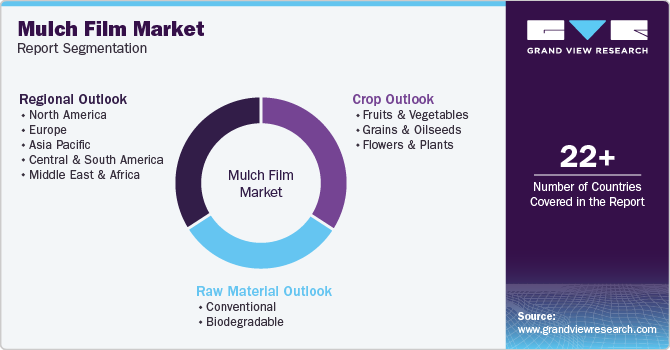
This report forecasts revenue growth and provides an analysis of the latest industry trends in each of the sub-segments from 2021 to 2033. For the purpose of this study, Grand View Research has segmented global mulch film market report on the basis of raw material, crop and region:
 To learn more about this report, Download Free Sample Report
-
Raw Material Outlook (Revenue, USD Million; Volume, Kilotons, 2021 - 2033)
-
Conventional
-
LDPE and LLDPE
-
HPDE
-
EVA
-
-
Biodegradable
-
Thermoplastic Starch (TPS)
-
Starch Blended with Polylactic Acid (PLA)
-
Starch Blended with Polyhydroxyalkanoate (PHA)
-
Others
-
-
-
Crop Outlook (Revenue, USD Million; Volume, Kilotons, 2021 - 2033)
-
Fruits & Vegetables
-
Grains & Oilseeds
-
Flowers & Plants
-
-
Regional Outlook (Revenue, USD Million; Volume, Kilotons, 2021 - 2033)
-
North America
-
U.S.
-
Canada
-
Mexico
-
-
Europe
-
Germany
-
France
-
UK
-
Italy
-
Spain
-
-
Asia Pacific
-
China
-
India
-
Japan
-
South Korea
-
Australia
-
-
Central & South America
-
Brazil
-
Argentina
-
-
Middle East & Africa
-
South Africa
-
UAE
-
Saudi Arabia
-
-
Research Methodology
The mulch film market figures in this report are based on a proven research process that combines executive interviews with secondary research from proprietary databases, company filings, and recognized regulatory and institutional sources. Market size is built through value-chain sizing - reconciling supply-side and demand-side estimates - and triangulated with bottom-up and top-down approaches. Every estimate passes multiple levels of expert validation before publication, with each mulch film segment quantified using the revenue-capture definitions in the table below.
Segment Definition
Segment - Raw Material
Revenue capture definition
Raw Material
Revenue generated from the sale of conventional mulch films manufactured using petroleum-based polymers such as polyethylene (PE), polypropylene (PP), and other synthetic materials. Revenue is driven by demand from large-scale agriculture, horticulture, greenhouse cultivation, and commercial farming operations requiring durable and cost-effective soil protection solutions.
Biodegradable
Revenue generated from the sale of biodegradable mulch films produced from compostable and bio-based materials such as PLA, PBAT, starch blends, and other environmentally friendly polymers. Revenue is supported by increasing adoption of sustainable farming practices, regulatory support for reducing plastic waste, and growing demand from organic farming and environmentally conscious agricultural producers.
Segment - Crop Type
Revenue capture definition
Fruits & Vegetables
Revenue generated from mulch film sales used in the cultivation of fruits and vegetables to enhance crop yield, improve moisture retention, suppress weeds, regulate soil temperature, and improve product quality. Demand is driven by intensive farming practices and the need for higher productivity in high-value crops.
Grains & Oilseeds
Revenue generated from mulch film applications in grain and oilseed cultivation to support moisture conservation, improve germination rates, reduce weed pressure, and enhance overall crop performance. Revenue growth is linked to increasing adoption of advanced agricultural practices and large-scale farming operations.
Flowers & Plants
Revenue generated from mulch film use in floriculture, nurseries, ornamental plants, and horticultural applications where soil protection, weed control, and moisture management are critical for improving plant quality and cultivation efficiency. Demand is supported by the expansion of commercial horticulture and landscaping activities.
Estimation Model
Layer Name
Key Question
Description
Mulch film Production Layer
What forms is the supply base?
Identify global production capacity of mulch films supported by raw material availability (polyethylene, polypropylene, EVA, and biodegradable polymers), polymer manufacturing infrastructure, film extrusion technologies, processing capabilities, quality standards, and regional manufacturing facilities. This establishes the foundational supply base available for agricultural, horticultural, greenhouse, and specialty crop cultivation applications worldwide.
Application Adoption Layer
Where is mulch film utilized?
Estimate the proportion of mulch film consumed across open-field agriculture, greenhouse cultivation, horticulture, fruit & vegetable farming, floriculture, plantation crops, and other agricultural applications based on crop requirements, cultivation practices, water conservation needs, soil management objectives, and regional adoption trends.
Consumption Intensity Layer
How much is mulch film used?
Analyze application-specific usage rates, crop coverage areas, cultivation intensity, replacement cycles, film thickness requirements, irrigation practices, growing seasons, and regional agricultural production trends to determine annual mulch film consumption across major end-use sectors.
Revenue Layer
How is market revenue generated?
Market revenue is quantified through the sale of conventional polyethylene mulch films, biodegradable mulch films, colored and specialty mulch films, UV-resistant films, and customized agricultural film solutions supplied to farmers, greenhouse operators, horticulture producers, agricultural cooperatives, and commercial farming enterprises worldwide.
Delivered Customizations
This report has been delivered with the following In-depth customizations
Client Request
Customization Delivered
Value Adds
Cross-Segmentation Analysis
Detailed cross-segmentation assessment evaluating the relationship between crop types, cultivation methods, and mulch film consumption patterns. Analysis identifies usage intensity, film performance requirements, soil moisture conservation needs, weed control effectiveness, and revenue contribution across intersecting segments such as fruits & vegetables in open-field cultivation, greenhouse-grown crops in protected agriculture, and specialty applications in horticulture, floriculture, and plantation farming.
Supports product portfolio optimization and market prioritization by identifying the most attractive crop-cultivation combinations, enabling improved resource allocation, sales targeting, product development strategies, and long-term growth planning across the mulch film value chain.
Competitive Benchmarking
Comparative evaluation of leading mulch film manufacturers based on product portfolio breadth, biodegradable film capabilities, manufacturing capacity, raw material integration, geographic presence, sustainability initiatives, agricultural specialization, customer relationships, distribution networks, and strategic developments across key regional markets.
Assists competitive intelligence, partnership evaluation, and supplier assessment by providing deeper visibility into market positioning, technological strengths, differentiation strategies, innovation capabilities, operational efficiency, and areas of competitive advantage.
Opportunity Assessment
Comprehensive assessment of emerging opportunities associated with biodegradable mulch films, sustainable agriculture practices, greenhouse cultivation expansion, precision farming technologies, water conservation initiatives, organic farming growth, specialty crop production, and increasing adoption of environmentally friendly agricultural inputs across global markets.
Helps identify high-growth investment areas, emerging application opportunities, technology development priorities, and market expansion strategies, supporting long-term revenue growth and competitive positioning across the mulch film value chain.
Frequently Asked Questions About This Report
Asia Pacific dominated the global mulch film market in 2025, accounting for 46.2% of total market revenue. The region's leadership is driven by extensive agricultural activities, increasing adoption of modern farming techniques, expanding greenhouse cultivation, and growing demand for higher crop productivity.
The biodegradable segment is projected to register the fastest growth during the forecast period, with a CAGR of 16.9%. Growth is supported by rising environmental concerns, regulatory restrictions on conventional plastics, and increasing adoption of sustainable agricultural practices.
The fruits & vegetables segment is expanding at a CAGR of 12.6% during the forecast period. Increasing demand for high-value crops, improved yield efficiency, and widespread use of mulch films for moisture retention and weed control are key growth drivers.
The mulch films market is expected to experience substantial growth, as several farmers adopt these products to increase efficiency and output in food production.
The global mulch film market is expected to grow at a compound annual growth rate of 12.5% from 2026 to 2033, reaching USD 11.4 billion by 2033.
The global mulch film market size was estimated at USD 4.6 billion in 2025 and is expected to reach USD 5.0 billion in 2026. The mulch film industry is expected to experience substantial growth, as several farmers adopt these products to increase efficiency and output in food production.
Some key players operating in the mulch film market include BASF SE; Kingfa Sci & Tech Co Ltd; BioBag International AS; Yibiyuan Water-Saving Equipment Technology Co., Ltd.; RKW SE; and Polystar Plastics Ltd, among others
About the Author(s)
Agrochemicals & Fertilizers Research Team
Bulk Chemicals · Agrochemicals & FertilizersThis report was authored by the agrochemicals & fertilizers research team at Grand View Research - comprising two research analysts, one senior research analyst, and one industry expert - with specialized expertise in the agrochemicals & fertilizers segment of the bulk chemicals industry. All findings are based on proprietary bulk chemicals databases, executive interviews, and regulatory analysis, subject to internal peer review prior to publication.
Last Updated:
Speak to Analyst

Customize this report to your needs - add regions, segments, or data points, with 20% free customization.
Or view our licence options:


ISO 9001:2015 & 27001:2022 Certified
We are GDPR and CCPA compliant! Your transaction & personal information is safe and secure. For more details, please read our privacy policy.


