
- Home
- »
- Consumer F&B
- »
-
Fruits & Vegetables Market Size & Share Report, 2026-2033GVR Report cover

Fruits & Vegetables Market (2026 - 2033)
Size, Share & Trends Analysis Report By Product (Fruits, Vegetables), By Type (Fresh, Dried), By Distribution Channel (Supermarkets/Hypermarkets, Grocery Stores), By Region, And Segment Forecasts
Market Size, 2025
$792.6BMarket Estimate, 2026
$827.4BMarket Forecast, 2033
$1,234.9BCAGR, 2026–2033
5.9%Fruits & Vegetables Market Summary
The global fruits & vegetables market size was valued at USD 792.6 billion in 2025 and is projected to grow from USD 827.4 billion in 2026 to USD 1,234.9 billion by 2033, growing at a CAGR of 5.9% from 2026 to 2033. Asia Pacific dominated the market, accounting for the largest global share of 37.5% in 2025. Consumers, especially millennials and working professionals, are increasingly opting for online grocery shopping owing to its advantages, including convenience and doorstep delivery.
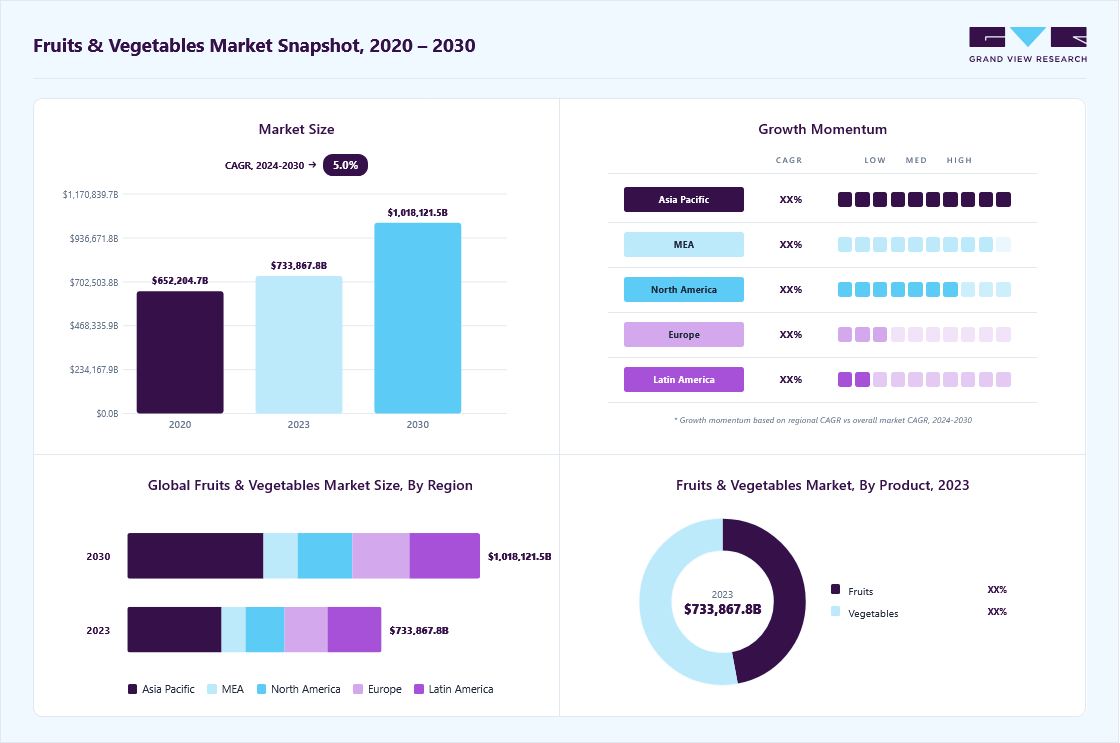 Source: Grand View Research, IR Documents, Primary Interviews, Paid DatabasesTo learn more about this report,
 Download Free Sample Report
 Key Market Trends & Insights
- By product: Vegetables segment held the largest revenue share of 53.8% in 2025.
- By type: Fresh fruits & vegetables segment held the largest share of 82.7% in 2025.
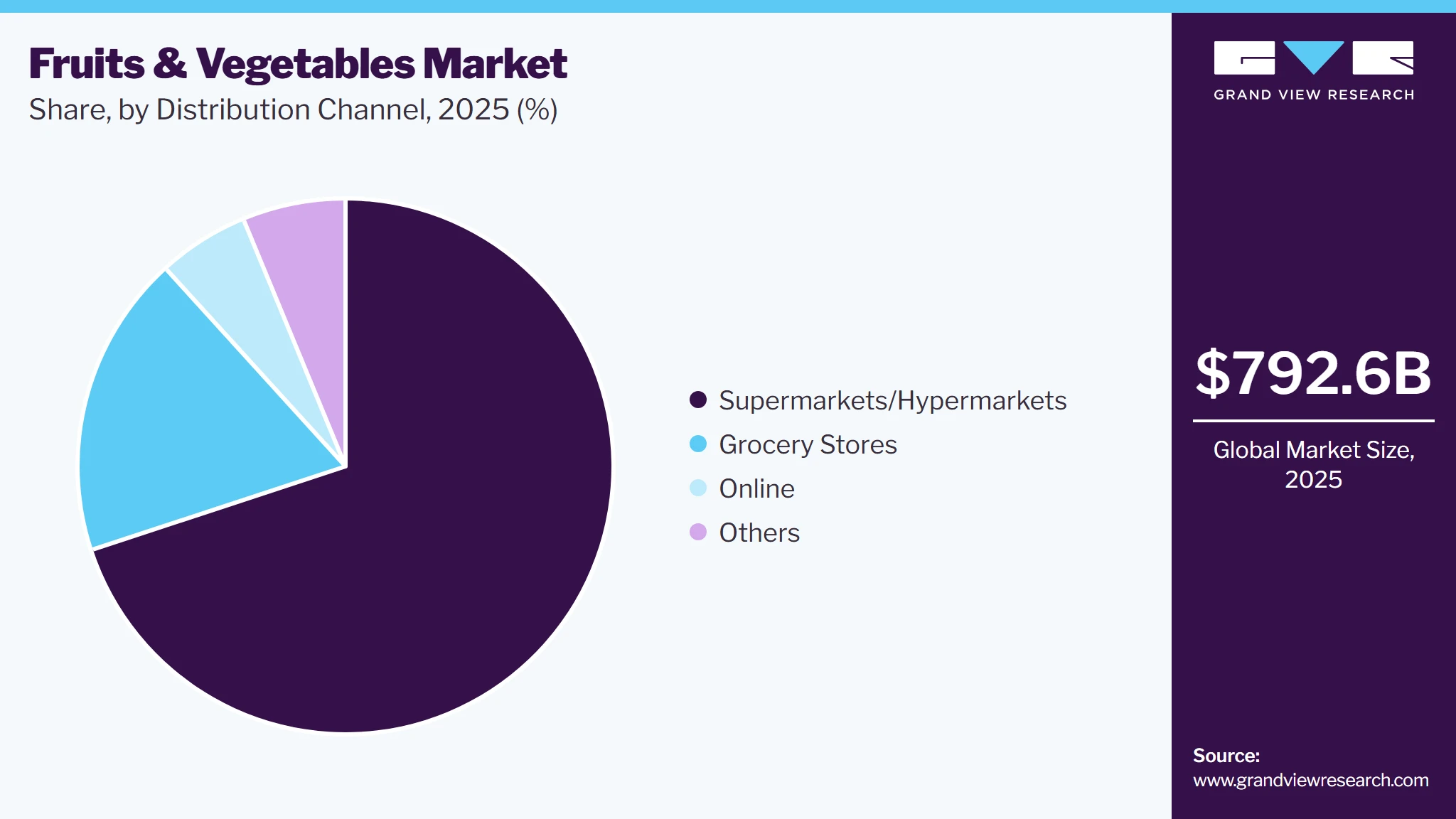
- By distribution channel: Supermarkets/ hypermarkets channel held the largest share of 69.9% in 2025.
Regional Highlights
- Largest regional market: Asia Pacific (37.5% revenue share, 2025)
- Fastest-growing regional market: North America (fastest CAGR, 2026-2033)
- By country: China held the largest share of Asia Pacific in 2025.
Market Size & Forecast
- Market size in 2025: USD 792.6 billion
- Estimated market size in 2026: USD 827.4 billion
- Projected market size by 2033: USD 1,234.9 billion
- CAGR (2026-2033): 5.9%
Three ways to get this report
Buy it, customize it, or ask a question.Ask an Analyst
Analyst response in 1 business day
- AccessReport author, directly
- Reply timeWithin 1 working day
- No sales callDirect answer only
- FormatEmail reply
- CostFree, no cost
Get the Full Report
What the study covers
- FormatsPDF · Excel · Dashboard
- Timeline2026–2033 annual, 2025 base
- Coverage20+ countries, 5 regions
- Companies10+ key players profiled
Customize the Report
20% free customization
- IncludeCountries, segments, points
- TailorTo your product definition
- ExtendDeeper competitor detail
- OrA fully bespoke study
- Turnaround5–10 working days
To meet growing demand, many services are broadening their content offerings, including original programming and live sports. Additionally, targeted advertising is becoming increasingly advanced, as services utilize data and analytics to provide viewers with highly personalized ad experiences. As a result, the market is expected to continue to grow and evolve in the coming years. Online grocery shopping allows customers to order fresh produce from the comfort of their homes, eliminating the need for time-consuming trips to physical stores. This convenience especially appeals to older adults with mobility issues who prefer to avoid crowded shopping environments. To learn more about this report, Download Free Sample Report
 The growing popularity of online grocery shopping & delivery services drives product purchases. Meal kit delivery is another addition to grocery delivery that is gaining popularity among health-conscious consumers, as they provide many combinations of fruits & vegetables based on the consumers’ requirements. These meal kits are mainly popular among millennials and Generation X, among people who live alone. Moreover , according to an analysis conducted by the United States Department of Agriculture (USDA), in 2021, the retail market in Canada is characterized by maturity, consolidation, and a robust demand for produce. The report highlights that a select group of leading retailers dominates the Canadian grocery landscape, collectively accounting for a substantial 76% of the market share.
Millennials are the main consumers of fruits and vegetables in the U.S. due to their increased digital presence. Online retailers adopt strategies like providing huge discounts and cashback, which is expected to attract this demographic over the forecast period. Frequent snacking among millennials and their concerns about the costs has havemade online stores an attractive alternative.
The popularity of trendy diets and superfoods has significantly impacted the consumption patterns of fruits and vegetables across the globe. Consumers are increasingly prioritizing their health and well-being and adopting dietary trends that highlight the significance of nutrient-dense plant-based foods. Superfoods like kale, blueberries, avocados, and acai berries, known for their exceptional nutritional profiles, have become dietary staples. Moreover, diverse diet trends, such as Mediterranean and plant-based diets, emphasize the pivotal role of fruits and vegetables in maintaining health and preventing diseases.
As sustainability concerns gain traction, the lower environmental footprint of plant-based options aligns with the environmental-conscious consumers. The influence of social media, the availability of a wider range of produce, and a growing awareness of functional foods all contribute to the increased incorporation of fruits and vegetables into daily meals.
With the rise in obesity rates in countries including the U.S. and growing awareness of the benefits of a healthy diet, consumers have been steadily shifting toward fresh foods and healthier options over the past ten years. Younger demographics tend to be drawn to trendy diets like raw food and paleo diets that emphasize the health advantages of fresh produce. Furthermore, elderly people tend to have good eating habits due to health issues. Therefore, baby boomers are also a key consumer group for fresh produce.
In additionally, fruits are promoted as a healthy option to sweet snacks like cookies and cakes because snacking is common throughout many age groups and is also one of the main contributors to obesity in the general population, coupled with a sedentary lifestyle. In addition, as a means of maintaining their health, consumers who wanted to boost their nutrient consumption focused on "superfoods,” which boosted the market for fruits and vegetables because items like avocados have high vitamin and fiber content.
Vegetarians & vegans primarily rely on consumption of fruits and vegetables to meet their nutritional requirements. Moreover, several non-vegetarians are becoming aware of the benefits of eating less meat and have started to focus on incorporating fruits & vegetables into their diet to increase their fiber intake and have healthier meals.
Market Dynamics
The fruits and vegetables market is experiencing steady growth as consumers increasingly prioritize healthy eating habits, balanced nutrition, and preventive healthcare. Fruits and vegetables are rich sources of essential vitamins, minerals, dietary fiber, antioxidants, and bioactive compounds that support overall wellness and help reduce the risk of chronic diseases. Rising awareness of the benefits of fresh, natural foods, along with growing demand for organic produce, plant-based diets, and clean-label products, is driving significant industry expansion. In addition, increasing urbanization, improvements in cold chain infrastructure, and the rapid growth of modern retail and e-commerce grocery channels are enhancing product accessibility and supporting continued growth in the fruits and vegetables market.
The increasing focus on health, nutrition, and disease prevention is a major driver of the fruits and vegetables market. Consumers are becoming more aware of the role of fruit- and vegetable-rich diets in reducing the risk of obesity, cardiovascular diseases, diabetes, hypertension, and certain cancers. Rising incidences of lifestyle-related health conditions, combined with growing awareness of immunity-boosting foods, have encouraged higher consumption of fresh produce across both developed and developing economies.
Government initiatives promoting healthy dietary practices and increased intake of fruits and vegetables are further supporting market growth. According to the World Health Organization (WHO), insufficient consumption of fruits and vegetables is among the leading dietary risk factors associated with various chronic diseases worldwide. Furthermore, the growing adoption of vegetarian, vegan, and flexitarian diets is driving demand for fresh produce as consumers seek natural, nutrient-dense food options. As disposable incomes rise and consumers increasingly prioritize wellness-oriented lifestyles, demand for fruits and vegetables is expected to continue growing globally.
Supply chain challenges and significant post-harvest losses remain major restraints for the fruits and vegetables market. Fresh produce is highly perishable and susceptible to spoilage during harvesting, transportation, storage, and distribution. In many developing regions, inadequate cold storage facilities, insufficient transportation infrastructure, and inefficient logistics networks contribute to substantial product losses before reaching consumers.
In addition, fluctuations in weather conditions, climate change, water scarcity, pest infestations, and crop diseases can negatively impact production volumes and product quality. Seasonal variations often result in supply-demand imbalances and price volatility, creating challenges for both producers and retailers. Rising transportation, packaging, labor, and energy costs further increase operational expenses throughout the supply chain. These factors can limit product availability, reduce profitability, and create uncertainties within the global fruits and vegetables market.
The growing demand for organic, sustainably sourced, and premium-quality fruits and vegetables presents significant growth opportunities for market participants. Consumers are increasingly seeking chemical-free, non-GMO, and environmentally responsible food products, encouraging farmers and producers to expand organic cultivation practices. Rising concerns regarding food safety, pesticide residues, and environmental sustainability are further accelerating demand for certified organic produce worldwide.
Technological advancements in agriculture are also creating new opportunities across the value chain. Precision farming, smart irrigation systems, controlled-environment agriculture, vertical farming, greenhouse cultivation, artificial intelligence-based crop monitoring, and Internet of Things (IoT)-enabled farm management solutions are helping improve crop yields, resource efficiency, and product quality. Furthermore, the rapid growth of online grocery platforms, direct-to-consumer delivery models, and digital agricultural marketplaces is expanding market reach and improving consumer access to fresh produce. These innovations are expected to improve productivity, reduce food waste, and support long-term growth in the fruits and vegetables market.
Market Concentration & Characteristics
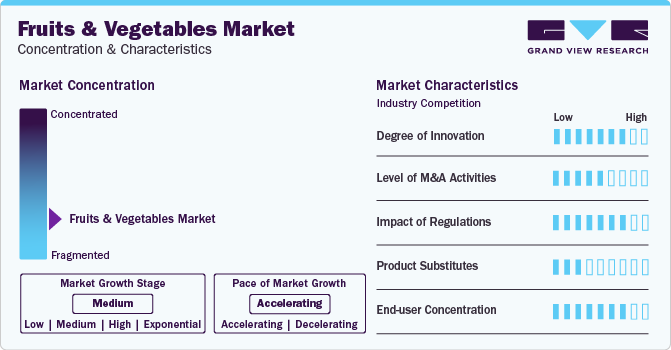
The market demonstrates a low to medium degree of innovation. Players are introducing post-harvest technologies and bimolecular research tools or "omics" to efficiently gather and assess mass information at molecular, enzyme, and genetic levels influence the market. Moreover, precision agriculture technologies, such as drones, satellite imagery, and sensors, monitor crop health, optimize irrigation, and detect pest and disease outbreaks. These tools improve yield, reduce resource usage, and enhance crop management.
 To learn more about this report, Download Free Sample Report
 Regulations play a crucial role in shaping the fruits & vegetables global market. The U.S. FDA established a voluntary consultation process with GM crop developers to review the determination of “substantial equivalence” before the crop is marketed. This included assessing the toxicity and allergen of the gene product and the plant itself.
There are no substitutes that can replicate the nutrients and flavors of fruits and vegetables. As a result, the threat of substitution is low. However, consumers have access to a wide range of imported fruits and vegetables, which can serve as substitutes for domestic varieties. Moreover, processed foods and alternative diets can serve as substitutes for fresh fruits and vegetables, especially if they are perceived as more convenient or cost-effective.
Analyst Perspective
The fruits & vegetables market remains one of the most resilient segments within the global food industry, supported by growing consumer awareness regarding nutrition, preventive healthcare, and natural food consumption. Demand is increasingly shifting toward fresh, organic, minimally processed, and sustainably sourced produce, encouraging companies to modernize farming practices and strengthen supply chain efficiency. The industry's future competitive landscape will be shaped less by production scale alone and more by the ability to control product quality from farm to consumer. Companies that successfully integrate precision agriculture, climate-resilient sourcing, advanced cold-chain logistics, and digital traceability systems will be better positioned to manage supply volatility while meeting evolving consumer expectations. As retailers and consumers place greater emphasis on sustainability, freshness, and transparency, market leaders are expected to differentiate themselves through operational efficiency, reduced food waste, and consistent year-round availability of high-quality fruits and vegetables.
Product Insights
Based on product, the vegetables segment led the market with the largest revenue share of 53.8% in 2025. The increasing adoption of vegan diets has fueled the demand for a diverse range of vegetables as a primary source of nutrition. Growing interest in diverse cuisines, with a strong emphasis on vegetables, has led to an increased demand for a wide variety of vegetables in the market. In additionally, the use of vegetables as key ingredients in the food processing industry for products like frozen vegetables, soups, and ready-to-eat meals has contributed to market growth.
The fruits market segment is expected to grow with at the fastest CAGR of 6.1% from 2026 to 2033. Growing awareness regarding the health benefits of consuming fruits as they are rich in vitamins, minerals, and antioxidants, has driven an increased demand for fruits. Moreover, the development of innovative fruit-based products, such as smoothies, juices, and fruit snacks, has expanded the market and attracted consumers looking for convenient and tasty options. Furthermore, frozen fruits have gained significant popularity in the region, both among consumers as they are convenient and can be easily used in making smoothies.
Type Insights
Based on type, the fresh fruits & vegetables segment led the market with the largest revenue share of 82.7% in 2025. The coronavirus outbreak had a significant impact on the consumption of fresh fruits and vegetables in the region. While the availability of these products faced challenges due to logistical and transport restrictions, there was a concurrent surge in demand for fresh fruits and vegetables. This increase in demand was driven by consumers who, in response to the pandemic, heightened their focus on maintaining a healthy diet and incorporating more fresh produce into their meals, opting for these options over processed or frozen foods.
The dried fruits segment is expected to grow at the fastest CAGR of 7.4% during the forecast period. A consistent increase in the consumption of dried fruits and vegetables has been observed, driven by a growing demand for healthier snack options. Dried fruits and vegetables have gained popularity due to their convenience, portability, and extended shelf life compared to fresh produce. In addition, the rising trend of plant-based diets has contributed significantly to this segment's growth. According to an article from the Alliance for Science, as of January 2022, approximately 10% of American adults aged 18 and older identified as vegan or vegetarian. This shift in dietary preferences has led many consumers to reduce their meat consumption and seek alternative sources of nutrition and protein. Dried vegetables and fruits have emerged as a quick and cost-effective way to incorporate plant-based protein and essential nutrients into meals.
Distribution Channel Insights
Based on distribution channel, the sales of fruits & vegetables through the supermarkets/ hypermarkets channel led the market with the largest revenue share of 69.9% in 2025. Several key factors contribute to consumers' preference for shopping for fruits and vegetables at hypermarkets and supermarkets. These factors include convenience, pricing, product availability, and brand recognition. Hypermarkets and supermarkets offer a comprehensive shopping experience, allowing consumers to find a wide range of products, including fruits and vegetables, all in one location. In additionally, these establishments often provide lower prices on fruits and vegetables compared to other retailers, thanks to their substantial purchasing power and economies of scale.
 To learn more about this report, Download Free Sample Report
 The sales through online channels segment is expected to grow with at the fastest CAGR of 12.4% during the forecast period. Online platforms play a crucial role in providing consumers with access to a diverse range of fruits and vegetables, including seasonal and specialty produce that might not be readily available in their local physical stores. The significance of online fruit and vegetable purchases became even more apparent in the wake of the viral outbreak of COVID-19, which resulted in temporary and permanent closures of physical distribution channels. In response to these challenges, the sale of fruits and vegetables through e-commerce portals and online grocery stores experienced a notable surge in and after 2020.
Regional Insights
The fruits & vegetables market in North America is expected to grow with at the fastest CAGR of 6.0% from 2026 to 2033. Consumers in North America are increasingly prioritizing the intake of fresh fruits and vegetables as they dedicate more resources to maintaining a healthy lifestyle. Millennials continue to be the dominant purchasers of fruits and vegetables in the region, largely owing to their significant online presence. Online retailers are employing tactics such as substantial discounts and cashback incentives to appeal to this demographic, a trend expected to persist in the foreseeable future.
U.S. Fruits & Vegetables Market Trends
The fruits & vegetables market in the U.S. held the largest share in the North America region in 2025. Increasing shift among consumers toward fresh, health-conscious food choices, driven by the escalating obesity rates and a growing awareness of the benefits of nutritious diets. Younger age groups are particularly inclined toward trendy diets such as raw food and paleo, which place a strong emphasis on the health advantages of consuming fresh produce.
Asia Pacific Fruits & Vegetables Market Trends
Asia Pacific dominated the fruits & vegetables market with the largest revenue share of 37.5% in 2025. The fast-paced lifestyle in the fruits and vegetables Asia Pacific market in Asia Pacific is driven by factors such as increasing health consciousness, changing consumer preferences, and growing demand for organically produced products. The presence of a large consumer base in China, India, and Japan for fruits and vegetables serves as a significant driver for regional demand in the fruits and vegetables market. Furthermore, the Asia Pacific region, being both the largest producer and consumer of fresh vegetables, plays a pivotal role in propelling overall market growth.
 To learn more about this report, Download Free Sample Report
 Key Fruits & Vegetables Company Insights
The global fruits & vegetables market is characterized by the presence of a few well-established players such as Dole Food Company, Inc., Fresh Del Monte Produce, Inc., General Mills Inc., Sunkist Growers, Inc., Berry Global Inc., Naturipe Farms, LLC, Grimmway Farms, Sysco Corporation, Tanimura & Antle Fresh Foods, Inc., and Chiquita Brands International, Inc. The market players face intense competition from each other as some of them are among the top fruit & vegetable manufacturers with diverse product portfolios for fruits & vegetables. These companies have a large customer base due to the presence of established and vast distribution networks to reach out to both, regional and international consumers.
Key Fruits & Vegetables Companies:
The following are the leading companies in the fruits & vegetables market.
-
Dole Food Company, Inc.
-
Fresh Del Monte Produce, Inc.
-
General Mills Inc.
-
Sunkist Growers, Inc.
-
Berry Global Inc.
-
Naturipe Farms, LLC
-
Grimmway Farms
-
Sysco Corporation
-
Tanimura & Antle Fresh Foods, Inc.
-
Chiquita Brands International, Inc.
Competitive Benchmarking
Category
Operating Strategies
Competitive Edge
Weakness
Established Players (Dole Food Company, Inc., Fresh Del Monte Produce, Inc., General Mills Inc., Sunkist Growers, Inc., Sysco Corporation, Chiquita Brands International, Inc.)
- Expand global sourcing and distribution networks through partnerships with growers, wholesalers, retailers, and foodservice providers
- Invest in supply chain optimization, cold-storage infrastructure, branded produce offerings, and sustainable farming initiatives
- Extensive global reach, strong supplier relationships, and established brand recognition among consumers and commercial buyers
- Ability to maintain year-round product availability through diversified sourcing and advanced logistics capabilities
- High exposure to weather-related disruptions, fluctuating agricultural commodity prices, and rising transportation costs
- Large operational structures can limit flexibility in responding quickly to changing consumer preferences and regional market trends
Emerging Players (Naturipe Farms, LLC, Grimmway Farms, Tanimura & Antle Fresh Foods, Inc., Berry Global Inc.)
- Focus on premium, organic, specialty, and value-added produce categories while emphasizing sustainable packaging and environmentally responsible operations
- Utilize technology-driven cultivation, traceability systems, and direct retail partnerships to strengthen market presence
- Greater agility in addressing niche consumer demands, including organic, locally sourced, and fresh-cut produce segments
- Strong innovation capabilities in packaging, product differentiation, and sustainability-focused offerings
- Limited geographic penetration and lower bargaining power compared to multinational produce companies
- Greater vulnerability to supply chain disruptions, seasonal production fluctuations, and margin pressures from large retail buyers
Recent Developments
-
In January 2023, Dole Food Company, Inc. announced the launch of a sweeter, juicier, and more aromatic golden pineapple, meeting consumer demand for an improved pineapple-eating experience. The pineapples are available at select supermarkets in the U.S. and Canada. The new fruit is sustainably grown in Costa Rica and has the perfect balance of sweet and tart sensations.
-
In January 2023, Dole Food Company, Inc. announced that some of its subsidiaries had entered into an agreement to sell Dole’s Fresh Vegetables Division to an affiliate of Fresh Express Incorporated, a wholly owned subsidiary of Chiquita Holdings. The division comprises operations related to the processing and sale of whole produce like iceberg, romaine, leaf lettuces, cauliflower, broccoli, celery, asparagus, artichokes, green onions, sprouts, radishes, and cabbage, as well as salads.
-
In July 2022 Fresh Del Monte Produce, Inc. collaborated with Stord-a cloud supply chain company- to utilize the latter’s cloud supply chain solution and Del Monte’s cold storage infrastructure. This collaboration will satisfy the company’s requirement for temperature and humidity-controlled logistics.
Fruits & Vegetables Market Report Scope
Report Attribute
Details
Market size value in 2025
USD 792.6 billion
Market size value in 2026
USD 827.4 billion
Revenue forecast in 2033
USD 1,234.9 billion
Growth rate
CAGR of 5.9% from 2026 to 2033
Base year for estimation
2025
Historical data
2021 - 2024
Forecast period
2026 - 2033
Quantitative units
Revenue in USD million/billion, and CAGR from 2026 to 2033
Report coverage
Revenue forecast, company ranking, competitive landscape, growth factors, and trends
Segments covered
Product, type, distribution channel, region
Regional scope
North America; Europe; Asia Pacific; Latin America; MEA
Country scope
U.S.; Canada; Mexico; Germany; UK; France; Italy; Spain; China; Japan; India; South Korea; Australia & New Zealand; Brazil; South Africa
Key companies profiled
Dole Food Company, Inc.; Fresh Del Monte Produce, Inc.; General Mills Inc.; Sunkist Growers, Inc.; Berry Global Inc.; Naturipe Farms, LLC; Grimmway Farms; Sysco Corporation; Tanimura & Antle Fresh Foods, Inc.; and Chiquita Brands International, Inc.
Customization scope
Free report customization (equivalent up to 8 analysts' working days) with purchase. Addition or alteration to country, regional & segment scope.
Pricing and purchase options
Avail customized purchase options to meet your exact research needs. Explore purchase options
Global Fruits & Vegetables Market Report Segmentation
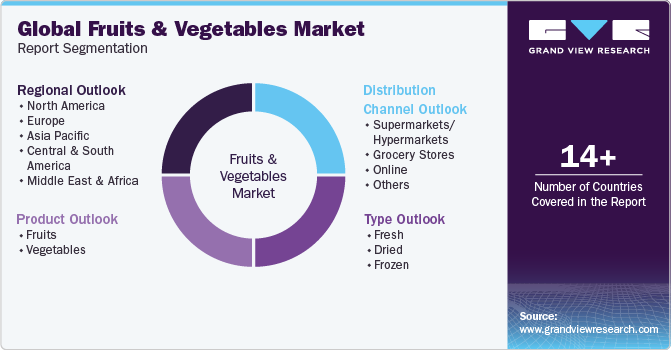
This report forecasts revenue growth at the global, regional, and country levels and provides an analysis of the latest industry trends and opportunities in each of the sub-segments from 2021 to 2033. For the purpose of this study, Grand View Research has segmented the global fruits & vegetables market report on the basis ofbased on product, type, distribution channel, and region.
 To learn more about this report, Download Free Sample Report
 -
Product Outlook (Revenue, USD Billion, 2021 - 2033)
-
Fruits
-
Vegetables
-
-
Type Outlook (Revenue, USD Billion, 2021 - 2033)
-
Fresh
-
Dried
-
Frozen
-
-
Distribution Channel Outlook (Revenue, USD Billion, 2021 - 2033)
-
Supermarkets/Hypermarkets
-
Grocery Stores
-
Online
-
Others
-
-
Regional Outlook (Revenue, USD Billion, 2021 - 2033)
-
North America
-
U.S.
-
Canada
-
Mexico
-
-
Europe
-
UK
-
Germany
-
France
-
Italy
-
Spain
-
-
Asia Pacific
-
Japan
-
China
-
India
-
Australia & New Zealand
-
South Korea
-
-
Latin America
-
Brazil
-
-
Middle East and Africa
-
South Africa
-
-
Research Methodology
The fruits & vegetables market figures in this report are based on a proven research process that combines executive interviews with secondary research from proprietary databases, company filings, and recognized regulatory and institutional sources. Market size is built through value-chain sizing - reconciling supply-side and demand-side estimates - and triangulated with bottom-up and top-down approaches. Every estimate passes multiple levels of expert validation before publication, with each fruits & vegetables segment quantified using the revenue-capture definitions in the table below.
Segment Definition
Segment - Type
Revenue capture definition
Fresh Fruits & Vegetables
This segment includes the sales of freshly harvested fruits and vegetables sold unprocessed for consumption.
Dried Fruits & Vegetables
This segment includes the sales of dried fruits and vegetables with extended shelf life.
Frozen Fruits & Vegetables
This segment includes the sales of frozen fruits and vegetables preserved through freezing technology.
Estimation Model
Food Consumer Layer
Who consumes fruits and vegetables?Digital Access Layer
Who can access fruits and vegetables products?Purchase & Consumption Layer
Who actively purchases fruits and vegetables?Monetisation Layer
How much revenue is generated?Identify the population consuming fresh, frozen, and dried fruits and vegetables across target markets. Analyze dietary habits, nutritional awareness, population growth, and consumption patterns to define the potential consumer pool.
Apply region-specific agricultural production, retail penetration, supermarket presence, traditional grocery networks, farmers' markets, and e-commerce grocery accessibility to estimate the addressable market.
Apply consumption and purchasing rates based on household food expenditure, health-conscious eating habits, demand for fresh produce, convenience trends, and foodservice requirements across households, restaurants, hotels, institutions, and food processors.
Multiply active fruits and vegetables consumers by average annual consumption volumes and spending per consumer. Include revenue from retail stores, supermarkets, wholesalers, foodservice establishments, online grocery platforms, and food processing industries.
Delivered Customizations
This report has been delivered with the following In-depth customizations
CLIENT REQUEST
CUSTOMIZATION DELIVERED
VALUE ADDS
Consumer Consumption Trends & Product Preference Analysis
Conducted a focused analysis of fruits and vegetables consumption across fresh, frozen, dried, organic, and minimally processed categories, covering evolving dietary habits, health-conscious purchasing behavior, demand for nutrient-rich foods, and preference shifts toward natural and clean-label products.
Helps stakeholders identify high-growth product categories, evaluate changing consumer preferences, and assess commercialization opportunities across retail, foodservice, and industrial applications.
Healthy Eating, Organic Produce & Sustainability Trends
Evaluated adoption trends for organic fruits and vegetables, locally sourced produce, pesticide-free cultivation, sustainable farming practices, and convenience-oriented packaged products, including consumer purchasing behavior, wellness trends, and environmental considerations influencing buying decisions.
Provides insights into emerging health and sustainability trends, unmet consumer needs, and commercially attractive product segments to support product differentiation, portfolio expansion, and strategic planning.
Supply Chain Optimization, Distribution Expansion & Market Opportunity Assessment
Assessed demand across supermarkets, hypermarkets, convenience stores, wholesale markets, foodservice establishments, online grocery platforms, and export channels, along with trends in cold-chain logistics, post-harvest technologies, packaging innovations, and supply chain modernization.
Supports investment and expansion strategies by identifying high-potential distribution channels, evaluating operational efficiencies, and strengthening long-term growth opportunities in both domestic and international fruits and vegetables markets.
Frequently Asked Questions About This Report
The popularity of trendy diets and superfoods has significantly impacted the consumption patterns of fruits and vegetables across the globe.
Asia Pacific dominated the fruits & vegetables market with the largest revenue share of 37.5% in 2025, and is growing at the fastest CAGR over the forecast period from 2026 to 2033.
Some key players operating in fruits & vegetables market include Dole Food Company, Inc.; Fresh Del Monte Produce, Inc.; General Mills Inc.; Sunkist Growers, Inc.; Berry Global Inc.; Naturipe Farms, LLC; Grimmway Farms; Sysco Corporation; Tanimura & Antle Fresh Foods, Inc.; and Chiquita Brands International, Inc.
The global fruits & vegetables market size was valued at USD 792.6 billion in 2025 and estimated at USD 827.4 billion in 2026.
The global fruits & vegetables market is expected to grow at a compounded annual growth rate of 5.9% from 2026 to 2033 to reach USD 1,234.9 billion by 2033.
Based on product, the vegetables segment led the market with the largest revenue share of 53.8% in 2025.
Based on type, the fresh fruits & vegetables segment led the market with the largest revenue share of 82.7% in 2025.
About the Author(s)
Consumer F&B Research Team
Consumer Goods · Consumer F&BThis report was authored by the consumer f&b research team at Grand View Research - comprising two research analysts, one senior research analyst, and one industry expert - with specialized expertise in the consumer f&b segment of the consumer goods industry. All findings are based on proprietary consumer goods databases, executive interviews, and regulatory analysis, subject to internal peer review prior to publication.
Last Updated:
Speak to Analyst

Customize this report to your needs - add regions, segments, or data points, with 20% free customization.
Or view our licence options:


ISO 9001:2015 & 27001:2022 Certified
We are GDPR and CCPA compliant! Your transaction & personal information is safe and secure. For more details, please read our privacy policy.


