
- Home
- »
- Advanced Interior Materials
- »
-
Nano-insulation Materials Market Size & Share Report, 2033GVR Report cover

Nano-insulation Materials Market (2026 - 2033)
Size, Share & Trends Analysis Report By Material (Silica Aerogel, Polymer Aerogel, Carbon Aerogel, Nanoporous Materials), By Form (Blanket, Panel / Board, Granule / Particle), By End Use, By Region, And Segment Forecasts
Market Size, 2025
$1.0BMarket Estimate, 2026
$1.1BMarket Forecast, 2033
$2.3BCAGR, 2026–2033
11.5%Nano-insulation Materials Market Summary
The global nano-insulation materials market size was valued at USD 1.0 billion in 2025 and is projected to grow from USD 1.1 billion in 2026 to USD 2.3 billion by 2033, at a CAGR of 11.5% from 2026 to 2033. North America dominated the market, accounting for a share of 39.7% in 2025. The market is gaining traction as industries seek thinner, lighter, and more energy-efficient insulation solutions that deliver high thermal resistance while addressing space and design constraints.
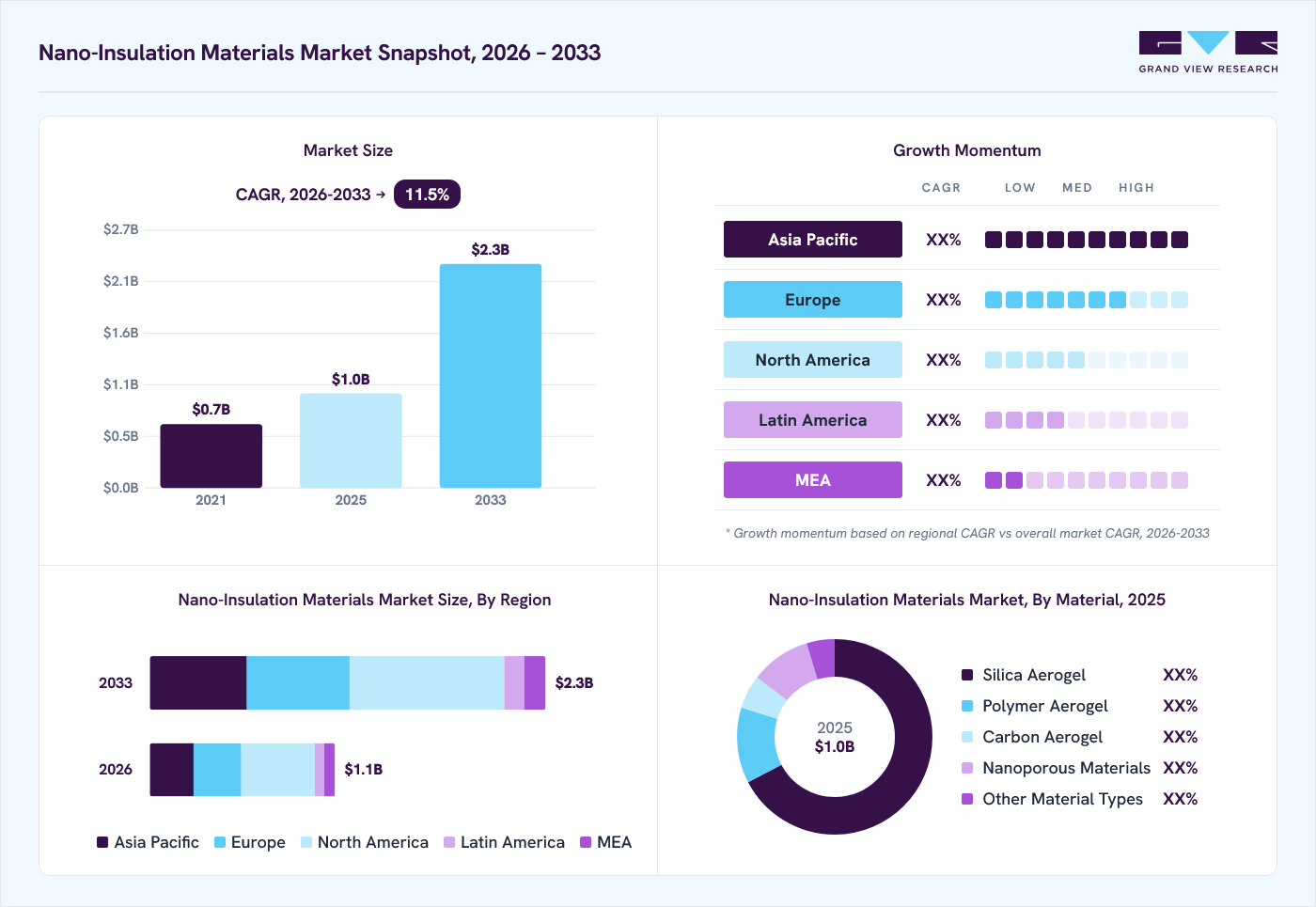 Source: Grand View Research, IR Documents, Primary Interviews, Paid DatabasesTo learn more about this report,
 Download Free Sample Report
 Key Market Trends & Insights
- By material: Polymer aerogel is expected to grow at a CAGR of 12.4% over the forecast period.
- By end use: Building & construction held the largest revenue share of 43.5% in 2025.
- By form: Granule/particle is projected to grow a CAGR of 12.0% from 2026 to 2033.
Regional Highlights
- Largest regional market: North America (39.7% revenue share, 2025)
- Fastest-growing regional market: Asia Pacific (highest CAGR, 2026-2033)
- By country: Canada is witnessing the fastest CAGR in North America
Market Size & Forecast
- Market size in 2025: USD 1.0 Billion
- Estimated market size in 2026: USD 1.1 Billion
- Projected market size by 2033: USD 2.3 Billion
- CAGR (2026-2033): 11.5%
Three ways to get this report
Buy it, customize it, or ask a question.Ask an Analyst
A direct answer, usually in 1 working day
- AccessReport author, directly
- Reply timeWithin 1 working day
- No sales callDirect answer only
- FormatEmail reply
- CostFree, no cost
Get the Full Report
What the study covers
- FormatsPDF · Excel · Dashboard
- Timeline2026–2033 annual, 2025 base
- Coverage20+ countries, 5 regions
- Companies10+ key players profiled
Customize the Report
20% free customization
- IncludeCountries, segments, points
- TailorTo your product definition
- ExtendDeeper competitor detail
- OrA fully bespoke study
- Turnaround5–10 working days
Growing emphasis on reducing building energy consumption and improving the efficiency of building envelopes is a major factor supporting adoption. Advanced insulation can reduce heat transfer through walls, roofs, floors, pipes, equipment, and other components, thereby supporting lower heating and cooling requirements and improved indoor thermal comfort. Aerogels are particularly important due to their highly porous structures provide very low thermal conductivity while maintaining lightweight characteristics.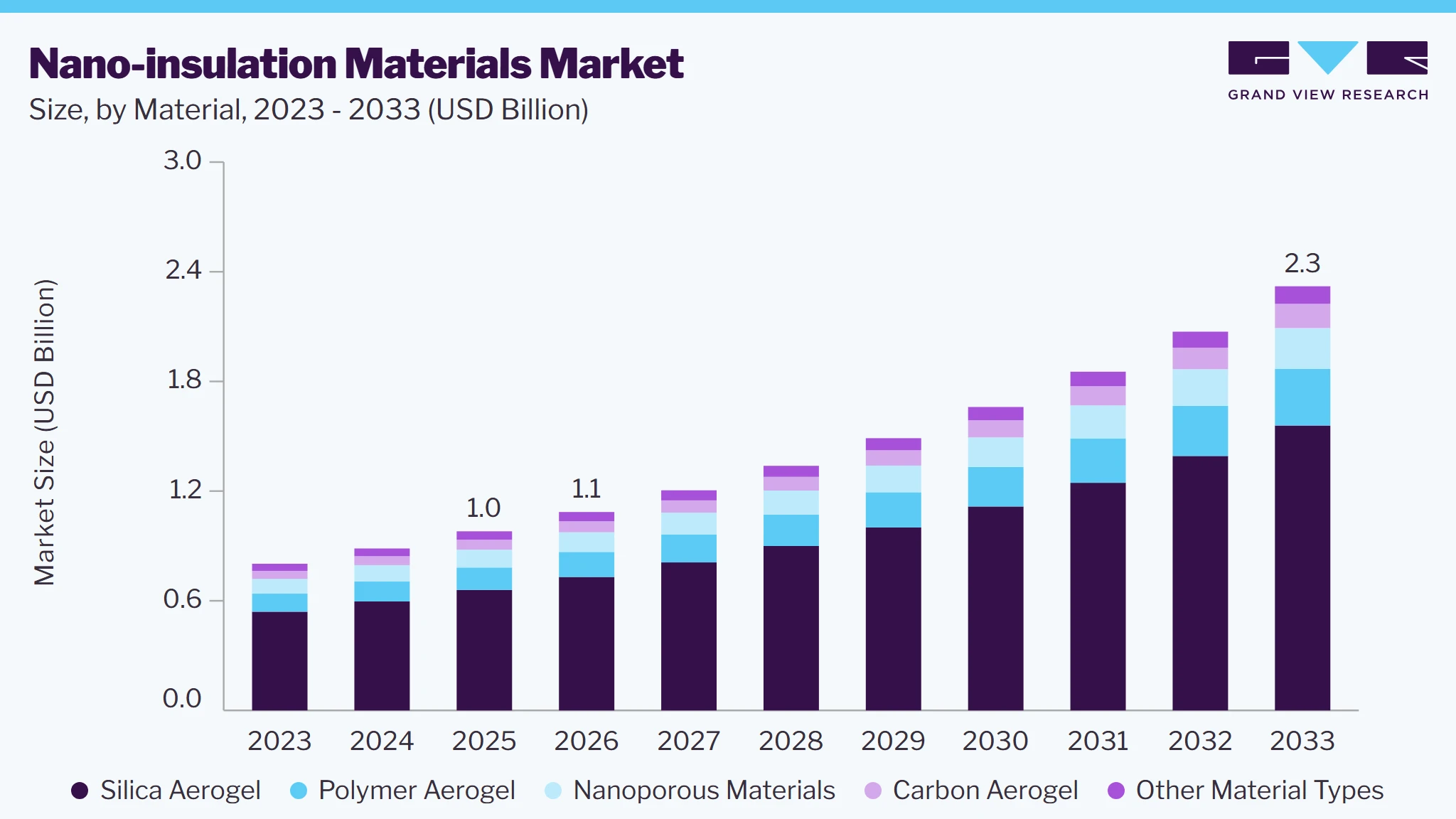 To learn more about this report, Download Free Sample Report
 Technological development is increasingly focused on improving durability, manufacturability, scalability, and environmental performance. Research is progressing toward ambient-pressure drying of aerogels, continuous manufacturing, cellulose-based aerogels, nanoporous wood materials, nanofoams, advanced barrier films, and nanostructured materials designed to reduce heat transfer through the Knudsen effect. The integration of nanotechnology with vacuum insulation, composite materials, and digitally optimized material structures is creating new opportunities for thinner and higher-performance insulation systems.
Market Dynamics
The nano-insulation materials market is shaped by the increasing requirement for high-performance thermal insulation, stringent energy-efficiency expectations, and the need to reduce the thickness and weight of insulation systems. Aerogels, vacuum insulation panels, nanoporous materials, and other nanostructured insulation technologies provide performance advantages over conventional insulation in applications where space, weight, and thermal resistance are critical. However, relatively high production costs, manufacturing complexity, material fragility, and installation requirements continue to influence commercialization.
Increasing demand for energy-efficient buildings and industrial systems is a key driver of the nano-insulation materials market. High-performance insulation reduces heat transfer across building envelopes and equipment, supporting improved thermal comfort and lower energy requirements. Nano-insulation materials are particularly advantageous in applications where conventional insulation would require excessive thickness, as their high thermal resistance can enable thinner insulation assemblies while maintaining required performance.
High production costs remain a major restraint for nano-insulation materials, particularly aerogels and vacuum insulation panels. Aerogel production can involve complex processing and drying requirements, while vacuum insulation panels require specialized porous cores, barrier films, and vacuum sealing. The performance of VIPs can also be compromised if their protective envelope is damaged and the vacuum is lost. These factors increase manufacturing, handling, installation, and lifecycle costs compared with established insulation materials, limiting adoption in price-sensitive applications.
The development of low-cost, durable, and environmentally preferable nano-insulation materials represents a significant market opportunity. Research into cellulose-based aerogels, nanoporous wood, clay-cellulose-silica insulation boards, ambient-pressure drying, and advanced nanostructured materials is aimed at reducing dependence on expensive manufacturing processes while improving mechanical durability. Bio-based and recycled feedstocks could further improve the sustainability profile of nano-insulation products. As these technologies progress toward scalable manufacturing, nano-insulation materials can penetrate construction, refrigeration, transportation, industrial equipment, and other applications requiring compact high-performance insulation.
Market Concentration & Characteristics
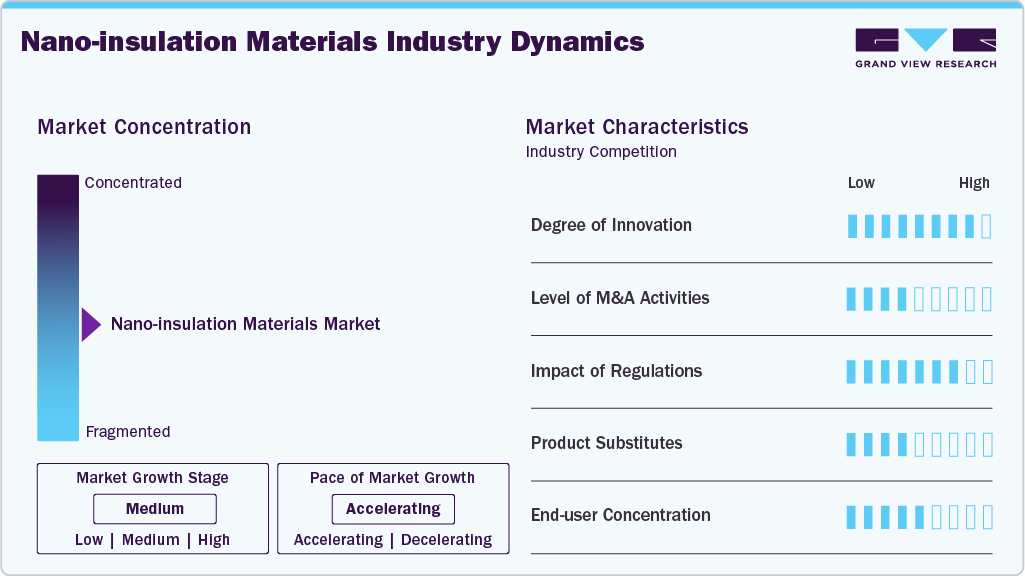
The nano-insulation materials market is characterized by a mix of established insulation manufacturers, specialized aerogel producers, advanced materials companies, research-driven technology developers, and emerging nanotechnology firms. Competitive activity is concentrated around the development of high-performance aerogels, vacuum insulation panels, nanoporous materials, nanofoams, and composite insulation systems. Companies are focusing on improving thermal performance, mechanical durability, production scalability, installation flexibility, and cost competitiveness. Partnerships between manufacturers, universities, government laboratories, and research institutions are also important, as commercialization frequently depends on transferring laboratory-scale nanomaterial technologies into scalable manufacturing processes.
 To learn more about this report, Download Free Sample Report
 The threat of substitutes is moderate owing to conventional insulation materials such as mineral wool, fiberglass, expanded polystyrene, polyurethane foam, and polyisocyanurate remain widely available, comparatively inexpensive, and supported by established installation practices. These materials are suitable for a broad range of mainstream applications and therefore compete directly with advanced nano-insulation products on cost and availability. However, nano-insulation materials offer significant advantages where insulation thickness, weight, thermal performance, or available installation space is critical.
Analyst Perspective
The nano-insulation market is shifting from specialized advanced materials to broader uses where traditional insulation falls short in thermal, thickness, weight, or space. Aerogels and vacuum panels are most commercially relevant; nanoporous materials, nanofoams, hybrid composites, and bio-insulation are emerging opportunities. Challenges include balancing thermal performance with cost, durability, and installation. Government R&D, industry-academia collaboration, scalable manufacturing, and sustainable materials are key to commercialization.
Material Insights
The silica aerogel segment held the largest revenue share of 67.3% in 2025, supported by its established commercial availability, exceptionally low thermal conductivity, lightweight structure, high porosity, and strong thermal stability. Silica aerogels are widely incorporated into blankets, panels, particles, and composite insulation systems, enabling their use across construction, industrial, oil & gas, automotive, and other demanding applications. Their mature manufacturing ecosystem and broad application compatibility further strengthen their position as the leading material type.
The polymer aerogel segment is expected to grow at a CAGR of 12.4% over the forecast period, as manufacturers and end users seek insulation materials offering improved mechanical strength, flexibility, and durability alongside high thermal performance. Polymer aerogels can overcome some of the brittleness associated with conventional silica aerogels and are therefore gaining interest in applications requiring lightweight, mechanically robust, and space-efficient insulation. Growing adoption potential in automotive, electronics, building and construction, aerospace, and advanced thermal-management applications is expected to support segment expansion.
Form Insights
The blanket segment held the largest revenue share of 53.8% in 2025, owing to the flexibility, lightweight characteristics, ease of installation, and high thermal resistance offered by aerogel blankets. These products can be wrapped around irregular surfaces and confined spaces, making them particularly suitable for pipelines, tanks, reactors, industrial equipment, buildings, and energy infrastructure. Their established commercial use and ability to provide high insulation performance with relatively low thickness have supported widespread adoption compared with other product forms.
The granule / particle segment is expected to grow at a CAGR of 12.0% over the forecast period, as particulate aerogels become increasingly integrated into coatings, plasters, composites, insulation boards, and other building and industrial materials. Their high surface area, dispersibility, and formulation flexibility allow manufacturers to incorporate aerogel particles into existing material systems rather than relying exclusively on standalone insulation products. Increasing development of aerogel-enhanced construction materials and thermal-insulation composites is expected to create additional opportunities for particle-based nano-insulation.
End Use Insights
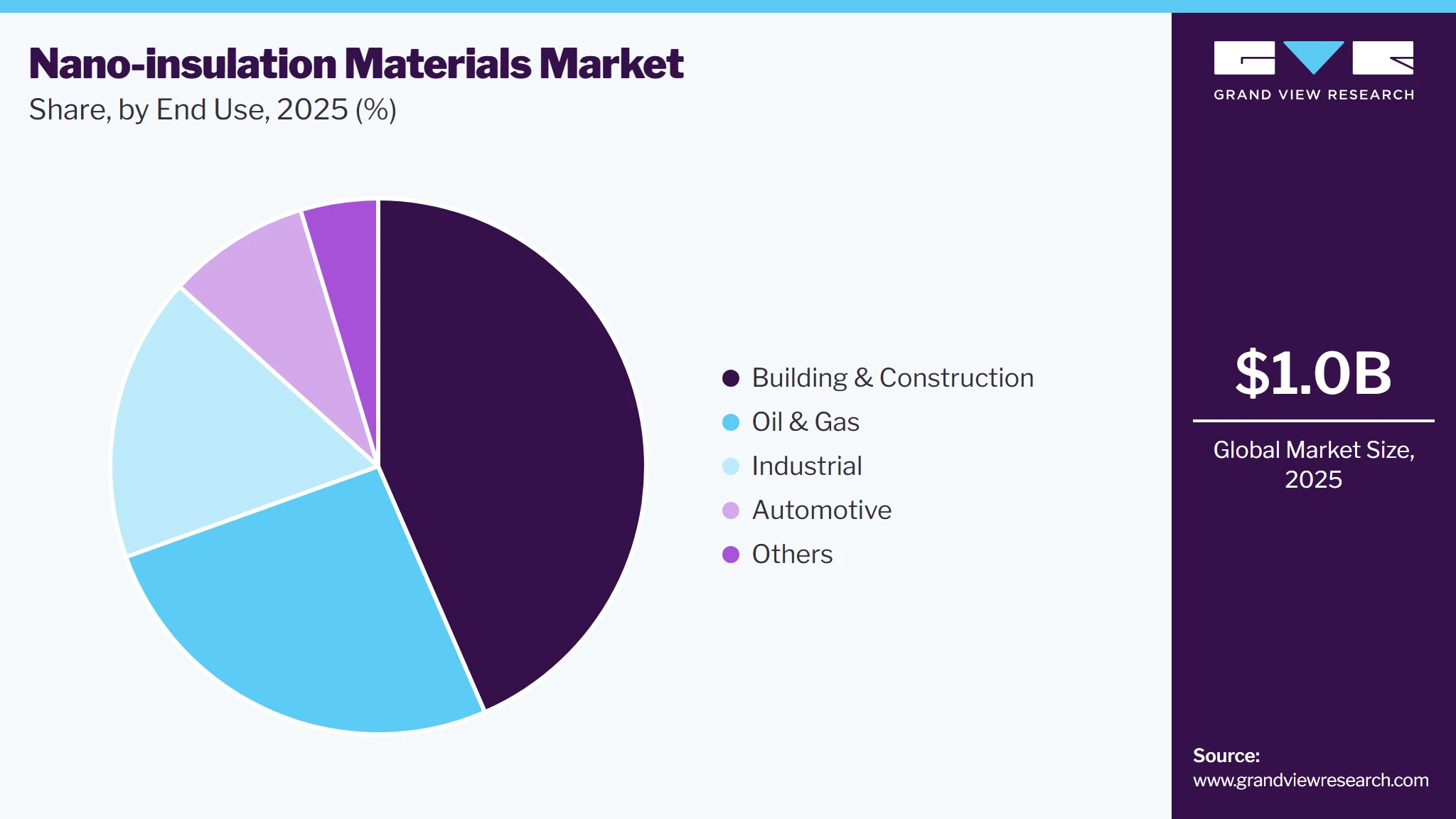
The building & construction segment held the market with a revenue share of 43.5% in 2025, due to growing demand for high-performance, space-efficient insulation materials that can improve building-envelope thermal performance. Nano-insulation materials, particularly silica aerogel-based products, can provide high thermal resistance while reducing insulation thickness, making them attractive for walls, façades, roofs, windows, and retrofit applications where available space is limited. Increasing emphasis on energy-efficient buildings and advanced building-envelope solutions is further supporting adoption.
 To learn more about this report, Download Free Sample Report
 The industrial segment is expected to grow at a CAGR of 12.6% over the forecast period, as nano-insulation materials gain adoption in applications requiring thermal protection under demanding operating conditions. Aerogel blankets, panels, and particles are increasingly relevant for pipes, storage tanks, reactors, process equipment, high-temperature systems, and other industrial assets as they combine high thermal resistance with low thickness and weight. Demand from energy-intensive industries is also supported by the need to reduce heat loss, improve process efficiency, and maintain operating temperatures, creating continued opportunities for advanced insulation technologies.
Regional Insights
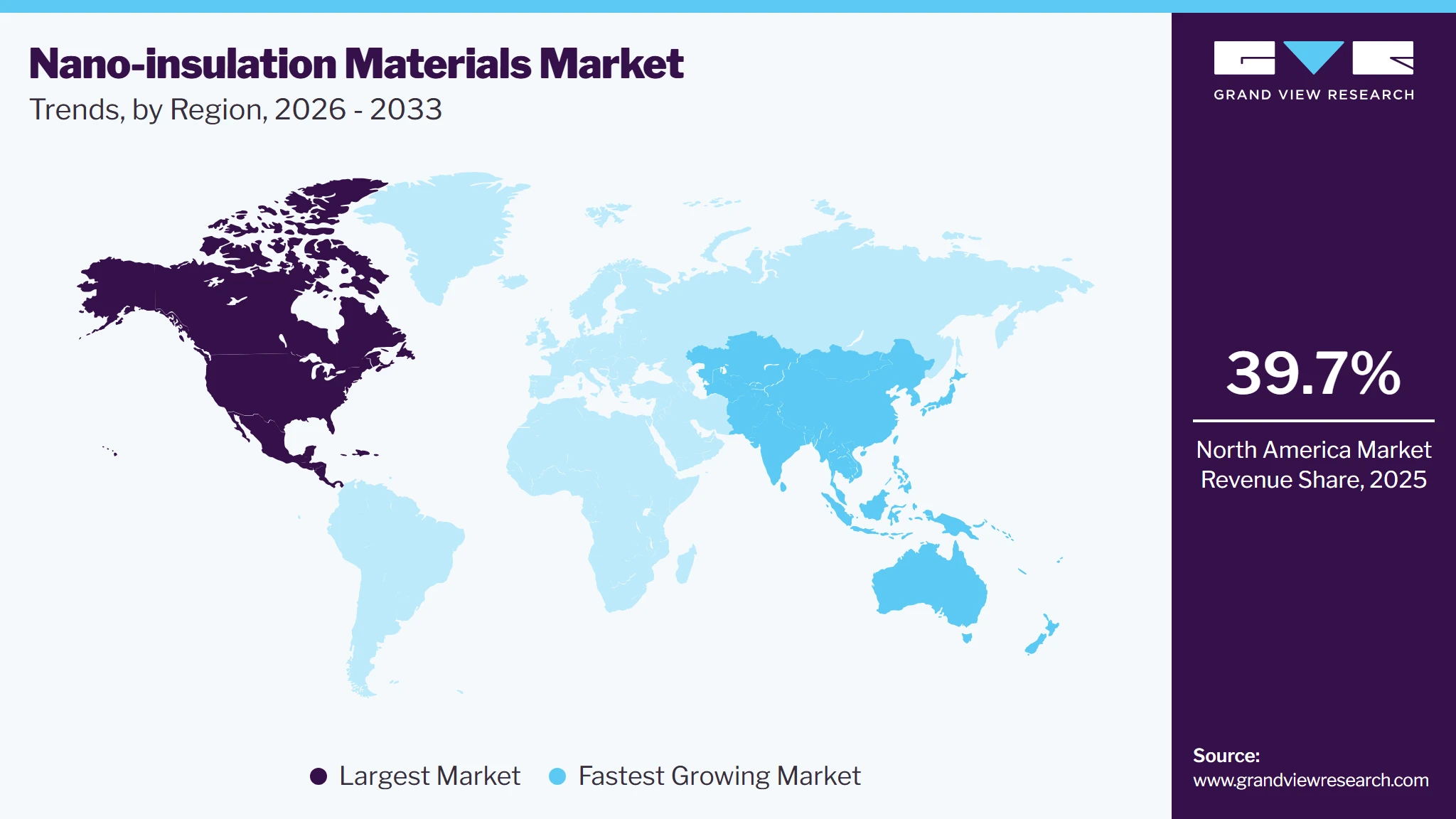
North America nano-insulation materials market dominated the global market and accounted for the largest revenue share of 39.7% in 2025, driven by strong investment in building energy efficiency, advanced construction technologies, and material innovation. The United States has a particularly active research ecosystem involving national laboratories, universities, government agencies, and private companies developing aerogels, vacuum insulation panels, nanoporous materials, and nanostructured super-insulation. Government-funded projects have targeted lower-cost aerogel manufacturing, durable VIP cores, nanoporous insulation boards, and advanced materials with very low thermal conductivity.
 To learn more about this report, Download Free Sample Report
 U.S. Nano-insulation Materials Market Trends
The U.S. market is characterized by significant research and development activity in high-performance insulation technologies. The U.S. Department of Energy has supported projects involving low-cost aerogels, aerogel-based VIP cores, nanoporous insulation, nanostructured super-insulation, and machine-learning-guided material design. These initiatives are aimed at overcoming major barriers such as production cost, mechanical durability, manufacturing scalability, and installation complexity.
Asia Pacific Nano-insulation Materials Market Trends
Asia Pacific nano-insulation materials market is expected to grow at the fastest CAGR over the forecast period, due to rapid urbanization, expanding construction activity, industrial development, and increasing emphasis on energy-efficient buildings and equipment. Countries across the region are investing in advanced building materials and technologies that can reduce energy consumption while accommodating space constraints in dense urban environments. China, Japan, South Korea, and India are important markets for advanced materials research and high-performance insulation applications.
Nano-insulation materials market in China is a significant market in APAC, driven by its extensive construction base, industrial manufacturing capabilities, and growing focus on energy efficiency and advanced building materials. Demand is supported by the need for high-performance insulation in buildings, refrigeration, industrial equipment, transportation, and energy infrastructure. The country's advanced manufacturing ecosystem can also support the scaling of nanostructured materials and insulation components once commercial economics become favorable.
Europe Nano-insulation Materials Market Trends
Europe is a strong market for nano-insulation materials owing to its emphasis on building energy performance, decarbonization, low-energy construction, and renovation of existing buildings. Advanced insulation technologies such as aerogels, vacuum insulation panels, phase-change materials, and other high-performance materials are recognized as important components of energy-efficient building envelopes. European research programs have also investigated nanotechnology-based opaque and transparent insulation systems, including nanofoams, aerogel composites, and advanced VIP structures.
Nano-insulation materials market in Germany represents a prominent European market for advanced insulation technologies due to its strong focus on building energy efficiency, energy conservation, and sustainable construction. Demand for high-performance insulation is supported by renovation requirements and the increasing integration of energy-efficient building-envelope technologies. Nano-insulation materials can provide particular value in retrofit projects where conventional insulation thickness is constrained by architectural, structural, or space considerations.
Central and South America Nano-insulation Materials Market Trends
Central and South America offers emerging opportunities for nano-insulation materials as construction activity, urbanization, industrialization, and energy-efficiency requirements increase across major economies. Demand is expected to be strongest in applications where improved thermal management can reduce energy consumption or improve equipment performance, including commercial buildings, industrial facilities, refrigeration, cold-chain infrastructure, and transportation. However, relatively high costs and limited availability of specialized installation capabilities can restrict adoption compared with conventional insulation products.
Middle East & Africa Nano-insulation Materials Market Trends
The Middle East & Africa region presents substantial potential for advanced insulation materials because of high cooling requirements, extreme climatic conditions, rapid construction activity, and increasing interest in energy-efficient buildings. Nano-insulation materials can provide value in hot-climate applications by reducing heat transfer through building envelopes and enabling high thermal performance without excessive wall thickness. Aerogels and other thin high-performance materials are also relevant for industrial facilities, pipelines, refrigeration systems, and energy infrastructure.
Key Nano-insulation Materials Company Insights
Some of the key players operating in the market include Aspen Aerogels, Inc. and Cabot Corporation
-
Aspen Aerogels, Inc. is a U.S.-based aerogel technology company that develops and manufactures high-performance aerogel materials for energy, industrial insulation, and electric-vehicle applications. Its portfolio includes Pyrogel, Cryogel, Spaceloft, and PyroThin, covering industrial thermal insulation and thin thermal barriers for EV batteries.
-
Cabot Corporation is a global specialty materials manufacturer offering silica aerogel particles and aerogel-based insulation solutions. Its aerogel materials are used in building insulation, industrial applications, oil & gas infrastructure, EV thermal management, coatings, and other high-performance applications.
JIOS Aerogel Corporation and Svenska Aerogel AB are some of the emerging market participants in the nano-insulation materials market.
-
JIOS Aerogel Corporation is a Singapore-headquartered aerogel technology company founded in 2013 that specializes in scalable production of silica aerogel powders. Its AeroVa materials are used in thermal insulation, EV batteries, energy storage, oil & gas, construction, and other applications, with the company also developing downstream thermal-protection technologies.
-
Svenska Aerogel AB is a Swedish advanced-materials company that manufactures and commercializes Naerogel, a mesoporous silica aerogel powder formerly marketed as Quartzene. The material is designed as a performance additive for thermal insulation, fire resistance, lightweight materials, and energy-efficiency applications across building & construction, process industries, transport, and advanced applications.
Key Nano-insulation Materials Companies
The following key companies have been profiled for this study on the nano-insulation materials market.
-
Aspen Aerogels, Inc.
-
Cabot Corporation
-
Armacell International S.A.
-
BASF SE
-
Aerogel Technologies, LLC
-
ENERSENS
-
Svenska Aerogel AB
-
JIOS Aerogel Corporation
-
Nano Tech Co., Ltd.
-
Guangdong Alison Hi-Tech Co., Ltd.
Competitive Benchmarking
Category
Operating Strategies
Competitive Edge
Weakness
Established Players Aspen Aerogels, Inc., Cabot Corporation, Armacell International S.A., BASF SE, Aerogel Technologies, LLC, ENERSENS
- Invest in advanced aerogel and nanostructured insulation technologies to develop high-performance thermal insulation materials with low thermal conductivity, reduced thickness, lightweight characteristics, and improved durability.
- Expand production capacity and application reach through partnerships with construction companies, insulation manufacturers, oil & gas companies, automotive manufacturers, industrial equipment producers, and other end users.
- Focus on improving aerogel performance, mechanical strength, manufacturing efficiency, scalability, product integration, and cost competitiveness across blankets, panels, particles, and composite insulation systems.
- Strong technological expertise and established manufacturing capabilities across aerogel, advanced insulation, specialty chemicals, and high-performance materials.
- Established customer relationships and distribution networks across construction, industrial, energy, oil & gas, transportation, and other applications support commercialization and market penetration.
- Proprietary material formulations, established intellectual property, application expertise, and large-scale production capabilities provide differentiation from smaller nano-insulation developers.
- High capital requirements associated with aerogel production facilities, advanced processing equipment, research and development, and commercial-scale capacity expansion.
- High production costs and manufacturing complexity can limit the competitiveness of nano-insulation materials against conventional insulation products.
- Material fragility, processing requirements, supply-chain considerations, and the need for specialized installation can influence adoption across price-sensitive applications.
Emerging Players Svenska Aerogel AB, JIOS Aerogel Corporation, Nano Tech Co., Ltd., Guangdong Alison Hi-Tech Co., Ltd.
- Develop next-generation silica aerogel and nanostructured insulation materials targeting high-performance thermal insulation, energy efficiency, industrial thermal management, and space-constrained applications.
- Expand through partnerships with insulation manufacturers, construction companies, industrial equipment producers, automotive and battery manufacturers, and other downstream users to increase commercial adoption.
- Prioritize improvements in thermal performance, mechanical durability, material consistency, production efficiency, application flexibility, cost reduction, and manufacturing scalability.
- Strong specialization in aerogel materials and advanced thermal insulation technologies enables focused product development and application-specific innovation.
- Proprietary formulations and specialized manufacturing capabilities can provide differentiation in high-performance insulation applications requiring low thermal conductivity and lightweight materials.
- Greater flexibility in developing customized materials, new product forms, and application-specific solutions can support differentiation from larger diversified materials companies.
- Relatively smaller production scale, financial resources, geographic footprint, and established customer networks compared with large diversified chemical and insulation manufacturers.
- Greater dependence on financing, strategic partnerships, customer qualification, and successful transition from technology development to large-scale commercial production.
- Challenges remain around production costs, manufacturing scalability, raw-material consistency, mechanical durability, customer adoption, and price competitiveness against conventional insulation materials.
Recent Developments
-
In April 2025, Armacell launched ArmaGel XGC, a next-generation cryogenic and dual-temperature aerogel insulation blanket. The product incorporates proprietary low-dust technology and is designed for demanding industrial and energy applications, including cryogenic conditions down to −196°C.
-
In May 2026, Svenska Aerogel launched Naerogel, a new brand for its high-performance silica aerogel material. The new brand replaces Quartzene and represents the company's transition toward a broader commercial platform focused on thermal insulation, fire protection, and energy-efficiency applications.
Nano-insulation Materials Market Report Scope
Report Attribute
Details
Market size in 2025
USD 1.0 billion
Estimated market size in 2026
USD 1.1 billion
Projected market size by 2033
USD 2.3 billion
Growth rate
CAGR of 11.5% from 2026 to 2033
Base year for estimation
2025
Actual estimates/Historical data
2021 - 2024
Forecast period
2026 - 2033
Quantitative units
Revenue in USD billion and CAGR from 2026 to 2033
Report coverage
Revenue forecast, company ranking, competitive landscape, growth factors, and trends
Segments covered
Material type, form, end use, region
Regional scope
North America; Europe; Asia Pacific; Central and South America; Middle East and Africa
Country scope
U.S.; Canada; Mexico; Germany; UK; France; Italy; Spain; China; Japan; India; South Korea; Brazil; Saudi Arabia
Key companies profiled
Aspen Aerogels, Inc.; Cabot Corporation; Armacell International S.A.; BASF SE; Aerogel Technologies, LLC; ENERSENS; Svenska Aerogel AB; JIOS Aerogel Corporation; Nano Tech Co., Ltd.; Guangdong Alison Hi-Tech Co., Ltd.
Customization scope
Free report customization (equivalent up to 8 analysts working days) with purchase. Addition or alteration to country, regional & segment scope.
Pricing and purchase options
Avail customized purchase options to meet your exact research needs. Explore purchase options
Global Nano-insulation Materials Market Report Segmentation
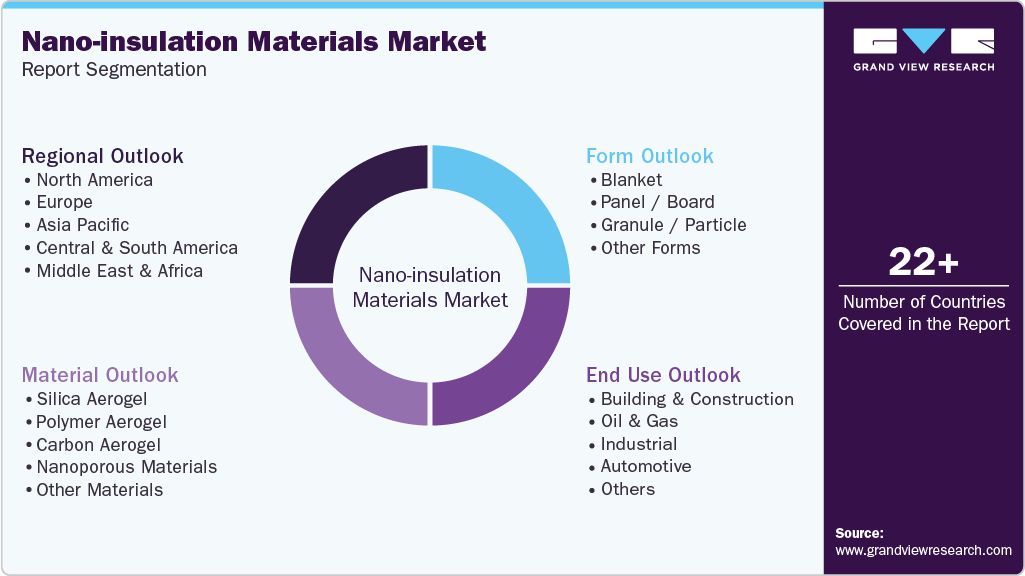
This report forecasts revenue growth at global, regional & country levels and provides an analysis on the industry trends in each of the sub-segments from 2021 to 2033. For this study, Grand View Research has segmented the nano-insulation materials market based on material type, form, end use, and region:
 To learn more about this report, Download Free Sample Report
 -
Material Outlook (Revenue, USD Billion, 2021 - 2033)
-
Silica Aerogel
-
Polymer Aerogel
-
Carbon Aerogel
-
Nanoporous Materials
-
Other Materials
-
-
Form Outlook (Revenue, USD Billion, 2021 - 2033)
-
Blanket
-
Panel / Board
-
Granule / Particle
-
Other Forms
-
-
End Use Outlook (Revenue, USD Billion, 2021 - 2033)
-
Building & Construction
-
Oil & Gas
-
Industrial
-
Automotive
-
Others
-
-
Regional Outlook (Revenue, USD Billion, 2021 - 2033)
-
North America
-
U.S.
-
Canada
-
Mexico
-
-
Europe
-
UK
-
Germany
-
France
-
Italy
-
Spain
-
-
Asia Pacific
-
China
-
Japan
-
India
-
South Korea
-
-
Central and South America
-
Brazil
-
-
Middle East and Africa
-
Saudi Arabia
-
-
Research Methodology
The nano-insulation materials market figures in this report are based on a proven research process that combines executive interviews with secondary research from proprietary databases, company filings, and recognized regulatory and institutional sources. Market size is built through value-chain sizing-reconciling supply-side and demand-side estimates-and triangulated with bottom-up and top-down approaches. Every estimate passes multiple levels of expert validation before publication, with each nano-insulation materials segment quantified using the revenue-capture definitions in the table below.
Segment Definition
Segment - Material
Revenue capture definition
Silica Aerogel
Revenue generated from the sale of nano-insulation materials manufactured using silica aerogel as the primary insulating material, including aerogel-based blankets, panels, particles, and composite insulation products.
Polymer Aerogel
Revenue generated from the sale of nano-insulation materials manufactured using polymer-based aerogels, including polymer aerogel blankets, panels, particles, and composite insulation solutions.
Carbon Aerogel
Revenue generated from the sale of nano-insulation materials manufactured using carbon aerogels, including carbon-aerogel-based insulation products used for high-performance thermal insulation and specialized industrial applications.
Nanoporous Materials
Revenue generated from the sale of nano-insulation materials manufactured using nanoporous structures or materials designed to minimize heat transfer, including nanoporous boards, panels, cores, and composite insulation systems.
Other Materials
Revenue generated from the sale of nano-insulation materials based on other nanostructured insulating materials, including nanofoams, cellulose-based nanomaterials, nanocomposites, and other advanced insulation materials not classified under silica aerogel, polymer aerogel, carbon aerogel, or nanoporous materials.
Segment - Form
Revenue capture definition
Blanket
Revenue generated from the sale of flexible nano-insulation blankets incorporating aerogels, nanoporous materials, or other nanostructured insulating materials for thermal insulation applications.
Panel / Board
Revenue generated from the sale of rigid or semi-rigid nano-insulation panels and boards designed for thermal insulation in buildings, industrial equipment, refrigeration, and other applications.
Granule / Particle
Revenue generated from the sale of nano-insulation materials supplied in granular or particulate form, including aerogel particles, nanoporous particles, and other nanostructured insulating particles used as loose-fill, fillers, or components of insulation systems.
Other Forms
Revenue generated from the sale of nano-insulation materials supplied in other forms, including coatings, films, composites, molded components, and customized nano-insulation products not classified as blankets, panels/boards, or granules/particles.
Segment - End Use
Revenue capture definition
Building & Construction
Revenue generated from the sale of nano-insulation materials used for thermal insulation of walls, roofs, floors, facades, windows, building envelopes, and other residential, commercial, and infrastructure applications.
Oil & Gas
Revenue generated from the sale of nano-insulation materials used for thermal insulation of pipelines, storage tanks, processing equipment, LNG systems, refineries, and other oil and gas infrastructure.
Industrial
Revenue generated from the sale of nano-insulation materials used for thermal insulation of industrial machinery, furnaces, boilers, process equipment, storage systems, manufacturing facilities, and other industrial applications.
Automotive
Revenue generated from the sale of nano-insulation materials used for thermal management and insulation of vehicles, including passenger cars, commercial vehicles, electric vehicles, batteries, exhaust systems, engine compartments, and other automotive components.
Others
Revenue generated from the sale of nano-insulation materials used in other applications, including aerospace, marine, refrigeration, electronics, appliances, energy systems, and specialized thermal management applications not classified under building & construction, oil & gas, industrial, or automotive.
Estimation Model
Layer Name
Key Question
Description
Parent Market Analysis
What is the overall size and growth outlook of the global insulation materials, advanced insulation, aerogel, nanoporous materials, and thermal insulation markets?
The estimation begins by evaluating the broader insulation materials, thermal insulation, advanced insulation, aerogel, nanoporous materials, and high-performance building materials markets. Demand for thermal insulation across buildings, industrial facilities, oil & gas infrastructure, automotive, transportation, refrigeration, aerospace, and other applications is analyzed along with energy-efficiency requirements, construction activity, industrial investments, and adoption of advanced materials to establish the total addressable market for nano-insulation materials.
Nano-Insulation Penetration Analysis
What proportion of the overall advanced insulation, aerogel, nanoporous materials, and high-performance insulation market is represented by nano-insulation materials across material types and forms?
This layer estimates the penetration of nano-insulation materials within the broader advanced and high-performance insulation market. Adoption is assessed across silica aerogel, polymer aerogel, carbon aerogel, nanoporous materials, nanofoams, and other nanostructured insulation materials. Penetration is further evaluated across blankets, panels/boards, granules/particles, coatings, films, and other forms to determine the contribution of nano-enabled insulation technologies to the overall insulation market.
Regional & End-use Demand Assessment
Which regions and end-use industries contribute the highest demand for nano-insulation materials?
Market demand is evaluated across major regions based on construction activity, industrial development, energy-efficiency requirements, oil & gas infrastructure, automotive production, refrigeration demand, advanced manufacturing capabilities, sustainability regulations, and investments in high-performance insulation technologies. Demand is further assessed across building & construction, oil & gas, industrial, automotive, and other end-use applications to determine regional and application-level penetration.
Company Revenue Validation & Market Forecasting
How is the final market size validated and forecast?
Final estimates are validated using company revenues, nano-insulation material production capacities, manufacturing facilities, product portfolios, material and form-level sales, application deployment, technology developments, research and development investments, partnerships, certifications, and announced capacity expansions. Bottom-up and top-down approaches are triangulated using company-level, material-level, form-level, end-use, regional, and industry-level data to generate reliable market estimates and forecasts for nano-insulation materials.
Delivered Customizations
We have successfully delivered the following deep-dive customizations:
Client Request
Customization Delivered
Value Adds
Technology and innovation analysis
Analysis of aerogel technology, nanoporous materials, nanofoams, vacuum insulation, nanocomposites, and sustainable nano-insulation technologies.
Assessment of emerging technologies, low-cost manufacturing, improved mechanical strength, sustainable feedstocks, and scalable production technologies.
Sustainability assessment
Analysis of sustainable nano-insulation materials and technologies, including bio-based materials, cellulose-derived aerogels, recyclable materials, and lower-energy manufacturing processes.
Evaluation of material circularity, embodied energy, environmental impact, durability, and potential contribution to energy-efficient buildings and industrial systems.
Competitive landscape
Customized competitive analysis around companies involved in aerogels, advanced insulation, nanoporous materials, vacuum insulation panels, and other high-performance insulation technologies.
Added benchmarking of product portfolios, material technologies, manufacturing capabilities, application focus, partnerships, R&D activity, and capacity expansion.
Frequently Asked Questions About This Report
The nano-insulation materials market size was estimated at USD 1.0 billion in 2025 and is expected to reach USD 1.1 billion in 2026.
The nano-insulation materials market is expected to grow at a compound annual growth rate of 11.5% from 2026 to 2033 to reach USD 2.3 billion by 2033.
Polymer aerogel is expected to grow at a CAGR of 12.4% over the forecast period.
North America held the highest revenue market share of 39.7% in 2025, supported by strong demand for high-performance insulation across oil & gas, building & construction, aerospace, automotive, and industrial applications, along with a well-established aerogel manufacturing and technology ecosystem.
Key factors driving the nano-insulation materials market include rising demand for energy-efficient and high-performance insulation, stringent building energy-efficiency regulations, growing adoption in space- and weight-constrained applications, and increasing use across construction, industrial, oil & gas, and automotive sectors.
Some key players in the nano-insulation materials market include Aspen Aerogels, Inc., Cabot Corporation, Armacell International S.A., BASF SE, Aerogel Technologies, LLC, ENERSENS, Svenska Aerogel AB, JIOS Aerogel Corporation, Guangdong Alison Hi-Tech Co., Ltd., and Nano Tech Co., Ltd.
Granule/particle is projected to grow a CAGR of 12.0% from 2026 to 2033.
Asia Pacific is the fastest-growing region over the forecast period.
Building & construction held the largest revenue share of 43.5% in 2025.
About the Author(s)
Advanced Interior Materials Research Team
Advanced Materials · Advanced Interior MaterialsThis report was authored by the advanced interior materials research team at Grand View Research - comprising two research analysts, one senior research analyst, and one industry expert - with specialized expertise in the advanced interior materials segment of the advanced materials industry. All findings are based on proprietary advanced materials databases, executive interviews, and regulatory analysis, subject to internal peer review prior to publication.
Last Updated:
Speak to Analyst

Customize this report to your needs - add regions, segments, or data points, with 20% free customization.
Or view our licence options:


ISO 9001:2015 & 27001:2022 Certified
We are GDPR and CCPA compliant! Your transaction & personal information is safe and secure. For more details, please read our privacy policy.


