
- Home
- »
- Conventional Energy
- »
-
Natural Gas Fired Electricity Generation Market Report, 2033GVR Report cover

Natural Gas Fired Electricity Generation Market (2026 - 2033)
Size, Share & Trends Analysis Report By Technology (Open Cycle, Combined Cycle), By Application (Power & Utility, Industrial), By Region (North America, Europe, Asia Pacific, Latin America, MEA), And Segment Forecasts
Market Size, 2025
$49.4BMarket Estimate, 2026
$52.4BMarket Forecast, 2033
$73.6BCAGR, 2026–2033
5.0%Natural Gas Fired Electricity Generation Market Summary
The global natural gas fired electricity generation market size was valued at USD 49.4 billion in 2025 and is projected to grow from USD 52.4 billion in 2026 to USD 73.6 billion by 2033, at a CAGR of 5.0% from 2026 to 2033. Asia Pacific dominated the market, accounting for a revenue share of 36.6% in 2025. This growth is attributed to the increased energy demand due to population growth and industrialization is a primary catalyst.
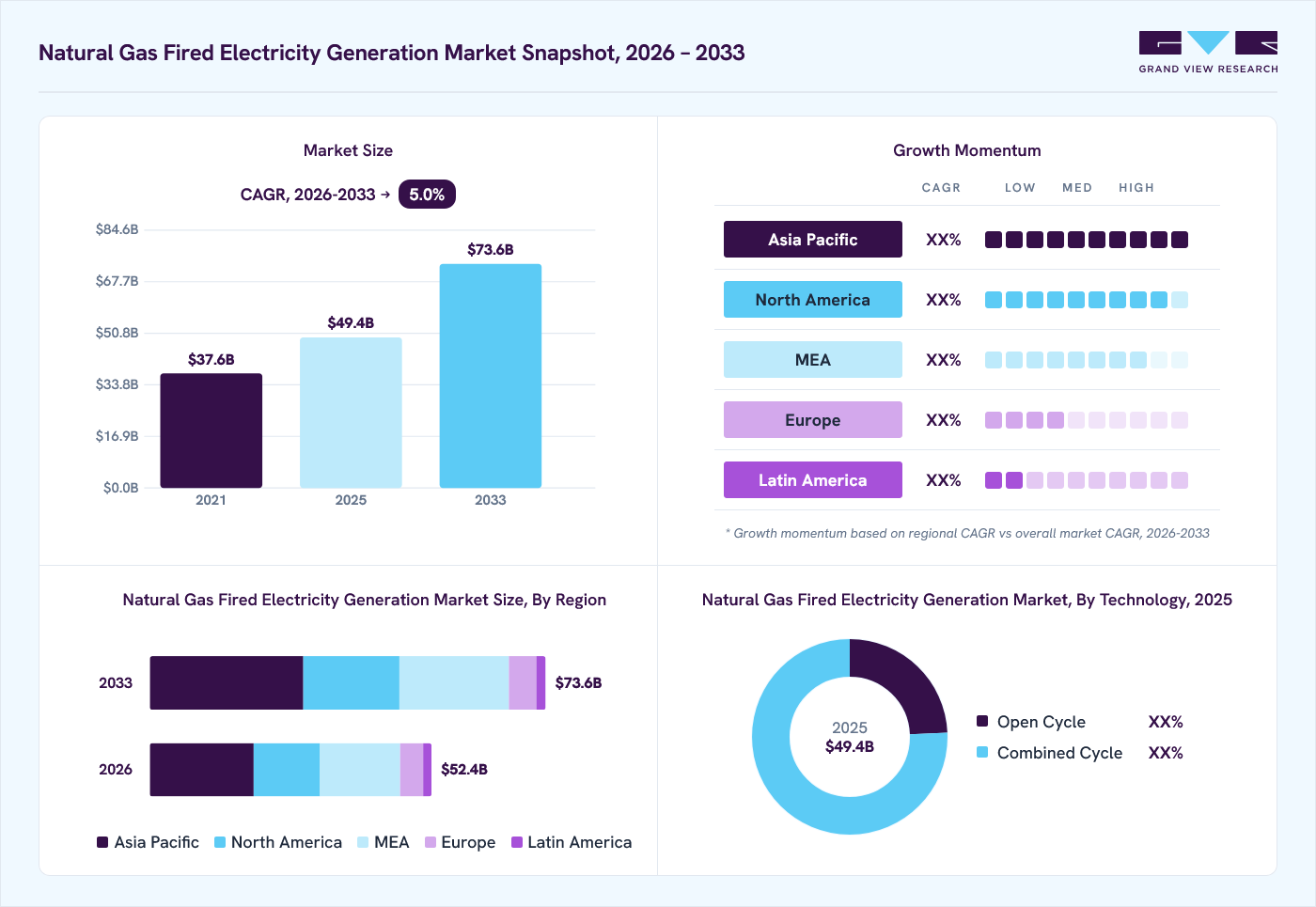 Source: Grand View Research, IR Documents, Primary Interviews, Paid DatabasesTo learn more about this report,
 Download Free Sample Report
Key Market Trends & Insights
- By technology: Combined cycle segment led the market with the largest revenue share of 75.7% in 2025.
- By end use: Power & utilities segment led the market with the largest revenue share of 74.0% in 2025.
Regional Highlights
- Largest regional market: Asia Pacific (36.6% revenue share, 2025)
- By country: China held the largest market share in 2025
Market Size & Forecast
- Market size in 2025: USD 49.4 Billion
- Estimated market size in 2026: USD 52.4 Billion
- Projected market size by 2033: USD 73.6 Billion
- CAGR (2026-2033): 5.0%
Three ways to get this report
Buy it, customize it, or ask a question.Ask an Analyst
Analyst response in 1 business day
- AccessReport author, directly
- Reply timeWithin 1 working day
- No sales callDirect answer only
- FormatEmail reply
- CostFree, no cost
Get the Full Report
What the study covers
- FormatsPDF · Excel · Dashboard
- Timeline2026–2033 annual, 2025 base
- Coverage20+ countries, 5 regions
- Companies10+ key players profiled
Customize the Report
20% free customization
- IncludeCountries, segments, points
- TailorTo your product definition
- ExtendDeeper competitor detail
- OrA fully bespoke study
- Turnaround5–10 working days
In addition, environmental concerns regarding carbon emissions from coal-fired plants have led to a shift towards cleaner natural gas options. Furthermore, the technological advantages of natural gas, such as flexibility and efficiency in power generation, also contribute significantly to its rising adoption in the energy sector. Natural gas fired electricity generation refers to the process of producing electricity using natural gas as a primary fuel source. This market is experiencing substantial growth, primarily due to the rising global demand for electricity driven by population growth and economic development. As nations develop, especially in regions with limited access to electricity, natural gas technology emerges as a viable solution. Its efficiency and cost-effectiveness make it an attractive option compared to traditional coal-fired power plants, which are more polluting.The increasing global focus on reducing carbon emissions has further accelerated the shift towards natural gas, as it is less harmful to the environment than coal or oil. The International Energy Agency has noted that electricity consumption is expected to rise significantly, influenced by factors such as population growth, economic development, and the increasing adoption of electric vehicles. In addition, the demand for air conditioning units also contributes to this trend, alongside the replacement of outdated coal plants with cleaner alternatives.
 To learn more about this report, Download Free Sample Report
Furthermore, technological innovations play a crucial role in enhancing the appeal of natural gas-fired power plants. Advances in combustion technologies have led to improved efficiency and reduced fuel consumption, making these plants more competitive against other energy sources. Moreover, developments in materials and plant design have resulted in greater reliability and durability.
Market Dynamics
The natural gas fired electricity generation (Micro CHP) market is experiencing robust growth, driven by increasing demand for energy-efficient distributed power generation, rising electricity prices, and stringent carbon emission reduction targets. Governments across Europe, Asia-Pacific, and North America are promoting decentralized energy systems through financial incentives, energy efficiency regulations, and net-zero emission policies. Advancements in fuel cell technology, hydrogen-ready CHP systems, and smart energy management solutions are further enhancing system performance and expanding deployment across residential and commercial sectors. Additionally, growing investments in resilient energy infrastructure and increasing adoption of on-site power generation are supporting long-term market growth.
The increasing demand for decentralized power generation and improved energy efficiency is a major driver of the natural gas fired electricity generation (Micro CHP) market. Unlike conventional systems that generate electricity and heat separately, Micro CHP systems produce both simultaneously from a single fuel source, significantly improving fuel utilization and reducing energy losses. With rising electricity prices, growing concerns over grid reliability, and the need to lower operational energy costs, residential homeowners, commercial buildings, hospitals, hotels, and educational institutions are increasingly adopting Micro CHP systems to achieve reliable on-site power generation and efficient heating.
In addition, governments across Europe, North America, and the Asia-Pacific are implementing stringent energy efficiency regulations and offering financial incentives, tax credits, and subsidy programs to encourage the deployment of distributed energy technologies. The growing emphasis on reducing greenhouse gas emissions, improving energy security, and supporting net-zero building initiatives is accelerating the installation of Micro CHP systems. Continuous technological advancements, including high-efficiency fuel cells, hydrogen-ready CHP units, and intelligent energy management systems, are further enhancing system performance, reducing operating costs, and expanding the range of residential and commercial applications.
Despite their long-term operational savings, Micro CHP systems require relatively high upfront investments for equipment, installation, and integration with existing heating infrastructure. Fuel cell-based systems, while offering superior efficiency and lower emissions, remain significantly more expensive than conventional heating systems. Economic viability also depends on local electricity prices, natural gas availability, policy incentives, and annual operating hours. In regions with low electricity costs or limited government support, longer payback periods continue to restrain wider market adoption.
The global transition toward low-carbon energy systems presents significant growth opportunities for the Micro CHP market. Manufacturers are increasingly developing hydrogen-compatible Micro CHP units capable of operating on natural gas-hydrogen blends and, ultimately, pure hydrogen as hydrogen infrastructure expands. Rapid advancements in solid oxide fuel cells (SOFC) and proton exchange membrane fuel cells (PEMFC) are improving electrical efficiency, reducing emissions, and extending system lifespans.
Analyst Perspective
The global natural gas fired electricity generation market is witnessing steady growth as utilities increasingly invest in flexible and high-efficiency power generation to complement expanding renewable energy capacity. Rising electricity demand, modernization of aging thermal infrastructure, and the deployment of advanced gas turbine technologies are supporting market expansion. Furthermore, growing adoption of hydrogen-capable turbines and carbon capture-compatible power plants is expected to enhance the long-term competitiveness of natural gas-fired generation in the evolving energy landscape.
Technology Insights
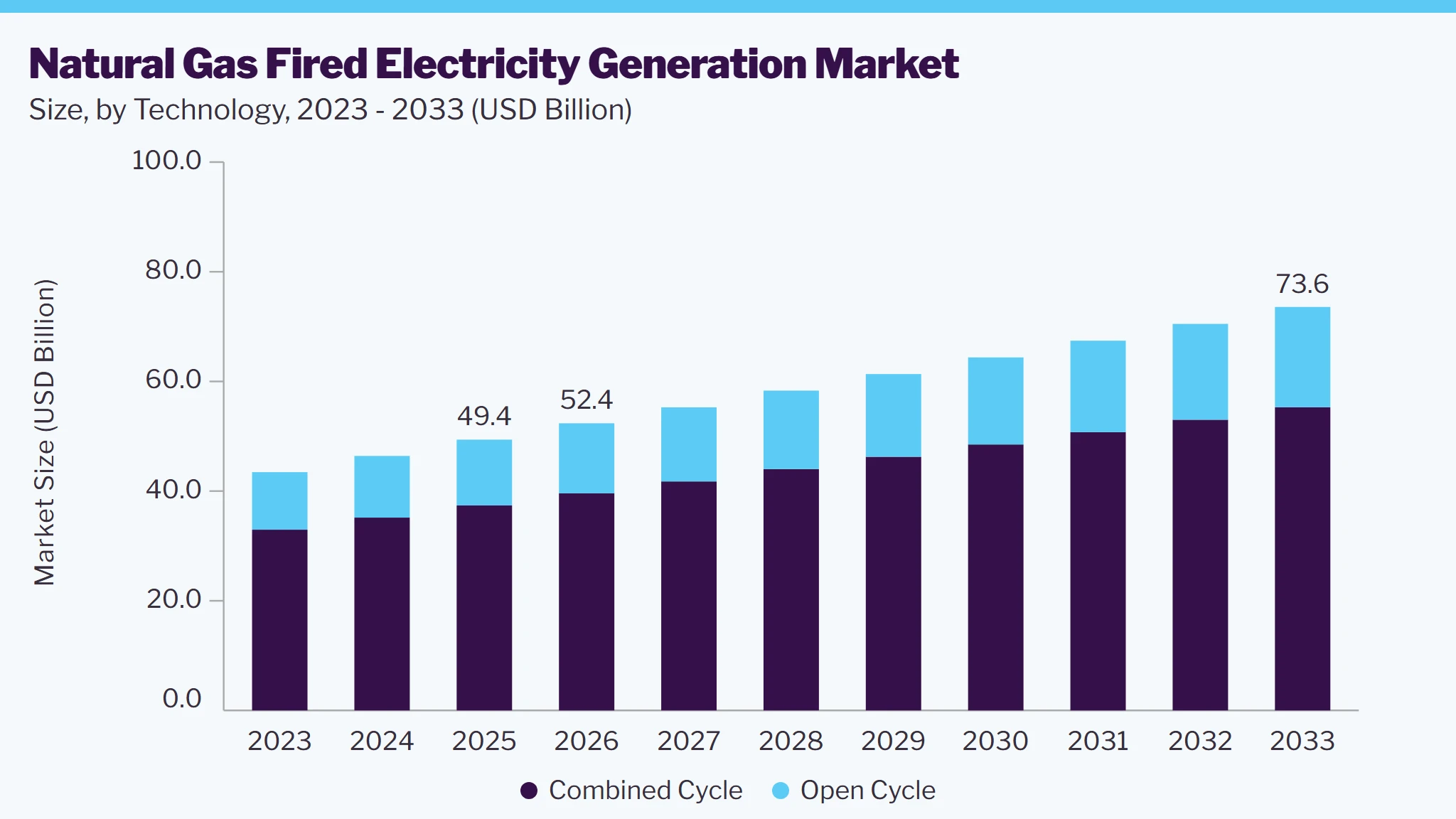
By technology, the combined cycle segment led the market with the largest revenue share of 75.7% in 2025. This growth is attributed to its high efficiency and cost-effectiveness. By utilizing both gas and steam turbines, combined cycle plants can generate significantly more electricity from the same amount of fuel compared to traditional methods. In addition, this technology not only reduces fuel consumption but also lowers emissions, making it an environmentally friendly option. Furthermore, advancements in turbine design have further enhanced operational efficiency, driving increased adoption in various regions.
Open cycle segment is expected to grow at a CAGR of 5.7% over the forecast period, due to its simplicity and quick start-up capabilities. Open cycle gas turbines are easier to install and operate, making them suitable for meeting peak demand or providing backup power. In addition, their ability to generate electricity rapidly without extensive infrastructure makes them attractive in regions with fluctuating energy needs.
Application Insights
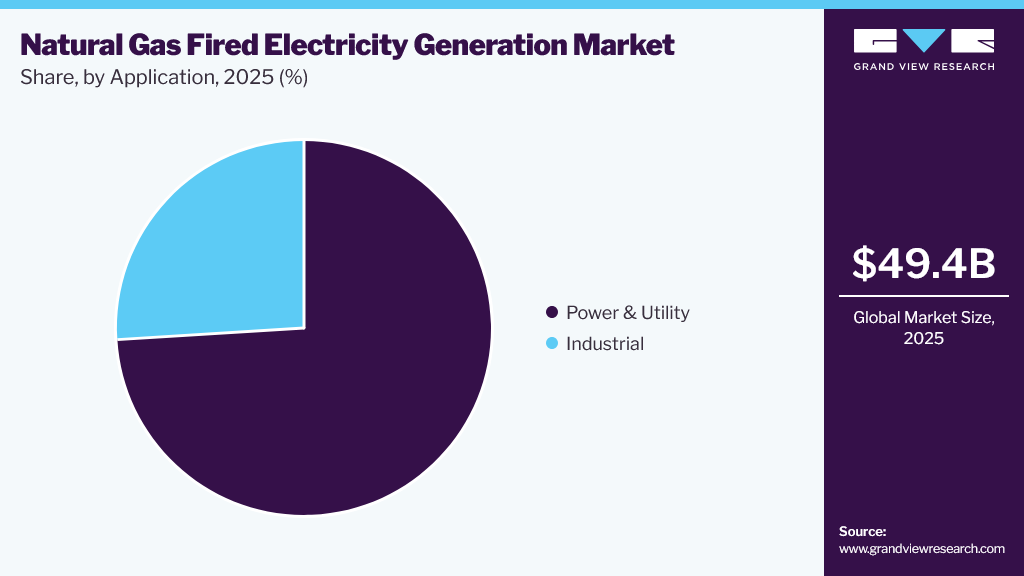
By end use, the power & utilities segment led the market with the largest revenue share of 74.0% in 2025, primarily driven by the rising demand for reliable and cleaner energy sources. As countries aim to reduce carbon emissions, natural gas is increasingly favored over coal for baseload power generation. In addition, the development of large-capacity power projects and supportive government regulations further enhance this trend, making natural gas a key player in transitioning to sustainable energy systems.
 To learn more about this report, Download Free Sample Report
The Industrial sector is expected to grow at a CAGR of 5.3% from 2025 to 2030, owing to the expanding industrial operations and the need for efficient power generation. In addition, industries such as cement, steel, and chemicals are adopting natural gas-fired electricity generation for their energy needs, particularly for captive power plants. This shift is supported by government initiatives aimed at bolstering manufacturing while reducing environmental impact. Furthermore, frequent power outages in certain regions have heightened the demand for reliable natural gas solutions, further propelling this segment's growth.
Regional Insights
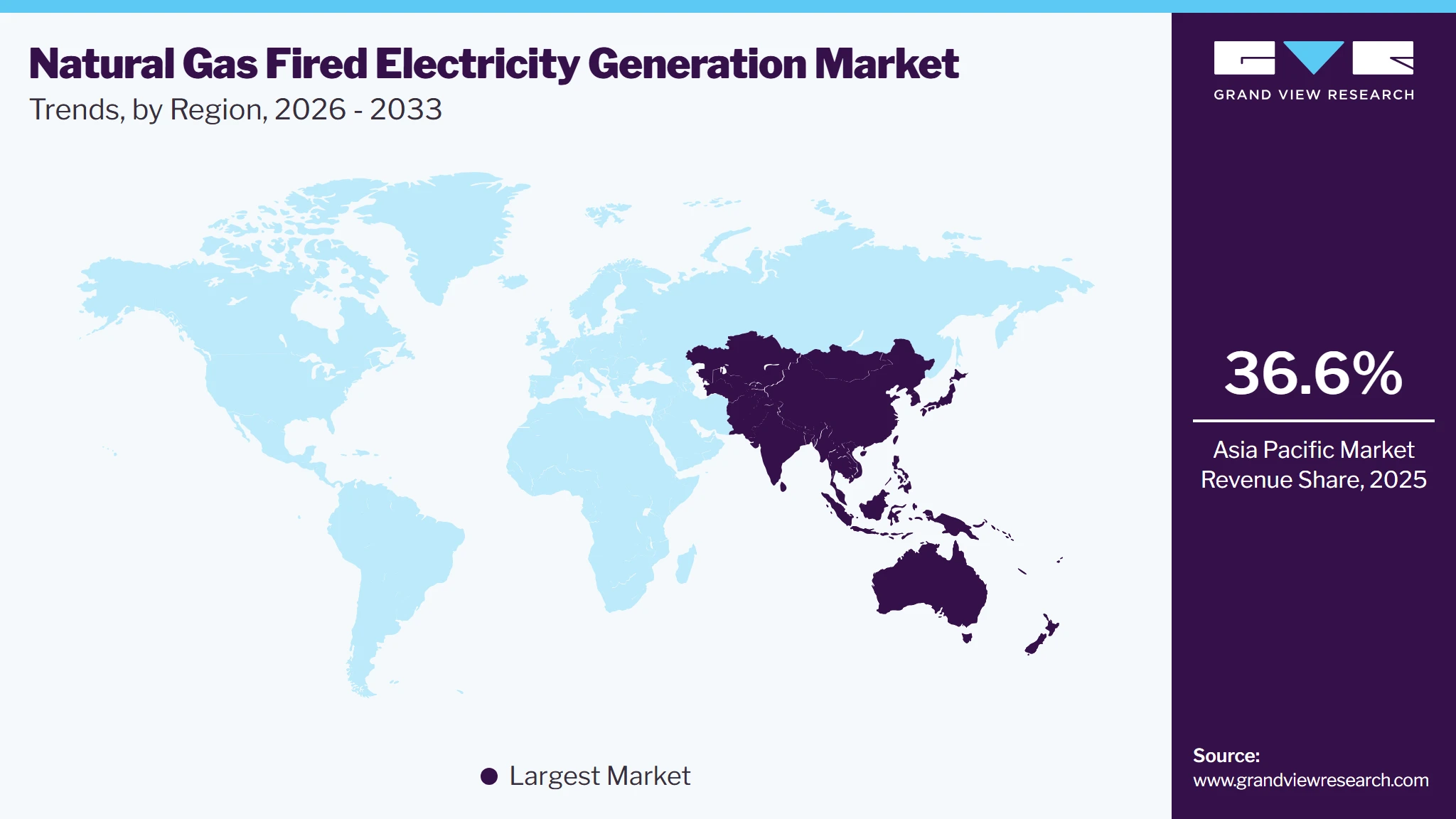
Asia Pacific dominated the natural gas fired electricity generation market with the largest revenue share of 36.6% in 2025. This growth is attributed to the increasing energy demands and a shift towards cleaner energy sources. In addition, countries in this region are focusing on reducing their reliance on coal due to environmental concerns, leading to greater investments in natural gas infrastructure. Furthermore, the development of large-scale gas-fired power projects and supportive government policies further enhance the attractiveness of natural gas as a primary energy source, particularly in rapidly industrializing nations.
 To learn more about this report, Download Free Sample Report
China Natural Gas Fired Electricity Generation Market Trends
The natural gas fired electricity generation market in China held the largest share in the Asia Pacific region in 2025, primarily driven by the government’s commitment to reducing carbon emissions and transitioning towards cleaner energy. As one of the largest consumers of coal, China is actively decommissioning outdated coal plants and replacing them with natural gas facilities. Furthermore, the increasing demand for electricity, especially in urban areas, coupled with advancements in natural gas extraction technologies, positions China as a key player in expanding its natural gas infrastructure to support sustainable growth.
North America Natural Gas Fired Electricity Generation Market Trends
North America natural gas fired electricity generation market is expected to grow at a CAGR of 5.8% over the forecast period, owing to the abundance of shale gas resources. The region's shift towards cleaner energy sources is supported by favorable regulations aimed at reducing carbon emissions from power generation. Furthermore, technological advancements in natural gas extraction and processing have made it more cost-effective, encouraging utilities to invest in gas-fired power plants. Moreover, this trend is further bolstered by the increasing need for reliable electricity supply amidst fluctuating energy demands.
The natural gas fired electricity generation market in the U.S. dominated the North American market and accounted for the largest revenue share in 2024, driven by significant advancements in extraction technologies and an abundant supply of natural gas. Furthermore, the country has shifted its focus from coal to natural gas as a cleaner alternative for electricity generation, driven by both environmental regulations and economic factors. As a result, many coal-fired plants are being retired or converted to natural gas, enhancing the overall efficiency and sustainability of the power generation sector.
Europe Natural Gas Fired Electricity Generation Market Trends
Europe natural gas fired electricity generation market is expected to grow significantly over the forecast period due to its broader strategy to achieve climate goals. The region's commitment to reducing greenhouse gas emissions has led many countries to phase out coal and invest in cleaner alternatives such as natural gas. Furthermore, increasing interconnections between national grids facilitate the integration of renewable energy sources alongside natural gas, making it a crucial component of Europe’s energy mix as it seeks to enhance energy security and sustainability.
The growth of the natural gas fired electricity generation market in Russia is expected to be driven by its vast reserves of natural gas and strategic initiatives aimed at expanding domestic consumption. In addition, the Russian government is promoting the use of natural gas for power generation as part of its energy strategy, which includes modernizing existing infrastructure and developing new projects. Furthermore, this focus not only aims to meet domestic electricity needs but also positions Russia as a key exporter of natural gas to neighboring countries, reinforcing its influence in the global energy market.
Key Natural Gas Fired Electricity Generation Company Insights
Key players in the global natural gas fired electricity generation industry include General Electric, Siemens AG, Ansaldo Energia S.P.A., and others. These companies are employing various strategies to enhance their market presence. These include forming strategic alliances and partnerships to leverage shared expertise and resources. In addition, companies are focusing on mergers and acquisitions to expand their operational capabilities and market share. Furthermore, players are diversifying their service offerings to encompass comprehensive solutions for natural gas power generation.
-
General Electric (GE) provides a diverse range of products, including aero derivative gas turbines, reciprocating engines, and combined cycle systems. The company operates primarily in the power generation segment, focusing on delivering efficient and reliable energy solutions for utilities and industrial applications.
-
Kawasaki Heavy Industries, Ltd. manufactures a variety of products, including gas turbines designed for power generation and cogeneration applications. Operating within the energy sector, the company focuses on providing high-efficiency solutions that cater to both utility and industrial markets.
Key Natural Gas Fired Electricity Generation Companies:
The following key companies have been profiled for this study on the natural gas fired electricity generation market.
- General Electric
- Siemens AG
- Mitsubishi Hitachi Power Systems, Ltd.
- Kawasaki Heavy Industries, Ltd.
- Ansaldo Energia S.P.A.
- Bharat Heavy Electricals Limited
- Opra Turbines B.V.
- Man Energy Solutions
- Centrax Gas Turbines
Competitive Benchmarking
Category
Operating Strategies
Competitive Edge
Weakness
Established Players (Ansaldo Energia S.p.A.; Bharat Heavy Electricals Limited (BHEL); GE Vernova; Kawasaki Heavy Industries, Ltd.; MAN Energy Solutions; Mitsubishi Power Ltd.; Siemens Energy AG)
- Prioritize development of high-efficiency combined cycle gas turbine (CCGT) and advanced open cycle gas turbine (OCGT) technologies.
- Strengthening aftermarket businesses through long-term service agreements (LTSAs), digital asset performance management, and turbine upgrades.
- Expand hydrogen-capable gas turbines and carbon capture (CCUS)-ready power solutions to align with energy transition goals.
- An extensive installed base of gas turbines generates recurring service and maintenance revenue.
- Strong EPC capabilities enable execution of large-scale utility and industrial power projects globally.
- Broad technological expertise in high-capacity gas turbines, generators, and integrated power plant solutions supports leadership in utility-scale electricity generation.
- Large-scale manufacturing operations require significant capital expenditure and long project execution cycles.
- Revenue is sensitive to fluctuations in utility investments, public infrastructure spending, and power sector capital expenditure.
- Increasing decarbonization policies and renewable energy expansion may reduce demand for conventional gas-fired power projects in some markets.
Emerging & Regional Players (Centrax Gas Turbine; OPRA Turbines B.V.)
- Focus on compact gas turbine packages for distributed generation, industrial cogeneration, and captive power applications.
- Target specialized industrial sectors requiring flexible, decentralized power solutions with lower maintenance requirements.
- Expand through OEM collaborations, regional distributors, and customized engineering solutions for specific customer requirements.
- Ability to deliver highly customized gas turbine packages with shorter delivery timelines.
- Strong expertise in small- and medium-scale gas turbine systems for industrial, commercial, and energy-intensive facilities.
- Agile organizational structures enable faster response to evolving customer requirements and niche market opportunities.
- Limited global manufacturing footprint compared with multinational turbine suppliers.
- Lower investment capacity for large-scale research, digitalization, and next-generation turbine development.
- Greater dependence on regional industrial demand and project-specific contracts, resulting in comparatively lower revenue stability.
Recent Developments
-
In January 2024, GE Vernova and IHI Corporation have initiated the next phase of their collaboration to develop a gas turbine combustion system capable of burning 100% ammonia, potentially transforming natural gas fired electricity generation. This joint development agreement, signed on January 24, 2024, aims to retrofit existing F-class turbines for ammonia use by 2030. The project includes extensive combustion testing in Japan, focusing on reducing nitrogen oxide emissions while enhancing the viability of ammonia as a low-carbon fuel alternative in power generation.
-
In December 2024, SSE and Siemens Energy have announced a partnership "Mission H2 Power," aimed at advancing gas turbine technology to operate on 100% hydrogen. This initiative supports the decarbonization of SSE’s Keadby 2 Power Station, which currently utilizes natural gas. The collaboration was expected to develop a combustion system for Siemens’ SGT5-9000HL turbine, ensuring flexibility to run on both hydrogen and natural gas. This project is crucial for the UK's transition to a cleaner energy system, enhancing energy security and reducing reliance on fossil fuels.
Natural Gas Fired Electricity Generation Market Report Scope
Report Attribute
Details
Market definition
The natural gas-fired electricity generation market is defined as the revenue generated from the sales of natural gas-fired power generation systems and electricity produced through open-cycle and combined-cycle technologies across utility and industrial applications.
Market size in 2025
USD 49.4 billion
Estimated market size in 2026
USD 52.4 billion
Projected market size by 2033
USD 73.6 billion
Growth rate
CAGR of 5.0% from 2026 to 2033
Base year for estimation
2025
Historical data
2021 - 2024
Forecast period
2026 - 2033
Quantitative units
Revenue in USD million, volume in MW, and CAGR from 2026 to 2033
Report coverage
Revenue forecast, volume forecast, company ranking, competitive landscape, growth factors, and trends
Segments covered
Technology, application, region
Regional scope
North America; Europe; Asia Pacific; Latin America; Middle East & Africa
Country scope
U.S., China, India, Japan, Thailand, Russia, Saudi Arabia, Iraq
Key companies profiled
Ansaldo Energia S.p.A.; Bharat Heavy Electricals Limited (BHEL); Centrax Gas Turbine; GE Vernova; Kawasaki Heavy Industries, Ltd.; MAN Energy Solutions; Mitsubishi Power Ltd.; OPRA Turbines B.V.; Siemens Energy AG
Customization scope
Free report customization (equivalent up to 8 analysts' working days) with purchase addition or alteration to country, regional & segment scope.
Pricing and purchase options
Avail customized purchase options to meet your exact research needs. Explore purchase options
Global Natural Gas Fired Electricity Generation Market Report Segmentation
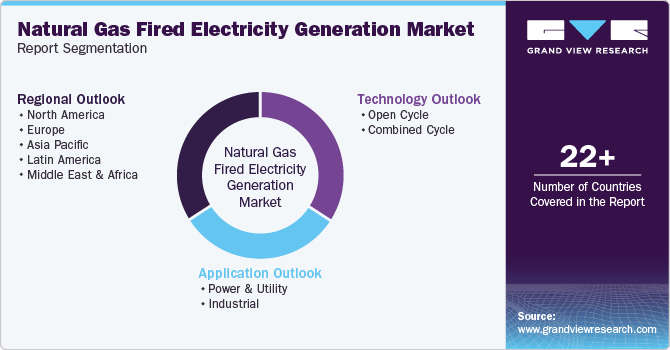
This report forecasts revenue growth at global, regional, and country levels and analyzes the latest industry trends in each sub-segment from 2021 to 2033. For this study, Grand View Research has segmented the global natural gas fired electricity generation market report based on technology, application, and region.
 To learn more about this report, Download Free Sample Report
-
Technology Outlook (Volume, MW; Revenue, USD Million, 2021 - 2033)
-
Open Cycle
-
Combined Cycle
-
-
Application Outlook (Volume, MW; Revenue, USD Million, 2021 - 2033)
-
Power & Utility
-
Industrial
-
-
Regional Outlook (Volume, MW; Revenue, USD Million, 2021 - 2033)
-
North America
-
U.S.
-
-
Europe
-
Russia
-
-
Asia Pacific
-
China
-
India
-
Japan
-
Thailand
-
-
Latin America
-
Middle East and Africa
-
Saudi Arabia
-
Iraq
-
-
Research Methodology
The natural gas fired electricity generation market figures in this report are based on a proven research process that combines executive interviews with secondary research from proprietary databases, company filings, and recognized regulatory and institutional sources. Market size is built through value-chain sizing - reconciling supply-side and demand-side estimates - and triangulated with bottom-up and top-down approaches. Every estimate passes multiple levels of expert validation before publication, with each natural gas fired electricity generation segment quantified using the revenue-capture definitions in the table below.
Segment Definition
Technology
Revenue Capture Definition
Open Cycle
This segment includes revenue generated from the sale, installation, commissioning, and servicing of open cycle gas turbine (OCGT) power plants that use natural gas to produce electricity. These systems are primarily deployed for peak-load generation, emergency backup, and grid balancing applications. Revenue is captured from turbine and generator sales, EPC services, plant upgrades, maintenance, spare parts, and long-term service agreements.
Combined Cycle
This segment comprises revenue generated from combined cycle gas turbine (CCGT) power plants that integrate gas and steam turbines to achieve higher electrical efficiency. Revenue is derived from equipment sales, EPC contracts, plant modernization, digital control systems, performance optimization services, maintenance, replacement components, and long-term operation and maintenance agreements.
Application
Revenue Capture Definition
Power & Utility
This segment covers revenue generated from the deployment of natural gas-fired power plants by electric utilities and independent power producers (IPPs) for baseload, intermediate-load, and peaking electricity generation. Revenue includes turbine and generator sales, EPC contracts, grid integration, plant operation and maintenance services, and long-term performance agreements.
Industrial
This segment includes revenue generated from natural gas-fired electricity generation systems installed at industrial facilities such as refineries, chemical plants, steel mills, mining operations, and manufacturing sites to supply captive power and improve energy reliability. Revenue is captured through equipment sales, engineering services, installation, maintenance, turbine retrofits, and long-term operational support contracts.
Estimation Model
Layer Name
Key Question
Description
Electricity Generation Capacity Assessment Layer
What forms the demand foundation for natural gas-fired electricity generation?
Evaluate electricity consumption growth, peak load requirements, reserve margin targets, retirement of aging coal and oil-fired power plants, industrial power demand, and national generation expansion plans. Assess grid reliability requirements, natural gas accessibility, and regional energy security objectives that influence new gas-fired capacity additions.
Power Plant Development & Technology Deployment Layer
How is new generation capacity deployed across gas-fired technologies?
Analyze the installation of combined cycle gas turbine (CCGT) and open cycle gas turbine (OCGT) plants across utility and industrial applications. Assess project pipelines, turbine technology selection, plant efficiency improvements, capacity additions, modernization initiatives, and adoption of hydrogen-capable gas turbines across major markets.
Infrastructure Investment & Project Expenditure Layer
How are investments allocated throughout the project lifecycle?
Assess spending on gas turbines, generators, heat recovery steam generators (HRSGs), balance-of-plant equipment, EPC services, transmission interconnections, emissions control technologies, digital monitoring systems, and long-term operation and maintenance activities. Evaluate investment distribution by project size, technology, end user, and region.
Revenue & Market Valuation Layer
How is the market value determined?
Analyze revenue generated from equipment supply, EPC contracts, commissioning services, modernization projects, aftermarket services, spare parts, digital asset management solutions, and long-term service agreements. Assess the influence of plant capacity, turbine configuration, project scale, service contracts, and regional investment activity to estimate the overall market value across technologies, applications, and geographies.
Delivered Customizations
This report has been delivered with the following In-depth customizations
Client Request
Customization Delivered
Value Adds
Power Purchase Agreement (PPA) & Merchant Market Assessment
Analyzed long-term PPAs, merchant power markets, electricity pricing mechanisms, and revenue models for gas-fired power projects across major regions.
Supported revenue optimization, investment planning, and risk assessment for new power projects.
Gas Turbine OEM Market Share Analysis
Evaluated market share of leading turbine manufacturers based on installed base, new project awards, turbine class, and regional deployments.
Enabled supplier benchmarking, partnership evaluation, and competitive intelligence.
Carbon Reduction & Low-Carbon Technology Assessment
Examined hydrogen-ready gas turbines, carbon capture, utilization, and storage (CCUS), emissions regulations, and decarbonization pathways for natural gas-fired power generation.
Enabled identification of future-ready technologies, regulatory compliance strategies, and low-carbon investment opportunities.
Frequently Asked Questions About This Report
The natural gas fired electricity generation market size was estimated at USD 49.4 billion in 2025 and is expected to reach USD 52.4 billion in 2026.
The key players operating in the natural gas-fired electricity generation market are Ansaldo Energia S.p.A., Bharat Heavy Electricals Limited (BHEL), Centrax Gas Turbine, GE Vernova, Kawasaki Heavy Industries, Ltd., MAN Energy Solutions, Mitsubishi Power Ltd., OPRA Turbines B.V., Siemens Energy AG, among others.
The natural gas fired electricity generation market in China held the largest share of 44.0% in the Asia Pacific region in 2025.
North America is anticipated to register the second fastest CAGR of 5.4% over the forecast period.
By technology, the combined cycle segment led the market with the largest revenue share of 75.7% in 2025.
Which end use segment is the fastest growing in the natural gas fired electricity generation market?By end use, the power & utilities segment led the market with the largest revenue share of 74.0% in 2025.
The natural gas fired electricity generation market is expected to grow at a compound annual growth rate of 5.0% from 2026 to 2033 to reach USD 73.6 billion by 2033.
Asia Pacific dominated the natural gas fired electricity generation market with the largest revenue share of 36.6% in 2025.
The primary factor driving the growth of the global natural gas fired electricity generation market is the increasing demand for flexible, reliable power generation to support the integration of renewable energy while ensuring grid stability.
About the Author(s)
Conventional Energy Research Team
Energy & Power · Conventional EnergyThis report was authored by the conventional energy research team at Grand View Research - comprising two research analysts, one senior research analyst, and one industry expert - with specialized expertise in the conventional energy segment of the energy & power industry. All findings are based on proprietary energy & power databases, executive interviews, and regulatory analysis, subject to internal peer review prior to publication.
Last Updated:
Speak to Analyst

Customize this report to your needs - add regions, segments, or data points, with 20% free customization.
Or view our licence options:


ISO 9001:2015 & 27001:2022 Certified
We are GDPR and CCPA compliant! Your transaction & personal information is safe and secure. For more details, please read our privacy policy.


