
- Home
- »
- Medical Devices
- »
-
Needle-Free IV Connectors Market Size Report, 2026-2033GVR Report cover

Needle-Free IV Connectors Market (2026 - 2033)
Size, Share & Trends Analysis Report By Mechanism, By Connector Configuration, By Replacement Interval, By Application, By End Use, By Distribution Channel, By Region, And Segment Forecasts
Market Size, 2025
$1.8BMarket Estimate, 2026
$1.9BMarket Forecast, 2033
$3.2BCAGR, 2026–2033
7.5%Needle-Free IV Connectors Market Summary
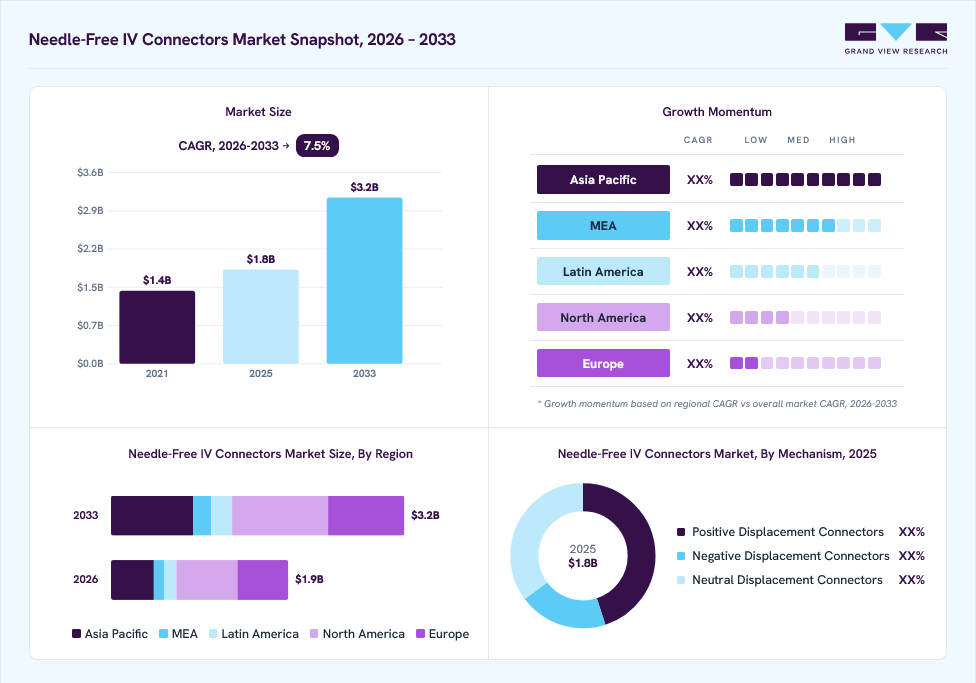
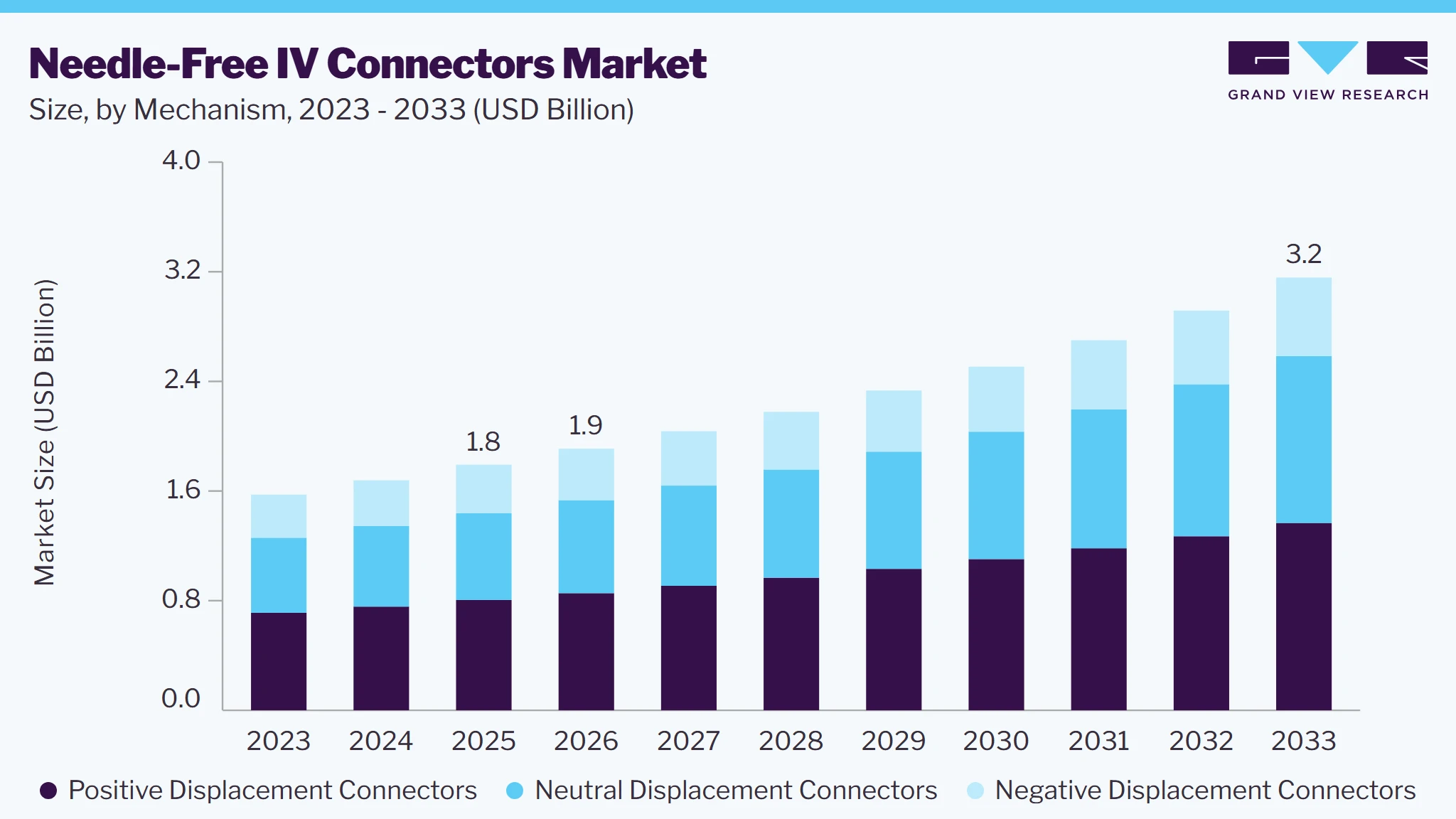
The global Needle-Free IV connectors market size was valued at USD 1.8 billion in 2025 and is projected to grow from USD 1.9 billion in 2026 to USD 3.2 billion by 2033, at a CAGR of 7.5% from 2026 to 2033. The market in North America dominated with a revenue share of 34.6% in 2025. The global market is primarily driven by the growing need to reduce needlestick injuries, occupational exposure to bloodborne pathogens, and catheter-related bloodstream infections in healthcare settings.
 Source: Grand View Research, IR Documents, Primary Interviews, Paid DatabasesTo learn more about this report,
 Download Free Sample Report
Key Market Trends & Insights
- By mechanism: Positive displacement connectors segment held the largest market share of 44.9% in 2025.
- By connector configuration: Straight channel segment held the largest market share of 54.7% in 2025.
- By replacement interval: Standard replacement interval connectors segment held the largest market share of 73.9% in 2025.
- By application: General IV infusion & medication administration segment held the largest market share of 55.1% in 2025.
- By end use: Hospitals segment held the largest market share of 61.7% in 2025.
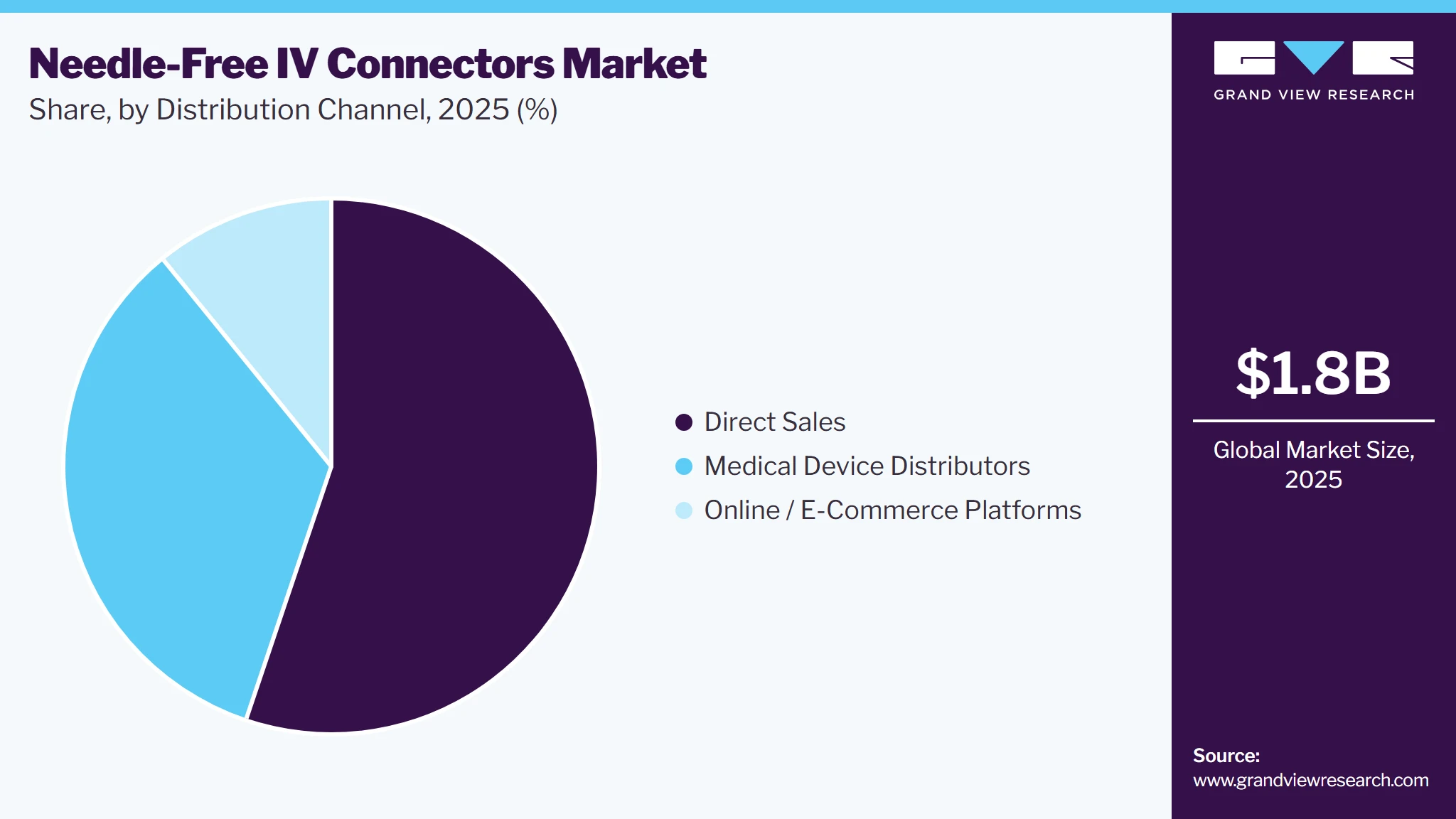
- By distribution channel: Direct sales segment held the largest market share of 55.2% in 2025.
Regional Highlights
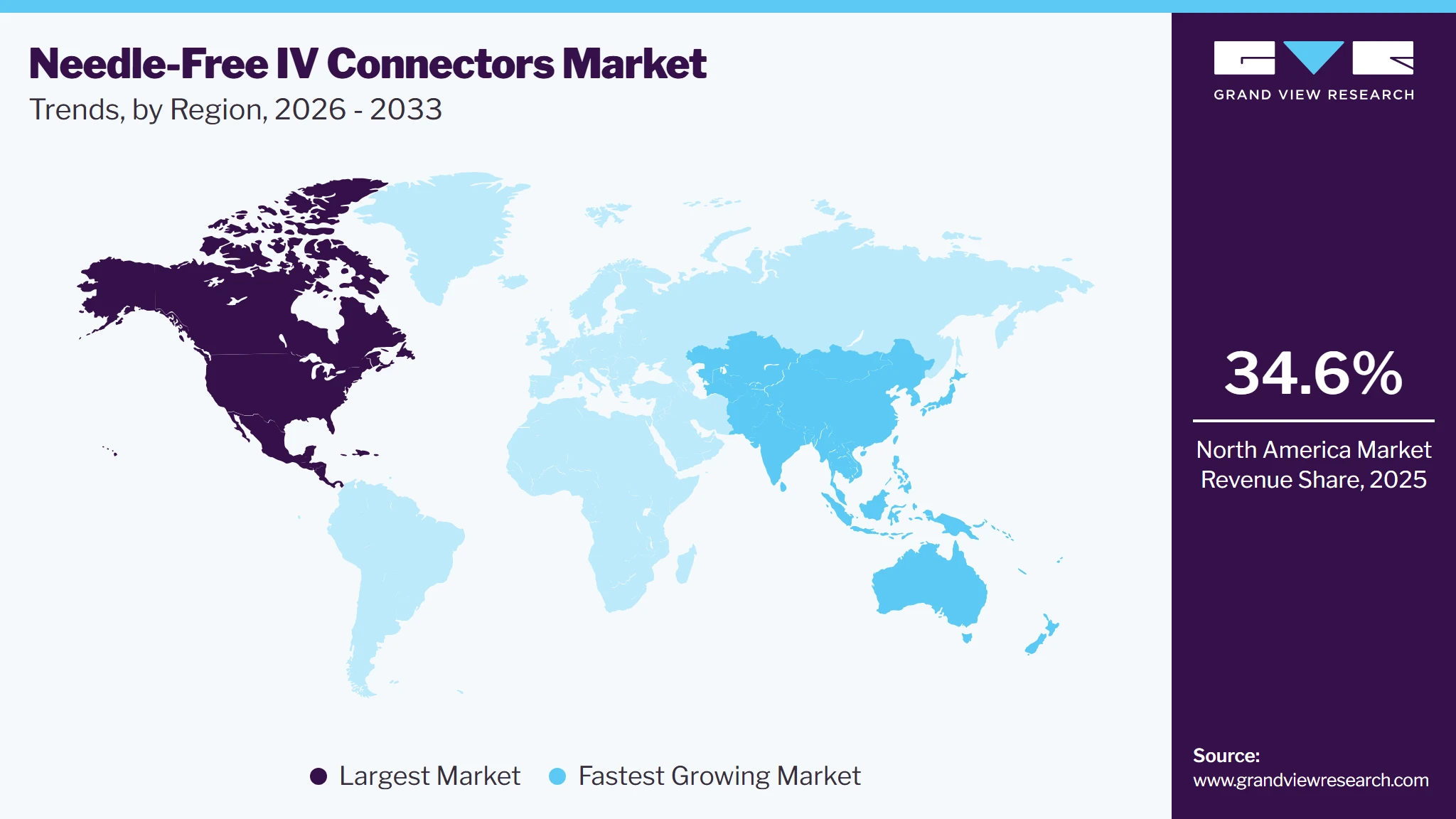
- Largest regional market: North America (34.6% revenue share, 2025)
- Fastest-growing regional market: Asia Pacific (highest CAGR, 2026-2033)
- By country: The U.S. held the largest market share in 2025
Market Size & Forecast
- Market size in 2025: USD 1.8 Billion
- Estimated market size in 2026: USD 1.9 Billion
- Projected market size by 2033: USD 3.2 Billion
- CAGR (2026-2033): 7.5%
Prism AI by Grand View Research Free to tryAsk a question about the Needle-Free IV connectors marketTry asking✓Every figure cited from GVR research Prefer the report? Download free sample →Increasing adoption of safer IV administration practices, rising hospital admissions requiring intravenous therapy, and greater emphasis on infection prevention are encouraging hospitals and healthcare facilities to adopt needle-free connectors. Technological advancements in connector design, including closed-system and antimicrobial solutions, are further supporting market growth. The rising focus on preventing catheter-related bloodstream infections (CRBSIs) is a key driver of the needle-free IV connectors industry, as healthcare facilities prioritize infection control and safer vascular access practices. Needle-free connectors help minimize contamination risks during repeated IV access and support standardized catheter-care protocols, encouraging their adoption across hospitals, clinics, and other healthcare settings. Growing regulatory and clinical emphasis on reducing healthcare-associated infections further supports demand for advanced needle-free connector technologies.
 To learn more about this report, Download Free Sample Report
For instance, in June 2025, the CDC highlighted that central line-associated bloodstream infections (CLABSIs) are preventable and emphasized adherence to recommended infection-control practices to reduce their occurrence. This continued focus on preventing catheter-related infections is driving healthcare facilities’ adoption of safer IV-access technologies, including needle-free IV connectors, which facilitate repeated access and support standardized infection-prevention protocols.
Furthermore, global implementation of new intravascular catheter infection-prevention guidelines is expected to drive the market by encouraging healthcare systems to standardize catheter insertion, maintenance, access, and infection-control practices. In May 2026, the WHO released its global guidelines for central venous catheters, followed by a global implementation webinar in June 2026 to promote country-level adoption and adaptation of the recommendations. The broader emphasis on aseptic access, staff training, surveillance, and multimodal infection-prevention strategies is likely to support demand for safer needle-free connector technologies.
Market Dynamics
The needle-free IV connectors industry is shaped by increasing demand for safer intravenous therapy, rising emphasis on preventing catheter-related bloodstream infections, and efforts to reduce needlestick injuries among healthcare workers. Technological advancements in closed-system, antimicrobial, and positive/neutral-displacement connectors are encouraging their adoption across hospitals and other healthcare facilities. However, product costs, compatibility requirements, and concerns regarding connector-related contamination can limit adoption, while expand home healthcare and increasing infusion therapy volumes create further growth opportunities.
The needle-free IV connectors industry is driven by the growing emphasis on preventing catheter-related bloodstream infections (CRBSIs), reducing needlestick injuries, and improving the safety of intravenous therapy. The increasing adoption of global intravascular catheter infection-prevention guidelines is encouraging healthcare facilities to adopt standardized, safer catheter-access practices. In addition, rising hospital admissions, growing use of infusion therapies, and technological advancements in closed-system and antimicrobial needle-free connectors are supporting market growth.
The needle-free IV connectors industry faces constraints due to the relatively high cost of advanced connectors compared with conventional IV access components, particularly in cost-sensitive healthcare systems. In addition, improper disinfection, inadequate handling, or limitations in connector design can increase the risk of microbial contamination and catheter-related infections, potentially affecting clinicians' confidence and product adoption. Compatibility issues across different IV devices and the need for staff training further complicate implementation.
The needle-free IV connectors industry presents significant opportunities through the development and adoption of advanced connectors designed to improve infection prevention and IV-line safety. The growing demand for antimicrobial, closed-system, and neutral-displacement connectors creates opportunities for manufacturers to differentiate their products by improving fluid pathways, reducing blood reflux, and enhancing contamination control. In addition, expanding home healthcare, outpatient infusion services, and long-term care settings can broaden the application base for needle-free IV connector technologies.
Market Concentration & Characteristics
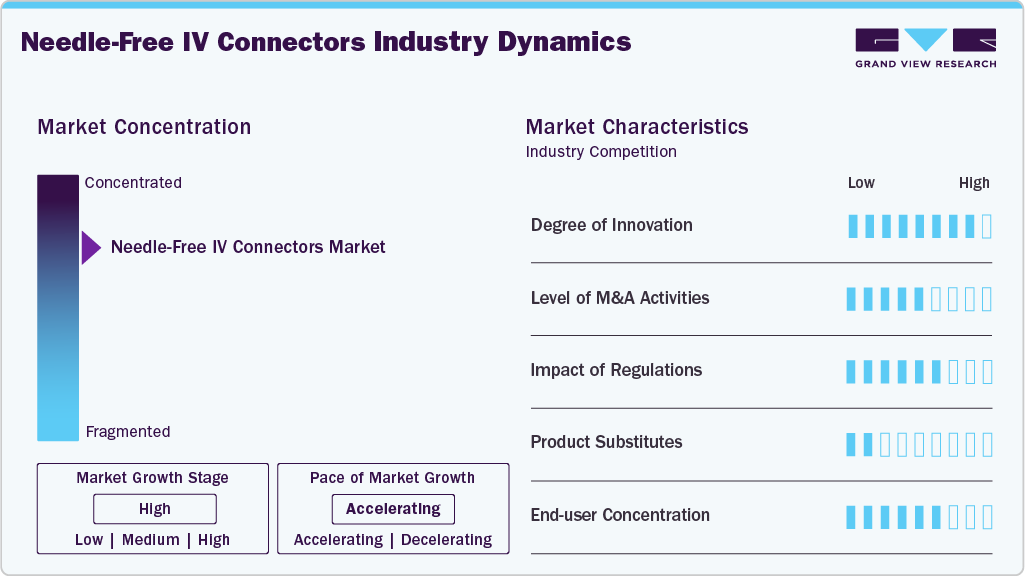
The needle-free IV connectors industry demonstrates a high degree of innovation, driven by advancements in antimicrobial materials, closed-system designs, and neutral- and positive-displacement mechanisms. Manufacturers are developing connectors that reduce blood reflux, minimize microbial contamination, improve catheter patency, and enhance ease of use for healthcare professionals. For instance, the BD MaxPlus Clear Needle-Free Connector features a sealed access surface and a transparent fluid housing, with a design focused on reducing microbial contamination during repeated IV access.
The market exhibits a moderate level of M&A activity, with strategic acquisitions primarily focused on strengthening infusion therapy portfolios and acquiring specialized connector technologies. For instance, in September 2025, Avanos Medical’s acquired Nexus Medical, which added the TKO anti-reflux needleless connector technology to its portfolio for critical-care applications. Broader consolidation across medical infusion and delivery technologies, including Nordson’s acquisition of Atrion, also indicates continued interest in complementary infusion-device capabilities.
 To learn more about this report, Download Free Sample Report
Regulatory requirements significantly impact the market by requiring manufacturers to demonstrate device safety, performance, sterility, and compatibility before commercialization. In the U.S., needleless connectors are regulated as Class II intravascular administration sets under 21 CFR 880.5440 and generally require 510(k) clearance. Increasing regulatory emphasis on microbial ingress testing and infection-control performance encourages manufacturers to develop connectors with improved contamination barriers and safer designs, while compliance requirements can increase product development costs and time-to-market.
The needle-free IV connectors industry has a high concentration of end use in hospitals and acute-care facilities, where intravenous therapy and vascular-access procedures are performed frequently. Hospitals require needle-free connectors across intensive care, emergency care, surgery, oncology, and other departments to support safe IV access and reduce sharps-related risks. The CDC specifically recommends using needleless systems for IV tubing access and emphasizes appropriate connector disinfection and handling to minimize infection risks.
Analyst Perspective
The global market for needle-free IV connectors is expected to witness steady growth, driven by increasing demand for safe vascular access, rising focus on reducing catheter-related complications, and the growing adoption of infection prevention protocols across healthcare settings. Technological advancements in positive, negative, and neutral displacement mechanisms are supporting improved fluid management and catheter patency. From an analyst's perspective, companies offering reliable, easy-to-use, and clinically compatible connectors will be better positioned to strengthen their market presence. Future competitiveness is likely to depend on product innovation, regulatory compliance, compatibility with diverse IV systems, cost-effectiveness, and expansion across hospitals, ambulatory care, and home healthcare settings.
Mechanism Insights
The positive displacement connectors segment dominated the market, accounting for 44.9% of the market in 2025. This dominance is supported by their ability to address blood reflux and catheter occlusion concerns during IV therapy. In 2024, the CDC recognizes positive and neutral fluid displacement technologies as approaches designed to flush out aspirated blood or prevent its aspiration into infusion catheters. In February 2024, the CDC updated its Summary of Recommendations for the Prevention of Intravascular Catheter-Related Infections. The CDC recommends using a needleless system to access IV tubing, changing needleless connectors according to recommended intervals, ensuring compatibility among system components, and disinfecting the access port before use to minimize contamination risk.
The neutral displacement connectors segment is expected to grow at the fastest CAGR during the forecast period due to the growing need for connector technologies that support catheter patency and reduce IV therapy-related complications. In March 2025, a systematic review screened 24,334 publications and included 61 studies, finding that needleless connectors with lower fluid displacement and anti-reflux functionality may result in fewer catheter occlusion complications and longer catheter dwell times. The review also reported that catheter occlusion can affect 3% to 38% of vascular access devices, highlighting the clinical need for technologies designed to maintain uninterrupted IV access.
Connector Configuration Insights
The straight channel segment dominated the market, accounting for 54.7% share of the market in 2025. This dominance is supported by the segment’s simple and practical design, which enables direct fluid and medication delivery through a single flow path. Straight channel connectors are widely suitable for routine intravenous procedures and can be integrated with commonly used IV administration sets, syringes, and catheters. Their straightforward configuration also supports ease of handling, connection, flushing, and maintenance during clinical procedures.
The multi-channel segment is expected to grow at the fastest CAGR during the forecast period due to the increasing need for efficient management of multiple infusion therapies through a single vascular access point. Multi-channel connectors allow healthcare professionals to administer multiple fluids or medications while reducing the need for additional access points and connections. Their application is particularly relevant in intensive care, emergency care, oncology, and other settings where patients may require concurrent therapies. The growing use of complex infusion regimens and increasing emphasis on efficient IV access management are expected to support demand for multi-channel configurations.
Replacement Interval Insights
The standard replacement interval connectors segment dominated the market, accounting for 73.9% share of the market in 2025. This dominance is supported by their established use in routine IV therapy and compatibility with widely followed hospital replacement protocols. Standard replacement intervals provide healthcare professionals with a structured approach for managing connector changes, helping maintain consistent catheter care and reduce the risk of contamination during repeated access. These connectors are widely applicable across hospitals, outpatient clinics, and other healthcare facilities where regular IV medication and fluid administration is performed. Their established clinical use, availability across multiple product portfolios, and integration with existing IV systems continue to support demand for standard replacement interval connectors.
The extended replacement interval connectors segment is expected to grow at the fastest CAGR during the forecast period due to the increasing emphasis on reducing unnecessary connector changes, improving catheter-care efficiency, and lowering the frequency of device handling. Extended replacement intervals can help reduce the number of connector manipulations required during prolonged IV therapy while supporting streamlined clinical workflows. These connectors are particularly relevant for patients requiring longer-duration vascular access and repeated medication administration.
Application Insights
The general IV infusion & medication administration segment dominated the market, accounting for 55.1% share of the market in 2025. This dominance is supported by the broad use of intravenous therapy for routine fluid replacement, medication administration, and supportive treatment across hospitals and outpatient healthcare settings. The segment benefits from the frequent requirement for IV access among hospitalized patients and its applicability across a wide range of clinical procedures. In addition, the established use of needle-free connectors with standard infusion systems, syringes, and vascular access devices supports consistent demand. Their suitability for routine and repeated IV access further strengthens their position as the leading application segment in the market.
The specialty infusion segment is expected to grow at the fastest CAGR during the forecast period due to the increasing use of complex and prolonged infusion therapies, particularly in chemotherapy, total parenteral nutrition (TPN), and critical care. These applications often require repeated medication administration and continuous infusion through vascular access devices, creating demand for reliable connector systems. The growing number of patients requiring specialized therapies and the increasing use of long-duration intravenous treatment are expected to support segment growth.
End Use Insights
The hospitals segment dominated the market with a share of 61.7% in 2025 due to hospitals performing a high volume of intravenous procedures across intensive care, emergency, surgical, oncology, and general inpatient departments. Up to 70% of inpatients may require a peripheral vascular catheter during hospitalization, creating substantial demand for IV access components. CDC also recommends the use of needleless systems for accessing IV tubing, supporting their routine adoption within hospital-based intravenous therapy and infection-control practices.
The home healthcare segment is expected to grow at the fastest CAGR during the forecast period, supported by the increasing shift of infusion therapy from hospitals to home-based settings. In 2026, CMS continued to support a dedicated home infusion therapy benefit covering professional services, training, monitoring, and related supplies for eligible patients receiving infusion therapy at home. The growing use of home-based IV therapy increases the need for safe, easy-to-use vascular-access components, including needle-free IV connectors, particularly for patients requiring prolonged or repeated infusions.
Distribution Channel Insights
The direct sales segment dominated the market with a share of 55.2% in 2025, supported by strong relationships between manufacturers and healthcare providers. Direct distribution enables hospitals and clinics to receive technical guidance, product training, and customized purchasing support. It also facilitates reliable supply, bulk procurement, and after-sales services, making this channel particularly attractive to large healthcare institutions.
 To learn more about this report, Download Free Sample Report
The online/e-commerce platforms segment is expected to grow at the fastest CAGR during the forecast period. Increasing digital procurement by hospitals, clinics, and other healthcare providers is improving access to a wider range of medical devices. E-commerce platforms also offer convenient ordering, transparent product information, and streamlined replenishment, supporting their increasing adoption for needle-free IV connectors.
Regional Insights
The North America needle free IV connectors industry held the largest share of 34.6% in 2025, supported by the region’s large hospital and ambulatory care infrastructure, high utilization of intravenous therapies, and an increasing focus on infection prevention and healthcare worker safety. Hospitals are adopting needle-free connectors to reduce the risk of accidental needlestick injuries and contamination during repeated IV access. The continued focus on reducing central-line-associated bloodstream infections is also encouraging healthcare facilities to implement safer IV access practices. In addition, demand is shifting toward closed-system, neutral- and positive-displacement connectors that help minimize the risks of blood reflux, catheter occlusion, and contamination. The expansion of home infusion, oncology treatment, emergency care, and outpatient IV therapy is further creating demand for convenient and reliable needle-free access devices.
 To learn more about this report, Download Free Sample Report
U.S. Needle-Free IV Connectors Market Trends
The U.S. needle-free IV connectors industry is growing, supported by the widespread use of intravenous therapy across hospitals, intensive care units, oncology centers, emergency departments, and outpatient facilities. Increasing emphasis on infection prevention, catheter safety, and reducing accidental needlestick injuries is encouraging healthcare providers to adopt needle-free access systems for routine IV-line management. Demand is also supported by the continued use of central venous and peripheral IV catheters, which creates recurring requirements for connector replacement and maintenance. Hospitals are adopting neutral- and positive-displacement connectors that help reduce the risks of blood reflux, catheter occlusion, and contamination.
For instance, data published by the U.S. Centers for Disease Control and Prevention (CDC) in 2026 showed that acute-care hospitals recorded a 9% reduction in central-line-associated bloodstream infections in 2024, highlighting the continued emphasis on infection prevention and supporting the adoption of safer IV access technologies, such as needle-free IV connectors.
The ongoing burden of healthcare-associated infections (HAIs) in the U.S. is supporting demand for needle-free IV connectors by increasing the focus on infection prevention and safer intravenous access practices. Healthcare facilities are strengthening protocols for handling and accessing IV systems to minimize the risk of contamination during repeated use. Needle-free connectors provide a closed access point and eliminate the need to puncture IV systems with needles, making them an important component of modern IV-access practices. The increasing emphasis on infection-control compliance, safer catheter management, and reduction of contamination risks is encouraging hospitals to adopt and upgrade needle-free connector technologies.
In addition, the expansion of outpatient infusion, oncology treatment, home infusion, and ambulatory care is broadening the use of needle-free connectors beyond traditional inpatient settings. U.S. market growth is being driven by infection-control priorities, recurring replacement demand, technological improvements, and the expanding use of intravenous therapies across healthcare settings, creating consistent demand for safer and more convenient IV access solutions.
Europe Needle-Free IV Connectors Market Trends
The Europe needle free IV connectors industry is growing, supported by the region’s strong healthcare infrastructure, increasing focus on infection prevention, and widespread use of intravenous therapies across hospitals and outpatient settings. Healthcare providers are placing greater emphasis on safe IV access, contamination control, and reducing needlestick risks, encouraging the replacement of conventional needle-based access systems with needle-free alternatives. The continued burden of healthcare-associated infections across European hospitals is also strengthening infection-control practices and supporting demand for safer IV-access technologies. In addition, Europe’s aging population and rising prevalence of chronic conditions are increasing the need for long-term infusion therapies, including treatments for cancer and other conditions requiring repeated IV access.
The UK needle-free IV connectors industry is growing, supported by the healthcare system’s focus on reducing Healthcare-associated infections (HAIs) and improving the safety of intravenous access. Central-line-associated bloodstream infections remain an important infection-control concern because repeated access to vascular devices can create opportunities for contamination. For instance, in England, adult ICUs recorded 3.6 bloodstream infections per 1,000 ICU days in FY 2024-25, while 58.6% of ICU days involved the use of central venous catheters. 21.2% of ICU-associated bloodstream infections were classified as central-line-associated bloodstream infections (CLABSIs).
This is encouraging healthcare facilities to strengthen catheter care protocols and adopt needle-free connectors that enable closed IV access and safer handling. The focus on reducing HAIs and CLABSIs is also encouraging hospitals to use connectors with improved disinfection capabilities and neutral- or positive-displacement mechanisms, which can help reduce contamination and blood reflux risks when used properly. In addition, continued IV therapy across hospitals, oncology services, intensive care, and outpatient settings creates recurring demand for connector replacement.
The Germany needle-free IV connectors industry is growing, due to the country's extensive hospital infrastructure, high use of inpatient and intensive care services, and strong focus on infection prevention. Germany has a large base of hospitals and intensive-care beds, creating sustained demand for intravenous access devices across critical-care, surgical, oncology, emergency, and general inpatient settings. The continued burden of healthcare-associated infections is also encouraging hospitals to strengthen catheter care and vascular access protocols and to reduce contamination risks during repeated IV-line manipulation. As healthcare providers segmentize and standardize infection-control procedures, closed and needle-free access systems are gaining relevance as part of safer IV therapy practices.
Asia Pacific Needle-Free IV Connectors Market Trends
The Asia-Pacific needle-free IV connectors industry is expected to grow at the fastest CAGR over the forecast period, supported by rising healthcare expenditure, expansion of hospital infrastructure, and increasing use of intravenous therapies across China, India, Japan, South Korea, and Southeast Asia. The growing burden of chronic diseases and the increasing number of patients requiring chemotherapy, critical care, antibiotics, and other prolonged IV therapies are creating recurring demand for IV access devices. Healthcare facilities are placing greater emphasis on infection prevention, healthcare-associated infection control, and healthcare worker safety, thereby encouraging the adoption of needle-free and closed IV access systems. The modernization of hospitals in emerging Asian markets is also increasing the replacement of conventional IV connectors with neutral- and positive-displacement designs, anti-reflux systems, and other advanced connectors.
The India needle-free IV connectors industry is expanding as hospitals move toward more standardized and safer IV-access practices, particularly in large private hospital chains, tertiary-care centers, and expanding specialty facilities. A key difference from more mature markets is that growth is being supported by the modernization and upgrading of existing hospital systems, rather than solely by replacement demand. Increasing adoption of closed IV systems is encouraging hospitals to integrate needle-free connectors with IV catheters, extension sets, and administration sets, creating broader institutional procurement opportunities. India’s expansion of critical-care, oncology, dialysis, and emergency-care capacity is also increasing the number of patients requiring repeated or prolonged intravenous access.
The Japan needle-free IV connectors industry is growing through the shift toward home-based and outpatient infusion care, rather than being driven primarily by the expansion of hospital infrastructure. Japan’s aging population is increasing demand for healthcare services that allow patients to receive treatment with fewer hospital visits, while the country is also seeing greater development of home healthcare and community-based care. This creates additional opportunities for needle-free connectors used with infusion sets and other IV-access devices outside traditional inpatient environments. Japan’s advanced healthcare infrastructure also supports the adoption of reliable, easy-to-use IV access products that can be incorporated into standardized infusion protocols.
According to the World Economic Forum, Japan's Ministry of Internal Affairs and Communications reported that, as of 2024, the country had a record 36.25 million people aged 65 and over, accounting for 29.3% of the total population. This share is projected to rise to 34.8% in 2040 and 36.3% in 2045. Japan's proportion of elderly residents is already far higher than second-ranked Martinique (25.3%), making it the world's most aged society.
Latin America Needle-Free IV Connectors Market Trends
The Latin America needle-free IV connectors industry is expanding as hospitals gradually shift toward safer and more standardized intravenous access systems, particularly in Brazil and Argentina. Increasing ICU utilization, oncology treatments, surgical procedures, and other therapies requiring repeated or prolonged IV access are driving growth in the installed base of vascular access devices. Hospitals are placing greater emphasis on central-line infection prevention and catheter management, which supports the replacement of conventional needle-based or open-access systems with needle-free connectors. The region also has a substantial opportunity for market penetration because adoption remains uneven between large private and tertiary hospitals and smaller public facilities.
MEA Needle-Free IV Connectors Market Trends
The Middle East & Africa (MEA) needle-free IV connectors industry is growing as hospitals prioritize infection prevention, safer vascular access, and modern infusion practices. In the Middle East, particularly in Saudi Arabia and the UAE, the expansion of tertiary hospitals, private healthcare facilities, oncology centers, intensive care units, and day care treatment facilities is increasing the use of IV-based therapies, creating recurring demand for needle-free connectors. Healthcare providers are also placing greater emphasis on reducing catheter-related complications and standardizing central-line maintenance practices, which support the adoption of needle-free access technologies.
Key Needle-Free IV Connector Company Insights
Some of the key companies in the needle-free IV connectors industry include ICU Medical, Inc., BD, B. Braun Medical Inc., Baxter, Terumo Corporation, and among others. Organizations are focusing on increasing customer base to gain a competitive edge in the industry. Therefore, key players are taking several strategic initiatives, such as product launch, and partnerships with other major companies.
Key Needle-Free IV Connector Companies
The following key companies have been profiled for this study on the needle-free IV connectors market.
-
ICU Medical, Inc.
-
BD
-
B. Braun Medical Inc.
-
Baxter
-
Terumo Corporation
-
Fresenius Kabi AG
-
Nexus Medical (Avanos Medical, Inc.)
-
NP Medical
-
Amsino International, Inc.
-
Polymed
-
Romsons (Jongsong Investments Pte. Ltd.)
-
Elcam Medical
-
CODAN US Corporation
-
JCM MED
Competitive Benchmarking
Category
Operating Strategies
Competitive Edge
Weakness
Established Players (ICU Medical, Inc., BD, B. Braun Medical Inc., Baxter, Terumo Corporation)
- Focus on developing needle-free IV connectors with improved fluid displacement mechanisms, reduced blood reflux, and infection-control features.
- Expand market presence through direct sales networks, group purchasing contracts, distributor partnerships, and long-term relationships with hospitals and healthcare providers.
- Strong brand recognition established regulatory capabilities, extensive R&D resources, broad vascular access and infusion product portfolios, and well-developed global distribution and after-sales networks.
- Their ability to offer integrated IV therapy solutions provides an advantage in large healthcare institutions.
- High regulatory compliance and product development costs, complex procurement processes, and dependence on large institutional contracts.
- Premium pricing and slower product development cycles also create challenges in cost-sensitive markets and against specialized manufacturers.
Emerging Players (NP Medical, Amsino International, Inc., Polymed, Romsons)
- Focus on cost-effective product offerings, specialized connector designs, private-label manufacturing, and expansion through regional distributors and OEM partnerships.
- Emphasize compatibility with commonly used IV systems and target hospitals, clinics, and healthcare providers in price-sensitive and emerging markets.
- Competitive pricing, manufacturing flexibility, specialized product portfolios, and the ability to respond more quickly to regional customer requirements.
- Some players also benefit from strong OEM capabilities and established positions within specific geographic markets.
- Comparatively lower global brand recognition, smaller direct sales and service networks, and greater dependence on distributors or OEM customers.
- Limited R&D resources and regulatory capabilities compared with multinational companies may restrict expansion into highly regulated markets.
Recent Developments
-
In August 2026, MedSource Labs launched the ClearSafe Comfort Closed System, a slide-activated safety peripheral IV catheter featuring needle-free connectors and an integrated extension set that received FDA 510(k) clearance. The system was designed to support aseptic medication and fluid administration while improving safety, reducing contamination and needlestick risks, and minimizing IV restarts and waste.
Todd Fagley, Founder and CEO of MedSource Labs, said, “An estimated 350 million peripheral IV catheter (PIVC) are used in the United States each year. With the ClearSafe Comfort Closed System, we offer meaningful innovation to this sizable market-we’ve combined many of the features from the catheters we’ve been making for decades into an integrated, all-in-one device.”
-
In February 2026, PuraCath Medical received FDA 510(k) clearance for its FireFly Needleless Connector IT. The sterile, single-patient-use connector enabled needleless access for IV therapy and was designed to support direct injection, intermittent and continuous infusion, and aspiration while helping reduce infection risks associated with vascular access.
“Receiving 510(k) clearance for the FireFly Needleless Connector IT is a major accomplishment for PuraCath since it represents adding on to our vascular access product line portfolio,” said Julia Rasooly, PuraCath Medical’s CEO. “We believe our novel approach to disinfect IV and PICC catheters in hospitals or in outpatient care will provide nurses a safe and easy-to-use disinfection tool for reducing CLABSIs for infusion therapies.”
Needle-Free IV Connectors Market Report Scope
Report Attribute
Details
Market size in 2025
USD 1.8 billion
Estimated market size in 2026
USD 1.9 billion
Projected market size by 2033
USD 3.2 billion
Growth rate
CAGR of 7.5% from 2026 to 2033
Base year for estimation
2025
Actual estimates/Historical data
2021 - 2024
Forecast period
2026 - 2033
Quantitative units
Revenue in USD billion and CAGR from 2026 to 2033
Report coverage
Revenue forecast, company ranking, competitive landscape, growth factors, and trends
Segments covered
Mechanism, connector configuration, replacement interval, application, end use, distribution channel, and region
Regional scope
North America; Europe; Asia Pacific; Latin America; Middle East & Africa
Country scope
U.S.; Canada; Mexico; UK; Germany; France; Italy; Spain; Denmark; Sweden; Norway; Japan; China; India; Thailand; Australia; South Korea; Brazil; Argentina; South Africa; Saudi Arabia; UAE; Kuwait
Key companies profiled
ICU Medical, Inc.; BD; B. Braun Medical Inc.; Baxter; Terumo Corporation; Fresenius Kabi AG; Nexus Medical (Avanos Medical, Inc.); NP Medical; Amsino International, Inc.; Polymed; Romsons (Jongsong Investments Pte. Ltd.); Elcam Medical; CODAN US Corporation; JCM MED
Customization scope
Free report customization (equivalent up to 8 analyst’s working days) with purchase. Addition or alteration to country, regional & segment scope
Pricing and purchase options
Avail customized purchase options to meet your exact research needs. Explore purchase options
Global Needle-Free IV Connectors Market Report Segmentation
This report forecasts revenue growth at global, regional & country levels and provides an analysis of the latest industry trends in each of the sub-segments from 2021 to 2033. For this study, Grand View Research has segmented the global needle-free IV connectors market report based on mechanism, connector configuration, replacement interval, application, end use, distribution channel, and region:
-
Mechanism Outlook (Revenue, USD Billion, 2021 - 2033)
-
Positive Displacement Connectors
-
Negative Displacement Connectors
-
Neutral Displacement Connectors
-
-
Connector Configuration Outlook (Revenue, USD Billion, 2021 - 2033)
-
Straight Channel
-
T-Channel
-
Y-Channel
-
Multi-Channel
-
-
Replacement Interval Outlook (Revenue, USD Billion, 2021 - 2033)
-
Standard Replacement Interval Connectors
-
Extended Replacement Interval Connectors
-
-
Application Outlook (Revenue, USD Billion, 2021 - 2033)
-
General IV Infusion & Medication Administration
-
Blood Collection & Transfusion
-
Specialty Infusion
-
Chemotherapy
-
Total Parenteral Nutrition (TPN)
-
Critical Care Infusion
-
-
End Use Outlook (Revenue, USD Billion, 2021 - 2033)
-
Hospitals
-
Ambulatory Surgical Centers (ASCs)
-
Home Healthcare
-
Outpatient Clinics
-
Long-term Care Facilities
-
-
Distribution Channel Outlook (Revenue, USD Billion, 2021 - 2033)
-
Direct Sales
-
Medical Device Distributors
-
Online / E-Commerce Platforms
-
-
Regional Outlook (Revenue, USD Billion, 2021 - 2033)
-
North America
-
U.S.
-
Canada
-
Mexico
-
-
Europe
-
UK
-
Germany
-
France
-
Italy
-
Spain
-
Denmark
-
Sweden
-
Norway
-
-
Asia Pacific
-
Japan
-
China
-
India
-
Thailand
-
Australia
-
South Korea
-
-
Latin America
-
Brazil
-
Argentina
-
-
Middle East & Africa
-
South Africa
-
Saudi Arabia
-
UAE
-
Kuwait
-
-
Research Methodology
The needle-free iv connectors market figures in this report are based on a proven research process that combines executive interviews with secondary research from proprietary databases, company filings, and recognized regulatory and institutional sources. Market size is built through value-chain sizing-reconciling supply-side and demand-side estimates-and triangulated with bottom-up and top-down approaches. Every estimate passes multiple levels of expert validation before publication, with each needle-free iv connectors segment quantified using the revenue-capture definitions in the table below.
Segment Definition
Mechanism
Revenue capture definition
Positive Displacement Connectors
Revenue generated from the sale of needle-free IV connectors designed to create positive fluid displacement upon disconnection, pushing a small volume of fluid toward the catheter to help clear or limit blood reflux within the catheter lumen. Revenue from standalone connectors and positive-displacement connectors incorporated into compatible IV access systems are included.
Negative Displacement Connectors
Revenue generated from the sale of needle-free IV connectors that create negative fluid displacement upon disconnection, allowing fluid or blood to move back toward the connector or catheter lumen. Sales of standalone negative-displacement connectors and relevant integrated connector configurations are included.
Neutral Displacement Connectors
Revenue generated from the sale of needle-free IV connectors designed to produce minimal net fluid displacement and limit blood reflux during connection or disconnection. This includes connector designs marketed or classified as neutral-displacement based on their internal valve or fluid-control mechanism.
Estimation Model
No.
Market Estimation Approach
Description
01
Bottom-Up Estimation
The market is estimated by assessing the annual volume of needle-free IV connector units used across hospitals, ambulatory surgical centers, outpatient clinics, home healthcare settings, and long-term care facilities at the country, regional, and global levels. The assessment incorporates connector utilization by mechanism, including positive, negative, and neutral displacement connectors, as well as connector configuration and replacement interval.
02
Top-Down Approach
The market estimation begins with an assessment of the broader IV therapy, vascular access devices, or infusion therapy equipment market, followed by evaluating the share attributable to needle-free IV connectors through secondary research and industry validation. The analysis considers key market indicators such as IV therapy volumes, hospital admissions, infusion procedures, central and peripheral vascular access utilization, infection prevention practices, and the adoption of needle-free technologies.
03
Supply-Side Analysis
The analysis considers manufacturers' production capacity, annual connector shipments, product portfolio diversification across positive, negative, and neutral displacement mechanisms, connector configurations, replacement intervals, manufacturing facilities, average selling prices, regulatory approvals, and regional distribution networks. In addition, factors such as hospital procurement contracts, distributor sales, OEM relationships, and product launches.
Delivered Customizations
This report has been delivered with the following In-depth customizations
Client Request
Customization Delivered
Value Adds
Needle-Free IV Connectors Product Portfolio & Application Analysis
Conducted a comprehensive assessment of the needle-free IV connectors product portfolio, including positive displacement, negative displacement, and neutral displacement connectors, along with straight-channel, T-channel, Y-channel, and multi-channel configurations. Evaluated product adoption across general IV infusion and medication administration, blood collection and transfusion, and specialty infusion applications such as chemotherapy, TPN, and critical care infusion.
Helps stakeholders identify high-growth product segments, understand application-specific demand, evaluate connector mechanism and configuration preferences, and optimize product portfolios based on evolving IV therapy, vascular access, and infection prevention requirements.
End-user Adoption & Procurement Landscape Analysis
Analyzed the adoption of needle-free IV connectors across hospitals, ambulatory surgical centers, home healthcare providers, outpatient clinics, and long-term care facilities. Assessed procurement practices, purchasing criteria, replacement intervals, compatibility with existing IV systems, infection prevention requirements, and the influence of infusion volumes on purchasing decisions. The study also evaluated procurement through direct sales, medical device distributors, and online/e-commerce platforms, along with regional demand patterns and healthcare infrastructure.
Enables manufacturers to strengthen commercial strategies, identify high-demand end-user segments, optimize distribution networks, improve procurement and inventory planning, and expand market penetration across established and emerging healthcare markets.
Product Positioning & Manufacturer Competitiveness Assessment
Evaluated leading needle-free IV connector manufacturers based on product portfolio breadth, displacement mechanisms, connector configurations, replacement interval offerings, product compatibility, infection-control features, manufacturing capabilities, geographic presence, pricing strategies, regulatory compliance, and distribution strength. The assessment also analyzed product launches, portfolio expansion, technology development, strategic partnerships, and competitive differentiation among established and specialized players.
Supports competitive benchmarking, identifies product development and portfolio expansion opportunities, enables product differentiation, strengthens go-to-market strategies, and helps companies improve competitive positioning through innovation, cost optimization, regulatory capabilities, and expansion into high-growth healthcare markets.
Frequently Asked Questions About This Report
The global needle-free IV connectors market size was valued at USD 1.8 billion in 2025 and is estimated at USD 1.9 billion for 2026.
The global needle-free IV connectors market is expected to grow at a CAGR of 7.5% from 2026 to 2033, reaching USD 3.2 billion by 2033.
The positive displacement connectors segment led with a 44.9% revenue share in 2025, while the neutral displacement connectors segment is growing significantly over the forecast period.
North America dominated with a 34.6% revenue share in 2025.
Key factors include the growing need to reduce needlestick injuries, occupational exposure to bloodborne pathogens, and catheter-related bloodstream infections in healthcare settings. Increasing adoption of safer IV administration practices, rising hospital admissions requiring intravenous therapy, and greater emphasis on infection prevention are encouraging hospitals and healthcare facilities to adopt needle-free connectors.
Some of the key companies in the needle-free IV connectors market include ICU Medical, Inc., BD, B. Braun Medical Inc., Baxter, Terumo Corporation, Fresenius Kabi AG, Nexus Medical (Avanos Medical, Inc.), NP Medical, Amsino International, Inc., Polymed, Romsons (Jongsong Investments Pte. Ltd.), Elcam Medical, CODAN US Corporation, and JCM MED.
Asia Pacific is expected to witness fastest growth during the forecast period.
The direct sales segment accounted for the largest market share of 55.2% in 2025 and the online / e-commerce platforms is expected to be the fastest-growing segment during the forecast period.
The standard replacement interval connectors segment led with a 73.9% revenue share in 2025, while the extended replacement interval connectors segment is the fastest-growing.
The general IV infusion & medication administration segment held the largest share (over 55.0%) in 2025.
About the Author(s)
Medical Devices Research Team
Healthcare · Medical DevicesThis report was authored by the medical devices research team at Grand View Research - comprising two research analysts, one senior research analyst, and one industry expert - with specialized expertise in the medical devices segment of the healthcare industry. All findings are based on proprietary healthcare databases, executive interviews, and regulatory analysis, subject to internal peer review prior to publication.
Last Updated:
Speak to Analyst

Customize this report to your needs - add regions, segments, or data points, with 20% free customization.
Or view our licence options:


ISO 9001:2015 & 27001:2022 Certified
We are GDPR and CCPA compliant! Your transaction & personal information is safe and secure. For more details, please read our privacy policy.


