
- Home
- »
- Agrochemicals & Fertilizers
- »
-
Nematicides Market Size, Share & Growth Report 2026-2033GVR Report cover

Nematicides Market (2026 - 2033)
Size, Share & Trends Analysis Report By Source (Mineral Oil Nematicides, Bio-Based Nematicides), By Product (Fumigants, Carbamates, Organophosphates, Non-Fumigants, Other Products), By Region, Forecasts
Market Size, 2025
$1.4BMarket Estimate, 2026
$1.5BMarket Forecast, 2033
$3.2BCAGR, 2026–2033
11.2%Nematicides Market Summary
The global nematicides market size was valued at USD 1.4 billion in 2025 and is projected to grow from USD 1.5 billion in 2026 to USD 3.2 billion by 2033, at a CAGR of 11.2% from 2026 to 2033. The market in North America dominated with a revenue share of 30.8% in 2025. Growth is primarily supported by increasing crop losses caused by plant-parasitic nematodes, rising demand for higher agricultural productivity, and growing adoption of sustainable, bio-based crop protection solutions.
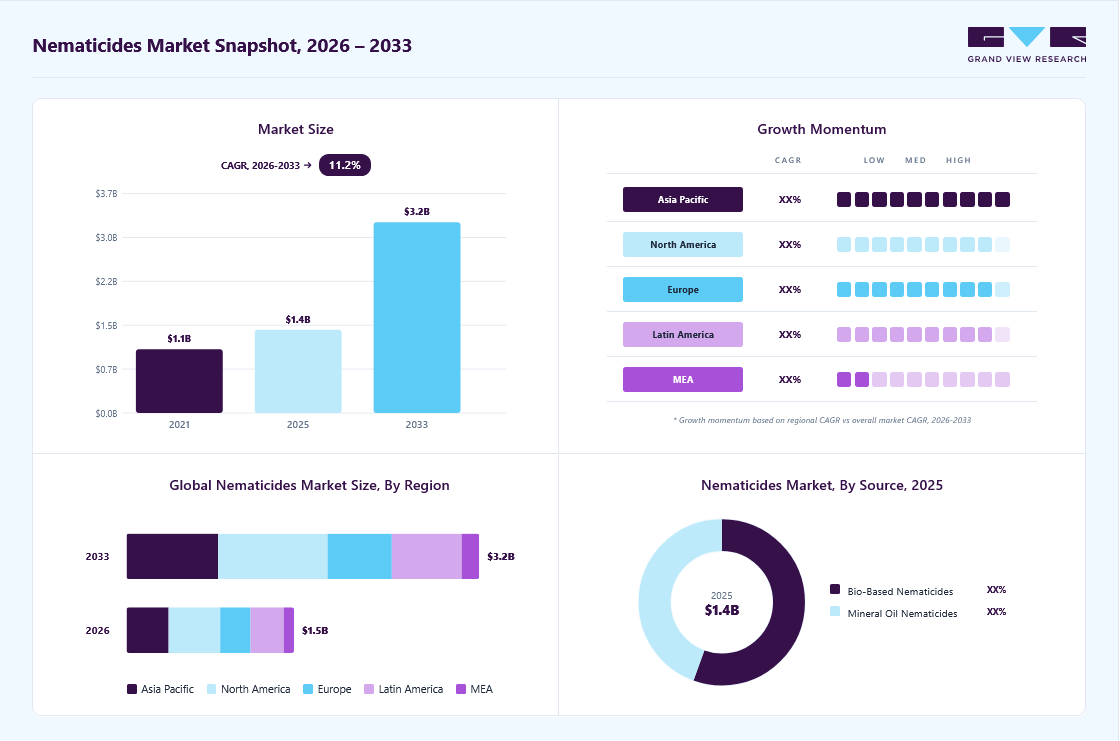 Source: Grand View Research, IR Documents, Primary Interviews, Paid DatabasesTo learn more about this report,
 Download Free Sample Report
Key Market Trends & Insights
- By source: Bio-based nematicides segment held the largest market share of 55.4% in 2025.
- By product: Fumigants segment held the largest market share of 32.1% in 2025.
Regional Highlights
- Largest regional market: North America (30.8% revenue share, 2025)
- Fastest-growing regional market: Asia Pacific (highest CAGR, 2026-2033)
- By country: The U.S. held the largest market share in 2025
Market Size & Forecast
- Market size in 2025: USD 1.4 Billion
- Estimated market size in 2026: USD 1.5 Billion
- Projected market size by 2033: USD 3.2 Billion
- CAGR (2026-2033): 11.2%
GVR research-powered AIAsk Prism AI about the nematicides marketGet cited answers from GVR research on market growth, segments, regulations and forecasts.Start with✓ Source-linked answers ✓ Market-specific context ✓ Traceable figuresExplore Prism AI ↗
Growth is driven by increasing crop losses caused by plant-parasitic nematodes, rising food demand, and the need to improve agricultural productivity. Expanding commercial farming and the cultivation of high-value crops, including fruits, vegetables, and plantation crops, are encouraging growers to adopt effective soil pest management solutions. Growing awareness of nematode-related yield deterioration and the economic benefits of preventive crop protection is further supporting product uptake across major agricultural economies.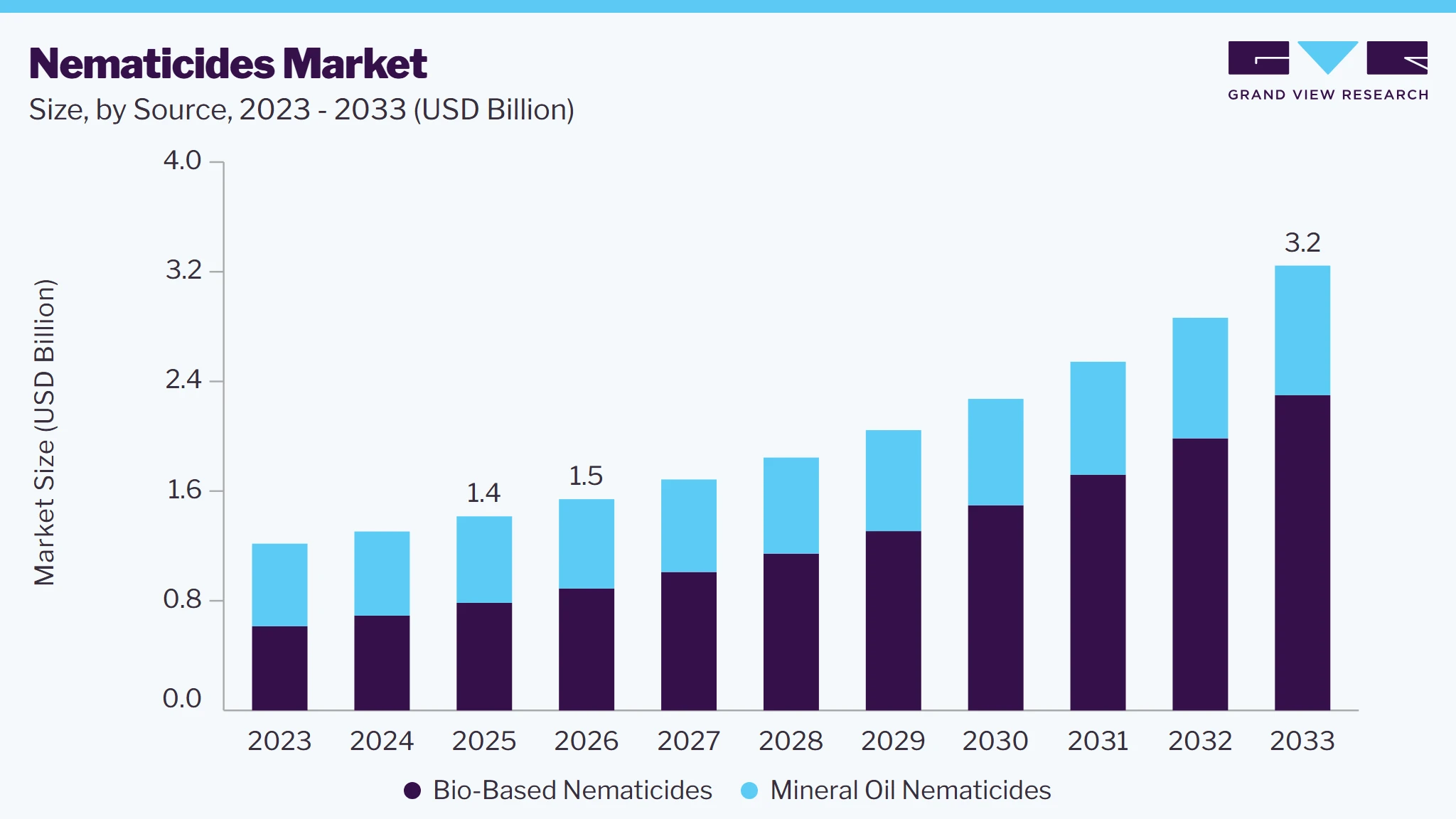 To learn more about this report, Download Free Sample Report
Development of bio-based formulations derived from beneficial microorganisms, botanical extracts, and naturally occurring active ingredients. Increasing emphasis on sustainable farming, integrated pest management, and reduced reliance on conventional chemical treatments is encouraging manufacturers to invest in biological innovation. Additionally, advancements in formulation technologies, expanding organic cultivation, and strategic collaborations between agricultural input companies and biotechnology developers are creating avenues for portfolio diversification and wider market penetration.
Market Dynamics
Rising food consumption, expanding commercial cultivation, and increasing awareness of soil-borne pest damage are supporting demand for effective crop protection solutions. Technological advancements in chemical formulations and biological treatments are enhancing product performance across diverse agricultural applications. The growing emphasis on sustainable farming practices is encouraging manufacturers to develop microbial and plant-derived alternatives that complement integrated pest management programs. However, stringent regulatory requirements, high product development costs, and concerns regarding the environmental impact of certain conventional active ingredients continue to influence commercial adoption. Differences in treatment effectiveness, application requirements, and affordability also affect purchasing decisions across regions. Investment in biotechnology, improved delivery systems, and collaborative research initiatives is creating opportunities for product differentiation. Companies that balance efficacy, regulatory compliance, and environmental considerations are better positioned to strengthen their competitive standing and address evolving agricultural requirements.
Plant-parasitic nematodes pose a persistent challenge to agricultural productivity by damaging root systems, restricting nutrient absorption, and weakening crop development. Their presence can remain undetected until visible symptoms or yield deterioration emerge, making preventive soil management increasingly important for commercial growers. Producers of high-value crops, including vegetables, fruits, and plantation crops, have a strong incentive to minimize these losses because even moderate reductions in marketable output can affect farm revenues and profitability. Consequently, demand for targeted nematode management solutions is gaining traction among growers seeking to protect crop quality and improve returns per cultivated hectare.
The economic implications extend beyond immediate yield reduction to include inconsistent harvest quality, additional crop management expenditure, and potential disruptions to production schedules. Intensive cultivation and repeated planting of susceptible crops can further increase the need for effective soil pest control. Agricultural input suppliers are therefore focusing on solutions that can be incorporated into existing crop protection programs without substantially disrupting farm operations.
Stringent regulatory requirements surrounding pesticide registration, toxicological assessment, environmental persistence, and non-target organism safety represent a substantial constraint on commercial expansion. Certain conventional nematicides face restrictions or withdrawal in specific jurisdictions because of concerns relating to human exposure, groundwater contamination, ecological effects, or worker safety. Manufacturers must consequently invest in extensive testing, registration documentation, formulation improvements, and compliance monitoring to maintain market access. These obligations can increase development expenditure, extend commercialization timelines, and reduce the financial attractiveness of products intended for smaller or highly fragmented agricultural markets. Regulatory differences between countries further complicate international expansion, as companies may need to obtain separate approvals and adapt product labels, application instructions, and permitted uses to local requirements.
Advancements in precision agriculture present an opportunity to improve the efficiency of nematode management through more targeted treatment strategies. Soil sampling, geospatial mapping, diagnostic technologies, and field-level monitoring can help growers identify infestation hotspots and understand variations in pest pressure across cultivated areas. By aligning treatment decisions with localized conditions, agricultural producers may reduce unnecessary chemical application, improve input utilization, and allocate crop protection budgets more effectively. For manufacturers, developing formulations compatible with precision application equipment and data-guided farm management systems could create differentiated offerings for technologically advanced agricultural operations.
Market Concentration & Characteristics
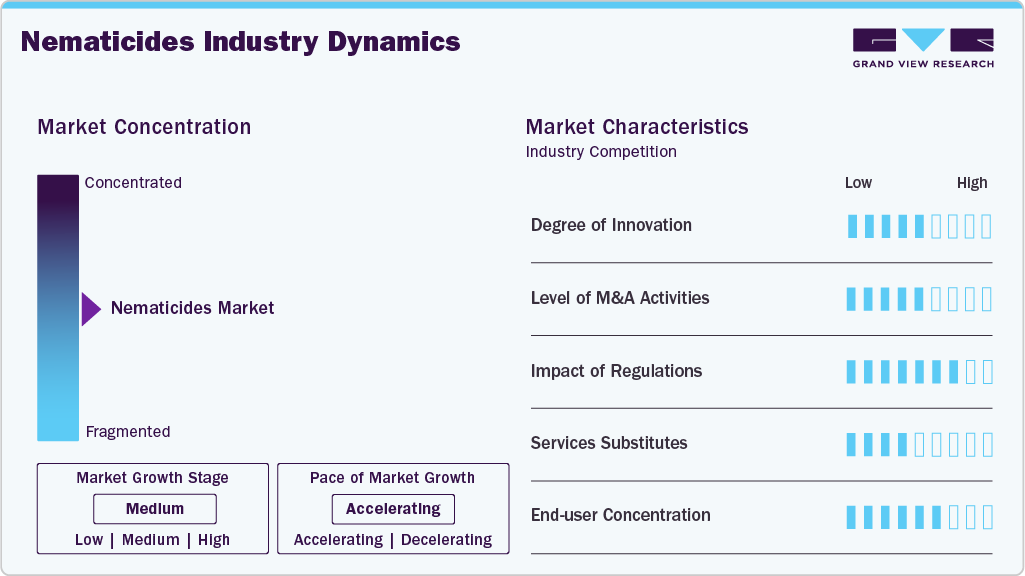
The competitive landscape is characterized by the presence of established agrochemical manufacturers and specialized biological crop protection companies competing through product innovation, portfolio diversification, and geographic expansion. Leading participants, including Syngenta, BASF, Corteva Agriscience, Bayer, and FMC Corporation, leverage extensive research capabilities, established distribution networks, and regulatory expertise to strengthen their market positions. Their strategies emphasize the development of differentiated formulations, expansion of crop protection offerings, and integration of nematode management into broader agricultural solutions. Companies such as UPL and Sumitomo Chemical benefit from diversified agricultural portfolios and established commercial relationships across major farming regions.
 To learn more about this report, Download Free Sample Report
Competition is also intensifying as biological solutions gain attention amid increasing interest in sustainable agricultural practices. Specialized providers, including Certis Biologicals and Valent BioSciences, contribute to innovation in biological crop protection, while biotechnology development and strategic partnerships create additional avenues for differentiation. Market participants are investing in research collaborations, product registrations, formulation improvements, and farmer education to enhance adoption and demonstrate field performance. Companies capable of combining reliable product performance with strong technical support and extensive distribution coverage are better positioned to capture emerging opportunities and maintain long-term customer relationships across diverse agricultural markets.
Analyst Perspective
The nematicides market is moving beyond conventional chemical treatments toward solutions that balance reliable pest suppression, crop productivity, and environmental responsibility. Biological technologies are gaining importance as manufacturers explore microbial formulations and botanical ingredients that complement established crop protection methods. At the same time, regulatory compliance, field-level efficacy, and compatibility with integrated pest management practices are becoming important considerations for growers and agricultural input suppliers. For manufacturers, the key opportunity lies in developing cost-effective, crop-specific solutions that deliver consistent results under varying soil conditions while meeting evolving sustainability expectations.
Source Insights
Bio-based nematicides segment dominated the market with a revenue share of 55.4% in 2025, supported by growing interest in environmentally responsible crop protection solutions. Increasing emphasis on sustainable farming practices is encouraging growers to consider microbial agents, botanical extracts, and naturally derived ingredients for managing plant-parasitic nematodes. These formulations can complement integrated pest management programs while helping reduce dependence on certain conventional chemical treatments. Rising awareness of soil health and the importance of beneficial organisms is further strengthening commercial interest. Continued innovation in biological formulation stability and application efficiency is expected to support adoption across diverse agricultural systems.
Mineral oil nematicides is expected to grow rapidly with a CAGR of 5.5%, their potential role in specialized crop protection applications. Demand prospects will depend on formulation performance, suitability for cultivation systems, and the ability to manage nematode infestations effectively. Agricultural producers are increasingly evaluating treatment options that fit existing crop management practices and operational requirements. Improvements in formulation technology and application methods could strengthen their commercial relevance in selected markets. However, product acceptance will also depend on demonstrated field efficacy, affordability, and compliance with applicable agricultural regulations.
Product Insights
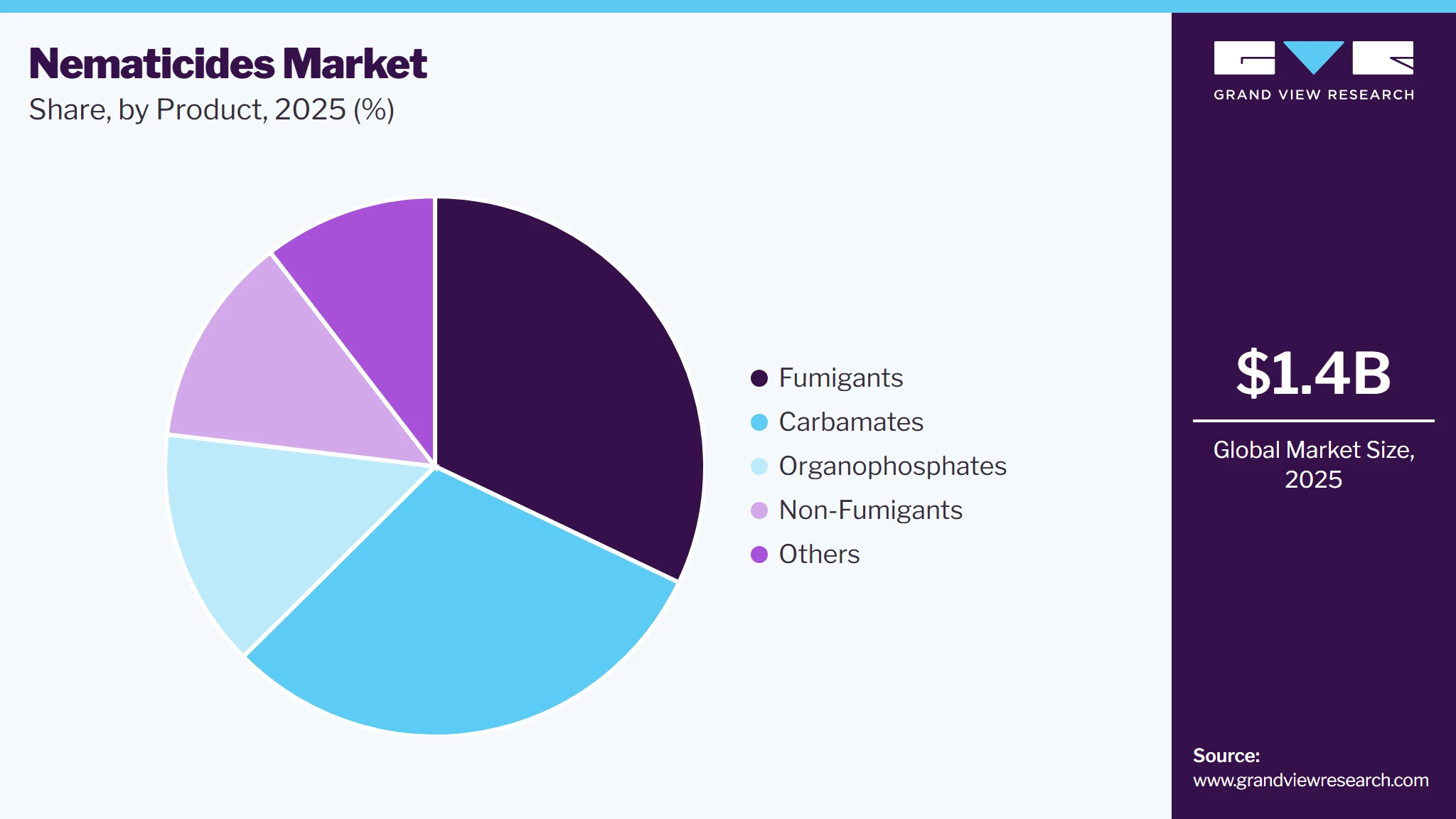
Fumigants held the largest revenue share of 32.1% in 2025, reflecting their established role in managing soil-borne pests before planting. These treatments are particularly relevant to intensive cultivation systems and high-value crops where nematode pressure can significantly affect yield quality and commercial returns. Their ability to penetrate treated soil under suitable application conditions supports their use in pre-plant soil disinfestation programs. Demand is influenced by cropping patterns, infestation severity, application infrastructure, and the availability of registered products. Nevertheless, handling requirements, environmental considerations, and regulatory restrictions on certain active ingredients may influence adoption across individual countries.
 To learn more about this report, Download Free Sample Report
Non-fumigants is expected to grow with a CAGR of 11.9% from 2026 to 2033, driven by increasing interest in targeted soil treatments and more flexible application methods. Depending on the formulation, these products can be applied through soil incorporation, irrigation systems, or other crop-specific delivery techniques. Their compatibility with different cultivation practices may appeal to growers seeking alternatives to conventional fumigation. Product innovation, improved application efficiency, and growing demand for integrated pest management solutions could further accelerate uptake. Future expansion will depend on consistent field performance, competitive pricing, regulatory approvals, and the suitability of individual formulations for different crops and soil conditions.
Region Insights
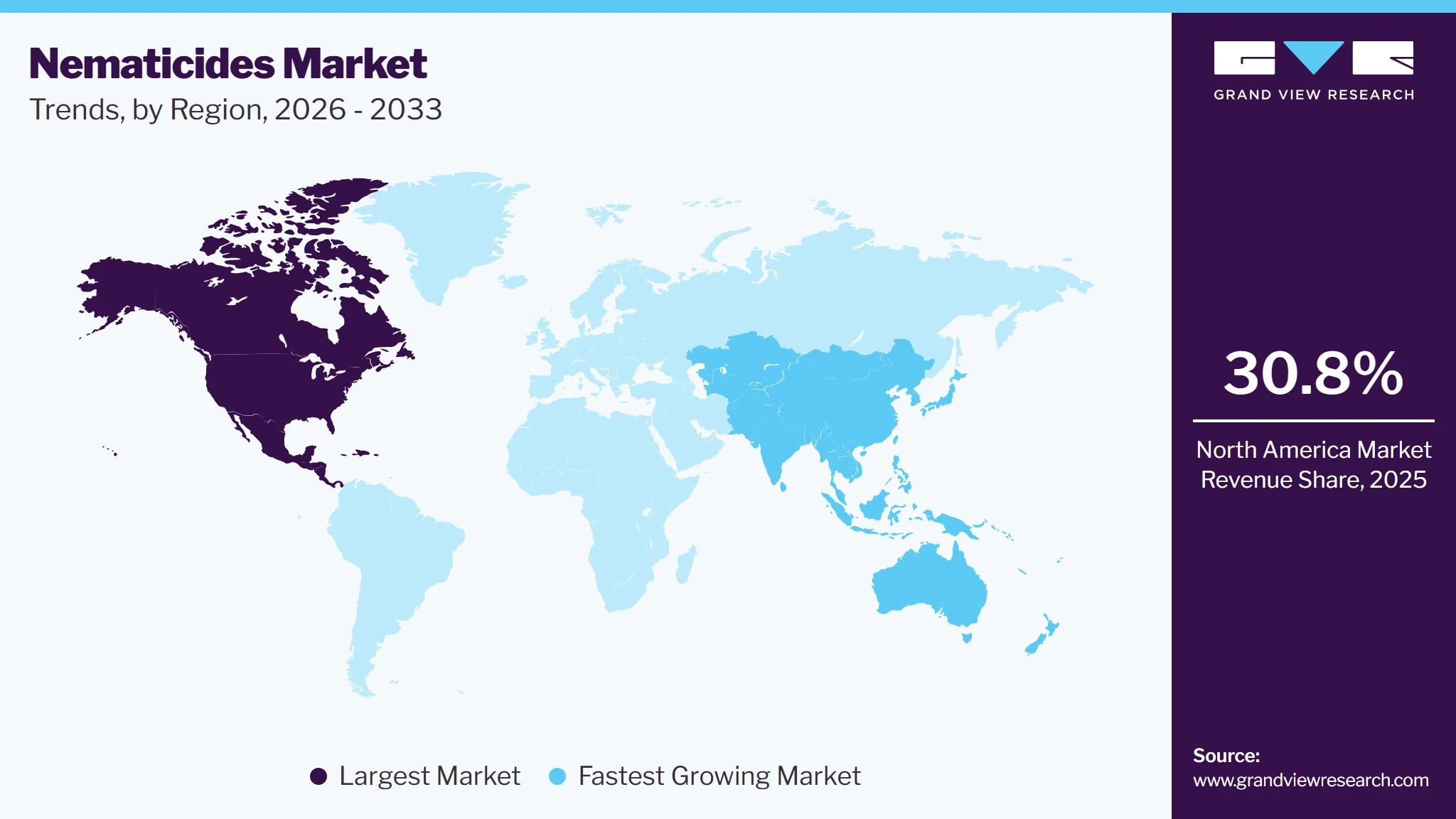
North America held the highest share of 30.8% in 2025, benefiting from advanced agricultural infrastructure, established crop protection distribution channels, and widespread use of modern farming technologies. Demand is supported by commercial cultivation of field crops, vegetables, fruits, and specialty crops vulnerable to nematode damage. Research into integrated pest management and biological control is creating opportunities for differentiated treatment solutions. The US Department of Agriculture supports research and extension initiatives addressing nematodes and other agricultural pests through integrated management approaches.
 To learn more about this report, Download Free Sample Report
U.S. Nematicides Market Trends
The US is growing at a CAGR of 11.2% from 2026 to 2033, offers opportunities through large-scale agricultural production, specialized crop cultivation, and established commercial channels for crop protection products. Nematode management is particularly relevant in areas where soil-borne pests threaten crop yields, quality, and farm profitability. The US Environmental Protection Agency's November 2025 registration of cyclobutrifluram for specified crop, seed, turf, and ornamental uses demonstrates continued development of nematode-control technologies. Such developments can expand treatment options for eligible applications.
Asia Pacific Nematicides Market Trends
Asia Pacific is growing the fastest with a CAGR of 11.8% in the forecast period, as it presents substantial growth potential due to extensive agricultural activity, intensive cultivation, and rising demand for improved crop productivity. China, India, Japan, and Southeast Asian economies offer opportunities across vegetable, fruit, cereal, and plantation crop production. Greater attention to soil health and nematode-related yield losses is encouraging growers to consider chemical treatments alongside biological alternatives. Manufacturers can strengthen their regional presence through affordable formulations, localized distribution networks, and technical support tailored to diverse farming conditions. Adoption will depend on product efficacy, grower awareness, and compliance with national pesticide registration requirements.
China Nematicides Market Trends
China represents an important agricultural market, supported by intensive crop production and demand for effective plant protection inputs. Vegetable cultivation, fruit farming, and other high-value agricultural activities create opportunities for targeted nematode management. Increasing emphasis on agricultural efficiency and sustainable production may encourage interest in biological formulations and integrated pest management practices. Suppliers can pursue growth through crop-specific product development, partnerships with local distributors, and improved farmer education.
Europe Nematicides Market Trends
Europe offers opportunities through established agricultural production, demand for quality crops, and growing attention to environmental protection. Potatoes, sugar beet, vegetables, and other susceptible crops create a need for effective soil pest management. Biological products and integrated treatment strategies may gain commercial relevance as growers and manufacturers seek approaches compatible with sustainability objectives. However, the regulatory framework significantly influences product availability. Under Regulation (EC) No 1107/2009, plant protection products require authorization in the relevant EU country, while active substances undergo assessment and approval procedures.
Germany Nematicides Market Trends
Germany presents opportunities for specialized crop protection solutions through its commercial farming sector, established agricultural supply channels, and focus on efficient production practices. Potato cultivation, sugar beet production, vegetables, and ornamental crops can require targeted measures against plant-parasitic nematodes. Interest in integrated pest management and biological control may encourage evaluation of alternatives to conventional chemical treatments. Manufacturers seeking to expand their presence should emphasize reliable technical documentation, crop-specific application guidance, and collaboration with agricultural advisers. Product registration and actual availability must be verified for each intended use.
Middle East & Africa Nematicides Market Trends
The Middle East and Africa offer varied opportunities shaped by climatic conditions, irrigation practices, agricultural investment, and access to crop protection inputs. Horticulture, vegetable production, and export-oriented farming can generate demand for treatments that protect root systems and preserve marketable yields. In water-constrained environments, maintaining crop productivity and soil health remains an important operational consideration. However, affordability challenges, uneven distribution infrastructure, and limited access to specialized technical advice can restrict adoption in certain countries. Suppliers can address these barriers through regional partnerships, farmer education, and solutions suited to local crops and growing conditions.
Latin America Nematicides Market Trends
Latin America presents promising opportunities because of its extensive cultivation of soybeans, sugarcane, coffee, maize, and other commercially important crops. Nematode infestations can reduce productivity and compromise crop quality, encouraging growers to incorporate soil pest management into broader crop protection programs. Brazil is a particularly relevant market because of its large agricultural sector and established interest in biological crop protection.
Key Nematicides Company Insights
Companies are strengthening their market positions through product innovation, portfolio diversification, and strategic partnerships. Bayer is expanding its nematode-control offerings through new product launches and collaborations, including its agreement with Ecospray to commercialize the garlic-based biological nematicide Velsinum across selected European, Middle Eastern, and African markets.
-
Bayer AG is a prominent crop protection manufacturer with a broad agricultural portfolio and established international presence. Its nematode management offerings include Velum® Prime, a fluopyram-based nematicide used to protect crops such as potatoes, tomatoes, and other horticultural produce, subject to country-specific registrations. The company focuses on developing targeted crop protection solutions that help reduce nematode damage, safeguard yield potential, and support efficient farm management. Its research capabilities, extensive distribution network, and product development expertise strengthen its competitive position across agricultural markets. Recent commercial developments, including the 2025 launch of Velum Prime in Australia, demonstrate its continued efforts to expand access to nematode management solutions.
-
Valent BioSciences specializes in biological and biorational agricultural solutions, positioning it as a relevant participant in the biological nematicides segment. Its portfolio includes OutReach SC Nematicide, a soil-applied biological formulation containing Bacillus amyloliquefaciens and mycorrhizal fungi, developed to suppress plant-parasitic nematodes while supporting root development and plant vigor. Introduced commercially in the United States in 2025 for peanut and cotton applications, the product reflects the company's focus on microbial technologies and sustainable crop protection. Valent also offers Aveo EZ, a biological seed treatment for managing nematodes in soybean cultivation. Its specialized research capabilities, technical expertise, and association with Sumitomo Chemical support continued product development and market expansion.
Key Nematicides Companies
The following key companies have been profiled for the study on the nematicides market.
-
Syngenta AG
-
Corteva Agriscience
-
BASF SE
-
Bayer AG
-
FMC Corporation
-
UPL Limited
-
Sumitomo Chemical Co., Ltd.
-
ADAMA Ltd.
-
Certis Biologicals
-
Valent BioSciences LLC
Competitive Benchmarking
Operating Strategies
Competitive Edge
Weaknesses
Mature Players: Syngenta AG, Corteva Agriscience, BASF SE, Bayer AG, FMC Corporation, UPL Limited, Sumitomo Chemical Co., Ltd., ADAMA Ltd.
- Invest in research and development to introduce differentiated chemical and biological nematicide formulations.
- Expand international distribution networks and strengthen relationships with agricultural retailers and commercial growers.
- Integrate nematode management products into broader crop protection portfolios and integrated pest management programs.
- Pursue strategic alliances, licensing agreements, and product acquisitions to accelerate innovation and geographic expansion.
- Established global presence supported by extensive distribution infrastructure and strong brand recognition.
- Substantial financial resources to support product development, regulatory approvals, and commercialization.
- Diversified crop protection portfolios serving multiple crops, agricultural systems, and geographic markets.
- Strong technical expertise and regulatory experience that facilitate product registration and customer support.
- High research, testing, and registration expenditure associated with developing new active ingredients.
- Exposure to regulatory restrictions affecting certain conventional chemical treatments.
- Complex organizational structures that may slow responses to emerging niche opportunities.
- Significant investment requirements for maintaining extensive product portfolios and international operations.
Emerging Players: Certis Biologicals, Valent BioSciences LLC.
- Prioritize biological nematicides based on microbial strains, beneficial fungi, and other naturally derived active ingredients.
- Develop specialized formulations for selected crops, cultivation systems, and nematode species.
- Establish partnerships with distributors, agricultural technology providers, and research institutions to improve market access.
- Strengthen product credibility through field trials, registration approvals, and demonstrations of agronomic performance.
- Specialized expertise in biological crop protection and microbial formulation technologies.
- Greater scope to focus on underserved crop segments and specific nematode management challenges.
- Alignment with growing interest in sustainable agriculture and integrated pest management.
- Potential for product differentiation through proprietary biological strains and specialized application technologies.
- Comparatively limited financial resources for large-scale research and international commercialization.
- Dependence on field conditions, formulation stability, and application practices can affect biological product performance.
- Restricted distribution coverage may hinder penetration into geographically dispersed agricultural markets.
- Lower brand recognition and limited product availability in certain countries can slow customer adoption.
Recent Developments
-
In April 2025, Bayer introduced Velum Prime to the Australian market, expanding access to its fluopyram-based nematicide for root and tuber vegetables, including carrots, potatoes, and sweet potatoes. The launch followed field trials across five Australian states, broadening the company's regional offering for nematode management.
-
In August 2025, BASF, Corteva Agriscience, and M.S. Technologies announced an agreement to combine BASF's nematode-resistant soybean trait with Corteva's Enlist E3 and Conkesta E3 soybean technologies for the Brazilian market. The initiative aims to provide farmers with a biotechnology-based approach to managing soybean cyst and root lesion nematodes, with commercial availability intended for the end of the decade.
Nematicides Market Report Scope
Report Attribute
Details
Market size in 2025
USD 1.4 billion
Estimated market size in 2026
USD 1.5 billion
Projected market size by 2033
USD 3.2 billion
Growth rate
CAGR of 11.2% from 2026 to 2033
Base year for estimation
2025
Historical data
2021 - 2024
Forecast period
2026 - 2033
Quantitative units
Revenue in USD billion, and CAGR from 2026 to 2033
Report coverage
Revenue forecast, volume forecast, company ranking, competitive landscape, growth factors, and trends
Segments covered
Source, Product, and Region
Regional Scope
North America; Europe; Asia Pacific; Latin America; Middle East & Africa
Country scope
U.S.; Canada; Mexico; Germany; UK; France; Italy; Spain; China; India; Japan; South Korea; Brazil; Argentina; Saudi Arabia; South Africa.
Key companies profiled
Syngenta AG; Corteva Agriscience; BASF SE; Bayer AG; FMC Corporation; UPL Limited; Sumitomo Chemical Co., Ltd.; ADAMA Ltd.;Certis Biologicals;Valent BioSciences LLC
Customization scope
Free report customization (equivalent up to 8 analysts’ working days) with purchase. Addition or alteration to country, regional & segment scope.
Pricing and purchase options
Avail customized purchase options to meet your exact research needs. Explore purchase options
Global Nematicides Market Report Segmentation
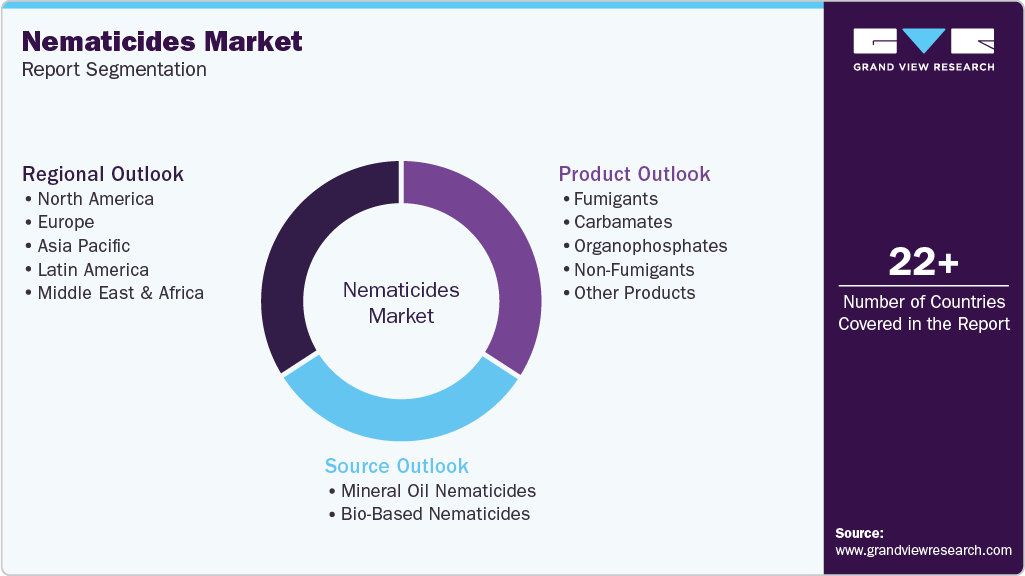
This report forecasts volume & revenue growth at regional, and country levels and provides an analysis of the latest industry trends in each of the sub-segments from 2021 to 2033. For this study, Grand View Research has segmented the global nematicides market report based on source, product, and region:
 To learn more about this report, Download Free Sample Report
-
Source Outlook (Revenue, USD Million, Volume Kilotons, 2021 - 2033)
-
Mineral Oil Nematicides
-
Bio-Based Nematicides
-
-
Product Outlook (Revenue, USD Million, Volume Kilotons, 2021 - 2033)
-
Fumigants
-
Carbamates
-
Organophosphates
-
Non-Fumigants
-
Other Products
-
-
Regional Outlook (Revenue, USD Million, Volume Kilotons, 2021 - 2033)
-
North America
-
U.S.
-
Canada
-
Mexico
-
-
Europe
-
UK
-
Germany
-
France
-
Italy
-
Spain
-
-
Asia Pacific
-
China
-
Japan
-
India
-
South Korea
-
-
Latin America
-
Brazil
-
Argentina
-
-
Middle East and Africa (MEA)
-
South Africa
-
Saudi Arabia
-
-
Research Methodology
The nematicides market figures in this report are based on a proven research process that combines executive interviews with secondary research from proprietary databases, company filings, and recognized regulatory and institutional sources. Market size is built through value-chain sizing - reconciling supply-side and demand-side estimates - and triangulated with bottom-up and top-down approaches. Every estimate passes multiple levels of expert validation before publication, with each nematicides segment quantified using the revenue-capture definitions in the table below.
Segment Definition
Source
Revenue capture definition
Mineral Oil Nematicides
Revenue is generated through the sale of mineral oil-based nematicide formulations designed to manage plant-parasitic nematodes in agricultural soils. Commercial performance depends on formulation effectiveness, crop compatibility, application requirements, production costs, and demand from growers seeking reliable crop protection solutions.
Bio-Based Nematicides
Income is derived from biological formulations containing beneficial microorganisms, botanical extracts, and other naturally derived active ingredients used to suppress nematode populations. Market value is influenced by biological efficacy, formulation stability, regulatory approvals, sustainable farming practices, and adoption across conventional and organic cultivation systems.
Product
Revenue capture definition
Fumigants
Sales revenue originates from volatile nematicide products applied to soil before planting to control plant-parasitic nematodes and other soil-borne pests. Commercial demand depends on treatment effectiveness, crop value, application infrastructure, soil conditions, regulatory restrictions, and expenditure on pre-plant soil management.
Carbamates
Commercial earnings arise from carbamate-based formulations used to suppress nematode activity and protect crop roots from damage. Purchasing trends are shaped by product efficacy, approved crop applications, application rates, resistance management requirements, and the availability of alternative active ingredients.
Organophosphates
Turnover is generated through the sale of organophosphate nematicides employed in agricultural pest management. Revenue performance is affected by product availability, registration status, treatment costs, crop-specific requirements, and regulatory measures governing the use of these active ingredients.
Non-Fumigants
Financial returns stem from non-fumigant treatments applied through soil incorporation, irrigation systems, seed treatments, or other suitable delivery methods. Demand is influenced by application flexibility, crop compatibility, field performance, grower awareness, and the increasing integration of targeted pest control into broader agricultural management programs.
Other Products
Revenue encompasses specialty nematicide chemistries and alternative treatment solutions that fall outside the principal categories. Commercial opportunities depend on technological innovation, effectiveness against specific nematode species, compatibility with integrated pest management, regulatory acceptance, and demand for differentiated crop protection products.
Estimation Model
Layer Name
Key Question
Description
Raw Material & Production Layer
What forms the supply base?
Examine the production of chemical and bio-based nematicides by evaluating active ingredient sourcing, raw material availability, manufacturing facilities, formulation technologies, microbial cultivation, extraction processes, purification capabilities, and production capacity. The assessment also considers supplier relationships, quality control, packaging formats, storage requirements, logistics infrastructure, traceability, regulatory compliance, and exposure to fluctuations in input costs across major producing countries.
Application Adoption Layer
Where are nematicidess utilized?
Evaluate the adoption of nematode management solutions across cereals, fruits, vegetables, plantation crops, oilseeds, turf, ornamentals, and other agricultural applications. Utilization is influenced by infestation severity, crop susceptibility, cultivation practices, treatment effectiveness, application compatibility, regulatory approvals, and the availability of alternative pest control methods. Grower preferences, agricultural extension services, integrated pest management programs, and advances in precision farming also influence product selection across regional markets.
Consumption Intensity Layer
How extensively are nematicidess consumed?
Assess consumption volumes according to formulation type, active ingredient, application rate, crop category, treatment frequency, and regional cultivation patterns. Usage varies with cultivated acreage, nematode prevalence, crop value, soil characteristics, infestation intensity, and seasonal farming cycles. Additional considerations include treatment costs, application efficiency, product availability, resistance management practices, and changes in agricultural production. These parameters help estimate demand intensity across major crop-producing economies.
Revenue Layer
How is market revenue generated?
Evaluate income generated through the manufacture and sale of chemical and biological nematicides to farmers, agricultural cooperatives, distributors, and commercial crop producers. Commercial returns depend on formulation costs, active ingredient pricing, production scale, product differentiation, selling prices, distribution margins, and purchasing arrangements. Higher-value opportunities may emerge from advanced biological formulations, crop-specific treatments, and integrated pest management solutions. Product registrations, technical support, strategic partnerships, export activity, and long-term customer relationships further influence profitability and competitive positioning.
Delivered Customizations
This report has been delivered with the following In-depth customizations
Client Request
Customization Delivered
Value Adds
Regional segmentation
The study provides country-level estimates and forecasts by examining agricultural production, cultivated acreage, nematode infestation patterns, product registrations, distribution infrastructure, and crop protection expenditure. It also evaluates chemical and biological formulation availability, trade flows, regional consumption trends, and regulatory frameworks across key agricultural economies.
Supports geographic prioritization and market-entry planning by identifying high-potential countries, underserved farming regions, emerging demand centers, and territories with favorable conditions for commercial expansion and distribution partnerships.
Opportunity Assessment
A detailed evaluation identifies growth prospects across mineral oil-based, bio-based, fumigant, carbamate, organophosphate, and non-fumigant categories. The assessment considers demand across cereals, fruits, vegetables, plantation crops, and other susceptible cultivations, alongside biological innovation, precision application technologies, integrated pest management, and evolving sustainability requirements.
Helps prioritize attractive product categories, crop applications, and untapped territories by identifying unmet grower requirements, emerging treatment preferences, and avenues for product differentiation. Findings guide R&D investments, portfolio diversification, commercialization planning, and the development of crop-specific solutions.
Competitive Benchmarking
Comparative profiling of leading manufacturers examines product portfolios, active ingredient expertise, formulation capabilities, manufacturing infrastructure, geographic reach, distribution networks, regulatory approvals, and customer relationships. The analysis also reviews recent product launches, research investments, strategic alliances, commercialization initiatives, and corporate developments undertaken by established companies and specialized biological solution providers.
Enables businesses to assess their competitive positioning, recognize operational strengths, and identify capability gaps. The findings support decisions involving product innovation, supply chain optimization, channel development, strategic partnerships, and expansion into specialized crop protection applications.
Frequently Asked Questions About This Report
North America accounted for 30.8% of the nematicides market revenue in 2025, making it the largest regional market. The region is supported by extensive cultivation of high-value crops, widespread adoption of advanced crop protection technologies, and strong regulatory support for sustainable agricultural practices.
Bio-based nematicides is the fastest growing source segment with a CAGR of 14.5% in the forecast period, driven by increasing regulatory support for sustainable crop protection, growing adoption of biological pest management solutions, and rising demand for environmentally friendly agricultural inputs.
Asia Pacific is the fastest growing region with a CAGR of 11.8% in the forecast period, due to the expanding commercial agriculture, increasing cultivation of high-value crops, rising awareness of nematode management, and growing adoption of advanced and bio-based crop protection solutions across major farming economies.
By source, bio-based nematicides segment dominated the form segment with a market share of 55.4% in 2025, supported by increasing adoption of sustainable crop protection practices, favorable regulatory support for biological solutions, and growing demand from high-value crop cultivation worldwide.
The nematicides market is primarily driven by increasing demand for higher agricultural productivity, rising incidence of plant-parasitic nematode infestations, and expanding cultivation of high-value crops. Growing adoption of sustainable farming practices and advancements in bio-based nematicide formulations are supporting market growth.
The global nematicides market size was valued at USD 1.4 billion in 2025 and is estimated at USD 1.5 billion for 2026.
The global nematicides market is expected to grow at a CAGR of 11.2% from 2026 to 2033, reaching USD 3.2 billion by 2033.
Based on product, fumigants segment projected the largest share of 32.1% in 2025, driven by its broad application in pre-plant soil treatment, high efficacy against soil-borne nematodes, and widespread adoption in high-value commercial crop cultivation.
Key players in the nematicides market include Syngenta AG; Corteva Agriscience; BASF SE; Bayer AG; FMC Corporation; UPL Limited; Sumitomo Chemical Co., Ltd.; ADAMA Ltd.;Certis Biologicals;Valent BioSciences LLC.
About the Author(s)
Agrochemicals & Fertilizers Research Team
Bulk Chemicals · Agrochemicals & FertilizersThis report was authored by the agrochemicals & fertilizers research team at Grand View Research - comprising two research analysts, one senior research analyst, and one industry expert - with specialized expertise in the agrochemicals & fertilizers segment of the bulk chemicals industry. All findings are based on proprietary bulk chemicals databases, executive interviews, and regulatory analysis, subject to internal peer review prior to publication.
Last Updated:
Speak to Analyst

Customize this report to your needs - add regions, segments, or data points, with 20% free customization.
Or view our licence options:


ISO 9001:2015 & 27001:2022 Certified
We are GDPR and CCPA compliant! Your transaction & personal information is safe and secure. For more details, please read our privacy policy.


