
- Home
- »
- Clinical Diagnostics
- »
-
Neuroscience Antibodies And Assays Market Report, 2033GVR Report cover
![Neuroscience Antibodies And Assays Market Size, Share & Trends Report]()
Neuroscience Antibodies And Assays Market (2025 - 2033) Size, Share & Trends Analysis Report By Product (Consumable, Instrument), By Technology (Immunoassays & Immunochemistry, Molecular diagnostics), By End Use, By Region, And Segment Forecasts
- Report ID: GVR-4-68040-764-2
- Number of Report Pages: 150
- Format: PDF
- Historical Range: 2021 - 2023
- Forecast Period: 2025 - 2033
- Industry: Healthcare
- Report Summary
- Table of Contents
- Segmentation
- Methodology
- Download FREE Sample
-
 Download Sample Report
Neuroscience Antibodies And Assays Market Summary
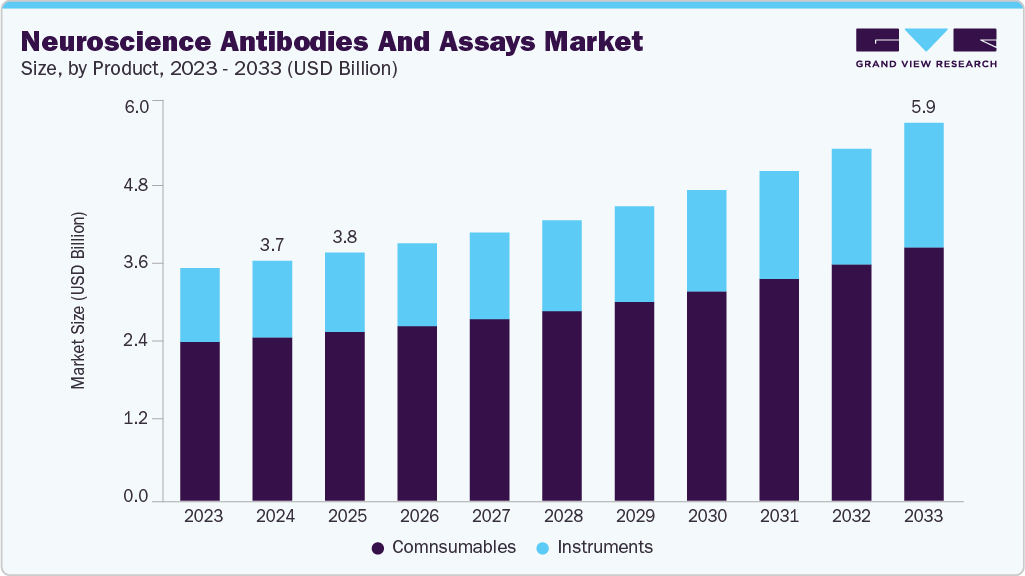
The global neuroscience antibodies and assays market size was valued at USD 3,723.43 million in 2024 and is expected to reach USD 5,867.03 million, growing at a CAGR of 5.41% from 2025 to 2033. The market is driven by the rising prevalence of neurological and neurodegenerative disorders globally-conditions like Alzheimer’s, Parkinson’s, multiple sclerosis, neuroinflammation, psychiatric disorders, etc.
Key Market Trends & Insights
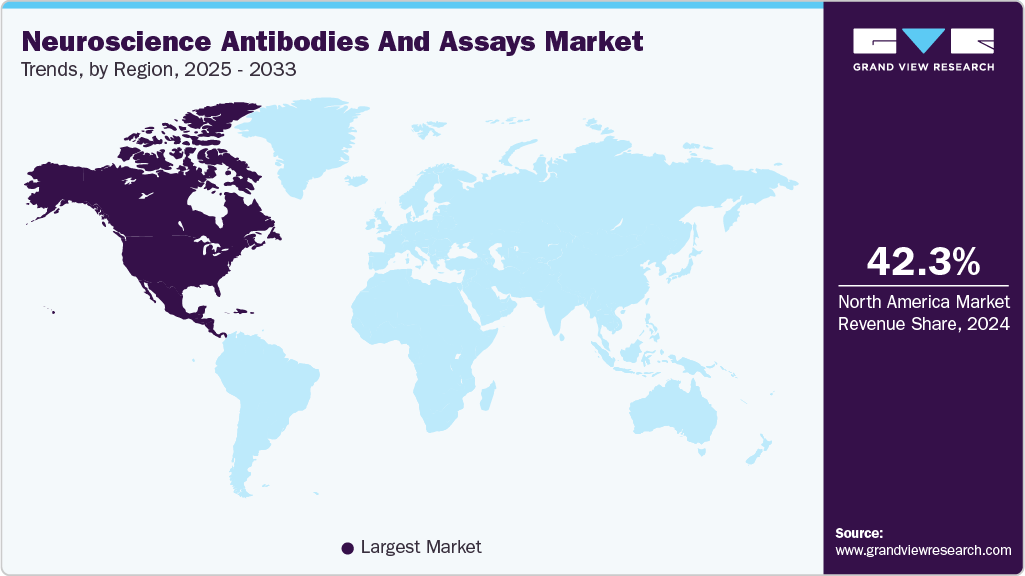
- The North America neuroscience antibodies and assays market dominated the global market and accounted for the largest revenue share of 42.29% in 2024.
- The U.S. led the North American market and held the largest revenue share in 2024.
- Based on product, the consumables segment dominated the global market and accounted for the largest revenue share of 68.11% in 2024.
- Based on technology, the immunoassay & immunochemistry segment held the largest revenue share of 60.75% in 2024.
- Based on end use, the pharmaceutical & biotechnology firms segment held the largest revenue share of 46.06% in 2024.
Market Size & Forecast
- 2024 Market Size: USD 3,723.43 Million
- 2033 Projected Market Size: USD 5,867.03 Million
- CAGR (2025-2033): 5.41%
- North America: Largest market in 2024
As populations age and as diagnostic capabilities improve, there is increasing demand for tools that can detect disease earlier and help in drug discovery. Also, regulatory pressures and funding from governments and institutions are growing, which support neuroscience R&D and hence require antibodies/assays as key enabling components. Growth is also being accelerated by rising government spending and R&D projects. One major factor propelling the market's expansion is the increasing incidence of Alzheimer's disease. The need for early and precise diagnostic tools keeps growing as the world's population ages. The 2024 Alzheimer's Association predicts that the number of Americans with Alzheimer's will increase dramatically and that dementia risk increases with age. The number of people 65 and older is expected to increase from 58 million in 2022 to 82 million by 2050. The age group most vulnerable to Alzheimer's dementia, baby boomers (those born between 1946 and 1964), will all be 65 or older by 2030.Furthermore, technological advancements are greatly improving MS diagnosis and monitoring, and during the forecast period, they are anticipated to generate significant growth opportunities in the MS diagnostics market. Early detection, patient monitoring, and symptom management have all been enhanced by cutting-edge technologies like MRI-based imaging, neurophysiological monitoring, smartphone applications, assistive robotic devices, and neurotherapeutic assessment methods like transcranial direct current stimulation (tDCS). One of the main factors propelling market expansion is the increasing incidence of MS worldwide and the corresponding rise in the need for prompt and precise diagnostic solutions. There were 2.3 million MS patients in 2013, 2.8 million in 2020, and 2.9 million in 2023, according to the MS International Federation.
Increased investment in R&D, especially in the creation of innovative imaging methods, biomarker assays, and digital monitoring platforms, supports market expansion even more. The global MS diagnostics market is also growing as a result of expanding government initiatives to improve access to diagnostic services, technological advancements, and improved healthcare infrastructure. To further the study of neurodegenerative diseases, Beckman Coulter Diagnostics introduced a new line of blood-based Research Use Only (RUO) biomarker immunoassays in January 2025. These tests are intended to evaluate important biomarkers that are becoming important markers in neurodegenerative diseases, such as Alzheimer's disease, including p-Tau217, GFAP, NfL, and APOE ε4.
Beckman Coulter's dedication to giving researchers top-notch instruments to identify and measure biomarkers with remarkable sensitivity and specificity is demonstrated by the launch of these assays. The assays support the development of early diagnostic techniques and individualized treatment plans by providing accurate measurement of these biomarkers, which contributes to a deeper understanding of disease mechanisms. These assays' compatibility with Beckman Coulter's Immunoassay Analyzers guarantees integration with current laboratory workflows, improving the efficacy and efficiency of research on neurodegenerative diseases.
Furthermore, by improving availability and competitive dynamics, major players' introduction of new products has been facilitating market expansion. For instance, the ultrasensitive biomarker detection company Quanterix Corporation announced in July 2022 that a laboratory-developed test (LDT) that measures phospho-Tau 181 (pTau-181) in plasma quantitatively has been validated. This test will aid in the diagnostic evaluation of Alzheimer's disease. This LDT uses a quantitative immunoassay format to measure the levels of pTau-181 in human plasma and was first made available for clinical use in the United States. During the forecast period, the market is expected to grow more quickly due to these developments in immunoassay-based diagnostics for neurological conditions.
Similarly, in November 2021, Fujirebio Europe NV launched two Alzheimer’s disease immunoassays on its Innotest platform, marking the first product release following its collaboration with Adx Neurosciences NV. The assays are designed to measure neuronal pentraxin-2 (NPTX2) and soluble triggering receptor expressed on myeloid cells 2 (STREM2), two biomarkers linked to synaptic dysfunction and neuroinflammation key processes associated with Alzheimer’s progression. These innovations are expected to complement ongoing therapeutic development efforts for Alzheimer’s disease. Consequently, the continued rollout of novel immunoassay solutions targeting neuroscience biomarkers is anticipated to significantly drive market growth over the coming years.
Table 1 Prevalence of various neurological and neurodegenerative conditions in 2021, 2030, and 2045
Region
2021
2030
2045
Parkinson’s Disease
11.77
15.63
25.2
Alzheimer’s Disease
55.0
82.0
152.0
Huntington’s Disease
0.4
0.5
0.6
Multiple Sclerosis
2.8
3.0
3.2
Epilepsy
51.7
60.0
70.0
Parkinson’s Disease
11.77
15.63
25.2
Alzheimer’s Disease
55.0
82.0
152.0
Huntington’s Disease
0.4
0.5
0.6
Source: International Diabetes Federation 2021, Grand View Research
Market Concentration & Characteristics
The market for neuroscience antibodies and assays is known for its steady pace of innovation. For example, Thermo Fisher's 2025 release of the Olink Target 48 Neurodegeneration Panel, which offers a high-throughput multiplex proteomic platform for measuring more than 40 important proteins linked to neurodegenerative diseases, reflects the market's steady pace of innovation. Likewise, BioLegend and PerkinElmer have teamed up to incorporate AlphaLISA assay technology into their products, allowing for highly sensitive and quantitative immunoassays for neurological biomarkers.
Mergers and acquisitions in this space are driven by the company’s expanding their technological capabilities and service portfolios. In 2024, Roche strengthened its immunoassay portfolio through the acquisition of a specialized biomarker assay developer, enabling access to novel plasma-based neurodegenerative disease tests. Such activities enhance access to innovative technologies and accelerate the development of new assays for Alzheimer’s, Parkinson’s, and Huntington’s diseases.
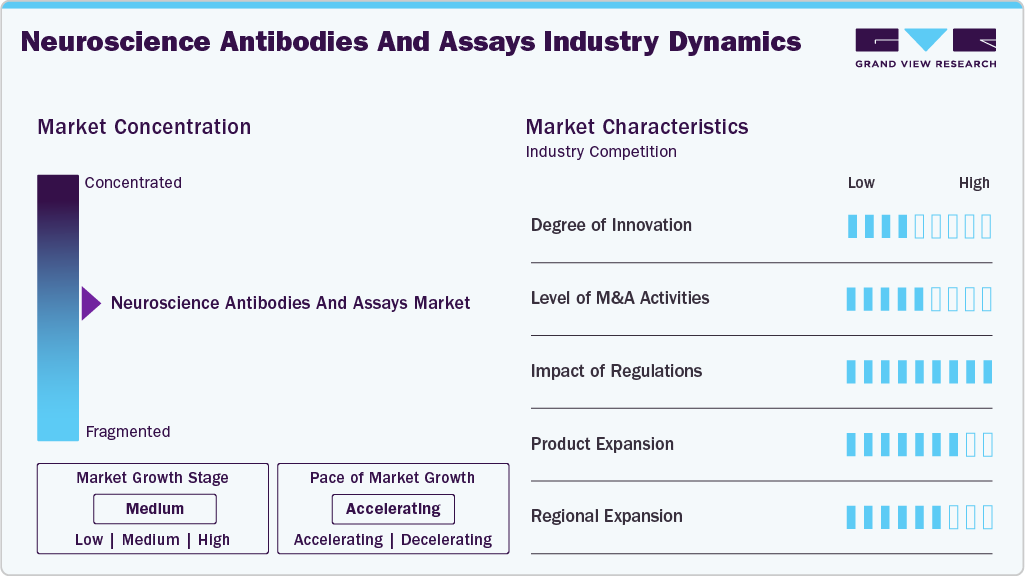
Regulatory frameworks play a critical role in shaping market growth, especially in regions like the U.S. and Europe where diagnostic assays require compliance with FDA or CE-IVD standards. The FDA's growing interest in biomarker-based diagnostics was evidenced in 2025 when it approved the qualification plan for a urine biomarker panel to identify drug-induced kidney damage. Clarity in regulations regarding clinical utility and validation gives businesses a path to product approval and commercialization.
Product expansion remains a key strategy for growth. Companies are diversifying assay types, from conventional ELISA kits to ultrasensitive immunoassays and multiplex platforms, enabling broader detection capabilities across diseases such as Alzheimer’s, multiple sclerosis, and epilepsy.
Regional expansion is also notable; for example, Thermo Fisher and BioLegend have increased their footprint in the Asia-Pacific region, driven by rising neurological disease prevalence and growing research infrastructure in countries like China, Japan, and India. Collectively, these developments highlight a market defined by moderate concentration, ongoing innovation, strategic M&A, regulatory engagement, and broadening product and geographic reach.
Product Insights
On the basis of product, consumables market accounted for the largest market share of 68.11% in 2024. The primary driver of this growth is the rising demand for consumables, kits, and reagents needed to carry out different experiments and assays in neuroscience research. In both academic and clinical contexts, these consumables are essential to the standardization and reproducibility of experiments. The demand for these consumables is further supported by the ongoing developments in assay technologies and the increasing incidence of neurological disorders. In June 2025, Fujirebio announced the launch of the Lumipulse G sTREM2 assay, a fully automated chemiluminescent enzyme immunoassay (CLEIA) designed for Research Use Only (RUO). This assay enables the quantitative measurement of soluble Triggering Receptor Expressed on Myeloid Cells 2 (sTREM2) in human cerebrospinal fluid (CSF) and blood within just 35 minutes, offering researchers a rapid and reliable tool for studying neuroinflammation associated with Alzheimer's and other neurodegenerative diseases.
The instruments segment in the neuroscience antibodies and assays market is experiencing rapid growth, fueled by technological advancements and the increasing complexity of neuroscience research. For the thorough examination and measurement of biomarkers in neurological research, tools like flow cytometers, microscopes, and spectrometers are crucial. These tools' capabilities are improved by the incorporation of machine learning and artificial intelligence, which makes data analysis more accurate and effective. The need for advanced tools that can provide high-throughput and high-resolution data is anticipated to increase as the emphasis moves toward personalized medicine and targeted therapies, propelling this market's expansion.
Technology Insights
Immunoassays & immunochemistry held the largest market share in 2024, attributed to their widespread application in detecting and quantifying biomarkers associated with neurological disorders. Techniques such as Enzyme-Linked Immunosorbent Assay (ELISA), Western Blotting, and Immunohistochemistry (IHC) are extensively utilized due to their sensitivity, specificity, and established protocols. These techniques are essential for identifying disease markers and tracking treatment outcomes in both research and diagnostic contexts. Alamar Biosciences declared the commercial release of the NULISAseq pTau-217 and NULISAseq CNS Disease Panel 120 assays on March 5, 2024. Early neurological disease detection is made possible by these assays, which use Alamar's exclusive NULISATM chemistry to provide ultra-high sensitivity protein analysis from biofluids. Comprehensive biomarker profiling is made easier by the highly multiplexed protein analysis of key pathways linked to major neurological disorders provided by the NULISAseq CNS Disease Panel 120. The NULISAqpcr pTau-217 assay gives researchers a potent tool for researching Alzheimer's disease by concentrating on the detection of this significant biomarker in dementia research.
The Other emerging / ultrasensitive platforms segment in the neuroscience antibodies and assays market and anticipated to grow at the fastest rate over the forecast period. This surge is driven by innovations in assay technologies that offer enhanced sensitivity and specificity, enabling the detection of low-abundance biomarkers and the analysis of complex biological samples. Platforms such as Single Molecule Array (Simoa) and digital PCR are gaining traction for their ability to provide ultra-sensitive measurements, which are crucial in early disease detection and monitoring. The integration of these advanced platforms into clinical workflows is expected to revolutionize the landscape of neuroscience diagnostics and personalized medicine.
End Use Insights
The pharmaceutical & biotechnology firms dominated the market in 2024, accounting for a 46.06% share. This growth is fueled by the increasing focus on developing targeted therapies for neurological disorders, which necessitate the use of advanced antibodies and assays for drug discovery and development. Pharmaceutical companies are investing in strong biomarker discovery and validation processes due to the growing prevalence of neurological diseases and the need for personalized medicine. The industry is dedicated to growing its neuroscience portfolios and improving treatment options for diseases like depression, Parkinson's, and Alzheimer's. This is demonstrated by strategic alliances and acquisitions, such as Johnson & Johnson's USD 14.6 billion acquisition of Intra-Cellular Therapies. Additionally, Trace Neuroscience, which focuses on a possible genomic target for amyotrophic lateral sclerosis (ALS), announced its launch in March 2024 with funding of USD 101 million. In order to find new therapeutic targets for ALS, a progressive neurodegenerative disease marked by the degeneration of motor neurons, the company plans to use cutting-edge genomic technologies.
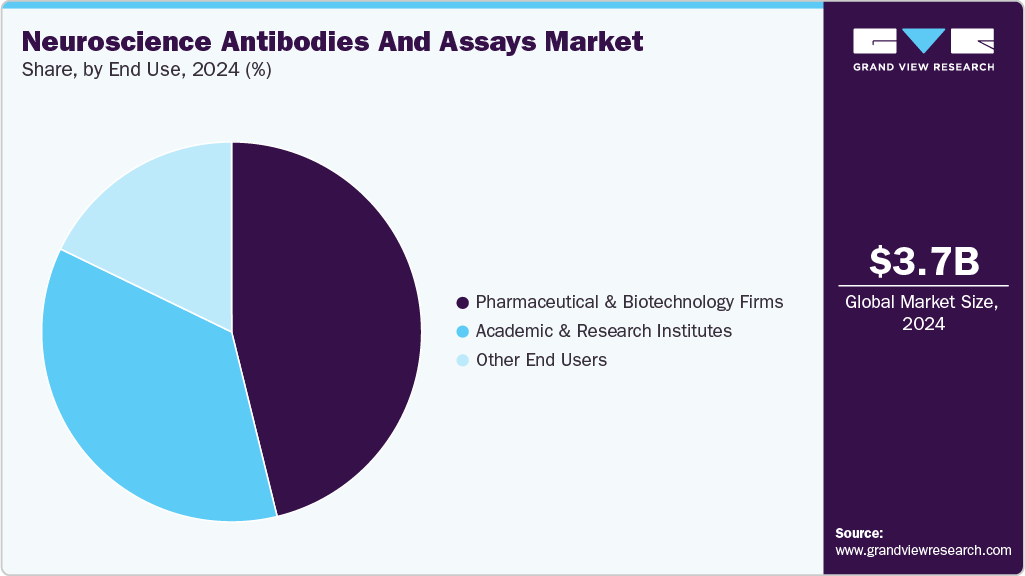
Academic & research institutes segment is expected to grow at the considerable rate over the forecast period. This dominance is attributed to the substantial investments in neuroscience research aimed at understanding the complexities of the brain and developing novel therapeutic strategies. These institutions are at the forefront of discovering new biomarkers, elucidating disease mechanisms, and testing potential drug candidates. Collaborations between academic institutions and industry players further accelerate the translation of research findings into clinical applications, fostering innovation in the field
Regional Insights
The neuroscience antibodies and assays market in North America is experiencing strong growth, North America is projected to capture a substantial share of the global neuroscience antibodies and assays market, driven by the growing prevalence of neurological disorders, rising investments in research and development, and the expansion of pharmaceutical and biotechnology sectors in the region. For example, the Alzheimer’s Society of Canada reported in 2022 that the number of Canadians living with dementia is expected to reach 1 million by 2030. The same report highlighted that, on average, 350 individuals in Canada were anticipated to be diagnosed with dementia each day in 2022.
U.S. Neuroscience Antibodies And Assays Market Trends
The U.S. neuroscience antibodies and assays market is growing due to increasing research funding and advancements in diagnostic technologies. Notably, in 2024, NeuroNexus Technologies launched the Summa Framework, a neural interface technology designed to enhance the precision of neuroscience assays. Additionally, the National Institutes of Health (NIH) continues to support neuroscience research through substantial funding, further fueling market expansion
Europe Neuroscience Antibodies And Assays Market Trends
Europe is experiencing strong growth in the neuroscience antibodies and assays market. increasing research activities and a rising prevalence of neurological disorders. Companies like Bio-Rad Laboratories and Thermo Fisher Scientific are leading the market by offering a wide range of neuroscience assays and antibodies. Regulatory bodies such as the European Medicines Agency (EMA) are actively involved in approving innovative diagnostic tools, facilitating market growth.
The UK neuroscience antibodies and assays market is growing rapidly, supported by government initiatives and a strong research infrastructure. he Medical Research Council (MRC) and other funding agencies continue to invest in neuroscience research, promoting the development and adoption of advanced diagnostic assays. Collaborations between academic institutions and biotechnology companies are also contributing to market growth.
Asia Pacific Neuroscience Antibodies And Assays Market Trends
The Asia Pacific neuroscience antibodies and assays market is growing rapidly, driven by increasing healthcare investments and a rising burden of neurological diseases. Countries like China, Japan, and India are witnessing significant advancements in neuroscience research, with both public and private sectors investing in the development of innovative diagnostic tools.
The Japan neuroscience antibodies and assays market is expected witness a steady growth. The country is gradually embracing neuroscience antibodies and assays, with growth supported by a strong healthcare system and aging population. The Japanese government and private sector are investing in the development of advanced diagnostic assays, with a focus on neurodegenerative diseases prevalent in the aging population.
The market for neuroscience antibodies and assays in China is growing quickly due to large R&D expenditures and growing government encouragement of biomedical innovation. To satisfy the rising demand, major players in the Chinese market are concentrating on improving their product offerings and extending their research capacities. Innovation in neuroscience research is being fostered by partnerships between biotechnology companies and academic institutions. Furthermore, the government's efforts to fund neuroscience projects and expedite regulatory procedures are fostering an environment that is favorable to market expansion.
Latin America Neuroscience Antibodies And Assays Market Trends
The Latin American neuroscience antibodies and assays market is witnessing moderate to high growth, fueled by increasing healthcare investments and a rising focus on neurological research. The country's in the region are emphasizing improving healthcare infrastructure and fostering research collaborations is contributing to the expansion of the neuroscience antibodies and assays market. Moreover, increasing awareness about neurological diseases and the demand for advanced diagnostic tools are further propelling market development in Latin America.
The Brazil neuroscience antibodies and assays market is expanding rapidly. This growth is reflective of the country's commitment to advancing its biomedical research capabilities and improving healthcare outcomes. The Brazilian government's support for neuroscience research, coupled with collaborations between academic institutions and the private sector, is fostering innovation in the development of antibodies and assays. These efforts are aimed at addressing the increasing burden of neurological disorders and enhancing the availability of advanced diagnostic tools in the country.
Middle East and Africa Neuroscience Antibodies And Assays Market Trends
The Middle East and Africa region shows strong potential for neuroscience antibodies and assays growth, primarily driven by increasing investments in healthcare infrastructure and a rising focus on research and development. Countries within the MEA region are prioritizing the development of advanced diagnostic and therapeutic solutions for neurological disorders. Collaborations between governments, research institutions, and private enterprises are facilitating the growth of the neuroscience antibodies and assays market.
The Saudi Arabia neuroscience antibodies and assays market is expanding rapidly. The Saudi Arabian government's support for neuroscience research, coupled with collaborations between academic institutions and the private sector, is fostering innovation in the development of antibodies and assays. These efforts are aimed at addressing the increasing burden of neurological disorders and enhancing the availability of advanced diagnostic tools in the country.
Key Neuroscience Antibodies And Assays Company Insights
The neuroscience antibodies and assays market is driven by a mix of established diagnostics companies and specialized innovators focused on expanding access and ease of assays. Major players shaping this landscape include Thermo Fisher Scientific, Bio-Rad Laboratories, Inc., Merck KGaA, F. Hoffmann-La Roche, Cell Signaling Technology, Inc., and others
Key Neuroscience Antibodies And Assays Companies:
The following are the leading companies in the neuroscience antibodies and assays market. These companies collectively hold the largest market share and dictate industry trends.
- Thermo Fisher Scientific
- Bio-Rad Laboratories, Inc.
- Merck KGaA
- F. Hoffmann-La Roche
- Cell Signaling Technology, Inc.
- BioLegend, Inc.
- Exalenz Bioscience Ltd (meridian bioscience)
- Abcam Plc
- Rockland Immunochemicals, Inc.
- GenScript
- Santa Cruz Biotechnology, Inc.
Recent Developments
-
In September 2025, Thermo Fisher Scientific has introduced the Olink® Target 48 Neurodegeneration panel, a high-performance proteomics tool designed to accelerate research in neurodegenerative diseases. This panel enables the detection and quantification of 41 key biomarkers associated with Alzheimer's, Parkinson's, multiple sclerosis, and amyotrophic lateral sclerosis. Utilizing Olink's Proximity Extension Assay (PEA) technology, it offers absolute quantification with minimal sample input, making it ideal for high-throughput studies and longitudinal monitoring.
-
In October 2024, ADx NeuroSciences and Alamar Biosciences have entered into a partnership to provide customized blood-based biomarker assay solutions aimed at accelerating biopharma clinical development. This collaboration combines ADx's expertise in biomarker assay development with Alamar's advanced NULISA platform, known for its remarkable sensitivity, to offer tailored solutions for detecting and quantifying critical biomarkers associated with neurodegenerative diseases such as Alzheimer's, Parkinson's, and amyotrophic lateral sclerosis.
-
On June 4, 2025, Fujirebio announced the launch of the Lumipulse G sTREM2 assay, a fully automated chemiluminescent enzyme immunoassay (CLEIA) designed for Research Use Only (RUO). This assay enables the quantitative measurement of soluble Triggering Receptor Expressed on Myeloid Cells 2 (sTREM2) in human cerebrospinal fluid (CSF) and blood within just 35 minutes, offering researchers a rapid and reliable tool for studying neuroinflammation associated with Alzheimer's and other neurodegenerative diseases.
-
In July 2022 Labcorp, a leading global life sciences company, announced the launch of the first widely accessible test that provides direct evidence of neurodegeneration and neuronal injury. The new Neurofilament Light Chain (NFL) blood test will allow doctors to identify and verify signs of neurodegenerative disease, enabling physicians to provide a more effective and efficient path to diagnosis and treatment for patients.
Neuroscience Antibodies And Assays Market Report Scope
Report Attribute
Details
Market size value in 2025
USD 3,850.17 million
Revenue forecast in 2033
USD 5,867.03 million
Growth rate
CAGR of 5.41%from 2025 to 2033
Base year for estimation
2024
Historical data
2021 - 2023
Forecast period
2025 - 2033
Quantitative units
Revenue in USD Billion/Million and CAGR from 2025 to 2033
Report coverage
Revenue forecast, company ranking, competitive landscape, growth factors, and trends
Segments covered
Product, technology, end use, region
Regional scope
North America; Europe; Asia Pacific; Latin America; MEA
Country scope
U.S.; Canada; Mexico; UK; Germany; France; Italy; Spain; Norway; Sweden; Denmark; Japan; China; India; Australia; South Korea; Thailand; Brazil; Argentina; South Africa; Saudi Arabia; UAE; Kuwait
Key companies profiled
Thermo Fisher Scientific; Bio-Rad Laboratories, Inc; Merck KGaA; F. Hoffmann-La Roche; Cell Signaling Technology, Inc; Exalenz Bioscience Ltd (meridian bioscience); BioLegend, Inc; Abcam Plc; Rockland Immunochemicals, Inc; GenScript; Santa Cruz Biotechnology, Inc.
Customization scope
Free report customization (equivalent up to 8 analysts’ working days) with purchase. Addition or alteration to country, regional & segment scope
Pricing and purchase options
Avail customized purchase options to meet your exact research needs. Explore purchase options
Global Neuroscience Antibodies And Assays Market Report Segmentation
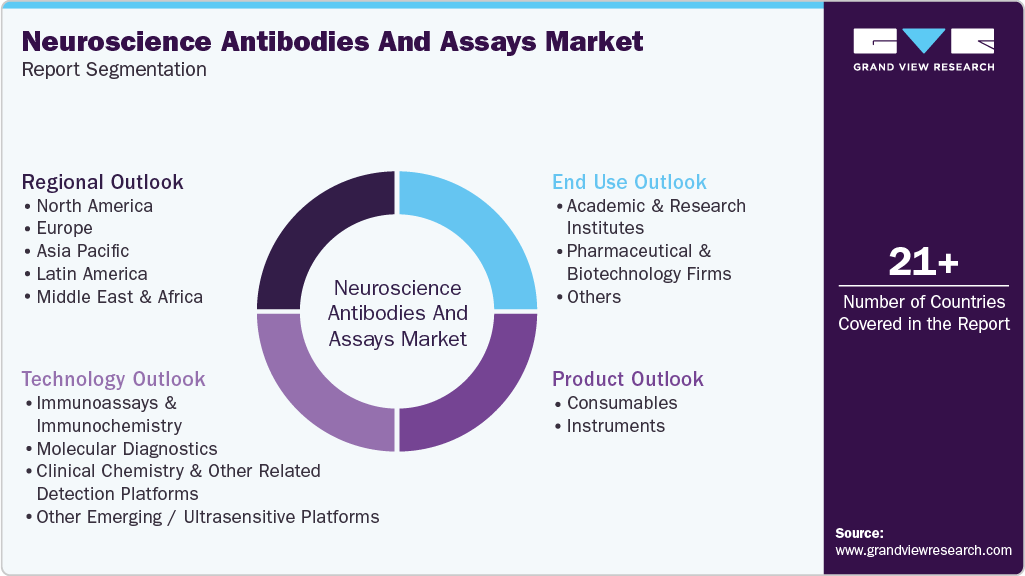
This report forecasts revenue growth and provides an analysis of the latest trends in each of the sub-segments from 2021 to 2033. For this study, Grand View Research has segmented the global neuroscience antibodies and assays market based on product, technology, end use, and region:
-
Product Outlook (Revenue, USD Million, 2021 - 2033)
-
Consumables
-
Instruments
-
-
Technology Outlook (Revenue, USD Million, 2021 - 2033)
-
Immunoassays & immunochemistry
-
Molecular Diagnostics
-
Clinical Chemistry & other related detection platforms
-
Other emerging / ultrasensitive platforms
-
-
End Use Outlook (Revenue, USD Million, 2021 - 2033)
-
Academic & Research Institutes
-
Pharmaceutical & Biotechnology Firms
-
Others
-
-
Regional Outlook (Revenue, USD Million, 2021 - 2033)
-
North America
-
U.S.
-
Canada
-
Mexico
-
-
Europe
-
UK
-
Germany
-
France
-
Italy
-
Spain
-
Denmark
-
Sweden
-
Norway
-
-
Asia Pacific
-
Japan
-
China
-
India
-
Australia
-
South Korea
-
Thailand
-
-
Latin America
-
Brazil
-
Argentina
-
-
Middle East & Africa
-
South Africa
-
Saudi Arabia
-
UAE
-
Kuwait
-
-
Frequently Asked Questions About This Report
b. The global neuroscience antibodies and assays market size was estimated at USD 3.72 billion in 2024 and is expected to reach USD 3.85 billion in 2025.
b. The global neuroscience antibodies and assays market is expected to grow at a compound annual growth rate of 5.41% from 2024 to 2033 to reach USD 5.86 billion by 2033.
b. North America neuroscience antibodies and assays market dominated the global market and accounted for the largest revenue share of 42.29% in 2024.. This is attributable to the large number of end users, such as hospitals, blood banks, and clinical laboratories in the region.
b. Some key players operating in the neuroscience antibodies and assays market include SThermo Fisher Scientific, Bio-Rad Laboratories, Inc, Merck KGaA, F. Hoffmann-La Roche, Cell Signaling Technology, Inc, BioLegend, Inc, Abcam Plc, Rockland Immunochemicals, Inc, GenScript and Santa Cruz Biotechnology, Inc.
b. The market is driven by the rising prevalence of neurological and neurodegenerative disorders globally—conditions like Alzheimer’s, Parkinson’s, multiple sclerosis, neuroinflammation, psychiatric disorders, etc. As populations age, and as diagnostic capabilities improve, there is increasing demand for tools that can detect disease earlier and help in drug discovery


Share this report with your colleague or friend.
Need a Tailored Report?
Customize this report to your needs — add regions, segments, or data points, with 20% free customization.


ISO 9001:2015 & 27001:2022 Certified
We are GDPR and CCPA compliant! Your transaction & personal information is safe and secure. For more details, please read our privacy policy.
Trusted market insights - try a free sample
See how our reports are structured and why industry leaders rely on Grand View Research. Get a free sample or ask us to tailor this report to your needs.













