
- Home
- »
- Medical Devices
- »
-
Neurothrombectomy Devices Market Size Report, 2026-2033GVR Report cover
![Neurothrombectomy Devices Market (2026 - 2033)Report]()
Neurothrombectomy Devices Market (2026 - 2033)
Size, Share & Trends Analysis Report By Product (Clot Retrievers, Aspiration/Suction Devices, Vascular Snares), By End Use (Hospital, Emergency Clinics, Ambulatory Surgical Centers), By Region, And Segment Forecast
Market Size, 2025
$788.0MMarket Estimate, 2026
$840.4MMarket Forecast, 2033
$1,371.4MCAGR, 2026–2033
7.2%Neurothrombectomy Devices Market Summary
The global neurothrombectomy devices market size was valued at USD 788.0 million in 2025 and is projected to grow from USD 840.4 million in 2026 to USD 1,371.4 million by 2033, at a CAGR of 7.2% from 2026 to 2033. The market in Europe dominated with a revenue share of 33.1% in 2025. Increasing incidences of acute ischemic stroke on a global level is majorly driving the market.

Key Market Trends & Insights
- By product: Clot retrievers segment led the market with a 57.6% revenue share in 2025.
- By end use: Hospital segment led the market with the largest revenue share of 70.4% in 2025.
Regional Highlights
- Largest regional market: Europe (33.1% revenue share, 2025)
- By country: The Germany held the largest market share in 2025.
Market Size & Forecast
- Market size in 2025: USD 788.0 Million
- Estimated market size in 2026: USD 840.4 Million
- Projected market size by 2033: USD 1,371.4 Million
- CAGR (2026-2033): 7.2%
Furthermore, increased adoption of unhealthy lifestyles and increasing awareness of the disorder among the population is fueling the market for neurothrombectomy devices. Neurothrombectomy devices are critical in treating ischemic stroke, a commonly occurring phenomenon of stroke among older adults. Modern lifestyle, stress, and dietary habits have been observed to result in the risk of stroke among adults older than 40 years. Stroke is the leading cause of disability among the elderly, with around 65.0% of patients requiring physical assistance/support post an episode of stroke. Approximately 15 million people worldwide are expected to suffer from stroke each year, according to WHO. Since the neurothrombectomy procedure improves functional outcomes and lowers the mortality rate in patients, it is the most preferred treatment for acute ischemic stroke. Thereby boosting market growth over the forecast period.
Stroke is the most common cause of death, followed by heart and cancer diseases worldwide. For instance, according to WHO, in 2016, 15.2 million deaths of the 56.9 million deaths worldwide were due to stroke. Acute Ischemic Stroke (AIS) is the most common form of stroke, caused due to reduced blood supply to the brain, making brain cells die. For instance, according to the U.S. CDC, 87.0% of strokes are classified as ischemic strokes, with the U.S. being the most affected country According to Southwestern Medical Center, about 795,000 people in the U.S. suffer from a stroke every year. Furthermore, according to the National Center for Biotechnology Information (NCBI), strokes occur more commonly in women than men, especially in the elderly population (aged 55 to 65).
There are various initiatives undertaken by the government worldwide to prevent stroke. Some of the examples include the Well-Integrated Screening and Evaluation for Women Across the Nation (WISEWOMAN) program started by the U.S. CDC in three states-North Carolina, Massachusetts, and Arizona-to minimize the risk of stroke & heart diseases in women by promoting a heart-healthy lifestyle. These programs target uninsured women and low-income populations aged 40 to 64 in an attempt to spread awareness about heart diseases and other chronic conditions. From 2008 to 2013, nearly 91% of women who had strokes were offered effective care because of such awareness programs.
Moreover, the Global Stroke Bill of Rights campaign was started in 2014 by the World Stroke Organization for people suffering from stroke. This campaign helps patients avail effective care. In addition, with the help of Paul Coverdell National Acute Stroke Program, which started in 2005, CDC provides support and funding to healthcare departments of states to improve the quality of care for patients suffering from acute stroke disease. Since the initiation of this program, nearly 1 million stroke patients have been treated across 700 hospitals in the U.S. Thus, the abovementioned factors are expected to boost market growth.
Countries such as the U.S., UK, and Germany have witnessed a high incidence of hemorrhagic & ischemic stroke in recent years. According to the CDC, about 140,000 and 795,000 people in the U.S. die and suffer from stroke every year, respectively. In addition, the rising demand for minimally invasive procedures for treating neurovascular diseases further contributes to market growth in these countries. Similarly, the increase in mechanical thrombectomy procedures and the high adoption of technologically advanced products are major factors driving the market growth of German neurothrombectomy devices over the forecast period. For instance, as per an article published by BioMed Central Ltd in 2019, the rate of mechanical thrombectomy procedures has increased from 0.8% to 4.7% from 2010 to 2016. It was also reported that intravenous thrombolysis increased from 8.9% to 14.9% from 2010 to 2016. As intravenous thrombolysis and mechanical thrombectomy are major reasons for triggering acute ischemic stroke, increasing prevalence of these conditions is expected to boost the demand for neurothrombectomy devices, which is expected to drive the market.
Furthermore, the introduction of technologically advanced products and rapid product approval process are factors expected to fuel market growth over the forecast period. Various other technologies are used to develop neurothrombectomy devices for the treatment of AIS and its associated symptoms. For instance, in April 2019, Medtronic announced the launch of its fourth-generation Solitaire X revascularization device, designed for treating AIS. Furthermore, In May 2019, Vesalio received CE mark approval for NeVa-an advanced neurothrombectomy device featuring an optimized delivery system for efficient results. These devices expand on Drop Zone and Smart Maker technologies, introducing features such as distal filters.
Market Dynamics
The neurothrombectomy devices market is driven by the increasing prevalence of acute ischemic stroke, growing awareness of the importance of timely stroke intervention, and the rising adoption of minimally invasive neurovascular procedures. Continuous advancements in stent retrievers, aspiration catheters, and clot retrieval technologies are enhancing procedural effectiveness and improving patient outcomes, supporting broader clinical adoption. The expansion of stroke care centers, improvements in healthcare infrastructure, and favorable treatment guidelines are further driving market growth. The market faces challenges such as the high cost of advanced devices and procedures, stringent regulatory requirements, and the limited availability of skilled neurointerventional specialists in certain regions. Ongoing technological innovation, increased investments in neurovascular care, and expanding access to advanced stroke treatment are expected to create significant opportunities for continued growth in the neurothrombectomy devices market.
The rising prevalence of acute ischemic stroke and other neurovascular disorders is significantly driving the growth of the neurothrombectomy devices market. As the incidence of stroke continues to increase globally due to aging populations, sedentary lifestyles, hypertension, diabetes, obesity, and other cardiovascular risk factors, the demand for effective stroke treatment solutions is growing. Acute ischemic stroke, caused by a blockage in blood vessels supplying the brain, requires rapid intervention to restore blood flow and prevent permanent neurological damage. Neurothrombectomy devices, such as stent retrievers and aspiration catheters, play a critical role in removing clots and improving patient outcomes. The increasing clinical acceptance of mechanical thrombectomy as a standard treatment for eligible stroke patients has further accelerated device adoption across hospitals and specialized stroke centers. In addition, greater awareness of stroke symptoms, improved access to emergency care, and advancements in neurovascular technologies are encouraging the use of thrombectomy procedures.
According to the data published by the Organization for Economic Co-operation and Development in 2025, stroke is a leading cause of death, accounting for 6% of all deaths across OECD countries in 2023. A stroke occurs when the blood supply to a part of the brain is interrupted, leading to necrosis (cell death) in that area. Of the two types of strokes, about 85% are ischemic (caused by clotting) and 15% are hemorrhagic (caused by bleeding).
The high cost of neurothrombectomy devices and procedures is a significant factor restraining the growth of the neurothrombectomy devices market. Advanced thrombectomy systems, including stent retrievers, aspiration catheters, guidewires, and supporting neurovascular equipment, involve substantial procurement and operational costs for healthcare providers. In addition to device expenses, neurothrombectomy procedures require specialized imaging systems, dedicated stroke care infrastructure, and highly trained neurointerventional specialists, further increasing the general treatment cost. These financial burdens can limit the adoption of thrombectomy procedures, particularly in developing regions and healthcare facilities with constrained budgets. Patients may also face affordability challenges in markets where reimbursement coverage is limited or inconsistent, reducing access to advanced stroke treatments. Hospitals may be hesitant to invest in expensive neurointerventional technologies without sufficient patient volumes or financial support.
Continuous advancements in thrombectomy device technologies and the development of next-generation clot retrieval systems present a significant growth opportunity for the neurothrombectomy devices market. Manufacturers are focusing on designing innovative stent retrievers, aspiration catheters, and combined thrombectomy solutions that enhance clot removal efficiency, improve procedural success rates, and reduce the risk of complications. These technological improvements are enabling physicians to treat a broader range of stroke patients with greater precision and effectiveness. In addition, advancements in device flexibility, navigability, and clot-engagement capabilities are helping neurointerventional specialists perform complex procedures more efficiently. As healthcare providers seek solutions that improve patient outcomes and shorten recovery times, demand for advanced neurothrombectomy technologies is expected to increase.
- In July 2025, Inari Medical (Stryker) announced the launch of the next-generation InThrill Thrombectomy System, a purpose-built thrombectomy solution designed for arteriovenous access and small vessel thrombus cases. The second-generation system features increased radial force for improved vessel wall apposition, an offset single-open-mouth design for enhanced clot capture, internal struts for even clot distribution, and a redesigned backend to improve procedural ergonomics and the user experience.
Analyst Perspective
The neurothrombectomy devices market is supported by strong long-term growth drivers, including the rising incidence of acute ischemic stroke, expanding clinical evidence supporting mechanical thrombectomy, and increasing investments in stroke care infrastructure worldwide. As treatment guidelines broaden and access to advanced neurointerventional procedures improves, procedure volumes are expected to rise across both developed and emerging healthcare markets. The key competitive advantage will belong to manufacturers that provide an integrated neurovascular portfolio encompassing access systems, aspiration catheters, stent retrievers, and adjunctive devices, enabling streamlined workflows and stronger physician adoption. Companies that successfully establish comprehensive stroke intervention platforms will be best positioned to capture the growing demand generated by the substantial unmet need for timely and effective stroke treatment.
Product Insights
Based on product, the clot retrievers segment led the market with a 57.6% revenue share in 2025, and aspiration/ suction devices are expected to grow at the fastest CAGR over the forecast period. Clot retriever devices are witnessing significant growth due to the rising prevalence of acute ischemic stroke and an increasing number of product launches by key market players. It is mainly used for removing blood clots from the cerebral arteries. For instance, in 2019, Medtronic announced the launch of Solitaire X revascularization device to remove blood clots in the brain. Furthermore, the use of clot retrievers has increased in elderly patients (aged 55 to 65) due to the growing incidence of stroke. Hence, growing cases of targeted disorder are propelling segment growth.
However, the aspiration/suction devices segment is expected to witness the highest CAGR of 7.3% from 2025 to 2030, owing to its increasing preference for physicians. In addition, these devices are witnessing growth due to a rise in the prevalence of neurological disorders among a large population. These devices vacuum clots out of the blood vessels and accurately re-vascularize large vessel occlusion. In addition, the growing use of the latest technology for treating stroke is a factor in increasing the overall growth of aspiration devices. In September 2018, Penumbra launched advanced Penumbra JET 7 and Penumbra JET D Reperfusion catheters featuring aspiration technology in the stroke thrombectomy segment. These devices are designed especially for physicians to enable extraction of thrombus safely through delivery of deep vacuum aspiration power of the penumbra engine. Thus, ongoing product launches are expected to increase the adoption of aspiration devices.
End Use Insights
Based on end use, the hospital segment led the market with the largest revenue share of 70.4% in 2025, and ambulatory surgical centers are expected to grow at the fastest CAGR over the forecast period. Hospitals are widely preferred by patients compared to emergency clinics due to improved healthcare facilities and the availability of advanced equipment. In addition, patients’ inclination towards the hospital since the patient gets treatment within eight hours of the onset of his symptoms is fueling segment growth.Increasing incidence of acute ischemic diseases and growing awareness about neurothrombectomy devices are factors expected to boost segment growth. Stroke is the leading cause of death and disability in the U.S. & Europe. Reperfusion therapy using neurothrombectomy devices is the preferred treatment for acute ischemic stroke. Hospitals remain the preferred choice for the treatment of acute ischemic disease than clinics as this disease is required to be treated within 8 hours of symptom onset. Thus, the increasing prevalence of stroke is driving segment growth.

The ambulatory surgical centers (ASCs) segment is expected to grow at the highest CAGR of 7.6% during the forecast period. Since more than half of the outpatient surgeries are performed in ASCs, including acute ischemic disease surgical treatment, the treatment for this condition is required to be performed within 6 hours of symptom onset. In addition, a shorter waiting time offered by ASCs to patients is expected to drive the segment at a significant rate during the forecast period. Further, increasing demand for minimally invasive surgical procedures, introduction of technologically advanced products are expected to boost the neurothrombectomy devices market. For instance, in September 2018, Acandis GmbH announced CE mark approval for ACCERO Stent designed for use with embolization materials for treatment of intracranial aneurysms. It is the new self-expanding braided stent, featured by a smooth implant surface and superior wall apposition. Such advancements are expected to boost the segment growth over the forecast period.
Regional Insights
The North America neurothrombectomy devices market accounted for the highest share in 2024 and is expected to maintain this lead during the forecast period. Major factors contributing to the growth are the presence of key regional manufacturers, increased R&D investments, and a rise in government initiatives. For instance, in February 2024, the Leona M. and Harry B. Helmsley Charitable Trust and the American Heart Association revealed an investment of USD 5.05 million in South Dakota and USD 4.7 million in Minnesota under the Association’s Mission: Lifeline Stroke initiative to strengthen the full spectrum of stroke care across each state. Such initiatives undertaken by government authorities to improve stroke care are anticipated to propel regional market growth in the coming years.
U.S. Neurothrombectomy Devices Market Trends
Compared to other countries, the reimbursement policy in the U.S. neurothrombectomy devices market is favorable for providers and patients. The Centers for Medicare & Medicaid Services (CMS) is the regulatory body that oversees the reimbursement for medical devices and procedures in the U.S. CMS provides payment for inpatient stays through the Inpatient Prospective Payment System (IPPS), reimbursing acute care hospitals for each Medicare patient or case treated.
Canada Neurothrombectomy Devices Market Trends
The neurothrombectomy devices market in Canada is anticipated to be driven by the rising investment and funding for stroke care and the increasing incidence of stroke. The country's government is taking initiatives to improve access to stroke care. For instance, in September 2024, Heart & Stroke and Brain Canada, in partnership with the Government of Canada, invested USD 7.26 million to establish two new national research networks for brain and heart health.
Europe Neurothrombectomy Devices Market Trends
Europe dominated the neurothrombectomy devices market with the largest revenue share of 33.1% in 2025. The region is expected to witness the highest CAGR of 7.5% from 2025 to 2033, owing to the increasing number of patients suffering from acute ischemic stroke. Europe is one of the most advanced regions globally, with innovative technologies and infrastructure that result in significant healthcare facilities and patient care. In addition, an increase in investments by government & private institutions is also expected to drive the market growth in this region. Moreover, increasing approvals for neurothrombectomy devices and the launch of new products by manufacturers in the region are expected to boost the market. Increasing government and NGO awareness initiatives worldwide are further adding to the segment's growth. For instance, in 2018, the Hospital Alliance for Europe (SAFE), with members from 12 countries and a non-profit organization, joined Boehringer’s Ineglheim’s (BI) Angel’s Initiative for providing critical information to stroke patients.

UK Neurothrombectomy Devices Market Trends
The UK neurothrombectomy devices market is anticipated to witness considerable growth over the forecast period due to the increasing burden of stroke in the country. According to the data published by the House of Commons, UK Parliament, more than 100,000 individuals suffer a stroke, and it is the fourth most significant cause of death in the UK.
Germany Neurothrombectomy Devices Market Trends
The neurothrombectomy devices market in Germany held the largest share of 22.9% in the Europe region in 2025. The Germany neurothrombectomy devices market is anticipated to witness significant growth in the coming years due to the rising adoption of mechanical thrombectomy procedures nationwide. For instance, A study published by the National Library of Medicine in January 2024 found that mechanical thrombectomy rates increased from 7.1% in 2019 to 8.4% in 2021, with the number of thrombectomy centers growing by 14.8% during the same period. This rise in procedure is expected to drive demand for neurothrombectomy devices in the coming years.
Asia Pacific Neurothrombectomy Devices Market Trends
The Asia Pacific neurothrombectomy devices market is majorly driven by the increasing incidence of acute ischemic stroke. In addition, emerging economies such as China, Japan, South Korea, and India are expected to grow considerably over the forecast period. Several local players in China and Japan may also boost the market growth.
Japan Neurothrombectomy Devices Market Trends
The growing geriatric population is one of the major driving factors for Japan neurothrombectomy devices market growth. According to the Al Jazeera Media Network, in September 2024, Japan's elderly population reached an all-time high of 36.25 million, with individuals aged 65 and over now making up nearly one-third of the country's total population, according to government data. The geriatric population is at a higher risk of various neurological diseases and disabilities. This factor may propel the demand for neurothrombectomy devices, leading to market growth.
China Neurothrombectomy Devices Market Trends
China neurothrombectomy devices market is expected to witness considerable growth over the forecast period owing to the increase in cases of acute ischemic stroke and the presence of several local & key players in the market. For instance, as per a report by NIH, by 2050, it is estimated that 4.07% of China's population will have experienced a stroke, representing a 101.49% increase compared to the 2.02% recorded in 2019.
Latin America Neurothrombectomy Devices Market Trends
The neurothrombectomy devices market in Latin America is anticipated to witness a moderate growth rate over the forecast period. Increasing awareness about treating acute ischemic stroke and increasing healthcare expenditure in Latin America are primary factors expected to drive the market over the forecast period. In addition, increasing healthcare expenditure in Brazil and the gradual adoption of advanced healthcare facilities may positively impact the market.
Brazil Neurothrombectomy Devices Market Trends
The Brazil neurothrombectomy devices market is anticipated to witness moderate growth over the forecast period. The increasing incidence of acute ischemic stroke is a major factor boosting the market growth. For instance, as per a report published by NCBI in 2022, in Brazil, acute ischemic stroke was the most prevalent form of stroke, with one-third of the population of Latin America suffering from stroke in Brazil.
Middle East & Africa Neurothrombectomy Devices Market Trends
The neurothrombectomy devices market in Middle East & Africa (MEA) region is anticipated to witness moderate growth over the forecast period. Middle Eastern countries such as Saudi Arabia, South Africa, and the United Arab Emirates (UAE) are some of the prospering economies. Increasing healthcare expenditure and gradually adopting technologically advanced products in these countries are expected to promote market growth.
Key Neurothrombectomy Devices Company Insights
The key players focus on adopting growth strategies, such as collaborations, partnerships, mergers, and new product launches. Market players are focused on adopting strategies such as marketing and promotions, and broadening product portfolios are widely used by companies to increase the availability and outreach of their product offerings.
Key Neurothrombectomy Devices Companies:
The following key companies have been profiled for this study on the neurothrombectomy devices market.
-
Medtronic
-
Stryker Corporation
-
Acandis GmbH
-
Phenox GmbH
-
Penumbra Inc.
-
Vesalio
Competitive Benchmarking
Category
Operating Strategies
Competitive Edge
Weakness
Established Players (Medtronic, Stryker, Penumbra Inc. (Boston Scientific Corporation), MicroPort Scientific Corporation, Johnson & Johnson, Terumo Corporation)
- Focus on developing advanced neurothrombectomy devices, generating clinical evidence, and obtaining regulatory approvals to strengthen their product portfolios and expand into high-growth markets.
- Companies leverage global distribution networks, physician training initiatives, acquisitions, and collaborations with healthcare providers to increase market penetration and drive adoption of neurothrombectomy procedures.
- Established companies benefit from extensive distribution networks, long-standing relationships with healthcare providers, and strong brand credibility, enabling broader market reach and higher adoption of neurothrombectomy devices.
- These players offer a wide range of neurovascular solutions supported by strong clinical data, continuous innovation, and regulatory approvals, strengthening their competitive position and customer confidence.
- Generate a significant portion of revenue from developed regions, making growth vulnerable to market saturation, pricing pressures, and reimbursement constraints.
- Large-scale operations and extensive product portfolios can slow decision-making, increase operational costs, and reduce agility in responding to emerging technologies and competitive innovations.
Emerging Players (Acandis GmbH, Vesalio, NeuroSafe Medical Co., Ltd., Rapid Medical)
- Prioritize the development of differentiated neurothrombectomy technologies that target unmet clinical needs, improve procedural efficiency, and enhance patient outcomes.
- Companies pursue partnerships with hospitals, research institutions, and distributors while securing regulatory approvals to accelerate commercialization and expand their presence in key neurovascular markets.
- Emerging companies can rapidly develop and commercialize novel neurothrombectomy technologies, allowing them to address unmet clinical needs and respond quickly to evolving market demands.
- By concentrating on specialized neurovascular solutions, these players can differentiate their offerings, build expertise in targeted applications, and establish a strong position in specific segments of the neurothrombectomy market.
- Emerging companies have smaller distribution networks, lower brand recognition, and limited access to healthcare providers compared with established market leaders.
- Dependence on external funding, lengthy regulatory approval processes, and limited resources for large-scale clinical studies can restrict growth and delay market expansion.
Recent Developments
-
In July 2024, Vesalio introduced the NeVa NET 4.0 mm, designed for treating acute ischemic stroke caused by large vessel occlusion. This launch comes from promising study results published in the Journal of Vascular and Interventional Neurology and NeuroInterventional Surgery.
-
In September 2024, MicroVention, Inc., a global leader in neurovascular innovation and a subsidiary of Terumo Corporation, officially rebranded as Terumo Neuro. This name change marks a significant milestone in the company's evolution, reaffirming its dedication to developing and delivering cutting-edge innovations in neurovascular care.
Neurothrombectomy Devices Market Report Scope
Report Attribute
Details
Market size in 2025
USD 788.0 million
Estimated market size in 2026
USD 840.4 million
Projected market size by 2033
USD 1,371.4 million
Growth rate
CAGR of 7.2% from 2026 to 2033
Base year for estimation
2025
Historical data
2021 - 2024
Forecast period
2026 - 2033
Quantitative units
Revenue in USD million/billion and CAGR from 2026 to 2033
Report coverage
Revenue forecast, company ranking, competitive landscape, growth factors, and trends
Segments covered
Product, end use, region
Regional scope
North America; Europe; Asia Pacific; Latin America; MEA
Country scope
U.S.; Canada; Mexico; Germany; UK; France; Italy; Spain; Norway; Denmark; Sweden; Russia; Iceland; Finland; China; Japan; India; South Korea; Australia; Thailand; Singapore; Brazil; Argentina; Saudi Arabia; South Africa; UAE; Kuwait; Israel
Key companies profiled
Medtronic, Stryker, Acandis GmbH, Penumbra Inc. (Boston Scientific Corporation), Vesalio, NeuroSafe Medical Co., Ltd., MicroPort Scientific Corporation, Johnson & Johnson, Terumo Corporation, Rapid Medical, among others
Customization scope
Free report customization (equivalent up to 8 analysts' working days) with purchase. Addition or alteration to country, regional & segment scope.
Pricing and purchase options
Avail customized purchase options to meet your exact research needs. Explore purchase options
Global Neurothrombectomy Devices Market Report Segmentation
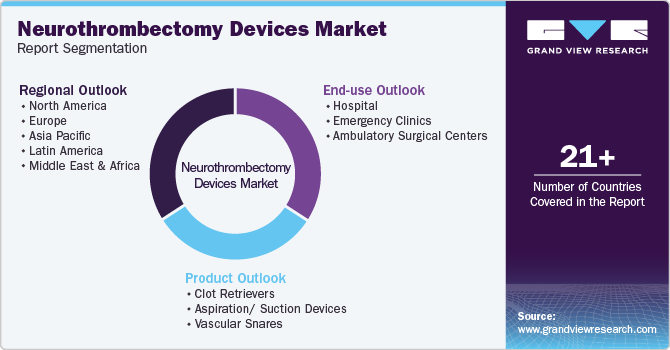
This report forecasts revenue growth and provides an analysis on the latest trends in each of the sub-segments from 2021 to 2033. For this study, Grand View Research has segmented the global neurothrombectomy devices market report on the basis of product, end use and region:
-
Product Outlook (Revenue USD Million; 2021 - 2033)
-
Clot Retrievers
-
Aspiration/ Suction Devices
-
Vascular Snares
-
-
End Use Outlook (Revenue USD Million; 2021 - 2033)
-
Hospital
-
Emergency Clinics
-
Ambulatory Surgical Centers
-
-
Regional Outlook (Revenue, USD Million; 2021 - 2033)
-
North America
-
U.S.
-
Canada
-
Mexico
-
-
Europe
-
UK
-
Germany
-
France
-
Italy
-
Spain
-
Denmark
-
Sweden
-
Norway
-
-
Asia Pacific
-
Japan
-
China
-
India
-
Australia
-
South Korea
-
Thailand
-
-
Latin America
-
Brazil
-
Argentina
-
Colombia
-
-
Middle East and Africa (MEA)
-
South Africa
-
Saudi Arabia
-
UAE
-
Kuwait
-
-
Research Methodology
The neurothrombectomy devices market figures in this report are based on a proven research process that combines executive interviews with secondary research from proprietary databases, company filings, and recognized regulatory and institutional sources. Market size is built through value-chain sizing - reconciling supply-side and demand-side estimates - and triangulated with bottom-up and top-down approaches. Every estimate passes multiple levels of expert validation before publication, with each neurothrombectomy devices segment quantified using the revenue-capture definitions in the table below.
Segment Definition
Segment - Product
Revenue capture definition
Clot Retrievers
This segment captures revenue from mechanical, stent-like mesh frameworks engineered to engage and trap thrombi physically. Demand is driven by their widespread use in mechanical thrombectomy procedures for acute ischemic stroke, supported by clinical effectiveness, physician preference, and adoption across neurointerventional centers.
Aspiration/ suction devices
Revenue in this category is generated from high-flow vacuum pumps, specialized aspiration tubing, and direct-draw large-bore catheters used in mechanical thrombectomy procedures. Market growth is supported by increasing adoption in acute ischemic stroke treatment, expanding procedural volumes, and integration within hospital stroke centers and neurointerventional facilities.
Vascular Snares
This segment includes low-volume, high-value micro-engineered nitinol loops used for foreign body and clot retrieval during neurointerventional procedures. Revenue is generated through single-use device sales, specialized inventory stocking programs for interventional procedures, and institutional distribution agreements supporting advanced stroke and neurovascular interventions.
Estimation Model
Epidemiology Layer
Eligibility & Access Layer
Adoption Layer
Monetisation Layer
Who has a relevant condition?
Who can be treated with neurothrombectomy?
What devices are actively used?
What is the revenue generated?
Identify the global patient population with acute ischemic stroke (AIS) caused by large vessel occlusion (LVO) in anterior circulation who are potential candidates for neurothrombectomy. This includes incidence and prevalence estimates across age, geographies, and healthcare settings.
Apply clinical eligibility criteria (e.g., imaging confirmation, time window, ASPECTS score, comorbidities) and healthcare access factors (e.g., reimbursement, specialist coverage, interventional capacity) to estimate the eligible and reachable patient pool for neurothrombectomy.
Apply neurothrombectomy adoption rates across eligible patients based on procedure guidelines, physician preference, device availability, reimbursement environment, and clinical adoption trends to estimate the number of procedures performed using approved devices.
Multiply procedures by the average selling price (ASP) of neurothrombectomy devices (e.g., stent retrievers, aspiration catheters, access devices, and ancillary services, maintenance, and disposable revenue where applicable) to derive total market revenue.
Delivered Customizations
This report has been delivered with the following In-depth customizations
Client Request
Customization Delivered
Value Adds
Historical & Forecast Revenue and Volume Analysis (2021–2035)
Developed a comprehensive market sizing model covering annual revenue (USD Million) and procedure/device volume (Units) trends from 2021 to 2035 across major geographies, device categories, and end-use settings.
Enables stakeholders to assess historical market evolution, quantify future growth opportunities, benchmark penetration rates, and support long-term strategic planning and investment decisions.
Stroke Epidemiology & Procedure Volume Assessment
Conducted a detailed analysis of acute ischemic stroke incidence, large vessel occlusion (LVO) prevalence, treatment eligibility criteria, patient flow, and neurothrombectomy procedure volumes across key regions.
Helps stakeholders identify addressable patient populations, understand treatment gaps, and evaluate regional expansion opportunities driven by evolving stroke care pathways.
Technology Adoption & Competitive Landscape Analysis
Evaluated adoption trends across stent retrievers, aspiration catheters, access systems, and adjunctive devices, including physician preferences, hospital purchasing behavior, reimbursement dynamics, and competitive benchmarking.
Provides insights into technology shifts, market share dynamics, competitive positioning, and emerging innovation trends influencing future market growth.
Frequently Asked Questions About This Report
The global neurothrombectomy devices market size was estimated at USD 788.0 million in 2025 and is expected to reach USD 840.4 million in 2026.
The global neurothrombectomy devices market is expected to grow at a compound annual growth rate of 7.2% from 2026 to 2033 to reach USD 1,371.4 million by 2033.
Europe dominated the neurothrombectomy devices market, accounting for 33.1% in 2025. This is attributable to the increasing number of patients suffering from acute ischemic stroke, increasing approvals for neurothrombectomy devices, and the launch of new products by manufacturers.
Some of the key players operating in the neurothrombectomy devices market include Medtronic, Stryker, Acandis GmbH, Penumbra Inc. (Boston Scientific Corporation), Vesalio, NeuroSafe Medical Co., Ltd., MicroPort Scientific Corporation, Johnson & Johnson, Terumo Corporation, Rapid Medical, among others.
Key factors driving the neurothrombectomy devices market include the increasing prevalence of Acute Ischemic Stroke (AIS), the rising adoption of unhealthy lifestyles, and the growing number of initiatives worldwide.
The clot retrievers segment led with a 57.6% revenue share in 2025, while aspiration/ suction devices are the fastest-growing segment.
The hospital segment led with a 70.4% revenue share in 2025, while ambulatory surgical centers are the fastest-growing segment.
Opportunities in the neurothrombectomy devices market include expanding access to stroke care in emerging economies, increasing adoption of advanced thrombectomy technologies, growing stroke awareness, and the development of next-generation clot retrieval and aspiration systems.
Key restraints in the neurothrombectomy devices market include the high cost of neurothrombectomy procedures and devices, limited availability of specialized stroke centers, shortage of trained neurointerventionalists, and regulatory challenges associated with product approvals and market entry.
About the Author(s)
Medical Devices Research Team
Healthcare · Medical DevicesThis report was authored by the medical devices research team at Grand View Research - comprising two research analysts, one senior research analyst, and one industry expert - with specialized expertise in the medical devices segment of the healthcare industry. All findings are based on proprietary healthcare databases, executive interviews, and regulatory analysis, subject to internal peer review prior to publication.
Last Updated:
Speak to Analyst

Need a Tailored Report?
Customize this report to your needs — add regions, segments, or data points, with 20% free customization.
Or view our licence options:


ISO 9001:2015 & 27001:2022 Certified
We are GDPR and CCPA compliant! Your transaction & personal information is safe and secure. For more details, please read our privacy policy.












