
- Home
- »
- Beauty & Personal Care
- »
-
Niacinamide Beauty Products Market Size Report 2026-2033GVR Report cover

Niacinamide Beauty Products Market (2026 - 2033)
Size, Share & Trends Analysis Report By Product (Serums, Emulsions), By Concentration (Below 5%, 10% to 15%), By End-use (Women, Men), By Distribution Channel (Supermarkets/Hypermarkets), By Region, And Segment Forecasts
Market Size, 2025
$624.3MMarket Estimate, 2026
$661.3MMarket Forecast, 2033
$947.8MCAGR, 2026–2033
5.3%Niacinamide Beauty Products Market Summary
The global niacinamide beauty products market size was valued at USD 624.3 million in 2025 and is projected to grow from USD 661.3 million in 2026 to USD 947.8 million by 2033, at a CAGR of 5.3% from 2026 to 2033. Asia Pacific dominated the market, accounting for a revenue share of 45.5% in 2025. Niacinamide has seen a remarkable surge in popularity within the beauty industry, becoming a staple in many skincare routines.
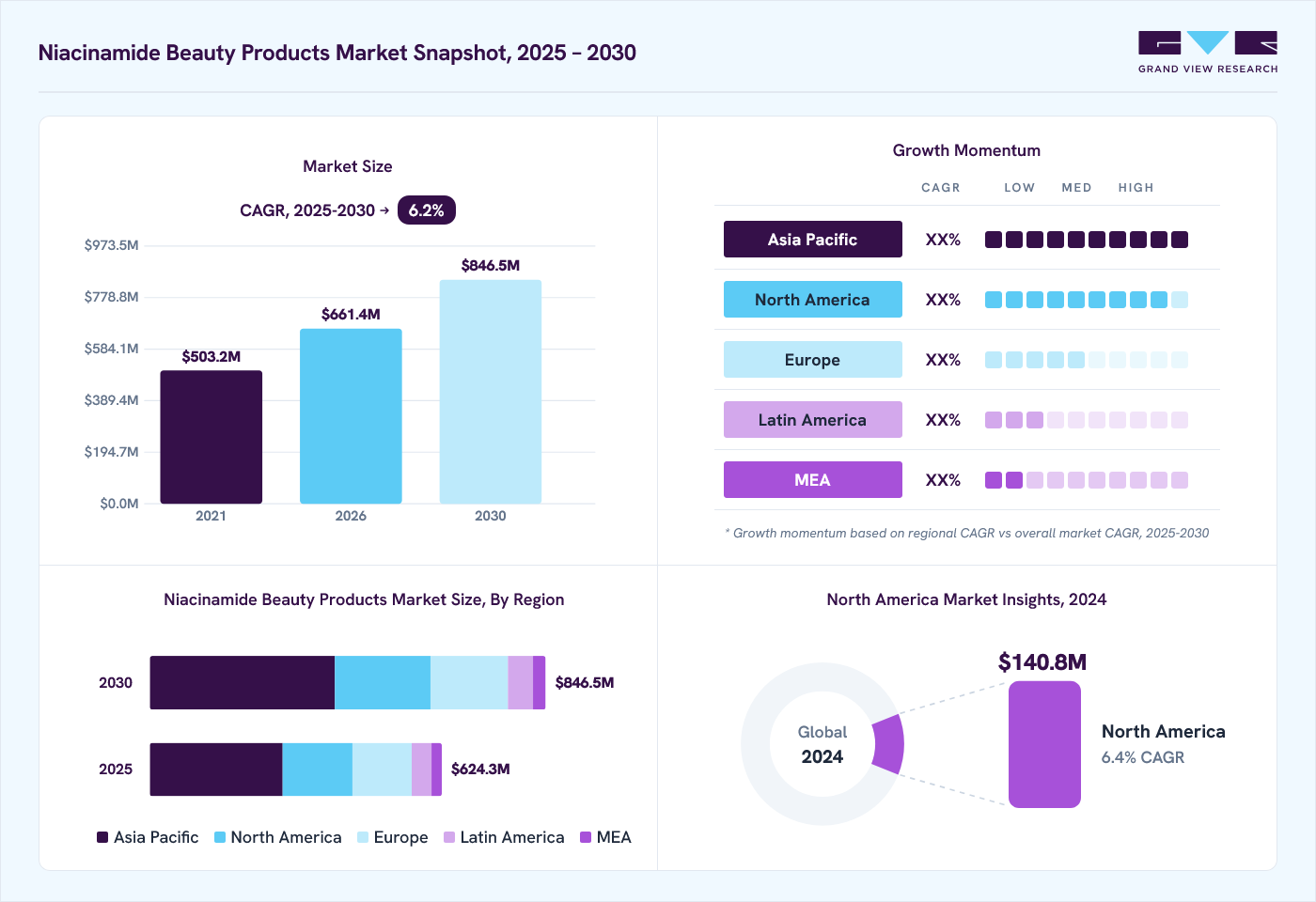 Source: Grand View Research, IR Documents, Primary Interviews, Paid DatabasesTo learn more about this report,
 Download Free Sample Report
Key Market Trends & Insights
- By product: Serum segment dominated the market, with a revenue share of 60.5% in 2025.
- By concentration: Below 5% concentration segment held the largest market share of 42.5% in 2025.
- By end use: Women's segment held the largest revenue share of 66.7% in 2025.
- By distribution channel: Supermarkets /hypermarkets segment accounted for the largest revenue share of 33.7% in 2025.
Regional Highlights
- Largest regional market: Asia Pacific (45.5% revenue share, 2025)
- By country: China held the largest market share in 2025.
Market Size & Forecast
- Market size in 2025: USD 624.3 Million
- Estimated market size in 2026: USD 661.3 Million
- Projected market size by 2033: USD 947.8 Million
- CAGR (2026-2033): 5.3%
Three ways to get this report
Buy it, customize it, or ask a question.Ask an Analyst
Analyst response in 1 business day
- AccessReport author, directly
- Reply timeWithin 1 working day
- No sales callDirect answer only
- FormatEmail reply
- CostFree, no cost
Get the Full Report
What the study covers
- FormatsPDF · Excel · Dashboard
- Timeline2026–2033 annual, 2025 base
- Coverage20+ countries, 5 regions
- Companies10+ key players profiled
Customize the Report
20% free customization
- IncludeCountries, segments, points
- TailorTo your product definition
- ExtendDeeper competitor detail
- OrA fully bespoke study
- Turnaround5–10 working days
This rise can be attributed to its versatile benefits for various skin concerns, which have been increasingly validated by both scientific research and consumer experiences. The ingredient’s effectiveness in addressing issues such as acne, hyperpigmentation, and aging has led to its inclusion in a wide range of products, from serums to creams. Niacinamide, also known as vitamin B3, is celebrated for its anti-inflammatory, antioxidant, and skin-strengthening properties. Its ability to improve the skin barrier function, reduce redness, and regulate oil production makes it a multifaceted ingredient suitable for all skin types. The trend towards multifunctional skincare products has further boosted niacinamide beauty product’s popularity, as consumers seek efficient and effective solutions to multiple skin concerns.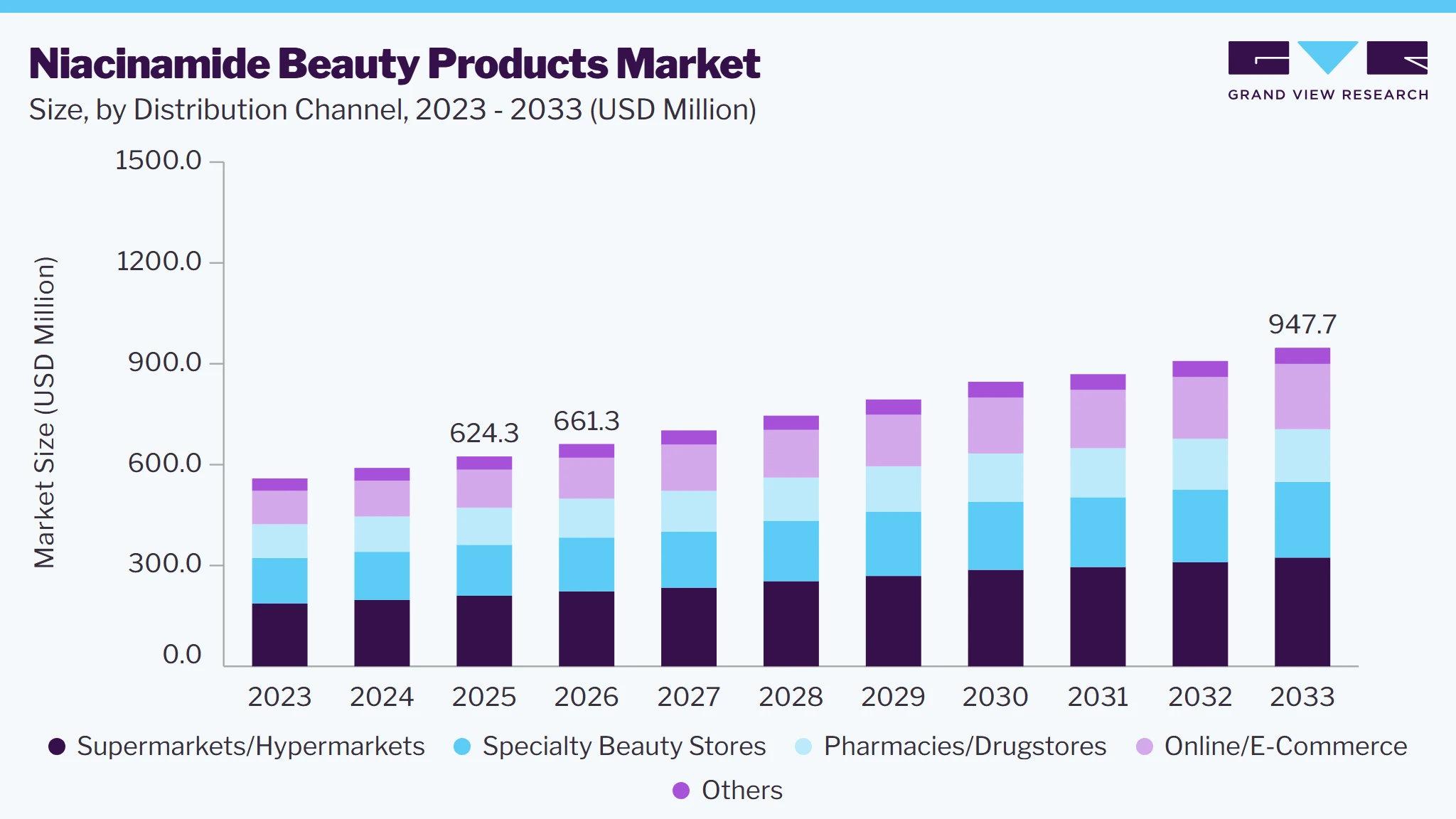 To learn more about this report, Download Free Sample Report
One significant trend is the formulation of higher-concentration niacinamide products. Brands like Paula’s Choice have introduced products with concentrations as high as 20%, aimed at providing more potent effects for issues such as severe hyperpigmentation and advanced signs of aging. This trend reflects a broader consumer interest in high-performance skincare ingredients that offer visible results.
Moreover, the rise of skincare layering and sophisticated routines has also contributed to the popularity of niacinamide. Its compatibility with other active ingredients like retinoids, hyaluronic acid, and antioxidants allows it to be easily integrated into existing skincare regimens without irritating. This flexibility has made it a favorite among both skincare enthusiasts and dermatologists.
Brands have been actively promoting niacinamide through educational campaigns, emphasizing its scientifically-backed benefits. Companies like Kiehl’s and Paula’s Choice provide detailed guides and resources to educate consumers on how to incorporate niacinamide into their routines effectively. This approach not only builds consumer trust but also encourages informed usage, maximizing the benefits of niacinamide.
Another notable trend is the inclusion of niacinamide in more targeted treatments and hybrid products. For example, niacinamide-infused sunscreens, primers, and even makeup products have emerged, offering multifunctional benefits. These innovations reflect the industry's response to consumer demand for products that do more than just one job, streamlining beauty routines without compromising efficacy.
Social media and beauty influencers have also played a crucial role in the rise of niacinamide. Platforms like Instagram, TikTok, and YouTube are filled with testimonials and reviews showcasing the transformative effects of niacinamide on various skin types and concerns. As consumer awareness and demand for effective, science-backed skincare continue to grow, niacinamide is likely to maintain its position as a cornerstone ingredient in the beauty products market.
Market Dynamics
Niacinamide beauty products are witnessing strong consumer adoption as they offer multiple skincare benefits through a single active ingredient. These products are widely used to address concerns such as acne, enlarged pores, hyperpigmentation, uneven skin tone, redness, excess oil production, and signs of aging. Available across formats including serums, creams, cleansers, and emulsions, niacinamide-based formulations have gained popularity due to their compatibility with various skin types and their ability to support skin barrier health. The growing consumer preference for ingredient-focused skincare, coupled with rising awareness of scientifically backed cosmetic ingredients through dermatologists, beauty influencers, and digital platforms, is expected to continue driving growth in the niacinamide beauty products market. Furthermore, increasing demand for multifunctional skincare solutions and premium self-care products is supporting sustained market expansion.
The growing consumer preference for ingredient-led skincare products is a key factor driving the niacinamide beauty products market. Consumers are becoming increasingly informed about active ingredients and their specific skin benefits, leading to greater demand for products that offer targeted and scientifically supported results. Niacinamide has gained significant popularity due to its ability to address multiple skin concerns, including acne, hyperpigmentation, enlarged pores, uneven skin tone, excess oil production, and early signs of aging. Its suitability for a wide range of skin types, including sensitive skin, has further expanded its consumer appeal.
The rising influence of dermatologists, skincare professionals, beauty influencers, and social media platforms has increased awareness of niacinamide’s efficacy, encouraging adoption across different age groups. In addition, consumers are increasingly seeking multifunctional skincare solutions that simplify routines while delivering visible results. As demand for evidence-based skincare and preventive skin health continues to grow, manufacturers are expanding niacinamide-based product offerings across serums, creams, cleansers, and moisturizers, supporting sustained market growth worldwide.
The potential for skin irritation and adverse reactions associated with niacinamide-based formulations remains a key restraint for the niacinamide beauty products market. Although niacinamide is generally considered a well-tolerated skincare ingredient, products containing higher concentrations may cause redness, itching, dryness, burning sensations, or skin sensitivity in some users, particularly those with highly reactive or compromised skin barriers. As consumer demand for high-potency active ingredients increases, some manufacturers have introduced formulations with elevated niacinamide concentrations, which may not be suitable for all skin types.
In addition, the lack of standardized guidelines regarding optimal niacinamide concentrations across cosmetic products can create confusion among consumers and increase the risk of improper product selection. Growing consumer awareness of ingredient safety and product efficacy has also led to greater scrutiny of skincare formulations, making users more cautious when incorporating new active ingredients into their routines. Negative experiences, product misuse, and concerns regarding compatibility with other skincare actives may discourage repeat purchases and limit adoption among certain consumer groups. These challenges could restrain market growth, particularly in regions where skincare education and dermatological guidance remain limited.
The growing demand for personalized skincare and multifunctional beauty products is creating significant growth opportunities for the niacinamide beauty products market. Consumers are increasingly seeking skincare solutions tailored to their specific skin concerns, including acne, hyperpigmentation, uneven skin tone, enlarged pores, sensitivity, and signs of aging. This trend is encouraging beauty brands to develop targeted niacinamide-based formulations that cater to diverse skin types and individual skincare needs.
Advancements in skin analysis technologies, artificial intelligence-powered beauty platforms, and online skincare consultations are further supporting the adoption of personalized skincare recommendations. These tools enable consumers to identify suitable products based on their skin conditions and concerns, improving product effectiveness and customer satisfaction. In addition, the rising preference for multifunctional products that combine niacinamide with ingredients such as hyaluronic acid, peptides, ceramides, and vitamin C is expanding product innovation opportunities. Growing consumer interest in preventive skincare, premium beauty products, and science-backed formulations is also encouraging brands to launch customized and high-performance niacinamide offerings. As skincare routines become increasingly focused on efficacy and personalization, manufacturers are expected to benefit from expanding demand across both developed and emerging beauty markets.
Analyst Perspective
The niacinamide beauty products market benefits from rising consumer demand for science-backed, multifunctional skincare solutions that deliver visible results. As ingredient awareness increases, niacinamide has emerged as a core active ingredient due to its ability to address multiple concerns, including acne, pigmentation, oil control, and skin barrier health. The key competitive advantage will belong to brands that combine clinical credibility, innovative formulations, and personalized skincare experiences. Companies that build strong consumer trust through efficacy, transparency, and continuous product innovation are expected to capture long-term market growth.
Product Insights
Based on product, the serum product segment led the market with the largest revenue share of 60.5% in 2025. Niacinamide serums are highly popular due to their high concentration and quick absorption, making them effective for targeting specific skin concerns like acne, hyperpigmentation, and signs of aging. The trend towards multi-functional, high-performance skincare products has bolstered their demand.
The niacinamide emulsions are expected to grow at the fastest CAGR over the forecast period. Emulsions, known for their lightweight texture and hydrating properties, are gaining popularity among consumers who prefer a lighter feel on the skin. They are particularly favored in K-beauty routines for their versatility and gentle formulation. The most popular brands that offer niacinamide emulsions are Cosrx Advanced Snail 96 Mucin Power Essence, and Missha Time Revolution The First Treatment Essence among others.
Concentration Insights
Based on concentration, below 5% concentration segment led the market with the largest revenue share of 42.5% in 2025. Products with less than 5% concentrations are ideal for sensitive skin and beginners. These formulations focus on long-term skin health and maintenance, providing gentle but effective results without irritating.
Niacinamide beauty products with concentrations of 5% to 10% are projected to grow at a CAGR of 6.7% from 2024 to 2033. Products in this concentration range are widely used for their balance of efficacy and tolerability. They are effective for treating moderate skin concerns like uneven texture, mild hyperpigmentation, and early signs of aging.
End-use Insights
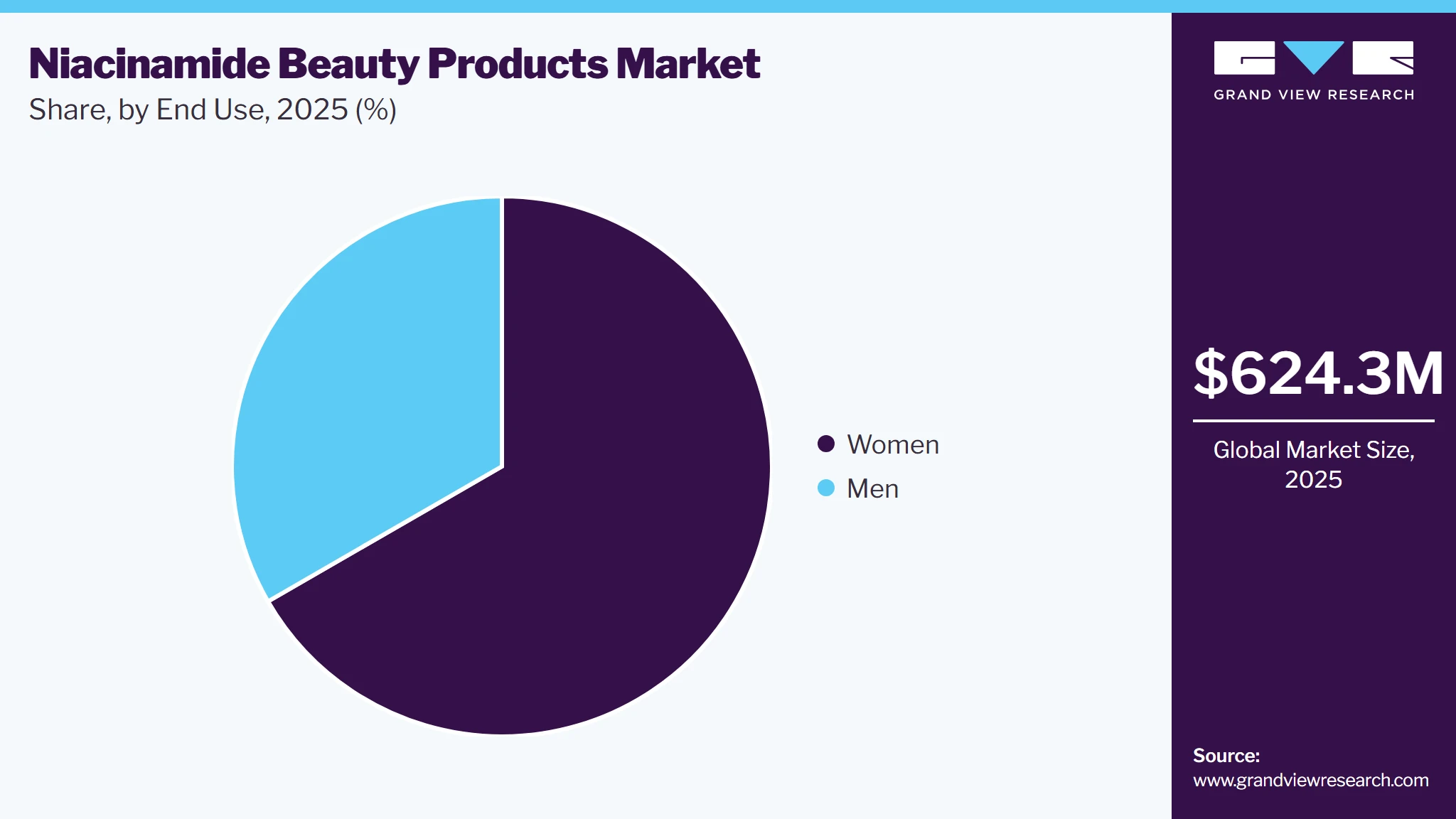
Based on end use, the women's segment led the market with the largest revenue share of 66.7% in 2025. Women predominantly use niacinamide products for anti-aging, brightening, and acne-fighting benefits. The demand is driven by the desire for multi-functional skincare solutions that address multiple concerns simultaneously.
 To learn more about this report, Download Free Sample Report
The men's segment is projected to grow at a CAGR of 6.9% from 2024 to 2033. Men's skincare routines are increasingly incorporating niacinamide for its oil-regulating and anti-inflammatory properties. The focus is on simple, effective solutions that integrate easily into daily grooming habits.
Distribution Channel Insights
Based on the distribution channel, the supermarkets /hypermarkets segment led the market with the largest revenue share of 33.7% in 2025. Supermarkets and hypermarkets offer the convenience of in-person shopping, allowing consumers to physically examine products. This channel benefits from impulse purchases and the wide availability of affordable options.
The online segment is estimated is projected to grow at a CAGR of 7.4% from 2024 to 2033. Online sales have surged due to the ease of access to a wide range of products, detailed reviews, and attractive discounts. The pandemic has further accelerated this trend, with consumers preferring the convenience and safety of online shopping.
Regional Insights
The niacinamide beauty products market in North America held 23% of the global revenue in 2023. The market is driven by high consumer awareness and demand for innovative skincare solutions. The presence of major brands and extensive R&D activities contribute to the growth.
U.S. Niacinamide Beauty Products Market Trends
The U.S. niacinamide beauty products market accounted for a revenue share of around 63% in the year 2023. As a key player in the North American market, the U.S. shows robust demand for niacinamide products, with consumers prioritizing advanced, multi-functional skincare routines.
Asia Pacific Niacinamide Beauty Products Market Trends
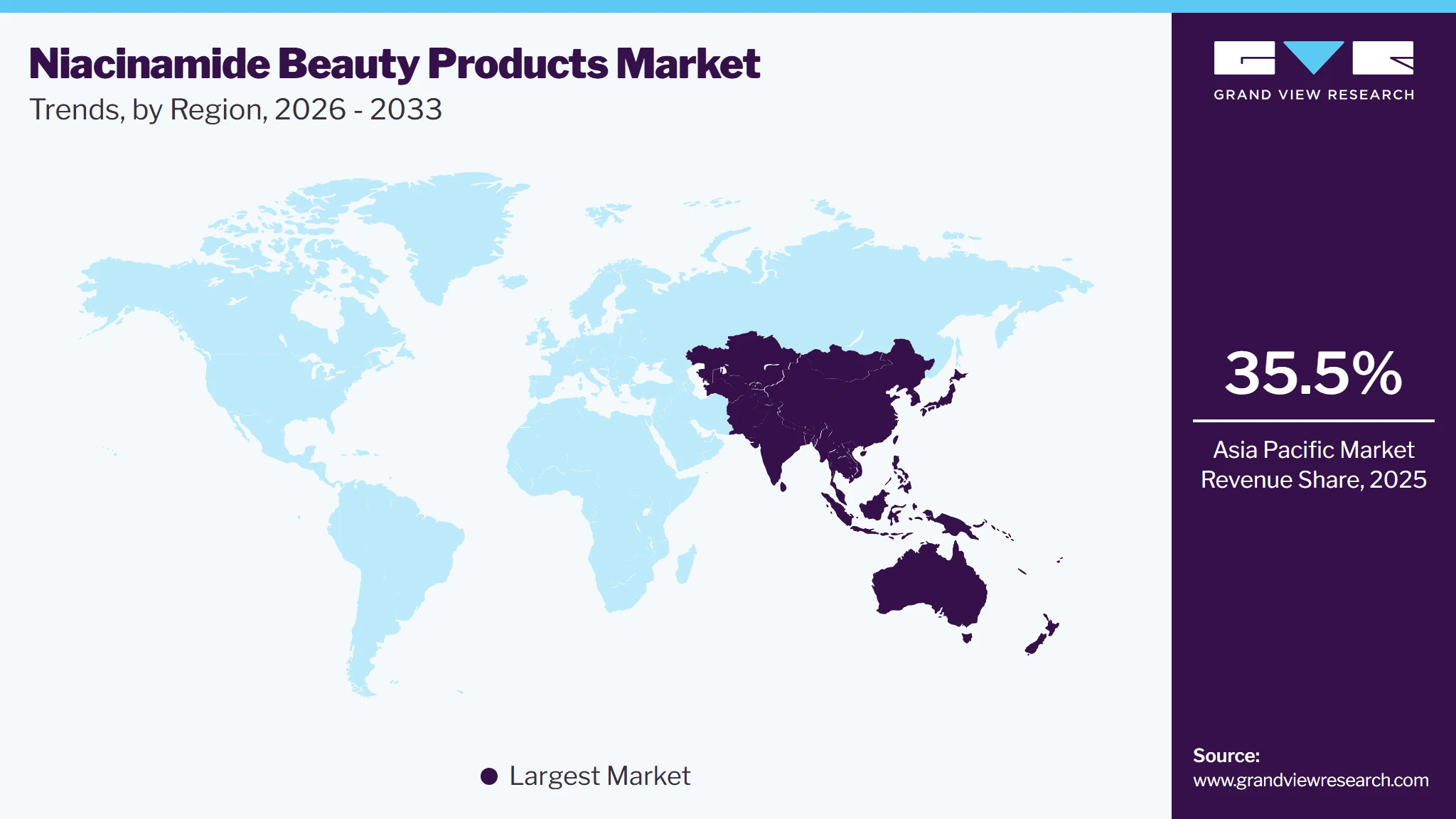
Asia Pacific dominated the niacinamide beauty products market with the largest revenue share of 45.5% in 2025. This region, especially South Korea and Japan, is at the forefront of skincare innovations. The popularity of K-beauty and J-beauty trends has significantly boosted the niacinamide market.
 To learn more about this report, Download Free Sample Report
China Niacinamide Beauty Products Market Trends
The niacinamide beauty products market in China held the largest share in the Asia Pacific region in 2025, supported by rising demand for ingredient-focused skincare targeting hyperpigmentation, uneven skin tone, and skin barrier repair. Increasing consumer preference for multifunctional formulations is driving innovation across serums, moisturizers, and toners. Domestic brands such as Proya and Winona are strengthening their presence through localized formulations and science-backed product development. E-commerce platforms, including Tmall, JD.com, and Douyin, are accelerating product discovery and consumer adoption. Furthermore, stricter cosmetic efficacy substantiation requirements under China's NMPA regulatory framework are encouraging clinically validated formulations, supporting product differentiation and premiumization.
Europe Niacinamide Beauty Products Market Trends
Europe niacinamide beauty products market is projected to grow at a CAGR of 5.4% from 2024 to 2033. The European market is characterized by a strong preference for natural and effective skincare ingredients. Regulatory standards and a focus on high-quality formulations drive the demand for niacinamide products.
Key Niacinamide Beauty Products Company Insights
The market features both established global firms and emerging players. Key industry leaders prioritize product innovation, differentiation, and distinctive designs in line with evolving consumer preferences. Leveraging extensive global distribution networks, these major players effectively reach diverse customer bases and tap into emerging markets.
Key Niacinamide Beauty Products Companies
The following key companies have been profiled for this study on the niacinamide beauty products market.
-
L’Oreal S.A
-
Unilever
-
Beiersdorf
-
The Estee Lauder Companies
-
Minimalist
-
Kao Corporation
-
AMOREPACIFIC US, INC.
-
Shiseido
-
SkinCeuticals
-
Johnson & Johnson
Competitive Benchmarking
Category
Operating Strategies
Competitive Edge
Weakness
Established Players (L'Oréal S.A., Unilever, Beiersdorf, The Estée Lauder Companies, Kao Corporation, Shiseido, Johnson & Johnson)
- Invest in R&D to develop clinically proven niacinamide formulations and multifunctional skincare products. Expand premium skincare portfolios through product innovation, dermatologist partnerships, omnichannel retail, and global distribution while leveraging digital marketing and ingredient-focused consumer education.
- Strong global brand recognition, extensive retail and e-commerce networks, significant R&D capabilities, large marketing budgets, diversified skincare portfolios, and established consumer trust enable rapid commercialization and broad market penetration
- Higher operating and regulatory compliance costs, slower product development cycles due to complex organizational structures, and challenges in quickly responding to rapidly changing consumer preferences compared to agile niche brands.
Emerging Players (Minimalist, AMOREPACIFIC US, Inc., SkinCeuticals)
- Focus on ingredient-led skincare, high-potency niacinamide formulations, dermatologist-backed innovation, direct-to-consumer sales, social media engagement, and premium positioning. Emphasize transparent ingredient disclosure and targeted solutions for acne, pigmentation, and skin barrier repair.
- Faster product innovation, strong consumer appeal among ingredient-conscious buyers, agile product development, and the ability to capitalize on skincare trends through digital-first marketing and specialized product portfolios.
- Smaller global distribution footprint, relatively lower marketing budgets, dependence on online sales in several markets, and greater competitive pressure from multinational beauty companies with broader product portfolios and stronger retail presence
Recent Developments
-
In August 2023, OLAY launched its latest technological advancement: the OLAY Super Serum. This innovative skincare product features activated niacinamide, along with vitamin C, collagen peptide, vitamin E, and alpha hydroxy acid (AHA). Together, these ingredients promise remarkable skin transformation benefits.
-
In June 2023, La Roche-Posay, launched Niacinamide 10 Serum, the first mass-market serum with 10% pure niacinamide. It is clinically proven to balance skin tone, reduce dark spots, and clarify discolorations. This serum directly repairs signs of photodamage, targeting hyperpigmentation, and is part of La Roche-Posay’s commitment to providing effective, anti-aging skincare solutions.
Niacinamide Beauty Products Market Report Scope
Report Attribute
Details
Market size in 2025
USD 624.3 million
Estimated market size in 2026
USD 661.3 million
Projected market size by 2033
USD 947.8 million
Growth rate
CAGR of 5.3% from 2026 to 2033
Base year for estimation
2025
Historical data
2021 - 2024
Forecast period
2026 - 2033
Quantitative units
Revenue in USD million/billion and CAGR from 2026 to 2033
Report coverage
Revenue forecast, company ranking, competitive landscape, growth factors, and trends
Segments covered
Product, concentration, end-use, distribution channel, region
Regional scope
North America; Europe; Asia Pacific; Latin America; MEA
Country scope
U.S.; Canada; Mexico; UK; Germany; France; Italy; Spain; China; India; Japan; Australia; South Korea; Brazil; South Africa
Key companies profiled
L’Oreal S.A; Unilever; Beiersdorf; The Estee Lauder Companies; Minimalist; Kao Corporation; AMOREPACIFIC US, INC.; Shiseido; SkinCeuticals; Johnson & Johnson
Customization scope
Free report customization (equivalent up to 8 analysts' working days) with purchase. Addition or alteration to country, regional & segment scope.
Pricing and purchase options
Avail customized purchase options to meet your exact research needs. Explore purchase options
Global Niacinamide Beauty Products Market Report Segmentation
This report forecasts revenue growth at global, regional & country levels and provides an analysis on the latest trends and opportunities in each of the sub-segments from 2021 to 2033. For the purpose of this study, Grand View Research has segmented the global niacinamide beauty products market based on the product, concentration, end-use, distribution channel, and region:
-
Product Outlook (Revenue, USD Million, 2021 - 2033)
-
Serums
-
Creams
-
Emulsions
-
Face/Body Wash
-
Others
-
-
Concentration Outlook (Revenue, USD Million, 2021 - 2033)
-
Below 5%
-
5% to 10%
-
10% to 15%
-
Above 15%
-
-
End-use Channel Outlook (Revenue, USD Million, 2021 - 2033)
-
Women
-
Men
-
-
Distribution Channel Outlook (Revenue, USD Million, 2021 - 2033)
-
Supermarkets/Hypermarkets
-
Online
-
Specialty Stores
-
Drugstores/Pharmacies
-
Others
-
-
Regional Outlook (Revenue, USD Million, 2021 - 2033)
-
North America
-
U.S.
-
Canada
-
Mexico
-
-
Europe
-
UK
-
Germany
-
France
-
Italy
-
Spain
-
-
Asia Pacific
-
China
-
India
-
Japan
-
Australia
-
South Korea
-
-
Latin America
-
Brazil
-
-
Middle East & Africa (MEA)
-
South Africa
-
-
Research Methodology
The niacinamide beauty products market figures in this report are based on a proven research process that combines executive interviews with secondary research from proprietary databases, company filings, and recognized regulatory and institutional sources. Market size is built through value-chain sizing - reconciling supply-side and demand-side estimates - and triangulated with bottom-up and top-down approaches. Every estimate passes multiple levels of expert validation before publication, with each niacinamide beauty products segment quantified using the revenue-capture definitions in the table below.
Segment Definition
Product
Revenue capture definition
Serums
This segment covers the revenues generated through the niacinamide beauty products market from niacinamide-based serums. These lightweight, highly concentrated formulations are designed to deliver active ingredients deep into the skin to address concerns such as hyperpigmentation, enlarged pores, acne, excess oil production, and signs of aging.
Creams
This segment covers the revenues generated through the niacinamide beauty products market from niacinamide-infused creams. These products provide hydration while helping improve skin texture, strengthen the skin barrier, reduce redness, and enhance overall skin appearance through daily use.
Emulsions
This segment covers the revenues generated through the niacinamide beauty products market from niacinamide-based emulsions. Emulsions are lightweight moisturizing formulations with a thinner consistency than creams, offering hydration and skin-conditioning benefits while delivering niacinamide to support skin barrier function and tone improvement.
Face/Body Wash
This segment covers the revenues generated through the niacinamide beauty products market from facial cleansers and body wash products containing niacinamide. These cleansing formulations help remove dirt, oil, and impurities while supporting skin hydration, soothing irritation, and maintaining skin barrier health.
Others
This segment covers the revenues generated through the niacinamide beauty products market from other product formats, including toners, masks, moisturizers, lotions, spot treatments, sunscreens, eye care products, and hybrid skincare formulations that incorporate niacinamide as a key active ingredient.
Estimation Model
Layer
Name
Key Question
Description
01
Skincare Concern Layer
Who has a relevant skincare need?
Identify the population affected by common skin concerns such as acne, hyperpigmentation, uneven skin tone, enlarged pores, redness, and early signs of aging. This forms the total addressable consumer base for niacinamide-containing beauty products.
02
Beauty Product Access Layer
Who can access skincare products?
Apply region-specific beauty and personal care spending patterns, urbanization rates, retail penetration, e-commerce accessibility, and consumer awareness levels to estimate the population with access to skincare products and active-ingredient-based formulations.
03
Ingredient Adoption Layer
Who actively purchases niacinamide products?
Apply adoption rates for ingredient-led skincare products, considering consumer awareness of niacinamide, dermatologist recommendations, social media influence, premium skincare usage, and preference for multifunctional formulations. This converts reachable consumers into active niacinamide product users.
04
Monetisation Layer
How much revenue is generated?
Multiply active niacinamide product users by average annual spending on niacinamide-based serums, creams, and other skincare products. Incorporate premium product penetration, repurchase frequency, and distribution channel sales across online, specialty stores, and supermarkets to estimate total market revenue.
Delivered Customizations
This report has been delivered with the following In-depth customizations
Client Request
Customization Delivered
Value Adds
Niacinamide Serum & Treatment Product Analysis
Conducted a focused analysis of niacinamide-based serums, creams, emulsions, cleansers, and treatment products, covering concentration trends, multifunctional formulations, anti-acne solutions, pigmentation correction, skin barrier repair applications, and premium skincare adoption trends.
Helps stakeholders identify high-growth product categories, evaluate consumer preferences for active ingredients, and assess commercialization opportunities across clinical and cosmetic skincare segments.
Ingredient-Led Skincare & Consumer Adoption Trends
Evaluated consumer demand for ingredient-focused skincare products, including niacinamide, vitamin C, hyaluronic acid, ceramides, and retinol combinations. Assessed trends related to clean beauty, dermatologist-recommended products, social media influence, premium skincare adoption, and online beauty retail expansion.
Provides insights into evolving skincare preferences, emerging beauty trends, and commercially attractive product positioning opportunities to support product development and marketing strategies.
Personalized Skincare & Distribution Channel Opportunity Assessment
Assessed opportunities arising from AI-powered skin analysis, personalized skincare recommendations, e-commerce growth, direct-to-consumer sales, specialty beauty retailers, and omnichannel distribution strategies. Evaluated consumer engagement, product customization, and premium skincare purchasing behavior across major regions.
Supports investment and expansion strategies by identifying underserved consumer segments, evaluating channel effectiveness, strengthening brand differentiation, and uncovering long-term growth opportunities in the global niacinamide beauty products market.
Frequently Asked Questions About This Report
Some of the key players operating in the niacinamide beauty products market include L’Oreal S.A; Unilever; Beiersdorf; The Estee Lauder Companies; Minimalist; Kao Corporation; AMOREPACIFIC US, INC.; Shiseido; SkinCeuticals; Johnson & Johnson
Key factors that are driving the niacinamide beauty products market growth include rise of skincare layering and sophisticated routines, various benefits of inclusion of niacinamide in skincare, surge in innovation by the key players in the niacinamide beauty products, and inclusion of niacinamide in more targeted treatments and hybrid products.
The global niacinamide beauty products market size was valued at USD 624.3 million in 2025 and is estimated at USD 661.3 million for 2026.
The global niacinamide beauty products market is expected to grow at a CAGR of 5.3% from 2026 to 2033, reaching USD 947.8 million by 2033.
Asia Pacific dominated, with a revenue share of 45.5% in 2025. The popularity of K-beauty and J-beauty trends has significantly boosted the niacinamide beauty products market.
Serum segment dominated the market, with a revenue share of 60.5% in 2025 while niacinamide emulsions segment is expected to be the fastest-growing market.
Based on concentration, below 5% concentration segment led the market with the largest revenue share of 42.5% in 2025. Products with less than 5% concentrations are ideal for sensitive skin and beginners.
Women's segment led the market with the largest revenue share of 66.7% in 2025. Women predominantly use niacinamide products for anti-aging, brightening, and acne-fighting benefits.
Supermarkets/Hypermarkets dominated, with a revenue share of 33.7% in 2025.
About the Author(s)
Beauty & Personal Care Research Team
Consumer Goods · Beauty & Personal CareThis report was authored by the beauty & personal care research team at Grand View Research - comprising two research analysts, one senior research analyst, and one industry expert - with specialized expertise in the beauty & personal care segment of the consumer goods industry. All findings are based on proprietary consumer goods databases, executive interviews, and regulatory analysis, subject to internal peer review prior to publication.
Last Updated:
Speak to Analyst

Customize this report to your needs - add regions, segments, or data points, with 20% free customization.
Or view our licence options:


ISO 9001:2015 & 27001:2022 Certified
We are GDPR and CCPA compliant! Your transaction & personal information is safe and secure. For more details, please read our privacy policy.


