
- Home
- »
- Consumer F&B
- »
-
Nicotine Gum Market Market Size & Share Report 2026-2033GVR Report cover

Nicotine Gum Market (2026 - 2033)
Size, Share, And Trend Analysis Report By Type (2mg, 4mg), By Distribution Channel (Supermarkets & Hypermarkets, Convenience Stores, Pharmacies, Online), By Region (North America, Europe, Asia Pacific, Latin America, MEA), And Segment Forecasts
Market Size, 2025
$1.5BMarket Estimate, 2026
$1.6BMarket Forecast, 2033
$2.5BCAGR, 2026–2033
6.7%Nicotine Gum Market Summary
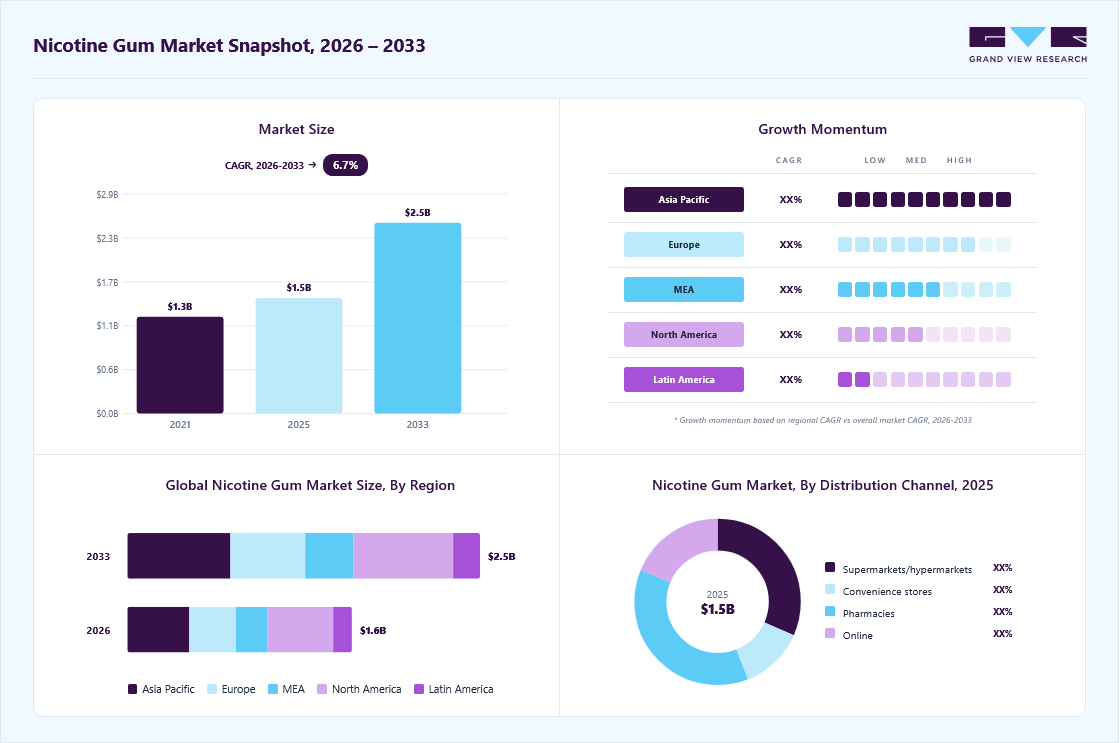
The global nicotine gum market market size was valued at USD 1.5 billion in 2025 and is projected to grow from USD 1.6 billion in 2026 to USD 2.5 billion by 2033, at a CAGR of 6.7% from 2026 to 2033. The market in North America dominated with a revenue share of 29.5% in 2025. The demand for nicotine replacement therapy (NRT) products, including nicotine gum, has been increasing globally in recent years as more people are opting for methods to quit smoking and reduce their exposure to the harmful chemicals found in tobacco smoke.
 Source: Grand View Research, IR Documents, Primary Interviews, Paid DatabasesTo learn more about this report,
 Download Free Sample Report
 Key Market Trends & Insights
- By type: 2mg nicotine gum segment held the largest market share of 55.4% in 2025.
- By distribution channel: Pharmacies segment held the largest market share of 37.1% in 2025.
Regional Highlights
- Largest regional market: North America (29.5% revenue share, 2025)
- By country: U.S. held the largest market share in 2025
Market Size & Forecast
- Market size in 2025: USD 1.5 Billion
- Estimated market size in 2026: USD 1.6 Billion
- Projected market size by 2033: USD 2.5 Billion
- CAGR (2026-2033): 6.7%
Three ways to get this report
Buy it, customize it, or ask a question.Ask an Analyst
Analyst response in 1 business day
- AccessReport author, directly
- Reply timeWithin 1 working day
- No sales callDirect answer only
- FormatEmail reply
- CostFree, no cost
Get the Full Report
What the study covers
- FormatsPDF · Excel · Dashboard
- Timeline2026–2033 annual, 2025 base
- Coverage20+ countries, 5 regions
- Companies10+ key players profiled
Customize the Report
20% free customization
- IncludeCountries, segments, points
- TailorTo your product definition
- ExtendDeeper competitor detail
- OrA fully bespoke study
- Turnaround5–10 working days
Some of the latest trends in the global NRT market include the development of more convenient and effective NRT products, such as long-lasting gums, and the growing popularity of flavored options. In addition, there has been an increase in the number of people using NRT products to quit smoking, as well as a rise in the number of healthcare professionals recommending NRT products to their patients.Nicotine gum sales are rising mainly because more smokers are trying to quit (or cut down) and they increasingly want convenient, discreet, non-prescription options they can use at work, while traveling, or alongside coaching/apps. Gum is also benefiting from stricter tobacco-control policies (higher taxes, smoke-free spaces, plain packaging, advertising limits) that keep nudging smokers toward cessation aids, plus wider OTC availability and e-commerce that make it easier to buy and repurchase without a clinic visit.
 To learn more about this report, Download Free Sample Report
 Consumers increasingly combine behavioral support with nicotine replacement therapies (NRTs), or use NRTs such as nicotine gum alongside gradual reduction strategies instead of abrupt cessation. Population-level evidence from England indicates that a substantial share of quit attempts now involves pharmacological or nicotine-based aids rather than unassisted “cold turkey” approaches. This shift supports sustained demand for nicotine gum, even as overall cigarette consumption declines, as smokers view gum as a flexible, controllable tool within a broader quitting journey rather than a standalone intervention.
Furthermore, affordability improvements in high-pile, ultra-soft materials, including microfiber, fleece, and faux-fur blends, have enabled deeper household penetration, particularly in emerging consumer clusters in India. Consumers are no longer purchasing blankets solely for warmth, but also for lounging, work-from-home, travel comfort, and gifting.
The market for nicotine gum is expanding steadily as rising health consciousness and stronger public awareness of smoking-related risks encourage more consumers to quit or reduce cigarette consumption. Over the past decade, governments, public health agencies, and non-profit organizations have intensified anti-smoking campaigns highlighting the links between tobacco use and cardiovascular disease, cancer, and respiratory disorders. Policy frameworks such as Healthy People 2030 set explicit objectives to reduce tobacco use and smoking-related illness in the U.S., advocating for evidence-based strategies including smoke-free environments, pricing policies, education campaigns, and access to quitting support and medications. These measures are intended to reduce morbidity and mortality, particularly among high-risk demographic groups. As a result, smoking is increasingly viewed not only as a long-term health risk but also as a barrier to overall wellness and quality of life.
 To learn more about this report, Download Free Sample Report
 In the U.S., federal and state-level actions have similarly prioritized smoking reduction and cessation support. Federal public health agencies such as the Centers for Disease Control and Prevention (CDC) and the National Institutes of Health (NIH) provide extensive, publicly available cessation resources through initiatives such as Smokefree.gov and quit lines, including 1-800-QUIT-NOW, alongside behavior change support and counseling services that complement the use of NRT products. These programs aim to address both the physical and behavioral aspects of tobacco dependence, reflecting clinical practice guidelines that recommend combining pharmacotherapy with behavioral interventions.
Product innovation, especially in flavor formats, has further strengthened the appeal of nicotine gum. Historically, unpleasant taste and mouthfeel were major barriers to long-term adherence. In response, manufacturers have introduced a wider range of flavors, including mint variations, fruit profiles, cinnamon, and milder neutral options, alongside sugar-free formulations. These improvements make the product more palatable and reduce early discontinuation, particularly among first-time users. Variety of flavors also allows consumers to personalize their quitting experience, aligning with broader trends toward customization and user comfort in health and wellness products.
Convenience and discreet usage have additionally contributed to market growth. Nicotine gum can be used without drawing social attention, does not produce vapor or odor, and fits easily into daily routines at workplaces or during travel. Combined with expanded availability through pharmacies, supermarkets, and online channels, this convenience lowers barriers to trial and repeat purchase.
Consumer Insights
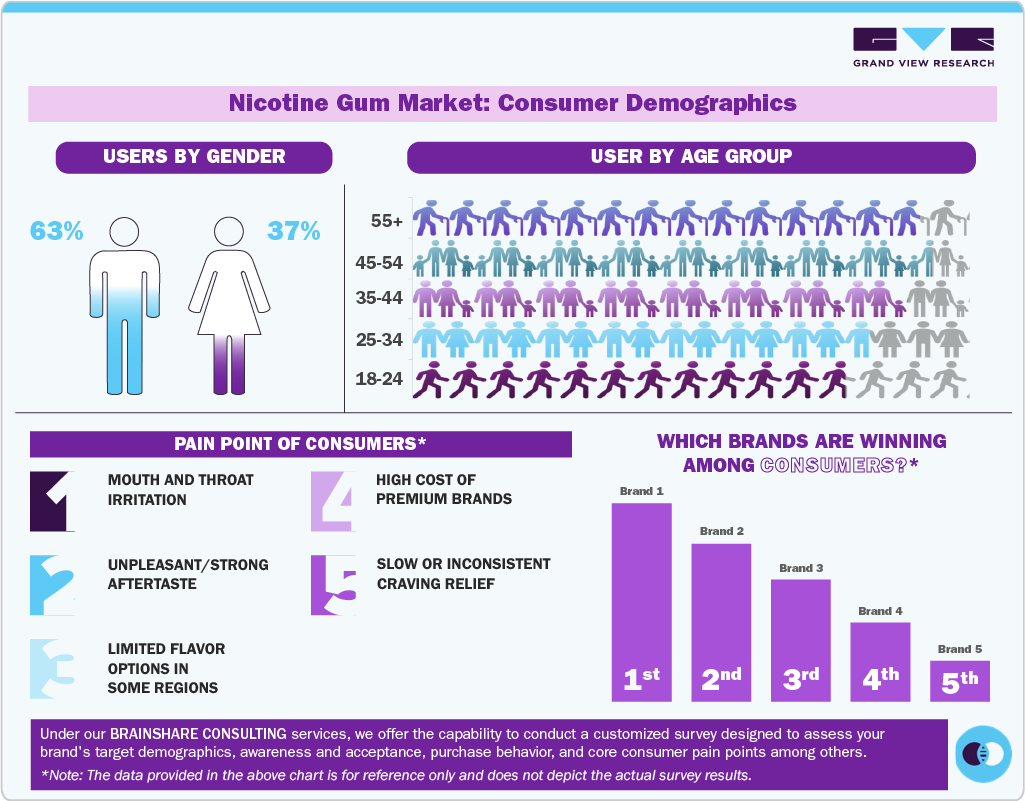
Consumers in the nicotine gum market are increasingly seeking convenient, discreet, and effective smoking cessation solutions that fit into their daily routines. Rising awareness of the health risks associated with smoking has encouraged individuals to explore nicotine replacement therapies, with gum being a preferred option due to its portability and quick onset of action. Many consumers also value the ability to control nicotine intake by choosing lower or higher strength variants. In addition, growing acceptance of smoke-free alternatives in workplaces and public spaces is further influencing consumer adoption.
 To learn more about this report, Download Free Sample Report
 A noticeable shift toward flavored nicotine gum is shaping consumer preferences, as individuals seek products that offer a more pleasant and less medicinal taste experience. Mint, fruit, and cinnamon flavors have gained strong traction, particularly among younger adults attempting to quit smoking. Price sensitivity, however, remains a key factor, with many consumers comparing costs across brands and pack sizes before purchasing. The increasing demand for sugar-free, long-lasting formulations also underscores a preference for healthier alternatives. Recommendations from healthcare professionals and digital smoking-cessation communities continue to strongly influence purchase decisions in the nicotine gum market.
Type Insights
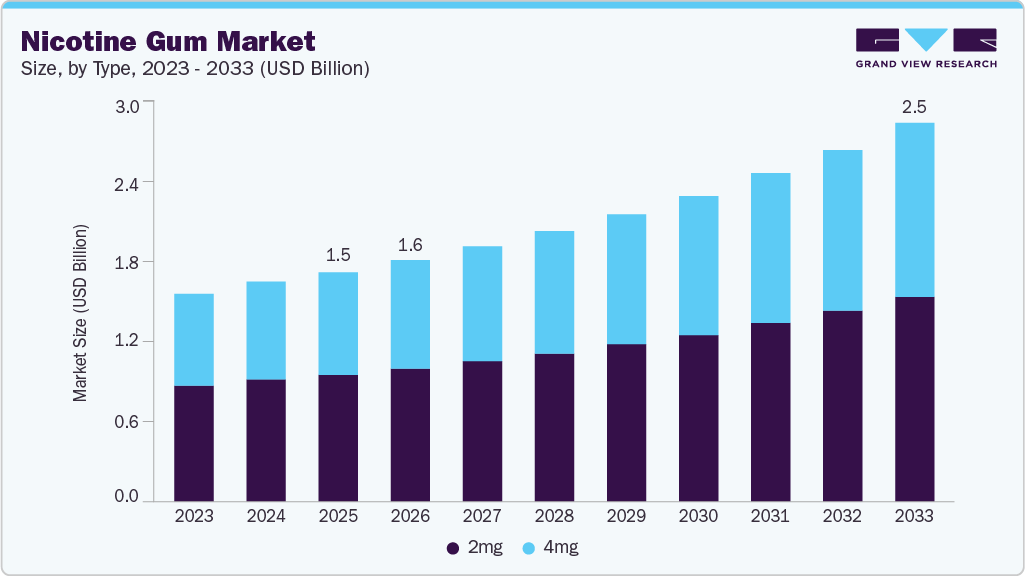
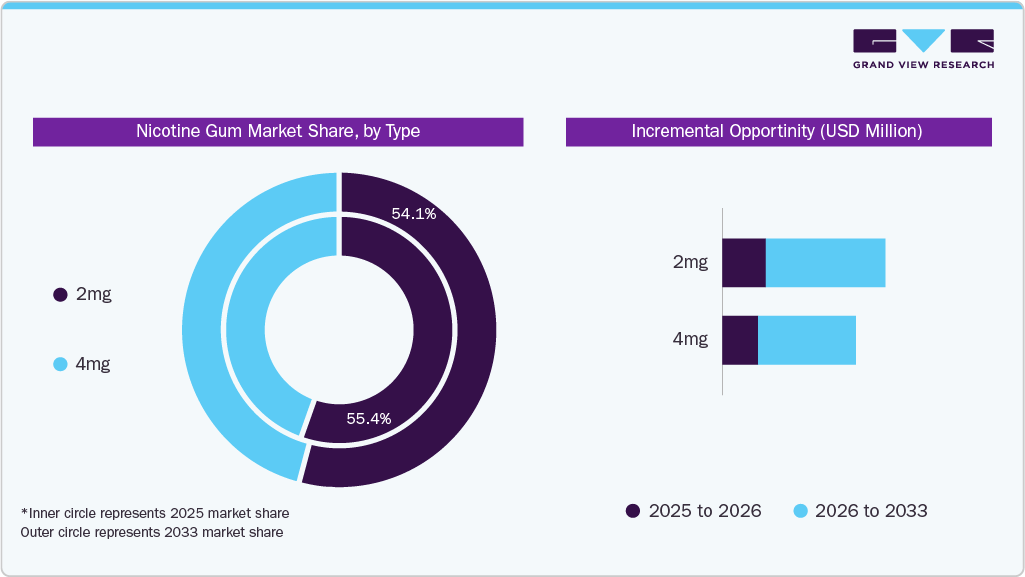
The 2mg nicotine gum accounted for a dominant share of 55.4% of the global revenue in 2025. The demand for 2 mg nicotine gum is rising as more consumers seek low-dose, flexible nicotine-replacement options to support smoking reduction rather than abrupt cessation. Health-conscious users, particularly light smokers, social smokers, and first-time quitters, prefer 2 mg gum because it helps manage mild to moderate cravings without delivering the stronger nicotine hit associated with higher-dose products. In markets such as Europe and North America, growing awareness of harm-reduction strategies, reinforced by public health campaigns and pharmacist-led recommendations, has normalized nicotine gums as a step-down solution.
 To learn more about this report, Download Free Sample Report
 The 4mg nicotine gum is expected to grow at a CAGR of 7.1% from 2026 to 2033. Consumers attempting to quit e-cigarettes or high-nicotine cigarettes often find lower-dose gums insufficient, making 4 mg formulations more effective for immediate craving relief during high-risk moments such as stress, work breaks, or social settings. Moreover, increased awareness of smoke-free lifestyles, workplace restrictions on smoking, and the preference for discreet, on-the-go cessation aids have positioned 4 mg nicotine gum as a practical alternative to patches and lozenges. The shift away from vaping due to regulatory scrutiny and health concerns has further accelerated adoption, as consumers look for clinically recognized, controlled-dose products that support gradual nicotine reduction without combustion or inhalation.
The broader smoking cessation products market is also expanding as consumers increasingly seek safer and more reliable tools to manage withdrawal symptoms and reduce dependence on combustible tobacco. Growing trust in evidence-based solutions, such as nicotine gum, patches, and medically approved oral products, is driving stronger adoption across both first-time quitters and long-term smokers. Regulatory push toward reducing tobacco harm, combined with public health campaigns and rising medical recommendations for structured cessation methods, is further supporting this shift. As demand grows for products that offer convenience, precise dosing, and minimal side effects, nicotine gums, especially 4 mg variants, are becoming a key part of the evolving cessation landscape.
Distribution Channel Insights
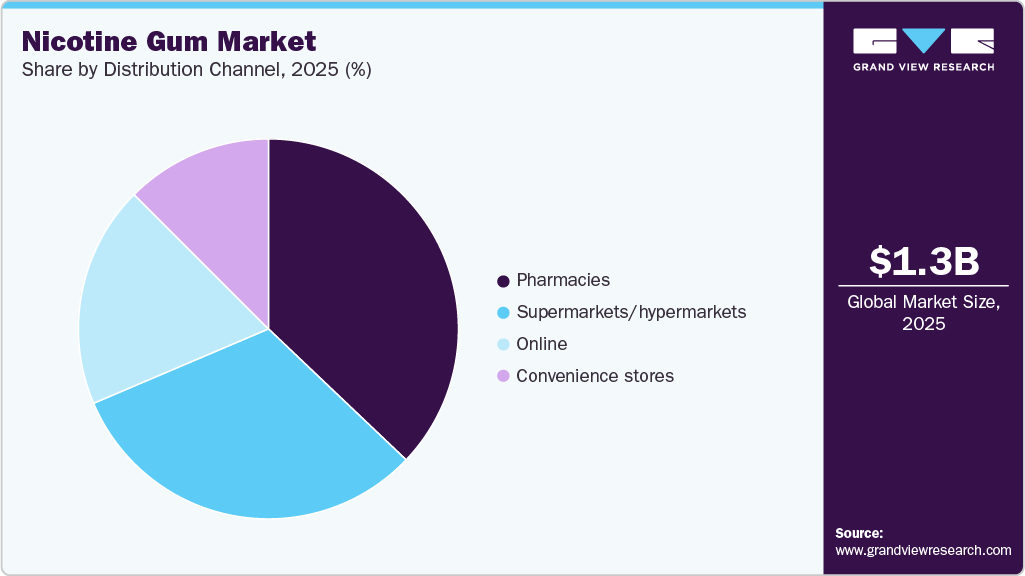
Sales of nicotine gum through pharmacies accounted for a revenue share of 37.1% in 2025. Pharmacies benefit from high trust levels, professional guidance from pharmacists, and convenient access alongside other wellness products, making them a preferred channel for first-time quitters and relapse-prevention users. Growing awareness of the health risks of smoking, stricter public smoking regulations, and employer- and insurer-supported quit programs have further normalized consumption of nicotine gum. In addition, improved flavors, sugar-free formulations, and clear dosage guidance have enhanced user experience, driving repeat purchases and sustained demand through pharmacy retail channels.
 To learn more about this report, Download Free Sample Report
 Sales of nicotine gum through online channels are expected to grow at a CAGR of 7.9% from 2026 to 2033. Online platforms allow users to purchase nicotine gum discreetly, avoiding the social discomfort often associated with in-store purchases, while also offering subscription models and bulk discounts that support long-term quitting efforts. The growth of telehealth consultations and digital smoking-cessation programs has further reinforced online demand, as nicotine gum is frequently recommended alongside virtual counseling. In addition, e-commerce enables easier access to multiple flavors, dosage strengths, and sugar-free variants, appealing to younger and health-conscious consumers who prefer personalized wellness solutions delivered directly to their homes.
Regional Insights
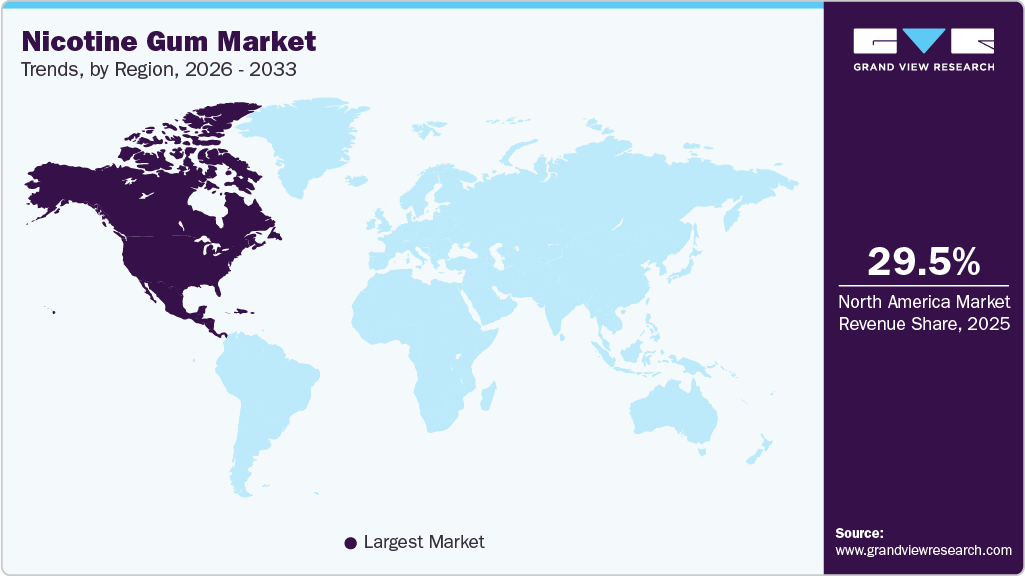
North America made the largest contribution to the market in 2025, with 29.5% of the revenue share. Growing awareness of the health risks of smoking, combined with stronger public health messaging and workplace smoking restrictions, is encouraging smokers to adopt nicotine replacement therapies (NRTs) that can be used conveniently throughout the day. Nicotine gum appeals in particular because it offers controlled dosing, immediate craving relief, and over-the-counter availability, making it accessible without medical intervention. Additionally, flavor innovation, improved taste profiles, and broader retail availability across pharmacies and online channels are helping reposition nicotine gum as a practical, lifestyle-compatible cessation aid, especially among working adults and health-conscious consumers.
 To learn more about this report, Download Free Sample Report
 Nicotine gum industry in the U.S. is expected to grow at a CAGR of 5.5% over the forecast period from 2026 to 2033, driven by rising smoking cessation efforts, increasing health awareness, and wider availability of nicotine replacement therapies. Growing adoption of smoke-free alternatives in workplaces and public areas, along with strong support from healthcare providers, continues to boost demand. Additionally, the introduction of flavored, sugar-free, and long-lasting formulations is attracting a broader consumer base, supporting steady market expansion throughout the forecast period.
Europe Nicotine Gum Market Trends
The nicotine gum market in Europe is projected to grow at a CAGR of 7.0% from 2026 to 2033. Higher cigarette prices have expanded smoke-free public spaces, and strong public health campaigns have accelerated quit attempts and harm-reduction behaviors, positioning nicotine gum as an accessible, over-the-counter aid for managing cravings. In parallel, changing consumer attitudes, particularly among urban professionals and older smokers, favor products that offer dose control, portability, and medical credibility without the social stigma of smoking or vaping. Product innovations such as sugar-free formulations and faster-acting variants have further improved user experience, supporting repeat purchases and sustained adoption across European markets.
Nicotine gum market in the UK accounted for a revenue share of 25.5% in 2025, because of a strong focus on smoking cessation initiatives and widespread adoption of nicotine replacement therapies across the country. Government-supported programs, growing health consciousness, and increased accessibility of over-the-counter cessation products have strengthened consumer uptake. Moreover, the availability of multiple flavors, dosage strengths, and sugar-free formulations continues to attract a diverse user base, fueling the market growth in the country.
Asia Pacific Nicotine Gum Market Trends
The nicotine gum industry in the Asia Pacific is projected to grow at a CAGR of 7.5% over the forecast period from 2026 to 2033. Rapid urbanization, stricter public smoking bans, and growing health awareness, particularly in countries such as Japan, South Korea, Australia, and parts of Southeast Asia, are encouraging smokers to reduce or quit combustible tobacco. Nicotine gum benefits from its over-the-counter availability, portability, and perception as a harm-reduction aid, making it attractive to working professionals and younger adults. Moreover, government-led tobacco control campaigns, expanding pharmacy and e-commerce distribution, and improved product formats (better taste, faster nicotine release) support wider adoption, positioning nicotine gum as a practical cessation and transitional product in the region.
Nicotine gum market in China is anticipated to grow at a CAGR of 7.4% over the forecast period from 2026 to 2033, supported by rising awareness of smoking-related health risks and increasing interest in nicotine replacement therapies. Growing urbanization, stronger public health campaigns, and wider retail and e-commerce availability have further boosted consumer adoption. In addition, the introduction of flavored and sugar-free nicotine gum options is attracting younger adults seeking convenient and discreet cessation solutions, strengthening nicotine gum market in the country.
Latin America Nicotine Gum Market Trends
The nicotine gum market in Latin America is projected to grow at a CAGR of 5.3% over the forecast period from 2026 to 2033, driven by increasing awareness of the health risks of smoking and rising adoption of nicotine replacement therapies. Expanding urban populations, stronger public health initiatives, and improved access to OTC cessation products are encouraging more consumers to explore nicotine gum.
Middle East & Africa Nicotine Gum Market Trends
The nicotine gum market in Middle East & Africa is growing because of rising awareness of smoking-related health concerns and increasing acceptance of nicotine replacement therapies. Growth is further influenced by expanding urban populations, stronger healthcare outreach programs, and wider availability of OTC cessation products in pharmacies and modern retail outlets. Although cultural and regulatory barriers limit overall consumption levels in parts of the region, the introduction of flavored and sugar-free nicotine gum variants is helping attract new users and improve market penetration.
Key Nicotine Gum Company Insights
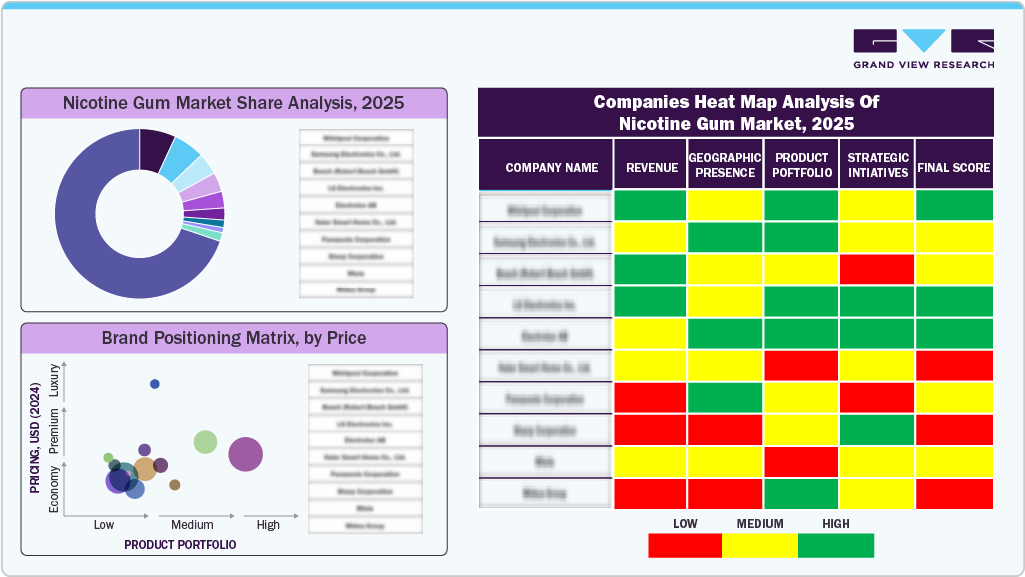
The industry has been characterized by the presence of many international and regional players. Players have been introducing new products to gain a competitive advantage in the market. Furthermore, key players are expanding their businesses in emerging markets to capture growth opportunities. Moreover, companies have been focusing on offering an innovative and customized collection of nicotine gum through retailers to expand their consumer reach.
 To learn more about this report, Download Free Sample Report
 Key Nicotine Gum Companies:
The following key companies have been profiled for this study on the nicotine gum market.
- Johnson & Johnson
- Novartis AG
- ITC Limited
- Cipla Health Limited
- Perrigo Company Plc.
- Teva Canada
- Philip Morris
- British American Tobacco PLC
- Dr. Reddy’s Laboratories Ltd
- Pfizer Inc.
Recent Developments
In April 2025, Truth Initiative’s EX Program, a free digital quit-smoking/vaping program, partnered with Blip, a modern FDA-approved nicotine replacement therapy brand, to help young adults quit nicotine more easily. Young adults who join EX will get a reusable 25% discount on Blip’s nicotine gum, lozenges, and nicotine-free products, combining behavioral support with NRT to improve quit success and make quitting more comfortable. The partnership targets 18–24-year-olds, promotes quitting as modern and relatable, and is part of Truth Initiative’s broader “Outsmart Nicotine” campaign.
Nicotine Gum Market Report Scope
Report Attribute
Details
Market size in 2025
USD 1.5 billion
Estimated Market size in 2026
USD 1.6 billion
Projected Market size by 2033
USD 2.5 billion
Growth rate
CAGR of 6.7% from 2026 to 2033
Actual data
2021 - 2024
Forecast period
2026 - 2033
Quantitative units
Revenue in USD million/billion, and CAGR from 2026 to 2033
Report coverage
Revenue forecast, company ranking, competitive landscape, growth factors, and trends
Segments covered
Type, distribution channel, and region
Regional scope
North America, Europe, Asia Pacific, Latin America, Middle East & Africa
Country scope
U.S.; Canada; Germany; U.K.; France; Italy; Spain: China; Japan; India; Australia & New Zealand; South Korea; Brazil; Mexico, South Africa, UAE
Key companies profiled
Johnson & Johnson; Novartis AG; ITC Limited; Cipla Health Limited; Perrigo Company Plc.; Teva Canada; Philip Morris; British American Tobacco PLC; Dr. Reddy’s Laboratories Ltd; Pfizer Inc.
Customization scope
Free report customization (equivalent up to 8 analysts’ working days) with purchase. Addition or alteration to country, regional & segment scope.
Pricing and purchase options
Avail customized purchase options to meet your exact research needs. Explore purchase options
Global Nicotine Gum Market Report Segmentation
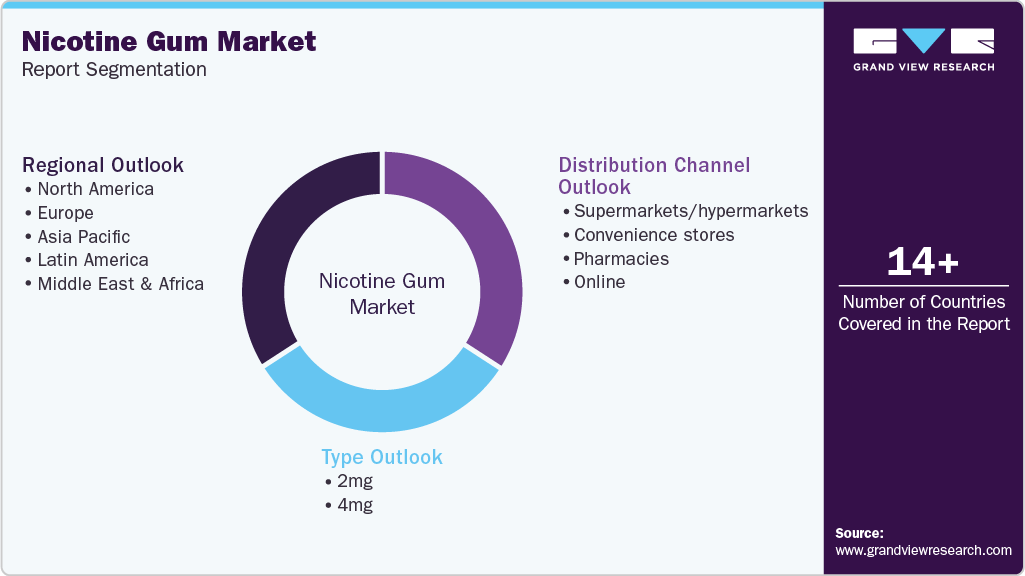
This report forecasts revenue growth at global, regional & country levels and provides an analysis of the latest trends and opportunities in each of the sub-segment from 2021 to 2033. For the purpose of this study, Grand View Research has segmented the nicotine gum market on the basis of type, distribution channel, and region.
 To learn more about this report, Download Free Sample Report
 -
Type Outlook (Revenue, USD Million; 2021 - 2033)
-
2mg
-
4mg
-
-
Distribution Channel Outlook (Revenue, USD Million; 2021 - 2033)
-
Supermarkets/hypermarkets
-
Convenience stores
-
Pharmacies
-
Online
-
-
Regional Outlook (Revenue, USD Million; 2021 - 2033)
-
North America
-
U.S.
-
Canada
-
-
Europe
-
Germany
-
U.K.
-
France
-
Italy
-
Spain
-
-
Asia Pacific
-
China
-
Japan
-
India
-
Australia & New Zealand
-
South Korea
-
-
Latin America
-
Brazil
-
Mexico
-
-
Middle East & Africa
-
South Africa
-
UAE
-
-
Frequently Asked Questions About This Report
North America dominated the market with 29.5% revenue share in 2025.
The pharmacies segment led with a 37.1% revenue share in 2025, while the online channels segment is expected to grow at a CAGR of 7.9% from 2026 to 2033.
The global nicotine gum market size was estimated at USD 1.5 billion in 2025 and is expected to reach USD 1.6 billion in 2026
The global nicotine gum market is expected to grow at a compound annual growth rate of 6.7% from 2026 to 2033 to reach USD 2.5 billion by 2033.
2mg nicotine gum accounted for a dominant share of 55.4% of the global revenue in 2025. The demand for 2 mg nicotine gum is rising as more consumers seek low-dose, flexible nicotine-replacement options to support smoking reduction rather than abrupt cessation.
Some key players operating in the nicotine gum market include Johnson & Johnson, Novartis AG, ITC Limited, Cipla Health Limited, Perrigo Company Plc., Teva Canada, Philip Morris, British American Tobacco PLC, Dr. Reddy’s Laboratories Ltd, and Pfizer Inc.
The demand for nicotine replacement therapy (NRT) products, including nicotine gum, has been increasing globally in recent years as more people are opting for methods to quit smoking and reduce their exposure to the harmful chemicals found in tobacco smoke.
About the Author(s)
Consumer F&B Research Team
Consumer Goods · Consumer F&BThis report was authored by the consumer f&b research team at Grand View Research - comprising two research analysts, one senior research analyst, and one industry expert - with specialized expertise in the consumer f&b segment of the consumer goods industry. All findings are based on proprietary consumer goods databases, executive interviews, and regulatory analysis, subject to internal peer review prior to publication.
Last Updated:
Speak to Analyst

Customize this report to your needs - add regions, segments, or data points, with 20% free customization.
Or view our licence options:


ISO 9001:2015 & 27001:2022 Certified
We are GDPR and CCPA compliant! Your transaction & personal information is safe and secure. For more details, please read our privacy policy.


