
- Home
- »
- Consumer F&B
- »
-
Non-Carbonated Soft Drinks Market Size Report, 2026-2033GVR Report cover

Non-carbonated Soft Drinks Market (2026 - 2033)
Size, Share & Trends Analysis Report By Product (RTD, Sparkling & Flavored Water), By Distribution Channel (Hypermarkets & Supermarkets, Convenience Stores, Online), By Region (North America, Europe, Asia Pacific), And Segment Forecasts
Market Size, 2025
$168.6BMarket Estimate, 2026
$180.6BMarket Forecast, 2033
$278.2BCAGR, 2026–2033
6.4%Non-carbonated Soft Drinks Market Summary
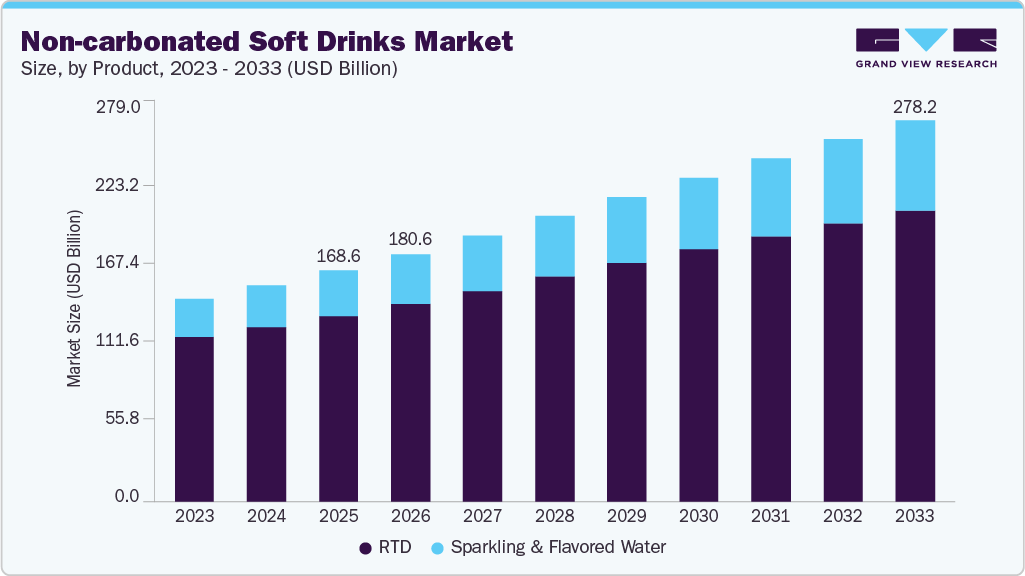
The global Non-Carbonated soft drinks market size was valued at USD 168.6 billion in 2025 and is projected to grow from USD 180.6 billion in 2026 to USD 278.2 billion by 2033, at a CAGR of 6.4% from 2026 to 2033. The market in Asia Pacific dominated with a revenue share of 29.9% in 2025. The market is rising as consumers are steadily shifting away from “traditional fizzy + high sugar” propositions toward hydration-led, better-for-you, and flavor-forward beverages that still feel indulgent and convenient.
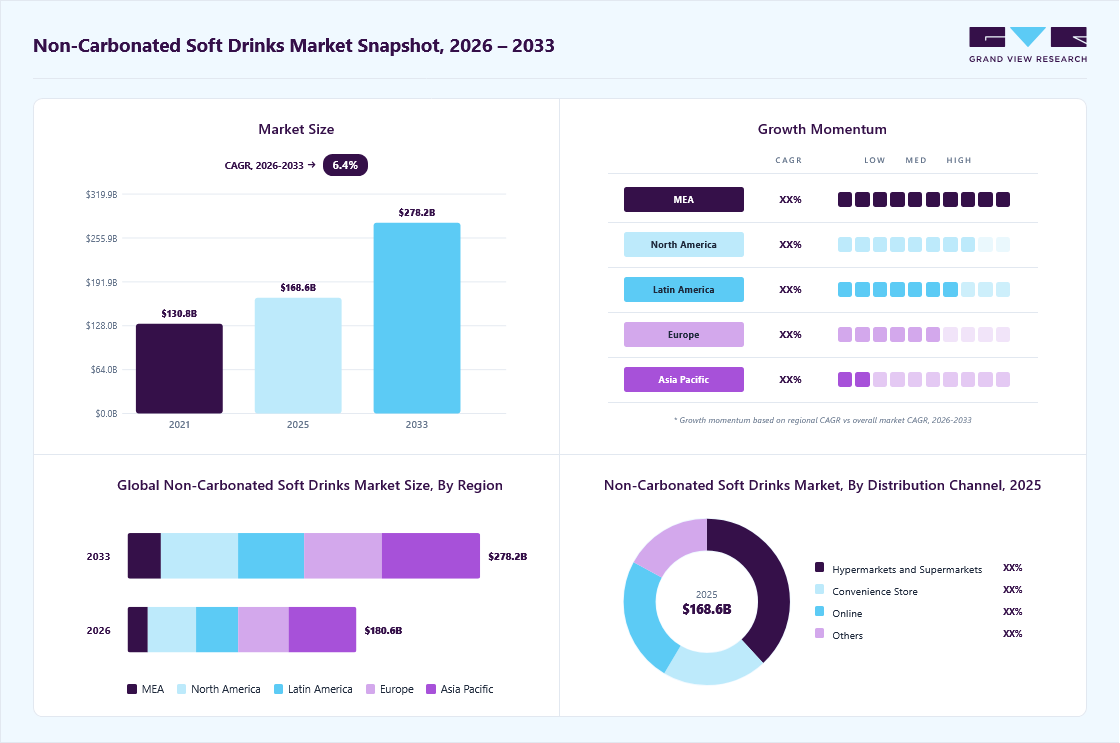 Source: Grand View Research, IR Documents, Primary Interviews, Paid DatabasesTo learn more about this report,
 Download Free Sample Report
Key Market Trends & Insights
- By product: RTD non-carbonated soft drinks segment held the largest market share of 80.3% in 2025.
- By distribution channel: Sales segment held the largest market share of 38.1% in 2025.
Regional Highlights
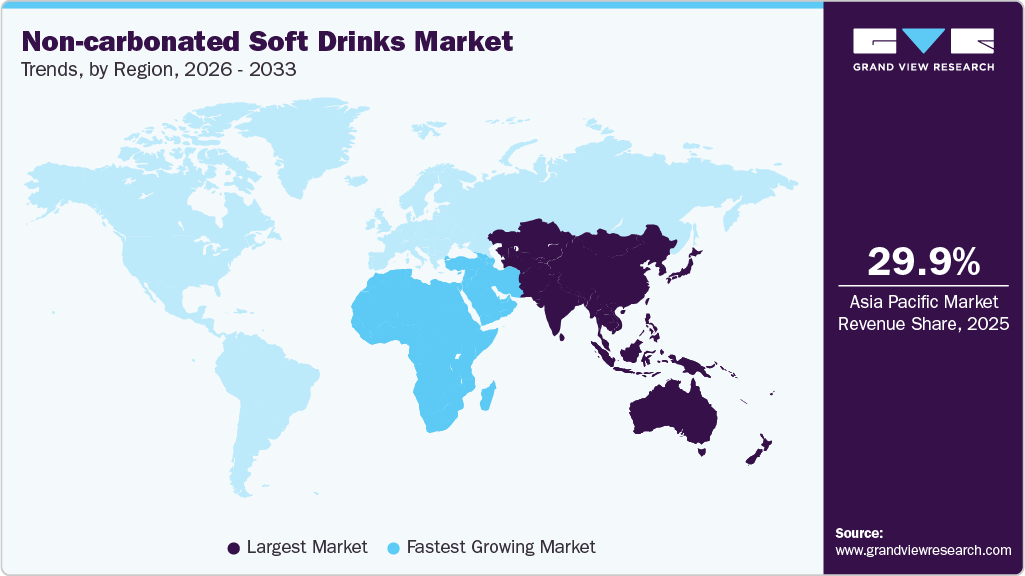
- Largest regional market: Asia Pacific (29.9% revenue share, 2025)
- Fastest-growing regional market: Middle East & Africa (highest CAGR, 2026-2033)
- By country: China held the largest market share in 2025
Market Size & Forecast
- Market size in 2025: USD 168.6 Billion
- Estimated market size in 2026: USD 180.6 Billion
- Projected market size by 2033: USD 278.2 Billion
- CAGR (2026-2033): 6.4%
Three ways to get this report
Buy it, customize it, or ask a question.Ask an Analyst
Analyst response in 1 business day
- AccessReport author, directly
- Reply timeWithin 1 working day
- No sales callDirect answer only
- FormatEmail reply
- CostFree, no cost
Get the Full Report
What the study covers
- FormatsPDF · Excel · Dashboard
- Timeline2026–2033 annual, 2025 base
- Coverage20+ countries, 5 regions
- Companies10+ key players profiled
Customize the Report
20% free customization
- IncludeCountries, segments, points
- TailorTo your product definition
- ExtendDeeper competitor detail
- OrA fully bespoke study
- Turnaround5–10 working days
Demand is being pulled by daily consumption occasions (work, commute, gym, school, travel) where people want easy-to-drink, low/heavy-free options such as flavored water, RTD tea/coffee, juice-based drinks, functional drinks, and sports/isotonic-style beverages without the “heaviness” or bloating some consumers associate with carbonation.A key factor supporting market expansion is the growing health and wellness orientation among consumers. Rising awareness around sugar intake, calorie control, and artificial additives has boosted demand for low-sugar, no-added-sugar, and naturally flavored beverages across flavored water, RTD tea, and juice drink segments. Sports drinks are also evolving beyond traditional energy replenishment to focus on electrolyte balance, hydration efficiency, and clean formulations, broadening their appeal beyond athletes to lifestyle and fitness-conscious consumers.
 To learn more about this report, Download Free Sample Report
Consumer interest in new and diverse flavors is another major growth driver. Flavor innovation enables brands to differentiate products in a crowded market while catering to variety-seeking behavior and evolving taste preferences. There is increasing traction for fruit blends, botanical and herbal infusions, tea-based profiles, tropical flavors, and subtle sweetness levels, particularly among adult consumers seeking more refined taste experiences. Additionally, pairing flavor with function, such as citrus for refreshment, herbal notes for relaxation, or fruit blends for energy, supports occasion-based consumption and premium positioning.
Unlike carbonated soft drinks, these products are perceived as suitable for frequent, all-day consumption, supporting higher per-capita intake. Expanding availability across retail, convenience, fitness centers, and foodservice channels further strengthens category demand, while innovation-led product launches continue to attract new consumers.
Manufacturers are actively innovating to sustain growth through both product formulation and packaging advancements. Companies are introducing functional enhancements such as added vitamins, minerals, electrolytes, antioxidants, and plant-based ingredients to create differentiated value propositions. Limited-edition flavors, seasonal variants, and cross-category blends (e.g., tea-infused hydration drinks or juice-based sports drinks) are increasingly used to drive trial and shelf rotation. For instance, in June 2024, TeaPot, the cannabis‑infused iced tea brand from The Boston Beer Company, launched two new summer drinks: Lemonade Iced Tea with 5 mg THC per 355 mL can, and CBD Lemon Black Tea with 20 mg hemp‑derived CBD and under 0.5 mg THC. Both non‑carbonated teas are around 100-130 calories and are initially available in dispensaries across Ontario and Quebec, with plans for wider Canadian distribution, supporting Boston Beer’s broader push into innovative cannabis beverages.
Packaging innovation also plays a critical role in market expansion. Brands are investing in sleek, portable, and resealable bottles, premium visual design, and sustainable packaging formats such as recycled PET and lightweight materials. Clear front-of-pack communication highlighting benefits such as “zero sugar,” “hydration,” or “functional support” enhances shelf visibility and purchase conversion, particularly in impulse and on-the-go settings.
Product Insights
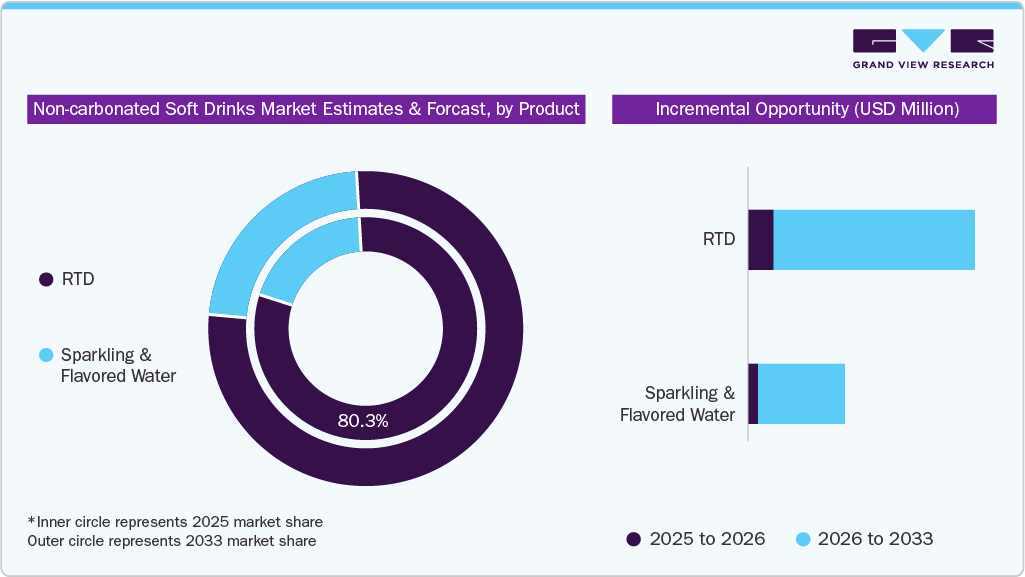
The RTD non-carbonated soft drinks market accounted for a revenue share of 80.3% in 2025. The market for RTD non-carbonated soft drinks is rising as consumers increasingly seek hydration-focused, lighter alternatives to carbonated sodas that are easier on digestion and better aligned with everyday wellness habits. Shifts toward lower carbonation, lower sugar perception, and cleaner flavor profiles are driving demand for still beverages such as flavored waters, iced teas, juice drinks, and functional RTDs that can be consumed throughout the day. Growth is further supported by on-the-go lifestyles, strong innovation in natural flavors and functional positioning, and expanded availability across convenience, modern retail, and e-commerce, making non-carbonated RTDs a versatile choice for regular, guilt-reduced consumption.
 To learn more about this report, Download Free Sample Report
The sparkling & flavored water non-carbonated soft drinks are expected to have a CAGR of 8.8% from 2026 to 2033. Growing health awareness, particularly around sugar reduction, weight management, and artificial additives, has positioned flavored water as a “permissible” everyday drink that still delivers taste and variety. Demand is further supported by natural flavor infusions, functional claims (electrolytes, vitamins), and premium packaging, along with strong penetration across convenience stores, gyms, and on-the-go channels, making these products an easy substitute for both plain water and conventional soft drinks.
Distribution Channel Insights
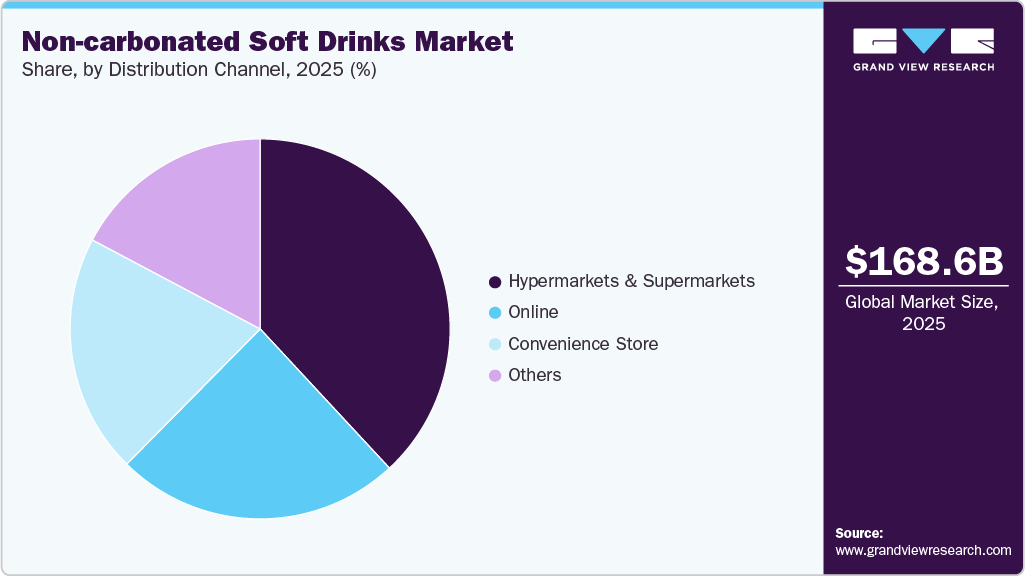
Sales of non-carbonated soft drinks through the hypermarkets and supermarkets accounted for a revenue share of 38.1% in 2025. Large-format retail stores offer broader assortments, multi-pack value pricing, and frequent in-store promotions, which encourage bulk purchasing for home consumption. In addition, shoppers trust hypermarkets and supermarkets for label comparison, perceived freshness, and price transparency, making them the preferred channel for routine beverage stock-ups as households rebalance spending toward non-carbonated, lower-fizz, and function-led drink choices.
 To learn more about this report, Download Free Sample Report
Sales of non-carbonated soft drinks through online distribution channels are expected to grow at a CAGR of 8.1% from 2026 to 2033. Online platforms allow shoppers to compare prices, access a wider flavor and brand assortment, and stock up on multipacks, which is particularly attractive for juices, ready-to-drink teas, flavored waters, and functional drinks that are consumed regularly at home. Growth is further supported by quick-commerce and subscription models, improved cold-chain logistics, and targeted digital promotions and personalized recommendations, making online purchases more cost-efficient and reliable than frequent in-store trips.
Regional Insights
The non-carbonated soft drinks market in the Asia Pacific accounted for a revenue share of 29.9% in 2025. The market in the Asia Pacific is rising among consumers, mainly as health and wellness preferences are shifting demand away from traditional sugary, fizzy drinks toward perceived healthier alternatives such as juices, flavored waters, ready-to-drink teas, and other non-carbonated beverages that are seen as lower in sugar and more natural. This trend is reinforced by growing health consciousness, rising disposable incomes, and rapid urbanization, which together expand both the consumer base and willingness to pay for premium, functional drinks.
 To learn more about this report, Download Free Sample Report
China Non-carbonated Soft Drinks Market Trends
The non-carbonated soft drinks market in China accounted for a revenue share of 29.8% in 2025. The growth is supported by rising consumer interest in healthier, low-sugar beverages. Strong demand for functional drinks, juices, and ready-to-drink teas boosted market expansion. Urbanization, evolving lifestyles, and widespread retail availability further accelerated adoption, encouraging brands to innovate with natural ingredients, new flavors, and wellness-focused formulations.
North America Non-carbonated Soft Drinks Market Trends
The non-carbonated soft drinks market in North America is expected to register a CAGR of 6.9% from 2026 to 2033. Products such as still flavored drinks, iced teas, sports drinks, and juice-based beverages align well with growing preferences for hydration, reduced carbonation, and better taste tolerance, particularly among younger consumers and aging populations. This shift is further supported by sugar-reduction reformulations, low- and no-calorie variants, and functional positioning (electrolytes, vitamins, energy, or relaxation benefits), along with strong distribution through convenience stores and ready-to-drink formats that fit on-the-go lifestyles.
The non-carbonated soft drinks market in the U.S. is rising as consumers increasingly reduce carbonated soda intake in favor of beverages perceived as lighter, healthier, and more functional. Drinks such as ready-to-drink teas, juices, sports drinks, flavored waters, and still beverages align with growing demand for hydration, natural ingredients, and lower carbonation-related discomfort, particularly among health-conscious and aging consumers.
Europe Non-carbonated Soft Drinks Market Trends
The Europe non-carbonated soft drinks market is expected to register a CAGR of 6.4% from 2026 to 2033. Growing concerns around sugar intake, digestive comfort, and hydration have boosted demand for still drinks such as juices, nectars, iced teas, flavored waters, and functional beverages. This trend is reinforced by sugar-reduction regulations and labeling transparency across European markets, which have encouraged both reformulation and consumer trial of non-carbonated alternatives. In addition, premiumization, clean-label positioning, and functional claims (vitamins, botanicals, electrolytes) are expanding usage occasions beyond refreshment to everyday wellness, supporting sustained category growth.
The non-carbonated soft drinks market in Germany have accounted for a revenue share of 22.3% in 2025. The market dominance in the country is driven by growing consumer preference for healthier beverage options. Rising demand for juices, flavored water, and functional drinks, along with increasing health awareness and reduced sugar consumption, supported market growth and product innovation across the segment.
Middle East & Africa Non-carbonated Soft Drinks Market Trends
The non-carbonated soft drinks market in the Middle East & Africa region is growing at the fastest CAGR of 7.4% over the forecast period from 2026 to 2033. This rapid expansion is driven by rising health consciousness, increasing demand for functional and natural beverages, expanding youth population, and improving retail infrastructure across key Middle Eastern and African countries.
The non-carbonated soft drinks market in South Africa has accounted for a revenue share of 21.2% in 2025, supported by rising demand for healthier beverage options such as flavored water, juices, and functional drinks. Growing urbanization, lifestyle shifts, and increasing consumer focus on low-sugar alternatives contributed to the market’s overall expansion and product diversification.
Central & South America Non-carbonated Soft Drinks Market Trends
The non-carbonated soft drinks market in the Central & South America region is growing at the fastest CAGR of 6.6% over the forecast period from 2026 to 2033. The growth in this region is primarily driven by increasing demand for healthier beverages, rising urbanization, and expanding availability of juices, flavored water, and functional drinks across emerging economies in the region.
The non-carbonated soft drinks market in Brazil is growing at a CAGR of 6.9% over the forecast period from 2026 to 2033. The growth is driven by rising consumer preference for healthier, low-sugar beverages. Increasing demand for juices, flavored water, and functional drinks, along with expanding retail distribution and growing urban lifestyles, is supporting market expansion and encouraging continuous product innovation.
Key Non-carbonated Soft Drinks Company Insights
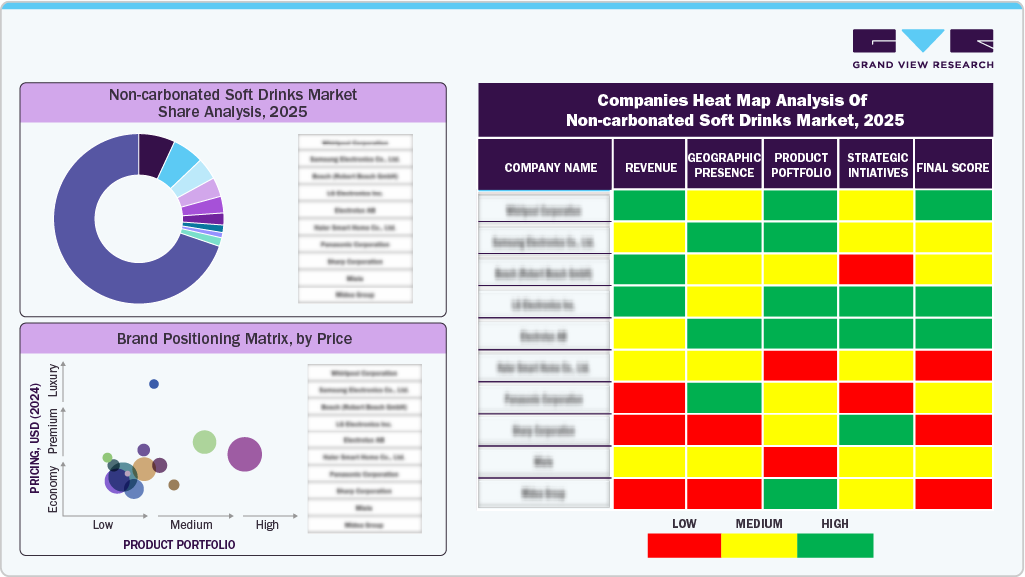
Many big players are increasing their focus on the growing trend of the non-carbonated soft drink market. Key companies in the industry are strengthening their market share through innovation, diverse product portfolios, and strong distribution.
 To learn more about this report, Download Free Sample Report
Key Non-carbonated Soft Drinks Companies:
The following key companies have been profiled for this study on the non-carbonated soft drinks market.
- Nestlé SA
- Pepsico, Inc.
- The Coca-Cola Company
- Keurig Dr Pepper Inc (KDP)
- Red Bull GmbH
- Unilever plc
- Monster Energy Company
- Arizona Beverages USA LLC
- Hint Inc.
- Spindrift Beverage Co., Inc.
Recent Developments
-
In October 2025, Grupo Jumex and AriZona Beverages expanded their partnership with the launch of Jumex Energy, a lightly carbonated energy drink line made from real fruit nectar in Mango and Strawberry flavors, each containing 150 mg caffeine, vitamins C and B-complex, plus taurine, guarana, and ginseng for energy and focus support. The launch marks Jumex’s entry into standalone energy beverages, leveraging AriZona’s U.S. distribution and beverage expertise to offer a functional, fruit-forward drink positioned for consumers seeking authentic, energizing options on the go.
-
In April 2024, Molson Coors launched Happy Thursday, a non‑carbonated 4.4% ABV spiked refresher created with input from Gen Z drinkers to reduce bloating and burning from carbonation, in four fruit flavors with brightly colored, social media-friendly packaging designed to appeal to health‑minded younger consumers.
Non-carbonated Soft Drinks Market Report Scope
Report Attribute
Details
Market size in 2025
USD 168.6 billion
Estimated market size in 2026
USD 180.6 billion
Projected market size by 2033
USD 278.2 billion
Growth rate
CAGR of 6.4% from 2026 to 2033
Base year for estimation
2025
Historical data
2021 - 2024
Forecast period
2026 - 2033
Quantitative units
Revenue in USD million/billion and CAGR from 2026 to 2033
Report coverage
Revenue forecast, company ranking, competitive landscape, growth factors, and trends
Segments covered
Product, distribution channel, region
Regional scope
North America; Europe; Asia Pacific; Central & South America; Middle East & Africa
Country scope
U.S.; Canada; Mexico; UK; Germany; France; Italy; Spain; China; India; Japan; South Korea; Australia & New Zealand; Brazil; South Africa; and UAE
Key companies profiled
Nestlé SA; Pepsico, Inc.; The Coca-Cola Company; Keurig Dr Pepper Inc (KDP); Red Bull GmbH; Unilever PLC; Monster Energy Company; AriZona Beverages USA LLC.; Hint Inc.; Spindrift Beverage Co., Inc.
Customization scope
Free report customization (equivalent up to 8 analysts working days) with purchase. Addition or alteration to country, regional & segment scope.
Pricing and purchase options
Avail customized purchase options to meet your exact research needs. Explore purchase options
Global Non-carbonated Soft Drinks Market Report Segmentation
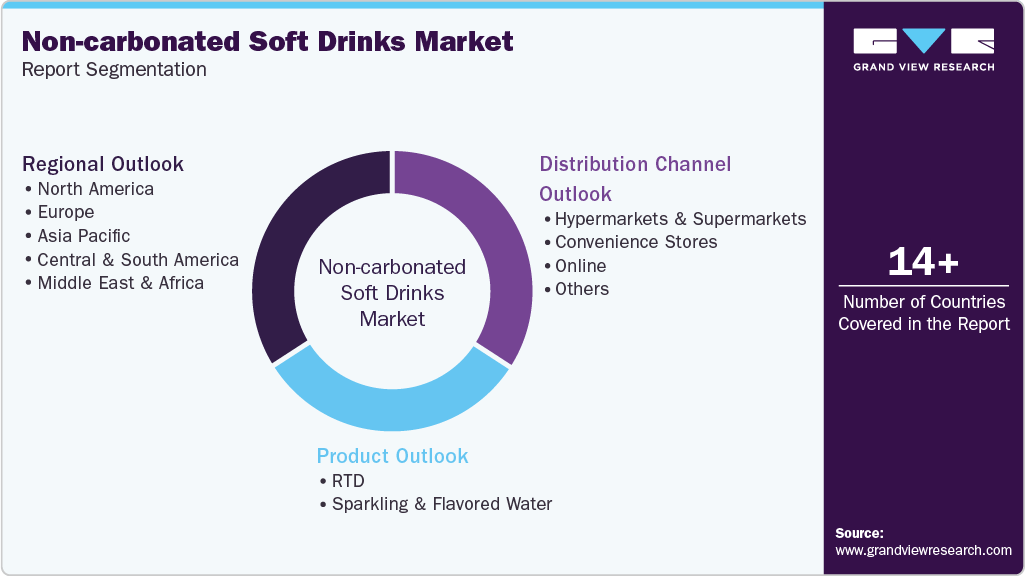
This report forecasts revenue growth at global, regional & country levels and provides an analysis on the latest trends and opportunities in each of the sub-segments from 2021 to 2033. For this study, Grand View Research has segmented the global non-carbonated soft drinks market based on product, distribution channel, and region:
 To learn more about this report, Download Free Sample Report
-
Product Outlook (Revenue, USD Million, 2021 - 2033)
-
RTD
-
Sparkling & Flavored Water
-
-
Distribution Channel Outlook (Revenue, USD Million, 2021 - 2033)
-
Hypermarkets & Supermarkets
-
Convenience Stores
-
Online
-
Others
-
-
Regional Outlook (Revenue, USD Million, 2021 - 2033)
-
North America
-
U.S.
-
Canada
-
Mexico
-
-
Europe
-
UK
-
Germany
-
France
-
Italy
-
Spain
-
-
Asia Pacific
-
China
-
India
-
Japan
-
Australia & New Zealand
-
South Korea
-
-
Central & South America
-
Brazil
-
-
Middle East & Africa (MEA)
-
South Africa
-
UAE
-
-
Frequently Asked Questions About This Report
The non-carbonated soft drinks market is rising as consumers are steadily shifting away from “traditional fizzy + high sugar” propositions toward hydration-led, better-for-you, and flavor-forward beverages that still feel indulgent and convenient.
The RTD non-carbonated soft drinks segment led with a 80.3% revenue share in 2025.
The hypermarkets and supermarkets segment led with a 38.1% revenue share in 2025.
The global Non-Carbonated soft drinks market size was valued at USD 168.6 billion in 2025 and is estimated at USD 180.6 billion for 2026.
The global Non-Carbonated soft drinks market is expected to grow at a CAGR of 6.4% from 2026 to 2033, reaching USD 278.2 billion by 2033.
Asia Pacific dominated with a 29.9% revenue share in 2025.
Middle East & Africa is the fastest-growing region over the forecast period.
Key players include Nestlé SA; Pepsico, Inc.; The Coca-Cola Company; Keurig Dr Pepper Inc (KDP); Red Bull GmbH; Unilever PLC; Monster Energy Company; AriZona Beverages USA LLC.; Hint Inc.; Spindrift Beverage Co., Inc.
About the Author(s)
Consumer F&B Research Team
Consumer Goods · Consumer F&BThis report was authored by the consumer f&b research team at Grand View Research - comprising two research analysts, one senior research analyst, and one industry expert - with specialized expertise in the consumer f&b segment of the consumer goods industry. All findings are based on proprietary consumer goods databases, executive interviews, and regulatory analysis, subject to internal peer review prior to publication.
Last Updated:
Speak to Analyst

Customize this report to your needs - add regions, segments, or data points, with 20% free customization.
Or view our licence options:


ISO 9001:2015 & 27001:2022 Certified
We are GDPR and CCPA compliant! Your transaction & personal information is safe and secure. For more details, please read our privacy policy.


