
- Home
- »
- Medical Devices
- »
-
Non-silver Antimicrobial Wound Dressing Market Report 2026-2033GVR Report cover

Non-silver Antimicrobial Wound Dressing Market (2026 - 2033)
Size, Share & Trends Analysis Report By Product (Honey, Iodine, Chitosan, PHMB), By Application (Chronic Wounds, Acute Wounds), By End-use, By Region, And Segment Forecasts
Market Size, 2025
$529.4MMarket Estimate, 2026
$548.4MMarket Forecast, 2033
$739.1MCAGR, 2026–2033
4.4%Non-silver Antimicrobial Wound Dressing Market Summary
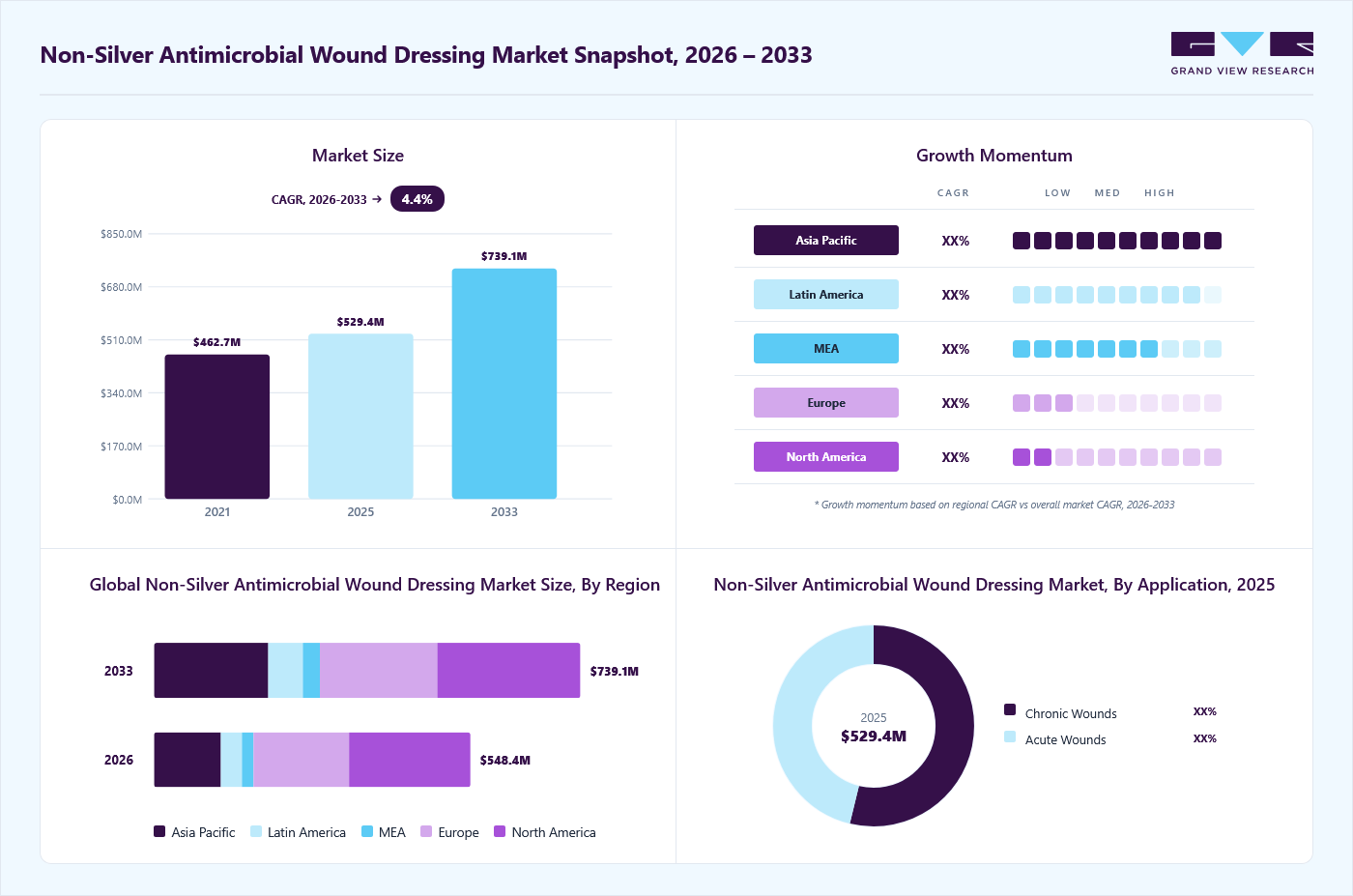
The global non-silver antimicrobial wound dressing market size was valued at USD 529.4 million in 2025 and is projected to grow from USD 548.4 million in 2026 to USD 739.1 million by 2033, at a CAGR of 4.4% from 2026 to 2033. The market in North America dominated with a revenue share of 38.9% in 2025. The non-silver antimicrobial wound dressing industry is driven by the rising prevalence of chronic wounds and the increasing number of surgical procedures requiring effective infection control.
 Source: Grand View Research, IR Documents, Primary Interviews, Paid DatabasesTo learn more about this report,
 Download Free Sample Report
Key Market Trends & Insights
- By product: Iodine segment held the largest market share of 39.6% in 2025.
- By application: Chronic wounds segment held the largest market share in 2025.
- By end-use: Hospitals segment held the largest market share in 2025.
Regional Highlights
- Largest regional market: North America (38.9% revenue share, 2025)
- Fastest-growing regional market: Asia Pacific (highest CAGR, 2026-2033)
- By country: U.S. held the largest market share in 2025
Market Size & Forecast
- Market size in 2025: USD 529.4 Million
- Estimated market size in 2026: USD 548.4 Million
- Projected market size by 2033: USD 739.1 Million
- CAGR (2026-2033): 4.4%
Prism AI by Grand View Research Free to tryAsk a question about the non-silver antimicrobial wound dressing marketTry asking✓Every figure cited from GVR research Prefer the report? Download free sample →
Concerns over antimicrobial resistance and the cytotoxicity of silver-based products are accelerating the shift toward alternatives like iodine, honey, and PHMB. Growing awareness of advanced wound care and an aging population further support market growth.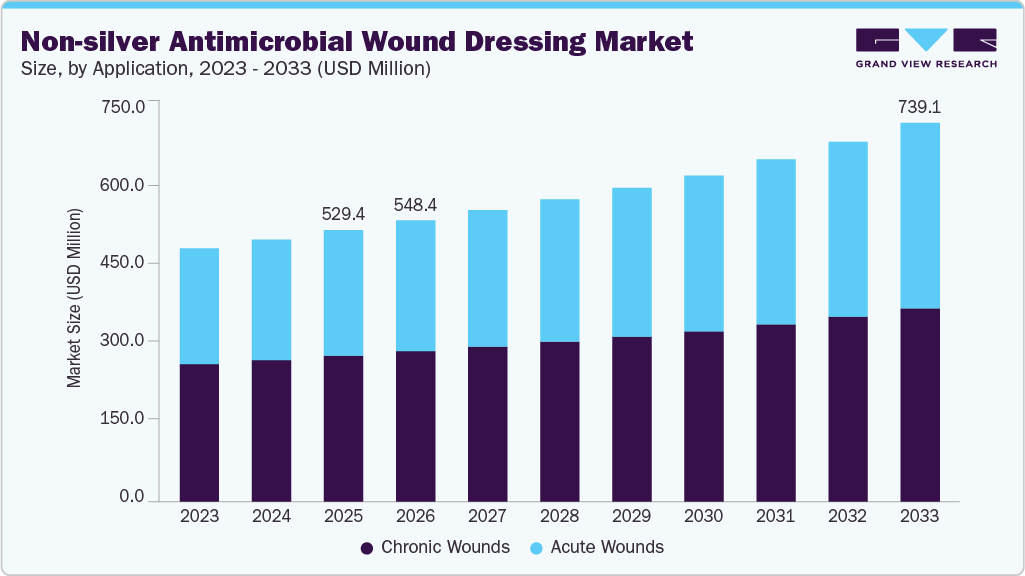 To learn more about this report, Download Free Sample Report
The rising prevalence of chronic wounds, such as diabetic foot ulcers and pressure ulcers, is significantly driving demand for non-silver antimicrobial wound dressings. These wounds require long-term management and effective infection control, which increases the use of safer, less cytotoxic alternatives such as PHMB and iodine-based dressings. As the patient pool continues to grow, the need for advanced, sustainable wound care solutions is accelerating market growth.
Pressure Ulcer Prevention in Saudi Arabia (2021-2022)
Parameter
Pre-Intervention
Post-Intervention
Number of patients
87
94
Number of nurses
190
195
Pressure injury prevalence
60.90%
28.70%
Total pressure injuries
96
49
Hospital-acquired pressure injuries
52.90%
21.30%
Unit-acquired pressure injuries
37.90%
14.90%
Medical device-related pressure injuries
23.00%
8.50%
Common locations
Sacral region, head, heels
Sacral region, head, heels
Predominant stages
I & II
I & II
Nurses’ average knowledge score
43.22%
51.22%, p < 0.001
Nurses’ average attitude score
74.77%
79.02%, p < 0.001
Source: University of Wollongon Australia
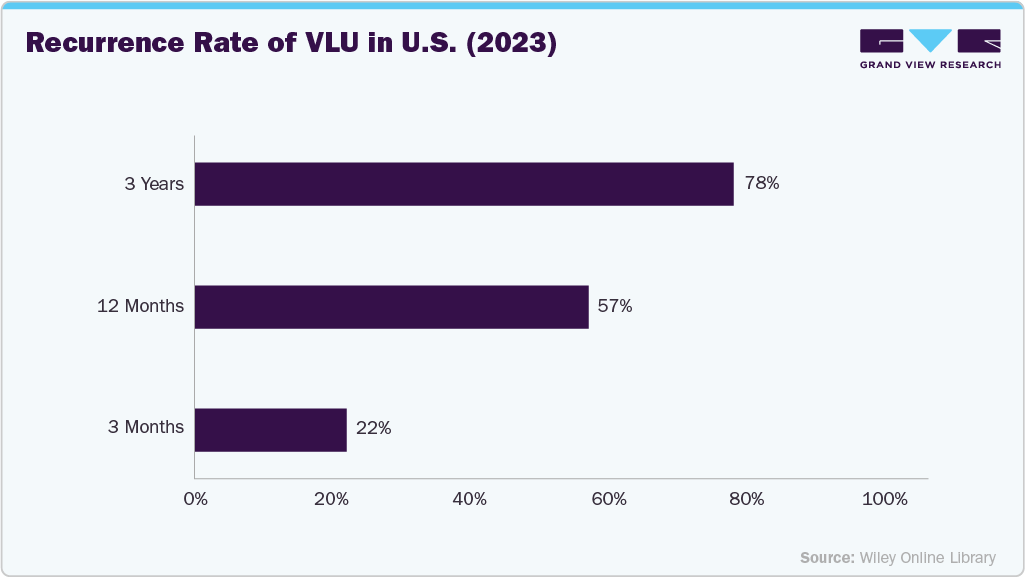
Furthermore, the increasing incidence of venous leg ulcers is driving the demand for non-silver antimicrobial wound dressings, as these wounds require prolonged treatment and consistent infection control. Non-silver options such as PHMB and iodine-based dressings are preferred for their safety, reduced cytotoxicity, and suitability for long-term use. As the burden of venous ulcers rises, the need for effective, patient-friendly wound care solutions continues to drive market growth.
Prevalence and Recurrence Rate of VLU in U.S. (2023)
Country
Population Group
Prevalence
Recurrence Rate (3 Months)
Recurrence Rate (12 Months)
Recurrence Rate (3 Years)
U.S.
People aged 65 and above
4%
22%
57%
78%
Source: Wiley Online Library
 To learn more about this report, Download Free Sample Report
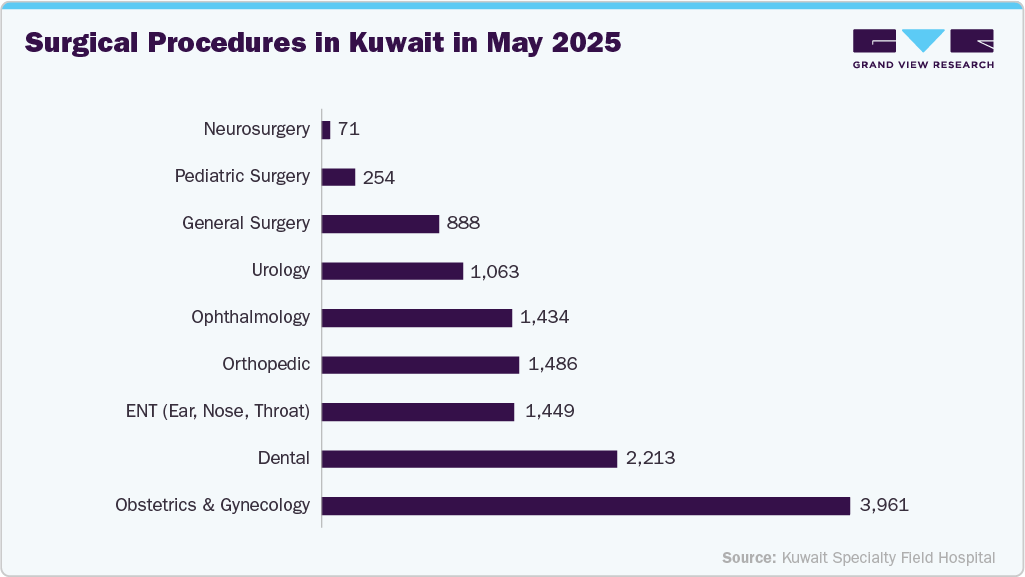
The increasing number of surgical procedures and traumatic injuries is driving demand for non-silver antimicrobial wound dressings, as effective infection prevention is critical for post-operative and acute wound care. These dressings offer safer alternatives with lower cytotoxicity, making them suitable for repeated use during recovery. As surgical volumes and injury cases rise, the need for reliable and advanced wound management solutions continues to grow.
 To learn more about this report, Download Free Sample Report
Technological advancements in wound care materials are driving the non-silver antimicrobial wound dressing industry by enabling the development of more effective, biocompatible, and targeted antimicrobial solutions such as PHMB and iodine-based formulations. These innovations enhance healing outcomes, reduce infection risks, and support wider adoption across both clinical and home care settings.
As a result, the growing burden of chronic wounds, including diabetic foot ulcers, pressure ulcers, and venous leg ulcers, along with rising surgical and trauma cases and continuous advancements in wound care materials, is collectively driving the demand for non-silver antimicrobial wound dressings. In addition, the increasing preference for safer, low-cytotoxic alternatives and the need for effective long-term wound management solutions are further supporting sustained market growth.
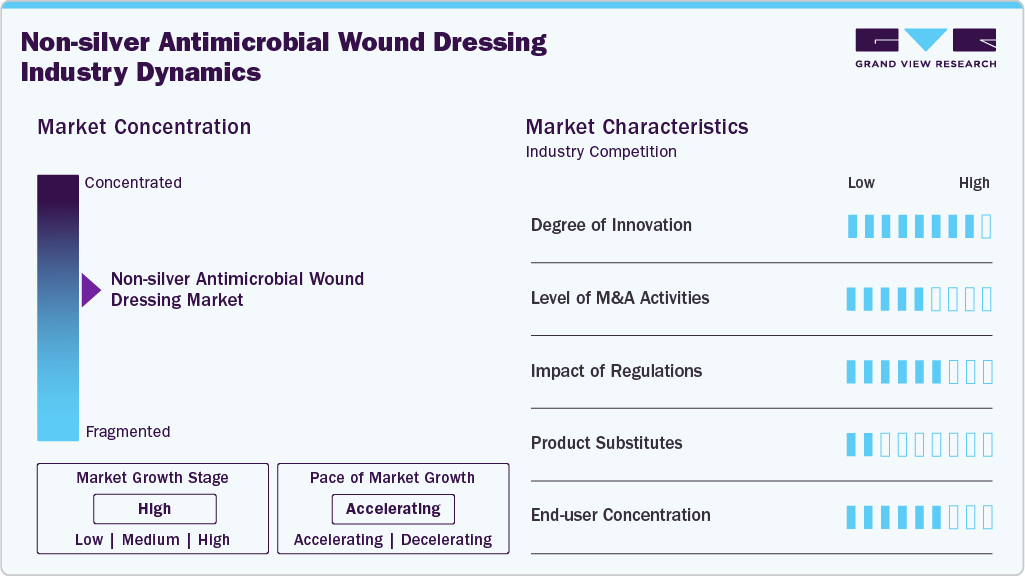
Market Characteristics & Concentration
The degree of innovation in the non-silver antimicrobial wound dressing industry is moderate to high, with a focus on safer and more biocompatible antimicrobial agents such as PHMB, iodine, and medical-grade honey. Companies are developing advanced dressings with improved moisture balance, controlled release properties, and enhanced healing environments. There is also growing emphasis on combination dressings that integrate antimicrobial action with tissue regeneration and patient comfort.
The level of mergers and acquisitions in the non-silver antimicrobial wound dressing industry is moderate, with activity largely driven by larger medical device companies seeking to expand their advanced wound care portfolios. Strategic acquisitions focus on gaining access to innovative biomaterials and alternative antimicrobial technologies, such as PHMB and honey-based formulations. Partnerships and niche player buyouts are also common to strengthen geographic presence and product differentiation.
 To learn more about this report, Download Free Sample Report
Regulations have a significant impact on the non-silver antimicrobial wound dressing industry, as products must meet stringent safety, biocompatibility, and efficacy standards before approval. Compliance requirements often increase development timelines and costs, particularly for dressings incorporating novel antimicrobial agents. However, clear regulatory pathways also support market credibility and encourage the adoption of clinically proven, safer alternatives.
End-use concentration in the non-silver antimicrobial wound dressing industry is relatively high in hospitals and specialized wound care clinics, where advanced infection management is a priority. Home healthcare settings are also gaining share due to the rising preference for outpatient care and self-management of chronic wounds. However, institutional settings continue to dominate owing to higher procedure volumes and access to advanced products.
Product Insights
The iodine-based formulations segment led the market with the largest revenue share of 39.6% in 2025, owing to their broad-spectrum antimicrobial activity and proven effectiveness in managing infected wounds. Their ability to reduce microbial load while supporting healing, along with widespread clinical acceptance and cost-effectiveness, has contributed to their strong market presence across acute and chronic wound care settings.
The PHMB segment is expected to grow at the fastest CAGR during the forecast period, driven by its broad-spectrum antimicrobial activity and lower cytotoxicity compared to silver-based agents. Its ability to promote effective wound healing while minimizing irritation and resistance concerns is increasing its adoption across chronic and acute wound care applications.
Application Insights
The chronic wounds segment accounted for the largest market revenue share in 2025, owing to their extended healing time and high susceptibility to infection. The need for ongoing treatment and reliable antimicrobial protection led to increased adoption of non-silver dressings in these cases. This trend was further supported by the growing prevalence of age-related and lifestyle-associated conditions.
The acute wounds segment is expected to grow at the fastest CAGR during the forecast period, driven by the increasing number of surgical procedures and trauma-related injuries. The need for rapid healing and effective infection prevention is boosting the adoption of advanced antimicrobial dressings. In addition, the shift toward outpatient and ambulatory care settings is further supporting segment growth.
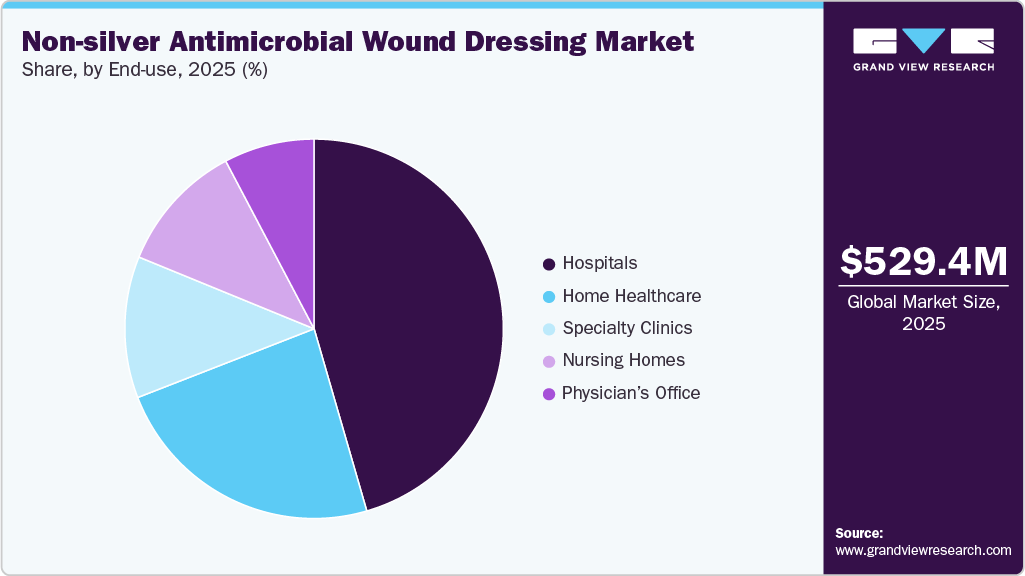
End-use Insights
The hospitals segment accounted for the largest market revenue share in 2025, due to high patient inflows for surgical, traumatic, and chronic wound treatments that require continuous infection management. Their access to skilled professionals, advanced treatment facilities, and standardized wound care protocols led to greater utilization of antimicrobial dressings, reinforcing their leading market share.
 To learn more about this report, Download Free Sample Report
The home healthcare segment is expected to witness at the fastest CAGR during the forecast period, driven by the rising shift toward minimally invasive procedures and post-operative care in home settings. The increasing adoption of portable, compact display systems, along with advancements in telemedicine and remote monitoring, is further driving demand for high-quality visualization solutions beyond traditional hospital environments.
Regional Insights
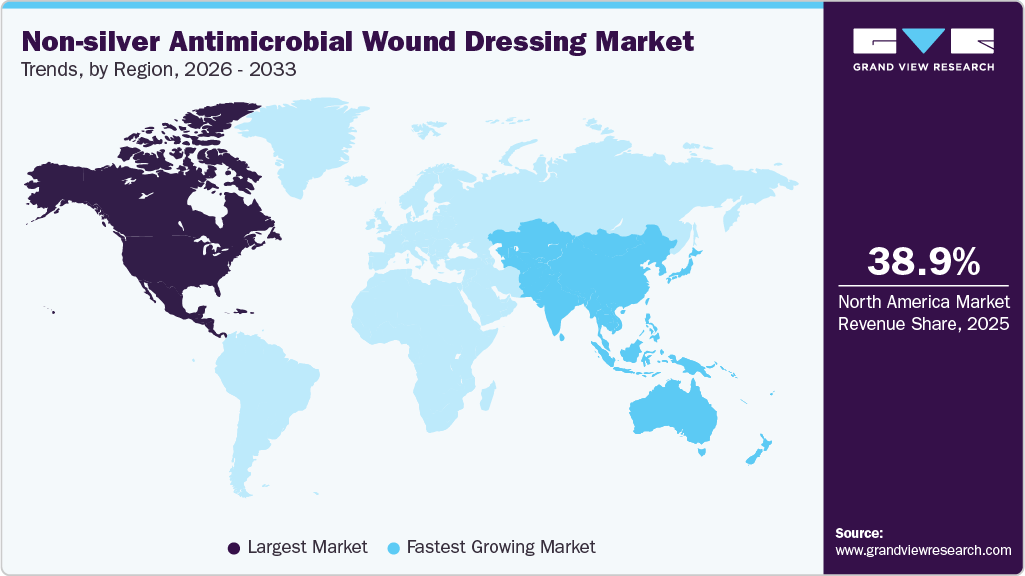
North America dominated the global non-silver antimicrobial wound dressing market with the largest revenue share of 38.9% in 2025. Driven by increased adoption of advanced, biocompatible alternatives, driven by concerns over silver-related side effects. Growing demand for home-based wound care and outpatient treatment is also shaping market dynamics. In addition, continuous product innovation focusing on improved healing outcomes and patient comfort is influencing market growth.
 To learn more about this report, Download Free Sample Report
U.S. Non-silver Antimicrobial Wound Dressing Market Trends
The non-silver antimicrobial wound dressing market in the U.S. accounted for the largest market revenue share in North America in 2025. The U.S. is witnessing a shift toward advanced, non-toxic alternatives driven by rising awareness of infection control and concerns over silver-related side effects. Increasing surgical volumes and the growing burden of acute and chronic wounds are driving significant demand for antimicrobial dressings across care settings. In addition, the trend toward home healthcare and outpatient treatment is encouraging the adoption of easy-to-use, patient-friendly dressing solutions.
Europe Non-silver Antimicrobial Wound Dressing Market Trends
The non-silver antimicrobial wound dressing market in Europe is evolving, driven by a growing preference for safer, non-cytotoxic antimicrobial solutions, supported by robust clinical guidelines and a patient-safety focus. Increasing adoption of advanced wound care products across hospitals and community care settings is driving demand. In addition, the shift toward cost-efficient treatments and home-based care is influencing market trends.
The UK non-silver antimicrobial wound dressing market is witnessing a shift toward advanced, cost-effective wound care solutions, supported by a strong emphasis on evidence-based treatment within the healthcare system. The increasing adoption of community- and home-based care is driving demand for easy-to-use, non-toxic antimicrobial dressings. In addition, rising surgical procedures and an aging population are further driving the need for advanced wound management products.
The non-silver antimicrobial wound dressing market in France is experiencing gradual growth, driven by increasing focus on patient safety and the use of biocompatible antimicrobial solutions. Rising adoption of advanced wound care in both hospital and community settings is supporting demand. In addition, the shift toward outpatient care and emphasis on efficient wound management practices are influencing market trends.
Asia Pacific Non-silver Antimicrobial Wound Dressing Market Trends
The non-silver antimicrobial wound dressing market in the Asia Pacific is anticipated to grow at the fastest CAGR during the forecast period, due to rising cases of chronic wounds, increasing surgical procedures, and improved access to healthcare services. Growing awareness about infection prevention and the availability of cost-effective, alternative antimicrobial dressings are driving adoption. In addition, the ongoing development of healthcare infrastructure and an aging population are supporting market growth.
The Chine non-silver antimicrobial wound dressing market is growing significantly, supported by the increasing incidence of chronic wounds and a rising number of surgical procedures. Greater adoption of advanced wound care products in urban hospitals and improving healthcare access in rural areas are driving demand. In addition, the need for cost-effective, safer antimicrobial alternatives is shaping market trends.
Latin America Non-silver Antimicrobial Wound Dressing Market Trends
The non-silver antimicrobial wound dressing market in Latin America is experiencing steady growth, driven by the rising burden of chronic wounds and increasing awareness of infection management. Expanding access to healthcare services and the gradual adoption of advanced wound care products are supporting market demand. In addition, the preference for affordable and safer antimicrobial alternatives is influencing purchasing patterns across the region.
Middle East & Africa Non-silver Antimicrobial Wound Dressing Market Trends
The non-silver antimicrobial wound dressing market in the Middle East & Africa is gradually expanding due to rising cases of chronic wounds and improving access to healthcare services. Increasing awareness of infection prevention and the need for safer, alternative antimicrobial solutions are supporting adoption. In addition, ongoing investments in healthcare infrastructure and a growing focus on affordable treatment options are shaping market trends.
Key Non-silver Antimicrobial Wound Dressing Company Insights
The non-silver antimicrobial wound dressing industry is characterized by a moderately fragmented competitive landscape, with market share distributed among several global and regional players.
Competition is primarily driven by innovation in alternative antimicrobial technologies, product effectiveness, and pricing strategies. Companies are focusing on expanding their product portfolios and geographic reach to strengthen their market position.
Key Non-Silver Antimicrobial Wound Dressing Companies:
The following key companies have been profiled for this study on the non-silver antimicrobial wound dressing market.
- Mölnlycke AB
- Cardinal Health
- Advanced Medical Solutions Group plc
- Coloplast Corp
- Leukoplast (Essity)
- Smith+Nephew
- PAUL HARTMANN AG
- Gentell.
- Winner Medical Co., Ltd.
- AdvaCare Pharma
Recent Developments
-
In March 2026, Smith & Nephew announced the launch of ALLEVYN COMPLETE CARE Foam Dressing, featuring proprietary technologies and supported by a strong portfolio of scientific data and clinical evidence, reinforcing its advanced wound care offerings.
-
In May 2025, Mölnlycke Health Care announced its support for the Wound Care Collaborative Community initiative, aimed at improving wound dressing standards and advancing best practices in wound management.
-
In September 2025, Cardinal Health announced the launch of its newly operational Consumer Health Logistics Center, a 350,000-square-foot facility in Groveport, Ohio. Designed as a centralized replenishment hub, the facility strengthens the company’s supply chain by efficiently distributing over-the-counter medications, treatments, and diagnostic solutions to more than 20 forward distribution centers nationwide.
Non-silver Antimicrobial Wound Dressing Market Report Scope
Report Attribute
Details
Market size in 2025
USD 529.4 million
Estimated Market size in 2026
USD 548.4 million
Projected Market size in 2033
USD 739.1 million
Growth rate
CAGR of 4.4% from 2026 to 2033
Base year for estimation
2025
Historical data
2021 - 2024
Forecast period
2026 - 2033
Quantitative units
Revenue in USD million/billion, and CAGR from 2026 to 2033
Report coverage
Revenue forecast, company ranking, competitive landscape, growth factors, and trends
Segments covered
Product, application, end-use, region
Regional scope
North America; Europe; Asia Pacific; Latin America; Middle East & Africa
Country scope
U.S.; Canada; Mexico; Germany; UK; France; Norway; Denmark; Sweden; Spain; China; Japan; India; South Korea; Australia; Brazil; KSA; UAE; South Africa
Key companies profiled
Mölnlycke AB; Cardinal Health; Advanced Medical Solutions Group plc; Coloplast Corp; Leukoplast (Essity); Smith+Nephew; PAUL HARTMANN AG; Gentell.; Winner Medical Co., Ltd.; AdvaCare Pharma
Customization scope
Free report customization (equivalent up to 8 analysts working days) with purchase. Addition or alteration to country, regional & segment scope.
Pricing and purchase options
Avail customized purchase options to meet your exact research needs. Explore purchase options
Global Non-silver Antimicrobial Wound Dressing Market Report Segmentation
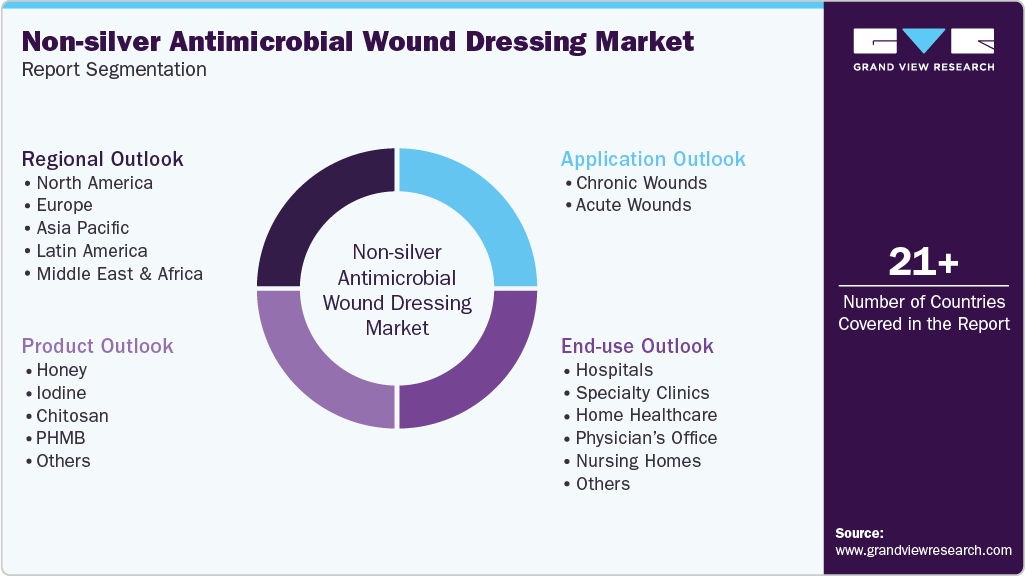
This report forecasts revenue growth at global, regional, and country levels and provides an analysis on the latest industry trends in each of the sub-segments from 2021 to 2033. For this study, Grand View Research has segmented the global non-silver antimicrobial wound dressing market report based on the product, application, end-use, and region:
 To learn more about this report, Download Free Sample Report
-
Product Outlook (Revenue, USD Million, 2021 - 2033)
-
Honey
-
Iodine
-
Chitosan
-
PHMB
-
Others
-
-
Application Outlook (Revenue, USD Million, 2021 - 2033)
-
Chronic Wounds
-
Diabetic foot ulcers
-
Pressure ulcers
-
Deep tissue injury
-
Venous leg ulcers
-
Other chronic wounds
-
-
Acute Wounds
-
Surgical & traumatic wounds
-
Burns
-
-
-
End-use Outlook (Revenue, USD Million, 2021 - 2033)
-
Hospitals
-
Specialty Clinics
-
Home Healthcare
-
Physician’s Office
-
Nursing Homes
-
-
Regional Outlook (Revenue, USD Million, 2021 - 2033)
-
North America
-
U.S.
-
Canada
-
Mexico
-
-
Europe
-
Germany
-
UK
-
France
-
Italy
-
Spain
-
Sweden
-
Denmark
-
Norway
-
-
Asia Pacific
-
Japan
-
China
-
India
-
Australia
-
South Korea
-
Thailand
-
-
Latin America
-
Brazil
-
Argentina
-
-
Middle East & Africa
-
South Africa
-
Saudi Arabia
-
UAE
-
Kuwait
-
-
Frequently Asked Questions About This Report
The global non-silver antimicrobial wound dressing market size was estimated at USD 529.4 million in 2025 and is expected to reach USD 548.4 million in 2026.
The global non-silver antimicrobial wound dressing market is expected to grow at a compound annual growth rate of 4.4% from 2026 to 2033 to reach USD 739.1 million by 2033.
Some key players operating in the non-silver antimicrobial wound dressing market include Mölnlycke AB, Cardinal Health, Advanced Medical Solutions Group plc , Coloplast Corp, Leukoplast (Essity), Smith+Nephew, PAUL HARTMANN AG, Gentell., Winner Medical Co., Ltd., AdvaCare Pharma
Key factors that are driving the market growth include the rising prevalence of chronic wounds and the increasing number of surgical procedures requiring effective infection control. Concerns over antimicrobial resistance and the cytotoxicity of silver-based products are accelerating the shift toward alternatives like iodine, honey, and PHMB.
The iodine-based formulations segment led with a 39.6% revenue share in 2025, while the PHMB segment is the fastest-growing.
The chronic wounds segment held the largest revenue share in 2025, while the acute wounds segment is the fastest-growing.
The hospitals segment held the largest revenue share in 2025, while the home healthcare segment is the fastest-growing.
Asia Pacific is the fastest-growing region over the forecast period.
North America dominated the non-silver antimicrobial wound dressing market with a share of 38.9% in 2025. This is attributable to increased adoption of advanced, biocompatible alternatives driven by concerns over silver-related side effects. Growing demand for home-based wound care and outpatient treatment is also shaping market dynamics.
About the Author(s)
Medical Devices Research Team
Healthcare · Medical DevicesThis report was authored by the medical devices research team at Grand View Research - comprising two research analysts, one senior research analyst, and one industry expert - with specialized expertise in the medical devices segment of the healthcare industry. All findings are based on proprietary healthcare databases, executive interviews, and regulatory analysis, subject to internal peer review prior to publication.
Last Updated:
Speak to Analyst

Customize this report to your needs - add regions, segments, or data points, with 20% free customization.
Or view our licence options:


ISO 9001:2015 & 27001:2022 Certified
We are GDPR and CCPA compliant! Your transaction & personal information is safe and secure. For more details, please read our privacy policy.


