
- Home
- »
- Alcohol & Tobacco
- »
-
North America Beer Market Size, Industry Report, 2030GVR Report cover

North America Beer Market (2025 - 2030) Size, Share & Trends Analysis Report By Product (Ale, Lager, Stout, Others), By Packaging, By Production, By Distribution Channel (On-Trade, Off-Trade), By Country, And Segment Forecasts
North America Beer Market Size & Trends
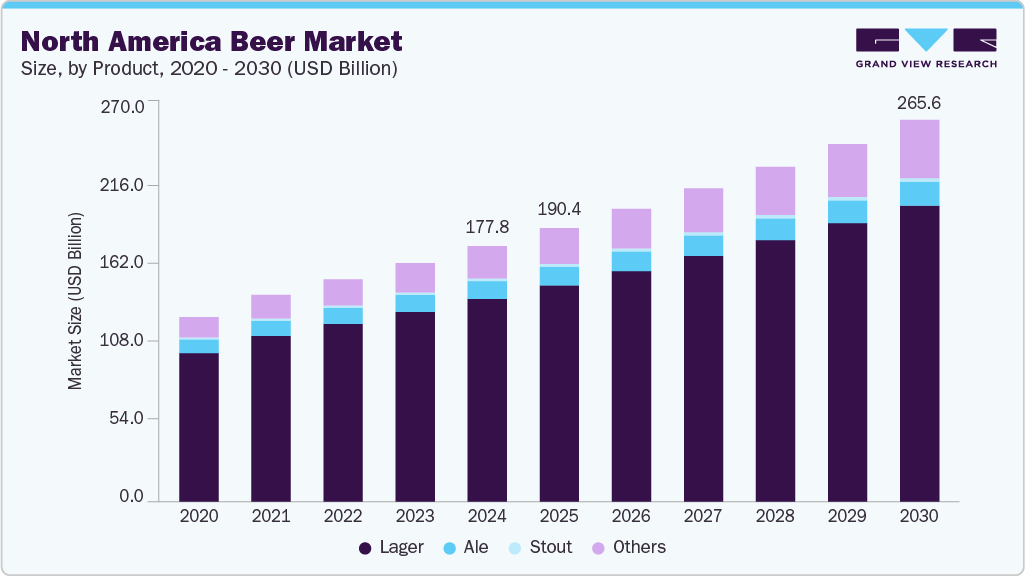
The North America beer market size was estimated at USD 177.83 billion in 2024 and is expected to grow at a CAGR of 6.9% from 2025 to 2030. The market is experiencing growth due to a combination of evolving consumer preferences, demographic shifts, and innovation in product offerings. One of the primary drivers is the increasing demand for craft and premium beers. Consumers, especially younger adults, are seeking unique flavors, locally brewed options, and artisanal products that provide a more personalized drinking experience. This has led to a surge in the popularity of microbreweries and craft beer festivals, which are fueling regional demand.
 Source: Grand View Research, IR Documents, Primary Interviews, Paid DatabasesTo learn more about this report,
 Download Free Sample Report
 Health-conscious trends have also influenced the market, with a growing preference for low-calorie, low-alcohol, and non-alcoholic beers. These options allow consumers to enjoy the social aspects of beer consumption without compromising on wellness goals. Moreover, beer brands are expanding into hard seltzers and flavored malt beverages, capturing interest from a broader audience, including those who previously leaned toward spirits or wine.
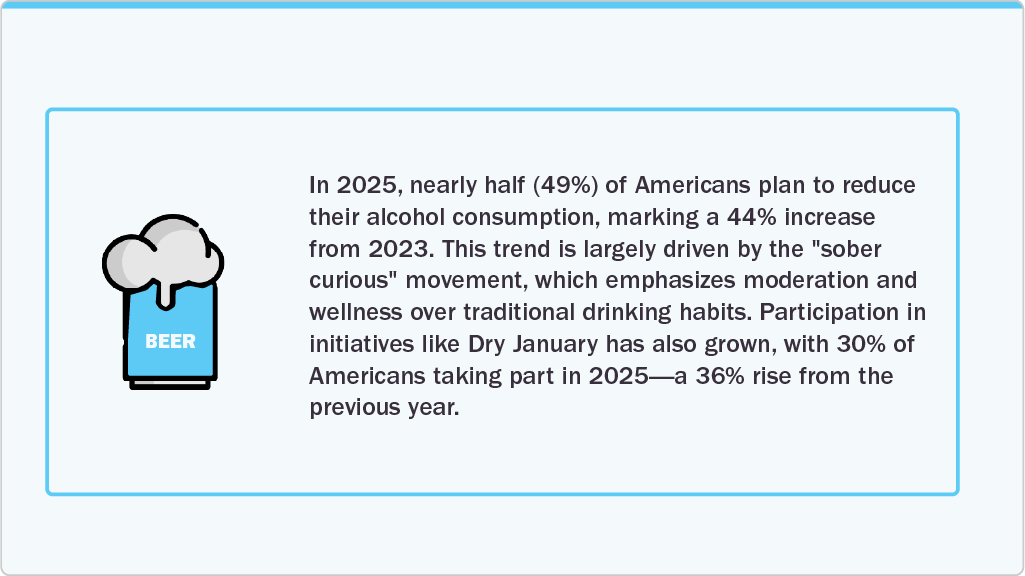
Younger generations, particularly Gen Z and millennials, are at the forefront of this shift. Approximately 65% of Gen Zers plan to drink less in 2025, and 39% intend to adopt a completely alcohol-free lifestyle for the year. This demographic is also more inclined to explore nonalcoholic alternatives, with 35% discovering new options through social media and 28% trying products endorsed by influencers or celebrities.
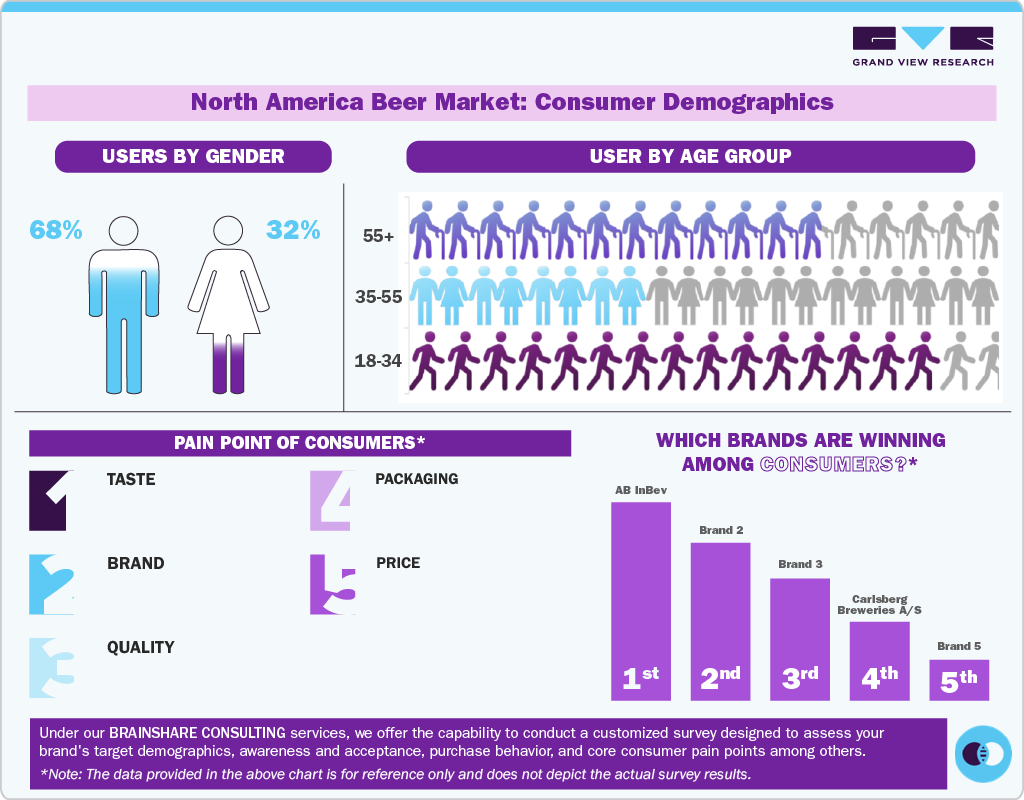
Millennials and Gen Z comprise a significant percentage of alcohol consumers, and this pattern is anticipated to continue over the forecast period. According to data published by the Penn State Extension, an educational organization, Millennials and Gen Z drinkers consume various alcohols for relaxing, getting a buzz, and having a good time. Moreover, according to the same article, in the 52 weeks ending in May 2021, 90% of Millennials bought alcohol. Millennials have likely influenced the growth of the overall alcohol market, including draught beer.
 To learn more about this report, Download Free Sample Report
 Several factors contribute to this trend, including health and wellness goals, financial considerations, and a desire for lifestyle changes. Over half of Americans cite saving money as a reason for drinking less, and one in five view alcohol as a luxury they can no longer afford. Additionally, 58% of Gen Zers aim to reduce alcohol intake to improve mental health, while nearly half of baby boomers are motivated by weight loss goals.
Consumer Insights
A significant factor driving the beer market in the region is changing consumer preferences. Consumers are increasingly seeking unique flavors, quality ingredients, and local products. Consumers are becoming increasingly adventurous and open-minded when it comes to trying new flavors and styles of beer. This trend toward flavor innovation has encouraged breweries to experiment with unique ingredients, brewing techniques, and flavor profiles to create distinctive products that stand out in a crowded market. In March 2024, beer brand Voodoo Ranger and frozen pizza company Tombstone collaborated to create a unique beverage called “IP(izza)A”, which combines the flavors of a pie with a brew. The beer also has notes of “crispy crust” and “tangy tomato” sauce. This innovative partnership between two brands aims to offer consumers a novel drinking experience by blending the taste of pizza into a beer product.
 To learn more about this report, Download Free Sample Report
 According to data from the National Institute on Alcohol Abuse and Alcoholism (NIAAA), approximately 6.5 billion gallons of beer were consumed in the U.S. in 2021. Furthermore, the changing demographics in the region, particularly the rise of millennials and their different drinking preferences, are also anticipated to drive the beer market.
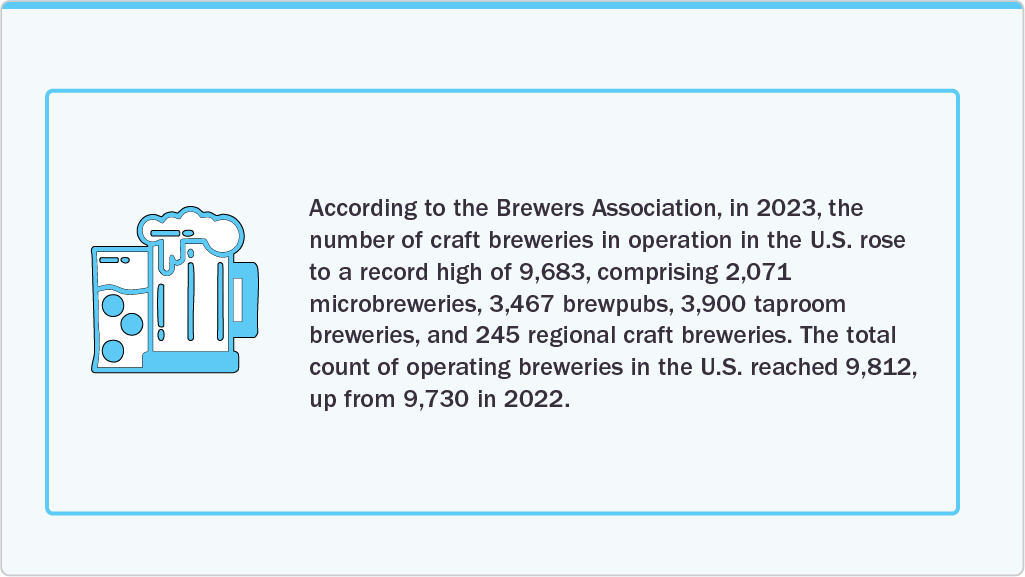
The rise of microbreweries and brewpubs has been another driving force for the North American beer market. These small-scale breweries focus on producing innovative and locally-inspired beers, appealing to consumers seeking authentic and community-centric experiences. Microbreweries have diversified their beer market offerings by using local ingredients and engaging with local communities.
 To learn more about this report, Download Free Sample Report
 Consumer preferences are shifting toward craft beer, flavored beer, and premium beer options. The demand for diverse and unique beer experiences is shaping the market and propelling breweries to innovate. This trend has resulted in various local and international beer brands offering a more diverse range of beer options to consumers, catering to different preferences and tastes. In April 2024, Carlsberg introduced the first-ever rosé beer in Canada during the Fashion Week. This innovative product combines the refreshing qualities of beer with the delicate flavors of rosé wine, creating a unique and sophisticated beverage that is sure to appeal to a wide range of consumers. Rosé is a combination of 1664 Blanc wheat beer with a hint of peach, red berries, subtle spice, and a touch of coriander. It is light on the palate and comes in a distinctive blue bottle.
China Resources Snow Breweries (CR Snow), a prominent beer manufacturer in China, made its official entry into the North American market by launching its popular “Brave the World” beer at the end of 2023 and appointed Ever Grand Group to spearhead the operational phase as the exclusive distributor of Snow Beer, implementing an extensive strategy to ensure a successful product introduction in the U.S. Leveraging its range of premium offerings, Ever Grand Group offers a diverse selection of Snow Beer products tailored for various occasions.
In recent years, the beer market has witnessed a notable shift in consumer trends and preferences, influenced by various factors ranging from health consciousness to cultural shifts. One significant trend is the rising demand for breweries. Many breweries use taprooms, brewpubs, and internet channels to sell their goods directly to customers. By interacting directly with consumers, brewers are able to build a loyal customer base and develop a feeling of community. Quality is now valued more highly than quantity in society, and as a result, people are becoming increasingly fascinated by the nuances of beer varieties and their production methods. Breweries frequently provide festivals, tours, tastings, and instructional programs to satisfy this desire.
 To learn more about this report, Download Free Sample Report
 The North America beer industry presents opportunities for diversification beyond traditional brewing. Collaborations with other industries, such as food, hospitality, and entertainment, can create unique experiences for consumers and expand revenue streams. Brewpubs, taprooms, and beer tourism are thriving sectors that capitalize on experiential consumption, offering consumers a chance to engage with the brewing process firsthand and savor unique brews in immersive environments.
Product Insights
Lager beer accounted for a revenue share of 79.3% in 2024. The demand for lager beer is increasing due to its light, crisp taste and lower alcohol content, which appeals to a broad range of consumers, including younger drinkers and those seeking more sessionable options. Its refreshing profile makes it ideal for social settings and casual occasions, driving popularity across American markets. Additionally, the rise of craft breweries producing innovative lager styles and the growing preference for milder, easy-to-drink beverages have further fueled its demand.
Ale beer is expected to grow at a CAGR of 6.5% from 2025 to 2030. The demand for ale beer is increasing due to its rich flavors, diverse styles, and higher aroma complexity, which appeal to consumers seeking a more distinctive and full-bodied beer experience. With the rise of craft breweries, ale varieties such as pale ales, IPAs, and stouts have gained popularity among beer enthusiasts looking for unique and artisanal options. Additionally, a growing interest in local and small-batch production has further boosted the appeal of ales, making them a favorite choice among those who value flavor, craftsmanship, and variety.
Packaging Insights
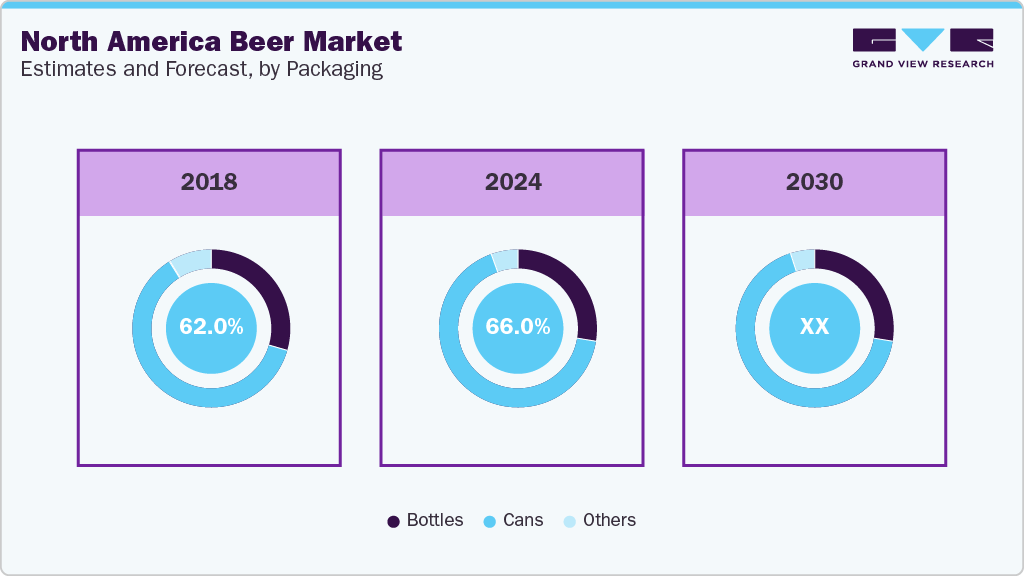
Canned beer accounted for a share of 66.0% of the North America revenue in 2024. Consumers appreciate the convenience and portability of cans, making them ideal for outdoor activities and events. Cans also offer superior protection against light and oxygen, preserving the beer's freshness and flavor longer than bottles. Moreover, aluminum cans are lightweight and more environmentally friendly, as they are easier to recycle and have a lower carbon footprint compared to glass bottles. The craft beer movement has further propelled this trend, with many breweries opting for cans to showcase their unique designs and to appeal to a broader audience seeking both quality and sustainability.
 To learn more about this report, Download Free Sample Report
 Bottled beer is expected to grow at a CAGR of 6.6% from 2025 to 2030. Consumers increasingly favor bottled beer for its perceived freshness, premium image, and suitability for at-home consumption. The rise of craft breweries has also contributed, as many prefer bottling to showcase traditional brewing methods and unique label designs. Additionally, the convenience of bottles for storage and recycling appeals to environmentally conscious consumers.
Production Insights
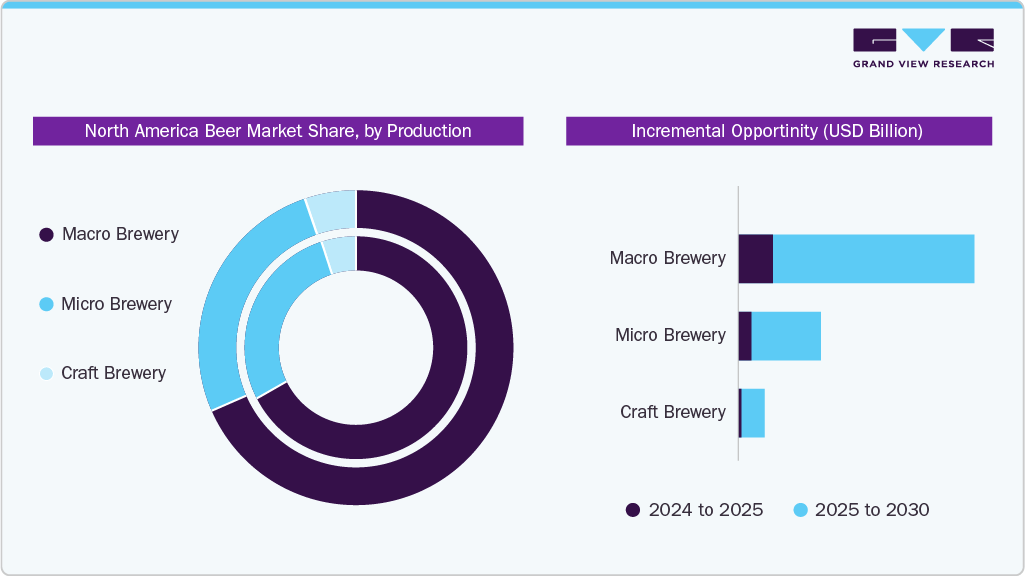
Macro brewery accounted for a revenue share of 61.9% in 2024. Macro breweries cater to a wide consumer base among Americans, producing beers that are generally more uniform in flavor profile and consistent in quality. This mass-production approach allows them to meet the high demand for beer across various markets. Anheuser-Busch InBev is one of the largest and most well-known macro breweries and has a significant international presence. It is a multinational beer and brewing holdings company based in Leuven, Belgium. The company owns a portfolio of well-known beer brands, such as Budweiser, Stella Artois, and Corona.
 To learn more about this report, Download Free Sample Report
 The craft brewery market is expected to grow at a CAGR of 7.9% from 2025 to 2030. Craft breweries have become destinations for both locals and tourists seeking unique experiences. The rise of beer tourism, including brewery tours, tastings, and beer festivals, has contributed to the growth of the sector. Visitors not only get to enjoy the beer but also learn about the brewing process, meet the brewers, and experience the culture of the area. Moreover, craft breweries prioritize consumer engagement through taprooms, events, and social media interactions. This direct interaction with consumers helps build a loyal customer base that values the authenticity and artistry behind craft beer production.
Distribution Channel Insights
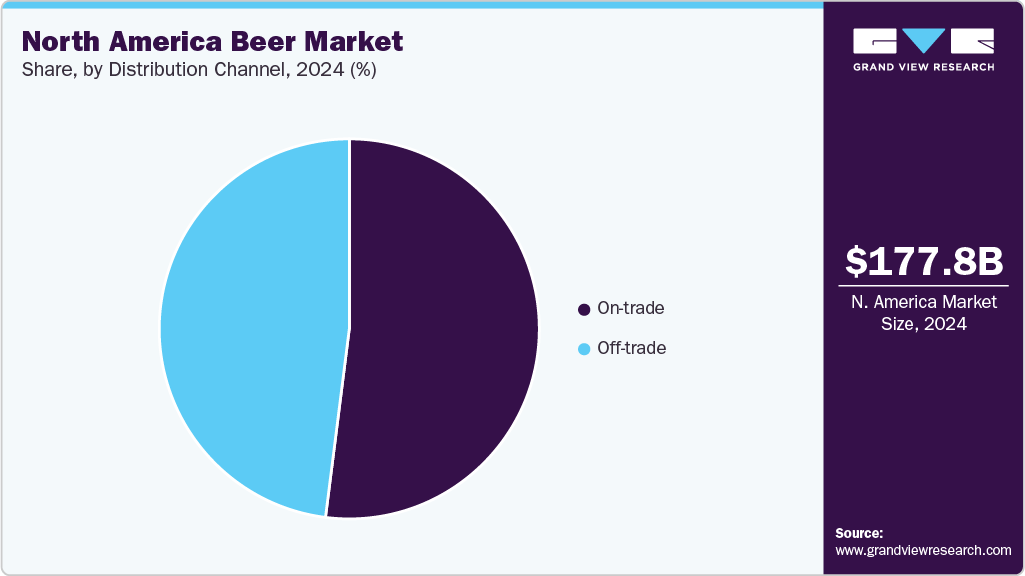
Sales of beer through on-trade channels accounted for a revenue share of 51.9% in 2024. The on-trade distribution channel includes bars, clubs, restaurants, hotels, and wineries. Consumers often seek unique and diverse beer options when they visit bars, restaurants, or pubs, leading to a demand for a variety of craft beers and specialty brews in on-trade establishments. Furthermore, on-trade locations provide consumers with an experience beyond just the beverage itself. Factors such as ambiance, social interactions, and food pairings contribute to the appeal of on-trade channels for beer consumption. Many on-trade establishments emphasize local or regional beer offerings to support small breweries and encourage consumers to experience unique flavors specific to certain areas. This is anticipated to boost the growth of this distribution channel.
 To learn more about this report, Download Free Sample Report
 Sales of beer through off-trade channels are expected to grow with a CAGR of 5.2% from 2025 to 2030. The growing popularity of craft beers has led to an increase in demand for these products through off-trade channels. Specialty beer shops catering to this trend offer a wide range of craft beers that are not readily available in supermarkets or other general retail stores. This niche market segment has created opportunities for both independent retailers and larger chains looking to expand their product offerings in response to evolving consumer preferences.
Key North America Beer Company Insights
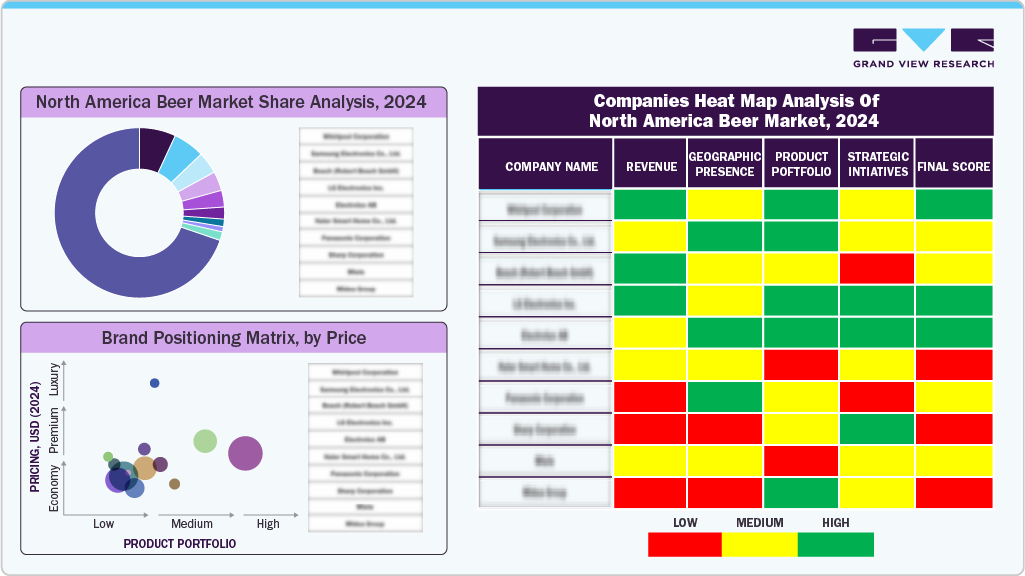
The North America beer market is characterized by the presence of several key companies with well-established brand recognition and extensive distribution networks.
Leading players have developed broad product portfolios and achieved significant penetration across mainstream retail channels. These companies continuously introduce new flavors and formats to appeal to a wide range of consumers, supported by strategic marketing initiatives and investments in production and distribution capabilities that enhance their competitive positioning.
Alongside the major participants, the market includes numerous smaller craft and regional brands contributing to product innovation and category diversification. The growing segment of wine producers is also influencing the market dynamics by bridging the gap between functional beverages and alcoholic drinks.
Overall, the North America beer market remains competitive, with companies focusing on innovation, expanded retail presence, and targeted marketing to respond to evolving consumer preferences and sustain growth.
 To learn more about this report, Download Free Sample Report
 Key North America Beer Companies:
- AB InBev
- Heineken N.V.
- Carlsberg Breweries A/S
- Molson Coors Beverage Company
- Asahi Group Holdings, Ltd.
- Diageo
- China Resources North America Beer (Holdings) Company Limited
- Boston North America Beer Co.
- Kirin Holdings Company, Limited.
- Beijing Yanjing North America Beer Group Corporation
Three ways to get this report
Buy it, customize it, or ask a question.Ask an Analyst
Analyst response in 1 business day
- AccessReport author, directly
- Reply timeWithin 1 working day
- No sales callDirect answer only
- FormatEmail reply
- CostFree, no cost
Get the Full Report
What the study covers
- FormatsPDF · Excel · Dashboard
- Timeline2025–2030 annual, 2024 base
- Coverage20+ countries, 5 regions
- Companies10+ key players profiled
Customize the Report
20% free customization
- IncludeCountries, segments, points
- TailorTo your product definition
- ExtendDeeper competitor detail
- OrA fully bespoke study
- Turnaround5–10 working days
Recent Developments
-
In January 2025, Anheuser-Busch launched Michelob ULTRA Zero, an alcohol-free beer. Targeting health-conscious and active consumers, this new brew offers just 29 calories-about half that of many leading non-alcoholic beers-while maintaining the refreshing taste associated with the Michelob ULTRA brand. With 0% alcohol by volume, Michelob ULTRA Zero is designed for those seeking a flavorful, guilt-free beer that fits a balanced lifestyle and a variety of social occasions.
-
In April 2024, Molson Coors Beverage Company announced the introduction of Madrí Excepcional, a premium European-style lager, to Canada in spring. The beer, developed in collaboration with La Sagra brewery, is aimed at urban trendsetters and offers a light golden color, a smooth taste profile, and a short bitter finish. With its 4.6% ABV, the beer embodies the essence of contemporary Madrid and aims to provide Canadians with a taste of premium Spanish flavor without the need for travel.
North America Beer Market Report Scope
Report Attribute
Details
Market size value in 2025
USD 190.43 billion
Revenue forecast in 2030
USD 265.64 billion
Growth rate
CAGR of 6.9% from 2025 to 2030
Actual data
2018 - 2024
Forecast period
2025 - 2030
Quantitative units
Revenue in USD million/billion, CAGR from 2025 to 2030
Report coverage
Revenue forecast, company ranking, competitive landscape, growth factors, and trends
Segments covered
Product, packaging, production, distribution channel, and country
Country scope
U.S.; Canada; Mexico
Key companies profiled
AB InBev; Heineken N.V.; Carlsberg Breweries A/S; Molson Coors Beverage Company; Asahi Group Holdings, Ltd.; Diageo; China Resources North America Beer (Holdings) Company Limited; Boston North America Beer Co.; Kirin Holdings Company, Limited; Beijing Yanjing North America Beer Group Corporation
Customization scope
Free report customization (equivalent up to 8 analysts working days) with purchase. Addition or alteration to country, regional & segment scope.
Pricing and purchase options
Avail customized purchase options to meet your exact research needs. Explore purchase options
North America Beer Market Report Segmentation
This report forecasts revenue growth at the regional and country level and provides an analysis of the latest industry trends and opportunities in each of the sub-segments from 2018 to 2030. For the purpose of this study, Grand View Research has segmented the North America beer market report on the basis of product, packaging, production, distribution channel, and country:
-
Product Outlook (Revenue, USD Million, 2018 - 2030)
-
Ale
-
Lager
-
Stout
-
Others
-
-
Packaging Outlook (Revenue, USD Million, 2018 - 2030)
-
Bottles
-
Cans
-
Others
-
-
Production Outlook (Revenue, USD Million, 2018 - 2030)
-
Macro Brewery
-
Micro Brewery
-
Craft Brewery
-
-
Distribution Channel Outlook (Revenue, USD Million, 2018 - 2030)
-
On-Trade
-
Off-Trade
-
-
Country Outlook (Revenue, USD Million, 2018 - 2030)
-
U.S.
-
Canada
-
Mexico
-
Frequently Asked Questions About This Report
The North America beer market size was estimated at USD 177.83 billion in 2024.
The North America beer market is expected to grow at a CAGR of 6.9% from 2025 to 2030.
Lager beer accounted for a revenue share of 79.3% in 2024. The demand for lager beer is increasing due to its light, crisp taste and lower alcohol content, which appeal to a broad range of consumers, including younger drinkers and those seeking more sessionable options. Its refreshing profile makes it ideal for social settings and casual occasions, driving popularity across American markets. Additionally, the rise of craft breweries producing innovative lager styles and the growing preference for milder, easy-to-drink beverages have further fueled its demand.
Some of the key players operating in the North America beer market include AB InBev; Heineken N.V.; Carlsberg Breweries A/S; Molson Coors Beverage Company; Asahi Group Holdings, Ltd.; Diageo; China Resources North America Beer (Holdings) Company Limited; Boston North America Beer Co.; Kirin Holdings Company, Limited; Beijing Yanjing North America Beer Group Corporation
The beer market in North America is experiencing growth due to a combination of evolving consumer preferences, demographic shifts, and innovation in product offerings. One of the primary drivers is the increasing demand for craft and premium beers. Consumers, especially younger adults, are seeking unique flavors, locally brewed options, and artisanal products that provide a more personalized drinking experience. This has led to a surge in the popularity of microbreweries and craft beer festivals, which are fueling regional demand.
About the Author(s)
Alcohol & Tobacco Research Team
Consumer Goods · Alcohol & TobaccoThis report was authored by the alcohol & tobacco research team at Grand View Research - comprising two research analysts, one senior research analyst, and one industry expert - with specialized expertise in the alcohol & tobacco segment of the consumer goods industry. All findings are based on proprietary consumer goods databases, executive interviews, and regulatory analysis, subject to internal peer review prior to publication.
Last Updated:
Speak to Analyst

Customize this report to your needs - add regions, segments, or data points, with 20% free customization.
Or view our licence options:


ISO 9001:2015 & 27001:2022 Certified
We are GDPR and CCPA compliant! Your transaction & personal information is safe and secure. For more details, please read our privacy policy.


