
- Home
- »
- Medical Devices
- »
-
North America Hemostatic Sealants In Arterial Surgery Market, 2033GVR Report cover

North America Hemostatic Sealants In Arterial Surgery Market (2026 - 2033) Size, Share & Trends Analysis Report By Product (Fibrin-based Sealants, Synthetic/Polymer-based Sealants), By Application, By Disease Indication, By End Use, By Country, And Segment Forecasts
Market Size, 2025
$100.0MMarket Estimate, 2026
$102.3MMarket Forecast, 2033
$119.6MCAGR, 2026–2033
2.3%North America Hemostatic Sealants In Arterial Surgery Market Summary
The North America hemostatic sealants in arterial surgery market size was estimated at USD 100.0 million in 2025 and is projected to grow from USD 102.3 million in 2026 to USD 119.6 million by 2033, at a CAGR of 2.3% from 2026 to 2033. The growth is driven by the increasing demand for effective intraoperative bleeding management during complex vascular procedures.
Key Market Trends & Insights
- By product, the fibrin-based sealants segment led the market with the largest revenue share of 41.8% in 2025.
- By application, the arterial surgery with graft replacement segment accounted for the largest market revenue share in 2025.
- By disease indication, the aortic aneurysms segment accounted for the largest market revenue share in 2025.
- By end use, the private hospitals segment accounted for the largest market revenue share in 2025.
Market Size & Forecast
- 2025 Market Size: USD 100.0 Million
- 2033 Projected Market Size: USD 119.6 Million
- CAGR (2026-2033): 2.3%
Prism AI by Grand View Research Free to tryAsk a question about the north america hemostatic sealants in arterial surgery marketTry asking✓Every figure cited from GVR research Prefer the report? Download free sample →
Arterial surgeries such as aortic aneurysm repair, peripheral bypass grafting, carotid endarterectomy, and vascular reconstruction frequently involve significant bleeding risks due to high-pressure blood flow and the widespread use of anticoagulant therapies among cardiovascular patients. As a result, hospitals and vascular surgeons are increasingly adopting topical hemostatic sealants as adjunctive technologies to enhance surgical precision, reduce blood loss, and improve procedural outcomes.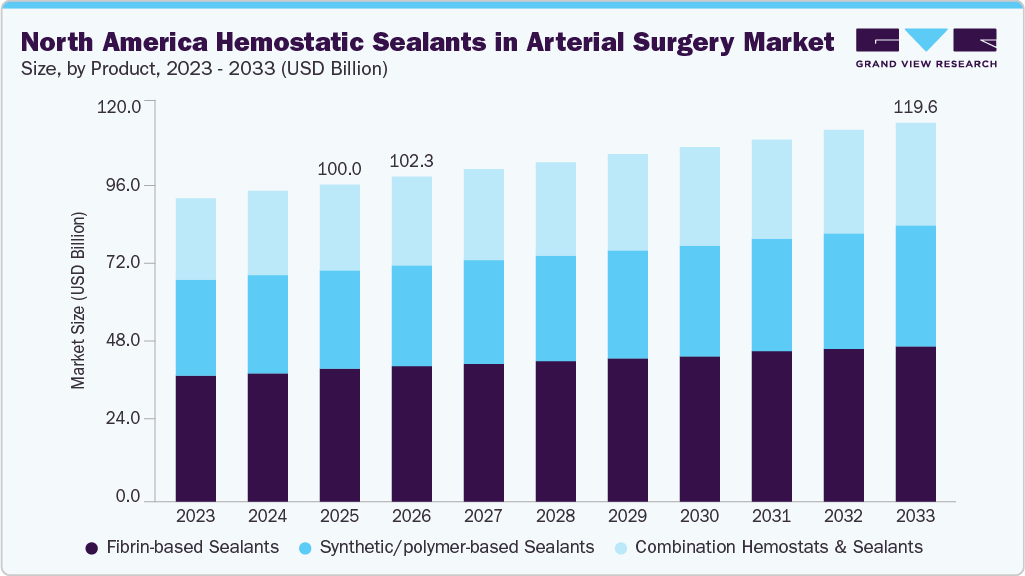 Source: Grand View Research, IR Documents, Primary Interviews, Paid DatabasesTo learn more about this report,
 Download Free Sample Report
The market is benefiting from the growing clinical emphasis on reducing operative complications, shortening procedure duration, and minimizing the need for blood transfusions or surgical reinterventions. Hemostatic sealants are increasingly used to reinforce vascular anastomoses, seal needle-hole bleeding, and support suture-line integrity during arterial repair procedures. Their ability to achieve rapid hemostasis has made them particularly valuable in high-risk surgeries involving fragile vascular tissue, calcified arteries, or elderly patients with multiple comorbidities.
A major factor supporting market expansion is the strengthening body of clinical evidence validating the effectiveness of sealants in vascular surgery. In May 2024, an updated Cochrane systematic review titled “The role of sealants for achieving anastomotic hemostasis in vascular surgery” evaluated 24 randomized controlled trials involving more than 2,300 vascular surgery patients. The analysis demonstrated that sealant use significantly reduced time to hemostasis compared with conventional approaches such as manual compression, gelatin sponges, and oxidized cellulose-based agents. The review also highlighted lower rates of hemostatic intervention failure, reinforcing surgeon confidence in sealant-assisted vascular closure techniques.
Commercial adoption across North America continues to expand, driven by the widespread use of advanced fibrin-based and synthetic sealant products, including TISSEEL, EVICEL, BioGlue, COSEAL, and SURGIFLO. These products are increasingly used in hospitals and vascular surgery centers due to their rapid polymerization, strong tissue adhesion, ease of application, and compatibility with both open and minimally invasive surgical approaches.
The rising prevalence of cardiovascular diseases across the U.S. and Canada is further contributing to procedural growth in arterial surgery. Increasing incidences of peripheral artery disease, abdominal aortic aneurysms, diabetes-associated vascular complications, and traumatic vascular injuries are leading to higher volumes of vascular interventions. In parallel, the rapidly aging population across North America is increasing the number of elderly patients requiring arterial reconstruction and bypass procedures, thereby expanding the demand for advanced intraoperative bleeding control solutions.
Minimally invasive aortic valve replacement (MIAVR) procedures are also gaining strong adoption across cardiac centers. A study published by the National Library of Medicine reported that MIAVR significantly reduces postoperative pain, blood transfusion requirements, respiratory complications, wound infections, ICU stays, and hospitalization duration compared to conventional sternotomy procedures. The study further highlighted improved cosmetic outcomes, earlier mobilization, and lower overall surgical trauma.
The Study Further Highlighted Improved Cosmetic Outcomes
Key Findings from MIAVR Studies
Impact on Market
Reduced blood and blood-product transfusions
Increases the need for precise bleeding control technologies
Lower wound infection rates
Encourages use in high-risk cardiac patients
Shorter ICU and hospital stays
Supports cost-effective surgical care
Faster rehabilitation and recovery
Improves patient outcomes
Reduced postoperative pain and respiratory complications
Increases adoption of minimally invasive procedures
Recent clinical evidence also demonstrates how advanced perioperative programs are improving recovery outcomes after minimally invasive coronary artery bypass grafting (MICS CABG). In July 2025, a study titled “MENDing Recovery: Comprehensive Perioperative Care Cuts Hospital Stay After Minimally Invasive CABG” evaluated 198 MICS CABG patients and found substantial reductions in hospital stay following implementation of the Multimodal ENhanced Discharge (MEND) program.
Implementation Of The Multimodal Enhanced Discharge (MEND) Program
Findings from the 2025 MEND Study
Outcomes
Total patients evaluated
198 patients
Routine care group
91 patients
MEND care group
107 patients
Reduction in median ward stay
33% reduction (3 days to 2 days)
Reduction in total hospital stay
40% reduction (5 days to 3 days)
Readmission rate in routine care
14.30%
Readmission rate in MEND program
6.60%
ICU cost per night
USD 8,007
Ward cost per night
USD 2,163
The study concluded that minimally invasive CABG combined with comprehensive perioperative care significantly shortens hospital length of stay without increasing readmission rates. Researchers also highlighted that minimally invasive approaches reduce surgical wound complications, lower blood transfusion rates, and accelerate patient recovery.
Technological advancements are also reshaping the competitive landscape of the market. Manufacturers are increasingly focusing on polyethylene glycol (PEG)-based synthetic sealants, bioabsorbable biomaterials, dual-component applicator systems, and next-generation bioengineered formulations designed to improve adhesive strength, flexibility, and biocompatibility. Innovations aimed at enhancing ease of delivery in minimally invasive and robotic-assisted vascular procedures are expected to further support product adoption.
In addition, healthcare systems across North America are placing greater emphasis on value-based surgical care and enhanced recovery protocols. Hemostatic sealants contribute to these objectives by reducing operative time, lowering postoperative bleeding complications, decreasing transfusion dependency, and potentially shortening hospital stays. Favorable regulatory approvals, expanding clinical guidelines supporting adjunctive hemostatic technologies, and continued investment in vascular surgery innovation are expected to sustain market growth throughout the forecast period.
Market Dynamics
Favorable insurance coverage and reimbursement policies are significant growth drivers in the North America hemostatic sealants in arterial surgery industry. In the U.S., nearly 92% of the population had health insurance coverage in 2023, supported through employer-sponsored insurance, Medicare, Medicaid, and private healthcare plans. Medicare and Medicaid play a major role in covering cardiovascular and vascular surgical procedures, particularly among the aging population that is highly susceptible to arterial diseases. Adults aged 65 and older accounted for approximately 17% of the U.S. population in 2024, contributing significantly to the rise in arterial surgery volumes.
The risk of product-related complications is a significant restraint in the North America hemostatic sealants in arterial surgery industry. Although hemostatic sealants are widely used to control bleeding and improve surgical efficiency during arterial procedures, some products may cause adverse reactions and postoperative complications. Arterial surgeries involve delicate vascular structures, and any complication associated with sealant use can significantly affect patient safety and surgical outcomes. Biologically derived sealants containing fibrin, collagen, gelatin, or thrombin may trigger allergic reactions, inflammation, infection risks, tissue swelling, or immune responses in some patients. Synthetic sealants may also cause local tissue toxicity, delayed healing, or unintended adhesion to surrounding tissues. In vascular procedures, improper sealant application may increase the risk of thrombosis, embolism, or vessel narrowing, particularly in patients with complex cardiovascular conditions.
Market Characteristics & Concentration
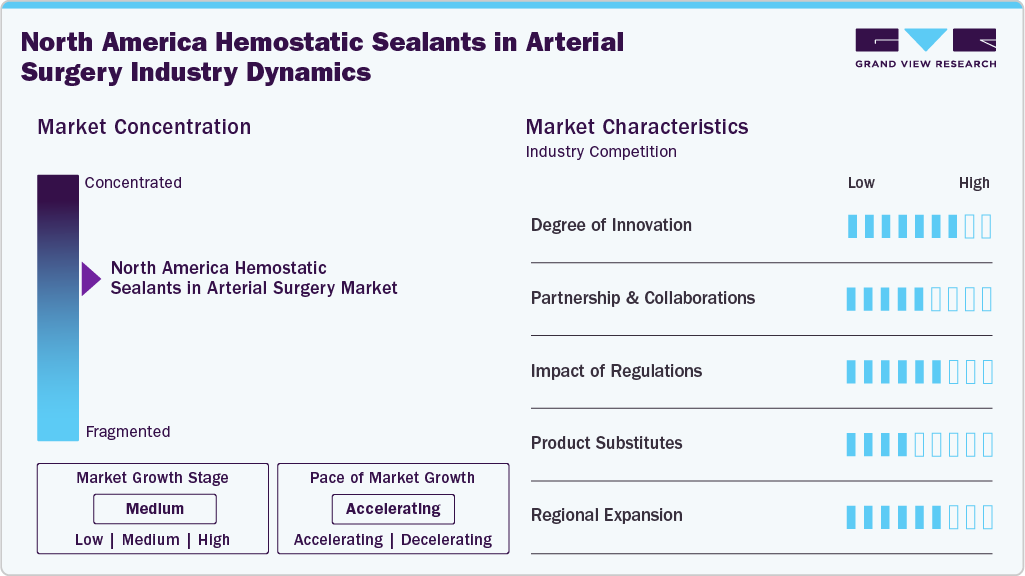
The North America hemostatic sealants in arterial surgery industry is moderately consolidated, with major companies such as Baxter International Inc., Ethicon, Artivion, Inc., Becton, Dickinson and Company, and Teleflex Incorporated holding significant market shares. These companies offer advanced hemostatic sealant technologies, including fibrin-based sealants, polyethylene glycol (PEG)-based synthetic sealants, thrombin-based agents, and flowable hemostatic matrices designed to improve bleeding control during arterial and vascular surgical procedures. Their product portfolio supports applications in aortic aneurysm repair, peripheral bypass surgery, carotid endarterectomy, vascular reconstruction, and other complex arterial interventions, helping surgeons achieve rapid hemostasis, improved anastomotic sealing, and reduced operative complications.
The North America hemostatic sealants in arterial surgery industry are experiencing significant innovations and technological advancements. Manufacturers are increasingly focusing on biodegradable, antimicrobial, and regenerative biomaterials that can improve vascular healing while minimizing postoperative complications. Advanced hydrogel and PEG-based sealants are being developed specifically for high-pressure arterial environments where conventional sealants may not provide sufficient durability. These innovations are particularly important in minimally invasive and robotic-assisted arterial surgeries, where surgeons require flowable, precise, and easy-to-deliver sealants.
Partnerships and collaborations play a major role in the North America hemostatic sealants in arterial surgery industry, enabling companies to gain access to advanced mobility technologies, innovative materials, smart assistive systems, and digital connectivity solutions that enhance product performance and user experience. For instance, Ethicon’s November 2022 collaboration with CMR Surgical supports the U.S. dural sealants and fibrin glues market by expanding minimally invasive and robotic surgical access. As robotic neurosurgery adoption grows, demand for adjunctive biomaterials such as dural sealants and fibrin glues will increase, enhancing precision and outcomes in cranial and spinal procedures.
 To learn more about this report, Download Free Sample Report
Regulatory approval plays a crucial role in shaping the North America hemostatic sealants in arterial surgery industry by ensuring that hemostatic products meet stringent safety, efficacy, sterility, and performance standards before commercialization and clinical use. Since hemostatic sealants are widely used in critical vascular and arterial procedures involving high bleeding risk, regulatory oversight is particularly important to ensure product reliability, biocompatibility, and surgical effectiveness. In the U.S., many hemostatic sealants and surgical adhesives are regulated by the U.S. Food and Drug Administration as Class II or Class III medical devices depending on product composition, mechanism of action, and intended surgical application. Products intended for vascular anastomosis support or internal arterial sealing often require extensive clinical validation and premarket approval pathways due to their direct interaction with blood vessels and cardiovascular tissues.
Product substitutes in the North America hemostatic sealants in arterial surgery industry include conventional hemostatic methods and alternative bleeding control technologies used during vascular and arterial surgical procedures. Common substitutes include manual compression techniques, suturing methods, electrocautery devices, gelatin sponges, oxidized regenerated cellulose products, thrombin-based agents, and hemostatic powders, all of which are routinely utilized to manage intraoperative bleeding in arterial surgeries. Traditional methods such as manual compression and suturing remain widely used in low-risk vascular procedures due to their lower cost and established surgical familiarity. In addition, absorbable hemostats, including gelatin-based sponges and oxidized cellulose products, are frequently used to support clot formation and bleeding control during open vascular surgeries. Electrosurgical coagulation devices and bipolar sealing technologies also serve as alternatives for achieving rapid hemostasis in selected arterial procedures.
Regional expansion in the North America hemostatic sealants in arterial surgery industry is gaining momentum due to the increasing prevalence of cardiovascular diseases, rising arterial surgery volumes, and growing demand for advanced intraoperative bleeding management technologies across the U.S. and Canada. Market participants are actively strengthening their regional presence through strategic collaborations, hospital partnerships, distribution agreements, and expansion of vascular surgery product portfolios to improve access to advanced hemostatic solutions. Manufacturers are increasingly pursuing regional expansion strategies through regulatory approvals, localized distribution networks, and collaborations with vascular surgery centers and academic hospitals.
Product Insights
The fibrin-based sealants segment led the market with the largest revenue share of 41.8% in 2025. These sealants have decades of clinical use, and surgeons have come to rely on them precisely because they work the way the body itself works, recreating the final step of natural blood clotting at the site of bleeding. When a patient is undergoing arterial surgery, controlling bleeding at suture lines and graft connections is one of the most critical challenges a surgical team faces. Conventional methods such as suturing and manual compression are often insufficient, particularly in patients who have been given heparin to prevent clotting during the procedure.
Fibrin sealants fill this gap effectively. They combine two naturally derived components, fibrinogen and thrombin, which, when applied together at the bleeding site, rapidly form a stable clot that adheres directly to the tissue. According to a 2025 report by the National Library of Medicine, fibrin sealants are already widely used in surgery due to their strong adhesion, compatibility with the body, natural breakdown over time, and ability to form a clot directly at the site of application.
The combination hemostats & sealants segment is expected to witness at the fastest CAGR of 2.5% over the forecast period. Combination hemostats & sealants bring two or more hemostatic actions together in one application, typically combining a physical carrier matrix with active coagulation factors, giving surgeons a more powerful and versatile tool for managing the complex, high-pressure bleeding environments that arterial surgery regularly presents. The two most widely recognized examples in the North American arterial surgery setting are TachoSil and FloSeal. TachoSil is a ready-to-use absorbable patch built around an equine collagen sponge, coated with human fibrinogen and thrombin on its active surface.
TachoSil Fibrin Sealant Patch is a sterile, bioabsorbable combination product comprised of two active substances human plasma-derived fibrinogen and human plasma-derived thrombin, coated onto a collagen sponge of equine origin, where the collagen sponge serves as a flexible and mechanically stable carrier that facilitates application of the coagulation factors directly to the wound surface. FloSeal takes a different approach. FloSeal is composed of a bovine gelatin matrix and a human-derived thrombin component. Once applied at the bleeding point, the gelatin granules swell and create a tamponade effect that shields blood flow, while the thrombin facilitates the formation of a fibrin clot around the matrix, resulting in hemostasis.
Application Insights
The arterial surgery with graft replacement segment accounted for the largest market revenue share in 2025 and is expected to witness at the fastest CAGR over the forecast period. Arterial surgery involving graft replacement, where a damaged or diseased artery is replaced with a synthetic or bioengineered vessel conduit, represents one of the most demanding and highest-stakes application segments within the North America hemostatic sealants market. Whether the procedure involves aortic root replacement, abdominal aortic aneurysm repair, peripheral arterial bypass, or arteriovenous graft placement for dialysis access, the challenge of achieving reliable hemostasis at the anastomotic suture lines where the graft meets native tissue is a defining surgical concern and one that hemostatic sealants are uniquely positioned to address.
The arterial repair/reconstruction without graft segment is expected to witness at a significant CAGR over the forecast period. Arterial repair and reconstruction without graft placement procedures, where the surgeon works directly on the patient's own native vessel rather than implanting a synthetic or biological conduit, represents a distinct and clinically significant application segment within the North America hemostatic sealants in arterial surgery industry. Procedures in this category include carotid endarterectomy, direct aortotomy and patch repair, traumatic arterial laceration repair, and primary suture closure of arterial incisions all situations where controlling bleeding at the direct suture line on living native tissue is the central hemostatic challenge.
Disease Indication Insights
The aortic aneurysms segment accounted for the largest market revenue share in 2025. These aneurysms occur when the aortic wall weakens and enlarges, creating a life-threatening risk of rupture and severe internal bleeding. The rising prevalence of hypertension, smoking, obesity, and cardiovascular diseases, along with the rapidly aging population across the U.S. and Canada, has significantly increased the number of abdominal and thoracic aortic aneurysm cases. This has consequently increased the volume of open aortic repair and endovascular aneurysm repair (EVAR) procedures, accelerating demand for advanced hemostatic sealants and surgical adhesives. Hemostatic sealants are extensively used during aortic aneurysm surgeries to control bleeding, reinforce vascular grafts, and reduce blood loss at anastomotic sites. Products such as fibrin sealants, polyethylene glycol (PEG)-based sealants, collagen patches, thrombin-gelatin matrices, and surgical glues are increasingly utilized in complex vascular reconstruction procedures.
The carotid artery disease segment is expected to witness at the fastest CAGR over the forecast period. Hemostatic sealants play an essential role in carotid endarterectomy and carotid artery stenting procedures by minimizing bleeding complications, facilitating vascular closure, and promoting rapid hemostasis at arterial repair sites. During carotid endarterectomy, fibrin sealants, collagen patches, gelatin-thrombin matrices, and polyethylene glycol-based sealants are widely used to reinforce sutures, reduce blood leakage, and improve postoperative recovery. Commercially available products such as FLOSEAL, TachoSil, HEMOPATCH, EVARREST, and COSEAL are increasingly adopted in vascular surgery due to their rapid sealing capabilities and bioabsorbable properties.
End Use Insights
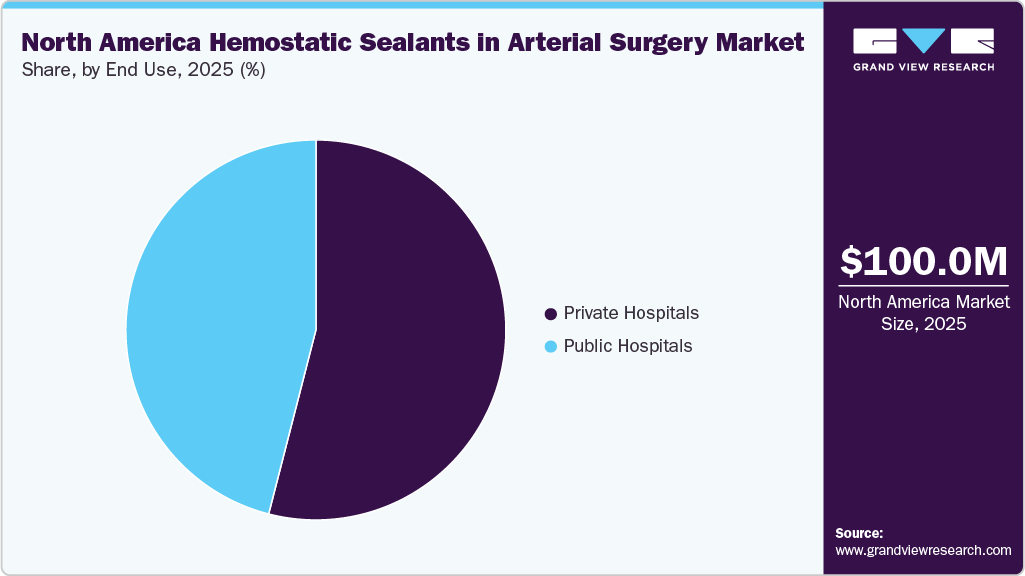
The private hospitals segment accounted for the largest market revenue share in 2025 and is expected to witness at the fastest CAGR over the forecast period. The growth is attributed to their strong adoption of advanced vascular surgery technologies, minimally invasive procedures, and premium surgical care pathways. These hospitals frequently perform complex arterial surgeries, including aortic aneurysm repair, carotid endarterectomy, peripheral bypass surgery, and traumatic vascular reconstruction, all of which require rapid and reliable hemostasis. Hemostatic sealants such as fibrin sealants, gelatin-thrombin matrices, oxidized regenerated cellulose, and polyethylene glycol (PEG)-based sealants are increasingly utilized in private healthcare settings to reduce blood loss, shorten operating time, and lower postoperative complications.
Private hospitals in the U.S. and Canada are investing heavily in hybrid operating rooms and robotic-assisted vascular surgery platforms, which has accelerated the demand for flowable and easy-to-apply sealants compatible with minimally invasive arterial procedures. Products such as Baxter International Inc.'s FLOSEAL, Johnson & Johnson's SURGICEL, and Becton, Dickinson and Company's ARISTA AH are widely preferred in private surgical centers because they support faster recovery and improved surgical precision.
 To learn more about this report, Download Free Sample Report
The public hospitals segmentis anticipated to grow rapidly over the forecast period. The growth is fueled by the high volume of vascular and cardiovascular procedures performed in government-funded healthcare systems across the U.S. and Canada. These hospitals routinely perform complex arterial surgeries, including abdominal aortic aneurysm repair, carotid endarterectomy, peripheral bypass procedures, management of traumatic vascular injuries, and emergency aortic dissections, all of which require rapid and reliable hemostasis.
Hemostatic sealants are increasingly adopted in public hospitals to reduce intraoperative blood loss, shorten operative time, minimize transfusion requirements, and improve surgical efficiency in high-patient-load settings. The rising prevalence of cardiovascular diseases, diabetes, obesity, and peripheral artery disease in North America is significantly increasing the number of arterial interventions conducted in public healthcare institutions.
Country Insights
U.S. Hemostatic Sealants in Arterial Surgery Market Trends
U.S. dominated the North America hemostatic sealants in arterial surgery marketwith the largest revenue share of 95.4% in 2025 and is anticipated to grow at the fastest CAGR during the forecast period,driven by the rising prevalence of cardiovascular diseases, increasing volume of arterial and vascular surgical procedures, and growing demand for effective intraoperative bleeding management solutions. The country’s advanced healthcare infrastructure, high adoption of minimally invasive and complex cardiovascular surgeries, and strong presence of leading medical device manufacturers are further supporting market expansion. In addition, increasing preference for biologically derived and synthetic sealants that improve surgical efficiency, reduce blood loss, and shorten hospital stays is contributing to wider product utilization across hospitals and specialty surgical centers in the U.S.
The hemostatic sealants in arterial surgery market in Canada are expanding steadily, driven by its expanding elderly population, increasing vascular disease burden, and well-established public healthcare system. Although the country records lower arterial surgery volumes compared to the U.S., the demand for advanced bleeding management solutions is steadily increasing across vascular reconstruction and aneurysm repair procedures. Peripheral Artery Disease is Canada's most prevalent arterial surgery indication and a significant but under-recognized public health burden. PAD affects approximately 800,000 Canadians, with awareness of the disease remaining notably low only 35.5% of surveyed Canadians aged 50 and older reported familiarity with PAD, compared with 80.2% awareness of hypertension, creating a significant diagnosis and treatment gap that continues to suppress the full potential surgical caseload.
Key North America Hemostatic Sealants In Arterial Surgery Company Insight
The North America hemostatic sealants in arterial surgery industry is highly competitive, with key players focusing on strengthening their market position through product innovation, strategic collaborations, and geographic expansion. Companies are increasingly investing in advanced hemostatic sealant technologies to improve surgical outcomes, reduce bleeding complications, and enhance procedural efficiency in arterial surgeries.
Key North America Hemostatic Sealants In Arterial Surgery Companies
-
Ethicon
-
Baxter International
-
Corza Medical
-
Integra LifeSciences Corporation
-
Artivion
-
Becton, Dickinson and Company (BD)
-
Teleflex
Competitive Benchmarking
Operating Strategies
Competitive Edge
Weaknesses
Mature Player: Ethicon
- Mature companies focus on expanding hemostatic sealant portfolios for arterial surgery applications, including aortic aneurysm repair, peripheral bypass procedures, carotid endarterectomy, and vascular graft sealing.
- Companies emphasize biologic fibrin sealants, synthetic vascular sealants, rapid hemostasis technologies, and adjunctive products that reduce intraoperative bleeding and improve vessel closure efficiency.
- Established manufacturers benefit from strong brand recognition, extensive vascular surgery product portfolios, large-scale clinical evidence, and long-standing relationships with hospitals and vascular surgeons.
- Advanced technologies such as fibrin-based sealants, PEG hydrogels, bioabsorbable patches, and rapid polymerization systems improve bleeding control during high-risk arterial procedures.
- High R&D investments, strict FDA regulatory pathways, lengthy product approval timelines, and demanding post-market surveillance requirements increase operational complexity.
- Large organizations may face slower innovation cycles because of complex corporate structures and regulatory obligations.
Emerging Player: Integra LifeSciences Corporation
- Emerging companies focus on niche vascular sealing technologies, next-generation bioadhesives, and cost-effective hemostatic solutions for arterial surgery procedures.
- These players prioritize innovation-driven strategies, including surgeon collaborations, targeted product launches, clinical partnerships, and development of faster-acting sealants for minimally invasive vascular procedures.
- Emerging companies benefit from faster innovation cycles and flexibility in developing specialized sealants tailored for arterial bleeding control and vascular graft applications.
- Their ability to rapidly adapt to surgeon requirements and integrate novel biomaterials or synthetic polymers strengthens differentiation in the competitive landscape.
- Emerging companies face limited financial resources, smaller distribution networks, and lower physician awareness compared to multinational market leaders.
- Challenges in obtaining FDA approvals, generating large-scale clinical evidence, and establishing long-term surgeon confidence may restrict broader commercial adoption.
Recent Development
-
In July 2025, Teleflex acquired substantially all of Biotronik's Vascular Intervention business, significantly expanding its interventional portfolio with a broad range of coronary and peripheral vascular therapeutic products. The acquisition strengthens Teleflex's commercial infrastructure and clinical relationships in the vascular surgery market, a key downstream channel for hemostatic sealant utilization, and accelerates its presence in high-growth peripheral arterial procedure segments.
-
In April 2025, Baxter launched the room-temperature stable Hemopatch Sealing Hemostat, specifically designed to eliminate cold-chain storage requirements in hospital and ambulatory surgical center settings. The innovation directly addresses a long-standing OR logistics challenge for biologic hemostatic products, improving accessibility across community hospitals, trauma centers, and outpatient vascular surgery programs in North America.
-
In July 2024, Artivion received regulatory approval from China's National Medical Products Administration (NMPA) to commercialize BioGlue Surgical Adhesive in China. BioGlue, a bovine serum albumin and glutaraldehyde-based surgical adhesive used in aortic and cardiovascular repair, expanded its global commercial reach with the NMPA approval, with commercial launch in China targeted for the second half of 2025. BioGlue surgical sealant revenues grew 14% year-over-year in Q3 2024, reflecting continued North America market strength.
North America Hemostatic Sealants In Arterial Surgery Market Report Scope
Report Attribute
Details
Market size value in 2026
USD 102.3 million
Revenue forecast in 2033
USD 119.6 million
Growth rate
CAGR of 2.3% from 2026 to 2033
Base year for estimation
2025
Historical data
2021 - 2024
Forecast period
2026 - 2033
Quantitative units
Revenue in USD million/billion, and CAGR from 2026 to 2033
Report coverage
Revenue forecast, company ranking, competitive landscape, growth factors, and trends
Segments covered
Product, application, disease indication, end use,country
Regional scope
North America
Country scope
U.S.; Canada
Key companies profiled
Ethicon; Baxter International; Corza Medical; Integra LifeSciences Corporation; Artivion; Becton, Dickinson and Company (BD); Teleflex
Customization scope
Free report customization (equivalent up to 8 analyst’s working days) with purchase. Addition or alteration to the country, regional, and segment scope
Pricing and purchase options
Avail customized purchase options to meet your exact research needs. Explore purchase options
North America Hemostatic Sealants In Arterial Surgery Market Report Segmentation
This report forecasts revenue growth at regional and country levels and provides an analysis of the latest industry trends in each of the sub-segments from 2021 to 2033. Forthis study, Grand View Research has segmented the North America hemostatic sealants in arterial surgery market report based on product, application, disease indication, end use, and country:
-
Product Outlook (Revenue, USD Unit, 2021 - 2033)
-
Fibrin-Based Sealants
-
Synthetic/Polymer-Based Sealants
-
Combination Hemostats & Sealants
-
-
Application Outlook (Revenue, USD Unit, 2021 - 2033)
-
Arterial Surgery With Graft Replacement
-
Arterial Repair/Reconstruction Without Graft
-
-
Disease Indication Outlook (Revenue, USD Unit, 2021 - 2033)
-
Aortic Aneurysms
-
Peripheral Artery Disease
-
Carotid Artery Disease
-
Others
-
-
End Use Outlook (Revenue, USD Unit, 2021 - 2033)
-
Public Hospitals
-
Private Hospitals
-
-
Country Outlook (Revenue, USD Unit, 2021 - 2033)
-
U.S.
-
Canada
-
Delivered Customizations
This report has been delivered with the following In-depth customizations
Client Request
Customization Delivered
Value Adds
Supply Chain/Value Chain Analysis
Conducted a comprehensive supply chain and value chain assessment for the North America hemostatic sealants in arterial surgery market, covering raw material suppliers, sealant manufacturers, contract manufacturing organizations (CMOs), distributors, hospital procurement systems, and end-user adoption across vascular and cardiovascular surgical centers. The study evaluated sourcing trends for biologic and synthetic sealants, regulatory and reimbursement influences, distribution frameworks across the U.S. and Canada, and procurement pathways followed by hospitals and specialty surgical facilities. Additionally, the analysis examined supplier partnerships, product distribution efficiencies, inventory management practices, and commercialization strategies adopted by leading market participants.
Enables stakeholders to understand the competitive supply ecosystem and operational structure of the North America hemostatic sealants market. The study supports strategic decision-making related to procurement optimization, supplier partnerships, product accessibility, and commercialization planning. It also helps manufacturers and distributors identify opportunities to improve supply continuity, strengthen hospital relationships, and expand market penetration across arterial surgery applications.
Average Selling Prices (ASP) Assessment
Conducted a comprehensive ASP assessment for hemostatic sealants used in arterial surgery procedures across North America. The study evaluated average selling prices of fibrin sealants, synthetic sealants, collagen-based hemostats, gelatin-based products, and combination hemostatic agents used in vascular and arterial surgeries. The assessment further analyzed pricing variations based on product type, application setting, procurement contracts, hospital purchasing volume, and regional distribution dynamics across the countries. In addition, the study reviewed reimbursement trends, competitive pricing strategies, and premium pricing differences associated with technologically advanced sealant products.
Enables stakeholders to benchmark product pricing, evaluate regional pricing dynamics, and identify high-growth pricing opportunities within the North America hemostatic sealants market. The analysis supports pricing optimization, reimbursement planning, procurement negotiations, and commercial strategy development aligned with evolving purchasing behavior among hospitals and surgical centers.
Exclusive U.S. Market Intelligence Report
Along with the North America Hemostatic Sealants in Arterial Surgery Market report, a dedicated country spin-off report titled U.S. Hemostatic Sealants in Arterial Surgery Market was additionally developed based on the client’s request. The report provides detailed and country-specific insights focused exclusively on the U.S. market, including procedural volume analysis, product adoption trends, reimbursement environment, competitive landscape, pricing assessment, hospital procurement patterns, regulatory scenario, and demand analysis for hemostatic sealants used in arterial surgery procedures across the U.S.
Enables stakeholders to gain highly granular insights into the U.S. market landscape and evaluate country-specific growth opportunities, competitive positioning, and commercialization strategies. The dedicated spin-off report supports focused strategic planning, regional expansion initiatives, product positioning, and investment decision-making specific to the U.S. arterial surgery market.
Frequently Asked Questions About This Report
The North America hemostatic sealants in arterial surgery market size was estimated at USD 100.0 million in 2025 and is expected to reach USD 102.3 million in 2026.
The North America hemostatic sealants in arterial surgery market is expected to grow at a compound annual growth rate of 2.3% from 2026 to 2033 to reach USD 119.6 million by 2033.
The fibrin-based sealants dominated the North America hemostatic sealants in arterial surgery market with a share of 41.8% in 2025. These sealants have decades of clinical use, and surgeons have come to rely on them precisely because they work the way the body itself works, recreating the final step of natural blood clotting at the site of bleeding.
Some key players operating in the North America hemostatic sealants in arterial surgery market include Ethicon; Baxter International; Corza Medical; Integra LifeSciences Corporation; Artivion; Becton, Dickinson and Company (BD); Teleflex
Key factors that are driving the market growth include the increasing demand for effective intraoperative bleeding management during complex vascular procedures.
About the Author(s)
Medical Devices Research Team
Healthcare · Medical DevicesThis report was authored by the medical devices research team at Grand View Research - comprising two research analysts, one senior research analyst, and one industry expert - with specialized expertise in the medical devices segment of the healthcare industry. All findings are based on proprietary healthcare databases, executive interviews, and regulatory analysis, subject to internal peer review prior to publication.
Last Updated:
Speak to Analyst

Customize this report to your needs - add regions, segments, or data points, with 20% free customization.
Or view our licence options:


ISO 9001:2015 & 27001:2022 Certified
We are GDPR and CCPA compliant! Your transaction & personal information is safe and secure. For more details, please read our privacy policy.


