
- Home
- »
- Medical Imaging
- »
-
Nuclear Imaging Equipment Market Size Report, 2026-2033GVR Report cover

Nuclear Imaging Equipment Market (2026 - 2033)
Size, Share & Trends Analysis Report By Modality (SPECT, PET), By Application (Cardiology, Oncology, Neurology), By End-use (Hospitals, Imaging Centers), By Region (North America, Europe, Asia Pacific, Latin America, MEA), And Segment Forecasts
Market Size, 2025
$6.8BMarket Estimate, 2026
$6.9BMarket Forecast, 2033
$8.8BCAGR, 2026–2033
3.5%Nuclear Imaging Equipment Market Summary
The global nuclear imaging equipment market size was valued at USD 6.8 billion in 2025 and is projected to grow from USD 6.9 billion in 2026 to USD 8.8 billion by 2033, at a CAGR of 3.5% from 2026 to 2033. North America dominated the global market with the largest revenue share of 42.6% in 2025. The market is being driven by several factors such as the increasing prevalence of cancer worldwide, technological advancements, clinical applications, and research, and increasing nuclear medicine imaging procedures.
 Source: Grand View Research, IR Documents, Primary Interviews, Paid DatabasesTo learn more about this report,
 Download Free Sample Report
 Key Market Trends & Insights
- By modality: Single photon emission computed tomography (SPECT) segment dominated the market with the largest revenue share of 58.1% in 2025.
- By application: Oncology segment led the market with the largest revenue share of 48.7% in 2025.
- By end-use: Hospitals segment led the market with the largest revenue share of 53.0% in 2025.
Regional Highlights
- Largest regional market: North America (42.6% revenue share, 2025)
- By country: The nuclear imaging equipment market in the U.S. held the largest share in the North America region in 2025.
Market Size & Forecast
- Market Size in 2025: USD 6.8 Billion
- Estimated Market Size in 2026: USD 6.9 Billion
- Projected Market Size by 2033: USD 8.8 Billion
- CAGR (2026-2033): 3.5%
Three ways to get this report
Buy it, customize it, or ask a question.Ask an Analyst
A direct answer, usually in 1 working day
- AccessReport author, directly
- Reply timeWithin 1 working day
- No sales callDirect answer only
- FormatEmail reply
- CostFree, no cost
Get the Full Report
What the study covers
- FormatsPDF · Excel · Dashboard
- Timeline2026–2033 annual, 2025 base
- Coverage20+ countries, 5 regions
- Companies10+ key players profiled
Customize the Report
20% free customization
- IncludeCountries, segments, points
- TailorTo your product definition
- ExtendDeeper competitor detail
- OrA fully bespoke study
- Turnaround5–10 working days
The market is being driven by several factors such as the increasing prevalence of cancer worldwide, technological advancements, clinical applications, and research, and increasing nuclear medicine imaging procedures. According to the International Agency for Research on Cancer, by 2025 the worldwide cancer prevalence is expected to reach 50,550,287 from 19,292,789 in 2020.
Nuclear imaging equipment examples, include PET and SPECT scanners, they stand as highly efficient tools in medicine. They serve diverse purposes, from diagnosing cancer to studying organ function and assessing brain irregularities. Their efficacy lies in generating detailed internal images and facilitating precise diagnoses and treatment strategies. These technologies have markedly propelled advancements in medical science.
 To learn more about this report, Download Free Sample Report
 Furthermore, technological advancements in these modalities are expected to propel market growth. In June 2022, Siemens Healthineers introduced the Symbia Pro.specta, a SPECT/CT system that has received both the CE mark and FDA clearance. This system integrates advanced SPECT and CT imaging technologies. Notable features include a low-dose CT capable of capturing up to 64 slices, offering impressive detail in imaging. Additionally, it includes automatic SPECT motion correction, enhancing image clarity, and streamlining the examination process with an intuitive, automated workflow that guides users through decision-making steps.
The rise in chronic diseases globally is anticipated to drive the use of nuclear imaging equipment. Conditions such as cancer, cardiovascular problems, neurological disorders, and metabolic issues are increasingly prevalent worldwide. Nuclear imaging technologies, such as PET and SPECT scanners, hold a crucial role in diagnosing and monitoring these chronic diseases. For instance, PET scans are efficient in cancer diagnosis, detecting tumors, assessing their severity, and tracking treatment responses. Similarly, in cardiovascular diseases, these imaging equipment are vital for evaluating blood flow, detecting blockages, and assessing heart function. Moreover, in neurology, nuclear imaging aids in diagnosing conditions like Alzheimer's disease and other neurodegenerative disorders by visualizing brain metabolism and abnormalities.
Market Dynamics
Nuclear imaging equipment solutions are gaining significant traction as they enable hospitals, academic medical centers, and specialized diagnostic clinics to address, treat, and optimize patient care through advanced molecular imaging platforms. These solutions integrate technologies such as solid-state digital silicon photomultipliers, high-throughput hybrid configurations, time-of-flight reconstruction architectures, smart radiation dose-optimization algorithms, and AI-driven clinical dashboards to provide real-time control over scan parameters, radiopharmaceutical tracer kinetics, automated lesion detection, and quantitative treatment efficacy. Nuclear imaging platforms help healthcare providers and nuclear medicine practitioners address the rising global demand for early and precise chronic disease management by supporting personalized theranostics pipelines, targeted oncological staging, advanced myocardial perfusion imaging, and proactive neurodegenerative disease tracking.
The rising global burden of cancer is a major factor driving growth in the nuclear imaging equipment market. For instance, in 2024, WHO's IARC released updated global cancer statistics highlighting that worldwide cancer incidence will exceed 35 million new cases annually by 2050. The report has prompted healthcare systems and imaging providers to expand investments in oncology diagnostics, including PET and SPECT imaging infrastructure, to manage the anticipated rise in cancer screening, diagnosis, and disease monitoring requirements. Nuclear imaging technologies such as positron emission tomography (PET) and single-photon emission computed tomography (SPECT) play a critical role in cancer diagnosis, staging, treatment planning, and monitoring therapeutic response. As the number of cancer patients continues to increase worldwide, healthcare providers are investing in advanced nuclear imaging systems to support early detection and improve clinical outcomes. Oncology remains the largest application segment within the nuclear imaging equipment market, reflecting the growing reliance on molecular imaging for precision cancer care. The increasing adoption of PET/CT and SPECT/CT systems in hospitals and cancer centers is further strengthening market demand.
The nuclear imaging equipment market faces a significant restraint in the form of stringent regulatory requirements governing both imaging systems and radiopharmaceuticals. Manufacturers of nuclear imaging systems must comply with extensive regulations related to device safety, radiation emission standards, quality management systems, clinical validation, and post-market surveillance before obtaining commercialization approval. In addition to medical device regulations, nuclear imaging products are subject to oversight from nuclear safety authorities and radiation protection agencies, creating a complex and time-consuming approval pathway. These regulatory requirements often increase product development costs, extend approval timelines, and delay the introduction of innovative imaging technologies into the market, particularly for smaller manufacturers with limited regulatory resources.
Market Concentration & Characteristics
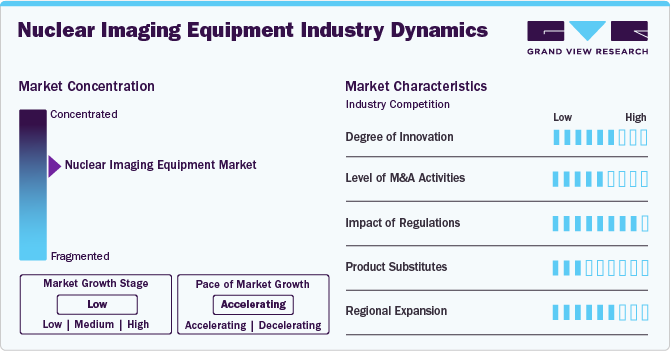
The market growth stage is low, and the pace is accelerating. The nuclear imaging equipment market has shown steady growth owing to technological advancements, increased occurrences of chronic illnesses, and an aging population. PET and SPECT modalities have become pivotal in diagnosing and monitoring conditions such as cancer, cardiovascular diseases, and neurological disorders. Manufacturers of nuclear imaging equipment are involved in developing new technologies to ensure their systems meet evolving diagnostic standards. One prevalent strategy involves integrating advanced imaging software and artificial intelligence algorithms. This combination is gaining popularity for its ability to heighten the precision and efficiency of nuclear imaging equipment.
Companies are strategically pursuing mergers and acquisitions to enhance their market presence and broaden their product portfolios. For instance, in April 2022, Mediso Ltd announced the acquisition of Bartec Technologies Ltd, a UK-based company specializing in the supply, installation, and support of Nuclear Medicine and Molecular Imaging equipment and accessories. This acquisition is expected to strengthen Mediso’s position in the UK and Ireland markets.
 To learn more about this report, Download Free Sample Report
 The market has achieved a high degree of innovation, owing to remarkable technological advancements that have positioned it at the forefront of medical diagnostics. Integrating with AI, implementing advanced detector technologies for enhanced image quality, and minimizing radiation exposure for patients are key contributors to this progress. Furthermore, a surge in the development of hybrid imaging systems is another factor to this, as they seamlessly combine nuclear imaging with modalities such as computed tomography (CT) or magnetic resonance imaging (MRI), offering a consolidated and comprehensive source of both anatomical and functional information in a single scan.
Companies involved in the manufacturing of nuclear imaging equipment are actively engaging in integration through merger and acquisition activities. This strategic approach aims to augment technological capabilities, broaden market reach, and ensure competitiveness in the continuously evolving healthcare landscape.
The influence of regulatory policies on nuclear imaging devices is significant. Governments and regulatory bodies globally enforce various stringent guidelines to uphold the safety, efficacy, and quality of nuclear imaging technologies. These regulations cover a range of aspects, including radiation safety standards, device performance, and manufacturing practices.
Within the market, the presence of product substitutes offers healthcare providers compelling alternatives to consider for their diagnostic technology investments. The advancements in non-nuclear imaging modalities, such as magnetic resonance imaging (MRI) and computed tomography (CT), serve as noteworthy substitutes. These alternative technologies have experienced significant improvements in resolution, speed, and versatility, strategically positioning them to effectively compete with specific aspects of nuclear imaging.
The geographical reach of nuclear imaging equipment exhibits a moderate to high level of expansion, primarily driven by increased adoption in developed economies like the U.S. and Japan. However, in underdeveloped or developing economies, the adoption of nuclear imaging equipment is comparatively lower due to factors such as limited healthcare access, inadequate regulations, and underdeveloped healthcare infrastructure.
Analyst Perspective
The nuclear imaging equipment market is positioned at the intersection of several long-term healthcare and life science industry trends, including the growing demand for precision medicine, an increasing clinical focus on molecular-level diagnostic accuracy, and continuous advancements in hybrid, energy-sensitive detector technologies. Rising global incidences related to oncological malignancies, complex cardiovascular conditions, and neurodegenerative disorders are creating significant opportunities for nuclear imaging equipment manufacturers and healthcare infrastructure developers, as clinicians seek definitive, non-invasive functional imaging solutions to map disease pathways before structural anatomical changes occur. In addition, the expanding adoption of advanced molecular platforms across multi-specialty hospitals, standalone diagnostic imaging chains, and academic research institutions coupled with core technological innovations such as digital silicon photomultipliers, high-throughput hybrid configurations, and AI-driven image reconstruction architectures is significantly improving diagnostic sensitivity, reducing patient radiation exposure, and optimizing therapeutic staging and theranostics workflows.
Modality Insights
Based on modality, the SPECT segment led the market with the largest revenue share of 58.1% in 2025. A key contributing factor is the cost-effectiveness associated with SPECT equipment and procedures. Compared to PET scanners, SPECT scanners are generally more economical to install and operate, thus increasing their accessibility across various healthcare settings. This affordability extends the adoption of SPECT technology to a wider array of healthcare facilities, including smaller clinics and hospitals with limited resources. Furthermore, SPECT imaging utilizes different radiotracers and imaging agents in comparison to PET, offering distinct advantages in specific diagnostic tests.
Positron emission tomography (PET) is anticipated to grow at the fastest rate from 2026 to 2033. Advancement in PET imaging technology is a significant factor contributing to the market growth. PET scanners offer higher resolution images and deliver more precise metabolic information, which holds immense importance across various specialties like oncology, neurology, and cardiology.
Ongoing research and developmental studies primarily concentrate on refining PET imaging techniques. For instance, in November 2023, a small-scale study conducted by researchers at the National Institutes of Health showcased the potential of positron emission tomography (PET) scans in identifying individuals at risk of developing Parkinson's disease or Lewy body dementia. This research highlights PET scans can help in early detection and risk assessment for these diseases.
Application Insights
Based on application, the oncology segment led the market with the largest revenue share of 48.7% in 2025. This is due to the growing prevalence of cancer worldwide and advanced nuclear imaging technology, notably PET and SPECT have seen significant expansion owing to their unmatched capability to thoroughly examine the molecular traits specific to cancer. Furthermore, these imaging modalities facilitate ongoing research in oncology. They aid in the development and evaluation of new cancer treatments and therapies by providing insights into the tumor's behavior, metabolism, and response to experimental drugs.
The cardiology segment is expected to grow at the fastest rate from 2026 to 2033. The rising incidence of cardiovascular diseases (CVDs) coupled with the increased awareness regarding nuclear imaging's diagnostic capabilities is anticipated to fuel market growth. For instance, as per the World Health Organization (WHO), CVDs stand as the primary cause of global mortality, approximately 17.9 million lives annually. This prevalence shows the significance of nuclear imaging in comprehensively addressing the challenges posed by cardiovascular diseases.
End-use Insights
Based on end-use, the hospitals segment led the market with the largest revenue share of 53.0% in 2025. Hospitals are adopting nuclear imaging equipment at an increasing rate. In February 2023, Skåne University Hospital in Sweden installed GE Healthcare's advanced SPECT/CT scanner, the StarGuide system. The comprehensive nature of hospitals allows for a wider array of medical services in one place, making nuclear imaging more accessible to a diverse patient population.
Moreover, hospitals often manage more complex cases, where the detailed diagnostic precision of nuclear imaging, like PET and SPECT scans, holds immense importance in accurate diagnosis and treatment planning. In addition, hospitals typically have larger budgets and resources compared to standalone imaging centers, enabling sustained investment and operation of these advanced imaging technologies.
 To learn more about this report, Download Free Sample Report
 The R&D institute segment is expected to witness the fastest CAGR from 2026 to 2033. R&D institutes act as innovation centers, continuously exploring and enhancing imaging methods and equipment. Their research efforts receive consistent funding from various channels, including government, private, and corporate sources, driving their advancements.
Furthermore, the widening applications of nuclear imaging beyond traditional diagnostics contribute to the expansion of R&D institutes. These centers venture into various fields like drug development, neuroscience, cardiovascular research, and oncology, expanding the utility and importance of nuclear imaging technologies.
Regional Insights
North America dominated the nuclear imaging equipment market with the largest revenue share of 42.6% in 2025. This trend is expected to continue throughout the forecast period. A key factor driving the growth of the nuclear imaging equipment market in North America is the rising incidence of cancer, which has led to an increased demand for advanced imaging technologies such as PET (Positron Emission Tomography) and SPECT (Single Photon Emission Computed Tomography) systems. These imaging tools play a crucial role in the early detection of cancer, accurate staging, and monitoring of treatment progress. Their ability to provide precise and timely diagnostic information has made them essential in contemporary healthcare, contributing to the sustained demand for nuclear imaging equipment in the region.
 To learn more about this report, Download Free Sample Report
 U.S. Nuclear Imaging Equipment Market Trends
The nuclear imaging equipment market in the U.S. held the largest share in the North America region in 2025. The U.S. nuclear imaging equipment market is growing, driven by the increasing prevalence of cancer and advancements in imaging technologies like PET and SPECT. These systems are crucial for accurate diagnosis and treatment monitoring. In addition, U.S. regulatory bodies are supporting innovation in the market. For example, in June 2023, Mediso received FDA clearance for its InterView XP and InterView FUSION software, designed for multimodality image processing (PET, SPECT, MRI, CT). These tools streamline workflows in nuclear medicine, promoting the development of advanced products and boosting market growth.
Europe Nuclear Imaging Equipment Market Trends
Europe nuclear imaging equipment market is experiencing significant growth, driven by substantial investments in research and development from both public and private sectors. The demand for healthcare devices, particularly in response to the increasing prevalence of cancer, is a key factor behind this expansion. According to the European Commission, new cancer cases grew by 2.3% from 2020 to 2022, reaching 2.74 million, while cancer-related deaths rose by 2.4%, as reported by the European Cancer Information System (ECIS). Estimates suggest that 31% and 25% of European men and women respectively will be diagnosed with cancer before age 75, with 14% of men and 9% of women expected to die from the disease before that age. These rising cancer rates are driving the demand for advanced imaging technologies, such as nuclear imaging equipment, essential for early detection, precise diagnosis, and treatment monitoring. The increasing focus on cancer care and the need for innovative diagnostic tools are expected to further propel the growth of the nuclear imaging market in Europe.
The UK nuclear imaging equipment market is experiencing significant growth, driven by factors such as rising cancer prevalence, advancements in technology, and increasing awareness of diagnostic imaging. The demand for sophisticated imaging modalities like PET and SPECT is on the rise, as these tools play a critical role in the early detection, treatment planning, and monitoring of various diseases.
For instance, in October 2023, a USD 35.70 million total-body PET imaging platform was launched in the UK through a partnership among the Medicines Discovery Catapult, the Medical Research Council, and Innovate UK. The National PET Imaging Platform features two full-body PET scanners, enabling early disease detection with enhanced sensitivity and offering valuable insights for diagnosing and treating complex diseases, thus improving drug discovery processes.
France nuclear imaging equipment market is highly competitive, with key players such as Siemens Healthineers, GE Healthcare, and Koninklijke Philips N.V. leading the way. Intense competition drives innovation in products and services. The growing cancer burden in France is a major factor boosting the demand for nuclear imaging technologies. In 2022, the International Agency for Research on Cancer (IARC) reported 483,568 new cancer cases, with breast cancer being the most prevalent, contributing to 66,328 new cases. Additionally, France’s high healthcare spending ensures access to advanced diagnostic tools, further supporting market growth. The upcoming launch of United Imaging’s uMI 550 PET/CT system in August 2024 is also expected to significantly drive market expansion in the country.
The nuclear imaging equipment market in Germany is experiencing significant growth, driven by advancements in imaging technologies and increasing demand for precise diagnostics. Key modalities such as PET, SPECT, and hybrid imaging systems are gaining popularity for their ability to provide detailed insights into a wide range of medical conditions, especially cancer. The introduction of innovative radiotracers, like Gallium-68 (Ga-68) Fibroblast Activation Protein Inhibitor (FAPI) PET imaging in January 2023, has further enhanced tumor detection and staging, positioning Germany as a leader in molecular imaging. These technological advancements are fuelling the growth of the nuclear imaging equipment market in the country.
Asia Pacific Nuclear Imaging Equipment Market Trends
Asia Pacific nuclear imaging equipment market is expected to witness significant growth, driven by increasing healthcare expenditure, a growing prevalence of chronic diseases, and the rising adoption of advanced imaging technologies. Countries like China, India, and Japan are at the forefront of this market expansion due to their large patient population and investments in healthcare infrastructure.
In China, the rapid expansion of PET-CT scanners, particularly in oncology centres, reflects the country's growing investment in advanced medical imaging. The uEXPLORER PET/CT system was initially installed at Zhongshan Hospital, and by September 2023, 16 installations were completed across the country, as noted by the Journal of Nuclear Medicine. With an expected annual increase of 6-7 units, United Imaging Healthcare's uExplorer system enhances diagnostic precision, reducing both scan times and radiation exposure. This state-of-the-art scanner significantly improves cancer detection, exemplifying China's shift towards cutting-edge imaging technologies for more efficient healthcare.
The nuclear imaging equipment market in China is poised for significant growth, driven by the increasing demand for advanced diagnostic technologies, especially in oncology. A notable development in the market is the partnership between Blue Earth Diagnostics and Sinotau Pharmaceutical Group, announced in October 2023. This collaboration aims to introduce flotufolastat F 18 (Posluma), a PSMA-PET imaging agent, to China for prostate cancer detection. The radiopharmaceutical targets prostate-specific membrane antigens (PSMA), providing enhanced imaging capabilities that improve diagnostic accuracy, particularly for patients undergoing treatment for prostate cancer or those with suspected recurrence. This advancement is expected to fuel further growth in China’s nuclear imaging market.
Japan nuclear imaging equipment market is significantly driven by the aging population, particularly in nuclear neurology, as the prevalence of neurological disorders like dementia and Parkinson's disease rises. This has increased the demand for advanced imaging technologies such as PET (Positron Emission Tomography) and SPECT (Single Photon Emission Computed Tomography), which provide crucial diagnostic insights for cognitive impairments and movement disorders. While PET is widely adopted, SPECT continues to play a key role, especially in assessing brain function in stroke and epilepsy patients. For example, in March 2021, cerebral perfusion SPECT/CT was extensively used to detect blood flow changes in ischemic stroke patients, offering valuable information when structural imaging could not identify functional impairments.
Latin America Nuclear Imaging Equipment Market Trends
The nuclear imaging equipment market in the Latin America is experiencing steady growth, fueled by the rising prevalence of chronic diseases such as cancer and cardiovascular conditions, along with advancements in medical technology. Key imaging modalities, including PET (Positron Emission Tomography), SPECT (Single Photon Emission Computed Tomography), and hybrid imaging systems, are gaining popularity for their ability to offer early-stage diagnostics and monitor treatment progress with high precision. The increasing demand for non-invasive diagnostic tools is encouraging healthcare providers to adopt these advanced technologies. Key countries like Brazil, Mexico, and Argentina are leading the market, benefiting from growing healthcare investments, enhanced infrastructure, and government efforts to expand access to quality care. Moreover, the rising focus on cancer detection and the introduction of advanced radiopharmaceuticals are expected to further drive the market. As healthcare spending continues to grow and more medical centers upgrade their diagnostic equipment, the nuclear imaging market in Latin America is set for sustained expansion.
Middle East & Africa Nuclear Imaging Equipment Market Trends
Middle East & Africa nuclear imaging equipment market is experiencing notable growth, driven by the increasing adoption of advanced diagnostic technologies like PET/MRI. In September 2022, Egypt’s Misr Radiology Center (MRC) became the first to introduce PET/MRI technology, transforming the diagnosis of complex diseases. By combining the metabolic data from PET scans with detailed anatomical images from MRI, PET/MRI enhances diagnostic accuracy, particularly in cases such as epilepsy, brain tumors, and neurodegenerative diseases. This hybrid imaging system is especially valuable in pediatric cases, where the radiation exposure from PET/CT is less desirable.
Major markets in the MEA region, including South Africa, Saudi Arabia, the UAE, and Kuwait, are witnessing a rise in cancer and neurological conditions, driving the demand for more precise diagnostic tools. Governments and private hospitals are also investing heavily in nuclear imaging technologies, improving healthcare infrastructure across the region. PET/MRI’s ability to assess diseases like pelvic cancers, prostate cancer, and neurodegenerative conditions, as well as its effectiveness in evaluating inflammatory lesions, makes it increasingly preferred over traditional PET/CT in many cases.
Key Nuclear Imaging Equipment Company Insights
Competition among manufacturers of nuclear imaging equipment devices is high owing to the continuous evolution of technology and the increasing demand for advanced diagnostic capabilities in the healthcare sector. Key industry players, including prominent names such as Siemens Healthineers, Koninklijke Philips N.V., Mediso, Canon Medical Systems Corporation and GE HealthCare, engage in intense competition to secure market share and sustain technological leadership. For instance, in January 2024,GE Healthcare entered into a partnership to acquire MIM Software, an international leader in delivering medical imaging analysis and artificial intelligence (AI) solutions across radiation oncology, molecular radiotherapy, diagnostic imaging, and urology. These solutions cater to imaging centers, hospitals, specialty clinics, and research organizations globally. Through this acquisition, GE Healthcare aims to utilize MIM Software's expertise in imaging analytics and digital workflow, applying them across different care domains to expedite innovation. This strategic move is expected to set GE Healthcare apart by enhancing its solutions for the well-being of patients and healthcare systems on a global scale.
Key Nuclear Imaging Equipment Companies:
The following are the leading companies in the nuclear imaging equipment market. These companies collectively hold the largest market share and dictate industry trends.
- GE HealthCare
- Siemens Healthineers
- Koninklijke Philips N.V.
- Canon Medical Systems Corporation
- Mediso
- Cubresa Inc.
- Shimadzu Corporation
- United Imaging Healthcare Co
Competitive Benchmarking
Category
Operating Strategies
Competitive Edge
Weakness
Established Players (GE HealthCare, Player 2, Player 3, Player 4, Player 5)
- Focus on expanding portfolios of advanced nuclear imaging systems, including PET, SPECT, PET/CT, SPECT/CT, and PET/MRI platforms, to improve diagnostic accuracy and support precision medicine initiatives.
- Strengthen partnerships with hospitals, diagnostic imaging centers, radiopharmaceutical suppliers, and research institutions to expand installed equipment bases and enhance service capabilities across global markets.
- Strong global brand recognition, extensive distribution networks, and established customer relationships across hospitals and diagnostic imaging facilities.
- Broad product portfolios covering standalone and hybrid nuclear imaging modalities, supported by comprehensive service, maintenance, and training programs.
- High equipment acquisition, installation, and maintenance costs can limit adoption among small and mid-sized healthcare facilities.
- Dependence on radiopharmaceutical availability and specialized infrastructure may restrict market expansion in developing regions.
Emerging Players (United Imaging Healthcare Co, Player 2, Player 3, Player 4, Player 5)
- High equipment acquisition, installation, and maintenance costs can limit adoption among small and mid-sized healthcare facilities.
- Dependence on radiopharmaceutical availability and specialized infrastructure may restrict market expansion in developing regions.
- Greater flexibility in product development and commercialization, allowing faster adaptation to evolving clinical and technological requirements.
- Ability to introduce specialized imaging solutions tailored to oncology, cardiology, neurology, and theranostics applications.
- Limited financial resources, lower brand recognition, and smaller global sales and service networks compared with established imaging equipment manufacturers.
- Challenges in scaling production, securing regulatory approvals, and expanding international distribution channels.
Recent Developments
-
In July 2024, The Shanghai United Imaging Healthcare Co., LTD announced the installation of the first PET/CT scanner in Mexico, located at the Instituto Nacional de Pediatría.
-
In June 2024, GE Healthcare enhanced its technology portfolio with the introduction of the MINItrace Magni, a compact cyclotron designed for reliable in-house production of commercial PET tracers and radiometals; the Omni Legend 21 cm, a performance-driven PET/CT system aimed at addressing the increasing demands of healthcare systems across various care areas; and Clarify DL, a new deep learning reconstruction technology that provides clear, accurate, and seamless imaging.
-
In February 2024, GE Healthcare and MedQuest Associates (MedQuest) announced a 3-year collaboration aimed at delivering excellence in patient care. This partnership combines GE Healthcare's innovative technologies with MedQuest's infrastructure and resources, enhancing the optimization of multi-site outpatient imaging networks for success. The collaboration underscores a commitment to providing access to advanced healthcare solutions while prioritizing patient care and satisfaction.
-
In May 2023, Koninklijke Philips N.V., Elekta, and Mercurius Health announced a 3-year agreement, under which Philips and Elekta installed the diagnostic & therapeutic oncology equipment and aligned informatics solutions at Mercurius Health’s newly-acquired Robert Janker Klinik cancer center in Bonn, Germany.
-
In April 2022, Mediso Ltd announced the acquisition of Bartec Technologies Ltd, a UK-based company specializing in the supply, installation, and support of Nuclear Medicine and Molecular Imaging equipment and accessories. This acquisition is expected to strengthen Mediso’s position in the UK and Ireland markets.
-
In June 2022, Siemens Healthineers introduced the Symbia Pro.specta, a SPECT/CT system that has received both the CE mark and FDA clearance. This system integrates advanced SPECT and CT imaging technologies. Notable features include a low-dose CT capable of capturing up to 64 slices, offering impressive detail in imaging.
-
In November 2022, Canon, Inc. decided to establish an entirely new subsidiary, which would be called Canon Healthcare USA, INC. Canon boosted the development of medical business by expanding its position in the American medical market.
Nuclear Imaging Equipment Market Report Scope
Report Attribute
Details
Market size value in 2025
USD 6.8 billion
Estimated Market Size in 2026
USD 6.9 billion
Projected Market Size by 2033
USD 8.8 billion
Growth rate
CAGR of 3.5% from 2026 to 2033
Historical data
2021 - 2024
Forecast period
2026 - 2033
Quantitative units
Revenue in USD million/billion and CAGR from 2026 to 2033
Report coverage
Revenue forecast, company ranking, competitive landscape, growth factors, and trends
Segments covered
Modality, application, end-use, region
Regional scope
North America; Europe; Asia Pacific; Latin America; MEA
Country scope
U.S.; Canada; Mexico; Germany; UK; France; Italy; Spain; Norway; Denmark; Sweden; China; Japan; India; South Korea; Australia; Thailand; Brazil; Argentina; Saudi Arabia; South Africa; UAE; Kuwait;
Key companies profiled
GE HealthCare; Siemens Healthineers; Koninklijke Philips N.V.; Canon Medical Systems Corporation; Mediso; Cubresa Inc.; Shimadzu Corporation; United Imaging Healthcare Co
Customization scope
Free report customization (equivalent up to 8 analysts' working days) with purchase. Addition or alteration to country, regional & segment scope.
Pricing and purchase options
Avail customized purchase options to meet your exact research needs. Explore purchase options
Global Nuclear Imaging Equipment Market Report Segmentation
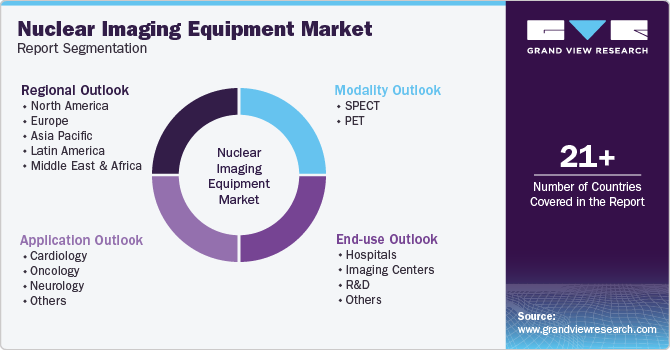
This report forecasts revenue growth at global, regional, and country levels and provides an analysis of the latest industry trends in each of the sub-segments from 2021 to 2033. For this study, Grand View Research has segmented the global nuclear imaging equipment market report based on the modality, application, end-use, and region:
 To learn more about this report, Download Free Sample Report
 -
Modality Outlook (Revenue, USD Million, 2021 - 2033)
-
SPECT
-
PET
-
-
Application Outlook (Revenue, USD Million, 2021 - 2033)
-
Cardiology
-
Oncology
-
Neurology
-
Others
-
-
End-use Outlook (Revenue, USD Million, 2021 - 2033)
-
Hospitals
-
Imaging Centers
-
R&D
-
Others
-
-
Regional Outlook (Revenue, USD Million, 2021 - 2033)
-
North America
-
U.S.
-
Canada
-
-
Europe
-
UK
-
Germany
-
France
-
Italy
-
Spain
-
Denmark
-
Sweden
-
Norway
-
-
Asia Pacific
-
Japan
-
China
-
India
-
Australia
-
Thailand
-
South Korea
-
-
Latin America
-
Brazil
-
Mexico
-
Argentina
-
-
Middle East & Africa
-
South Africa
-
Saudi Arabia
-
UAE
-
Kuwait
-
-
Research Methodology
Segment Definition
Segment - Modality
Revenue capture definition
SPECT
Revenue is generated through the sale of Single-Photon Emission Computed Tomography (SPECT) systems and standalone gamma cameras, as well as integrated hybrid configurations such as SPECT/CT. Equipment manufacturers derive income from initial hardware capital sales, crystal/detector upgrades (including the transition to solid-state CZT detectors), specialized collimator options, and long-term multi-year post-warranty service and maintenance contracts.
PET
Revenue is captured through the commercialization of high-end Positron Emission Tomography (PET) systems, predominantly sold as advanced hybrid platforms including PET/CT and PET/MRI. Market participants generate revenue from premium hardware installations, high-sensitivity digital Silicon Photomultiplier (SiPM) detector modules, Time-of-Flight (ToF) advanced image reconstruction software licenses, and recurring engineering service contracts required to maintain complex system calibration.
Segment - Application
Revenue capture definition
Cardiology
Revenue flows from nuclear imaging platforms specifically configured and optimized for cardiovascular imaging applications, such as Myocardial Perfusion Imaging (MPI) and cardiac amyloidosis evaluation. Income is driven by the placement of dedicated cardiac SPECT or PET hardware, specialized cardiac gating software packages, and automated quantification analytics tools used to measure myocardial blood flow and left ventricular ejection fraction.
Oncology
Revenue is generated through the deployment of imaging systems allocated for cancer screening, tumor staging, lesion detection, and therapy response monitoring (e.g., FDG-PET/CT scans). Manufacturers capture value from high-throughput hardware sales, whole-body scanning software expansions, advanced lesion-tracking AI modules, and specialized hardware compatibility options required to support emerging radioisotope-guided theranostics pipelines.
Neurology
Revenue is derived from nuclear imaging configurations tailored for brain metabolism and neurodegenerative mapping, including Alzheimer's, Parkinson’s, and epilepsy diagnostics. Income is earned from the sale of ultra-high-resolution PET and SPECT systems, specific brain-dedicated imaging cradles, and specialized neurological quantification software designed to analyze regional tracer uptake (such as Amyloid or Tau protein tracking).
Others
Revenue flows from nuclear imaging equipment utilized across miscellaneous clinical applications, including orthopedic bone scintigraphy, pulmonary ventilation/perfusion (V/Q) scans, endocrine imaging, and gastrointestinal tracking. Market participants capture revenue through general-purpose imaging hardware configurations, variable collimator attachments, and versatile all-purpose workflow software licensing.
Segment – End Use
Revenue capture definition
Hospitals
Revenue is generated through the direct sale, leasing, or public-private tendering of nuclear imaging equipment to multi-specialty medical centers and community hospital networks. This segment drives massive capital inflows from premium-tier system acquisitions (e.g., digital PET/MRI), comprehensive enterprise-level software infrastructure deployments, and high-margin, multi-year preventive service and maintenance agreements.
Imaging Centers
Revenue is derived from the procurement of nuclear medicine technologies by standalone diagnostic imaging chains and outpatient radiology centers. Revenue is heavily driven by value-tier, high-throughput hybrid systems (such as mid-range SPECT/CT or PET/CT) optimized for maximum daily patient capacity, alongside scalable software upgrades and flexible payment or financing structures designed to maximize return on investment (ROI).
R&D
Revenue flows from specialized nuclear imaging equipment sold to academic research institutions, university medical schools, pharmaceutical labs, and biotechnology hubs. Income is derived from ultra-high-resolution systems, dedicated preclinical imaging scanners (micro-PET/CT), advanced raw-data software tools, and custom hardware configurations utilized for novel radiopharmaceutical tracer development and clinical trials.
Others
Revenue is captured from secondary end-users, including ambulatory surgical centers (ASCs), specialized government medical departments, military health facilities, and independent veterinary oncology hospitals. Manufacturers earn revenue via lower-footprint, targeted capital system sales, mobile nuclear imaging rentals, and basic ad-hoc technical support service lines.
Estimation Model
Research Methodology
Scope Definition
Build the Product Base
Estimate Penetration
Revenue Conversion
What is being sized?
How large is total addressable market?
What portion is transitioning to next-generation systems?
How does unit volume become market revenue?
PROCESS STEPS
PROCESS STEPS
PROCESS STEPS
PROCESS STEPS
(1) Define Nuclear Imaging Modality Categories
(1) Profile Healthcare Facilities
(1) Assess Digital Detector Adoption
(1) Collect Average Selling Prices (ASPs)
(2) Scope Clinical Applications
(2) Estimate Active Installed Base
(2) Map Hybrid vs. Standalone Systems
(2) Segment by revenue streams
(3) Set Geographic Boundaries
(3) Apply Modality & Configuration Splits
(3) Evaluate AI & Software Integration
(3) Apply end-use channel share
(4) Align on base year & forecast horizon (2026–2033)
(4) Model Replacement Cycles
(4) Factor in Radiopharmaceutical & Isotope Constraints
(4) Triangulate and Validate
DATA SOURCES
DATA SOURCES
DATA SOURCES
DATA SOURCES
Industry bodies (SNMMI, EANM), medical imaging registries, IMV, peer-reviewed literature
National health service database, hospital inventory registries, IAEA database, manufacturer data
Primary interviews, company filings, trade surveys, expert panels
Hospital procurement/tender archives, distributor pricing sheets, import/export databases
Customization Table
This report has been delivered with the following In-depth customizations
CLIENT REQUEST
CUSTOMIZATION DELIVERED
VALUE ADDS
Technological Advancements Analysis
Conducted a comprehensive technology assessment of the nuclear imaging equipment market, focusing on advancements in PET, SPECT, PET/CT, SPECT/CT, and PET/MRI systems. The analysis evaluated emerging trends such as artificial intelligence (AI)-enabled image reconstruction, digital detector technologies, low-dose imaging solutions, automated workflow platforms, and theranostics-driven imaging applications. It further assessed the impact of these innovations on diagnostic accuracy, scan efficiency, patient outcomes, and healthcare provider adoption. Additionally, the study reviewed ongoing R&D activities, product launches, regulatory developments, and investments in next-generation molecular imaging technologies across major global markets.
This analysis enables stakeholders to understand evolving technology trends shaping the nuclear imaging equipment industry. It helps identify high-growth innovation areas, emerging competitive advantages, and future investment opportunities. The findings support product development, strategic planning, technology adoption decisions, and long-term market positioning across the diagnostic imaging ecosystem.
Competitive Analysis
Conducted a detailed competitive assessment of leading nuclear imaging equipment manufacturers based on product portfolios, modality offerings, technological capabilities, pricing strategies, geographic presence, service networks, strategic partnerships, and recent product innovations. The analysis examined competitive positioning across PET, SPECT, and hybrid imaging segments while evaluating key differentiators such as AI integration, image quality, workflow efficiency, and after-sales support. It also assessed mergers, acquisitions, collaborations, and expansion initiatives influencing market dynamics.
This analysis enables stakeholders to evaluate competitive intensity, benchmark key market participants, and identify growth opportunities within the nuclear imaging equipment market. It supports strategic decision-making related to product differentiation, partnership development, market entry planning, and competitive positioning across developed and emerging healthcare markets.
Geographic Expansion
Conducted a detailed assessment of regional and country-level opportunities within the nuclear imaging equipment market across North America, Europe, Asia Pacific, Latin America, and the Middle East & Africa. The analysis evaluated healthcare infrastructure, diagnostic imaging adoption rates, availability of radiopharmaceuticals, reimbursement frameworks, regulatory environments, disease prevalence, and investments in precision medicine initiatives. It further assessed country-specific demand drivers, installation trends, healthcare spending patterns, and expansion opportunities for advanced nuclear imaging technologies.
This analysis enables stakeholders to understand regional growth potential and market attractiveness across key geographies. It helps identify high-opportunity countries for expansion, investment, and strategic partnerships while providing insights into healthcare infrastructure readiness, reimbursement landscapes, and long-term demand trends. The findings support informed geographic expansion and market penetration strategies within the global nuclear imaging equipment industry.
Frequently Asked Questions About This Report
Single photon emission computed tomography (SPECT) segment dominated the market with the largest revenue share of 58.1% in 2025, while Positron Emission Tomography (PET) is the fastest-growing area.
Hospitals segment led the market with the largest revenue share of 53.0% in 2025.
North America accounted for 42.6% of revenue in 2025.
The global nuclear imaging equipment market is expected to grow at a compound annual growth rate of 3.5% from 2026 to 2033 to reach USD 8.8 billion by 2033.
The global nuclear imaging equipment market size was estimated at USD 6.8 billion in 2025 and is expected to reach USD 6.9 billion in 2026.
The oncology segment dominated the nuclear imaging equipment market, accounting for 48.7% in 2025.
Some key players operating in the nuclear imaging equipment market include GE HealthCare, Siemens Healthineers, Koninklijke Philips N.V., Canon Medical Systems Corporation, Mediso, Cubresa Inc., Shimadzu Corporation, United Imaging Healthcare Co.
Key factors that are driving the nuclear imaging equipment market growth include increasing prevalence of cancer worldwide, technological advancements, clinical applications, and research, and increasing nuclear medicine imaging procedures.
About the Author(s)
Medical Imaging Research Team
Healthcare · Medical ImagingThis report was authored by the medical imaging research team at Grand View Research - comprising two research analysts, one senior research analyst, and one industry expert - with specialized expertise in the medical imaging segment of the healthcare industry. All findings are based on proprietary healthcare databases, executive interviews, and regulatory analysis, subject to internal peer review prior to publication.
Last Updated:
Speak to Analyst

Customize this report to your needs - add regions, segments, or data points, with 20% free customization.
Or view our licence options:


ISO 9001:2015 & 27001:2022 Certified
We are GDPR and CCPA compliant! Your transaction & personal information is safe and secure. For more details, please read our privacy policy.


