
- Home
- »
- Medical Devices
- »
-
Pen And Injector Drug Delivery Devices Market Report, 2026-2033GVR Report cover

Pen And Injector Drug Delivery Devices Market (2026 - 2033)
Size, Share & Trends Analysis Report By Product (Injectors, Pen), By Therapeutic Use (Autoimmune Disorders, Hormonal Disorders), By End-use, By Region, And Segment Forecasts
Market Size, 2025
$114.7BMarket Estimate, 2026
$124.9BMarket Forecast, 2033
$236.5BCAGR, 2026–2033
9.6%Pen And Injector Drug Delivery Devices Market Summary
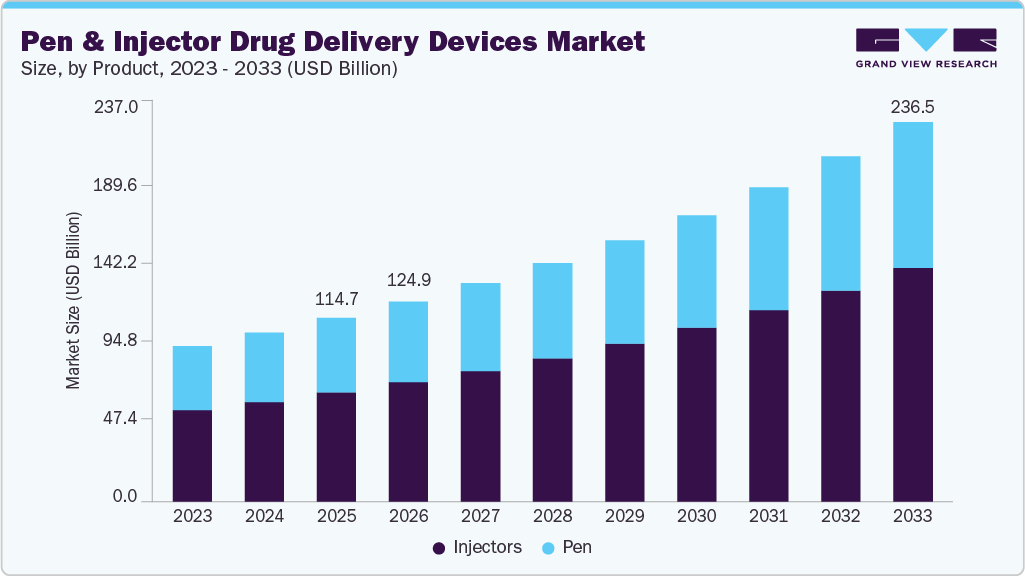
The global pen and injector drug delivery devices market size was valued at USD 114.7 billion in 2025 and is projected to grow from USD 124.9 billion in 2026 to USD 236.5 billion by 2033, at a CAGR of 9.6% from 2026 to 2033. The market in North America dominated with a revenue share of 50.0% in 2025. This strong growth is driven by the rising demand for advanced, effective, and user-friendly drug delivery solutions across healthcare settings.
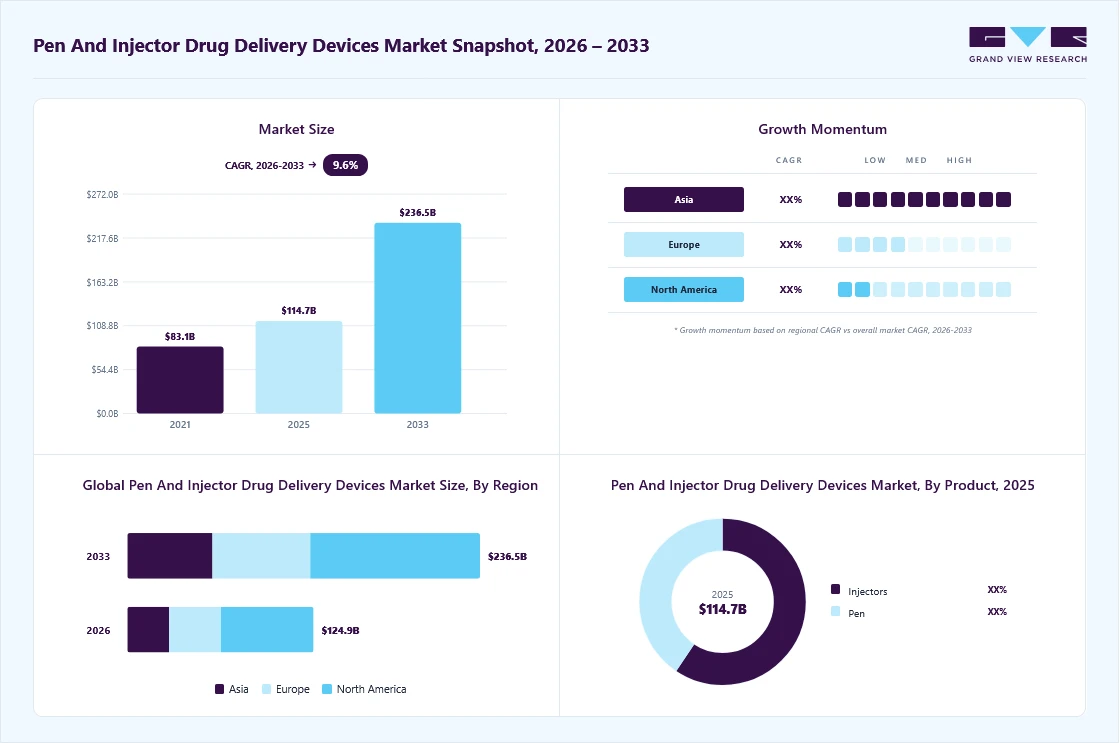 Source: Grand View Research, IR Documents, Primary Interviews, Paid DatabasesTo learn more about this report,
 Download Free Sample Report
Key Market Trends & Insights
- By product: Injectors segment held the largest market share of 59.3% in 2025.
- By therapeutic use: Diabetes mellitus segment held the largest market share of 44.5% in 2025.
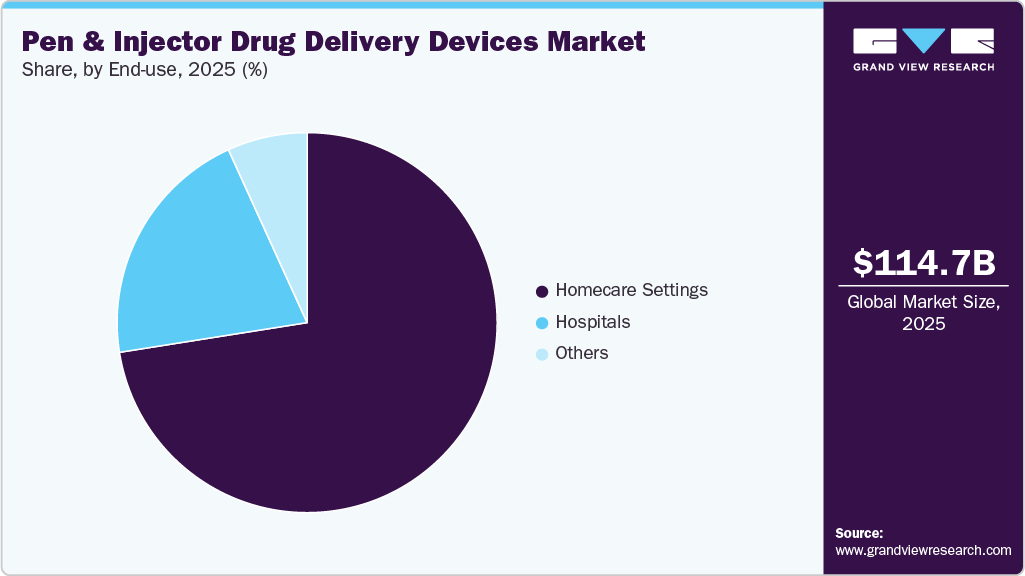
- By end use: Homecare segment held the largest market share of 72.5% in 2025.
Regional Highlights
- Largest regional market: North America (50.0% revenue share, 2025)
- Fastest-growing regional market: Asia (highest CAGR, 2026-2033)
- By country: The U.S. held the largest market share in 2025
Market Size & Forecast
- Market size in 2025: USD 114.7 Billion
- Estimated market size in 2026: USD 124.9 Billion
- Projected market size by 2033: USD 236.5 Billion
- CAGR (2026-2033): 9.6%
Prism AI by Grand View Research Free to tryAsk a question about the pen and injector drug delivery devices marketTry asking✓Every figure cited from GVR research Prefer the report? Download free sample →
Key drivers include the increasing prevalence of chronic conditions such as diabetes, cancer, and autoimmune disorders that require frequent injections; growing adoption of user-friendly injection tools such as autoinjectors and pen injectors; and continuous technological advancements that enhance safety, accuracy, and patient comfort. In addition, growing biological development, the shift toward home-based care, and greater focus on reducing hospital visits are further supporting market growth.One of the major drivers of the pen and injector drug delivery devices market is the increasing prevalence of chronic diseases, along with the rapid growth of the geriatric population. Chronic conditions such as diabetes, cancer, cardiovascular diseases, and autoimmune disorders often require regular or long-term medication delivered through injections for fast and effective therapeutic action. According to the IDF’s 2021 report, about 537 million people around the world had diabetes, which means roughly 1 in 10 people were affected. The number is expected to rise sharply, reaching 783 million people by 2045. As these diseases become more common in the world, the demand for reliable and easy-to-use injectable devices continues to increase. In addition, the aging population faces multiple health issues and typically requires frequent medical treatments, including injectable drugs. According to the recent population estimates and projections by UN DESA’s Population Division, the number of people aged 60 and older is projected to reach 1.5 billion by 2050, representing about 1 in 6 people globally. This demographic shift is supporting the need for convenient, safe, and precise delivery systems that support both clinical use and home-based care, thereby contributing significantly to market growth.
 To learn more about this report, Download Free Sample Report
Technological advancements in drug delivery systems are driving the growth of pen and injector drug delivery devices. Innovations have made injection devices safer, more efficient, and easier for patients to use. Features such as smart autoinjectors with digital monitoring, needle-free injection technologies, and improved safety mechanisms help ensure accurate dosing and reduce the risk of needle injuries. Advancements in materials and device design also enhance comfort and support self-use at home, which is becoming increasingly important for people managing chronic diseases. For instance, in October 2024, BD and Ypsomed announced a strategic collaboration to integrate BD’s Neopak XtraFlow glass prefillable syringe, featuring a shorter 8 mm needle and a thinner-wall cannula, with Ypsomed’s YpsoMate 2.25 autoinjector. This design makes high-viscosity biologic drugs easier to inject for patients self-administering at home, and the two-step injector is purpose-built to assist users with limited grip or vision. Such technological improvements encourage adoption and support significant market growth.
Market Concentration & Characteristics
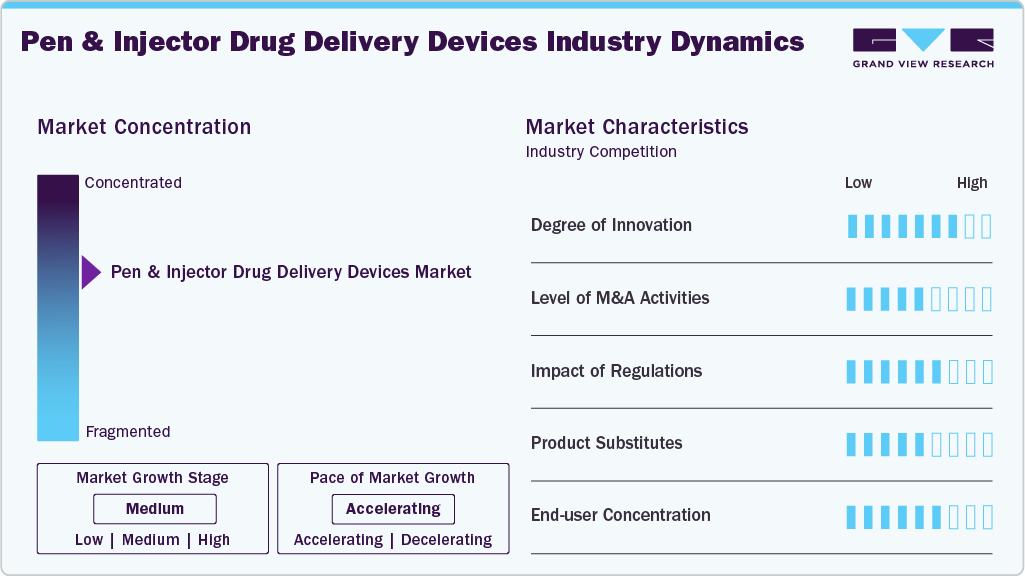
The global pen and injector drug delivery devices industry is concentrated, with major multinational companies holding significant market shares due to strong brand portfolios, extensive R&D teams, and broad geographic presence. Market competition is characterized by continuous innovation in self-injectors, autoinjectors, prefilled syringes, and wearable injectors, with a noticeable shift toward patient-centric devices that enable self-administration. The top market participants dominate through organic growth and strategic partnerships, benefiting from technological advancements, such as smart, connected injectors and AI-powered delivery systems, to maintain a competitive advantage. The market entry for new companies is challenging, as strict rules must be followed and advanced manufacturing systems are required. Overall, the market shows moderate to high concentration, rapid innovation cycles, and significant investments in global supply chains and digital health integration.
Innovation is very high in the market. New technologies and patient-focused designs are driving this growth. Smart connected injectors with Bluetooth and AI help track doses and improve treatment adherence. Wearable injectors, ultra-thin needle autoinjectors, and reusable devices make treatment easier and more comfortable. For instance, in October 2024, Nemera launched a reusable autoinjector at CPHI Milan. The device features durable electronics and a long-life design to improve patient comfort, support sustainable self-administration, and reduce costs. Advances in drug formulations, such as sustained-release and needle-free systems, further increase safety and patient outcomes. Innovation remains a key force shaping this market.
 To learn more about this report, Download Free Sample Report
End use concentration in the industry is medium, as the devices serve a diversified set of end users, including hospitals, home healthcare settings, specialty clinics, and long-term care facilities. While hospitals still represent a significant share of market demand due to their role in acute and complex treatments, there is a growing trend toward decentralization of care, with increased adoption of self-administration and home-based treatments. This evolution diversifies the market’s end use landscape, reducing reliance on any single user segment. This diversity encourages manufacturers to develop versatile product portfolios catering to different environments and patient needs.
Product Insights
Based on product, the injectors segment dominated the market with a revenue share of 59.3% in 2025 and is projected to register the fastest CAGR of 10.1% during the forecast period. This growth is driven by increasing demand for easy-to-use self-injection devices that enable patients with chronic diseases such as rheumatoid arthritis, multiple sclerosis, and diabetes to manage treatments at home. Autoinjectors provide a simplified, safe, and reliable delivery system with features such as hidden needles, automated dosing, and ergonomic designs that reduce user error and needle anxiety. The rise in patient preference for self-administration, combined with advances in biologics, is driving the global adoption of autoinjectors. For instance, in October 2025, SCHOTT Pharma launched a 5.5 ml large-volume prefillable staked-needle glass syringe as part of its syriQ BioPure platform. This new syringe is compatible with Ypsomed’s YpsoMate 5.5 large-volume autoinjector, enabling comfortable and reliable self-injection of biologic therapies at home. Moreover, innovations in user-centric design and safety further enhance confidence and compliance, making this segment a key focus area for manufacturers and healthcare providers.
The pen segment is projected to witness significant growth over the forecast period, driven by the increasing demand for precise, user-friendly self-injection devices across chronic therapies such as diabetes and hormonal treatments. Prefilled pens offer convenience by combining medication and delivery in a single unit, reducing dosing errors and enhancing patient control. Innovations such as adjustable doses, ergonomic designs, and digital dose-tracking accessories further grow their appeal. With increasing patient preference for at-home treatment and rising prevalence of chronic diseases, and advances in smart technology integration, the prefilled pens market is growing significantly.
Therapeutic Use Insights
The diabetes mellitus segment dominated the market in 2025, driven by the widespread adoption of injectable therapies such as long-acting insulins and GLP-1 agonists for effective disease management. These therapies require advanced delivery devices that enable precise dosing and ease self-administration, both of which are important for improving patient comfort and reducing complications. According to the International Diabetes Federation (IDF), global spending on diabetes care exceeded 1 trillion dollars for the first time in 2024, up from USD 966 billion in 2021. The growing prevalence of diabetes and rising healthcare expenditure are fueling demand for innovative injection platforms, including smart injectors and connected autoinjectors. High per capita income and rising awareness are further accelerating adoption.
The obesity segment is projected to grow at the fastest CAGR during the forecast period. The segment growth is driven by the increasing prevalence of obesity globally and the growing adoption of injectable therapies such as GLP-1 and dual agonist drugs that offer effective weight management. These treatments require advanced delivery devices capable of handling higher volumes and viscous formulations while ensuring consistent, comfortable subcutaneous administration to support home-based care. The World Obesity Atlas 2022 states that by 2030, about one billion people worldwide could be living with obesity, which means 1 in 5 women and 1 in 7 men may be affected. Increasing patient populations shifting from lifestyle-only approaches to pharmacotherapy, along with innovations in device design that simplify use, are key growth drivers. For example, GLP-1 dual agonists are gaining traction for their superior metabolic benefits, supporting demand for compatible injection systems and fueling market expansion worldwide.
End Use Insights
The homecare settings segment dominated the global pen and injector drug delivery devices market in 2025 and is projected to grow at the fastest CAGR during the forecast period. The market growth is driven by the increasing preference for at-home treatment among patients managing chronic diseases. These devices, including autoinjectors and prefilled pens, provide greater safety and convenience, mainly for elderly patients and those with mobility challenges or limited access to healthcare facilities. Technological advancements, such as ergonomic designs, automatic needle insertion, and smart features that enable remote monitoring, make these devices easier to use and help patients stick to their treatment plans. The shift toward home-based care reduces hospital visits and healthcare costs and supports better disease management.
 To learn more about this report, Download Free Sample Report
The hospitals segment is projected to grow at the second-fastest CAGR from 2026 to 2033, driven by the increasing adoption of advanced pen and injector drug delivery devices in clinical settings for rapid, accurate administration of therapies in oncology, diabetes, and other chronic conditions. Hospitals remain critical for initiating high-risk treatments and managing complex biologics. Hospitals provide a sterile, closely monitored setting where healthcare professionals can safely administer injectable medications that require precise dosing and strict cleanliness standards, such as biologics, vaccines, antibiotics, and pain management drugs. Administering these treatments directly into the bloodstream allows for quicker results, which is especially important in ICUs, post-surgery care units, and oncology departments. The segment benefits from growing patient demand, technological advancements such as motor-assisted injectors, and stringent safety regulations.
Regional Insights
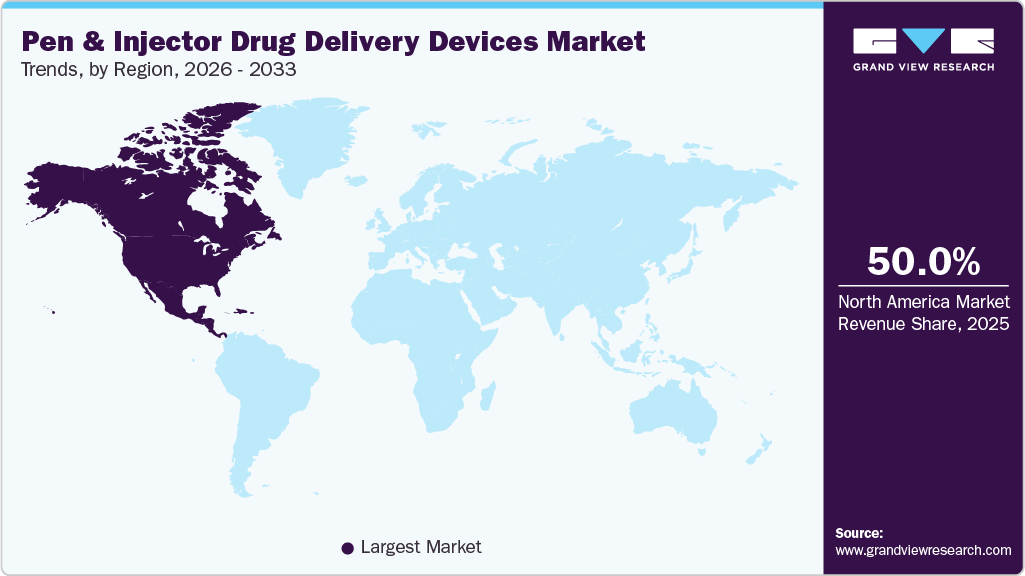
The North America pen and injector drug delivery devices industry held a 50.0% market share in 2025, driven by a well-established healthcare sector, advanced infrastructure, and strong focus on R&D and innovation. Also, the high prevalence of chronic diseases such as diabetes and cancer drives the market growth. Breast cancer is one of the most diagnosed cancers among women in the U.S. According to the American Cancer Society, Inc., in 2024, breast cancer was diagnosed in over 310,000 women in the country. This highlights the critical need for reliable, patient-friendly delivery systems. Favorable government regulations and stringent quality standards from bodies such as the FDA support the adoption of advanced devices, such as prefilled pens and autoinjectors. For instance, in February 2025, the FDA approved the first rapid-acting insulin biosimilar, Merilog (insulin-aspart-szjj), in both a 3 ml prefilled pen and a 10 ml multi-dose vial format. This shows how regulatory support is enabling wider access to pen-based injectable therapies. Ongoing collaboration between pharmaceutical companies and regulatory authorities further supports innovation, market growth, and enhanced patient outcomes across North America.
 To learn more about this report, Download Free Sample Report
U.S. Pen And Injector Drug Delivery Devices Market Trends
The pen and injector drug delivery devices industry in the U.S. has gained momentum from advancements in drug delivery technologies, driven by the need for better patient outcomes, easier treatment use, and the increasing number of people with chronic diseases such as diabetes. U.S. companies are developing innovative injectable devices to meet the growing demand for treatments for chronic and rare conditions. For instance, in October 2023, the FDA approved the Empaveli Injector, a small, single-use on-body device that allows patients to self-administer pegcetacoplan for the treatment of Paroxysmal Nocturnal Hemoglobinuria (PNH). In addition, the increasing number of cancer cases in the U.S. is further driving demand for pen and injector drug delivery systems, as cancer therapies often require complex medications that are more effectively delivered through injections.
Europe Pen And Injector Drug Delivery Devices Market Trends
The pen and injector drug delivery devices industry in Europe is experiencing strong growth driven by several key trends. A major trend is the increasing adoption of advanced, patient-centric, and connected drug-delivery devices, such as autoinjectors, prefilled syringes, and wearable injectors, which enhance patient convenience. The rising prevalence of chronic diseases such as cancer and diabetes, with the growing demand for self-administration therapies and home-based care, significantly fuels market growth. The increase in biologics and biosimilars that require precise parenteral delivery further underscores the need for sophisticated injectable devices. For instance, in May 2025, Sandoz launched the Pyzchiva (ustekinumab) autoinjector in Europe. It is a commercially available autoinjector for a biosimilar of this biologic. The device is designed for patient comfort, automatic dosing, and convenient self-administration in chronic inflammatory disease settings. In addition, strong healthcare infrastructure and regulatory support in leading countries such as Germany drive innovation and adoption. Overall, the European market growth is highlighted by technological advancements, patient preference shifts toward self-care, and supportive healthcare policies aimed at reducing hospital burdens and increasing cost efficiency.
Asia Pen And Injector Drug Delivery Devices Market Trends
The pen and injector drug delivery devices industry in Asia is expected to grow at the fastest CAGR from 2026 to 2033, driven by the rising prevalence of chronic diseases such as diabetes, cancer, and cardiovascular conditions, as well as increasing healthcare access and modernization. The transition from traditional vial-and-syringe methods to advanced devices such as prefilled pens, autoinjectors, and wearable injectors is gaining momentum, supported by patient preference for self-administration and home-based care. Major countries such as China and India lead the market with significant investments in manufacturing capabilities and innovation, while Japan and South Korea excel in developing technologically advanced connected injectors. The region also benefits from government healthcare reforms, digital health initiatives, and expanding private insurance, all of which enhance patient access to sophisticated drug-delivery systems. Overall, Asia’s injectable drug delivery market is characterized by the convergence of rising disease burden, technological innovation, expanding healthcare infrastructure, and growing patient awareness, showing its position as the fastest-growing market.
The China pen and injector drug delivery devices industry is growing rapidly, driven by the rising prevalence of chronic diseases such as diabetes, cancer, and autoimmune disorders, which continue to increase the need for advanced injectable treatments. The country's aging population, which often requires ongoing medical care, further strengthens this demand. According to the State Council of China, the population aged 60 and older reached approximately 297 million in 2023. This group makes up 21.1% of the total population. This highlights the growing need for user-friendly solutions such as prefilled syringes and auto-injectors. Government initiatives, including healthcare reforms, the Made in China 2025 strategy, and the Volume-Based Procurement (VBP) policy, are also driving market growth. This supports domestic production, lowers treatment costs, and encourages innovation. Furthermore, advancements in digital health, including smart, connected injectors that integrate with mobile apps, closely align with national initiatives such as Healthy China 2030, promoting patient-centered care and enabling wider adoption of home-based self-administration. All these factors highlight a strong market outlook, with China emerging as one of the fastest-growing regions for pen and injector drug delivery devices.
Key Pen And Injector Drug Delivery Devices Company Insights
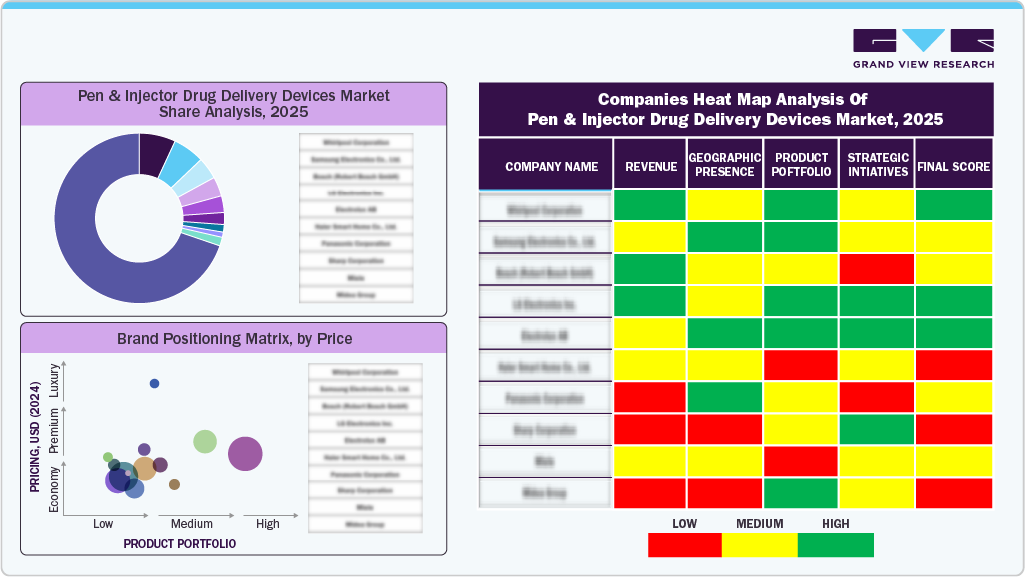
Many brands in the global pen and injector drug delivery devices market are focusing on strong growth opportunities through innovation, strategic partnerships, and expanding product portfolios. Leading companies are developing advanced technologies, such as smart, connected autoinjectors, reusable devices, and customizable drug delivery systems, to enhance patient convenience. These companies are actively investing in R&D to develop AI-powered, Bluetooth-enabled injectors that improve dosing accuracy and patient monitoring.
 To learn more about this report, Download Free Sample Report
-
Novo Nordisk A/S is a Danish pharmaceutical company that aims to fight serious chronic diseases. It creates and provides biologic medicines and devices, particularly for diabetes, obesity, rare blood disorders, and endocrine disorders. The company is also recognized for its injectable delivery systems, like insulin pens, which play a significant role in the injectable drug-delivery market.
-
Sanofi is a French healthcare company that research, develops, manufactures, and sells prescription medicines, vaccines, and over-the-counter products. Its main business is divided into three areas: specialty care, general medicines, and vaccines. Sanofi is a key player in the injectable delivery market, particularly with its insulin pens and biologic injectables across the diabetes, immunology, and rare disease segments.
Key Pen And Injector Drug Delivery Devices Companies:
The following key companies have been profiled for this study on the pen and injector drug delivery devices market.
- Novo Nordisk A/S
- Sanofi
- Eli Lilly and Company
- AstraZeneca plc
- Pfizer, Inc.
- Merck KGaA
- Teva Pharmaceuticals
- Amgen, Inc.
- Ferring Pharmaceuticals
- AbbVie Inc.
Recent Developments
-
In October 2025, Stevanato Group S.p.A. announced a major expansion of its drug delivery system manufacturing capacity in Germany. This move strengthens its presence in Europe. The company added over 2,500 square meters of new production space to its Bad Oeynhausen facility. This includes an ISO 8 cleanroom for injection molding and automated assembly. The multi-million-euro investment improves scalability, supply chain resilience, and support for both proprietary and contract manufacturing of drug delivery devices, including autoinjector and pen injector platforms.
-
In September 2025, Apiject Systems Corp. announced that it had submitted a New Drug Application to the U.S. FDA for the first injectable medicine delivered with its single-dose, single-use prefilled plastic syringe. This submission included glycopyrrolate, which is given through Apiject’s special injection device. This device combined Blow-Fill-Seal liquid packaging with precisely molded needle hubs. This platform allowed for scalable and cost-effective manufacturing using materials sourced in the U.S., providing an alternative to standard glass vials and prefilled syringes.
-
In May 2025, IDE Group introduced OKO, a new auto-injector for eye care markets. Its goal is to improve drug delivery accuracy, streamline procedures, and enhance patient safety. The device overcomes the limitations of existing intravitreal injection methods used for treating retinal diseases. Developed with the help of ophthalmologists from Australia, the U.S., and Europe, OKO provides up to 59 times better dosing accuracy, reduces procedural steps by 45%, and increases patient throughput, cutting per-injection costs by up to 78%.
Pen And Injector Drug Delivery Devices Market Report Scope
Report Attribute
Details
Market size in 2025
USD 114.7 billion
Estimated market size in 2026
USD 124.9 Billion
Projected market size by 2033
USD 236.5 Billion
Growth rate (revenue)
CAGR of 9.6% from 2026 to 2033
Actuals
2021 - 2025
Forecast period
2026 - 2033
Quantitative (revenue) units
Revenue in USD million/billion, volume in units, and CAGR from 2026 to 2033
Report coverage
Revenue forecast, company ranking, competitive landscape, growth factors, and trends
Segments covered
Product, therapeutic use, end use, region
Regional scope
North America; Europe; Asia
Country scope
U.S.; Canada; Mexico; Germany; UK; France; Italy; Spain; Norway; Sweden; Denmark; China; India; Japan; Thailand; South Korea; Saudi Arabia; UAE; Kuwait
Key companies profiled
Novo Nordisk A/S; Sanofi; Eli Lilly and Company; AstraZeneca plc; Pfizer, Inc.; Merck KGaA; Teva Pharmaceuticals; Amgen, Inc.; Ferring Pharmaceuticals; AbbVie Inc.
Customization scope
Free report customization (equivalent up to 8 analysts’ working days) with purchase. Addition or alteration to country, regional & segment scope.
Pricing and purchase options
Avail customized purchase options to meet your exact research needs. Explore purchase options
Global Pen And Injector Drug Delivery Devices Market Report Segmentation
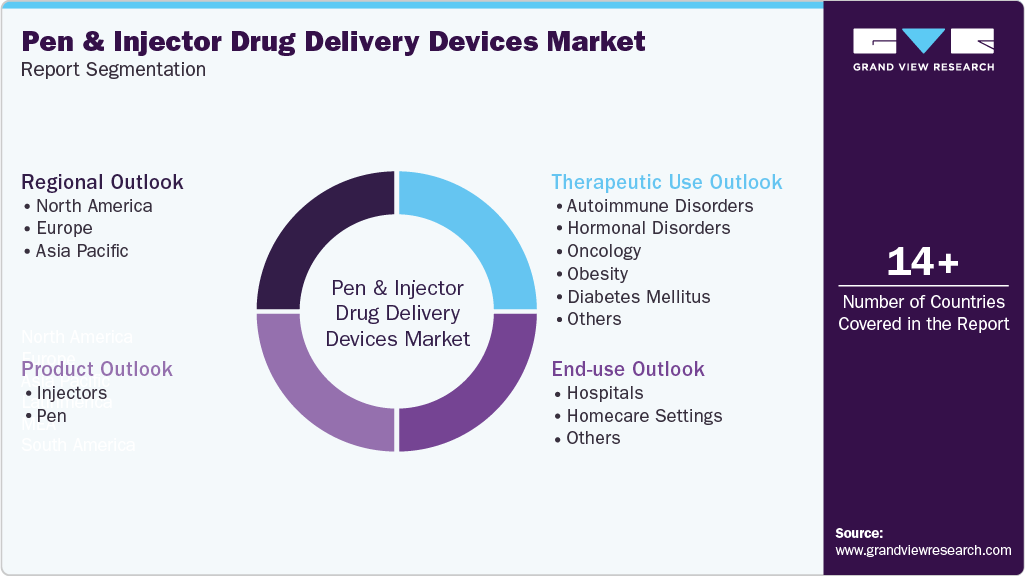
This report forecasts revenue growth at the global, regional, and country levels and provides an analysis of the latest industry trends and opportunities in each of the sub-segments from 2021 to 2033. For this study, Grand View Research has segmented the global pen and injector drug delivery devices market report on the basis of product, therapeutic use, end use, and region.
 To learn more about this report, Download Free Sample Report
-
Product Outlook (Volume, Units; Revenue, USD Billion, 2021 - 2033)
-
Injectors
-
GLP-1 Agonists
-
Hormone Therapies
-
Biologics
-
Others
-
-
Pen
-
GLP-1 Agonists
-
Insulin
-
Hormone Therapies
-
Others
-
-
-
Therapeutic Use Outlook (Volume, Units; Revenue, USD Billion, 2021 - 2033)
-
Autoimmune Disorders
-
Hormonal Disorders
-
Oncology
-
Obesity
-
Diabetes Mellitus
-
Others
-
-
End Use Outlook (Volume, Units; Revenue, USD Billion, 2021 - 2033)
-
Hospitals
-
Homecare Settings
-
Others
-
-
Regional Outlook (Volume, Units; Revenue, USD Billion, 2021 - 2033)
-
North America
-
U.S.
-
Canada
-
Mexico
-
-
Europe
-
UK
-
Germany
-
France
-
Italy
-
Spain
-
Norway
-
Sweden
-
Denmark
-
-
Asia
-
China
-
Japan
-
India
-
Thailand
-
South Korea
-
Saudi Arabia
-
UAE
-
Kuwait
-
-
Frequently Asked Questions About This Report
Injectors held the largest revenue share 59.3% in 2025.
Diabetes mellitus segment led with a 44.5% revenue share in 2025, while obesity is the fastest-growing segment.
Homecare held the largest share (over72.5%) in 2025.
Asia is the fastest-growing region over the forecast period.
The global pen and injector drug delivery devices market is expected to grow at a CAGR of 9.6% from 2026 to 2033, reaching USD 236.5 billion.
North America dominated with a 50.0% revenue share in 2025.
Key players include Novo Nordisk A/S, Sanofi, Eli Lilly and Company, AstraZeneca plc, Pfizer, Inc., Merck KGaA, Teva Pharmaceuticals, Amgen, Inc., Ferring Pharmaceuticals, and AbbVie Inc.
Key factors that are driving the pen and injector drug delivery devices market growth include the rising demand for advanced, effective, and user-friendly drug delivery solutions across healthcare settings, increasing prevalence of chronic conditions such as diabetes, cancer, and autoimmune disorders that require frequent injections.
The global pen and injector drug delivery devices market size was valued at USD 114.7 billion in 2025 and is estimated at USD 124.9 billion for 2026.
About the Author(s)
Medical Devices Research Team
Healthcare · Medical DevicesThis report was authored by the medical devices research team at Grand View Research - comprising two research analysts, one senior research analyst, and one industry expert - with specialized expertise in the medical devices segment of the healthcare industry. All findings are based on proprietary healthcare databases, executive interviews, and regulatory analysis, subject to internal peer review prior to publication.
Last Updated:
Speak to Analyst

Customize this report to your needs - add regions, segments, or data points, with 20% free customization.
Or view our licence options:


ISO 9001:2015 & 27001:2022 Certified
We are GDPR and CCPA compliant! Your transaction & personal information is safe and secure. For more details, please read our privacy policy.


