
- Home
- »
- Animal Health
- »
-
Pet Light Therapy Devices Market Size Report, 2026-2033GVR Report cover

Pet Light Therapy Devices Market (2026 - 2033)
Size, Share & Trends Analysis Report By Technology (Lasers, LEDs), By Pet (Dogs, Cats, Horses), By Product, By Application (Pain Management, Wound Healing), By End Use, By Region, And Segment Forecasts
Market Size, 2025
$67.5MMarket Estimate, 2026
$73.2MMarket Forecast, 2033
$148.5MCAGR, 2026–2033
10.6%Pet Light Therapy Devices Market Summary
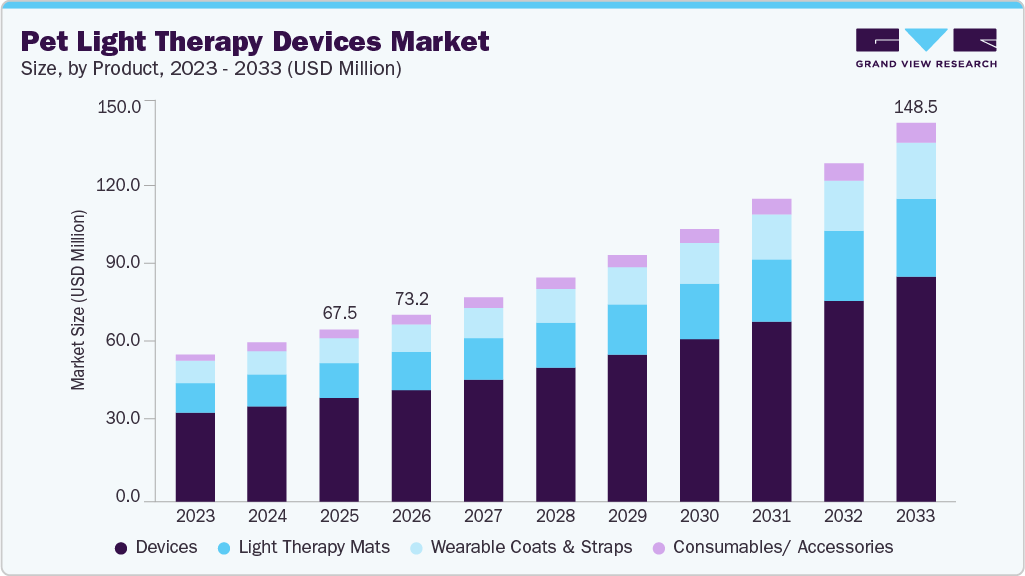
The global pet light therapy devices market size was valued at USD 67.5 million in 2025 and is projected to grow from USD 73.2 million in 2026 to USD 148.5 million by 2033, at a CAGR of 10.6% from 2026 to 2033. North America held the largest share of 39.3% of the global market in 2025. The market is advancing due to increasing demand for red light therapy devices for pets, rising technological advancements in pet therapy devices, and growing adoption of at-home pet rehabilitation devices.
 Source: Grand View Research, IR Documents, Primary Interviews, Paid DatabasesTo learn more about this report,
 Download Free Sample Report
 Key Market Trends & Insights
- By product: Devices segment held the largest market share of 60.1% in 2025.
- By technology: Lasers segment held the largest market share in 2025.
- By pet: Dogs segment held the largest market share in 2025.
- By application: Pain management segment dominated the market in 2025.
- By end use: Veterinary clinics & hospitals segment dominated the market in 2025.
Regional Highlights
- Largest regional market: North America (39.3% market share, 2025)
- Fastest-growing regional market: Asia Pacific (highest CAGR, 2026-2033)
- By country: The U.S. held the largest market share in 2025.
Market Size & Forecast
- Market size in 2025: USD 67.5 Million
- Estimated market size in 2026: USD 73.2 Million
- Projected market size by 2033: USD 148.5 Million
- CAGR (2026-2033): 10.6%
Three ways to get this report
Buy it, customize it, or ask a question.Ask an Analyst
Analyst response in 1 business day
- AccessReport author, directly
- Reply timeWithin 1 working day
- No sales callDirect answer only
- FormatEmail reply
- CostFree, no cost
Get the Full Report
What the study covers
- FormatsPDF · Excel · Dashboard
- Timeline2026–2033 annual, 2025 base
- Coverage20+ countries, 5 regions
- Companies10+ key players profiled
Customize the Report
20% free customization
- IncludeCountries, segments, points
- TailorTo your product definition
- ExtendDeeper competitor detail
- OrA fully bespoke study
- Turnaround5–10 working days
The expanding global pet population is a significant market driver. As of 2025, global pet ownership has surpassed one billion animals, with over 900 million pet dogs and 370 million pet cats recorded worldwide. According to a report, in the U.S., approximately 66% of households, which is 86.9 million homes, owned at least one pet as of 2025. This population scale directly translates into a sizable addressable patient base for therapeutic veterinary devices. Similarly, pet humanization is accelerating owner willingness to pursue non-invasive, drug-free treatment modalities. Photobiomodulation therapy, which operates through red and near-infrared wavelengths typically ranging from 600 nm to 1,000+ nm, has gained momentum as a clinically relevant intervention for musculoskeletal conditions, chronic pain, and wound healing in companion animals. These are high-prevalence conditions across aging dog and cat populations, where osteoarthritis, cruciate ligament injuries, intervertebral disc disease, and post-surgical inflammation represent recurring therapeutic indications.In addition, rapid innovation in device engineering is materially expanding the functional scope and commercial addressability of the market. Manufacturers are transitioning from single-modality, single-wavelength systems to multi-wavelength platforms capable of delivering targeted therapeutic outputs across distinct tissue depths. This multi-spectral capability enables a single device to address a broader set of clinical indications, improving per-unit utility for both veterinary clinics and home users. In addition, wearable formats represent a particularly significant product innovation. LED-integrated wraps, coats, and straps allow continuous, hands-free therapy delivery, improving treatment compliance in animals that resist stationary or handheld device protocols. For instance, the HEALED LED Wrap, engineered specifically for canine pain management, employs clinically validated red and near-infrared wavelengths to reduce inflammatory markers and inhibit peripheral nerve conduction, targeting conditions including arthritis, cruciate ligament injury, post-operative pain, and neuropathic pain without requiring clinical oversight during each session.
 To learn more about this report, Download Free Sample Report
 In addition, the shift toward home-based pet rehabilitation is generating sustained demand for consumer-facing light therapy devices. Pet owners are increasingly seeking alternatives to frequent, high-cost veterinary clinic visits, particularly for chronic conditions requiring ongoing therapeutic management. Light therapy, delivered through LED-based handheld devices and therapy mats, offers a cost-effective and operationally accessible modality for maintaining treatment continuity between clinical sessions.
Moreover, LED devices have accelerated in the home-use segment due to their safety profile relative to laser systems. LED devices use non-coherent, broad-spectrum light that reduces tissue damage risk and does not require specialized handling training. This distinction makes LED technology practically suitable for unsupervised home administration by pet owners, supporting daily or multi-session protocols for conditions such as joint stiffness, chronic arthritis, and superficial wound healing.
In addition, the expansion of pet insurance coverage is supporting at-home device adoption. In the U.S., approximately 6.4 million pets were insured as of 2024, representing nearly 10% of the national pet population, with total insurance premiums reaching USD 4.7 billion by year-end 2024. Growing financial coverage for pet healthcare creates greater spending capacity among owners for supplementary therapeutic devices. For instance, established at-home platforms such as LumaSoothe 2, offering dual treatment modes for joint and skin conditions, respectively, illustrate the commercial viability of this segment, as LED devices increasingly function as routine home-care complements to professional veterinary treatment rather than standalone clinical substitutes.
Photobiomodulation Therapy Improving Cognitive Function in Aging Dogs
Elements
Description
Problem
Aging dogs experience canine cognitive dysfunction (CCD), leading to slower responsiveness, reduced alertness, memory decline, and behavioral changes. These symptoms reduce quality of life and create concern for pet owners seeking safe, non-invasive solutions for long-term brain health support.
Solution
This study evaluated transcranial photobiomodulation (PBM) therapy in dogs with cognitive dysfunction. Results showed improvement in 4 of 5 dogs at 30 days and all dogs at 60 days, with cognitive scores improving by 43.4% and no adverse effects reported.
Conclusion
The study confirms that PBM-based pet light therapy devices can effectively support cognitive health in aging dogs by improving alertness and responsiveness. This expands market potential beyond pain management into neurological wellness, strengthening demand for advanced home-care and veterinary laser therapy devices.
Market Concentration & Characteristics
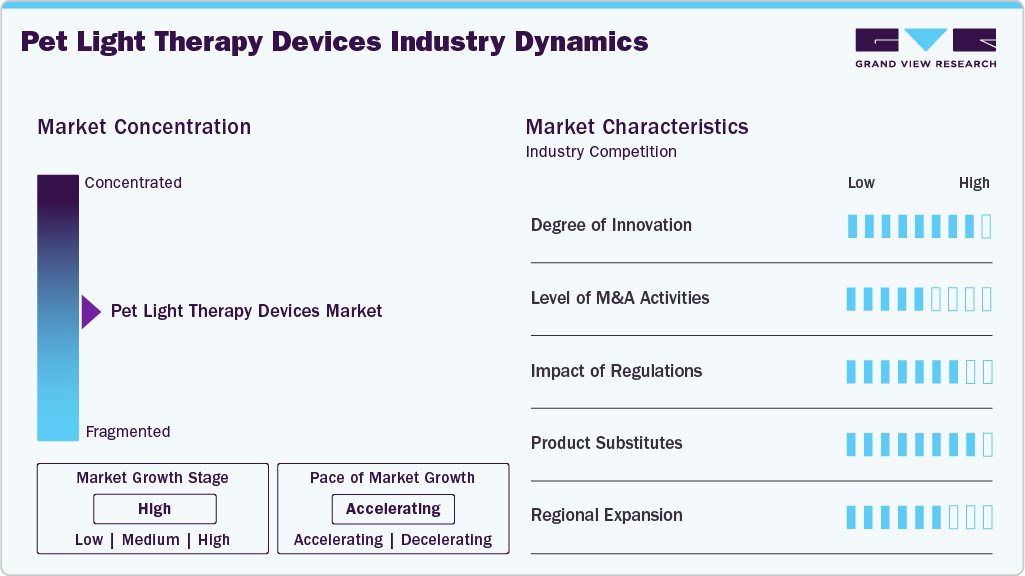
The pet light therapy devices industry is moderately concentrated, with a mix of established veterinary device manufacturers and specialized rehabilitation-focused companies competing globally. Key players focus on innovation in cold lasers, hot lasers, and LED therapy systems, while smaller niche brands target portable and home-use solutions. Strategic partnerships with veterinary clinics, distributors, and rehabilitation centers strengthen market presence, while product differentiation and technological advancement drive competitive intensity.
This industry is highly innovation-driven, with advancements in cold lasers, hot lasers, LED photobiomodulation, wearable therapy wraps, and portable home-use devices. Improved wavelength precision, AI-enabled controls, and targeted treatment settings enhance pain management, wound healing, mobility support, and rehabilitation outcomes across companion and equine care.
 To learn more about this report, Download Free Sample Report
 M&A activity is steadily increasing as companies seek to expand product portfolios, veterinary distribution networks, and technological capabilities. Key players acquire niche therapy device manufacturers and rehabilitation-focused brands to strengthen industry presence. Strategic collaborations with veterinary hospitals and rehabilitation centers further support competitive positioning.
Regulations significantly influence this industry, particularly regarding veterinary device approvals, laser safety standards, and treatment claims. Compliance with FDA, CE, and veterinary health regulations affects product launches and commercialization. Supportive regulations for non-invasive therapies encourage wider adoption, while strict certification requirements can delay industry entry.
Pharmaceuticals, hydrotherapy, acupuncture, physical rehabilitation, and orthopedic supports remain major substitutes for pet light therapy devices. Many veterinary clinics and pet owners prefer traditional pain management methods due to familiarity and lower upfront costs. Limited awareness of photobiomodulation also restricts the replacement of conventional treatment approaches.
Companies are expanding into Asia-Pacific, Latin America, and the Middle East due to rising pet ownership, increasing veterinary spending, and growing awareness of non-invasive therapies. Expansion strategies include partnerships with local distributors, veterinary clinics, and rehabilitation centers, along with localized product launches for home-care adoption.
Product Insights
Devices dominated the market with the largest revenue share of 60.1% in 2025. The segment includes benchtop devices and handheld devices that form the core treatment infrastructure across both clinical and home-care settings. The broad applicability of devices across multiple therapeutic indications, including pain management, wound healing, and dermatology, combined with increasing veterinary integration of photobiomodulation protocols, supports the dominant position. In addition, rising capital investment by veterinary clinics in professional-grade laser and LED systems further consolidates device segment revenue leadership.
The consumables/accessories is the fastest growing segment over the forecast period, due to recurring procurement of replacement probes, protective eyewear, pads, batteries, and maintenance components that generate sustained revenue streams independent of new device purchases. In addition, the inclusion of light therapy mats, pads, and beds within this segment, driven by growing home-use adoption, is expanding the consumption base considerably. Furthermore, as the installed device base demand increases globally, demand for compatible accessories grows proportionally, creating a structurally recurring and volume-driven growth trajectory for this segment.
Technology Insights
Lasers dominated with the largest revenue share in 2025. Laser-based systems, encompassing both cold lasers operating through Low-Level Laser Therapy and high-intensity hot laser platforms, deliver superior tissue penetration depths and precise energy delivery relative to LED alternatives. The veterinary settings extensively adopt Class IV laser systems for complex musculoskeletal and post-surgical applications. The higher per-unit price point of laser equipment, combined with established clinical protocols and growing practitioner training programs in photobiomodulation, sustains the segment's revenue dominance across the forecast period.
The LEDs segment represents the second fastest growing segment over the forecast period due to declining manufacturing costs for LED components, combined with the inherent safety of non-coherent light delivery. In addition, multi-wavelength LED platforms incorporating red, near-infrared, blue, and yellow light spectra now address a range of clinical indications previously served exclusively by laser systems. For instance, home-use LED devices priced accessibly for consumer markets are driving volume-based growth, particularly across North America and Europe.
Pet Insights
The dogs segment dominated the market in 2025. Dogs represent the most prevalent companion animal globally, with the U.S. alone recording approximately 89.7 million pet dogs as of 2024. High dog ownership rates across the globe, along with the elevated prevalence of osteoarthritis, cruciate ligament injuries, hip dysplasia, and intervertebral disc disease in canine populations, generate consistent therapeutic demand. Moreover, the willingness of dog owners to invest in advanced veterinary and at-home care modalities supports sustained device procurement within this segment.
The cats segment is the fastest-growing segment from 2026 to 2033, attributed to increasing cat ownership. According to a January 2026 report, there were approximately 370 million pet cats globally as of 2024, and with cat ownership expanding particularly among Gen Z and millennial demographics, the addressable patient population for feline-specific therapy is growing. In addition, in relation to the canine segment, cats are increasingly being brought into photobiomodulation treatment protocols for dermatological conditions, wound healing, and chronic pain management.
Application Insights
Pain management dominated the market in 2025, due to the strong clinical adoption of photobiomodulation therapy as a non-invasive and drug-free treatment option. It is widely used for managing osteoarthritis, musculoskeletal injuries, joint disorders, post-surgical recovery, and chronic pain in companion animals. The high global prevalence of osteoarthritis among aging dogs and cats continues to drive structural demand for this segment. In addition, the growing preference among pet owners for pharmaceutical-free pain management solutions, especially for long-term chronic conditions, is further supporting the adoption of both clinical and home-use light therapy devices in pain management applications.
The wound healing is the fastest growing segment driven by the increasing use of photobiomodulation for post-surgical recovery, traumatic injuries, burns, ulcers, and chronic wounds. Laser and LED therapies help accelerate tissue repair, reduce inflammation, improve blood circulation, and minimize infection risks, making them highly effective in veterinary care. In addition, rising awareness among veterinarians and pet owners regarding faster recovery outcomes and non-invasive treatment options is significantly driving adoption across clinics and home-care settings.
End Use Insights
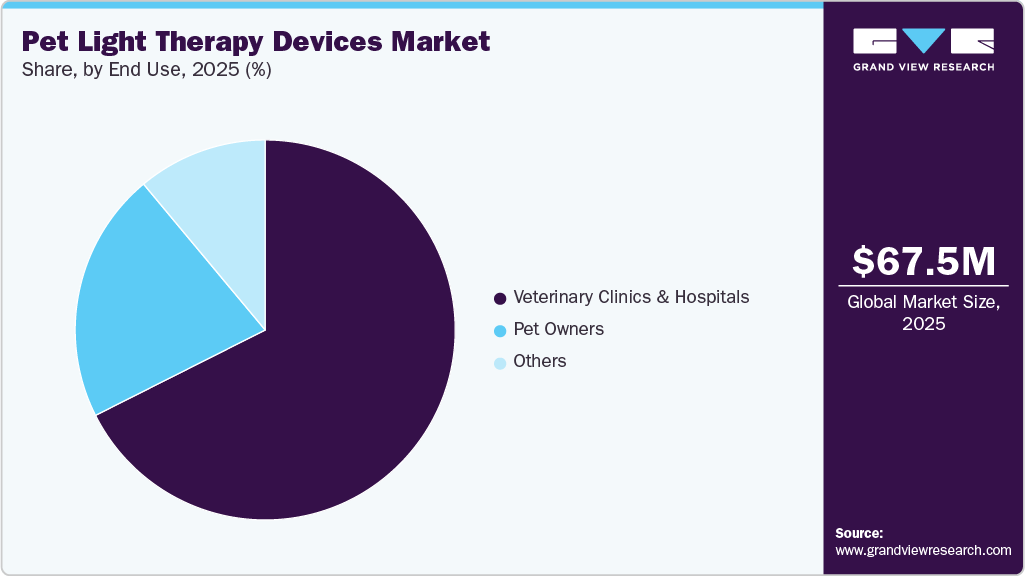
Veterinary clinics & hospitals dominated the market in 2025, attributed to clinical settings that serve as the primary point of adoption for high-intensity laser platforms, including Class IV systems, which require trained practitioners for safe and effective administration. These veterinary clinics benefit from the ability to deploy targeted, diagnosis-guided photobiomodulation protocols across a range of indications. In addition, the integration of light therapy into comprehensive rehabilitation and post-surgical care plans within hospital settings supports recurring treatment sessions and higher per-session device utilization rates, sustaining the segment's revenue leadership.
 To learn more about this report, Download Free Sample Report
 The pet owners segment is the fastest growing over the forecast period due to growing availability of consumer-grade LED devices at accessible price points, combined with rising awareness of home-based rehabilitation options, which is expanding direct-to-consumer adoption. The non-invasive nature of LED therapy and the absence of a requirement for clinical oversight during home sessions lower the barriers to regular use. In addition, expanding pet insurance coverage, with U.S. insured pet premiums reaching USD 4.7 billion by the end of 2024, is increasing household financial capacity for supplementary therapeutic device purchases outside clinical settings.
Regional Insights
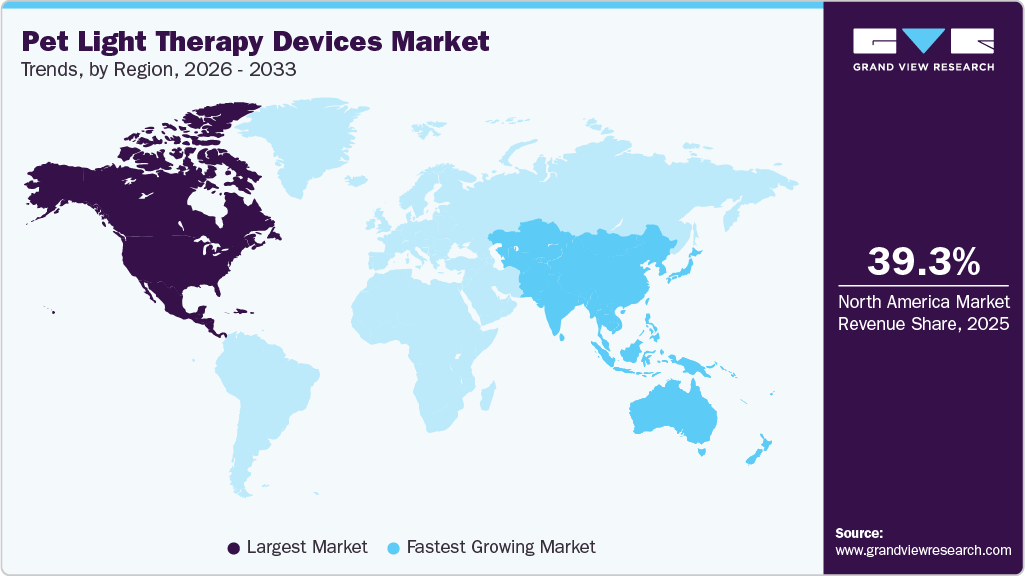
North America dominated the market with the largest revenue share of 39.3% in 2025, driven by rising pet ownership, strong veterinary spending, and increasing demand for home-based rehabilitation devices. The region has advanced veterinary infrastructure and high awareness of non-invasive pain management solutions. Some of the key players, including Multi Radiance Medical, Companion Animal Health, THOR Photomedicine Ltd., and Respond Animal Therapeutics, are accelerating the growth. The region witnesses activities focused on portable laser systems, veterinary clinic partnerships, and direct-to-consumer LED devices, with the U.S. leading regional revenue generation.
 To learn more about this report, Download Free Sample Report
 U.S. Pet Light Therapy Devices Market Trends
The pet light therapy devices market in the U.S. accounted for the highest market share in the North America market, owing to high companion animal ownership, advanced veterinary rehabilitation infrastructure, and strong spending on specialty care. According to AVMA 2025 data, the U.S. dog population reached 87.3 million and cat population reached 76.3 million, while veterinary care accounts for 32.4% of annual pet-related expenditure. In addition, a supportive regulatory framework accelerates market growth.
Canada pet light therapy devices market is expected to grow at a significant CAGR during the forecast period, propelled by rising awareness of physiotherapy-led rehabilitation and increasing demand for chronic pain management in aging pets. The Animal Rehabilitation Association of Canada became an independent organization in 2024, strengthening professional adoption of rehabilitation services. In addition, affordability concerns remain high, with 57% of Canadians citing overall pet ownership affordability as a major concern in 2025, increasing interest in preventive home-use therapy devices.
Europe Pet Light Therapy Devices Market Trends
The pet light therapy devices market in Europe was identified as a lucrative region, driven by rising companion animal healthcare expenditure, increasing acceptance of non-pharmaceutical pain management, and strong adoption of rehabilitation therapies in veterinary clinics. In addition, demand for cold lasers and LED devices is increasing across dogs, cats, and equine care. Some of the key players, such as THOR Photomedicine Ltd., Biophotas, Helio Pet, and Equine & Canine Light Therapy, are advancing the market. Competition focuses on clinical efficacy, regulatory compliance, and expansion through veterinary distributors across the UK, Germany, and Nordic countries.
The UK pet light therapy devices market is expected to grow significantly over the forecast period. The market is characterized by high pet insurance penetration and established referral-based specialty care. In addition, Pet Blood Bank UK and specialist rehabilitation centers support advanced post-surgical recovery pathways where laser therapy is increasingly used. Furthermore, companion animal clinics are adopting cold laser systems for arthritis, wound healing, and mobility care.
The pet light therapy devices market in Germany held the largest share in 2025 in Europe. The country’s growth is influenced by strong veterinary infrastructure, premium pet healthcare spending, and high demand for non-pharmaceutical therapies for aging pets. In addition, increasing acceptance of red light therapy and rehabilitation devices among companion animal owners supports market expansion. The country focuses on CE-compliant products, distributor-led veterinary sales, and technologically advanced portable systems for clinics and home care.
Asia Pacific Pet Light Therapy Devices Market Trends
The pet light therapy devices market in the Asia Pacific is expected to grow at the fastest CAGR over the forecast period. The region's growth can be attributed to increasing pet ownership, expanding veterinary infrastructure, and rising awareness of pet rehabilitation, which are driving market growth across the Asia Pacific. In addition, growing urbanization and higher spending on companion animal wellness are accelerating demand for portable and home-use therapy devices. The region is growing due to cost-effective LED systems, distributor partnerships, and localized product launches, with China, Japan, and Australia representing major growth markets.
China pet light therapy devices market held the largest revenue share and is witnessing new growth opportunities due to rapid urban pet ownership expansion and rising spending on premium pet wellness services. The urban consumers increasingly seek non-invasive treatments for mobility disorders, skin conditions, and recovery care. Some of the key players include Ailucs, Vaymed, and regional manufacturers. Competition is concentrated on cost-effective LED products, local manufacturing, and e-commerce-driven direct-to-consumer sales across major metropolitan regions.
The pet light therapy devices market in India is witnessing notable growth due to rising veterinary care awareness and stronger demand for affordable rehabilitation solutions in urban centers. Dogs remain the primary treatment segment due to higher veterinary visit frequency and orthopedic care needs. The adoption is stronger in metro cities where specialty veterinary clinics offer laser therapy for wound healing and post-surgical recovery.
Latin America Pet Light Therapy Devices Market Trends
The pet light therapy devices market in Latin America is driven by improving veterinary services and growing awareness of non-invasive pain management in pets. In addition, the demand for affordable handheld and LED-based therapy devices is rising, particularly in urban veterinary clinics. Key players include MedcoVet, Respond Animal Therapeutics, and regional distributors supplying rehabilitation products. Competition remains moderate, with players focusing on pricing strategies, veterinary education, and partnerships with clinics in Brazil and Argentina to improve product penetration.
Brazil pet light therapy devices market is gaining momentum as urban veterinary clinics are adopting non-invasive rehabilitation methods for pain management and wound healing, particularly in dogs. Growing awareness of home-care therapy supports handheld LED device demand. Key players include MedcoVet, Respond Animal Therapeutics distributors, and regional suppliers. Competition remains price-sensitive, with focus on veterinary partnerships, distributor reach, and affordable product positioning across private clinics.
Middle East & Africa Pet Light Therapy Devices Market Trends
The pet light therapy devices market in MEA is advancing, due to rising veterinary clinic expansion and gradual adoption of advanced rehabilitation solutions in companion animal care. In addition, competitive activity focuses on distributor-led expansion, awareness programs for veterinarians, and premium imported devices, with the UAE, Saudi Arabia, and South Africa leading regional demand.
South Africa pet light therapy devices market is growing due to expanding veterinary specialty care and rising demand for rehabilitation solutions in companion animals and equine treatment. In addition, equine rehabilitation also contributes to market demand due to sports horse management. The competition is driven by imported premium devices, distributor-led market access, and professional education among veterinarians in specialty practices.
Saudi Arabia pet light therapy devices market is fueled by premium veterinary clinic expansion and rising expenditure on companion animal wellness in major cities. Imported advanced rehabilitation technologies are gaining acceptance, particularly for pain management and dermatology applications. In addition, veterinary hospitals in Riyadh and Jeddah are expanding specialty treatment services, including laser therapy. The competition is focused on premium product access, distributor networks, and awareness-building among veterinarians and pet owners.
Key Pet Light Therapy Devices Company Insights
The market is moderately concentrated, with leading companies such as Multi Radiance Medical, Companion Animal Health, THOR Photomedicine Ltd., and Respond Animal Therapeutics holding strong positions through laser innovation and veterinary partnerships. Competition is driven by product performance, wavelength precision, portable device launches, home-use solutions, and clinical adoption across veterinary rehabilitation, pain management, and wound healing applications.
Key Pet Light Therapy Devices Companies:
The following key companies have been profiled for this study on the pet light therapy devices market.
- Multi Radiance Medical
- Envois (Companion Animal Health)
- Respond Animal Therapeutics
- Ailucs
- Vaymed
- PetThera
- MedcoVet
- Helio Pet
- Lumera
- Dog Med Laser
- Dundies Pty Ltd.
- Biophotas (celluma)
- THOR Photomedicine Ltd.
- Equine & Canine Light Therapy
- mitoredlight
Recent Developments
-
In April 2026, Pureluxtech expanded its FDA-cleared red light therapy portfolio, including pet therapy devices for global veterinary and wellness brands. This improves product availability, OEM/ODM scalability, and regulatory confidence, accelerating commercialization and innovation in the market.
-
In January 2026, EQUUSIR launched the BEST-BOX in the U.S., combining photobiomodulation, infrared-B light, and electromagnetic field therapy for dogs. This expands adoption of multifunctional non-invasive rehabilitation devices, boosting veterinary acceptance of advanced pet light therapy technologies across companion animal care.
-
In December 2025, Horse Wound Care introduced Bioptron Hyperlight Therapy with Platelet-Rich Fibrin (PRF) for equine wound healing. This strengthens awareness of light-assisted regenerative treatment, encouraging wider veterinary investment in phototherapy devices for faster recovery, inflammation reduction, and tissue repair.
Pet Light Therapy Devices Market Report Scope
Report Attribute
Details
Market size in 2025
USD 67.5 million
Estimated market size in 2026
USD 73.2 million
Projected market size by 2033
USD 148.5 million
Growth rate
CAGR of 10.6% from 2026 to 2033
Actual data
2021 - 2025
Forecast period
2026 - 2033
Quantitative units
Revenue in USD million/billion and CAGR from 2026 to 2033
Report coverage
Revenue forecast, company ranking, competitive landscape, growth factors, and trends
Segments covered
Product, technology, pet, application, end use, region
Regional scope
North America; Europe; Asia Pacific; Latin America; MEA
Country scope
U.S.; Canada; Mexico; UK; Germany; France; Italy; Spain; Denmark; Sweden; Norway; Japan; China; India; Thailand; South Korea; Australia; Brazil; Argentina; South Africa; UAE; Saudi Arabia; Kuwait; Qatar; Oman
Key companies profiled
Multi Radiance Medical; Envois (Companion Animal Health); Respond Animal Therapeutics; Ailucs; Vaymed; PetThera; MedcoVet; Helio Pet; Lumera; Dog Med Laser; Dundies Pty Ltd.; Biophotas (celluma); THOR; Photomedicine Ltd.; Equine & Canine Light Therapy; mitoredlight
Customization scope
Free report customization (equivalent up to 8 analysts working days) with purchase. Addition or alteration to country, regional & segment scope.
Pricing and purchase options
Avail customized purchase options to meet your exact research needs. Explore purchase options
Global Pet Light Therapy Devices Market Report Segmentation
This report forecasts revenue growth at global, regional, and country levels and provides an analysis of the latest industry trends in each of the sub-segments from 2021 to 2033. For this study, Grand View Research has segmented the global pet light therapy devices market report based on product, technology, pet, application, end use, and region:
-
Product Outlook (Revenue, USD Million, 2021 - 2033)
-
Devices
-
Benchtop Device
-
Handheld Device
-
-
Wearable Coats & Straps
-
Light Therapy Mats
-
Consumables/ Accessories
-
-
Technology Outlook (Revenue, USD Million, 2021 - 2033)
-
Lasers
-
Cold Lasers
-
Hot Lasers
-
-
LEDs
-
-
Pet Outlook (Revenue, USD Million, 2021 - 2033)
-
Dogs
-
Cats
-
Horses
-
Others
-
-
Application Outlook (Revenue, USD Million, 2021 - 2033)
-
Pain Management
-
Wound Healing
-
Dermatology
-
Others
-
-
End Use Outlook (Revenue, USD Million, 2021 - 2033)
-
Veterinary Clinics & Hospitals
-
Pet Owners
-
Others
-
-
Region Outlook (Revenue, USD Million, 2021 - 2033)
-
North America
-
U.S.
-
Canada
-
Mexico
-
-
Europe
-
UK
-
Germany
-
France
-
Italy
-
Spain
-
Denmark
-
Sweden
-
Norway
-
-
Asia Pacific
-
Japan
-
China
-
India
-
Australia
-
Thailand
-
South Korea
-
-
Latin America
-
Brazil
-
Argentina
-
-
Middle East & Africa
-
South Africa
-
UAE
-
Saudi Arabia
-
Kuwait
-
Qatar
-
Oman
-
-
Frequently Asked Questions About This Report
The devices segment led the market with a revenue share of 60.1% in 2025, owing to its broad applicability across pain management, wound healing, dermatology, and rehabilitation applications in both clinical and home-care settings.
North America dominated the global pet light therapy devices market with a revenue share of 39.3% in 2025, supported by rising pet ownership, strong veterinary spending, advanced veterinary infrastructure, and growing demand for home-based rehabilitation devices.
The veterinary clinics & hospitals segment dominated the market in 2025, supported by widespread adoption of professional-grade laser systems, trained practitioners, and integration of light therapy into rehabilitation and post-surgical treatment programs.
The dogs segment dominated the market in 2025 due to high global dog ownership and the growing prevalence of orthopedic, musculoskeletal, and chronic pain conditions requiring therapeutic intervention.
The pain management segment dominated the market in 2025 due to strong adoption of photobiomodulation therapy for osteoarthritis, musculoskeletal injuries, post-surgical recovery, and chronic pain management in companion animals.
The global pet light therapy devices market size was valued at USD 67.5 million in 2025 and is estimated at USD 73.2 million in 2026.
The global pet light therapy devices market is expected to grow at a CAGR of 10.6% from 2026 to 2033, reaching USD 148.5 million by 2033.
Asia Pacific is the fastest-growing regional market during the forecast period, driven by increasing pet ownership, expanding veterinary infrastructure, and rising awareness of pet rehabilitation.
Some of the key players operating in the pet light therapy devices market include Multi Radiance Medical, Envois (Companion Animal Health), Respond Animal Therapeutics, Ailucs, Vaymed, PetThera, MedcoVet, Helio Pet, Lumera, Dog Med Laser, Dundies Pty Ltd., Biophotas (celluma), THOR Photomedicine Ltd., Equine & Canine Light Therapy, and mitoredlight.
Key factors driving the market include increasing demand for red light therapy devices for pets, rising technological advancements in pet therapy devices, growing adoption of at-home pet rehabilitation devices, expanding pet insurance coverage, increasing pet humanization, and rising awareness of non-invasive pain management and wound healing therapies.
About the Author(s)
Animal Health Research Team
Healthcare · Animal HealthThis report was authored by the animal health research team at Grand View Research - comprising two research analysts, one senior research analyst, and one industry expert - with specialized expertise in the animal health segment of the healthcare industry. All findings are based on proprietary healthcare databases, executive interviews, and regulatory analysis, subject to internal peer review prior to publication.
Last Updated:
Speak to Analyst

Customize this report to your needs - add regions, segments, or data points, with 20% free customization.
Or view our licence options:


ISO 9001:2015 & 27001:2022 Certified
We are GDPR and CCPA compliant! Your transaction & personal information is safe and secure. For more details, please read our privacy policy.


