
- Home
- »
- Consumer F&B
- »
-
Pet Meal Kit Delivery Services Market Report, 2026-2033GVR Report cover

Pet Meal Kit Delivery Services Market (2026 - 2033)
Size, Share & Trends Analysis Report By Pet Type (Dog, Cat), By Food Type (Dry (Kibble), Wet), By Subscription Type (Topper, Full), By Region, And Segment Forecasts
Market Size, 2025
$3.4BMarket Estimate, 2026
$3.9BMarket Forecast, 2033
$8.4BCAGR, 2026–2033
11.5%Pet Meal Kit Delivery Services Market Summary
The global pet meal kit delivery services market size was valued at USD 3.4 billion in 2025 and is projected to grow from USD 3.9 billion in 2026 to USD 8.4 billion by 2033, at a CAGR of 11.5% from 2026 to 2033. The North America held the largest share of 40.9% of the global market in 2025. The market demand for pet meal kit delivery services is rising because consumer expectations for pet nutrition are starting to mirror human food behaviors.
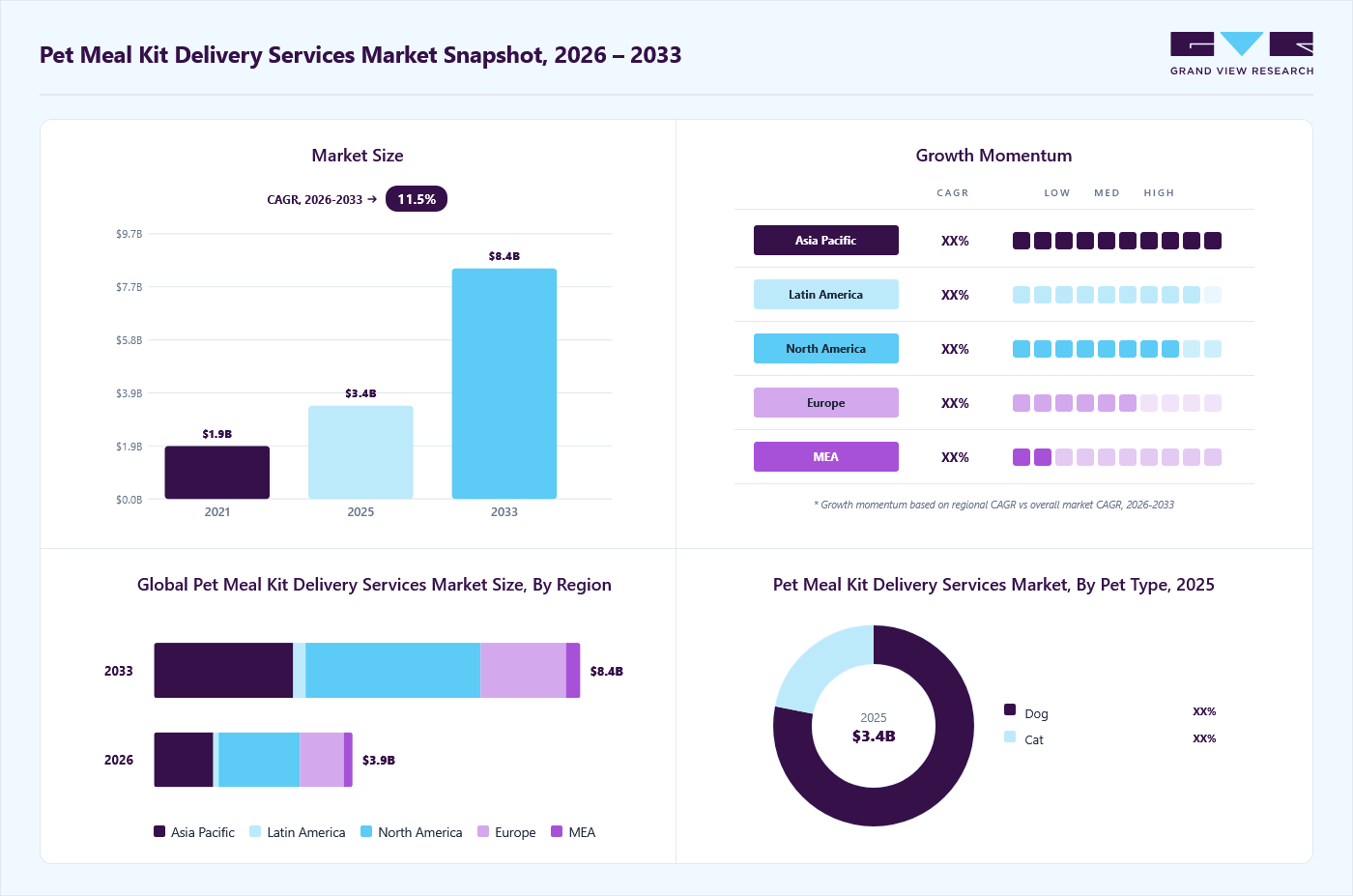 Source: Grand View Research, IR Documents, Primary Interviews, Paid DatabasesTo learn more about this report,
 Download Free Sample Report
 Key Market Trends & Insights
- By pet type: Dogs segment held the largest market share of 78.3% in 2025.
- By food type: Dry (kibble) segment held the largest market share of 54.5% in 2025.
- By subscription type: Full-subscription segment held the largest market share of 62.7% in 2025.
Regional Highlights
- Largest regional market: North America (40.9% revenue share, 2025)
- By country: The U.S. held the largest share in 2025
Market Size & Forecast
- Market size in 2025: USD 3.4 Billion
- Estimated market size in 2026: USD 3.9 Billion
- Projected market size by 2033: USD 8.4 Billion
- CAGR (2026-2033): 11.5%
Three ways to get this report
Buy it, customize it, or ask a question.Ask an Analyst
Analyst response in 1 business day
- AccessReport author, directly
- Reply timeWithin 1 working day
- No sales callDirect answer only
- FormatEmail reply
- CostFree, no cost
Get the Full Report
What the study covers
- FormatsPDF · Excel · Dashboard
- Timeline2026–2033 annual, 2025 base
- Coverage20+ countries, 5 regions
- Companies10+ key players profiled
Customize the Report
20% free customization
- IncludeCountries, segments, points
- TailorTo your product definition
- ExtendDeeper competitor detail
- OrA fully bespoke study
- Turnaround5–10 working days
Pet owners increasingly treat pets as family members rather than functional dependents, which elevates demand for fresh, customized, and health-forward pet diets. Traditional packaged pet food is no longer fulfilling the emotional and functional desire for transparency, freshness, and personalization, making pet meal kits a strong alternative. Companies such as The Farmer’s Dog and Ollie built momentum by offering ingredient visibility, portioned nutrition plans, and door-delivered subscription convenience, which reinforced trust and recurring purchases.The market is expanding because digital infrastructure and delivery ecosystems have matured enough to support routine, high-frequency purchases. With improved logistics coverage, online payment adoption, and wider cold-chain outsourcing, fresh pet diets can now reach areas beyond tier-1 urban cities, accelerating availability. Retail and delivery intelligence platforms reported that global pet food e-commerce and subscription services have created strong repeat-order loops, a pattern that pet meal kits benefit from directly. This has launched many new direct-to-consumer pet food startups that bypass traditional retail channels entirely, helping category premiums grow faster than offline-only formats. In March 2026, Wagg n Dine introduced a cloud-kitchen setup in Chennai, India, to provide freshly prepared, human-grade pet meals delivered straight to customers’ homes, offering an alternative to conventional processed pet food. This move highlights the growing preference for premium, convenient, and tailored pet nutrition, fueled by increasing demand for fresh diets among urban pet owners.
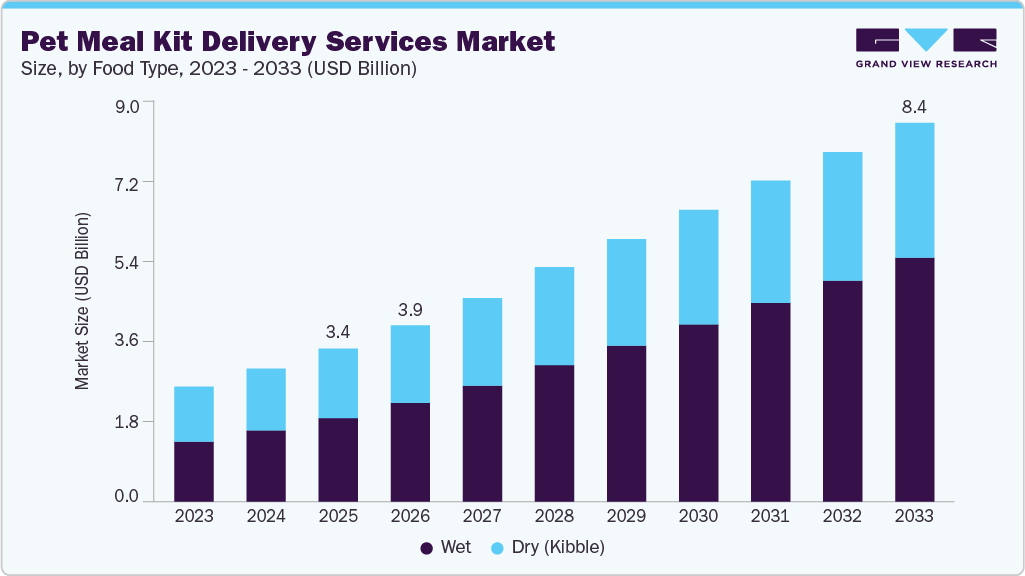 To learn more about this report, Download Free Sample Report
 In addition, the rise of smaller indoor pets such as cats and small breeds of dogs encourages home-delivered, portion-controlled nutrition bundles rather than bulk grocery purchases. Social media has also strengthened demand, with pet owners posting transformation stories of shiny coats, improved digestion, and higher energy from customized fresh pet diets, making the category socially validated. In parallel, bar, café, and restaurant service adjacencies have helped normalize curated meal culture for humans, indirectly reinforcing consumer openness toward kit-based convenience models for pets as well.
Consumer Demographic Insights:
Consumer interest in pet meal kit delivery services is increasing as pet care preferences continue to shift toward premium products and services. Owners increasingly demand fresh, human-grade ingredients, portion-controlled feeding, personalized nutrition plans, and transparent labeling qualities that traditional kibble brands cannot deliver at that level. This behavior aligns with broader lifestyle trends in which convenience and customization are prioritized. Subscription kits also produce emotionally shareable moments, unboxing videos, progress posts about coat shine, digestion improvement, and energy shifts, driving social validation, especially via platforms such as Instagram.
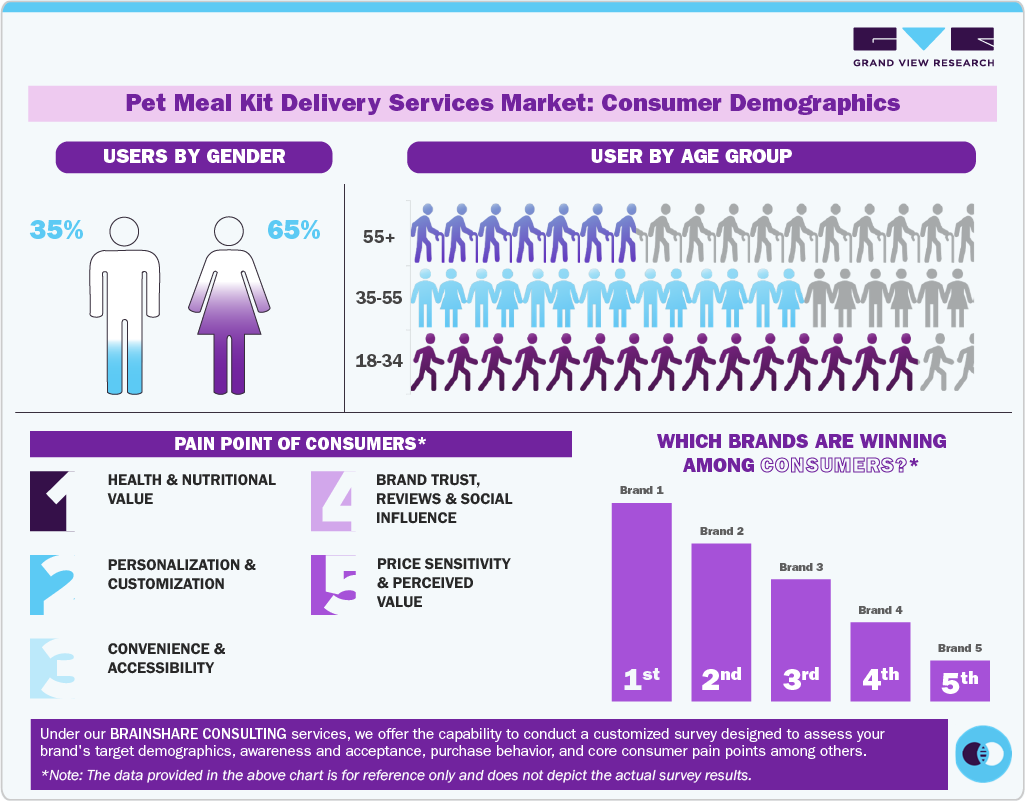 To learn more about this report, Download Free Sample Report
 Rising disposable incomes, pet insurance adoption, pet wearables, grooming services, and pet-fitness adjacencies have all institutionalized routine pet-care spending, making subscription models viable and economically supported. Global shelter adoption initiatives, social pet communities, and digital pet-health monitoring have also normalized structured long-term pet care planning.
 To learn more about this report, Download Free Sample Report
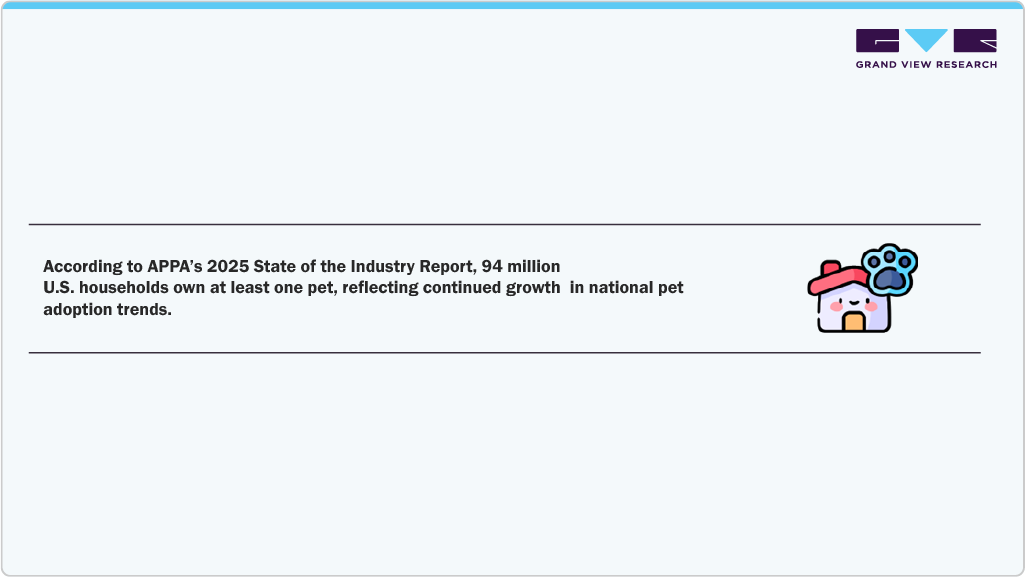
 The adoption of kit-based feeding models is directly fueled by the surge in pet ownership and the growing willingness to spend on pet food comparable to household groceries. Pet ownership growth is accelerating because urban households are smaller, remote working has increased companionship needs, and pet humanization is now mainstream.
Owners now value diet variety without bulk buying, reduced meal prep effort, healthier coats, improved bowel regularity, and weight control, which makes meal kits practical for daily therapy-style feeding. Sustainability preferences also lean toward portion-controlled servings that reduce waste, recyclable resupply packaging, and diet designs optimized for weekly or monthly delivery cycles. The combined effect of pet premiumization, nutrition anxiety, digital subscription habituation, expanded delivery viability, and rising household pet penetration is driving the long-term expansion of the pet meal kit delivery services market.
Pet Type Insights
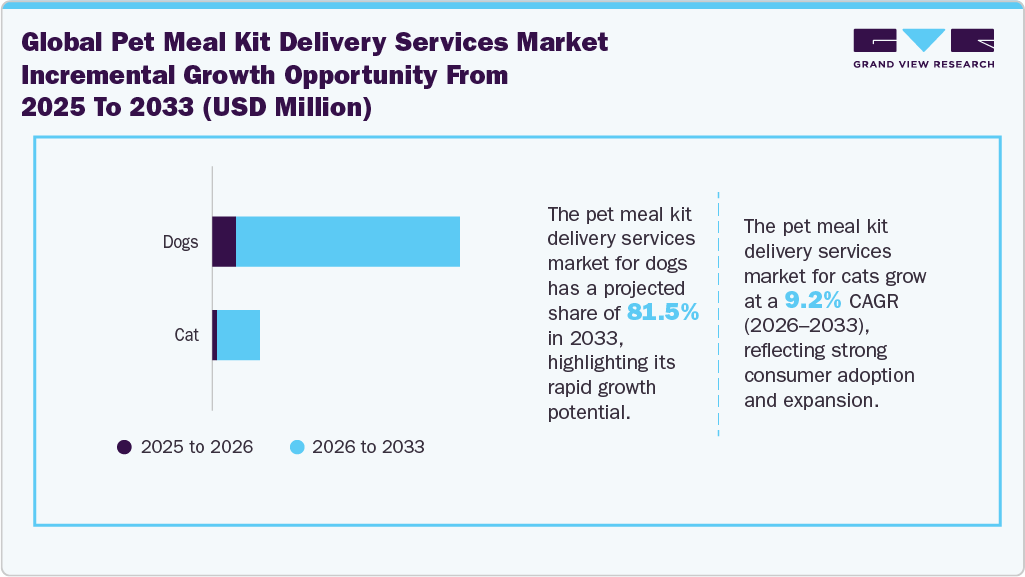
Pet meal kit delivery services for dogs accounted for a market share of 78.3% of the global revenues in 2025. As dog ownership increases, especially in urban households, pet parents are prioritizing fresh, personalized, and portion-controlled meals that remove guesswork from feeding routines, making subscription-based meal kits more attractive than mass-packed kibble. The growth of digital payments, quick-commerce fulfillment infrastructure, and deeper scrutiny of pet ingredient labels (no preservatives, clean proteins, gut-friendly mixes) also support the growth of the market. Companies such as PetPlate (U.S.), Butternut Box (UK), and Bola (India) have scaled rapidly on this promise of health + simplicity, while the overall cultural shift toward food kits, aesthetic unboxing experiences, and repeat-delivery models mirrors the broader cocktail-meets-lifestyle consumption logic seen in beverages.
 To learn more about this report, Download Free Sample Report
 Pet meal kit delivery services for cats is projected to grow at a CAGR of 9.2% from 2026 to 2033. Pet humanization trends have led cat owners to prioritize premium, personalized nutrition for their feline companions, viewing them as family members deserving of tailored meals. Growing awareness about the limitations of traditional commercial cat food, including concerns over fillers, artificial ingredients, and lack of variety, has driven demand for fresher, human-grade alternatives. Moreover, the subscription model offers consistency in feeding routines while allowing customization based on individual cats’ age, weight, dietary restrictions, and health conditions. Companies such as Untamed (based in the UK) provide personalized meal kits delivered directly to customers’ doorsteps. Their subscription service features customized plans based on each cat’s profile, along with the convenience of home delivery.
Food Type Insights
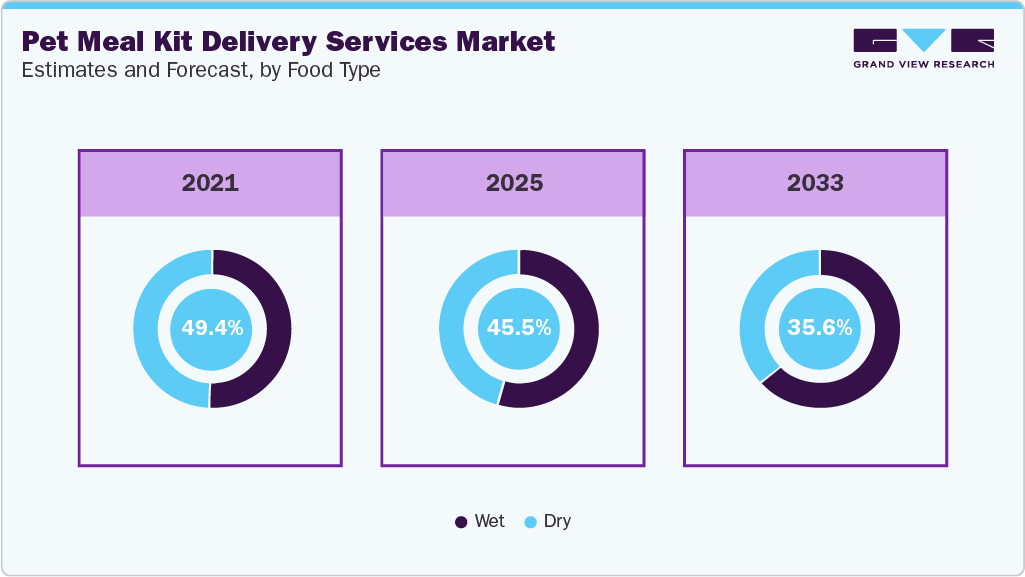
Pet meal kit delivery services for dry (Kibble) use accounted for a share of 54.5% of the global revenues in 2025. The market for wet food in pet meal kit delivery services is rising because pet parents increasingly prioritize freshness, hydration, and high-protein diets that resemble home-style meals. Indoor small dogs and cats are major subscribers to pet kits, benefit strongly from moisture-rich nutrition that supports digestion, coat quality, and urinary health, pushing wet food ahead of dry formats in premium subscription models.
 To learn more about this report, Download Free Sample Report
 Dry (kibble) pet meal kit delivery services is projected to grow at a CAGR of 8.2% from 2026 to 2033. The rise in dry pet food meal-kit delivery is driven by convenience, affordability, and repeat-purchase behaviors shaping modern pet parenting. As subscription-led meal kits scale across platforms such as Instagram and pet meal kits, dry-food components such as kibble remain a preferred base because they are shelf-stable, easier to bundle without cold-chain dependency, and reduce monthly basket costs while enabling personalization through add-ons toppers, pre-measured portions, and breed-specific kits. An increasing number of pet food brands, including Royal Canin and Purina, have already launched segmented nutrition SKUs that fit neatly into meal-kit assortments, helping consumers perceive kits as both curated and reliable.
Subscription Type Insights
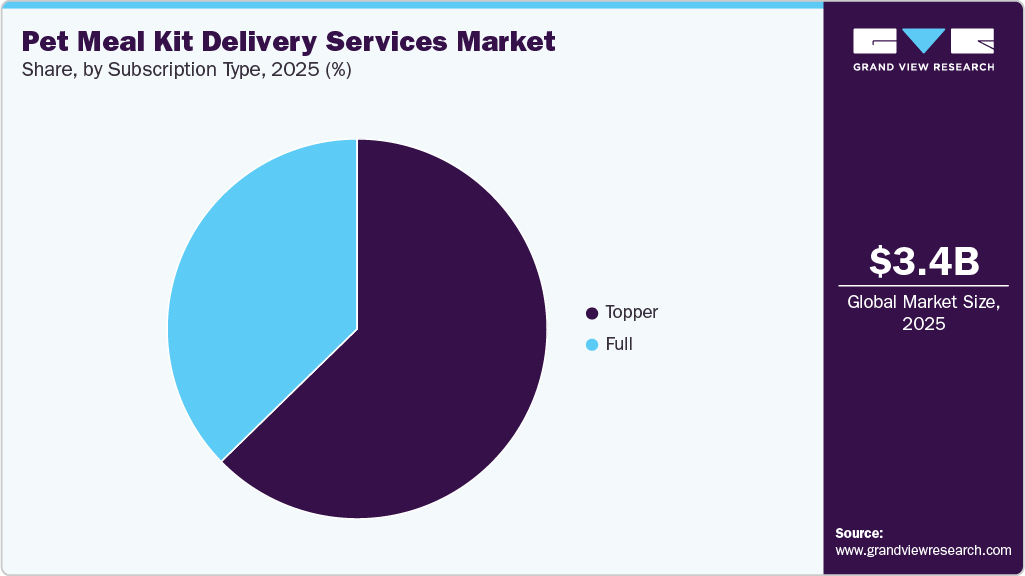
Full-subscription pet meal kit delivery services accounted for a share of 62.7% of the global revenues in 2025. The market for full-subscription pet meal kit delivery services is rising because pet owners increasingly prioritize convenience, personalized nutrition, and predictable monthly budgeting through automated deliveries. Subscription models from companies such as Butternut Box, The Farmer’s Dog, and Nom Nom Foods offer portion-controlled, freshly prepared, breed- and age-specific meal plans, aligning with the humanization of pets and the shift toward vet-approved, home-delivered diets. This shift toward subscription-led pet meal flows is further reinforced by growth in online pet-food retail, a surge in pet-nutrition education, and owners’ willingness to pay more for fresh, traceable, and custom-balanced meal kits delivered regularly through all-in plans rather than one-off purchases.
 To learn more about this report, Download Free Sample Report
 Topper-subscription pet meal kit delivery services are anticipated to grow at a CAGR of 9.5% from 2026 to 2033. The subscription-driven pet food topper market is expanding as consumers seek a balanced layer between traditional kibble and full fresh-meal replacements. Pet owners favor toppers, protein shreds, nutrient broths, and freeze-dried mix-ins as they improve palatability, support hydration, and enable nutritional variety without requiring a complete shift in feeding routines or cost structures. This trend aligns with broader shifts in recurring household consumption models, contributing to higher brand loyalty and sustained revenue certainty for specialist pet nutrition companies.
Regional Insights
North America Pet Meal Kit Delivery Market Trends
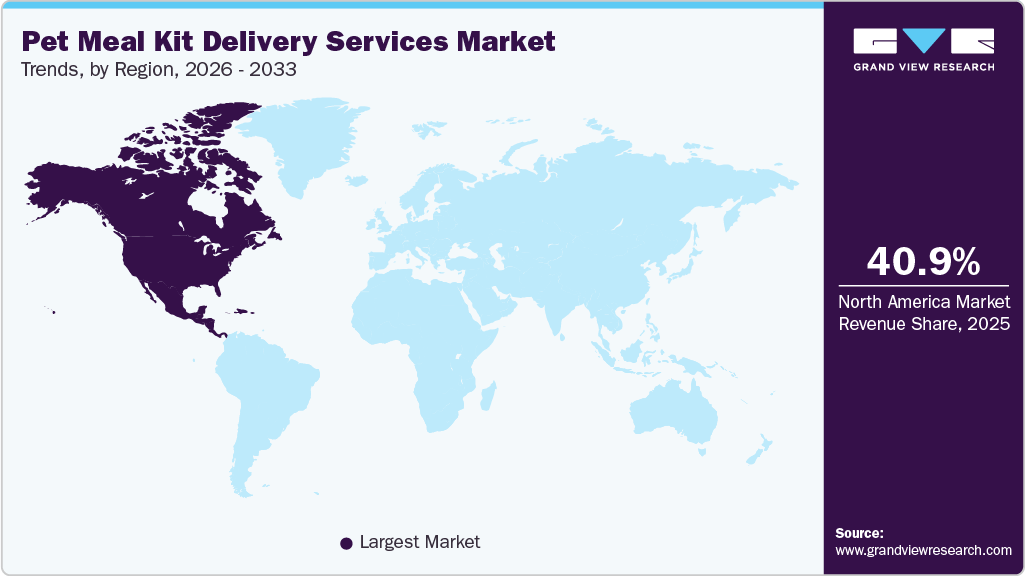
The pet meal kit delivery services market in North America accounted for a share of 40.9% of the global revenue in 2025. The North American market for pet meal kit delivery services is rising because pet owners increasingly treat pets as family members, driving demand for fresh, portion-controlled, and human-grade nutrition with the convenience of home delivery. Urban consumers in particular seek recurring, subscription-friendly services that reduce planning effort while improving dietary variety for pets, a trend accelerated by wider cold-chain coverage and digital payments integration. Companies such as Chewy, The Farmer’s Dog, and Ollie Health have shown that personalized, pre-portioned pet meals and bundled kits appeal strongly to time-pressed households, aligning with the broader shift toward experiential and convenience-led e-commerce in both pet care and food.
 To learn more about this report, Download Free Sample Report
 U.S. Pet Meal Kit Delivery Market Trends
The pet meal kit delivery services industry in the U.S. led the North American market and held the largest revenue share of 84.6% in 2025. The market for pet meal-kit delivery in the U.S. is rising as more households treat pets as full-fledged family members, driving a surge in demand for high-quality, nutritious, and convenient meal options tailored to pets’ dietary needs. At the same time, growing pet ownership (especially dogs and cats) and increasing urbanization mean many pet owners lack time to shop for and prepare fresh pet meals, making subscription-based delivery services particularly appealing. The convenience of having pre-measured, balanced meals delivered to one’s door, combined with the ability to customize meal plans to suit pets’ nutritional and health requirements, supports this growing trend.
Europe Pet Meal Kit Delivery Services Market Trends
The pet meal kit delivery services market in Europe is projected to grow at a CAGR of 10.0% from 2026 to 2033. The market for pet meal kit delivery services is rising in Europe due to region-specific trends that align with the continent's values and lifestyle patterns. At the same time, pet ownership in Europe is growing, and households are drawn to the convenience and time-saving aspects of home delivery services. Subscription-based pet meal kits offer pre-portioned, ready-to-prepare or ready-to-serve meals, removing much of the shopping and meal-planning hassle for busy pet owners. European consumers' strong emphasis on sustainability and environmental responsibility drives demand for meal kits featuring locally-sourced, organic ingredients with minimal packaging and transparent supply chains.
The pet meal kit delivery services market in the UK is expected to grow at a CAGR of 37.4% during the forecast period. In the UK, pet owners are increasingly focused on health and wellness, driving demand for high-quality, nutritionally balanced meal kits. Busy urban lifestyles make doorstep delivery and subscription services especially appealing, offering both convenience and reliability. The trend of “pet humanization” encourages owners to invest in premium, customized meals that mirror human dietary standards. Additionally, strong digital adoption and e‑commerce infrastructure support easy access to specialized products, fueling growth in the meal kit segment.
Asia Pacific Pet Meal Kit Delivery Market Trends
The pet meal kit delivery services industry in the Asia Pacific is projected to grow at a CAGR of 13.0% from 2026 to 2033. The market in the Asia-Pacific region is gaining strong traction due to a convergence of evolving consumer behavior, urbanization, and rising pet-humanization. As more households, especially young urban millennials, adopt pets and treat them as family members, demand grows for high-quality, nutritionally balanced, and convenient pet food instead of ad-hoc or home-prepared meals. The shift toward premium, specialized diets, driven by increasing awareness of pet health, nutrition needs (especially for urban pets), and rising disposable incomes, makes pet meal-kit delivery a viable and attractive option for busy pet owners seeking convenience and consistent quality.
The pet meal kit delivery services market in China led the Asia Pacific market and held the largest revenue share of 57.3% in 2025. China’s pet meal kit delivery services market is growing due to rapid urbanization and rising disposable income, which are reshaping how pet owners think about animal nutrition, creating demand for premium, convenient pet food solutions. The cultural shift toward considering pets as family members has encouraged the adoption of tailored feeding options that reflect modern lifestyles. Additionally, strong growth in e‑commerce infrastructure makes doorstep delivery of specialized products easier and more attractive. This digital embrace supports subscription‑based models, especially among young, tech‑savvy consumers in major cities.
Central & South America Pet Meal Kit Delivery Services Market Trends
The pet meal kit delivery services market in Central & South America is expected to grow at a CAGR of 12.5% during the forecast period. In Central and South America, expanding middle‑class populations are increasingly willing to spend on enhanced pet care experiences that go beyond basic feeding. The influence of social media and global pet care trends has inspired owners to explore more sophisticated and health‑oriented meal options for their pets. At the same time, shifting perceptions of pets from utility to companionship have bolstered interest in products that promise greater convenience and customization. These cultural shifts are strengthening the appeal of meal kit delivery solutions across the region.
Middle East & Africa Pet Meal Kit Delivery Services Market Trends
The pet meal kit delivery services industry in the Middle East & Africa is expected to grow at a CAGR of 7.4% during the forecast period. The market in the Middle East and Africa is gaining momentum due to the growth of urban centers and an expanding expatriate community driving interest in premium pet services, including curated meal plans that mirror Western standards. Pet owners increasingly seek products that align with modern lifestyle choices, valuing convenience and quality as core purchase motivators. As awareness of pet nutrition grows through digital communities and influencer culture, more consumers are open to subscription‑based food delivery. This evolving mindset fuels demand for innovative, tailored pet meal kit delivery services industry across the region.
Key Pet Meal Kit Delivery Company Insights
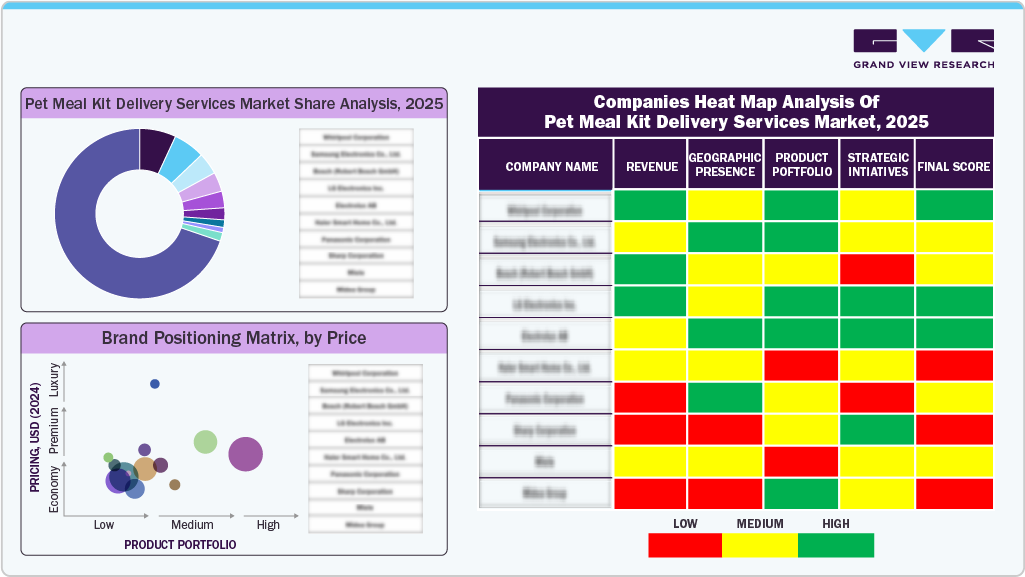
The pet meal kit delivery services market is intensely competitive globally, shaped by evolving buyer expectations for customization, nutrition transparency, and convenience. Established and emerging players that began in niche direct-to-consumer fresh pet food are scaling into subscription-based meal kits, recipe-oriented bundles, and breed-tailored plans. In parallel, traditional packaged food brands are piloting fresh-prepared kits, frozen-to-fresh switching formats, and add-on toppers to capture digital commerce traction. Growth in the pet meal kit delivery services industry is further accelerated by rising pet humanization, where owners expect restaurant-grade ingredients with visible provenance, while expanding digital payment ecosystems and cold-chain infrastructure enable higher order frequency and reliable delivery coverage.
 To learn more about this report, Download Free Sample Report
 Key Pet Meal Kit Delivery Companies:
The following key companies have been profiled for this study on the pet meal kit delivery market.
- The Farmer’s Dog, Inc.
- PetPlate
- NomNomNow Inc.
- Ollie Pets Inc.
- Spot and Tango
- Butternutbox
- Kabo Labs
- Lyka
- Tailsco Ltd
- Lucky Dog Cuisine Inc.
Recent Developments
-
In September 2025,Chewy introduced Get Real, a line of minimally processed, human-grade fresh dog food available as full meals or toppers in three simple-ingredient recipes, designed by pet nutritionists and gently cooked then frozen for freshness. The service offers pre-portioned, ready-to-serve meals with customizable delivery plans, 24/7 customer support, and tailored feeding amounts based on each dog’s characteristics, with formulas meeting AAFCO standards for all life stages.
-
In March 2025, Wellness Pet Company launched a new range of customized pet nutrition at Global Pet Expo 2025, focused on sensitive skin and digestive health for dogs, along with expanded dental treats and complete, texture-rich wet food options for cats that support hydration and overall well-being. The lineup includes new salmon-based dry dog recipes with pre-, pro-, and postbiotics for skin and stomach support, a softer WHIMZEES Freshzees dental chew for easier daily oral care, and new wet cat food formats and variety pack.
Pet Meal Kit Delivery Services Market Report Scope
Report Attribute
Details
Market size in 2025
USD 3.4 billion
Estimated market size in 2026
USD 3.9 billion
Projected market size by 2033
USD 8.4 billion
Growth rate
CAGR of 11.5% from 2026 to 2033
Actuals
2021 - 2025
Forecast period
2026 - 2033
Quantitative units
Revenue in USD million/billion, and CAGR from 2026 to 2033
Report coverage
Revenue forecast, company ranking, competitive landscape, growth factors, and trends
Segments covered
Pet type, food type, subscription type, and region
Regional scope
North America; Europe; Asia Pacific; Central & South America; Middle East & Africa
Country scope
U.S.; Canada; Mexico; Germany; UK; France; Italy; Spain; China; India; Japan; South Korea; South Africa; Brazil
Key companies profiled
The Farmer’s Dog, Inc.; PetPlate; NomNomNow, Inc.; Ollie Pets, Inc.; Spot & Tango; Butternutbox; Kabo Labs; Lyka; Tailsco Ltd.; Lucky Dog Cuisine, Inc.
Customization scope
Free report customization (equivalent up to 8 analysts working days) with purchase. Addition or alteration to country, regional & segment scope.
Pricing and purchase options
Avail customized purchase options to meet your exact research needs. Explore purchase options
Global Pet Meal Kit Delivery Services Market Segmentation
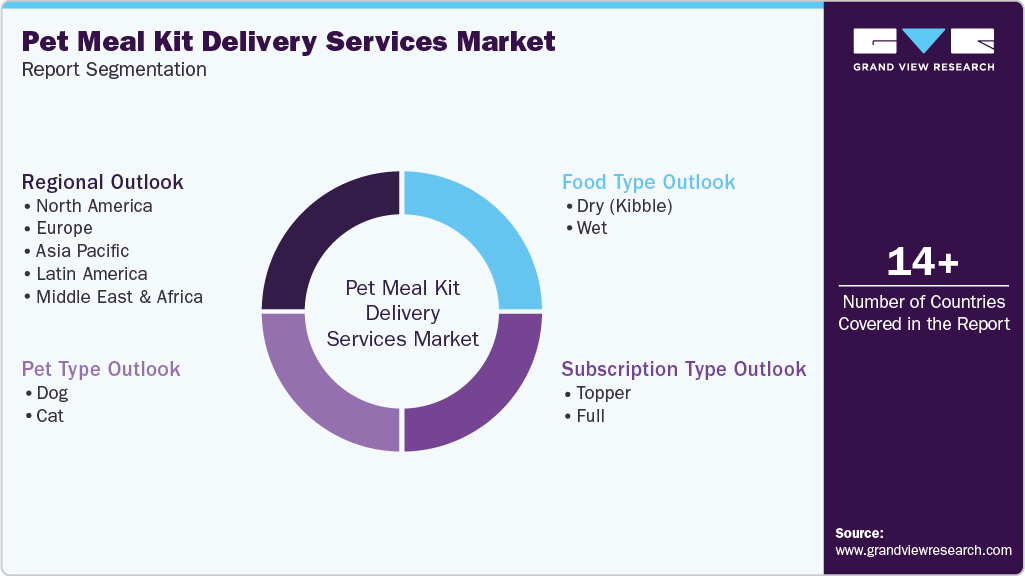
This report forecasts revenue growth at the global, regional, and country levels and provides an analysis of the latest industry trends and opportunities in each of the sub-segments from 2021 to 2033. For this study, Grand View Research has segmented the global pet meal kit delivery services market report on the basis of pet type, food type, subscription type, and region.
 To learn more about this report, Download Free Sample Report
 -
Pet Type Outlook (Revenue, USD Million, 2021 - 2033)
-
Dog
-
Cat
-
-
Food Type Outlook (Revenue, USD Million, 2021 - 2033)
-
Dry (Kibble)
-
Wet
-
-
Subscription Type Outlook (Revenue, USD Million, 2021 - 2033)
-
Topper
-
Full
-
-
Regional Outlook (Revenue, USD Million, 2021 - 2033)
-
North America
-
U.S.
-
Canada
-
Mexico
-
-
Europe
-
Germany
-
UK
-
France
-
Italy
-
Spain
-
-
Asia Pacific
-
China
-
India
-
Japan
-
South Korea
-
-
Central & South America
-
Brazil
-
-
Middle East & Africa
-
South Africa
-
-
Frequently Asked Questions About This Report
Some key players operating in the pet meal kit delivery services market include The Farmer’s Dog, Inc., PetPlate, NomNomNow Inc., Ollie Pets Inc., Spot and Tango, Butternutbox, Kabo Labs, Lyka, Tailsco Ltd, and Lucky Dog Cuisine Inc.
Rising awareness among consumers related to personalized meal kits based on their pet’s profile and taste preferences, coupled with an increasing propensity to spend on pet food is expected to drive market demand throughout the forecast period.
The dry (kibble) segment held the largest revenue share in 2025.
The full-subscription segment led with a 62.7% revenue share in 2025, while the topper-subscription segment is the fastest-growing.
North America dominated with a 40.9% revenue share in 2025.
The global pet meal kit delivery services market size was estimated at USD 3.4 billion in 2025 and is expected to reach USD 3.9 billion in 2026.
The global pet meal kit delivery services market is expected to grow at a compound annual growth rate of 11.5% from 2026 to 2033 to reach USD 8.4 billion by 2033.
Pet meal kit delivery for dogs accounted for a market share of 78.3% of the global revenues in 2025. As dog ownership increases, especially in urban households, pet parents are prioritizing fresh, personalized, and portion-controlled meals that remove guesswork from feeding routines, making subscription-based meal kits more attractive than mass-packed kibble. The growth of digital payments, quick-commerce fulfillment infrastructure, and deeper scrutiny of pet ingredient labels (no preservatives, clean proteins, gut-friendly mixes) also support the growth of the market.
About the Author(s)
Consumer F&B Research Team
Consumer Goods · Consumer F&BThis report was authored by the consumer f&b research team at Grand View Research - comprising two research analysts, one senior research analyst, and one industry expert - with specialized expertise in the consumer f&b segment of the consumer goods industry. All findings are based on proprietary consumer goods databases, executive interviews, and regulatory analysis, subject to internal peer review prior to publication.
Last Updated:
Speak to Analyst

Customize this report to your needs - add regions, segments, or data points, with 20% free customization.
Or view our licence options:


ISO 9001:2015 & 27001:2022 Certified
We are GDPR and CCPA compliant! Your transaction & personal information is safe and secure. For more details, please read our privacy policy.


