
- Home
- »
- Clinical Diagnostics
- »
-
Point Of Care Drug Of Abuse Testing Market Report, 2033GVR Report cover

Point Of Care Drug Of Abuse Testing Market (2026 - 2033)
Size, Share & Trends Analysis Report By Product (Immunoassay Test Strips And Cassettes, Oral Fluid Testing Kits, Breath Analyzers, Urine Collection Cups), By Sample Type, By Technology, By End Use, By Region, And Segment Forecasts
Market Size, 2025
$1.2BMarket Estimate, 2026
$1.3BMarket Forecast, 2033
$2.5BCAGR, 2026–2033
9.7%Point Of Care Drug Of Abuse Testing Market Summary
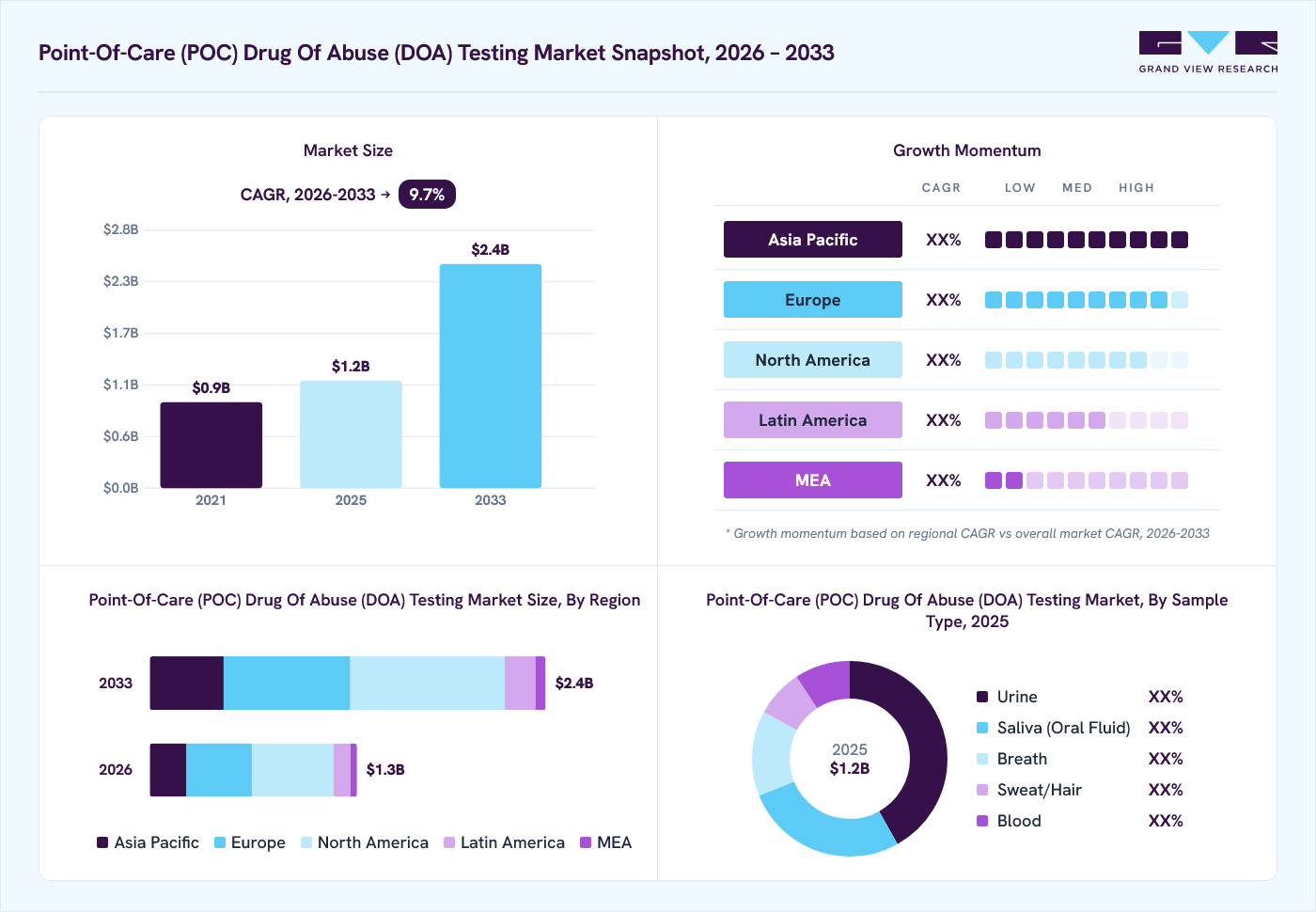
The global point of care drug of abuse testing market size was valued at USD 1.2 billion in 2025 and is projected to grow from USD 1.3 billion in 2026 to USD 2.5 billion by 2033, at a CAGR of 9.7% from 2026 to 2033. North America dominated the market, accounting for a revenue share of 39.4% in 2025. The market is expanding due to the rising prevalence of substance misuse across the globe and the growing demand for rapid, decentralized drug testing solutions. POC testing, which includes urine, saliva, breath, and sweat-based kits, provides rapid results at the site of sample collection, eliminating the need for complex lab infrastructure.
 Source: Grand View Research, IR Documents, Primary Interviews, Paid DatabasesTo learn more about this report,
 Download Free Sample Report
Key Market Trends & Insights
- By product: Immunoassay Test Strips and Cassettes segment dominated the market, with a revenue share of 36.5% in 2025.
- By sample type: Urine segment held the largest market share of 41.8% in 2025.
- By technology: Lateral flow assay (LFA)segment held the largest revenue share of 50.0% in 2025.
- By end use: Hospitals & emergency departments segment accounted for the largest revenue share of 31.6% in 2025.
Regional Highlights
- Largest regional market: North America (39.4% revenue share, 2025)
- Fastest-growing regional market: Asia Pacific (highest CAGR, 2026-2033)
- By country: The U.S. held the largest market share in 2025.
Market Size & Forecast
- Market size in 2025: USD 1.2 Billion
- Estimated market size in 2026: USD 1.3 Billion
- Projected market size by 2033: USD 2.4 Billion
- CAGR (2026-2033): 9.7%
Prism AI by Grand View Research Free to tryAsk a question about the point of care drug of abuse testing marketTry asking✓Every figure cited from GVR research Prefer the report? Download free sample →
These tools are increasingly being adopted in clinical settings, roadside enforcement, schools, and even at home, making them a key component in public health and safety strategies globally. Technological advancements are significantly enhancing the accuracy, speed, and usability of POC DOA testing devices. The development of immunoassay-based test strips, portable analyzers, and digital readers enables fast results with minimal sample handling. AI and machine learning are beginning to integrate into some testing platforms, assisting in result interpretation and reducing operator error. Non-invasive sampling methods, such as oral fluid and sweat-based testing, are improving user compliance and privacy. In addition, newer devices now support multi-panel drug testing, enabling simultaneous detection of multiple substances such as opioids, cannabis, cocaine, amphetamines, and benzodiazepines. These innovations are crucial in settings where quick decision-making is essential-such as emergency departments, law enforcement operations, and rehabilitation centers. The miniaturization of diagnostic technology and improved connectivity features, including smartphone integration and Bluetooth-enabled data logging, are making these tools more accessible and user-friendly, driving adoption in both professional and consumer markets. To learn more about this report, Download Free Sample Report
Government regulations and workplace safety initiatives are key drivers in the expansion of the POC DOA testing market. In countries such as the U.S., federal mandates require drug screening for safety-sensitive industries such as transportation, aviation, and healthcare. This has led to widespread use of on-site testing kits that provide rapid screening without needing laboratory confirmation unless a positive result arises. Roadside drug testing programs, particularly in jurisdictions with legalized cannabis use, are also boosting demand for accurate and mobile POC devices. Moreover, school drug prevention programs and military recruitment processes increasingly incorporate quick screening methods to deter and identify drug use early. In Europe and parts of Asia, evolving workplace safety laws and anti-doping initiatives are supporting broader implementation. These frameworks not only promote public safety but also create a steady demand for reliable, cost-effective, and easy-to-use testing solutions that can be deployed in a range of decentralized environments.
The growing demand for privacy, convenience, and self-monitoring has led to a significant rise in at-home DOA testing. These kits allow individuals to test themselves or others in private settings using saliva, urine, or hair samples. The COVID-19 pandemic further accelerated the adoption of self-testing models, as consumers and healthcare providers looked for ways to monitor health remotely. Telehealth services have incorporated these kits for patients undergoing addiction treatment or pain management, enhancing continuity of care.
 To learn more about this report, Download Free Sample Report
Parents, employers, and caregivers are also using these tools to address concerns discreetly and proactively. Many of these kits now feature mobile app integration for instructions and results interpretation, improving user experience and reducing misuse. This consumer-driven demand is expanding the market beyond traditional clinical or workplace settings, creating new revenue streams for manufacturers and encouraging innovation in test accuracy, packaging, and usability.
Market Dynamics
The point of care drug of abuse testing market is witnessing steady growth, driven by rising substance abuse prevalence, increasing workplace drug screening programs, and expanding use of rapid diagnostic testing in healthcare, law enforcement, and rehabilitation centers. Technological advancements in multiplex rapid test devices and portable analyzers are improving testing accuracy and turnaround time. However, concerns regarding false-positive results, confirmatory testing requirements, and regulatory compliance pose challenges. Growing adoption of decentralized testing, home-based drug screening, and stringent workplace safety regulations is expected to create significant opportunities for sustained market expansion.
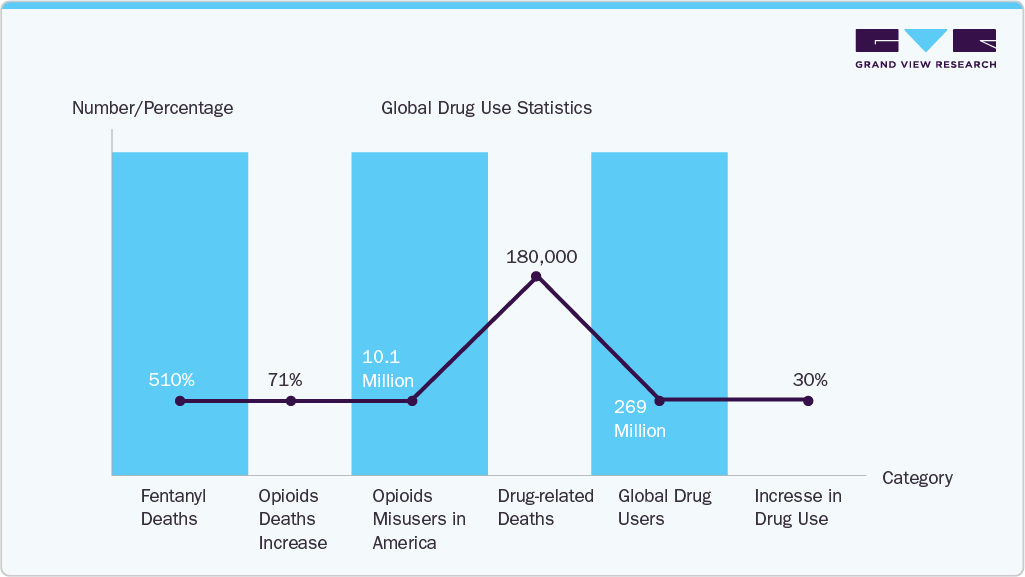
The rising prevalence of substance abuse globally is a key driver of the point-of-care (POC) drug of abuse (DOA) testing market. Increasing misuse of opioids, cannabis, cocaine, methamphetamine, and synthetic drugs has accelerated the need for rapid, decentralized drug screening across emergency departments, workplaces, rehabilitation centers, law enforcement agencies, and criminal justice systems. Unlike conventional laboratory testing, POC drug testing provides results within minutes, enabling immediate clinical and administrative decision-making. The growing emphasis on workplace safety, road safety, overdose prevention, and substance abuse monitoring has further increased the adoption of portable immunoassay-based drug testing devices.
A recent example highlighting this trend is the Substance Abuse and Mental Health Services Administration (SAMHSA) 2024 National Survey on Drug Use and Health, which reported that approximately 73.6 million Americans aged 12 years or older (25.5%) used illicit drugs during the past year. Cannabis remained the most commonly used illicit drug, with 64.2 million users, followed by hallucinogens, prescription opioids, and cocaine. Additionally, the Centers for Disease Control and Prevention (CDC) reported more than 107,000 drug overdose deaths in the United States during 2023, underscoring the growing public health burden of substance misuse. These trends, combined with mandatory workplace drug testing requirements established by the U.S. Department of Transportation (DOT) for safety-sensitive occupations, continue to drive demand for rapid point-of-care drug of abuse testing solutions across healthcare, occupational health, and law enforcement settings.
The point of care drug of abuse testing market faces a significant restraint due to the limited analytical accuracy of rapid immunoassay-based screening tests. While POC tests provide quick results and improve clinical decision-making, they are susceptible to false-positive and false-negative outcomes caused by cross-reactivity with prescription medications, over-the-counter drugs, and certain food compounds. Consequently, positive screening results often require confirmation using highly sensitive laboratory methods such as gas chromatography-mass spectrometry (GC-MS) or liquid chromatography-tandem mass spectrometry (LC-MS/MS). The additional cost, turnaround time, and laboratory dependency reduce the overall efficiency and cost-effectiveness of point-of-care testing, particularly in workplace and forensic applications.
A recent example is the U.S. Substance Abuse and Mental Health Services Administration (SAMHSA), which continues to require confirmatory testing using GC-MS or LC-MS/MS for all non-negative federal workplace drug test results under its Mandatory Guidelines for Federal Workplace Drug Testing Programs. Similarly, the U.S. Department of Transportation (DOT) mandates that any non-negative screening result obtained through an initial immunoassay must undergo confirmation at a certified laboratory before any employment-related action is taken. These regulatory requirements, reinforced through the DOT's revised drug testing procedures, increase testing costs and prolong reporting timelines, limiting the standalone adoption of rapid POC drug testing solutions in highly regulated industries.
Government initiatives promoting drug-free workplaces and substance abuse prevention present a significant opportunity for the Point-of-Care (POC) Drug of Abuse (DOA) Testing market. Federal agencies such as the Substance Abuse and Mental Health Services Administration (SAMHSA), the U.S. Department of Labor (DOL), and the Drug Enforcement Administration (DEA) continue to encourage employers to implement workplace drug testing programs, employee assistance initiatives, and substance abuse prevention policies. As organizations increasingly prioritize workplace safety, regulatory compliance, and employee well-being, the demand for rapid, portable, and easy-to-use POC drug testing solutions is expected to rise. The growing adoption of decentralized testing across workplaces, schools, rehabilitation centers, and community health settings further creates opportunities for manufacturers to expand their product portfolios and improve access to timely drug screening.
A recent example is the 15th Annual National Drug & Alcohol Facts Week (NDAFW), organized by the U.S. Drug Enforcement Administration (DEA) and the National Institute on Drug Abuse (NIDA) in March 2025. The nationwide campaign provided educational resources to schools, communities, and workplaces to improve awareness of substance use, addiction prevention, and early intervention while encouraging informed discussions among youth and employers. Complementing these awareness initiatives, SAMHSA's Drug-Free Workplace Program continues to provide employers with guidance and resources for implementing workplace drug testing and prevention policies. These government-led prevention and awareness programs are expected to accelerate the adoption of point-of-care drug testing technologies across occupational health, educational institutions, and public health settings.
Market Concentration & Characteristics
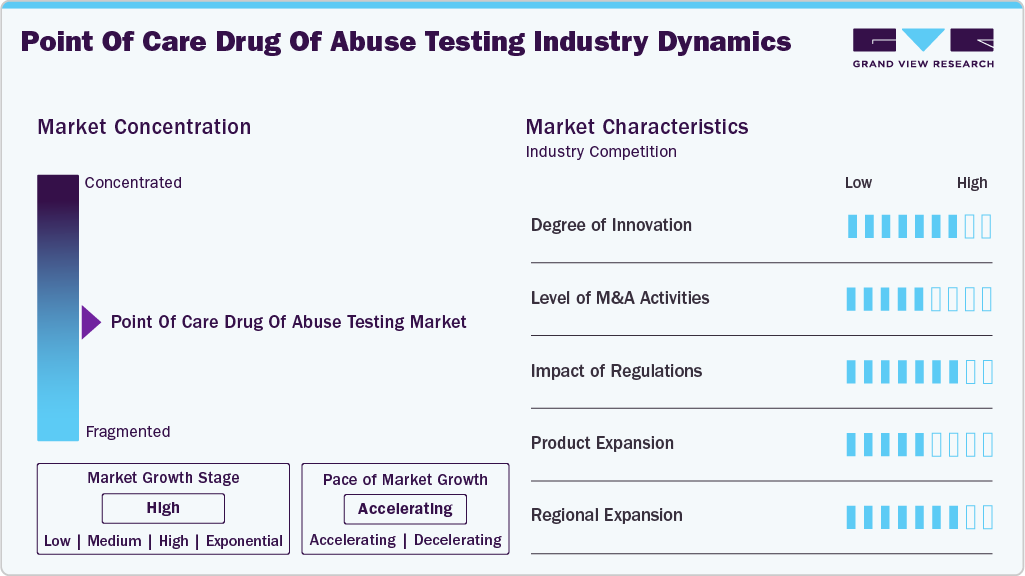
Innovation is high, driven by demand for rapid, accurate, and user-friendly testing solutions. New technologies such as AI-assisted readers, smartphone integration, and non-invasive sample methods (saliva, sweat) are improving usability and sensitivity. Multi-panel devices capable of detecting synthetic drugs are expanding capabilities. Innovation is also fueled by consumer self-testing trends and telehealth compatibility, pushing developers to create portable, digital, and connected diagnostic solutions.
Mergers and acquisitions are moderately active, with large diagnostics companies acquiring niche POC test developers to expand their drug screening portfolios. M&A aims to consolidate technologies, broaden global presence, and accelerate R&D. Strategic partnerships are also increasing, particularly between tech firms and healthcare providers. While not hyperactive, M&A is a key pathway for entering emerging markets and integrating advanced features such as data analytics into DOA testing.
 To learn more about this report, Download Free Sample Report
Regulation significantly shapes the DOA testing market. In regions such as the U.S. and Europe, strict drug screening policies in workplaces, transportation, and healthcare ensure consistent demand. Regulatory bodies also guide quality, approval, and certification standards (e.g., FDA, CE), which can both support and limit product entry. Changes in drug legalization-especially cannabis-require continuous updates to testing protocols, increasing regulatory complexity but also creating market opportunities.
Product expansion is strong, with companies developing multi-drug test panels, digital readers, and wearable detection patches. There is a shift toward compact, connected devices for remote monitoring and direct-to-consumer use. Product lines are diversifying to include tests for synthetic opioids, designer drugs, and even behavioral impairment tools. Innovations aim to improve sensitivity, reduce false positives, and enhance ease of use for both professional and home environments.
Regional expansion is accelerating, particularly in Asia Pacific, Latin America, and parts of the Middle East. These markets are seeing increased investment due to rising substance abuse rates and improvements in healthcare infrastructure. Companies are targeting these regions with low-cost, easy-to-use kits and local partnerships. North America remains dominant, but emerging economies are increasingly important for volume growth, driven by government programs and growing public health awareness.
Analyst Perspective
The point of care drug of abuse testing market is expected to witness robust growth, driven by the increasing prevalence of substance abuse, expanding workplace drug screening programs, and growing demand for rapid, decentralized diagnostic solutions. Market participants should prioritize the development of highly sensitive multiplex assays, non-invasive oral fluid testing, and digitally connected portable analyzers to improve testing accuracy and workflow efficiency. Strengthening partnerships with hospitals, occupational health providers, law enforcement agencies, rehabilitation centers, and home healthcare organizations will be essential for expanding market reach. Companies should also invest in AI-enabled result interpretation, cloud-based data management, and integrated reporting solutions to enhance operational efficiency and regulatory compliance. Furthermore, increasing adoption of home-based testing and supportive government initiatives promoting drug-free workplaces are expected to create significant long-term growth opportunities.
Product Insights
Based on product, the immunoassay test strips and cassettes segment led the market with the largest revenue share of 36.5% in 2025, driven by increasing demand for rapid, cost-effective, and user-friendly diagnostic tools in clinical, workplace, and home settings. Key factors include rising substance abuse rates, supportive government policies for drug testing, and growing awareness of early intervention. Immunoassay technology enables quick screening for multiple drugs with high sensitivity, making it ideal for PoC applications. In addition, the shift toward decentralized healthcare and the increasing availability of at-home testing kits have boosted adoption. These strips and cassettes offer convenience, affordability, and accurate results without specialized training.
The digital/Portable analyzer segment is expected to grow at fastest growth rate during the forecast period. This expansion is driven by increasing adoption of portable, rapid, and accurate testing devices across medical settings, law enforcement, and workplace environments. Key factors include rising substance abuse rates, regulatory mandates for on-the-spot testing, and a push toward decentralized healthcare. Technological advancements-such as miniaturization, smartphone integration, and AI analytics-enhance usability and reliability. In addition, demand for immediate, quantitative results and digital connectivity supports integration into electronic health records and compliance systems. The result: robust segment growth fueled by convenience, precision, and data-centric capabilities essential for modern PoC drug screening.
Sample Type Insights
Based on sample type, the urine segment led the market with the largest revenue share of 41.8% in 2025, due to its reliability, cost-effectiveness, and ability to detect a wide range of substances. However, recent data highlights a growing challenge related to specimen integrity. In the general U.S. workforce-representing over 5.5 million individuals-there was a staggering 633% increase in substituted urine samples, rising from 0.015% in 2022 to 0.11% in 2023. In addition, the rate of invalid urine specimens rose by 45.2%, from 0.31% to 0.45% during the same period. These results suggest an increasing attempt to tamper with samples to hide drug use. Such trends underline the need for more secure, tamper-resistant testing protocols and emphasize the importance of continual monitoring and innovation in PoC urine testing. Despite these concerns, urine remains the preferred sample type due to its ease of collection, established detection windows, and broad substance detection capabilities.
The saliva (oral fluid) segment is anticipated to grow at fastest growth rate over the forecast period, driven by demand for rapid, non-invasive, and tamper-resistant testing solutions. This growth is fueled by several converging trends: oral fluid tests are more comfortable, less invasive, and less prone to tampering than urine tests, with privacy-conscious users and workplace testing driving adoption. Technological enhancements-such as improved immunoassay strips, swabs, and integrated point-of-care analyzers-are boosting accuracy and convenience. Regulatory mandates in law enforcement, employment, and roadside screening further support this shift. As the market prioritizes speed, sensitivity, and data integration, saliva-based PoC DOA testing stands out as a key growth engine in modern drug-screening strategies.
Technology Insights
Based on technology, the lateral flow assay (LFA) segment led the market with the largest revenue share of 50.0% in 2025, driven by its simplicity, rapid results, and suitability for decentralized testing. LFA-based devices are increasingly adopted in workplace testing, roadside screening, and clinical environments. These assays offer a low-cost, user-friendly solution that requires minimal training and no laboratory infrastructure, making them ideal for immediate screening. Technological advancements, such as improved antibody specificity, enhanced signal detection using nanoparticles, and integration with digital readers and smartphone apps, are further boosting the reliability and appeal of LFAs. In addition, growing global awareness about substance abuse and expanding regulatory support for routine drug testing are reinforcing their market demand. The combination of affordability, portability, and rapid turnaround time positions LFAs as a key contributor to the expansion of PoC DOA testing across diverse settings.
The mass spectrometry (portable or hybrid POC units) segment is expected to grow at fastest growth rate over the forecast period, driven by the need for confirmatory testing with forensic-level accuracy. Portable MS units are increasingly used in law enforcement, border control, rehabilitation centers, and workplace screening, where rapid and accurate results are critical. Key drivers include technological advancements such as integrated ion mobility, AI-enhanced spectral analysis, and smartphone-based interfaces, which simplify complex workflows and reduce the need for trained technicians.
End Use Insights
Based on end use, the hospitals & emergency departments segment led the market with the largest revenue share of 31.6% in 2025. Hospitals and emergency departments are increasingly relying on rapid PoC drug screening to inform critical clinical decisions-especially in overdose and acute care scenarios-where immediate results can significantly impact patient outcomes and treatment pathways. Key growth drivers include the escalating opioid and synthetic drug crises, regulatory pressures for swift diagnostic interventions, and the clinical demand to distinguish intoxication from other medical issues in time-sensitive contexts. Technological innovations, such as multiplex immunoassay panels, portable analyzers, and AI-supported readers are boosting accuracy and ease of use in busy hospital settings.
 To learn more about this report, Download Free Sample Report
The home care & remote users segment is expected to grow at fastest growth rate over the forecast period. actors fueling this expansion include rising awareness of substance abuse, a shift toward self-monitoring, and the integration of digital technologies that support remote result sharing and telehealth services. Home-based test kits, including urine and saliva formats, are user-friendly, affordable, and offer immediate results, reducing the need for clinical visits. The pandemic also played a significant role in accelerating adoption, as remote care and social distancing measures highlighted the importance of at-home diagnostics. Enhanced with smartphone apps, cloud connectivity, and non-invasive collection methods, this segment is becoming a cornerstone of the modern, decentralized approach to drug screening.
Regional Insights
North America point of care drug of abuse testing market accounted for the largest revenue share of 39.4% in 2025. North America dominates the PoC DOA testing market due to the high prevalence of substance abuse, supportive government initiatives, and widespread adoption of rapid testing technologies. The U.S. accounts for the largest share, driven by workplace screening mandates, law enforcement requirements, and advancements in home-based testing. Technological innovations and telehealth integration are accelerating growth across hospitals, clinics, and remote settings, solidifying North America’s leadership position in both revenue generation and PoC innovation.
 To learn more about this report, Download Free Sample Report
U.S. Point of Care Drug of Abuse Testing Market Trends
The point of care drug of abuse testing market, U.S. held the largest share in the North America region in 2025. The U.S. leads global PoC DOA testing, driven by strong regulatory enforcement, opioid crisis management, and rising demand for rapid drug screening in emergency departments and workplaces. High rates of drug misuse have led to increased adoption of PoC kits across healthcare and remote testing applications. Growing use of digital tools, self-testing kits, and confirmatory portable analyzers supports market expansion, along with heightened awareness and public health initiatives combatting the national substance abuse epidemic.
Europe Point of Care Drug of Abuse Testing Market Trends
Europe is witnessing steady growth in the PoC DOA testing market, fueled by increasing illicit drug use, especially in Western and Central Europe. Expanding workplace testing regulations, roadside screening laws, and public health programs are boosting demand. Countries such as Germany, the UK, and France are leading adoption, particularly in clinical and forensic settings. Greater acceptance of non-invasive sampling methods like oral fluid testing, and integration with mobile health technologies, are enhancing accessibility and driving broader regional adoption.
The UK PoC DOA testing market is growing steadily due to rising concern over recreational drug use and its impact on workplace safety and emergency care. The government’s support for harm reduction and healthcare digitization is helping increase adoption of rapid drug testing tools in hospitals, clinics, and at home. Use of lateral flow devices and saliva-based testing is increasing, driven by affordability, faster results, and remote usability-positioning the UK as a key regional growth hub.
Germany shows strong growth in the PoC DOA testing segment, bolstered by robust healthcare infrastructure and stringent workplace safety regulations. Demand is rising in occupational health, law enforcement, and addiction treatment centers. The integration of rapid testing into routine clinical practice, along with increased use of oral and urine-based kits, supports market expansion. Innovation in portable drug analyzers and digital diagnostics platforms is further encouraging decentralized drug screening and timely intervention across healthcare settings.
Asia Pacific Point of Care Drug of Abuse Testing Market Trends
Asia Pacific is the fastest-growing region in the PoC DOA testing market, driven by increasing awareness, rising substance abuse, and expanding healthcare access. Countries like China, India, and Japan are investing in preventive health measures, including drug screening in schools, workplaces, and community health programs. The adoption of affordable PoC kits, coupled with government-led public health initiatives and urbanization, is driving rapid market penetration. Technological innovation and mobile health adoption further fuel growth in the region.
The Japan PoC DOA testing market is expanding gradually, supported by rising awareness of substance abuse and the country’s aging population, which demands safe medication practices. Drug screening is gaining ground in occupational health and mental health facilities. Though regulation is strict, the demand for compact and reliable PoC testing systems is increasing, especially for emergency and forensic applications. Digital diagnostic tools and saliva-based kits are gaining popularity for their accuracy, convenience, and non-invasiveness.
China PoC DOA testing market has growth opportunity due to rising substance use and government focus on public safety. The increasing adoption of PoC drug screening in law enforcement, military, and schools is notable. Government initiatives promoting digital healthcare, combined with a growing middle class and improvements in healthcare infrastructure, are supporting market expansion. The demand for affordable, rapid, and portable test kits is driving both local innovation and global market participation.
Latin America Point of Care Drug of Abuse Testing Market Trends
Latin America is experiencing moderate but rising demand for PoC DOA testing, driven by growing drug trafficking issues, increasing awareness, and improved healthcare outreach. Countries like Brazil, Mexico, and Colombia are investing in rapid testing solutions for use in public health, correctional facilities, and roadside safety. Affordability and ease of use are key drivers for widespread adoption of lateral flow assays and rapid test kits in low-resource and remote settings, supporting market expansion across the region.
The Brazil PoC DOA testing market is expanding due to growing substance abuse concerns, especially among youth and urban populations. Government-backed public health initiatives and increasing use of rapid testing in clinical and forensic settings are boosting demand. Adoption of affordable lateral flow test kits and interest in home-based solutions are growing. Integration with telehealth services and digital platforms supports remote screening and monitoring, making Brazil a key growth market within Latin America.
Middle East And Africa Point of Care Drug of Abuse Testing Market Trends
The Middle East and Africa region shows emerging growth in PoC DOA testing, with increasing awareness of substance abuse, expanding healthcare access, and public health interventions. Countries such as South Africa, the UAE, and Saudi Arabia are adopting PoC testing in clinical and workplace settings. Though infrastructure challenges remain, demand for affordable and rapid drug screening tools is increasing. Mobile clinics, government education campaigns, and international partnerships are helping to accelerate adoption across underserved communities.
Key Point of Care Drug of Abuse Testing Company Insights
Key companies in the Point-of-Care (PoC) Drug of Abuse (DOA) Testing market include Abbott, Thermo Fisher Scientific, Quest Diagnostics, OraSure Technologies, Siemens Healthineers, F. Hoffmann-La Roche, and Drägerwerk AG. Abbott leads with a strong portfolio of lateral flow assays and portable analyzers, while Thermo Fisher and Quest Diagnostics provide both PoC and lab-based solutions. OraSure dominates in oral fluid-based home tests. Market share is concentrated among top players due to brand trust, regulatory approvals, and distribution networks. Continuous innovation, strategic partnerships, and digital integration are key factors shaping competitive dynamics and market share in this expanding industry.
Key Point of Care Drug of Abuse Testing Companies
The following key companies have been profiled for this study on the point of care drug of abuse (DOA) market.
-
Abbott
-
Quest Diagnostics
-
Thermo Fisher Scientific
-
OraSure Technologies
-
Siemens Healthineers
-
F. Hoffmann-La Roche Ltd.
-
Drägerwerk AG & Co. KGaA
-
Premier Biotech, Inc.
-
LabCorp (Laboratory Corporation of America Holdings)
Competitive Benchmarking
Category
Operating Strategies
Competitive Edge
Weakness
Well-Established Players (Abbott, Thermo Fisher Scientific, Siemens Healthineers, Roche Diagnostics, OraSure Technologies, Dräger, Abbott Toxicology)
- Focus on expanding point-of-care drug testing portfolios through multiplex immunoassays, oral fluid testing technologies, portable analyzers, and digital connectivity solutions. Emphasize collaborations with hospitals, occupational health providers, law enforcement agencies, rehabilitation centers, and workplace testing organizations while investing in assay innovation, AI-enabled result interpretation, regulatory approvals, and global expansion through strategic acquisitions, partnerships, and product development.
- Strong global distribution networks, established brand recognition, extensive regulatory expertise, diversified toxicology and diagnostic portfolios, advanced manufacturing capabilities, and significant R&D investments. Integrated offerings comprising rapid test kits, portable analyzers, digital reporting platforms, and laboratory connectivity solutions enable high diagnostic accuracy, operational efficiency, and widespread adoption across healthcare, workplace, and forensic applications.
- High R&D and regulatory compliance costs, pricing pressure from low-cost regional manufacturers, dependence on workplace testing regulations and reimbursement policies, and continuous investment requirements to maintain technological leadership. Large organizations may also face longer product development cycles, complex supply chains, and slower adoption of emerging decentralized testing technologies.
Emerging & Regional Players (Premier Biotech, Alfa Scientific Designs, Confirm BioSciences, Healgen Scientific, Wondfo Biotech, regional rapid diagnostics manufacturers)
- Focus on cost-effective rapid drug testing kits, oral fluid testing solutions, portable screening devices, and customized workplace testing products. Emphasize regional expansion, distributor partnerships, localized manufacturing, and product innovation while collaborating with occupational health providers, rehabilitation centers, law enforcement agencies, and diagnostic distributors to improve affordability and accessibility of decentralized drug testing.
- High product flexibility, competitive pricing, rapid product commercialization, strong regional distribution networks, and ability to address local regulatory and customer requirements. Agile product development, customized testing panels, and affordable point-of-care solutions enable rapid adoption across workplace screening, rehabilitation, and community healthcare settings.
- Limited global commercial presence, smaller manufacturing capacity, lower brand recognition, dependence on regional distribution partnerships, and challenges in obtaining regulatory approvals across multiple countries. Regional companies may also face scalability constraints, limited R&D resources, and intense competition from multinational diagnostics companies offering broader toxicology portfolios and integrated digital testing solutions.
Recent Developments
-
In March 2025, the Indiana Senate approved a bill legalizing drug testing strips. Previously, these strips and kits could be classified as drug paraphernalia under state law. The new legislation creates exceptions within Indiana’s paraphernalia statutes, ensuring they no longer apply to products intended to detect the presence of drugs or controlled substances. Supporters of the bill argue that expanding access to testing strips promotes harm reduction and could play a significant role in lowering overdose rates across the state.
-
In September 2024, Greenlane Holdings, Inc. announced the upcoming launch of a new line of drug detection test strips under its Safety Strips, Inc. ("Safety Strips") brand. The product line includes test strips designed to detect fentanyl, xylazine, and common drink spiking agents.
-
In November 2024, Easy@Home announced the launch of two essential drug testing kits now available at select Walmart locations and online. The Nicotine Urine Test (5-pack) is designed to help users easily and reliably monitor nicotine use. The 5-Panel Instant Urine Drug Test (5-pack) detects multiple commonly used substances, including marijuana, cocaine, opiates, amphetamines, and benzodiazepines, all in a single test. Both kits provide affordable, accurate, and convenient testing options for individuals, families, and employers, enabling reliable results from home or the workplace.
Point of Care Drug of Abuse Testing Market Report Scope
Report Attribute
Details
Market size in 2025
USD 1.2 billion
Estimated market size in 2026
USD 1.3 billion
Projected market size by 2033
USD 2.5 billion
Growth rate
CAGR of 9.7% from 2026 to 2033
Historical data
2021 - 2024
Forecast period
2026 - 2033
Quantitative units
Revenue in USD million/billion and CAGR from 2026 to 2033
Report coverage
Revenue forecast, company ranking, competitive landscape, growth factors, and trends
Segments covered
Technology, sample, product, end use, region
Regional scope
North America; Europe; Asia Pacific; Latin America; MEA
Country scope
U.S.; Canada; Mexico; Germany; UK; France; Italy; Spain; Denmark; Sweden; Norway; Japan; China; India; South Korea; Australia; Thailand; Brazil; Argentina; South Africa; Saudi Arabia; UAE; Kuwait
Key companies profiled
Abbott; Quest Diagnostics; Thermo Fisher Scientific; OraSure Technologies; Siemens Healthineers; F. Hoffmann-La Roche Ltd.; Drägerwerk AG & Co. KGaA; Premier Biotech, Inc.; LabCorp (Laboratory Corporation of America Holdings)
Customization scope
Free report customization (equivalent up to 8 analysts' working days) with purchase. Addition or alteration to country, regional & segment scope.
Pricing and purchase options
Avail customized purchase options to meet your exact research needs. Explore purchase options
Global Point of Care Drug of Abuse Testing Market Report Segmentation
This report forecasts revenue growth and provides an analysis of the latest trends in each of the sub-segments from 2021 to 2033. For this study, Grand View Research has segmented the global point of care drug of abuse testing market based on product, technology, sample type, end use, and region:
-
Product Outlook (Revenue, USD Million, 2021 - 2033)
-
Immunoassay Test Strips and Cassettes
-
Oral Fluid Testing Kits
-
Breath Analyzers
-
Urine Collection Cups
-
Digital/Portable Analyzers
-
-
Technology Outlook (Revenue, USD Million, 2021 - 2033)
-
Lateral Flow Assay (LFA)
-
Chromatographic Immunoassays
-
Enzyme-Linked Immunosorbent Assay (ELISA)
-
Mass Spectrometry (portable or hybrid POC units)
-
-
End Use Outlook (Revenue, USD Million, 2021 - 2033)
-
Hospitals & Emergency Departments
-
Workplace & Occupational Health Center
-
Home Care & Remote Users
-
Others
-
-
Sample Type Outlook (Revenue, USD Million, 2021 - 2033)
-
Urine
-
Saliva (Oral Fluid)
-
Breath
-
Blood
-
Sweat/Hair
-
-
Regional Outlook (Revenue, USD Million, 2021 - 2033)
-
North America
-
U.S.
-
Canada
-
Mexico
-
-
Europe
-
UK
-
Germany
-
France
-
Italy
-
Spain
-
Denmark
-
Sweden
-
Norway
-
-
Asia Pacific
-
Japan
-
China
-
India
-
Australia
-
South Korea
-
Thailand
-
-
Latin America
-
Brazil
-
Argentina
-
-
Middle East & Africa
-
South Africa
-
Saudi Arabia
-
UAE
-
Kuwait
-
-
Research Methodology
The point of care drug of abuse testing market figures in this report are based on a proven research process that combines executive interviews with secondary research from proprietary databases, company filings, and recognized regulatory and institutional sources. Market size is built through value-chain sizing - reconciling supply-side and demand-side estimates - and triangulated with bottom-up and top-down approaches. Every estimate passes multiple levels of expert validation before publication, with each point of care drug of abuse testing segment quantified using the revenue-capture definitions in the table below.
Segment Definition
Segment - Product
Revenue capture definition
Immunoassay Test Strips and Cassettes
Revenue generated from rapid immunoassay-based test strips and cassettes used for qualitative detection of drugs of abuse in clinical, workplace, and forensic settings.
Oral Fluid Testing Kits
Revenue generated from saliva-based drug testing kits designed for rapid, non-invasive detection of multiple drugs of abuse across workplace, roadside, and healthcare applications.
Breath Analyzers
Revenue generated from portable breath analyzers used to detect alcohol and select drug metabolites for law enforcement, workplace screening, and clinical assessment.
Urine Collection Cups
Revenue generated from integrated urine collection cups with built-in immunoassay testing for on-site detection of drugs of abuse in occupational and healthcare settings.
Digital/Portable Analyzers
Revenue generated from handheld and portable analyzers that interpret rapid drug test results electronically, improving diagnostic accuracy, workflow efficiency, and data management.
Segment - Sample
Revenue capture definition
Urine
Revenue generated from point-of-care drug testing using urine samples for rapid detection of commonly abused substances in workplace, healthcare, and forensic settings.
Saliva (Oral Fluid)
Revenue generated from oral fluid-based drug testing products enabling non-invasive, rapid detection of recent drug use across occupational, roadside, and clinical applications.
Breath
Revenue generated from breath-based testing devices used to detect alcohol and selected drugs for workplace safety, traffic enforcement, and emergency care applications.
Blood
Revenue generated from point-of-care drug testing systems utilizing blood samples for accurate detection of drug exposure in emergency, toxicology, and critical care settings.
Sweat/Hair
Revenue generated from sweat patch and hair sample drug testing products supporting long-term substance use monitoring in forensic, rehabilitation, and occupational health programs.
Segment - Technology
Revenue capture definition
Lateral Flow Assay (LFA)
Revenue generated from lateral flow assay-based rapid drug tests providing qualitative detection of drugs of abuse through portable, easy-to-use point-of-care platforms.
Chromatographic Immunoassays
Revenue generated from chromatographic immunoassay technologies used for rapid screening and identification of drugs of abuse in decentralized testing environments.
Enzyme-Linked Immunosorbent Assay (ELISA)
Revenue generated from ELISA-based point-of-care and near-patient drug testing solutions for sensitive screening of drugs of abuse in clinical and laboratory settings.
Mass Spectrometry (Portable or Hybrid POC Units)
Revenue generated from portable or hybrid mass spectrometry systems enabling rapid confirmatory drug analysis with high analytical sensitivity in point-of-care applications.
Segment - End Use
Revenue capture definition
Hospitals & Emergency Departments
Revenue generated from point-of-care drug testing products used in hospitals and emergency departments for rapid toxicology screening and clinical decision-making.
Workplace & Occupational Health Centers
Revenue generated from drug testing products used for pre-employment, random, post-incident, and compliance-based workplace screening across safety-sensitive industries.
Home Care & Remote Users
Revenue generated from self-testing kits and portable drug screening solutions designed for home monitoring, rehabilitation, telehealth, and remote patient management.
Others
Revenue generated from point-of-care drug testing products utilized in rehabilitation centers, law enforcement agencies, correctional facilities, educational institutions, and forensic laboratories.
Estimation Model
 To learn more about this report, Download Free Sample Report
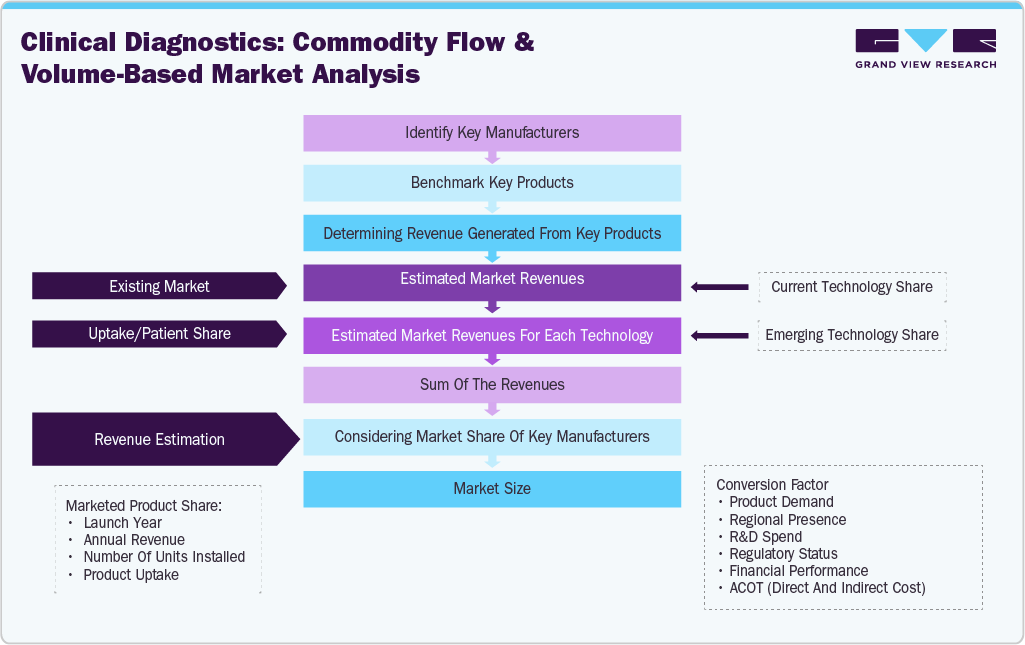
The Point-of-Care (POC) Drug of Abuse (DOA) Testing market is estimated using a combination of bottom-up and top-down methodologies. Market revenue is calculated by analyzing sales of rapid drug testing kits, analyzers, consumables, and associated testing solutions across hospitals, workplaces, law enforcement agencies, rehabilitation centers, and home care settings. Segment-level estimates are developed based on product, sample type, technology, end use, and geography. Secondary research from company annual reports, regulatory agencies, scientific literature, government databases, and public health organizations is validated through primary interviews with diagnostic manufacturers, occupational health professionals, toxicologists, distributors, and key opinion leaders. Historical testing volumes, substance abuse prevalence, pricing trends, regulatory developments, workplace screening programs, and technology adoption are incorporated through data triangulation to generate accurate market forecasts.
Delivered Customizations
This report has been delivered with the following In-depth customizations
Client Request
Customization Delivered
Value Adds
POC Drug of Abuse (DOA) Testing Competitive Landscape & Technology Assessment – Rapid Diagnostics, Toxicology & Decentralized Screening
Assessed the global POC Drug of Abuse testing ecosystem across diagnostic manufacturers, toxicology solution providers, hospitals, occupational health centers, rehabilitation facilities, law enforcement agencies, and workplace drug testing organizations. Evaluated leading manufacturers of immunoassay test strips, oral fluid testing kits, urine collection devices, breath analyzers, portable analyzers, and digital toxicology platforms. Analyzed competitive positioning across workplace drug screening, emergency toxicology, roadside testing, rehabilitation monitoring, forensic diagnostics, and home-based drug testing applications.
Enabled benchmarking of leading POC drug testing companies, identified innovation opportunities in multiplex drug detection, oral fluid diagnostics, AI-enabled result interpretation, portable analyzers, and digital reporting platforms. Evaluated competitive differentiation across rapid toxicology testing solutions, decentralized drug screening technologies, connected diagnostics, and integrated workplace and forensic testing portfolios.
POC Drug of Abuse (DOA) Testing Regulatory, Clinical Guidelines & Reimbursement Assessment
Analyzed evolving regulatory frameworks governing POC drug testing across major global markets, including FDA regulations, SAMHSA workplace testing guidelines, Department of Transportation (DOT) compliance requirements, CLIA regulations, laboratory quality standards, and reimbursement policies. Assessed the impact of regulatory updates, workplace drug testing mandates, specimen collection protocols, and quality assurance requirements on commercialization, product adoption, and testing utilization.
Supported regulatory risk assessment, identified commercialization and reimbursement challenges, evaluated compliance readiness among manufacturers and testing providers, and highlighted the impact of evolving workplace regulations, quality standards, and public health policies on market growth, technology adoption, and competitive positioning.
POC Drug of Abuse (DOA) Testing Innovation & Technology Assessment – Multiplex Assays, Digital Toxicology & Portable Diagnostics
Evaluated advancements in multiplex immunoassays, oral fluid testing technologies, portable toxicology analyzers, smartphone-enabled reporting, AI-assisted result interpretation, cloud-based data management, and digital workflow integration. Assessed emerging trends in non-invasive sample collection, decentralized testing, wearable biosensors, connected diagnostics, and home-based drug screening solutions supporting occupational health, emergency medicine, and substance abuse monitoring.
Highlighted high-growth innovation areas, identified emerging technologies improving diagnostic accuracy, testing efficiency, user convenience, and regulatory compliance, assessed competitive positioning in decentralized toxicology diagnostics, and provided strategic insights into future opportunities in digital drug testing, remote monitoring, connected healthcare, and next-generation point-of-care toxicology solutions.
Frequently Asked Questions About This Report
Some key players operating in the Point of Care DOA Testing market include Abbott; Quest Diagnostics; Thermo Fisher Scientific; OraSure Technologies; Siemens Healthineers; F. Hoffmann-La Roche Ltd.; Drägerwerk AG & Co. KGaA; Premier Biotech, Inc.; LabCorp (Laboratory Corporation of America Holdings)
Key factors that are driving the market growth include increasing substance misuse worldwide and the urgent need for rapid, decentralized drug testing solutions.
Asia Pacific is the fastest-growing region over the forecast period.
Immunoassay Test Strips and Cassettes segment led the market with the largest revenue share of 36.5% in 2025.
Urine segment held the largest market share of 41.8% in 2025 while saliva (oral fluid) segment is second fastest growing market.
Lateral flow assay (LFA) segment led the market with the largest revenue share of 50.0% in 2025, driven by its simplicity, rapid results, and suitability for decentralized testing.
The global point of care drug of abuse testing market size was valued at USD 1.2 billion in 2025 and is estimated at USD1.3 billion in 2026
The global point of care drug of abuse testing market is expected to grow at a CAGR of 9.7% from 2026 to 2033,reaching USD 2.5 billion by 2033.
North America dominated with a 39.4% revenue share in 2025.
About the Author(s)
Clinical Diagnostics Research Team
Healthcare · Clinical DiagnosticsThis report was authored by the clinical diagnostics research team at Grand View Research - comprising two research analysts, one senior research analyst, and one industry expert - with specialized expertise in the clinical diagnostics segment of the healthcare industry. All findings are based on proprietary healthcare databases, executive interviews, and regulatory analysis, subject to internal peer review prior to publication.
Last Updated:
Speak to Analyst

Customize this report to your needs - add regions, segments, or data points, with 20% free customization.
Or view our licence options:


ISO 9001:2015 & 27001:2022 Certified
We are GDPR and CCPA compliant! Your transaction & personal information is safe and secure. For more details, please read our privacy policy.


