
- Home
- »
- Plastics, Polymers & Resins
- »
-
Polycaprolactone Market Size, Share & Trends Report, 2033GVR Report cover

Polycaprolactone Market (2026 - 2033)
Size, Share & Trends Analysis Report Market By Application (Pellets/Granules, Nanospheres/Fine Powder, Microspheres), By End-use (Healthcare & Biomedical, Packaging, Automotive & Transportation, Consumer Goods), By Region, And Segment Forecasts
Market Size, 2025
$771.9MMarket Estimate, 2026
$816.2MMarket Forecast, 2033
$1,226.8MCAGR, 2026–2033
6.0%Polycaprolactone Market Summary
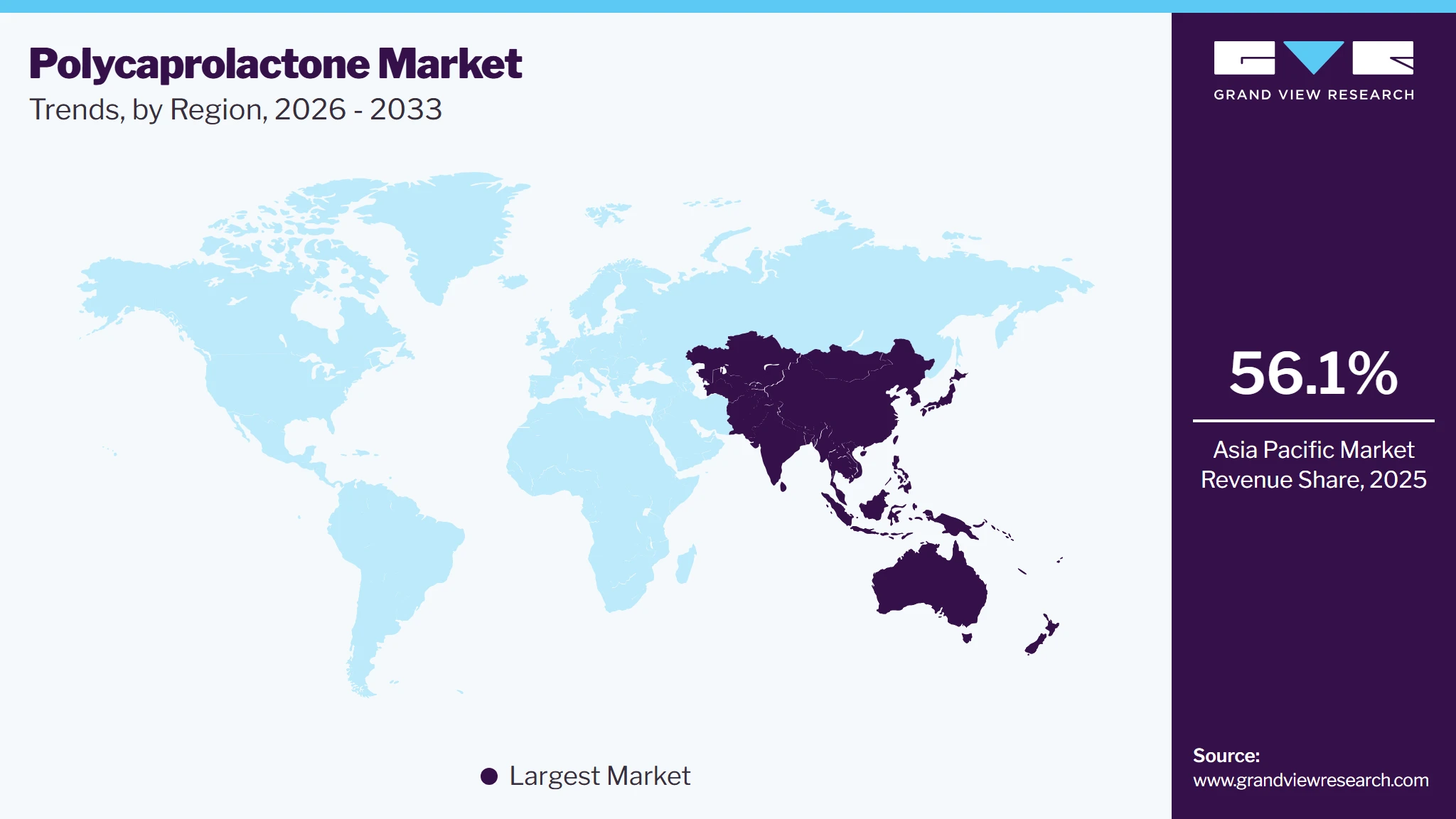
The global polycaprolactone market size was valued at USD 771.9 million in 2025 and is projected to grow from USD 816.2 million in 2026 to USD 1,226.8 million by 2033, at a CAGR of 6.0% from 2026 to 2033. Asia Pacific dominated the market, accounting for the revenue share of 56.1% in 2025. Growing demand for biodegradable and sustainable polymers is driving the market growth as industries seek alternatives to conventional plastics.
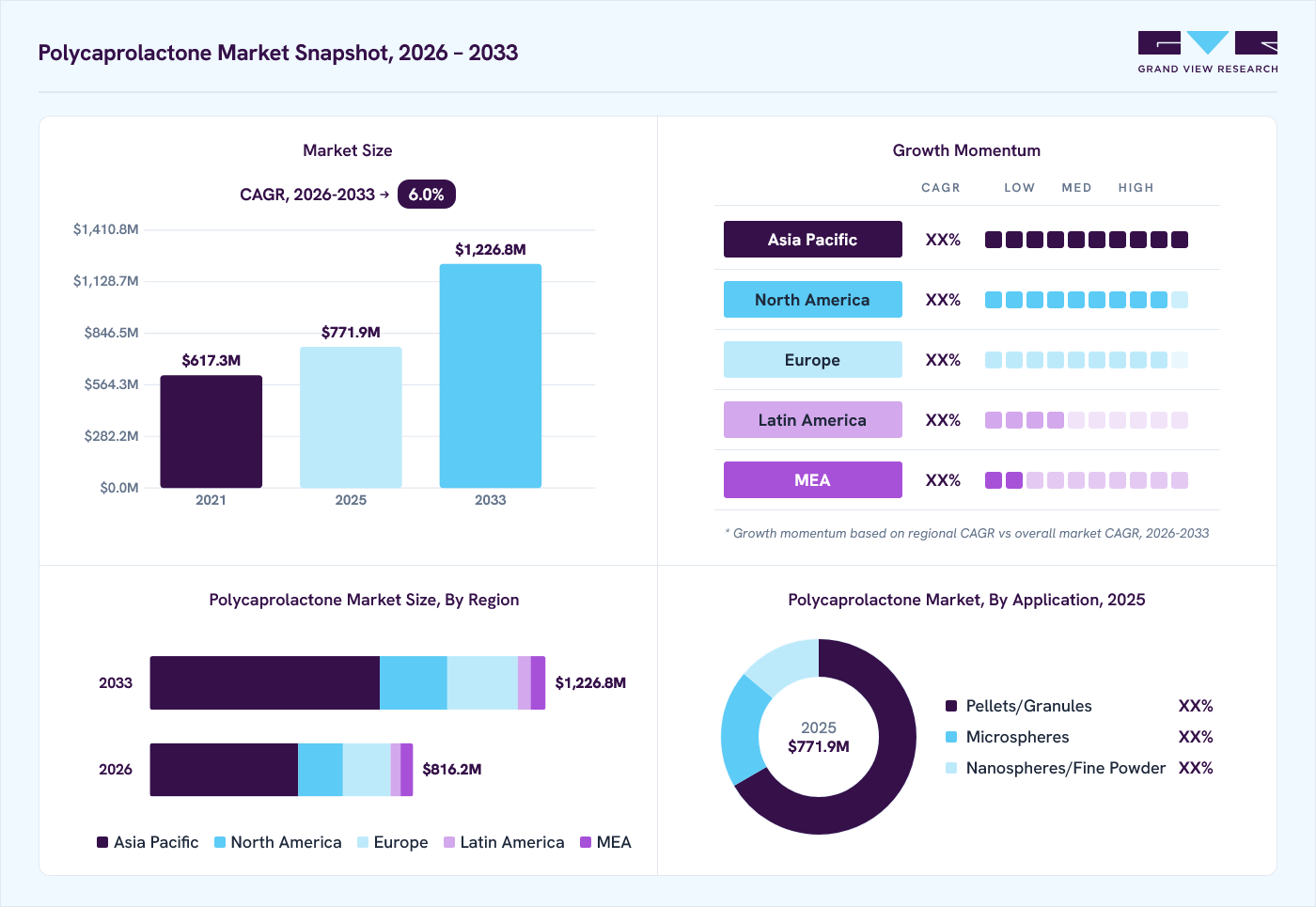 Source: Grand View Research, IR Documents, Primary Interviews, Paid DatabasesTo learn more about this report,
 Download Free Sample Report
 Key Market Trends & Insights
- By application: Pellets/granules segment led the market with the largest revenue share of 66.6% in 2025.
- By end-use: Healthcare & biomedical segment dominated the market with the largest revenue share of 38.4% in 2025.
Regional Highlights
- Largest regional market: Asia Pacific (56.1% revenue share, 2025)
- By country: China dominated the Asia Pacific with the largest revenue share in 2025
Market Size & Forecast
- Market size in 2025: USD 771.9 Million
- Estimated market size in 2026: USD 861.2 Million
- Projected market size by 2033: USD 1,226.8 Million
- CAGR (2026 - 2033): 6.0%
Three ways to get this report
Buy it, customize it, or ask a question.Ask an Analyst
Analyst response in 1 business day
- AccessReport author, directly
- Reply timeWithin 1 working day
- No sales callDirect answer only
- FormatEmail reply
- CostFree, no cost
Get the Full Report
What the study covers
- FormatsPDF · Excel · Dashboard
- Timeline2026–2033 annual, 2025 base
- Coverage20+ countries, 5 regions
- Companies10+ key players profiled
Customize the Report
20% free customization
- IncludeCountries, segments, points
- TailorTo your product definition
- ExtendDeeper competitor detail
- OrA fully bespoke study
- Turnaround5–10 working days
Increasing applications in drug delivery, tissue engineering, absorbable medical devices, and controlled-release systems are supporting consumption due to their biodegradability and biocompatibility. The expansion of 3D printing is also creating opportunities, as polycaprolactone offers low-temperature processability, flexibility, and good melt flow, making it suitable for specialized additive manufacturing applications.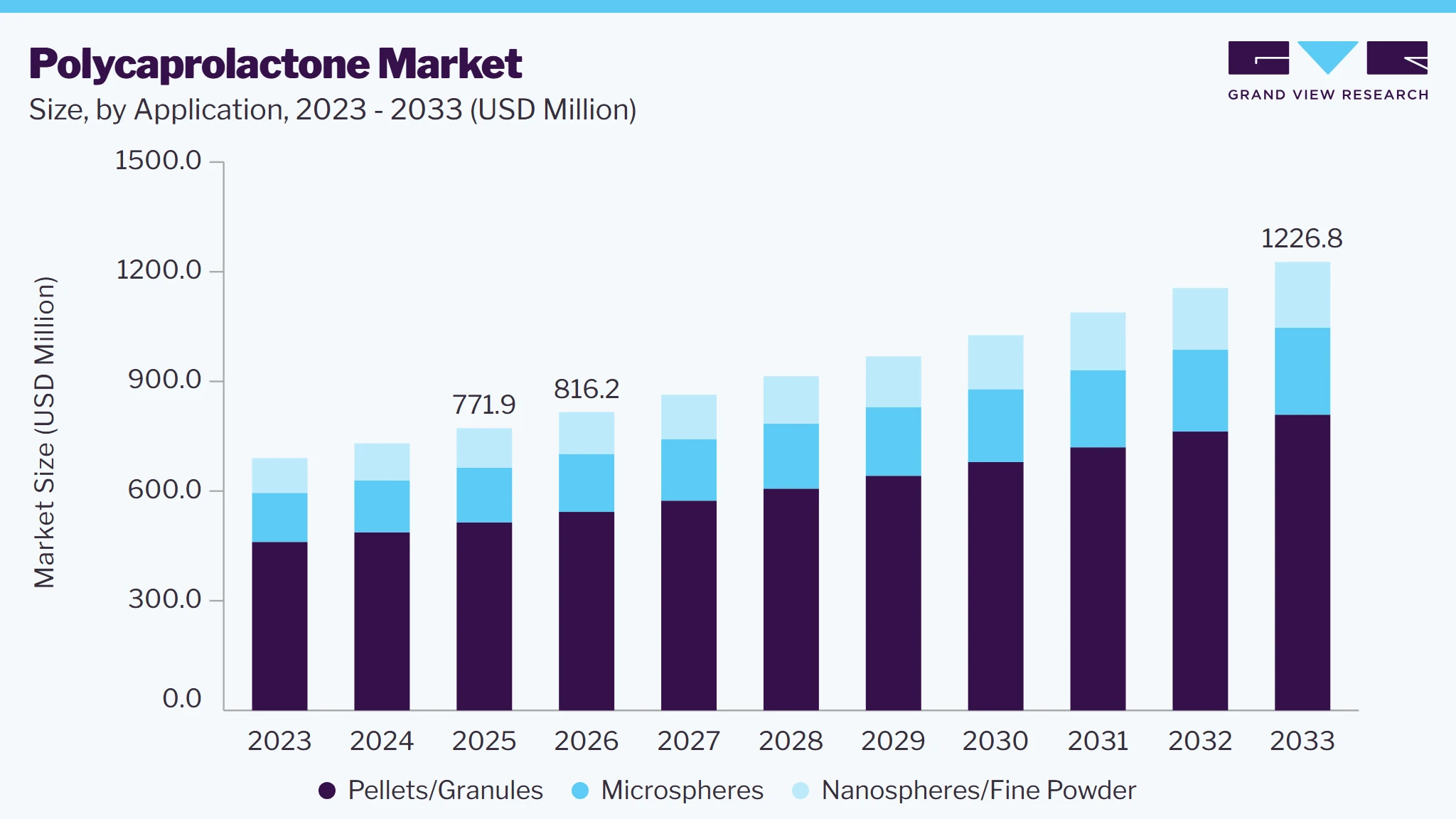 To learn more about this report, Download Free Sample Report
 A major trend in the polycaprolactone market is the integration of PCL with additive manufacturing and advanced scaffold design. Recent research is shifting from simple PCL structures toward porous, composite, and surface-modified architectures that improve cell attachment, mechanical performance, and tissue integration. Medical-grade PCL is also being evaluated for its suitability for reproducible 3D printing and sterilization. This development is expanding PCL from conventional biomedical materials toward patient-specific implants, regenerative scaffolds, and more sophisticated tissue-engineering platforms.
Market Dynamics
Rising demand for regenerative medicine is driving polycaprolactone (PCL) consumption, as its biocompatibility, biodegradability, mechanical strength, and controlled degradation profile meet tissue engineering requirements. PCL-based scaffolds can provide structural support for extended periods while gradually degrading as new tissue develops. This makes the polymer suitable for bone, cartilage, skin, muscle, and cardiovascular tissue regeneration, where sustained mechanical stability and material compatibility are important.
PCL also offers processing flexibility that supports its use in advanced biomedical devices and tissue-engineering platforms. Its relatively low melting temperature enables extrusion, molding, electrospinning, and additive manufacturing into customized structures with controlled porosity and geometry. These characteristics facilitate the development of patient-specific scaffolds, implantable structures, and drug-delivery systems. Growing research and commercialization of engineered tissue solutions are therefore creating additional demand for medical-grade PCL.
PCL’s relatively low melting temperature and slow degradation profile constrain its suitability for several applications. The polymer melts near 60°C, limiting its performance in applications requiring elevated service temperatures or dimensional stability. Its hydrophobic surface can also reduce cell adhesion without surface treatment, while degradation through hydrolysis may extend over years. These limitations can require blending, reinforcement, coating, or surface modification, increasing formulation complexity and processing requirements. They also restrict PCL use in faster-resorbing medical products and demanding structural applications.
A significant opportunity lies in engineered PCL blends and composites that address the polymer’s limitations while targeting higher-value applications. Combining PCL with hydroxyapatite, other polymers, nanomaterials, or bioactive coatings can improve stiffness, surface characteristics, cellular response, and degradation control. Such material engineering supports customized scaffolds and controlled-release systems with application-specific performance. Continued development of medical-grade formulations and 3D-printable grades can also improve clinical translation and create differentiated products beyond commodity biodegradable plastics.
Market Concentration & Characteristics
The market growth stage is medium, and growth is accelerating. The market exhibits fragmentation, with key players dominating the industry landscape. Major companies such as Ingevity Corporation, Daicel Corporation, BASF SE, Shenzhen Esun Industrial Co., Ltd., Hunan Juren Chemical Hitechnology Co., Ltd., Evonik Industries AG, Huntsman Corporation, Polysciences, Inc., and others play a significant role in shaping the market dynamics. These leading players often drive innovation in the global market by introducing new products, technologies, and materials to meet the industry's evolving demands.
Polycaprolactone innovation is increasingly centered on application-specific grades rather than basic polymer production. Recent development is moving toward medical-grade powders and filaments for selective laser sintering and extrusion, as well as formulations with controlled molecular weight, crystallinity, and degradation profiles. In 2025, the National Center for Biotechnology Information also reported PCL composites reinforced with PLA fibers, collagen peptides, and bioactive fillers to improve mechanical strength and biological performance. This broadens PCL from conventional biodegradable formulations toward patient-specific scaffolds, resorbable implants, and advanced 3D and 4D structures.
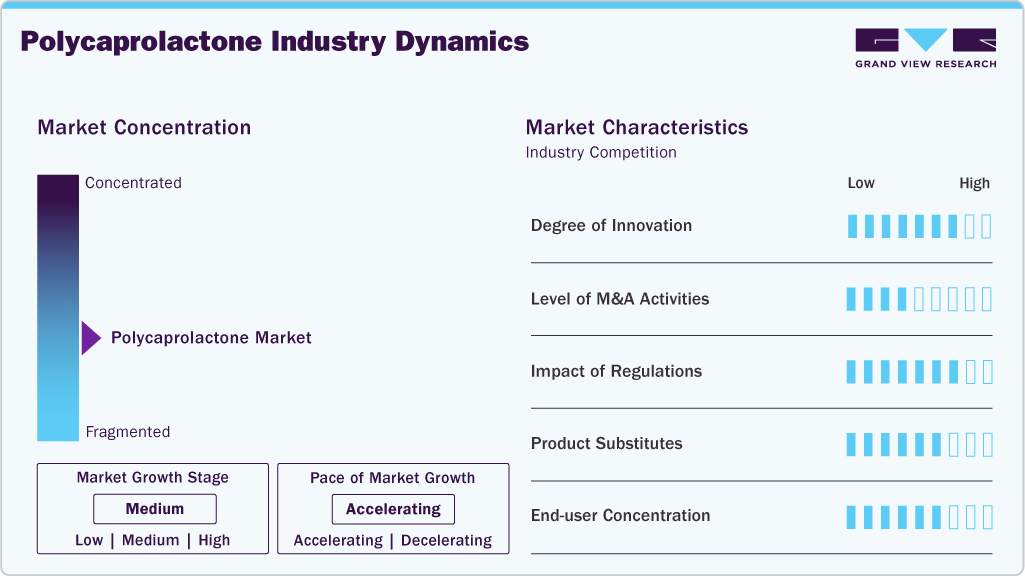 To learn more about this report, Download Free Sample Report
 Regulation has a strong dual effect on the polycaprolactone market. FDA guidance and newly recognized ISO 10993 standards place greater emphasis on chemical characterization, degradation products, sterilization, and biocompatibility for absorbable medical devices, directly affecting PCL-based implants and scaffolds. The EU Medical Device Regulation similarly requires assessment of material toxicity, tissue compatibility, mechanical properties, and processing effects. Under REACH, polymers generally do not require registration, although relevant monomers may. These requirements increase validation costs but also favor traceable, medical-grade PCL with established safety documentation.
Analyst Perspective
The polycaprolactone market is expected to shift from research-led demand toward application-specific growth over the next 5-10 years. Healthcare applications, including drug delivery, tissue engineering, bioresorbable implants, and 3D-printed scaffolds, are likely to remain key growth areas. Demand will be supported by PCL’s biocompatibility, processability, and tunable degradation properties. Sustainability initiatives are expected to increase interest in biodegradable materials, while regulatory requirements will place greater emphasis on lifecycle validation. Product development is likely to focus on copolymers, blends, composites, and customized grades for specific applications. However, raw material costs, medical qualification timelines, competing biodegradable polymers, and degradation-control challenges may limit commercialization and profitability.
Application Insights
The pellets/granules segment led the market with the largest revenue share of 66.6% in 2025. Demand for PCL pellets and granules is being supported by the expansion of melt-processing and additive-manufacturing routes that require consistent feedstock control. Medical-grade pellets are increasingly supplied with defined molecular weight, viscosity, moisture, and impurity specifications, which support reproducible extrusion and 3D printing. The National Center for Biotechnology Information's 2025 research confirmed that medical- granules grade PCL can retain chemical stability after printing and electron-beam sterilization. This strengthens the adoption of pellets for customized scaffolds, prototypes, and implantable structures where material consistency and processing repeatability are critical.
The nanospheres/fine powder segment is expected to grow at the fastest CAGR of 6.6% over the forecast period. The growth of controlled drug delivery is creating a distinct demand driver for PCL nanospheres and fine-particle formats. PCL offers slow biodegradation and enables sustained release, making it suitable for encapsulating drugs and bioactive compounds. Recent research has focused on improving loading efficiency, targeting, and release behavior through nanoscale PCL architectures. In 2025, studies demonstrated the use of PCL nanoparticles and nanospheres for transdermal delivery and antimicrobial drug transport. These developments are expanding demand beyond conventional polymer applications toward precision pharmaceutical formulations and advanced nanomedicine platforms.
End-use Insights
The healthcare & biomedical segment dominated the market with the largest revenue share of 38.4% in 2025. Healthcare and biomedical applications remain a structural growth engine because PCL combines biocompatibility, biodegradability, and a degradation profile suitable for tissue regeneration. Its processability also supports patient-specific additive manufacturing, enabling the fabrication of complex porous scaffolds and customized implant geometries.
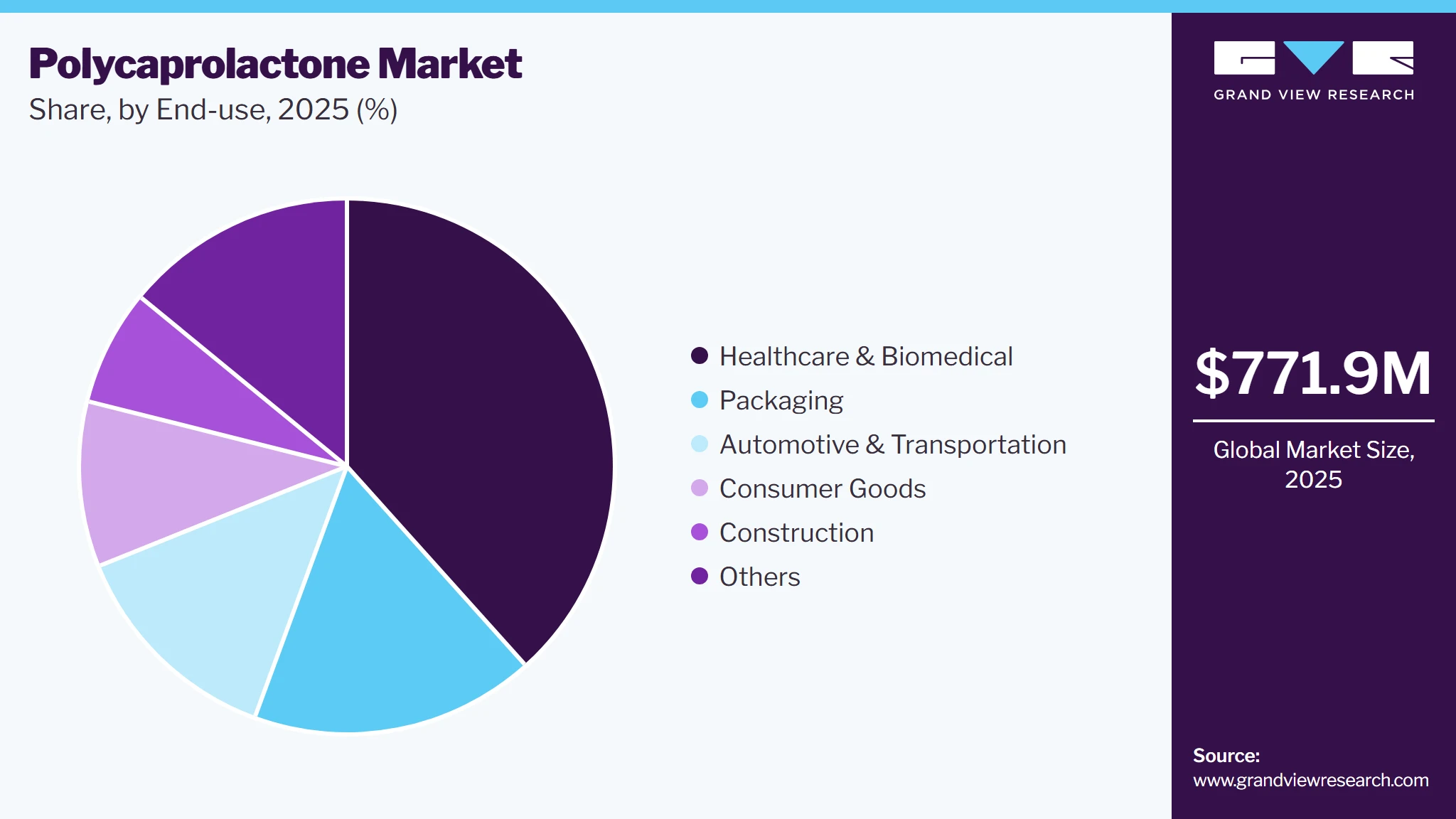 To learn more about this report, Download Free Sample Report
 The consumer goods segment is expected to grow at the fastest CAGR of 6.2% over the forecast period. Consumer-goods demand is increasingly linked to the search for functional biodegradable materials rather than the simple substitution of conventional plastics. PCL is being evaluated for use in flexible films, coatings, and multilayer packaging, where biodegradability can be combined with barrier, antimicrobial, and freshness-monitoring functions.
Regional Insights
The polycaprolactone market in North America benefits from a mature ecosystem connecting medical-device regulation, additive manufacturing, and biomaterials R&D. Regulatory pathways in both the U.S. and Canada explicitly address 3D-printed implantable devices, including material controls, biocompatibility, process validation, and performance evidence. This framework reduces uncertainty for developers using degradable polymers in patient-specific structures. PCL is particularly relevant where controlled degradation and complex geometries are required, supporting demand from tissue engineering, resorbable implants, drug delivery, and other high-value biomedical applications across the region.
U.S. Polycaprolactone Market Trends
The polycaprolactone market in the U.S. presents a strong demand base for PCL through the commercialization of advanced medical devices and additive manufacturing. The FDA specifically includes polycaprolactone in its medical-device material safety resources and continues its regulatory science work on additive manufacturing. FDA notes that more than 100 cleared medical devices have been produced using additive manufacturing technologies. This established pathway supports PCL-based development where biodegradation, biocompatibility, and design flexibility are valuable, particularly for patient-specific implants, tissue scaffolds, and regenerative medicine applications.
Asia Pacific Polycaprolactone Market Trends
The Asia Pacific polycaprolactone market held the largest revenue share of 56.1% in 2025 and is projected to grow at the fastest CAGR during the forecast period. The region is expected to grow at a CAGR of 6.4% over the forecast period. Asia Pacific is supported by the region’s expanding advanced-manufacturing base for medical technologies. Singapore is strengthening MedTech production through Industry 4.0, robotics, additive manufacturing, and local R&D. China is also directing public programs toward high-performance biomedical materials and scalable commercialization for medical devices. These capabilities are relevant to PCL because its melt processability, biodegradability, and suitability for 3D-printed scaffolds fit personalized healthcare and regenerative medicine. Rising regional manufacturing sophistication, therefore, supports the development of higher-value PCL grades and applications.
 To learn more about this report, Download Free Sample Report
 The polycaprolactone market in China accounted for the largest revenue share in the Asia-Pacific region in 2025. The opportunity is increasingly linked to the domestic development of advanced biomedical materials. In 2025, the Ministry of Industry and Information Technology, along with national industrial and medical regulators, launched innovation programs targeting high-performance polymer materials for cardiovascular, orthopedic, wound-repair, and other medical-device applications, with an emphasis on reliable scale-up and clinical commercialization. Revised medical-device manufacturing rules will also take effect in November 2026. This policy environment encourages domestic qualification of specialty polymers and strengthens the pathway for PCL in resorbable implants, tissue-engineering structures, and precision medical devices.
Europe Polycaprolactone Market Trends
The polycaprolactone market in Europe is being shaped by demand for advanced medical materials and more disciplined sustainability claims. The European Commission promotes biodegradable and bio-based plastics within its circular-economy framework while emphasizing application-specific environmental benefits. In parallel, the EU proposed targeted changes to medical-device rules in December 2025 to simplify procedures and support innovation while maintaining patient safety. These developments favor materials with defined performance and degradation characteristics, creating opportunities for PCL in resorbable devices, regenerative medicine, and specialized biodegradable products.
Latin America Polycaprolactone Market Trends
The polycaprolactone market in Latin America is supported by expanding biomedical research, additive manufacturing, and regenerative medicine activities, particularly in Brazil. Research institutions are developing PCL-based scaffolds, drug-delivery systems, electrospun biomaterials, and 3D-printed tissue-engineering structures, strengthening regional demand for specialized grades. Recent Brazilian research has also focused on PCL nanocomposites for high-resolution 3D-printed bone scaffolds. Public investment in 3D-enabled medical technologies and customized prosthetics is further strengthening the application ecosystem.
Middle East and Africa Polycaprolactone Market Trends
The polycaprolactone market in the Middle East and Africa is developing localized healthcare manufacturing capabilities, creating opportunities for functional biomaterials. Saudi Arabia is promoting medical-device localization and identifies 3D-printed prosthetics and fixation devices among investment opportunities. Across Africa, the 2025-2035 regional framework emphasizes local production of medical devices, while several countries are expanding domestic health-product manufacturing. These initiatives can support the adoption of specialty polymers such as PCL for customized medical components, regenerative structures, and applications where local production and supply resilience are increasingly important.
Key Polycaprolactone Company Insights
Some of the key players operating in the market include Ingevity Corporation and Daicel Corporation
-
Ingevity has a strong direct position in the polycaprolactone market through its Capa caprolactone portfolio, covering polyols, thermoplastics, monomers, and downstream derivatives. Its materials are used in coatings, adhesives, sealants, elastomers, and bioplastics, while recent distribution expansion strengthens market access. The company also develops specialized PCL-based solutions for soft polyurethane applications and high-performance coatings.
-
Daicel maintains a broad caprolactone portfolio under PLACCEL, spanning di-functional, tri-functional, and tetra-functional polyols, copolymers, macromonomers, and thermoplastic polycaprolactone. Its portfolio emphasizes low viscosity, controlled molecular weight, mechanical performance, hydrolysis resistance, flexibility, biodegradability, and biocompatibility, supporting polyurethane coatings, elastomers, resins, and other advanced material applications.
BASF SE & Huntsman Corporation are some of the emerging participants in the polycaprolactone industry.
-
BASF has direct exposure to polycaprolactone through its Capromer specialty polyols, which are designed for high-performance polyurethane applications. These materials provide low-temperature flexibility, hydrolytic stability, lightfastness, and low processing viscosity, supporting coatings, thermoplastic elastomers, textiles, and leather. Its broader polyurethane raw-material portfolio further strengthens downstream application integration and formulation capabilities.
-
Huntsman Corporation maintains a relevant downstream position in the polycaprolactone market through polycaprolactone-based thermoplastic polyurethane (TPU) grades under its IROGRAN portfolio. These materials are used for injection-molded gaskets, seals, and technical components, offering resistance to wear, oil, solvents, hydrolysis, and dynamic stress. Its global TPU manufacturing and customer network support penetration across industrial, automotive, and engineered applications.
Key Polycaprolactone Companies
The following key companies have been profiled for this study on the global polycaprolactone market.
-
Ingevity Corporation
-
Daicel Corporation
-
BASF SE
-
Shenzhen Esun Industrial Co., Ltd.
-
Hunan Juren Chemical Hitechnology Co., Ltd.
-
Evonik Industries AG
-
Huntsman Corporation
-
Polysciences, Inc.
Company Categorization
Operating Strategies
Competitive Edge
Weakness
Mature Players: Ingevity Corporation, Daicel Corporation, Evonik Industries AG
- Maintain established PCL and caprolactone-based portfolios serving biomedical materials, coatings, adhesives, polyurethane, elastomers, and specialty polymer applications.
- Invest in polymerization technologies, molecular-weight control, functionalized PCL grades, and application-specific formulations to improve processability, mechanical performance, biodegradation behavior, and compatibility.
- Expand through integrated manufacturing, technical support, customer qualification, and application development across advanced materials and specialty polymer markets.
- Established polymer and specialty-chemical capabilities support consistent quality, controlled molecular architecture, and development of application-specific PCL materials.
- Broad downstream portfolios enable integration of PCL into coatings, adhesives, polyurethane systems, biomedical materials, and specialty formulations.
- Global manufacturing and technical networks support customer qualification, regulatory requirements, formulation development, and supply continuity across major end-use markets.
- Higher operating and R&D costs associated with global manufacturing networks and advanced polymer development can increase product costs.
- Broad specialty-chemical portfolios can dilute focus on the relatively specialized PCL market compared with dedicated producers.
- Commercialization of advanced PCL grades for biomedical and high-performance applications requires extensive testing, qualification, and regulatory validation, lengthening adoption cycles.
Emerging Players: Hunan Juren Chemical Hitechnology Co., Ltd., Shenzhen Esun Industrial Co., Ltd., Polysciences, Inc., BASF SE, Huntsman Corporation
- Focus on PCL, PCL polyols, biodegradable polymer materials, specialty polymer grades, and PCL-containing formulations for coatings, polyurethane, biomedical research, additive manufacturing, and advanced materials.
- Develop products emphasizing biodegradability, controlled molecular weight, flexibility, low-temperature processing, reactive functionality, and compatibility with polymer blends and composites.
- Expand through specialized product development, regional manufacturing, technical collaboration, distributor networks, and penetration of emerging biomedical, 3D printing, coatings, and sustainable-material applications.
- Specialized PCL capabilities enable targeted development around molecular weight, viscosity, degradation rate, reactive functionality, and processing requirements.
- Flexible product portfolios allow suppliers to address research-grade, technical-grade, biomedical, additive-manufacturing, coating, adhesive, and polyurethane applications.
- Regional manufacturing and application expertise can support cost-sensitive customers while enabling customization for specific polymer-processing and formulation requirements.
- Comparatively narrower PCL portfolios and geographic footprints can limit scale advantages, supply redundancy, and customer coverage relative to diversified global polymer producers.
- Smaller specialized suppliers may face higher qualification barriers in regulated biomedical and medical applications.
- Companies with broader chemical portfolios may have limited strategic concentration on PCL, creating challenges in achieving dedicated scale and differentiation within specialized PCL applications.
Recent Developments
- In June 2025, Ingevity expanded its Capa caprolactone distribution network across the U.S. and Canada by appointing Jamplast as the exclusive distributor for Capa TP bioplastics. The move strengthened North American access to caprolactone-based thermoplastics and supported broader penetration into biodegradable plastics and related processing applications.
-
In July 2025, Evonik entered a strategic distribution agreement with IMCD for RESOMER bioresorbable polymers across Europe. The agreement expanded commercial access to medical-grade polymer solutions, including polycaprolactone grades, for implantable devices, tissue reconstruction, dental applications, and 3D-printed medical devices.
Polycaprolactone Market Report Scope
Report Attribute
Details
Market size in 2025
USD 771.9 million
Estimated market size in 2026
USD 816.2 million
Projected market size by 2033
USD 1,226.8 million
Growth rate
CAGR of 6.0% from 2026 to 2033
Base year for estimation
2025
Historical data
2021 - 2024
Forecast period
2026 - 2033
Quantitative units
Revenue in USD million, Volume in Kilotons, and CAGR from 2026 to 2033
Report coverage
Revenue & volume forecast, competitive landscape, growth factors, and trends
Segments covered
Application, end-use, region
Regional scope
North America; Europe; Asia Pacific; Latin America; Middle East & Africa
Country Scope
U.S.; Canada; Mexico; Europe; Germany; UK; France; Italy; Spain; China; India; Japan; South Korea; Australia; Brazil; Argentina; Saudi Arabia; UAE; South Africa
Key companies profiled
Ingevity Corporation; Daicel Corporation; BASF SE; Shenzhen Esun Industrial Co., Ltd.; Hunan Juren Chemical Hitechnology Co., Ltd.; Evonik Industries AG; Huntsman Corporation; Polysciences, Inc.
Customization scope
Free report customization (equivalent to up to 8 analyst working days) with purchase. Addition or alteration to country, regional & segment scope
Pricing and purchase options
Avail customized purchase options to meet your exact research needs. Explore purchase options
Global Polycaprolactone Market Report Segmentation
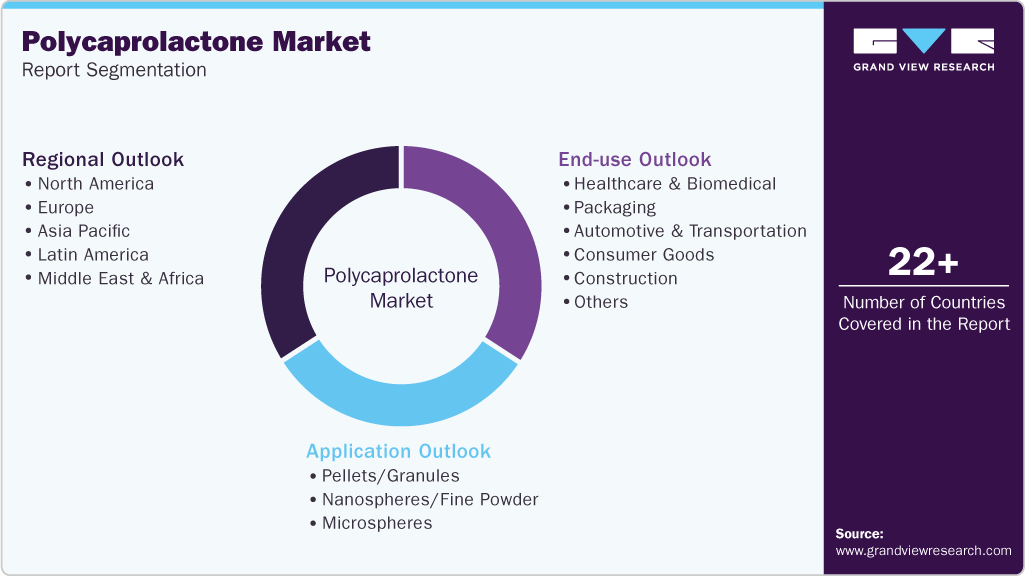
This report forecasts revenue growth at the global, regional, and country levels and provides an analysis of the latest industry trends across sub-segments from 2021 to 2033. For this study, Grand View Research has segmented the global polycaprolactone market report based on application, end-use, and region:
 To learn more about this report, Download Free Sample Report
 - Application Outlook (Volume, Kilotons; Revenue, USD Million, 2021 - 2033)
-
Pellets/Granules
-
Nanospheres/Fine Powder
-
Microspheres
-
-
End-use Outlook (Volume, Kilotons; Revenue, USD Million, 2021 - 2033)
-
Healthcare & Biomedical
-
Packaging
-
Automotive & Transportation
-
Consumer Goods
-
Construction
-
Others
-
-
Regional Outlook (Volume, Kilotons; Revenue, USD Million, 2021 - 2033)
-
North America
-
U.S.
-
Canada
-
Mexico
-
-
Europe
-
Germany
-
UK
-
France
-
Italy
-
Spain
-
-
Asia Pacific
-
China
-
India
-
Japan
-
South Korea
-
Australia
-
-
Latin America
-
Brazil
-
Argentina
-
-
Middle East & Africa
-
Saudi Arabia
-
UAE
-
South Africa
-
-
Research Methodology
The polycaprolactone market figures in this report are based on a proven research process that combines executive interviews with secondary research from proprietary databases, company filings, and recognized regulatory and institutional sources. Market size is built through value-chain sizing-reconciling supply-side and demand-side estimates-and triangulated with bottom-up and top-down approaches. Every estimate passes multiple levels of expert validation before publication, with eachpolycaprolactone segment quantified using the revenue-capture definitions in the table below.
Segment Definition
Segment - Application
Revenue capture definition
Pellets/Granules
Revenue is captured through polycaprolactone supplied in pellet or granule form for melt processing, compounding, extrusion, injection molding, and additive manufacturing. Demand comes from biodegradable packaging, medical devices, tissue-engineering materials, specialty elastomers, and 3D printing. Manufacturers select grades based on molecular weight, melting behavior, crystallinity, biodegradation rate, mechanical strength, processability, and compatibility with polymers or bioactive materials. Growing use of biodegradable and bioresorbable polymers supports demand for processable PCL grades across industrial and biomedical applications.
Nanospheres/Fine Powder
Revenue is generated through polycaprolactone supplied as nanoscale particles or fine powders for drug delivery, tissue engineering, bioactive formulations, coatings, and advanced material systems. Demand is supported by the need for controlled particle size, biodegradability, biocompatibility, and tunable degradation behavior. Manufacturers optimize PCL particle characteristics to meet drug encapsulation efficiency, release profile, surface area, molecular weight, crystallinity, and dispersion requirements. The increasing development of polymeric nanocarriers and regenerative medicine technologies supports specialized PCL consumption.
Microspheres
Revenue is captured through polycaprolactone microspheres used in controlled drug delivery, tissue engineering, cosmetic formulations, and specialty biomedical systems. Demand is influenced by the need for sustained, controlled release of active ingredients, biocompatibility, and predictable biodegradation. Manufacturers select PCL grades based on particle size distribution, encapsulation efficiency, porosity, molecular weight, degradation rate, and formulation compatibility. Increasing research into long-acting drug delivery and minimally invasive therapies supports demand for PCL-based microsphere technologies.
Segment - End-use
Revenue capture definition
Healthcare & Biomedical
Revenue is generated through polycaprolactone used in drug-delivery systems, tissue-engineering scaffolds, resorbable implants, wound-care materials, dental applications, and medical 3D printing. Demand is supported by PCL’s biodegradability, biocompatibility, relatively low melting temperature, and controllable degradation profile. Manufacturers select grades based on molecular weight, degradation kinetics, mechanical strength, sterilization compatibility, and biological performance. The increasing adoption of regenerative medicine, personalized implants, controlled drug delivery, and biofabrication is driving demand for medical-grade PCL.
Packaging
Revenue is generated from polycaprolactone used in biodegradable films, coatings, blends, and specialty packaging structures that require flexibility, processability, and controlled biodegradation. Demand is supported by efforts to reduce dependence on conventional persistent plastics and by increasing the development of compostable or biodegradable material systems. Manufacturers commonly combine PCL with other biodegradable polymers to improve toughness, flexibility, and processing characteristics. Adoption depends on biodegradation requirements, barrier performance, mechanical properties, food-contact considerations, cost, and compatibility with existing packaging processes.
Automotive & Transportation
Revenue is generated through polycaprolactone used in specialty polymer blends, lightweight components, coatings, adhesives, and additive-manufactured parts for automotive and transportation applications. Demand is supported by lightweighting, material efficiency, and increasing interest in recyclable or biodegradable polymer systems for selected non-structural applications. Manufacturers evaluate PCL based on impact resistance, flexibility, thermal behavior, adhesion, processability, and compatibility with engineering polymers. Adoption remains concentrated in applications where PCL’s biodegradability and processing advantages provide functional value.
Consumer Goods
Revenue is captured through polycaprolactone used in biodegradable consumer products, footwear components, personal-care formulations, specialty coatings, and 3D-printed products. Demand is influenced by consumer preference for materials with improved environmental characteristics and by manufacturers seeking alternatives to conventional polymers in selected applications. PCL is valued for flexibility, low-temperature processability, biodegradability, and compatibility with polymer blends. Product selection depends on mechanical performance, degradation rate, appearance, processing method, formulation compatibility, and required service life.
Construction
Revenue is generated through polycaprolactone used in specialty coatings, sealants, adhesives, polymer-modified materials, insulation-related components, and additive-manufactured construction products. Demand is supported by requirements for durable, flexible, and increasingly sustainable material systems, although adoption remains concentrated in specialized applications rather than bulk construction materials. Manufacturers evaluate PCL based on adhesion, flexibility, dimensional stability, degradation characteristics, compatibility with other polymers, and processing conditions. Development of bio-based and lower-impact construction materials can create additional opportunities for PCL-based formulations.
Others
Revenue is captured through polycaprolactone used in agriculture, electronics, industrial coatings, filtration, specialty composites, and research materials. These applications require specific combinations of biodegradability, flexibility, low-temperature processability, controlled degradation, and compatibility with other materials. Demand varies according to formulation requirements and functional specifications. Manufacturers develop PCL grades and blends based on molecular weight, crystallinity, mechanical properties, surface characteristics, degradation profile, and processing methods, thereby supporting consumption in emerging applications beyond established biomedical and industrial uses.
Estimation Model
Layer Name
Key Question
Description
Top-Down Polycaprolactone Demand Assessment Layer
What defines overall market demand?
Establishes overall global demand for polycaprolactone across biomedical, pharmaceutical, packaging, coatings, adhesives, elastomers, 3D printing, and other applications. The layer assesses consumption based on PCL’s biodegradability, biocompatibility, low melting point, flexibility, crystallinity, controlled degradation profile, and compatibility with polymer blends. It considers demand for medical implants, drug-delivery systems, tissue-engineering scaffolds, biodegradable products, specialty formulations, and additive manufacturing materials.
End-use Demand Validation Layer
Where is demand concentrated?
Maps PCL demand across healthcare & biomedical, pharmaceuticals, packaging, coatings & adhesives, 3D printing, agriculture, and other end uses. The assessment considers requirements such as biocompatibility, controlled biodegradation, flexibility, low-temperature processability, chemical resistance, adhesion, melt strength, and dimensional stability. It validates end-use demand through medical-device production, drug-delivery applications, tissue-engineering research, sustainable material adoption, additive manufacturing, and the development of biodegradable specialty products.
Consumption-to-Revenue Conversion Layer
How is demand monetized?
Converts polycaprolactone consumption into market revenue, accounting for polymer grade, molecular weight, purity, formulation requirements, processing characteristics, application specifications, production scale, manufacturing costs, supplier positioning, and prevailing pricing structures. The layer evaluates price differences between standard and specialty PCL grades, including medical-grade, pharmaceutical-grade, high-purity, and application-specific materials. Premiums associated with controlled molecular weight, enhanced biodegradation performance, specialized formulations, and stringent quality requirements are also assessed.
Regional Demand Verification Layer
Where is demand validated?
Validates polycaprolactone demand across regions. The assessment considers healthcare expenditure, medical device production, pharmaceutical manufacturing, biomedical research, sustainable material adoption, packaging development, additive manufacturing capacity, and specialty polymer production. It also examines regulatory requirements for biodegradable and medical materials, raw material availability, regional polymer production capacity, import and supply patterns, manufacturing investments, research infrastructure, and supplier localization strategies influencing regional consumption.
Delivered Customizations
This report has been delivered with the following In-depth customizations
Client Request
Customization Delivered
Value Adds
Regional segmentation
Polycaprolactone demand and revenue were assessed across North America, the U.S., Asia Pacific, China, Europe, Latin America, and the Middle East & Africa, considering healthcare and biomedical activity, pharmaceutical production, sustainable-material adoption, additive manufacturing, and specialty polymer capacity.
Provides a region-specific view of demand concentration, growth potential, manufacturing capabilities, and supply-side developments.
Competitive benchmarking
Key participants were benchmarked based on geographical presence, product portfolio, PCL-related capabilities, application coverage, manufacturing footprint, technological capabilities, and strategic activities.
Establishes a structured view of competitive positioning and differentiates companies based on portfolio breadth, market reach, and application exposure.
Opportunity assessment
High-potential opportunities were assessed across biomedical materials, drug delivery, tissue engineering, biodegradable products, specialty coatings and adhesives, additive manufacturing, and PCL blends and composites.
Highlights application areas where PCL's biodegradability, biocompatibility, flexibility, controlled degradation, and low-temperature processability can support higher-value market expansion.
About the Author(s)
Plastics, Polymers & Resins Research Team
Bulk Chemicals · Plastics, Polymers & ResinsThis report was authored by the plastics, polymers & resins research team at Grand View Research - comprising two research analysts, one senior research analyst, and one industry expert - with specialized expertise in the plastics, polymers & resins segment of the bulk chemicals industry. All findings are based on proprietary bulk chemicals databases, executive interviews, and regulatory analysis, subject to internal peer review prior to publication.
Last Updated:
Speak to Analyst

Customize this report to your needs - add regions, segments, or data points, with 20% free customization.
Or view our licence options:


ISO 9001:2015 & 27001:2022 Certified
We are GDPR and CCPA compliant! Your transaction & personal information is safe and secure. For more details, please read our privacy policy.


