
- Home
- »
- Plastics, Polymers & Resins
- »
-
Polymeric Adsorbents Market Size And Share Report, 2033GVR Report cover

Polymeric Adsorbents Market (2026 - 2033)
Size, Share & Trends Analysis Report Market By Polymer Type (Polyacrylic Acid & Polyacrylates, Natural Polymer-Based), By Application (Drug Delivery, Agriculture), By Region, And Segment Forecasts
Market Size, 2025
$411.2MMarket Estimate, 2026
$452.4MMarket Forecast, 2033
$896.7MCAGR, 2026–2033
10.3%Polymeric Adsorbents Market Summary
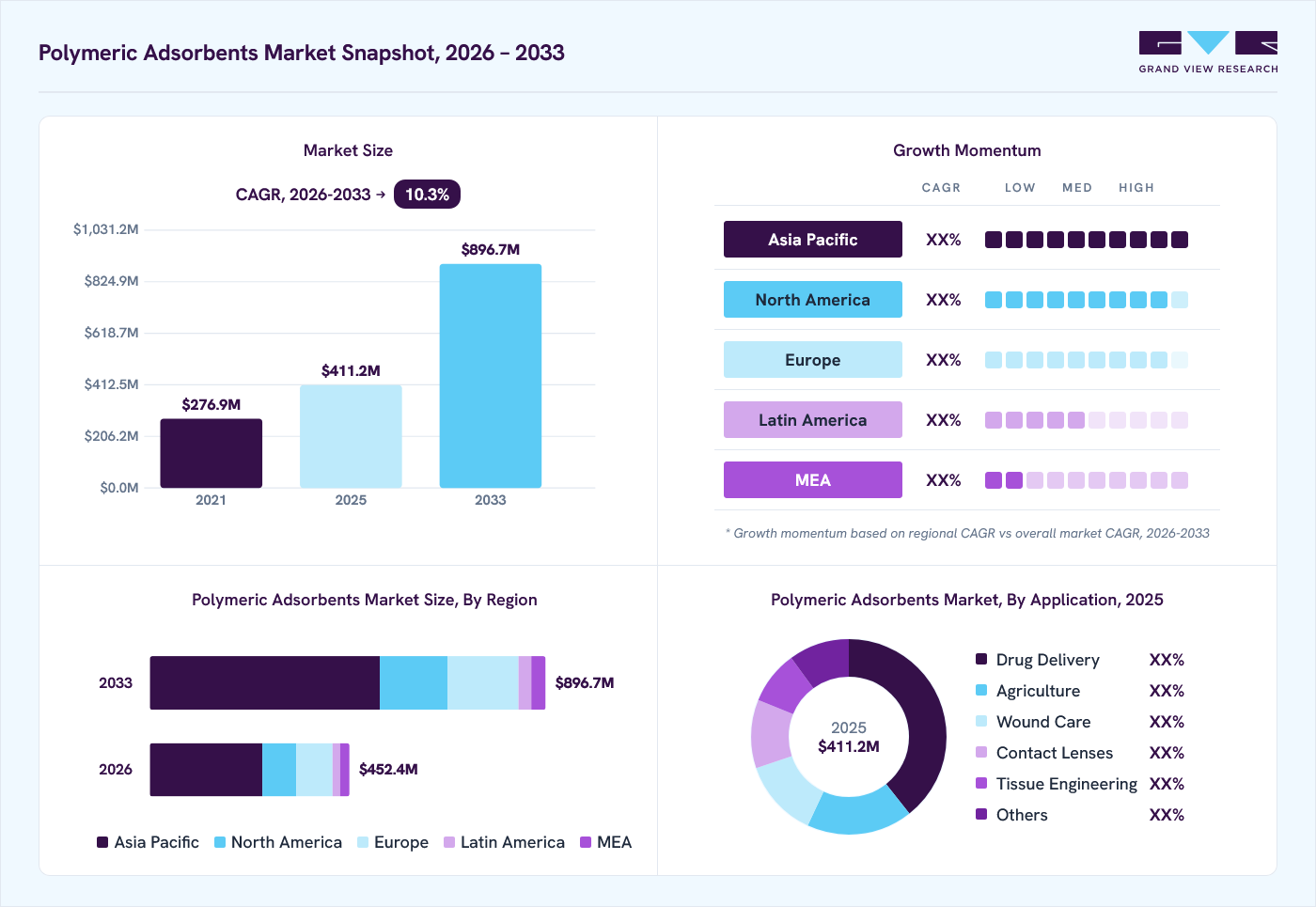
The global polymeric adsorbents market size was valued at USD 411.2 million in 2025 and is projected to grow from USD 452.4 million in 2026 to USD 896.7 million by 2033, at a CAGR of 10.3% from 2026 to 2033. Asia Pacific dominated the market, accounting for the largest revenue share of 56.1% in 2025. Driven by high capacity, chemical resistance, and tunable properties, the market is growing through demand for synthetic porous materials used in selective separation and purification across key industries.
 Source: Grand View Research, IR Documents, Primary Interviews, Paid DatabasesTo learn more about this report,
 Download Free Sample Report
 Key Market Trends & Insights
- By polymer type: Natural polymer-based segment is anticipated to grow at a CAGR of 11.6%.
- By application: Agriculture agent segment is expected to grow at a 11.4% CAGR in revenue from 2026 to 2033.
Regional Highlights
- Largest regional market: Asia Pacific (56.1% revenue share, 2025)
- By country: China held the largest market share in 2025
Market Size & Forecast
- Market size in 2025: USD 411.2 Million
- Estimated market size in 2026: USD 452.4 Million
- Projected market size by 2033: USD 896.7 Million
- CAGR (2026-2033): 10.3%
Three ways to get this report
Buy it, customize it, or ask a question.Ask an Analyst
A direct answer, usually in 1 working day
- AccessReport author, directly
- Reply timeWithin 1 working day
- No sales callDirect answer only
- FormatEmail reply
- CostFree, no cost
Get the Full Report
What the study covers
- FormatsPDF · Excel · Dashboard
- Timeline2026–2033 annual, 2025 base
- Coverage20+ countries, 5 regions
- Companies10+ key players profiled
Customize the Report
20% free customization
- IncludeCountries, segments, points
- TailorTo your product definition
- ExtendDeeper competitor detail
- OrA fully bespoke study
- Turnaround5–10 working days
Expanding use in drug delivery, agriculture, wound care, tissue engineering, and contact lenses is further broadening market opportunities across healthcare, biotechnology, and specialized industrial applications. The market is moving toward customized resin structures that provide higher selectivity for specific contaminants and target molecules. Manufacturers are modifying pore size, surface polarity, crosslinking, and functional groups to improve adsorption kinetics and capacity.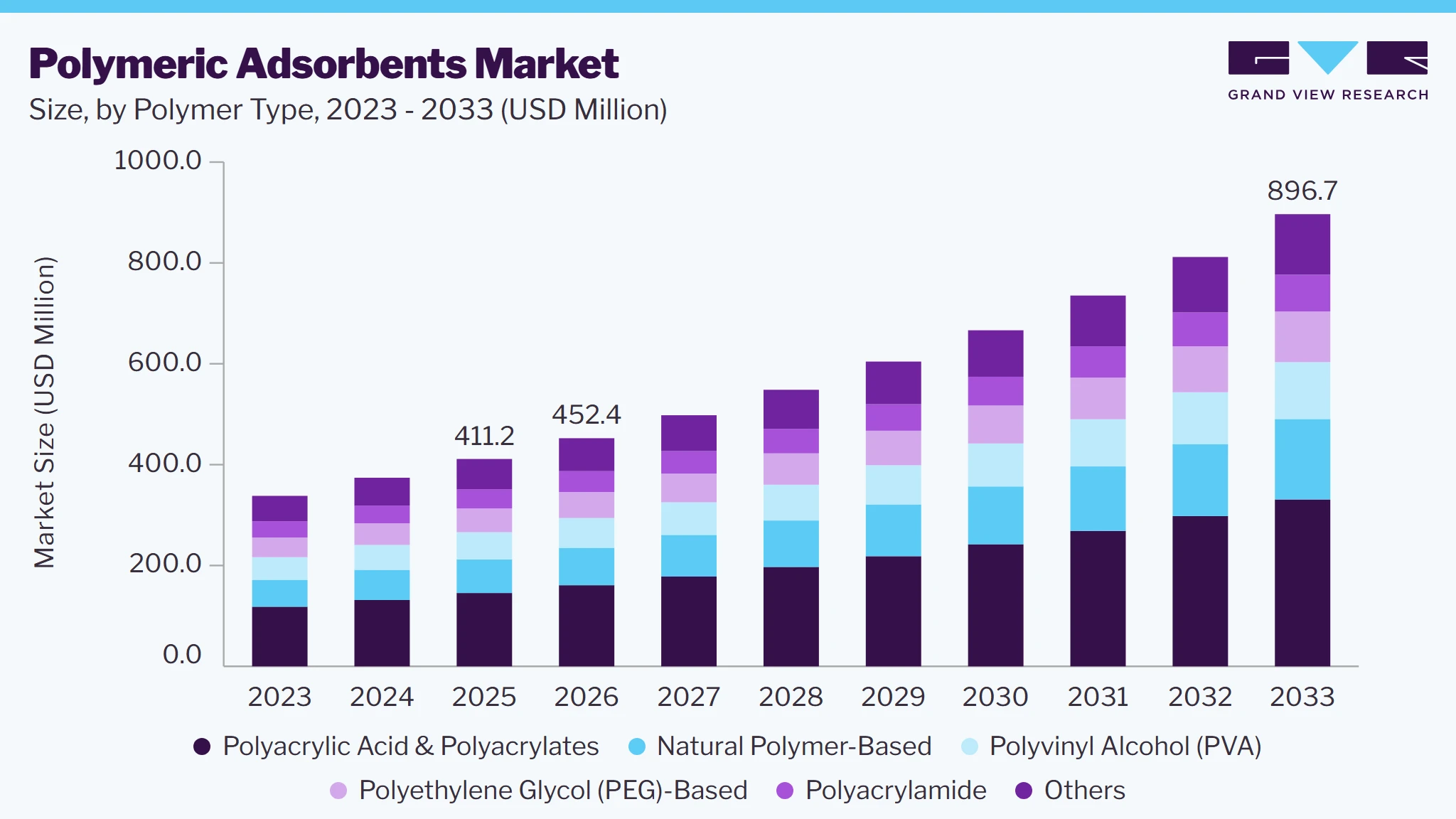 To learn more about this report, Download Free Sample Report
 Regeneration capability is also gaining importance as end users seek longer operating cycles and lower media replacement requirements. This trend is particularly relevant in pharmaceutical purification, advanced wastewater treatment, and food processing, where consistent separation performance and reduced secondary waste are increasingly important.
Market Dynamics
Growing pharmaceutical manufacturing is increasing the need for efficient purification and separation technologies. Polymeric adsorbents are used to remove impurities and separate antibiotics, proteins, enzymes, active pharmaceutical ingredients, and other compounds from liquid streams. Their controlled pore structures and strong adsorption performance support consistent purification results. These characteristics make polymeric adsorbents suitable for processes requiring high product purity and reliability.
The expansion of biotechnology and advanced pharmaceutical processing is further supporting demand for polymeric adsorbents. Manufacturers increasingly require separation media that can provide selective adsorption while maintaining chemical and mechanical stability during processing. Polymeric adsorbents can be tailored for specific molecules and operating conditions, supporting their use across diverse pharmaceutical applications. Increasing focus on product quality, process efficiency, and purification performance is therefore creating sustained market opportunities.
The relatively high cost of polymeric adsorbents can restrict adoption in price-sensitive applications. Production requires controlled polymerization, crosslinking, pore formation, and, in some cases, specialized surface functionalization. These requirements can increase material costs compared with established alternatives such as activated carbon. Competition from other separation technologies can further limit market penetration where adsorption performance does not justify the additional expense. Consequently, suppliers face pressure to improve adsorption capacity, service life, regeneration efficiency, and overall lifecycle economics.
Advanced water and wastewater treatment presents a significant opportunity for polymeric adsorbents, particularly for contaminants that are difficult to remove through conventional treatment. Specialized resins can target pharmaceuticals, dyes, phenols, pesticides, and other persistent organic compounds. Their reusability and tunable surface chemistry support integration into tertiary treatment and water-reuse systems. Growing attention to pharmaceutical residues and other emerging contaminants is creating opportunities for high-selectivity adsorbents. Product development focused on contaminant-specific capture and regeneration can further expand adoption.
Market Concentration & Characteristics
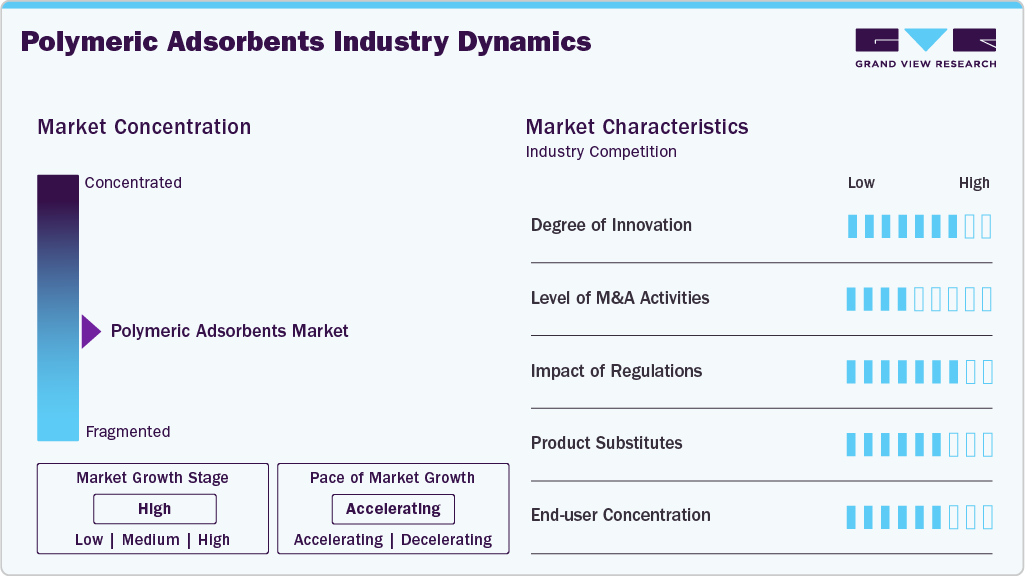
The market growth stage is high, and growth is accelerating. The market exhibits fragmentation, with key players dominating the industry landscape. Major companies such as DuPont de Nemours, Inc., Ecolab Inc., Mitsubishi Chemical Corporation, LANXESS AG, Sunresin New Materials Co., Ltd., Thermax Limited, Ion Exchange (India) Limited, Resindion S.r.l., Thermo Fisher Scientific Inc., Dow Inc., and others play a significant role in shaping the market dynamics. These leading players often drive innovation in the market by introducing new products, technologies, and materials to meet the industry's evolving demands.
Innovation in the market is increasingly focused on selectivity, regeneration, and application-specific functionality rather than conventional adsorption capacity alone. Manufacturers are developing resins with tailored pore structures and surface chemistries for difficult separations, including pharmaceutical compounds and persistent contaminants in water. Current industry activity also reflects growing interest in PFAS treatment, with LANXESS highlighting specialized filtration solutions for PFAS analysis and drinking-water treatment in 2026. These developments are expanding the role of polymeric adsorbents in high-purity and advanced treatment applications.
 To learn more about this report, Download Free Sample Report
 Regulatory requirements are increasing the importance of polymeric adsorbents in water purification and contaminant removal. In the U.S., EPA actions on PFAS drinking-water contamination have strengthened the need for technologies capable of removing targeted substances from water streams. This is encouraging treatment providers to evaluate selective adsorption media alongside other technologies. In Europe, tightening environmental requirements and ongoing work on industrial emissions and chemical management are also increasing attention toward contaminant control and process efficiency. Consequently, regulatory compliance is supporting demand for higher-performance, regenerable adsorption systems.
Analyst Perspective
The market is expected to transition from volume-driven expansion toward value-led, application-specific growth, supported by demand from pharmaceuticals, biotechnology, water treatment, agriculture, and healthcare applications. Emerging opportunities in PFAS removal, bioprocess purification, controlled drug delivery, and advanced natural polymer systems are creating new growth avenues. Technology development is increasingly focused on selective adsorption, regeneration efficiency, biocompatibility, and sustainability. Regulatory requirements and environmental considerations are expected to favor suppliers with validated performance, strong technical expertise, and sustainable solutions. While raw material volatility, alternative technologies, and pricing pressure may affect margins, competitive advantage will increasingly depend on customized formulations, reliable supply, and lifecycle performance.
Polymer Type Insights
Polyacrylic acid & polyacrylates dominated the market, accounting for 35.4% market share in 2025. Polyacrylic acid and polyacrylates support the market through their tunable ionic character, water affinity, and strong interaction with dissolved species. Their carboxylate groups can bind ions and other polar compounds, enabling selective adsorption and separation. Current research is increasingly examining surface functionality and polymer architecture to improve binding capacity and selectivity. These characteristics also support use in biomedical formulations and controlled-release systems. The segment therefore benefits from the continued development of functionalized polymer networks for specialized separation and healthcare applications.
The natural polymer-based segment is expected to expand at a 11.6% CAGR over the forecast period. Natural polymer-based adsorbents are gaining attention as manufacturers and researchers seek renewable materials with improved environmental compatibility. Polysaccharides such as cellulose, chitosan, and starch can be chemically modified to introduce functional groups and increase adsorption performance. Recent research is advancing natural-polymer hydrogels for biomedical applications while also investigating their pollutant-removal capabilities. Their biodegradability and adaptable structures create opportunities to replace conventional synthetic materials in selected applications. Development is increasingly focused on improving mechanical stability, regeneration, and adsorption efficiency to support commercial-scale adoption.
Application Insights
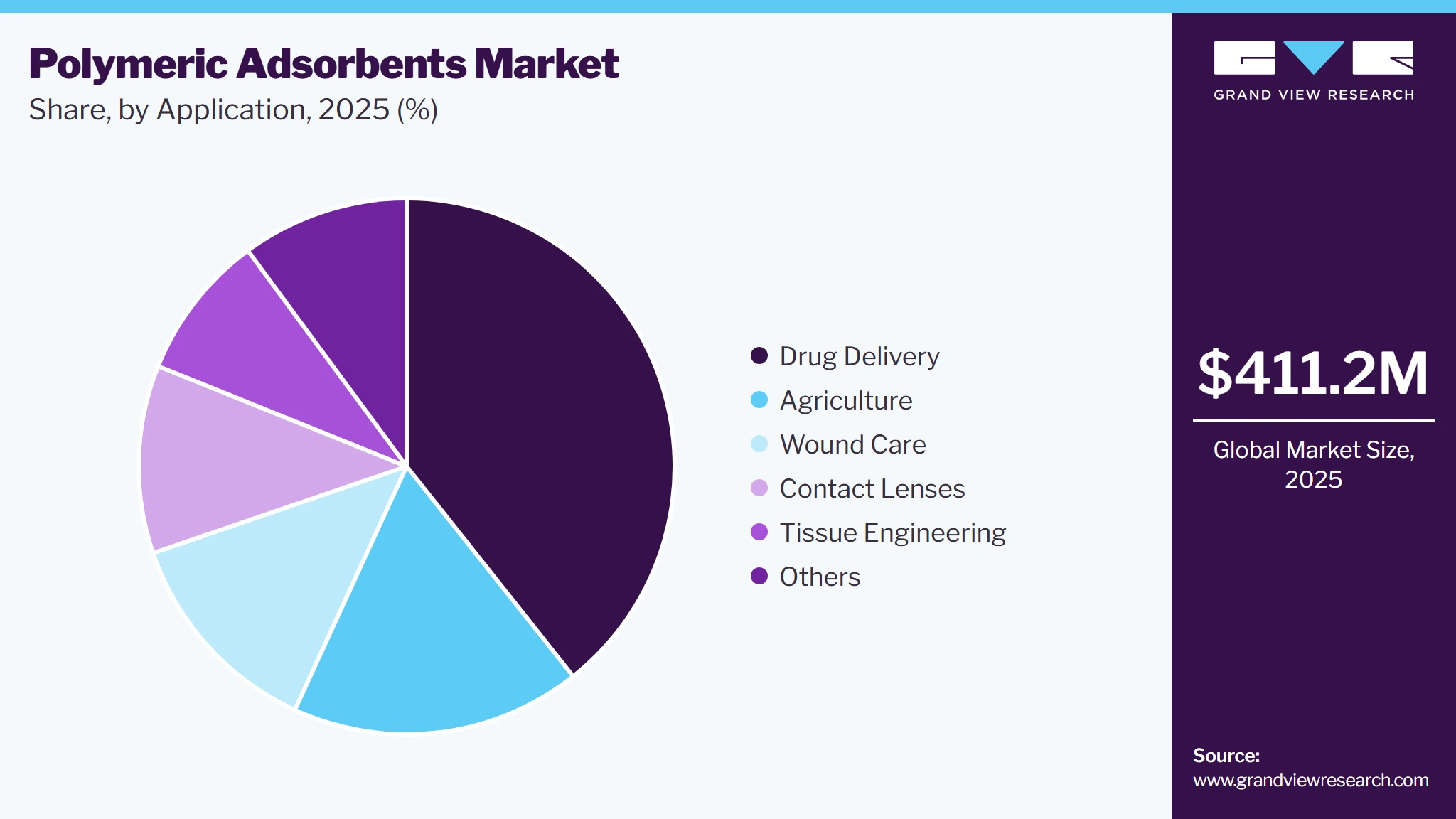
The drug delivery segment led the market, accounting for 39.3% of revenue in 2025, and is projected to grow at a 10.8% CAGR from 2026 to 2033. Drug delivery is creating demand for polymeric materials that can protect active ingredients and provide controlled or targeted release. Polyacrylic acid-based systems can swell in response to environmental conditions and interact with drug molecules, supporting controlled-release formulations. Natural polymers are also attracting pharmaceutical interest because of their biocompatibility and biodegradability. Recent research is examining polymeric nanoparticles, hydrogels, and scaffold-based systems for site-specific delivery. These developments are broadening the role of polymeric materials from conventional adsorption toward multifunctional drug-loading and release platforms.
 To learn more about this report, Download Free Sample Report
 The agriculture segment is expected to grow at the fastest CAGR of 11.4% over the forecast period. Agriculture is emerging as an application area, with polymeric adsorbents increasingly used to improve water and agrochemical management. Superabsorbent polymer structures can retain water in soil and release it gradually, helping maintain moisture availability around plant roots. Research is also advancing polymer-based carriers for controlled delivery of pesticides and fertilizers. Natural and polysaccharide-based systems are receiving increased attention for their potential environmental advantages. These developments support demand for adsorbent materials that combine water retention, controlled release, and reduced input losses in water-stressed agricultural systems.
Regional Insights & Trends
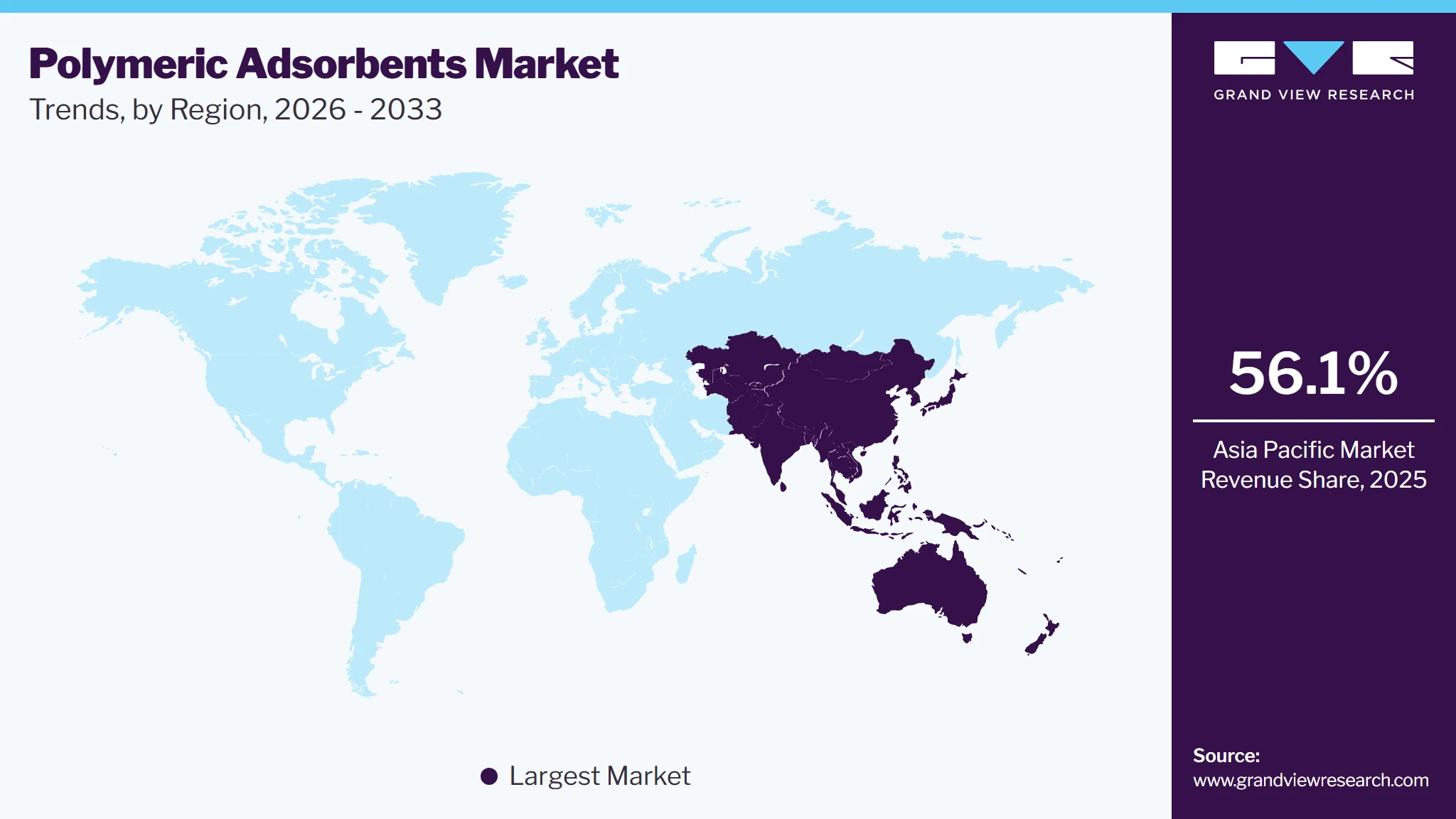
The Asia Pacific polymeric adsorbents market held the largest revenue share of 56.1% in 2025. The region is expected to grow at a CAGR of 10.7% over the forecast period. Asia Pacific presents a broad base of demand as water security, industrialization, and wastewater treatment requirements converge. The Asian Development Bank’s 2025 assessment identifies environmental degradation, climate-related water risks, and insufficient investment in water infrastructure as major regional challenges. It estimates that Asia and the Pacific require substantial additional WASH investment through 2040. These conditions support advanced purification technologies that target dissolved organic contaminants. Polymeric adsorbents can benefit from expanding municipal, industrial, pharmaceutical, and water-reuse applications across the region.
 To learn more about this report, Download Free Sample Report
 China Polymeric Adsorbents Market Trends
The polymeric adsorbents market in China has a large chemical, pharmaceutical, electronics, and manufacturing base that creates diverse applications for polymeric adsorbents. Industrial wastewater treatment remains an important use case as manufacturers improve contaminant removal and water reuse. Pharmaceutical and fine-chemical production also requires selective resins for purification, decolorization, and recovery of valuable compounds. Increasing emphasis on resource efficiency supports higher-value treatment technologies rather than conventional wastewater handling alone. Demand is therefore shifting toward engineered adsorbents offering greater selectivity, regeneration capability, and compatibility with continuous industrial processes.
North America Polymeric Adsorbents Market Trends
The polymeric adsorbents market in North America is supported by the increasing need for advanced contaminant removal and water reuse. Municipal and industrial treatment operators are evaluating selective adsorption media for PFAS, pharmaceuticals, and other persistent organic compounds. The U.S. EPA continues to assess ion-exchange resins and other treatment technologies for PFAS removal, supporting the technical adoption of polymeric media. Rising investment in water infrastructure and tighter contaminant-control requirements are therefore creating demand for higher-capacity, regenerable polymeric adsorbents across drinking water and industrial treatment applications.
The U.S. polymeric adsorbents market is being driven particularly by PFAS remediation and the expansion of advanced drinking-water treatment. In May 2026, the EPA announced nearly USD 1 billion in new funding for states to address PFAS in drinking water and highlighted innovative treatment and destruction technologies. Polymeric ion-exchange resins are among the established technologies evaluated for PFAS removal. This funding environment is encouraging utilities to assess selective adsorption systems, while increasing attention to emerging contaminants is supporting demand for application-specific polymeric adsorbents.
Europe Polymeric Adsorbents Market Trends
The polymeric adsorbents market in Europe is driving demand for advanced water-treatment materials by focusing on water resilience, pollution prevention, and resource efficiency. The European Commission’s 2025 Water Resilience Strategy emphasizes improving water management, reducing pollution, and increasing the efficiency and circularity of water use. These priorities favor treatment technologies capable of removing difficult dissolved contaminants from municipal and industrial streams. Polymeric adsorbents can gain applications where conventional treatment is insufficient, particularly in tertiary treatment, water reuse, pharmaceutical processing, and contaminant-specific purification systems.
Latin America Polymeric Adsorbents Market Trends
The polymeric adsorbents market in Latin America offers growth potential as governments and utilities address uneven wastewater treatment coverage, industrial pollution, and water resource constraints. Increasing investment in water and sanitation infrastructure is creating opportunities for higher-performance purification technologies beyond conventional treatment. Polymeric adsorbents can be used for targeted applications involving dyes, pharmaceuticals, pesticides, and other dissolved organic contaminants in industrial and municipal streams. Their selective adsorption and regeneration potential are relevant where operators seek compact treatment systems with controlled contaminant removal and improved water quality for discharge or subsequent reuse.
Middle East and Africa Polymeric Adsorbents Market Trends
The polymeric adsorbents market in MEA is growing significantly due to water scarcity. Limited freshwater availability is increasing the importance of wastewater reclamation, industrial water recycling, and advanced purification. Adsorbent technologies can complement membranes and conventional treatment by targeting residual organic compounds and specific contaminants. The opportunity is particularly relevant in water-intensive industries and arid economies where treated water has higher reuse value. Demand is also supported by growing interest in advanced separation technologies for resource-efficient chemical and industrial processes.
Key Polymeric Adsorbents Company Insights
Some of the key players operating in the market include DuPont de Nemours, Inc., and Mitsubishi Chemical Corporation
-
DuPont de Nemours, Inc. maintains a strong market position through its AmberLite, AmberChrom, and related ion-exchange and adsorbent resin technologies. Its portfolio supports water treatment, pharmaceutical purification, food processing, and industrial separations. The company leverages broad product coverage, application expertise, and global commercial reach to serve diverse separation requirements.
-
Mitsubishi Chemical Corporation is a well-established supplier of polymeric adsorbents through its DIAION and SEPABEADS portfolios. The company offers more than 200 separation media compositions, including aromatic- and methacrylate-based synthetic adsorbents. These materials support pharmaceutical purification, food processing, fermentation, and chemical separation. Smaller-particle grades are also designed for high-purity chromatographic applications, strengthening the company’s position in specialized separation and purification processes.
Sunresin New Materials Co., Ltd. and Thermax Limited are some of the emerging participants.
-
Sunresin New Materials Co., Ltd. has a strong position in specialized adsorption and separation materials, offering more than 100 products across food, pharmaceuticals, environmental treatment, water treatment, and hydrometallurgy. Its Seplite portfolio includes macroporous adsorbents, ion-exchange resins, and customized separation materials. The company operates production bases in China and Belgium and serves customers across more than 100 countries.
-
Thermax Limited is a significant player in the market through its Tulsion ion-exchange resin portfolio. The company offers cationic, anionic, mixed-bed, adsorbent, and chelating resins for water treatment, pharmaceuticals, metal recovery, and chemical processing. Its resin manufacturing facilities in India and presence across international markets support customized separation solutions and broader adoption in industrial purification applications.
Key Polymeric Adsorbents Companies
The following key companies have been profiled for this study on the polymeric adsorbents market.
-
DuPont de Nemours, Inc.
-
Ecolab Inc.
-
Mitsubishi Chemical Corporation
-
LANXESS AG
-
Sunresin New Materials Co., Ltd.
-
Thermax Limited
-
Ion Exchange (India) Limited
-
Resindion S.r.l.
-
Thermo Fisher Scientific Inc.
-
Dow Inc.
Competitive Benchmarking
Operating Strategies
Competitive Edge
Weakness
Mature Players: DuPont de Nemours, Inc.; Ecolab Inc.; Mitsubishi Chemical Corporation; LANXESS AG; Thermo Fisher Scientific Inc.; Dow Inc.
- Maintain broad portfolios covering polymeric adsorbents, ion-exchange resins, chromatographic media, specialty separation materials, and functionalized resins for water treatment, pharmaceuticals, food processing, biotechnology, chemical processing, and resource recovery.
- Invest in pore-structure control, surface functionality, selectivity, mechanical stability, regeneration performance, and high-throughput separation.
- Expand through global manufacturing, application laboratories, technical service, customer co-development, and industry-specific purification solutions.
- Established polymer and separation expertise enables consistent adsorption capacity, selectivity, purity, and mechanical performance across demanding applications.
- Extensive portfolios allow suppliers to address contaminant removal, decolorization, pharmaceutical purification, chromatography, ion exchange, and resource recovery within a single technology platform.
- Global manufacturing and technical networks support qualification, process optimization, and long-term supply for multinational customers.
- Large global manufacturing and technical infrastructures can increase operating costs and make product development more complex than for focused resin specialists.
- Broad portfolios create exposure to competition from activated carbon, membranes, inorganic adsorbents, and lower-cost regional resin manufacturers.
- High-purity pharmaceutical and bioprocessing grades require stringent quality control, regulatory documentation, and batch consistency.
Emerging Players: Sunresin New Materials Co., Ltd.; Thermax Limited; Ion Exchange (India) Limited; Resindion S.r.l.
- Focus on specialized adsorbent and ion-exchange resins for pharmaceuticals, food processing, water treatment, chemical purification, environmental applications, and resource recovery.
- Develop application-specific grades with controlled porosity, particle size, selectivity, and regeneration characteristics.
- Expand through regional manufacturing, customized resin development, technical service, and partnerships with industrial and pharmaceutical customers.
- Specialized resin expertise enables faster customization for specific separation, purification, and adsorption requirements.
- Provides specialized chromatographic, ion-exchange, and adsorbent media for pharmaceutical and biotechnology applications.
- Smaller corporate scale and narrower portfolios can limit the ability to match the global manufacturing, distribution, and R&D infrastructure of the largest multinational suppliers.
- Some participants have stronger regional concentration, increasing exposure to local market cycles and customer qualification requirements.
- Specialized portfolios can create greater dependence on selected applications such as water treatment, pharmaceuticals, or chromatography.
Recent Developments
-
In May 2026, LANXESS reported industrial-scale validation of Lewatit MDS TP 108 at Chemours’ Dordrecht facility in the Netherlands. The three-stage treatment system demonstrated removal of more than 99% of fluorinated organic compounds from wastewater during regular operation. The deployment strengthens the commercial case for selective polymeric resin technologies in industrial PFAS treatment and regulatory compliance.
-
In June 2025, Ecolab Life Sciences launched Purolite AP+50, a 50-micron affinity chromatography resin designed for monoclonal antibody capture. The product combines high dynamic binding capacity with improved bead durability and lot-to-lot consistency. The launch expands Ecolab’s bioprocessing resin portfolio and supports process intensification, manufacturing efficiency, and cost optimization in large-scale biopharmaceutical purification.
Polymeric Adsorbents Market Report Scope
Report Attribute
Details
Market size in 2025
USD 411.2 million
Estimated market size in 2026
USD 452.4 million
Projected market size by 2033
USD 896.7 million
Growth rate
CAGR of 10.3% from 2026 to 2033
Historical data
2021 - 2025
Forecast period
2026 - 2033
Quantitative units
Revenue in USD million, volume in kilotons, and CAGR from 2026 to 2033
Report coverage
Revenue & volume forecast, competitive landscape, growth factors, and trends
Segments covered
Polymer type, application, region
Regional scope
North America; Europe; Asia Pacific; Latin America; MEA
Country scope
U.S.; Canada; Mexico; Europe; Germany; UK; France; Italy; Spain; China; India; Japan; South Korea; Australia; Brazil; Argentina; Saudi Arabia; UAE; South Africa
Key companies profiled
DuPont de Nemours, Inc.; Ecolab Inc.; Mitsubishi Chemical Corporation; LANXESS AG; Sunresin New Materials Co., Ltd.; Thermax Limited; Ion Exchange (India) Limited; Resindion S.r.l.; Thermo Fisher Scientific Inc.; Dow Inc.
Customization scope
Free report customization (equivalent to up to 8 analyst working days) with purchase. Addition or alteration to country, regional & segment scope
Pricing and purchase options
Avail customized purchase options to meet your exact research needs. Explore purchase options
Global Polymeric Adsorbents Market Report Segmentation
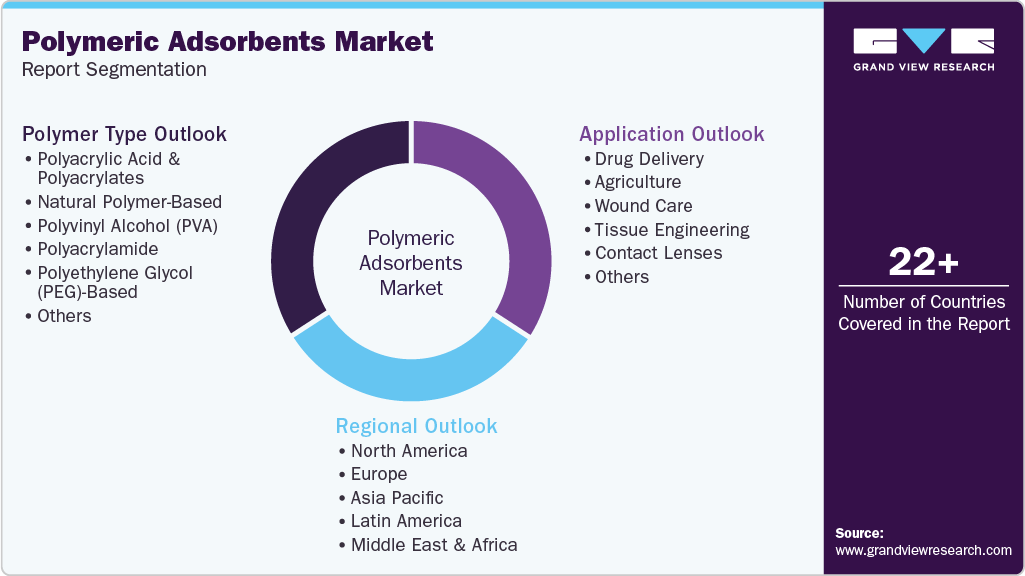
This report forecasts revenue growth at the global, regional, and country levels and provides an analysis of the latest industry trends across sub-segments from 2021 to 2033. For this study, Grand View Research has segmented the global polymeric adsorbents market report based on polymer type, application, and region:
 To learn more about this report, Download Free Sample Report
 -
Polymer Type Outlook (Volume, Kilotons; Revenue, USD Million, 2021 - 2033)
-
Polyacrylic Acid & Polyacrylates
-
Natural Polymer-Based
-
Polyvinyl Alcohol (PVA)
-
Polyacrylamide
-
Polyethylene Glycol (PEG)-Based
-
Others
-
-
Application Outlook (Volume, Kilotons; Revenue, USD Million, 2021 - 2033)
-
Drug Delivery
-
Agriculture
-
Wound Care
-
Tissue Engineering
-
Contact Lenses
-
Others
-
-
Regional Outlook (Volume, Kilotons; Revenue, USD Million, 2021 - 2033)
-
North America
-
U.S.
-
Canada
-
Mexico
-
-
Europe
-
Germany
-
UK
-
France
-
Italy
-
Spain
-
-
Asia Pacific
-
China
-
India
-
Japan
-
South Korea
-
Australia
-
-
Latin America
-
Brazil
-
Argentina
-
-
Middle East & Africa
-
Saudi Arabia
-
UAE
-
South Africa
-
-
Research Methodology
The polymeric adsorbents market figures in this report are based on a proven research process that combines executive interviews with secondary research from proprietary databases, company filings, and recognized regulatory and institutional sources. Market size is built through value-chain sizing - reconciling supply-side and demand-side estimates - and triangulated with bottom-up and top-down approaches. Every estimate passes multiple levels of expert validation before publication, with each polymeric adsorbents segment quantified using the revenue-capture definitions in the table below.
Segment Definition
Segment - Polymer Type
Revenue capture definition
Polyacrylic Acid & Polyacrylates
Revenue is captured through polyacrylic acid and polyacrylate-based polymeric adsorbents designed with functional groups and porous structures that enable adsorption, ion interaction, swelling, and controlled molecular binding. Applications include drug delivery, wound care, agriculture, and tissue engineering, where these polymers support controlled release, moisture management, selective adsorption, and interaction with active compounds or biological materials.
Natural Polymer-Based
Revenue is generated through polymeric adsorbents derived from natural polymers such as chitosan, cellulose, starch, alginate, and related biopolymers. These materials are used where biodegradability, biocompatibility, and functionalization are important. Applications include drug delivery, wound care, tissue engineering, agriculture, and environmental systems requiring adsorption, controlled release, moisture retention, or interaction with biological and chemical compounds.
Polyvinyl Alcohol (PVA)
Revenue is captured through PVA-based polymeric adsorbents used for their water solubility, film-forming capability, chemical stability, and ability to form hydrogels and porous structures. Demand comes from wound-care materials, drug-delivery systems, contact lenses, tissue-engineering scaffolds, and agricultural formulations requiring controlled swelling, moisture retention, adsorption, or gradual release of active ingredients.
Polyacrylamide
Revenue is generated through polyacrylamide-based polymeric adsorbents and functionalized polymer networks used for adsorption, water retention, flocculation, and controlled interaction with dissolved compounds. Applications include agriculture, drug delivery, and water-sensitive biomedical systems. Demand is supported by formulations requiring high water absorption, controlled swelling, contaminant capture, or modification of release characteristics through tailored polymer structures.
Polyethylene Glycol (PEG)-Based
Revenue is captured through PEG-based polymeric adsorbents and functionalized PEG networks used where hydrophilicity, biocompatibility, controlled molecular interaction, and tunable swelling are required. Key applications include drug delivery, tissue engineering, wound care, and contact lenses. These materials support controlled drug loading and release, hydration, surface modification, and development of biocompatible polymer matrices with predictable performance.
Others
Revenue comes from other synthetic and bio-based polymeric adsorbents, including functionalized polymer networks, composite polymers, and specialty adsorption materials developed for targeted applications. These materials are used where conventional polymer chemistries do not provide the required adsorption selectivity, mechanical strength, swelling behavior, biocompatibility, or regeneration characteristics across pharmaceutical, agricultural, biomedical, and specialty separation applications.
Segment - Application
Revenue capture definition
Drug Delivery
Revenue is generated through polymeric adsorbents used to load, retain, protect, and control the release of active pharmaceutical ingredients. Porous and functionalized polymers can interact with drug molecules through physical or chemical mechanisms and enable sustained or stimulus-responsive release. Applications include oral, topical, implantable, and localized delivery systems requiring controlled drug loading, improved stability, and targeted release characteristics.
Agriculture
Revenue is captured through polymeric adsorbents used in agricultural systems for water retention, nutrient management, agrochemical adsorption, and controlled release. Superabsorbent and functionalized polymer structures can retain water within soil and gradually release moisture or agricultural inputs. Demand comes from water-efficient farming, controlled-release fertilizers, pesticide delivery, soil-conditioning products, and cultivation systems operating under moisture-limited conditions.
Wound Care
Revenue is generated through polymeric adsorbents incorporated into wound dressings, hydrogels, and advanced wound-management materials. These polymers can absorb wound exudate while maintaining a suitable moist environment and can support controlled delivery of antimicrobial or therapeutic agents. Demand is linked to advanced wound-care products requiring high fluid-handling capacity, biocompatibility, structural integrity, and controlled interaction with the wound environment.
Tissue Engineering
Revenue is captured through polymeric adsorbents used in hydrogels, porous scaffolds, and biomaterial matrices designed to support cell attachment, proliferation, and tissue regeneration. Functionalized polymers can provide controlled water uptake and interaction with biological molecules while maintaining a suitable three-dimensional environment. Applications include regenerative medicine and engineered tissue systems requiring biocompatibility, tunable porosity, mechanical stability, and controlled biomolecule delivery.
Contact Lenses
Revenue is generated through polymeric adsorbent materials used in contact-lens systems requiring controlled hydration, oxygen permeability, surface compatibility, and interaction with tear-film components. Hydrophilic polymer networks can retain water and support lens comfort while specialized surface treatments can reduce unwanted protein and lipid deposition. Demand is linked to development of advanced soft lenses and materials designed for extended wear and improved ocular compatibility.
Others
Revenue comes from polymeric adsorbents used in additional applications such as water purification, chromatography, environmental remediation, food processing, chemical separation, and biotechnology. These applications require selective adsorption, contaminant removal, molecular separation, purification, or recovery of valuable compounds. Demand varies according to adsorption capacity, pore structure, surface functionality, regeneration potential, chemical stability, and compatibility with specific process conditions.
Estimation Model
Layer No.
Layer Name
Key Question
Description
1
Top-Down Polymeric Adsorbents Demand Assessment Layer
What defines overall market demand?
Establishes overall global demand for polymeric adsorbents across Polyacrylic Acid & Polyacrylates, Natural Polymer-Based, Polyvinyl Alcohol (PVA), Polyacrylamide, Polyethylene Glycol (PEG)-Based, and other polymer types used in drug delivery, agriculture, wound care, tissue engineering, contact lenses, and other specialized applications.
2
Application Demand Validation Layer
Where is demand concentrated?
Maps demand across drug delivery, agriculture, wound care, tissue engineering, contact lenses, and other applications based on adsorption capacity, controlled release, water retention, biocompatibility, swelling behavior, molecular binding, moisture management, and selective interaction with active ingredients or contaminants.
3
Consumption-to-Revenue Conversion Layer
How is demand monetized?
Converts polymeric adsorbent consumption into market revenue using polymer type, adsorption performance, pore structure, functionalization, purity, particle characteristics, application requirements, production scale, manufacturing costs, grade specifications, supplier positioning, and prevailing pricing structures. The layer also considers premiums associated with specialty pharmaceutical, biomedical, agricultural, and high-performance adsorbent grades offering enhanced selectivity, regeneration, biocompatibility, or controlled-release performance.
4
Regional Demand Verification Layer
Where is demand validated?
Validates market demand across North America, the U.S., Asia Pacific, India, Europe, Latin America, and the Middle East & Africa using pharmaceutical and biotechnology activity, agricultural applications, healthcare-materials demand, water-treatment requirements, polymer manufacturing capabilities, import and supply patterns, regulatory requirements, research and development activity, and adoption of advanced adsorption and controlled-release technologies.
Delivered Customizations
This report has been delivered with the following In-depth customizations
Client Request
Customization Delivered
Value Adds
Regional segmentation
The market is segmented across North America, the U.S., Asia Pacific, India, Europe, Latin America, and the Middle East & Africa, with regional analysis covering water treatment, pharmaceuticals, chemical processing, food and beverage, environmental remediation, and other relevant demand centers.
Identifies regional demand concentration, application-specific growth drivers, infrastructure requirements, regulatory influence, and market expansion opportunities. Asia Pacific is particularly important because of industrialization, water-treatment investment, and growing resin consumption.
Competitive benchmarking
Leading companies, including DuPont, Ecolab, Mitsubishi Chemical, LANXESS, Thermo Fisher Scientific, Dow, Sunresin, Thermax, Ion Exchange, and Resindion, are assessed based on revenue scale, geographical presence, product portfolio, application coverage, technical capabilities, manufacturing footprint, and strategic initiatives. Mature and emerging participants are differentiated to clarify competitive positioning.
Establishes a structured view of competitive capabilities and market positioning. The assessment highlights portfolio breadth, specialization, global reach, technical differentiation, and application exposure rather than relying only on company size.
Opportunity assessment
Opportunities are assessed across advanced water treatment, PFAS removal, pharmaceutical and biopharmaceutical purification, food decolorization, chemical separation, resource recovery, and high-purity water for semiconductor manufacturing. Emerging demand is evaluated alongside technology requirements such as selective adsorption, regeneration, controlled porosity, higher capacity, and application-specific functionalization.
Converts market trends into commercially relevant opportunity areas. It highlights applications where regulatory pressure, industrial expansion, water scarcity, and higher purification standards can support premium resin adoption. Semiconductor ultrapure-water applications and advanced contaminant removal represent important specialized demand areas.
Frequently Asked Questions About This Report
The polyacrylic acid & polyacrylates in the polymeric adsorbents industry led the plastics in the polymer type market in 2025 with a 35.4% share. Demand is driven by the tunable functional groups, high water affinity, and selective adsorption capabilities of polyacrylic acid and polyacrylates, supporting controlled drug delivery, wound care, agriculture, tissue engineering, and specialty purification applications.
The key players in the polymeric adsorbents market are DuPont de Nemours, Inc., Ecolab Inc., Mitsubishi Chemical Corporation, LANXESS AG, Sunresin New Materials Co., Ltd., Thermax Limited, Ion Exchange (India) Limited, Resindion S.r.l., Thermo Fisher Scientific Inc., and Dow Inc.
The polymeric adsorbents market was estimated at around USD 411.2 million in the year 2025 and is expected to reach around USD 452.4 million in 2026.
The polymeric adsorbents market is expected to grow at a compound annual growth rate of 10.3% from 2026 to 2033 to reach around 896.7 million by 2033.
The polymeric adsorbents market is driven by demand for high-performance porous materials offering selective adsorption, purification, and separation. Growing applications in pharmaceuticals, water treatment, food processing, chemicals, healthcare, agriculture, and biotechnology are expanding market opportunities.
The Asia Pacific polymeric adsorbents market accounted for the largest share of 56.1% market size in 2025.
India was the leading player in the polymeric adsorbents market and is expected to grow at a compound annual growth rate of 13.1%.
Based on application, the drug delivery segment segment accounted for the largest share of 39.3% market size in 2025. Drug delivery polymeric adsorbents market growth is driven by rising demand for controlled drug release, targeted delivery, improved drug stability, and prolonged therapeutic action. Advances in functionalized polymers and biocompatible adsorption systems further support pharmaceutical adoption.
The natural polymer-based segment, based on polymer type, is expected to grow at a CAGR of 11.6% for the forecast period.
About the Author(s)
Plastics, Polymers & Resins Research Team
Bulk Chemicals · Plastics, Polymers & ResinsThis report was authored by the plastics, polymers & resins research team at Grand View Research - comprising two research analysts, one senior research analyst, and one industry expert - with specialized expertise in the plastics, polymers & resins segment of the bulk chemicals industry. All findings are based on proprietary bulk chemicals databases, executive interviews, and regulatory analysis, subject to internal peer review prior to publication.
Last Updated:
Speak to Analyst

Customize this report to your needs - add regions, segments, or data points, with 20% free customization.
Or view our licence options:


ISO 9001:2015 & 27001:2022 Certified
We are GDPR and CCPA compliant! Your transaction & personal information is safe and secure. For more details, please read our privacy policy.


