
- Home
- »
- Distribution & Utilities
- »
-
Portable Air Purifier Market Size & Share Report, 2026-2033GVR Report cover

Portable Air Purifier Market (2026 - 2033)
Size, Share & Trends Analysis Report By Technology (High Efficiency Particulate Air (HEPA), Activated Carbon, Ionic Filters), By Application, By Coverage Range, By Sales Channel, By Region, And Segment Forecasts
Market Size, 2025
$12.8BMarket Estimate, 2026
$13.9BMarket Forecast, 2033
$22.1BCAGR, 2026–2033
6.8%Portable Air Purifier Market Summary
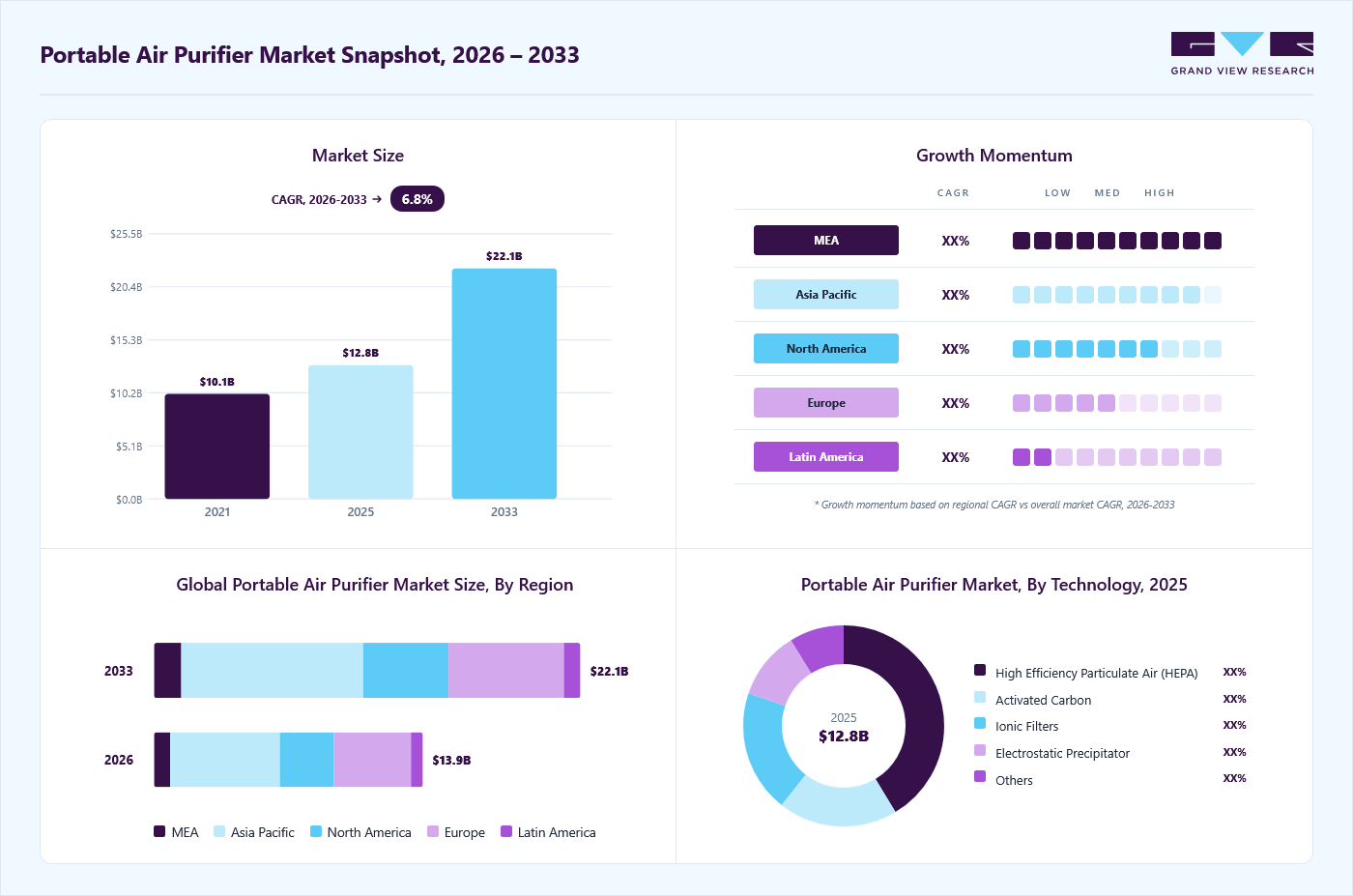
The global portable air purifier market size was valued at USD 12.8 billion in 2025 and is projected to grow from USD 13.9 billion in 2026 to USD 22.1 billion by 2033, at a CAGR of 6.8% from 2026 to 2033. The Asia Pacific held the largest share of 39.7% of the global market in 2025. The growth is primarily driven by rising awareness of indoor air quality and the increasing health risks associated with air pollution, including respiratory diseases, allergies, and airborne infections.
 Source: Grand View Research, IR Documents, Primary Interviews, Paid DatabasesTo learn more about this report,
 Download Free Sample Report
 Key Market Trends & Insights
- By technology: HEPA technology segment held the largest market share of 41.4% in 2025.
- By application: Commercial segment held the largest market share in 2025.
- By coverage range: 200-250 sq. ft. coverage range segment held the largest market share of 41.1% in 2025.
- By sales channel: Offline segment held the largest market share of 56.7% in 2025.
Regional Highlights
- Largest regional market: Asia Pacific (39.7% revenue share, 2025)
- By country: China held the largest share in 2025
Market Size & Forecast
- Market size in 2025: USD 12.8 Billion
- Estimated market size in 2026: USD 13.9 Billion
- Projected market size by 2033: USD 22.1 Billion
- CAGR (2026-2033): 6.8%
Three ways to get this report
Buy it, customize it, or ask a question.Ask an Analyst
Analyst response in 1 business day
- AccessReport author, directly
- Reply timeWithin 1 working day
- No sales callDirect answer only
- FormatEmail reply
- CostFree, no cost
Get the Full Report
What the study covers
- FormatsPDF · Excel · Dashboard
- Timeline2026–2033 annual, 2025 base
- Coverage20+ countries, 5 regions
- Companies10+ key players profiled
Customize the Report
20% free customization
- IncludeCountries, segments, points
- TailorTo your product definition
- ExtendDeeper competitor detail
- OrA fully bespoke study
- Turnaround5–10 working days
Additionally, advancements in filtration technologies, such as High-Efficiency Particulate Air (HEPA) filters and activated carbon, and the integration of smart features, such as real-time air quality monitoring and Internet of Things (IoT)-enabled controls, are enhancing product appeal and functionality.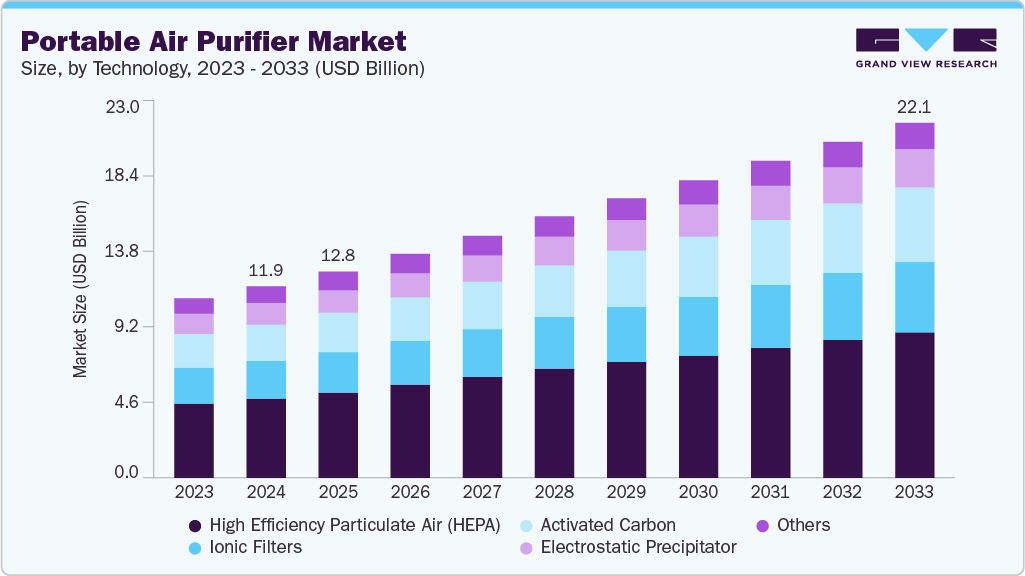 To learn more about this report, Download Free Sample Report
 A prominent trend is the integration of smart features, including Internet of Things (IoT)-enabled controls, real-time air quality monitoring, and compatibility with voice assistants, enhancing user convenience and product functionality. There is also a growing shift toward compact, aesthetically designed, and multi-functional devices that cater to modern living spaces. Sustainability is another significant trend, with manufacturers focusing on energy-efficient designs, recyclable filters, and reduced noise levels.
Market Concentration & Characteristics
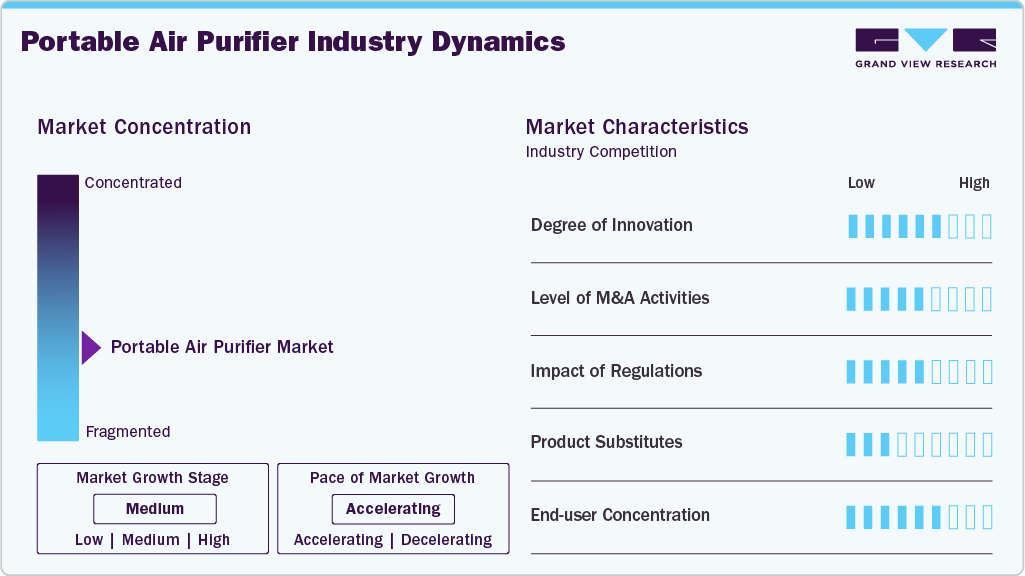
The portable air purifiers market is fragmented, with the presence of several established manufacturers of portable air purifiers alongside numerous regional and local players. While established players leverage strong brand recognition, distribution networks, and technological capabilities to maintain a competitive advantage, the relatively low barriers to entry, particularly in assembly and basic filtration technologies, enable smaller players to participate actively in the market. This results in price competition across mid- and low-tier segments, while premium segments remain more consolidated, driven by product differentiation, certifications, and smart feature integration.
From a technological standpoint, the market is evolving rapidly, driven by continuous innovation in filtration efficiency, product design, and digital integration. High-Efficiency Particulate Air (HEPA) filters and activated carbon remain the industry standard; however, manufacturers are increasingly incorporating multi-stage filtration systems, ultraviolet (UV-C) sterilization, and ionization technologies to enhance performance. The integration of smart capabilities, such as real-time air quality monitoring, automatic mode adjustments, and connectivity through Internet of Things (IoT)-enabled platforms, is further transforming product offerings. Besides, advancements in energy efficiency, noise reduction, and compact form factors are improving user experience and expanding application scope.
 To learn more about this report, Download Free Sample Report
 The threat of alternatives in this market is moderate and varies by use case. Built-in heating, ventilation, and air conditioning (HVAC) systems with advanced filtration, air conditioning units with purification features, and natural ventilation methods can act as substitutes, particularly in commercial or developed residential settings. However, portable air purifiers retain a distinct advantage due to their affordability, ease of installation, mobility, and targeted air cleaning capabilities, particularly for residential users, small offices, and rental or temporary spaces where centralized air filtration systems are either unavailable or impractical.
Regulatory frameworks play an increasingly important role in shaping market dynamics, particularly in regions with high pollution levels. Governments and regulatory bodies are introducing standards for air quality, energy efficiency, and product safety, encouraging manufacturers to comply with certifications such as HEPA standards and eco-labeling requirements. In certain countries, subsidies and incentives for energy-efficient appliances further support market growth. At the same time, stricter regulations on ozone emissions and electronic waste disposal are influencing product design and material selection.
Drivers, Opportunities & Restraints
Several key factors are driving the growth of the portable air purifier market. Worsening outdoor air quality from vehicle emissions, industrial activity, and seasonal wildfires has made consumers more aware of both outdoor and indoor pollution. The increasing prevalence of respiratory conditions such as asthma, allergies, and chronic obstructive pulmonary disease further encourages households to invest in cleaner indoor environments. Public health campaigns and government advisories highlighting the risks of poor indoor air quality have also played a significant role. Moreover, the shift toward working from home, accelerated by recent global health events, has led more people to spend extended hours indoors, increasing attention to home air quality.
The portable air purifier industry presents several promising opportunities for growth in the coming years. Rising urbanization and increasing construction of residential and commercial buildings create a natural demand for indoor air quality solutions. Developing economies, particularly in Asia and Africa, offer significant untapped potential as disposable incomes rise and awareness of air pollution's health effects grows. Furthermore, the integration of smart technologies, such as Internet of Things (IoT)-enabled devices that connect to mobile applications, allows manufacturers to offer premium products with real-time monitoring and automated controls. Furthermore, there is also a growing scope for partnerships with healthcare providers, schools, and corporate offices to install air purifiers in shared indoor spaces.
Despite the positive growth outlook, several restraints limit the market's expansion. The high initial cost of advanced air purifiers, especially those with HEPA and activated carbon filters, remains a barrier for price-sensitive consumers. In addition, recurring expenses related to regular filter replacements increase the total cost of ownership, which discourages some buyers. Another restraint is the presence of product substitutes, such as HVAC systems with built-in filtration and simple ventilation methods, which may be perceived as more convenient or cost-effective. Consumer skepticism regarding the actual health benefits of air purifiers, particularly in regions with mild pollution levels, also slows adoption in some markets.
Technology Insights
HEPA technology held the largest market share in 2025, accounting for 41.4% of the global revenue. These filters are highly effective at capturing fine particles, including dust, pollen, mold spores, and pet dander. HEPA purifiers are preferred in both residential and commercial settings because they meet strict efficiency standards, typically removing 99.97% of particles as small as 0.3 microns. Their strong reputation for reliability and performance makes them a popular choice among consumers. As awareness of indoor air quality grows, the HEPA segment is expected to maintain a dominant position throughout the forecast period from 2021 to 2033.
The activated carbon segment is estimated to be the fastest-growing segment over the forecast period. Activated carbon filters remove gases, odors, and chemical pollutants rather than solid particles. These filters contain porous carbon material that traps volatile organic compounds (VOCs), smoke, cooking smells, and other airborne chemicals. They are often combined with HEPA filters in portable air purifiers to provide comprehensive air cleaning. The activated carbon segment is especially relevant for households located in urban areas or near industrial zones, where chemical pollution is a concern. While not as dominant as HEPA, this segment plays an essential supporting role in the overall market.
Application Insights
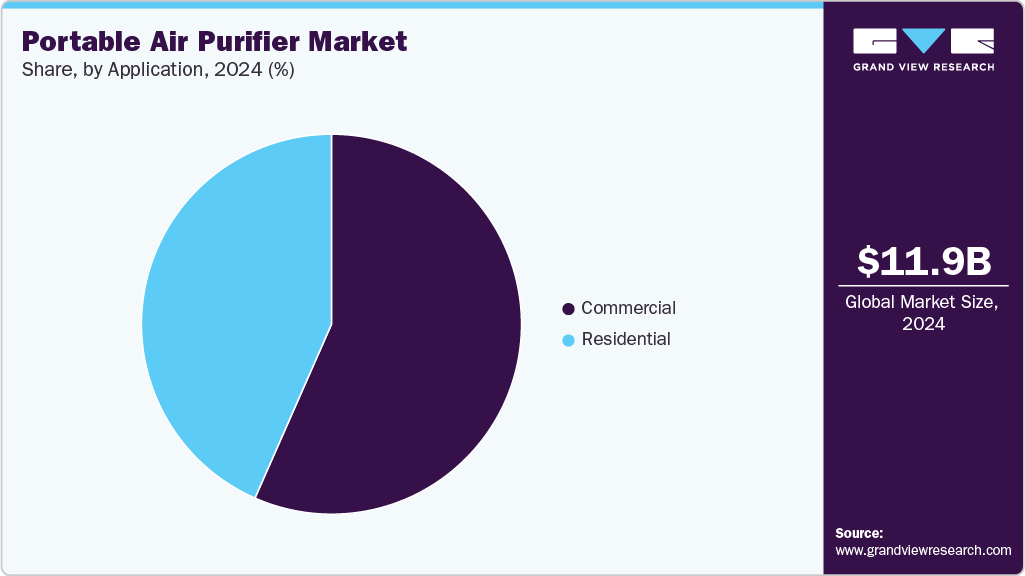
The commercial segment was the dominant application segment in 2025, encompassing offices, educational institutions, healthcare facilities, hospitality establishments, and other shared or public environments. These settings require high-capacity purification solutions capable of serving larger spaces and accommodating higher occupant density than in residential applications. Moreover, commercial end users place greater emphasis on product durability, wider coverage area, and ease of maintenance. Demand in this segment is supported by stringent workplace safety norms and indoor air quality standards, particularly across healthcare and education sectors.
The residential segment is projected to expand at a CAGR of 5.9% during the forecast period, driven by increasing consumer awareness of indoor air quality and its impact on health and well-being. Rising concerns about allergies, respiratory conditions, and exposure to pollutants such as dust, pet dander, and volatile organic compounds (VOCs) are driving adoption across urban households. The segment is further supported by worsening outdoor air quality in densely populated cities, leading consumers to seek in-home air purification solutions. Product demand is particularly strong for compact, aesthetically designed, and low-noise devices suited for bedrooms and living spaces. Moreover, the integration of smart features, energy-efficient operation, and ease of use are key purchase considerations among residential users, contributing to sustained growth in this segment.
Coverage Range Insights
The 200-250 sq. ft. coverage range segment accounted for the largest market share of 41.1% in 2025. This range represents compact to mid-sized portable air purifiers suitable for standard bedrooms, home offices, small living rooms, and studio apartments. This segment appeals to consumers who need effective air cleaning for a single medium-sized room without requiring a large or high-capacity unit. These purifiers typically offer a balance between coverage area, energy efficiency, and affordability. They are often equipped with HEPA filters and activated carbon layers to address both particulate matter and odors.
The 250-300 sq. ft. coverage range represents mid-sized portable air purifiers suitable for larger bedrooms, living rooms, small offices, and studio apartments. These units offer a balance between coverage capacity and affordability, making them a popular choice for households that need to clean a single primary living area. They are often equipped with higher fan speeds and more advanced filtration technologies, including HEPA and activated carbon combinations. This segment appeals to consumers who want effective air purification for medium-sized spaces without upgrading to larger, more expensive models.
Sales Channel Insights
The offline sales channel held the majority market share in 2025, accounting for 56.7% of the revenue. The sales channel includes purchases made through physical retail locations such as hypermarkets, supermarkets, retail stores, and specialty stores. Offline channels offer the advantage of immediate product availability, personalized assistance from sales staff, and easier after-sales service. Many commercial buyers, including offices and institutions, also prefer offline channels for bulk purchases and negotiated pricing. While online sales are growing quickly, the offline segment continues to contribute a substantial share of total revenue throughout the forecast period from 2021 to 2033.
 To learn more about this report, Download Free Sample Report
 The online sales channel includes purchases made through e-commerce platforms, brand websites, and other internet-based retail outlets. This segment has grown rapidly due to the convenience of home delivery, easy price comparisons, and access to customer reviews. Online channels also allow consumers to explore a wider variety of brands and models compared to physical stores. Discounts, seasonal offers, and subscription options for filter replacements further attract buyers.
Regional Insights
The North America portable air purifier industry is primarily driven by high awareness of indoor air quality and the prevalence of respiratory conditions such as allergies and asthma. Widespread wildfires in regions like the U.S. and Canada have increased concern about smoke and particulate matter. Additionally, stringent building standards and the growing adoption of smart home technologies encourage consumers to invest in advanced, connected air purifiers for residential use.
U.S. Portable Air Purifier Market Trends
The portable air purifier industry in the U.S. is driven by high consumer awareness of indoor air quality, supported by increasing incidences of allergies, asthma, and wildfire-related pollution exposure. Demand is particularly strong in urban and suburban households, as well as in commercial settings such as offices and healthcare facilities. The presence of stringent indoor air quality guidelines and energy efficiency standards further supports adoption. In addition, the market benefits from high purchasing power, widespread adoption of smart home technologies, and a strong preference for premium, feature-rich air purification systems.
Europe Portable Air Purifier Market Trends
The portable air purifier industry in Europe has gained traction from strict environmental and indoor air quality regulations set by the European Union. Growing concerns about allergens, pollen, and dust, particularly in Northern and Central Europe, support residential demand. Additionally, increasing awareness of the health risks associated with fine particulate matter (PM2.5) and volatile organic compounds (VOCs) encourages both households and commercial establishments to adopt air purifiers.
The Germany portable air purifier industry is characterized by strong regulatory frameworks and high consumer sensitivity to environmental and health standards. Demand is driven by strict indoor air quality regulations, particularly in commercial and institutional environments such as offices, schools, and healthcare facilities. The market also reflects a preference for technologically advanced, energy-efficient, and durable products.
The portable air purifier industry in the UK is influenced by growing awareness of indoor air pollution, particularly in urban areas with traffic-related emissions. The increasing emphasis on health and well-being, along with rising concerns about allergens and seasonal fluctuations in air quality, is driving residential demand. Commercial adoption is also supported by workplace safety considerations and improving indoor air quality standards. Additionally, the trend toward energy-efficient and compact appliances aligns well with consumer preferences, supporting steady market growth.
Asia Pacific Portable Air Purifier Market Trends
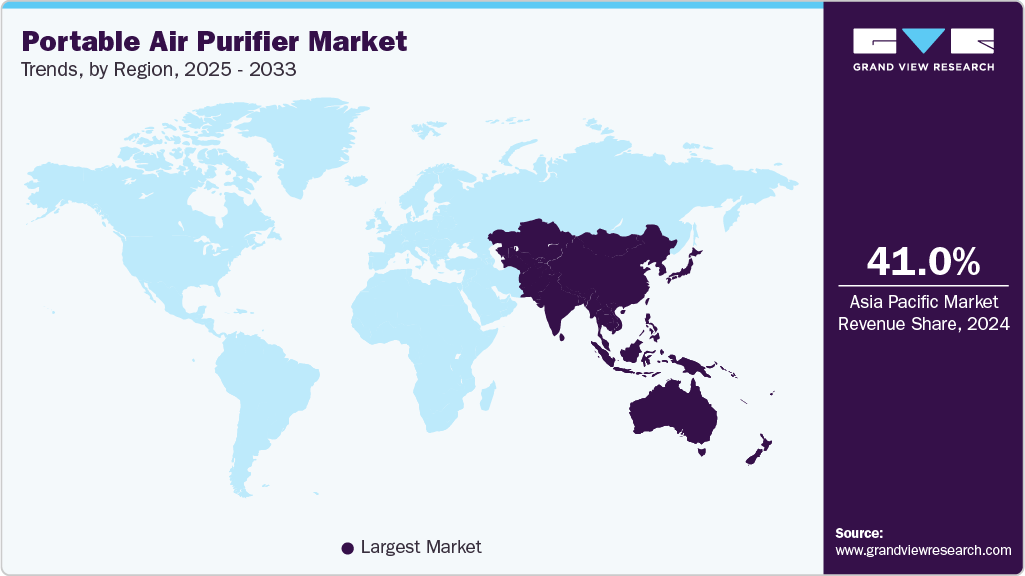
Asia Pacific dominated the global portable air purifier market with a revenue share of 39.7% in 2025. The APAC industry is driven by severe outdoor air pollution in countries such as China and India. Rapid industrialization, high population density, and frequent episodes of smog have made consumers highly conscious of both outdoor and indoor air quality. Rising middle-class incomes, heightened health awareness, and government initiatives to address air pollution further accelerate market growth across the region.
 To learn more about this report, Download Free Sample Report
 The China portable air purifier industry represents one of the fastest-growing markets across the globe, primarily driven by severe air pollution levels in major urban centers. High concentrations of particulate matter (PM2.5) and rising public awareness of associated health risks have significantly boosted demand for portable air purifiers across both residential and commercial segments. Government initiatives to improve air quality and increase disposable incomes further support market expansion. Besides, domestic manufacturers play a strong role, offering a wide range of competitively priced products.
The portable air purifier industry in India is witnessing rapid growth due to worsening air pollution levels in major cities and increasing public awareness of its health impacts. Rising urbanization, expanding middle-class population, and growing penetration of consumer appliances are key demand drivers. Seasonal spikes in air pollution, particularly during winter months, further accelerate short-term adoption. While price sensitivity remains a challenge, demand is gradually shifting toward branded and technologically advanced products, especially in metropolitan regions.
Latin America Portable Air Purifier Market Trends
The portable air purifier industry in Latin America has received impetus from rising urbanization and increasing vehicle emissions in major cities, such as São Paulo and Buenos Aires. Growing awareness of the health effects of poor air quality, coupled with rising disposable incomes in urban households, has led to greater adoption. Additionally, seasonal agricultural burning and dust storms in certain subregions further contribute to the need for indoor air cleaning solutions.
The Brazil portable air purifier industry is at a relatively nascent stage but is gradually gaining traction, driven by increasing awareness of indoor air quality and urban pollution. Demand is primarily concentrated in major cities and among higher-income households. Commercial applications, particularly in healthcare and hospitality, are also contributing to market growth. However, limited consumer awareness and price sensitivity may restrain widespread adoption in the short term.
Middle East & Africa Portable Air Purifier Market Trends
The portable air purifier industry in the Middle East and Africa has witnessed the product demand grow due to frequent dust storms, high levels of airborne sand, and desert climates. Rapid construction activity and urbanization in Gulf Cooperation Council (GCC) countries such as the UAE and Saudi Arabia have increased exposure to indoor dust and pollutants. Growing expatriate populations and rising health awareness among residents further support market growth in this region.
The portable air purifier industry in Saudi Arabia is supported by high levels of dust, sandstorms, and extreme climatic conditions that contribute to poor indoor air quality. Increasing health awareness and rising disposable incomes are driving demand for air purifiers, particularly in residential and commercial spaces such as offices and healthcare facilities. Government initiatives to improve living standards and indoor environments, along with expanding urban infrastructure, further support market development. In addition, demand is influenced by the need for effective filtration of fine dust and allergens prevalent in the region.
Key Portable Air Purifier Company Insights
Some of the key players operating in the market include DAIKIN INDUSTRIES, LTD. and Carrier, among others.
-
Daikin Industries Ltd. is a Japan-based company engaged in Heating, Ventilation, and Air Conditioning (HVAC) solutions, with a strong presence across residential, commercial, and industrial air management systems. The company has a well-established footprint in the air purification segment, leveraging its core expertise in air conditioning and filtration technologies. Daikin’s portable air purifier portfolio is positioned around high-efficiency particulate removal, proprietary streamer technology, and energy-efficient operation, catering to both residential and light commercial applications. The company benefits from extensive research and development capabilities, vertically integrated manufacturing, and a strong global distribution network.
-
Carrier is a provider of intelligent climate and energy solutions, with a strong legacy in HVAC systems and building technologies. The company offers a range of indoor air quality solutions, including portable and integrated air purification systems, primarily targeting residential and commercial applications. Carrier’s offerings emphasize advanced filtration, energy efficiency, and integration with broader HVAC and smart building ecosystems. While its core strength lies in large-scale HVAC infrastructure, the company leverages its brand reputation, technological expertise, and service network to expand within the portable air purifiers segment.
Key Portable Air Purifier Companies:
The following key companies have been profiled for this study on the portable air purifier market.
- Coway
- Arovast Corporation
- Daikin Industries Ltd.
- Sharp Corporation
- Honeywell International Inc.
- Panasonic Corporation
- LG Electronics
- Koninklijke Philips N.V.
- Dyson Ltd.
- Samsung Electronics
- Whirlpool Corporation
- Blueair (Unilever)
- IQAir
- Carrier Global Corporation
- Atovio
Recent Developments
-
In April 2026, SharkNinja launched a new portable air purifier named Shark BreatheClear Max. Unlike conventional models, this device continuously scans the environment 3,600 times per hour, detecting motion and activity to adjust automatically before pollutants become a problem. The portable air purifier performs better than HEPA standards at every fan speed, capturing 99.98% of airborne irritants such as dust, microplastics, and pollen. A key feature is its NeverChange filtration, which lasts up to six years without routine replacement, offering considerable savings for users.
-
In March 2026, Coway announced the launch of the Airmega Mighty2 AP-1512N, the next-generation version of its best-selling Airmega Mighty AP-1512HH air purifier. The new model combines the original with a modernized design, an enhanced touchscreen control panel, and a new beige color option, at a similar price point. Key upgrades include a MegaScan laser sensor that detects particles as small as PM1.0 and provides numerical air quality readings, a redesigned pre-filter that slides out from the side for easier maintenance, and a filter replacement indicator that shows remaining filter life as a percentage. The Airmega Mighty2 can clean up to 1,800 square feet in one hour while consuming only 56 watts of electricity, making it suitable for bedrooms, living areas, and home offices.
Portable Air Purifier Market Report Scope
Report Attribute
Details
Market size in 2025
USD 12.8 billion
Estimated market size in 2026
USD 13.9 billion
Projected market size by 2033
USD 22.1 billion
Growth rate
CAGR of 6.8% from 2026 to 2033
Base year for estimation
2025
Historical data
2021 - 2024
Forecast period
2026 - 2033
Quantitative units
Revenue in USD million and CAGR from 2026 to 2033
Report coverage
Revenue forecast, company market position analysis, competitive landscape, growth factors, and trends
Segments covered
Technology, application, coverage range, sales channel, region
Regional scope
North America; Europe; Asia Pacific; Latin America; Middle East & Africa
Country Scope
U.S.; Canada; Mexico; UK; Germany; France; Italy; Spain; China; Japan; India; South Korea; Australia; Thailand; Brazil; Argentina; Saudi Arabia; South Africa; UAE
Key companies profiled
Coway; Arovast Corporation; Daikin Industries Ltd.; Sharp Corporation; Honeywell International Inc.; Panasonic Corporation; LG Electronics; Koninklijke Philips N.V.; Dyson Ltd.; Samsung Electronics; Whirlpool Corporation; Blueair (Unilever); IQAir; Carrier Global Corporation; Atovio
Customization scope
Free report customization (equivalent up to 8 analysts working days) with purchase. Addition or alteration to country, regional & segment scope.,
Pricing and purchase options
Avail customized purchase options to meet your exact research needs. Explore purchase options
Global Portable Air Purifier Market Report Segmentation
This report forecasts revenue growth at global, regional & country levels and provides an analysis on the industry trends in each of the sub-segments from 2021 to 2033. For the purpose of this study, Grand View Research has segmented the global portable air purifier market report based on technology, sales channel, coverage range, application, and region:
-
Technology Outlook (Revenue, USD Million, 2021 - 2033)
-
High efficiency particulate air
-
Activated carbon
-
Ionic filters
-
Electrostatic precipitator
-
others
-
-
Application Outlook (Revenue, USD Million, 2021 - 2033)
-
Commercial
-
Residential
-
-
Coverage Range Outlook (Revenue, USD Million, 2021 - 2033)
-
Below 200 sq. Ft
-
200-250 sq. Ft
-
250-300sq. Ft
-
Above 300sq. Ft
-
-
Sales Channel Outlook (Revenue, USD Million, 2021 - 2033)
-
Online
-
Offline
-
Hypermarket
-
Retail store
-
Speciality stores
-
Others
-
-
-
Regional Outlook (Revenue, USD Million, 2021 - 2033)
-
North America
-
U.S.
-
Canada
-
Mexico
-
-
Europe
-
Germany
-
France
-
Italy
-
UK
-
Spain
-
-
Asia Pacific
-
China
-
India
-
Japan
-
Australia
-
South Korea
-
Thailand
-
-
Latin America
-
Brazil
-
Argentina
-
-
Middle East and Africa
-
Saudi Arabia
-
UAE
-
South Africa
-
-
Frequently Asked Questions About This Report
HEPA technology segment held the highest market share of 41.4% in 2025, while activated carbon is the fastest-growing segment.
The 200-250 sq. ft. coverage range segment held the highest market share of 41.1% in 2025.
The commercial segment held the highest market share in 2025.
The offline sales channel segment led with a 56.7% revenue share in 2025.
Key factors include rising indoor air pollution levels, increasing health awareness, and growing adoption of energy-efficient and smart air purification technologies are the driving the global portable air purifiers market.
The global portable air purifier market size was estimated at USD 12.8 billion in 2025 and is expected to reach USD 13.9 billion in 2026.
The global portable air purifier market, in terms of revenue, is expected to grow at a compound annual growth rate of 6.8% from 2026 to 2033 to reach USD 22.1 billion by 2033
Asia Pacific dominated with a 39.7% revenue share in 2025.
Some of the key players operating in the portable air purifier market Xylem, Inc., Coway, Arovast Corporation, Daikin Industries Ltd., Sharp Corporation, Honeywell International Inc., Panasonic Corporation, LG Electronics, Koninklijke Philips N.V., Dyson Ltd., Samsung Electronics, Whirlpool Corporation, Blueair (Unilever), IQAir, Carrier Global Corporation, and Atovio.
About the Author(s)
Distribution & Utilities Research Team
Energy & Power · Distribution & UtilitiesThis report was authored by the distribution & utilities research team at Grand View Research - comprising two research analysts, one senior research analyst, and one industry expert - with specialized expertise in the distribution & utilities segment of the energy & power industry. All findings are based on proprietary energy & power databases, executive interviews, and regulatory analysis, subject to internal peer review prior to publication.
Last Updated:
Speak to Analyst

Customize this report to your needs - add regions, segments, or data points, with 20% free customization.
Or view our licence options:


ISO 9001:2015 & 27001:2022 Certified
We are GDPR and CCPA compliant! Your transaction & personal information is safe and secure. For more details, please read our privacy policy.


