
- Home
- »
- Next Generation Technologies
- »
-
Prescriptive Analytics Market Size Report, 2026-2033GVR Report cover

Prescriptive Analytics Market (2026 - 2033)
Size, Share & Trends Analysis Report By Component (Software, Services), By Application (Risk Management, Marketing & Sales), By End-use (Healthcare, Finance and Banking, Retail, Transportation and Logistics), By Region, And Segment Forecasts
Market Size, 2025
$15.0BMarket Estimate, 2026
$19.4BMarket Forecast, 2033
$56.2BCAGR, 2026–2033
16.4%Prescriptive Analytics Market Summary
The global prescriptive analytics market size was valued at USD 15.0 billion in 2025 and is projected to grow from USD 19.4 billion in 2026 to USD 56.2 billion by 2033, at a CAGR of 16.4% from 2026 to 2033. North America dominated the Prescriptive Analytics Market with the largest revenue share of 36.5% in 2025. The global prescriptive analytics market is growing due to the increasing adoption of AI and machine learning for data-driven decision-making.
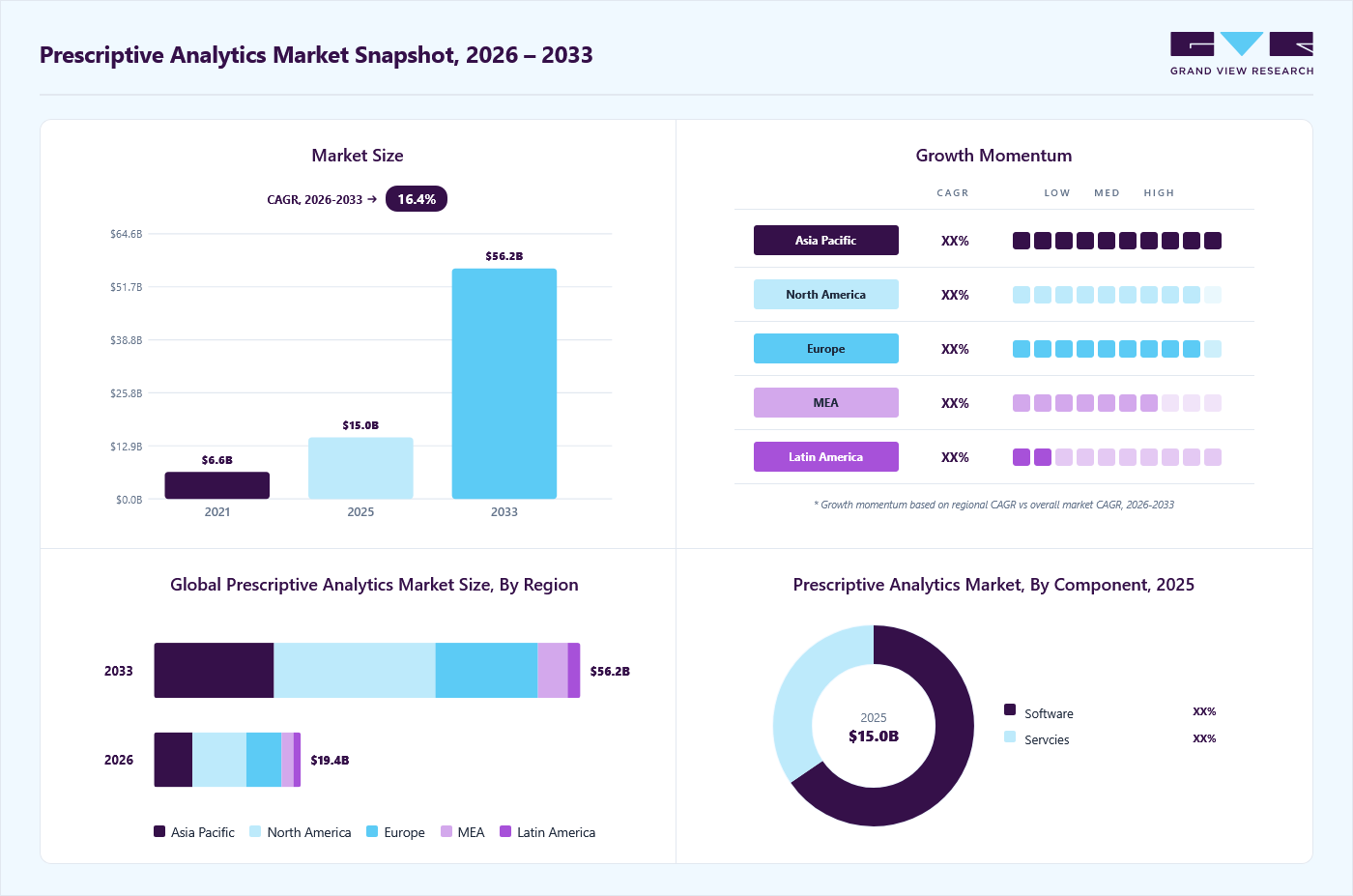 Source: Grand View Research, IR Documents, Primary Interviews, Paid DatabasesTo learn more about this report,
 Download Free Sample Report
 Key Market Trends & Insights
- By end use: IT & Telecom segment held a significant 25.0% revenue share in 2025.
- By component: Software segment held a significant 65.4% revenue share in 2025.
- By application: Supply Chain Management segment held the largest revenue share of 23.3% in 2025.
Regional Highlights
- Largest regional market: North America (36.5% revenue share, 2025)
- Fastest growing regional market: Asia Pacific (highest CAGR, 2026-2033)
- By country: The U.S. held the largest market share in 2025.
Market Size & Forecast
- Market size in 2025: USD 15.0 Billion
- Estimated market size in 2026: USD 19.4 Billion
- Projected market size by 2033: USD 56.2 Billion
- CAGR (2026-2033): 16.4%
Three ways to get this report
Buy it, customize it, or ask a question.Ask an Analyst
Analyst response in 1 business day
- AccessReport author, directly
- Reply timeWithin 1 working day
- No sales callDirect answer only
- FormatEmail reply
- CostFree, no cost
Get the Full Report
What the study covers
- FormatsPDF · Excel · Dashboard
- Timeline2026–2033 annual, 2025 base
- Coverage20+ countries, 5 regions
- Companies10+ key players profiled
Customize the Report
20% free customization
- IncludeCountries, segments, points
- TailorTo your product definition
- ExtendDeeper competitor detail
- OrA fully bespoke study
- Turnaround5–10 working days
Organizations are leveraging prescriptive analytics to generate actionable recommendations that optimize operations, improve resource allocation, and enhance business outcomes. The market is experiencing significant growth driven by the increasing demand for advanced data analytics solutions across various industries. Businesses increasingly recognize the value of data-driven decision-making, and prescriptive analytics provides actionable recommendations by analyzing large datasets, predicting outcomes, and suggesting optimal decisions. This demand is further fueled by advancements in artificial intelligence, machine learning, and big data technologies, which enhance the capabilities of prescriptive analytics solutions.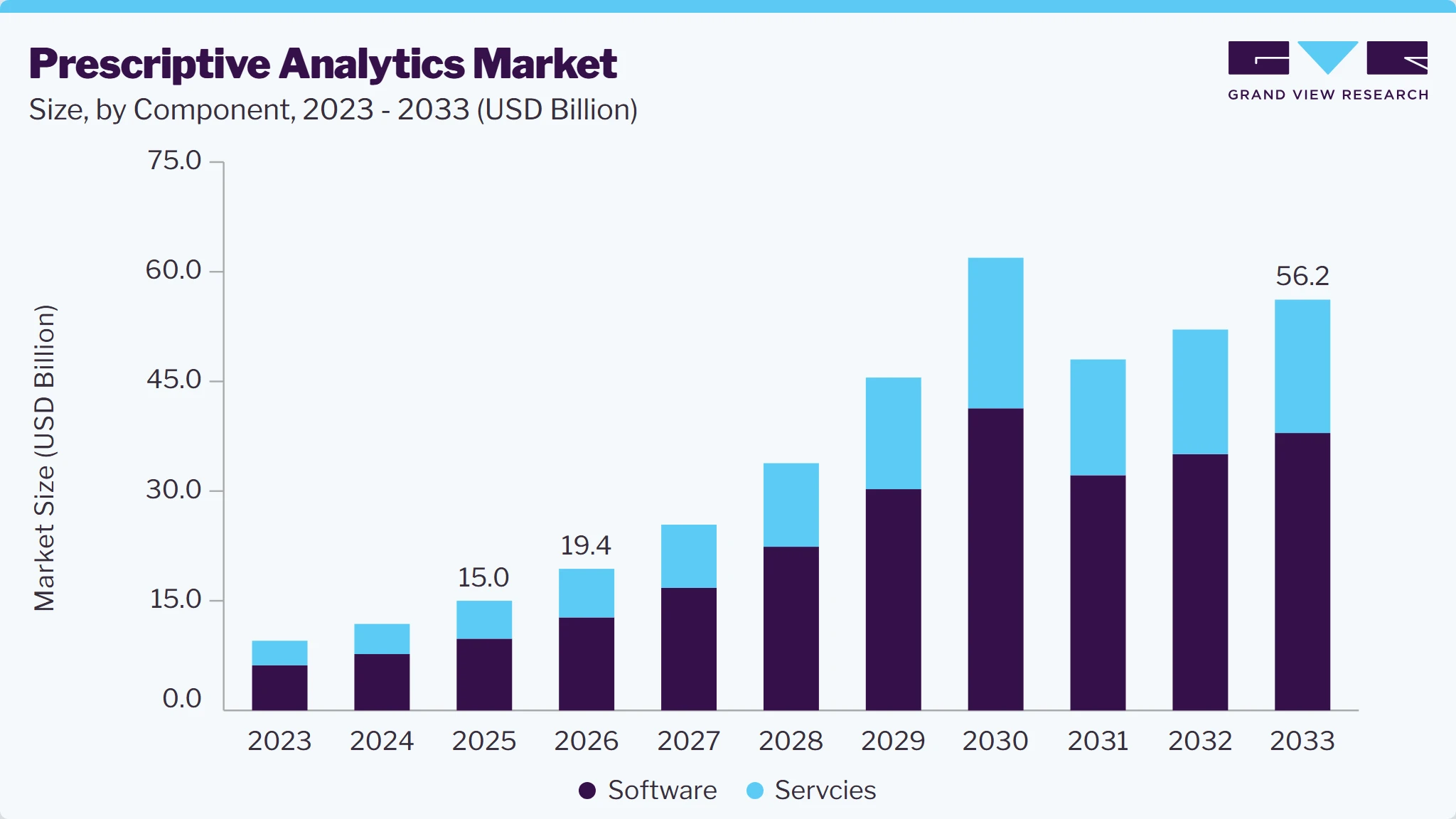 To learn more about this report, Download Free Sample Report
 As organizations seek to optimize operations, reduce costs, and improve customer experiences, adopting prescriptive analytics tools is becoming essential. The growing volume of data businesses generate and the need for real-time decision-making push more companies to invest in these solutions. Consequently, the market sees robust investment from established players and new entrants, driving competition and innovation. Integrating prescriptive analytics into cloud-based platforms also expands accessibility, further contributing to market growth.
Industry-specific applications are also driving market growth. In the healthcare sector, prescriptive analytics transforms patient care by providing personalized treatment recommendations and optimizing resource allocation. Retailers use prescriptive analytics to enhance inventory management, pricing strategies, and customer experiences. Financial institutions use these tools for risk management, fraud detection, and investment optimization. Manufacturing companies employ prescriptive analytics to streamline supply chains and improve production efficiency. The energy sector is utilizing prescriptive analytics for demand forecasting and grid optimization. Government agencies are adopting these solutions for public safety and resource allocation. This widespread adoption across diverse industries is contributing to the rapid market expansion.
The increasing integration of these tools with advanced technologies such as IoT and edge computing is propelling market growth. As IoT devices proliferate across industries, they generate vast amounts of real-time data that must be analyzed and acted upon quickly. When integrated with IoT, prescriptive analytics enables businesses to make immediate, data-driven decisions that optimize operations, reduce downtime, and enhance overall efficiency. For instance, in smart manufacturing, prescriptive analytics can predict equipment failures and recommend maintenance actions before issues arise, minimizing production disruptions. Similarly, in the energy sector, IoT-enabled prescriptive analytics can optimize energy usage and reduce waste, leading to cost savings and environmental benefits.
Market Dynamics
The global prescriptive analytics market is witnessing steady growth, driven by the increasing adoption of advanced analytics across industries. Organizations are leveraging these solutions to enhance decision-making, improve operational efficiency, and optimize business processes. Ongoing digital transformation initiatives continue to support market expansion. The market is expected to witness sustained growth as enterprises increasingly prioritize data-driven strategies and intelligent decision support.
Organizations are increasingly relying on real-time business intelligence to monitor operations, identify emerging trends, and respond quickly to changing market conditions. The growing volume of data generated from digital platforms, connected devices, and enterprise applications has increased the need for analytics solutions that can process information instantly. While predictive analytics forecasts potential outcomes, prescriptive analytics goes a step further by recommending the most effective actions. This enables businesses to make faster and more informed decisions. As a result, demand for prescriptive analytics continues to grow across industries. The need for timely, data-driven insights is therefore supporting market expansion.
Prescriptive analytics is being adopted across sectors such as BFSI, healthcare, retail, manufacturing, and logistics to optimize business processes and improve decision-making. Enterprises are leveraging these solutions to enhance resource allocation, reduce operational inefficiencies, and improve customer experiences. Cloud computing, artificial intelligence, and machine learning technologies have further strengthened the capabilities of prescriptive analytics platforms. These advancements enable organizations to analyze large datasets and generate actionable recommendations in real time. As businesses increasingly prioritize agility and operational excellence, investment in prescriptive analytics solutions is expected to rise. This trend is anticipated to drive sustained market growth over the forecast period.
The adoption of prescriptive analytics solutions often requires significant investments in software, infrastructure, and implementation services. Organizations also face challenges in integrating analytics platforms with existing legacy systems and consolidating data from multiple sources. Poor data quality, inconsistent data formats, and fragmented IT environments can further complicate deployment. These factors increase implementation time and costs, particularly for organizations with complex operational environments. As a result, many enterprises remain cautious about large-scale deployment. This limits the widespread adoption of prescriptive analytics solutions.
Small and medium-sized enterprises are particularly affected by budget constraints and limited technical expertise, making it difficult to implement advanced analytics platforms. In addition, organizations require skilled professionals to develop, manage, and interpret prescriptive analytics models effectively. The shortage of experienced analytics and AI professionals further adds to implementation challenges. Enterprises must also invest in employee training and system maintenance to maximize solution performance. These additional requirements can delay adoption and reduce return on investment. Consequently, high implementation costs and data integration challenges continue to restrain market growth.
The increasing adoption of cloud computing presents significant growth opportunities for the prescriptive analytics market. Cloud-based analytics platforms offer scalability, flexibility, and cost-effective deployment, enabling organizations to access advanced analytics capabilities without substantial infrastructure investments. Businesses are increasingly migrating to cloud environments to improve accessibility, support remote operations, and accelerate digital transformation initiatives. This trend is expanding the adoption of prescriptive analytics across enterprises of all sizes. As cloud infrastructure continues to evolve, demand for cloud-based prescriptive analytics solutions is expected to increase. This is creating new growth opportunities for market participants.
In addition, cloud platforms facilitate seamless integration with artificial intelligence, machine learning, and big data technologies, enhancing the capabilities of prescriptive analytics solutions. Organizations can process large volumes of data in real time and generate actionable recommendations to improve operational efficiency and decision-making. Cloud deployment also enables faster implementation, regular software updates, and easier maintenance compared to on-premise solutions. These advantages are encouraging businesses across industries to invest in cloud-based analytics platforms. As cloud adoption continues to expand globally, it is expected to support sustained growth in the prescriptive analytics market.
Market Concentration & Characteristics
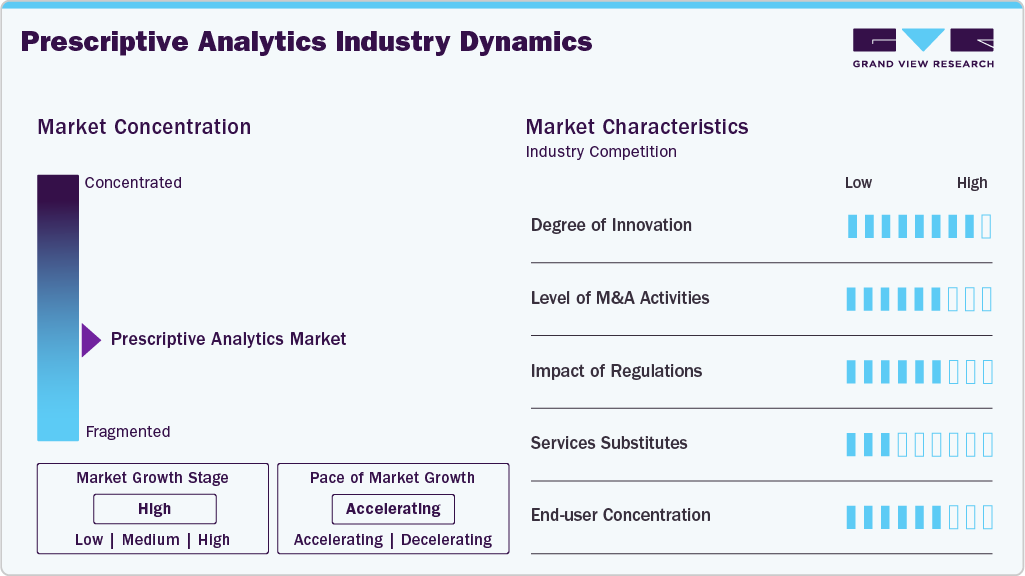
The global prescriptive analytics market is moderately fragmented, with the presence of several established technology providers alongside emerging analytics and AI solution vendors. Companies compete by offering advanced analytics capabilities, industry-specific solutions, and flexible deployment models to address diverse customer requirements. Continuous innovation and the integration of artificial intelligence and machine learning are further strengthening market competition.
 To learn more about this report, Download Free Sample Report
 Market participants are increasingly focusing on product enhancements, cloud-based analytics platforms, strategic partnerships, acquisitions, and geographic expansion to strengthen their market position. Vendors are also investing in research and development to improve platform capabilities and deliver more accurate, real-time decision support. These competitive strategies are expected to shape the market landscape throughout the forecast period.
Analyst Perspective
The prescriptive analytics market is expected to grow strongly, driven by wider adoption of AI, machine learning, and data-driven decision-making across industries. Enterprises are increasingly using these solutions to optimize operations, automate decisions, and improve business outcomes, while cloud-based platforms and integrated analytics offerings are expanding market reach. At the same time, high implementation costs, data complexity, and talent shortages may limit adoption, but continued advances in analytics technologies are likely to create strong opportunities over the forecast period.
Component Insights
Based on component, software segment led the market with a significant revenue share of 65.4% in 2025. The software segment dominates the market because it provides the essential tools and platforms that enable businesses to perform advanced data analysis, model scenarios, and generate actionable insights. These software solutions are at the core of prescriptive analytics, offering robust capabilities such as optimization algorithms, predictive modeling, and decision automation. The customization and scalability offered by prescriptive analytics software allow organizations to customize solutions to their specific needs, making it a critical component of their data strategy. Moreover, continuous advancements in AI and machine learning are enhancing the functionality of these software platforms, further driving their adoption. As a result, the software segment remains the primary driver of value in the market.
The services segment is projected to grow significantly over the forecast period. The services segment is growing rapidly due to the increasing demand for expert consultation, implementation, and support to maximize the benefits of prescriptive analytics solutions. Businesses often require guidance on effectively integrating prescriptive analytics into their existing systems and workflows, which fuels the need for professional services. Moreover, as companies adopt more sophisticated analytics tools, there is a growing need for training and ongoing support to ensure users can fully utilize these capabilities. Managed services, which provide ongoing management and optimization of analytics platforms, are becoming more popular as organizations seek to outsource these complex tasks to specialists. This growing reliance on expert services to achieve desired outcomes is driving the expansion of the services segment within the market.
Application Insights
Based on application, the supply chain management segment led the market with the largest revenue share of 23.3% in 2025. The supply chain management segment dominates the market because it heavily relies on analytics decision-making to optimize complex, interconnected processes such as inventory management, demand forecasting, and logistics. Prescriptive analytics provides supply chain managers with actionable recommendations to minimize costs, reduce delays, and enhance overall efficiency, which is crucial in a globalized economy. The ability to anticipate disruptions and make proactive adjustments is particularly valuable, especially in manufacturing and retail industries where supply chain efficiency directly impacts profitability. The growing adoption of IoT and real-time data in supply chain operations further amplifies the need for advanced analytics to process and act on vast amounts of information. As a result, prescriptive analytics has become vital for maintaining competitive advantage in supply chain management.
The operations management segment is predicted to foresee significant growth in the forecast period due to the increasing need for businesses to optimize their internal processes, improve resource allocation, and enhance productivity. As organizations face mounting pressure to reduce operational costs and improve efficiency, prescriptive analytics offers solutions to identify bottlenecks and optimize resource utilization. Incorporating prescriptive analytics in operations management allows companies to make informed decisions that enhance overall operational performance, from production schedules to workforce management. Moreover, the rise of Industry 4.0 and smart manufacturing initiatives drive demand for analytics tools to optimize operations in real time. This growing focus on operational excellence and agility fuels market expansion within the operations management segment.
End-use Insights
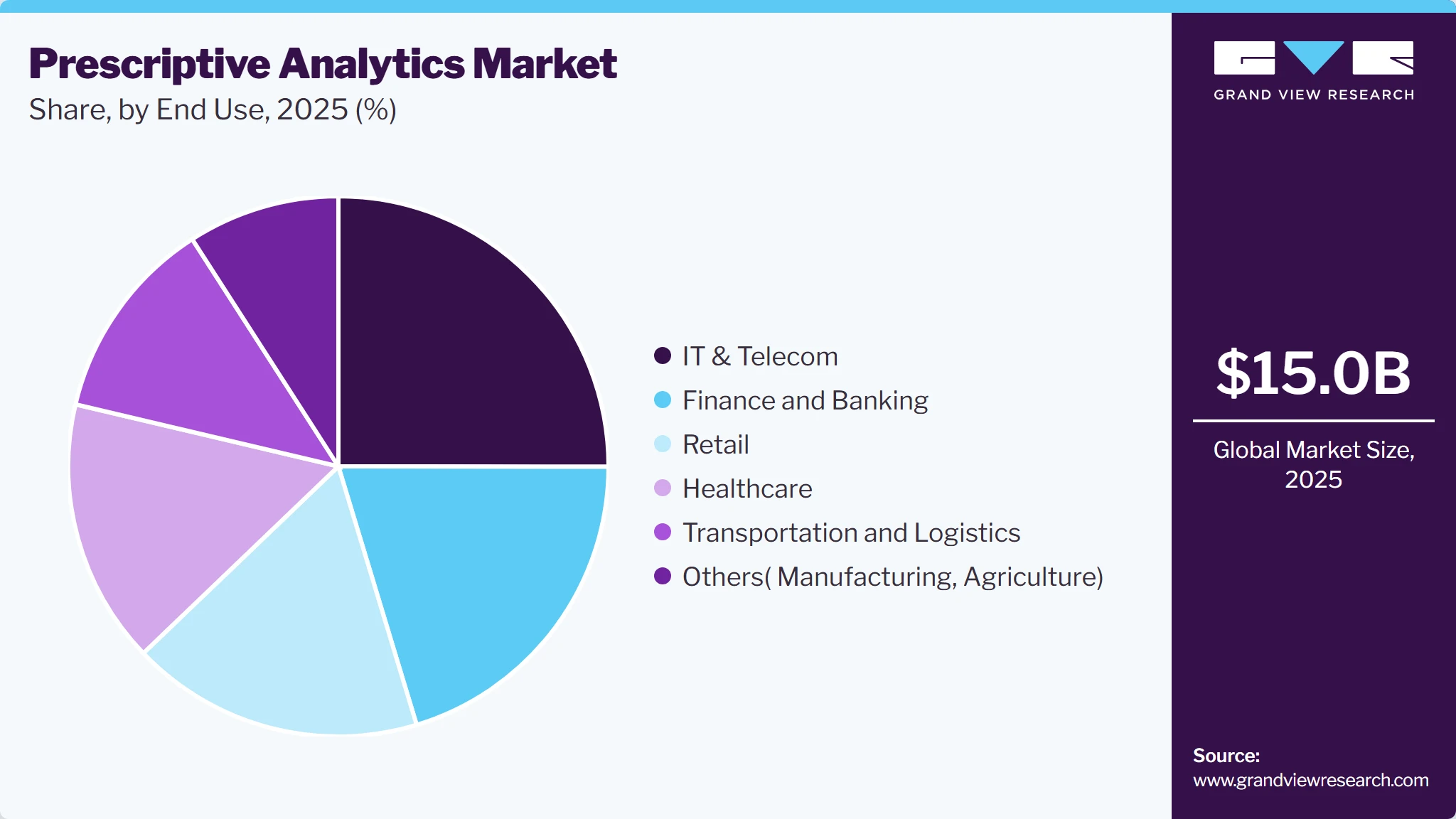
Based on end use, the IT & Telecom segment led the market with a significant revenue share of 25.0% in 2025 because it operates in a highly data-intensive environment where real-time decision-making and optimization are critical. Telecom companies use prescriptive analytics to manage network performance, optimize bandwidth, and enhance customer experiences by predicting and addressing issues before they impact service quality. The sector relies on vast, complex data sets, including customer usage patterns and network metrics, making advanced analytics essential for maintaining service reliability and competitiveness. Moreover, the need to reduce operational costs and efficiently manage resources in a rapidly evolving technological landscape drives the demand for prescriptive analytics in IT and Telecom. As these companies strive to innovate and improve their service offerings, prescriptive analytics remains a key tool in achieving these goals.
 To learn more about this report, Download Free Sample Report
 Finance and banking is projected to grow significantly over the forecast period due to the sector's increasing focus on risk management, fraud detection, and personalized customer experiences. Financial institutions are utilizing prescriptive analytics to predict market trends, optimize investment strategies, and enhance compliance with regulatory requirements. The ability to analyze vast amounts of financial data and generate actionable insights helps banks and financial firms mitigate risks and make more informed decisions. Moreover, prescriptive analytics is being used to offer personalized financial products and services, improving customer engagement and loyalty. As the finance and banking industry continues evolving with digital transformation, the demand for advanced analytics solutions drives growth in this segment.
Regional Insights
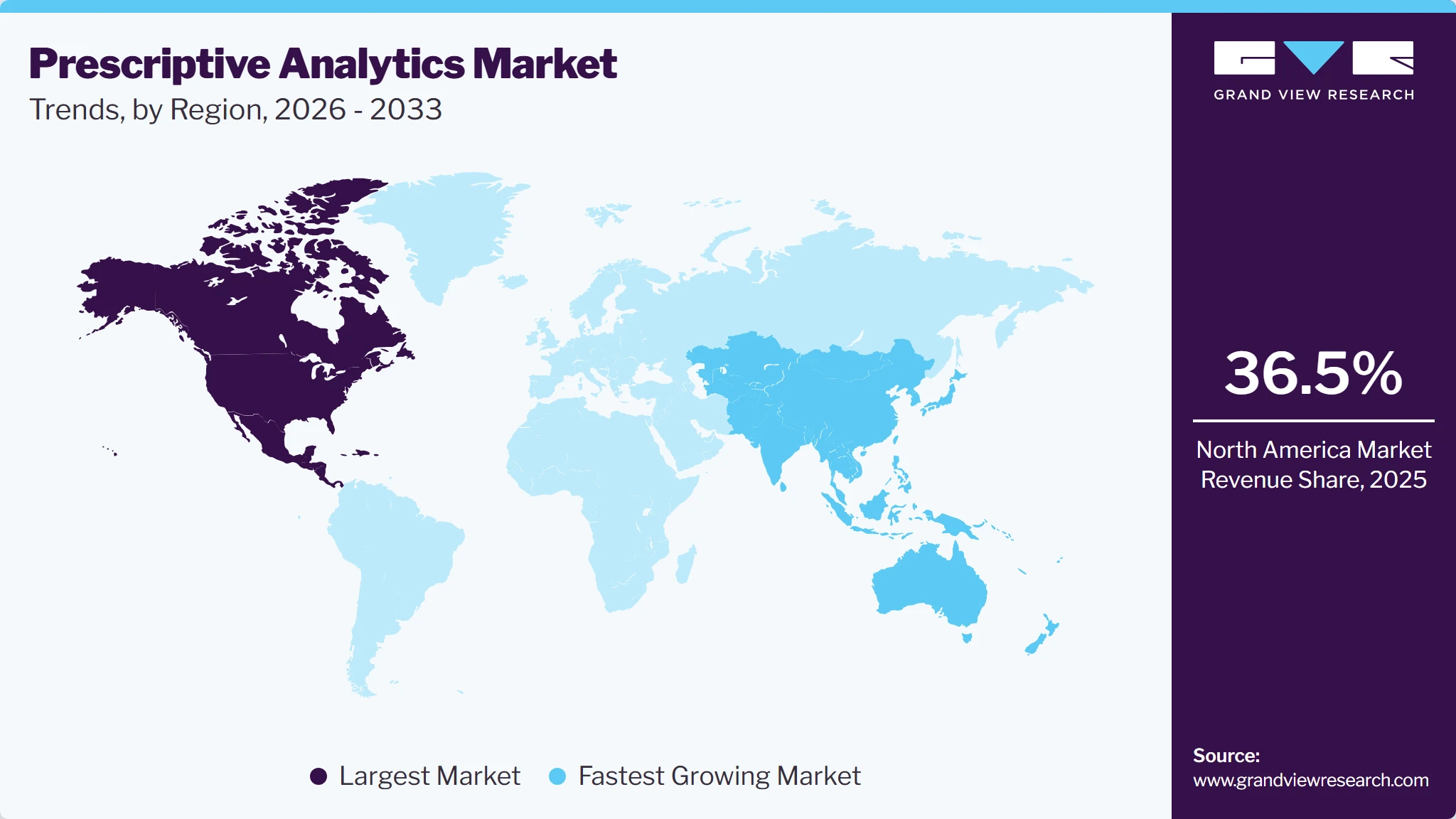
North America dominated the Prescriptive Analytics Market with the largest revenue share of 36.5% in 2025. Prescriptive analytics is growing in North America as the region's businesses increasingly seek to utilize advanced data tools to remain competitive in a dynamic market. Canada and Mexico, in particular, are seeing growth due to their efforts in modernizing industries such as manufacturing and energy, where prescriptive analytics helps optimize operations and reduce costs. The region's strong emphasis on innovation, with numerous research institutions and tech hubs, supports developing and implementing advanced analytics solutions. Moreover, collaboration within North America is driving the adoption of prescriptive analytics to streamline supply chains and improve efficiency across industries.
 To learn more about this report, Download Free Sample Report
 U.S. Prescriptive Analytics Market Trends
The Prescriptive Analytics Market in the U.S. held the largest share in the North America region in 2025. Prescriptive analytics is expanding rapidly in the U.S. due to the country's leadership in technology innovation and widespread adoption across key industries such as healthcare, finance, and retail. American companies increasingly invest in prescriptive analytics to enhance decision-making, improve customer experiences, and gain competitive advantages in a highly digital economy. The presence of major tech giants and analytics software providers headquartered in the U.S. accelerates the development and deployment of these advanced tools.
Europe Prescriptive Analytics Market Trends
The prescriptive analytics market in Europe is driven by the region’s strong emphasis on data privacy, regulatory compliance, and sustainable business practices. European companies, particularly in industries like finance and manufacturing, are adopting prescriptive analytics to optimize operations while adhering to strict regulations such as GDPR. The region’s focus on digital transformation and Industry 4.0 initiatives also propels the adoption of advanced analytics tools to enhance efficiency and innovation.
Asia Pacific Prescriptive Analytics Trends
The prescriptive analytics market in Asia Pacific is anticipated to register the fastest CAGR over the forecast period. The Asia Pacific region is experiencing significant growth in prescriptive analytics, largely due to the rapid digitalization and economic expansion in countries such as China, India, and Japan. Businesses in this region are increasingly adopting prescriptive analytics to optimize supply chains, improve operational efficiency, and enhance customer experiences in highly competitive markets. The rise of e-commerce and the integration of AI in various industries are further driving the demand for advanced analytics solutions. Moreover, government initiatives promoting smart cities and digital infrastructure are boosting the adoption of prescriptive analytics in urban planning and public services. The region’s focus on utilizing technology for economic growth and innovation is a key factor in the expanding market in Asia Pacific.
Key Prescriptive Analytics Company Insights
Prominent firms have used product launches and developments, followed by expansions, mergers and acquisitions, contracts, agreements, partnerships, and collaborations, as their primary business strategy to increase their market share. The companies have used various techniques to enhance market penetration and boost their position in the competitive industry. For instance, In January 2024, Amnet Digital, a U.S.-based data, analytics, and AI solutions company, introduced Swift Insights, an AI-powered analytics platform developed to help businesses make informed decisions through intuitive dashboards and advanced reports. Utilizing Generative AI and large language models (LLMs), Swift Insights enables organizations to uncover new growth opportunities and enhance decision-making in key areas such as customer acquisition, retention, and loyalty.
Key Prescriptive Analytics Companies:
The following key companies have been profiled for this study on the prescriptive analytics market.
-
Accenture plc
-
Amnet Digital
-
Amazon Web Services, Inc.
-
International Business Machines Corporation
-
Microsoft
-
Oracle Corporation
-
SAP SE
-
SAS Institute Inc.
-
Sisense Inc.
-
Tableau Software LLC
Competitive Benchmarking
Operating Strategies
Competitive Edge
Weaknesses
Mature Players: Accenture plc, Amazon Web Services, Inc., International Business Machines Corporation
- Focus on expanding AI-powered analytics portfolios through continuous innovation, strategic acquisitions, cloud integration, and global partnerships.
Strong brand recognition, extensive customer base, comprehensive product portfolios, and global service capabilities. Mature players face challenges such as high implementation costs, complex integration, slower innovation cycles, and limited flexibility due to legacy systems. Emerging Players: Amnet Digital, Sisense Inc.
- Emphasize niche analytics solutions, AI-driven innovation, flexible deployment models, and industry-specific offerings to expand market presence.
Agility, faster innovation cycles, specialized solutions, and competitive pricing tailored to evolving customer needs. Emerging players face challenges including limited brand presence, smaller customer base, fewer resources, and difficulty competing with established analytics providers. Recent Developments
-
In January 2024, SAP SE introduced new AI-driven capabilities to enhance retail operations and customer experiences, including advanced demand forecasting, replenishment solutions, and order management tools. These innovations utilize SAP Business AI technology and data integration to drive profitability, improve customer loyalty, and support retailers in adapting to rapid market changes.
-
In January 2024, Microsoft introduced new generative AI and data solutions through Microsoft Cloud for Retail, enhancing personalized shopping experiences, store operations, and marketing campaigns. These innovations, including copilot templates and advanced analytics, aim to unify retail data, improve customer engagement, and drive revenue opportunities by utilizing AI across the entire shopper journey.
-
In April 2023, Deloitte, a UK-based professional services firm, announced a multi-party engagement with HighByte, Amazon Web Services, Inc., and Element Analytics to develop a new data management offering that integrates AWS’s Industrial Data Fabric with Deloitte’s smart manufacturing platform. This collaboration aims to help manufacturers overcome challenges related to siloed and disjointed data systems, enabling more informed business decisions and accelerating digital transformation.
-
In January 2023, Unifi Inc., an aviation services company in the U.S., implemented an advanced safety risk analytics model developed with Microsoft Azure and Artis Consulting to enhance ground handling operations. This model utilizes Azure AI, Machine Learning, and Power BI to predict safety risks and provide prescriptive actions, achieving a 94 percent accuracy rate in its predictive component.
Prescriptive Analytics Market Report Scope
Report Attribute
Details
Market size in 2025
USD 15.0 billion
Estimated market size in 2026
USD 19.4 billion
Projected market size by 2033
USD 56.2 billion
Growth rate
CAGR of 16.4% from 2026 to 2033
Base year for estimation
2025
Historical data
2021 - 2024
Forecast period
2026 - 2033
Quantitative units
Revenue in USD million/Million and CAGR from 2026 to 2033
Report coverage
Revenue forecast, company ranking, competitive landscape, growth factors, and trends
Segments covered
Component, application, end use, region
Regional scope
North America; Europe; Asia Pacific; Latin America; MEA
Country scope
U.S.; Canada; Mexico; Germany; UK; France; China; Japan; India; Australia; South Korea; Brazil; KSA; UAE; South Africa
Key companies profiled
Accenture plc; Amnet Digital; Amazon Web Services, Inc.; International Business Machines Corporation; Microsoft; Oracle Corporation; SAP SE; SAS Institute Inc.; Sisense Inc.; Tableau Software LLC
Customization scope
Free report customization (equivalent up to 8 analysts' working days) with purchase. Addition or alteration to country, regional & segment scope.
Pricing and purchase options
Avail customized purchase options to meet your exact research needs. Explore purchase options
Global Perspective Analytics Market Report Segmentation
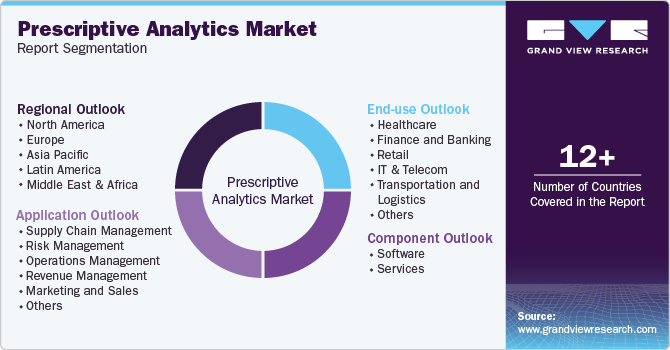
This report forecasts revenue growth at global, regional, and country levels and provides an analysis of the latest industry trends in each of the sub-segments from 2021 to 2033. For this study, Grand View Research has segmented the global prescriptive analytics market report based on component, application, end-use, and region:
 To learn more about this report, Download Free Sample Report
 -
Component Outlook (Revenue, USD Million, 2021 - 2033)
-
Software
-
Services
-
-
Application Outlook (Revenue, USD Million, 2021 - 2033)
-
Supply Chain Management
-
Risk Management
-
Operations Management
-
Revenue Management
-
Marketing and Sales
-
Others
-
-
End-use Outlook (Revenue, USD Million, 2021 - 2033)
-
Healthcare
-
Finance and Banking
-
Retail
-
IT & Telecom
-
Transportation and Logistics
-
Others
-
-
Regional Outlook (Revenue, USD Million, 2021 - 2033)
-
North America
-
U.S.
-
Canada
-
Mexico
-
-
Europe
-
UK
-
Germany
-
France
-
-
Asia Pacific
-
China
-
Japan
-
India
-
South Korea
-
Australia
-
-
Latin America
-
Brazil
-
-
Middle East and Africa (MEA)
-
KSA
-
UAE
-
South Africa
-
-
Research Methodology
The agriculture equipment market figures in this report are based on a proven research process that combines executive interviews with secondary research from proprietary databases, company filings, and recognized regulatory and institutional sources. Market size is built through value-chain sizing - reconciling supply-side and demand-side estimates - and triangulated with bottom-up and top-down approaches. Every estimate passes multiple levels of expert validation before publication, with each agriculture equipment segment quantified using the revenue-capture definitions in the table below.
Segment Definition
Segment - Component
Revenue Capture Definition
Software
Revenue generated from the sale and licensing of prescriptive analytics software platforms, applications, and related analytics tools.
Services
Includes revenue earned from consulting, implementation, integration, training, support, and managed services associated with prescriptive analytics solutions.
Segment - Application
Revenue Capture Definition
Supply Chain Management
Covers revenue from prescriptive analytics solutions used to optimize demand forecasting, inventory planning, logistics, and supply chain operations.
Risk Management
Represents revenue generated from solutions that support risk assessment, fraud detection, compliance management, and strategic risk mitigation.
Operations Management
Encompasses revenue from analytics solutions designed to improve operational planning, resource allocation, process optimization, and workflow efficiency.
Revenue Management
Includes revenue from solutions that enable pricing optimization, demand forecasting, profitability analysis, and revenue maximization strategies.
Marketing and Sales
Accounts for revenue generated from prescriptive analytics applications used for customer segmentation, campaign optimization, sales forecasting, and personalization.
Others
Covers revenue from additional applications, including human resource management, energy optimization, and asset management.
Segment - End Use
Revenue Capture Definition
Healthcare
Revenue generated from prescriptive analytics solutions adopted by hospitals, healthcare providers, pharmaceutical companies, and life sciences organizations.
Finance and Banking
Includes revenue from prescriptive analytics solutions used by banks, financial institutions, insurers, and fintech companies.
Retail
Represents revenue from analytics solutions deployed by retailers and e-commerce companies to optimize pricing, inventory, merchandising, and customer engagement.
IT & Telecom
Covers revenue generated from prescriptive analytics solutions used by IT service providers, software companies, cloud providers, and telecommunications operators.
Transportation and Logistics
Includes revenue from analytics solutions supporting route optimization, fleet management, warehouse operations, and logistics planning.
Others
Comprises revenue from prescriptive analytics adoption across manufacturing, agriculture, energy, government, education, and other industries.
Estimation Model
Layer Name
Key Question
Description
End-user Layer
Who creates demand for prescriptive analytics solutions?
Identifies organizations that require prescriptive analytics solutions, including enterprises across BFSI, healthcare, retail, IT & telecom, transportation & logistics, manufacturing, government, and other industries seeking data-driven decision support.
Adoption / Usage Layer
Who actively adopts prescriptive analytics solutions?
Filters the addressable market based on analytics maturity, digital transformation initiatives, AI and machine learning adoption, cloud migration, and demand for data-driven decision-making across organizations.
Deployment & Application Layer
How are prescriptive analytics solutions deployed and utilized?
Estimates adoption across deployment models, applications, and end-use industries, including supply chain management, risk management, operations management, revenue management, marketing & sales, and other business functions.
Revenue Capture Layer
How is revenue generated in the prescriptive analytics ecosystem?
Calculates revenue generated from software licensing, cloud subscriptions, consulting, implementation, integration, training, maintenance, support services, and other value-added services associated with prescriptive analytics solutions.
Delivered Customizations
This report has been delivered with the following In-depth customizations
Client Objective
Custom Research Modules Delivered
Strategic Value / Business Impact
Market Entry & Expansion Assessment
Regional demand sizing and forecasting
Customer segmentation and buying behavior analysis
Competitive landscape benchmarking
Regulatory and distribution channel assessment
Identified high-growth market opportunities
Supported go-to-market strategy development
Highlighted investment priorities and risks
Product Positioning & Competitive Intelligence
Product benchmarking and feature comparison
Pricing and value proposition analysis
Brand perception and customer preference study
Competitor strategy evaluation
Improved product differentiation strategy
Supported pricing optimization
Enhanced competitive positioning
Technology & Innovation Assessment
Emerging technology trend analysis
Innovation pipeline assessment
Technology adoption readiness evaluation
Ecosystem and partnership mapping
Identified future growth areas
Supported innovation roadmap planning
Strengthened strategic partnership decisions
Frequently Asked Questions About This Report
Asia Pacific is the fastest-growing region over the forecast period.
The software segment dominated the market with a 65.4% share in 2025 and is the fastest-growing segment.
The Supply Chain Management segment led with a 23.3% revenue share in 2025, and Operations Management is the fastest-growing segment.
The IT & Telecom segment led with a 25.0% revenue share in 2025, and Finance and Banking is the fastest-growing segment.
The global prescriptive analytics market size was estimated at USD 15.0 billion in 2025 and is expected to reach USD 19.4 billion in 2026.
The global prescriptive analytics market is expected to grow at a compound annual growth rate of 16.4% from 2026 to 2033 to reach USD 56.2 billion by 2033.
North America dominated the prescriptive analytics market with a share of 36.5% in 2025. This is attributable to its advanced technological infrastructure, a high concentration of leading analytics firms, and strong adoption of AI-driven solutions across various industries.
Some key players operating in the prescriptive analytics market include Accenture plc, Amnet Digital, Amazon Web Services, Inc., International Business Machines Corporation, Microsoft, Oracle Corporation, SAP SE, SAS Institute Inc., Sisense Inc., and Tableau Software LLC.
Key factors driving the market growth include increasing advancements in AI and machine learning technologies, the growing need for business optimization and efficiency, and the widespread adoption of predictive and prescriptive analytics across industries.
About the Author(s)
Next Generation Technologies Research Team
Technology · Next Generation TechnologiesThis report was authored by the next generation technologies research team at Grand View Research - comprising two research analysts, one senior research analyst, and one industry expert - with specialized expertise in the next generation technologies segment of the technology industry. All findings are based on proprietary technology databases, executive interviews, and regulatory analysis, subject to internal peer review prior to publication.
Last Updated:
Speak to Analyst

Customize this report to your needs - add regions, segments, or data points, with 20% free customization.
Or view our licence options:


ISO 9001:2015 & 27001:2022 Certified
We are GDPR and CCPA compliant! Your transaction & personal information is safe and secure. For more details, please read our privacy policy.


