
- Home
- »
- Food Ingredients
- »
-
Probiotic Ingredients Market Size & Share Report, 2026-2033GVR Report cover

Probiotic Ingredients Market (2026 - 2033)
Size, Share & Trends Analysis Report By Form (Dry/Powder, Liquid), By Ingredient (Bacteria, Yeast, Spore Formers), By Application (Food & Beverages, Dietary Supplements, Animal Feed), By Region, Segment Forecasts
Market Size, 2025
$3.5BMarket Estimate, 2026
$3.8BMarket Forecast, 2033
$7.0BCAGR, 2026–2033
9.1%Probiotic Ingredients Market Summary
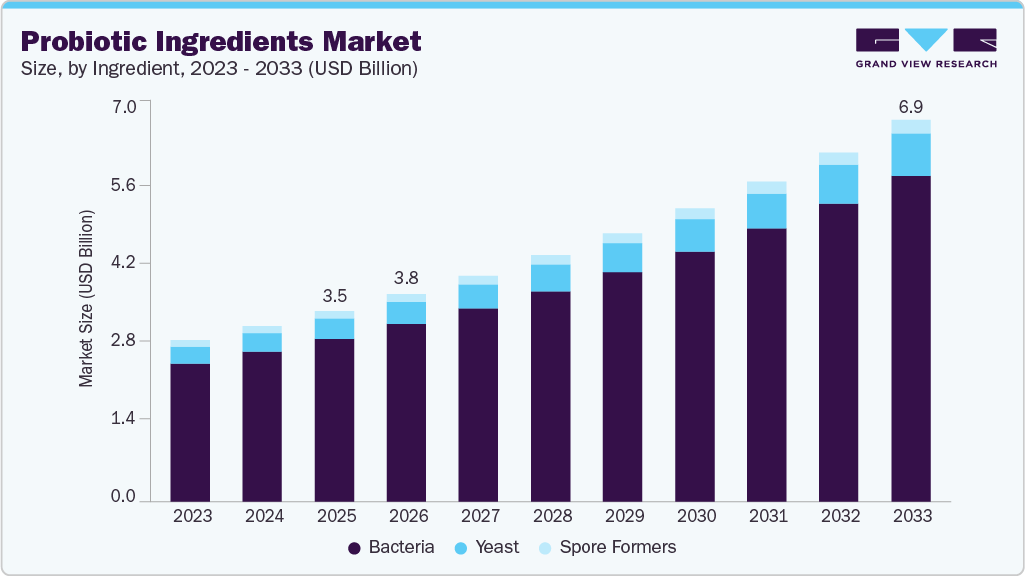
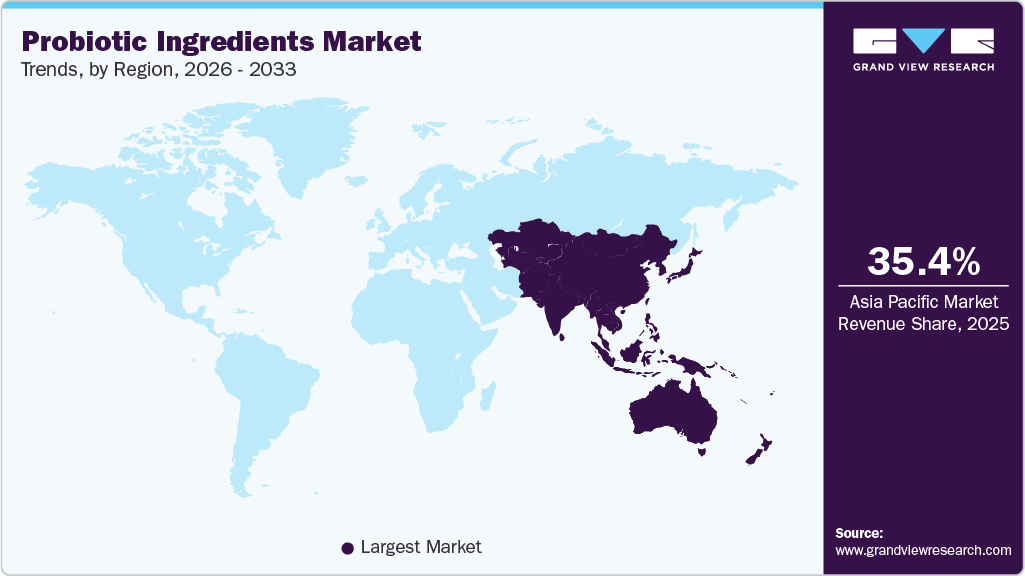
The global probiotic ingredients market size was valued at USD 3.5 billion in 2025 and is projected to grow from USD 3.8 billion in 2026 to USD 7.0 billion in 2033, at a CAGR of 9.1% from 2026 to 2033. Asia Pacific dominated the market, accounting for the largest revenue share of 35.4% in 2025. The market is witnessing strong and sustained growth, fueled by an increase in awareness among the masses worldwide related to the consumption of healthy products.
 Source: Grand View Research, IR Documents, Primary Interviews, Paid DatabasesTo learn more about this report,
 Download Free Sample Report
 Key Market Trends & Insights
- By form: Dry/powdered segment accounted for a share of 84.1% in 2025.
- By ingredient: Yeast-based segment is expected to witness a CAGR of 9.5% from 2026 to 2033.
- By application: Food & beverages segment accounted for a share of 73.4% in 2025.
Regional Highlights
- Largest regional market: Asia Pacific (35.4% revenue share, 2025)
- By country: China held the largest share in 2025
Market Size & Forecast
- Market size in 2025: USD 3.5 Billion
- Estimated market size in 2026: USD 3.8 Billion
- Projected market size by 2033: USD 7.0 Billion
- CAGR (2026-2033): 9.1%
Three ways to get this report
Buy it, customize it, or ask a question.Ask an Analyst
Analyst response in 1 business day
- AccessReport author, directly
- Reply timeWithin 1 working day
- No sales callDirect answer only
- FormatEmail reply
- CostFree, no cost
Get the Full Report
What the study covers
- FormatsPDF · Excel · Dashboard
- Timeline2026–2033 annual, 2025 base
- Coverage20+ countries, 5 regions
- Companies10+ key players profiled
Customize the Report
20% free customization
- IncludeCountries, segments, points
- TailorTo your product definition
- ExtendDeeper competitor detail
- OrA fully bespoke study
- Turnaround5–10 working days
Consumers are highly aware of the benefits of improved gut health. Moreover, information on gut health and the ways and mechanisms to improve it is easily available globally. The incorporation of probiotics in functional food products and beverages has increased in recent years as probiotics help to promote cognitive responses, improve immunity, and promote the general well-being of consumers. The dry/powder form of probiotic ingredients can also be used in a variety of end-use applications such as dairy-based and cereal-based foods and beverages as well as in non-dairy probiotic foods and beverages, owing to its high compatibility with other ingredients. This factor is expected to propel the market growth.
 To learn more about this report, Download Free Sample Report
 Several well-characterized strains of lactobacilli and bifidobacteria are available for human consumption to reduce the risk of gastrointestinal infections or treat similar infections. The consumption of probiotics can repopulate the digestive tract with beneficial bacteria, resulting in improved digestive management in humans. Thus, probiotics can help to maintain a healthy immune system by increasing lymphocytes.
Probiotics utilized in animal nutrition have received positive responses from farmers, pet owners, and cattle feeders. Animals have very complicated digestive systems owing to their unorganized eating habits; the inclusion of probiotics in feed helps to improve their gut health, boost immunity, and enhance overall performance. Livestock-based food products not only provide high-value proteins but are also important sources of a wide range of essential micronutrients to consumers. Traditionally, antibiotics have been utilized as remedial measures to enable animals to fight against microbial infections, resulting in improved productivity and profitability for livestock owners.
Market Dynamics
The growing consumption of probiotic supplements is supporting demand for probiotic ingredients used by supplement manufacturers. According to SPINS, the U.S. Probiotics & Digestive Aids category recorded 4% year-on-year unit growth, indicating an increase in consumer purchases of probiotic and digestive-health products. This rising product consumption is encouraging supplement manufacturers to increase the use of probiotic strains and cultures in formulations, thereby supporting market growth.
Probiotic ingredients are highly sensitive to temperature, moisture, oxygen, and processing conditions, which can affect microbial viability during manufacturing, transportation, storage, and formulation. Maintaining the required viable cell count throughout the product’s shelf life requires stringent quality-control measures and specialized technologies such as microencapsulation, stabilization systems, protective packaging, and controlled storage. These additional requirements can increase manufacturing and distribution costs, creating a key restraint for probiotic ingredient suppliers.
Probiotic cultures are sensitive to temperature, moisture, and oxygen, which can reduce their viability during processing and storage. This creates a growing need for ingredients that can maintain their effectiveness throughout the product’s shelf life. Ingredient suppliers are therefore focusing on technologies such as freeze-drying, microencapsulation, and protective formulations to improve probiotic stability. These solutions can help supplement manufacturers develop products with longer shelf life, easier storage, and wider distribution, creating an opportunity for suppliers of stabilized probiotic ingredients.
Analyst Perspective
The market is expected to grow steadily, driven by rising demand for functional foods, dietary supplements, and wellness-focused nutrition. Manufacturers are increasingly adopting strain-specific and clinically supported probiotics for digestive and immune health applications. Advances in microencapsulation, freeze-drying, and stable probiotic formats are improving viability, shelf life, and formulation flexibility. B2B opportunities are expanding through customized strains, targeted health benefits, and applications across supplements, functional beverages, dairy, and plant-based products.
Form Insights
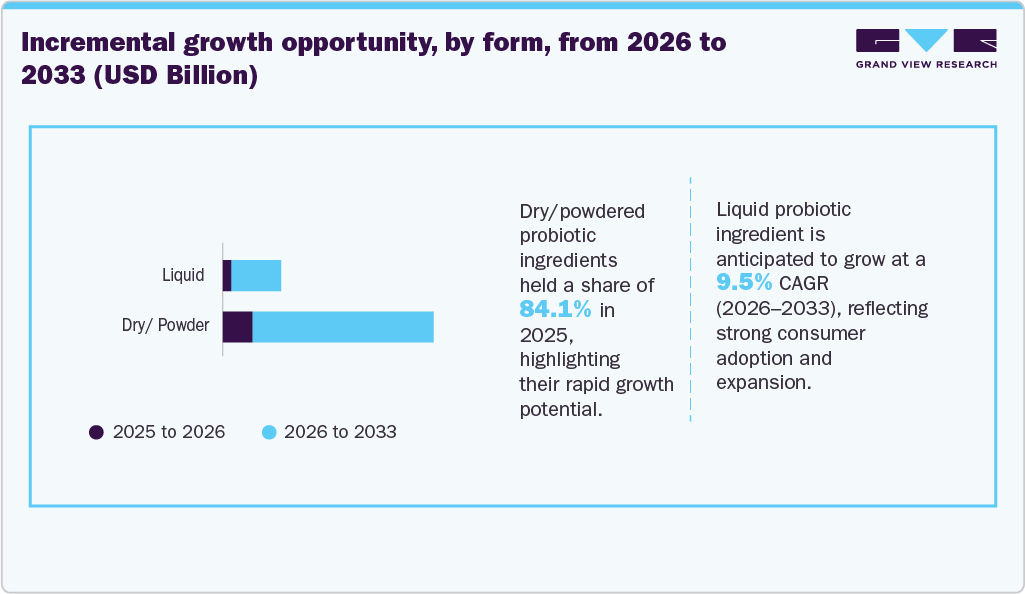
Probiotic ingredients in dry/powdered form accounted for the largest share of 84.1% of the global revenues in 2025. owing to the ease of storage, transport, and use provided by the dry/powder form of probiotic ingredients. Various freeze-drying and freezing techniques are used to produce the dry form. Even though these methods of production are regarded as effective in the field, manufacturing probiotic ingredients involves significant energy and transportation costs. In the large-scale industrial production of powdered probiotic ingredients, spray drying is the most popular, effective, and economical process used across the globe. The spray drying process offers the fastest and safest way to manufacture encapsulated powdered probiotics.
 To learn more about this report, Download Free Sample Report
 The demand for liquid probiotic ingredients is expected to grow at a CAGR of 9.5% from 2026 to 2033. Liquid probiotic ingredients are cost-effective compared to their counterparts. The commercially available liquid probiotic ingredients for animal feed are cheaper than the powder form by a significant margin. It allows farmers to maintain the gut health of livestock economically. Thus, the low price matrix of liquid probiotic ingredients is estimated to boost the growth of the liquid probiotic ingredient segment over the forecast period. The liquid probiotic ingredients have been effective for livestock as they improve feed intake, feed digestibility, and average daily gain of the livestock. Thus, increasing utilization and benefits provided by liquid probiotic ingredients are expected to boost the segment growth across the globe.
Ingredient Insights
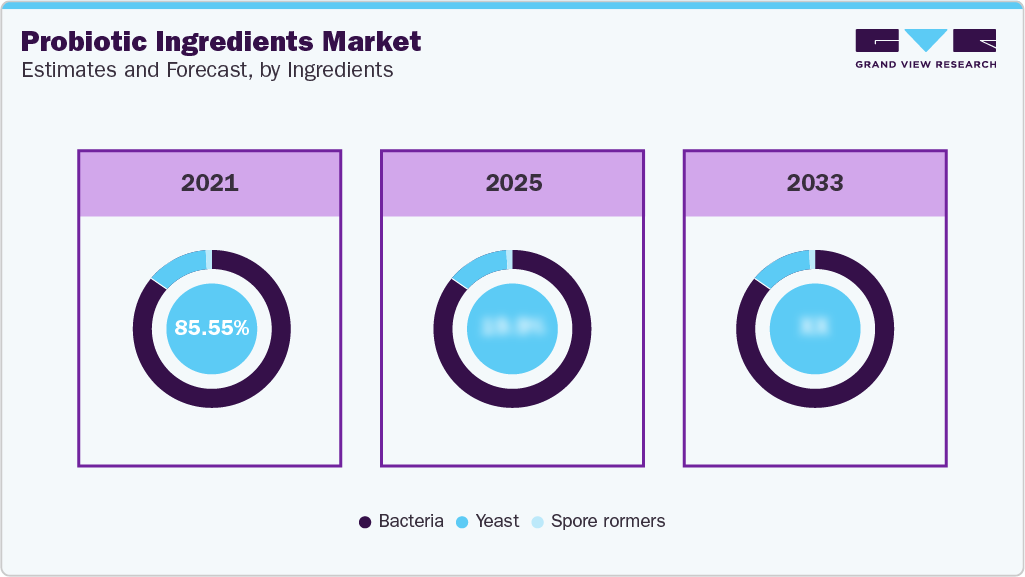
The bacteria-based probiotic ingredients dominated with a revenue share of 85.5% in 2025. Extensive research on bacteria such as Bifidobacterium and Lactobacillus has been conducted in recent years; owing to this, the bacteria segment has witnessed significant growth. The strains of Lactobacillus, Lactococcus, Streptococcus, and Bifidobacterium are important components of bacteria-based probiotic ingredients. Among these, Lactobacillus is the most used bacterial strain in various end-use industries, which is expected to boost its growth.
 To learn more about this report, Download Free Sample Report
 Yeast-based probiotic ingredients are expected to grow at a CAGR of 9.5% from 2026 to 2033 in the protein ingredient industry. Yeast-based probiotic strains have various applications in the food industry, such as the production of specific enzymes and new bioactive peptides. Furthermore, they have been mainly used for the commercial production of yogurt and in the fermentation of vegetable products such as cabbage, beetroot, radish, and carrots. Thus, increasing potential applications of yeast-based probiotic strains in various industries are expected to boost the growth of the yeast segment during the forecast period. Spore production (sporulation) is induced by a wide range of environmental factors that inhibit cell growth, making sporulation a survival strategy.
Application Insights
Probiotic ingredients for food & beverage applications accounted for the largest share of 73.4% of the global probiotic ingredients industry in 2025. Consumers across the globe are shifting towards probiotic ingredients owing to their role in preventing or treating digestive disorders, obesity, and other immunity-related issues. Consumers prefer the intake of probiotic ingredients in various types of food and beverages, as taste is a primary concern for them. Increasing disposable income, coupled with rising awareness about a healthy lifestyle, is likely to promote the adoption of probiotic ingredients in various food and beverage items.
 To learn more about this report, Download Free Sample Report
 Probiotic ingredients for dietary supplement applications are projected to grow at a CAGR of 9.8% from 2026 to 2033. The demand for preventive health care has been increasing over the past few years owing to the increased cost of healthcare services across the globe. Gut health is directly related to immunity, and people are increasingly adopting dietary supplements to increase or maintain their immunity. Chronic diseases such as gastrointestinal diseases, cardiovascular diseases, and obesity are increasing among consumers due to lifestyle traits such as improper eating habits and sedentary routines. These factors are expected to increase the demand for probiotic ingredients in dietary supplements.
Regional Insights
The probiotic ingredients market in the Asia Pacific is projected to grow at the fastest CAGR of 9.7% from 2026 to 2033. Consumer buying behavior towards probiotics in the Asia Pacific, coupled with the high awareness of the benefits of consuming probiotic ingredients, is the major factor driving the market in the Asia Pacific. The research study conducted by Kerry in 2019, one of the leading probiotic ingredient suppliers, found that the majority of consumers in Asia Pacific are proactive about their digestive health. These consumers are seeking probiotic food & beverage products that address their concerns. On the back of these factors, the demand for probiotic ingredients is expected to witness substantial growth in the near future.
 To learn more about this report, Download Free Sample Report
 China Probiotic Ingredients Market Trends
The probiotic ingredients market in China accounted for a share of 37.7% of the Asia Pacific revenue in 2025. China is supported by increasing consumer interest in digestive wellness, rising demand for functional foods and beverages, and the wider use of probiotic supplements. The country’s food and beverage processing industry provides opportunities for probiotic ingredient applications across dairy products, dietary supplements, and functional nutrition formulations. In addition, the development of targeted probiotic solutions for digestive and immune health is expanding the scope of ingredient innovation. For instance, in June 2025, ADM introduced its Balance and Restore compound probiotic combinations at HNC 2025 in Shanghai, designed to address specific health needs, including intestinal, metabolic, digestive, and immune health. Such product developments reflect manufacturers efforts to diversify probiotic formulations and strengthen their presence in China’s functional nutrition market.
North America Probiotic Ingredients Market Trends
The probiotic ingredients market in North America accounted for a share of 25.8% of the global revenue in 2025, driven by strong consumer awareness of gut health, a well-established dietary supplements industry, and high penetration of functional foods and beverages. The region benefits from a mature healthcare ecosystem, where probiotics are increasingly recommended for digestive health, immunity support, and women’s wellness, particularly in preventive care. Rising prevalence of lifestyle-related disorders such as obesity, diabetes, and gastrointestinal issues has further accelerated demand for probiotic-enriched products across supplements, functional dairy, and non-dairy applications. The manufacturers of probiotic ingredients have been heavily investing in research & development activities. For instance, ADM has identified a fat-reducing probiotic molecule in its Bifidobacterium proprietary strain. Such investments are responsible for increasing applications from the end-use industries, which, in turn, are augmenting the demand for probiotic ingredients in North America.
The U.S. probiotic ingredients marketaccounted for a share of 82.4% of North America revenue in 2025. Consumers in the U.S. are concerned about diet, nutrition, and food safety due to modernization and the trend toward a healthier society. Moreover, gut health is directly related to diet and nutrition, which impacts the overall health of the human body. The trend of healthy eating has witnessed increased popularity over the last decade in the U.S. as gut health is directly related to the eating habits and diets of consumers. Thus, the increasing trend of healthy eating to maintain gut health is expected to boost market growth in the U.S. in the foreseeable future.
Europe Probiotic Ingredients Market Trends
The probiotic ingredients market in Europe is projected to grow at a CAGR of 8.6% from 2026 to 2033. European consumers are more inclined toward probiotic foods and probiotic beverages, as awareness about the health benefits of these probiotic food products is increasing in the region. Furthermore, probiotic yogurt is one of the emerging probiotic food products in Europe, which, in turn, is boosting the growth of the food & beverages segment in the market. Increasing use of probiotics to maintain gut health is the key factor for the growth of the dietary supplements segment in the market. Gut health is directly related to immune health; thus, since the outbreak of the COVID-19 pandemic globally, European consumers are actively considering gut health as one of the important health issues. Thus, the use of probiotic ingredients in dietary supplements is expected to increase substantially in Europe over the forecast period.
Germany probiotic ingredients marketaccounted for a share of 22.0% in 2025, supported by increasing consumer focus on preventive healthcare, digestive wellness, and immunity support. Rising adoption of probiotics in dietary supplements and functional foods, particularly yogurts, fermented beverages, and plant-based alternatives, is a key growth driver. German consumers are highly responsive to science-backed health claims, encouraging manufacturers to invest in clinically validated probiotic strains and improved delivery formats such as capsules, gummies, and sachets.
Beyond human nutrition, expanding applications of probiotic ingredients in the animal feed market are also contributing to demand growth. Germany’s livestock and poultry sectors are increasingly adopting probiotics as natural alternatives to antibiotic growth promoters, in line with stricter regulations on antibiotic usage and rising emphasis on sustainable animal husbandry. Probiotics are being used to improve gut health, feed efficiency, and overall immunity in animals, supporting productivity and animal welfare.
Central & South America Probiotic Ingredients Market Trends
The probiotic ingredients market in CSA is projected to grow at a CAGR of 8.1% from 2026 to 2033. The market is growing due to rising income levels, expanding food and beverage sectors, and a shift toward healthier diets. Brazil and Argentina lead in both production and consumption of animal products and bacteria. Increased investment in food processing infrastructure aids market development. The growing fitness industry also plays a role.
Middle East & Africa Probiotic Ingredients Market Trends
The probiotic ingredients market in MEA is projected to grow at a CAGR of 7.6% from 2026 to 2033. The Middle East and Africa are experiencing gradual growth in the probiotic ingredients industry, driven by urbanization, changing food preferences, and rising demand for fortified foods. Population growth and increasing awareness of nutrition-related health issues are key drivers. Import reliance is slowly shifting as local production capabilities improve. Halal-certified and culturally adapted protein products also support market adoption.
Key Probiotic Ingredients Company Insights
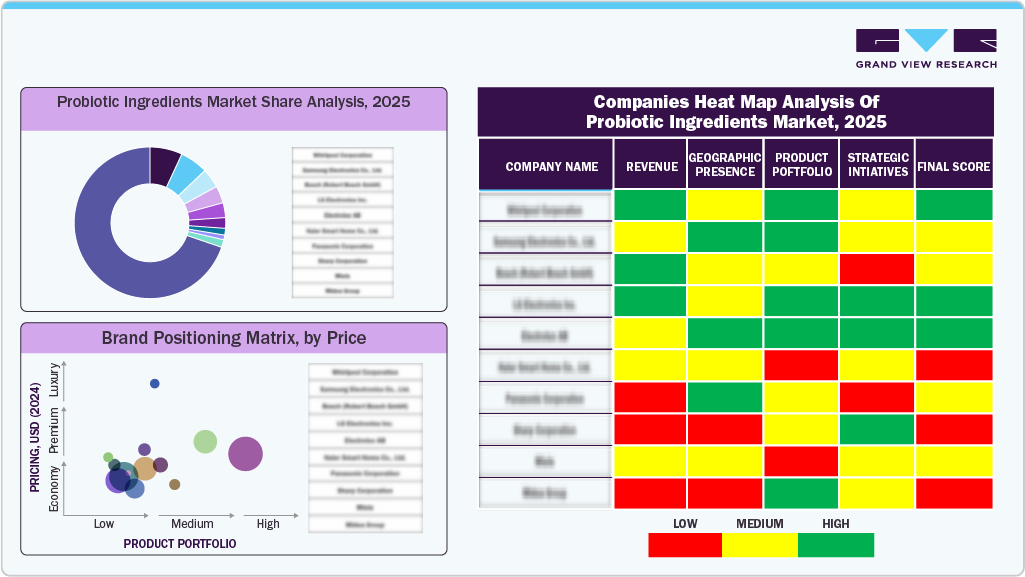
Established companies and emerging players in the market are fostering a highly competitive landscape by focusing on product innovation, quality enhancement, and strategic pricing strategies. This competition is fueled by continuous investments in advanced processing technologies, automation, and a skilled workforce to maintain operational efficiency and comply with stringent regulatory standards. In addition, increasing consumer demand for clean-label, sustainable, and functional protein sources is reshaping market dynamics. These factors collectively drive market share shifts and encourage the development of diverse, value-added protein ingredients.
 To learn more about this report, Download Free Sample Report
 Key Probiotic Ingredients Companies
The following key companies have been profiled for this study on the probiotic ingredients market.
-
Kerry, Inc.
-
Chr. Hansen Holding AS
-
DSM
-
DuPont de Nemours Inc.
-
Associated British Foods plc
-
Lallemand Inc.
-
Archer Daniels Midland
-
Advanced Enzyme Technologies
-
Probi AB
-
Adisseo
Competitive Benchmarking
Category
Operating Strategies
Competitive Edge
Weakness
Established Players (Kerry Inc.; Chr. Hansen Holding AS; DSM; DuPont de Nemours Inc.; Associated British Foods plc; Lallemand Inc.; Archer Daniels Midland; Probi AB; Adisseo)
Expand clinically supported probiotic strains, develop application-specific solutions, and strengthen formulation support across food, beverage, and supplement manufacturers.
Strong scientific capabilities, proprietary strains, clinical research, global manufacturing infrastructure, and established B2B customer relationships.
High R&D and validation costs, complex regulatory requirements, and greater operational complexity across global markets.
Emerging Players (Advanced Enzyme Technologies)
Focus on differentiated strains, targeted health applications, customized blends, and specialized probiotic delivery solutions.
Specialized strain expertise, innovative formulations, flexible customer support, and faster development of niche applications.
Smaller manufacturing capacity, limited global distribution, and lower financial and R&D resources than multinational ingredient suppliers.
Recent Developments
-
In November 2025, Probi broadened its offerings with two new probiotic lines: Sports & Active Nutrition focused on physical performance, and Pet Health probiotics targeting digestive and oral health in companion animals, highlighting diversification beyond traditional human supplements.
-
In November 2025, Evonik announced at Poultry India 2025 an updated Ecobiol probiotic with improved activity for poultry gut health, and an expansion in the probiotic ingredients in the animal feed market that supports sustainable livestock nutrition.
-
In July 2025, ClostraBio, Inc. announced that its next-generation probiotic strain CLB101 received self-affirmed GRAS status, positioning it for commercial launch in the U.S. market.
Probiotic Ingredients Market Report Scope
Report Attribute
Details
Market size in 2025
USD 3.5 billion
Estimated market size in 2026
USD 3.8 billion
Projected market size by 2033
USD 7.0 billion
Growth rate
CAGR of 9.1% from 2026 to 2033
Actuals
2021 - 2025
Forecast period
2026 - 2033
Quantitative units
Volume in kilotons, revenue in USD billion, and CAGR from 2026 to 2033
Report coverage
Revenue & volume forecast, company ranking, competitive landscape, growth factors, and trends
Segments covered
Form, ingredients, application, region
Regional scope
North America; Europe; Asia Pacific; CSA; MEA
Country scope
U.S.; Canada; Mexico; UK; Germany; France; Italy; Spain; China; India; Japan; Australia & New Zealand; South Korea; Brazil; South Africa
Key companies profiled
Kerry Inc.; Chr. Hansen Holding AS; DSM; DuPont de Nemours Inc.; Associated British Foods plc; Lallemand Inc.; Archer Daniels Midland; Advanced Enzyme Technologies; Probi AB; Adisseo
Customization scope
Free report customization (equivalent up to 8 analysts’ working days) with purchase. Addition or alteration to country, regional & segment scope.
Pricing and purchase option
Avail customized purchase options to meet your exact research needs. Explore purchase options
Global Probiotic Ingredients Market Report Segmentation
This report forecasts revenue growth at global, regional & country levels and provides an analysis of the latest trends and opportunities in each of the sub-segment from 2021 to 2033. For this study, Grand View Research has segmented the global probiotic ingredients market report based on form, ingredients, application, and region:
 To learn more about this report, Download Free Sample Report
 -
Form Outlook (Volume in Kilotons; Revenue, USD Billion, 2021 - 2033)
-
Dry/Powder
-
Liquid
-
-
Ingredients Outlook (Volume in Kilotons; Revenue, USD Billion, 2021 - 2033)
-
Bacteria
-
Lactobacilli
-
Bifidobacterium
-
Streptococcus
-
Other Genus
-
-
Yeast
-
Spore Formers
-
-
Application Outlook (Volume in Kilotons; Revenue, USD Billion, 2021 - 2033)
-
Food & Beverages
-
Dairy
-
Cereals
-
Baked Food
-
Others
-
-
Dietary Supplements
-
Chewable & Gummies
-
Capsules
-
Powders
-
Tablets
-
Soft Gels
-
Others
-
-
Animal Feed
-
Others
-
-
Regional Outlook (Volume in Kilotons; Revenue, USD Billion, 2021 - 2033)
-
North America
-
U.S.
-
Canada
-
Mexico
-
-
Europe
-
UK
-
Germany
-
France
-
Italy
-
Spain
-
-
Asia Pacific
-
China
-
Japan
-
India
-
Australia & New Zealand
-
South Korea
-
-
Central & South America
-
Brazil
-
-
Middle East & Africa
-
South Africa
-
-
Research Methodology
The probiotic ingredients market figures in this report are based on a proven research process that combines executive interviews with secondary research from proprietary databases, company filings, and recognized regulatory and institutional sources. Market size is built through value-chain sizing-reconciling supply-side and demand-side estimates-and triangulated with bottom-up and top-down approaches. Every estimate passes multiple levels of expert validation before publication, with each probiotic ingredients segment quantified using the revenue-capture definitions in the table below.
Segment Definition
Segment -Ingredient
Revenue capture definition
Bacteria
This segment includes the sales of probiotic bacterial strains and cultures used as functional ingredients in dietary supplements, functional foods, beverages, and other applications.
Yeast
This segment includes the sales of probiotic yeast strains and cultures used as functional ingredients in dietary supplements, functional foods, and other health-focused products.
Spore Formers
This segment includes the sales of spore-forming probiotic strains that can form protective spores, allowing them to withstand relatively harsh processing and storage conditions.
Estimation Model
Stage
Key Question
Description
Target Consumer Base
Who purchases probiotic ingredients?
Demand is driven by supplements, functional food, dairy, beverage, and nutrition manufacturers seeking probiotic strains to support digestive, immune, and overall wellness product positioning.
Consumer Need & Interest Layer
Where are they sourced and used?
The probiotic ingredients reach manufacturers through direct suppliers, specialized ingredient distributors, contract manufacturers, and formulation partners, with adoption dependent on strain performance, regulatory requirements, and formulation compatibility.
Purchasing & Usage Layer
How do suppliers differentiate?
Suppliers compete through clinical support, improved stability, higher viability, targeted health benefits, microencapsulation, shelf-life protection, and application-specific delivery technologies.
Revenue Realization Layer
How much revenue is generated?
Value is generated through strain efficacy, product stability, formulation performance, scientific substantiation, regulatory support, and customized ingredient solutions that enable manufacturers to develop differentiated probiotic products.
Customization Table
Client Request
Customization Delivered
Value Adds
Assess the probiotic ingredients market based on manufacturer demand and application opportunities
Evaluated probiotic ingredient demand across dietary supplements, functional foods, dairy, beverages, and nutrition products, including strain and formulation requirements.
Helps identify high-potential applications, customer segments, and growth opportunities for ingredient suppliers.
Evaluate the competitive positioning of probiotic ingredient suppliers
Assessed suppliers based on strain portfolio, clinical evidence, viability, stability, delivery technologies, formulation support, and geographic reach.
Provides a structured supplier benchmark and identifies opportunities for differentiation and strategic partnerships.
Identify emerging probiotic strains and technology opportunities
Evaluated developments in next-generation strains, microencapsulation, shelf-life stability, targeted health applications, and multi-strain formulations.
Helps identify innovation opportunities and evolving formulation needs among supplement, food, and beverage manufacturers.
Frequently Asked Questions About This Report
The Asia Pacific dominated the probiotic ingredients market with a share of 35.4% in 2025. This is attributable to the presence of major market participants in the region, high awareness regarding probiotic usage, and easy availability of products has benefited the regional demand in the recent past.
Some key players operating in the probiotic ingredients market include Probiotical S.p.A.; Ganeden, Inc.; Sabinsa Corporation; Biocodex, Inc.; BioGaia AB; Chr. Hansen Holding A/S; Danisco A/S; Danone, Inc.; and Lallemand, Inc.
Key factors that are driving the market growth include increasing consumer awareness regarding preventive healthcare coupled with increasing expenditure on probiotics, most notably in countries such as Japan, Germany, and U.K.
The global probiotic ingredients market size was estimated at USD 3.5 billion in 2025 and is expected to reach USD 3.8 billion in 2026.
The global probiotic ingredients market is expected to grow at a compound annual growth rate of 9.1% from 2026 to 2033 to reach USD 7.0 billion by 2033.
About the Author(s)
Food Ingredients Research Team
Food Beverages & Tobacco · Food IngredientsThis report was authored by the food ingredients research team at Grand View Research - comprising two research analysts, one senior research analyst, and one industry expert - with specialized expertise in the food ingredients segment of the food beverages & tobacco industry. All findings are based on proprietary food beverages & tobacco databases, executive interviews, and regulatory analysis, subject to internal peer review prior to publication.
Last Updated:
Speak to Analyst

Customize this report to your needs - add regions, segments, or data points, with 20% free customization.
Or view our licence options:


ISO 9001:2015 & 27001:2022 Certified
We are GDPR and CCPA compliant! Your transaction & personal information is safe and secure. For more details, please read our privacy policy.


