
- Home
- »
- Pharmaceuticals
- »
-
Psychedelic Drugs Market Size & Share Report, 2026-2033GVR Report cover

Psychedelic Drugs Market (2026 - 2033)
Size, Share & Trends Analysis Report By Drug Type (Entactogens, Dissociatives), By Indication, By Route of Administration (Oral, Parenteral), By Distribution Channel, By Region, And Segment Forecasts
Market Size, 2025
$4.1BMarket Estimate, 2026
$4.7BMarket Forecast, 2033
$11.7BCAGR, 2026–2033
14.1%Psychedelic Drugs Market Summary
The global psychedelic drugs market size was valued at USD 4.1 billion in 2025 and is projected to grow from USD 4.7 billion in 2026 to USD 11.7 billion by 2033, at a CAGR of 14.1% from 2026 to 2033. North America dominated the market, accounting for revenue share of 41.2% in 2025. The market is an emerging pharmaceutical market focused on the development of psychedelic compounds for the treatment of mental health and substance use disorders.
 Source: Grand View Research, IR Documents, Primary Interviews, Paid DatabasesTo learn more about this report,
 Download Free Sample Report
 Key Market Trends & Insights
- By drug type: Dissociatives segment held the highest market share of 53.5% in 2025.
- By indication: Depressive disorders segment held the highest market share of 46.9% in 2025.
- By route of administration: Oral segment held the highest market share in 2025.
- By distribution channel: Hospital pharmacies segment held the highest market share in 2025.
Regional Highlights
- Largest regional market: North America (41.2% revenue share, 2025)
- Fastest-growing regional market: Asia Pacific (highest CAGR, 2026-2033)
- By country: The U.S. held the largest market share in 2025
Market Size & Forecast
- Market size in 2025: USD 4.1 Billion
- Estimated market size in 2026: USD 4.7 Billion
- Projected market size by 2033 USD: 11.7 Billion
- CAGR (2026-2033): 14.1%
Three ways to get this report
Buy it, customize it, or ask a question.Ask an Analyst
Analyst response in 1 business day
- AccessReport author, directly
- Reply timeWithin 1 working day
- No sales callDirect answer only
- FormatEmail reply
- CostFree, no cost
Get the Full Report
What the study covers
- FormatsPDF · Excel · Dashboard
- Timeline2026–2033 annual, 2025 base
- Coverage20+ countries, 5 regions
- Companies10+ key players profiled
Customize the Report
20% free customization
- IncludeCountries, segments, points
- TailorTo your product definition
- ExtendDeeper competitor detail
- OrA fully bespoke study
- Turnaround5–10 working days
 To learn more about this report, Download Free Sample Report
Key substances under clinical investigation include psilocybin, 3,4-methylenedioxymethamphetamine (MDMA), N,N-dimethyltryptamine (DMT), and ibogaine. Research is primarily focused on treatment-resistant depression, major depressive disorder, post-traumatic stress disorder, and alcohol use disorder. The market is supported by ongoing clinical trials, investments by biotechnology and pharmaceutical companies, and research into treatment options for patients with inadequate response to existing therapies. However, most psychedelic drugs remain in clinical development, limiting their current commercial availability. Development also involves controlled-substance regulations, specialized administration protocols, patient monitoring, and psychological support. These requirements can increase development and treatment costs and may affect the adoption of psychedelic-based therapies. Limited long-term safety data, regulatory uncertainty, and the need for trained healthcare professionals remain key factors affecting market development.Market Dynamics
The market is supported by increasing investment from pharmaceutical and biotechnology companies in psychedelic-based therapies for mental health conditions. Development programs are focused on treatment-resistant depression, major depressive disorder, post-traumatic stress disorder, and substance use disorders. The entry of established pharmaceutical companies is increasing the number of companies involved in psychedelic drug development and strengthening the clinical pipeline. Companies are also allocating resources to clinical development, regulatory activities, and research on various psychedelic compounds. This activity is increasing the number of drug candidates being evaluated across psychiatric indications and expanding the scope of psychedelic research. Pharmaceutical companies with established neuroscience capabilities are adding psychedelic programs to their development portfolios, while biotechnology companies continue to develop specialized compounds and treatment approaches. Increased corporate participation is also supporting the progression of clinical-stage programs and strengthening competition among developers. For instance, in August 2025, AbbVie agreed to acquire the bretisilocin program from Gilgamesh Pharmaceuticals for the treatment of major depressive disorder. Such transactions demonstrate the increasing participation of established pharmaceutical companies in psychedelic drug development and support continued expansion of the clinical pipeline.
Regulatory requirements and specialized treatment delivery remain major market restraints. Many psychedelic substances are controlled drugs, resulting in additional requirements related to clinical research, manufacturing, storage, transportation, and medical administration. These controls increase the complexity of developing and preparing psychedelic therapies for medical use. Clinical trials require controlled dosing, patient screening, monitoring, and assessment of psychological and physical effects. Some psychedelic therapies require supervised administration by trained healthcare professionals, while treatment sessions can involve preparation, monitoring, and follow-up support. These requirements increase the resources needed for treatment delivery and limit the number of healthcare facilities equipped to administer psychedelic therapies. Limited long-term safety data for several psychedelic compounds also remains a challenge for developers and regulators. Healthcare facilities require trained personnel and appropriate infrastructure for supervised treatment, which further affects the scalability of these therapies. Regulatory controls and specialized treatment requirements, therefore, increase development and operating requirements and restrict the broader use of psychedelic-based medicines. These factors remain important barriers as companies move psychedelic therapies from clinical research toward potential medical use.
The development of next-generation psychedelic therapies presents a market opportunity because current treatment models involve practical challenges related to treatment duration, supervised administration, patient monitoring, and healthcare resource requirements. Drug developers are focusing on compounds and formulations that provide controlled therapeutic effects while addressing some of these treatment delivery challenges. Shorter treatment sessions can reduce the time required of healthcare professionals and improve utilization of clinical facilities. Therapies with more predictable pharmacological profiles can also simplify patient monitoring and treatment protocols. Development of non-hallucinogenic or modified psychedelic compounds is another area of research, particularly for companies seeking to separate therapeutic effects from intense psychoactive experiences. These approaches expand the range of potential products beyond traditional psychedelic compounds and create opportunities across different psychiatric indications. Improved formulations, dosing approaches, and administration methods can also support broader use by healthcare providers. Product development focused on treatment duration and administration requirements directly addresses the operational barriers associated with psychedelic therapies. This creates opportunities for companies with differentiated compounds and delivery technologies to develop products that fit more easily into existing healthcare infrastructure. Continued research in this area can expand the product pipeline and strengthen the commercial potential of psychedelic-based treatments.
Market Concentration & Characteristics
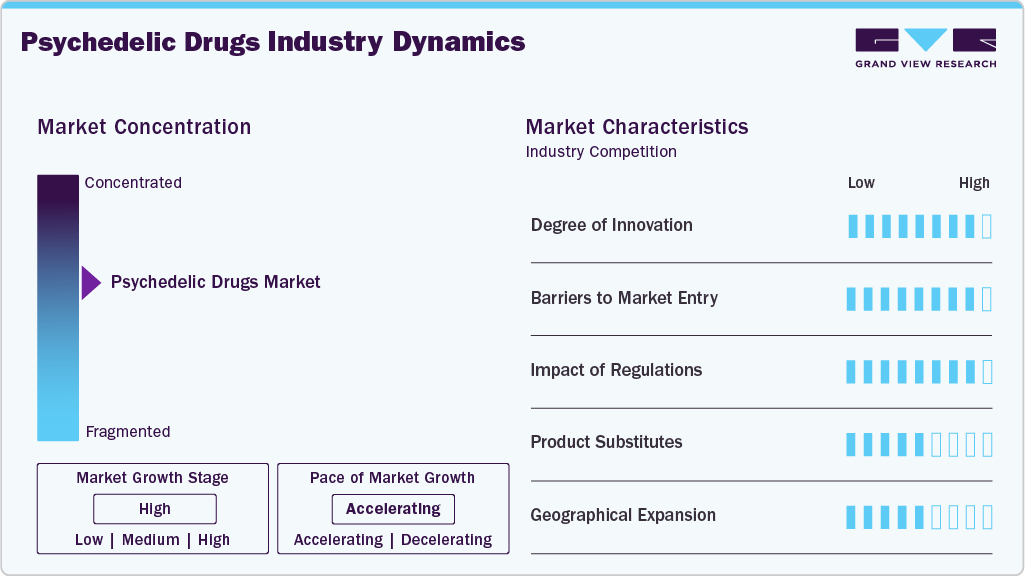
The degree of innovation in the psychedelic drugs industry is high, driven by research into different psychedelic compounds, treatment approaches, formulations, and administration methods. Developers are studying compounds based on psilocybin, DMT, LSD-related substances, and other psychedelic or psychedelic-derived molecules. Innovation also focuses on addressing practical challenges associated with psychedelic treatment, including treatment duration, psychoactive effects, dosing control, patient monitoring, and supervised administration. Companies are developing drug candidates with different pharmacological profiles and treatment models for psychiatric and neurological conditions. Research is also expanding into approaches that separate therapeutic effects from some of the psychoactive characteristics associated with traditional psychedelics. The development pipeline includes programs at different clinical stages, creating a range of approaches across multiple indications. This diversity of products is driving innovation across drug discovery and clinical development. The market, therefore, has a high degree of innovation as companies focus on differentiated compounds and treatment models.
Barriers to market entry in the psychedelic drugs industry are high because companies require specialized scientific, clinical, regulatory, and operational capabilities. Psychedelic compounds are subject to controlled-substance requirements in many countries, creating additional requirements for research, manufacturing, storage, transportation, and clinical use. Clinical development also requires specific approaches for patient selection, dosing, monitoring, and assessment of psychoactive effects. Companies need specialized research teams and access to suitable clinical facilities to conduct psychedelic drug trials. Potential commercial use also requires trained healthcare professionals and appropriate facilities for supervised treatment. Intellectual property protection is another important consideration, particularly for companies developing differentiated compounds or delivery approaches. The cost and complexity of clinical development further increase entry requirements for smaller companies without established research and regulatory capabilities. These factors restrict entry for companies that lack sufficient resources, expertise, clinical infrastructure, and experience with controlled substances. As a result, entry into the psychedelic drugs industry requires capabilities beyond those needed for many conventional pharmaceutical products.
 To learn more about this report, Download Free Sample Report
 The impact of regulations on the psychedelic drugs industry is high because psychedelic substances are subject to controlled drug regulations and specific clinical development requirements. Regulatory authorities assess psychedelic therapies based on safety, efficacy, dosing, treatment durability, patient selection, and clinical trial design. Controlled-substance requirements also affect research, manufacturing, storage, transportation, and administration. Clinical studies require additional consideration of psychoactive effects, patient monitoring, psychological support, and treatment protocols. These requirements influence development timelines and the resources needed to conduct clinical trials. Regulatory decisions also determine whether individual psychedelic compounds progress from clinical development toward commercial use. In 2026, regulatory guidance for psychedelic drug development provided sponsors with recommendations covering clinical investigations and development considerations for psychedelic therapies. This provides greater direction for companies conducting clinical programs while maintaining specific requirements for safety and study design. Regulatory requirements, therefore, have a direct effect on research activity, clinical development, treatment protocols, and commercialization plans. The market remains highly influenced by regulatory decisions because most psychedelic therapies are still under clinical evaluation.
Product substitution in the psychedelic drugs industry is moderate because patients with target conditions already have access to established medicines and non-drug treatment options. Antidepressants, antipsychotics, anti-anxiety medicines, psychotherapy, and other treatment approaches compete with psychedelic therapies across several psychiatric indications. Ketamine-based treatments also provide an alternative for certain patients with treatment-resistant depression. Established therapies have defined prescribing practices and broader clinical use, which gives healthcare providers multiple treatment options. However, psychedelic drugs are being developed for conditions where existing treatments do not provide adequate results for some patients. This creates a specific treatment opportunity for psychedelic therapies rather than direct substitution across the entire pharmaceutical market. Differences in treatment duration, administration requirements, mechanism of action, and clinical response also affect product selection. The availability of established alternatives limits the use of psychedelic therapies, while unmet treatment needs maintain demand for new approaches. As a result, substitution pressure remains moderate within the psychedelic drugs industry.
Geographical expansion in the psychedelic drugs industry is moderate, with clinical research and development activity extending across several countries, while commercial availability remains limited. The U.S. remains an important center for psychedelic drug research because of its active biotechnology sector, clinical trial activity, and regulatory development. Research programs are also being conducted in Europe, Australia, and other regions, increasing the geographic scope of psychedelic drug development. However, companies entering new countries must comply with local controlled substance regulations, clinical trial requirements, manufacturing standards, and healthcare regulations. Differences in national regulations create additional requirements for companies conducting international clinical programs. The specialized administration of psychedelic therapies also requires trained healthcare professionals and suitable treatment facilities, which affects the ability to expand treatment delivery across regions. Limited approved products further restrict commercial expansion. As clinical development progresses and regulatory frameworks become more defined, international research activity is increasing. However, country-specific regulations and limited commercial availability limit geographical expansion.
Analyst Perspective
The market is moving from early clinical research to commercial development, supported by growing drug pipelines, participation by pharmaceutical companies, and research across major psychiatric indications. Clinical results, regulatory requirements, treatment delivery, and product differentiation remain key factors affecting market growth. Progress in these areas is strengthening drug development activity and shaping the pace of market expansion and competition.
Drug Type Insights
The dissociatives segment accounted for 53.5% of the market, supported by established medical use of ketamine-based therapies, clinical familiarity, prescription-based treatment, established treatment protocols, use in depression and anesthesia, and existing healthcare infrastructure. Dissociative therapies have a longer history of medical use than several other psychedelic drug types, giving healthcare providers experience in dosing, administration, and patient monitoring. Their use in treatment-resistant depression has also expanded the therapeutic base for this segment. Existing manufacturing and distribution systems support product availability and supply. The established use of ketamine and esketamine also provides a base for continued research into psychiatric applications. These factors support the leading position of dissociatives within the drug type segments and maintain their role across both established medical applications and emerging psychedelic treatment research.
The classical psychedelics segment is projected to grow at a CAGR of 20.1%, driven by increasing research into psilocybin, LSD, and DMT-based therapies, expansion of clinical programs for depression and anxiety, development of new treatment models, pharmaceutical interest in psychedelic medicines, and research into conditions with limited treatment options. The segment is growing faster as more companies advance classical psychedelic compounds through clinical development and evaluate different dosing and treatment approaches. Research is also expanding across psychiatric indications beyond depression, increasing the development pipeline. Greater regulatory attention is supporting structured clinical research, while pharmaceutical companies are increasing their focus on psychedelic-based treatments. Research into treatment duration, safety, patient selection, and administration is further expanding product development activity. These factors are increasing clinical development across classical psychedelics and supporting faster growth within the drug type segments.
Indication Insights
The depressive disorders segment accounted for 46.9% of the market, supported by the high prevalence of depressive conditions, treatment resistance among some patients, continued research into psychedelic-based therapies, strong clinical development activity, pharmaceutical company participation, and regulatory focus on new treatments for serious mental health conditions. Treatment-resistant depression remains a key focus because existing medicines do not provide adequate response for all patients. Psilocybin-based therapies are also being evaluated for treatment-resistant depression and major depressive disorder, expanding development activity within this indication. The development of therapies with different mechanisms of action is supporting research into additional treatment approaches. Pharmaceutical companies and biotechnology developers are also allocating resources toward clinical programs targeting depressive disorders. In addition, regulatory attention toward psychedelic therapies is supporting structured drug development for psychiatric conditions. These factors provide a broad clinical development base and support the dominant position of depressive disorders within the indication segments.
The anxiety disorders segment is projected to grow at a CAGR of 16.1% driven by increasing clinical research into psychedelic therapies for anxiety-related conditions, unmet treatment needs, expansion of LSD-based drug development, interest in rapid-acting psychiatric treatments, and increasing pharmaceutical participation in mental health research. The segment is gaining research attention as companies evaluate psychedelic compounds for generalized anxiety disorder and related conditions. Development programs are also examining treatment approaches that provide new options for patients who do not respond adequately to existing medicines. Increasing clinical research is expanding the number of compounds being evaluated for anxiety disorders and strengthening the indication pipeline. Research into treatment protocols, dosing, safety, and patient selection is also supporting development activity. Regulatory attention toward psychedelic drug development is further supporting structured clinical research in psychiatric conditions. These factors are expanding development activity within anxiety disorders and supporting its faster growth compared with other indication segments.
Route of Administration Insights
The oral segment accounted for 54.8% of the market, supported by ease of administration, patient convenience, established pharmaceutical manufacturing, flexible dosing, broad formulation options, and existing distribution infrastructure. Oral formulations can be developed as tablets, capsules, liquids, and other dosage forms, allowing companies to use established production and supply processes. This route also avoids injection-related requirements and can fit treatment models that do not require clinical administration. Familiarity with oral medicines among healthcare providers and patients further supports their use. Existing pharmaceutical packaging, storage, and distribution systems also reduce operational requirements for oral products. The route provides flexibility in dose adjustment and product formulation, which is relevant for psychedelic therapies where controlled dosing is important. These factors support oral administration's leading position across the route-of-administration segments.
The intranasal segment is projected to grow at a CAGR of 19.9%, supported by rapid drug delivery, non-invasive administration, reduced dependence on injection equipment, convenient dosing, and growing development of nasal formulations for psychiatric treatments. Intranasal delivery provides absorption through the nasal mucosa and can support faster drug exposure than some oral formulations. This route is gaining development interest for compounds where rapid onset and controlled administration are important. Existing pharmaceutical experience with nasal sprays also provides formulation and manufacturing knowledge to support development activities. Companies are evaluating nasal delivery to address treatment administration requirements and improve the patient experience. Intranasal formulations can also support outpatient treatment models when appropriate medical supervision is available. Research into dosing, absorption, formulation stability, and treatment protocols is expanding the development base for this route. These factors are supporting the faster growth of intranasal administration within the market.
Distribution Channel Insights
The hospital pharmacies segment accounted for 51.2% of the market, supported by controlled dispensing requirements, supervised treatment, specialist healthcare involvement, patient monitoring, established hospital infrastructure, and access to psychiatric and neurological services. Hospital pharmacies provide controlled storage and dispensing of medicines used within hospital-based treatment programs. Their coordination with physicians and clinical teams supports prescription verification, dose management, and the management of patient-specific treatment requirements. Hospitals have established medication procurement systems and trained pharmacy staff, which support the handling of controlled or specialized medicines. The presence of psychiatric departments and treatment facilities within hospitals further supports this distribution channel. Hospital pharmacies also provide access to monitoring services when psychedelic therapies require supervised administration. These factors support the use of hospital-based pharmacy channels and maintain their leading position among distribution channel segments.
 To learn more about this report, Download Free Sample Report
 The specialty pharmacies segment is growing significantly, with a projected 17.7% CAGR, driven by increasing demand for specialized medication handling, patient-specific dispensing, pharmacist involvement, treatment coordination, and support for therapies targeting complex psychiatric conditions. Specialty pharmacies provide focused services for medicines that require specific storage, dispensing procedures, patient education, or coordination with healthcare providers. Their role is gaining importance as psychedelic therapies progress through clinical development toward regulated medical use. Specialty pharmacies can also support treatment programs that require patient screening, medication scheduling, monitoring, and follow-up coordination. The increasing development of psychedelic therapies across depressive disorders, anxiety disorders, and trauma-related conditions is expanding the need for specialized distribution models. Growth in outpatient treatment models further supports specialty pharmacies in coordinating medicine supply with treatment providers. These factors are increasing the use of specialty pharmacy channels and supporting their significant growth within the market.
Regional Insights
North America held 41.2% of the psychedelic drugs market, making it the leading regional market. The region benefits from strong clinical research activity across psilocybin, MDMA, DMT, and other psychedelic compounds. The U.S. accounts for most regional activity due to its large biotechnology base and high number of clinical development programs. Treatment-resistant depression, major depressive disorder, post-traumatic stress disorder, and substance use disorders remain key research areas. The presence of established pharmaceutical companies is increasing activity through pipeline expansion and acquisitions. Strong clinical trial infrastructure and access to specialized psychiatric care also support the development of psychedelic therapies.
 To learn more about this report, Download Free Sample Report
 U.S. Psychedelic Drugs Market Trends
The psychedelic drugs market in the U.S. is the main contributor to North America, supported by a large biotechnology sector and active clinical research. Companies are developing psychedelic therapies for depression, anxiety, post-traumatic stress disorder, and substance use disorders. The country has established clinical trial infrastructure and specialized research centers that support drug development. Pharmaceutical companies are also expanding their neuroscience pipelines through psychedelic drug programs and acquisitions. Research activity covers psilocybin, MDMA, LSD, DMT, and other compounds. The combination of clinical research capacity, pharmaceutical participation, and specialized mental healthcare infrastructure supports the U.S. market.
Europe Psychedelic Drugs Market Trends
The psychedelic drugs market in Europe is an important market for psychedelic drugs, supported by clinical research, pharmaceutical capabilities, and increasing research into psychedelic-assisted therapies. Companies and academic institutions are studying psilocybin, LSD, DMT, and other compounds for depression, anxiety, addiction, and trauma-related disorders. The region has established clinical research networks and pharmaceutical manufacturing capabilities. Research programs across several countries are increasing the clinical evidence base for psychedelic therapies. Differences in national regulations affect the pace of development and future access to treatment. Increasing research activity and pharmaceutical involvement are supporting the development of the European market.
The UK psychedelic drugs market is supported by active academic research, clinical trials, and established neuroscience capabilities. Research institutions are evaluating psychedelic compounds for depression, anxiety, addiction, and trauma-related disorders. DMT-based research is also receiving attention for its potential use in psychiatric conditions. The country has experienced clinical research teams and an established infrastructure for psychiatric studies. Biotechnology companies are contributing to early-stage psychedelic drug development and clinical research. Increasing research into psychedelic-assisted treatment is expanding the development pipeline. These factors support the UK's position as an important European center for psychedelic drug research.
Germany psychedelic drugs market is a key European market, supported by its pharmaceutical industry, clinical research infrastructure, and specialist healthcare system. Research institutions are studying psilocybin and other psychedelic compounds for depression and related psychiatric conditions. The country's pharmaceutical sector provides capabilities in drug discovery, clinical development, and manufacturing. German research centers also participate in European clinical studies, increasing collaboration across the region. Research activity includes evaluation of treatment protocols, dosing, safety, and patient response. These capabilities provide a base for continued psychedelic drug research and support Germany's position within the European market.
France psychedelic drugs market is supported by academic research, pharmaceutical capabilities, and increasing interest in new treatments for psychiatric conditions. Research is focused on the safety, therapeutic effects, and treatment protocols associated with psychedelic compounds. French research institutions also participate in European clinical programs, expanding the country's involvement in psychedelic drug development. The established pharmaceutical industry provides capabilities in clinical research, drug development, and manufacturing. Research into depression, anxiety, and related mental health conditions is creating a base for future psychedelic therapies. The market remains in an early stage of development, with clinical evidence and regulatory requirements shaping its progress.
Asia Pacific Psychedelic Drugs Market Trends
The psychedelic drugs market in the Asia Pacific is projected to register the fastest CAGR of 18.3%. The region is supported by expanding clinical research, increasing mental health treatment needs, biotechnology development, and growing interest in new psychiatric therapies. Japan, China, and Australia are key markets contributing to regional research activity. Australia has developed clinical experience with regulated psychedelic-assisted treatment, supporting research and treatment knowledge. Japan contributes strong capabilities in pharmaceuticals and clinical research, while China provides a large pharmaceutical manufacturing and biotechnology base. The region's large patient population and expanding research activity support faster growth in psychedelic drug development.
Japan psychedelic drugs market is supported by its large pharmaceutical industry, clinical research capabilities, and established focus on neurological and psychiatric diseases. Japanese pharmaceutical companies have experience in central nervous system drug development, providing a base for research into psychedelic-based treatments. Research institutions are evaluating new approaches for psychiatric conditions, including depression and anxiety. The country's healthcare infrastructure also supports clinical research and future treatment delivery. Japan's aging population increases the need for new approaches to neurological and mental health conditions. Controlled-substance requirements remain an important factor affecting psychedelic drug research and development. These factors support continued market development in Japan.
The psychedelic drugs market in China is supported by its growing biotechnology sector, pharmaceutical manufacturing capabilities, and expanding research capacity. Domestic companies have developed capabilities in drug discovery, clinical research, and pharmaceutical production that support research into new psychiatric medicines. The country's large population provides a broad patient base for therapies targeting depression, anxiety, and substance use disorders. Research institutions are also increasing their work in neuroscience and psychiatric drug development. Clinical research and regulatory requirements continue to shape the development of psychedelic therapies. The combination of pharmaceutical capabilities, research capacity, and a large healthcare market supports China's role in the Asia Pacific market.
Latin America Psychedelic Drugs Market Trends
The psychedelic drugs market in Latin America is an emerging market, supported by growing research interest, mental health treatment needs, and existing knowledge of psychedelic substances. Brazil is the main contributor to regional research activity due to its large healthcare sector and academic research base. Researchers are studying psychedelic compounds for depression, anxiety, addiction, and other psychiatric conditions. The region also has research experience with naturally occurring psychedelic substances, supporting scientific interest in their therapeutic applications. Pharmaceutical capabilities vary across countries, affecting clinical development activities. Differences in controlled-substance regulations also influence research and future access to treatment. These factors are supporting the gradual development of the regional market.
Brazil psychedelic drugs market is a key Latin American market for psychedelic drugs, supported by its large population, research institutions, pharmaceutical industry, and established research interest in psychedelic compounds. Academic research has examined substances such as ayahuasca in relation to depression and other psychiatric conditions. Clinical research is also expanding toward psychedelic-assisted treatment approaches. Brazil's pharmaceutical industry provides capabilities in drug development, clinical research, and manufacturing. Its large healthcare system provides access to a broad patient population for future psychedelic therapies. Controlled-substance regulations remain an important factor affecting clinical research and potential medical use. These conditions support Brazil's position as an emerging market for psychedelic drug development.
Middle East & Africa Psychedelic Drugs Market Trends
The psychedelic drugs market in MEA remains at an early development stage, with activity focused mainly on research and emerging interest in new psychiatric treatments. Mental health needs across the region are drawing increasing attention toward additional treatment approaches. South Africa has research capabilities that contribute to psychedelic drug studies, while selected Middle Eastern countries are developing specialized mental healthcare infrastructure. Pharmaceutical distribution networks provide a base for future drug access. Limited clinical research capacity and differences in controlled-substance regulations restrict broader development across several countries. The availability of trained mental health professionals also affects the future delivery of psychedelic therapies. These factors keep regional market development in its early stages.
Saudi Arabia psychedelic drugs market remains at an early development stage, with activity focused on mental healthcare development and emerging research interest. The country's expanding healthcare infrastructure is increasing access to specialized psychiatric services. Growing attention to depression, anxiety, and other mental health conditions is increasing the need for new treatment approaches. The pharmaceutical sector provides established capabilities in healthcare distribution and medicine supply. Controlled-substance requirements remain a key factor affecting research and potential clinical use of psychedelic compounds. Local clinical development of psychedelic therapies remains limited compared with North America and Europe. Continued development of psychiatric healthcare infrastructure provides a base for future research and potential market expansion.
Key Psychedelic Drugs Company Insights
The market includes a mix of specialized biotechnology companies and established pharmaceutical companies, resulting in a fragmented competitive structure. Compass Pathways plc is a key player with a focus on psilocybin-based therapies for treatment-resistant depression. GH Research plc and Definium Therapeutics, Inc. are advancing psychedelic-based programs for psychiatric conditions. Helus Pharma Inc. and Incannex Healthcare Limited are also involved in psychedelic drug development. Large pharmaceutical companies, including Johnson & Johnson, Eli Lilly and Company, Otsuka Pharmaceutical Co., Ltd., and AbbVie Inc., are increasing their presence through neuroscience pipeline expansion and acquisitions. Optimi Health Corp. is developing and commercializing psychedelic-based products. The market remains fragmented, and no single company holds a dominant market share due to the limited number of commercially available psychedelic medicines. Market position is mainly influenced by clinical pipeline progress, regulatory developments, intellectual property, product development, and strategic transactions.
Key Psychedelic Drugs Companies
The following key companies have been profiled for this study on the psychedelic drugs market:
-
Compass Pathways plc
-
Definium Therapeutics, Inc.
-
Helus Pharma Inc.
-
GH Research plc
-
Johnson & Johnson
-
Eli Lilly and Company
-
Otsuka Pharmaceutical Co., Ltd.
-
AbbVie Inc.
-
Incannex Healthcare Limited
-
Optimi Health Corp.
Competitive Benchmarking
Operating Strategies
Competitive Edge
Weaknesses
Mature Players: Johnson & Johnson
- Mature players focus on expanding neuroscience pipelines, advancing clinical-stage psychedelic programs, acquiring specialized drug assets, and using established research and regulatory capabilities to develop new treatments for psychiatric disorders.
- Their strategies also include portfolio diversification and integration of psychedelic programs with broader mental health operations.
- These companies benefit from established clinical development capabilities, regulatory experience, financial resources, research infrastructure, and access to global healthcare networks.
- Their existing neuroscience portfolios also provide experience in psychiatric drug development and commercialization.
- Mature players face high development costs, complex clinical requirements, controlled-substance regulations, and the need to adapt existing pharmaceutical processes to psychedelic treatment models.
- Large organizational structures can also slow decisions around emerging drug platforms.
Emerging Players: Delix Therapeutics, Inc.
- Emerging players focus on specialized psychedelic and psychedelic-derived drug programs, clinical development, proprietary compounds, and targeted psychiatric indications.
- Their strategies include advancing focused pipelines, developing differentiated drug candidates, and building capabilities around manufacturing or specialized treatment approaches.
- These companies have focused psychedelic drug pipelines, specialized scientific capabilities, and greater flexibility in directing resources toward specific compounds and indications.
- Their smaller operating structures also support focused development programs.
- Emerging players face limited financial resources, smaller clinical and commercial infrastructure, dependence on successful clinical outcomes, and limited experience with large-scale commercialization.
- They also face regulatory and manufacturing requirements that can increase development costs and timelines.
Recent Developments
-
In July 2026, Eli Lilly agreed to acquire AtaiBeckley to expand its neuroscience pipeline with psychedelic-derived therapies for treatment-resistant depression and other mental health conditions.
-
In September 2025, Optimi Health launched natural psilocybin capsules in Australia for treatment-resistant depression.
-
In April 2025, Johnson & Johnson completed the acquisition of Intra-Cellular Therapies, adding its neuroscience portfolio to Johnson & Johnson’s mental health business.
Psychedelic Drugs Market Report Scope
Report Attribute
Details
Market size in 2025
USD 4.1 billion
Estimated market size in 2026
USD 4.7 billion
Projected market size by 2033
USD 11.7 billion
Growth rate
CAGR of 14.1% from 2026 to 2033
Historical data
2021 - 2025
Forecast period
2026 - 2033
Quantitative units
Revenue in USD billion and CAGR from 2026 to 2033
Report coverage
Revenue forecast, company ranking, competitive landscape, growth factors, trends
Segments covered
Drug type, indication, route of administration, distribution channel, region
Regional scope
North America; Europe; Asia Pacific; Latin America; MEA
Country scope
U.S.; Canada; Mexico; UK; Germany; France; Italy; Spain; Denmark; Sweden; Norway; China; Japan; India; Australia; South Korea; Thailand; Brazil; Argentina; South Africa; Saudi Arabia; UAE; Kuwait
Key company profiled
Compass Pathways plc; Definium Therapeutics, Inc.; Helus Pharma Inc.; GH Research plc; Johnson & Johnson; Eli Lilly and Company; Otsuka Pharmaceutical Co., Ltd.; AbbVie Inc.; Incannex Healthcare Limited; Optimi Health Corp.
Customization scope
Free report customization (equivalent up to 8 analysts working days) with purchase. Addition or alteration to country, regional & segment scope.
Pricing and purchase options
Avail customized purchase options to meet your exact research needs. Explore purchase options
Global Psychedelic Drugs Market Report Segmentation
This report forecasts revenue growth at global, regional, and country levels and provides an analysis of the latest industry trends in each of the sub-segments from 2021 to 2033. For this study, Grand View Research has segmented the global psychedelic drugs market report based on drug type, indication, route of administration, distribution channel, and region:
-
Drug Type Outlook (Revenue, USD Million, 2021 - 2033)
-
Classical Psychedelics
-
Entactogens
-
Dissociatives
-
Others
-
-
Indication Outlook (Revenue, USD Million, 2021 - 2033)
-
Depressive Disorders
-
Trauma- and Stressor-Related Disorders
-
Anxiety Disorders
-
Substance Use Disorders
-
Obsessive-Compulsive and Related Disorders
-
End-of-Life Psychological Distress
-
Others
-
-
Route of Administration Outlook (Revenue, USD Million, 2021 - 2033)
-
Oral
-
Intranasal
-
Parenteral
-
Others
-
-
Distribution Channel Outlook (Revenue, USD Million, 2021 - 2033)
-
Hospital Pharmacies
-
Specialty Pharmacies
-
Retail Pharmacies
-
Others
-
-
Regional Outlook (Revenue, USD Million, 2021 - 2033)
-
North America
-
U.S.
-
Canada
-
Mexico
-
-
Europe
-
UK
-
Germany
-
France
-
Italy
-
Spain
-
Denmark
-
Sweden
-
Norway
-
-
Asia Pacific
-
Japan
-
China
-
India
-
Australia
-
South Korea
-
Thailand
-
-
Latin America
-
Brazil
-
Argentina
-
-
Middle East & Africa
-
South Africa
-
Saudi Arabia
-
UAE
-
Kuwait
-
-
Research Methodology
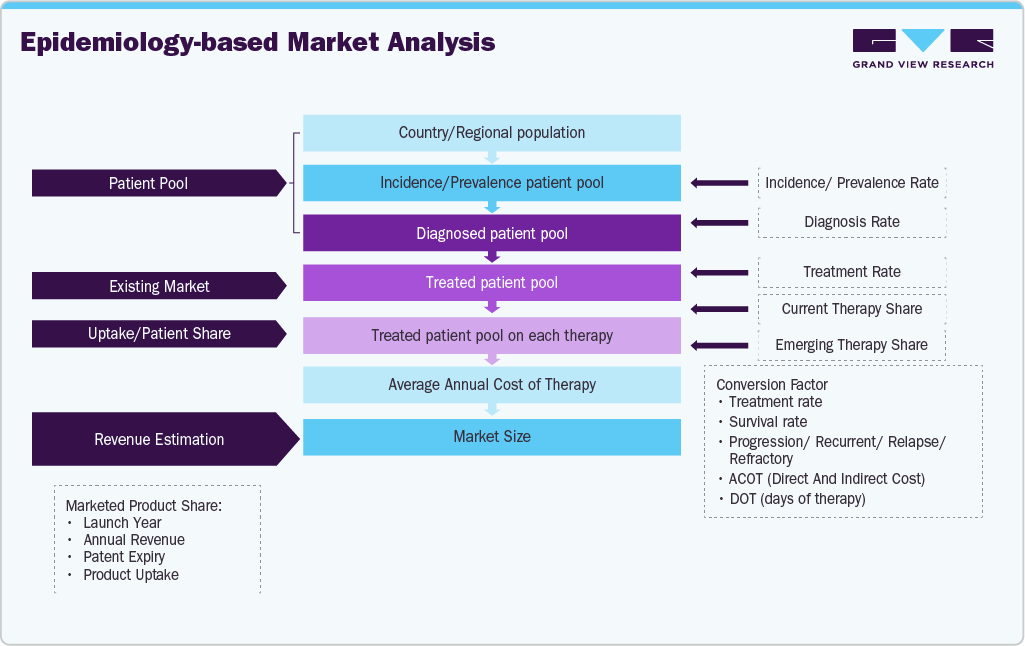
The psychedelic drugs market is estimated using the epidemiology-based approach. The process begins by identifying the patient population across major indications, including depressive disorders, anxiety disorders, post-traumatic stress disorder, and substance use disorders. Key patient populations are assessed based on disease prevalence, diagnosis rates, treatment rates, and eligibility for psychedelic-based therapies. The addressable patient pool is then estimated for each indication and country based on available epidemiological and healthcare data. The treated patient population is allocated across relevant psychedelic therapies based on treatment use, clinical adoption, treatment protocols, and patient distribution. Average annual treatment cost is estimated using published drug prices, treatment frequency, administration requirements, and healthcare delivery costs. The patient population for each therapy is multiplied by the applicable annual treatment cost to estimate therapy-level value. These values are aggregated across therapies, indications, and countries to derive the total market size. Secondary data and company disclosures are used to validate the market estimates.
Segment Definition
Segment - Drug Type
Revenue capture definition
Classical Psychedelics
Refers to psychedelic drugs that primarily act on serotonin receptors and produce changes in perception, cognition, mood, and sensory experience. This segment includes psilocybin, LSD, DMT, mescaline, and related compounds developed or used for therapeutic applications.
Entactogens
Refers to psychedelic drugs that primarily produce effects associated with emotional openness, empathy, and increased interpersonal connection. This segment includes MDMA and related compounds developed or used for therapeutic applications, particularly in trauma-related conditions.
Dissociatives
Refers to psychedelic drugs that primarily produce changes in perception, awareness, cognition, and the sense of self through dissociative mechanisms. This segment includes ketamine, esketamine, and related dissociative compounds developed or used for therapeutic applications.
Others
Refers to psychedelic drugs that do not fall under classical psychedelics, entactogens, or dissociatives based on their primary pharmacological and psychoactive effects. This segment includes other psychedelic or psychedelic-derived compounds developed for therapeutic use.
Segment - Indication
Revenue capture definition
Depressive Disorders
Refers to the use or development of psychedelic drugs for depressive conditions characterized by persistent low mood, loss of interest, and related symptoms. This segment includes major depressive disorder and treatment-resistant depression.
Trauma- and Stressor-Related Disorders
Refers to the use or development of psychedelic drugs for disorders associated with exposure to traumatic or stressful events. This segment includes post-traumatic stress disorder and other clinically recognized trauma- and stressor-related disorders.
Anxiety Disorders
Refers to the use or development of psychedelic drugs for disorders characterized by excessive fear, worry, or anxiety that affects daily functioning. This segment includes generalized anxiety disorder and other clinically recognized anxiety disorders.
Substance Use Disorders
Refers to the use or development of psychedelic drugs for disorders involving problematic use of psychoactive substances, dependence, or related behavioral symptoms. This segment includes alcohol use disorder and other substance use disorders targeted by psychedelic therapies.
Obsessive-Compulsive and Related Disorders
Refers to the use or development of psychedelic drugs for disorders involving persistent intrusive thoughts, repetitive behaviors, or related symptoms. This segment includes obsessive-compulsive disorder and other clinically recognized obsessive-compulsive and related disorders.
End-of-Life Psychological Distress
Refers to the use or development of psychedelic drugs for psychological symptoms associated with serious or terminal illness and end-of-life care. This segment includes depression, anxiety, emotional distress, and related psychological symptoms occurring in patients receiving end-of-life care.
Others
Refers to the use or development of psychedelic drugs for therapeutic indications that do not fall under depressive disorders, trauma- and stressor-related disorders, anxiety disorders, substance use disorders, obsessive-compulsive and related disorders, or end-of-life psychological distress.
Segment - Route of Administration
Revenue capture definition
Oral
Refers to psychedelic drugs administered through the mouth for absorption through the gastrointestinal tract. This segment includes tablets, capsules, liquids, and other oral formulations developed or used for therapeutic treatment.
Intranasal
Refers to psychedelic drugs administered through the nasal passages for absorption through the nasal mucosa. This segment includes nasal sprays and other intranasal formulations developed or used for therapeutic treatment.
Parenteral
Refers to psychedelic drugs administered through injection or infusion that bypass the gastrointestinal tract. This segment includes intravenous, intramuscular, and other injectable formulations developed or used for therapeutic treatment.
Others
Refers to psychedelic drugs administered through routes other than oral, intranasal, or parenteral delivery. This segment includes sublingual, buccal, inhaled, transdermal, and other routes of administration used or developed for therapeutic treatment.
Segment - Distribution Channel
Revenue capture definition
Hospital Pharmacies
Refers to pharmacy units located within hospitals that procure, store, dispense, and manage psychedelic drugs for patients receiving hospital-based treatment. This segment includes distribution through inpatient and hospital outpatient pharmacy services.
Specialty Pharmacies
Refers to pharmacies that dispense psychedelic drugs requiring specialized handling, storage, patient support, or coordination with healthcare providers. This segment covers pharmacy services for complex therapies requiring specialized treatment management.
Retail Pharmacies
Refers to community-based pharmacies that dispense psychedelic drugs directly to patients through prescriptions and applicable dispensing procedures. This segment includes independent and chain pharmacies operating outside hospital-based pharmacy services.
Others
Refers to authorized distribution channels other than hospital, specialty, and retail pharmacies through which psychedelic drugs are supplied to healthcare providers or patients. This segment includes direct distribution, specialized treatment centers, clinics, and other authorized dispensing channels.
Estimation Model
 To learn more about this report, Download Free Sample Report
 Delivered Customizations
This report has been delivered with the following In-depth customizations
Client Request
Customization Delivered
Value Adds
Global Psychedelic Drugs Market Opportunity Assessment (U.S., Europe & Asia Pacific)
Conducted a detailed assessment of the psychedelic drugs market across the U.S., Germany, UK, France, Japan, China, and Australia. The study evaluated market dynamics, clinical development pipelines, key indications, drug types, routes of administration, regulatory frameworks, treatment models, competitive activity, and regional market conditions.
Supported the client in identifying priority markets, assessing commercial opportunities, evaluating regional competitive intensity, and understanding factors affecting market entry. The study also supported geographic expansion planning, portfolio strategy, and resource allocation across key psychedelic drug markets.
Psychedelic Drugs Pipeline & Competitive Benchmarking
Delivered a competitive benchmarking assessment of key psychedelic drug companies and their development pipelines. The analysis covered classical psychedelics, entactogens, dissociatives, and other drug types across depressive disorders, anxiety disorders, trauma- and stressor-related disorders, and substance use disorders. The assessment reviewed clinical development stages, product profiles, pipeline focus, strategic initiatives, and competitive positioning.
Enabled the client to benchmark competitors, assess pipeline strength, identify product development gaps, and evaluate potential areas for portfolio expansion. The analysis supported competitive strategy, pipeline prioritization, business development assessment, and positioning within the psychedelic drugs market.
Emerging Market Psychedelic Drugs Development & Treatment Feasibility Study
Conducted a country-level assessment of psychedelic drug development and treatment opportunities across selected emerging markets. The study assessed patient needs, clinical research activity, healthcare infrastructure, treatment delivery models, regulatory requirements, specialist availability, distribution channels, and market access conditions.
Supported the client in identifying markets with development and commercial potential, assessing market entry requirements, and evaluating treatment delivery gaps. The study also supported geographic prioritization, resource allocation, business development planning, and assessment of future commercial opportunities across emerging psychedelic drug markets.
Frequently Asked Questions About This Report
The global psychedelic drugs market size was valued at USD 4.1 billion in 2025 and is estimated at USD 4.7 billion for 2026.
The global psychedelic drugs market is expected to grow at a CAGR of 14.1% from 2026 to 2033, reaching USD 11.7 billion.
Key factors include increasing investment in psychedelic drug development, growing clinical research for mental health disorders, rising unmet needs in treatment-resistant depression and other psychiatric conditions, pharmaceutical and biotechnology company participation, and increasing regulatory attention toward psychedelic therapies.
North America dominated with a 41.2% revenue share in 2025, supported by strong clinical research activity, established biotechnology capabilities, clinical trial infrastructure, and specialized psychiatric care.
Asia Pacific is the fastest-growing regional market over the forecast period.
The dissociatives segment led with a 53.5% revenue share in 2025, while classical psychedelics is the fastest-growing segment, projected to expand at a CAGR of 20.1% from 2026 to 2033.
Depressive disorders held the largest revenue share of 46.9% in 2025, while anxiety disorders is the fastest-growing indication, with a projected CAGR of 16.1% from 2026 to 2033.
The oral segment led with a 54.8% revenue share in 2025, while intranasal administration is the fastest-growing route, with a projected CAGR of 19.9% from 2026 to 2033.
Key players include Compass Pathways plc, Definium Therapeutics, Inc., Helus Pharma Inc., GH Research plc, Johnson & Johnson, Eli Lilly and Company, Otsuka Pharmaceutical Co., Ltd., AbbVie Inc., Incannex Healthcare Limited, and Optimi Health Corp.
About the Author(s)
Pharmaceuticals Research Team
Healthcare · PharmaceuticalsThis report was authored by the pharmaceuticals research team at Grand View Research - comprising two research analysts, one senior research analyst, and one industry expert - with specialized expertise in the pharmaceuticals segment of the healthcare industry. All findings are based on proprietary healthcare databases, executive interviews, and regulatory analysis, subject to internal peer review prior to publication.
Last Updated:
Speak to Analyst

Customize this report to your needs - add regions, segments, or data points, with 20% free customization.
Or view our licence options:


ISO 9001:2015 & 27001:2022 Certified
We are GDPR and CCPA compliant! Your transaction & personal information is safe and secure. For more details, please read our privacy policy.


