
- Home
- »
- Pharmaceuticals
- »
-
Radiopharmaceutical CRO Market Size Report, 2026-2033GVR Report cover

Radiopharmaceutical CRO Market (2026 - 2033)
Size, Share & Trends Analysis Report By Service (Clinical Development & Trial Management Services), By Radiopharmaceutical Type, By Radionuclide, By Development Stage, By Application, By End User, By Region, And Segment Forecasts
Market Size, 2025
$1.5BMarket Estimate, 2026
$1.7BMarket Forecast, 2033
$3.9BCAGR, 2026–2033
12.7%Radiopharmaceutical CRO Market Summary
The global radiopharmaceutical CRO market size was valued at USD 1.5 billion in 2025 and is projected to grow from USD 1.7 billion in 2026 to USD 3.9 billion by 2033, at a CAGR of 12.7% from 2026 to 2033. North America dominated the market, accounting for the largest revenue share of 46.0% in 2025. The market growth is driven by the expanding radioligand therapy pipeline, increasing adoption of targeted radiopharmaceuticals in oncology, and rising complexity of radiopharmaceutical clinical trials.
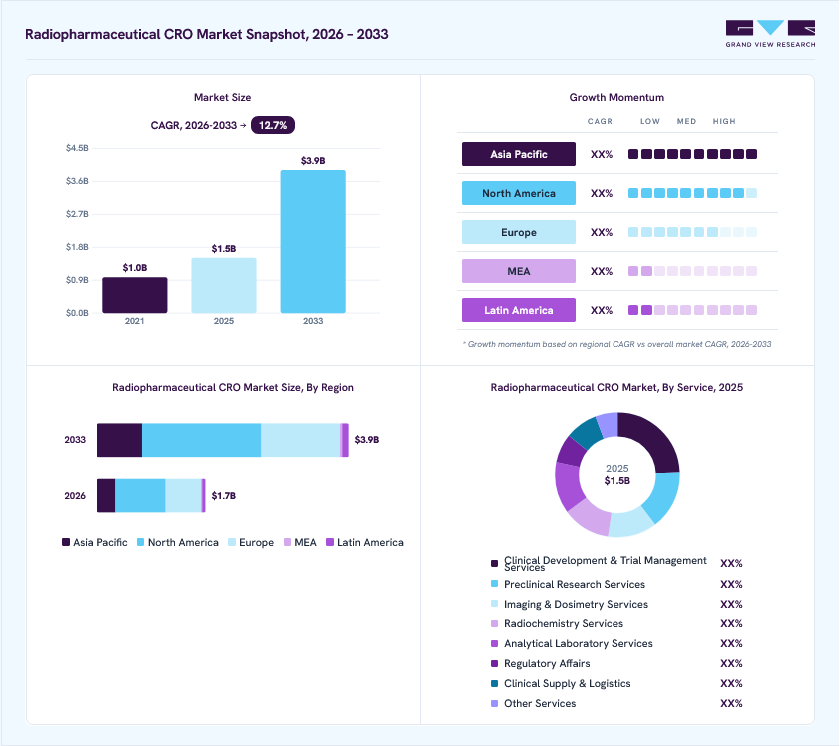 Source: Grand View Research, IR Documents, Primary Interviews, Paid DatabasesTo learn more about this report,
 Download Free Sample Report
Key Market Trends & Insights
- By service: Clinical development & trial management services held the largest revenue share of 24.4% in 2025
- By radiopharmaceutical type: Therapeutic segment held the largest revenue share of 45.2% in 2025
- By radionuclide: Therapeutic radionuclides held the largest revenue share of 58.4% in 2025
- By development stage: Phase III segment held the largest revenue share of 28.2% in 2025
- By application: Oncology held the largest revenue share of 67.5% in 2025
- By end user: Radiopharmaceutical companies held the largest revenue share of 42.0% in 2025
Regional Highlights
- Largest regional market: North America (46.0% revenue share, 2025)
- Fastest-growing regional market: Asia Pacific (highest CAGR, 2026-2033)
- By country: The U.S. radiopharmaceutical CRO industry held the largest share of North America in 2025
Market Size & Forecast
- Market Size in 2025: USD 1.5 Billion
- Estimated Market Size in 2026: USD 1.7 Billion
- Projected Market Size by 2033: USD 3.9 Billion
- CAGR (2026-2033): 12.7%
Prism AI by Grand View Research Free to tryAsk a question about the radiopharmaceutical CRO marketTry asking✓Every figure cited from GVR research Prefer the report? Download free sample →
The growing demand for specialized imaging and dosimetry services, and increasing outsourcing of discovery, preclinical, clinical, analytical, regulatory, and logistics activities to specialized CROs are expected to further fuel the growth of the radiopharmaceutical CRO industry. The short half-lives of radioisotopes, specialized site and facility requirements, radiation safety considerations, and stringent regulatory requirements further increase the need for experienced service providers. The expansion of radiopharmaceutical development across oncology, neurology, and cardiology is expected to support demand for specialized CRO capabilities over the coming years.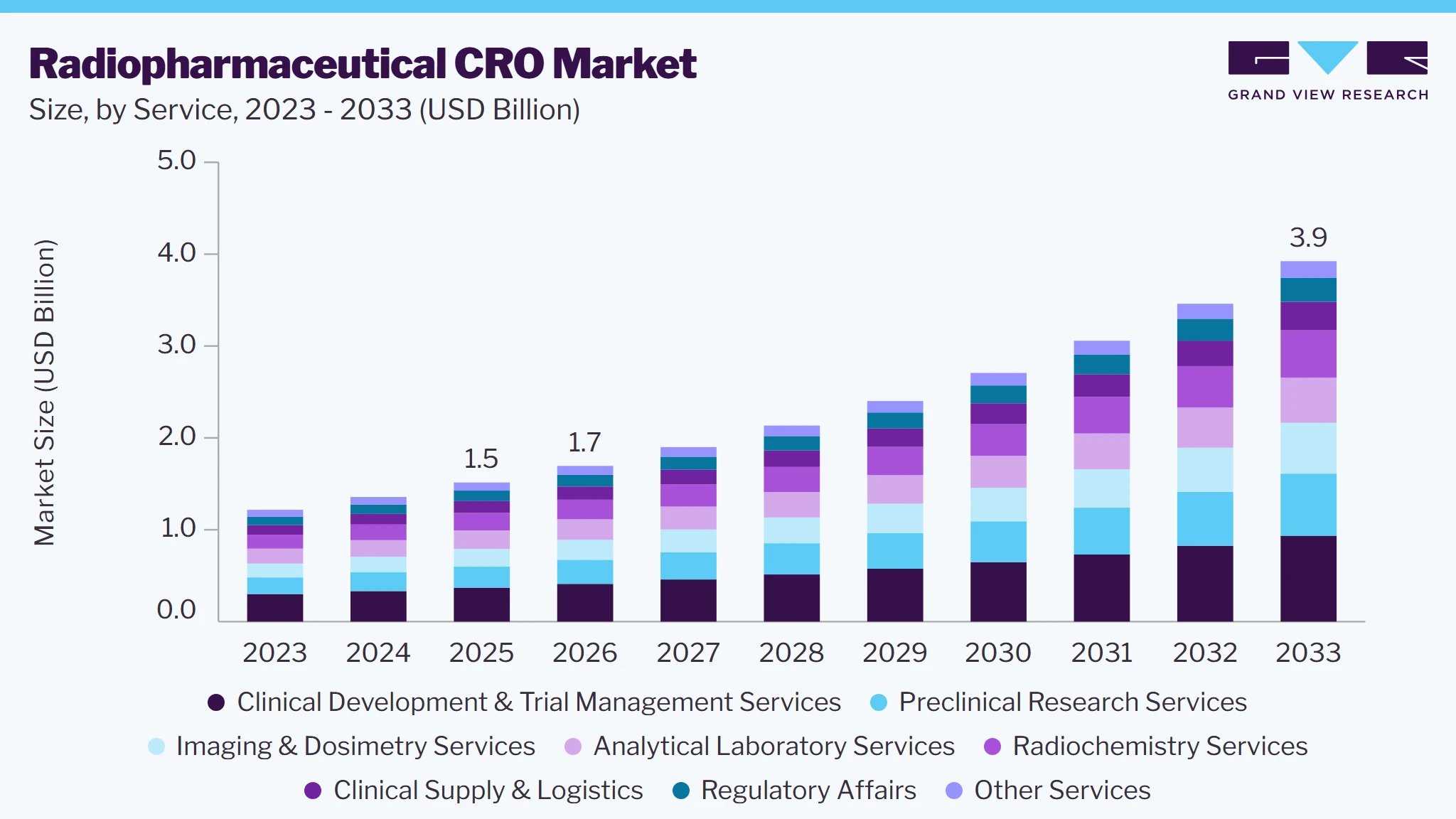 To learn more about this report, Download Free Sample Report
Market Dynamics
The expanding radioligand therapy pipeline remains a significant growth driver for the market. The increasing use of targeted radionuclides in cancer treatment is generating demand for clinical trial management, dosimetry, imaging, bioanalytical testing, regulatory support, and clinical supply services. For instance, in June 2025, Telix Pharmaceuticals announced that the U.S. Food and Drug Administration (FDA) approved a label expansion for Illuccix (gallium-68 gozetotide) to include patient selection for radioligand therapy (RLT) in the pre-taxane setting. The expanded indication supports earlier identification of patients with prostate cancer eligible for PSMA-directed therapy in the treatment pathway and is expected to increase Illuccix utilization by at least 20,000 scans annually, thereby supporting demand for PSMA PET imaging and radiopharmaceutical clinical development services.
The increasing complexity of radiopharmaceutical development is further supporting demand for specialized CRO services. Radiopharmaceutical programs require coordination across radioisotope handling, radiochemistry, pharmacokinetics, biodistribution, dosimetry, imaging, clinical logistics, and regulatory compliance, while short isotope half-lives place additional requirements on study execution and sample handling. However, high infrastructure requirements, specialized handling of radioactive materials, limited availability of qualified clinical sites, short isotope half-lives, complex logistics, and stringent regulatory requirements can increase CRO costs and restrict service capacity. Furthermore, increasing adoption of radioligand therapy, expansion into earlier treatment lines and additional tumor types, growing theranostic development, and continued investment in specialized radiopharmaceutical infrastructure create opportunities for CROs with integrated clinical, imaging, dosimetry, analytical, regulatory, and logistics capabilities.
Thus, the radiopharmaceutical CRO market is expected to grow as pharmaceutical and biotechnology companies advance increasingly complex radiopharmaceutical pipelines and seek specialized external capabilities to manage development, clinical execution, regulatory requirements, imaging, dosimetry, and time-sensitive supply activities. The expansion of radioligand therapies and continued investment in radiopharmaceutical infrastructure are expected to create sustained demand for specialized CRO services, while regulatory complexity, radioactive material handling requirements, and limited specialized infrastructure will continue to shape competitive positioning.
The increasing adoption of targeted radioligand therapies is a major driver of the Radiopharmaceutical CRO market. The expansion of radioligand therapies across oncology is increasing demand for specialized clinical development, imaging, dosimetry, bioanalytical, regulatory, and clinical supply services. The broader use of these therapies also increases the need for CROs with capabilities in radioactive material handling and time-sensitive clinical operations. For instance, in March 2025, the U.S. FDA approved earlier use of Novartis's Pluvicto for PSMA-positive metastatic castration-resistant prostate cancer, approximately tripling the eligible patient population. The company reported that the Phase III PSMAfore trial reduced the risk of progression or death by 59% compared with the control arm. The broader use of radioligand therapies is expected to increase the number of clinical programs requiring specialized CRO capabilities across development and commercialization stages.
The specialized requirements associated with radiopharmaceutical clinical development remain a key restraint for the market. Radiopharmaceutical CRO programs require capabilities spanning radioactive material handling, radiochemistry, dosimetry, imaging, bioanalysis, specialized logistics, and regulatory licensing, thereby limiting the number of CROs capable of providing comprehensive services. The short half-lives of many radioisotopes also impose strict time constraints on manufacturing, sample processing, transportation, and clinical administration. Labcorp Holdings Inc. states that radiopharmaceutical development involves the complex interplay of biology, chemistry, nuclear physics, and regulatory oversight, and that its services require licensed facilities for radioactive materials and time-sensitive sample processing. These requirements can increase project complexity and restrict the available CRO service base.
The expansion of radiopharmaceutical development into additional cancer indications and therapeutic targets presents a significant opportunity for CRO service providers. Pharmaceutical and biotechnology companies are advancing radioligand and targeted radionuclide programs across a broader range of tumor types and molecular targets, increasing demand for preclinical efficacy studies, biodistribution, dosimetry, clinical trial management, imaging, analytical testing, and regulatory services. The growing focus on less established tumor indications and emerging biological targets is increasing the need for specialized development expertise and clinical research capabilities. This expansion is expected to broaden the addressable opportunity for radiopharmaceutical CROs beyond established oncology applications and support demand across multiple stages of the development lifecycle.
Market Concentration & Characteristics
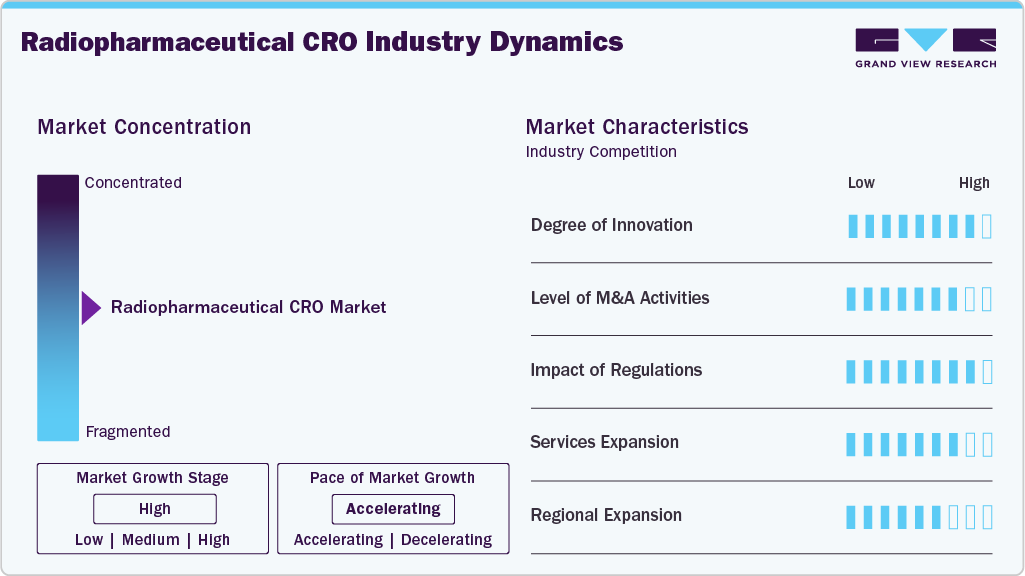
The radiopharmaceutical CRO market’s growth stage is high, and the pace of growth is accelerating. The market is characterized by the degree of innovation, level of M&A activities, regulatory impact, service expansion, and regional expansion.
Innovation remains a significant competitive factor in the radiopharmaceutical CRO industry, with service providers adopting advanced molecular imaging, quantitative PET and SPECT analysis, automated radiochemistry, patient-specific radiation dosimetry, and digital clinical trial platforms. The increasing complexity of radiopharmaceutical development is encouraging CROs to strengthen specialized capabilities in imaging, biodistribution, radiochemistry, bioanalysis, and dosimetry. Technological advancements allow providers to improve study accuracy, support complex development programs, enhance data processing, and expand specialized service offerings.
 To learn more about this report, Download Free Sample Report
Mergers and acquisitions continue to influence the market by expanding specialized capabilities, increasing geographic coverage, and broadening clinical and pre-clinical service portfolios. Strategic transactions allow CROs to gain expertise in radiopharmaceutical development, nuclear medicine, molecular imaging, dosimetry, radiochemistry, and clinical trial management. Acquisitions can also provide access to specialized personnel, research facilities, technology platforms, and pharmaceutical customers, supporting broader participation across the radiopharmaceutical development lifecycle.
Regulatory requirements remain a major factor shaping the radiopharmaceutical CRO market, particularly because service providers must address requirements related to radioactive material handling, Good Clinical Practice, Good Laboratory Practice, Good Manufacturing Practice, radiation safety, clinical trial authorization, and pharmaceutical quality. Requirements vary across regulatory jurisdictions and can increase the operational complexity of radiopharmaceutical studies. CROs with appropriate licenses, qualified personnel, validated processes, and established regulatory capabilities are better positioned to support sponsors across international development programs.
Radiopharmaceutical CROs are expanding their service portfolios to provide broader development support across discovery, preclinical research, clinical development, imaging, dosimetry, radiochemistry, analytical testing, regulatory affairs, and clinical supply and logistics. Providers are increasingly combining specialized services within integrated development programs, allowing pharmaceutical and biotechnology companies to access multiple capabilities through fewer external partners. Service expansion also enables CROs to participate across multiple development stages and address the specialized requirements of diagnostic, therapeutic, and theranostic radiopharmaceutical programs.
Regional expansion is strengthening the geographic presence of radiopharmaceutical CROs as companies establish or expand specialized capabilities across North America, Europe, and the Asia Pacific. Expansion is focused on access to pharmaceutical development centers, nuclear medicine expertise, qualified clinical sites, radiopharmaceutical infrastructure, and regional regulatory capabilities. Geographic diversification allows CROs to support multinational clinical programs, improve access to specialized facilities, and address regional requirements for radioactive material handling, clinical research, imaging, and radiopharmaceutical logistics.
Analyst Perspective
The radiopharmaceutical CRO market is experiencing strong growth, driven by increasing radiopharmaceutical development activity, expansion of targeted radioligand therapies, and greater outsourcing of specialized development activities. The growing pipeline of diagnostic, therapeutic, and theranostic radiopharmaceuticals is increasing demand for preclinical research, clinical trial management, molecular imaging, radiation dosimetry, radiochemistry, analytical testing, regulatory affairs, and clinical supply services. Furthermore, increasing oncology applications, development of novel radionuclide therapies, and expansion of radiopharmaceutical infrastructure are expected to support continued market growth.
Impact of U.S. Tariffs on the Radiopharmaceutical CRO Market
The current U.S. tariff environment has a limited direct impact on radiopharmaceutical CRO services because the U.S. administration's April 2026 pharmaceutical tariff framework provides zero-tariff treatment for nuclear medicines when the stated eligibility conditions are met. The proclamation also identifies cell and gene therapies, antibody drug conjugates, orphan drugs, and certain other specialty pharmaceutical products for potential zero-tariff treatment, while imposing differentiated tariffs on other patented pharmaceuticals and associated ingredients. The applicable pharmaceutical tariff provisions took effect on July 31, 2026, for specified companies and are scheduled to take effect on September 29, 2026, for other companies.
The indirect effect on CROs is more relevant through the broader pharmaceutical supply chain. Radiopharmaceutical development depends on specialized radioactive materials, laboratory consumables, analytical equipment, clinical supplies, and international logistics, meaning changes in trade costs affecting these inputs can influence project economics even where nuclear medicines themselves receive preferential tariff treatment. However, the current exemption for eligible nuclear medicines reduces the direct tariff exposure of radiopharmaceutical products entering the U.S. market. CROs with geographically diversified facilities and procurement networks may therefore have greater flexibility in managing changes in international sourcing costs as the U.S. tariff framework continues to evolve.
Thus, the radiopharmaceutical CRO market is expected to expand with the increasing adoption of targeted radioligand therapies and the broadening of radiopharmaceutical pipelines across oncology indications and molecular targets. The specialized requirements for radioactive material handling, clinical development, imaging, dosimetry, and regulatory compliance may constrain the number of qualified providers, while the expansion of radiopharmaceutical programs beyond established targets creates opportunities for CROs with integrated capabilities. The current U.S. tariff framework presents limited direct exposure for eligible nuclear medicines, although changes affecting related pharmaceutical inputs and international supply chains may continue to influence CRO operating costs.
Technological Advancements
Technological development is expanding the capabilities available to CROs across radiopharmaceutical discovery and clinical development. Improvements in PET and SPECT imaging are increasing the availability of quantitative imaging endpoints, while AI-based image analysis is supporting automated evaluation of complex imaging datasets. Advanced dosimetry platforms are enabling more detailed assessment of radiation exposure and supporting patient-specific dose optimization. Automated radiochemistry systems are improving production consistency and reducing manual intervention during radiopharmaceutical synthesis, particularly where reproducibility and controlled processing are important.
Digital clinical trial platforms are also improving the integration of imaging, laboratory, clinical, and operational data across geographically distributed studies. These technologies are expanding the technical scope of CRO services and driving demand for providers with specialized capabilities in imaging, computational, radiochemistry, dosimetry, and data management. The adoption of these technologies can also improve study execution by reducing manual processing, supporting standardized workflows, and enabling more efficient management of complex datasets. As radiopharmaceutical development programs become more data-intensive, CROs with integrated technology platforms can address a broader range of sponsor requirements across preclinical and clinical development. The resulting technology adoption is expected to influence competitive differentiation, service capabilities, project execution, and the value of specialized CRO offerings over the forecast period.
Pricing Model Analysis
The pricing structure of the radiopharmaceutical CRO market varies according to service complexity, project duration, development stage, and the degree of outsourcing required by pharmaceutical and biotechnology sponsors. Project-based pricing is suitable for clearly defined programs in which activities, timelines, and deliverables can be established in advance, whereas fee-for-service pricing offers greater flexibility for individual imaging, analytical, radiochemistry, dosimetry, and regulatory activities. Time-and-materials arrangements are more applicable to specialized activities where resource requirements can change during project execution, particularly in research and development programs. Milestone-based pricing provides a structured payment mechanism for longer development programs by linking payments to predefined technical or clinical milestones. Larger sponsors may combine multiple pricing mechanisms within master service agreements, using fixed fees for defined activities and variable charges for additional work, materials, or project modifications.
Pricing is also influenced by isotope requirements, study design, patient and site numbers, regulatory jurisdiction, specialized equipment, personnel expertise, logistics requirements, and the degree of radioactive material handling involved. As CRO outsourcing expands across radiopharmaceutical development, flexible pricing structures are expected to remain important for accommodating differences in program scope, technical requirements, and sponsor outsourcing strategies.
Service Insights
The clinical development & trial management services segment led the radiopharmaceutical CRO industry with the largest revenue share of 24.4% in 2025. The segment benefits from the increasing number of radiopharmaceutical clinical trials and growing outsourcing of protocol design, trial management, site management, patient recruitment, data management, and related clinical activities. The specialized requirements of radiopharmaceutical studies, including nuclear medicine site coordination, imaging endpoints, dosimetry, and radioactive material handling, further support the demand for CRO-managed clinical development services.
The preclinical research services segment is projected to grow at the fastest CAGR during the forecast period. The expanding pipeline of diagnostic, therapeutic, and theranostic candidates is increasing demand for preclinical pharmacology, efficacy, ADME, PK/PD, biodistribution, toxicology, and safety assessment. Increasing development of targeted radioligand therapies and novel radionuclides is expected to generate additional outsourcing demand for specialized preclinical CRO capabilities.
Radiopharmaceutical Type Insights
The therapeutic segment dominated the radiopharmaceutical CRO market, accounting for the largest revenue share of 45.2% in 2025. The segment is supported by increasing development and clinical adoption of targeted radionuclide therapies and radioligand therapies, particularly for oncology applications. The progression of therapeutic radiopharmaceutical candidates through clinical development is generating demand for preclinical research, clinical trial management, imaging, radiation dosimetry, radiochemistry, analytical testing, and regulatory services.
The theranostic segment is projected to grow at the fastest CAGR during the forecast period. The increasing development of integrated diagnostic and therapeutic radiopharmaceutical platforms is creating demand for CRO services across imaging, patient selection, dosimetry, clinical development, radiochemistry, and regulatory activities. The growing use of theranostic approaches in precision oncology is expected to further increase outsourcing requirements as more candidates progress through clinical development.
Radionuclide Insights
The therapeutic radionuclides segment dominated the radiopharmaceutical CRO industry, accounting for the largest revenue share of 58.4% in 2025. The segment is supported by increasing development and clinical adoption of targeted radionuclide therapies and radioligand therapies, particularly across oncology. The advancement of therapeutic radiopharmaceutical candidates is generating demand for preclinical research, clinical development, imaging, radiation dosimetry, radiochemistry, analytical testing, and regulatory services.
The diagnostic radionuclides segment is projected to grow at the second-fastest CAGR during the forecast period. The expansion of PET and SPECT imaging, the development of novel diagnostic tracers, and the increasing use of molecular imaging in disease detection and treatment monitoring are creating additional demand for radiopharmaceutical CRO services. Growing clinical research activity involving diagnostic tracers is expected to support continued outsourcing across imaging, radiochemistry, analytical testing, and clinical development.
Development Stage Insights
The Phase III segment dominated the radiopharmaceutical CRO market, accounting for the largest revenue share of 28.2% in 2025. The segment is supported by the increasing number of radiopharmaceutical candidates advancing toward pivotal clinical trials and regulatory submissions. Phase III programs require extensive clinical trial management, patient recruitment, imaging, dosimetry, data management, statistical analysis, regulatory support, and clinical supply services, resulting in higher CRO expenditure compared with earlier development stages.
The Phase II segment is projected to grow at the fastest CAGR during the forecast period. The growing number of radiopharmaceutical candidates progressing from early clinical testing to efficacy and dose-optimization studies is increasing demand for clinical development and specialized CRO services. Expansion of therapeutic radiopharmaceutical and radioligand therapy pipelines is expected to generate additional outsourcing requirements for Phase II across clinical management, imaging, dosimetry, patient recruitment, and data services.
Application Insights
The oncology segment accounted for the largest revenue share of 67.5% in 2025. The segment is supported by the extensive development of targeted radiopharmaceuticals, radioligand therapies, and therapeutic radionuclides for cancer treatment and imaging. The concentration of radiopharmaceutical development activity in oncology is generating substantial demand for preclinical research, clinical trial management, imaging, dosimetry, radiochemistry, analytical testing, and regulatory services.
The neurology segment is projected to register the second fastest CAGR during the forecast period. Increasing development of molecular imaging agents and radiopharmaceuticals targeting neurological disorders is creating demand for specialized imaging, biomarker assessment, pharmacokinetic studies, clinical development, and analytical services. Growing research into neurodegenerative diseases and the use of PET-based imaging for disease characterization are expected to support additional CRO outsourcing activity.
End User Insights
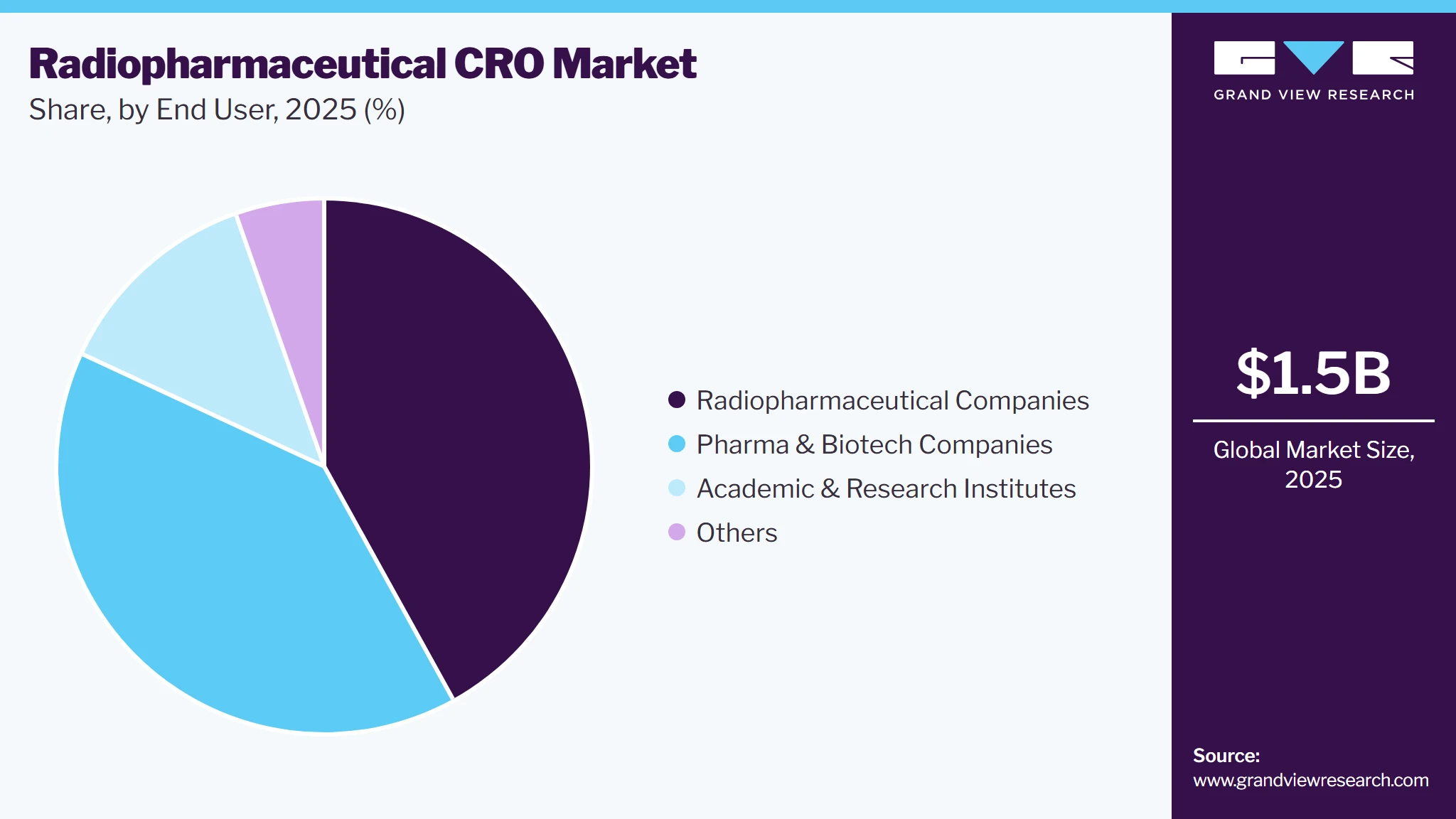
The radiopharmaceutical companies segment dominated the radiopharmaceutical CRO industry, accounting for the largest revenue share of 42.0% in 2025. The segment is supported by the increasing number of specialized radiopharmaceutical developers advancing diagnostic, therapeutic, and theranostic candidates through preclinical and clinical development. These companies frequently outsource specialized activities such as radiochemistry, imaging, dosimetry, clinical trial management, analytical testing, and regulatory support to access specialized infrastructure and technical capabilities.
 To learn more about this report, Download Free Sample Report
The pharma & biotech companies segment is projected to grow at the fastest CAGR during the forecast period. The increasing participation of pharmaceutical and biotechnology companies in radiopharmaceutical development through internal pipeline expansion, licensing agreements, acquisitions, and strategic collaborations is driving demand for external CRO capabilities. Growing investment in targeted radionuclide therapies and radioligand platforms is expected to further support outsourcing across preclinical research, clinical development, imaging, dosimetry, radiochemistry, and regulatory services.
Regional Insights
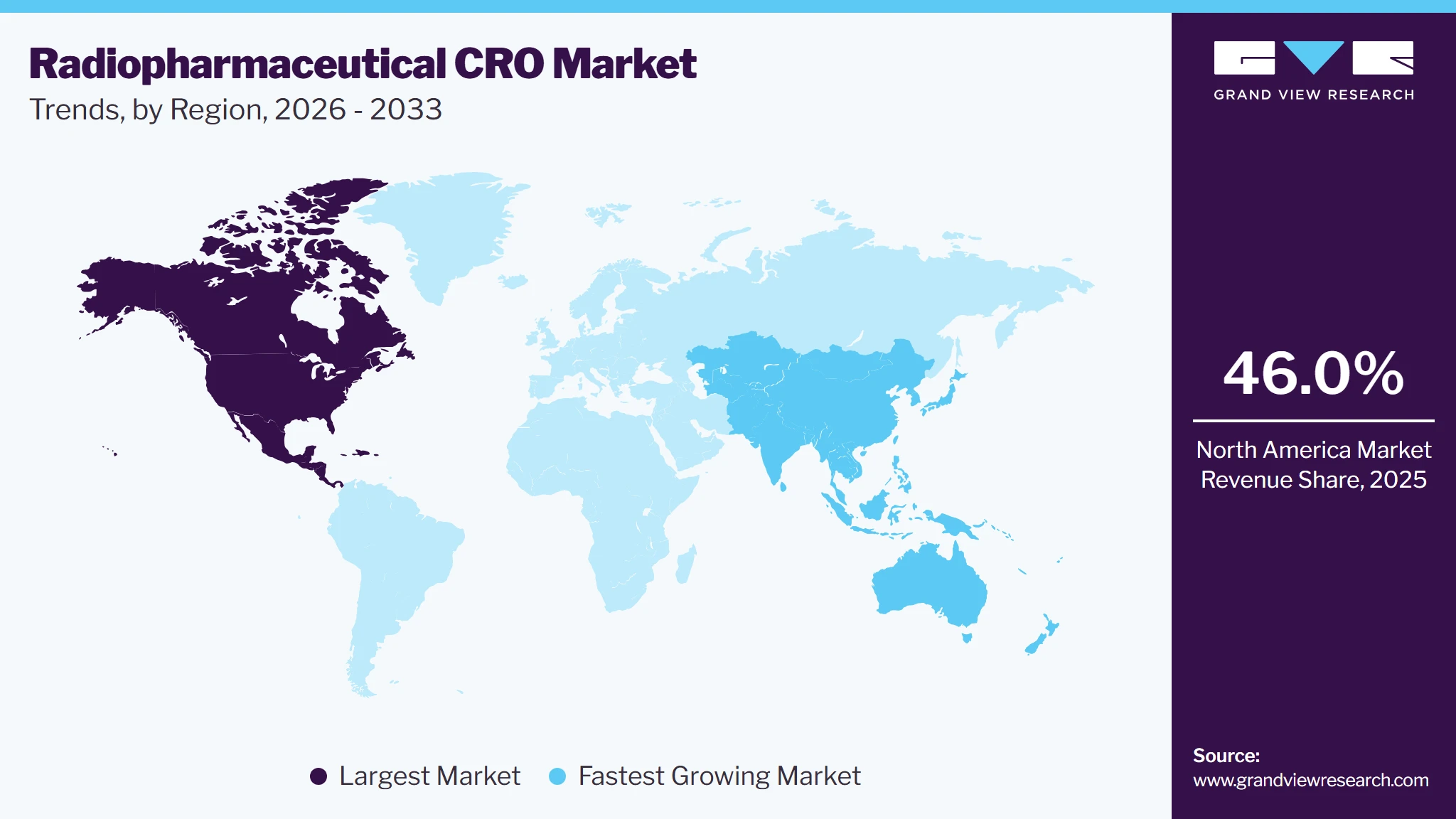
North America dominated the radiopharmaceutical CRO market with the largest revenue share of 46.0% in 2025. The market is expected to maintain a leading position, supported by an established pharmaceutical industry, increasing clinical development of radioligand therapies, and advanced nuclear medicine infrastructure. The U.S. benefits from a large concentration of pharmaceutical companies, specialized CROs, clinical research centers, and radiopharmaceutical developers. Increasing investment in targeted radiopharmaceuticals, molecular imaging, dosimetry, and radiochemistry is creating demand for specialized CRO services. Canada is also strengthening its radiopharmaceutical ecosystem through investments in nuclear medicine research and isotope production. Continued development of radiopharmaceutical pipelines and outsourcing of specialized development activities are expected to support regional market expansion.
 To learn more about this report, Download Free Sample Report
U.S. Radiopharmaceutical CRO Market Trends
The U.S. radiopharmaceutical CRO industry held the largest share of North America in 2025, supported by extensive clinical research infrastructure, a large radiopharmaceutical development pipeline, and increasing adoption of targeted radioligand therapies. The country has a strong presence of pharmaceutical companies, specialized CROs, academic research centers, and nuclear medicine facilities supporting clinical and preclinical development. Increasing demand for PET and SPECT imaging, patient-specific dosimetry, radiochemistry, bioanalysis, and clinical trial management is expanding the addressable CRO service base. Regulatory experience and established radioactive material handling infrastructure further support the development of specialized CRO capabilities.
The Canada radiopharmaceutical CRO market is expanding, driven by increasing investment in nuclear medicine research, radiopharmaceutical development, and isotope production capabilities. The country has established expertise in medical isotope research and access to academic institutions and healthcare centers involved in molecular imaging and targeted radionuclide therapies. Increasing clinical research activity in oncology and other therapeutic areas is generating demand for imaging, dosimetry, radiochemistry, preclinical research, and clinical trial services. Continued development of domestic radiopharmaceutical capabilities and collaboration between pharmaceutical companies, research institutions, and specialized service providers are expected to support market growth.
Europe Radiopharmaceutical CRO Market Trends
The Europe radiopharmaceutical CRO industry is experiencing steady growth, supported by established pharmaceutical and nuclear medicine infrastructure, increasing development of targeted radiopharmaceuticals, and well-developed clinical research capabilities. Countries across the region have extensive experience in PET and SPECT imaging, radiochemistry, dosimetry, and nuclear medicine research. Increasing development of radioligand therapies and theranostic agents is creating demand for specialized preclinical, clinical, imaging, analytical, and regulatory CRO services. The presence of pharmaceutical companies, academic research centers, specialized radiopharmaceutical developers, and established CROs is expected to support continued regional market development.
The UK radiopharmaceutical CRO market is expected to grow significantly over the forecast period, supported by a strong life sciences sector, established nuclear medicine capabilities, and increasing research into targeted radiopharmaceutical therapies. The country benefits from specialized academic institutions, clinical research centers, pharmaceutical companies, and radiopharmaceutical developers involved in oncology and molecular imaging. Increasing demand for clinical trial management, radiochemistry, dosimetry, imaging, and regulatory services is supporting CRO activity. Government and institutional investments in radiopharmaceutical research and the expansion of nuclear medicine capabilities are expected to contribute to continued market growth.
The radiopharmaceutical CRO market in Germany is expanding due to its large pharmaceutical sector, established nuclear medicine infrastructure, and strong capabilities in clinical research and medical imaging. Increasing research into radioligand therapies, diagnostic imaging agents, and theranostic applications is generating demand for specialized CRO services across preclinical and clinical development. The country also benefits from established radiochemistry capabilities, specialized hospitals, academic research centers, and pharmaceutical manufacturers. Growing investment in radiopharmaceutical research and increasing collaboration among pharmaceutical companies, research institutions, and specialized service providers are expected to support market expansion.
Asia Pacific Radiopharmaceutical CRO Market Trends
The Asia Pacific Radiopharmaceutical CRO industry is expected to grow at the fastest CAGR over the forecast period. The region is witnessing increased development activity, supported by expanding pharmaceutical industries, growing clinical research capabilities, rising healthcare investment, and the increasing adoption of nuclear medicine technologies. Japan, China, and India are strengthening their capabilities in radiopharmaceutical research, isotope production, molecular imaging, and clinical development. The increasing oncology burden and growing interest in targeted radiopharmaceutical therapies are driving demand for specialized CRO services. The expansion of clinical research infrastructure and increasing participation of pharmaceutical and biotechnology companies in radiopharmaceutical development are expected to support regional market growth.
The China radiopharmaceutical CRO market is expanding, driven by increasing investment in pharmaceutical research, nuclear medicine infrastructure, isotope production, and clinical development. The country has a growing pharmaceutical and biotechnology sector and an expanding network of hospitals and research institutions capable of conducting radiopharmaceutical studies. Increasing development of targeted cancer therapies and diagnostic radiopharmaceuticals is creating demand for preclinical research, clinical trial management, imaging, dosimetry, radiochemistry, and regulatory services. Continued investment in nuclear medicine infrastructure and domestic radiopharmaceutical development is expected to support market expansion.
The radiopharmaceutical CRO market in Japan is supported by an established pharmaceutical industry, advanced healthcare infrastructure, and extensive expertise in nuclear medicine and molecular imaging. The country has strong capabilities in PET and SPECT imaging, radiochemistry, isotope applications, and clinical research. Increasing research into targeted radiopharmaceuticals and theranostic approaches is generating demand for specialized preclinical, imaging, dosimetry, analytical, and clinical development services. The presence of pharmaceutical companies, academic institutions, hospitals, and specialized research organizations is expected to support the continued expansion of radiopharmaceutical CRO activities.
The India radiopharmaceutical CRO market is developing with increasing pharmaceutical research activity, expanding clinical trial infrastructure, and growing capabilities in nuclear medicine and radiopharmaceutical production. The country has a large pharmaceutical and biotechnology sector, established academic research institutions, and an increasing demand for oncology imaging and targeted therapies. The growing development of radiopharmaceuticals and increasing clinical research activity are creating opportunities for CROs providing preclinical studies, radiochemistry, analytical testing, imaging, dosimetry, and clinical trial services. Continued investment in nuclear medicine facilities and radiopharmaceutical research is expected to support regional growth.
Latin America Radiopharmaceutical CRO Market Trends
The Latin America radiopharmaceutical CRO industry is gradually expanding, supported by increasing healthcare investment, the development of nuclear medicine infrastructure, and the rising demand for advanced oncology diagnostics and therapies. Brazil represents the largest opportunity in the region due to its established pharmaceutical sector, healthcare infrastructure, nuclear medicine facilities, and research capabilities. Increasing use of PET and SPECT imaging and the gradual development of targeted radiopharmaceutical therapies are generating demand for specialized clinical, imaging, analytical, and regulatory support. Further development of nuclear medicine infrastructure and clinical research capabilities is expected to support regional market growth.
The Brazil radiopharmaceutical CRO market is expected to expand with increasing use of nuclear medicine, growth in oncology diagnostics, and development of pharmaceutical and clinical research capabilities. The country has an established network of hospitals, nuclear medicine centers, research institutions, and pharmaceutical companies supporting radiopharmaceutical applications. Increasing adoption of PET imaging and growing interest in targeted radiopharmaceutical therapies are creating demand for imaging, clinical trial management, radiochemistry, dosimetry, and analytical services. Continued investment in nuclear medicine infrastructure and expansion of clinical research activities are expected to support market development.
Middle East and Africa Radiopharmaceutical CRO Market Trends
The Middle East & Africa radiopharmaceutical CRO industry is developing with increasing healthcare infrastructure investment, expansion of advanced diagnostic capabilities, and growing interest in nuclear medicine. The UAE is emerging as an important regional healthcare and life sciences hub, supported by advanced medical facilities, international healthcare partnerships, and investments in precision medicine. The increasing adoption of PET imaging and the development of specialized oncology services are creating opportunities for clinical research, imaging, dosimetry, and regulatory support in radiopharmaceuticals. Continued development of healthcare infrastructure and increasing adoption of advanced nuclear medicine technologies are expected to support regional market growth.
The South Africa Radiopharmaceutical CRO market is witnessing steady growth, supported by expanding healthcare infrastructure, increasing adoption of nuclear medicine technologies, and growing demand for advanced oncology diagnostics. The country has established nuclear medicine capabilities and specialized healthcare institutions supporting PET and SPECT imaging, radiopharmaceutical applications, and clinical research. Increasing demand for oncology imaging and targeted radiopharmaceutical therapies is creating opportunities for clinical trial management, imaging, dosimetry, radiochemistry, analytical testing, and regulatory services. Furthermore, continued investment in specialized healthcare infrastructure and nuclear medicine capabilities is expected to support the expansion of radiopharmaceutical CRO services across the country.
The radiopharmaceutical CRO market in Saudi Arabia is expected to expand, supported by healthcare infrastructure development under Vision 2030, increasing investment in advanced oncology care, and growing adoption of nuclear medicine technologies. The expansion of specialized hospitals, cancer centers, and diagnostic facilities is creating demand for radiopharmaceutical imaging, clinical research, dosimetry, radiochemistry, and regulatory services. Increasing efforts to develop advanced healthcare capabilities and attract international pharmaceutical and biotechnology companies are also creating requirements for specialized clinical development support. Furthermore, continued investment in precision medicine, oncology infrastructure, and advanced diagnostic technologies is expected to create additional opportunities for radiopharmaceutical CRO providers supporting clinical development and specialized nuclear medicine programs.
Key Radiopharmaceutical CRO Company Insights
The key players operating across the market are adopting strategic initiatives such as service launches, mergers & acquisitions, partnerships & agreements, and expansions to gain a competitive edge in the market. Companies are investing in AI-enabled testing, biocompatibility assessment, digital validation, and strategic acquisitions to strengthen their global presence. Long-term partnerships with medical device manufacturers and compliance with international quality standards remain key competitive differentiators.
Key Radiopharmaceutical CRO Companies
The following key companies have been profiled for this study of the radiopharmaceutical CRO market.
-
IQVIA Holdings Inc.
-
ICON plc
-
Charles River Laboratories
-
Thermo Fisher Scientific (PPD)
-
Labcorp Holdings Inc.
-
WuXi AppTec
-
Medpace Holdings, Inc.
-
Perceptive
-
TRACER
-
Pharmaron
-
ABX-CRO
-
PSI
-
Minerva Imaging
Competitive Benchmarking
Category
Operating Strategies
Competitive Edge
Weakness
Established Players (IQVIA Holdings Inc., ICON plc)
- Established radiopharmaceutical CROs focus on expanding integrated capabilities across pre-clinical research, clinical development, molecular imaging, dosimetry, radiochemistry, analytical testing, regulatory affairs, and clinical supply and logistics. These companies invest in specialized radioactive material handling infrastructure, imaging capabilities, dosimetry platforms, and global clinical research networks. Many provide services across multiple development stages, allowing sponsors to access broader radiopharmaceutical development support through a single provider.
- Established players benefit from broad geographic coverage, established relationships with pharmaceutical and biotechnology companies, specialized technical expertise, and experience supporting complex radiopharmaceutical programs. Their capabilities in imaging, dosimetry, radiochemistry, clinical trials, and regulatory requirements enable them to address diverse sponsor needs and support projects across multiple development stages.
- Established players face high operating costs associated with specialized radioactive material facilities, licensed infrastructure, technical personnel, and compliance requirements. Large organizational structures can also increase project coordination requirements, while maintaining specialized capabilities across multiple regions requires continuous investment in facilities, technology, licenses, and qualified personnel.
Emerging Players
- Emerging radiopharmaceutical CROs primarily focus on specialized areas such as radiochemistry, molecular imaging, dosimetry, biodistribution, radiolabeled DMPK, preclinical research, and targeted clinical development support. Many pursue focused service portfolios, partnerships with radiopharmaceutical developers, expansion of specialized facilities, and investments in imaging and analytical technologies to establish market presence.
- Emerging players gain competitive advantages through specialized technical capabilities, flexible operating models, and focused customer engagement. Their narrower service portfolios can support customized project requirements and faster coordination for specialized radiopharmaceutical studies. Expertise in specific radionuclides, imaging modalities, dosimetry, or radiochemistry can also provide differentiation within targeted service areas.
- Emerging players often face limitations in geographic coverage, specialized infrastructure, and capacity to manage large multinational clinical programs. Limited access to licensed radioactive material facilities, specialized personnel, and established clinical site networks can restrict service expansion. Smaller customer bases and lower financial resources may also constrain investments in advanced technologies and broader service capabilities.
Recent Developments
-
In October 2025, Minerva Imaging and XenoSTART expanded their partnership to establish an integrated radiopharmaceutical drug development platform. The collaboration combines XenoSTART's clinically annotated patient-derived xenograft models with Minerva Imaging's molecular imaging and radionuclide therapy capabilities, creating an integrated platform covering discovery, translational research, and manufacturing. The development expands Minerva's ability to support radiopharmaceutical developers across multiple stages of the development process.
-
In June 2025, Minerva Imaging entered into a partnership with Nordic Capital to accelerate its growth, international expansion, and development of its integrated radiopharmaceutical platform. Minerva Imaging is a specialized CRO and CDMO focused on targeted radionuclide therapies, molecular imaging, oncology, and cardiovascular research. The partnership is intended to strengthen its integrated preclinical and clinical development capabilities and support expansion of its radiopharmaceutical service platform.
Radiopharmaceutical CRO Market Report Scope
Report Attribute
Details
Market size in 2025
USD 1.5 billion
Estimated market size in 2026
USD 1.7 billion
Projected market size by 2033
USD 3.9 billion
Growth rate
CAGR of 12.7% from 2026 to 2033
Historical data
2021 - 2025
Forecast period
2026 - 2033
Quantitative units
Revenue in USD million/billion and CAGR from 2026 to 2033
Report coverage
Revenue forecast, company ranking, competitive landscape, growth factors, and trends
Segments covered
Service, radiopharmaceutical type, radionuclide, development stage, application, end user, region
Regional scope
North America; Europe; Asia Pacific; Latin America; MEA
Country scope
U.S.; Canada; Mexico; Germany; UK; France; Italy; Spain; Norway; Denmark; Sweden; China; Japan; India; South Korea; Australia; Thailand; Brazil; Argentina; Saudi Arabia; South Africa; UAE; Kuwait; Oman; Qatar.
Key companies profiled
IQVIA Holdings Inc.; ICON plc; Charles River Laboratories; Thermo Fisher Scientific (PPD); Labcorp Holdings Inc.; WuXi AppTec; Medpace Holdings, Inc.; Perceptive; TRACER; Pharmaron; ABX-CRO; PSI; Minerva Imaging
Customization scope
Free report customization (equivalent up to 8 analysts' working days) with purchase. Addition or alteration to country, regional & segment scope.
Pricing and purchase options
Avail customized purchase options to meet your exact research needs. Explore purchase options
Global Radiopharmaceutical CRO Market Report Segmentation
This report forecasts revenue growth at the global, regional, and country levels and provides an analysis of the latest industry trends in each of the sub-segments from 2021 to 2033. For this study, Grand View Research has segmented the global radiopharmaceutical CRO market report based on service, radiopharmaceutical type, radionuclide, development stage, application, end user, and region:
-
Service Outlook (Revenue, USD Million/Billion, 2021 - 2033)
-
Clinical Development & Trial Management Services
-
Clinical Development & Protocol Design
-
Clinical Trial Management
-
Site Management
-
Patient Recruitment & Investigator Management
-
Data Management & Biostatistics
-
Other Clinical Services
-
-
Preclinical Research Services
-
Preclinical Pharmacology & Efficacy
-
ADME & PK/PD
-
Toxicology & Safety Assessment
-
Others
-
-
Imaging & Dosimetry Services
-
Nuclear Imaging Services
-
Image Analysis & Quantification
-
Biodistribution & Functional Imaging
-
Radiation Dosimetry
-
Other Imaging & Dosimetry Services
-
-
Radiochemistry Services
-
Analytical Laboratory Services
-
Regulatory Affairs
-
Clinical Supply & Logistics
-
Other Services
-
-
Radiopharmaceutical Type Outlook (Revenue, USD Million/Billion, 2021 - 2033)
-
Diagnostic
-
Therapeutic
-
Theranostic
-
-
Radionuclide Outlook (Revenue, USD Million/Billion, 2021 - 2033)
-
Diagnostic Radionuclides
-
Therapeutic Radionuclides
-
-
Development Stage Outlook (Revenue, USD Million/Billion, 2021 - 2033)
-
Drug Discovery
-
Preclinical
-
Phase 0 / First-in-Human
-
Phase I
-
Phase II
-
Phase III
-
Phase IV
-
-
Application Outlook (Revenue, USD Million/Billion, 2021 - 2033)
-
Oncology
-
Neurology
-
Cardiology
-
Infectious Diseases
-
Other Applications
-
-
End User Outlook (Revenue, USD Million/Billion, 2021 - 2033)
-
Pharma & Biotech Companies
-
Radiopharmaceutical Companies
-
Academic & Research Institutes
-
Others
-
-
Regional Outlook (Revenue, USD Million/Billion, 2021 - 2033)
-
North America
-
U.S.
-
Canada
-
Mexico
-
-
Europe
-
UK
-
Germany
-
France
-
Italy
-
Spain
-
Denmark
-
Sweden
-
Norway
-
-
Asia Pacific
-
China
-
Japan
-
India
-
Australia
-
South Korea
-
Thailand
-
-
Latin America
-
Brazil
-
Argentina
-
-
Middle East and Africa (MEA)
-
South Africa
-
Saudi Arabia
-
UAE
-
Kuwait
-
Oman
-
Qatar
-
-
Research Methodology
The radiopharmaceutical CRO market figures in this report are based on a proven research process that combines executive interviews with secondary research from proprietary databases, company filings, and recognized regulatory and institutional sources. Market size is built through value-chain sizing-reconciling supply-side and demand-side estimates-and triangulated with bottom-up and top-down approaches. Every estimate passes multiple levels of expert validation before publication, with each radiopharmaceutical CRO segment quantified using the revenue-capture definitions in the table below.
Segment Definition
Segment - Service
Revenue capture definition
Clinical Development & Trial Management Services
The segment captures revenue generated from CRO services supporting the clinical development and execution of radiopharmaceutical trials, including protocol design, clinical trial management, site management, patient recruitment, investigator management, data management, biostatistics, and related clinical activities.
Clinical Development & Protocol Design
The segment captures revenue from CRO services for radiopharmaceutical clinical development planning, protocol preparation, study design, endpoint selection, feasibility assessment, and development strategy.
Clinical Trial Management
The segment captures revenue from operational management of radiopharmaceutical clinical trials, including study planning, monitoring, trial coordination, documentation, vendor management, and study closeout activities.
Site Management
The segment captures revenue from identifying, qualifying, initiating, monitoring, and coordinating clinical sites participating in radiopharmaceutical trials, including site performance management and compliance activities.
Patient Recruitment & Investigator Management
The segment captures revenue from patient recruitment, investigator identification and coordination, investigator training, engagement, and management activities supporting radiopharmaceutical clinical trials.
Data Management & Biostatistics
The segment captures revenue from clinical data collection, database management, statistical analysis, statistical programming, data validation, and biostatistical support for radiopharmaceutical studies.
Other Clinical Services
The segment captures revenue from other clinical development activities supporting radiopharmaceutical trials, including medical monitoring, clinical documentation, safety support, pharmacovigilance, and related clinical services not classified elsewhere.
Preclinical Research Services
The segment captures revenue generated from CRO services supporting preclinical radiopharmaceutical development, including pharmacology, efficacy studies, ADME, PK/PD, biodistribution, toxicology, safety assessment, and related laboratory research.
Preclinical Pharmacology & Efficacy
The segment captures revenue from preclinical pharmacology and efficacy studies evaluating biological activity, target engagement, therapeutic potential, and treatment response of radiopharmaceutical candidates.
ADME & PK/PD
The segment captures revenue from absorption, distribution, metabolism, and excretion studies and pharmacokinetic and pharmacodynamic assessments of radiopharmaceutical candidates, including radiolabeled compound analysis and tissue distribution studies.
Toxicology & Safety Assessment
The segment captures revenue from toxicology and safety studies evaluating the potential adverse effects, radiation related safety considerations, organ exposure, and tolerability of radiopharmaceutical candidates.
Others
The segment captures revenue from other preclinical research services, including exploratory studies, translational research, biomarker assessment, and specialized laboratory activities supporting radiopharmaceutical development.
Imaging & Dosimetry Services
The segment captures revenue generated from molecular imaging and radiation dosimetry services supporting radiopharmaceutical development and clinical research, including PET, SPECT, image analysis, biodistribution assessment, functional imaging, and radiation dose estimation.
Nuclear Imaging Services
The segment captures revenue from PET, SPECT, and other nuclear imaging services used to assess radiopharmaceutical distribution, uptake, target localization, treatment response, and diagnostic performance.
Image Analysis & Quantification
The segment captures revenue from processing, interpretation, segmentation, quantification, and evaluation of PET, SPECT, and other nuclear imaging data generated during radiopharmaceutical studies.
Biodistribution & Functional Imaging
The segment captures revenue from imaging and laboratory studies assessing radiopharmaceutical biodistribution, tissue uptake, target localization, organ distribution, and functional biological activity.
Radiation Dosimetry
The segment captures revenue from radiation dose assessment and dosimetry calculations for radiopharmaceutical candidates, including organ, tumor, tissue, and patient specific radiation exposure assessment.
Other Imaging & Dosimetry Services
The segment captures revenue from specialized imaging and dosimetry activities not classified under nuclear imaging, image analysis, biodistribution, or radiation dosimetry.
Radiochemistry Services
The segment captures revenue from radiochemistry activities supporting radiopharmaceutical discovery and development, including radionuclide labeling, radioligand synthesis, purification, formulation, radiochemical characterization, and production of research or clinical radiopharmaceutical materials.
Analytical Laboratory Services
The segment captures revenue from analytical testing of radiopharmaceuticals and related materials, including identity, purity, potency, stability, radiochemical purity, radionuclidic purity, impurities, metabolite analysis, and other quality testing activities.
Regulatory Affairs
The segment captures revenue from regulatory consulting and submission support for radiopharmaceutical development, including regulatory strategy, clinical trial applications, regulatory documentation, authority interactions, licensing support, and submission preparation.
Clinical Supply & Logistics
The segment captures revenue from clinical supply management and specialized logistics for radiopharmaceutical trials, including radiopharmaceutical supply planning, packaging, labeling, storage, distribution, inventory management, and time-sensitive transportation of radioactive materials.
Other Services
The segment captures revenue from other CRO services supporting radiopharmaceutical development that are not classified within clinical development, preclinical research, imaging and dosimetry, radiochemistry, analytical laboratory, regulatory, or clinical supply and logistics services.
Segment - Radiopharmaceutical Type
Revenue capture definition
Diagnostic
The segment captures CRO revenue generated from services supporting radiopharmaceuticals used primarily for disease detection, anatomical and functional imaging, diagnosis, staging, and treatment monitoring, including development activities for PET and SPECT agents.
Therapeutic
The segment captures CRO revenue generated from services supporting radiopharmaceuticals designed to deliver targeted radiation for therapeutic purposes, including preclinical, clinical, dosimetry, imaging, analytical, and regulatory development activities.
Theranostic
The segment captures CRO revenue generated from services supporting radiopharmaceutical platforms that combine diagnostic imaging and therapeutic applications, including paired or related diagnostic and therapeutic radionuclide programs.
Segment - Radionuclide
Revenue capture definition
Diagnostic Radionuclides
The segment captures CRO revenue generated from development services involving radionuclides primarily used for diagnostic imaging, including PET and SPECT radionuclides and associated radiopharmaceutical development activities.
Therapeutic Radionuclides
The segment captures CRO revenue generated from development services involving radionuclides primarily used to deliver therapeutic radiation, including radionuclides used in targeted radionuclide and radioligand therapies.
Segment - Development Stage
Revenue capture definition
Drug Discovery
The segment captures CRO revenue from early-stage radiopharmaceutical discovery activities, including target identification, radioligand screening, radiolabeling, lead evaluation, molecular imaging, and early pharmacology studies.
Preclinical
The segment captures CRO revenue from nonclinical development activities conducted before human studies, including efficacy, biodistribution, ADME, PK/PD, toxicology, dosimetry, imaging, and safety assessment.
Phase 0 / First-in-Human
The segment captures CRO revenue from exploratory and first-in-human radiopharmaceutical studies evaluating initial human pharmacokinetics, biodistribution, imaging characteristics, safety, and preliminary target engagement.
Phase I
The segment captures CRO revenue from Phase I radiopharmaceutical clinical development activities primarily assessing safety, tolerability, pharmacokinetics, dosimetry, biodistribution, and initial therapeutic or diagnostic characteristics.
Phase II
The segment captures CRO revenue from Phase II studies evaluating preliminary efficacy, dose selection, safety, imaging endpoints, therapeutic response, and clinical performance of radiopharmaceutical candidates.
Phase III
The segment captures CRO revenue from Phase III radiopharmaceutical trials that evaluate confirmatory efficacy and safety in larger patient populations and support regulatory approval and commercialization.
Phase IV
The segment captures CRO revenue from post-approval radiopharmaceutical studies, including post-marketing safety, long-term outcomes, expanded patient population studies, comparative studies, and additional clinical evidence generation.
Segment - Application
Revenue capture definition
Oncology
The segment captures CRO revenue from services supporting radiopharmaceuticals used for cancer diagnosis, staging, treatment, treatment monitoring, targeted radionuclide therapy, and theranostic applications.
Neurology
The segment captures CRO revenue from services supporting radiopharmaceuticals used in neurological disease imaging, diagnosis, disease characterization, target evaluation, and therapeutic development.
Cardiology
The segment captures CRO revenue from services supporting radiopharmaceuticals used for cardiovascular imaging, disease assessment, myocardial perfusion evaluation, and related diagnostic or therapeutic applications.
Infectious Diseases
The segment captures CRO revenue from services supporting radiopharmaceutical development for the detection, imaging, characterization, monitoring, or treatment of infectious diseases.
Other Applications
The segment captures CRO revenue from radiopharmaceutical development services supporting applications outside oncology, neurology, cardiology, and infectious diseases, including inflammation, musculoskeletal disorders, renal applications, and other therapeutic or diagnostic areas.
Segment - End User
Revenue capture definition
Pharma & Biotech Companies
The segment captures CRO revenue generated from services provided to pharmaceutical and biotechnology companies developing radiopharmaceutical products, including diagnostic agents, therapeutic radiopharmaceuticals, and theranostic candidates.
Radiopharmaceutical Companies
The segment captures CRO revenue generated from services provided to companies primarily focused on radiopharmaceutical research, development, manufacturing, or commercialization, and that require external development, clinical, analytical, imaging, or regulatory capabilities.
Academic & Research Institutes
The segment captures CRO revenue generated from services provided to universities, hospitals, academic centers, government research organizations, and other research institutions conducting radiopharmaceutical discovery, translational research, imaging, or clinical studies.
Others
The segment captures CRO revenue generated from services provided to other end users, including medical institutions, diagnostic organizations, specialty healthcare organizations, and entities involved in radiopharmaceutical research or clinical development that do not fall under the other end-user categories.
Delivered Customizations
This report has been delivered with the following In-depth customizations
Client Request
Customization Delivered
Value Adds
Competitive Benchmarking and Service Capability Analysis
Performed comparative benchmarking of leading radiopharmaceutical CROs based on clinical development capabilities, preclinical research expertise, molecular imaging, image analysis, radiation dosimetry, radiochemistry, analytical laboratory services, regulatory capabilities, clinical supply and logistics, geographic coverage, specialized infrastructure, and development stage coverage. Assessed the positioning of established and emerging CROs supporting diagnostic, therapeutic, and theranostic radiopharmaceutical programs across major applications and radionuclides.
Enables identification of competitive gaps, differentiated service capabilities, partnership opportunities, potential acquisition targets, and areas for service expansion, supporting strategic positioning and evaluation of competitive strengths across the global Radiopharmaceutical CRO market.
Technology and Innovation Assessment
Evaluated technology adoption across PET and SPECT imaging, quantitative image analysis, AI-enabled imaging analysis, radiation dosimetry, automated radiochemistry, radiolabeled DMPK, biodistribution assessment, digital clinical trial platforms, and integrated radiopharmaceutical development systems. Assessed technology differentiation among CROs and its impact on service capabilities, study efficiency, data quality, and development support.
Helps stakeholders identify technology-driven differentiation, emerging capability gaps, investment priorities, and opportunities for service innovation, while supporting assessment of the technological maturity of competing CROs.
Regional Market and Expansion Assessment
Assessed radiopharmaceutical CRO development across North America, Europe, Asia Pacific, Latin America, and the Middle East & Africa, with country-level analysis covering major pharmaceutical markets and emerging radiopharmaceutical hubs. Evaluated pharmaceutical and biotechnology activity, nuclear medicine infrastructure, clinical research capabilities, radiopharmaceutical development activity, specialized CRO presence, regulatory environment, and infrastructure availability across key countries.
Supports identification of high growth regional markets, market entry opportunities, potential locations for capability expansion, and regional partnership prospects, enabling companies to prioritize geographic expansion based on radiopharmaceutical development activity and CRO service requirements.
Frequently Asked Questions About This Report
The global radiopharmaceutical contract research organization market size was valued at USD 1.5 billion in 2025 and is estimated at USD 1.7 billion in 2026.
The global radiopharmaceutical CRO market is expected to grow at a CAGR of 12.7% from 2026 to 2033, reaching USD 3.9 billion.
The Phase III segment led with a 28.2% revenue share in 2025.
The oncology segment held the largest revenue share of 67.5% in 2025.
Key players include IQVIA Holdings Inc., ICON plc, Charles River Laboratories, Thermo Fisher Scientific (PPD), Labcorp Holdings Inc., WuXi AppTec, Medpace Holdings, Inc., Perceptive, TRACER, Pharmaron, ABX-CRO, PSI, Minerva Imaging, among others.
North America dominated with a 40.6% revenue share in 2025.
Key factors include the expanding radioligand therapy pipeline, increasing adoption of targeted radiopharmaceuticals in oncology, rising complexity of radiopharmaceutical clinical trials, growing demand for specialized imaging and dosimetry services, and increasing outsourcing of discovery, preclinical, clinical, analytical, regulatory, and logistics activities to specialized CROs. The short half-lives of radioisotopes, specialized site and facility requirements, radiation safety considerations, and stringent regulatory requirements further increase the need for experienced service providers. The expansion of radiopharmaceutical development across oncology, neurology, and cardiology is expected to support demand for specialized CRO capabilities over the coming years.
Asia Pacific is the fastest-growing region over the forecast period.
The clinical development & trial management services segment led with a 24.4% revenue share in 2025.
About the Author(s)
Pharmaceuticals Research Team
Healthcare · PharmaceuticalsThis report was authored by the pharmaceuticals research team at Grand View Research - comprising two research analysts, one senior research analyst, and one industry expert - with specialized expertise in the pharmaceuticals segment of the healthcare industry. All findings are based on proprietary healthcare databases, executive interviews, and regulatory analysis, subject to internal peer review prior to publication.
Last Updated:
Speak to Analyst

Customize this report to your needs - add regions, segments, or data points, with 20% free customization.
Or view our licence options:


ISO 9001:2015 & 27001:2022 Certified
We are GDPR and CCPA compliant! Your transaction & personal information is safe and secure. For more details, please read our privacy policy.


