
- Home
- »
- Consumer F&B
- »
-
Red Meat Market Size, Share & Growth Report, 2026-2033GVR Report cover
![Red Meat Market (2026 - 2033)Report]()
Red Meat Market (2026 - 2033)
Size, Share & Trends Analysis Report By Type (Beef, Pig, Sheep & Goats), By Distribution Channel (B2B, B2C), By Region (North America, Europe, Asia Pacific, Central & South America, Middle East & Africa), And Segment Forecasts
Market Size, 2025
$1.0TMarket Estimate, 2026
$1.1TMarket Forecast, 2033
$1.6TCAGR, 2026–2033
6.6%Red Meat Market Summary
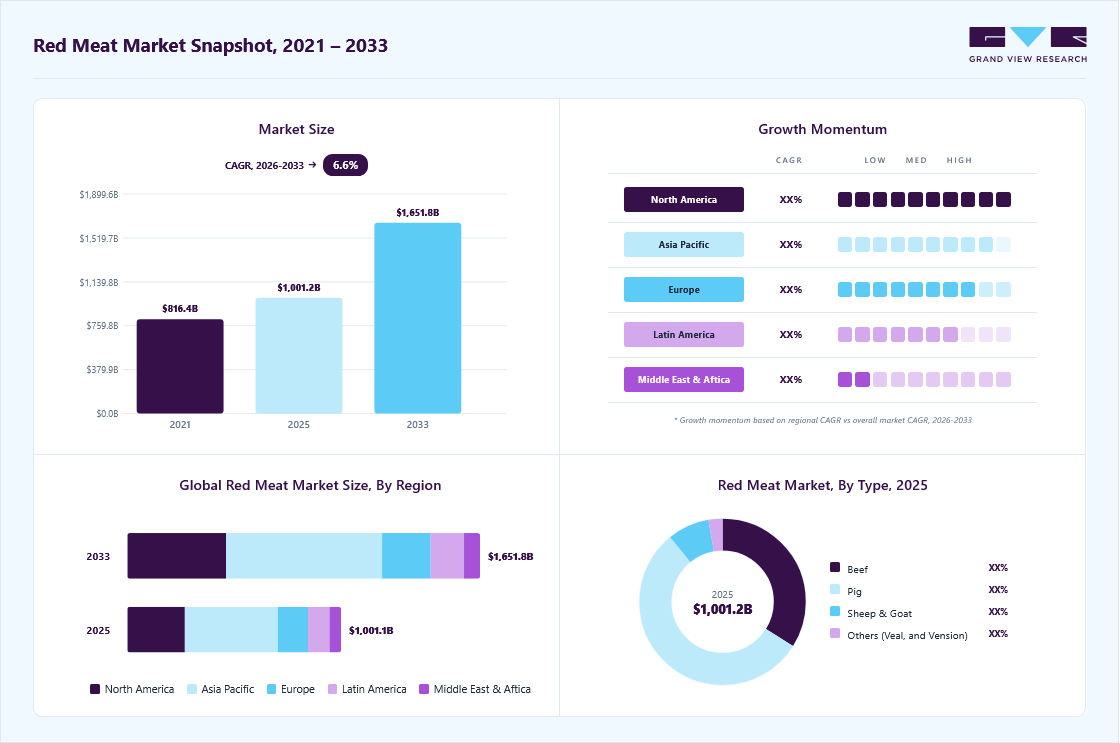
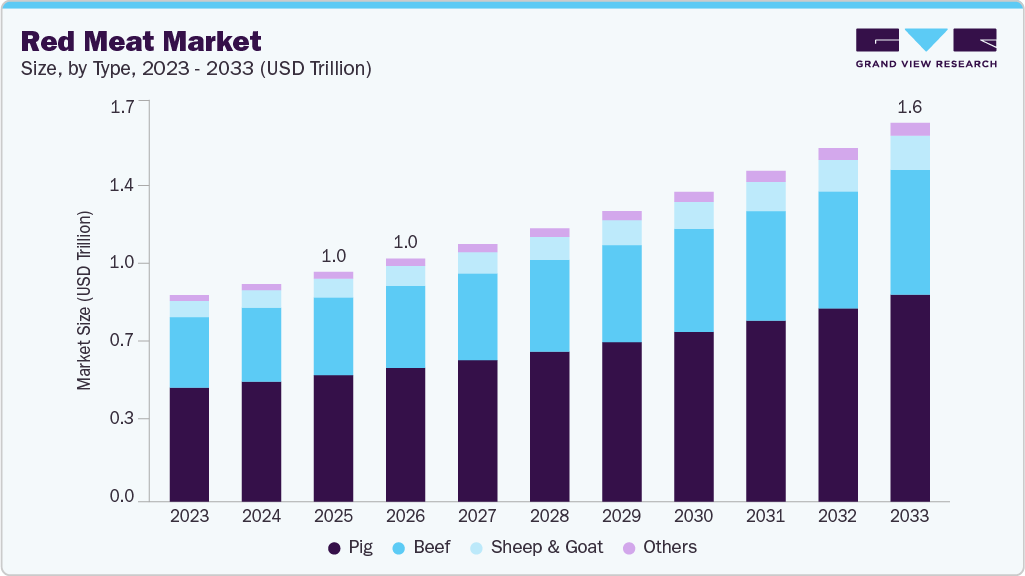
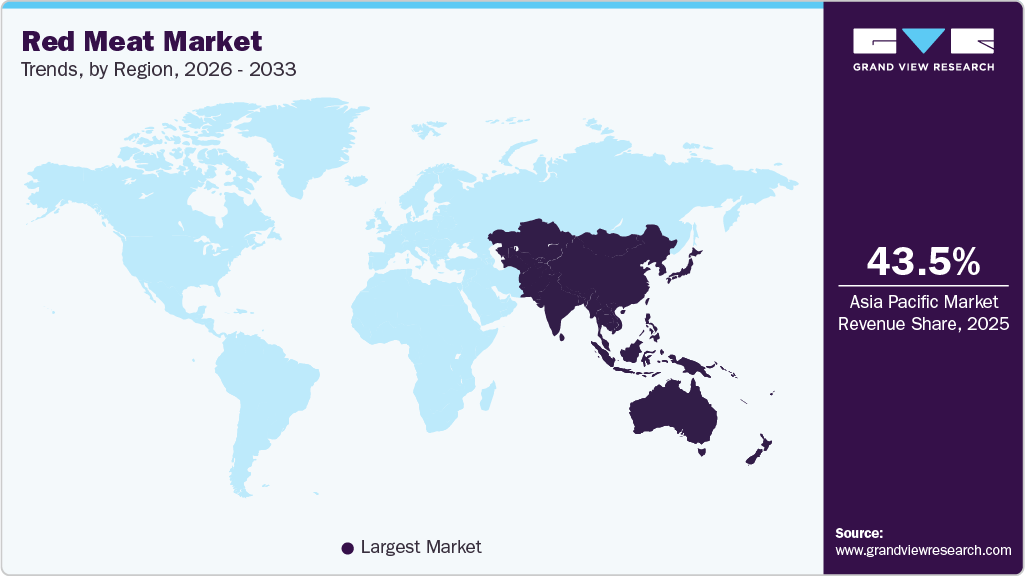
The global red meat market size was valued at USD 1.0 trillion in 2025 and is projected to grow from USD 1.1 trillion in 2026 to USD 1.6 trillion by 2033, at a CAGR of 6.6% from 2026 to 2033. Asia Pacific dominated the global red meat market with the largest revenue share of 43.5% in 2025. This growth can be attributed to rising demand and consumption, growing awareness about health and nutrition, global trade expansion, and innovations & diversification of red meat products.
Key Market Trends & Insights
- By type: Pigs led the red meat market and accounted for a share of 55.1% in 2025.
- By distribution channel: B2B segment led the red meat market and accounted for a share of 71.3% in 2025.
Regional Highlights
- Largest regional market: Asia Pacific (43.5% revenue share, 2025)
- By country: The U.S. held the largest market share in 2025.
Market Size & Forecast
- Market size in 2025: USD 1.0 Trillion
- Estimated market size in 2026: USD 1.1 Trillion
- Projected market size by 2033: USD 1.6 Trillion
- CAGR (2026-2033): 6.6%
One of the major factors driving the red meat industry is the global demand for red meat products. Growing populations, rising disposable incomes, urbanization, and changing dietary preferences have driven a surge in global demand for red meat products, fueling market growth. As incomes rise worldwide, consumers have shown a preference for a greater variety of red meat cuts, leading to increased consumption. This trend is particularly evident in emerging economies where rising disposable incomes have fueled demand for higher-quality protein sources such as red meat. According to the U.S. Department of Agriculture (USDAR), Per capita meat consumption in developing and emerging economies has been increasing by approximately 3% annually since the mid-1990s for beef and veal, pork, and poultry.
Growing awareness about health and nutrition has also impacted the red meat market. Consumers are increasingly seeking high-quality, lean cuts of red meat that are perceived as healthier options. Marketing efforts promoting the nutritional benefits of red meat, such as its high protein, vitamin, and mineral content, have influenced consumer preferences and consumption patterns. For instance, in April 2025, a new range of meat products made with U.S. beef liver and ham was recently launched in Peru as part of an initiative to expand the use of U.S. pork and beef ingredients in international markets.
The expansion of Free Trade Agreements (FTA) has facilitated the growth of international trade in red meat products. Countries engage in import and export activities to meet domestic demand, access new markets, and capitalize on comparative advantages in production. According to the U.S. Meat Export Federation, U.S. pork exports remained strong in 2025, reaching about 2.9 million metric tons with an export value of approximately USD 8.4 billion, making it one of the strongest years on record for the industry.
Consumer Insights
Taste, tenderness, and juiciness remain the most important factors influencing consumer preference in the red meat market. Consumers often associate high-quality red meat with rich flavor and a tender texture, which enhances the overall eating experience. Attributes such as marbling and freshness play a key role in determining these sensory qualities, encouraging consumers to select meat products that deliver superior taste and consistency.
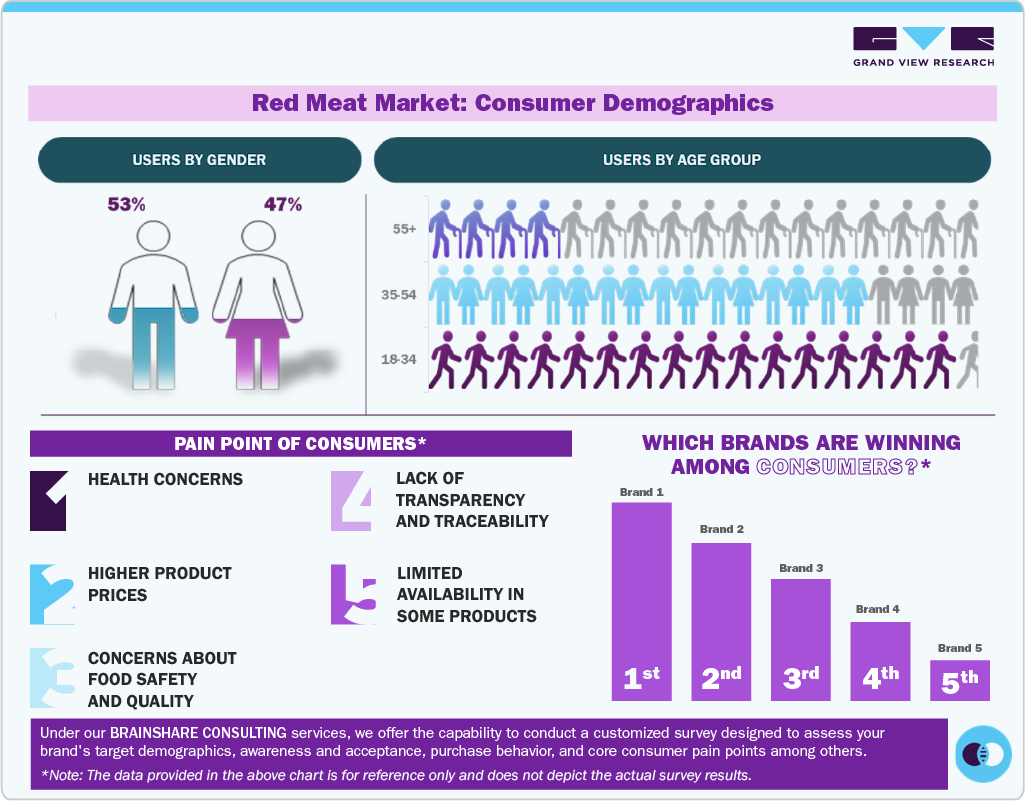
Red meat is widely preferred for its strong nutritional profile, particularly its high protein content and essential nutrients such as iron, zinc, and vitamin B12. Many consumers view red meat as a valuable source of energy and muscle-building nutrients, making it popular among individuals seeking protein-rich diets and balanced nutrition. This perception continues to support steady demand for red meat across various consumer groups.
With rising health awareness, many consumers are increasingly choosing leaner cuts of red meat with lower fat content. Concerns about cholesterol, fat intake, and overall health are prompting buyers to seek trimmed or lean meat options that offer nutritional benefits while reducing potential health risks. As a result, producers and retailers are offering leaner product varieties to meet evolving consumer expectations.
Freshness and food safety are critical considerations for consumers when purchasing red meat. Buyers often rely on visual cues, such as color and texture, along with product labeling and quality certifications, to ensure the meat is safe and high-quality. Proper packaging, clear expiration dates, and trusted quality standards play an important role in building consumer confidence in red meat products.
Type Insights
Red meat sourced from pigs held the revenue share of 55.1% of the red meat industry in 2025. Pork is the culinary name for the meat of the pig. Consumer preferences are shifting towards convenient and processed foods, driving an increased demand for pork meat due to its nutritional advantages such as high protein content, vitamins, and satiety. Pork products are favored by fitness enthusiasts and athletes for muscle-building purposes. According to recent global estimates, pork consumption in 2025 reached around 125 million tons, indicating stable global demand for pork products. Furthermore, the growth of the retail industry, including hypermarkets, supermarkets, convenience stores, and online platforms, has facilitated easier access to packaged pork products for consumers.
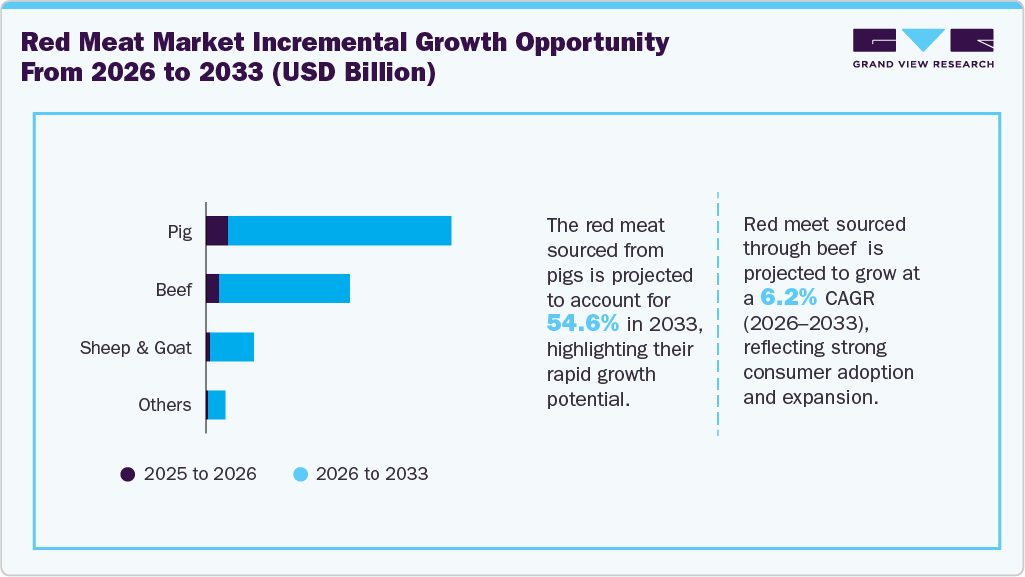
Red meat sourced through beef is estimated to witness a CAGR of 6.2% from 2026 to 2033, owing to the shifting consumer preferences towards animal-based protein products. The market is also experiencing a steady rise in demand for beef products such as steaks, ground beef, and similar items, particularly among younger consumers who prefer burgers and rolls made from these products.
Distribution Channel Insights
Sale of red meat through B2B channel held the revenue share of 71.3% of the red meat industry in 2025. Utilizing B2B distribution channels allows red meat producers to expand their market reach beyond local boundaries. Red meat offers versatility in the food processing & foodservice industries, as it can be used in a wide range of products, including sausages, burgers, meatballs, meatloaf, and ready-to-eat meals. Its adaptability enables manufacturers to create diverse, innovative products that meet consumer demand.
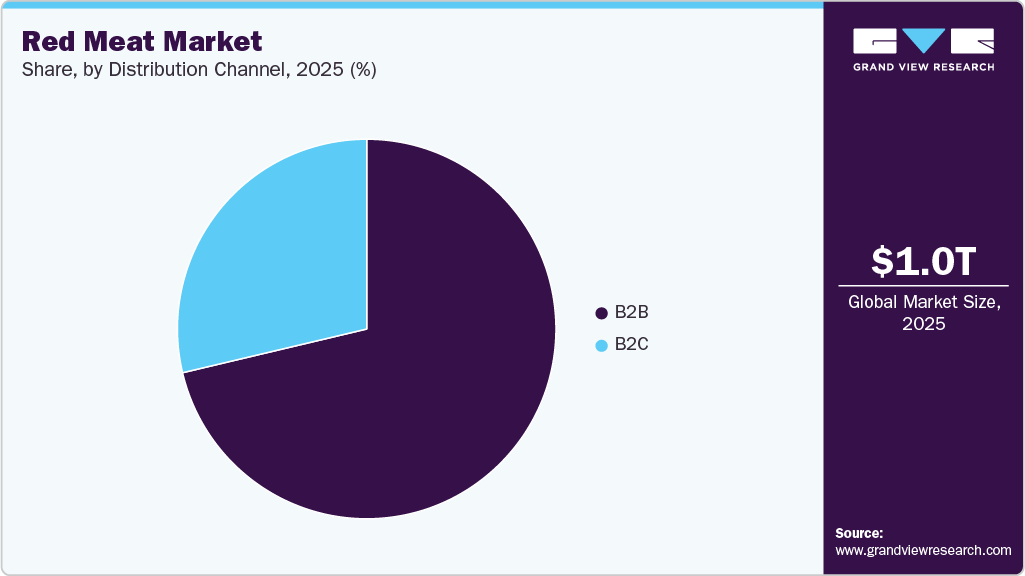
Sale of red meat through B2C channel is estimated to witness a CAGR of 7.0% from 2026 to 2033. This can be attributed to consumers increasingly seeking convenience and a seamless shopping experience. The B2C distribution channel allows consumers to purchase red meat products directly from retailers, online platforms, or specialty stores, catering to their preferences and needs. Moreover, the growth of e-commerce platforms has revolutionized the way consumers shop for red meat products. Online retail channels offer a wide range of options, convenience, and often competitive pricing, driving more consumers toward purchasing red meat products online.
Regional Insights
The red meat industry in North America is estimated to witness a CAGR of 7.1% from 2026 to 2033. The demand for red meat, particularly beef, in North America plays a significant role in driving the market. Beef has a significant role in the traditional American diet, with popular dishes such as meatloaf, steaks, and hamburgers often highlighting beef as the primary ingredient. Consumer preferences for specific types of red meat, cuts, and quality attributes impact production, pricing, and market trends.
U.S. Red Meat Market Trends
The red meat market in the U.S. is estimated to witness a CAGR of 6.8% from 2026 to 2033. U.S. consumers are increasingly seeking premium meat products, including grass-fed beef, organic meat, and specialty cuts. Demand for these products is driven by rising awareness of quality, animal welfare, and traceability, prompting companies to introduce higher-quality meat offerings with transparent sourcing and production practices.
Beef remains one of the most popular red meats in the U.S., with strong retail sales growth in recent years. In 2025, fresh beef sales increased significantly, reaching around USD 45 billion, while sales volume rose by more than 4%. This growth reflects strong consumer demand for beef across grocery stores and foodservice outlets.
Europe Red Meat Market Trends
The red meat market in Europe is estimated to witness a CAGR of 6.2% from 2026 to 2033. Products such as beef, pork, and lamb are commonly used in traditional dishes and regional specialties, especially in countries such as Spain, France, and Italy. These culinary traditions help maintain consistent consumption levels, as red meat remains a staple ingredient in many European households and foodservice menus.
Supermarkets and organized retail channels offer consumers convenient access to a wide variety of fresh and processed meat options. The strong presence of large retail chains, along with the gradual expansion of online grocery platforms, has improved product availability and purchasing convenience for consumers nationwide.
In the UK, supermarkets remain the primary channel for purchasing beef for home consumption. Around 38% of consumers buy beef from supermarkets at least once a week, highlighting the strong reliance on organized retail outlets for everyday meat purchases. In addition, 31% of shoppers purchase beef from local butchers at least once a month, indicating continued consumer trust in traditional specialty meat retailers. The UK also has a relatively small but advanced online retail sector, with about 13% of consumers buying beef online at least every two weeks, reflecting the gradual adoption of digital grocery platforms for meat purchases.
The red meat market in Germany is estimated to witness a CAGR of 6.4% from 2026 to 2033. German consumers increasingly prefer organic, locally sourced, and ethically produced meat products. Concerns about animal welfare, environmental sustainability, and food transparency are encouraging producers and retailers to adopt better traceability and sustainable farming practices
Asia Pacific Red Meat Market Trends
The red meat market in Asia Pacific held the revenue share of 43.5% of the red meat industry in 2025. Major meat-producing countries in the Asia-Pacific region are capitalizing on export opportunities to meet global demand for red meat products. Countries like China, India, and Australia are expanding their export markets, further boosting the growth of the red meat industry.
The red meat market in China is estimated to witness a CAGR of 7.0% from 2026 to 2033. Beef is gaining popularity among urban consumers, particularly younger and higher-income groups. Beef consumption has grown steadily due to perceptions that it is healthier and of higher quality than pork. Rising demand for Western-style dishes such as hot pot and steak has also boosted beef consumption in metropolitan areas
Central and South America Red Meat Market Trends
The red meat market in Central and South America is estimated to witness a CAGR of 5.7% from 2026 to 2033. Urban lifestyles and expanding retail infrastructure are encouraging the consumption of processed red meat products such as sausages, deli meats, and ready-to-cook meat. Supermarkets and modern retail channels are expanding across the region, increasing accessibility and driving demand for packaged meat products.
Middle East and Asia Red Meat Market Trends
The red meat market in the Middle East and Asia is estimated to witness a CAGR of 3.9% from 2026 to 2033. he growth of hospitality, tourism, and international cuisines is boosting red meat consumption, particularly in urban areas. Hotels, restaurants, and fast-food chains in cities across the Middle East and Asia are driving demand for premium beef and lamb products.
Key Red Meat Company Insights
The red meat industry includes a mix of well-established meat processors, livestock producers, and emerging specialty meat brands that continue to innovate in processing techniques, product offerings, and sustainable production practices to meet evolving consumer preferences. Leading companies focus on producing a wide range of red meat products, including beef, pork, and lamb, as well as processed meats such as sausages, bacon, and deli meats, while emphasizing high-quality cuts, traceability, animal welfare standards, and clean-label processing to attract health- and quality-conscious consumers.
Key Red Meat Companies:
The following key companies have been profiled for this study on the red meat market.
- Hormel Foods Corporation
- JBS Foods
- W.H. Group
- Tyson Foods, Inc.
- Cargill, Incorporated
- ConAgra Foods Inc.
- BRF SA
- OSI Group, LLC.
- Tönnies Group
- Smithfield Foods Inc
- The Scottish Goat Meat Company
- Irish Country Meats
Recent Developments
-
In February 2026, Pre Brands announced the launch of refreshed retail packaging for its steak and ground beef products, aimed at improving product visibility and highlighting nutritional value for consumers. The updated design features a clean white chipboard base with a clear 360-degree viewing window, allowing shoppers to easily see the beef's quality, color, and marbling before purchase.
-
In February 2026, ButcherBox, a direct-to-consumer meat and seafood brand, expanded into physical retail by launching its fresh grass-fed beef products in Target stores across the United States. The launch introduced five 100% grass-fed and grass-finished beef items, including ground beef and steak cuts such as ribeye, New York strip, and top sirloin, available in more than 1,400 Target locations across over 300 cities.
Red Meat Market Report Scope
Report Attribute
Details
Market size value in 2026
USD 1,058.93 billion
Revenue forecast in 2033
USD 1,651.83 billion
Growth rate (Revenue)
CAGR of 6.6% from 2026 to 2033
Actual data
2021 - 2025
Forecast period
2026 - 2033
Quantitative units
Revenue in USD million/billion, volume in tons, and CAGR from 2026 to 2033
Report coverage
Revenue forecast, company ranking, competitive landscape, growth factors, and trends
Segments covered
Type, distribution channel, region
Regional scope
North America; Europe; Asia Pacific; Central & South America; Middle East & Africa
Country scope
U.S.; Canada; Mexico; Germany; Italy; Belgium; France; Netherlands; China; Japan; India; Australia & New Zealand; Brazil; South Africa
Key companies profiled
Hormel Foods Corporation; JBS Foods; W.H. Group; Tyson Foods, Inc.; Cargill, Incorporated; ConAgra Foods Inc.; BRF SA; OSI Group, LLC.; Tönnies Group; Smithfield Foods Inc; The Scottish Goat Meat Company; Irish Country Meats
Customization scope
Free report customization (equivalent up to 8 analysts working days) with purchase. Addition or alteration to country, regional & segment scope.
Pricing and purchase options
Avail customized purchase options to meet your exact research needs. Explore purchase options
Global Red Meat Market Report Segmentation
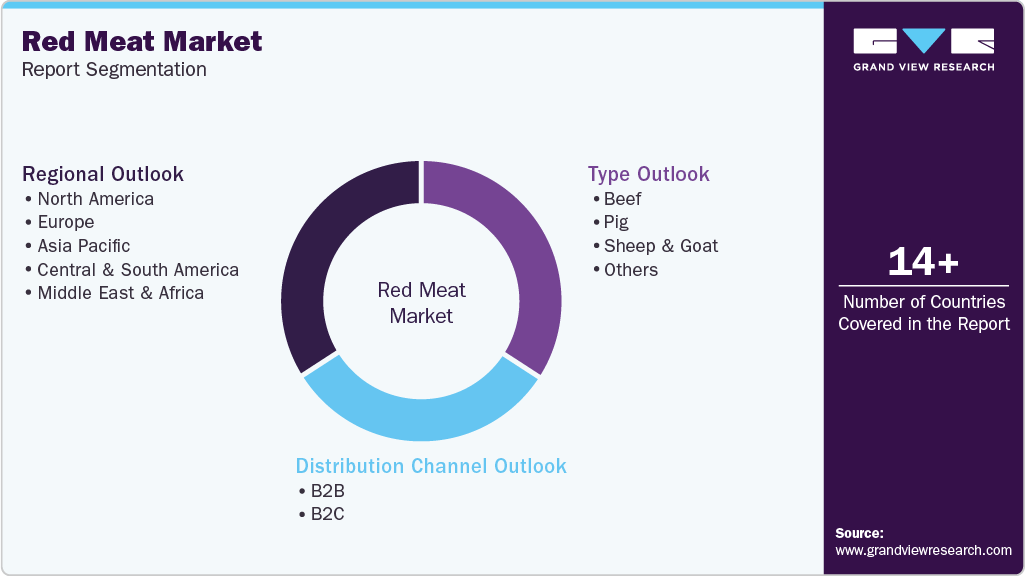
This report forecasts revenue growth at the global, regional, and country levels and provides an analysis of the latest industry trends and opportunities in each of the sub-segments from 2021 to 2033. For this study, Grand View Research has segmented the global red meat market report based on type, distribution channel, and region.
-
Type Outlook (Revenue, USD Billion; Volume, Tons, 2021 - 2033)
-
Beef
-
Pig
-
Sheep & Goat
-
Others
-
-
Distribution Channel Outlook (Revenue, USD Billion; Volume, Tons, 2021 - 2033)
-
B2B
-
B2C
-
Hypermarkets & Supermarkets
-
Convenience Stores
-
Online
-
Others
-
-
-
Regional Outlook (Revenue, USD Billion; Volume, Tons, 2021 - 2033)
-
North America
-
U.S.
-
Canada
-
Mexico
-
-
Europe
-
UK
-
Germany
-
France
-
Italy
-
Spain
-
-
Asia Pacific
-
China
-
Japan
-
India
-
Australia & New Zealand
-
South Korea
-
-
Central & South America
-
Brazil
-
-
Middle East & Africa
-
South Africa
-
-
Frequently Asked Questions About This Report
B2B channel held the largest revenue share 71.3% in 2025.
Asia Pacific dominated with a 43.5% revenue share in 2025.
Some key players operating in red meat market include Hormel Foods Corporation; JBS Foods; W.H. Group; Tyson Foods, Inc.; Kraft Heinz Company, and others.
Key factors that are driving the market growth include rising demand for protein rich food and rising technological advancements in production and processing
The global red meat market size was estimated at USD 1.0 trillion in 2025 and is expected to reach USD 1.1 trillion in 2026.
The global red meat market is expected to grow at a compounded growth rate of 6.6% from 2026 to 2033 to reach USD 1.6 trillion by 2033.
Pigs market held the revenue share of 55.1% of the red meat industry in 2025.
About the Author(s)
Consumer F&B Research Team
Consumer Goods · Consumer F&BThis report was authored by the consumer f&b research team at Grand View Research - comprising two research analysts, one senior research analyst, and one industry expert - with specialized expertise in the consumer f&b segment of the consumer goods industry. All findings are based on proprietary consumer goods databases, executive interviews, and regulatory analysis, subject to internal peer review prior to publication.
Last Updated:
Speak to Analyst

Need a Tailored Report?
Customize this report to your needs — add regions, segments, or data points, with 20% free customization.
Or view our licence options:


ISO 9001:2015 & 27001:2022 Certified
We are GDPR and CCPA compliant! Your transaction & personal information is safe and secure. For more details, please read our privacy policy.












