
- Home
- »
- Medical Devices
- »
-
Refurbished MRI Systems Market Size Report, 2026-2033GVR Report cover

Refurbished MRI Systems Market (2026 - 2033)
Size, Share & Trends Analysis Report By Architecture (Closed System, Open System), By Field Strength (Low Field Strength, Mid Field Strength, High Field Strength), By Technology, By Region, And Segment Forecasts
Market Size, 2025
$1.0BMarket Estimate, 2026
$1.1BMarket Forecast, 2033
$2.3BCAGR, 2026–2033
10.9%Refurbished MRI Systems Market Trends
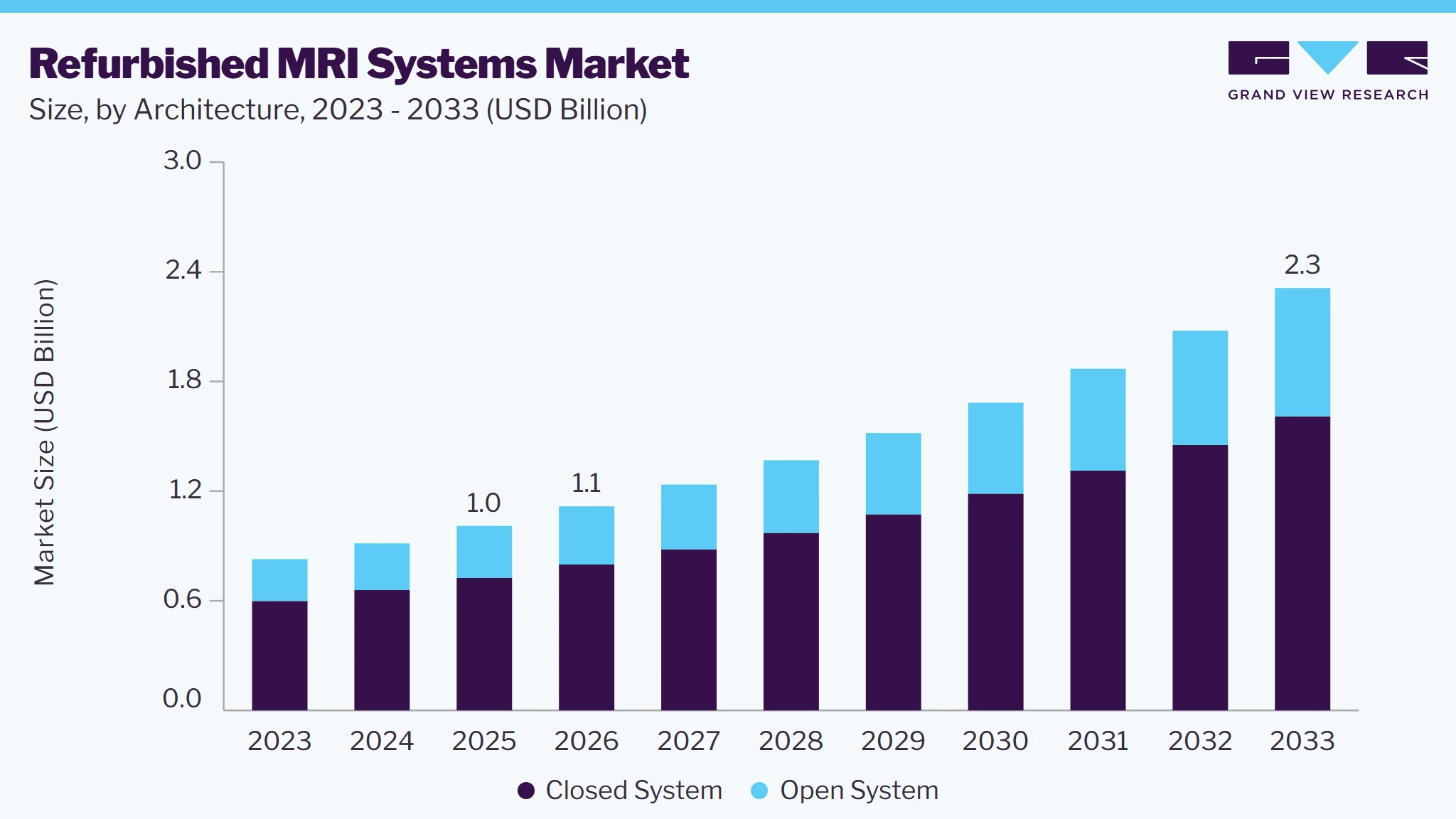
The refurbished MRI systems market size was valued at USD 1.0 billion in 2025 and is projected to grow from USD 1.1 billion in 2026 to USD 2.3 billion by 2033, at a CAGR of 10.9% from 2026 to 2033. North America dominated the refurbished MRI systems market with the largest revenue share of 35.6% in 2025. Key factors contributing to the market's growth are the high cost of new MRI systems and the growing demand for healthcare services.
 Source: Grand View Research, IR Documents, Primary Interviews, Paid DatabasesTo learn more about this report,
 Download Free Sample Report
Key Market Trends & Insights
- By architecture: Closed system segment held the largest market share of 71.8% in 2025.
- By field strength: Mid field strength segment held the largest market share of 45.8% in 2025.
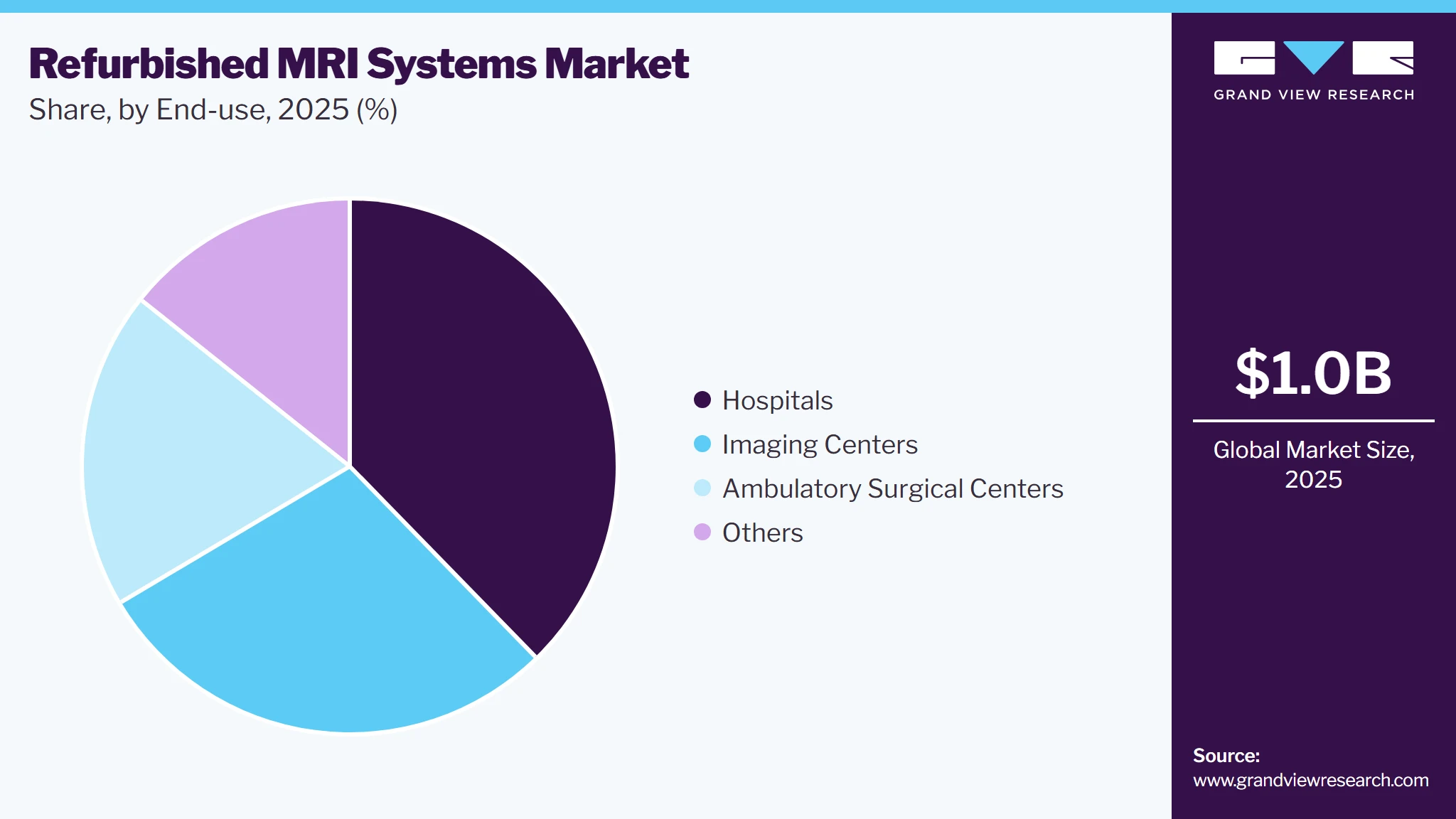
- By end-use: Hospitals segment held the largest market share of 37.7% in 2025.
Regional Highlights
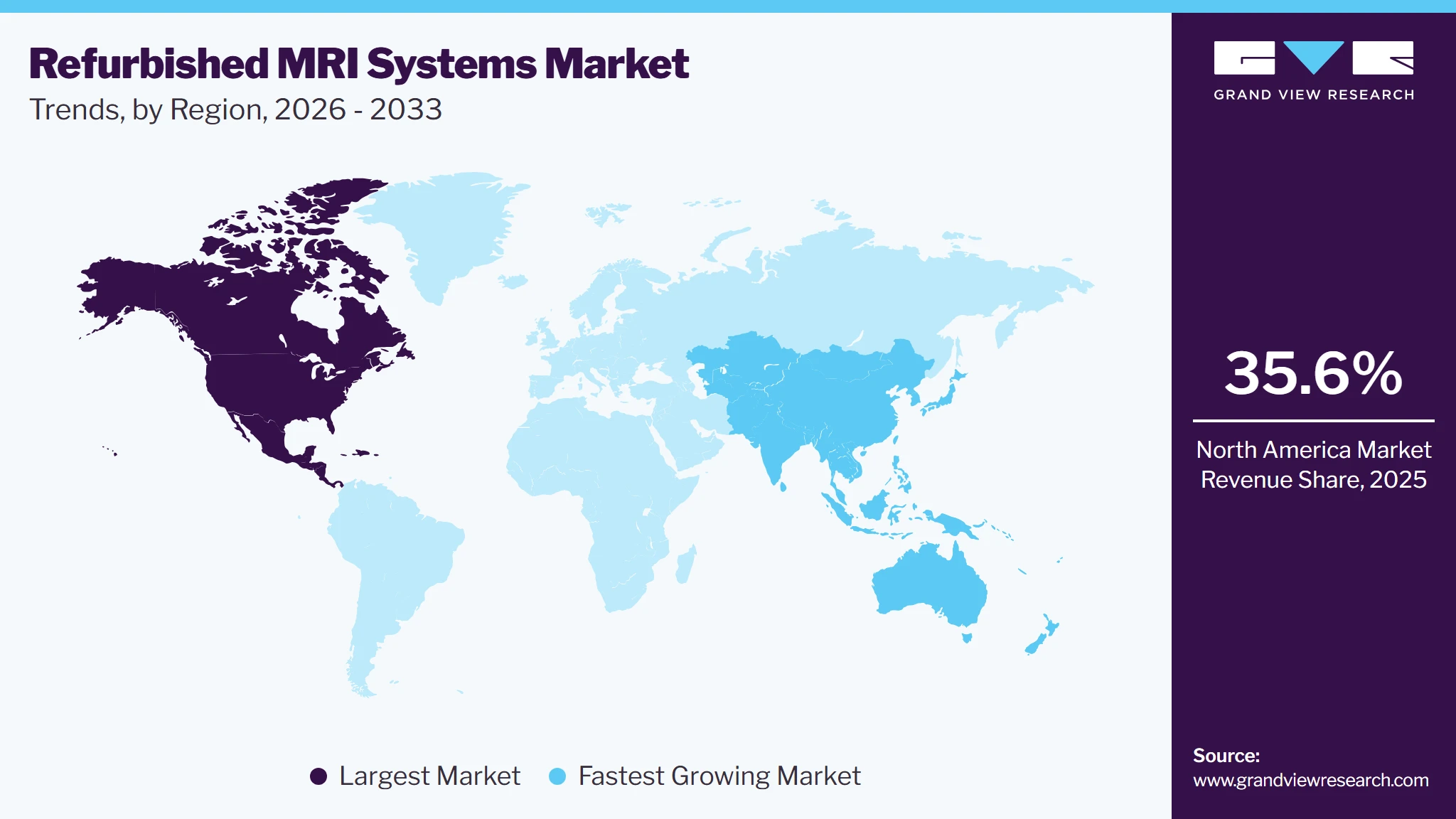
- Largest regional market: North America (35.6% revenue share, 2025)
- Fastest-growing regional market: Asia Pacific (highest CAGR, 2026-2033)
- By country: The U.S. held the largest market share in 2025.
Market Size & Forecast
- Market size in 2025: USD 1.0 Billion
- Estimated market size in 2026: USD 1.1 Billion
- Projected market size by 2033: USD 2.3 Billion
- CAGR (2026-2033): 10.9%
Three ways to get this report
Buy it, customize it, or ask a question.Ask an Analyst
Analyst response in 1 business day
- AccessReport author, directly
- Reply timeWithin 1 working day
- No sales callDirect answer only
- FormatEmail reply
- CostFree, no cost
Get the Full Report
What the study covers
- FormatsPDF · Excel · Dashboard
- Timeline2026–2033 annual, 2025 base
- Coverage20+ countries, 5 regions
- Companies10+ key players profiled
Customize the Report
20% free customization
- IncludeCountries, segments, points
- TailorTo your product definition
- ExtendDeeper competitor detail
- OrA fully bespoke study
- Turnaround5–10 working days
Furthermore, the increasing number of suppliers for refurbished MRI systems is also expected to propel market growth. Refurbished medical devices are restored devices that are rebuilt to meet the safety and performance without changing the intended use of the original device. To ensure its reliability, efficacy, and safety, medical equipment must be refurbished before being used again. Most hospitals and diagnostic centers understand that purchasing a used medical device is a desirable choice. A key factor driving the market is the widespread clinical use of imaging equipment in the diagnosis of various illnesses. With the exception of a few mild illnesses, medical imaging tools such as MRI machines are frequently utilized in the diagnosis of almost all medical conditions.The demand for refurbished MRI systems worldwide is increasing due to their superior qualities compared to other devices, such as X-rays and CT scans, as they employ powerful magnetic fields and radio waves, rather than ionizing radiation, to produce images of the body. This results in more safety for patients, which accounts for the rise in market expansion with wider trends in medical technology and patient treatment
 To learn more about this report, Download Free Sample Report
According to an article published by LBN Medical in February 2023, the average cost of MRI systems featuring a magnetic field strength of 1.5T or lower is approximately USD 367.20. Also, the cost of the 3T MRI system is approximately more than USD 419.66 million. According to an article published by NCBI in July 2023, the MRI system carries an initial acquisition expense of USD 189.48 million. For healthcare providers, purchasing an MRI machine requires a significant investment due to its high cost. Due to the wide range of sizes and magnetic strengths available for MRI equipment, the price may vary.
Healthcare costs is rising quickly, leading to a focus on the prices of medical services and products. Research and development costs, profit margins, and the complicated global market for medical devices influence high costs. The refurbished MRI systems are 35 - 45% less expensive than the new system’s prices. Hence, the high price of the original MRI devices is expected to contribute to the growth of the refurbished MRI systems industry. The market growth is influenced by the presence of several refurbished device suppliers. This increased competition benefits buyers by offering a wider range of options. Reputed suppliers often provide warranties, repair services, and ongoing support for refurbished MRI systems, giving healthcare facilities confidence in their purchase and ensuring that the equipment remains in good working condition.
Market Dynamics
The refurbished MRI systems market is witnessing robust growth due to the increasing demand for cost-effective advanced diagnostic imaging solutions among hospitals, diagnostic imaging centers, ambulatory care facilities, and specialty healthcare providers. Refurbished MRI systems are previously installed magnetic resonance imaging units that are restored, upgraded, tested, and certified to meet stringent quality and performance standards, offering imaging capabilities comparable to new systems at significantly lower acquisition costs. These systems are available in low-field, mid-field, and high-field configurations and are widely used across neurology, orthopedics, oncology, cardiology, musculoskeletal imaging, abdominal imaging, and other clinical applications. The growing burden of chronic diseases, rising demand for diagnostic imaging, increasing healthcare expenditure in emerging economies, and the need to optimize capital investments are major factors driving market growth. Furthermore, continuous advancements in refurbishment processes, AI-enabled imaging software, upgraded gradient systems, improved radiofrequency coils, and enhanced workflow automation are improving image quality, operational efficiency, and system longevity, thereby supporting wider adoption across both developed and developing healthcare markets.
The increasing prevalence of gastrointestinal disorders and the rising demand for minimally invasive diagnostic technologies are major factors driving the global endoscopic ultrasound market. The growing incidence of pancreatic cancer, gastrointestinal cancers, biliary tract diseases, chronic pancreatitis, subepithelial lesions, and digestive disorders has significantly increased the need for highly accurate diagnostic procedures capable of providing detailed anatomical visualization and precise tissue sampling. Healthcare providers are increasingly adopting endoscopic ultrasound because it enables early disease detection, accurate tumor staging, real-time fine-needle aspiration and biopsy, and improved treatment planning while minimizing patient discomfort compared with traditional surgical diagnostic methods. Expanding cancer screening programs, growing awareness regarding early diagnosis, increasing availability of advanced endoscopy services, and continuous technological innovations in echoendoscopes, ultrasound processors, elastography, and contrast-enhanced imaging are further accelerating market growth. These advancements are improving diagnostic confidence and supporting wider adoption across hospitals, specialty gastroenterology clinics, oncology centers, and ambulatory surgical facilities.
Despite growing acceptance, the refurbished MRI systems market remains constrained by limitations associated with older hardware platforms, technology obsolescence, and customer perception regarding refurbished equipment. Although refurbished systems undergo comprehensive restoration and quality assurance processes, they may not incorporate the latest imaging innovations, AI-enabled functionalities, or advanced hardware available in newly launched MRI platforms. Healthcare providers may also have concerns regarding equipment lifespan, long-term maintenance requirements, warranty coverage, software compatibility, and future upgrade potential. In addition, stringent regulatory requirements governing refurbishment, installation, and quality certification, along with the need for specialized servicing and qualified technical personnel, can increase operational complexity. Budget limitations, financing challenges, and preference for newly installed imaging systems among premium healthcare institutions may further restrict adoption, particularly in highly competitive and technologically advanced healthcare markets.
Market Concentration & Characteristics
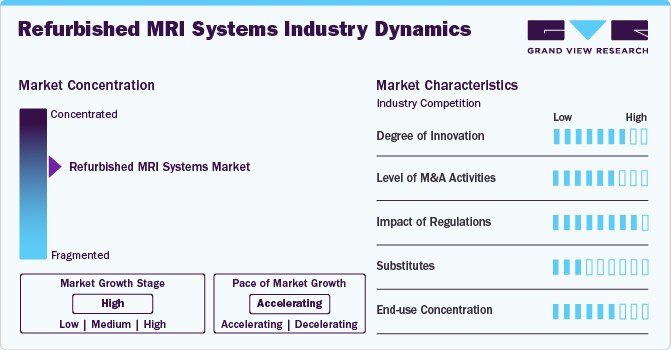
The market growth stage is high, and the pace of the market growth is accelerating. The global refurbished MRI systems industry has witnessed a significant degree of innovation, marked by advancements to enhance both performance and cost-effectiveness. Manufacturers are incorporating new technologies to ensure that these systems align with the latest diagnostic standards. For instance, integration of advanced imaging software and artificial intelligence algorithms has become very common, enhancing the overall accuracy and efficiency of the MRI systems.
Manufacturers are incorporating new technologies to ensure that these systems align with the latest diagnostic standards. A 2024 study by Elsevier studied the integration of advanced imaging software with AI algorithms, recommending continued investment, establishment of ethical guidelines, and training for healthcare professionals to ensure the overall accuracy and efficiency of the MRI systems.
 To learn more about this report, Download Free Sample Report
Key players have been strategically engaging in mergers & acquisitions to strengthen their market presence with a broader product portfolio. In May 2023, Siemens Healthineers collaborated with the hospital giant CommonSpirit Health to acquire Block Imaging. Block Imaging is the key refurbished medical equipment, service, and parts supplier company. This acquisition is aimed at providing sustainable options and supporting growing demand among hospitals, healthcare systems, and others.
Variations in national regulations and policies regarding refurbished medical devices can be seen. Major markets, such as the U.S. and EU, accept the sale and import of refurbished medical devices, while other countries do not.
Analyst Perspective
The refurbished MRI systems market is being driven by the growing demand for cost-effective diagnostic imaging, replacement of aging imaging infrastructure, expanding access to radiology services, and increasing focus on sustainable healthcare practices. Healthcare providers are adopting certified refurbished MRI systems that offer reliable diagnostic performance and advanced imaging capabilities at significantly lower costs than new systems. Advancements in refurbishment processes, AI-enabled imaging software, hardware modernization, and predictive maintenance are further enhancing system value. Growing investments in diagnostic imaging, increasing demand for MRI services in emerging economies, and wider acceptance of refurbished medical equipment are creating significant growth opportunities. As healthcare systems prioritize affordable diagnostics, equipment lifecycle extension, and sustainability, demand for high-quality refurbished MRI systems is expected to grow steadily worldwide.
Architecture Insights
Based on architecture, the closed system segment led the market with the largest revenue share of 71.8% in 2025. These systems are used traditionally. However, closed systems have very low acceptance by patients with claustrophobia, and they also possess chances of suffocation. Thus, companies are focusing on research to develop advanced open systems that have more acceptance by patients with claustrophobia.
Companies are investigating improved open systems that might be more tolerable for these patients. Nevertheless, evidence backing open MRIs is scarce, and the image quality typically falls short of that produced by closed MRIs.
The open systems segment is expected to grow at the fastest rate over the forecast period, Open systems are specially designed for increasing patient convenience. These systems provide a larger space for patients. The demand for MRI scans is increasing, partly due to rising obesity levels, which is resulting in more requests for open MRIs. According to World Health Organization (WHO), in 2022,5 billion adults (aged 18 years and above) were overweight, and out of these, 890 million individuals were experiencing obesity. This increasing trend highlights the necessity for accessible imaging solutions that meet various patient requirements, making open MRI systems a significant component in the changing healthcare environment.
Field Strength Insights
Based on field strength, the mid field strength segment led the market with the largest revenue share of 45.8% in 2025. These MRI machines aid in more accurate picture capture and are affordable. These MRI systems are suitable for a variety of diagnostic uses, including imaging of the musculoskeletal system, the brain, and the abdomen. Compared to high-field strength systems, midfield strength systems are frequently more affordable to buy and run. Due to this, they are a popular option for smaller clinics and healthcare facilities with limited resources.
The high field strength segment is expected to grow at the fastest CAGR over the forecast period. High-field MRI devices acquire images more rapidly when compared to low and mid-field systems. This is especially helpful for individuals like children or claustrophobic people who have trouble staying motionless during the imaging process. For spectroscopic studies, which examine the chemical composition of tissues and can be used to identify uncertainties at the molecular level, high-field refurbished MRI devices are more suitable. Thus, high-field strength MRI systems can often achieve the same diagnostic information in shorter scan times, improving patient throughput and overall efficiency in a clinical setting.
End Use Insights
Based on end-use, the hospitals segment led the market with the largest revenue share of 37.7% in 2025. Many used MRI systems come with advanced hardware and software improvements, guaranteeing that they satiate the most recent imaging requirements. Hospitals can use cutting-edge imaging methods without having to purchase new equipment. Due to rising demand from healthcare facilities looking for affordable alternatives, the market for refurbished MRI systems has been expanding. This increasing trend is likely to continue, particularly as hospitals work to improve their imaging offerings.
 To learn more about this report, Download Free Sample Report
Imaging centers are anticipated to witness significant growth over the forecast period. Increased demand for non-invasive diagnostics is encouraging the emergence of numerous specialized facilities that offer services like MRI. Different medical experts have started their facilities that offer MRI at a reasonable price to suit this rising need. This trend is fostering the utilization of refurbished MRI systems in the medical field, as they require less investment compared to installing new MRI units. During the projected period, expanding government initiatives to enhance and expand the supply of imaging centers to expand access in rural areas are anticipated to drive sector expansion.
Regional Insights
North America dominated the refurbished MRI systems market with the largest revenue share of 35.6% in 2025. The growing prevalence of chronic diseases, including cardiovascular issues, breast cancer, and neurological conditions, has driven a growing demand for imaging analysis in this field. The region is anticipated to continue its dominance in the coming years. Technological advancements, along with an increase in the prevalence of chronic illnesses, are expected to drive refurbished MRI system market growth over the forecast period. In North America, a number of companies specialize in refurbishing and marketing MRI equipment. These businesses frequently have a wealth of experience in the medical imaging sector, and they offer guarantees and service agreements to guarantee the dependability of their refurbished equipment.
 To learn more about this report, Download Free Sample Report
The medical imaging equipment market continues to be crucial to the healthcare sector, and refurbished systems present an excellent option compared to new equipment as they are assured to perform just as effectively as a new OEM version of the same model. Many companies backed by extensive medical imaging knowledge focus on refurbishing and selling MRI equipment with excellence, which enhances their market standing and increases healthcare providers' overall trust in the efficacy of refurbished medical imaging equipment.
U.S. Refurbished MRI Market Trends
The refurbished MRI systems market in the U.S. held the largest share in the North America region in 2025. Hospitals' increasing requirement for cost-effective medical devices drives the demand, enabling them to enhance their revenue while still delivering quality service.
Europe Refurbished MRI Market Trends
Europe refurbished MRI systems market is expected to grow substantially over the forecast period. MRI plays a crucial role in combating life-threatening illnesses such as brain tumors, cancers, and cardiovascular disorders. The increasing incidence rate of these disorders is expected to propel market growth in the coming years.
Asia Pacific Refurbished MRI Market Trends
Asia Pacific refurbished MRI market is expected to register the fastest CAGR over the forecast period. New regulations in the region are anticipated to standardize the procedure and stimulate regional market growth. In February 2022, the MDA (Malaysian Medical Device Authority) established regulations pertaining to the criteria for registering refurbished medical equipment. For reprocessed medical equipment, there are two registration procedures: ROUTE (A) for the original supplier and ROUTE (B) for third-party refurbishers. Lucrative growth opportunities in developing countries are likely to contribute to the regional market growth.
Key Refurbished MRI Systems Company Insights
Some key companies operating in the market include GE Healthcare; Siemens Healthineers; Koninklijke Philips N.V., among others. Key players operating in the market are focusing on the development of refurbished MRI market systems in terms of sustainability and efficiency to gain a significant revenue share.
-
GE HealthCare is a global pharmaceutical diagnostic, medical technology, and digital solutions company. The company operates in imaging, ultrasound, pharmaceutical diagnostics, and patient care solutions. The ultrasound segment includes diagnosis, screening, monitoring of multiple diseases, and therapy support. The pharmaceutical diagnostics segment includes diagnostic imaging agents, which are used to enhance nuclear medicine procedures and radiology across pathways.
-
Radio Oncology Systems Inc. provides affordable, high quality refurbished and used radiation oncology and diagnostic imaging equipment solutions to facilities globally.
Key Refurbished MRI Systems Companies
The following key companies have been profiled for this study on the refurbished MRI systems market.
-
Koninklijke Philips N.V.
-
GE Healthcare
-
CANON MEDICAL SYSTEMS CORPORATION
-
Siemens Healthineers
-
Avante Health Solutions
-
Integrity Medical Systems, Inc.
-
Radiology Oncology Systems
Competitive Benchmarking
Category
Operating Strategies
Competitive Edge
Weakness
Established Players (Koninklijke Philips N.V., GE Healthcare, Canon Medical Systems Corporation, Siemens Healthineers)
- Established companies focus on expanding comprehensive MRI imaging portfolios comprising new and refurbished closed and open MRI systems across low-, mid-, and high-field strengths.
- They emphasize advanced refurbishment programs, AI-enabled imaging software upgrades, hardware modernization, predictive maintenance services, lifecycle management solutions, strategic partnerships with hospitals and diagnostic imaging centers, and expansion of certified refurbishment facilities to strengthen global market leadership.
- Strong global brand recognition, extensive installed MRI base, well-established service and distribution networks, advanced engineering capabilities, regulatory expertise, and significant investments in R&D enable these companies to deliver high-quality certified refurbished MRI systems with reliable performance, comprehensive service support, and long-term customer confidence across developed and emerging healthcare markets.
- Dependence on premium product positioning and certified refurbishment standards may create pricing challenges in cost-sensitive markets. Stringent regulatory compliance, high refurbishment costs, and complex logistics associated with equipment retrieval, refurbishment, and installation can increase operational expenses. Large organizational structures may also reduce flexibility in responding rapidly to regional market requirements.
Emerging Players (Avante Health Solutions, Integrity Medical Systems, Inc., Radiology Oncology Systems (ROS) )
- Emerging companies prioritize cost-effective refurbished MRI solutions, customized equipment upgrades, flexible financing options, preventive maintenance services, equipment relocation, and aftermarket support. They focus on expanding regional distribution, strengthening relationships with hospitals, imaging centers, and independent diagnostic facilities, while providing tailored refurbishment services that extend equipment lifecycle and improve affordability for healthcare providers.
- Agile business models, competitive pricing strategies, specialized expertise in medical imaging refurbishment, rapid equipment deployment, and personalized customer support enable these companies to address budget-conscious healthcare providers. Their ability to refurbish multi-vendor MRI systems and provide flexible service offerings creates opportunities to expand market share in underserved and emerging markets.
- Limited global brand recognition, comparatively smaller service infrastructures, and lower financial resources may restrict international expansion and large-scale refurbishment capacity. Dependence on availability of pre-owned imaging systems, third-party component suppliers, and increasing competition from OEM-certified refurbishment programs may challenge long-term market penetration and profitability.
Recent Developments
-
In May 2023, Siemens Healthineers collaborated with CommonSpirit Health to acquire Block Imaging. Block Imaging provides refurbished medical equipment, servicing, and parts. The acquisition aimed to encourage efforts to repair and reuse equipment, provide greater value to consumers and their patients, and reduce waste.
-
In January 2023, Radon Medical Imaging (Radon) announced the acquisition of Premier Imaging Medical Systems. Premier provides maintenance services and sales for new, used, and refurbished imaging and biomedical equipment.
Refurbished MRI Systems Market Report Scope
Report Attribute
Details
Market size in 2025
USD 1.0 billion
Estimated market size in 2026
USD 1.1 billion
Projected market size by 2033
USD 2.3 billion
Growth rate
CAGR of 10.9% from 2026 to 2033
Historical data
2021 - 2024
Forecast period
2026 - 2033
Quantitative units
Revenue in USD million/billion and CAGR from 2026 to 2033
Report coverage
Revenue forecast, company ranking, competitive landscape, growth factors, and trends
Segments covered
Architecture, field strength, end-use, region
Regional scope
North America; Europe; Asia Pacific; Latin America; MEA
Country scope
U.S.; Canada; Mexico; Germany; UK; France; Italy; Spain; Denmark; Sweden; Norway; China; Japan; India; South Korea; Thailand; Australia; Brazil; Argentina; South Africa; Saudi Arabia; UAE; Kuwait
Key companies profiled
Koninklijke Philips N.V.; GE Healthcare; CANON MEDICAL SYSTEMS CORPORATION; Siemens Healthineers; Avante Health Solutions; Integrity Medical Systems, Inc.; Radiology Oncology Systems
Customization scope
Free report customization (equivalent up to 8 analysts' working days) with purchase. Addition or alteration to country, regional & segment scope.
Pricing and purchase options
Avail customized purchase options to meet your exact research needs. Explore purchase options
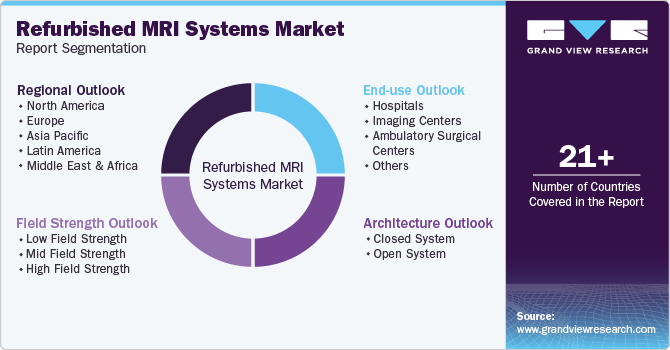
Global Refurbished MRI Systems Market Report Segmentation
This report forecasts volume and revenue growth at global, regional, and country levels and provides an analysis of the latest industry trends in each of the sub-segments from 2021 to 2033. For this study, Grand View Research has segmented the global refurbished MRI systems market report based on architecture, field strength, end use and region.
 To learn more about this report, Download Free Sample Report
-
Architecture Outlook (Revenue, USD Million, 2021 - 2033)
-
Closed System
-
Open System
-
-
Field Strength Outlook (Revenue, USD Million, 2021 - 2033)
-
Low Field Strength
-
Mid Field Strength
-
High Field Strength
-
-
End Use Outlook (Revenue, USD Million, 2021 - 2033)
-
Hospitals
-
Imaging Centers
-
Ambulatory Surgical Centers
-
Others
-
-
Regional Outlook (Revenue, USD Billion, 2021 - 2033)
-
North America
-
U.S.
-
Canada
-
Mexico
-
-
Europe
-
UK
-
Germany
-
France
-
Italy
-
Spain
-
Denmark
-
Sweden
-
Norway
-
-
Asia Pacific
-
Japan
-
China
-
India
-
Australia
-
South Korea
-
Thailand
-
-
Latin America
-
Brazil
-
Argentina
-
-
Middle East & Africa
-
South Africa
-
Saudi Arabia
-
UAE
-
Kuwait
-
-
Research Methodology
The refurbished MRI systems market figures in this report are based on a proven research process that combines executive interviews with secondary research from proprietary databases, company filings, and recognized regulatory and institutional sources. Market size is built through value-chain sizing - reconciling supply-side and demand-side estimates - and triangulated with bottom-up and top-down approaches. Every estimate passes multiple levels of expert validation before publication, with each refurbished MRI systems segment quantified using the revenue-capture definitions in the table below.
Segment Definition
Segment - Architecture
Revenue capture definition
Closed System
Revenue is generated from refurbished closed-bore MRI systems that provide high-quality diagnostic imaging for a broad range of clinical applications. Demand is driven by their widespread use in hospitals and imaging centers for neurological, orthopedic, cardiovascular, and oncological imaging, offering high magnetic field strengths and superior image resolution.
Open System
Revenue comprises refurbished open MRI systems designed to improve patient comfort, particularly for claustrophobic, obese, pediatric, and elderly patients. Growth is supported by increasing demand for patient-friendly imaging solutions, interventional MRI procedures, and facilities seeking cost-effective alternatives to new open MRI systems.
Segment - Field Strength
Revenue capture definition
Low Field Strength
Revenue includes refurbished MRI systems operating below 0.5 Tesla, primarily utilized for routine diagnostic imaging and basic musculoskeletal examinations. These systems are preferred by smaller healthcare facilities due to their lower acquisition, installation, and operating costs, particularly in emerging markets.
Mid Field Strength
Revenue is generated from refurbished MRI systems with field strengths ranging approximately from 0.5T to 1.5T, offering a balance between image quality and affordability. These systems are widely adopted across community hospitals and diagnostic imaging centers for general clinical imaging applications.
High Field Strength
Revenue comprises refurbished high-field MRI systems, primarily 1.5T and 3T platforms, that deliver superior image quality, faster scan times, and advanced diagnostic capabilities. Increasing demand for high-resolution imaging in neurology, oncology, cardiology, and musculoskeletal applications continues to drive growth in this segment.
Segment - End Use
Revenue capture definition
Hospitals
Revenue is generated from hospitals purchasing refurbished MRI systems to expand diagnostic imaging capacity while optimizing capital expenditure. Adoption is driven by increasing patient volumes, rising chronic disease burden, and the need for cost-effective advanced imaging solutions without compromising diagnostic performance.
Imaging Centers
Revenue includes refurbished MRI systems installed in independent diagnostic imaging centers and radiology facilities. Growing demand for affordable imaging services, higher patient throughput, and expansion of outpatient diagnostic facilities are major factors supporting revenue growth in this segment.
Ambulatory Surgical Centers (ASCs)
Revenue comprises refurbished MRI systems utilized by ambulatory surgical centers for preoperative planning, postoperative assessment, and diagnostic imaging supporting outpatient surgical procedures. Increasing adoption of minimally invasive surgeries and the expansion of outpatient healthcare services are contributing to market growth.
Others
Revenue includes refurbished MRI systems used by specialty clinics, academic medical centers, research institutions, military hospitals, veterinary hospitals, and government healthcare facilities. Growing investments in healthcare infrastructure and increasing access to advanced imaging technologies continue to create additional revenue opportunities within this segment.
Estimation Model
Scope Definition
Build the Install Base
Estimate Utilization & Procedure
Revenue Conversion
What is being sized?
What is the addressable installed base and replacement demand?
What proportion adopts refurbished MRI systems?
How are refurbished MRI system sales converted into market revenue?
PROCESS STEPS
1 Define the market scope covering refurbished MRI systems by system type
2 Evaluate refurbishment technologies, software upgrades
3 Establish Geographic Coverage (Global/Regional)
4 Align on base year & forecast horizon (2026-2033)
PROCESS STEPS
1 Estimate the installed base of MRI systems, replacement cycles, and demand for refurbished equipment
2 Analyze growth in diagnostic imaging procedures, healthcare infrastructure development, capital equipment replacement, and demand for affordable imaging solutions.
3 Incorporate healthcare expenditure, chronic disease burden, aging installed equipment
4 Forecast future replacement demand considering expanding healthcare access
PROCESS STEPS
1 Assess adoption rates of refurbished MRI systems across healthcare facilities based on budget constraints
2 Evaluate procurement practices, financing models, reimbursement policies
3 Validate penetration assumptions through interviews with OEMs, refurbishment providers, distributors, hospitals, imaging centers, and industry experts.
4 Cross-verify adoption estimates using historical sales trends, healthcare statistics, procurement databases, expert interviews, and secondary research sources.
PROCESS STEPS
1 Determine the average selling price (ASP) of refurbished MRI systems
2 Calculate market revenues
3 Validate revenue estimates using company financial reports, refurbishment sales data
4 Cross-check final market estimates through data triangulation using shipment volumes, company revenues, pricing analysis, procurement trends, and multiple secondary research databases.
DATA SOURCES
FDA, EMA, PMDA, NMPA, Hospital Imaging Database
DATA SOURCES
Company Annual Reports, Hospital Procurement Databases, Distributor Sales Data
DATA SOURCES
Primary interviews, OECD Database, clinical surveys, industry experts
DATA SOURCES
Company Annual Reports, Distributor pricing sheets, procurement data, expert interviews
Delivered Customizations
This report has been delivered with the following In-depth customizations
Client Request
Customization Delivered
Value Adds
Product Portfolio Assessment
Conducted a comprehensive assessment of refurbished MRI systems segmented by system configuration (Closed and Open MRI), field strength (Low-, Mid-, and High-field), and end-user settings. The study evaluated refurbishment standards, hardware and software upgrades, image quality, clinical performance, lifecycle, pricing trends, and vendor offerings across global markets.
Enables stakeholders to identify high-growth product segments, compare refurbished system capabilities with new MRI platforms, evaluate investment opportunities, and optimize product portfolio strategies. Supports procurement decisions and long-term capital planning for healthcare providers.
Competitive Landscape and Strategic Benchmarking
Performed a detailed competitive assessment of leading refurbished MRI system providers based on product portfolios, refurbishment capabilities, geographic presence, pricing strategies, service offerings, regulatory compliance, distribution networks, partnerships, acquisitions, and recent strategic developments.
Provides actionable competitive intelligence by identifying leading market participants, benchmarking business strategies, evaluating competitive positioning, and highlighting opportunities for partnerships, geographic expansion, and differentiation within the refurbished imaging equipment market.
Regional Market and Adoption Analysis
Conducted an in-depth regional assessment across North America, Europe, Asia Pacific, Latin America, and the Middle East & Africa by evaluating healthcare infrastructure, imaging procedure volumes, replacement demand, reimbursement policies, regulatory frameworks, and adoption of refurbished MRI systems across hospitals, diagnostic imaging centers, and ambulatory care facilities.
Supports regional expansion strategies by identifying high-growth markets, healthcare investment opportunities, procurement trends, and demand for cost-effective imaging technologies. Enables optimized resource allocation and market entry strategies across both developed and emerging healthcare markets.
Frequently Asked Questions About This Report
The global refurbished MRI systems market size was valued at USD 1.0 billion in 2025 and is estimated at USD 1.1 billion for 2026.
The global refurbished MRI systems market is expected to grow at a CAGR of 10.9% from 2026 to 2033, reaching USD 2.3 billion by 2033.
North America dominated with a revenue share of 35.6% in 2025. This is attributable to the increasing prevalence of chronic diseases, including breast cancer, cardiovascular issues, and neurological conditions, which has driven a growing demand for imaging analysis in this field.
Some key players operating in the refurbished MRI systems market include Koninklijke Philips N.V.; GE HealthCare; Siemens Healthcare GmbH; CANON MEDICAL SYSTEMS CORPORATION; Tyromotion Inc; MRI Medical Equipment; Integrity Medical Systems, Inc.; Radio Oncology Systems Inc., Block Imaging
The primary factors contributing to the market's growth are the high cost of new MRI systems and increasing demand for healthcare services. Furthermore, the increasing number of suppliers for the refurbished MRI systems, field strength development is also expected to fuel the market growth.
Based on architecture, the closed system segment led the market with the largest revenue share of 71.8% in 2025.
Asia Pacific is the fastest-growing region over the forecast period.
Based on field strength, the mid field strength segment led the market with the largest revenue share of 45.8% in 2025.
About the Author(s)
Medical Devices Research Team
Healthcare · Medical DevicesThis report was authored by the medical devices research team at Grand View Research - comprising two research analysts, one senior research analyst, and one industry expert - with specialized expertise in the medical devices segment of the healthcare industry. All findings are based on proprietary healthcare databases, executive interviews, and regulatory analysis, subject to internal peer review prior to publication.
Last Updated:
Speak to Analyst

Customize this report to your needs - add regions, segments, or data points, with 20% free customization.
Or view our licence options:


ISO 9001:2015 & 27001:2022 Certified
We are GDPR and CCPA compliant! Your transaction & personal information is safe and secure. For more details, please read our privacy policy.


