
- Home
- »
- Clinical Diagnostics
- »
-
Renal Biomarkers Market Size, Share, Industry Report, 2033GVR Report cover
![Renal Biomarkers Market Size, Share & Trends Report]()
Renal Biomarkers Market (2025 - 2033) Size, Share & Trends Analysis Report By Biomarkers (Functional Biomarkers, Upregulated Proteins), By Diagnostic Technique (ELISA, Immunoassays), By End Use (Hospitals & Clinics), By Region, And Segment Forecasts
- Report ID: GVR-4-68040-764-4
- Number of Report Pages: 150
- Format: PDF
- Historical Range: 2021 - 2023
- Forecast Period: 2025 - 2033
- Industry: Healthcare
- Report Summary
- Table of Contents
- Segmentation
- Methodology
- Download FREE Sample
-
 Download Sample Report
Renal Biomarkers Market Summary
The global renal biomarkers market size was estimated at USD 1,530.0 million in 2024 and is expected to reach USD 3,161.4 million by 2033, growing at a CAGR of 8.54% from 2025 to 2033. The rising prevalence of kidney disease particularly chronic kidney disease (CKD) and acute kidney injury (AKI) along with the urgent clinical need for earlier and more nuanced detection beyond conventional measures.
Key Market Trends & Insights
- North America renal biomarkers market dominated the global market and accounted for the largest revenue share of 48.83% in 2024.
- The U.S. led the North American market and held the largest revenue share in 2024.
- Based on biomarkers, the functional biomarker segment dominated the global market and accounted for the largest revenue share of 51.81% in 2024.
- Based on diagnostic technique, the ELISA segment held the largest revenue share of 43.07% in 2024.
- Based on end use, the hospitals and clinics segment held the largest revenue share of 54.33% in 2024.
Market Size & Forecast
- 2024 Market Size: USD 1,530.0 Million
- 2033 Projected Market Size: USD 3,161.4 Million
- CAGR (2025-2033): 8.54%
- North America: Largest market in 2024
CKD often remains asymptomatic until advanced stages, and biomarkers that can reveal subclinical pathology or early injury are of growing interest. In the U.S., an estimated 35.5 million adults have chronic kidney disease (CKD), and a significant number are unaware of their condition. Globally, CKD affects around 850 million people, which is approximately 9% of the adult population. A 2024 study projects that by 2032, nearly 125 million people across eight major countries will have advanced CKD, a 25% increase since 2022. In April 2024, AstraZeneca’s IMPACT CKD modeling study projected that by 2032, as many as 16.5% of the population across eight countries could be affected by chronic kidney disease (CKD), with advanced-stage cases potentially increasing by up to 59.3%. The findings, presented at the 2024 ISN World Congress of Nephrology (WCN’24) in Buenos Aires, underscored the escalating global health challenge posed by CKD and emphasized its significant economic and environmental consequences. The large and growing base of kidney disease patients ensures a continually rising demand for more sensitive, specific, and multiplex biomarker assays. In addition, co-morbidities such as diabetes, hypertension, and aging populations further exacerbate kidney stress, pushing clinicians and payers to adopt advanced biomarkers (e.g. NGAL, KIM-1, cystatin C) earlier in the disease continuum to improve prognostics, therapy stratification, and monitoring. The high rate of undiagnosed early CKD (sometimes up to 90 % of cases go unnoticed until functional decline) underscores the latent market potential for tools that reliably flag early damage before conventional metrics (eGFR, creatinine) deviate significantly.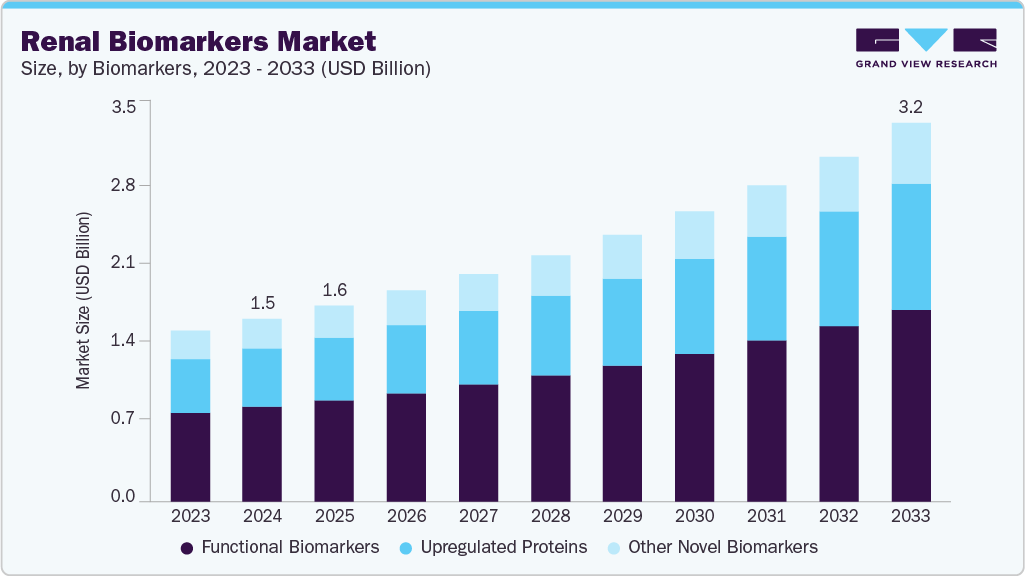
One of the most compelling opportunities in the renal biomarker landscape lies in emerging markets-Asia, Latin America, Africa where rising incidence of hypertension, diabetes, and aging populations is intensifying the renal disease burden, yet diagnostic infrastructure remains underdeveloped. As diagnostics penetration is still relatively low in many of these geographies, the entry of affordable, point-of-care biomarker platforms offers a high-growth niche. For example, Sphingotec’s collaborations (e.g. with Beckman Coulter) to release penKid assays on standard clinical lab platforms reflect how a biomarker originally confined to research can scale into broader clinical adoption. (See news of licensing and launch of penKid in central labs) The capacity to deploy multiplex panels, low-volume assays, or simpler rapid tests in decentralized settings could help bridge diagnostic gaps in underserved regions.
Meanwhile, platform diversity is growing enzyme-linked immunosorbent assays (ELISA) still command a significant share, but more sensitive chemiluminescent immunoassays, multiplex panels, mass spectrometry (LC-MS), microfluidics, and point-of-care immunodiagnostic devices are gaining traction. For instance, the penKid assay’s adoption on Beckman Coulter immunoassay platforms exemplifies how a novel biomarker can be integrated lab workflows. In research settings, microfluidic and multi-omics platforms will support novel discovery and multiplex panels opening scope for biomarker companies to offer value-added analytics, software, and interpretation services.
Several chronic conditions are associated with chronic kidney disease (CKD) and acute kidney injury (AKI). The associated conditions are illustrated below:

Moreover, as per CDC data published in May 2024, CDC estimating that more than 1 in 7 adults-around 35.5 million people, or 14% of the adult population are affected in U.S. Alarmingly, CKD often goes undiagnosed: as many as 9 in 10 adults with CKD are unaware of their condition, and even among those with severe CKD, approximately one in three remain undiagnosed.
The table below highlights the prevalence of diabetes in the age group of 20 to 79 years:
Table 1 Prevalence of Diabetes in 2021, 2030, and 2045
Region
2021
2030
2045
Percentage Increase
Global
537 million
643 million
537 million
46%
North America and the Caribbean
51 million
57 million
63 million
24%
South and Central America
32 million
40 million
49 million
50%
Africa
24 million
33 million
55 million
134%
Middle East and North Africa
73 million
95 million
136 million
87%
South-East Asia
90 million
113 million
152 million
68%
Western Pacific
206 million
238 million
260 million
27%
Europe
61 million
67 million
69 million
13%
Source: International Diabetes Federation 2021, Grand View Research
Market Concentration & Characteristics
The renal biomarkers market is characterized by a steady pace of innovation, particularly in transitioning from conventional markers especially in the shift away from traditional markers such as albuminuria and serum creatinine and toward more sensitive and targeted instruments such as proenkephalin (penKid), NGAL, KIM-1, and TIMP2/IGFBP7. Applications for biomarkers have expanded beyond simple detection to include risk stratification, prognostics, and therapeutic monitoring thanks to the integration of multiplex immunoassays, microfluidics, and mass spectrometry platforms. The use of renal biomarkers in digital health ecosystems, where AI-driven interpretation improves predictive accuracy for acute kidney injury (AKI) and chronic kidney disease (CKD), is a noteworthy innovation trend. Companies such as SphingoTec have been advancing novel markers like penKid for early AKI detection, while Bio-Rad has focused on multiplex kidney toxicity panels for research and preclinical safety testing. These innovations demonstrate how the market is steadily moving toward greater precision, earlier intervention, and integration into both clinical practice and drug development pathways.
Mergers and acquisitions in this space are driven by the need to consolidate technology portfolios and expand regional reach, for example merger such as Beckman Coulter’s agreement with SphingoTec to bring the penKid assay onto high-throughput immunoassay analyzers reflect how global players are aligning with innovators to accelerate commercialization. Similarly, collaborations between Boditech Med and SphingoTec to launch the AFIAS penKid assay illustrate how M&A-like licensing and co-development arrangements are fostering rapid market entry into point-of-care testing.
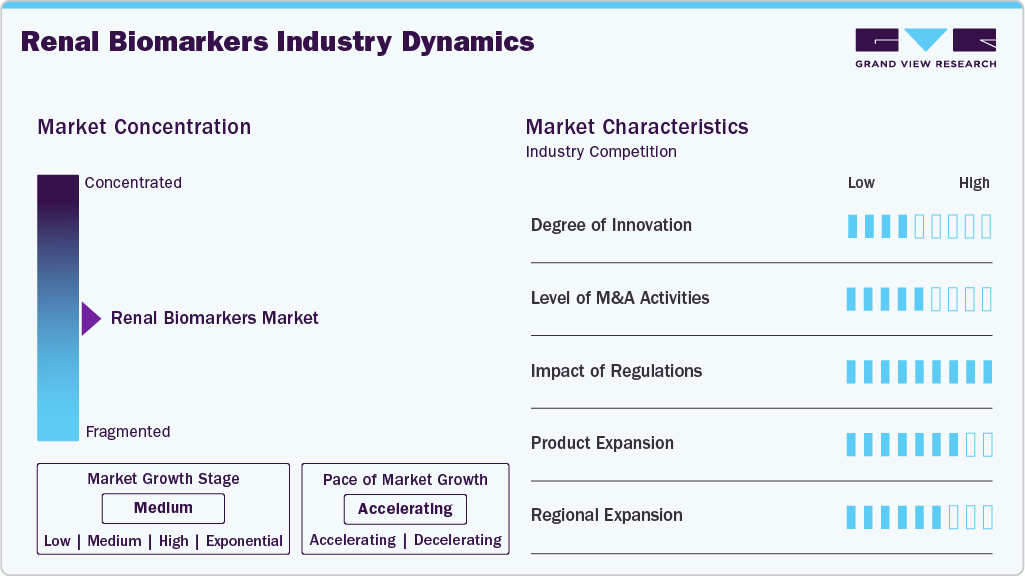
The market for renal biomarkers is significantly impacted by regulatory frameworks, which also shape adoption and commercialization schedules. The FDA's regulation of biomarker assays in the United States, especially laboratory-developed tests, has increased the focus on clinical and analytical validation, which has slowed some approvals but increased clinical use reliability. Stricter conformance requirements brought about by Europe's adoption of the In Vitro Diagnostic Regulation (IVDR) have raised industry standards for quality while posing difficulties for smaller biomarker companies that lack the resources to comply. In the meantime, local clinical data is required by Asian regulators like China's NMPA, which delays entry but guarantees alignment with local patient populations.
Product portfolios in the renal biomarkers market are expanding, shifting from single-analyte assays to multiplex panels and platform-agnostic solutions that meet clinical and research requirements. Companies are stepping into translational research, as demonstrated by Bio-Rad's multiplex immunoassay panels for identifying early kidney toxicity in preclinical models. The move to specialized assays that address transplant rejection and other niche indications is also reflected in Thermo Fisher's introduction of its CXCL10 urine test for kidney transplant monitoring.
Global players are actively strengthening their footprint in Asia Pacific, Latin America, and the Middle East & Africa through partnerships with local labs and distributors. For example, for example, QIAGEN’s QuantiFERON solutions were recently recommended by kidney specialists in Tunisia for monitoring immune function in transplant and dialysis patients, demonstrating how collaborations can localize advanced biomarker solutions. Similarly, Boditech Med’s collaboration with SphingoTec enables deployment of penKid assays across Asian markets via its AFIAS platform, addressing regional demand for accessible AKI diagnostics.
Biomarkers Insights
On the basis of biomarkers, functional biomarkers market accounted for the largest market share of 51.81% in 2024, due to widespread adoption in clinical practice for monitoring kidney function through creatinine, cystatin C, and other well-established measures. Their routine integration into diagnostic workflows, supported by broad availability and clinician familiarity, underpins this dominance. In January 2025, the U.S. Food and Drug Administration (FDA) has accepted a Qualification Plan for a new urine biomarker panel aimed at enabling earlier detection of drug-induced kidney injury during clinical trials. The Critical Path Institute (C-Path) and the Foundation for the National Institutes of Health (FNIH) collaborated to create this panel, which is intended to supplement established kidney safety biomarkers such as blood urea nitrogen and serum creatinine. The FDA's approval of the urine biomarker panel Qualification Plan highlights how crucial functional biomarkers are becoming for identifying kidney damage early on, especially when developing new drugs
The upregulated protein segment in the renal biomarkers market is anticipated to grow at the fastest rate over the forecast period. This growth is driven by rising research activity into novel proteins such as NGAL (neutrophil gelatinase-associated lipocalin), KIM-1 (kidney injury molecule-1), and PENKID, which provide earlier detection of acute kidney injury and CKD progression compared to traditional functional markers. Increasing partnerships between diagnostic companies and research organizations to validate these biomarkers in diverse patient populations are expected to accelerate their clinical uptake.
Diagnostic Technique/Platform Insights
ELISA held the largest market share in 2024, Enzyme-Linked Immunosorbent Assay (ELISA) remains one of the most widely used techniques for the detection and quantification of renal biomarkers due to its sensitivity, specificity, and ease of use. Protein biomarkers in blood or urine can be measured using ELISA-based assays, which are frequently used to diagnose and track kidney-related disorders like diabetic nephropathy, acute kidney injury (AKI), and chronic kidney disease (CKD). Because of their adaptability and reproducibility for high-throughput testing, ELISA-based renal biomarker assays are extensively used in clinical laboratories, hospitals, and research facilities. Renal diagnostics is becoming even more comprehensive thanks to recent advancements in biomarker testing. For instance, In May 2025, Nordic Bioscience recently launched the nordicEndotrophin assay, a fully automated ELISA-based test designed to quantify intact Endotrophin, a collagen-derived hormone linked to fibrosis in various organs, including the kidneys.
The molecular diagnostics segment in the renal biomarkers market is anticipated to grow at the fastest rate over the forecast period. The surge in this segment is fueled by advances in genomics and transcriptomics, enabling the identification of genetic predispositions and molecular pathways linked to CKD and AKI. Increasing adoption of PCR-based assays and next-generation sequencing platforms, along with ongoing collaborations between biotech firms and academic institutions, are expanding the clinical utility of molecular diagnostics in precision nephrology.
End Use Insights
Hospitals and clinics dominated the market in 2024, accounting for a 54.33% share. Hospitals and clinics remain the primary end-users, accounting for a significant share of the market. This dominance is attributed to the rising incidence of chronic kidney disease (CKD) and the need for early detection and continuous monitoring. For instance, the U.S. Centers for Disease Control and Prevention (CDC) reports that approximately 15% of U.S. adults are estimated to have CKD, highlighting the critical demand for effective diagnostic solutions.
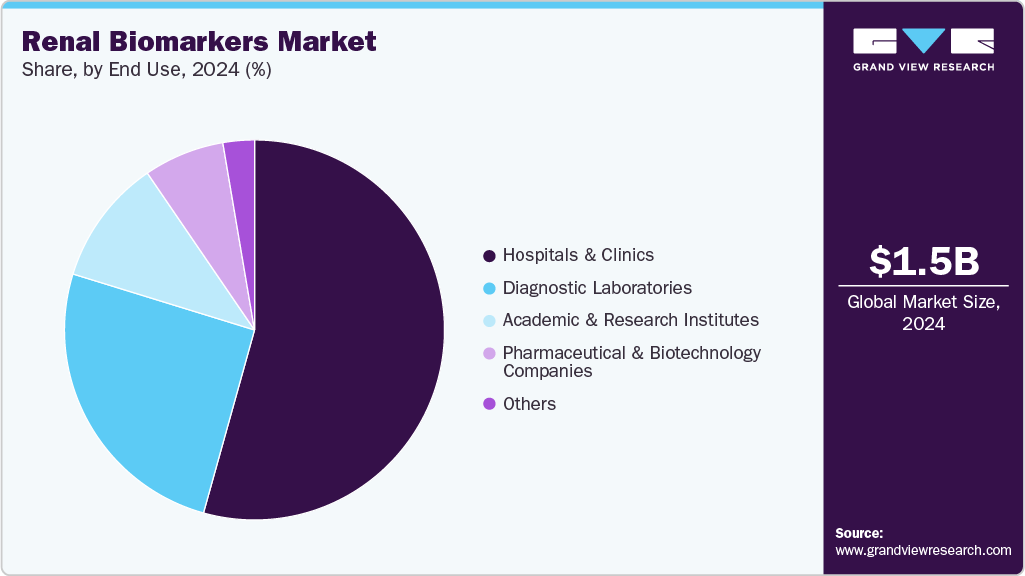
The pharmaceutical & biotechnology companies segment is expected to grow anticipated to grow at the fastest rate over the forecast period, fueled by pharmaceutical and biotechnology companies are increasingly investing in renal biomarker research to support the development of targeted therapeutics. The acquisition of Alpine Immune Sciences by Vertex Pharmaceuticals for USD 4.9 billion underscores the industry's commitment to expanding its kidney disease portfolio. This strategic move reflects a broader trend where companies are focusing on innovative treatments for kidney-related conditions.
Regional Insights
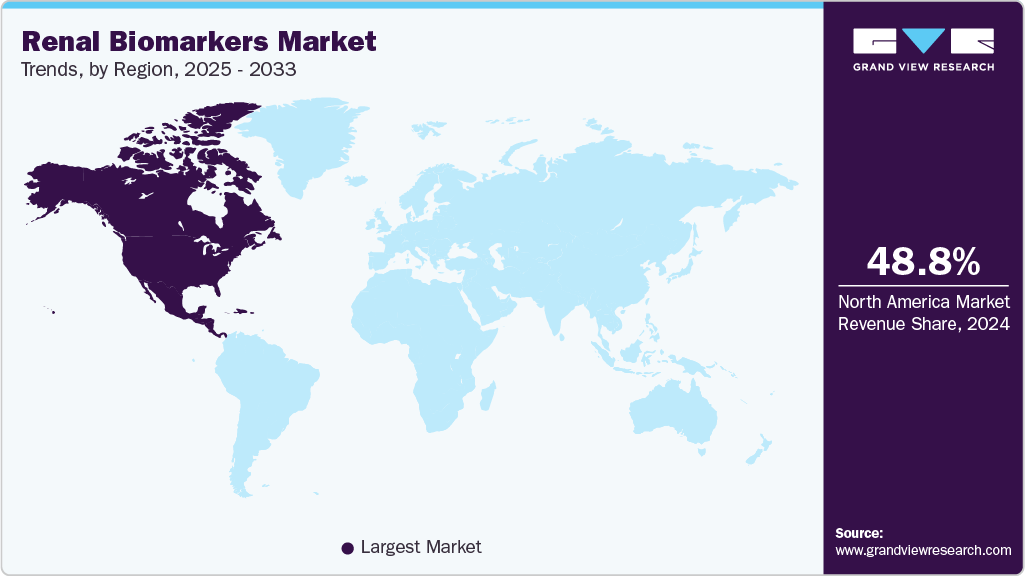
The renal biomarkers market in North America is experiencing strong growth, due to advanced healthcare infrastructure, high prevalence of chronic kidney diseases (CKD), and substantial healthcare investments. In 2024, North America accounted for 48.83% of the global market share, with the U.S. contributing approximately 35.5 million adults at risk for kidney disease. This high incidence is closely linked to rising rates of diabetes and hypertension, major risk factors for CKD
U.S. Renal Biomarkers Market Trends
The U.S. renal biomarkers market is growing due to the rising prevalence of CKD and increasing number of the laboratory automation, clear FDA pathways, and insurer willingness to reimburse novel tests that meet evidentiary thresholds. Medicare’s Merit-based Incentive Payment System, which links nephrology practice scores to annual albuminuria rates, has led to protocol updates and increased test ordering frequency. Key players like Abbott Laboratories and bioMérieux SA are actively involved in developing and commercializing renal biomarker assays, contributing to market growth. Recently, August 2025 BioPorto and Roche Diagnostics collaboration: The ProNephro AKI test (based on NGAL biomarker) has become commercially available to U.S. labs via Roche’s cobas c 501 analyzers. NGAL is a protein that indicates kidney cell damage and can detect injury earlier than standard tests like serum creatinine. The test is cleared for pediatric use (ages 3 months to 21 years), helps identify moderate-to-severe acute kidney injury (AKI) within 48-72 hours, enabling earlier interventions
Europe Renal Biomarkers Market Trends
Europe is experiencing strong growth in the renal biomarkers market, driven by advancements in diagnostic technologies and the increasing prevalence of kidney diseases. The rising burden of chronic kidney disease (CKD) across Europe is propelling the demand for early-stage diagnostic biomarkers. Countries like Germany, France, and the UK are at the forefront of adopting innovative diagnostic solutions. In October 2024, German diagnostics company Sphingotec GmbH licensed their real-time kidney function test (based on the PenKid biomarker, i.e. a proenkephalin A fragment) to Beckman Coulter in order to expand into the U.S. market. PenKid has been shown in clinical and pilot studies (e.g. ICU settings at University Hospitals of Aachen & Heidelberg) to rise in cases of acute kidney injury (AKI), often before more traditional markers become abnormal. The assay works on immunoassay platforms (immunoluminometric formats / ILMA / Beckman Coulter immunoassay instruments) and is meant to enhance early detection of AKI via blood tests.
The UK renal biomarkers market is growing rapidly. The National Health Service (NHS) has been integrating novel biomarkers into routine clinical practice to enhance early detection and management of kidney diseases. This integration is supported by favorable reimbursement policies and increasing awareness among healthcare professionals and patients. Companies such as Siemens Healthineers and Randox Laboratories are expanding their presence in the European market through strategic partnerships and product innovations.
Asia Pacific Renal Biomarkers Market Trends
The Asia Pacific renal biomarkers market is growing rapidly, supported by increased incidence rates of kidney diseases, a high elderly population, and rising healthcare investments. The China and India renal biomarkers markets have the most significant share globally over the projection period in the Asia Pacific region.
India is gradually embracing renal biomarkers, with growth supported by its government initiatives aimed at improving healthcare infrastructure and increasing awareness about kidney diseases are contributing to market expansion. The Indian Society of Nephrology has been actively involved in promoting early detection and management of kidney diseases, leading to increased adoption of renal biomarker testing. Key players such as Thermo Fisher Scientific and Roche Diagnostics are focusing on expanding their footprint in the Indian market through collaborations and localized product offerings.
China’s renal biomarkers market is expanding rapidly, driven by a substantial patient base with chronic kidney diseases (CKD). The increasing prevalence of diabetes and hypertension, major risk factors for CKD, is contributing to the rising demand for early diagnostic tools. Recent advancements in diagnostic technologies and government initiatives to improve healthcare infrastructure are further propelling market growth. For instance, the Chinese government has been investing in the development of advanced diagnostic centers and promoting awareness about kidney diseases. These efforts are expected to enhance the adoption of renal biomarker testing across the country. Key players in the Chinese market include domestic companies such as Mindray and international firms like Abbott Laboratories, which are actively involved in the development and distribution of renal biomarker assays. These companies are focusing on expanding their product portfolios and establishing strategic partnerships to strengthen their market presence.
Latin America Renal Biomarkers Market Trends
Latin America is experiencing moderate to high growth in renal biomarkers, driven by an increasing burden of kidney diseases and advancements in diagnostic technologies. Countries such as Brazil, Mexico, and Argentina are witnessing a rise in the prevalence of CKD, leading to a higher demand for early diagnostic solutions. Government initiatives aimed at improving healthcare access and awareness are also contributing to market growth. For example, Brazil's Ministry of Health has been implementing programs to enhance kidney disease screening and prevention.
Brazil is experiencing considerable growth in renal biomarkers. The Brazilian government's initiatives to improve healthcare infrastructure and raise awareness about kidney diseases are further propelling market growth. For instance, the National Health Surveillance Agency (ANVISA) has been working towards streamlining the approval process for medical devices, including renal biomarker assays, to facilitate quicker market entry. Key players in the Brazilian market include local companies such as DGLAB and international firms like Abbott Laboratories and Siemens Healthineers. These companies are focusing on expanding their product portfolios and establishing strategic partnerships to strengthen their market presence
Middle East & Africa Renal Biomarkers Market Trends
The Middle East and Africa region shows strong potential for renal biomarkers growth, primarily driven by Countries such as Saudi Arabia, the United Arab Emirates (UAE), and South Africa are witnessing a rise in the incidence of CKD, leading to a higher demand for early diagnostic solutions. Government initiatives aimed at improving healthcare access and awareness are also contributing to market growth. For example, Saudi Arabia's Ministry of Health has been implementing programs to enhance kidney disease screening and prevention.
Saudi Arabia is experiencing moderate to high growth in renal biomarkers. The Saudi government's initiatives to improve healthcare infrastructure and raise awareness about kidney diseases are further propelling market growth. For instance, the Saudi Food and Drug Authority (SFDA) has been working towards streamlining the approval process for medical devices, including renal biomarker assays, to facilitate quicker market entry.
Key Renal Biomarker Company Insights
The renal biomarkers market is driven by a mix of established diagnostics companies and specialized innovators focused on expanding access and ease of testing. Major players shaping this landscape include Thermo Fisher Scientific Inc., Siemens Healthineers AG, BioPorto Diagnostics A/S, SEKISUI Medical Co., Ltd., BioMerieux SA, SphingoTec GmbH, Randox Laboratories Ltd, Beckman Coulter Inc., and others.
Key Renal Biomarkers Companies:
The following are the leading companies in the renal biomarkers market. These companies collectively hold the largest market share and dictate industry trends.
- Thermo Fisher Scientific Inc.
- Siemens Healthineers AG
- BioPorto Diagnostics A/S
- SEKISUI Medical Co., Ltd.
- BioMerieux SA
- SphingoTec GmbH
- Randox Laboratories Ltd
- Beckman Coulter Inc.
- QIAGEN N.V.
- Becton, Dickinson & Co.
- DiaSorin S.p.A.
- Bio-Rad Laboratories Inc.
- EKF Diagnostics Holdings plc.
Recent Developments
-
In May 2025, Boditech Med Inc. and SphingoTec GmbH launched the AFIAS sphingotest penKid assay, an IVDR-marked diagnostic tool measuring Proenkephalin A 119-159 (penKid) in whole blood or plasma. This automated fluorescence immunoassay is intended for adult patients at risk of AKI (e.g. those with sepsis or septic shock) and aims to support clinical decision-making in acute and critical care. The assay is marketed through Boditech’s platforms under a licensing and market-development agreement with SphingoTec.
-
In October 2024, Beckman Coulter Diagnostics and SphingoTec GmbH announced a partnership to bring the biomarker Proenkephalin 119-159 (penKid) assay onto Beckman Coulter’s Access Family of immunoassay analyzers. This is the first licensing agreement to make penKid available for central laboratory, high-throughput settings. The goal is to improve detection of acute kidney injury (AKI), enabling earlier intervention especially in critical care settings, since penKid is less influenced by inflammation than some traditional kidney function markers.
-
In May 2024, Thermo Fisher Scientific launched a non-invasive urine-based test for CXCL10 to help monitor kidney transplant patients. Elevated urinary CXCL10 has been linked to inflammation and early graft rejection. The new test is intended to allow faster, cheaper, and more specific detection of graft dysfunction than some existing methods.
Renal Biomarkers Market Report Scope
Report Attribute
Details
Market size value in 2025
USD 1,641.20 million
Revenue forecast in 2033
USD 3,161.39 million
Growth rate
CAGR of 8.54% from 2025 to 2033
Base year for estimation
2024
Historical data
2021 - 2023
Forecast period
2025 - 2033
Quantitative units
Revenue in USD billion/million and CAGR from 2025 to 2033
Report coverage
Revenue forecast, company ranking, competitive landscape, growth factors, and trends
Segments covered
Biomarker, diagnostic technique, end use, region
Regional scope
North America; Europe; Asia Pacific; Latin America; MEA
Country scope
U.S.; Canada; Mexico; UK; Germany; France; Italy; Spain; Norway; Sweden; Denmark; Japan; China; India; Australia; South Korea; Thailand; Brazil; Argentina; South Africa; Saudi Arabia; UAE; Kuwait
Key companies profiled
Thermo Fisher Scientific Inc.; Siemens Healthineers AG; BioPorto Diagnostics A/S; SEKISUI Medical Co., Ltd.; BioMerieux SA; SphingoTec GmbH; Randox Laboratories Ltd; Beckman Coulter Inc.; QIAGEN N.V.; Becton; Dickinson & Co.; DiaSorin S.p.A.; Bio-Rad Laboratories Inc.; EKF Diagnostics Holdings plc.
Customization scope
Free report customization (equivalent up to 8 analysts’ working days) with purchase. Addition or alteration to country, regional & segment scope
Pricing and purchase options
Avail customized purchase options to meet your exact research needs. Explore purchase options
Global Renal Biomarkers Market Report Segmentation
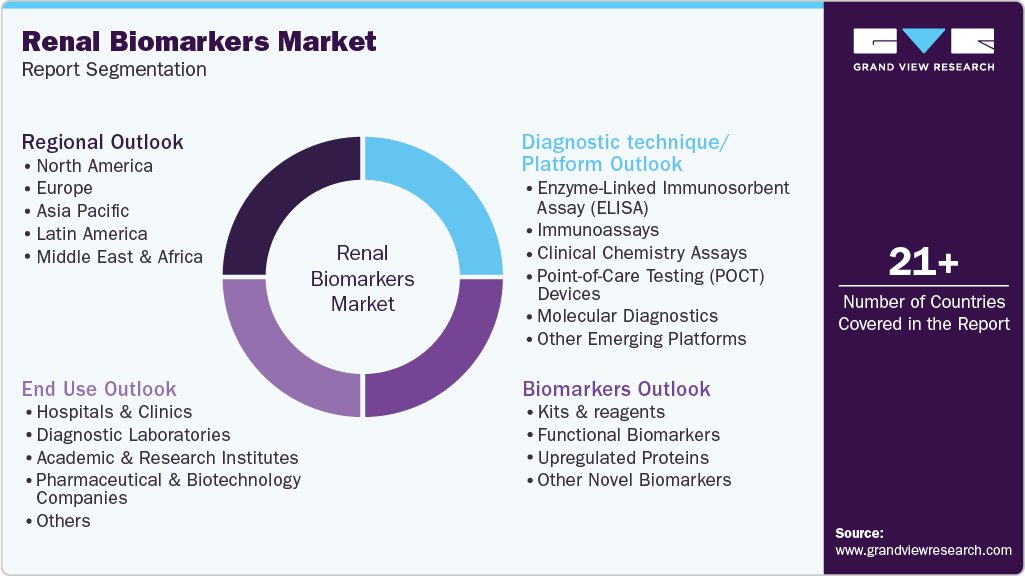
This report forecasts revenue growth and provides an analysis of the latest trends in each of the sub-segments from 2021 to 2033. For this study, Grand View Research has segmented the global renal biomarkers market based on biomarker, diagnostic technique, end use, and region:
-
Biomarkers Outlook (Revenue, USD Million, 2021 - 2033)
-
Kits and reagents
-
Functional Biomarkers
-
Serum Creatinine
-
Blood Urea Nitrogen (BUN)
-
Estimated Glomerular Filtration Rate (eGFR)
-
-
Upregulated Proteins
-
Kidney Injury Molecule-1 (KIM-1)
-
Neutrophil Gelatinase-Associated Lipocalin (NGAL)
-
Cystatin C
-
Interleukin-18 (IL-18)
-
Others
-
-
Other Novel Biomarkers
-
microRNA biomarkers
-
Proteomic/metabolomic markers
-
-
-
Diagnostic technique/Platform Outlook (Revenue, USD Million, 2021 - 2033)
-
Enzyme-Linked Immunosorbent Assay (ELISA)
-
Immunoassays
-
Clinical Chemistry Assays
-
Point-of-Care Testing (POCT) Devices
-
Molecular Diagnostics
-
Other Emerging Platforms
-
-
End Use Outlook (Revenue, USD Million, 2021 - 2033)
-
Hospitals & Clinics
-
Diagnostic Laboratories
-
Academic & Research Institutes
-
Pharmaceutical & Biotechnology Companies
-
Others
-
-
Regional Outlook (Revenue, USD Million, 2021 - 2033)
-
North America
-
U.S.
-
Canada
-
Mexico
-
-
Europe
-
UK
-
Germany
-
France
-
Italy
-
Spain
-
Denmark
-
Sweden
-
Norway
-
-
Asia Pacific
-
Japan
-
China
-
India
-
Australia
-
South Korea
-
Thailand
-
-
Latin America
-
Brazil
-
Argentina
-
-
Middle East & Africa
-
South Africa
-
Saudi Arabia
-
UAE
-
Kuwait
-
-
Frequently Asked Questions About This Report
b. The global renal biomarkers market size was estimated at USD 1,530.0 million in 2024 and is expected to reach USD 1,641.20 million in 2025.
b. The global renal biomarkers market is expected to grow at a compound annual growth rate of 8.54% from 2024 to 2033 to reach USD 3,161.4 million by 2033.
b. North America renal biomarker market dominated the global market and accounted for the largest revenue share of 48.83% in 2024. This is attributable to high prevalence of chronic kidney diseases (CKD), and substantial healthcare investments.
b. Some key players operating in the renal biomarkers market include Thermo Fisher Scientific Inc., Siemens Healthineers AG, BioPorto Diagnostics A/S, SEKISUI Medical Co., Ltd., BioMerieux SA, SphingoTec GmbH, Randox Laboratories Ltd, Beckman Coulter Inc., QIAGEN N.V, ., Becton, Dickinson & Co., DiaSorin S.p.A., Bio-Rad Laboratories Inc., EKF Diagnostics Holdings plc.
b. Key factors that are driving the market growth are rising prevalence of kidney disease particularly chronic kidney disease (CKD) and acute kidney injury (AKI) along with the urgent clinical need for earlier and more nuanced detection beyond conventional measures


Share this report with your colleague or friend.
Need a Tailored Report?
Customize this report to your needs — add regions, segments, or data points, with 20% free customization.


ISO 9001:2015 & 27001:2022 Certified
We are GDPR and CCPA compliant! Your transaction & personal information is safe and secure. For more details, please read our privacy policy.
Trusted market insights - try a free sample
See how our reports are structured and why industry leaders rely on Grand View Research. Get a free sample or ask us to tailor this report to your needs.













