
- Home
- »
- Medical Devices
- »
-
Robotic-assisted Bronchoscopy Systems Market Report 2033GVR Report cover

Robotic-assisted Bronchoscopy System Market (2026 - 2033)
Size, Share & Trends Analysis Report Component (Robotic Systems, Instruments & Accessories, Software), By Navigation Technology (Shape-Sensing, Electromagnetic), By Application, By End-use, By Region, And Segment Forecasts
Market Size, 2025
$610.4MMarket Estimate, 2026
$756.0MMarket Forecast, 2033
$2,184.5MCAGR, 2026–2033
16.4%Robotic-assisted Bronchoscopy Systems Market Summary
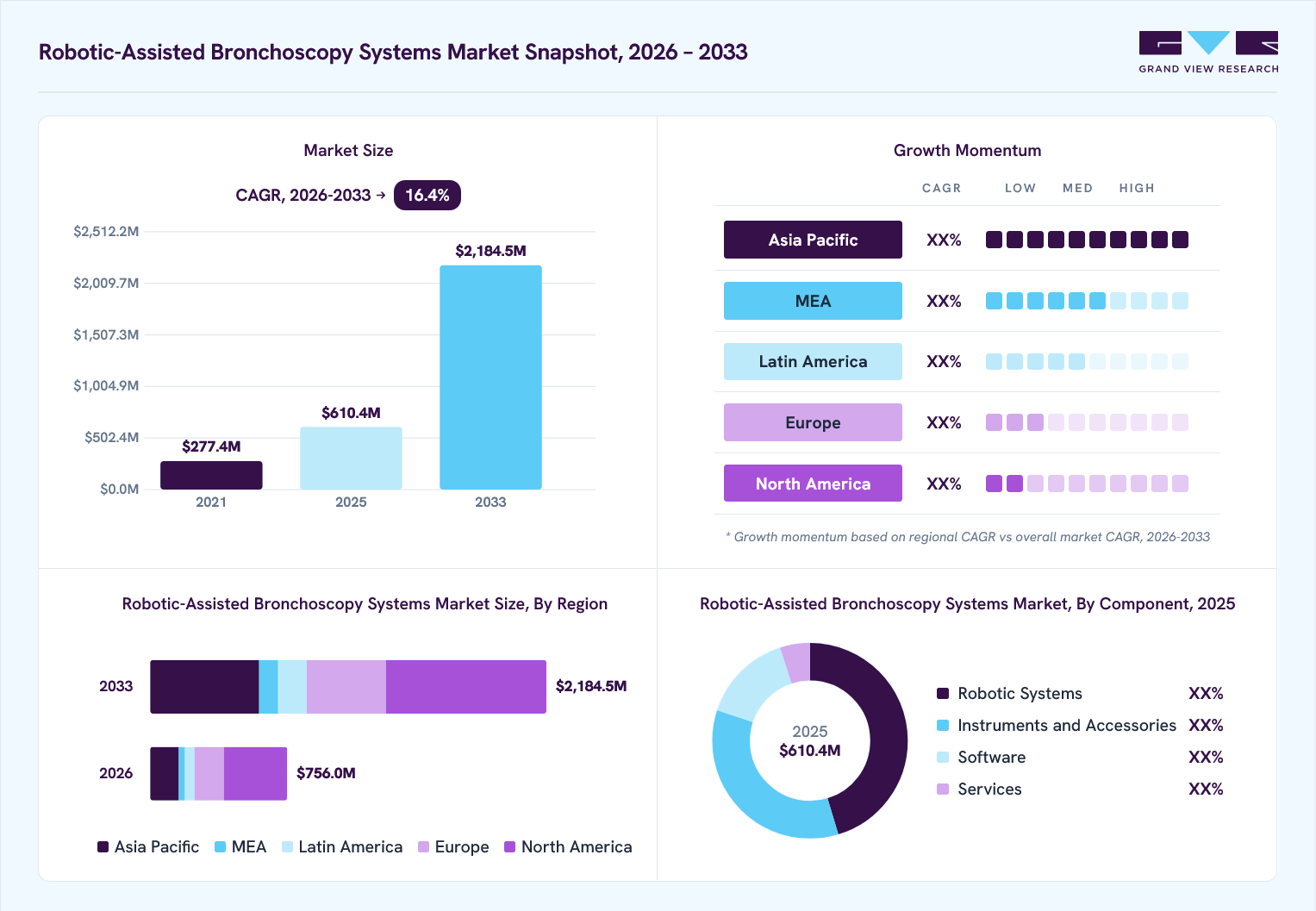
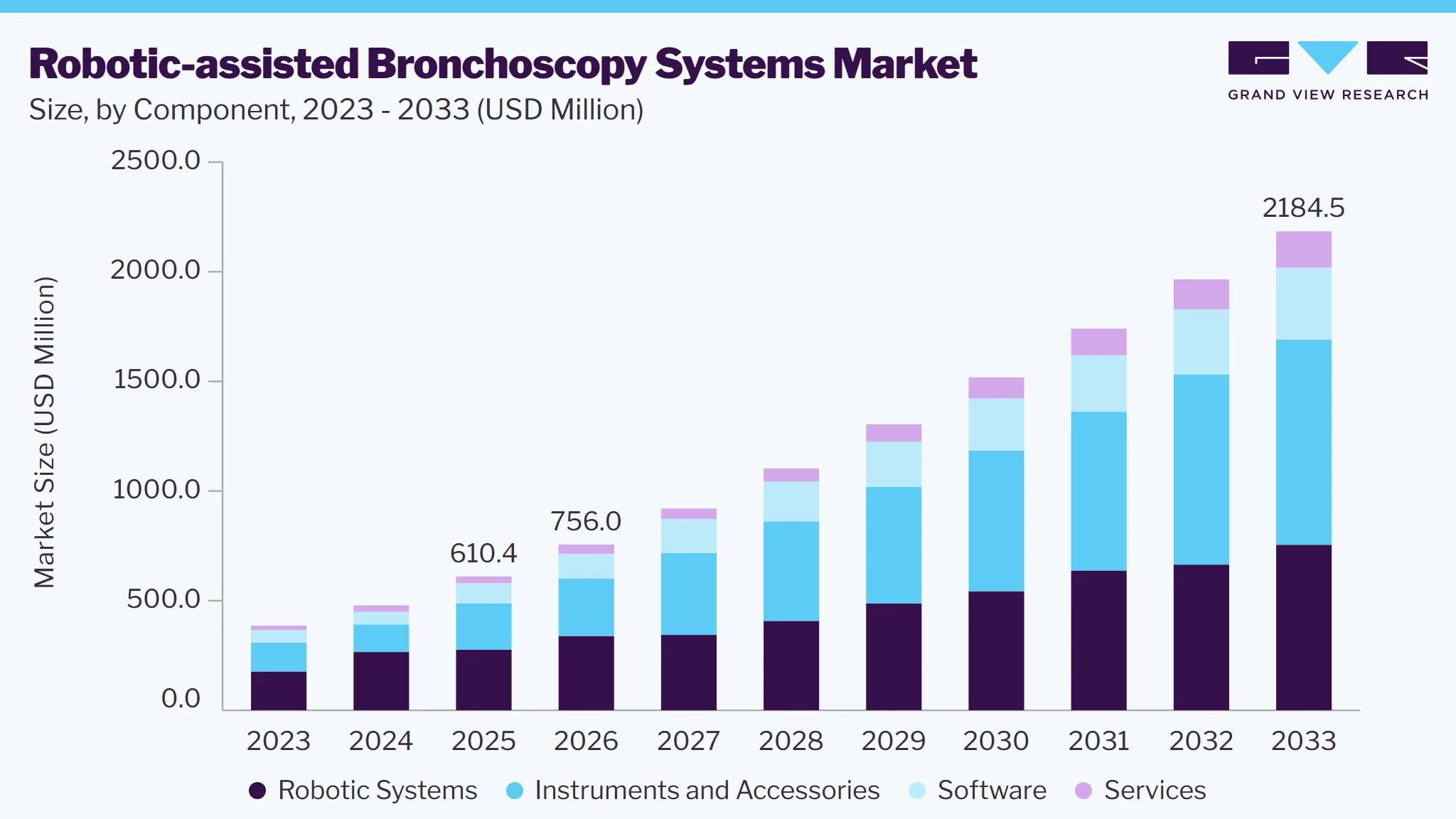
The global robotic-assisted bronchoscopy systems market size was valued at USD 610.4 million in 2025 and is projected to reach USD 756.0 million in 2026 to USD 2,184.5 million by 2033, at a CAGR of 16.4% from 2026 to 2033. North America dominated the market, accounting for a revenue share of 47.0% in 2025. The market growth is supported by the increasing adoption of minimally invasive pulmonary procedures and investments in advanced diagnostic infrastructure.
 Source: Grand View Research, IR Documents, Primary Interviews, Paid DatabasesTo learn more about this report,
 Download Free Sample Report
Key Market Trends & Insights
- By component: Robotic systems segment held the highest market share of 45.3% in 2025.
- By navigation technology: Shape-sensing segment held the highest market share in 2025.
- By application: Lung cancer diagnosis segment held the highest market share in 2025.
- By end use: Hospitals segment held the highest market share in 2025.
Regional Highlights
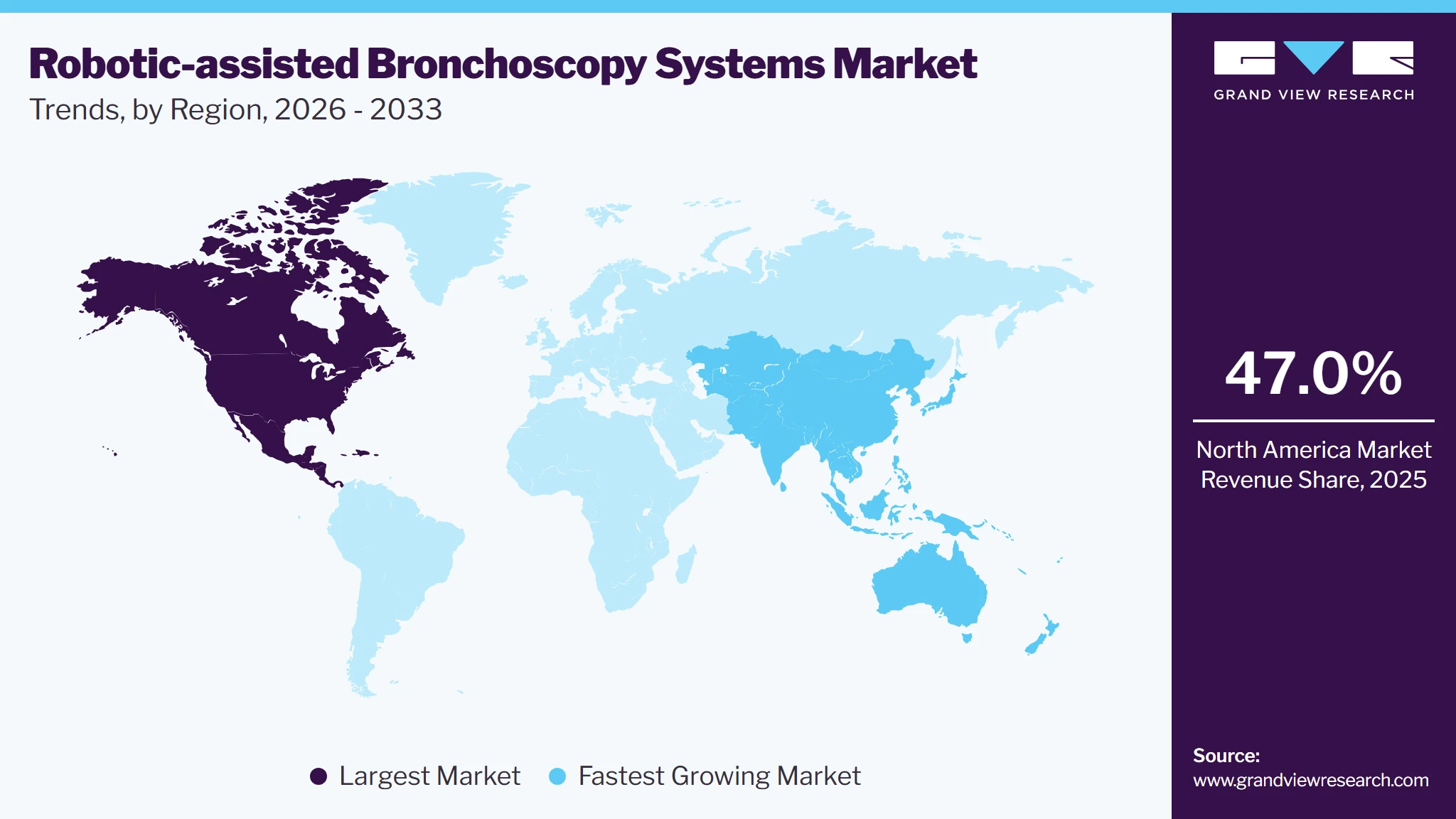
- Largest regional market: North America (47.0% revenue share, 2025)
- Fastest-growing regional market: Asia Pacific (highest CAGR, 2026-2033)
- By country: The U.S. held the largest market share in 2025.
Market Size & Forecast
- Market size in 2025: USD 610.4 Million
- Estimated market size in 2026: USD 756.0 Million
- Projected market size by 2033: USD 2,184.5 Million
- CAGR (2026-2033): 16.4%
Prism AI by Grand View Research Free to tryAsk a question about the robotic-assisted bronchoscopy system marketTry asking✓Every figure cited from GVR research Prefer the report? Download free sample →Advancements in robotic navigation, shape-sensing technology, and real-time imaging are improving access to peripheral lung lesions and supporting tissue sampling for diagnosis. Expansion of CT-based lung cancer screening and investments in specialized pulmonology centers are further increasing demand for these systems.
 To learn more about this report, Download Free Sample Report
Market Dynamics
The market is driven by the rising burden of lung cancer, expansion of CT-based screening, and increasing adoption of minimally invasive diagnostic procedures. Advancements in robotic navigation, shape-sensing technology, and real-time imaging are improving access to peripheral lung lesions and supporting diagnostic accuracy. However, high system costs, recurring consumable expenses, and specialized training requirements constrain adoption, particularly among smaller healthcare facilities. Continued technological innovation, growing clinical evidence, and increasing demand for early lung cancer diagnosis are expected to support market expansion over the forecast period.
Compared with surgical biopsy, bronchoscopic approaches access lung lesions through the natural airway, reducing the need for incisions and supporting shorter recovery periods. Robotic platforms extend bronchoscopic reach to peripheral lesions that are difficult to access with conventional instruments, broadening their use in lung cancer evaluation. The combination of robotic navigation, flexible catheters, and advanced imaging strengthens their role in diagnostic pathways where precise tissue sampling is required. For instance, the TARGET trial, published in NCBI in August 2025, evaluated robotic-assisted bronchoscopy across 21 clinical sites. Among 679 patients who underwent the procedure, the robotic system reached the target lesion in 98.7% of cases, demonstrating its ability to support bronchoscopic access to peripheral pulmonary lesions.
Expansion of Commercial Platforms and Regulatory-Cleared Technology
Continued product development and regulatory clearances are expanding the capabilities of robotic-assisted bronchoscopy systems, supporting broader clinical adoption. Manufacturers are investing in improved navigation software, target localization, and integration with advanced imaging to address limitations associated with reaching small peripheral lung lesions. For instance, in August 2026, Johnson & Johnson MedTech received U.S. FDA 510(k) clearance for MONARCH QUEST 3, a software update for its MONARCH robotic-assisted bronchoscopy platform. The update enhances procedural planning, navigation, and targeting, including capabilities designed to address CT-to-body divergence during lung lesion biopsy. This development demonstrates continued commercial investment in improving the precision and usability of robotic bronchoscopy technology.
“With MONARCH QUEST 3, we’re continuing to evolve the MONARCH Platform in close partnership with clinicians, applying artificial intelligence, expanding imaging integration, and delivering software enhancements that support greater procedural confidence and precision for patients.”
- Aleksandra Popovic, PhD, President, MONARCH, MedTech, Johnson & Johnson
Increasing Prevalence of Lung Cancer and Growing Need for Early Diagnosis
The rising burden of lung cancer and increasing use of CT-based lung cancer screening are driving demand for robotic-assisted bronchoscopy systems. These platforms enable physicians to navigate complex airway pathways and obtain tissue samples from small or peripheral pulmonary lesions that are difficult to access using conventional bronchoscopy. Improved navigation control and integration with advanced imaging support diagnostic evaluation while reducing reliance on more invasive biopsy approaches. According to the American Cancer Society, approximately 226,650 new lung cancer cases and 124,730 lung cancer deaths were projected in the U.S. in 2025, highlighting the substantial need for timely diagnosis and effective sampling of suspicious lung lesions.
The adoption of robotic-assisted bronchoscopy systems is constrained by high capital expenditure and recurring costs for procedure-specific instruments. Hospitals also account for expenses associated with imaging integration, maintenance, staff training, and procedure-room configuration. These financial and operational requirements create barriers for smaller hospitals and healthcare facilities with limited interventional pulmonology budgets. In addition, robotic platforms require dedicated training and procedural experience to achieve consistent performance, extending the time and resources needed for implementation.
For instance, a 2024 cost-minimization analysis presented at ISPOR estimated five-year fixed ownership costs of approximately USD 632,749 for the Ion shape-sensing robotic-assisted bronchoscopy platform, compared with USD 281,625 for an electromagnetic navigation bronchoscopy platform. The analysis also estimated per-procedure costs of USD 2,360 for robotic-assisted bronchoscopy versus USD 2,077 for electromagnetic navigation. These findings illustrate the financial barriers associated with acquiring and operating robotic bronchoscopy systems, particularly for healthcare facilities with limited capital budgets.
Advancements in robotic catheter control, shape-sensing technology, electromagnetic navigation, and image-guided lesion confirmation are supporting adoption of robotic-assisted bronchoscopy systems. These technologies improve access to peripheral pulmonary nodules and help physicians verify instrument positioning before collecting tissue samples. Integration with cone-beam computed tomography (CBCT) further addresses the challenge of target movement and discrepancies between preprocedural imaging and the patient’s anatomy during bronchoscopy.
For instance, the study published in Thorax in December 2025, evaluated shape-sensing robotic-assisted bronchoscopy combined with mobile CBCT in 155 procedures. The study achieved tool-in-lesion confirmation in 99.4% of procedures and a diagnostic yield of 89.0%, demonstrating the potential of combining robotic navigation with real-time imaging to improve diagnostic performance.
Expansion of Robotic Bronchoscopy for Small and Difficult-to-Reach Pulmonary Nodules
The development of robotic-assisted bronchoscopy systems with advanced imaging and lesion-confirmation capabilities presents an opportunity to expand minimally invasive diagnosis of small, peripheral, and anatomically challenging lung nodules. Improved access to these lesions supports tissue sampling in patients who otherwise require alternative diagnostic procedures, including transthoracic needle biopsy. This creates opportunities for manufacturers to differentiate platforms through improved navigation accuracy, diagnostic yield, and procedural safety.
For instance, a comparative study published by the European Respiratory Society in 2025, involving 574 patients, reported pneumothorax in 3% of patients undergoing shape-sensing robotic-assisted bronchoscopy, compared with 44% undergoing CT-guided transthoracic biopsy. Hospital admission due to complications was also lower with robotic bronchoscopy (3% versus 8%), highlighting the potential of robotic approaches to expand minimally invasive diagnostic options for pulmonary nodules.
Technology Trends in the Robotic-Assisted Bronchoscopy Market
Technology trend
Description
AI-Powered Navigation Software
AI-assisted navigation improves procedural planning, pathway guidance, and localization of peripheral lung lesions. In October 2025, Intuitive Surgical received FDA clearance for software enhancements to the Ion Endoluminal System, introducing AI across its navigation workflow and expanding advanced imaging integration for lung biopsy procedures.
“These latest Ion software advancements reflect Intuitive’s ongoing commitment to advancing lung cancer care through meaningful innovation. By further integrating artificial intelligence with expanded advanced imaging capabilities, we’re equipping physicians with smarter tools designed to support early diagnosis and improve access to advanced care for more patients.”
-Intuitive Chief Executive Officer Dave Rosa.
Integration with Cone-Beam CT (CBCT)
The multicenter CONFIRM study, published in Thorax in 2026, evaluated shape-sensing robotic bronchoscopy combined with mobile CBCT in patients with small peripheral lung nodules. It reported tool-in-lesion confirmation in 99.4% of procedures and a diagnostic yield of 89.0%.
Electromagnetic Navigation with Digital Tomosynthesis
Electromagnetic navigation guides the robotic bronchoscope along a reconstructed airway map, while digital tomosynthesis helps update lesion localization during the procedure.
In March 2025, Johnson & Johnson MedTech received FDA 510(k) clearance for MONARCH QUEST, integrating AI-powered navigation software with the GE HealthCare OEC 3D mobile CBCT imaging system.
AI-Assisted Lesion Detection and Diagnostic Analysis
A 2026 review published by the European Respiratory Society identified deep-learning applications in bronchoscopic video interpretation and endobronchial ultrasound as emerging approaches for lesion detection and diagnostic assessment.
Shape-Sensing and Enhanced Catheter Control
Fiber-optic shape sensing and steerable robotic catheters improve instrument-position awareness, maneuverability, and stability when navigating toward peripheral lung nodules.
For instance, the Ion Endoluminal System uses a shape-sensing robotic catheter to navigate deep into the lung and position biopsy instruments at small, hard-to-reach nodules.
FDA Approved Systems
System
Manufacturer
Initial FDA clearance
510(k) number
Navigation technology
MONARCH Platform
Auris Health (Johnson & Johnson MedTech)
January 23, 2025
K243219
Updated MONARCH platform
Ion Endoluminal System
Intuitive Surgical, Inc.
September 24, 2024
K242010
Updated Ion system
Galaxy System
Noah Medical Corp.
March 1, 2023
K223144
Electromagnetic navigation with integrated digital tomosynthesis
Ion Endoluminal System
Intuitive Surgical, Inc.
February 14, 2019
K182188
Shape-sensing technology
MONARCH Platform
Auris Health (Johnson & Johnson MedTech)
March 22, 2018
K173760
Electromagnetic navigation
Case Study: Clinical Evaluation of the Ion Robotic-Assisted Bronchoscopy System in Germany
(Published by NCBI in August 2025)
Objective: To evaluate the clinical performance, diagnostic yield, and safety of the Ion Endoluminal System during its initial implementation in routine clinical practice at University Hospital Bonn, Germany.
Methodology: Researchers conducted a retrospective analysis of 50 patients who underwent robotic-assisted bronchoscopy for pulmonary nodule evaluation between August 2024 and March 2025. The study assessed diagnostic yield, procedural complications, and the contribution of advanced imaging and tissue-processing methods.
Key Findings:
• Overall diagnostic yield was 78%.
• Diagnostic yield exceeded 90% when cone-beam computed tomography (CBCT) and formalin-fixed, paraffin-embedded tissue processing were used.
• Periprocedural complications occurred in 4% of cases, with no major complications reported.
Conclusion: The study demonstrated the clinical feasibility of implementing the Ion robotic-assisted bronchoscopy system in routine practice. The findings highlighted the importance of advanced imaging and standardized tissue processing in improving diagnostic performance.
AI-Enabled Robotic Bronchoscopy for Preoperative Lung Nodule Localization in China
(Published by JTCVS Techniques in April 2026)
Objective: To evaluate the feasibility and performance of an AI-enabled robotic-assisted bronchoscopy system for preoperative localization of peripheral pulmonary nodules before video-assisted thoracoscopic surgery (VATS).
Methodology: Researchers at Ruijin Hospital, Shanghai Jiao Tong University School of Medicine, conducted a retrospective study involving 15 patients treated between October 2024 and January 2025. The system used AI-assisted route planning, real-time vision, spatial positioning, shape sensing, and haptic feedback to navigate to pulmonary nodules and deliver indocyanine green dye for intraoperative localization.
Key Findings:
• Navigation success reached 100%.
• Successful dye localization was achieved in 93.3% of cases.
• All 15 nodules were completely resected with negative surgical margins.
• Median localization time was 10 minutes, with no procedure-related complications reported.
Conclusion: The study demonstrated the potential of AI-enabled robotic bronchoscopy for preoperative pulmonary nodule localization, extending its application beyond diagnostic biopsy.
Clinical Adoption and Standardization of Robotic Bronchoscopy at Cleveland Clinic
(Published by Cleveland Clinic in November 2025)
Objective: To describe the adoption of robotic-assisted bronchoscopy at Cleveland Clinic and examine how advanced imaging, standardized protocols, and clinical outcome monitoring support the evaluation of peripheral pulmonary nodules.
Methodology: Cleveland Clinic Indian River Hospital introduced robotic-assisted bronchoscopy in 2022 and transitioned to the Ion Endoluminal System in 2025 to align its technology and clinical protocols with other Cleveland Clinic facilities. The article also discussed findings from the multicenter CONFIRM study, which evaluated shape-sensing robotic bronchoscopy combined with mobile cone-beam computed tomography in 155 patients.
Key Findings:
• The CONFIRM study reported 99.4% tool-in-lesion confirmation.
• Strict diagnostic yield was 89%.
• The median pulmonary nodule size was 14 mm.
• No pneumothoraces were reported in the study cohort.
Conclusion: The findings highlight the role of robotic-assisted bronchoscopy combined with advanced imaging in confirming target localization and obtaining diagnostic tissue from peripheral lung nodules. Cleveland Clinic’s experience also illustrates how standardized protocols and outcome tracking support consistent clinical evaluation across healthcare facilities.
Market Concentration & Characteristics
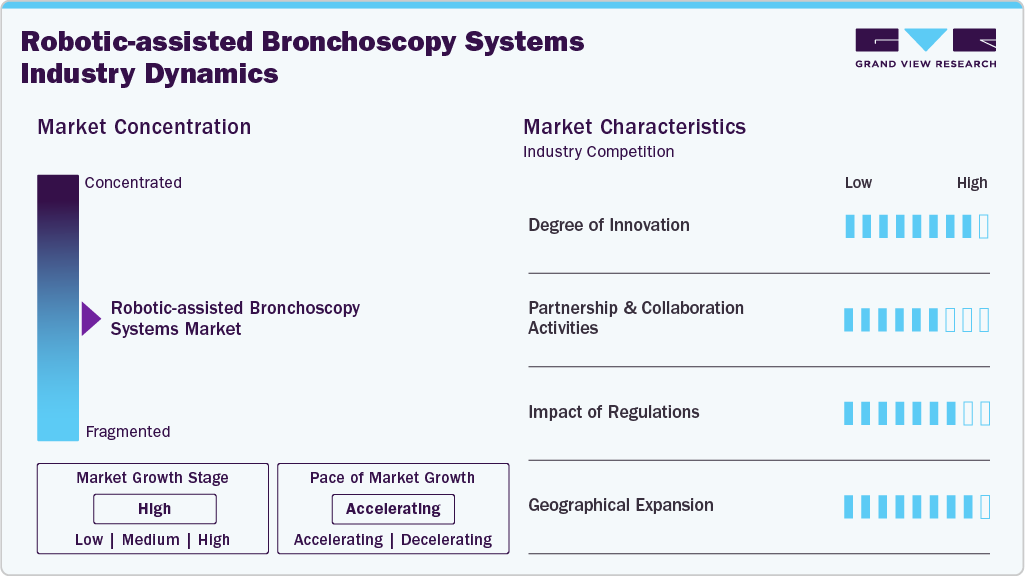
Innovation in the robotic-assisted bronchoscopy systems market focuses on AI-assisted navigation, improved catheter control, advanced imaging integration, and technologies that extend bronchoscopy from diagnosis toward targeted treatment. For instance, in March 2026, OncoLux entered into a know-how agreement with Mayo Clinic to investigate integrating optical diagnostics and therapy delivery with robotic bronchoscopy, aiming to enable real-time tissue characterization and more targeted interventions. This development illustrates innovation beyond conventional robotic navigation toward combined diagnostic and therapeutic capabilities.
Partnerships between robotic bronchoscopy manufacturers, imaging technology companies, and healthcare institutions are supporting the integration of advanced imaging, navigation software, and biopsy technologies. For instance, in August 2026, Noah Medical announced expanded compatibility between its Galaxy System and GE HealthCare’s OEC C-arm portfolio, including the OEC 3D mobile cone-beam CT system. The collaboration supports integration of robotic navigation with 2D and 3D imaging, helping clinicians verify lesion location and improve targeting during bronchoscopic procedures.
 To learn more about this report, Download Free Sample Report
“By bringing together complementary technologies, we aim to help clinical teams navigate complex lung cancer cases with greater confidence and efficiency. Alignment with industry leaders like GE HealthCare will advance innovation and support high-quality care across the patient journey.”
- Jian Zhang, PhD, founder and CEO of Noah Medical.
Regulatory clearances influence product commercialization, software upgrades, and the introduction of new navigation and imaging capabilities in robotic-assisted bronchoscopy. In the U.S, manufacturers generally use the FDA’s 510(k) premarket notification pathway to demonstrate substantial equivalence to a legally marketed predicate device. For instance, in September 2025, the FDA cleared a modified version of Intuitive Surgical’s Ion Endoluminal System under 510(k) number K252045, illustrating the continuing regulatory review of device modifications in this market.
Regional expansion is extending access to robotic-assisted bronchoscopy beyond established U.S. clinical centers into additional healthcare markets. For instance, in September 2026, Noah Medical reported the first commercial procedure using its Galaxy System in Asia at Prince of Wales Hospital in Hong Kong. The milestone marked the transition from earlier clinical use in the region to commercial implementation, reflecting manufacturers’ efforts to expand the geographic reach of robotic bronchoscopy technologies and increase access to advanced pulmonary nodule diagnostics.
“This commercial milestone in Hong Kong underscores our focus on long-term, scalable partnerships that improve patient care.”
- Jian Zhang, PhD, founder and CEO of Noah Medical
Component Insights
By component, the robotic systems segment held the highest market share of 45.3% in 2025, driven by the integration of robotic navigation, catheter control, and visualization technologies into dedicated platforms for minimally invasive lung biopsies. Hospitals invest in these systems to reach peripheral pulmonary lesions that are difficult to access using conventional bronchoscopy. For instance, in March 2026, UCHealth Parkview Medical Center in Colorado introduced the Ion robotic bronchoscopy system, expanding access to robotic-assisted biopsy procedures in southern Colorado.
“Robotic bronchoscopy allows us to reach very small nodules that were previously difficult or sometimes impossible to access. By combining detailed CT imaging with robotic precision, we can guide the bronchoscope directly to the area of concern and obtain tissue samples with a much higher level of accuracy.”
- Dr. Joshiah Gordon, an interventional pulmonologist
The services segment in the robotic-assisted bronchoscopy systems market is anticipated to grow at the fastest CAGR over the forecast period, driven by increasing adoption of robotic bronchoscopy platforms and rising demand for installation, maintenance, technical support, training, and system upgrades. As healthcare facilities expand the use of robotic-assisted bronchoscopy procedures, demand for specialized services to ensure optimal system performance, minimize equipment downtime, and support efficient clinical operations is increasing.
Navigation Technology Insights
The shape-sensing segment held the largest market share of 86.9% in 2025. The segment growth is supported by its ability to provide continuous catheter-position feedback during navigation through complex airway structures. This technology helps physicians maintain catheter stability and guide biopsy instruments toward small, peripheral pulmonary lesions. For instance, in October 2025, Intuitive Surgical received U.S. FDA clearance for software enhancements to its Ion Endoluminal System that incorporated AI across the navigation workflow and expanded integration with advanced imaging technologies, strengthening the capabilities of its shape-sensing platform.
“By further integrating artificial intelligence with expanded advanced imaging capabilities, we’re equipping physicians with smarter tools designed to support early diagnosis and improve access to advanced care for more patients.”
-Intuitive Chief Executive Officer Dave Rosa.
The vision/AI-based segment is anticipated to grow at the fastest CAGR over the forecast period. These technologies enable real-time visualization, anatomical recognition, instrument tracking, and AI-assisted navigation, helping physicians identify target lesions and navigate complex peripheral airways with greater precision. Growing adoption of AI-powered image analysis and navigation capabilities to improve procedural accuracy, support reliable tissue acquisition, and enhance clinical decision-making is expected to drive segment growth.
Application Insights
By application, the lung cancer diagnosis segment held the largest market share of 78.5% in 2025, driven by the need for reliable tissue sampling to confirm malignancy, determine cancer characteristics, and guide treatment decisions. Robotic-assisted bronchoscopy enables physicians to access peripheral pulmonary nodules that are difficult to reach using conventional techniques, supporting minimally invasive diagnosis and pathological assessment. Increasing use of robotic platforms for evaluating suspicious nodules identified through imaging further supports demand in lung cancer diagnostic pathways.
The therapeutic segment is anticipated to register the fastest CAGR over the forecast period. The segment growth is supported by increasing research into robotic-assisted delivery of localized treatments for pulmonary lesions, including radiofrequency ablation and other bronchoscopic ablation techniques. Robotic navigation and real-time imaging support precise instrument positioning and targeted treatment delivery, particularly for patients who are unsuitable for surgical resection. Further clinical validation of safety, treatment efficacy, and long-term outcomes will influence the pace of adoption.
End Use Insights
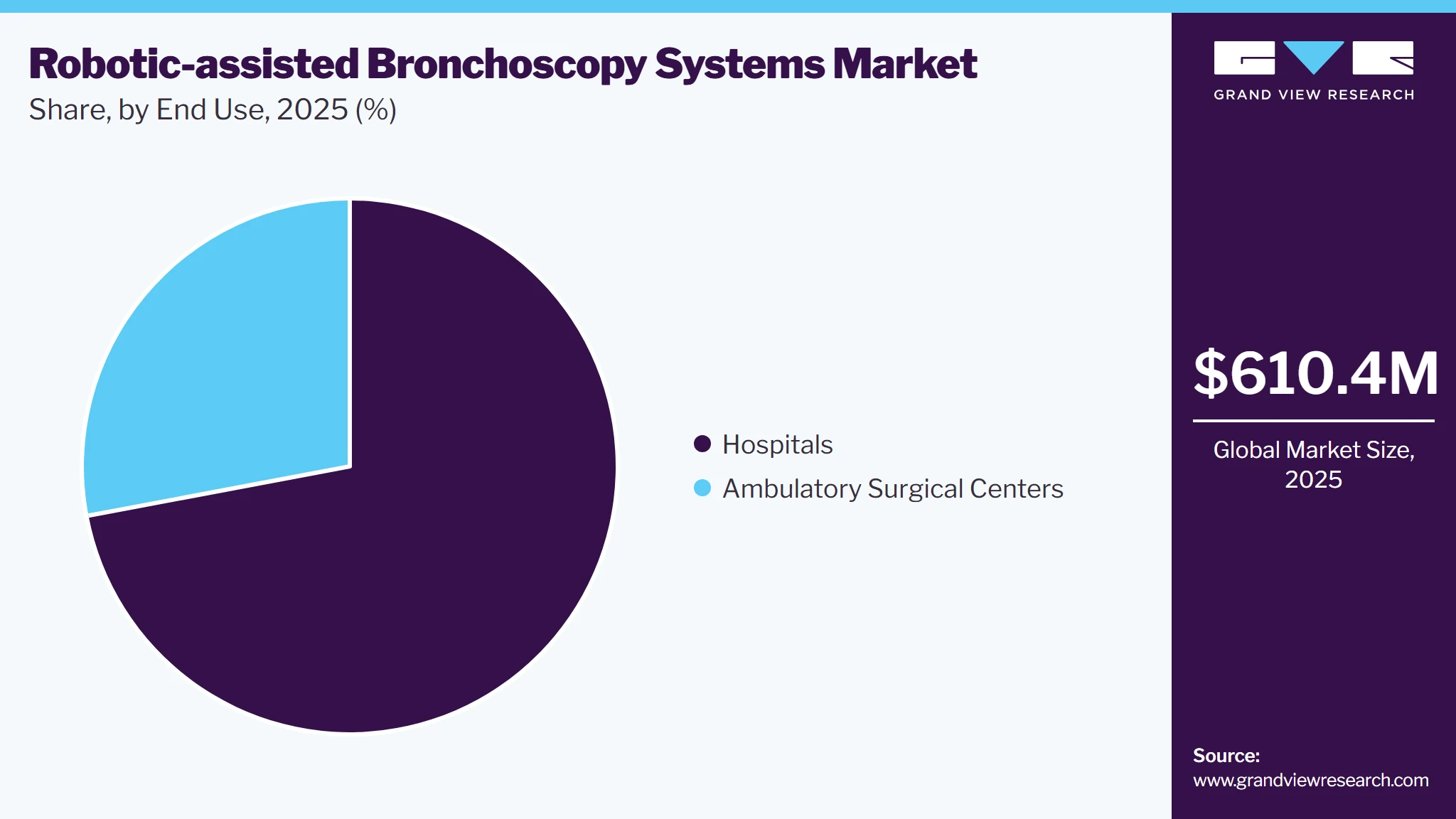
The hospital segment held the largest market share of 72.0% in 2025, driven by hospitals’ access to specialized pulmonologists, advanced imaging equipment, operating rooms, and multidisciplinary lung cancer care teams. Robotic-assisted bronchoscopy systems require substantial capital investment and supporting infrastructure, making large hospitals and tertiary-care centers key adoption sites. For instance, in May 2026, HCA Houston Healthcare Kingwood reported completing its 100th robotic-assisted bronchoscopy procedure, reflecting continued use of the technology within a hospital-based pulmonary program and its role in evaluating difficult-to-reach lung nodules.
 To learn more about this report, Download Free Sample Report
“This milestone reflects the expertise and dedication of our pulmonary specialists and care teams, who are committed to bringing innovative care options to our community. By offering advanced technology like robotic-assisted bronchoscopy, we are helping improve access to earlier diagnosis and treatment for patients throughout Northeast Houston.”
-John Corbeil Chief Executive Officer HCA Healthcare Kingwood
Ambulatory surgical centers is expected to grow at the fastest CAGR over the forecast period. Growth is supported by the shift toward outpatient diagnostic procedures, demand for cost-efficient care, and the potential to perform suitable robotic-assisted bronchoscopies with same-day discharge. As procedure volumes increase, ASCs are evaluating the economic feasibility of robotic platforms to serve patients requiring biopsy of peripheral pulmonary nodules without the overhead associated with hospital-based care. However, adoption depends on reimbursement, procedure volume, anesthesia and recovery capabilities, and access to supporting imaging infrastructure.
Regional Insights
North America's robotic-assisted bronchoscopy systems market industry dominated the market with a 47.0% market share in 2025. The region benefits from the availability of FDA-cleared robotic platforms, specialized interventional pulmonology services, and integration of robotic navigation with advanced imaging technologies. Product development is increasingly focused on improving access to peripheral pulmonary lesions, enhancing navigation accuracy, and enabling physicians to confirm instrument position during biopsy procedures. For instance, in March 2025, Johnson & Johnson MedTech received U.S. FDA 510(k) clearance for MONARCH QUEST, an enhancement to its MONARCH robotic bronchoscopy platform. The upgrade introduced AI-powered navigation software and an interface supporting integration with GE HealthCare’s OEC 3D mobile CBCT imaging system.
 To learn more about this report, Download Free Sample Report
U.S. Robotic-assisted Bronchoscopy Systems Market Trends
The country’s healthcare providers are investing in these systems to strengthen lung cancer diagnostic pathways, reduce reliance on more invasive biopsy approaches, and support timely treatment decisions. Adoption is also shifting toward increasing utilization of installed systems as clinical teams gain procedural experience and expand access to robotic-assisted biopsies. For instance, in August 2026, Lehigh Valley Health Network (LVHN) in Pennsylvania reported that its pulmonology team had performed 1,301 robotic-assisted bronchoscopies across its Cedar Crest and Pocono hospitals. The Cedar Crest program, launched in 2023, completed 1,200 procedures, while the Pocono program, launched in 2025, had completed 101.
In addition, Intuitive Surgical reported approximately 144,100 biopsy procedures performed using its Ion systems in 2025, compared with approximately 95,500 in 2024. The company also reported that 169 Ion systems were placed in the U.S. during 2025, reflecting continued adoption of robotic-assisted bronchoscopy in the country.
Europe Robotic-assisted Bronchoscopy Systems Market Trends
Europe’s robotic-assisted bronchoscopy systems market is expanding as healthcare providers introduce robotic navigation technologies to improve the diagnosis of lung cancer and peripheral pulmonary nodules. Adoption is supported by investments in specialized respiratory centers, growing emphasis on earlier cancer detection, and the integration of robotic platforms with advanced imaging systems. For instance, in October 2026, Intuitive announced that clinicians across Europe had performed more than 10,000 robotic-assisted bronchoscopy procedures using its Ion Endoluminal System since the platform received CE marking in 2023.
“Through our portfolio of Ion and da Vinci surgical systems and integrated Intuitive Ecosystem, our aim is to improve access to minimally invasive care. We’re working with healthcare systems across Europe to transform their lung cancer pathways and help ensure more patients can access early diagnosis and improved clinical outcomes.”
-Dirk Barten, Intuitive commercial president for Europe
The UK market is supported by the expansion of lung cancer screening and efforts to improve access to specialist diagnostic procedures within the National Health Service (NHS). Healthcare providers are also evaluating integrated diagnostic pathways that combine artificial intelligence (AI)-based nodule assessment with robotic bronchoscopy. For instance, in September 2026, Imperial College Healthcare NHS Trust launched a robotic bronchoscopy service at St Mary’s Hospital in London, the first of its kind in north-west London. The trust invested approx. USD 1.60 million in robotics and imaging technology and expected the service to support more than 200 patients annually. The launch aimed to improve local access to specialist testing, reduce referral-related delays, and accelerate lung cancer diagnosis and treatment planning.
Germany’s robotic-assisted bronchoscopy systems market is developing through investments by specialized lung cancer centers seeking to strengthen early diagnosis and precision sampling of peripheral lung lesions. The introduction of national lung cancer screening for eligible long-term smokers is also increasing the importance of diagnostic pathways for suspicious nodules. For instance, in September 2026, LungenClinic Grosshansdorf introduced the Ion robotic-assisted bronchoscopy system, becoming the first hospital in northern Germany to deploy the technology. The system used CT-based navigation planning and a flexible, shape-sensing catheter to reach small and difficult-to-access lung nodules for tissue sampling.
“As the first hospital in Northern Germany to use this technology, we are taking on a pioneering role in modern bronchoscopic diagnostics. By clarifying conditions as early as possible, we can confirm diagnoses more quickly and thus sustainably improve the treatment chances of our patients.:
-Dr. Elvin Atug, Senior Consultant in Pulmonology and Head of Interventional Pulmonology.
Asia Pacific Robotic-assisted Bronchoscopy Systems Market Trends
The Asia Pacific market is developing through the introduction of robotic navigation platforms, domestic medical robotics innovation, and clinical research focused on improving the diagnosis of peripheral pulmonary nodules. Rising lung cancer burden and the need for minimally invasive tissue sampling are encouraging hospitals to evaluate systems that combine robotic catheter control, three-dimensional navigation, and advanced imaging.
For instance, in September 2026, Noah Medical reported the first commercial procedure in Asia using its Galaxy System at Prince of Wales Hospital in Hong Kong. The milestone marked the transition from earlier clinical use to commercial integration in the region. The platform’s embedded imaging supports real-time targeting of instruments and lesions, illustrating the role of integrated imaging in the regional adoption of robotic-assisted bronchoscopy
The high burden of lung cancer is strengthening demand for technologies that improve access to peripheral pulmonary nodules and support minimally invasive diagnosis. Market development also reflects efforts to localize robotic bronchoscopy technology and evaluate its clinical performance in Chinese patient populations. For instance, a multicenter study published in January 2026 evaluated shape-sensing robotic-assisted bronchoscopy in 90 patients across three Chinese centers. The study reported a 90.0% diagnostic yield and a 1.1% rate of pneumothorax requiring chest-tube placement, providing China-specific clinical evidence for the technology’s performance and safety.
India’s market remains at an early stage, with adoption shaped by investments in advanced pulmonary diagnostics, the growing need for early lung cancer detection, and the expansion of specialized respiratory care services. Demand for precise, minimally invasive biopsy procedures is supported by the need to evaluate small and peripheral pulmonary nodules that are difficult to access using conventional bronchoscopy.
Latin America Robotic-assisted Bronchoscopy Systems Market Trends
Latin America’s market is at an early stage of development, with adoption influenced by private hospital investment, access to advanced pulmonary diagnostic technologies, and the availability of specialized interventional pulmonologists. Demand is supported by the need to diagnose lung cancer and obtain tissue samples from peripheral pulmonary nodules using minimally invasive procedures. However, high acquisition costs, reliance on imported equipment, currency fluctuations, and differences in healthcare funding across countries limit widespread deployment. Brazil and Mexico represent important markets for advanced respiratory care infrastructure, while broader adoption depends on hospitals’ ability to justify the investment in robotic platforms and complementary imaging systems.
Middle East & Africa Robotic-assisted Bronchoscopy Systems Market Trends
The region’s market is developing through investments in advanced tertiary-care hospitals, oncology services, and minimally invasive pulmonary diagnostics, particularly in the Gulf region. Adoption is supported by efforts to improve early lung cancer diagnosis and provide access to technologies that reach small, difficult-to-access pulmonary nodules. For instance, in July 2026, Johnson & Johnson MedTech introduced its MONARCH robotic-assisted bronchoscopy platform at Cleveland Clinic Abu Dhabi in the UAE, marking the first reported clinical use of the platform in the Middle East. The procedure also incorporated MONARCH QUEST, which provides AI-enabled navigation and supports integration with advanced imaging systems. The launch represented a significant step in expanding robotic-assisted lung biopsy capabilities in the region.
“We are committed to advancing the standard of care in lung cancer by increasing access to meaningful innovation that helps improve outcomes for patients around the world.”
“Robotically assisted bronchoscopy represents a breakthrough in how we detect and diagnose lung disease. With this technology, we can reach small lesions in all segments of the lung, which creates the opportunity to accelerate treatment decisions.”
- Dr. Zaid Zoumot, Interventional Pulmonologist and Division Chair, Pulmonary Medicine, Cleveland Clinic Abu Dhabi
Key Robotic-assisted Bronchoscopy Systems Company Insights
Key companies in the robotic-assisted bronchoscopy systems market are focusing on robotic catheter navigation, shape-sensing technology, electromagnetic guidance, and integration with advanced imaging systems to improve access to peripheral lung nodules. Manufacturers are developing platforms that combine robotic control with AI-assisted navigation, CBCT, and real-time lesion localization to support accurate tissue sampling and lung cancer diagnosis.
Key Robotic-assisted Bronchoscopy Systems Companies
-
Intuitive Surgical, Inc.
-
Johnson & Johnson MedTech
-
Noah Medical
-
Shanghai MicroPort MedBot (Group) Co., Ltd.
-
Edge Medical
-
LungHealth MedTech
Competitive Benchmarking
Category
Operating Strategies
Competitive Edge
Weakness
Established Players (e.g., Intuitive Surgical, Inc.; Johnson & Johnson MedTech)
- Enhance existing robotic platforms through software upgrades, navigation improvements, and advanced imaging integration.
- Expand hospital adoption through clinical training, physician engagement, and healthcare partnerships.
- Established commercial platforms and clinical experience.
- Strong financial resources, established hospital relationships, and regulatory expertise.
- High system acquisition and operating costs.
- Dependence on specialized personnel and complementary imaging infrastructure.
Emerging / Specialized Players
(e.g., Noah Medical; Shanghai MicroPort MedBot (Group) Co., Ltd.; Edge Medical; LungHealth MedTech)
- Develop differentiated robotic navigation technologies and integrate AI-assisted guidance and imaging capabilities.
- Pursue clinical validation, regulatory clearances, and partnerships to expand commercial adoption.
- Specialized technology development and opportunities for product differentiation.
- Potential to address unmet needs in peripheral lung lesion navigation and minimally invasive diagnosis.
- Limited commercial track records for some platforms.
- Challenges in generating clinical evidence, securing regulatory clearances, and expanding hospital adoption.
Recent Developments
-
In February 2026, Sentara Health launched a robotic bronchoscopy program at Sentara Leigh Hospital in Virginia, U.S. The technology combined robotic guidance and real-time imaging to support precise tissue sampling, facilitate earlier lung cancer diagnosis, and accelerate treatment planning.
“This technology allows us to reach areas of the lung that were previously very difficult to access. Earlier and more precise diagnoses mean patients can begin appropriate treatment sooner, when outcomes are often better.”
- Dr. Simanta Dutta, Sentara pulmonologist and the program’s lead physician.
-
In August 2026, Noah Medical launched Galaxy II software for its Galaxy robotic-assisted bronchoscopy platform. The update introduced Dual-Mode Imaging, enabling physicians to switch between High-Definition Digital Tomosynthesis (HD-DT) and Cone-Beam Computed Tomography (CBCT) during procedures. The system was designed to support precise biopsy of small and difficult-to-reach lung lesions, with HD-DT offering lower-dose imaging for routine cases and CBCT providing additional imaging when required.
“Galaxy II software puts physicians in control of their imaging strategy for every procedure. By bringing HD-DT, CBCT and advanced robotic control together in one platform using the Galaxy II software, we let physicians choose what each case requires, enabling them to adapt to each patient’s anatomy and reduce radiation exposure while maximizing procedural efficiency.”
- Jian Zhang, founder and CEO of Noah Medical
Robotic-assisted Bronchoscopy Systems Market Report Scope
Report Attribute
Details
Market size in 2025
USD 610.4 million
Estimated market size in 2026
USD 756.0 million
Projected market size by 2033
USD 2,184.5 million
Growth rate
CAGR of 16.4% from 2026 to 2033
Actual data
2021 - 2025
Forecast period
2026 - 2033
Quantitative units
Revenue in USD billion/million and CAGR from 2026 to 2033
Report coverage
Revenue forecast, company ranking, competitive landscape, growth factors, and trends
Segments covered
Component, navigation technology, application, region
Regional scope
North America; Europe; Asia Pacific; Latin America; MEA
Country scope
U.S.; Canada; Mexico; UK; Germany; France; Italy; Spain; Sweden; Denmark; Norway; China; Japan; India; Australia; South Korea; Thailand; Brazil; Argentina; Saudi Arabia; South Africa; UAE; Kuwait
Key companies profiled
Intuitive Surgical, Inc.; Johnson & Johnson MedTech; Noah Medical; Shanghai MicroPort MedBot (Group) Co., Ltd.; Edge Medical; LungHealth MedTech
Customization scope
Free report customization (equivalent up to 8 analyst’s working days) with purchase. Addition or alteration to country, regional & segment scope
Pricing and purchase options
Avail customized purchase options to meet your exact research needs. Explore purchase options
Global Robotic-assisted Bronchoscopy Systems Market Report Segmentation
This report forecasts revenue growth at global, regional, and country levels and provides an analysis of the latest industry trends in each of the sub-segments from 2021 to 2033. For this study, Grand View Research has segmented global robotic-assisted bronchoscopy systems market report based on component, navigation technology, application, end use, and region:
-
Component Outlook (Revenue, USD Million, 2021 - 2033)
-
Robotic Systems
-
Instruments & Accessories
-
Services
-
Software
-
-
Navigation Technology Outlook (Revenue, USD Million, 2021 - 2033)
-
Shape-Sensing
-
Electromagnetic
-
Image-Integrated / Tomosynthesis
-
Vision/AI-Based
-
-
Application Outlook (Revenue, USD Million, 2021 - 2033)
-
Lung Cancer Diagnosis
-
Lung Cancer Staging
-
Therapeutic Procedures
-
Others
-
-
End Use Outlook (Revenue, USD Million, 2021 - 2033)
-
Hospitals
-
Ambulatory Surgical Centers
-
-
Regional Outlook (Revenue, USD Million, 2021 - 2033)
-
North America
-
U.S.
-
Canada
-
Mexico
-
-
Europe
-
Germany
-
U.K.
-
France
-
Italy
-
Spain
-
Denmark
-
Sweden
-
Norway
-
-
Asia Pacific
-
China
-
Japan
-
India
-
South Korea
-
Australia
-
Thailand
-
-
Latin America
-
Brazil
-
Argentina
-
-
Middle East and Africa (MEA)
-
South Africa
-
Saudi Arabia
-
UAE
-
Kuwait
-
-
Research Methodology
The robotic-assisted bronchoscopy systems market figures in this report are based on a proven research process that combines executive interviews with secondary research from proprietary databases, company filings, and recognized regulatory and institutional sources. Market size is built through value-chain sizing - reconciling supply-side and demand-side estimates - and triangulated with bottom-up and top-down approaches. Every estimate passes multiple levels of expert validation before publication, with each robotic-assisted bronchoscopy systems segment quantified using the revenue-capture definitions in the table below.
Segment Definition
Segment
Segment Definition
By Component:
Robotic Systems
Robotic systems include integrated platforms used to navigate the airways and guide bronchoscopes and biopsy instruments toward targeted pulmonary lesions. These systems comprise robotic control units, navigation mechanisms, robotic catheters, and associated hardware.
Instruments and Accessories
Instruments and accessories include the disposable and reusable components used during robotic-assisted bronchoscopy procedures, such as biopsy tools, guide sheaths, needles, forceps, and compatible bronchoscopic accessories. These products support tissue collection, instrument navigation, and procedural execution.
Services
Services include installation, maintenance, technical support, system servicing, and training provided to healthcare facilities using robotic-assisted bronchoscopy platforms. These services support system reliability, operational efficiency, and appropriate clinical use.
Software
Software includes applications used for preprocedural planning, airway mapping, navigation guidance, image processing, and procedural visualization. These applications help physicians plan routes to pulmonary lesions and guide instruments during bronchoscopy.
By Navigation Technology:
Shape-Sensing
Shape-sensing technology tracks the configuration and position of a robotic catheter as it advances through the airway network. Sensors embedded in or associated with the catheter provide positional feedback, helping physicians navigate complex airway structures and guide instruments toward target lesions.
Electromagnetic
Electromagnetic navigation uses a magnetic field and tracking sensors to determine the position and orientation of a bronchoscope or catheter within the airways. The system typically uses preprocedural CT scans to create a virtual airway map and guide physicians toward pulmonary nodules.
Image-Integrated / Tomosynthesis
Image-integrated and tomosynthesis-based navigation combines robotic bronchoscopy with intraprocedural imaging, including digital tomosynthesis and CBCT. These technologies provide additional anatomical information and help physicians verify instrument position relative to the target lesion during biopsy.
Vision/AI-Based
Vision- and AI-based navigation uses image analysis, computer vision, and algorithmic guidance to support airway identification, catheter navigation, lesion localization, and procedural visualization. These capabilities assist physicians in interpreting anatomical information and navigating toward target lesions.
By Application:
Lung Cancer Diagnosis
Lung cancer diagnosis includes robotic-assisted bronchoscopy procedures performed to obtain tissue samples from suspicious pulmonary nodules or masses for pathological examination. The collected samples help establish malignancy, characterize tumors, and guide subsequent treatment decisions.
Lung Cancer Staging
Lung cancer staging includes bronchoscopic sampling of lymph nodes and other relevant thoracic structures to determine the extent of cancer spread. Procedures involving mediastinal and hilar lymph node assessment are included when robotic-assisted bronchoscopy is used as part of the diagnostic workflow.
Therapeutic Procedures
Therapeutic procedures include the use of robotic-assisted bronchoscopic platforms to guide instruments for localized treatment of selected pulmonary lesions. Potential applications include bronchoscopic ablation and other targeted interventions.
Others
Other applications include the evaluation and biopsy of nonmalignant pulmonary conditions, investigation of unexplained lung lesions, and selected diagnostic procedures for infections or inflammatory lung diseases when robotic-assisted bronchoscopy is clinically appropriate.
By End Use:
Hospitals
Hospitals use robotic-assisted bronchoscopy systems for pulmonary nodule evaluation, lung cancer diagnosis, and selected staging procedures. Their access to specialized pulmonologists, advanced imaging equipment, pathology services, and multidisciplinary cancer care teams supports the use of these platforms.
Ambulatory Surgical Centers
Ambulatory surgical centers are outpatient facilities that perform eligible diagnostic and interventional procedures without requiring overnight hospitalization. Their adoption of robotic-assisted bronchoscopy depends on procedure suitability, equipment investment, anesthesia and recovery capabilities, and access to supporting imaging infrastructure.
Specialty Clinics
Specialty clinics include dedicated pulmonology and interventional pulmonology centers that provide advanced respiratory diagnostics and selected bronchoscopic procedures. These facilities use robotic-assisted systems when they have the required infrastructure, trained personnel, and procedural capabilities.
Academic and Research Institutes
Academic and research institutes use robotic-assisted bronchoscopy systems for clinical research, technology evaluation, physician training, and investigation of new diagnostic and therapeutic techniques. These institutions also contribute to clinical evidence generation and the assessment of procedural safety and effectiveness.
Others
Other end users include specialized diagnostic centers and healthcare facilities outside the primary hospital, ASC, specialty clinic, and academic institution categories that possess the necessary equipment and expertise to perform robotic-assisted bronchoscopy.
Estimation Model
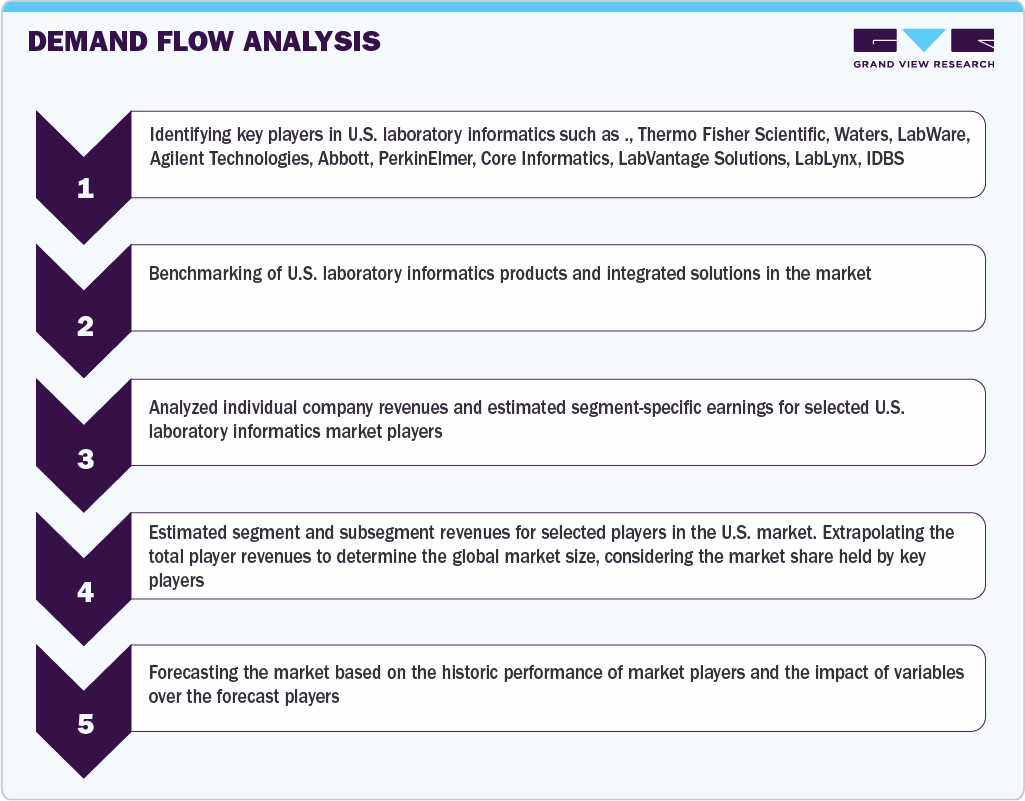
The market size of the robotic-assisted bronchoscopy systems market was estimated using a bottom-up approach, supported by company-level revenue analysis, product benchmarking, and segment-level revenue estimation. Key market participants were identified, and their robotic assisted bronchoscopy systems were benchmarked to assess their presence in the market. Company revenues attributable to robotic-assisted bronchoscopy systems were analyzed to estimate segment-specific revenues, followed by extrapolation of regional and global market size based on the estimated market shares of key players. The market forecast was developed by evaluating historical company performance and key market variables over the forecast period.
 To learn more about this report, Download Free Sample Report
Delivered Customizations
This report has been delivered with the following In-depth customizations
Client Request
Customization Delivered
Value Adds
Installed base and procedure volumes
Compare installed robotic bronchoscopy systems, new placements, and annual procedure volumes by manufacturer and geography using publicly available data. Assess cumulative procedures, utilization per installed system, and adoption trends, distinguishing reported figures from estimates.
Measures technology adoption beyond equipment sales. Identifies manufacturers and regions with higher system utilization and expanding clinical adoption.
Pricing and cost benchmarking
Compare platform acquisition costs, installation expenses, maintenance charges, software fees, and recurring consumable costs across selected systems. Estimate per-procedure costs and total cost of ownership using available pricing and operational data.
Helps hospitals and investors evaluate ownership economics and cost. Helps hospitals evaluate investment feasibility and compare platform economics. Identifies major cost drivers and financial barriers to adoption.
Reimbursement and health economics
Evaluate procedure coding, payer coverage, reimbursement policies, and hospital payment pathways across selected markets. Compare published cost-effectiveness studies, procedural outcomes, and complication-related costs where evidence is available.
Clarifies reimbursement barriers and financial incentives influencing adoption. Supports assessment of the economic value and financial sustainability of robotic-assisted bronchoscopy.
About the Author(s)
Medical Devices Research Team
Healthcare · Medical DevicesThis report was authored by the medical devices research team at Grand View Research - comprising two research analysts, one senior research analyst, and one industry expert - with specialized expertise in the medical devices segment of the healthcare industry. All findings are based on proprietary healthcare databases, executive interviews, and regulatory analysis, subject to internal peer review prior to publication.
Last Updated:
Speak to Analyst

Customize this report to your needs - add regions, segments, or data points, with 20% free customization.
Or view our licence options:


ISO 9001:2015 & 27001:2022 Certified
We are GDPR and CCPA compliant! Your transaction & personal information is safe and secure. For more details, please read our privacy policy.


