
- Home
- »
- Homecare & Decor
- »
-
Rope Market Size, Share And Trends Report, 2026-2033GVR Report cover
![Rope Market Size, Share & Trends Report]()
Rope Market (2026 - 2033) Size, Share & Trends Analysis Report By Product (Synthetic, Steel Wire), By End Users (Industrial, Commercial, Residential), By Region (North America, Europe, Asia Pacific, Central & South America (CSA),Middle East & Africa (MEA)), And Segment Forecasts
Market Size, 2025
$15.2BMarket Estimate, 2026
$16.1BMarket Forecast, 2033
$26.2BCAGR, 2026–2033
7.2%Rope Market Summary
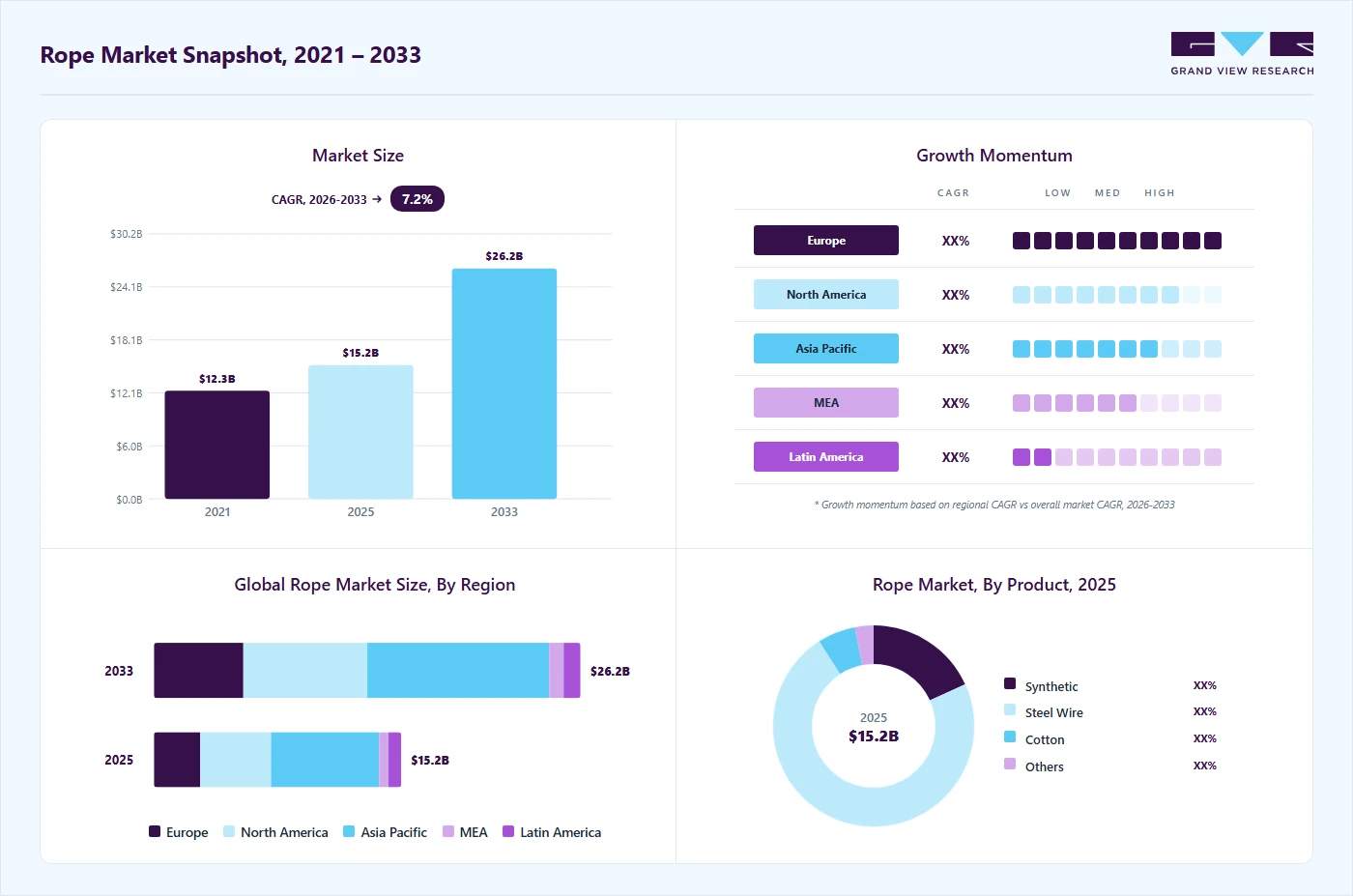
The global rope market size was valued at USD 15.2 billion in 2025 and is projected to grow from USD 16.1 billion in 2026 to USD 26.2 billion by 2033, at a CAGR of 7.2% from 2026 to 2033. The Asia Pacific held the largest share of 43.8% of the global market in 2025. The global market growth is primarily driven by the increasing demand for ropes for residential and commercial purposes, such as weighing loads and materials. With the rising population, the demand for residential housing units is expected to grow exponentially. Consequently, the demand for wire and synthetic rope is expected to increase.
Key Market Trends & Insights
- By product: Steel wire led the market and accounted for a share of 72.6% in 2025.
- By end users: Industrial sector led the market and accounted for a share of 61.5% in 2025.
Regional Highlights
- Largest regional market: Asia Pacific (43.8% revenue share, 2025)
- By country: The rope industry in India is expected to grow at the fastest CAGR over the forecast period.
Market Size & Forecast
- Market size in 2025: USD 15.2 Billion
- Estimated market size in 2026: USD 16.1 Billion
- Projected market size by 2033: USD 26.2 Billion
- CAGR (2026-2033): 7.2%
The increased spending on construction and mining equipment is driving the global market's growth. Key rope manufacturers are heavily investing in advanced manufacturing technologies and materials to stay ahead of the competition. For instance, Teufelberger, one of the leading rope manufacturing companies, is heavily investing in the development of its ropes. The company is conducting intensive research to transform its rope portfolio to include rope robots, 3D printers, and automation. It is also modifying its product line to meet highly specific requirements while serving as a universal element for transferring tensile forces.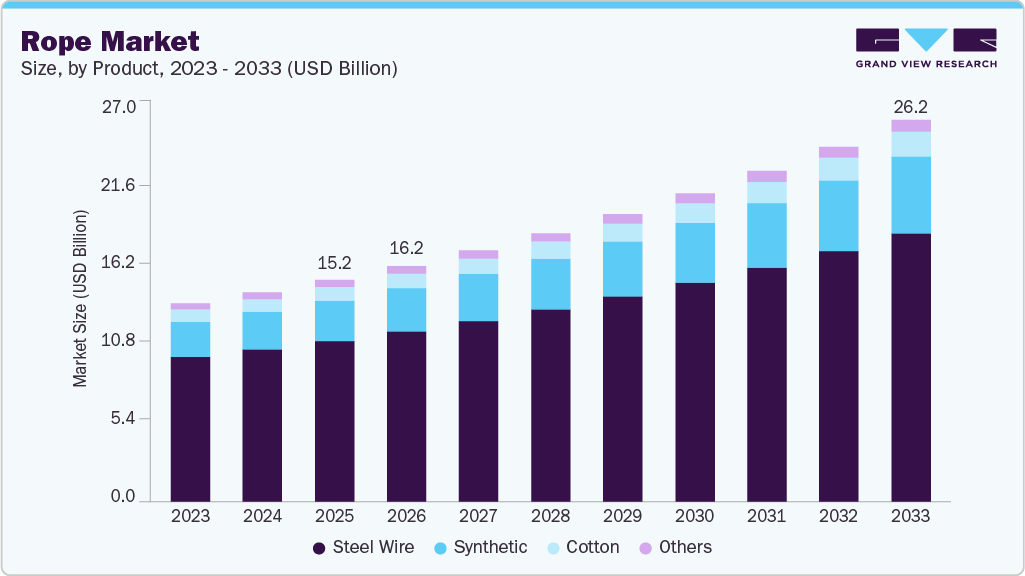
Additionally, the increased demand from various sectors, including industrial & crane, mining, transportation, and marine & fisheries, is driving the rope industry to expand steadily. However, severe limitations, such as high prices, frequent preventive maintenance, and normal wear and tear, are limiting market growth. Additionally, due to international trade and tariffs, the prices of raw materials required for rope manufacturing will also increase, subsequently pushing up rope prices worldwide. This is expected to limit the demand for ropes among price-sensitive end-users and low-budget residential and industrial sites.
Apart from this, major product innovations and launches by key players are expected to create brand awareness and help them expand their consumer reach. Key players in the global market are making significant efforts to replace conventional raw materials with cutting-edge alternatives that are both economical and have no adverse environmental impacts during the manufacturing process.
Market Dynamics
The rapid global expansion of offshore wind energy infrastructure is one of the major factors contributing to the rope market growth. As governments worldwide accelerate their transition toward renewable energy, the installation of offshore wind farms has created substantial demand for high-performance mooring ropes, anchor lines, and installation rigging systems. Each offshore wind turbine installation requires extensive use of specialized rope systems from synthetic mooring lines anchoring floating turbines to the seabed, to high-tensile rigging ropes used during installation and maintenance. Modern synthetic ropes made from high-performance fibers such as HMPE (High Modulus Polyethylene) and aramid are increasingly preferred in offshore applications due to their superior strength-to-weight ratio, corrosion resistance, and fatigue performance under dynamic sea conditions. This sustained and geographically widespread expansion is expected to significantly accelerate rope market growth over the forecast period.
Fluctuations in the prices of key raw materials remain a significant challenge restraining the growth of the rope market, often resulting in increased production costs, compressed manufacturer margins, and reduced affordability among price sensitive end users. Many rope manufacturers are heavily dependent on petroleum derived materials such as polypropylene, polyester, and nylon, without a comprehensive understanding of how to hedge against crude oil price volatility. Global crude oil prices witnessed a sharp fluctuation, directly impacting the cost of synthetic fibre production and subsequently pushing rope prices higher across industrial and commercial segments. Due to unmanageable raw material cost escalations further underscore the impact of price volatility and supply unpredictability on overall market stability.
Product Insights
Steel wire dominated the product category, accounting for a share of 72.6% in 2025. A steel wire rope is frequently used in the construction, mining, oil and gas, and marine industries. It is made up of wires, strands, and a core made of steel and fiber. Steel wire ropes are created by twisting the wires, which are typically made up of stainless steel and high-carbon steel. The rope's function is to support and safeguard the external strands for effective functionality. Steel wire rope has a higher strength-to-weight ratio, which is an important factor for various applications, especially in the marine and fishing sectors.
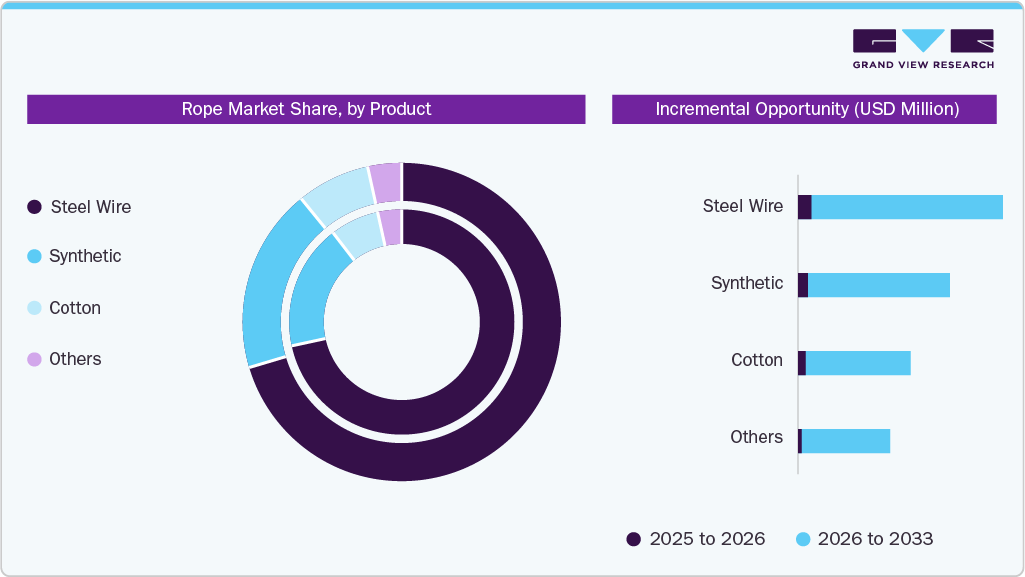
The synthetic segment is expected to grow at a CAGR of 8.5% from 2026 to 2033. Synthetic ropes are made from man-made textile fibers that have been chemically infused and are used as a substitute for natural fibers. Moreover, due to characteristics like high strength-to-weight ratio, bend fatigue durability, and strong spooling capabilities, the synthetic rope is also seeing increased use in cranes. Synthetic ropes have the extra benefit of being lighter than steel cables, which makes them a popular product in cranes and other maritime industry applications.
End Users Insights
The industrial segment dominated the market with a share of 61.5% in 2025. Ropes are widely used in various industries, including construction, maritime and fishing, oil and gas, and mining, due to their lightweight nature, reduced downtime preparation, simple handling, and non-requiring re-lubing properties. Moreover, synthetic ropes are one of the most often used forms of rope in the nautical and fishing industries. These ropes are available in a variety of shapes and colors, offering excellent insulating capacity, chemical resistance, absorption prevention, and environmental resistance. The increased usage of rope for industrial applications is likely to favor market growth.

The commercial segment is estimated to grow with a CAGR of 8.0% over the forecast period. Commercial uses of ropes include camping, rock climbing, agriculture, adventure sports, logistics, and other applications. Ropes are a job site necessity that can be used for bundling, holding, and securing. In some cases, they can also be used for fall protection applications. The different types of rope used for commercial uses include nylon, polyester, hemp, and polypropylene.
Regional Insights
North America Rope Market Trends
The North American rope market is projected to grow at a CAGR of 7.4% from 2026 to 2033. Increased infrastructure development, including large-scale construction projects such as highway and bridge upgrades, fuels the demand for high-strength ropes used in lifting and securing heavy loads. Additionally, the rise in outdoor activities such as climbing, boating, and fishing, along with the expansion of the marine and leisure industries, contributes to the need for specialized ropes. The shift toward synthetic materials, which offer superior strength-to-weight ratios and better abrasion resistance, is further driving market growth.
Europe Rope Market Trends
The European rope market is projected to grow at a CAGR of 8.7% from 2026 to 2033. Increased demand for synthetic ropes is expected to result from the growth of the marine and fishing industries across European countries. Moreover, the growth in the construction industry is driving the demand for steel wire and synthetic rope. In the marine and offshore sectors, including shipping, fishing, and wind‑farm operations in the North Sea region, ropes made of advanced synthetic fibres (lighter, corrosion‑resistant) are increasingly preferred over traditional materials.
Asia Pacific Rope Market Trends
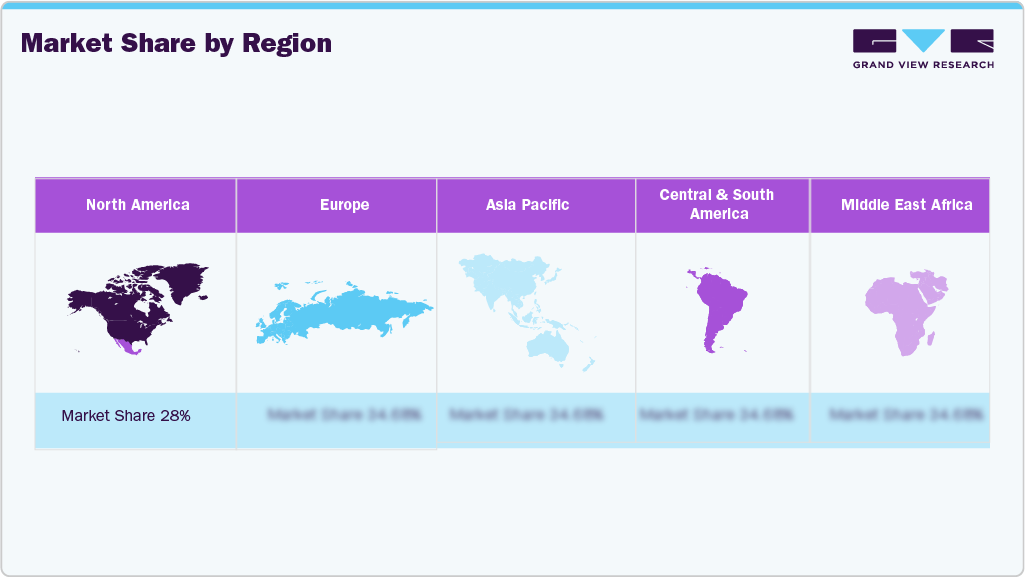
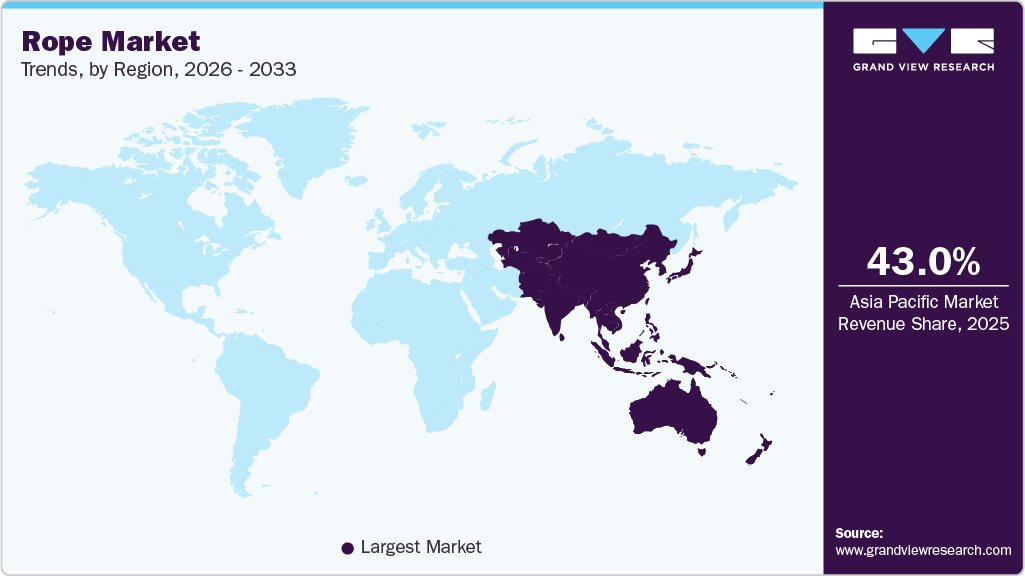
The Asia Pacific dominated the rope market, accounting for a 43.8% share in 2025. Rapidly expanding commercial and residential construction activities accelerate the need for waterproof and durable ropes that are lightweight and high-strength. The increasing infrastructural needs in emerging economies, such as India and China, are driving demand for synthetic ropes. At the same time, the marine/offshore sector (shipping, fishing, oil & gas) is growing, and manufacturers are shifting from traditional fibres and steel wires to high‐performance synthetics (lighter weight, higher strength, better corrosion resistance) which are especially suited to harsh environments.
Central & South America Rope Market Trends
The Central & South American rope market is projected to grow at a CAGR of 3.5% from 2026 to 2033. The rope market in Central & South America is gaining momentum due to surging infrastructure and construction activities, including the expansion of ports, bridges, and housing, which drive demand for lifting, rigging, and anchoring solutions. At the same time, the region's mining, oil & gas, and marine sectors are expanding, for example, deep-water oil fields and shipping growth in Brazil, which is boosting demand for steel wire and specialty ropes. Moreover, there is a shift toward synthetic and high‑performance rope materials, offering longer life, better performance, and compliance with rising safety standards, further accelerating uptake in industrial and marine applications.
Middle East & Africa America Rope Market Trends
The Middle East & Africa rope market is projected to grow at a CAGR of 5.9% from 2026 to 2033. The region's large-scale infrastructure and construction projects are fueling demand for various types of ropes used in lifting, rigging, and hoisting. Additionally, the booming energy sector, particularly in oil and gas and offshore platforms, is driving the need for heavy-duty ropes used in mooring, load securement, and drilling operations. Furthermore, advancements in rope materials, such as lighter, stronger synthetic fibers and high-performance steel varieties, are making ropes more suitable for the harsh desert and marine environments typical in the region. These factors, combined with ongoing industrialization and technological innovation, are contributing to the rise of the rope market in the Middle East and Africa.
Key Rope Company Insights
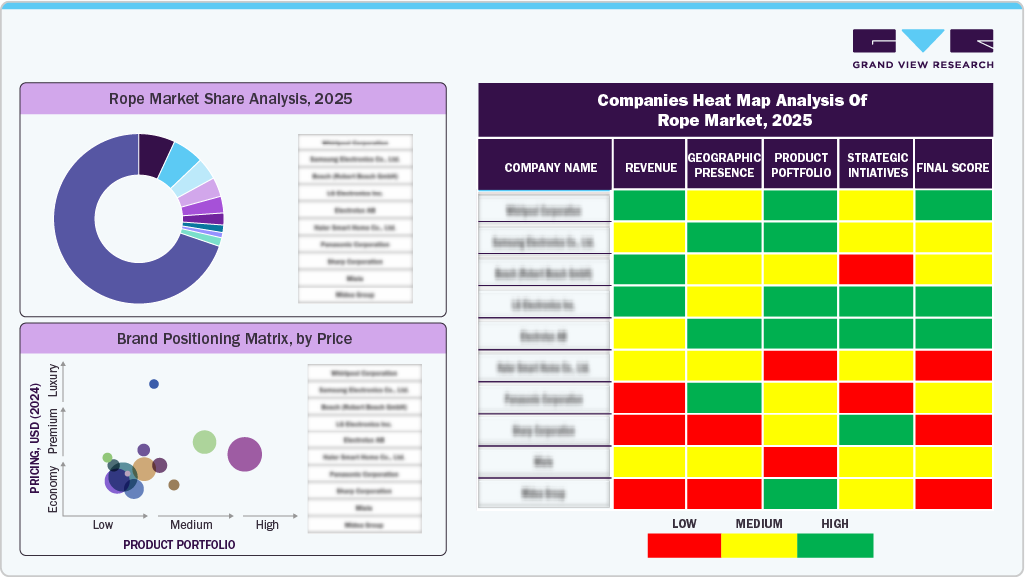
The presence of a few established players and new entrants characterizes the market. Market players are focusing on marketing, product launches, and partnerships to compete effectively in this industry.
Key Rope Companies:
The following are the leading companies in the rope market. These companies collectively hold the largest market share and dictate industry trends.
- Bridon-Bekaert
- TEUFELBERGER
- WireCo WorldGroup, Inc.
- Yale Cordage
- Marlow Ropes
- MAGENTO, INC. (English Braids Ltd.)
- Cortland Limited
- Southern Ropes
- van Beelen Group BV
- DynamicaRopes
Rope Market Report Scope
Report Attribute
Details
Market size in 2025
USD 15.2 billion
Estimated market size in 2026
USD 16.1 billion
Projected market size by 2033
USD 26.2 billion
Growth rate
CAGR of 7.2% from 2026 to 2033
Base year for estimation
2025
Historical data
2021 - 2025
Forecast period
2026 - 2033
Quantitative units
Revenue in USD million, and CAGR from 2026 to 2033
Report coverage
Revenue forecast, company ranking, competitive landscape, growth factors, and trends
Segments covered
Product, end users, region
Regional scope
North America; Europe; Asia Pacific; Central & South America; Middle East & Africa
Country scope
U.S.; Canada; Mexico; Germany; UK; France; Italy; Spain; China; Japan; India; Australia & New Zealand; South Korea; Brazil; South Africa
Key companies profiled
Bridon-Bekaert; TEUFELBERGER; WireCo, WorldGroup, Inc.; Yale Cordage; Marlow Ropes; MAGENTO, INC. (English Braids Ltd.); Cortland Limited; Southern Ropes; van Beelen Group BV; Dynamica Ropes
Customization scope
Free report customization (equivalent up to 8 analysts working days) with purchase. Addition or alteration to country, regional & segment scope.
Pricing and purchase options
Avail customized purchase options to meet your exact research needs. Explore purchase options Global Rope Market Report Segmentation
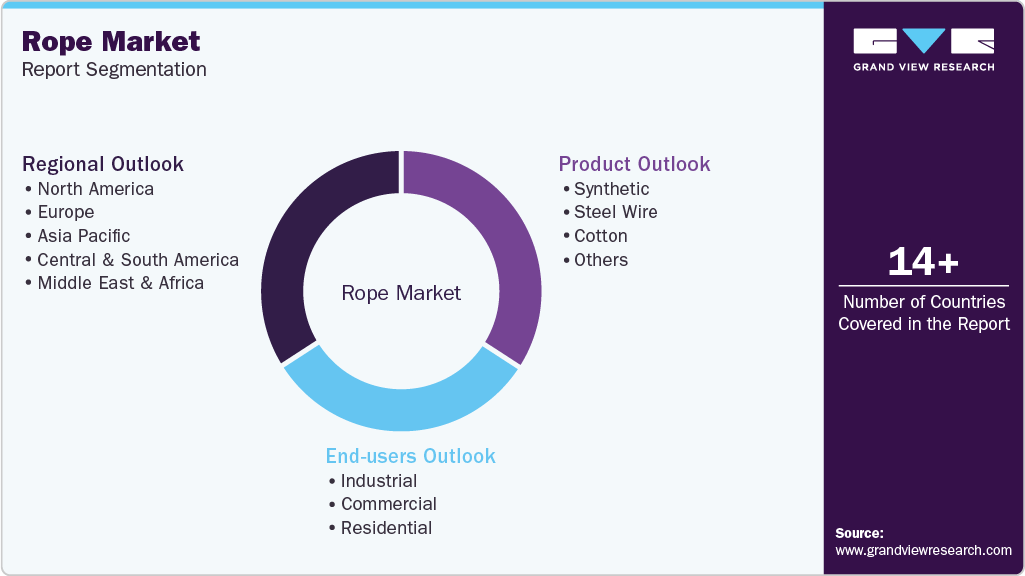
This report forecasts revenue growth at global, regional & country levels and provides an analysis on the latest trends and opportunities in each of the sub-segments from 2021 to 2033. For the purpose of this study, Grand View Research has segmented the rope market on the basis of product, end users, and region:
-
Product Outlook (Revenue, USD Million, 2021 - 2033)
-
Synthetic
-
Steel Wire
-
Cotton
-
Others
-
-
End Users Outlook (Revenue, USD Million, 2021 - 2033)
-
Industrial
-
Commercial
-
Residential
-
-
Regional Outlook (Revenue, USD Million, 2021 - 2033)
-
North America
-
U.S.
-
Canada
-
Mexico
-
-
Europe
-
UK
-
Germany
-
France
-
Italy
-
Spain
-
-
Asia Pacific
-
China
-
India
-
Japan
-
Australia & New Zealand
-
South Korea
-
-
Central & South America (CSA)
-
Brazil
-
-
Middle East & Africa (MEA)
-
South Africa
-
-
Delivered Customizations
This report has been delivered with the following In-depth customizations
Client Request
Customization Delivered
Value Adds
Product Segmentation & Material Trend Analysis
Developed a tailored analysis of the rope market focused on product level trends across key material categories, including synthetic, steel wire, cotton, and other rope types. The study incorporated assessment of material adoption patterns, the accelerating shift from conventional steel wire to high-performance synthetic ropes, and the impact of evolving application requirements on product mix and manufacturer portfolios.
Enables stakeholders to understand the shifting product landscape, identify high growth material categories, assess competitive positioning across product lines, and evaluate the long-term impact of material innovation and advanced fiber adoption on market share and overall product pricing dynamics.
End-Use Sector & Application Demand Analysis
Delivered a customized evaluation of demand patterns across key end-use sectors, industrial, commercial, and residential covering application specific adoption trends in construction, mining, oil & gas, marine & fisheries, crane operations, transportation, agriculture, rock climbing, and logistics. The analysis incorporated sector wise revenue contributions alongside demand drivers shaping procurement decisions across each vertical.
Provides actionable insights into high-demand application segments and sector level growth opportunities, helping clients identify commercially attractive end-use categories, align product development strategies with evolving buyer requirements, and prioritize market entry or expansion across industrial, commercial, and residential verticals.
Regional Market Opportunity & Competitive Landscape Assessment
Conducted a focused assessment of regional demand dynamics across North America, Europe, Asia Pacific, Central & South America, and Middle East & Africa. The analysis covered infrastructure growth trends in emerging economies such as India and China, expansion of marine and offshore sectors, and competitive strategies of key players including Bridon-Bekaert, Teufelberger, Marlow Ropes, and Cortland Limited.
Supports strategic planning and market entry decisions by quantifying regional revenue potential, identifying fastest-growing geographies, evaluating competitive intensity across regions, and strengthening the business case for capacity investments, partnerships, and geographic expansion strategies across both mature and emerging markets.
Frequently Asked Questions About This Report
Asia Pacific is the fastest-growing region over the forecast period.
the steel wire held the largest revenue share of 72.6% in 2025, while synthetic is the significant-growing segment.
The industrial holds the largest market share of 61.5% in 2025, while commercial is the significant-growing segment.
Key players include Bridon-Bekaert; TEUFELBERGER; WireCo, WorldGroup, Inc.; Yale Cordage; Marlow Ropes; MAGENTO, INC. (English Braids Ltd.); Cortland Limited; Southern Ropes; van Beelen Group BV; Dynamica Ropes.
The global rope market size was valued at USD 15.2 billion in 2025 and is projected to grow from USD 16.1 billion in 2026.
The global rope market is expected to grow at a CAGR of 7.2% from 2026 to 2033, reaching USD 26.2 billion.
Key factors include increasing demand for ropes for residential and commercial purposes, such as weighing loads and materials.
Asia Pacific dominated with a 43.8% revenue share in 2025.
About the Author(s)
Homecare & Decor Research Team
Consumer Goods · Homecare & DecorThis report was authored by the homecare & decor research team at Grand View Research - comprising two research analysts, one senior research analyst, and one industry expert - with specialized expertise in the homecare & decor segment of the consumer goods industry. All findings are based on proprietary consumer goods databases, executive interviews, and regulatory analysis, subject to internal peer review prior to publication.
Last Updated:
Speak to Analyst


Customize this report to your needs — add regions, segments, or data points, with 20% free customization.
Or view our licence options:


ISO 9001:2015 & 27001:2022 Certified
We are GDPR and CCPA compliant! Your transaction & personal information is safe and secure. For more details, please read our privacy policy.


