
- Home
- »
- Plastics, Polymers & Resins
- »
-
Sachet Packaging Market Size And Share Report, 2026-2033GVR Report cover

Sachet Packaging Market (2026 - 2033)
Size, Share & Trends Analysis Report By Material (Plastic, Paper, Aluminum Foil), By End-use (Food & Beverages, Pharmaceuticals, Personal Care & Cosmetics), By Region (North America, Europe, APAC, CSA, MEA), And Segment Forecasts
Market Size, 2025
$10.3BMarket Estimate, 2026
$10.9BMarket Forecast, 2033
$15.4BCAGR, 2026–2033
5.1%Sachet Packaging Market Summary
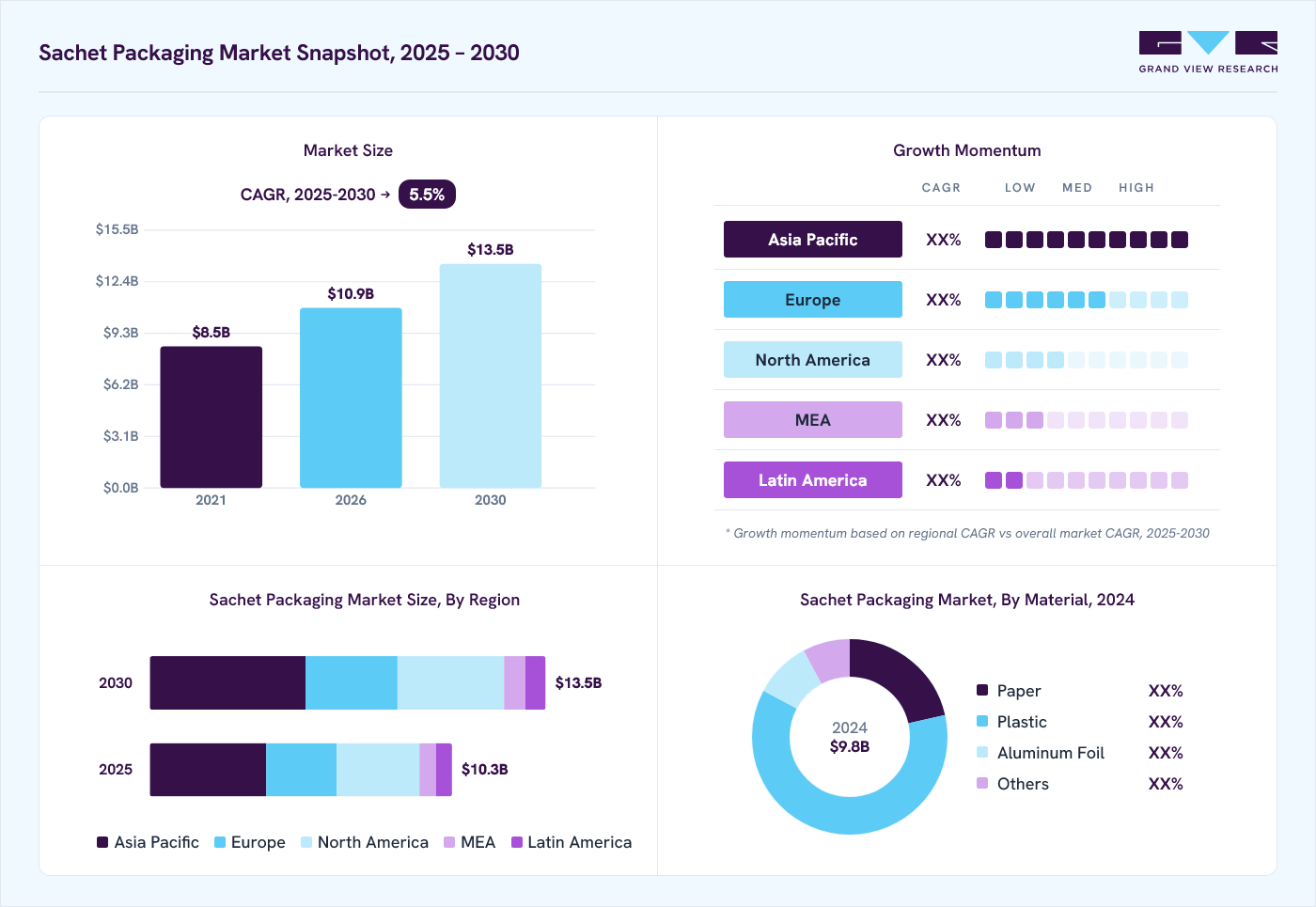
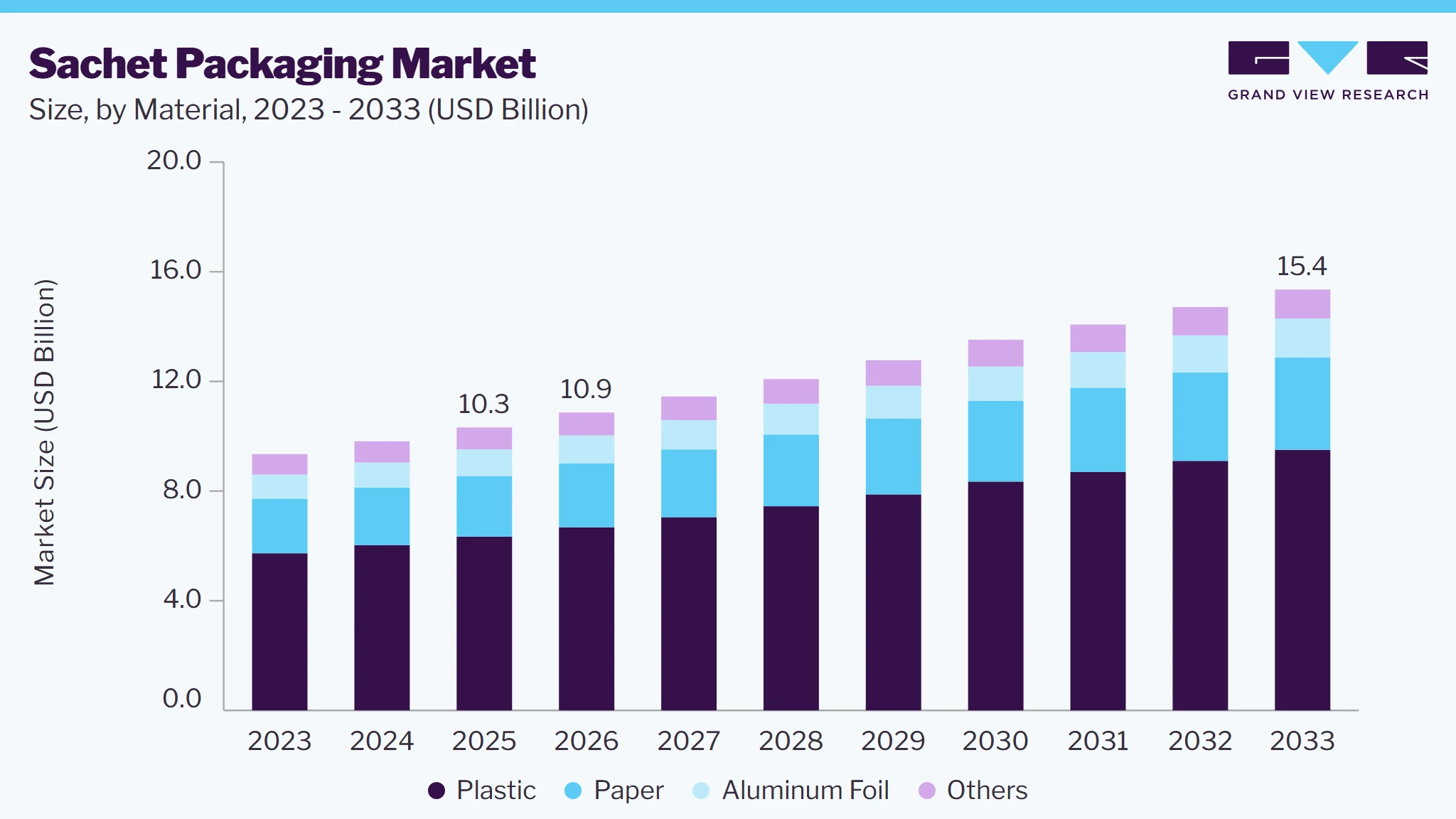
The global sachet packaging market size was valued at USD 10.3 billion in 2025 and is projected to grow from USD 10.9 billion in 2026 to USD 15.4 billion by 2033, at a CAGR of 5.1% from 2026 to 2033. Asia Pacific dominated the sachet packaging market with the largest revenue share of 38.6% in 2025. The growth of the sachet packaging market is driven by the rising demand for affordable and convenient packaging solutions, the expansion of the fast-moving consumer goods (FMCG) sector, and continuous advancements in packaging technology.
 Source: Grand View Research, IR Documents, Primary Interviews, Paid DatabasesTo learn more about this report,
 Download Free Sample Report
Key Market Trends & Insights
- By material: Plastic segment held the largest market share of 61.4% in 2025.
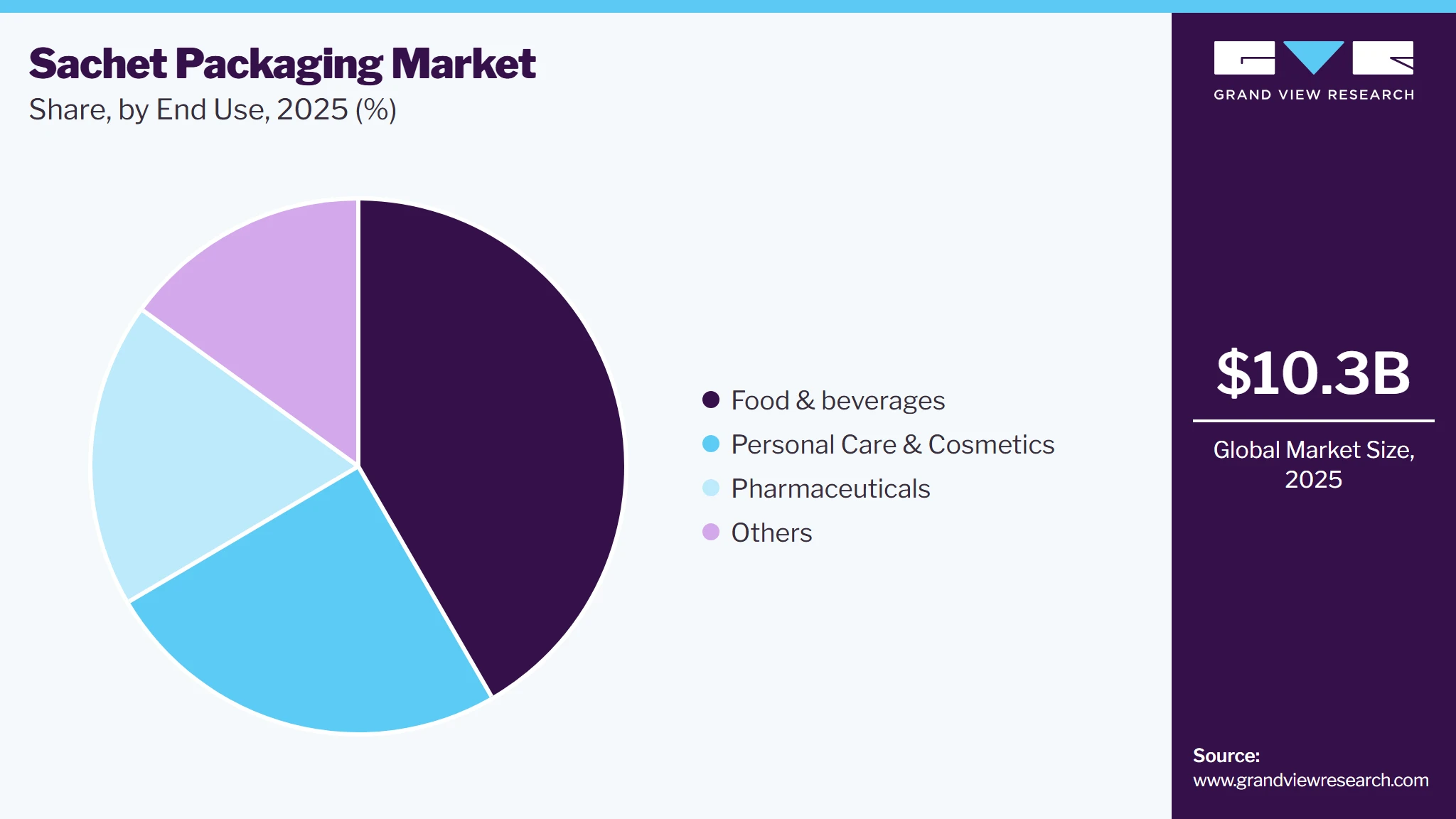
- By end use: Food & beverages segment held the largest market share of 41.6% in 2025.
Regional Highlights
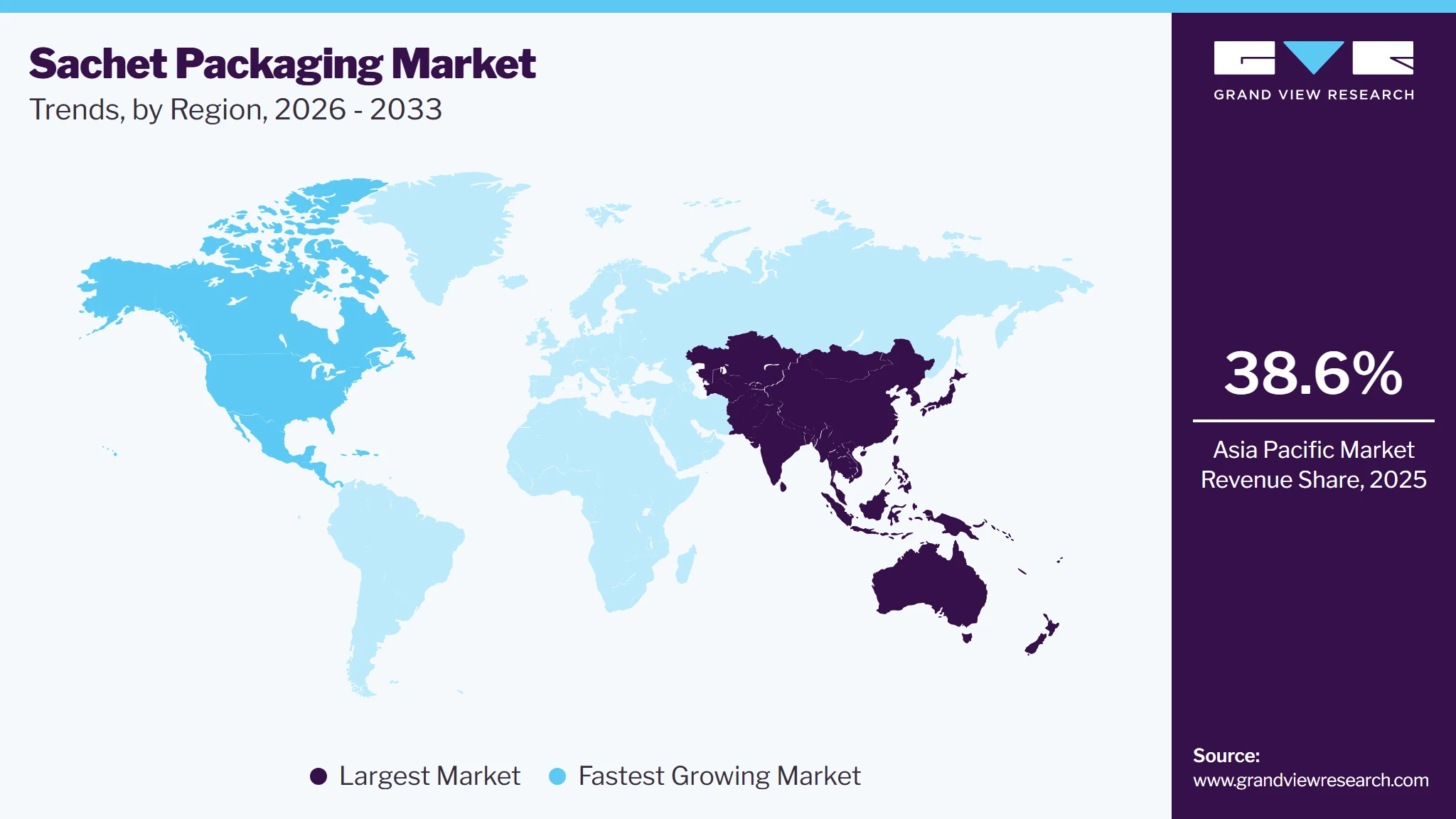
- Largest regional market: Asia Pacific (38.6% revenue share, 2025)
- By country: China held the largest market share in 2025.
Market Size & Forecast
- Market size in 2025: USD 10.3 Billion
- Estimated market size in 2026: USD 10.9 Billion
- Projected market size by 2033: USD 15.4 Billion
- CAGR (2026-2033): 5.1%
Prism AI by Grand View Research Free to tryAsk a question about the sachet packaging marketTry asking✓Every figure cited from GVR research Prefer the report? Download free sample →
Sachets are widely used across industries such as food & beverages, personal care, pharmaceuticals, and household products due to their affordability, portability, and ability to maintain product freshness. The growing consumer preference for single-use and small-sized packaging formats, particularly in developing economies, further fuels market expansion.The sachet packaging market is driven by the growing demand for affordable packaging in emerging markets. In regions such as Asia-Pacific, Latin America, and Africa, where consumers have lower purchasing power, sachets offer an economical way to buy essential products in small quantities. For instance, in countries such as India and Indonesia, sachets of shampoo, detergent, and sauces are popular among middle- and lower-income groups. This affordability factor has led major FMCG companies such as Unilever and P&G to introduce sachet variants of their products, allowing them to penetrate deep into rural and semi-urban markets.
 To learn more about this report, Download Free Sample Report
Another significant factor driving the market is the rise in on-the-go consumption trends. Busy lifestyles and urbanization have increased the demand for convenient, portable packaging solutions. Sachets are easy to carry, store, and dispose of, making them ideal for single-serving products such as condiments, coffee, and health supplements. The food & beverage sector has particularly benefited from this trend, with companies offering sauces, ketchup, and instant coffee in sachet formats to cater to consumer needs. Moreover, the growth of e-commerce and food delivery services has further boosted the demand for sachet packaging, as it enables portion control and minimizes packaging waste.
Technological advancements in flexible packaging materials and printing techniques have also contributed to market growth. Manufacturers are developing high-barrier films that enhance the shelf life of sachet-packed products while maintaining their freshness. Innovations in sustainable packaging, such as biodegradable and recyclable sachets, are gaining traction due to growing environmental concerns.
For instance, in April 2022, Mondi and Thimonnier, a French machine supplier, have collaborated to create recyclable packaging for liquid soap refills. The new packaging is a berlingot sachet made from a recyclable mono-material, coextruded polyethylene (PE). It reduces plastic usage by more than 75% compared to rigid plastic bottles and can replace the current industry standard of multilayer PVC refill containers, which are effectively not recyclable.
Market Dynamics
The sachet packaging market is witnessing steady growth due to increasing demand for affordable, convenient, and single-use packaging solutions across food & beverages, personal care, pharmaceuticals, and household products. Sachets enable manufacturers to reach price-sensitive consumers through low-cost, portion-controlled packaging while improving product accessibility in emerging economies. Advancements in high-barrier films, digital printing, and sustainable material development are further enhancing product performance and brand appeal. Growing urbanization, expanding retail networks, and rising demand for on-the-go consumption continue to support market expansion.
The rapid expansion of the FMCG industry is a major factor driving the sachet packaging market. Manufacturers are increasingly adopting sachets to offer products in smaller quantities at lower price points, making premium brands affordable for a wider consumer base. This strategy is particularly effective in developing economies where daily purchasing habits and limited disposable incomes favor low-unit packaging. The format also supports product sampling and market penetration for new product launches.
Additionally, changing consumer lifestyles are boosting demand for portable, hygienic, and portion-controlled packaging. Sachets provide convenience for travel, on-the-go consumption, and single-use applications while minimizing product wastage. Their widespread use across shampoos, sauces, beverages, pharmaceuticals, and personal care products continues to strengthen demand from both manufacturers and consumers.
The market faces growing pressure from environmental regulations targeting single-use plastic packaging. Most conventional sachets consist of multilayer laminated materials that are difficult to recycle using existing waste management infrastructure. Increasing government regulations, extended producer responsibility (EPR) requirements, and rising consumer preference for sustainable packaging are encouraging companies to reduce conventional plastic usage. These factors increase compliance costs and create challenges for manufacturers that rely on traditional multilayer packaging materials.
Growing investments in recyclable, paper-based, biodegradable, and mono-material sachets present significant opportunities for market participants. Packaging manufacturers are developing advanced barrier materials that maintain product protection while improving recyclability and reducing environmental impact. At the same time, digital printing, smart coding, and high-speed packaging technologies are enabling greater customization, traceability, and production efficiency. Companies that successfully combine sustainability with high barrier performance and cost competitiveness are expected to gain a strong competitive advantage in the evolving sachet packaging market.
Analyst Perspective
The sachet packaging market is expected to witness steady growth, driven by rising demand for convenient, affordable, and single-use packaging across the food & beverage, pharmaceutical, and personal care industries. Increasing focus on product portability, portion control, and extended shelf life continues to encourage manufacturers to adopt advanced sachet packaging solutions. At the same time, growing environmental concerns are accelerating investments in recyclable, mono-material, paper-based, and biodegradable sachets, prompting companies to innovate while complying with evolving sustainability regulations. Manufacturers that successfully balance cost efficiency, high barrier performance, customization, and sustainable material development are expected to strengthen their competitive position and capitalize on expanding opportunities in both developed and emerging markets.
Material Insights
Based on material, the plastic segment led the market with the largest revenue share of 61.4% in 2025. Plastic is the most widely used material for sachet packaging due to its flexibility, durability, and cost-effectiveness. Plastic sachets are extensively used in food, personal care, and pharmaceutical products due to their lightweight nature and ability to be heat-sealed for longer shelf life.
The paper material segment is projected to grow at the fastest CAGR of 5.9% during the forecast period. The shift toward sustainable and biodegradable packaging solutions is a major driver for paper-based sachets. Growing regulatory restrictions on plastic waste and consumer preference for environmentally friendly packaging solutions are boosting demand. It is primarily used in dry product applications, such as sugar, salt, tea, coffee, and powdered beverages.
End-use Insights
Based on end use, the food & beverages segment led the market with the largest revenue share of 41.6% in 2025. Sachet is commonly used for packaging products such as condiments (ketchup, mayonnaise), instant coffee, powdered beverages, sauces, and seasonings. The growth of sachet packaging in the food and beverage industry is primarily driven by the increasing demand for convenience food, the expanding fast-food sector, and the rising preference for single-serve packaging formats.
 To learn more about this report, Download Free Sample Report
In the pharmaceutical industry, sachets are commonly used to package powders, granules, gels, and liquid medications, such as oral rehydration salts (ORS), vitamin supplements, and pain relief gels. The increasing demand for unit-dose packaging in the pharmaceutical sector, driven by regulatory requirements for accurate dosing and patient convenience, is a significant growth factor. Additionally, the rise in self-medication trends and the expansion of pharmaceutical distribution networks in emerging markets have boosted the demand for sachet packaging.
The personal care and cosmetics industry extensively uses sachet packaging for products such as shampoos, conditioners, hair oils, facial masks, lotions, and serums. This packaging format allows consumers to sample products before committing to larger quantities, making it a preferred choice for promotional campaigns and travel-friendly packaging. Sachets are also beneficial for maintaining product integrity and ensuring precise, single-use application.
Regional Insights
Asia Pacific dominated the sachet packaging market with the largest revenue share of 38.6% in 2025. The prevalence of price-sensitive consumers and lower disposable incomes in many Asia Pacific countries has made sachets an essential packaging format.
 To learn more about this report, Download Free Sample Report
India Sachet Packaging Market Trends
In markets such as India, Indonesia, and the Philippines, sachets allow consumers to purchase premium products in smaller, more affordable quantities. For example, brands such as Unilever and P&G have successfully penetrated rural markets by offering shampoos, detergents, and personal care products in sachets priced as low as 1-2 rupees or pesos. This sachetization strategy has been particularly effective in reaching the bottom-of-pyramid consumers who cannot afford full-sized products but still desire quality brands.
The sachet packaging market in China held the largest share in the Asia Pacific region in 2025. China's sachet packaging market growth can be attributed to several interconnected factors. The country's massive population of 1.4 billion people, combined with rapid urbanization and a growing middle class, has created significant demand for single-serve and on-the-go products. This trend is particularly evident in personal care items, food condiments, and household products. Additionally, the country’s robust manufacturing infrastructure and advanced packaging technology capabilities have contributed to its market growth. The country has invested heavily in flexible packaging production facilities, particularly in regions such as Guangdong and Zhejiang provinces.
North America Sachet Packaging Market Trends
The pharmaceutical industry in North America, particularly in the U.S., has been a major driver of sachet packaging adoption. The strict regulatory environment, coupled with the need for precise dosing and product protection, has led to increased usage of sachets for medications, vitamins, and dietary supplements. Companies such as Abbott Laboratories and Johnson & Johnson are using sachet packaging technology to ensure product stability and extend shelf life while meeting FDA requirements.
The U.S. Sachet Packaging market growth can be attributed to its robust consumer packaged goods (CPG) industry and evolving consumer preferences. The country’s consumers increasingly favor single-serve portions and on-the-go packaging solutions, which has led to the widespread adoption of sachets across various product categories. For example, companies such as Starbucks and Nestlé have successfully introduced premium coffee and beverage mixes in sachet format, catering to busy professionals and households seeking convenience without compromising quality.
Europe Sachet Packaging Market Trends
The sachet packaging market in Europe is driven by the region's strong focus on sustainability and environmental regulations, which has pushed manufacturers to innovate in eco-friendly sachet materials and designs. Companies such as Amcor plc and Huhtamaki have invested heavily in developing biodegradable and recyclable sachet solutions to meet the EU's stringent packaging waste directives, setting new industry standards.
Additionally, the region's highly developed personal care and cosmetics industry is a major driver for the market. European consumers show a strong preference for premium sample-sized products and travel-friendly packaging formats. Luxury brands like L'Oréal and Beiersdorf extensively use sachets for product sampling and travel-sized offerings, particularly in their high-end skincare lines.
Germany sachet packaging market is primarily driven by its robust personal care and cosmetics industry. The country's strong focus on sustainable packaging solutions has also positioned it as prominent in developing eco-friendly sachet materials, with companies such as Constantia Flexibles investing heavily in recyclable and biodegradable sachet technologies.
Key Sachet Packaging Company Insights
The global sachet packaging industry is highly competitive, driven by a mix of established packaging giants and regional players focusing on innovation, sustainability, and cost efficiency. Key players such as Amcor plc, Mondi, Huhtamaki, Constantia Flexibles, and Graphic Packaging International, LLC, dominate the market with extensive product portfolios.
Companies differentiate through material innovation, such as recyclable and biodegradable films, as sustainability concerns drive regulatory and consumer preferences. Emerging players and local manufacturers compete on pricing and customization, particularly in cost-sensitive regions such as Asia Pacific and Africa. Strategic partnerships, acquisitions, and R&D investments are key strategies for maintaining a competitive edge in this dynamic market.
Key Sachet Packaging Companies
The following key companies have been profiled for this study on the sachet packaging market.
-
Amcor plc
-
Huhtamaki
-
Constantia Flexibles
-
Mondi
-
Graphic Packaging International, LLC
-
RATTPACK
-
Amber Packaging
-
ePac Holdings, LLC
-
Glenroy, Inc.
-
Sachet Solutions
-
Greendot Biopak Pvt. Ltd.
-
The Sachet Company
-
Budelpack
- Polysack Flexible Packaging Ltd.
Competitive Benchmarking
Category
Operating Strategies
Competitive Edge
Weakness
Established Players (Amcor plc; Huhtamaki; Constantia Flexibles; Mondi; Graphic Packaging International, LLC; RATTPACK; Glenroy, Inc.)
- Focus on expanding flexible packaging portfolios through continuous innovation in high-barrier, recyclable, mono-material, and lightweight sachet packaging solutions.
- Invest in advanced converting technologies, digital printing, automation, and global manufacturing expansion while strengthening partnerships with FMCG, food & beverage, pharmaceutical, and personal care companies to meet evolving sustainability and performance requirements.
- Strong global manufacturing footprint, extensive distribution networks, diversified product portfolios, and long-term relationships with multinational consumer goods companies support large-scale production and recurring revenue.
- Significant investments in R&D, sustainable packaging technologies, regulatory compliance, and customization capabilities strengthen market leadership and competitive differentiation.
- High capital expenditure for sustainable packaging innovation, manufacturing upgrades, and regulatory compliance can increase operational costs.
- Dependence on volatile resin, aluminum foil, and paper prices, along with changing environmental regulations and recycling requirements, may affect profitability and operational flexibility.
Emerging Players (Amber Packaging; ePac Holdings, LLC; Sachet Solutions; Greendot Biopak Pvt. Ltd.; The Sachet Company; Budelpack; Polysack Flexible Packaging Ltd.)
- Concentrate on customized sachet packaging, short-run production, digital printing, and sustainable packaging solutions tailored for regional brands, SMEs, and niche consumer markets.
- Expand market presence through flexible manufacturing, e-commerce partnerships, private-label packaging services, and development of recyclable and biodegradable sachet formats to address growing demand for environmentally responsible packaging.
- Greater manufacturing flexibility enables rapid product customization, faster turnaround times, and efficient production of low- to medium-volume packaging orders.
- Competitive pricing, customer-focused services, innovative printing capabilities, and specialization in niche packaging applications help these companies gain market share in emerging and regional markets.
- Limited production capacity, narrower international distribution networks, and comparatively lower financial resources restrict participation in large-scale global supply agreements.
- Lower brand recognition, fewer long-term contracts with multinational companies, and limited investment capacity for advanced packaging technologies may slow expansion in highly competitive markets.
Recent Developments
-
In January 2025, Arcade Beauty launched the 80.0% Paper Packette, a recycle-ready, mono-dose sample sachet designed as an alternative to plastic or foil sachets. The new paper packette is made with 80% paper material and is designed for skincare, haircare, and color cosmetics sampling.
-
In June 2023, Amcor plc expanded its AmFiber Performance Paper packaging range in Europe to include heat seal sachets for dry culinary and beverage applications such as instant coffee, drink powders, spices, seasonings, and dried soups.
Sachet Packaging Market Report Scope
Report Attribute
Details
Market size in 2025
USD 10.3 billion
Estimated market size in 2026
USD 10.9 billion
Projected market size by 2033
USD 15.4 billion
Growth rate
CAGR of 5.1% from 2026 to 2033
Base year for estimation
2025
Historical data
2021 - 2024
Forecast period
2026 - 2033
Quantitative units
Revenue in USD million/billion, and CAGR from 2026 to 2033
Report coverage
Revenue forecast, company ranking, competitive landscape, growth factors, and trends
Segments covered
Material, end-use, region
Regional scope
North America; Europe; Asia Pacific; Latin America; MEA
Country scope
U.S.; Canada; Mexico; Germany; France; UK; Italy; Spain; China; India; Japan; South Korea; Australia; Brazil; Argentina; South Africa; Saudi Arabia; UAE
Key companies profiled
Amcor plc; Huhtamaki; Constantia Flexibles; Mondi; Graphic Packaging International, LLC; RATTPACK; Amber Packaging; ePac Holdings, LLC; Glenroy, Inc.; Sachet Solutions; Greendot Biopak Pvt. Ltd.; The Sachet Company; Budelpack; Polysack Flexible Packaging Ltd.
Customization scope
Free report customization (equivalent up to 8 analysts' working days) with purchase. Addition or alteration to country, regional & segment scope.
Pricing and purchase options
Avail customized purchase options to meet your exact research needs. Explore purchase options
Global Sachet Packaging Market Report Segmentation
This report forecasts revenue growth at global level, regional, and country levels and provides an analysis of the latest industry trends in each of the sub-segments from 2021 to 2033. For this study, Grand View Research has segmented the global sachet packaging market report based on material, end-use, and region:
 To learn more about this report, Download Free Sample Report
-
Material Outlook (Revenue, USD Million, 2021 - 2033)
-
Paper
-
Plastic
-
Aluminum Foil
-
Others
-
-
End-use Outlook (Revenue, USD Million, 2021 - 2033)
-
Food & Beverages
-
Pharmaceuticals
-
Personal Care & Cosmetics
-
Others
-
-
Region Outlook (Revenue, USD Million, 2021 - 2033)
-
North America
-
U.S.
-
Canada
-
Mexico
-
-
Europe
-
Germany
-
France
-
UK
-
Italy
-
Spain
-
-
Asia Pacific
-
China
-
India
-
Japan
-
South Korea
-
Australia
-
-
Central & South America
-
Brazil
-
Argentina
-
-
Middle East & Africa
-
South Africa
-
Saudi Arabia
-
UAE
-
-
Research Methodology
The sachet packaging market figures in this report are based on a proven research process that combines executive interviews with secondary research from proprietary databases, company filings, and recognized regulatory and institutional sources. Market size is built through value-chain sizing - reconciling supply-side and demand-side estimates - and triangulated with bottom-up and top-down approaches. Every estimate passes multiple levels of expert validation before publication, with each sachet packaging segment quantified using the revenue-capture definitions in the table below.
Segment Definition
Segment - Material
Revenue capture definition
Paper
Revenue generated from the sale of paper-based sachet packaging used for packaging food, beverages, pharmaceuticals, personal care products, and other consumer goods. This segment includes kraft paper, coated paper, and paper laminates that provide printability, lightweight properties, and improved sustainability while meeting branding, storage, and transportation requirements.
Plastic
Revenue generated from the sale of plastic sachet packaging manufactured using materials such as polyethylene (PE), polypropylene (PP), polyethylene terephthalate (PET), and multilayer plastic films. These sachets offer excellent flexibility, durability, moisture resistance, heat-sealing capability, and cost efficiency, making them suitable for a wide range of food, healthcare, household, and personal care applications.
Aluminum Foil
Revenue generated from the sale of aluminum foil-based sachet packaging designed to provide superior barrier protection against oxygen, moisture, light, aroma loss, and external contaminants. These sachets are widely used for pharmaceuticals, nutraceuticals, coffee, dairy products, seasonings, and premium food products where extended shelf life and product integrity are essential.
Others
Revenue generated from the sale of sachet packaging made from alternative materials, including biodegradable films, compostable materials, bio-based polymers, cellulose films, and specialty laminates. This segment also includes innovative packaging materials developed to improve sustainability, product protection, regulatory compliance, and performance for niche and specialized packaging applications.
Segment - End Use
Revenue capture definition
Food & beverages
Revenue generated from the sale of sachet packaging used for packaging food and beverage products such as sauces, condiments, spices, sugar, coffee, tea, dairy products, edible oils, instant beverages, powdered drinks, snacks, and ready-to-eat products. The segment includes single-serve, portion-controlled, and on-the-go packaging solutions designed to maintain freshness, convenience, and product safety.
Pharmaceuticals
Revenue generated from the sale of sachet packaging used for pharmaceutical and healthcare products, including oral powders, granules, oral rehydration salts (ORS), nutraceuticals, dietary supplements, herbal formulations, and diagnostic products.
Personal Care & Cosmetics
Revenue generated from the sale of sachet packaging used for personal care and cosmetic products, including shampoos, conditioners, hair oils, face creams, lotions, facial cleansers, serums, gels, perfumes, and skincare products. The segment covers single-use, travel-size, sample, and promotional packaging formats that improve product accessibility, convenience, and brand visibility.
Others
Revenue generated from the sale of sachet packaging used across household cleaning products, detergents, fabric care products, agrochemicals, lubricants, adhesives, pet care products, industrial chemicals, and other specialty consumer and industrial applications. This segment includes customized sachet solutions designed to provide safe handling, controlled dispensing, and efficient storage for a broad range of products.
Estimation Model
Layer Name
Key Question
Description
Flexible Packaging Demand Base Layer
What forms the demand base?
Identify the global demand for flexible packaging across food & beverages, pharmaceuticals, personal care & cosmetics, household products, and industrial applications. This layer establishes the total addressable demand for sachet packaging based on the increasing need for convenient, affordable, lightweight, and single-use packaging solutions, supported by rising FMCG consumption, urbanization, and expanding retail and e-commerce channels.
Sachet Packaging Adoption Layer
Where is sachet packaging utilized?
Estimate the adoption of sachet packaging across food manufacturers, beverage companies, pharmaceutical firms, personal care and cosmetic brands, household product manufacturers, and other consumer goods industries. Assess the penetration of paper, plastic, aluminum foil, and specialty material sachets across developed and emerging markets based on product type, packaging requirements, and distribution strategies.
Packaging Consumption Intensity Layer
How much packaging volume utilizes sachets?
Analyze the volume of products packaged in sachets based on production output, single-serve consumption trends, product sampling activities, retail distribution, dosage or portion-control requirements, and consumer demand for convenient packaging. Packaging intensity is influenced by product shelf-life requirements, barrier protection needs, branding strategies, cost efficiency, and increasing adoption of sustainable packaging materials.
Revenue Layer
How is market revenue generated?
Market revenue is quantified through the sale of sachet packaging manufactured from paper, plastic, aluminum foil, and other materials in various sizes and formats. Revenue is generated from recurring demand across food & beverage, pharmaceutical, personal care & cosmetics, household, and other end-use industries for packaging solutions that provide product protection, convenience, portability, cost efficiency, and enhanced shelf life.
Delivered Customizations
This report has been delivered with the following In-depth customizations
Client Request
Customization Delivered
Value Adds
Regional Segmentation Analysis
Detailed analysis of sachet packaging demand, consumption trends, regulatory landscape, competitive intensity, and growth opportunities across key regions and major countries.
Enables identification of high-growth regional markets, supports geographic expansion strategies, and improves investment prioritization.
Competitive Benchmarking
Comprehensive benchmarking of leading sachet packaging manufacturers based on product portfolio, material offerings, sustainability initiatives, production capabilities, strategic developments, and market positioning.
Helps evaluate competitors, identify market gaps, support strategic planning, and strengthen competitive positioning.
Packaging Material Innovation & Sustainability Analysis
In-depth analysis of material innovations, recyclable and biodegradable packaging trends, barrier technologies, and sustainability initiatives shaping the sachet packaging market.
Enables informed investment decisions, supports ESG objectives, and identifies emerging opportunities in sustainable packaging.
Frequently Asked Questions About This Report
Asia Pacific is the fastest-growing region in the sachet packaging market with a CAGR of 5.5% over the forecast period.
The paper segment is the fastest-growing material in the sachet packaging market, with a CAGR of 5.4% over the forecast period.
The plastic segment led the sachet packaging market with a 61.4% revenue share in 2025.
The food & beverages segment led the sachet packaging market with a 41.6% revenue share in 2025.
The sachet packaging market is primarily driven by rising demand for affordable, convenient, single-use packaging solutions and increasing adoption of sustainable, high-barrier packaging across FMCG, food, pharmaceutical, and personal care industries.
The global sachet packaging market size was valued at USD 10.3 billion in 2025 and is estimated at USD 10.9 billion for 2026.
The global sachet packaging market is expected to grow at a CAGR of 5.1% from 2026 to 2033, reaching USD 15.4 billion by 2033.
Asia Pacific dominated the sachet packaging market with a 38.6% revenue share in 2025.
Key players in the sachet packaging market include Amcor plc; Huhtamaki; Constantia Flexibles; Mondi; Graphic Packaging International, LLC; RATTPACK; Amber Packaging; ePac Holdings, LLC; Glenroy, Inc.; Sachet Solutions; Greendot Biopak Pvt. Ltd.; The Sachet Company; Budelpack; and Polysack Flexible Packaging Ltd.
About the Author(s)
Plastics, Polymers & Resins Research Team
Bulk Chemicals · Plastics, Polymers & ResinsThis report was authored by the plastics, polymers & resins research team at Grand View Research - comprising two research analysts, one senior research analyst, and one industry expert - with specialized expertise in the plastics, polymers & resins segment of the bulk chemicals industry. All findings are based on proprietary bulk chemicals databases, executive interviews, and regulatory analysis, subject to internal peer review prior to publication.
Last Updated:
Speak to Analyst

Customize this report to your needs - add regions, segments, or data points, with 20% free customization.
Or view our licence options:


ISO 9001:2015 & 27001:2022 Certified
We are GDPR and CCPA compliant! Your transaction & personal information is safe and secure. For more details, please read our privacy policy.


