Saudi Arabia Liquid Dietary Supplements Market Summary
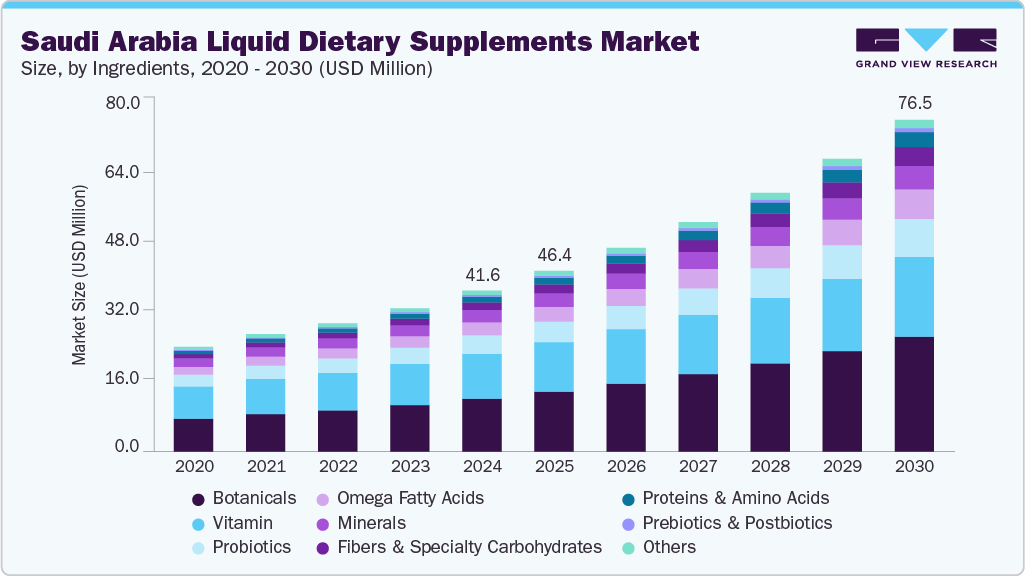
The Saudi Arabia liquid dietary supplements market size was estimated at USD 41.6 million in 2024 and is projected to reach USD 76.5 million by 2030, growing at a CAGR of 10.5% from 2025 to 2030. Rising health awareness among consumers, driven by lifestyle-related health issues such as obesity, diabetes, and vitamin deficiencies, is increasing the demand for convenient and effective nutrition solutions.
Key Market Trends & Insights
- By ingredients, botanicals accounted for the largest share of 31.2% in 2024.
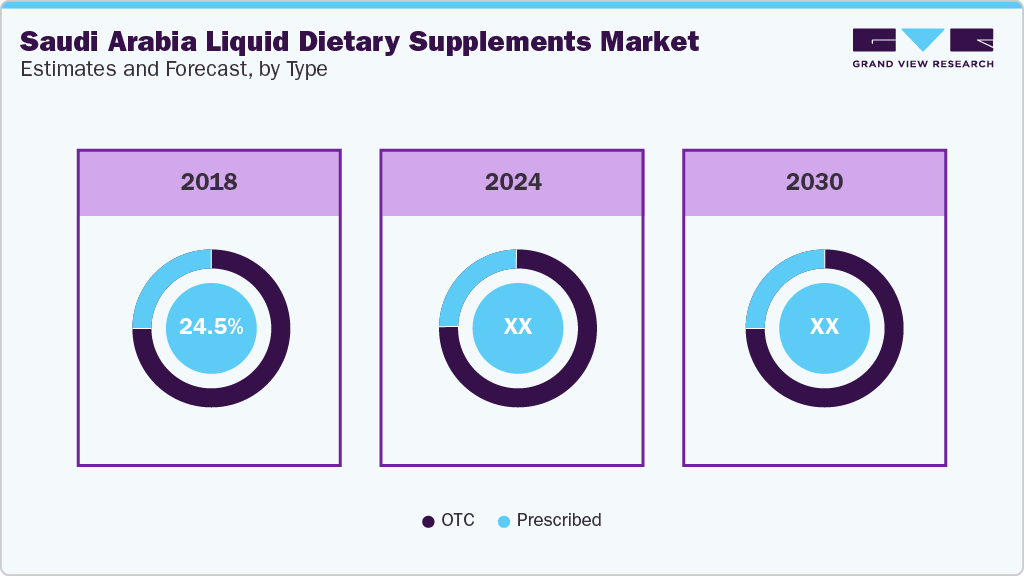
- By type, OTC accounted for the largest revenue share of 75.1% in 2024.
- By application, bone & joint health dominated the market, with a share of 12.2% in 2024.
Market Size & Forecast
- 2024 Market Size: USD 41.6 Million
- 2030 Projected Market Size: USD 76.5 Million
- CAGR (2025-2030): 10.5%
Liquid supplements are gaining popularity because they are easier to consume and absorb, especially among children, seniors, and individuals with swallowing difficulties. Saudi consumers are more willing to spend money on health and wellness products, including liquid supplements. This higher income level encourages investment in preventive healthcare and supports the demand for convenient, easy-to-consume nutritional solutions. For instance, according to the 2023 Household Income and Consumption Expenditure Statistics, the average monthly disposable income across Saudi Arabia was USD 3,155 (SAR 11,839). Saudi households had a higher average of USD 4,812 (SAR 18,056), while non-Saudi households had an average of USD 1,447 (SAR 5,428).
Advancements in technology and access to personalized health data have increased consumer awareness of individual nutritional needs. As a result, there is growing demand for customized supplements tailored to specific health concerns or deficiencies. Ready-to-drink (RTD) dietary supplements are gaining popularity due to their flexibility in dosage adjustment, making them well-suited for personalized nutrition. In addition, liquid supplements made from natural ingredients and free from artificial additives are increasingly viewed as healthier alternatives to traditional formats. This shift in consumer preference is contributing significantly to the growth of the liquid dietary supplements market.
Consumer Insights
Multiple factors are shaping Saudi Arabia’s liquid dietary supplements market growth. Adults, particularly millennials and health-conscious Gen X consumers, are increasing
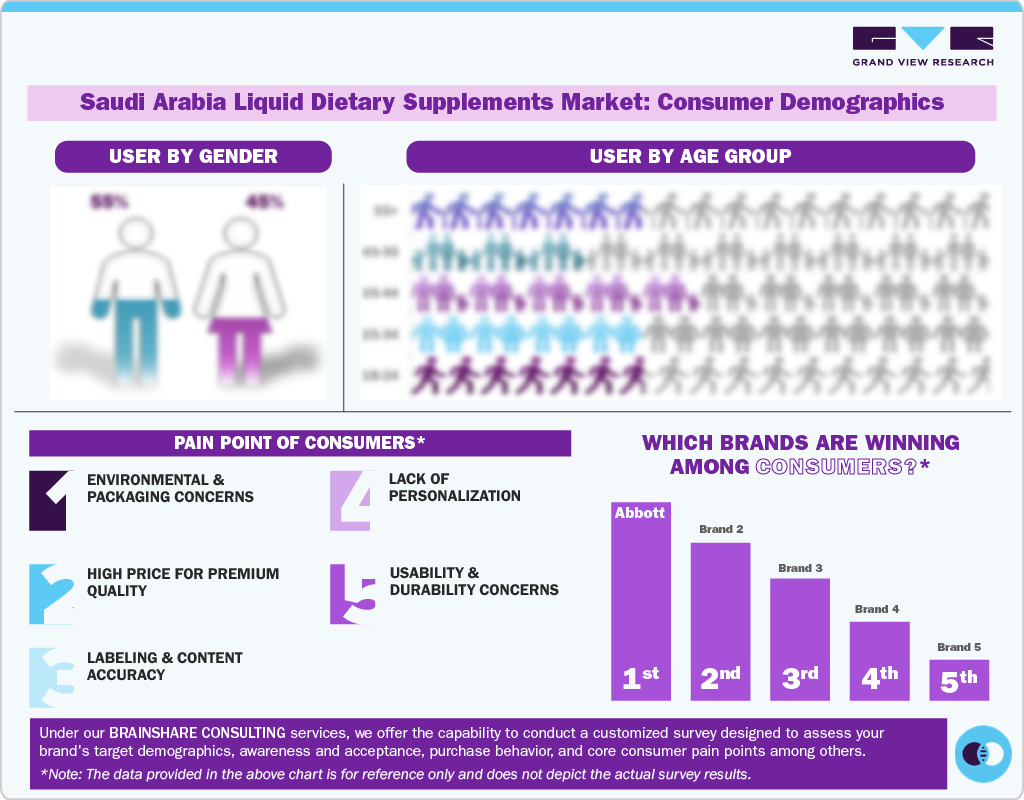
ly focused on preventive health and wellness, fueling demand for liquid multivitamins, omega-3 fatty acids, and immune-boosting supplements. Rising awareness of lifestyle-related diseases also drives interest in products that support energy, digestion, and heart health
Consumer Demographics
Higher-income groups are increasing their willingness to invest in premium, specialized supplements, encouraged by growing disposable income and a rising preference for convenient, fast-absorbing liquid formats. Consumers are also becoming more selective, favoring clean-label, sugar-free, and naturally formulated products.
Urbanization continues to play a key role, with cities such as Riyadh, Jeddah, and Dammam being hubs for health-aware consumers. For instance, according to the Ministry of Municipal and Rural Affairs, around 82.1% of Saudi Arabia's population lives in urban areas, while 17.9% resides in rural regions. Urban residents typically have greater access to retail pharmacies, specialty stores, and online platforms, which promotes wider availability and stronger adoption of dietary supplements. The metropolitan population's growing engagement with fitness, wellness trends, and personalized nutrition further drives market expansion.
Ingredient Insights
The botanicals segment dominated the Saudi Arabia liquid dietary supplements market and accounted for a revenue share of 31.2% in 2024. This growth is driven by increasing consumer preference for natural and plant-based health solutions. As awareness of the health benefits of herbal ingredients rises, more people are turning to botanical supplements for immunity, digestion, and overall wellness. In addition, the perception that botanical products are safer and have fewer side effects than synthetic alternatives further boosts demand.
The proteins & amino acids segment is likely to experience the fastest growth during the forecast period, owing to the rising health consciousness and increased focus on fitness and muscle recovery, especially among the younger population and fitness enthusiasts. According to the publication of The General Authority for Statistics (GASTAT), the percentage of adults (15+) engaging in at least 150 minutes of weekly physical activity rose from 20% in 2019 to 29.7% in 2021 across all regions of KSA. This growth reflects increasing public awareness and enhanced infrastructure supporting active lifestyles.
As more consumers adopt active lifestyles, there is a growing demand for high-protein supplements that support muscle building, energy, and overall performance. In addition, the popularity of gyms, sports clubs, and wellness centers in urban areas drives the consumption of liquid protein products due to their convenience and faster absorption. The growing awareness of the role of amino acids in improving endurance and reducing fatigue also supports the segment’s rapid expansion.
Type Insights
The OTC segment accounted for a revenue share of 75.5% in 2024. There is an increasing preference for self-care and easy access to health products without prescriptions. The rising awareness of preventive healthcare and the availability of a wide range of OTC liquid supplements across pharmacies, supermarkets, and online platforms has boosted demand. Consumers find OTC products convenient, cost-effective, and time-saving, especially for general wellness, immunity, and energy-boosting needs. Furthermore, government initiatives promoting health awareness and the growing trust in OTC brands have further supported the segment’s strong market presence.
The prescribed liquid dietary supplements segment is expected to grow at the fastest CAGR from 2025 to 2030. The increasing prevalence of chronic diseases, nutritional deficiencies, and aging-related health concerns requires medical supervision. According to the International Diabetes Federation's Diabetes Country Report 2000-2050, the number of people living with diabetes (20-79 years) in Saudi Arabia increased notably from approximately 2,760,000 in 2011 to an estimated 5,345,000 in 2024. This rising prevalence of diabetes, particularly among the aging population, reflects a broader trend in chronic health conditions such as arthritis and cardiovascular diseases.
Physicians are increasingly recommending liquid supplements for patients who have difficulty swallowing pills, such as the elderly, post-surgical patients, and individuals with gastrointestinal disorders. In addition, the growing awareness among healthcare professionals about the benefits of targeted nutrition through medically prescribed supplements supports this trend. As the healthcare infrastructure continues to improve and access to specialist care increases across the country, the demand for prescription-based, clinically validated liquid supplements is expected to rise significantly.
Application Insights
Thebone & Joint health segment dominated the market with a revenue share of 12.2% in 2024, owing to the increasing incidence of bone-related conditions such as arthritis, osteoporosis, and joint pain, particularly among the aging population. Sedentary lifestyles and vitamin D deficiency further weaken bone health. As a result, there is a rising demand for supplements containing calcium, vitamin D, collagen, and other nutrients that support bone strength and joint flexibility. In addition, growing public awareness about long-term mobility and quality of life, along with physician recommendations, has driven consumers to opt for convenient and fast-absorbing liquid supplements in this category.
The prenatal health segment is expected to grow at the fastest CAGR of 15.7% from 2025 to 2030. Maternal and fetal nutrition awareness among expectant mothers and healthcare providers is increasing. The Saudi government’s focus on improving maternal healthcare and reducing birth-related complications has led to greater emphasis on prenatal nutrition. Liquid supplements are favored for their ease of consumption, better absorption, and ability to deliver essential nutrients such as folic acid, iron, calcium, and DHA, which are crucial during pregnancy.
End Use Insights
The adults segment accounted for the largest market share, 62.9%, in 2024. This growth is driven by the rising prevalence of chronic diseases like diabetes, and vitamin deficiencies have further fueled demand. The expanding elderly population and strong retail and e-commerce distribution channels have made these supplements more accessible.
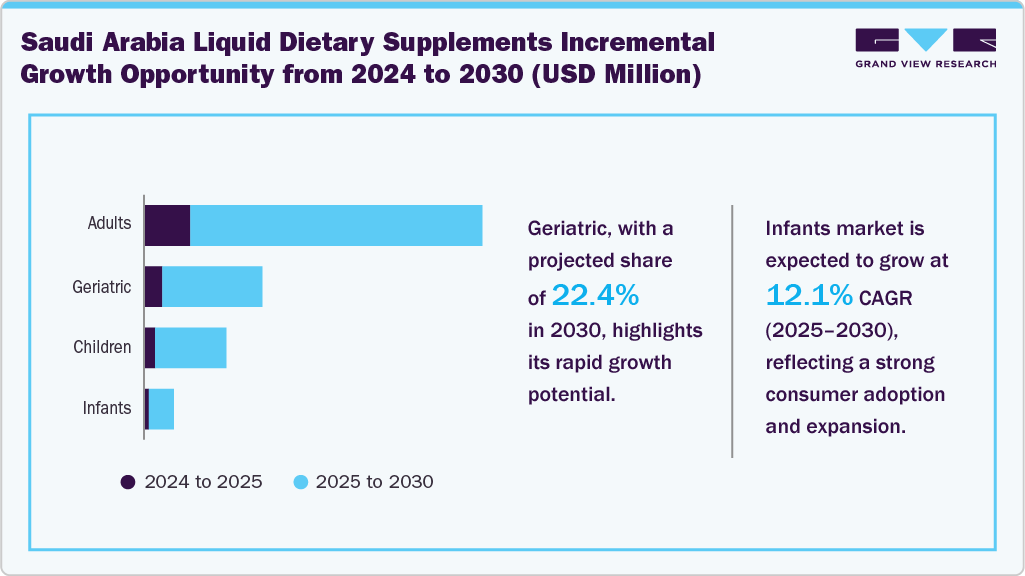
The infant segment is expected to grow at the fastest compound annual growth rate (CAGR) during the forecast period. This growth is primarily fueled by rising parental awareness of the importance of early childhood nutrition and supporting healthy development in the early years. Parents are increasingly proactive in choosing high-quality nutritional products that strengthen immunity, enhance brain development, and improve infant digestive health.
Distribution Channel Insights
The offline distribution segment held the largest revenue share of the market in 2024. The growth of offline channels is driven by several factors, including strong consumer trust in physical stores, particularly pharmacies, where buyers seek professional advice before purchasing supplements. In 2024, BinDawood Holding opened 10 new stores across Saudi Arabia. The expansion includes five supermarkets, three express stores, and two hypermarkets.
Many Saudi consumers prefer in-person shopping to examine product labels, verify authenticity, and receive personalized recommendations, especially for health-related products. The direct-to-consumer and MLM (multi-level marketing) model also plays a significant role, as it leverages personalized sales approaches and loyalty networks, which are highly effective in the region. With rising health awareness and government support for retail expansion, offline channels are expected to remain dominant.
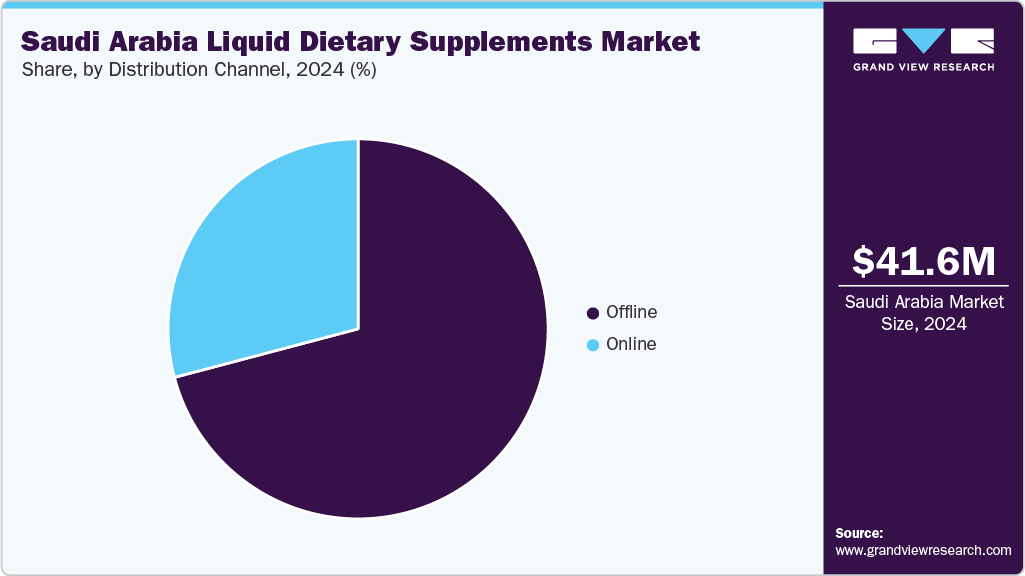
The online distribution segment is projected to experience the fastest CAGR from 2025 to 2030. This growth is driven by the increasing internet penetration, smartphone usage, and consumer preference for convenience. E-commerce platforms offer various products, easy price comparisons, and home delivery, which appeals to busy consumers. The growing trust in digital payment systems and secure transactions has encouraged more people to shop online. In addition, online platforms often provide discounts, subscriptions, and personalized recommendations, further boosting sales. As younger, tech-savvy consumers drive demand for health products, the online segment is expected to expand rapidly.
Key Saudi Arabia Liquid Dietary Supplements Company Insights
Some of the key companies operating in Saudi Arabia liquid dietary supplements industry include Nestlé, Abbott, GSK plc., and others.
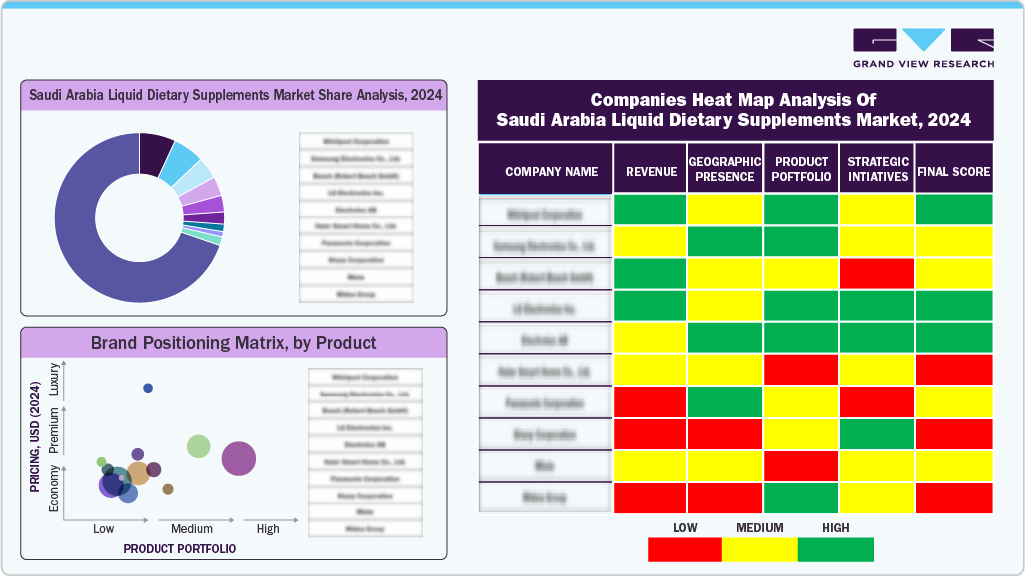
- Abbott is a global healthcare company specializing in diagnostics, medical devices, and branded generic pharmaceuticals. It also develops science-based nutritional products supporting health across all life stages, from infants to senior care.
Key Saudi Arabia Liquid Dietary Supplements Companies:
Recent Developments
- In February 2023, OptiBiotix Health Plc, a global leader in microbiome modulation, partnered with Nahdi Medical Co. to launch its science-backed weight management range, GoFigure, in Saudi Arabia.
Saudi Arabia Liquid Dietary Supplements Market Report Scope
|
Report Attribute
|
Details
|
|
Market size value in 2025
|
USD 46.4 million
|
|
Revenue forecast in 2030
|
USD 76.5 million
|
|
Growth rate
|
CAGR of 10.5% from 2025 to 2030
|
|
Base year for estimation
|
2024
|
|
Historical data
|
2018 - 2023
|
|
Forecast period
|
2025 - 2030
|
|
Quantitative units
|
Revenue in USD million and CAGR from 2025 to 2030
|
|
Report coverage
|
Revenue forecast, company ranking, competitive landscape, growth factors, trends
|
|
Segments covered
|
Ingredients, type, application, end use, distribution channel, country
|
|
Key companies profiled
|
Nestlé, Abbott, GSK plc.
|
|
Customization scope
|
Free report customization (equivalent up to 8 analysts working days) with purchase. Addition or alteration to country, regional & segment scope.
|
|
Pricing and purchase options
|
Avail customized purchase options to meet your exact research needs. Explore purchase options
|
Saudi Arabia Liquid Dietary Supplements Market Report Segmentation
This report forecasts revenue growth at the country level and provides an analysis of the latest industry trends in each of the sub-segments from 2018 to 2030. For this study, Grand View Research has segmented the Saudi Arabia liquid dietary supplements market report based on ingredients, type, application, end use, and distribution channel:
-
Ingredients Outlook (Revenue, USD Million, 2018 - 2030)
-
Type Outlook (Revenue, USD Million, 2018 - 2030)
-
Application Outlook (Revenue, USD Million, 2018 - 2030)
-
Bone & Joint Health
-
Gastrointestinal Health
-
Immunity
-
Cardiac Health
-
Diabetes
-
Anti-cancer
-
Lungs Detox/Cleanse
-
Skin/Hair/Nails
-
Sexual Health
-
Brain/Mental Health
-
Insomnia
-
Menopause
-
Anti-aging
-
Prenatal Health
-
Others
-
End Use Outlook (Revenue, USD Million, 2018 - 2030)
-
Adults
-
Millennials
-
Male
-
Female
-
Pregnant Women
-
Non-pregnant Women
-
Gen X
-
Male
-
Female
-
Pregnant Women
-
Non-pregnant Women
-
Gen Z
-
Male
-
Female
-
Pregnant Women
-
Non-pregnant Women
-
Boomers
-
Geriatric
-
Children
-
Infants
- Distribution Channel Outlook (Revenue, USD Million, 2018 - 2030)

 Download Sample Report