
- Home
- »
- Homecare & Decor
- »
-
Sauna Market Size, Share & Trends, Industry Report, 2033GVR Report cover

Sauna Market (2026 - 2033) Size, Share & Trends Analysis Report By Product (Traditional Sauna, Infrared Sauna, Electric Sauna, Steam Saunas/Rooms), By Application (Residential, Commercial), By Region, and Segment Forecasts
Market Size, 2025
$954.2MMarket Estimate, 2026
$1,008.0MMarket Forecast, 2033
$1,556.9MCAGR, 2026–2033
6.4%Sauna Market Summary
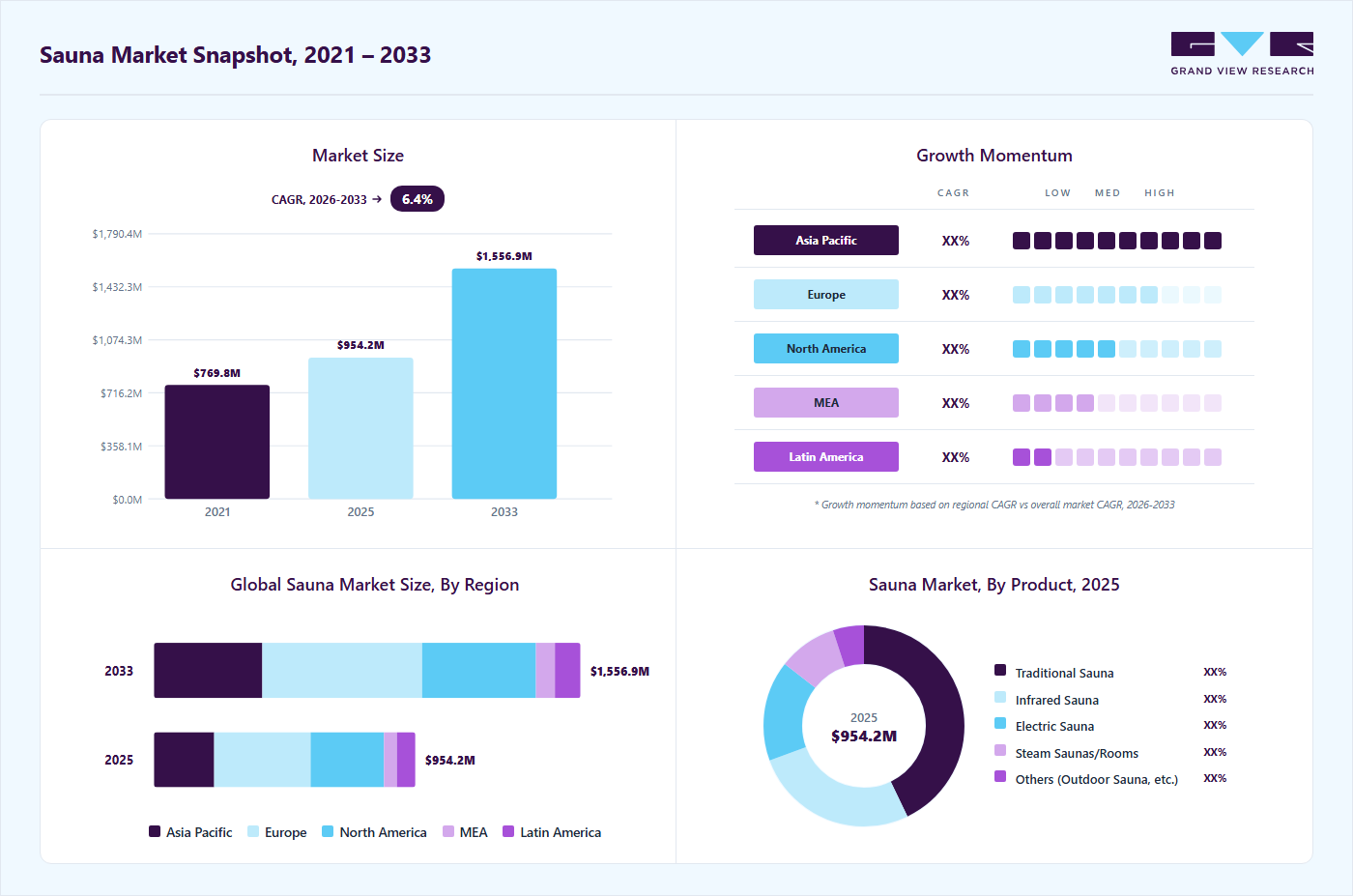
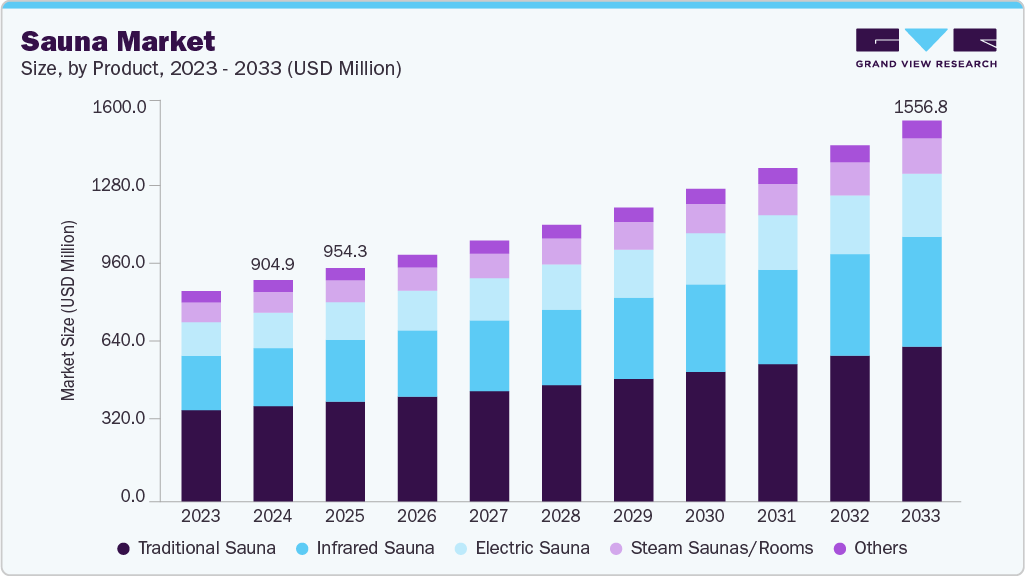
The global sauna market size was valued at USD 954.2 million in 2025 and is projected to grow from USD 1008.0 million in 2026 to USD 1,556.9 million by 2033, at a CAGR of 6.4% from 2026 to 2033. The Europe sauna market held the largest share of 36.9% of the global market in 2025. The global demand for saunas is driven by several key factors that underscore the convergence of wellness trends, technological advancements, and evolving consumer preferences.
 Source: Grand View Research, IR Documents, Primary Interviews, Paid DatabasesTo learn more about this report,
 Download Free Sample Report
 Key Market Trends & Insights
- By product: Traditional sauna held the largest market share of 42.79% in 2025.
- By product: Infrared saunas are experiencing significant growth, projecting a CAGR of 7.5% from 2026 to 2033.
- By application: Residential segment held the largest market share of 58.92% in 2025.
- By application: Commercial segment is experiencing significant growth with a projected CAGR of 7.0% from 2026 to 2033.
Regional Highlights
- Largest regional market: Europe ( 36.9% revenue share, 2025)
- Fastest-growing regional market: Asia Pacific (highest CAGR, 2026-2033)
- The sauna industry in China is anticipated to witness a CAGR of 8.5% from 2026 to 2033.
Market Size & Forecast
- Market size in 2025: USD 954.2 Million
- Estimated market size in 2026: USD 1008.0 Million
- Projected market size by 2033: USD 1,556.9 Million
- CAGR (2026-2033): 6.4%
Three ways to get this report
Buy it, customize it, or ask a question.Ask an Analyst
Analyst response in 1 business day
- AccessReport author, directly
- Reply timeWithin 1 working day
- No sales callDirect answer only
- FormatEmail reply
- CostFree, no cost
Get the Full Report
What the study covers
- FormatsPDF · Excel · Dashboard
- Timeline2026–2033 annual, 2025 base
- Coverage20+ countries, 5 regions
- Companies10+ key players profiled
Customize the Report
20% free customization
- IncludeCountries, segments, points
- TailorTo your product definition
- ExtendDeeper competitor detail
- OrA fully bespoke study
- Turnaround5–10 working days
Modern consumers are increasingly prioritizing holistic health approaches, which include stress reduction, detoxification, and overall well-being. Saunas, renowned for their benefits in promoting relaxation, improving cardiovascular health, and aiding muscle recovery, are becoming a staple in both personal and commercial wellness routines. This heightened awareness of health benefits is propelling demand in various segments, including residential, hospitality, and fitness industries.Technological innovations in sauna design and functionality are also playing a crucial role in expanding market reach. The development of advanced heating technologies, such as infrared and hybrid systems, has broadened the appeal of saunas by offering more efficient, customizable, and energy-saving solutions. These innovations cater to diverse consumer needs, from traditional high-heat enthusiasts to those seeking gentler, therapeutic heat experiences. Enhanced digital controls and smart home integrations are further driving adoption, making saunas more user-friendly and accessible and increasing their appeal across demographics.
 To learn more about this report, Download Free Sample Report
 The hospitality sector's adoption of wellness amenities, including saunas, is another significant contributor to the global market growth. Hotels, resorts, and luxury accommodations are increasingly incorporating saunas into their wellness offerings to attract health-conscious travelers. This trend is particularly pronounced in high-end and boutique hotels where personalized wellness experiences are a key differentiator. By providing state-of-the-art sauna facilities, these establishments enhance their service portfolio, thereby boosting occupancy rates and customer satisfaction.
According to the statistics published by Finland Toolbox, sauna usage in the country is deeply ingrained in the culture, with 90% of the population engaging in sauna sessions at least once weekly, and 40% participating multiple times per week. This consistent usage not only promotes a culture of wellness and relaxation but also enhances global awareness and adoption of sauna experiences. The cultural prevalence of sauna usage stimulates innovation in sauna technologies and services, catering to varied consumer preferences and expanding market opportunities worldwide.
Expanding urbanization and rising disposable incomes in emerging markets are creating a new consumer base in the sauna and spa market. In regions such as Asia-Pacific and Latin America, the growing middle class is increasingly spending on lifestyle and wellness products, boosting demand across the sauna and spa market. The rising popularity of home wellness installations, including saunas, reflects this shift as consumers aim to recreate spa-like experiences at home. This trend is encouraging manufacturers in the sauna and spa market to innovate and introduce cost-effective, space-efficient sauna solutions tailored to compact urban living spaces.
To fortify their global presence, manufacturers and key players in the sauna industry are strategically forming partnerships and acquiring technology-integrated firms to bolster supply chain resilience. For instance, in May 2025, Sunlighten, a long-established leader in infrared saunas and wellness tech, acquired key assets from cold-therapy brand Ice Barrel, forming a new subsidiary to expand into contrast therapy, a combination of heat and cold treatments aimed at enhancing recovery, healthspan, and overall well-being. The deal brings cold-water immersion products into Sunlighten’s ecosystem, aligns digital content and protocols across both brands, and supports plans for experiential wellness centers, underscoring a broader push into comprehensive self-care solutions.
Market Dynamics
The growing integration of saunas in preventive healthcare and sports recovery programs is a key market driver, with healthcare professionals, physiotherapy centers, and sports organizations increasingly adopting sauna-based therapies for their perceived role in supporting circulation, inflammation management, pain relief, and post-exercise recovery.
Scientific studies, including long-term cohort evidence such as the Finnish KIHD study, report associations between regular sauna use and favorable cardiovascular outcomes, while clinical reviews suggest potential benefits in vascular function, blood pressure regulation, and stress-related recovery responses. Although largely observational, this evidence base is contributing to broader recognition of sauna use in wellness-focused healthcare and sports recovery applications, supporting wider adoption across these segments.
High installation and maintenance costs act as a key restraint in the sauna industry as modern systems especially infrared and hybrid models require significant upfront investment along with ongoing expenses for energy consumption ventilation and periodic servicing. These cost factors make adoption less feasible for price sensitive residential users and small wellness facilities while also increasing the total cost of ownership for commercial operators thereby limiting broader market penetration.
Consumer Insights
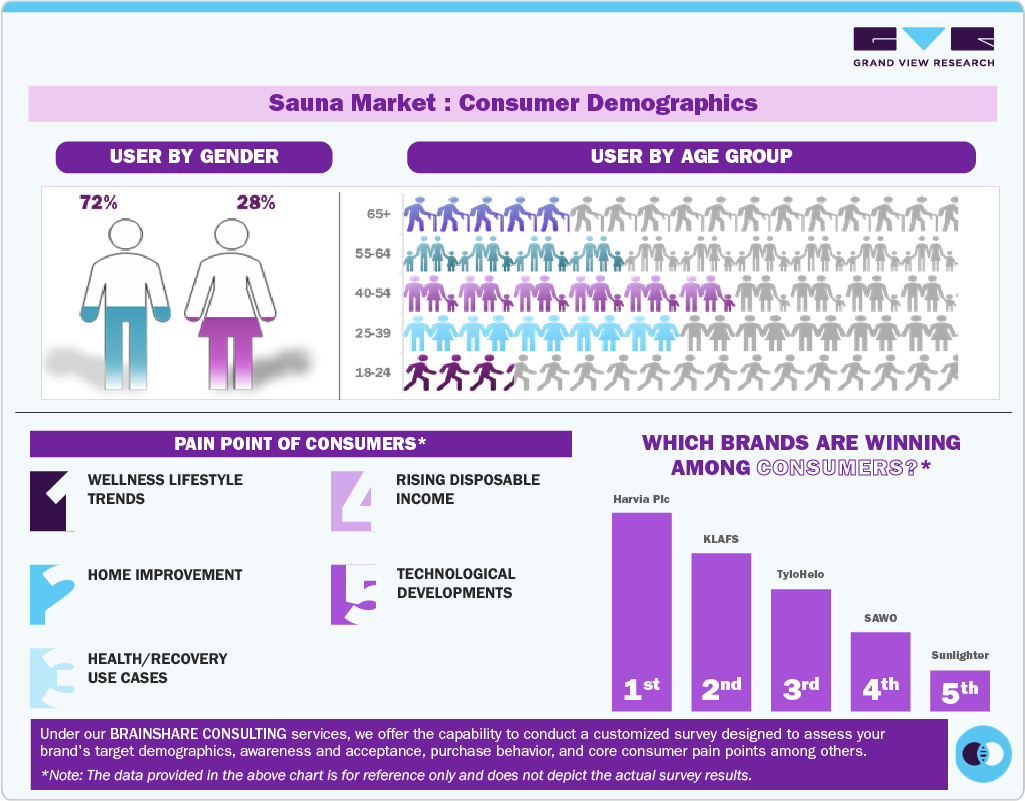
Sauna user demographics exhibit apparent heterogeneity by both age and gender across geographies. Nordic health and population studies indicate a strong tradition of regular sauna bathing among middle-aged and older adults, with participation rates often higher among men in countries such as Finland and Sweden; for example, some Nordic studies report a greater proportion of male sauna bathers than female bathers when measured by monthly frequency. Conversely, survey data from North America suggest a different profile in which female respondents, particularly those aged 30-45, represent a substantial share of the sauna-using population. Across studies, the modal user tends to be in middle adulthood (roughly 30-65 years), with lower relative usage reported at the extremes of age (young adults under 25 and the very elderly). However, older cohorts continue to engage with sauna bathing in many markets.
 To learn more about this report, Download Free Sample Report
 Product Insights
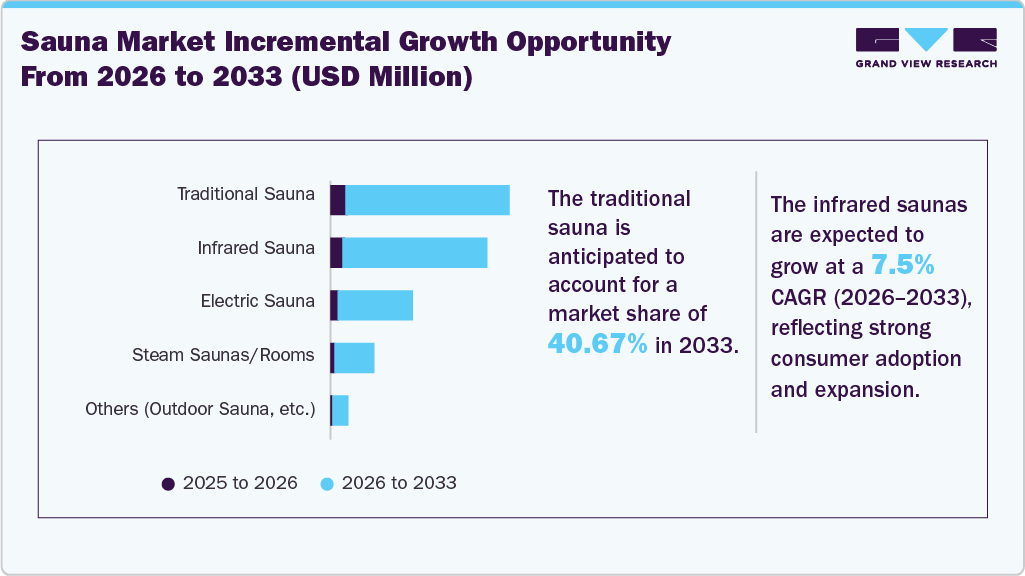
Traditional sauna held the largest revenue share of 42.79% in 2025. The demand for traditional saunas is surging due to a combination of factors, including increased awareness of their health benefits, cultural influence, and the rising trend of wellness tourism. Traditional saunas offer a unique and authentic experience that promotes relaxation, detoxification, and improved circulation, which appeals to health-conscious consumers. In addition, the integration of traditional saunas in luxury hotels, spas, and wellness centers as premium amenities enhances their market appeal. Growing disposable incomes and a heightened focus on holistic wellness practices are further driving the adoption of traditional saunas in both residential and commercial settings worldwide.
 To learn more about this report, Download Free Sample Report
 The demand for infrared saunas is anticipated to witness a CAGR of 7.5% from 2026 to 2033. The demand for these products is growing on account of their perceived health benefits, energy efficiency, and user-friendly design. Infrared saunas operate at lower temperatures than traditional saunas, making them more comfortable for a wider range of users while still offering benefits such as improved circulation, pain relief, and detoxification. Their relatively lower operating costs and easier installation process appeal to both residential consumers and commercial establishments. In January 2026, Oak Haven Massage launched private 25-minute infrared sauna sessions at select locations in Austin and San Antonio, expanding its wellness services beyond massage and sports recovery. The new offering aimed to help clients relax, support muscle recovery, and improve overall well-being.
Application Insights
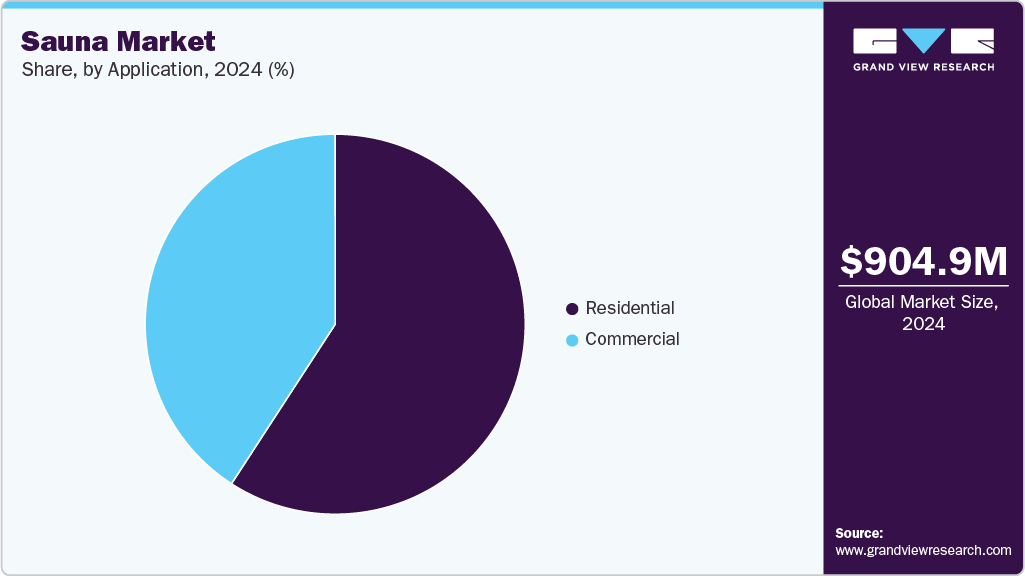
The demand for saunas in the residential sector held the largest revenue share in 2025, accounting for a share of 58.92%. The growth is driven by heightened consumer focus on health, wellness, and home-based relaxation solutions. As awareness of the benefits of regular sauna use, such as improved cardiovascular health, stress reduction, and detoxification, grows, more homeowners are investing in saunas to enhance their wellness routines. In addition, advancements in technology have led to more compact, affordable, and user-friendly sauna models, such as infrared and hybrid saunas, which cater to varying space and budget constraints. The rising trend of home remodeling and the desire for personal relaxation spaces further contribute to the increased adoption of residential saunas. Enhanced marketing and the availability of customizable options also play a significant role in driving consumer demand.
 To learn more about this report, Download Free Sample Report
 The demand for saunas in the commercial sector is anticipated to witness a CAGR of 7.0% from 2026 to 2033. In the commercial segment, the rising demand for saunas is driven by the growing emphasis on wellness and luxury amenities in various business establishments. Gyms, spas, hotels, and wellness centers are increasingly incorporating saunas to offer a comprehensive range of relaxation and therapeutic services that attract and retain clients. The integration of saunas enhances the value proposition of these facilities, catering to the evolving expectations of consumers who seek high-quality, holistic wellness experiences during their leisure time or while traveling.
The commercial and institutional sectors are recognizing the benefits of saunas in promoting employee well-being and productivity. Corporate wellness programs are increasingly incorporating saunas to enhance workplace health initiatives, reduce stress, and improve overall employee satisfaction. Similarly, sports complexes and rehabilitation centers utilize saunas for their therapeutic benefits, aiding in physical recovery and performance enhancement. This institutional adoption underscores the versatility and broad applicability of saunas, contributing to their sustained demand across diverse market segments globally.
Regional Insights
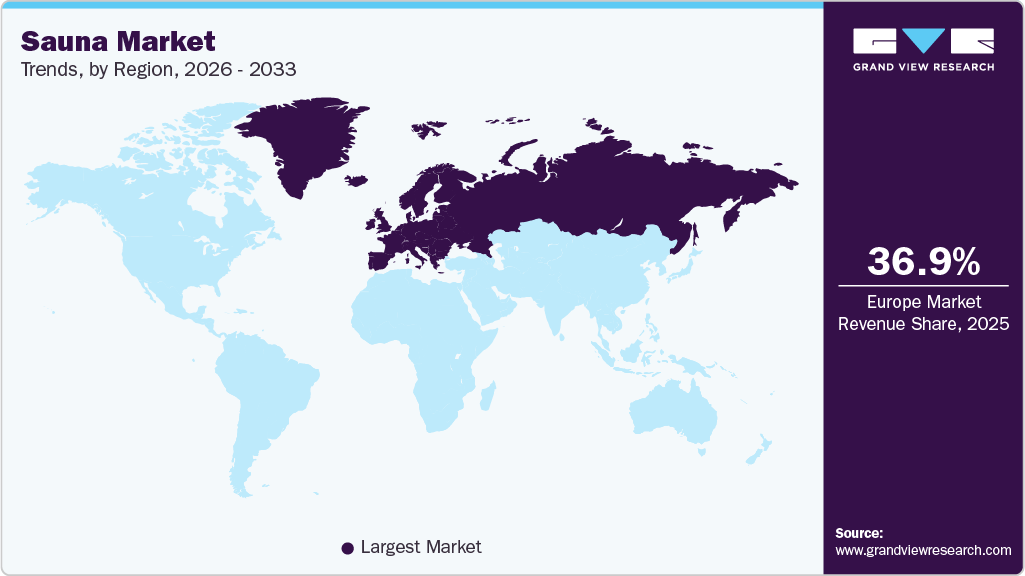
The Europe sauna industry held the largest revenue share of 36.89% in the global sauna industry in 2025. Sauna use is an integral part of daily life in many European countries, such as Finland and Sweden, where saunas are deeply embedded in the culture. According to UNESCO Intangible Cultural Heritage, Finland, with a population of 5.5 million, boasts 3.3 million saunas, ensuring widespread accessibility for all residents. This extensive sauna infrastructure underscores the deep cultural significance of saunas in Finnish daily life and highlights their integration into the nation's lifestyle. The market benefits from a longstanding tradition of sauna use, combined with increasing consumer awareness of the health benefits of regular sauna sessions. In addition, the European wellness trend is driving innovations in sauna technology and design, enhancing the appeal of traditional and modern sauna solutions across residential and commercial sectors.
 To learn more about this report, Download Free Sample Report
 UK Sauna Market Trends
The sauna industry in the UK is anticipated to witness a CAGR of 7.4% from 2026 to 2033. Home and residential adoption is a key growth driver in the UK market, fueled by rising wellness awareness and the shift toward at-home self-care routines. Since the pandemic, consumers have increasingly invested in home spa upgrades, with compact indoor and garden sauna pods gaining popularity among urban homeowners. Infrared saunas, in particular, are witnessing strong demand due to their lower energy consumption, ease of installation, and suitability for smaller spaces. Higher disposable incomes, remote working lifestyles, and a desire for convenience are further encouraging households to integrate sauna facilities into their homes as part of long-term wellness investments.
The sauna industry in Germany held a revenue share of 15.88% in the European sauna industry in 2025. Sauna culture in Germany is deeply embedded in the country’s long-standing wellness and bathing traditions, making it more than just a relaxation activity; it is a structured ritual that strongly influences the sauna and spa market. Traditional Finnish-style saunas dominate the sauna and spa market landscape, characterized by high temperatures, wooden interiors, and practices such as the Aufguss ceremony, in which water infused with essential oils is poured over heated stones to intensify the heat and aroma. Public sauna etiquette, including norms for mixed-gender and textile-free bathing, reflects a cultural emphasis on authenticity, health, and therapeutic value rather than on luxury alone.
Asia Pacific Sauna Market Trends
The sauna industry in the Asia Pacific is anticipated to witness a CAGR of 7.7% from 2026 to 2033. The region's expanding wellness industry, including spas and fitness centers, is adopting saunas to cater to the rising consumer preference for comprehensive wellness experiences. In addition, the introduction of compact and affordable sauna models is making them accessible to a broader audience, contributing to market growth across diverse countries in the Asia Pacific region.
The sauna industry in China is anticipated to witness a CAGR of 8.5% from 2026 to 2033. Technology and experiential upgrades are becoming central growth elements in China’s sauna and spa market, as manufacturers and operators integrate smart controls, energy-efficient heating systems, and app-enabled temperature management to enhance convenience and personalization. Modern sauna units increasingly feature LED chromotherapy lighting, Bluetooth audio systems, aromatherapy integration, and digital monitoring panels, appealing to tech-savvy urban consumers seeking immersive wellness experiences. In commercial settings, spas and premium fitness clubs are combining sauna sessions with curated relaxation packages and recovery therapies, positioning the sauna not just as a heat room but as a digitally enhanced, holistic wellness experience.
The sauna industry in Japan is anticipated to witness a CAGR of 9.0% from 2026 to 2033. Japan’s sauna and spa market benefits strongly from the country’s deep-rooted bathing culture, shaped by centuries-old traditions of onsen (hot springs) and sento (public bathhouses). Regular communal bathing is culturally normalized as a practice for relaxation, purification, and social connection, making the adoption of modern saunas a natural extension of established wellness habits.
North America Sauna Market Trends
The sauna industry in North America held a 28.06% revenue share of the global sauna industry in 2025. As consumers increasingly prioritize health and relaxation, saunas are being integrated into home wellness spaces and commercial establishments like gyms and spas. The rise of wellness trends, coupled with growing disposable incomes and a culture that values health-oriented investments, is driving this demand. In addition, the availability of innovative and space-efficient sauna designs, such as infrared saunas that offer convenience and health benefits, is expanding the market's appeal to both residential and commercial consumers across the region.
The U.S. sauna industry is anticipated to witness a CAGR of 5.4% from 2026 to 2033. The increasing awareness of the therapeutic benefits of sauna use, including stress relief, improved circulation, and detoxification, is driving consumer interest. Moreover, the integration of saunas into luxury home renovations and high-end real estate projects is contributing to market growth. The U.S. sauna industry is also seeing a rise in commercial installations in fitness centers, hotels, and spas, where saunas are valued as premium amenities that enhance the overall customer experience and attract health-conscious consumers.
Central & South America Sauna Market Trends
The sauna industry in Central & South America is anticipated to witness a CAGR of 4.2% from 2026 to 2033. The expansion of hospitality and wellness tourism across the region is significantly supporting growth in the sauna and spa market, as resorts, boutique hotels, and urban luxury properties increasingly integrate sauna facilities to enhance guest experiences. Countries such as Brazil, Mexico, and Argentina are leveraging spa and sauna amenities as premium differentiators to attract both domestic and international wellness-focused travelers, positioning heat therapy and relaxation services as key components of modern hospitality offerings.
Middle East & Africa Sauna Market Trends
The sauna industry in the Middle East & Africa is anticipated to witness a CAGR of 5.0% from 2026 to 2033. Rising health awareness among middle-class consumers, coupled with growing disposable incomes, is significantly boosting demand for saunas across major urban hubs. Younger and affluent demographics increasingly view sauna and spa experiences as essential components of stress management, preventive healthcare, and modern wellness lifestyles, supporting steady growth in premium urban wellness facilities.
Key Sauna Company Insights
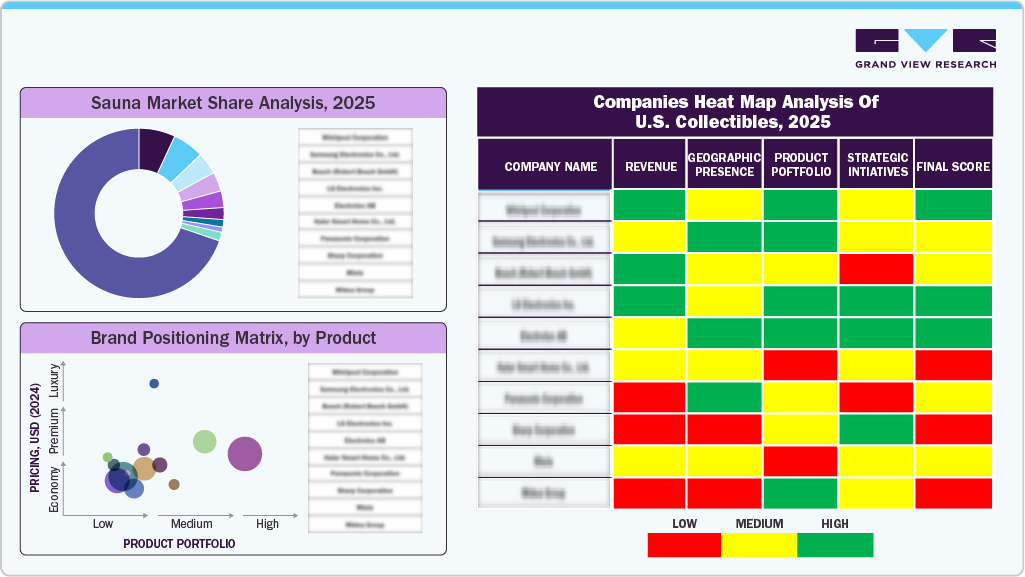
The competitive landscape of the sauna industry is characterized by a diverse and dynamic array of players vying for market share across multiple segments, including traditional, infrared, and steam saunas. Leading global manufacturers, such as Harvia Group, TyloHelo, and KLAFS, dominate the market with their extensive product portfolios, innovative technologies, and strong distribution networks. These industry leaders invest significantly in research and development to introduce cutting-edge designs and improve user experience, thereby maintaining their competitive edge.
 To learn more about this report, Download Free Sample Report
 In addition, regional players and niche manufacturers contribute to market fragmentation by offering specialized or customized solutions, catering to specific consumer preferences and regional demands. The market is further influenced by trends such as increased consumer focus on wellness, advancements in sauna technology, and the growing integration of saunas into residential and commercial wellness facilities. Competitive strategies include enhancing product differentiation, expanding market presence through strategic acquisitions, and leveraging digital marketing to capture a broader consumer base.
Key Sauna Companies:
The following key companies have been profiled for this study on the sauna market.
- Harvia Group
- KLAFS GmbH
- SAUNATEC
- TyloHelo Group
- Sauna360 Inc. (Masco Corporation)
- HUUM
- Syracuse Sauna King
- Effegibi
- Nordic Sauna
- Saunacore
Recent Developments
-
In January 2026, Oak Haven Massage launched private 25-minute infrared sauna sessions at select locations in Austin and San Antonio, expanding its wellness services beyond massage and sports recovery. The new offering aimed to help clients relax, support muscle recovery, and improve overall well-being.
-
In September 2025, Harvia plc announced the launch of its new control panel, the Fenix, alongside an upgraded mobile application, MyHarvia, which together aimed to deliver a more intuitive and connected sauna experience. The Fenix system incorporated smart learning features and predefined heating profiles, while the MyHarvia app provided remote control, usage statistics, and over-the-air updates. The company indicated that existing Harvia Xenio users could upgrade to Fenix via a simple plug-and-play installation rather than a full system replacement. These innovations were made available through Harvia’s global reseller network, encompassing Europe, North America, and other international markets.
-
In February 2025, KLAFS announced that it had expanded its U.S. portfolio by launching its first outdoor sauna, named TARAS. The new model featured sustainably sourced timber, full-glass front and back walls, triple-pane weather-resistant construction, and a freestanding heater with smart features. It was positioned to join the company’s existing indoor sauna series (ARISO, VALORA, S11) under Kohler Co.’s luxury wellness offerings. The brand emphasised that TARAS seamlessly blended premium design and performance to deliver a high-end wellness experience suitable for outdoor environments.
Sauna Market Report Scope
Report Attribute
Details
Market size in 2025
USD 954.2 million
Estimated market size in 2026
USD 1008.0 million
Projected market size by 2033
USD 1,556.9 million
Growth rate
CAGR of 6.4% from 2026 to 2033
Actuals
2021 - 2025
Forecast period
2026 - 2033
Quantitative units
Revenue in USD million and CAGR from 2026 to 2033
Report coverage
Revenue forecast, company ranking, competitive landscape, growth factors, and trends
Segments covered
Product, application, region
Regional scope
North America; Europe; Asia Pacific; Central & South America; Middle East & Africa
Country scope
U.S.; Canada; Mexico; UK; Germany; France; Italy; Spain; China; India; Japan; Australia & New Zealand; South Korea; Brazil; South Africa
Key companies profiled
Harvia Group; KLAFS GmbH; SAUNATEC; TyloHelo Group; Sauna360 Inc. (Masco Corporation); HUUM; Syracuse Sauna King; Effegibi; Nordic Sauna; Saunacore
Customization scope
Free report customization (equivalent up to 8 analysts working days) with purchase. Addition or alteration to country, regional & segment scope.
Pricing and purchase options
Avail customized purchase options to meet your exact research needs. Explore purchase options
Global Sauna Market Report Segmentation
This report forecasts revenue growth at global, regional & country levels and provides an analysis of the latest trends and opportunities in each of the sub-segments from 2021 to 2033. For this study, Grand View Research has segmented the sauna market report based on product, application, and region.
 To learn more about this report, Download Free Sample Report
 -
Product Outlook (Revenue, USD Million, 2021 - 2033)
-
Traditional Sauna
-
Infrared Sauna
-
Electric Sauna
-
Steam Saunas/Rooms
-
Others (Outdoor Sauna, etc.)
-
-
Application Outlook (Revenue, USD Million, 2021 - 2033)
-
Residential
-
Commercial
-
Wellness Centers/Gyms/Spas
-
Hotels/Hospitality
-
Hospitals/Medical Centers
-
Institutional
-
Others (Public Bathhouses and Community Centers, etc.)
-
-
-
Regional Outlook (Revenue, USD Million, 2021 - 2033)
-
North America
-
U.S.
-
Canada
-
Mexico
-
-
Europe
-
UK
-
Germany
-
France
-
Italy
-
Spain
-
-
Asia Pacific
-
China
-
India
-
Japan
-
Australia & New Zealand
-
South Korea
-
-
Central & South America
-
Brazil
-
-
Middle East & Africa (MEA)
-
South Africa
-
-
Delivered Customizations
This report has been delivered with the following In-depth customizations
Client Request
Customization Delivered
Value Adds
Product Type Performance and End Use Cross Analysis
Developed a detailed assessment of Traditional, Infrared, Electric, Steam Saunas and Others across key applications including Residential, Wellness Centers, Hotels, Hospitals, and Institutional segments. The analysis evaluates adoption intensity and demand concentration by product type within each end use category.
Enables stakeholders to identify high-performing product types within each application segment, supporting targeted product development, capacity planning, and demand driven portfolio optimization.
Pricing and Adoption Barrier Assessment
An evaluation of pricing dynamics across sauna types along with analysis of key adoption barriers such as installation complexity, space requirements, and energy consumption across residential and commercial users.
Provides actionable insights into the development of tiered pricing strategies and cost-optimized product designs to improve penetration in price sensitive and space constrained markets.
Competitive Landscape and Facility Integration Study
An analysis of leading sauna providers and their integration strategies across hospitality chains, wellness centers, and healthcare facilities, including bundling with spa and recovery services.
Delivers strategic insights into competitive positioning and partnership opportunities, enabling companies to strengthen B2B relationships and expand presence in high value commercial wellness ecosystems.
Frequently Asked Questions About This Report
The global sauna market size was valued at USD 954.2 million in 2025 and is estimated at USD 1008.0 million for 2026.
Key factors include convergence of wellness trends, technological advancements, and evolving consumer preferences.
Europe dominated with a 36.9% revenue share in 2025.
Asia Pacific is the fastest-growing region over the forecast period.
The global sauna market is expected to grow at a CAGR of 6.4% from 2026 to 2033, reaching USD 1,556.9 million.
the traditional sauna held the largest revenue share of 42.79% in 2025, while infrared saunas is the fastest-growing segment.
The residential sector dominated the market in 2025, while commercial sector is the significant-growing area.
Key players include Harvia Group; KLAFS GmbH; SAUNATEC; TyloHelo Group; Sauna360 Inc. (Masco Corporation); HUUM; Syracuse Sauna King; Effegibi; Nordic Sauna; Saunacore.
About the Author(s)
Homecare & Decor Research Team
Consumer Goods · Homecare & DecorThis report was authored by the homecare & decor research team at Grand View Research - comprising two research analysts, one senior research analyst, and one industry expert - with specialized expertise in the homecare & decor segment of the consumer goods industry. All findings are based on proprietary consumer goods databases, executive interviews, and regulatory analysis, subject to internal peer review prior to publication.
Last Updated:
Speak to Analyst

Customize this report to your needs - add regions, segments, or data points, with 20% free customization.
Or view our licence options:


ISO 9001:2015 & 27001:2022 Certified
We are GDPR and CCPA compliant! Your transaction & personal information is safe and secure. For more details, please read our privacy policy.


