
- Home
- »
- Healthcare IT
- »
-
Scheduling Apps Market Size And Share Report, 2026-2033GVR Report cover

Scheduling Apps Market (2026 - 2033) Size, Share & Trends Analysis Report By Deployment (Cloud-Based, On-Premise), By Platform (Web-Based, Mobile Applications), By Application, By End User, By Region, And Segment Forecasts
Market Size, 2025
$663.1MMarket Estimate, 2026
$749.3MMarket Forecast, 2033
$1,813.1MCAGR, 2026–2033
13.5%Scheduling Apps Market Summary
The global scheduling apps market size was valued at USD 663.1 million in 2025 and is projected to grow from USD 749.3 million in 2026 to USD 1,813.1 million by 2033, at a CAGR of 13.5% from 2026 to 2033.North America market dominated the with a share of 45.9% in 2025. The market is driven by increasing workforce complexity, rising demand for real-time scheduling, and the growing adoption of mobile-first, AI-enabled scheduling platforms in healthcare and service industries.
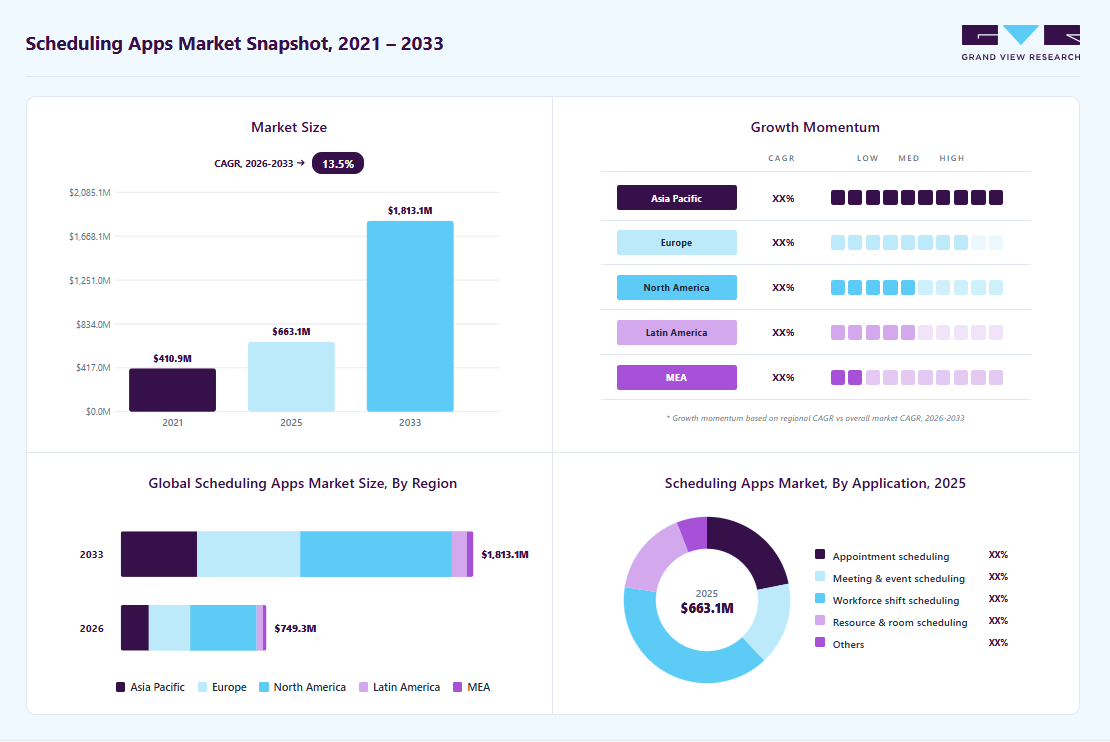 Source: Grand View Research, IR Documents, Primary Interviews, Paid DatabasesTo learn more about this report,
 Download Free Sample Report
 Key Market Trends & Insights
- By deployment: Cloud-based dominated the market, with a revenue share of 60.8% in 2025.
- By platform: Web-based segment held the largest market share of 65.9% in 2025.
- By application: Workforce shifts scheduling segment led the market with the largest revenue share of 39.5% in 2025.
- By end-user: Corporate enterprises led the market with the largest revenue share of 31.1% in 2025.
Regional Highlights
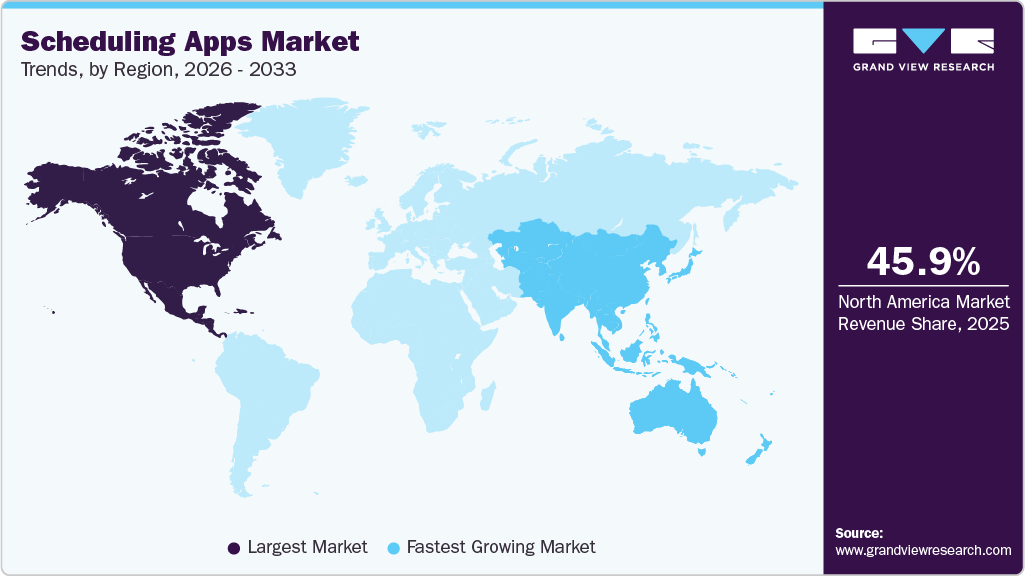
- Largest regional market: North America (45.9% in 2025 revenue share, 2025)
- Fastest-growing regional market: Asia Pacific (highest CAGR, 2026-2033)
- The scheduling apps market in the U.S. accounted for the largest market revenue share in North America in 2025.
Market Size & Forecast
- Market size in 2025: USD 663.1 Million
- Estimated market size in 2026: USD 749.3 Million
- Projected market size by 2033: USD 1,813.1 Million
- CAGR (2026-2033): 13.5%
Three ways to get this report
Buy it, customize it, or ask a question.Ask an Analyst
Analyst response in 1 business day
- AccessReport author, directly
- Reply timeWithin 1 working day
- No sales callDirect answer only
- FormatEmail reply
- CostFree, no cost
Get the Full Report
What the study covers
- FormatsPDF · Excel · Dashboard
- Timeline2026–2033 annual, 2025 base
- Coverage20+ countries, 5 regions
- Companies10+ key players profiled
Customize the Report
20% free customization
- IncludeCountries, segments, points
- TailorTo your product definition
- ExtendDeeper competitor detail
- OrA fully bespoke study
- Turnaround5–10 working days
Technological advancements such as mobile self service scheduling, AI-based shift optimization, and cloud integration are enhancing operational efficiency, employee empowerment, and resource utilization. Favorable organizational policies, digital transformation initiatives, and the need for flexible workforce management further accelerate adoption. In addition, the integration of analytics and real-time updates allows managers to optimize staffing, improve engagement, and reduce administrative burdens, fueling the growth of the global scheduling apps market.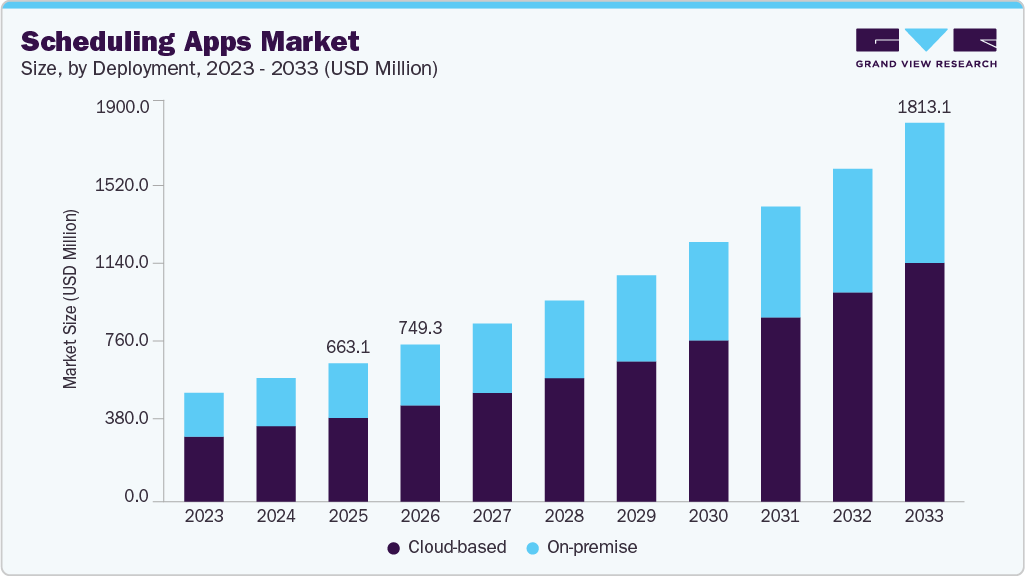 To learn more about this report, Download Free Sample Report
 Rising Digital Transformation Drives Operational Efficiency
The implementation of Online Appointment Scheduling (OAS) significantly improves operational efficiency and patient engagement, and fuels market growth. According to the NCBI article published in May 2025, a 20-month retrospective study conducted in an ophthalmology practice and university hospital covering 98,067 total appointments (16,894 in practice and 81,173 in hospital) showed continuous growth in OAS adoption, reaching an average of 22.8% of bookings in private practice and 7.2% in the hospital. Importantly, appointments booked online in the practice recorded a substantially lower no-show rate of 1.8% compared to 5.9% for offline bookings. The adoption of OAS reduced unused appointment slots from 22.7% to 10.3% and never-booked appointments from 8.6% to 1.6%, directly increasing overall appointment utilization. In the hospital setting, while online bookings alone did not reduce, the integration of SMS reminders reduced missed visits significantly (OR 0.40 for regular consultations). These findings reveal that digital scheduling combined with automated reminders enhances flexibility, optimizes resource allocation, and improves service efficiency. These key factors fuel the adoption of scheduling applications across healthcare and other service industries.
Table 1: Top 5 Countries With The Most Internet Users In (2025)
Rank
Country
Internet users
1
China
1,296,394,000
2
India
1,026,954,000
3
U.S.
323,888,000
4
Indonesia
230,448,000
5
Brazil
184,997,000
Source: Visual Capitalist in December 2025 & GVR
Rising Demand For Automation To Improve Hospital Workforce Efficiency And ROI
Particularly in healthcare, modern scheduling apps have proven their ability to significantly enhance operational performance while reducing costs. According to the Ezovion article published in May 2025, hospitals adopting automated professional scheduling systems report around a 30% reduction in scheduling conflicts, a 20% increase in employee satisfaction, and nearly a 35% improvement in on-time shift fulfillment, directly strengthening workforce reliability and care continuity. Compared with traditional scheduling methods that typically achieve only 60-70% shift fulfillment, modern platforms raise performance to approximately 90-95%, while cutting manual schedule adjustments from 3-4 hours per week to under 30 minutes. In addition, automation minimizes regulatory compliance errors and overtime expenses by maintaining accurate audit trails and fair workload distribution. These measurable efficiency gains and cost savings are accelerating adoption across hospitals and healthcare networks, making workforce scheduling solutions a high-impact digital investment area.
Table 2: Key Healthcare Professional Scheduling Software in 2025
Sr. No
Software
Key Features
Best For
Integration Support
1
Ezovion HRMS
AI-based scheduling, compliance tools, and dashboards
Multi-specialty hospitals and clinics
EHR, HRMS, Billing
2
Kronos Workforce Scheduler
Automated planning, labor law compliance
Enterprise healthcare networks
Payroll, ERP, EHR
3
ShiftWizard by HealthStream
Staff communication, credential tracking
Nursing departments and shift-heavy units
HR & Credentialing
4
QGenda
Real-time schedule access, credential rules
Physician groups and teaching hospitals
EHR, Time Tracking
5
Deputy for Healthcare
Mobile-friendly, AI shift optimizer
Small to mid-sized healthcare providers
POS, HR, Timesheets
Source: Ezovion & GVR
Real‑Time Scheduling Meets Increasing Workforce Complexity
Healthcare organizations manage complex staffing needs, including varying shifts, different clinical skills, rotations, and last-minute changes. Manual scheduling becomes inefficient and error-prone. Scheduling apps that offer real-time updates, mobile accessibility, and automated conflict resolution enable hospitals adapt quickly to unexpected absences or spikes in patient demand. This capability directly improves operational agility in dynamic clinical environments. According to the article published by Shyft Technologies, Inc. in June 2025, a metropolitan hospital system with eight facilities and over 15,000 staff implemented a digital scheduling solution with mobile access and analytics to replace its legacy scheduling methods. Within 18 months, the organization saw overtime expenses drop by 18%, saved approximately USD 4.2 million annually, and reduced unit managers' time spent on schedule creation by 60 %. Nurse satisfaction related to scheduling increased by 23 percentage points, and the Chief Nursing Officer specifically noted that mobile access transformed how teams collaborate and improved work-life balance because staff could check schedules and request swaps via phone. This proves how real-time scheduling tools directly address workforce complexity and enhance operational outcomes.
 To learn more about this report, Download Free Sample Report
 Mobile Access and Employee Empowerment Increase Adoption & Engagement
Mobile-first platforms empower employees, particularly in environments such as healthcare, where staff are constantly on the move. Mobile scheduling lets users view, swap, and manage shifts on their devices, enhancing autonomy and reducing administrative burden from managers. This flexibility contributes to better engagement, fewer no-shows, and improved morale because employees can interact with schedules without relying on paper systems or direct managerial intervention. According to the Shyft Technologies, Inc. article in June 2025, a regional healthcare system implemented digital scheduling across 12 facilities with mobile app access for providers. After rollout, the organization reported a 41% increase in employee satisfaction scores, a 28% reduction in agency staffing costs, and enhanced consistency in staffing patterns directly linked to self‑service scheduling tools that let staff select shifts, receive notifications, and manage requests on their phones. These improvements emphasize how mobile accessibility and scheduling autonomy drive adoption and deliver measurable workforce benefits.
AI‑Driven Scheduling Improves Nurse Work Quality and Satisfaction
The integration of AI-powered scheduling systems in healthcare is a key growth driver, as it optimizes shift assignments, balances workloads, and enhances nurse satisfaction. According to a Springer Nature article published in July 2025, at Inha University Hospital in South Korea, the IH-NASS system was implemented across 14 wards for 253 nurses, replacing manual scheduling. Compared to traditional methods, AI-generated schedules provided more consecutive off days, fewer unhealthy night off evening shifts, and better weekend coverage, significantly improving work-life balance. The study found that satisfaction with the AI scheduling system explained 27% of the variation in nurse job satisfaction scores, determining a measurable positive impact on workforce morale and retention. This case highlights how intelligent scheduling apps reduce administrative burden, optimize staffing, and enhance clinical staff well-being.
Market Concentration & Characteristics
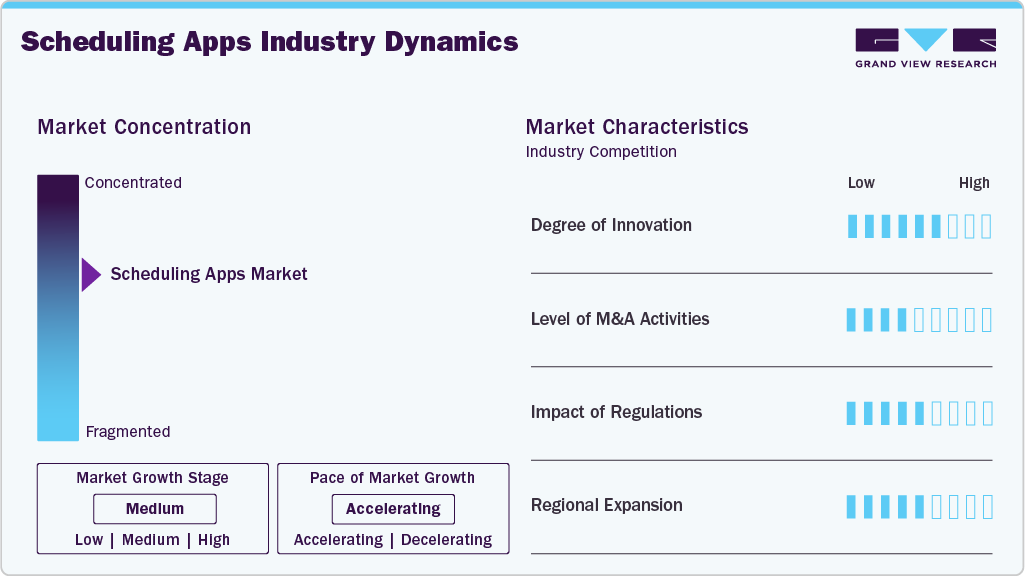
The scheduling apps industry is experiencing rapid innovation as intelligent automation and AI‑enhanced features make scheduling more proactive, context‑aware, and efficient. For instance, in October 2025, Google’s Gemini‑powered “Help me schedule” feature was launched, which uses AI to analyse email content and calendar availability to automatically suggest and insert appropriate meeting time slots directly into messages. This feature eliminates much of the traditional back‑and‑forth for scheduling meetings. It embeds intelligent scheduling assistance within everyday workflows, highlighting how scheduling technology is evolving from static calendars to predictive, user‑centric tools that save time and reduce friction.
The scheduling apps market is increasingly modeled by strategic integrations of AI‑powered scheduling features into mainstream productivity platforms, enhancing how users coordinate meetings and work. In September 2025, Microsoft updated Microsoft 365 Copilot in Outlook to allow users to conversationally schedule meetings directly within the app using natural language, where Copilot analyses participants’ calendars, suggests times, creates meeting invites, and resolves conflicts without manual efforts.
 To learn more about this report, Download Free Sample Report
 The scheduling apps market is moderately regulated, particularly in healthcare, and must comply with data privacy and security regulations such as HIPAA in the U.S. and GDPR in Europe. These regulations ensure that sensitive employee or patient data is protected through encryption, secure access, and proper consent management. Compliance with these rules builds user trust, reduces legal risks, and encourages the adoption of secure scheduling platforms.
The scheduling apps market is expanding across regions as providers target emerging markets in Asia-Pacific, Latin America, and the Middle East. Companies focus on local partnerships, training, and infrastructure support to increase adoption, improve workforce management, and enhance service delivery in new markets.
Deployment Insights
The Cloud-based segment accounted for the largest revenue share of 60.8% in 2025. The scheduling apps are shifting toward cloud‑based solutions because they offer real‑time access, scalability, and streamlined workforce coordination across multiple locations. For instance, in September 2025, RingCentral acquired CommunityWFM. This cloud-based AI-driven workforce management platform includes intelligent scheduling, time and attendance tracking, and automated forecasting to optimize agent staffing and reduce inefficiencies. While integrating CommunityWFM’s cloud scheduling capabilities into its RingCX platform, RingCentral enables organizations to manage schedules, monitor real-time adherence, and adjust shifts dynamically through web and mobile interfaces, representing how cloud deployment enhances operational agility and drives broader adoption of scheduling technologies across distributed teams.
The On-premise segment is expected to grow at a significant CAGR over the forecast period. Increasing enterprise adoption of on-premises scheduling solutions for enhanced control and compliance fuels market growth. For instance, modern contact centers and complex operations look to integrate scheduling deeper into their existing IT ecosystems, vendors such as Verint have highlighted that their workforce management platforms which include scheduling continue to be offered with on-premises deployment options to support integration with internal HR, CRM, and telephony systems at scale, representing strong enterprise interest in self-managed scheduling infrastructures rather than depending solely on external service providers. This shift is evident in sectors with strict regulatory frameworks where complete control over scheduling data, seamless integration with internal security policies, and continuity during network outages are prioritized, driving increased implementation activity for on-premises scheduling solutions across distributed, global operations, a trend that reflects organizational demands for stability and governance in scheduling technologies.
Platform Insights
The web-based segment accounted for the largest revenue share of 65.9% in 2025. Healthcare providers and service organizations embrace online appointment booking systems that improve access, reduce waiting times, and enhance patient experiences. According to the MDPI article published in December 2024, in the “Mawiidi” web‑based appointment platform used in public hospitals across Morocco, which has facilitated nearly two million online appointments and now accounts for a significant portion of all scheduled consultations, reflecting increased reliance on internetbased scheduling tools to streamline outpatient management and patient flow. This adoption highlights how web‑based scheduling systems are transforming traditional appointment processes by offering patient-centric, anytime-accessible booking interfaces that improve satisfaction and operational efficiency in healthcare settings.
The Mobile applications segment is expected to grow at the fastest CAGR over the forecast period. Increasing smartphone usage and demand for on‑the‑go appointment management rise across industries, fueling market growth. Mobile scheduling apps let users book, view, and modify appointments directly from their phones, send push reminders, and sync with calendars, features that significantly increase engagement and reduce no‑shows. For instance, in May 2025, Shree Krishna Hospital in India launched its own mobile app that allows patients to register, access diagnostic reports, manage home care services, and schedule appointments anytime and anywhere, enhancing convenience and patient empowerment.
Application Insights
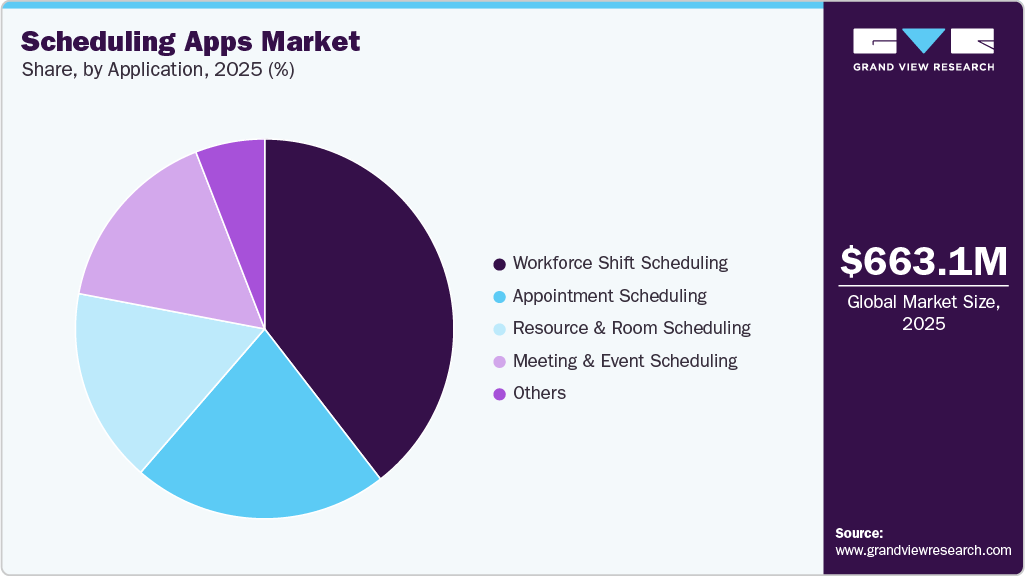
The workforce shifts scheduling segment accounted for the largest revenue share of 39.5% in 2025. Workforce shift scheduling solutions are increasingly adopted across healthcare as hospitals and health systems replace manual rostering with intelligent platforms that automate shift planning, improve coverage during peak demand, and reduce administrative burden. For instance, in November 2024, a partnership between UNC Health and ShiftMed Flex, in which the health system deployed an AI‑enabled workforce scheduling solution that enables float nurses to claim open shifts 24/7 via a mobile app. In the first three months after implementation, float nurses at UNC Health doubled their monthly shift commitments, increasing from an average of four to eight claimed shifts per nurse, representing improved flexibility, better fill rates for hard-to-staff shifts, and enhanced engagement among clinical staff. This reflects how advanced workforce scheduling tools that support real‑time availability, mobile access, and flexible assignments are transforming hospital staffing practices and driving adoption across healthcare settings.
 To learn more about this report, Download Free Sample Report
 The appointment scheduling segment is expected to grow at the fastest CAGR over the forecast period. Hospitals and clinics adopt digital systems that enable patients to book, reschedule, and manage appointments online, improving access, reducing waiting times, and enhancing the overall patient experience. For instance, in July 2025, the digitization of outpatient appointment booking across government hospitals in Delhi, where the Health Information Management System (HIMS) was launched to enable patients to book OPD appointments online, obtain digital slips, and view their medical records in real time without needing to queue at hospital counters. This shift to online appointment scheduling has streamlined patient flow, reduce administrative bottlenecks, and deliver faster, more convenient access to services across 35 government hospitals, highlighting how web‑based appointment systems are transforming healthcare access and operational efficiency in public health settings.
End User Insights
The corporate enterprises segment accounted for the largest revenue share of 31.1% in 2025. Large organizations seek tools that automate complex scheduling, integrate with CRM and communication platforms, and support teams across multiple geographies and functions. For instance, in May 2023, the increasing enterprise use of Calendly’s Enterprise platform has enabled organizations to scale scheduling processes across sales, customer success, and recruiting teams. According to Calendly’s own reporting, companies adopting its Enterprise plan have seen up to 160% more customer engagements, a 22× increase in scheduled interviews, and substantial returns on investment, represent how professional scheduling tools drive efficiency and strengthen business workflows by replacing manual coordination with automated booking, roundrobin assignment, and system integrations that tie directly into platforms such as Salesforce and Outlook. This realworld adoption in global enterprise environments highlights how scheduling applications are becoming core to corporate operations, helping teams reduce administrative workload and accelerate business outcomes.
The education institutions segment is expected to grow at fastest CAGR over the forecast period. Educational institutions are increasingly adopting digital scheduling apps to streamline academic planning, reduce manual coordination, and improve the student experience. For instance, in December 2025, Hartford Public Schools’ shift to new scheduling software called Timely was approved to manage complex master scheduling across 11 high schools. The district expects the digital scheduling tool to save between 50 and 100 hours of administrative time per school during schedule creation and successfully place 97 % of students in their requested courses, illustrating how automated scheduling solutions significantly enhance operational efficiency and reduce scheduling errors in large education systems. This implementation reduces time spent on timetable logistics, allowing school counselors and staff to focus more on student support and academic planning rather than administrative holdups.
Regional Insights
North America scheduling apps market dominated the with a share of 45.9% in 2025. The adoption of advanced scheduling apps is increasing, particularly in the healthcare sector, where providers are shifting from manual and phone-based booking to AI‑driven patient scheduling systems that improve access and efficiency. For instance, North Kansas City Hospital & Meritas Health in the U.S., which deployed Notable’s Intelligent Scheduling solution to automate appointment bookings and outreach. After implementation, scheduled appointments for the same number of providers increased from 5.7% to 14% within six weeks, patient satisfaction reached 96%, and 93% of appointments were booked without staff intervention, representing how digital scheduling platforms are transforming patient access and operational workflows in North America healthcare settings.
 To learn more about this report, Download Free Sample Report
 The U.S. scheduling apps market accounted for the largest market share in North America in 2025. Digital appointment scheduling systems are rapidly expanding as health systems adopt patient portals and automated booking tools to improve access to care and reduce administrative workload. For instance, Cleveland Clinic’s MyChart portal, which allows patients to schedule, view, reschedule, and manage appointments online or through its mobile app 24/7, giving patients more control over their care while easing pressure on front‑desk staff. MyChart’s online scheduling integration is part of a broader digital transformation in U.S. healthcare that enables instant appointment booking, access to test results, and secure messaging, streamlining patient workflows and improving overall satisfaction. This reflects a broader trend in the U.S., where hospitals and clinics increasingly leverage online scheduling features to meet patient expectations for convenience and real‑time access to services.
Europe Scheduling Apps Market Trends
Europe scheduling apps market is growing with a significant CAGR over the forecast period. Patient scheduling and digital appointment systems are being integrated into national healthcare strategies to advance digitalization and strengthen patientcentric care. According to the WHO article published in 2023, the “Patients e‑services” portal in Lithuania allows citizens to book medical appointments with doctors and specialists online, view electronic referrals and medical history, and even check approximate waiting times all in one unified system. The portal, which is integrated with national electronic health records and used by over 400 clinics, 70% of GPs (about 1400), and 60% of specialists (about 5000), has significantly improved accessibility and reduced administrative burdens for both patients and providers. This kind of web‑based scheduling adoption across Europe exhibits how regional digital health initiatives are accelerating the use of scheduling apps to streamline healthcare access and improve operational efficiency.
UK scheduling apps market is growing over the forecast period. Digital scheduling solutions are increasingly integrated into the healthcare system as part of efforts to improve access to care and reduce administrative burden. This trend is the expanded use of the NHS App, which now allows patients to view, book, cancel, and manage GP and hospital appointments online through their smartphones or web browsers. According to a GOV.UK. Press release, in April 2025, 87% of NHS hospitals were offering services through the NHS App, and the expanded features helped prevent 1.5 million missed appointments while saving 5.7 million staff hours by reducing manual booking tasks, representing how web‑based scheduling tools are transforming appointment management in the UK’s most extensive healthcare system. This widespread adoption highlights a broader move toward digital selfservice scheduling in UK healthcare, giving patients more control over when and how they access care.
Scheduling apps market in Germany is growing over the forecast period. Increasing heart failure cases are driving market growth. Scheduling apps are rapidly adopted in Germany’s healthcare sector as clinics and hospitals shift toward web‑based patient booking systems that improve access and reduce administrative workload. For instance, the the Doctolib patient portal at the Digital Health Centre (DHZC) of Charité in Berlin, which enables patients to manage appointments, receive automatic reminders, and communicate with providers securely online or via mobile. The portal supports features such as appointment notifications by email or SMS and secure document exchange, helping streamline scheduling workflows and enhance patient engagement in one of Europe’s largest healthcare networks.
Asia Pacific Scheduling Apps Market Trends
The Asia-Pacific region has witnessed a growing demand for scheduling apps. Hospitals and clinics are increasingly replacing manual booking with digital scheduling solutions, adopting online and mobile platforms that enhance patient access and streamline operations. According to a Healthcare Asia article published in December 2025, a large share of hospitals in countries such as China, India, and Southeast Asia have already adopted online scheduling and patient administration tools, with online appointment booking among the most widely implemented digital solutions in the region. For instance, digital tools for patient scheduling are used by about 60% of hospitals in China, 58% in India, and 53% in Southeast Asia nations, highlighting the growing reliance on web‑based and app‑based scheduling to handle patient appointments, reduce wait times, and improve experience for both patients and providers. This establishes that the Asia Pacific healthcare sector is rapidly embracing digital scheduling as part of broader healthcare digitization.
China scheduling apps market accounted for the largest market share in the Asia Pacific region in 2025. Digital scheduling is playing an increasingly important role in healthcare access as platforms integrate appointment booking with broader online health services. For instance, in January 2026, Ant Group’s Ant Afu health platform, which enables users to book medical consultations and schedule offline hospital appointments directly through the app, while also offering AI‑assisted patient support and reimbursements with insurance integration. The popularity of Ant Afu reflects how digital appointment systems are becoming mainstream in China’s healthcare landscape, helping patients save time and navigate complex medical networks more conveniently, particularly in tier‑1 and tier‑2 cities. This shift emphasizes a broader move toward digitally enabled patient engagement and appointment scheduling, improving service accessibility and operational efficiency.
Australia scheduling apps market is expected to grow at a significant CAGR over the forecast period.In Australia, demand for online healthcare scheduling continues to grow as patients and providers adopt digital tools that make booking and managing appointments more convenient and efficient. For instance, Healthengine, one of Australia’s largest healthcare scheduling platforms, which now supports millions of patient bookings and connects over 10,000 healthcare practices, including GP clinics, dental offices, and allied health providers, with patients who find and book appointments online 24/7. Healthengine’s system also integrates features such as waitlists, automated reminders, and telehealth scheduling, helping practices reduce administrative tasks and improve patient access nationwide.
Latin America Scheduling Apps Market Trends
Latin America is expected to witness significant growth over the forecast period, driven by businesses and healthcare providers increasingly adopting digital tools to streamline appointment management and workforce coordination. The region’s expanding internet and smartphone penetration, combined with rising demand for convenient online booking and remote access systems, is driving the transition from manual scheduling to digital platforms. This trend is maintained by broader digital transformation initiatives across sectors such as healthcare, retail, and professional services, where the need to reduce administrative burden and improve customer engagement is accelerating the adoption of web‑ and mobile‑based scheduling solutions.
Brazil scheduling apps market is growing over the forecast period. Increasing consumer preference for on‑the‑go access, improvements in digital infrastructure, and the push toward e‑government and e‑health services are fostering greater adoption of cloud‑based and mobile scheduling solutions. This trend reflects a broader shift in Brazil toward customer‑centric digital services that offer real‑time updates, reminders, and self‑service functionalities, helping organizations meet contemporary expectations for convenience and responsiveness.
Middle East & Africa Scheduling Apps Market Trends
The scheduling apps market in the MEA is growing significantly, driven by the rising demand for digital scheduling apps, which is steadily rising as organizations across sectors, including healthcare, retail, hospitality, and professional services, adopt online booking and automated workforce coordination tools. Growth is being driven by increasing internet and mobile penetration, expanding digital transformation initiatives, and government‑led innovative city programs that prioritize customer experience and operational efficiency. Mobile‑friendly scheduling platforms are gaining particular traction in urban centers, where consumers expect convenient, real‑time access to services, and organizations see these tools as key to modernizing appointment and shift management processes.
Scheduling apps market in South Africa is growing over the forecast period. In South Africa, the adoption of scheduling apps is becoming more widespread as businesses and healthcare providers shift toward cloud‑based and mobile solutions to improve service delivery and workforce planning. Factors such as high smartphone usage, rising demand for online appointment booking, and a growing emphasis on digital customer engagement are driving organizations to implement web- and mobile-based scheduling systems. This trend aligns with broader efforts to enhance digital infrastructure and support remote access to services, reflecting a regional shift toward flexible, technology-enabled scheduling that boosts productivity and user convenience.
Key Scheduling Apps Company Insights
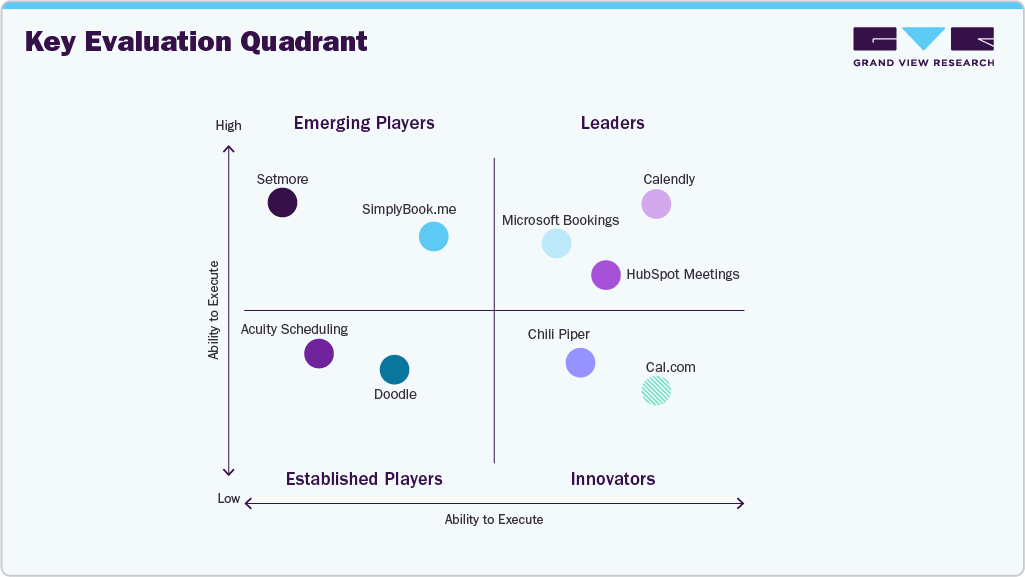
Leading players in the scheduling apps market, such as Calendly, Acuity Scheduling, and Setmore, have strategically employed innovative approaches, including mergers and acquisitions, market penetration initiatives, partnerships, and distribution agreements. These strategies aim to enhance their revenue streams by leveraging collaborative efforts, expanding market reach, and fostering synergies within the dynamic landscape of scheduling apps. Emerging market entrants such as Setmore and SimplyBook.me are focusing on expanding their market presence, developing innovative technologies, and establishing strategic partnerships to compete with established industry leaders.
Key Scheduling Apps Companies:
The following key companies have been profiled for this study on the scheduling apps market.
- Calendly
- Acuity Scheduling
- Setmore
- HubSpot Meetings (Scheduler)
- Microsoft Bookings
- SimplyBook.me
- Doodle
- YouCanBook.me
- Appointy
- Zoho Bookings
- Square Appointments
- Chili Piper
- Cal.com
- Bookafy
- Booksy
Recent Developments
-
In July 2025, ShiftMed launched its AI‑Powered Workforce AI Suite, embedding intelligent scheduling and shift fulfilment tools for health systems to automate complex workforce management, cut costs, and optimize shift coverage through AI‑based match engines and automated routing.
-
In July 2025, QGenda completed the acquisition of New Innovations, expanding its healthcare scheduling and residency management capabilities to help hospitals streamline care team scheduling and workforce optimization.
-
In May 2025, Weave acquired TrueLark, integrating conversational AI for front-office automation, including handling patient calls and appointment communications improving scheduling efficiency in healthcare practices.
-
In April 2025, Promptly announced the acquisition of MDprospects and Patient Spectrum, bringing in appointment optimization (Appointec) and referral tools to enhance online booking and practice scheduling workflows.
Scheduling Apps Market Report Scope
Report Attribute
Details
Market size in 2025
USD 663.1 Million
Estimated market size in 2026
USD 749.3 million
Projected market size by 2033
USD 1,813.1 million
Growth rate
CAGR of 13.5% from 2026 to 2033
Actual Data
2021 - 2025
Forecast period
2026 - 2033
Quantitative units
Revenue in USD billion/million and CAGR from 2026 to 2033
Report coverage
Revenue forecast, company ranking, competitive landscape, growth factors, and trends
Segments covered
Deployment, platform, application, end user, region
Regional scope
North America; Europe; Asia Pacific; Latin America; MEA
Country scope
U.S.; Canada; Mexico; UK; Germany; France; Italy; Spain; Denmark; Sweden; Norway; Japan; China; India; Australia; Thailand; South Korea; Brazil; Argentina; South Africa; Saudi Arabia; UAE; Kuwait
Key companies profiled
Calendly; Acuity Scheduling; Setmore; HubSpot Meetings (Scheduler); Microsoft Bookings; SimplyBook.me; Doodle; YouCanBook.me; Appointy; Zoho Bookings; Square Appointments; Chili Piper; Cal.com; Bookafy; Booksy
Customization scope
Free report customization (equivalent up to 8 analysts working days) with purchase. Addition or alteration to country, regional & segment scope.
Pricing and purchase options
Avail customized purchase options to meet your exact research needs. Explore purchase options
Global Scheduling Apps Market Report Segmentation
This report forecasts revenue growth at global, regional & country levels and provides an analysis of the industry trends in each of the sub-segments from 2021 to 2033. For this study, Grand View Research has segmented the global scheduling apps market report based on deployment, platform, application, end user, and region:
-
Deployment Outlook (Revenue, USD Million, 2021 - 2033)
-
Cloud-based
-
On-premises
-
-
Platform Outlook (Revenue, USD Million, 2021 - 2033)
-
Web-based
-
Mobile applications
-
-
Application Outlook (Revenue, USD Million, 2021 - 2033)
-
Appointment scheduling
-
Meeting & event scheduling
-
Workforce shift scheduling
-
Resource & room scheduling
-
Others
-
-
End User Outlook (Revenue, USD Million, 2021 - 2033)
-
Healthcare providers
-
Corporate enterprises
-
Education institutions
-
Government & public sector
-
Freelancers & SMEs
-
-
Regional Outlook (Revenue in USD Million, 2021 - 2033)
-
North America
-
U.S.
-
Canada
-
Mexico
-
-
Europe
-
UK
-
Germany
-
France
-
Italy
-
Spain
-
Denmark
-
Sweden
-
Norway
-
-
Asia Pacific
-
Japan
-
China
-
India
-
South Korea
-
Australia
-
Thailand
-
-
Latin America
-
Brazil
-
Argentina
-
-
Middle East & Africa
-
South Africa
-
Saudi Arabia
-
UAE
-
Kuwait
-
-
Frequently Asked Questions About This Report
The global scheduling apps market size was estimated at USD 663.1 million in 2025 and is expected to reach USD 749.3 million in 2026.
The global scheduling apps market is expected to grow at a compound annual growth rate of 13.46% from 2026 to 2033 to reach USD 1,813.1 million by 2033.
The cloud-based segment accounted for the largest revenue share of 60.85% in 2025, owing to the shift towards cloud‑based solutions as they offer real‑time access, scalability, and streamlined workforce coordination across multiple locations.
Some key players operating in the scheduling apps market include Calendly; Acuity Scheduling; Setmore; HubSpot Meetings (Scheduler); Microsoft Bookings; SimplyBook.me; Doodle; YouCanBook.me; Appointy; Zoho Bookings; Square Appointments; Chili Piper; Cal.com; Bookafy; Booksy
Key factors include increasing workforce complexity, rising demand for real-time scheduling, and the growing adoption of mobile-first, AI-enabled scheduling platforms in healthcare and service industries.
The web-based segment accounted for the largest revenue share of 65.9% in 2025. while mobile applications is the fastest-growing segment.
The workforce shifts scheduling segment accounted for the largest revenue share of 39.5% in 2025, while appointment scheduling is the fastest-growing segment.
The corporate enterprises segment accounted for the largest share of 31.1% in 2025, while education institutions is the fastest-growing segment.
North America dominated with a 45.9% revenue share in 2025.
Asia Pacific is the fastest-growing region over the forecast period.
About the Author(s)
Healthcare IT Research Team
Healthcare · Healthcare ITThis report was authored by the healthcare it research team at Grand View Research - comprising two research analysts, one senior research analyst, and one industry expert - with specialized expertise in the healthcare it segment of the healthcare industry. All findings are based on proprietary healthcare databases, executive interviews, and regulatory analysis, subject to internal peer review prior to publication.
Last Updated:
Speak to Analyst

Customize this report to your needs - add regions, segments, or data points, with 20% free customization.
Or view our licence options:


ISO 9001:2015 & 27001:2022 Certified
We are GDPR and CCPA compliant! Your transaction & personal information is safe and secure. For more details, please read our privacy policy.


