
- Home
- »
- Medical Devices
- »
-
Scleral Lens Market Size, Share & Trends Report, 2026-2033GVR Report cover

Scleral Lens Market (2026 - 2033)
Size, Share & Trends Analysis Report By Type (Semi-scleral Lens, Mini-scleral Lens, Full Scleral Lens), By Application (Therapeutic, Aesthetic), By End-use (Specialized Eye Care Centers, Hospitals), By Region, And Segment Forecasts
Market Size, 2025
$226.9MMarket Estimate, 2026
$254.2MMarket Forecast, 2033
$609.2MCAGR, 2026–2033
13.3%Scleral Lens Market Summary
The global scleral lens market size was valued at USD 226.9 million in 2025 and is projected to grow from USD 254.2 million in 2026 to USD 609.2 million by 2033, at a CAGR of 13.3% from 2026 to 2033. North America dominated the market, accounting for the largest share of 43.2% in 2025. The market is experiencing steady growth as eye-care professionals increasingly recognize the clinical and visual benefits of large-diameter gas-permeable lenses for patients with corneal irregularities, keratoconus, ocular surface disease, severe dry eye, post-corneal surgery complications, and other complex visual conditions.
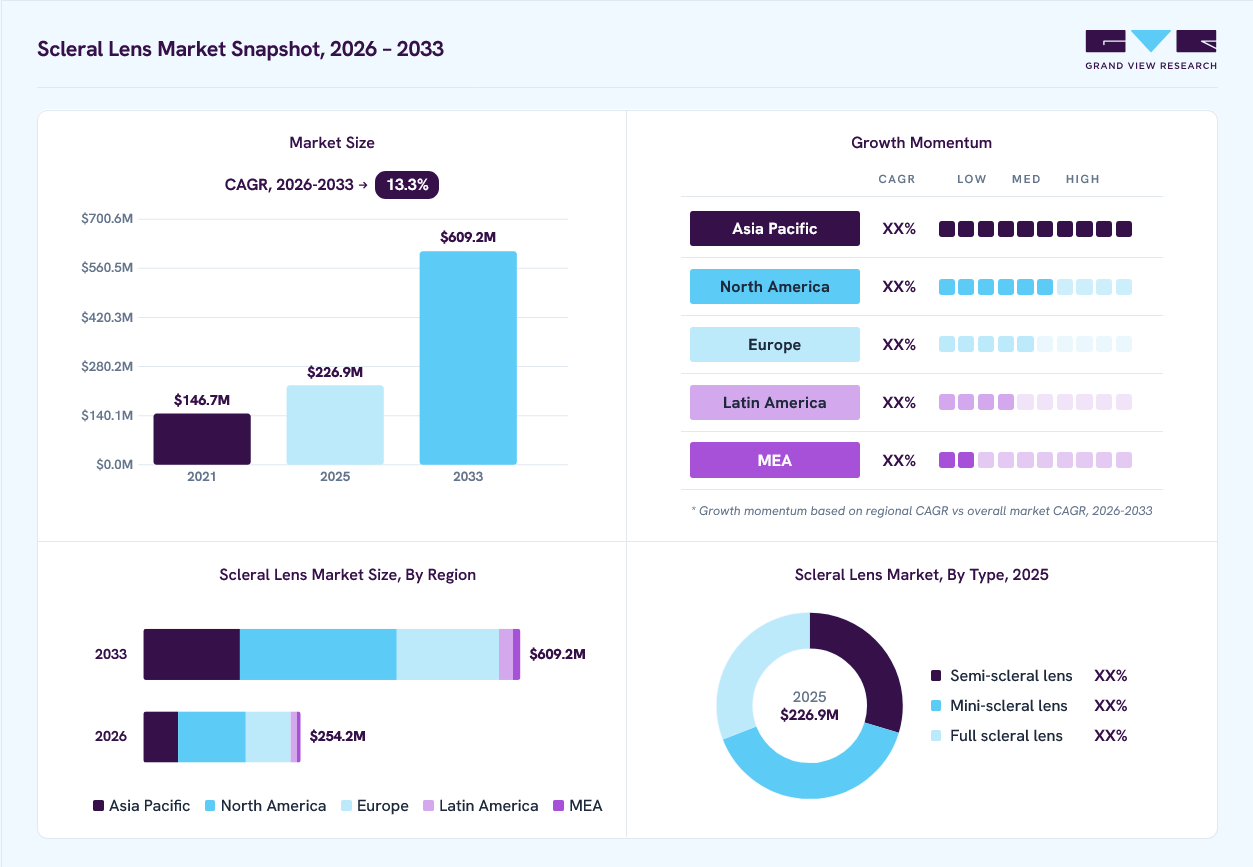 Source: Grand View Research, IR Documents, Primary Interviews, Paid DatabasesTo learn more about this report,
 Download Free Sample Report
Key Market Trends & Insights
- By type: The mini-scleral lens segment held the highest market share of 39.4% in 2025.
- By application: The therapeutic segment held a leading market share of 81.9% in 2025.
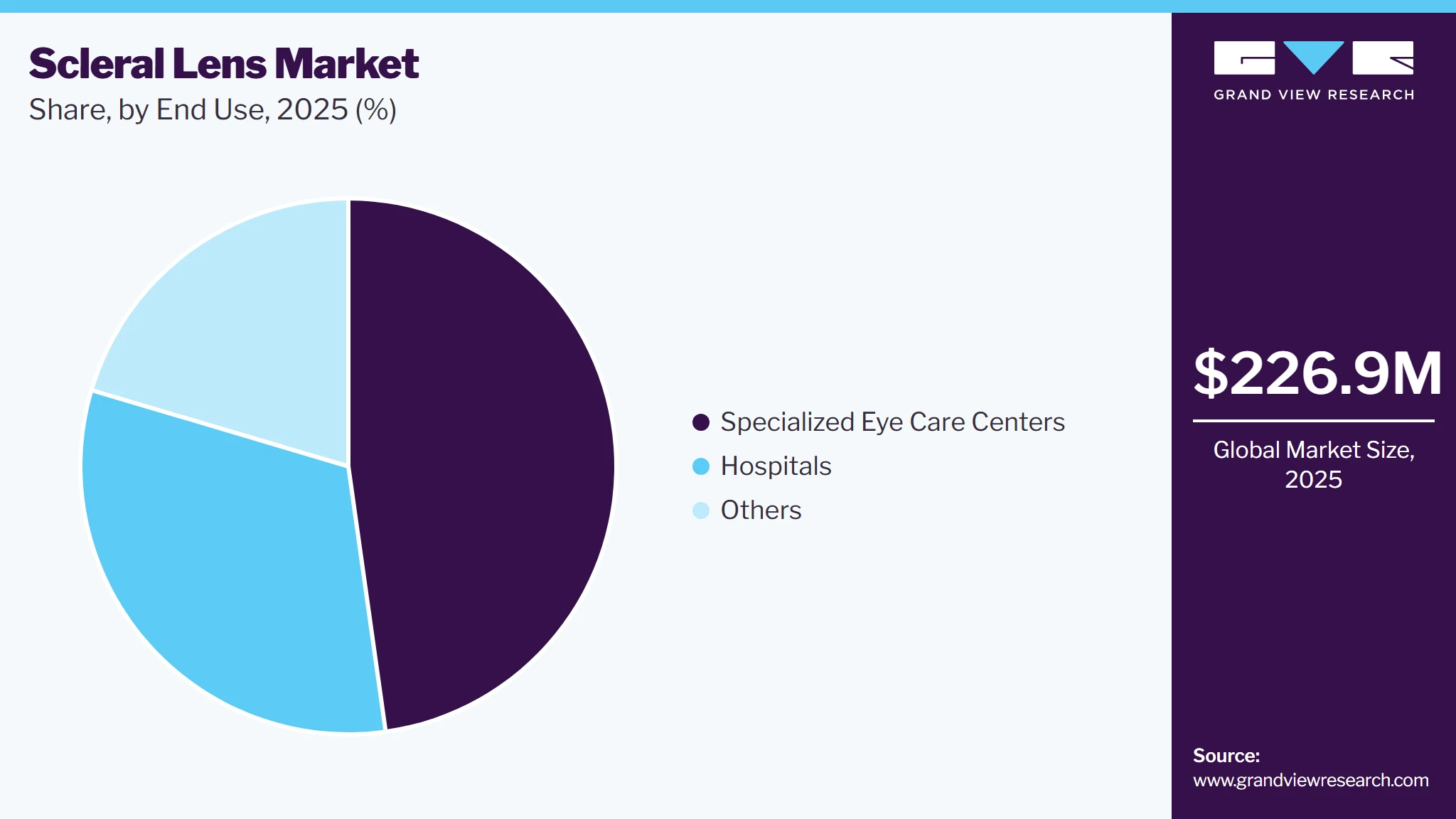
- By end-use: The specialized eye care centers segment held the largest share of 47.8% in 2025.
Regional Highlights
- Largest regional market: North America (43.2% revenue share, 2025)
- Fastest-growing regional market: Asia Pacific (highest CAGR, 2026-2033)
- By country: The U.S. held the largest share of North America in 2025.
Market Size & Forecast
- Market size in 2025: USD 226.9 Million
- Estimated market size in 2026: USD 254.2 Million
- Projected market size by 2033: USD 609.2 Million
- CAGR (2026-2033): 13.3%
Three ways to get this report
Buy it, customize it, or ask a question.Ask an Analyst
Analyst response in 1 business day
- AccessReport author, directly
- Reply timeWithin 1 working day
- No sales callDirect answer only
- FormatEmail reply
- CostFree, no cost
Get the Full Report
What the study covers
- FormatsPDF · Excel · Dashboard
- Timeline2026–2033 annual, 2025 base
- Coverage20+ countries, 5 regions
- Companies10+ key players profiled
Customize the Report
20% free customization
- IncludeCountries, segments, points
- TailorTo your product definition
- ExtendDeeper competitor detail
- OrA fully bespoke study
- Turnaround5–10 working days
The evolution of scleral lens technology is also influencing clinical adoption. Advances in customized haptic designs, profilometry, wavefront-guided correction, toric and quadrant-specific landing zones, and increasingly sophisticated diagnostic fitting systems are enabling practitioners to address complex ocular geometries more accurately. In the 2025 Contact Lens Spectrum survey, 86% of respondents reported using diagnostic lenses for scleral fitting, while 36% reported using profilometry to support the fitting process. Among patients with corneal irregularity, practitioners reported fitting an average of 53% with scleral lenses, compared with 42% reported in a large 2020 study, indicating a continued shift toward scleral lenses for complex corneal conditions.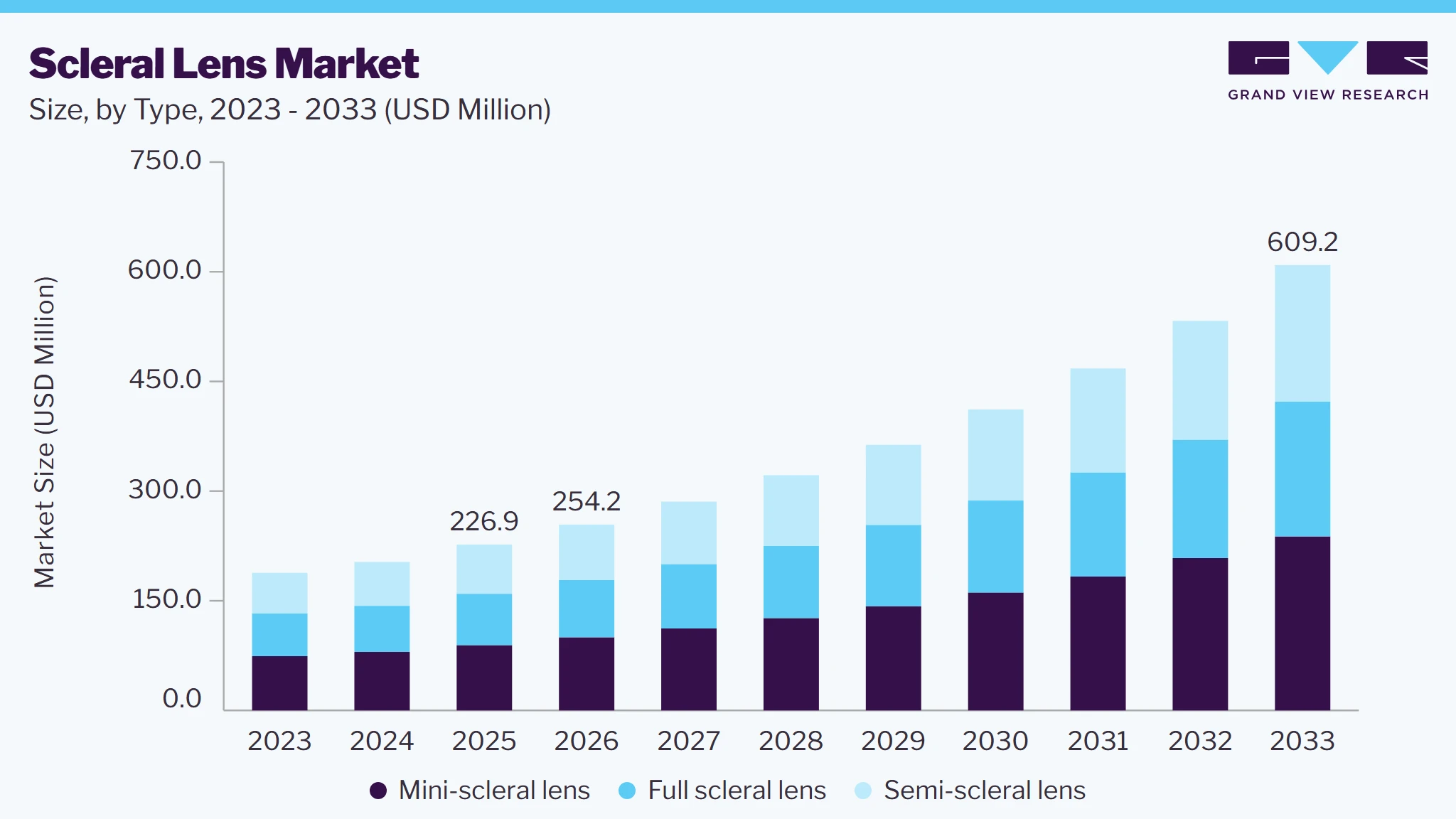 To learn more about this report, Download Free Sample Report
Scleral Lens Application Landscape
Scleral lenses are increasingly used across a broad range of complex ocular conditions, extending beyond their traditional role in managing corneal irregularities such as keratoconus and corneal ectasia. Their large-diameter design and fluid reservoir can provide both visual rehabilitation and ocular surface protection, making them particularly valuable for patients with severe dry eye and other ocular surface disorders. They also support complex vision correction in patients with high astigmatism, higher-order aberrations, and post-corneal transplant irregularities. This expanding range of clinical applications is broadening the addressable patient population and supporting continued adoption of scleral lenses across specialty eye-care practices.
From a commercial perspective, the market is expanding beyond its traditional association with keratoconus and irregular corneas toward broader applications in ocular surface disease and specialty vision correction. Corneal irregularity remains the most common indication, while ocular surface disease is another important application as the fluid reservoir can provide sustained corneal hydration and protection. Recent clinical evidence also highlights the growing role of scleral lenses in keratoconus management; a 2025 survey of keratoconus specialists found scleral lenses were the preferred optical correction method among 36% of respondents, ahead of corneal GP lenses at 21%. As practitioners become more familiar with customized scleral designs and fitting technologies, increasing clinical confidence, broader indications, and improvements in comfort and visual performance are expected to support continued market expansion.
Market Dynamics
The scleral lens market is witnessing steady growth as eye care practices increasingly adopt large-diameter, customized contact lenses to manage a broad range of corneal irregularities and ocular surface disorders that are inadequately addressed by conventional contact Lenses. Demand is being supported by the growing prevalence of keratoconus and other corneal ectatic disorders, post-surgical corneal irregularities, severe dry eye disease, ocular surface disorders, and higher-order visual aberrations, along with increasing awareness of specialty contact lens options among ophthalmologists, optometrists, and patients. Scleral lenses are designed to vault the cornea and rest on the sclera, creating a fluid reservoir between the lens and corneal surface that can improve optical performance, protect the ocular surface, and provide continuous hydration.
The rising prevalence and improved diagnosis of corneal irregularities and ectatic disorders, particularly keratoconus, pellucid marginal degeneration, keratoglobus, irregular astigmatism, and post-keratoplasty corneal abnormalities, is a major driver of the scleral lens market. These conditions cause progressive changes in corneal curvature and thickness, resulting in irregular astigmatism, higher-order aberrations, visual distortion, and reduced visual acuity that may not be adequately corrected with spectacles or conventional soft contact Lenses. As disease severity progresses, conventional lenses may become unstable or provide inadequate visual correction, increasing the need for scleral Lenses, which vault over the irregular corneal surface and create a fluid reservoir that provides a smooth optical surface. For instance, in 2025, a systematic review of scleral lens use in keratoconus reported consistent improvements in visual acuity and vision-related quality of life, particularly among patients with advanced disease or intolerance to other contact-lens modalities. These findings strengthen the clinical role of scleral lenses as a non-surgical visual rehabilitation option for patients with corneal irregularities, supporting greater adoption among ophthalmologists and optometrists. Consequently, the convergence of growing disease burden, improved diagnostic detection, progression of corneal irregularity, and increasing clinical reliance on scleral lenses for visual rehabilitation is expected to support market growth.
High cost of scleral lens and specialized fitting is a significant restraint on the growth of the scleral lens market, particularly in cost-sensitive markets where specialty lens are largely paid out of pocket. Scleral lens typically require customized designs, specialized diagnostic equipment, practitioner expertise, and multiple fitting visits, making their overall cost higher than conventional contact Lenses. A 2025 patient-perspective study in India reported a median total cost of approximately USD 1,321 per patient for scleral Lenses, compared with USD 262 for corneal Lenses, highlighting the affordability gap. In addition, scleral lens fitting can require multiple diagnostic lenses and follow-up visits; a clinical survey reported an average of 2.4 lenses per eye and 3.8 visits per patient to complete the fitting process. These higher upfront and fitting-related expenses, coupleda with variable insurance reimbursement and the need for trained specialty-lens practitioners, are likely to increase patient out-of-pocket expenditure and limit adoption, particularly among patients with lower purchasing power.
Market Concentration & Characteristics
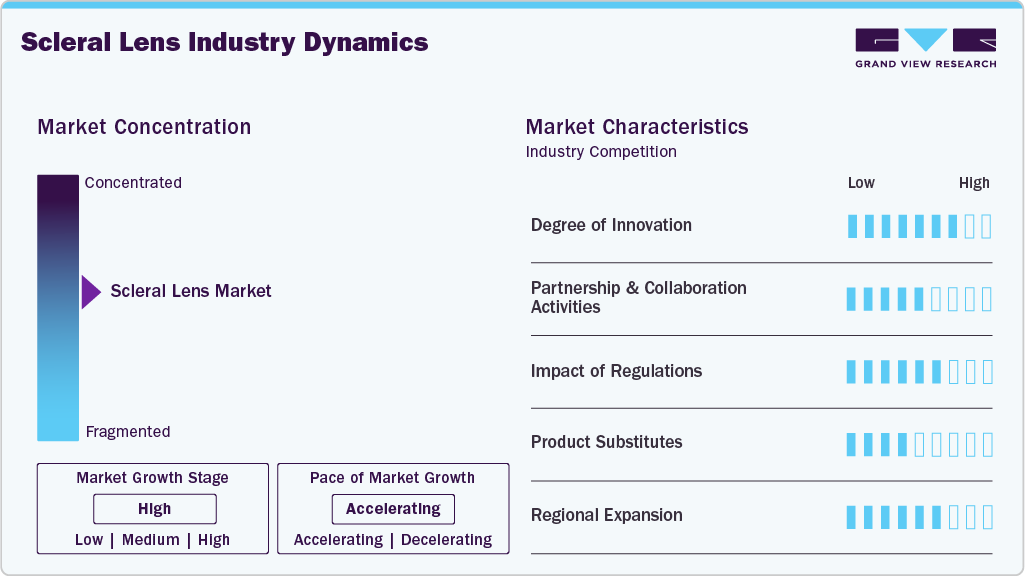
The scleral lens market is moderately concentrated, with established players such as Bausch + Lomb, CooperVision, Visionary Optics, Art Optical, and ABB Optical Group maintaining strong positions across specialty and customized scleral lens offerings. Competition is primarily driven by the ability to provide customized lens geometries, high-oxygen-permeable materials, advanced haptic designs, and solutions for complex corneal and ocular surface conditions, rather than by price alone. Competition is increasingly centered on customization accuracy, fitting efficiency, digital ocular-surface mapping, practitioner training, clinical support, and the ability to address a broad range of indications, including keratoconus, irregular corneas, severe dry eye, ocular-surface disease, and post-surgical corneal conditions. Companies are also differentiating through digital fitting workflows and technologies that can reduce the number of trial lens and fitting iterations required, improving practitioner efficiency and patient outcomes.
The scleral lens market is characterized by a high degree of innovation, with manufacturers increasingly focusing on advanced customization, digital fitting technologies, wavefront-guided optics, and lens geometries designed to address complex corneal and ocular-surface conditions. Innovation is increasingly centered on quadrant-specific haptic and limbal adjustments, customized vault profiles, higher-order aberration (HOA) correction, multifocal optics, digital ocular-surface mapping, profilometry integration, and streamlined lens-design workflows, enabling practitioners to achieve more precise fits while reducing fitting complexity and improving visual outcomes and patient comfort. A notable recent development was the May 2025 launch of Zenlens CHROMA HOA by Bausch + Lomb in the U.S., a custom, wavefront-guided scleral lens designed to correct advanced HOAs and improve visual quality in patients with complex corneal irregularities. The technology builds on the company's SmartCurve and Bi-Elevation features to enable secure and customized lens fitting.
 To learn more about this report, Download Free Sample Report
Partnerships and collaborations are becoming an important strategy in the scleral lens market, as manufacturers, specialty lens laboratories, clinical institutions, professional organizations, and technology providers increasingly work together to expand access to customized lens fitting, strengthen practitioner expertise, accelerate technology adoption, and improve outcomes for patients with complex corneal and ocular-surface conditions. Rather than relying solely on internal product development, companies are increasingly using distribution partnerships, clinical collaborations, practitioner education programs, technology integration, and research collaborations to expand their specialty-lens ecosystems. For instance, BostonSight partnered with Conoptica in 2023 to manufacture and distribute BostonSight SCLERAL in Spain, Portugal, and Morocco, and subsequently partnered with Moorfields Eye Hospital in 2024 to manufacture and distribute BostonSight SCLERAL in the UK, supporting international commercialization and access to its customized scleral lens technology.
Regulatory oversight has a significant impact on the scleral lens market, as manufacturers must demonstrate the safety, performance, biocompatibility, and intended use of scleral lens before commercialization. In the U.S., scleral lens are regulated by the U.S. Food and Drug Administration (FDA) as medical devices, with manufacturers generally required to obtain appropriate clearance or approval depending on the device classification and intended use. Regulatory requirements are particularly important for scleral lenses, as customized designs may be intended for specific indications, including keratoconus, irregular corneas, post-surgical corneal conditions, and ocular-surface disorders, requiring manufacturers to establish appropriate performance and safety characteristics. For example, FDA-cleared scleral lens indications include the correction of visual acuity in patients with irregular corneal conditions and the management of certain ocular-surface disorders.
The scleral lens market faces substitution from corneal rigid gas-permeable (RGP) Lenses, hybrid contact lenses, soft specialty lenses, prosthetic or custom soft lenses, and, in selected cases, surgical interventions that can provide comparable visual rehabilitation or therapeutic benefits for specific patient groups. Corneal RGP lens represent one of the most direct substitutes, particularly for patients with keratoconus and other forms of corneal irregularity, as their rigid optical surface can mask corneal irregularities and improve visual acuity without the larger diameter and more complex handling associated with scleral Lenses. Hybrid Lenses, which combine a rigid central optical zone with a soft peripheral skirt, can also provide a balance of visual performance and comfort for selected patients.
Regional expansion is an important growth strategy in the scleral lens market, as manufacturers and specialty lens laboratories increasingly seek to expand access to customized scleral lenses through international distribution agreements, licensed manufacturing partnerships, practitioner education, and regional specialty-lens networks. Expansion is particularly relevant in Europe, Asia-Pacific, Latin America, and other emerging markets where access to advanced corneal and ocular-surface care and trained specialty-lens practitioners is developing. For instance, BostonSight expanded the availability of BostonSight SCLERAL in Europe in December 2025 through its licensed manufacturing partner, Conóptica, making the lens available to eye-care practitioners in Spain, Portugal, and Morocco. The company also conducted an international FitAcademy program in Spain to strengthen local expertise in scleral lens fitting.
Analyst Perspective
The scleral lens market has evolved as an important segment within the specialty contact lens industry, supported by the increasing use of customized lenses for irregular corneas, corneal ectatic disorders, ocular surface disease, severe dry eye, post-surgical corneal conditions, and complex refractive errors. Unlike conventional corneal contact Lenses, scleral lenses vault over the cornea and rest on the scleral conjunctiva, creating a fluid reservoir between the lens and corneal surface. This configuration enables both visual rehabilitation and ocular-surface protection, making scleral lenses particularly relevant for patients who cannot achieve satisfactory vision, comfort, or ocular-surface management with conventional contact lens modalities.
Type Insights
The mini-scleral lens segment dominated the market in 2025 and accounted for the largest share of 39.4% of the overall revenue. The growth is supported by increasing clinical preference for smaller-diameter scleral designs that can provide the therapeutic and optical benefits of scleral lenses while requiring less ocular surface coverage. According to an article published by Conexiant’s Contact Lens Spectrum in June 2025, a retrospective analysis of 27,430 scleral lenses fitted in 6,635 patients at a high-volume specialty contact lens practice in the Netherlands found that mini-scleral lenses accounted for 60.8% (16,685) of all lenses evaluated. Furthermore, mini-scleral lens use increased substantially from 44% of prescriptions in 2016 to 74% in 2022 across most indications, reflecting a shift toward smaller-diameter scleral lens designs. The shift has been associated with improvements in mini-scleral lens designs, including bi-tangential landing zones that better accommodate the natural toric shape of the sclera.
The semi-scleral lens segment is expected to witness the fastest CAGR of 13.8% over the forecast period. The growth is attributed to the rising demand for specialty lenses that provide greater corneal coverage and stability than conventional corneal GP or intralimbal lenses while maintaining a smaller overall diameter than full scleral lenses. Semi-scleral designs can be particularly useful for patients with moderate corneal irregularity, keratoconus, post-surgical corneal changes and ocular-surface disease who may not require the larger diameter of a full scleral lens. Their relatively smaller footprint can facilitate handling, insertion and removal and patient adaptation, while still allowing the lens to vault the cornea and maintain a fluid reservoir.
Application Insights
The therapeutic segment dominated the market and held the largest revenue share in 2025 and is expected to witness fastest CAGR over the forecast period. The growth is primarily attributed to the broad clinical use of scleral lenses for keratoconus, corneal ectasia, irregular astigmatism, post-corneal transplantation, post-refractive-surgery complications, severe dry eye disease, and other ocular-surface disorders. A September 2025 peer-reviewed study of scleral lenses and PROSE devices identified keratoconus, post-refractive-surgery ectasia, corneal transplantation, severe dry eye, and chronic cicatrizing ocular-surface disorders among the major indications for these devices. The therapeutic value is driven by the ability of scleral lenses to vault irregular corneas while creating a fluid reservoir that protects and hydrates the ocular surface, simultaneously providing optical correction. Recent clinical literature published by National Library of Medicine in June 2024 has also highlighted growing interest in scleral lenses for dry-eye management even in patients without corneal irregularities, with reported benefits including reduced tear evaporation, ocular-surface protection and symptomatic relief.
The aesthetic segment is expected to witness the significant CAGR over the forecast period. Growth is supported by increasing use of prosthetic and cosmetic scleral lenses to improve the appearance of eyes affected by aniridia, iris defects, corneal scarring or opacity, phthisis bulbi, trauma, microphthalmia and other ocular disfigurements. Prosthetic contact lenses can mask visible ocular abnormalities while, depending on the design, also providing functional benefits such as reducing glare and improving visual comfort. Recent clinical guidance on congenital aniridia published by Wiley open access collection in September 2025 has also recognized non-contact scleral lenses as a potential option for maintaining the ocular surface, while scleral-lens approaches can provide protection and lubrication in patients with ocular-surface complications. Furthermore, advances in digital iris printing, customized pigmentation, prosthetic designs and individualized lens manufacturing are improving the ability to replicate the appearance of the natural iris and conceal ocular abnormalities, supporting demand for customized cosmetic and prosthetic scleral lenses.
End-use Insights
The specialized eye care centers segment held the largest revenue share in 2025. The growth is supported by the concentration of specialized expertise, diagnostic equipment, and customized fitting capabilities required for scleral lenses. Unlike conventional contact lenses, scleral lenses frequently require detailed corneal and scleral assessment, diagnostic lens trials, customized parameter selection, and follow-up evaluation, making specialty contact lens centers particularly suitable for managing complex cases. The segment is further supported by the increasing concentration of scleral-lens fitting among experienced, high-volume specialty practitioners. A 2025 Contact Lens Spectrum report found that 67% of surveyed practitioners reported an increase in scleral-lens use over the preceding year, while 27% indicated that scleral lenses represented more than half of their GP-lens fittings, compared with 13% in 2023. These figures highlighting the growing importance of advanced diagnostic and customization capabilities in specialty practices.
 To learn more about this report, Download Free Sample Report
The hospitals segment is anticipated to grow at fastest CAGR over the forecast period. Hospitals are particularly important for patients requiring scleral lenses following corneal transplantation, ocular trauma, severe dry eye, chemical injury, and other complex ocular conditions, as these patients often require multidisciplinary assessment by ophthalmologists, optometrists and specialty contact-lens practitioners. For instance, Oxford Eye Hospital provides a tertiary scleral-lens service in which scleral lenses are used for advanced ocular conditions and can potentially delay or avoid corneal transplantation in selected patients. In India, the LV Prasad Eye Institute's scleral-lens network lists multiple hospitals and ophthalmic institutions providing scleral-lens services across several states, illustrating the expansion of scleral-lens fitting within hospital-based eye-care infrastructure.
Regional Insights
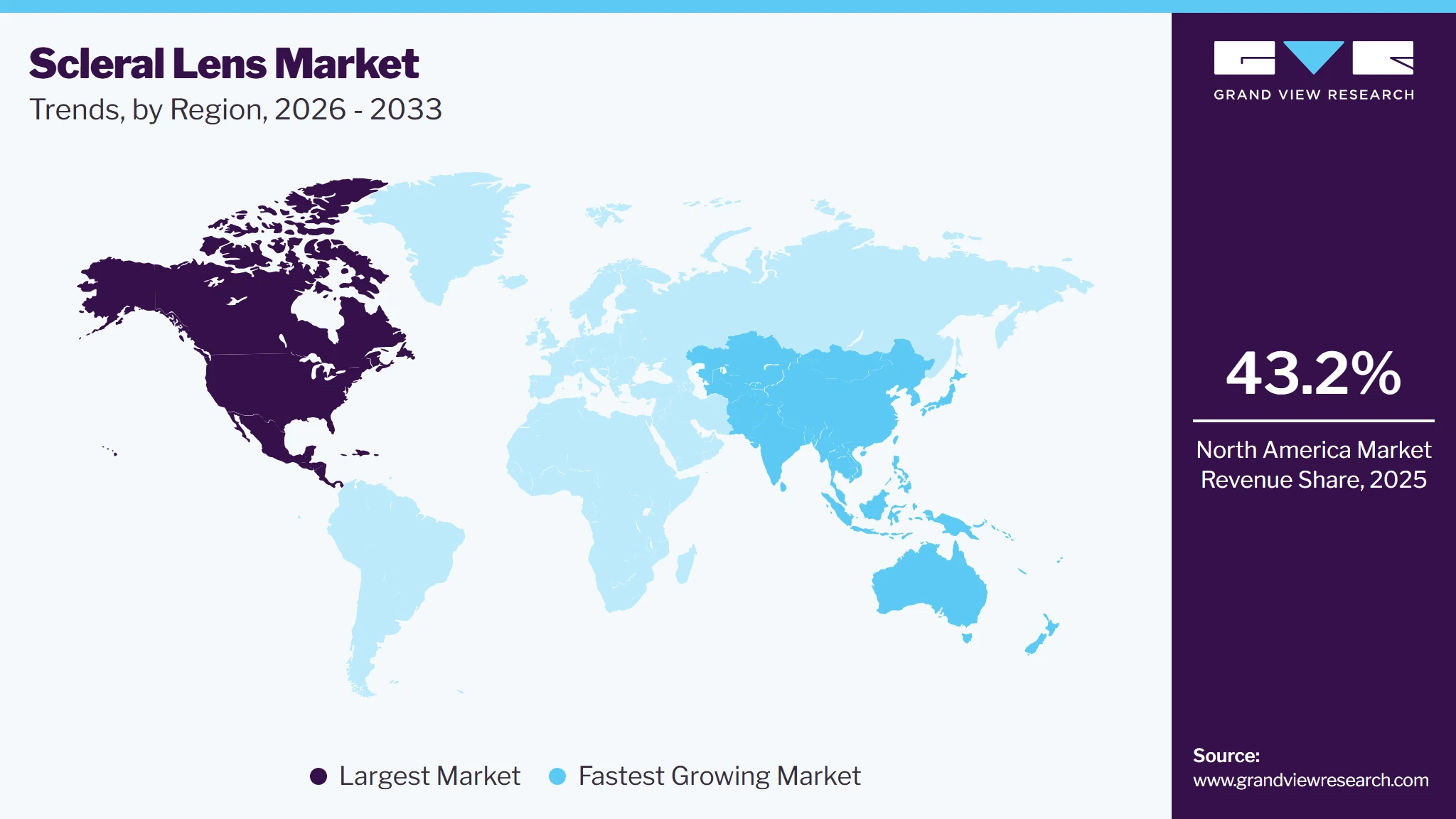
North America scleral lens market accounted for the largest revenue share of 43.2% in 2025. The growth is supported by the region's mature specialty eye-care infrastructure, high availability of advanced contact-lens technologies, established reimbursement and referral pathways, and strong concentration of scleral-lens manufacturers and specialty practitioners. Within North America, the U.S. represents the principal market, supported by established clinical use of scleral lenses for keratoconus, corneal irregularities, ocular-surface disease, post-surgical conditions, and severe dry eye. The U.S. also has a well-developed ecosystem of specialty lens manufacturers, academic eye-care centers, and dedicated scleral-lens providers, which facilitates access to customized fitting and advanced diagnostic technologies.
 To learn more about this report, Download Free Sample Report
U.S. Scleral Lens Market Trends
Scleral lens market in the U.S. is experiencing robust growth, driven by the increasing adoption of scleral lenses for keratoconus and other irregular corneal conditions, severe ocular-surface disease, and postoperative visual rehabilitation, together with advances in customized fitting technologies. A 2024 U.S.-focused study involving 423 practitioners who fit scleral lenses for keratoconus found that image- and impression-based fitting technologies were increasingly available, particularly among academic and high-volume practices, demonstrating the growing integration of advanced customization into U.S. scleral-lens practice. A separate 2024 study involving U.S. eye-care providers also evaluated the efficiency of diagnostic, image-based, and impression-based scleral-lens fitting, highlighting the increasing role of technology in improving fitting workflows.
Europe Scleral Lens Market Trends
Scleral lens market in Europe is being shaped by the increasing integration of scleral lenses into specialist ophthalmology and optometry services, growing demand for visual rehabilitation in complex corneal disorders, and improvements in customized lens-fitting technologies. European clinical practice has increasingly incorporated scleral lenses for keratoconus, corneal ectasia, post-keratoplasty irregularities, corneal scarring, severe dry eye, and other ocular-surface disorders. The European market is also supported by the development of advanced profilometry, diagnostic trial-lens systems, impression-based fitting, and customized haptic designs, which allow practitioners to accommodate individual scleral anatomy.
The UK scleral lens marketis steadily growing. The growth is driven by the expansion of specialist hospital-based contact-lens services, increasing use of scleral lenses for complex corneal conditions, and the development of dedicated tertiary fitting capabilities. The UK's National Health Service provides a particularly strong institutional pathway for medically necessary specialty contact lenses. Oxford Eye Hospital operates a tertiary specialist scleral-lens service and accepts referrals from GPs and other ophthalmic units for patients with advanced eye conditions; the hospital notes that scleral lenses may delay or avoid corneal transplantation in selected cases. Moorfields Eye Hospital similarly operates specialist scleral-lens clinics and provides lenses for keratoconus, corneal distortion, corneal scarring and ocular-surface conditions.
The Spain scleral lens marketexperiencing significant growth in global scleral lensmarket. The growth is supported by the increasing adoption of scleral lenses for keratoconus and irregular corneas, growing specialization within optometric and ophthalmic contact-lens services, and increasing clinical evidence supporting their visual and functional benefits. Spanish clinical practice is particularly relevant to scleral-lens adoption owing to keratoconus and other corneal ectatic disorders represent important indications for specialty contact lenses. Recent research involving patients with keratoconus found that scleral-lens fitting produced substantial improvements in visual outcomes, with the scleral-lens group demonstrating an average improvement of approximately 1-3 lines of visual acuity and better stereopsis outcomes than the corneal rigid-contact-lens group. The study was published in 2026 by Spanish researchers and in Journal of Optometry, the journal of the Spanish General Council of Optometry.
Asia Pacific Scleral Lens Market Trends
Asia-Pacific scleral lens market is gaining significant momentum and is expected to witness the fastest CAGR of 15.7% during the forecast period. Increasing recognition of scleral lenses as a treatment option for keratoconus, irregular corneas, severe dry eye and other ocular-surface disorders, together with expanding specialty eye-care capabilities and advances in customized lens design are the factors driving the growth of market. Clinical evidence from Asian populations has demonstrated the therapeutic value of scleral lenses for difficult ocular-surface conditions. The region is also seeing greater availability of locally developed scleral-lens technologies and regulatory approvals.
Scleral lens market in Chinais experiencing rapid expansion, driven by the increasing adoption of specialty contact lenses for irregular corneas and corneal ectatic disorders, development of domestic scleral-lens products, and strengthening clinical evidence supporting their use in Chinese patients. A particularly important development occurred in August 2023, when China's National Medical Products Administration approved a rigid scleral contact lens manufactured by Shanghai Aikangte Medical Technology Co., Ltd. The device uses a four-zone structure incorporating an optical zone, central clearance zone, limbal zone and scleral landing zone, while its double-sagittal asymmetric design is intended to better match asymmetric scleral anatomy. The approval provides Chinese clinicians with an additional domestically manufactured scleral-lens option for correcting irregular astigmatism and managing patients requiring customized corneal clearance.
South Korea's scleral lens market is experiencing strong growth, driven by increasing clinical utilization for severe ocular-surface disorders, development of scleral lenses specifically suited to Asian ocular anatomy, and growing clinical expertise in specialty contact-lens fitting. South Korea has been an important center for scleral-lens research in Asia, particularly for patients with difficult-to-manage ocular-surface conditions. A prospective clinical study conducted in South Korean patients evaluated a large-diameter scleral lens for intractable ocular-surface disease, including persistent epithelial defects, graft-versus-host disease, Stevens-Johnson syndrome and severe dry eye. After 12 weeks, best-corrected visual acuity improved from 0.77 to 0.27 logMAR, while high-grade corneal staining declined from 61.9% to 14.3%, demonstrating substantial visual and ocular-surface benefits.
Latin America Scleral Lens Market Trends
The Latin America scleral lensmarket is emerging as a high-growth market, driven by increasing adoption of specialty contact lenses for keratoconus and irregular corneas, growing availability of customized scleral-lens designs, and the expansion of clinical expertise in specialty contact-lens fitting. Brazil is currently one of the strongest sources of scleral-lens clinical development in the region, with Brazilian ophthalmology centers publishing research on mini-scleral, adjustable and customized scleral lenses. A Brazilian clinical study evaluating mini-scleral lenses in 24 keratoconus patients (29 eyes) reported a significant improvement in both high- and low-contrast visual acuity after scleral-lens fitting, supporting their use for visual rehabilitation in irregular corneas. These developments, together with increasing awareness among ophthalmologists and optometrists regarding scleral lenses as a nonsurgical option for complex corneal conditions, are expected to support broader adoption across Latin American specialty eye-care practices.
The Brazil scleral lens marketgrowth is supported by a well-established ophthalmology research community, increasing clinical application of scleral lenses for keratoconus, corneal ectasia, post-refractive-surgery complications, dry eye and other irregular corneal conditions, and the presence of domestic specialty contact-lens manufacturers. A 2025 study from Brazil evaluated optimization of scleral-lens landing-zone parameters using Zenlens in keratoconus patients, demonstrating the increasing importance of personalized peripheral alignment and controlled scleral compression. The combination of domestic manufacturing, specialized ophthalmic research, increasing customization capabilities and clinical demand from patients with irregular corneas provides a strong foundation for continued growth of the Brazilian scleral-lens market.
Middle East & Africa Scleral Lens Market Trends
The scleral lens market in Middle East & Africa (MEA) is witnessing steady growth, driven by the increasing clinical focus on keratoconus and other irregular corneal disorders, expanding access to specialized ophthalmic care, and growing use of advanced corneal diagnostic technologies. A Saudi Arabian study involving patients undergoing refractive-surgery screening in Taif identified manifest keratoconus in 8.6% and subclinical keratoconus in 9.5% of the study population, while research in Aseer reported an even higher incidence among refractive-surgery candidates. In addition, a nationwide Saudi study covering 648 keratoconus patients across 13 central hospitals demonstrated that the condition is being managed across multiple regions and that optical correction remains an important component of treatment. These factors create a potential patient pool for specialty contact lenses, particularly scleral designs that can provide visual rehabilitation for irregular corneal surfaces.
The South Africa scleral lens market is experiencing notable growth, driven by the increasing clinical need for specialty contact lenses among patients with keratoconus and other irregular corneal conditions, expanding awareness among optometrists, and gradual development of specialized contact-lens fitting capabilities. South African evidence indicates a meaningful clinical need for scleral lenses, particularly in patients with advanced keratoconus. A 2023 study of 188 keratoconus patients attending public-sector hospitals in Limpopo Province found that 54.5% had severe keratoconus and 97.3% had bilateral disease; importantly, patients fitted with scleral lenses achieved the highest visual-acuity improvement, averaging 0.44 ± 0.17. The market is also being supported by efforts to strengthen keratoconus management and specialty contact-lens services within South Africa's public healthcare system.
Key Scleral Lens Company Insight
The scleral lens market is competitive, with established ophthalmic companies, specialty contact lens manufacturers, and independent laboratories differentiating themselves through customized lens designs, advanced fitting technologies, high-oxygen-permeability materials, and practitioner support. Leading participants are increasingly focusing on patient-specific lens geometries, improved vault and landing-zone designs, multifocal and toric configurations, and solutions for complex corneal conditions such as keratoconus, corneal ectasia, post-surgical corneas, and severe ocular surface disease.
Key Scleral Lens Companies
The following key companies have been profiled for this study on the scleral lens market.
-
CooperVision
-
Bausch + Lomb
-
Essilor Custom Contact Lens Specialists
-
Valley Contax
-
AccuLens
-
WAVE Eye Care
-
Visionary Optics
-
Art Optical Contact Lens, Inc.
-
TruForm Optics Inc.
-
ABB Optical Group
-
OPTOSOFT Ltd
-
EYEART Laboratories
Competitive Benchmarking
Category
Operating Strategies
Competitive Edge
Weakness
Established Players (CooperVision, Bausch + Lomb, Essilor Custom Contact Lens Specialists, Art Optical Contact Lens, Inc. )
- Focus on expanding specialty scleral lens portfolios through multiple designs, customization options, and advanced fitting technologies.
- Strengthen adoption through clinical partnerships, practitioner education, fitting support, and product innovation.
- Strong brand recognition, established practitioner networks, broad distribution, and extensive specialty lens portfolios support market penetration.
- Advanced customization and clinical expertise enable treatment of complex corneal and ocular-surface conditions.
- High product-development, clinical validation, regulatory, and quality-assurance requirements increase operational complexity.
- Larger organizations may have slower product-development and customization cycles than smaller specialty manufacturers.
Emerging Players (Valley Contax, AccuLens, WAVE Eye Care)
- Focus on highly customized scleral lens solutions for complex corneal topographies and challenging ocular conditions.
- Prioritize digital lens design, personalized fitting, practitioner collaboration, and advanced ocular-surface technologies.
- High customization flexibility and niche clinical expertise support treatment of complex cases.
- Smaller organizational structures enable faster product development and responsiveness to specialized fitting requirements.
- Smaller distribution networks, limited brand recognition, and lower financial resources restrict geographic expansion.
- Dependence on specialty practitioners and patient-specific fitting/manufacturing can increase fitting time and limit adoption.
Recent Development
-
In February, 2026, Art Optical introduced a new identification system for its Ampleye Scleral Lenses, featuring a unique engraved identification number that corresponds with the lens invoice. The system is designed to improve lens traceability, fitting accuracy, and in-office efficiency while reducing the risk of mix-ups between eyes or multiple lens sets.
- February 2025, ABB Optical Group launched DELTA Scleral, a next-generation scleral contact lens designed to simplify the fitting and ordering process through an intuitive “delta from baseline” approach. The lens enables practitioners to make precise parameter adjustments in micron increments, supporting efficient and customized scleral-lens fitting.
Scleral Lens Market Report Scope
Report Attribute
Details
Market size in 2025
USD 226.9 million
Estimated market size in 2026
USD 254.2 million
Projected market size by 2033
USD 609.2 million
Growth rate
CAGR of 13.3% from 2026 to 2033
Base year for estimation
2025
Historical data
2021 - 2024
Forecast period
2026 - 2033
Quantitative units
Revenue in USD million, and CAGR from 2026 to 2033
Report coverage
Revenue forecast, company ranking, competitive landscape, growth factors, and trends
Segments covered
Type, application, end-use, region
Regional scope
North America; Europe; Asia Pacific; Latin America; MEA
Country scope
U.S.; Canada; Mexico; UK; Germany; France; Italy; Spain; Denmark; Sweden; Norway; Japan; China India; Australia; Thailand; South Korea; Brazil; Argentina; South Africa; Saudi Arabia; UAE; Kuwait
Key companies profiled
CooperVision; Bausch + Lomb; Essilor Custom Contact Lens Specialists; Valley Contax; AccuLens; WAVE Eye Care; Visionary Optics; Art Optical Contact Lens, Inc.; TruForm Optics Inc.; ABB Optical Group; OPTOSOFT Ltd; EYEART Laboratories
Customization scope
Free report customization (equivalent up to 8 analyst’s working days) with purchase. Addition or alteration to country, regional, and segment scope
Pricing and purchase options
Avail customized purchase options to meet your exact research needs. Explore purchase options
Global Scleral Lens Market Report Segmentation
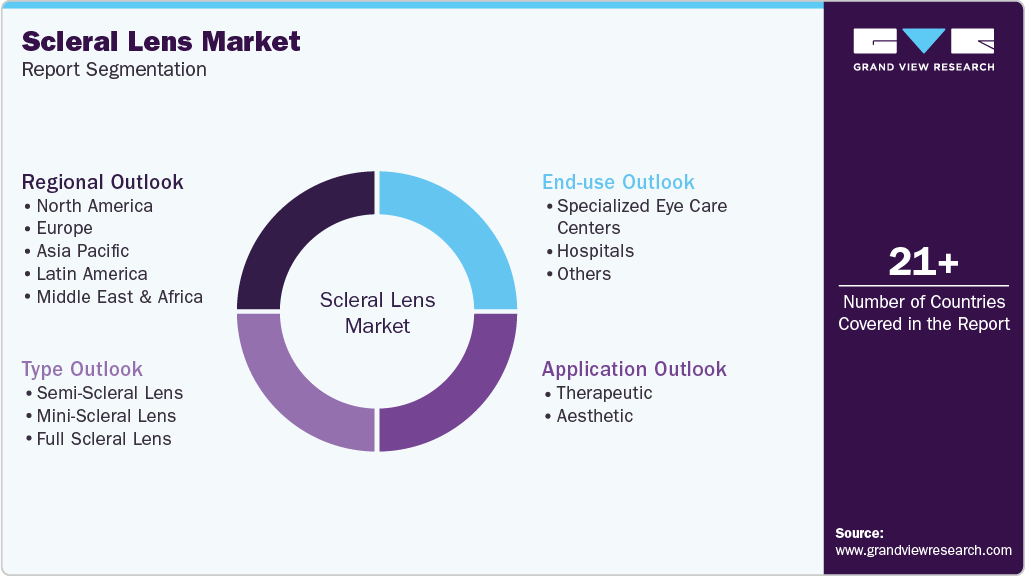
This report forecasts revenue growth at global, regional, and country levels and provides an analysis of the latest industry trends in each of the sub-segments from 2021 to 2033. For this study, Grand View Research has segmented the global scleral lens market report based on type, application, end-use, and region:
 To learn more about this report, Download Free Sample Report
-
Type Outlook (Revenue, USD Unit, 2021 - 2033)
-
Semi-Scleral Lens
-
Mini-Scleral Lens
-
Full Scleral Lens
-
-
Application Outlook (Revenue, USD Unit, 2021 - 2033)
-
Therapeutic
-
Corneal Irregularities & Ectatic Disorders
-
Ocular Surface Disorders & Severe Dry Eye
-
Post-Surgical & Post-Traumatic Corneal Conditions
-
Refractive & Visual Aberrations
-
Other
-
-
Aesthetic
-
Cosmetic Strabismus Correction
-
Aniridia
-
Iris Defects
-
Corneal Opacity
-
Phthisis
-
-
-
End-use Outlook (Revenue, USD Unit, 2021 - 2033)
-
Specialized Eye Care Centers
-
Hospitals
-
Others
-
-
Region Outlook (Revenue, USD Unit, 2021 - 2033)
-
North America
-
U.S.
-
Canada
-
Mexico
-
-
Europe
-
UK
-
Germany
-
France
-
Italy
-
Spain
-
Norway
-
Denmark
-
Sweden
-
-
Asia Pacific
-
China
-
Japan
-
South Korea
-
Thailand
-
Australia
-
India
-
-
Latin America
-
Brazil
-
Argentina
-
-
MEA
-
South Africa
-
Saudi Arabia
-
UAE
-
Kuwait
-
-
Research Methodology
The scleral lens market figures in this report are based on a proven research process that combines executive interviews with secondary research from proprietary databases, company filings, and recognized regulatory and institutional sources. Market size is built through value-chain sizing-reconciling supply-side and demand-side estimates-and triangulated with bottom-up and top-down approaches. Every estimate passes multiple levels of expert validation before publication, with each scleral lens segment quantified using the revenue-capture definitions in the table below.
Segment Definition
Segment - Type
Revenue capture definition
Semi-Scleral Lens
Revenue is generated through the supply of mid-sized rigid gas-permeable (RGP) lens that rest partly on the peripheral cornea and partly on the conjunctiva overlying the sclera. Manufacturers capture revenue via direct practitioner orders, customizable trial fitting sets, and diagnostic mapping software, offering an economical, entry-level specialty lens solution for mild corneal irregularities and mild-to-moderate keratoconus.
Mini-Scleral Lens
Revenue flows from the commercialization of specialized large-diameter lens that completely vault over the cornea and limbus without touching corneal tissue, landing entirely on the fluid-yielding scleral conjunctiva. Market participants capture high-volume specialty lens revenue from optometrists and ophthalmologists treating moderate-to-severe ocular surface diseases, supported by continuous repeat orders, custom-toric haptic customization fees, and specialized multi-pack fitting set distributions.
Full Scleral Lens
Revenue is captured through the production and distribution of extra-large scleral lens designed to vault over severe corneal deformities and hold a massive fluid reservoir over the ocular surface. Given the complex manufacturing precision and topography requirements involved, producers command premium pricing per custom-milled unit, deriving income from specialized laboratory ordering systems, replacement coverage plans, and advanced diagnostic impression-mapping technology.
Segment - Application
Revenue capture definition
Therapeutic
Revenue is generated through the medical distribution and prescription fulfillment of scleral lens indicated for severe ocular pathologies, including advanced keratoconus, severe dry eye disease, Stevens-Johnson syndrome, corneal ectasia, and post-corneal transplant irregularities. Manufacturers and practitioners capture high, consistent value in this segment through institutional insurance/reimbursement coverage, mandatory routine replacement schedules, and companion diagnostic billing.
Aesthetic
Revenue flows from specialized cosmetic, prosthetic, and visual-enhancement scleral lens configurations designed to mask severe corneal scarring, iris disfigurement, or aniridia, as well as high-order refractive error corrections for high-performance visual acuity. Income is driven primarily through out-of-pocket, direct-to-consumer or private-pay clinical transactions, capturing high-margin premium retail customization fees and cosmetic replacement care packages.
Segment - End Use
Revenue capture definition
Specialized Eye Care Centers
Revenue is captured through direct B2B supply lines and account-managed diagnostic agreements with private optometry clinics, specialty contact lens practices, and dedicated cornea clinics. This dominant end-use channel generates high-volume, predictable revenue through bulk diagnostic fitting vault purchases, routine customized patient order flows, and practitioner training or accreditation certifications.
Hospitals
Revenue flows via formal healthcare system tenders, institutional procurement programs, and university hospital formulary listings. Value is captured through regular, bulk-contract supply orders for complex reconstructive or post-surgical cases managed across tertiary care centers, outpatient ophthalmic departments, and emergency corneal trauma units.
Others
Revenue is generated through secondary or alternative care endpoints, including Ambulatory Surgery Centers (ASCs), academic vision research institutes, and specialized optical retail chains. Market participants capture income through research grant hardware supply contracts, streamlined outpatient fitting programs, and specialized vision-rehabilitation distribution pipelines.
Delivered Customizations
This report has been delivered with the following In-depth customizations
Client Request
Customization Delivered
Value Adds
Lens Type Analysis
Conducted a comprehensive lens type analysis of the global scleral lens market, covering corneo-scleral/semi-scleral lenses, mini-scleral lenses, and full scleral lenses, with assessment of differences in lens diameter, corneal and scleral landing zones, fluid reservoir capacity, fitting requirements, customization levels, clinical applications, and practitioner preferences. The analysis evaluated the adoption of each lens type across indications including keratoconus and other corneal ectatic disorders, irregular corneal shape, severe dry eye and ocular surface disease, post-corneal surgery conditions, high astigmatism, and higher-order visual aberrations. The assessment further examined the influence of increasing demand for customized vision correction, advancements in digital corneal and scleral mapping, 3D printing and precision manufacturing, improved fitting software, and growing specialty contact lens practices on lens type selection.
Enables stakeholders to understand which scleral lens configurations are gaining clinical and commercial adoption and why, supporting portfolio planning, product positioning, manufacturing investments, and market expansion strategies. The analysis helps manufacturers identify opportunities for highly customized and digitally fitted lenses, assess price-performance trade-offs, optimize product portfolios by clinical indication, and determine the potential for premium lens offerings.
Competitive Landscape
Conducted a comprehensive competitive landscape assessment of the global scleral lens market, evaluating leading manufacturers and specialty contact lens providers based on product portfolios, lens type coverage, customization capabilities, diameter ranges, material technologies, fitting methodologies, digital design capabilities, practitioner support, distribution networks, pricing strategies, geographic presence, regulatory positioning, and strategic initiatives. The analysis assessed competition across major product categories, including customized scleral lenses, mini-scleral lenses, full scleral lenses, prosthetic and therapeutic scleral lenses, and digitally designed specialty lenses. Competitive assessment also covered advancements in corneal and scleral topography integration, wavefront-guided customization, impression-based fitting, 3D-printed and digitally manufactured lenses, online fitting platforms, and practitioner-facing software. In addition, the study examined partnerships, product launches, acquisitions, geographic expansion, investments in manufacturing capabilities, and collaborations with optometrists, ophthalmologists, specialty contact lens clinics, and academic institutions.
Enables stakeholders to benchmark competitors based on product breadth, technological differentiation, customization capabilities, clinical reach, and commercialization strength. The analysis supports strategic decision-making related to product development, competitive positioning, pricing, partnerships, distribution expansion, and investment prioritization. It also helps manufacturers identify gaps in the market for advanced customized, digitally fitted, therapeutic, and prosthetic scleral lenses, while assessing competitor strengths and opportunities for differentiation.
PESTEL Analysis
Conducted a detailed PESTEL analysis of the global scleral lens market to assess the influence of political, economic, social, technological, environmental, and legal factors on market development and commercialization. The political and policy assessment examined government healthcare priorities, access to eye-care services, healthcare funding, medical-device policies, and international trade conditions affecting specialty contact lens manufacturing and distribution. The economic assessment evaluated disposable income, healthcare expenditure, inflation, currency fluctuations, manufacturing and raw-material costs, affordability of customized lenses, reimbursement policies, and differences in healthcare spending between developed and emerging economies. Social factors included the rising burden of corneal disorders and ocular surface conditions, aging populations, increasing awareness of specialty contact lenses, demand for improved visual quality and comfort, and growing access to optometry and ophthalmology services. Technological factors assessed advances in scleral topography, digital lens design, impression-based fitting, 3D printing, high-precision manufacturing, artificial intelligence-assisted fitting, and advanced lens materials.
Enables stakeholders to identify the external opportunities and risks shaping the scleral lens market and evaluate how macroeconomic and regulatory changes could affect market growth, pricing, manufacturing, and commercialization. The analysis supports regional expansion planning by identifying markets with favorable healthcare expenditure, specialty eye-care infrastructure, and purchasing power while highlighting markets constrained by affordability or regulatory complexity
Frequently Asked Questions About This Report
The mini-scleral lens segment led with a 39.4% revenue share in 2025.
The therapeutic segment led with a 81.9% revenue share in 2025.
The specialized eye care centers segment led with a 47.8% revenue share in 2025.
The global scleral lens market size was valued at USD 226.9 million in 2025 and is estimated at USD 254.2 million for 2026.
The global scleral lens market is expected to grow at a CAGR of 13.3% from 2026 to 2033, reaching USD 609.2 million by 2033.
North America dominated the scleral lens market, with a 43.2% share in 2025.
Key factor driving market growth is rising patients with corneal irregularities, keratoconus, ocular surface disease, severe dry eye, post-corneal surgery complications, and other complex visual conditions.
Some key players operating in the scleral lens market include CooperVision; Bausch + Lomb; Essilor Custom Contact Lens Specialists; Valley Contax; AccuLens; WAVE Eye Care; Visionary Optics; Art Optical Contact Lens, Inc.; TruForm Optics Inc.; ABB Optical Group; OPTOSOFT Ltd; EYEART Laboratories
About the Author(s)
Medical Devices Research Team
Healthcare · Medical DevicesThis report was authored by the medical devices research team at Grand View Research - comprising two research analysts, one senior research analyst, and one industry expert - with specialized expertise in the medical devices segment of the healthcare industry. All findings are based on proprietary healthcare databases, executive interviews, and regulatory analysis, subject to internal peer review prior to publication.
Last Updated:
Speak to Analyst

Customize this report to your needs - add regions, segments, or data points, with 20% free customization.
Or view our licence options:


ISO 9001:2015 & 27001:2022 Certified
We are GDPR and CCPA compliant! Your transaction & personal information is safe and secure. For more details, please read our privacy policy.


