
- Home
- »
- Pharmaceuticals
- »
-
Selective Serotonin Reuptake Inhibitors Market Report, 2026-2033GVR Report cover

Selective Serotonin Reuptake Inhibitors Market (2026 - 2033)
Size, Share & Trends Analysis Report By Drug Type (Molecule), By Indication (Major Depressive Disorder, Anxiety Disorders, Obsessive Compulsive Disorder), By Distribution Channel, By Region, And Segment Forecasts
Market Size, 2025
$19.5BMarket Estimate, 2026
$20.5BMarket Forecast, 2033
$30.3BCAGR, 2026–2033
5.7%Selective Serotonin Reuptake Inhibitors Market Summary
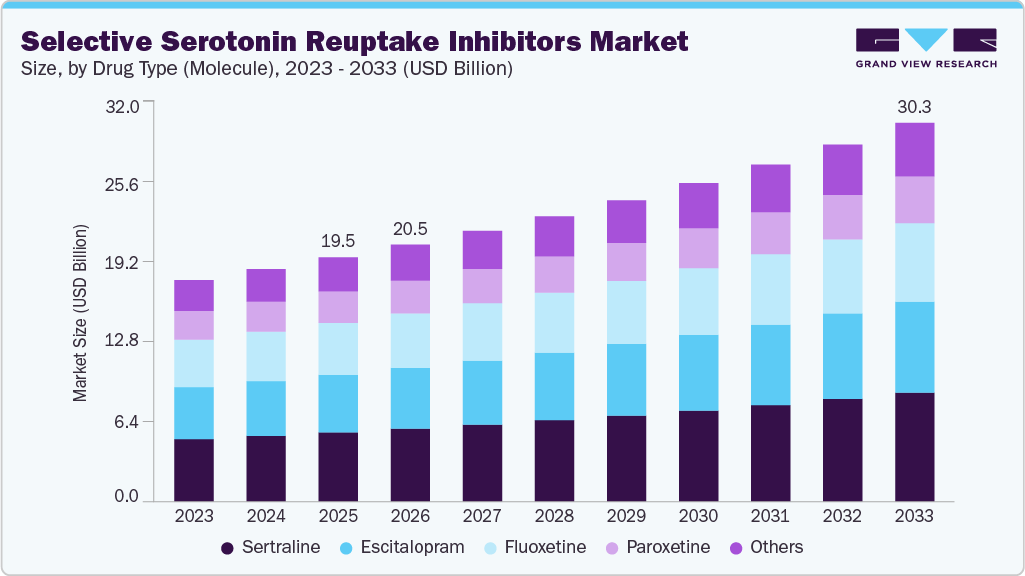
The global selective serotonin reuptake inhibitors market size was valued at USD 19.5 billion in 2025 and is projected to grow from USD 20.5 billion in 2026 to USD 30.3 billion by 2033, at a CAGR of 5.7% from 2026 to 2033. The North America held the largest share of 38.9% of the global market in 2025. The industry is driven by the rising global prevalence of depression and anxiety disorders, increasing mental health awareness, and the continued preference for selective serotonin reuptake inhibitors (SSRIs) as first-line pharmacological treatments.
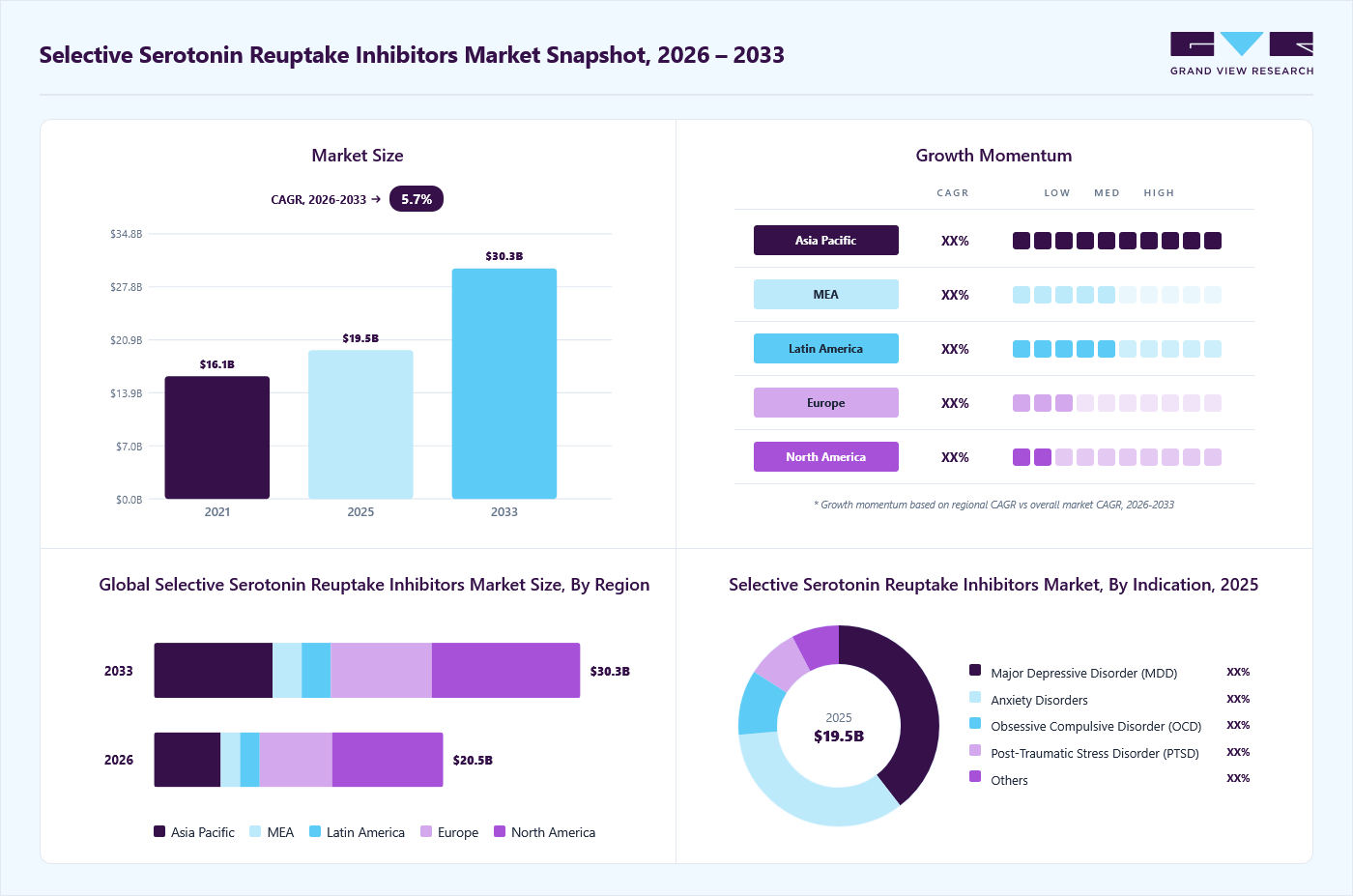 Source: Grand View Research, IR Documents, Primary Interviews, Paid DatabasesTo learn more about this report,
 Download Free Sample Report
 Key Market Trends & Insights
- By drug type (molecule): Sertraline segment held the largest market share of 28.4% in 2025.
- By indication: Major depressive disorder (MDD) segment held the largest market share of 39.5% in 2025.
- By distribution channel: Retail pharmacies segment held the largest market share of 64.5% in 2025.
Regional Highlights
- Largest regional market: North America (38.8% revenue share, 2025)
- Fastest-growing regional market: Asia Pacific (highest CAGR, 2026-2033)
- By country: The U.S. held the largest share in 2025
Market Size & Forecast
- Market size in 2025: USD 19.5 Billion
- Estimated market size in 2026: USD 20.5 Billion
- Projected market size by 2033: USD 30.3 Billion
- CAGR (2026-2033): 5.7%
Three ways to get this report
Buy it, customize it, or ask a question.Ask an Analyst
Analyst response in 1 business day
- AccessReport author, directly
- Reply timeWithin 1 working day
- No sales callDirect answer only
- FormatEmail reply
- CostFree, no cost
Get the Full Report
What the study covers
- FormatsPDF · Excel · Dashboard
- Timeline2026–2033 annual, 2025 base
- Coverage20+ countries, 5 regions
- Companies10+ key players profiled
Customize the Report
20% free customization
- IncludeCountries, segments, points
- TailorTo your product definition
- ExtendDeeper competitor detail
- OrA fully bespoke study
- Turnaround5–10 working days
Growth is further supported by the widespread availability of low-cost generics, expanding access to mental healthcare services, and sustained clinical reliance on established SSRI molecules.The market represents a mature and essential segment within the global antidepressants landscape, characterized by high prescription volumes and sustained clinical reliance. SSRIs continue to serve as the first-line pharmacological treatment for major depressive disorder, anxiety disorders, and related psychiatric conditions due to their favorable safety, tolerability, and efficacy profiles compared to older antidepressants. The market is primarily volume-driven, supported by the widespread availability of low-cost generics and increasing diagnosis rates of mental health conditions, which continue to expand the treated patient population globally.
 To learn more about this report, Download Free Sample Report
 A key driver of the market is the rising global burden of depression and anxiety, coupled with improved awareness, reduced social stigma, and better access to mental healthcare services. The integration of mental health into primary care settings and the growing use of digital consultation platforms have further increased diagnosis and treatment rates. Despite limited innovation in new SSRI molecules, the market continues to evolve through adjacent therapeutic developments, such as the September 2023 FDA approval of Exxua (gepirone), a non-SSRI serotonergic agent offering an alternative for patients intolerant to traditional SSRIs. Additionally, ongoing research efforts, including the April 2023 initiation of the VENTURA-RWE study, are strengthening real-world evidence around SSRI effectiveness, supporting their continued clinical relevance.
The industry also faces structural challenges, including intense generic competition, pricing pressures, and the emergence of alternative treatment modalities. Novel therapies targeting different neurological pathways are gradually reshaping the competitive landscape, particularly for treatment-resistant cases. For instance, psilocybin-based therapies under development between 2024 and 2026 are gaining attention as potential future alternatives, signaling a shift toward next-generation mental health treatments. Despite these pressures, SSRIs are expected to maintain a strong market position due to their entrenched role in treatment guidelines, broad accessibility, and long-standing physician confidence.
Market Concentration & Characteristics
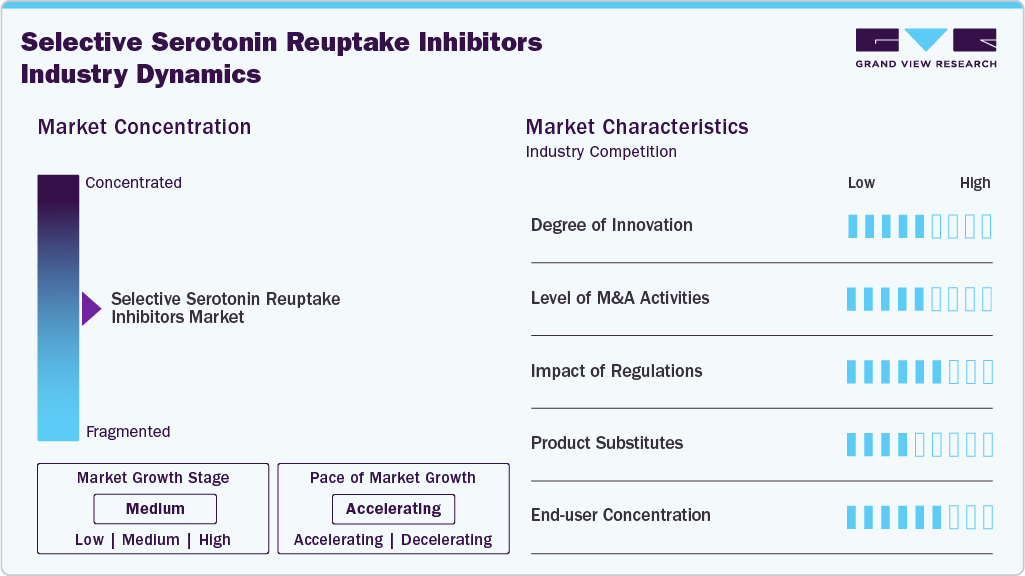
The SSRIs market exhibits a low-to-moderate degree of innovation, as it is largely composed of well-established molecules with limited new drug development. Innovation is primarily centered around adjacent therapies, improved formulations, and treatment approaches rather than novel SSRIs. For instance, the September 2023 FDA approval of Exxua (gepirone) highlights a shift toward alternative serotonergic mechanisms targeting improved tolerability. In addition, ongoing research continues to refine treatment strategies, though core SSRI molecules remain unchanged, reflecting a mature and stabilized innovation landscape.
The industry presents moderate barriers to entry, primarily due to regulatory requirements and the need for bioequivalence studies for generic approvals. While the absence of strong patent protection lowers entry barriers compared to branded drug markets, competition is intense, requiring scale manufacturing, cost efficiency, and established distribution networks. Companies such as Sun Pharma have strengthened their positions through June 2023 manufacturing capacity expansions for SSRIs like fluoxetine and escitalopram, making it difficult for smaller entrants to compete on price and volume. In addition, brand loyalty toward established molecules further limits differentiation.
 To learn more about this report, Download Free Sample Report
 Regulatory frameworks play a significant role in shaping prescribing patterns and safety monitoring within the SSRIs industry. Agencies such as the FDA and EMA enforce strict guidelines on labeling, particularly regarding suicidality risks and usage in specific populations. The 2023-2024 monitoring by the EMA’s PRAC on SSRI-associated risks in younger populations highlights the continued emphasis on pharmacovigilance. Moreover, evolving regulatory discussions, including July 2025 FDA evaluations of SSRI safety in pregnancy, influence physician prescribing behavior and patient risk assessment, thereby impacting market dynamics.
The industry faces a moderate-to-high threat from substitutes, particularly from newer antidepressant classes and non-traditional therapies. While SSRIs remain first-line treatments, alternatives such as SNRIs, atypical antidepressants, NMDA receptor antagonists, and emerging psychedelic therapies are gaining traction, especially in treatment-resistant cases. The January 2025 approval of Spravato (esketamine) as monotherapy demonstrates a shift toward non-SSRI treatment pathways. Despite this, SSRIs maintain strong relevance due to their cost-effectiveness, accessibility, and long-standing clinical trust.
Geographical expansion in the SSRIs industry is driven by generic manufacturers aiming to increase penetration in high-demand and emerging markets. Companies are focusing on strengthening supply chains and regulatory approvals to expand their footprint. For example, in September 2024, Lupin Limited expanded its U.S. generics supply chain for SSRIs such as paroxetine and sertraline, enhancing distribution efficiency and availability. Expansion strategies typically include cost-competitive offerings, localized manufacturing, and partnerships with regional distributors, enabling companies to capture volume-driven growth across diverse healthcare systems.
Drug Type (Molecule) Insights
The sertraline segment held the largest revenue share of 28.4% in 2025, driven by its widespread first-line use across major depressive disorder and anxiety-related conditions, supported by strong clinical efficacy, a favorable safety profile, and extensive availability in low-cost generic forms. Its high prescription volume across both developed and emerging markets, coupled with broad physician familiarity, continues to anchor its dominance in the SSRI class. This leadership is further reinforced by consistent supply expansion initiatives, such as Aurobindo Pharma’s expansion of U.S. sertraline hydrochloride tablet supplies, which strengthened market accessibility and ensured steady availability across retail channels. Pfizer Inc. offers Zoloft, a widely prescribed SSRI used for depression, anxiety, PTSD, and OCD, now primarily sustained through legacy branding and global markets.
The Escitalopram segment is expected to grow at the fastest CAGR of 5.9% over the forecast period, driven by increasing preference for newer-generation SSRIs with improved tolerability, lower side-effect burden, and strong efficacy in both depression and anxiety disorders. Its rising adoption in younger patient populations and long-term treatment settings, along with favorable guideline positioning, is accelerating demand globally. Growth momentum is supported by expanding generic penetration and manufacturing integration, highlighted by Dr. Reddy’s Laboratories’ advancement in escitalopram throughout the U.S. market, leveraging its vertically integrated production capabilities to enhance supply efficiency and market reach. H. Lundbeck A/S offers escitalopram (Lexapro/Cipralex), a highly selective SSRI widely used for depression and generalized anxiety disorder.
Indication Insights
The major depressive disorder (MDD) segment held the largest revenue share of 39.5% in 2025, driven by the high global prevalence of depression and the continued positioning of SSRIs as first-line pharmacological therapy. Strong clinical guideline support, long-term treatment requirements, and high diagnosis rates in both primary care and psychiatric settings contribute to sustained demand. The segment’s dominance is further reinforced by evolving treatment approaches. For instance, in January 2025 U.S. FDA approval of Spravato (esketamine) as monotherapy for treatment-resistant depression reshapes the MDD treatment landscape and complements or substitutes traditional SSRI usage in complex cases.
Post-Traumatic Stress Disorder (PTSD) is expected to grow at the fastest CAGR of 6.0% over the forecast period, driven by the increasing prevalence of trauma-related conditions arising from factors such as military conflicts, accidents, and rising incidences of abuse and violence. Growing awareness regarding mental health, improved diagnosis rates, and expanding access to psychiatric care are further contributing to segment growth. Additionally, the rising adoption of SSRIs as first-line pharmacological treatment for PTSD, supported by favorable clinical outcomes and guideline recommendations, is accelerating market demand. Increased research initiatives and government-backed mental health programs are also playing a crucial role in boosting the growth of this segment.
Distribution Channel Insights
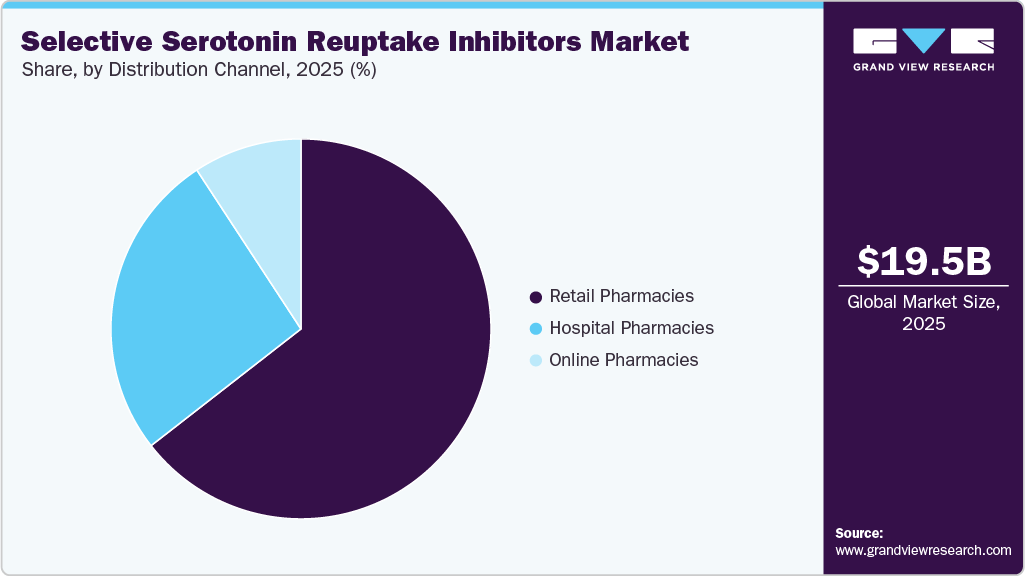
The retail pharmacies segment held the largest revenue share of 64.5% in 2025, driven by the widespread availability of generic SSRIs, high prescription volumes, and established patient reliance on brick-and-mortar pharmacy networks for chronic medication access. Strong distribution linkages with manufacturers and immediate drug accessibility continue to support this channel’s dominance, particularly in developed markets. This is further reinforced by supply-side stability initiatives, such as Teva Pharmaceutical Industries’ supply of generic SSRIs in the U.S., including fluoxetine and paroxetine, which improved retail availability and ensured consistent patient access.
 To learn more about this report, Download Free Sample Report
 The online pharmacies segment is expected to grow at the fastest CAGR over the forecast period, driven by the rapid expansion of telehealth and e-prescription platforms, increasing patient preference for convenience, and improved digital healthcare infrastructure. The growing acceptance of remote mental health consultations has significantly boosted online SSRI dispensing, especially among younger populations and urban users. Additionally, subscription-based medication delivery models and discreet purchasing options are further accelerating adoption, positioning online pharmacies as a key growth channel in the evolving antidepressant distribution landscape. Various major companies, such as Eli Lilly and Company, offers its fluoxetine (Prozac) product via e-prescription/retail integration.
Regional Insights
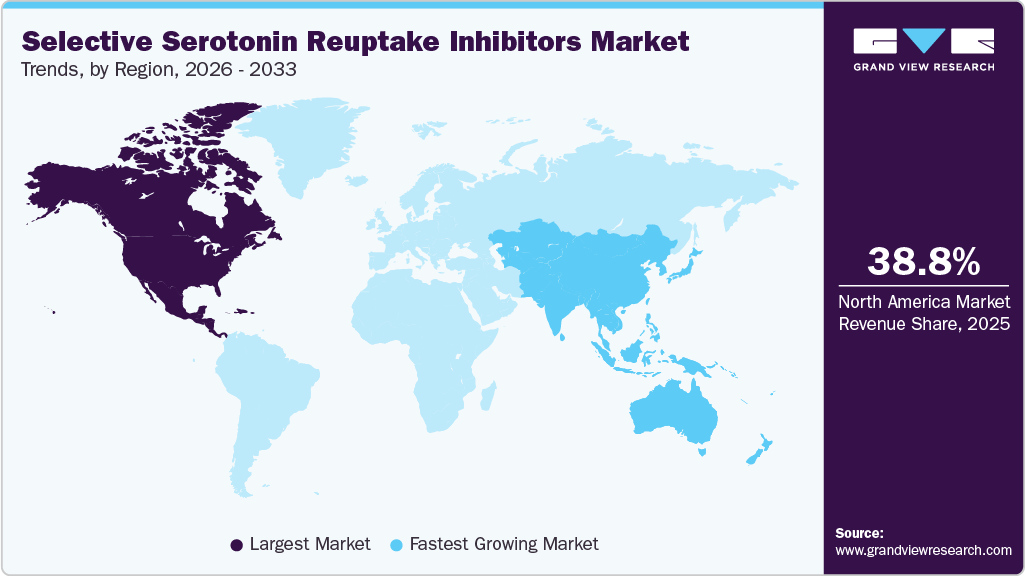
North America dominated the selective serotonin reuptake inhibitors (SSRIs) market with a revenue share of 38.8% in 2025, driven by a high prevalence of depression and anxiety disorders, strong awareness levels, and a well-established mental healthcare infrastructure. The region benefits from widespread insurance coverage, early diagnosis, and high treatment adherence, which collectively sustain strong prescription volumes for SSRIs. The presence of major pharmaceutical companies and extensive availability of both branded and generic drugs further strengthen market stability. Additionally, increasing adoption of tele psychiatry and digital health platforms has expanded access to mental health services, particularly in remote areas. Regulatory support and continuous clinical guideline updates reinforce SSRIs as first-line therapy, ensuring consistent demand despite the emergence of alternative treatments.
 To learn more about this report, Download Free Sample Report
 U.S. Selective Serotonin Reuptake Inhibitors Market Trends
The selective serotonin reuptake inhibitors (SSRIs) market in the United States is characterized by high antidepressant prescription rates and advanced healthcare access. SSRIs are extensively prescribed across primary care and psychiatric settings, supported by favorable reimbursement frameworks and strong physician familiarity. The country also leads in digital health adoption, with telehealth platforms significantly increasing access to mental health consultations and e-prescriptions. The presence of large generic manufacturers ensures consistent drug availability and competitive pricing. Additionally, regulatory oversight by the FDA plays a critical role in shaping prescribing practices, particularly through safety monitoring and label updates. The U.S. market continues to evolve with a growing focus on personalized treatment approaches and the integration of mental health into broader healthcare systems.
Europe Selective Serotonin Reuptake Inhibitors Market Trends
The selective serotonin reuptake inhibitors (SSRIs) market in Europe is supported by universal healthcare systems, increasing mental health awareness, and strong adherence to clinical guidelines. SSRIs are widely prescribed as first-line treatments across multiple indications, particularly depression and anxiety disorders. The region benefits from structured healthcare delivery and government-backed mental health initiatives, which promote early diagnosis and long-term treatment. Generic penetration is high, contributing to cost-effective therapy and broad patient access. In addition, regulatory bodies such as the EMA ensure stringent safety monitoring and pharmacovigilance, influencing prescribing behavior. The market is also supported by growing emphasis on community-based mental healthcare and increasing utilization of outpatient treatment settings.
The UK selective serotonin reuptake inhibitors (SSRIs) market is driven by strong guideline-based prescribing and increasing mental health service utilization under the National Health Service (NHS). SSRIs, particularly sertraline, are widely recommended as first-line therapy for both depression and anxiety disorders, contributing to high prescription volumes. The country has witnessed a steady rise in antidepressant usage due to improved awareness and accessibility of mental health services. Primary care physicians play a central role in diagnosis and treatment initiation, further supporting demand. In addition, digital mental health services and online prescription platforms are gaining traction, enhancing accessibility and convenience. Cost-effective generics dominate the market, ensuring broad patient coverage.
The selective serotonin reuptake inhibitors (SSRIs) market in Germany represents a key European market with strong demand for SSRIs, supported by a well-established healthcare system and high diagnosis rates of mental health conditions. The country emphasizes evidence-based treatment, with SSRIs commonly prescribed as first-line therapy in both primary and specialist care. Reimbursement through statutory health insurance ensures widespread access to medications, particularly generics. Germany also benefits from a robust pharmaceutical manufacturing base and efficient distribution networks, which support consistent drug availability. Increasing awareness of mental health and workplace stress is contributing to rising prescription volumes. Additionally, integration of mental health services within general healthcare continues to drive market growth.
Asia Pacific Selective Serotonin Reuptake Inhibitors Market Trends
The selective serotonin reuptake inhibitors (SSRIs) market in Asia Pacific is the fastest-growing region, driven by rising mental health awareness, increasing urbanization, and improving access to healthcare services. Large population bases, coupled with growing recognition of depression and anxiety disorders, are significantly expanding the treated patient pool. Governments across the region are increasingly prioritizing mental health through national programs and policy initiatives. The market is also benefiting from the expansion of generic drug manufacturing, particularly in countries such as India and China, which enhances affordability and access. Additionally, the rapid growth of telemedicine platforms is improving diagnosis and treatment rates. Despite ongoing stigma in some areas, the region presents strong growth potential due to evolving healthcare infrastructure.
Japan’s selective serotonin reuptake inhibitors (SSRIs) market is characterized by cautious but steadily increasing adoption, supported by growing awareness of mental health conditions and an aging population. Historically, stigma around psychiatric disorders limited treatment uptake; however, this is gradually changing with improved public education and healthcare access. SSRIs are commonly prescribed for depression and anxiety, particularly in outpatient settings. The country maintains strict regulatory standards, ensuring high-quality pharmaceutical products. Generic penetration is increasing, helping reduce treatment costs and improve accessibility. Additionally, workplace stress and social pressures are contributing to the rising demand for antidepressant therapies.
The selective serotonin reuptake inhibitors (SSRIs) market in China is expanding rapidly due to increasing mental health awareness and government efforts to strengthen psychiatric care infrastructure. The large population base and rising incidence of depression and anxiety disorders are key growth drivers. SSRIs are widely used as first-line treatments, with the growing availability of low-cost generics improving accessibility. Urban areas are witnessing higher diagnosis and treatment rates, supported by better healthcare facilities and digital health platforms. However, stigma and uneven healthcare access in rural regions continue to limit full market penetration. Ongoing healthcare reforms are expected to further boost market growth.
Latin America Selective Serotonin Reuptake Inhibitors Market Trends
The selective serotonin reuptake inhibitors (SSRIs) market in Latin America is driven by increasing awareness of mental health and gradual improvements in healthcare access. Countries such as Brazil and Mexico are witnessing rising diagnosis rates of depression and anxiety disorders. SSRIs are widely prescribed due to their affordability and availability in generic forms. Public healthcare systems play a significant role in drug distribution, although access can vary across regions. Economic constraints and limited mental health infrastructure in certain areas may restrict growth. Nevertheless, expanding healthcare coverage and awareness initiatives are supporting market development.
Middle East & Africa (MEA) Selective Serotonin Reuptake Inhibitors Market Trends
The SSRIs market in the MEA region is developing gradually, supported by improving healthcare infrastructure and increasing recognition of mental health disorders. Urban centers are driving demand, with better access to psychiatric services and medications. SSRIs are commonly prescribed due to their cost-effectiveness and established safety profile. However, stigma surrounding mental health and limited specialist availability in rural areas continue to hinder widespread adoption. Government initiatives and private sector investments are helping improve access to mental healthcare services. The market is expected to grow steadily as awareness and healthcare accessibility continue to improve.
Key Selective Serotonin Reuptake Inhibitors Companies Insights
Some of the leading players operating in the selective serotonin reuptake inhibitors market include Pfizer Inc., Johnson & Johnson, Teva Pharmaceutical Industries Ltd. Companies focus on capturing the market by increasing their presence using various business initiatives, such as partnerships & collaborations with government. Moreover, these companies have well established product portfolio, which helps capture major market share.
Merck & Co., Inc., AstraZeneca plc, H. Lundbeck A/S, are some of the emerging market participants in the selective serotonin reuptake inhibitors market. Developing & launching new and improved products that offer faster results, higher accuracy, and easier usability are observed as prevalent operating strategies by these companies. The players may face challenges in penetrating the market due to competition and regulatory hurdles.
Key Selective Serotonin Reuptake Inhibitors Companies:
The following key companies have been profiled for this study on the selective serotonin reuptake inhibitors market.
- Pfizer Inc.
- Eli Lilly and Company
- GlaxoSmithKline plc
- H. Lundbeck A/S
- Johnson & Johnson (Janssen Pharmaceuticals)
- AbbVie Inc.
- AstraZeneca plc
- Sanofi S.A.
- Merck & Co., Inc.
- Teva Pharmaceutical Industries Ltd.
Recent Development
-
In March 2026, Aurobindo Pharma received U.S. FDA approval for its Citalopram Capsules, expanding its SSRI generics portfolio and strengthening its presence in the antidepressants segment.
-
In October 2024, JAMA Psychiatry published observational studies confirming the continued real-world effectiveness of SSRIs such as escitalopram and sertraline in primary care treatment of depression.
Selective Serotonin Reuptake Inhibitors Market Report Scope
Report Attribute
Details
Market size in 2025
USD 19.5 billion
Estimated market size in 2026
USD 20.5 billion
Projected market size by 2033
USD 30.3 billion
Growth rate
CAGR 5.7% from 2026 to 2033
Base year for estimation
2025
Historical data
2021 - 2024
Forecast period
2026 - 2033
Quantitative units
Revenue in USD million/billion and CAGR from 2026 to 2033
Report coverage
Revenue forecast, company ranking, competitive landscape, growth factors, and trends
Segments covered
Drug type (molecule), indication, distribution channel, region
Regional scope
North America; Europe; Asia Pacific; Latin America; MEA
Country scope
U.S.; Canada; Germany; UK; France; Italy; Spain; Denmark, Sweden, Norway, China; Japan; India; Australia; Thailand, South Korea; Brazil; Mexico; Argentina; South Africa; Saudi Arabia; UAE; Kuwait
Key companies profiled
Pfizer Inc.; Eli Lilly and Company; GlaxoSmithKline plc; H. Lundbeck A/S; Johnson & Johnson (Janssen Pharmaceuticals); AbbVie Inc.; AstraZeneca plc; Sanofi S.A.; Merck & Co., Inc.; Teva Pharmaceutical Industries Ltd.
Customization scope
Free report customization (equivalent to 8 analyst’s working days) with purchase. Addition or alteration to country, regional & segment scope.
Global Selective Serotonin Reuptake Inhibitors Market Report Segmentation
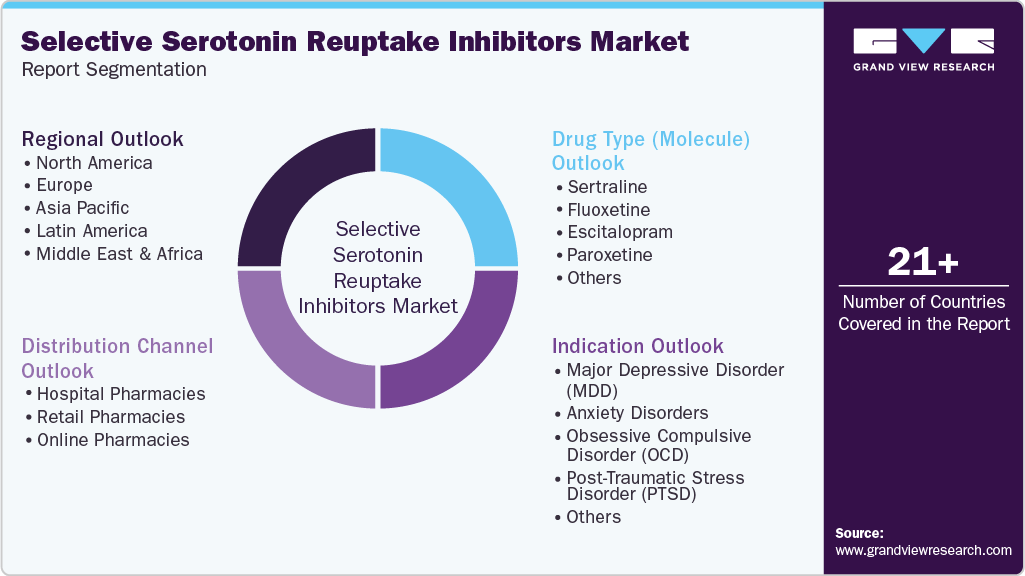
This report forecasts revenue growth at the global, regional and country levels and provides an analysis of the latest trends in each of the sub-segments from 2021 to 2033. For this study, Grand View Research has segmented the global selective serotonin reuptake inhibitors market report on the basis of drug type (molecule), indication, distribution channel, and region:
 To learn more about this report, Download Free Sample Report
 -
Drug Type (Molecule) Outlook (Revenue, USD Billion, 2021 - 2033)
-
Sertraline
-
Fluoxetine
-
Escitalopram
-
Paroxetine
-
Others
-
-
Indication Outlook (Revenue, USD Billion, 2021 - 2033)
-
Major Depressive Disorder (MDD)
-
Anxiety Disorders
-
Obsessive Compulsive Disorder (OCD)
-
Post-Traumatic Stress Disorder (PTSD)
-
Others
-
-
Distribution Channel Outlook (Revenue, USD Billion, 2021 - 2033)
-
Hospital Pharmacies
-
Retail Pharmacies
-
Online Pharmacies
-
-
Regional Outlook (Revenue, USD Billion, 2021 - 2033)
-
North America
-
U.S.
-
Canada
-
Mexico
-
-
Europe
-
Germany
-
UK
-
France
-
Italy
-
Spain
-
Denmark
-
Sweden
-
Norway
-
-
Asia Pacific
-
Japan
-
China
-
India
-
Australia
-
South Korea
-
Thailand
-
-
Latin America
-
Brazil
-
Argentina
-
-
Middle East and Africa (MEA)
-
South Africa
-
Saudi Arabia
-
UAE
-
Kuwait
-
-
Frequently Asked Questions About This Report
The global selective serotonin reuptake inhibitors market size was valued at USD 19.5 billion in 2025 and is anticipated to reach USD 20.5 billion in 2026.
The global selective serotonin reuptake inhibitors market is expected to witness a compound annual growth rate of 5.7% from 2026 to 2033 to reach USD 30.3 billion by 2033.
Based on drug type, the sertraline segment held the largest revenue share of 28.4% in 2025, driven by its widespread first-line use across major depressive disorder and anxiety-related conditions, supported by strong clinical efficacy, favorable safety profile, and extensive availability in low-cost generic forms...
The global selective serotonin reuptake inhibitors market is driven by the rising global prevalence of depression and anxiety disorders, increasing mental health awareness, and the continued preference for SSRIs as first-line pharmacological treatments.
North America dominated with a 38.9% revenue share in 2025.
Asia Pacific is the fastest-growing region over the forecast period.
The major depressive disorder (MDD) segment led with a 39.5% revenue share in 2025, while the Post-Traumatic stress disorder (PTSD) segment is the fastest-growing.
The retail pharmacies segment led with a 64.5% revenue share in 2025, while the online pharmacies segment is the fastest-growing.
Some of the key players in selective serotonin reuptake inhibitors market are Pfizer Inc.; Eli Lilly and Company; GlaxoSmithKline plc; H. Lundbeck A/S; Johnson & Johnson (Janssen Pharmaceuticals); AbbVie Inc.; AstraZeneca plc; Sanofi S.A.; Merck & Co., Inc.; Teva Pharmaceutical Industries Ltd.
About the Author(s)
Pharmaceuticals Research Team
Healthcare · PharmaceuticalsThis report was authored by the pharmaceuticals research team at Grand View Research - comprising two research analysts, one senior research analyst, and one industry expert - with specialized expertise in the pharmaceuticals segment of the healthcare industry. All findings are based on proprietary healthcare databases, executive interviews, and regulatory analysis, subject to internal peer review prior to publication.
Last Updated:
Speak to Analyst

Customize this report to your needs - add regions, segments, or data points, with 20% free customization.
Or view our licence options:


ISO 9001:2015 & 27001:2022 Certified
We are GDPR and CCPA compliant! Your transaction & personal information is safe and secure. For more details, please read our privacy policy.


