
- Home
- »
- Medical Devices
- »
-
Sentinel Lymph Node Biopsy Imaging Agents Market Report, 2026-2033GVR Report cover

Sentinel Lymph Node Biopsy Imaging Agents Market (2026 - 2033)
Size, Share & Trends Analysis Report By Product (Radioactive Tracers, Dye-Based Agents), By Application (Breast Cancer, Melanoma), By Procedure, By End Use, By Region, And Segment Forecasts
Market Size, 2025
$101.5MMarket Estimate, 2026
$107.7MMarket Forecast, 2033
$184.1MCAGR, 2026–2033
8.0%Sentinel Lymph Node Biopsy Imaging Agents Market Summary
The global sentinel lymph node biopsy imaging agents market size was valued at USD 101.5 million in 2025 and is projected to grow from USD 107.7 million in 2026 to USD 184.1 million by 2033, at a CAGR of 8.0% from 2026 to 2033. The North America held the largest share of 42.5% of the global market in 2025, primarily driven by the rising global burden of cancer, particularly breast cancer and melanoma, which increases the need for accurate staging and lymphatic mapping techniques. As healthcare systems increasingly shift toward minimally invasive diagnostic procedures, sentinel lymph node biopsy imaging agents (SLNB) is preferred over full lymph node dissection due to reduced complications and faster recovery, thereby boosting demand for imaging agents.
 Source: Grand View Research, IR Documents, Primary Interviews, Paid DatabasesTo learn more about this report,
 Download Free Sample Report
 Key Market Trends & Insights
- By product: Radioactive tracers segment held the largest market share in 2025.
- By application: Breast cancer segment held the largest market share in 2025.
- By procedure: Open surgery segment held the largest market share in 2025.
- By end use: Hospital segment held the largest market share of 65.2% in 2025.
Regional Highlights
- Largest regional market: North America (42.5% revenue share, 2025)
- Fastest-growing regional market: Asia Pacific (highest CAGR, 2026-2033)
- By country: The U.S. held the largest share in 2025
Market Size & Forecast
- Market size in 2025: USD 101.5 Million
- Estimated market size in 2026: USD 107.7 Million
- Projected market size by 2033: USD 184.1 Million
- CAGR (2026-2033): 8.0%
Three ways to get this report
Buy it, customize it, or ask a question.Ask an Analyst
Analyst response in 1 business day
- AccessReport author, directly
- Reply timeWithin 1 working day
- No sales callDirect answer only
- FormatEmail reply
- CostFree, no cost
Get the Full Report
What the study covers
- FormatsPDF · Excel · Dashboard
- Timeline2026–2033 annual, 2025 base
- Coverage20+ countries, 5 regions
- Companies10+ key players profiled
Customize the Report
20% free customization
- IncludeCountries, segments, points
- TailorTo your product definition
- ExtendDeeper competitor detail
- OrA fully bespoke study
- Turnaround5–10 working days
Moreover, technological advancements in radiotracers, fluorescent dyes, and hybrid imaging agents are significantly improving detection accuracy and surgical outcomes, encouraging wider adoption. Growing clinical research activities, regulatory approvals, and funding in oncology, along with increasing awareness of early cancer detection, further accelerate market expansion.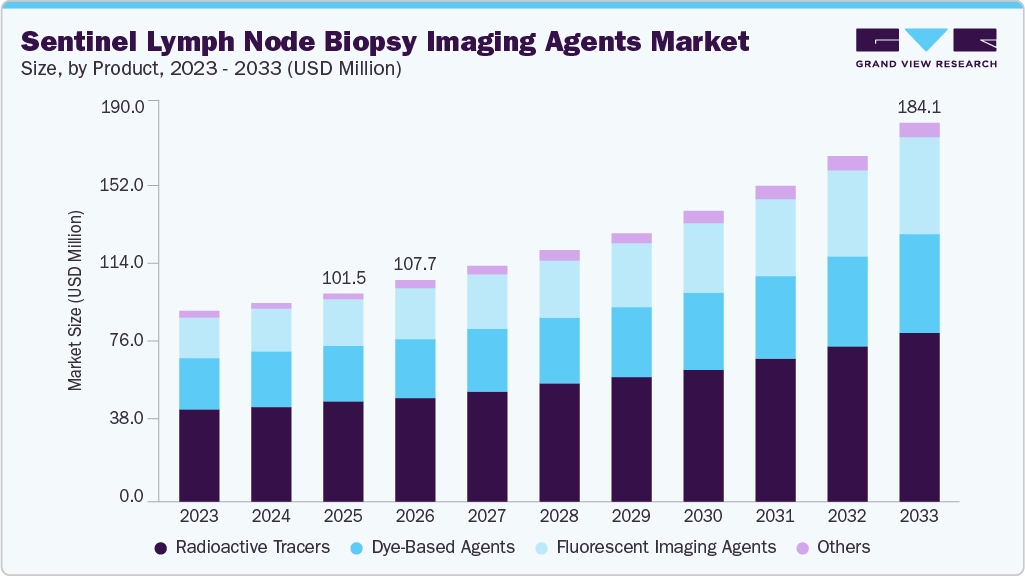 To learn more about this report, Download Free Sample Report
 Technological advancements in tracers, including fluorescent agents, hybrid tracers, and targeted imaging compounds, are significantly improving the accuracy and real-time visualization of sentinel lymph nodes. These innovations improve detection rates and reduce reliance on traditional methods, driving greater adoption in minimally invasive and image-guided surgeries. As a result, advanced tracers are becoming a key factor in improving surgical precision and expanding the market for SLNB imaging agents.
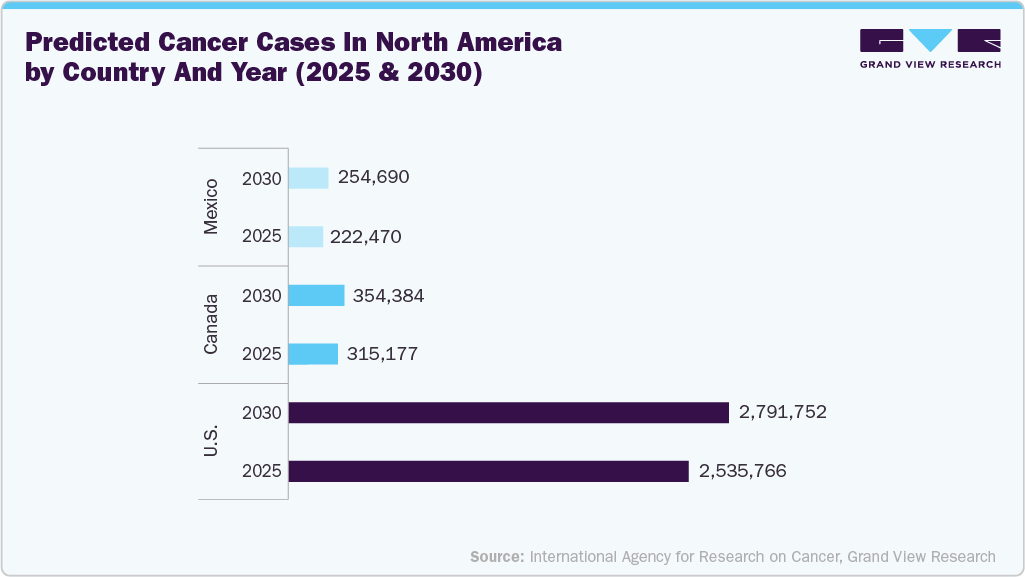
The rising global cancer incidence, particularly breast cancer and melanoma, is a major driver of the market, as these procedures are essential for accurate cancer staging and treatment planning. The growing patient population increases the demand for precise lymphatic mapping, thereby supporting the adoption of advanced imaging agents to improve diagnostic accuracy and surgical outcomes.
 To learn more about this report, Download Free Sample Report
 The growing preference for minimally invasive procedures is driving the adoption of sentinel lymph node biopsy as an effective alternative to extensive lymph node dissection. This shift is increasing demand for imaging agents that enable accurate lymphatic mapping while minimizing surgical complications and shortening recovery time. As clinicians increasingly focus on improving patient outcomes and procedural efficiency, the use of precise and user-friendly SLNB imaging agents continues to expand. For instance, in September 2025, King George’s Medical University (KGMU) in Lucknow, India, performed an advanced minimally invasive gynecologic cancer surgery using an ICG-enabled laparoscopic immunofluorescence system, allowing real-time lymph node assessment. This approach enhances intraoperative visualization and delivers benefits to patients, including smaller incisions, reduced pain, faster recovery, and improved safety.
"Prof Nisha Singh of the gynecological oncology department said, 'We performed our first case of laparoscopic sentinel lymph node biopsy along with laparoscopic hysterectomy and bilateral salpingo-oophorectomy in a patient with uterine cancer using this new system. This step will also help train medical students and young surgeons, giving them hands-on experience with modern cancer surgery techniques.”
“We are encountering increasingly complex multidisciplinary treatment decisions where we are trying to balance our local therapies-surgery and radiation-with systemic therapy to right-size care for our patients with breast cancer,” said Tari A. King, MD, professor and chief of the Division of Breast Surgery in the Department of Surgery at Emory University School of Medicine, and moderator of the “Clinical Controversies: Management of the Axilla in Multidisciplinary Care” session at SABCS.
Advantages of Minimally Invasive Breast (MIB) Surgery
Aspect
Description
Very small incisions and better aesthetic results
MIB requires only a 3-5 mm incision and does not require stitches. The minimal incision makes the scar nearly invisible while preserving the breast’s shape and structure, offering significant benefits for patients concerned about appearance and emotional well-being.
High accuracy with imaging guidance
The procedure is performed under real-time ultrasound or mammography guidance, enabling precise targeting of tissue. This improves diagnostic accuracy and supports better decision-making for subsequent treatment.
Minimal pain and low risk of complications
Being minimally invasive, MIB causes less tissue trauma, leading to reduced pain compared to open surgery. It also lowers the risk of bleeding, infection, and other complications, allowing faster recovery and return to daily activities.
Fast and efficient process
The procedure is completed in a short time, from preparation to finish. This reduces patient stress and accelerates diagnosis and treatment planning, particularly in time-sensitive cases.
Source: EMC
The growing adoption of non-radioactive alternatives, including fluorescent dyes and magnetic tracers, is creating significant opportunities in the market by reducing reliance on nuclear medicine infrastructure. These advanced solutions enhance safety, streamline procedural logistics, and support broader adoption of SLNB across outpatient facilities and resource-constrained settings. For instance, in April 2024, the U.S. Food and Drug Administration approved a reduced 1 mL injection volume for the Magtrace lymphatic tracer in breast SLNB, improving dosing flexibility and procedural efficiency. Clinical evidence, including findings from the SentimagIC trial, has demonstrated that Magtrace delivers performance comparable to the current gold-standard techniques using blue dye and technetium-based dual tracers, reinforcing its potential as a viable alternative.
Key Advantages of Magtrace as a Non-Radioactive Tracer in Sentinel Lymph Node Biopsy
Feature
Description
Injection Flexibility Ahead of Surgery
Magtrace offers high scheduling flexibility and can be injected weeks before surgery or during anesthesia in the operating room. When injected days prior, it is reported to be less painful compared to radioactive isotopes.
Fast Migration and Sentinel Node Retention
Magtrace rapidly travels through the lymphatic system. Its ~60 nm particles are designed to be trapped in sentinel lymph nodes, preventing passage to higher-echelon nodes.
Accurate Detection and Removal
Magtrace demonstrates a 99.3% detection rate and identifies an average of 2.4 nodes per patient. It is non-inferior to radioisotopes and blue dye, and also stains the node, providing visual confirmation during surgery.
Source: Endomag
Market Concentration & Characteristics
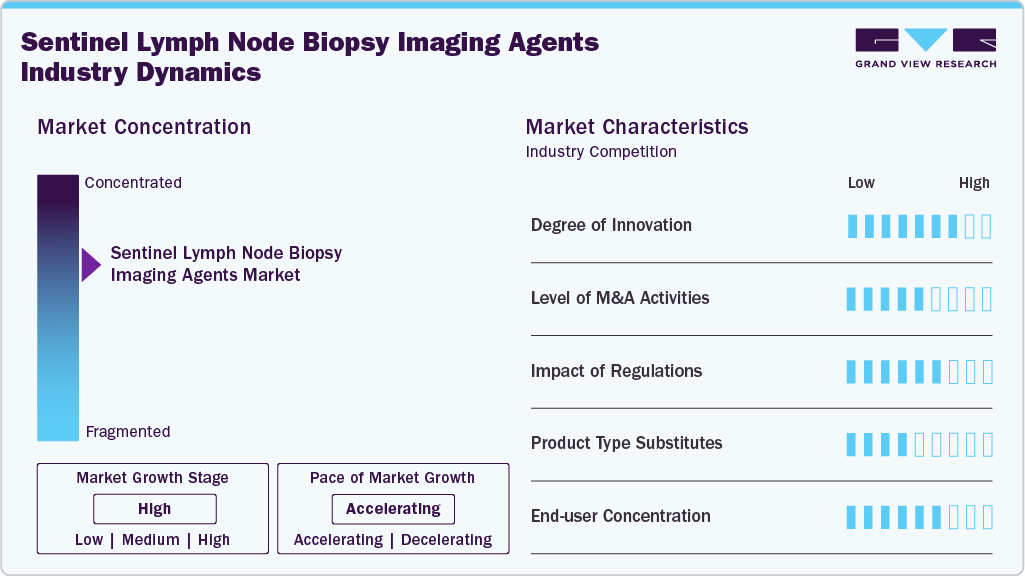
The sentinel lymph node biopsy imaging agents industry demonstrates a moderate-to-high degree of innovation, driven by the transition from traditional blue dyes and technetium-99m radiotracers toward advanced fluorescent, magnetic, and hybrid imaging solutions. While conventional agents remain widely used due to established clinical efficacy, innovation is accelerating through the development of targeted tracers (e.g., receptor-based agents), indocyanine green (ICG)-based fluorescence imaging, and non-radioactive magnetic tracers, which enhance detection accuracy, safety, and workflow efficiency. Moreover, emerging hybrid tracers combining radioactive and fluorescent properties are improving intraoperative visualization and precision. These advancements are supported by ongoing clinical trials, regulatory approvals, and increasing adoption of minimally invasive and image-guided surgeries, indicating a market that is evolving steadily with a strong focus on improving surgical outcomes and accessibility.
Regulation has a high impact on the sentinel lymph node biopsy imaging agents industry, as these products fall under stringent pharmaceutical and medical device approval frameworks that govern safety, efficacy, and clinical use. Radiopharmaceuticals, in particular, are subject to strict handling, licensing, and distribution requirements, which can limit accessibility and increase operational complexity, especially in resource-constrained settings. Moreover, evolving regulatory support for non-radioactive alternatives such as fluorescent and magnetic tracers is facilitating faster approvals and broader adoption by reducing safety concerns and logistical barriers. Regulatory guidelines also play a critical role in standardizing clinical practices and ensuring patient safety, but lengthy approval timelines and compliance costs can slow the introduction of innovative products.
 To learn more about this report, Download Free Sample Report
 The level of M&A activity in the market is moderate and strategically driven, with transactions primarily focused on expanding radiopharmaceutical capabilities, strengthening oncology portfolios, and gaining access to innovative imaging technologies. Larger players are actively pursuing acquisitions and partnerships to expand their presence in nuclear medicine and advanced imaging, particularly in areas such as fluorescent and magnetic tracers. While the market is not highly consolidated, selective M&A deals are occurring to gain technological expertise, expand geographically, and gain regulatory advantages.
The sentinel lymph node biopsy imaging agents industry faces several product substitutes, primarily in the form of alternative lymph node assessment techniques and evolving imaging modalities. Traditional substitutes include complete lymph node dissection, which, although more invasive, can eliminate the need for imaging agents in certain clinical scenarios. In addition, advanced imaging technologies such as PET/CT, MRI, and ultrasound-guided biopsies are increasingly being explored for lymph node evaluation, potentially reducing reliance on SLNB in select cases. Within the procedure itself, substitution also occurs between different agent classes, such as blue dyes, radiotracers, fluorescent agents, and magnetic tracers, depending on availability, cost, and clinical preference.
Product Insights
The radioactive tracers segment held the largest revenue share in the market in 2025, primarily due to its long-standing clinical validation, high accuracy, and widespread adoption as the standard-of-care technique. Technetium-99m-based tracers, such as sulfur colloid and nanocolloid, have been extensively used in combination with gamma probes, offering high sentinel lymph node detection rates and reliable preoperative and intraoperative mapping. Their strong integration into established clinical guidelines, particularly for breast cancer and melanoma, has further reinforced their dominance.
The fluorescent imaging agents segment is expected to register the fastest CAGR over the forecast period, due to its ability to provide real-time, high-resolution intraoperative visualization without the need for radioactive materials. Agents such as indocyanine green (ICG) are increasingly preferred as they enhance surgical precision, improve sentinel lymph node detection rates, and reduce logistical complexities associated with nuclear medicine infrastructure.
Application Insights
The breast cancer segment held the largest share in the market in 2025, due to the high global incidence of breast cancer and the widespread adoption of SLNB as the standard-of-care for axillary staging. SLNB is routinely performed in early-stage breast cancer patients to assess lymph node involvement while avoiding the complications associated with full axillary lymph node dissection, such as lymphedema and nerve damage. Strong clinical guidelines, high screening rates, and well-established treatment protocols have led to consistent procedural volumes, thereby driving sustained demand for imaging agents.
The gynecological cancers segment is expected to witness substantial growth during the forecast period, primarily driven by the increasing adoption of SLNB for cervical, endometrial, and vulvar cancers. Traditionally managed with extensive lymph node dissection, these indications are now shifting toward SLNB to reduce surgical morbidity, preserve fertility where possible, and improve patient quality of life. Advancements in imaging agents, particularly fluorescent tracers such as ICG and improved radiocolloids, are enhancing detection accuracy in complex pelvic anatomy, supporting wider clinical acceptance.
Procedure Insights
The open surgery segment held the largest share in the market in 2025, driven by its widespread adoption as a conventional, well-established surgical approach, particularly in regions with limited access to advanced minimally invasive technologies. Open procedures provide direct visualization and access to lymphatic structures, enabling reliable use of radiotracers and blue dyes for sentinel node detection. In addition, many surgeons are highly experienced with open techniques, and a significant volume of SLNB procedures, especially in breast cancer and certain complex cases, continues to be performed using this method. The availability of supporting infrastructure, cost considerations, and consistent clinical outcomes have further reinforced the dominance of open surgery in the overall market.
The minimally invasive surgery is expected to register the fastest CAGR over the forecast period, primarily driven by increasing shift toward laparoscopic and robotic-assisted procedures, which offer reduced surgical trauma, shorter hospital stays, and faster patient recovery. These techniques rely heavily on advanced imaging agents, particularly fluorescent tracers such as indocyanine green (ICG), and on real-time visualization technologies to enhance precision in identifying sentinel lymph nodes within complex anatomical regions.
End Use Insights
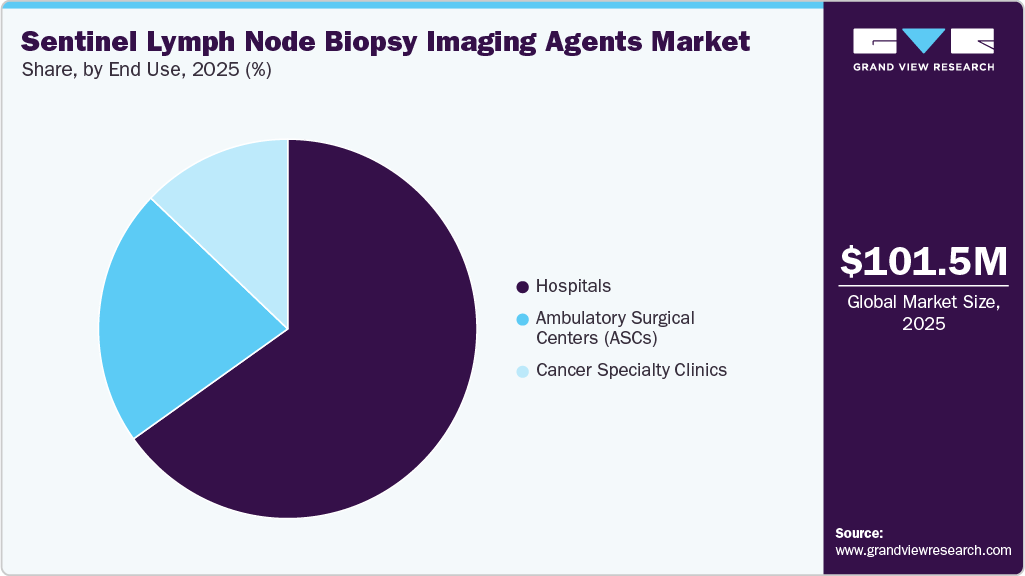
The hospital segment led the market with a total revenue share of 65.2% in 2025. This growth is primarily driven by the high volume of surgical procedures and the availability of advanced infrastructure required for SLNB. Hospitals are equipped with nuclear medicine facilities, imaging systems, and multidisciplinary oncology teams, enabling the effective use of radiotracers, dyes, and advanced imaging technologies. In addition, complex cancer surgeries, particularly for breast, melanoma, and gynecological cancers, are predominantly performed in hospital settings, ensuring consistent demand for imaging agents. Strong reimbursement frameworks, better patient management capabilities, and access to skilled surgeons further reinforce hospitals as the leading end-use segment in the market.
 To learn more about this report, Download Free Sample Report
 The ambulatory surgical centers segment is expected to register the fastest CAGR over the forecast period. This growth is primarily fueled by the shift toward outpatient, cost-effective surgical care. ASCs offer advantages such as reduced procedure costs, shorter patient stay, and faster turnaround times, making them an attractive option for early-stage cancer surgeries, including SLNB. The growing availability of non-radioactive imaging agents, such as fluorescent and magnetic tracers, further supports adoption in ASCs by eliminating the need for complex nuclear medicine infrastructure.
Regional Insights
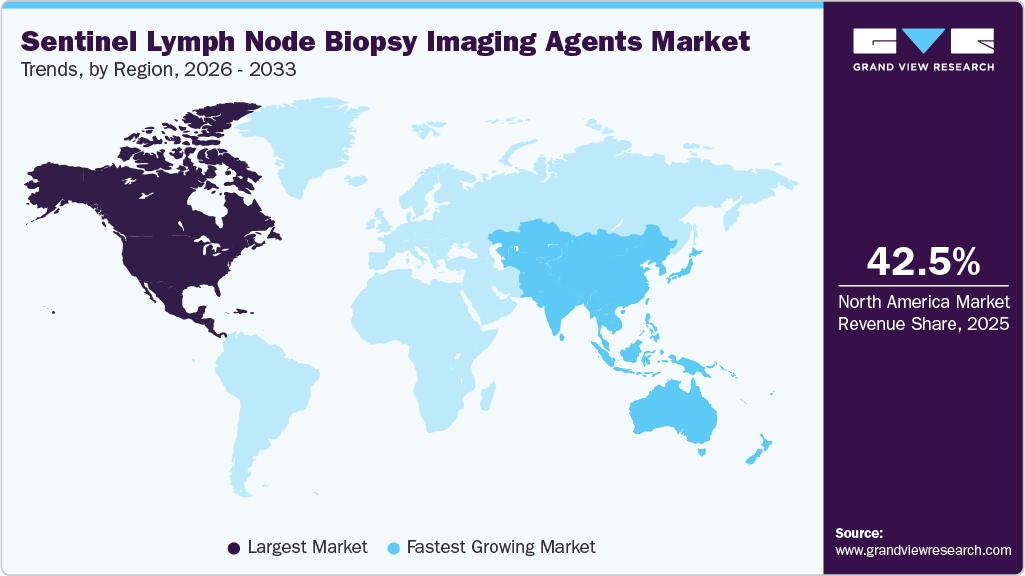
The North America sentinel lymph node biopsy imaging agents industry held the largest global revenue share of 42.5%. The regional market is driven by the region’s advanced healthcare infrastructure and strong adoption of innovative diagnostic technologies. The rising incidence of cancers, particularly breast cancer and melanoma, is driving demand for SLNB procedures as a critical tool for accurate staging and treatment planning. Furthermore, favorable reimbursement frameworks and well-established clinical guidelines are promoting the routine use of SLNB imaging agents across hospitals and specialized cancer care centers, reinforcing overall market growth.
 To learn more about this report, Download Free Sample Report
 U.S. Sentinel Lymph Node Biopsy Imaging Agents Market Trends
The U.S. sentinel lymph node biopsy imaging agents industry is expected to grow significantly, driven by the rising prevalence of breast cancer in the U.S., along with the increasing number of patients diagnosed each year, is significantly driving the growth of the market. As breast cancer cases continue to rise, a larger patient pool requires accurate lymph node staging to determine the extent of cancer spread, thereby increasing the adoption of sentinel lymph node biopsy procedures.
Europe Sentinel Lymph Node Biopsy Imaging Agents Market Trends
The European sentinel lymph node biopsy imaging agents industry is growing due to its advanced and highly standardized cancer care systems, where early and precise staging is an integral part of treatment. The widespread adoption of SLNB in cancers such as breast cancer and melanoma is supported by strong clinical guidelines from organizations such as the European Society for Medical Oncology, which promote minimally invasive approaches to lymph node assessment. In addition, the strong regulatory framework of the European Medicines Agency ensures streamlined approval and access to imaging agents across European countries, facilitating consistent clinical use.
The UK sentinel lymph node biopsy imaging agents industry mainly driven by rising prevalence of breast cancer in the UK is playing a key role in expanding the market. With an increasing number of women being diagnosed, there is a growing need for accurate staging and precise identification of lymph node involvement during surgical procedures.
The France sentinel lymph node biopsy imaging agents industry is expected to witness strong growth in the coming years, driven by the rising incidence of breast cancer, which remains the most commonly diagnosed cancer among women in the country. This increase is attributed to both improved awareness and screening programs, as well as a growing affected population. As diagnosis rates rise, the need for accurate clinical evaluation and staging becomes more critical, particularly for assessing lymph node involvement, which plays a key role in treatment planning and prognosis. In this context, SLNB has become a standard approach, offering precise detection of cancer spread while reducing the need for extensive surgical interventions.
Asia Pacific Sentinel Lymph Node Biopsy Imaging Agents Market Trends
The Asia Pacific sentinel lymph node biopsy imaging agents industry is anticipated to grow fastest over the forecast period, driven by the increasing cancer burden, particularly breast cancer, which represents a key application area for SLNB procedures. Rapid urbanization, changing lifestyles, and rising awareness are driving higher cancer detection rates in countries such as China, India, and Japan, thereby increasing demand for accurate staging techniques, such as SLNB. Additionally, the region is experiencing significant healthcare expansion, with growing investments in hospital infrastructure, nuclear medicine facilities, and radiopharmaceutical production capabilities, all of which are critical for the adoption of SLNB imaging agents.
The India sentinel lymph node biopsy imaging agents industry is anticipated to witness lucrative growth. The rising prevalence of breast cancer in India is significantly contributing to the growth of the market, as growing case numbers are driving the need for accurate staging and treatment planning. India has witnessed a rising number of breast cancer cases in recent years, with it becoming one of the most diagnosed cancers among women, particularly in urban populations.
The China sentinel lymph node biopsy imaging agents industry is anticipated to witness a lucrative growth over the forecast period. China has witnessed a substantial increase in breast cancer cases in recent years, with hundreds of thousands of new diagnoses annually, largely due to urbanization, lifestyle changes, delayed childbearing, and improved screening programs.
Latin America Sentinel Lymph Node Biopsy Imaging Agents Market Trends
The Latin America sentinel lymph node biopsy imaging agents industry is experiencing steady growth, primarily due to developments in Brazil and Argentina, supported by improvements in cancer care infrastructure and increasing emphasis on early diagnosis. In Brazil, the market is expanding due to a high burden of breast cancer, wider availability of nuclear medicine facilities, and increasing use of sentinel lymph node biopsy procedures as a standard of care in oncology centers. Public healthcare expansion under the Unified Health System (SUS), along with growing adoption of radiopharmaceuticals and hybrid imaging techniques in major hospitals, is facilitating greater access to sentinel node mapping procedures, thereby boosting demand for imaging agents.
Middle East & Africa Sentinel Lymph Node Biopsy Imaging Agents Market Trends
The Middle East and Africa sentinel lymph node biopsy imaging agents industry is growing due to increasing investments in advanced healthcare infrastructure and oncology services. Countries such as Saudi Arabia and the UAE are expanding nuclear medicine capabilities and adopting modern diagnostic technologies, supporting the use of radiotracers and dyes for lymphatic mapping procedures. The rising burden of cancers, particularly breast cancer and melanoma, is further driving the need for precise staging techniques, leading to increased clinical adoption of these imaging agents.
Key Sentinel Lymph Node Biopsy Imaging Agents Companies:
The following key companies have been profiled for this study on the sentinel lymph node biopsy imaging agents market.
- Cardinal Health
- Curium Pharma
- Jubilant Pharmova
- Guerbet
- Diagnostic Green
- Sun Pharmaceutical Industries, Inc.
- GE HealthCare
- VIATRIS (Mylan Inc.)
- Macsen Labs
- POLATOM
- Hologic Inc.
Recent Developments
-
In April 2025, Diagnostic Green announced the reintroduction of IC-Green to the U.S. market, reinforcing its position as a widely trusted indocyanine green (ICG) imaging agent with a strong safety and efficacy profile. The product holds FDA-approved indications for perfusion assessment and lymphatic system evaluation, and now includes an expanded use for sentinel lymph node detection, supporting its growing role in fluorescence-guided surgical procedures.
-
In December 2025, Curium Pharma established a legal entity in China, Curium Shanghai Pharmaceuticals Co., Ltd., marking a significant step in its global growth strategy and commitment to advancing cancer diagnosis and treatment. This development underscores the strategic importance of the Chinese market and reflects the company’s long-term dedication to strengthening the local healthcare ecosystem. By establishing a direct presence in China, Curium aims to enhance patient access to advanced diagnostic and therapeutic radiopharmaceuticals and improve its ability to support oncology care.
-
In January 2025, GE HealthCare announced a USD 138 million investment to expand its contrast media manufacturing facility in Carrigtwohill, Cork, Ireland, representing a significant capacity expansion initiative. The addition of a new facility is expected to increase annual production to 25 million patient doses by 2027, supporting rising global demand for contrast media and strengthening the company’s manufacturing capabilities.
Sentinel Lymph Node Biopsy Imaging Agents Market Report Scope
Report Attribute
Details
Market size in 2025
USD 101.5 million
Estimated market size in 2026
USD 107.7 million
Projected market size by 2033
USD 184.1 million
Growth rate
CAGR of 8.0% from 2026 to 2033
Base year for estimation
2025
Actual data
2021 - 2025
Forecast period
2026 - 2033
Quantitative units
Revenue in USD million/billion and CAGR from 2026 to 2033
Report coverage
Revenue forecast, company ranking, competitive landscape, growth factors, and trends
Segments covered
Product, application, procedure, end use, region
Regional scope
North America; Europe; Asia Pacific; Latin America; Middle East & Africa (MEA)
Country scope
U.S.; Canada; Mexico; UK; Germany; France; Italy; Spain; Denmark; Sweden; Norway; Japan; China; India; South Korea; Australia; Thailand; Brazil; Argentina; South Africa; Saudi Arabia; UAE; Kuwait
Key companies profiled
Cardinal Health; Curium Pharma; Jubilant Pharmova; Guerbet; Diagnostic Green; Sun Pharmaceutical Industries, Inc.; GE HealthCare; VIATRIS (Mylan Inc.); Macsen Labs; POLATOM; Hologic Inc. (Endomagnetic Ltd).
Customization scope
Free report customization (equivalent up to 8 analysts working days) with purchase. Addition or alteration to country, regional & segment scope.
Pricing and purchase options
Avail customized purchase options to meet your exact research needs. Explore purchase options
Global Sentinel Lymph Node Biopsy Imaging Agents Market Report Segmentation
This report forecasts revenue growth at global, regional, and country levels and provides an analysis on the latest industry trends in each of the sub-segments from 2021 to 2033. For this study, Grand View Research has segmented the global sentinel lymph node biopsy imaging agents market report based on product, application, procedure, end use, and region:
-
Product Outlook (Revenue, USD Million, 2021 - 2033)
-
Radioactive Tracers
-
Technetium-99m Sulfur Colloid
-
Technetium-99m Nanocolloid
-
Tilmanocept (Lymphoseek)
-
Others
-
-
Dye-Based Agents
-
Isosulfan Blue
-
Patent Blue V
-
Methylene Blue
-
-
Fluorescent Imaging Agents
-
Others
-
-
Application Outlook (Revenue, USD Million, 2021 - 2033)
-
Breast Cancer
-
Melanoma
-
Head & Neck Cancer
-
Gynecological Cancers
-
Other Indications
-
-
Procedure Outlook (Revenue, USD Million, 2021 - 2033)
-
Open Surgery
-
Minimally Invasive Surgery
-
-
End Use Outlook (Revenue, USD Million, 2021 - 2033)
-
Hospitals
-
Ambulatory Surgical Centers (ASCs)
-
Cancer Specialty Clinics
-
-
Regional Outlook (Revenue, USD Million, 2021 - 2033)
-
North America
-
U.S.
-
Canada
-
Mexico
-
-
Europe
-
Germany
-
UK
-
France
-
Italy
-
Spain
-
Denmark
-
Sweden
-
Norway
-
-
Asia Pacific
-
Japan
-
China
-
India
-
South Korea
-
Australia
-
Thailand
-
-
Latin America
-
Brazil
-
Argentina
-
-
Middle East & Africa
-
South Africa
-
Saudi Arabia
-
UAE
-
Kuwait
-
-
Frequently Asked Questions About This Report
The radioactive tracers segment held the largest revenue share in 2025, while the fluorescent imaging agents segment is the fastest-growing.
The breast cancer segment held the largest revenue share in 2025, while the gynecological cancers segment is expected to witness substantial growth.
The open surgery segment held the largest revenue share in 2025, while the minimally invasive surgery segment is the fastest-growing.
Hospital segment held the largest share (over 65.0%) in 2025, while the ambulatory surgical centers segment is the fastest-growing.
The global sentinel lymph node biopsy imaging agents market size was estimated at USD 101.5 million in 2025 and is expected to reach USD 107.7 million in 2026.
The global sentinel lymph node biopsy imaging agents market is expected to grow at a compound annual growth rate of 8.0% from 2026 to 2033 to reach USD 184.1 million by 2033.
North America dominated the sentinel lymph node biopsy imaging agents market with a share of 42.5% in 2025.
Some key players operating in the sentinel lymph node biopsy imaging agents market include Cardinal Health, Curium Pharma, Jubilant Pharmova, Guerbet, Diagnostic Green, Sun Pharmaceutical Industries, Inc., GE HealthCare, VIATRIS (Mylan Inc.), Macsen Labs, POLATOM, Hologic Inc. (Endomagnetic Ltd).
Key factors that are driving the market growth include the rising global burden of cancer, particularly breast cancer and melanoma, which increases the need for accurate staging and lymphatic mapping techniques.
About the Author(s)
Medical Devices Research Team
Healthcare · Medical DevicesThis report was authored by the medical devices research team at Grand View Research - comprising two research analysts, one senior research analyst, and one industry expert - with specialized expertise in the medical devices segment of the healthcare industry. All findings are based on proprietary healthcare databases, executive interviews, and regulatory analysis, subject to internal peer review prior to publication.
Last Updated:
Speak to Analyst

Customize this report to your needs - add regions, segments, or data points, with 20% free customization.
Or view our licence options:


ISO 9001:2015 & 27001:2022 Certified
We are GDPR and CCPA compliant! Your transaction & personal information is safe and secure. For more details, please read our privacy policy.


