
- Home
- »
- Medical Devices
- »
-
Skin Boosters Market Size, Share, Trends Report, 2026-2033GVR Report cover

Skin Boosters Market (2026 - 2033)
Size, Share & Trends Analysis Report By Ingredient (Hyaluronic Acid, Exosomes, Polycaprolactone), By Gender (Female, Male), By End Use (Dermatology Clinics, MedSpa), By Region, And Segment Forecasts
Market Size, 2025
$1.5BMarket Estimate, 2026
$1.7BMarket Forecast, 2033
$4.1BCAGR, 2026–2033
13.1%Skin Boosters Market Size & Trends
The global skin boosters market size was valued at USD 1.5 billion in 2025 and is projected to grow from USD 1.7 billion in 2026 to USD 4.1 billion by 2033, at a CAGR of 13.1% from 2026 to 2033. The market in North America dominated with a revenue share of 29.3% in 2025. Skin boosters are micro-injections of hyaluronic acid, vitamins, and minerals into the epidermis to revitalize, hydrate, and rejuvenate the skin, promoting a natural glow.
 Source: Grand View Research, IR Documents, Primary Interviews, Paid DatabasesTo learn more about this report,
 Download Free Sample Report
 Key Market Trends & Insights
- By ingredient: Hyaluronic acid (HA) segment held the largest market share of 58.9% in 2025.
- By gender: Female segment held the largest market share in 2025.
- By end use: Medspa segment held the largest market share in 2025.
Regional Highlights
- Largest regional market: North America (29.3% revenue share, 2025)
- Fastest-growing regional market: Asia Pacific (highest CAGR, 2026-2033)
- By country: The U.S. held the largest market share in 2025
Market Size & Forecast
- Market size in 2025: USD 1.5 Billion
- Estimated market size in 2026: USD 1.7 Billion
- Projected market size by 2033: USD 4.1 Billion
- CAGR (2026-2033): 13.1%
Three ways to get this report
Buy it, customize it, or ask a question.Ask an Analyst
Analyst response in 1 business day
- AccessReport author, directly
- Reply timeWithin 1 working day
- No sales callDirect answer only
- FormatEmail reply
- CostFree, no cost
Get the Full Report
What the study covers
- FormatsPDF · Excel · Dashboard
- Timeline2026–2033 annual, 2025 base
- Coverage20+ countries, 5 regions
- Companies10+ key players profiled
Customize the Report
20% free customization
- IncludeCountries, segments, points
- TailorTo your product definition
- ExtendDeeper competitor detail
- OrA fully bespoke study
- Turnaround5–10 working days
The market is expected to grow due to factors such as changing beauty standards across both developed and developing countries, greater financial accessibility to nonsurgical cosmetic procedures, increased regulatory approvals for new-age skin boosters, and rising cosmetic demand from the aging population.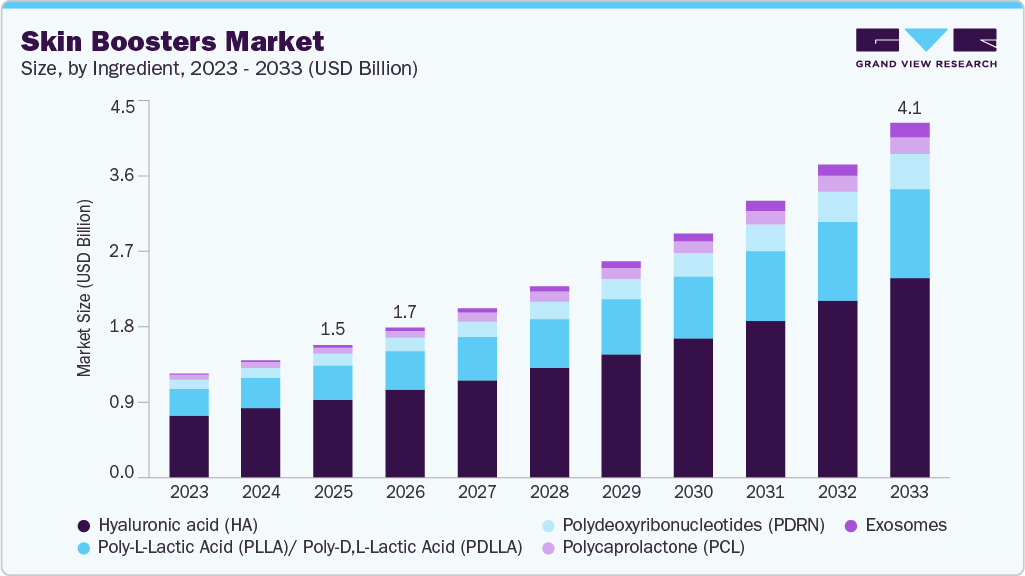 To learn more about this report, Download Free Sample Report
 The introduction of various insurance schemes for cosmetic procedures has contributed to the increase in awareness, acceptance, and growth in the skin booster market. For instance, Hamilton Fraser, the UK-based insurance company, is specifically dedicated to providing insurance for a range of aesthetic procedures, including laser treatments, dermal fillers, chemical peels, and facial treatments. Furthermore, in April 2022, AbbVie and PatientFi extended their partnership; as per the agreement, the latter firm agreed to provide financing options to AbbVie’s aesthetic product line. Such marketing agreements are expected to boost the demand for the skin booster market during the forecast period.
The growing adoption of minimally invasive cosmetic procedures is expected to drive market growth through the forecast period. The growing popularity of nonsurgical skincare treatment options is one of the primary factors responsible for an increase in the number of patients seeking skin boosters and plastic surgery services. Thus, increased demand for nonsurgical cosmetic procedures can be attributed to greater awareness of the risks and complications associated with invasive surgical procedures, including delayed healing, the risk of incision scars, and adverse reactions to anesthesia.
Increasing emphasis on professional training and skill enhancement for aesthetic practitioners also drives the growth of the skin boosters industry. Advanced injectable treatments require precision and expertise, making structured training programs essential for safe and effective outcomes. For instance, in February 2025, AbbVie announced that its division, Allergan Aesthetics, will launch three new state-of-the-art training centers in the U.S. to expand access to high-quality aesthetics education and hands-on training for providers. This initiative, led by the Allergan Medical Institute (AMI), focuses on improving clinical skills, especially in injectable treatments such as skin boosters, ensuring safer procedures and better patient outcomes. The expansion also strengthens professional training infrastructure, supporting innovation and standardization in aesthetic procedures across key U.S. regions.
Furthermore, the growing popularity of skin booster treatment is attributed to the increase in the global geriatric population. According to the United Nations Population Fund, between 1974 and 2024, the global population aged 65+ nearly doubled from 5.5% to 10.3%, and it is expected to double again to 20.7% by 2074. The 80+ age group will grow even faster, more than tripling in the same period, driven by rising life expectancy and lower birth rates. Some of the key aging signs include wrinkles and skin sagging due to low facial elasticity, dark spots, etc. Thus, the presence of a large population liable to various signs of aging is boosting the demand for facial treatments such as skin boosters.
Market Concentration & Characteristics
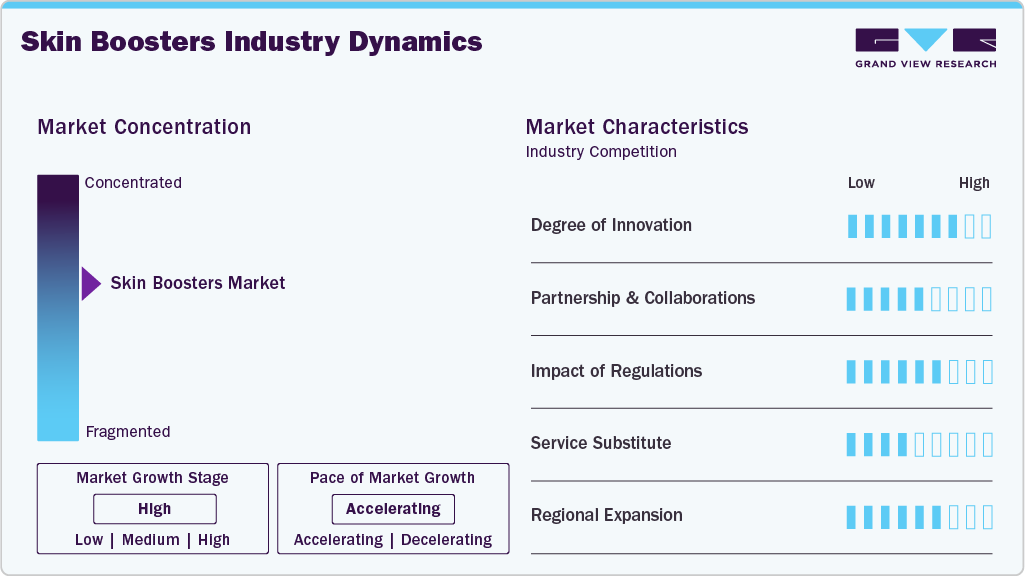
The market growth stage is high, and the pace is accelerating. Owing to technological advancements, the skin booster market is characterized by a moderate-to-high degree of innovation. The providers emphasize greater patient comfort during the procedure, and market players are investing in innovative technologies and products to keep up with the demand. The skin booster market is characterized by a moderate level of merger and acquisition (M&A) activity by the leading players. For instance, in July 2023, ExoCoBio Inc., a player in exosome-based regenerative aesthetics, acquired a majority stake in BENEV COMPANY INC., a U.S.-based medical aesthetics company. This acquisition aims to enhance the global commercialization of exosome technology by leveraging BENEV's existing medical device and PDO thread businesses.
The skin boosters industry is experiencing strong innovation, particularly in formulation science and injection techniques, aimed at improving hydration, longevity, and overall skin quality outcomes. Modern skin boosters are no longer limited to basic hyaluronic acid (HA); instead, companies are developing cross-linked and stabilized HA formulations, often combined with amino acids, antioxidants, and vitamins to enhance collagen stimulation and prolong skin hydration. These advanced formulations are designed to deliver more natural-looking and longer-lasting results with fewer treatment sessions. In addition, innovation in injection delivery methods is transforming treatment precision and patient comfort. Techniques such as microdroplet, mesotherapy, and cannula-based injections allow for more uniform distribution of the product across the dermis, reducing bruising and downtime while enhancing efficacy.
 To learn more about this report, Download Free Sample Report
 Partnerships and collaborations play a crucial role in expanding access to advanced skin booster treatments, improving practitioner expertise, and accelerating the adoption of innovative injectable techniques. In the aesthetics industry, collaborations are not limited to product development but also include training partnerships, clinic networks, and integrated treatment approaches, which help standardize procedures and enhance treatment outcomes. For instance, in November 2023, Merz Aesthetics announced the launch of its premium hyaluronic acid dermal filler, BELOTERO VOLUME, in China, marking a strategic expansion into the fast-growing medical aesthetics market. The development brought together global experts and local practitioners, highlighting the importance of collaboration in advancing injectable technologies and improving treatment outcomes in skin rejuvenation.
The skin boosters industry is increasingly influenced by strict regulatory frameworks to ensure product safety, efficacy, and proper clinical use of injectable treatments. In the U.S., the Food and Drug Administration (FDA) regulates skin boosters under the premarket approval (PMA) pathway, particularly when they are classified as dermal fillers or intradermal injectables. Manufacturers must provide strong clinical evidence, safety data, and detailed labeling to demonstrate that these products perform effectively and safely in aesthetic procedures. A key regulatory milestone occurred in May 2023, when the FDA approved SKINVIVE by JUVÉDERM, the first hyaluronic acid-based skin booster designed to improve skin smoothness through intradermal microdroplet injections. This approval was supported by clinical studies showing effectiveness and safety, with results lasting up to six months, highlighting the importance of evidence-based validation in this segment.
The skin boosters industry faces competition from several substitute treatments that offer similar skin rejuvenation benefits without the need for injectable procedures. Common alternatives include topical skincare products such as serums containing hyaluronic acid, retinoids, and peptides, chemical peels, and laser-based treatments, which aim to improve skin hydration, texture, and overall appearance. These options are often preferred by consumers seeking non-invasive or lower-cost solutions, especially for mild skin concerns. A notable example of a substitute innovation is the growing adoption of energy-based aesthetic devices, such as laser and radiofrequency systems, which stimulate collagen production and improve skin quality without injections.
Regional expansion is a key growth factor in the skin boosters industry, as companies focus on increasing their global presence through new product launches, distribution partnerships, and practitioner training programs. Developed regions like North America and Europe lead due to strong aesthetic awareness, while the Asia-Pacific region is emerging rapidly, driven by growing demand for minimally invasive skin treatments. A recent example is from September 2025, when Allergan Aesthetics (AbbVie) announced the expansion of its skin booster SKINVIVE by JUVÉDERM into 35 additional markets, bringing the total to 57 countries globally. This expansion reflects increasing global demand for high-quality skin treatments and highlights how companies are expanding their distribution and training networks worldwide.
Ingredient Insights
The hyaluronic acid (HA) segment led the market with the largest revenue share of 58.9% in 2025. The skin boosters industry has witnessed significant growth due to the unique properties and benefits of HA. Its exceptional hydration capabilities, skin-quality improvement, versatility across age groups, non-invasive treatment option, and compatibility with other active ingredients have made HA a powerful ingredient in skincare. For instance, in July 2023, Allergan Aesthetics (AbbVie) introduced SKINVIVE by JUVÉDERM, the FDA-approved hyaluronic acid microdroplet injectable, to enhance cheek skin smoothness. Moreover, in June 2024, clinical study results demonstrated significant improvements in skin smoothness, hydration, and overall radiance following treatment. The findings showed that the injectable not only enhances immediate skin glow but also stimulates collagen production by increasing fibroblast activity. These results highlight the product’s dual benefits of short-term aesthetic improvement and long-term skin quality enhancement, reinforcing its role in the growing skin-boosting segment.
The polydeoxyribonucleotide (PDRN) segment is expected to register at the fastest CAGR over the forecast period. Derived from salmon sperm DNA, PDRN plays a vital role in cellular repair and regeneration, stimulating fibroblast activity to enhance collagen production and improve skin firmness and elasticity. Its ability to accelerate wound healing makes PDRN particularly appealing for individuals with acne scars and skin damage, while its anti-inflammatory properties soothe redness and irritation. In addition, key market players' rising focus on developing advanced PDRN solutions also drives the growth of the market. For instance, in February 2025, Prollenium announced the launch of its next-generation PDRN skin booster, Vamp, designed to improve skin quality and support anti-aging treatments. The product combines polydeoxyribonucleotide (PDRN) with vitamins, amino acids, and minerals to enhance skin tone, tighten pores, smooth wrinkles, and repair damaged skin.
Gender Insights
The female segment accounted for the largest market revenue share in 2025 and is expected to witness at the fastest CAGR over the forecast period. This is because women show early signs of aging and dullness, mainly due to hormonal fluctuations and related concerns. In addition, due to societal norms and values, many women undergo aesthetic procedures. According to the International Society of Aesthetic Plastic Surgery's 2023 Global Survey, women accounted for 85.5% of all aesthetic procedures, while men comprised 14.5%. Among women, the most popular surgical procedures were liposuction (approximately 1.8 million procedures, a 29% increase from 2021), breast augmentation, and eyelid surgery. In addition, rising social media influence also highlights the growth of the segment in the market. For instance, a news reported by NYP Holdings, Inc. in November 2025, shows a significant rise in cosmetic procedures among women, especially those under 30, driven by social media influence and changing beauty standards. The article notes that women are increasingly opting for procedures such as facial surgeries, liposuction, and eyelid corrections at younger ages, reflecting a broader normalization of aesthetic treatments among female consumers.
The male segment is projected to experience at a significant CAGR over the forecast period. The growth of the segment is driven by increasing awareness of aesthetic treatments among men and changing social perceptions around grooming. Traditionally, aesthetic procedures were more female-dominated, but recent data from the International Society of Aesthetic Plastic Surgery shows that men already account for a growing share of non-surgical procedures, including injectables and skin rejuvenation treatments. This shift is supported by rising demand for minimally invasive treatments that improve skin hydration, texture, and overall appearance, with minimal downtime. Recent developments and media insights further highlight this trend. A 2025 Business Insider report noted that men are increasingly opting for cosmetic procedures, such as injectables and skincare treatments, under professional and social pressure to maintain a youthful, well-groomed appearance. This growing acceptance of aesthetic treatments among men, combined with targeted product innovations and gender-neutral marketing by brands, is accelerating the adoption of skin boosters in the male population.
End Use Insights
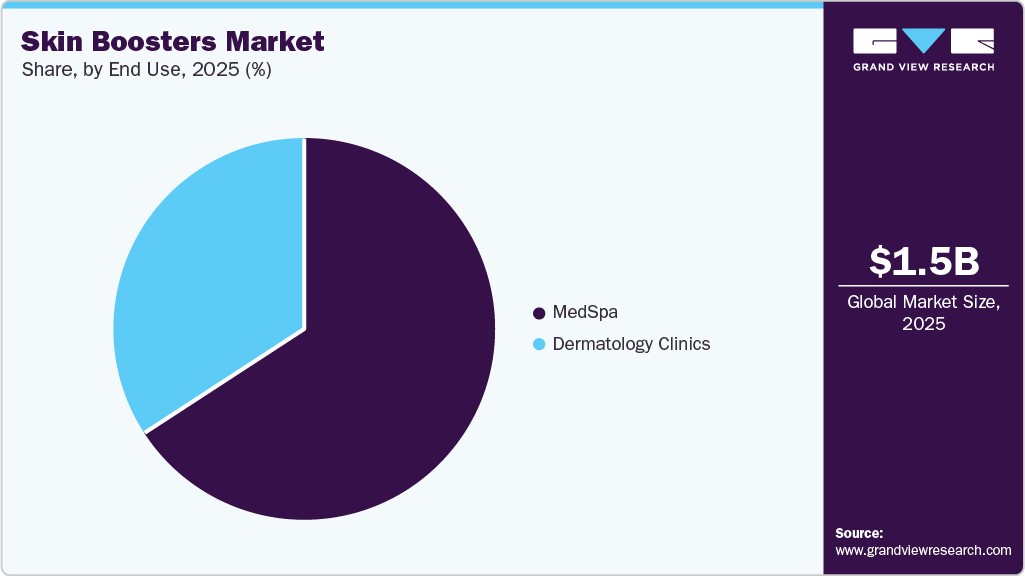
The Medspa segment accounted for the largest market revenue share in 2025 and is expected to witness at the fastest CAGR over the forecast period. Skin booster procedures are primarily performed by medspas owing to low patient downtime and the non-invasive nature of cosmetic surgery. The convenience of same-day procedures, personalized skincare plans, and growing availability of trained practitioners have significantly increased patient footfall in medspas. According to Global Payments Integrated, med spas receive an impressive 155.8 million visits each year. According to Medica Depot, patients typically spend USD 536 per visit to a med spa, which includes a range of cosmetic treatments. Botox treatments typically cost USD 10 to USD 15 per unit, while chemical peels range from USD 150 to USD 300. Moreover, medspas offer customer-friendly services such as subscription discounts, loyalty programs, and more, which increase demand. Overall, the growth of the segment is supported by high procedure volumes, accessibility, bundled aesthetic services, and the continuous expansion of wellness-focused facilities.
 To learn more about this report, Download Free Sample Report
 The dermatology clinics sector is projected to witness at a significant CAGR over the forecast period. The growth is driven by rising patient preference for medically supervised aesthetic treatments and increasing demand for safe, clinically validated procedures. These facilities offer specialized expertise, advanced injection techniques, and personalized treatment plans, making them a trusted setting for skin booster procedures such as hyaluronic acid and regenerative injectables. Recent developments further support this growth. The increasing global interest in dermatology-led aesthetic treatments is evident in rising medical tourism and clinic-based procedures. For example, South Korea attracted over 1.2 million medical aesthetic visitors in 2024, many seeking advanced injectable treatments performed in specialized clinics. This highlights how dermatology clinics are becoming key centers for advanced skin booster treatments, supported by clinical expertise, formulation innovation, and growing consumer trust in physician-led care.
Regional Insights
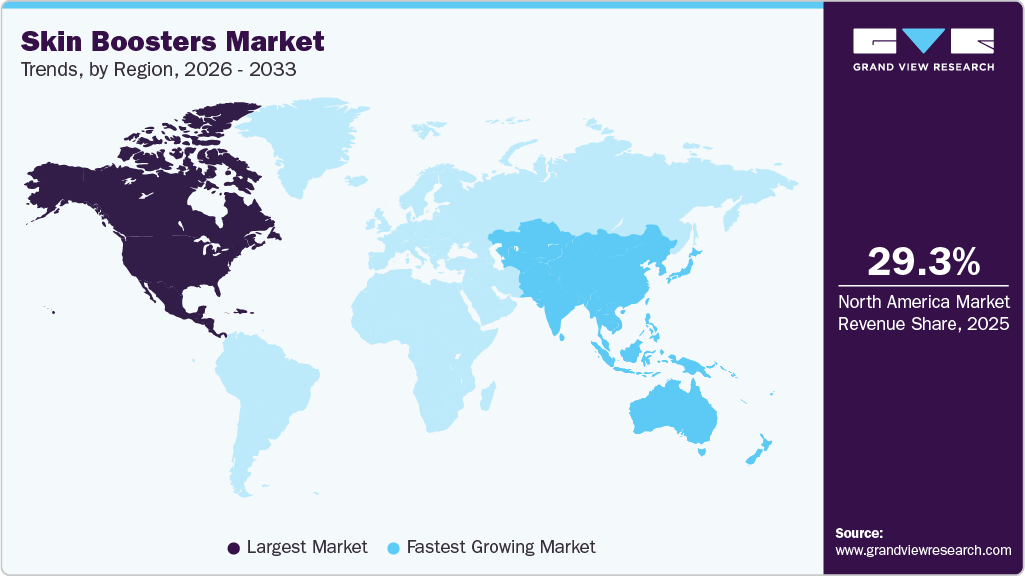
North America dominated the global skin boosters market with the largest revenue share of 29.3% in 2025. High personal disposable income and substantial healthcare expenditure facilitate access to aesthetic treatments, increasing the demand for skin boosters. In Canada, about 20% of women express dissatisfaction with their appearance, prompting them to seek nonsurgical aesthetic options. Meanwhile, in Mexico, a growing number of millennials, coupled with a rapidly aging population, currently 12% of the population is aged 60 and older, contribute to heightened demand for affordable aesthetic procedures.
 To learn more about this report, Download Free Sample Report
 U.S. Skin Boosters Market Trends
The skin boosters market in the U.S. accounted for the largest market revenue share in North America in 2025, owing to factors such as technological advancements, relatively high disposable income, and the availability of several aesthetic procedures in the country. The ISAPS 2023 study reported HA fillers accounting for 712,225 of the total 4.4 million nonsurgical procedures performed in the U.S. This growing interest in non-invasive treatments, particularly among millennials, whose aesthetic procedure adoption has surged in recent years, highlights a shift toward self-care practices influenced by social media trends.
Europe Skin Boosters Market Trends
The skin boosters market in Europe accounted for the second-largest revenue share in 2025. The growth is driven by a combination of demographic trends, growing awareness of dermatological conditions, regulatory support, and evolving consumer preferences for natural-looking aesthetic treatments. A University of Valencia survey revealed that 65% of Spanish participants were dissatisfied with their skin’s appearance, with women aged 20-35 representing 80% of those concerns. This shows the rising demand for skin boosters across the region to fulfill the consumers' needs. In addition, technological advancements are enhancing the effectiveness of skin boosters.
The Germany skin boosters market accounted for the largest market revenue share in Europe in 2025. Various factors, such as increased popularity of cosmetic procedures, technological advancements, and a rise in beauty consciousness, are driving the growth of the market. Furthermore, rising urban populations, novel product approvals, advancements in noninvasive procedures, and the availability of skilled professionals are other factors driving market growth. However, the high cost of esthetic procedures is likely to impede market growth. According to the ISAPS Global Survey for 2023, Germany performed over 780,000 injectable filler procedures, of which 310,000 were hyaluronic acid fillers, representing 39.7% of all nonsurgical procedures. This indicates strong and ongoing demand for hyaluronic acid-based treatments in the country.
The skin boosters market in France is expanding rapidly and is currently the global leader of the cosmetic industry. It is among the top 10 countries with many cosmetic procedures, accounting for 2.2% of all procedures performed worldwide. This can be attributed to the country's high aesthetic and fashion consciousness. Increased awareness among customers about the potential benefits of aesthetic procedures, coupled with the growing adoption of minimally invasive procedures, is fueling the market growth.
The UK skin booster market is anticipated to witness at asignificant CAGR of 14.0% during the forecast period, driven by rising preference for subtle, non-invasive aesthetic treatments and by increasing awareness of procedures that improve skin quality. Consumers in the UK are increasingly shifting toward regenerative and “natural look” treatments, where skin boosters, especially hyaluronic acid-based injectables, play a key role in improving hydration, texture, and radiance rather than altering facial structure. Industry insights from CEW UK in November 2024 highlight that longevity and regenerative aesthetics are expected to dominate trends in 2025, directly supporting demand for skin boosters. Additionally, the growing popularity of non-invasive procedures is accelerating adoption, as patients prefer minimal downtime and gradual results. Clinics across the UK report increasing uptake of injectable skin treatments aligned with this trend.
Asia Pacific Skin Boosters Market Trends
Theskin boosters market in the Asia Pacific is anticipated to grow at the fastest CAGR of 14.8% during the forecast period. This can be attributed to the growing medical tourism industry, especially in these countries. A large number of aesthetic procedures can be attributed to the easy availability of advanced techniques and cost-effective treatment options. For instance, in January 2024, Empro unveiled the SpaceLift Face Booster, a groundbreaking lifting solution, at its soft launch in Kuala Lumpur, Malaysia, aiming to expand its presence to 30 countries globally by year-end.
The skin boosters market in South Korea accounted for the largest market revenue share in Asia Pacific in 2025 and is anticipated to grow at a rapid CAGR during the forecast period. The demand for skin boosters in South Korea is rising due to cultural beauty standards, advanced technology, and increasing skin concerns. Cosmetic treatments are widely accepted, with some parents even gifting them to children for milestones such as graduation. According to recent industry news, South Korea’s cosmetics exports reached USD 10.2 billion in 2024, marking a 20.6% increase from 2023, driven by high demand for ingredient-focused products such as hyaluronic acid serums, peptides, and skin-repair formulations widely used in skin booster treatments.
TheChina skin boosters market held the second largest revenue market share, and is anticipated to grow at a significant CAGR during the forecast period. Increasing demand for noninvasive aesthetic treatment is anticipated to boost the market growth in China. For instance, men accounted for nearly 15% of the customers in China’s aesthetic treatment market. According to a report by the Chinese magazine Sixth Tone, of the 22 million people who underwent invasive and noninvasive esthetic procedures, 54% (12 million) were under 28, with teenagers accounting for 8%, the major reason being increasing workplace competition. Moreover, the presence of major players, such as Bloomage Biotechnology, which is one of the world’s largest producers of hyaluronic acid-based fillers, is expected to contribute to the market growth.
The skin boosters market in India is expected to grow at the second-fastest CAGR of 15.2% during the forecast period. The skin boosters industry in India is expanding due to rising awareness about skincare and the impact of pollution and unhealthy lifestyles. The growth of the beauty and wellness industry, alongside a focus on personal grooming, further drives this demand. A 2023 survey reported that 72% of consumers trusted celebrity endorsements when considering skincare products. By 2025, the number of social media influencers in the beauty sector was expected to grow, with top influencers having millions of followers. Similarly, in June 2024, The Times of India highlighted that India’s beauty and skincare industry is witnessing rapid growth driven by rising consumer interest in advanced skincare solutions, increasing disposable income, and strong demand for premium aesthetic treatments such as skin rejuvenation and hydration therapies. This growing focus on skin health and appearance is indirectly driving the adoption of procedures such as skin boosters across urban markets.
Latin America Skin Boosters Market Trends
The skin boosters market in Latin America is expected to witness at a lucrative CAGR during the forecast period. Latin America is one of the fastest-growing cosmetic industries in the world. Wellness and the desire for a healthy, holistic lifestyle have given the functional beauty segment momentum. Organic and natural cosmetics and personal care products continue to be a growing niche in the region. There has been significant growth in medical tourism, which is boosting the development of the healthcare industry. The presence of untapped opportunities in developing countries, such as Mexico and Brazil, is also expected to propel the market growth in the region.
The skin boosters market in Brazil held a significant share in Latin America in 2025. Brazilian cosmetics are recognized globally for their innovation across several categories, and the use of ingredients from our biodiversity is a real differentiator that attracts new customers. Brazil is the 4th global market for personal hygiene and beauty products and the 3rd country for the number of product launches.
Middle East & Africa Skin Boosters Market Trends
The skin booster market in the Middle East & Africa is expected to grow at a lucrative rate. The growth is driven by rising demand for minimally invasive aesthetic treatments, increasing disposable incomes, and strong expansion of private dermatology and aesthetic clinics across countries such as the UAE, Saudi Arabia, and South Africa. Growing awareness of skin health, anti-aging solutions, and hydration-focused treatments is encouraging consumers to adopt injectable procedures such as hyaluronic acid-based skin boosters. Additionally, the region is benefiting from medical tourism, particularly in the Gulf countries, where advanced aesthetic services are widely available.
The Saudi Arabia skin boosters market accounted for the largest revenue market share in the Middle East & Africa in 2025. In Saudi Arabia, there has been an increasing consumer preference for non-surgical aesthetic procedures, with skin boosters gaining popularity for their ability to enhance skin hydration and texture with minimal downtime. Key drivers of this demand include changing beauty standards that emphasize natural enhancement, increased awareness and education about skincare fueled by social media influencers, and technological advancements in formulation.
Key Skin Boosters Company Insights
Companies in the market pursue different strategies to strengthen their product portfolios and expand regionally, offering diverse, technologically advanced, and innovative products to their customers. This is a prominently adopted strategy by companies to attract more customers.
Furthermore, several market leaders acquire smaller players to strengthen their market positions. This strategy enables them to increase their capabilities, expand their product portfolios, and improve their competencies. Key players engaged in this growth strategy include Galderma and Allergan Aesthetics (AbbVie).
Key Skin Boosters Companies:
The following key companies have been profiled for this study on the skin boosters market.
- AbbVie, Inc (Allergen)
- Galderma
- Sinclair
- Merz Pharma
- Teoxane
- Medytox, Inc.
- PharmaResearch Co., Ltd.
- VAIM Co., Ltd
- Bloomage Biotechnology
- IBSA Farmaceutici Italia Srl
- Dexlevo Co., Ltd.
- LINKUS GLOBAL Co., Ltd.
- ExoCoBio Inc.
Recent Developments
-
In June 2025, AbbVie Inc. announced that the U.S. FDA accepted for review the premarket approval application of SKINVIVE by JUVÉDERM, a hyaluronic acid-based skin booster, to expand its use for improving neck appearance. The application is supported by strong clinical data showing significant improvement in neck lines, with most patients reporting visible aesthetic benefits.
-
In October 2024, Merz Pharma launched its Research & Development Innovation Center (RDIC) in Raleigh, North Carolina, which will serve as its global headquarters. The center is designed to foster collaboration across R&D functions and drive innovation to expand its product portfolio.
-
In October 2024, IBSA Farmaceutici Italia Srl introduced a new product in its Profhilo line. It utilizes patented Nahyco technology to restore facial adipose tissue affected by aging. This innovation targets deeper skin layers, promoting tissue regeneration for a youthful appearance.
-
In September 2024, Allergan Aesthetics (AbbVie) launched SKINVIVE by Juvéderm in Thailand, an injectable skin booster featuring hyaluronic acid and Aquaporin-3. It enhances skin hydration, texture, and radiance, offering long-lasting results for millennials and Gen Z beauty enthusiasts.
Skin Boosters Market Report Scope
Report Attribute
Details
Market size in 2025
USD 1.5 billion
Estimated market size in 2026
USD 1.7 billion
Projected market size by 2033
USD 4.1 billion
Growth rate
CAGR of 13.1% from 2026 to 2033
Base year for estimation
2025
Historical data
2021 - 2024
Forecast period
2026 - 2033
Quantitative units
Revenue in USD million/billion, and CAGR from 2026 to 2033
Report coverage
Revenue forecast, company ranking, competitive landscape, growth factors, and trends
Segments covered
Ingredient, gender, end use, region
Regional scope
North America; Europe; Asia Pacific; Latin America; Middle East & Africa
Country scope
U.S.; Canada; Mexico; UK; Germany; France; Italy; Spain; Denmark; Sweden; Norway: Japan; China India; Australia; Thailand; South Korea; Brazil; Argentina; South Africa; Saudi Arabia; UAE; Kuwait
Key companies profiled
AbbVie, Inc (Allergen); Galderma; Sinclair; Merz Pharma; Teoxane; Medytox, Inc.; PharmaResearch Co., Ltd.; VAIM Co., Ltd; Bloomage Biotechnology; IBSA Farmaceutici Italia Srl; Dexlevo Co., Ltd.; LINKUS GLOBAL Co., Ltd.; ExoCoBio Inc.
Customization scope
Free report customization (equivalent up to 8 analyst’s working days) with purchase. Addition or alteration to country, regional, and segment scope
Pricing and purchase options
Avail customized purchase options to meet your exact research needs. Explore purchase options
Global Skin Boosters Market Report Segmentation
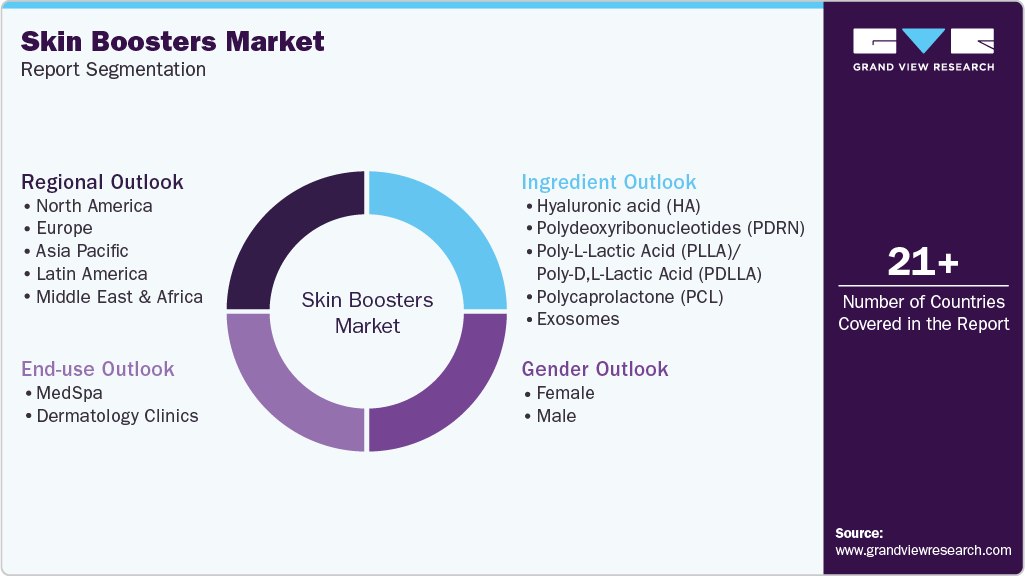
This report forecasts revenue growth at global, regional, and country levels and provides an analysis of the latest industry trends in each of the sub-segments from 2021 to 2033. For this study, Grand View Research has segmented the global skin boosters market report based on ingredient, gender, end use, and region:
 To learn more about this report, Download Free Sample Report
 -
Ingredient Outlook (Revenue, USD Million, 2021 - 2033)
-
Hyaluronic acid (HA)
-
Polydeoxyribonucleotides (PDRN)
-
Poly-L-Lactic Acid (PLLA)/ Poly-D,L-Lactic Acid (PDLLA)
-
Polycaprolactone (PCL)
-
Exosomes
-
-
Gender Outlook (Revenue, USD Million, 2021 - 2033)
-
Female
-
Male
-
-
End Use Outlook (Revenue, USD Million, 2021 - 2033)
-
MedSpa
-
Dermatology Clinics
-
-
Regional Outlook (Revenue, USD Million, 2021 - 2033)
-
North America
-
U.S.
-
Canada
-
Mexico
-
-
Europe
-
Germany
-
UK
-
France
-
Italy
-
Spain
-
Denmark
-
Sweden
-
Norway
-
-
Asia Pacific
-
China
-
Japan
-
India
-
South Korea
-
Australia
-
Thailand
-
-
Latin America
-
Brazil
-
Argentina
-
-
Middle East and Africa (MEA)
-
South Africa
-
Saudi Arabia
-
UAE
-
Kuwait
-
-
Frequently Asked Questions About This Report
The global skin boosters market size was estimated at USD 1.5 billion in 2025 and is expected to reach USD 1.7 billion in 2026.
Some key players operating in the skin boosters market include Allergan, Gladerma, Merz Aesthetics, Bloomage Biotechnology, Teoxanne, Filorga, Professional Derma SA, and IBSA – InstituteBiochemical SA
The desire to look youthful among the millennials and rising consumption of aesthetic procedures by both men and women, especially from the emerging economies are majorly estimated to drive the skin boosters market growth.
Asia Pacific is the fastest-growing region over the forecast period.
The hyaluronic acid (HA) segment led with a 58.9% revenue share in 2025, while the polydeoxyribonucleotide (PDRN) segment is the fastest-growing.
The female segment held the largest revenue share in 2025, while the male segment is expected to experience a significant CAGR.
The medspa segment held the largest revenue share in 2025, while the dermatology clinics sector segment to witness at a significant CAGR.
North America dominated the skin boosters market with a share of 29.3% in 2025 owing to the increasing demand for cosmetic procedures by both adults and the geriatric population. It was observed that North America had the highest procedure volume of non-surgical aesthetic treatments globally.
The global skin boosters market is expected to grow at a compound annual growth rate of 13.1% from 2026 to 2033 to reach USD 4.1 billion by 2033.
About the Author(s)
Medical Devices Research Team
Healthcare · Medical DevicesThis report was authored by the medical devices research team at Grand View Research - comprising two research analysts, one senior research analyst, and one industry expert - with specialized expertise in the medical devices segment of the healthcare industry. All findings are based on proprietary healthcare databases, executive interviews, and regulatory analysis, subject to internal peer review prior to publication.
Last Updated:
Speak to Analyst

Customize this report to your needs - add regions, segments, or data points, with 20% free customization.
Or view our licence options:


ISO 9001:2015 & 27001:2022 Certified
We are GDPR and CCPA compliant! Your transaction & personal information is safe and secure. For more details, please read our privacy policy.


