
- Home
- »
- Medical Devices
- »
-
Sleep Apnea Devices Market Size And Share Report, 2033GVR Report cover

Sleep Apnea Devices Market (2026 - 2033)
Size, Share & Trends Analysis Report By Product Type (Diagnostic Devices, Therapeutic Devices, Sleep Apnea Masks), By End Use, By Region, And Segment Forecasts
Market Size, 2025
$5.1BMarket Estimate, 2026
$5.4BMarket Forecast, 2033
$8.4BCAGR, 2026–2033
6.6%Sleep Apnea Devices Market Summary
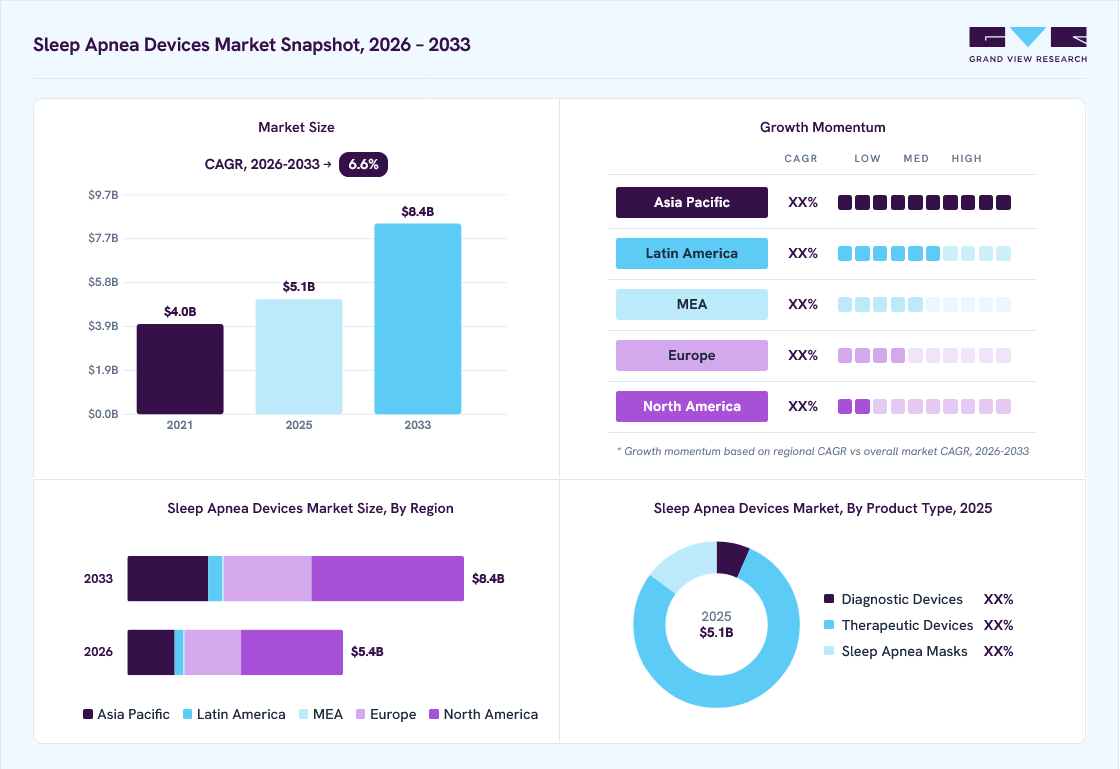
The global sleep apnea devices market size was valued at USD 5.1 billion in 2025 and is projected to grow from USD 5.4 billion in 2026 to USD 8.4 billion by 2033, at a CAGR of 6.6% from 2026 to 2033. The market in North America dominated with a revenue share of 47.6% in 2025. As of October 2023, National Council on Aging data indicates that Obstructive Sleep Apnea (OSA), characterized by irregular breathing and reduced oxygen supply to the brain, affects about 39 million adults in the U.S. and an estimated 936 million adults globally.
 Source: Grand View Research, IR Documents, Primary Interviews, Paid DatabasesTo learn more about this report,
 Download Free Sample Report
Key Market Trends & Insights
- By product type: Therapeutic devices segment held the largest market share of 78.6% in 2025.
- By end use: Home care segment held the largest market share in 2025.
Regional Highlights
- Largest regional market: North America (47.6% revenue share, 2025)
- Fastest-growing regional market: Asia Pacific (highest CAGR, 2026-2033)
- By country: The U.S. held the largest market share in 2025
Market Size & Forecast
- Market size in 2025: USD 5.1 Billion
- Estimated market size in 2026: USD 5.4 Billion
- Projected market size by 2033: USD 8.4 Billion
- CAGR (2026-2033): 6.6%
Three ways to get this report
Buy it, customize it, or ask a question.Ask an Analyst
Analyst response in 1 business day
- AccessReport author, directly
- Reply timeWithin 1 working day
- No sales callDirect answer only
- FormatEmail reply
- CostFree, no cost
Get the Full Report
What the study covers
- FormatsPDF · Excel · Dashboard
- Timeline2026–2033 annual, 2025 base
- Coverage20+ countries, 5 regions
- Companies10+ key players profiled
Customize the Report
20% free customization
- IncludeCountries, segments, points
- TailorTo your product definition
- ExtendDeeper competitor detail
- OrA fully bespoke study
- Turnaround5–10 working days
The high prevalence of sleep apnea in an elderly population often goes undiagnosed due to factors like lack of awareness and non-specific symptoms. With the global population aged 60 and above projected to reach 2 billion by 2050 and the elderly population expected to double from 12% to 22%, the incidence of sleep disorders, particularly OSA, is on the rise. OSA affects 13% to 32% of individuals aged 65 and above. The growing geriatric population's vulnerability to sleep apnea is expected to drive the adoption of sleep apnea devices. Notably, as reported by the U.S. Securities and Exchange Commission, over 8 million CPAP interfaces are sold annually in the U.S., with an additional 2.5 million sold globally.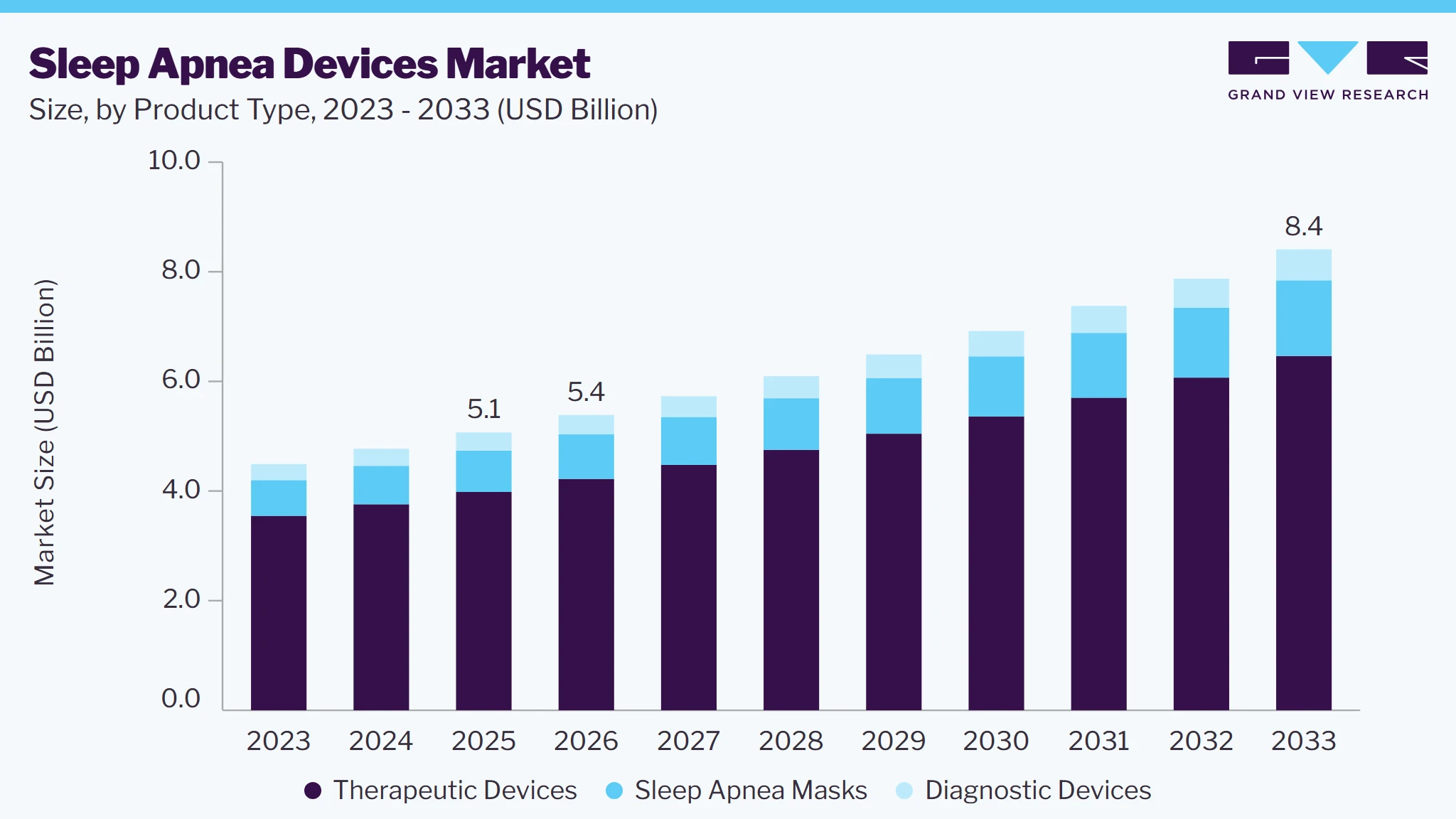 To learn more about this report, Download Free Sample Report
Market expansion is driven by the entry of new players and an increased focus on innovative product development, resulting in technologically advanced solutions. For instance, the FDA-approved Inspire implant stands out as a unique OSA therapy, addressing the root cause of sleep apnea internally, ensuring regular breathing, and promoting sound sleep.
Market Dynamics
The increasing global burden of obstructive sleep apnea (OSA) remains the strongest growth driver for the sleep apnea devices market. OSA is increasingly associated with obesity, diabetes, cardiovascular diseases, aging populations, and sedentary lifestyles, resulting in a larger patient pool requiring diagnosis and long-term therapy. According to ResMed Inc. August 2025 article, the number of adults in the U.S. diagnosed with obstructive sleep apnea (OSA) is projected to increase to nearly 77 million by 2050, reflecting a 35% rise from 2020 levels. The condition is expected to affect approximately 46% of adults aged 30 - 69 years, driven by demographic shifts and increasing obesity rates. These projections were developed using an open-cohort dynamic population model that accounts for changes in age, sex, and BMI, highlighting the growing demand for sleep apnea diagnosis and treatment solutions. Moreover, growing awareness campaigns and improved screening programs are further increasing diagnosis rates.
Manufacturers are accelerating innovation through AI-enabled and connected sleep therapy devices. For instance, in January 2025, ResMed expanded the availability of its AirSense 11 CPAP platform in additional markets, offering cloud connectivity, remote patient monitoring, and digital coaching to improve therapy adherence. Similarly, in January 2023, Royal Philips and Masimo expanded their partnership to improve patient monitoring capabilities in home telehealth settings by deploying the Masimo W1, an advanced health-tracking device.
“Expanding our partnership with Philips in this way is a win-win for patients and clinicians everywhere, and is an important part of our multi-year plan to bring the best of hospital monitoring to the home while continuing to improve access to quality hospital care.” - Bilal Muhsin, Chief Operating Officer, Masimo
The market has experienced disruption from product quality concerns and regulatory actions. Following its large-scale respiratory device recall, Philips entered a consent decree with the U.S. FDA in 2024, preventing the company from selling new sleep apnea devices in the U.S. until regulatory requirements are satisfied. This has affected supply dynamics, delayed product availability, and increased compliance costs across the industry while reinforcing the need for stricter quality assurance and post-market surveillance.
A significant opportunity lies in the integration of artificial intelligence, digital therapeutics, remote patient monitoring, and home-based sleep care. Healthcare providers are increasingly adopting connected sleep management platforms that combine wearable sensors, cloud analytics, telemedicine, and AI-driven coaching to improve diagnosis, therapy adherence, and long-term patient outcomes. Growing adoption of hypoglossal nerve stimulation (HGNS) devices among CPAP-intolerant patients is creating an additional high-growth segment. The full commercial launch of Inspire V in 2025 has strengthened the implantable therapy market by providing minimally invasive, mask-free treatment options with improved patient usability.
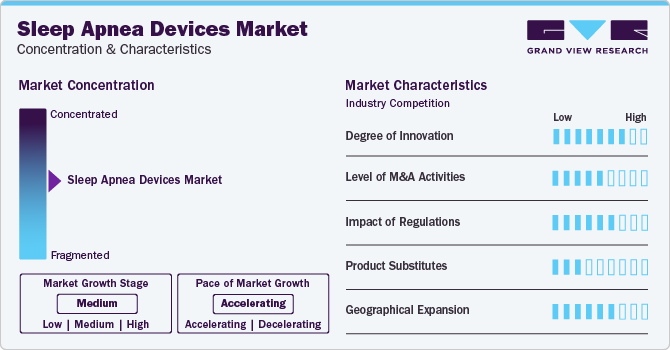
Market Concentration & CharacteristicsThe sleep apnea devices market is currently in a moderate growth stage, with an accelerating pace. This is driven by factors such as a growing geriatric population, a significant patient pool with sleep apnea, an increased prevalence of comorbidities linked to sleep apnea, and the development of advanced devices. For example, NovaResp Technologies Inc. is developing an AI-enabled CPAP algorithm compatible with various CPAP devices, predicting apnea events during sleep.
Market players are utilizing key strategies, including new product launches, expansions, acquisitions, partnerships, etc. For instance, in September 2023, ResMed announced a strategic partnership with Nyxoah to enhance awareness of obstructive sleep apnea and increase therapy penetration in Germany, contributing to market growth in the forecast period.
 To learn more about this report, Download Free Sample Report
Degree of Innovation: The sleep apnea devices market has witnessed advancements focused on improving patient comfort, compliance, efficacy, and overall treatment outcomes. Integration of smart technology and digital sensors to enhance therapy management is a key driving factor in the market,
Level of M&A Activities: Mergers and acquisitions in the Sleep Apnea Devices Market are on the rise. Companies are leveraging multiple acquisitions to strengthen product offerings, expand their global footprint, diversify portfolios, integrate technologies, and enhance industry positioning.
Regional Expansion: The global prevalence of sleep apnea presents opportunities and competition across regions. Growing markets in the United Kingdom (UK), Germany, France, Italy, and Spain are driven by aging populations, lifestyle factors, healthcare reforms, and regulatory harmonization. Meanwhile, the well-established U.S. and Canada markets are characterized by high prevalence rates of sleep apnea and advanced healthcare systems.
Analyst Perspective
Positive Airway Pressure (PAP) devices continue to dominate revenue generation, growth is increasingly driven by AI-enabled therapy optimization, cloud-connected platforms, home sleep testing, and minimally invasive alternatives such as hypoglossal nerve stimulation. Rising awareness of sleep disorders, expanding obesity prevalence, and increasing diagnosis rates are creating substantial long-term demand. Companies that integrate intelligent diagnostics, connected therapeutics, and data-driven patient engagement with strong reimbursement support will be best positioned to capture future market growth.
Product Type Insights
Based on product type, therapeutic devices segment dominated the market with the largest revenue share of 78.6% in 2025. This category includes Positive Airway Pressure devices, nasal devices, oral devices, and chin straps. Market players are introducing innovations such as comfortable and lightweight masks, softer materials, smaller masks, and noise-reduction features. Advanced technologies are being integrated to enhance PAP device efficiency and deliver optimal clinical outcomes. The growing patient compliance rate, supported by favorable insurance coverage tied to adherence standards for PAP therapy, is driving widespread adoption, with studies indicating that 80% of diagnosed obstructive sleep apnea patients opt for PAP devices.
Sleep apnea masks segment is anticipated to grow at the fastest rate of 7.9% driven by the widespread adoption of these masks, increasing prevalence of comorbidities related to OSA, and higher adoption of CPAP machines in disease management. Key players are actively looking to innovate product strategies to meet the rising demand. For instance, in October 2023, Fisher & Paykel Healthcare Corporation Limited launched the F&P Solo mask in New Zealand and Australia for obstructive sleep apnea (OSA) treatment. This AutoFit nasal and pillow mask simplifies the setup process, enhancing user convenience. Such initiatives are expected to fuel the segment's growth.
End Use Insights
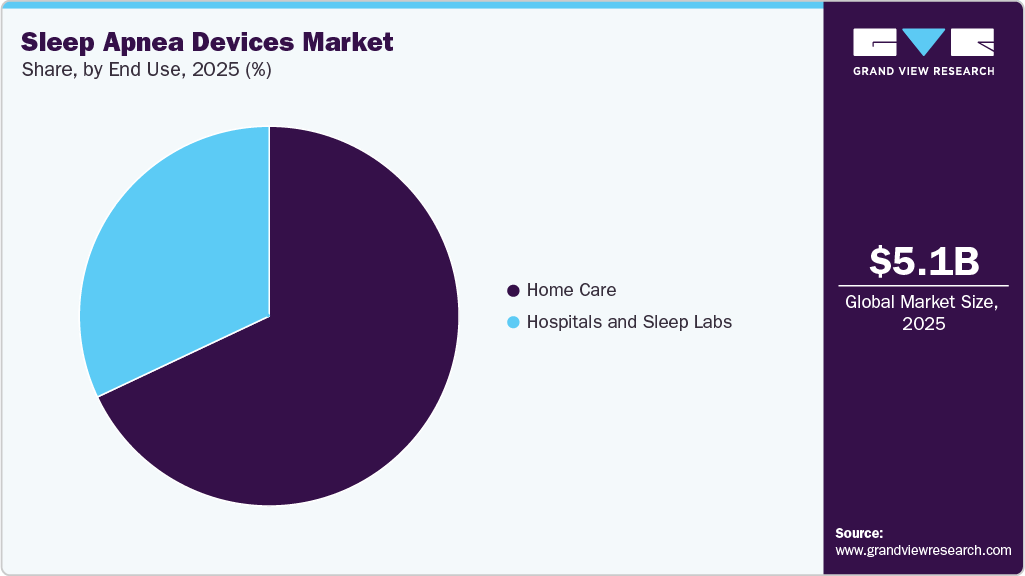
Based on end use, the home care segment led the market with the largest revenue share in 2025. Technological innovations have resulted in the creation of more portable, user-friendly, and quieter sleep apnea devices suitable for home use. Compact CPAP, BiPAP, and APAP machines, accompanied by lightweight masks and accessories, allow patients to manage their sleep apnea treatment at home comfortably. This preference for homecare settings, driven by enhanced comfort and convenience, contributes to the growth of this segment.
 To learn more about this report, Download Free Sample Report
Hospital and sleep lab segment is anticipated to experience substantial growth as sleep apnea devices play a crucial role in these settings for diagnosing, monitoring, managing, treating, and supporting patients with sleep-related breathing disorders. In addition, in critical care settings like ICUs, hospitals utilize sleep apnea devices such as Continuous Positive Airway Pressure (CPAP) and Bi-level Positive Airway Pressure (BiPAP) to aid patients with compromised respiratory functions, thereby driving segment growth.
Regional Insights
North America dominated the sleep apnea devices market with the largest revenue share of 47.6% in 2025. Changing lifestyles, growing disposable income, presence of renowned players, growing obese population, rising prevalence of respiratory diseases, growing awareness about OSA, and favorable government initiatives are some of the key factors driving the growth. Some of the key participants present in North America are Philips Respironics; Somnetics International Inc.; and ResMed. These companies have a strong business presence and have well-established supply & distribution channels across North America.
 To learn more about this report, Download Free Sample Report
U.S. Sleep Apnea Devices Market Trends
The U.S. held the largest share of the North America sleep apnea devices market in 2025, driven by the high prevalence and diagnosis rates of obstructive sleep apnea, the widespread availability of sleep testing and specialized care, and the established adoption of treatment devices. In addition, favorable reimbursement coverage, growing awareness of the health risks associated with untreated sleep apnea, and the presence of major device manufacturers are contributing to the market's growth.
Asia Pacific Sleep Apnea Devices Market Trends
Asia Pacific segment is anticipated to grow at the fastest rate of 8.0% over the forecast period owing to the growing geriatric population and rising prevalence of lifestyle diseases such as cardiovascular diseases, cancer, hypertension, diabetes, and chronic respiratory diseases. As per the OECD iLibrary article on Asia/Pacific 2020, approximately 227 million individuals are diagnosed with type 2 diabetes in the Asia Pacific. The growing prevalence of chronic conditions is expected to contribute to the surge in OSA and drive the adoption of sleep apnea devices in countries in the Asia Pacific.
Key Companies & Market Share Insights
The competitive sleep apnea devices market is characterized by a few notable players, including ResMed, Philips Respironics (a division of Philips), Fisher & Paykel Healthcare, among others. These manufacturers are actively pursuing strategic initiatives such as mergers and acquisitions to strengthen their market positions. For instance, in July 2023, ResMed acquired Somnoware, a U.S. leader in sleep and respiratory care Home Care software.
Key Sleep Apnea Devices Companies
The following key companies have been profiled for this study on the sleep apnea devices market.
-
ResMed
-
Respironics (a subsidiary of Koninklijke Philips N.V.)
-
Fisher & Paykel Healthcare Limited
-
Curative Medical, Inc.
-
React Health (Respiratory Product Line from Invacare Corporation)
-
Somnetics International, Inc.
-
BMC Medical Co., Ltd.
-
Natus Medical Incorporated
-
SOMNOmedics GmbH
-
Compumedics
-
Itamar Medical Ltd.
-
Nihon Kohden Corporation
Competitive Benchmarking
Category
Operating Strategies
Competitive Edge
Weakness
Established Market Leaders (ResMed, Koninklijke Philips N.V., Fisher & Paykel Healthcare Limited, Medtronic plc, Masimo Corporation)
- Focus on comprehensive sleep apnea portfolios spanning diagnostic, PAP therapy, masks, and connected digital health solutions. Invest heavily in AI-enabled therapy optimization, cloud-based patient monitoring, new product launches, strategic acquisitions, and collaborations with healthcare providers and sleep clinics to strengthen global market presence.
- Strong global distribution networks, broad product portfolios, established brand recognition, robust R&D capabilities, extensive clinical evidence, integrated digital ecosystems, and favorable reimbursement coverage across major markets.
- High product pricing, complex regulatory requirements, dependence on mature markets, and exposure to product recalls, supply chain disruptions, and cybersecurity risks associated with connected devices.
Emerging & Regional Manufacturers (React Health, CONTEC MEDICAL SYSTEMS CO., LTD., OSI Systems, Inc., ICU Medical, Inc., Nihon Kohden Corporation)
- Expand market presence through competitively priced devices, regional distribution partnerships, OEM manufacturing, home healthcare expansion, and increasing investments in digital respiratory monitoring and connected healthcare solutions. Focus on emerging markets and underserved healthcare settings.
- Cost-effective product offerings, growing presence in emerging economies, flexible manufacturing capabilities, expanding distributor networks, and increasing investment in digital health technologies.
- Lower brand recognition in the global sleep apnea market, limited premium product portfolio, fewer long-term clinical validation studies, and comparatively smaller investment in advanced AI-enabled sleep therapy technologies.
Recent Developments
-
In November 2023, Vivos Therapeutics obtained FDA 510(k) Clearance for its CARE (Complete Airway Repositioning and/or Expansion) oral devices tailored for adults with severe obstructive sleep apnea (OSA). This clearance covers the company's prominent DNA, mRNA, and mmRNA oral appliances.
-
In October 2023, ResMed and Bittium Biosignals Ltd, a Bittium Corporation subsidiary, entered an agreement where ResMed becomes a distributor of Bittium Respiro, an advanced Home Sleep Apnea Test and Analysis Solution. The comprehensive solution includes the Bittium Respiro measuring device, its accessories, and the Bittium Respiro Analyst software analysis tool and service platform. The non-exclusive agreement covers Norway, the United Kingdom (UK), Switzerland, the Republic of Ireland, Finland, and Sweden
Sleep Apnea Devices Market Report Scope
Report Attribute
Details
Market size in 2025
USD 5.1 billion
Estimated market size in 2026
USD 5.4 billion
Projected market size by 2033
USD 8.4 billion
Growth rate
CAGR of 6.6% from 2026 to 2033
Historical data
2021 - 2025
Forecast period
2026 - 2033
Quantitative units
Revenue in USD million/billion and CAGR from 2026 to 2033
Report coverage
Revenue forecast, company ranking, competitive landscape, growth factors, and trends
Segments covered
Product type, end use, region
Regional scope
North America; Europe; Asia Pacific; Latin America; MEA
Country scope
U.S.; Canada; Mexico; Germany; UK; France; Italy; Spain; Norway; Denmark; Sweden; Russia; Iceland; Finland; China; Japan; India; South Korea; Australia; Thailand; Singapore; Brazil; Argentina; Saudi Arabia; South Africa; UAE; Kuwait; Israel
Key companies profiled
ResMed, Koninklijke Philips N.V., Fisher & Paykel Healthcare Limited, Curative Medical, Inc., React Health (Respiratory Product Line from Invacare Corporation), Somnetics International, Inc., Natus Medical Incorporated, SOMNOmedics GmbH, Compumedics, Itamar Medical Ltd., Nihon Kohden Corporation, Masimo, Medtronic, OSI Systems, Inc., ICU Medical, Inc., CONTEC MEDICAL SYSTEMS CO., LTD
Customization scope
Free report customization (equivalent up to 8 analysts' working days) with purchase. Addition or alteration to country, regional & segment scope.
Pricing and purchase options
Avail customized purchase options to meet your exact research needs. Explore purchase options
Global Sleep Apnea Devices Market Report Segmentation
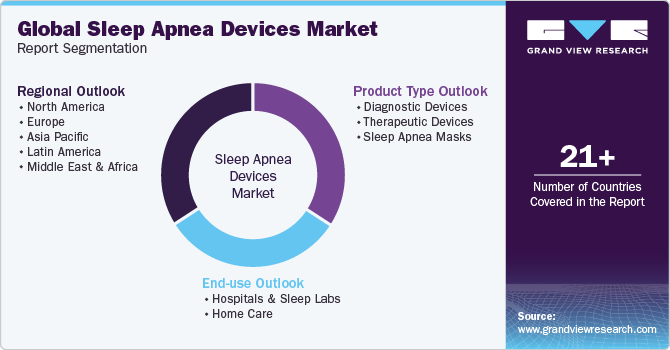
This report forecasts revenue growth at regional and country levels and provides an analysis of the latest industry trends in each of the sub-segments from 2021 to 2033. For this study, Grand View Research has segmented the sleep apnea devices market report based on product type end use, and region.
 To learn more about this report, Download Free Sample Report
-
Product Type Outlook (Revenue, USD Million, 2021 - 2033)
-
Diagnostic Devices
-
Actigraphs
-
Polysomnography (PSG) device
-
Respiratory Polygraphs
-
Pulse Oximeters
-
-
Therapeutic Devices
-
Positive Airway Pressure (PAP) Devices
-
CPAP
-
APAP
-
Bi-PAP
-
-
Oral Devices
-
Nasal Devices
-
Chin Straps
-
-
Sleep Apnea Masks
-
-
End Use Outlook (Revenue, USD Million, 2021 - 2033)
-
Hospitals and Sleep Labs
-
Home Care
-
-
Regional Outlook (Revenue, USD Million, 2021 - 2033)
-
North America
-
U.S.
-
Canada
-
-
Europe
-
U.K.
-
Germany
-
France
-
Italy
-
Spain
-
Sweden
-
Denmark
-
Norway
-
-
Asia Pacific
-
Japan
-
China
-
India
-
Australia
-
South Korea
-
Singapore
-
Thailand
-
-
Latin America
-
Mexico
-
Brazil
-
Argentina
-
-
Middle East & Africa
-
South Africa
-
Saudi Arabia
-
U.A.E.
-
Kuwait
-
-
Research Methodology
The sleep apnea devices market figures in this report are based on a proven research process that combines executive interviews with secondary research from proprietary databases, company filings, and recognized regulatory and institutional sources. Market size is built through value-chain sizing - reconciling supply-side and demand-side estimates - and triangulated with bottom-up and top-down approaches. Every estimate passes multiple levels of expert validation before publication, with each sleep apnea devices segment quantified using the revenue-capture definitions in the table below.
Segment Definition
Product Type
Revenue capture definition
Diagnostic Devices
Revenue generated from the sale of medical devices and monitoring systems used to diagnose, screen, and assess the severity of sleep apnea and other sleep-related breathing disorders. This includes revenues from diagnostic hardware, associated software, sensors, accessories, and replacement components used in hospitals, sleep laboratories, diagnostic centers, and home sleep testing.
Therapeutic Devices
Revenue generated from medical devices designed to treat obstructive sleep apnea and other sleep-related breathing disorders by maintaining airway patency, improving airflow, reducing apnea episodes, and enhancing sleep quality. Revenue includes equipment sales, replacement components, and related accessories.
a) Positive Airway Pressure (PAP) Devices
Revenue generated from Continuous Positive Airway Pressure (CPAP), Automatic Positive Airway Pressure (APAP), and Bi-level Positive Airway Pressure (BiPAP/BPAP) devices used to deliver pressurized airflow for maintaining open airways during sleep. Revenue includes standalone devices and integrated therapy systems.b) Oral Devices
Revenue generated from custom-made and over-the-counter oral appliances, including mandibular advancement devices (MADs) and tongue-retaining devices (TRDs), designed to reposition the jaw or tongue to prevent upper airway obstruction during sleep.c) Nasal Devices
Revenue generated from non-powered nasal therapy devices designed to improve nasal airflow and reduce airway resistance during sleep, including nasal dilators, expiratory positive airway pressure (EPAP) devices, and similar therapeutic products.d) Chin Straps
Revenue generated from chin support devices used independently or alongside PAP therapy to minimize mouth opening during sleep, improve mask effectiveness, reduce air leakage, and enhance treatment compliance.Sleep Apnea Masks
Revenue generated from masks used with Positive Airway Pressure (PAP) therapy systems to deliver pressurized air effectively during sleep. This includes nasal masks, nasal pillow masks, full-face masks, hybrid masks, pediatric masks, replacement cushions, headgear, frames, and other compatible mask accessories sold for sleep apnea therapy.
End Use
Revenue capture definition
Home Care
Revenue generated from the sale of sleep apnea diagnostic and therapeutic devices used in home-based settings for the diagnosis, treatment, and long-term management of sleep apnea. This includes home sleep testing (HST) devices, portable diagnostic equipment, Positive Airway Pressure (PAP) devices, oral appliances, nasal devices, chin straps, sleep apnea masks, replacement accessories, remote patient monitoring solutions, and connected digital health platforms utilized by patients outside of clinical facilities.
Hospitals and Sleep Labs
Revenue generated from sleep apnea diagnostic and therapeutic devices procured and utilized by hospitals, sleep laboratories, specialty respiratory clinics, and other healthcare facilities. This includes polysomnography (PSG) systems, respiratory polygraphs, pulse oximeters, PAP devices, oral appliances, sleep apnea masks, and associated accessories used for comprehensive sleep evaluations, diagnosis, treatment initiation, therapy titration, and ongoing patient management under clinical supervision.
Estimation Model
Stage
Description
Top-Down
Commodity Flow Analysis: Market size was estimated by analyzing revenues generated by key in the MES in lifescience companies, supported by company annual reports, investor presentations, distributor insights, and premium databases. Revenue contributions from private companies were assessed using industry databases and validated through primary research to derive the overall market value.
Segmentation
Country-Level Segment Share Modeling: Market shares for type, deployment mode, and end use segments were derived using country-specific adoption patterns, healthcare infrastructure, reimbursement scenarios, and product penetration rates. Weighted average calculations were applied to determine regional and global segment distributions.
Validation
Data Triangulation & Validation Model: Market estimates were validated through triangulation of secondary research, primary interviews, company-level revenue assessments, and demand-side adoption analysis to ensure consistency and accuracy across all market segments and geographies.
Forecasting
Forecasting & CAGR Modeling: Market forecasts were developed using historical market trends, technology adoption patterns, product innovation trends, healthcare expenditure, and regulatory developments. Regression-based analysis and trend modeling were applied to project future market growth and CAGR.
Delivered Customizations
This report has been delivered with the following In-depth customizations
Client Request
Customization Delivered
Value Adds
Product-Level Market Share & Competitive Assessment
Developed a detailed market share analysis across Diagnostic Devices (PSG, Respiratory Polygraphs, Pulse Oximeters, Actigraphs) and Therapeutic Devices (PAP Devices, Oral Devices, Nasal Devices, Chin Straps, Sleep Apnea Masks). The study further benchmarked leading manufacturers by product portfolio, regional penetration, technology differentiation, and estimated revenue contribution by product category.
Enables stakeholders to identify high-revenue product segments, benchmark competitive positioning, optimize portfolio strategy, and prioritize investments in high-growth device categories.
Average Selling Price (ASP) & Pricing Trend Analysis
Conducted an ASP analysis by product type, technology, distribution channel, and region, including historical pricing trends, reimbursement impact, premium versus value-tier products, pricing strategies of leading manufacturers, and forecast ASP movement through 2033.
Supports pricing optimization, revenue forecasting, profitability analysis, competitive pricing strategies, and market entry decisions across developed and emerging markets.
Sleep Apnea Treatment Pathway & Technology Adoption Assessment
Evaluated patient adoption across diagnostic devices, PAP therapy, oral appliances, implantable therapies, and home sleep testing (HST). The analysis included diagnosis-to-treatment conversion rates, therapy adherence trends, homecare adoption, digital health integration, reimbursement landscape, and emerging technologies such as AI-enabled PAP and hypoglossal nerve stimulation.
Helps manufacturers identify unmet clinical needs, improve patient retention strategies, evaluate commercialization opportunities, and prioritize investments in next-generation sleep apnea technologies.
Frequently Asked Questions About This Report
The global sleep apnea devices market size was valued at USD 5.1 billion in 2025 and is estimated at USD 5.4 billion for 2026.
The global sleep apnea devices market is expected to grow at a CAGR of 6.6% from 2026 to 2033, reaching USD 8.4 billion by 2033.
The therapeutic devices segment led with a 78.6% revenue share in 2025. This is attributable to promising reimbursement guidelines in various countries.
Some key players operating in the sleep apnea devices market include ResMed, Koninklijke Philips N.V., Fisher & Paykel Healthcare Limited, Curative Medical, Inc., React Health (Respiratory Product Line from Invacare Corporation), Somnetics International, Inc., Natus Medical Incorporated, SOMNOmedics GmbH, Compumedics, Itamar Medical Ltd., Nihon Kohden Corporation, Masimo, Medtronic, OSI Systems, Inc., ICU Medical, Inc., CONTEC MEDICAL SYSTEMS CO., LTD
Key factors that are driving the sleep apnea devices market growth include the increasing number of patients suffering from obstructive sleep apnea (OSA).
North America dominated the sleep apnea devices market with the largest revenue share of 47.6% in 2025.
Asia Pacific is the fastest-growing region over the forecast period.
Based on product type, the sleep apnea masks segment is the fastest-growing in the sleep apnea devices market
Based on end use, the home care segment led the market with the largest revenue share in 2025.
About the Author(s)
Medical Devices Research Team
Healthcare · Medical DevicesThis report was authored by the medical devices research team at Grand View Research - comprising two research analysts, one senior research analyst, and one industry expert - with specialized expertise in the medical devices segment of the healthcare industry. All findings are based on proprietary healthcare databases, executive interviews, and regulatory analysis, subject to internal peer review prior to publication.
Last Updated:
Speak to Analyst

Customize this report to your needs - add regions, segments, or data points, with 20% free customization.
Or view our licence options:


ISO 9001:2015 & 27001:2022 Certified
We are GDPR and CCPA compliant! Your transaction & personal information is safe and secure. For more details, please read our privacy policy.


