
- Home
- »
- Medical Devices
- »
-
Small Molecule API CDMO Market Size Report, 2026-2033GVR Report cover
![Small Molecule API CDMO Market (2026 - 2033)Report]()
Small Molecule API CDMO Market (2026 - 2033)
Size, Share & Trends Analysis Report By Drug (Innovators, Generics), By Application (Cardiovascular Diseases, Oncology, Respiratory Disorders, Neurology, Metabolic Disorders, Infectious Diseases), By End Use, By Region, And Segment Forecasts
Market Size, 2025
$46.6BMarket Estimate, 2026
$49.4BMarket Forecast, 2033
$80.7BCAGR, 2026–2033
7.3%Small Molecule API CDMO Market Summary
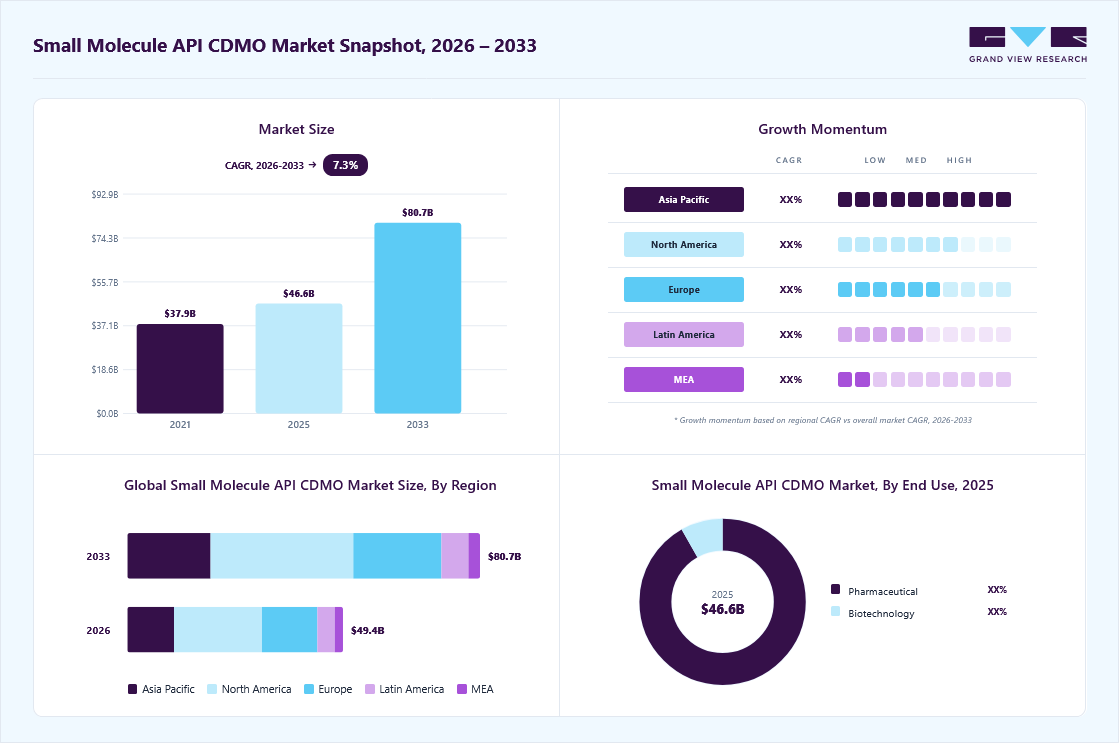
The global small molecule API CDMO market size was valued at USD 46.6 billion in 2025 and is projected to grow from USD 49.4 billion in 2026 to USD 80.7 billion by 2033, at a CAGR of 7.3% from 2026 to 2033. The market in North America dominated with a revenue share of 40.8% in 2025. The market is experiencing growth driven by rising demand for complex APIs and advanced manufacturing capabilities, increasing geopolitical shifts and supply chain resilience initiatives, sustainability, and rising green chemistry adoption, and increasing digitalization, AI integration, and regulatory evolution.
Key Market Trends & Insights
- By end use: Pharmaceutical segment held the largest market share of 91.7% in 2025.
- By application: Oncology segment held the largest market share of 42.5% in 2025.
- By drug: Innovators segment held the largest market share in 2025.
Regional Highlights
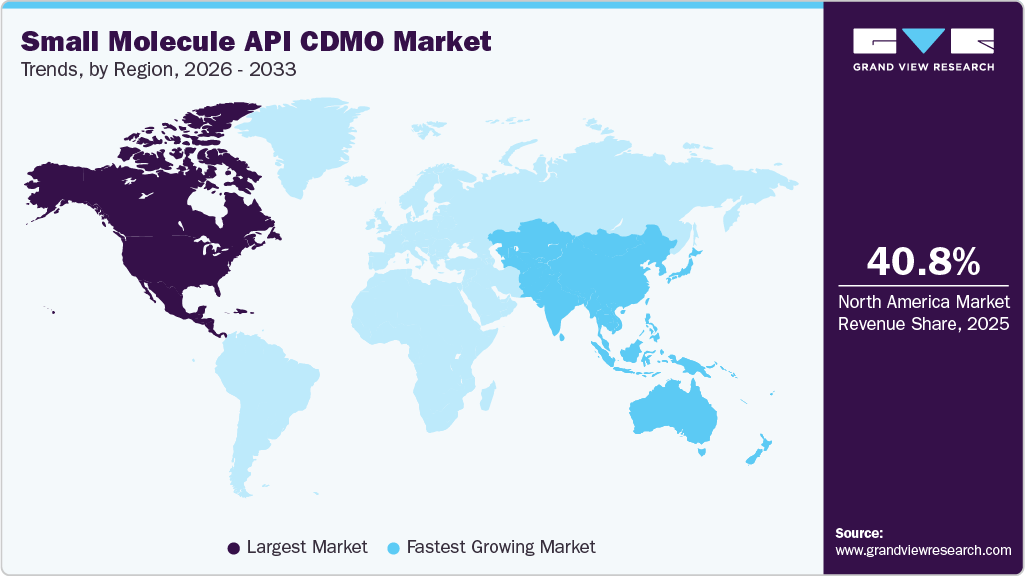
- Largest regional market: North America (40.8% revenue share, 2025)
- Fastest-growing regional market: Asia Pacific (highest CAGR, 2026-2033)
- By country: The U.S. held the largest market share in 2025
Market Size & Forecast
- Market size in 2025: USD 46.6 Billion
- Estimated market size in 2026: USD 49.4 Billion
- Projected market size by 2033: USD 80.7 Billion
- CAGR (2026-2033): 7.3%
The increasing complexity of small-molecule APIs, including multi-step synthesis, chiral chemistry, and high-potency compounds, is driving demand for specialized CDMO capabilities. Pharmaceutical companies are outsourcing in large numbers to partners with advanced manufacturing expertise, containment infrastructure, and regulatory-compliant facilities. This is particularly evident in the growing pipeline of highly potent APIs (HPAPIs) and complex small molecules used in oncology and targeted therapies. In addition, the growing demand for innovative therapies is accelerating the need for CDMOs equipped with high-containment technologies and specialized process development capabilities. As drug molecules become more structurally sophisticated, CDMOs offering integrated services from early-stage development to commercial-scale manufacturing are gaining a competitive edge.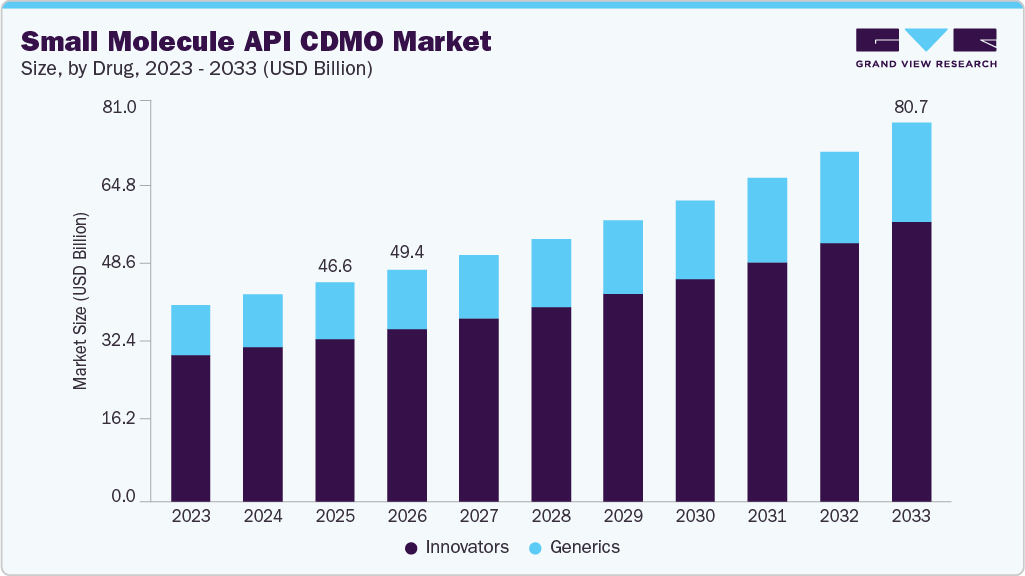
In addition, global geopolitical changes are transforming pharmaceutical supply chains, driving greater emphasis on resilience, localization, and supply security. Governments are introducing legislative measures to reduce dependency on foreign API sources, particularly in critical drug categories. For instance, the Biosecure Act, passed in September 2024 in the U.S., is encouraging domestic manufacturing of essential drugs, creating new opportunities for CDMOs with a strong regional presence or the ability to comply with stringent sourcing requirements. This shift is prompting pharmaceutical companies to diversify suppliers and invest in regionally aligned CDMO partnerships. In addition, enhanced quality systems and regulatory compliance frameworks are becoming essential to ensure uninterrupted supply.
Furthermore, sustainability is emerging as a critical driver in the market, influenced by both regulatory pressures and evolving customer expectations. Pharmaceutical companies are prioritizing environmentally responsible manufacturing practices, including green chemistry, waste reduction, and energy-efficient processes. The regulatory bodies across regions are implementing stricter environmental guidelines, compelling CDMOs to adopt sustainable technologies and reduce their carbon footprint. This includes the use of safer solvents, continuous manufacturing techniques, and improved process efficiency to minimize environmental impact. In addition, clients are selecting CDMO partners based on their sustainability credentials, making it a key differentiator in competitive bidding.
Moreover, advancements in digitalization and artificial intelligence (AI) are transforming the landscape by enhancing efficiency, quality, and speed of development. AI-driven tools are being used in drug discovery, process optimization, and predictive analytics, enabling faster decision-making and reduced development timelines. For instance, in January 2026, Excelsior Sciences raised USD 95 million to develop machine-native chemistry platforms enabling AI-driven, closed-loop small-molecule discovery, accelerating synthesis, and transforming efficiency in pharmaceutical R&D and CDMO operations. These technologies improve manufacturing precision and product consistency, strengthening CDMO competitiveness. However, the growing integration of AI and machine learning is also prompting regulatory evolution. Regulatory authorities are working to establish clear guidelines around algorithm validation, transparency, and data integrity. The new regulations may initially slow development due to additional compliance requirements, but they ultimately streamline approvals and improve the reliability of AI-driven processes.
Opportunity Analysis
The small molecule API CDMO market presents strong growth opportunities driven by increased outsourcing by pharmaceutical and biotechnology companies seeking cost efficiency, flexibility, and access to specialized expertise. The rising complexity of drug pipelines, including highly potent APIs (HPAPIs) and niche therapeutic molecules, is creating demand for CDMOs with advanced capabilities in process development, containment, and scale-up manufacturing. In addition, the growing focus on supply chain resilience and regionalization is encouraging investments in local manufacturing infrastructure, particularly in North America and Europe, opening avenues for CDMOs with compliant and geographically diversified facilities.
Furthermore, digitalization and AI integration further offer opportunities to enhance process efficiency, reduce development timelines, and improve quality outcomes. Moreover, increasing regulatory emphasis on sustainability is pushing demand for green chemistry solutions, enabling CDMOs with environmentally responsible practices to differentiate themselves and secure long-term strategic partnerships with global pharmaceutical companies.
Impact of U.S. Tariffs on Small Molecule API CDMO Market
U.S. tariffs are significantly transforming the market. To date, more than 80% of APIs are produced overseas, primarily in China and India, with India itself 70-80% dependent on Chinese APIs. Chinese APIs are used in nearly 40% of U.S. generic drugs, exposing substantial supply chain vulnerability. Besides this, regulatory scrutiny has intensified. For instance, in February 2025, the FDA issued warning letters to Chinese manufacturers Nuowei Chemistry and Innovation Pharmaceutical over non-compliance with U.S. Pharmacopoeia standards and data gaps.
Furthermore, the U.S. pharmaceutical tariffs (2026) under the Section 232 of the Trade Expansion Act of 1962 are transforming the market by accelerating supply chain regionalization and domestic manufacturing investments. The 100% tariff on patented drugs is pushing innovator companies to shift production closer to the U.S., creating strong opportunities for CDMOs with North American facilities or expansion capabilities. Similarly, exemptions for generics and APIs offer short-term advantages to cost-competitive regions like India, sustaining outsourcing demand.
Technological Advancements
The market is witnessing rapid technological evolution driven by efficiency, complexity, and sustainability needs. Continuous manufacturing and flow chemistry are improving scalability, cost efficiency, and product consistency compared to traditional batch processes. In addition, AI and digitalization are enhancing process optimization, predictive analytics, and development timelines, enabling faster and more reliable manufacturing outcomes.
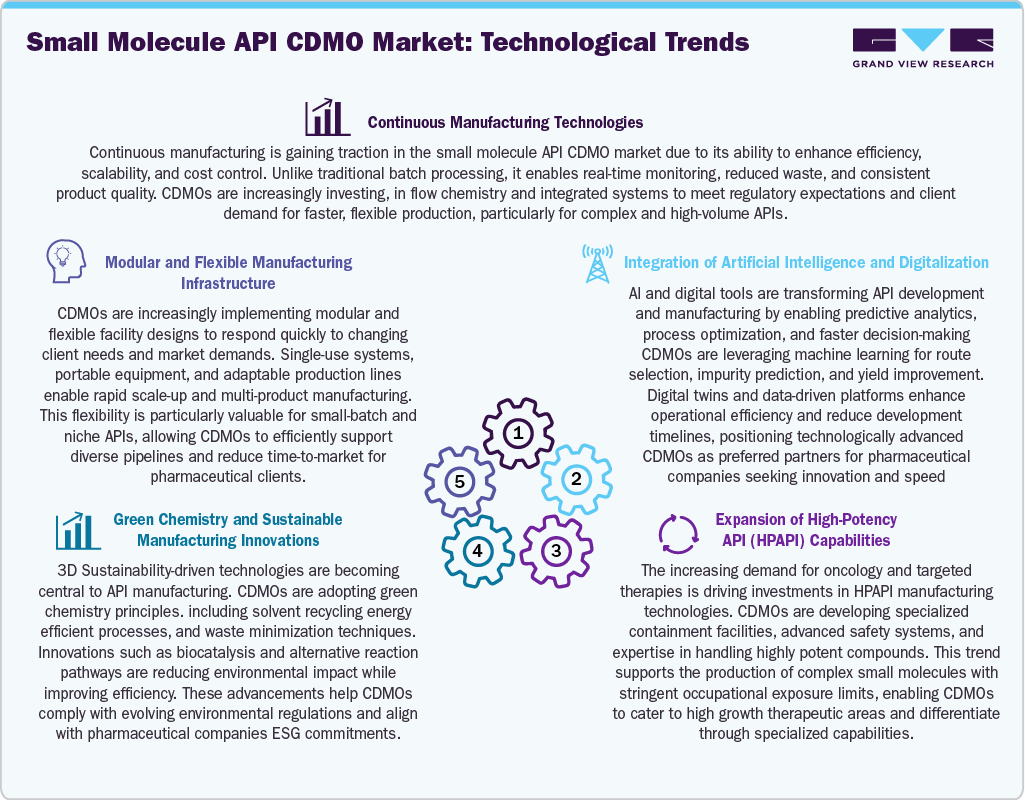
The growing demand for highly potent APIs (HPAPIs), particularly in oncology, is propelling CDMOs to invest in advanced containment technologies and specialized facilities. Sustainability is another key trend, with increasing adoption of green chemistry, solvent recycling, and energy-efficient processes to meet regulatory and ESG expectations. Furthermore, modular and flexible manufacturing infrastructure is gaining prominence, allowing CDMOs to handle diverse product pipelines and scale production rapidly.
Pricing Model Analysis
Pricing models in the small molecule API CDMO market are evolving to balance risk, flexibility, and value delivery. Milestone-based pricing links payments to key development stages, reducing client risk while ensuring steady progress. Whereas value-based pricing focuses on the strategic importance and complexity of services, allowing CDMOs to charge premiums for advanced capabilities such as HPAPI manufacturing and accelerated timelines.
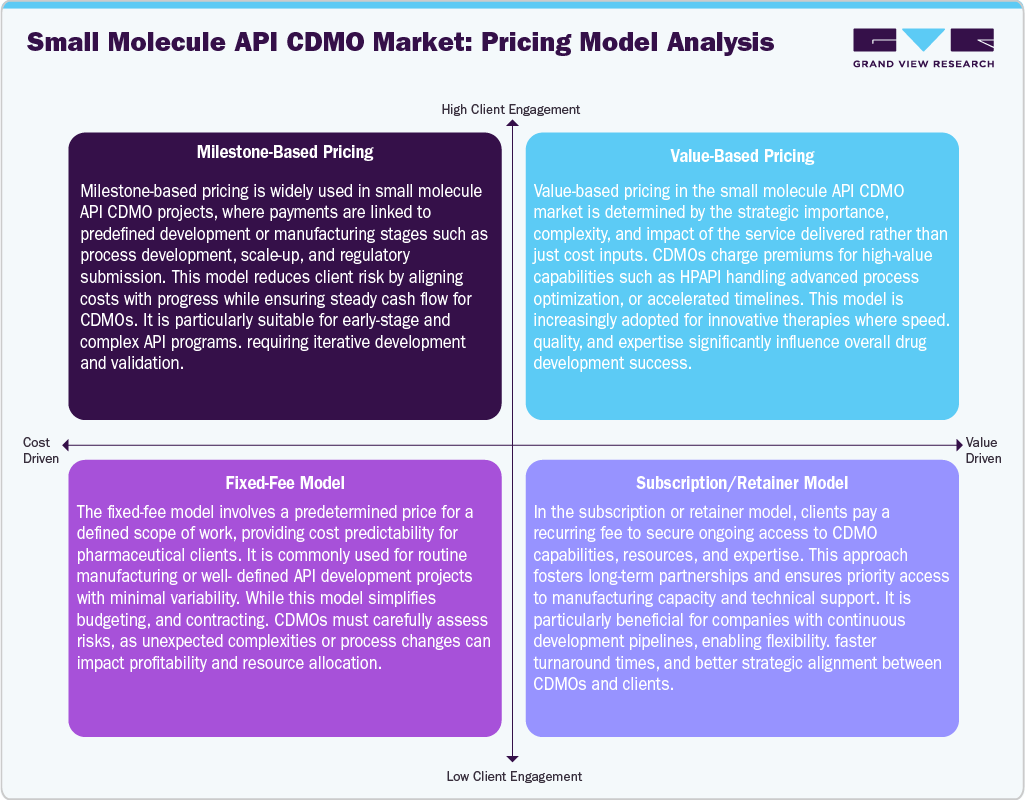
The fixed-fee model offers cost predictability for well-defined projects, making it suitable for routine manufacturing, though it requires careful risk assessment. Meanwhile, subscription or retainer models are gaining traction, enabling long-term partnerships through recurring payments for continuous access to expertise, infrastructure, and capacity. These models provide flexibility and priority service for clients with ongoing pipelines. Thus, diversified pricing strategies help CDMOs align with varying client needs, improve financial stability, and remain competitive in a dynamic pharmaceutical outsourcing landscape.
Market Concentration & Characteristics
The market is characterized by high outsourcing demand, complex manufacturing requirements, and strong regulatory oversight. It features a fragmented yet competitive landscape with global and regional players. Key attributes include growing demand for HPAPIs, emphasis on quality compliance, increasing adoption of advanced technologies, and long-term strategic partnerships with pharmaceutical and biotechnology companies.
The market demonstrates a high degree of innovation driven by increasing molecular complexity and demand for efficiency. Companies are adopting continuous manufacturing, flow chemistry, and advanced process technologies. Integration of AI and digital tools is accelerating development timelines and improving yields. Innovation is also focused on HPAPI capabilities and sustainable manufacturing solutions to enhance competitiveness.
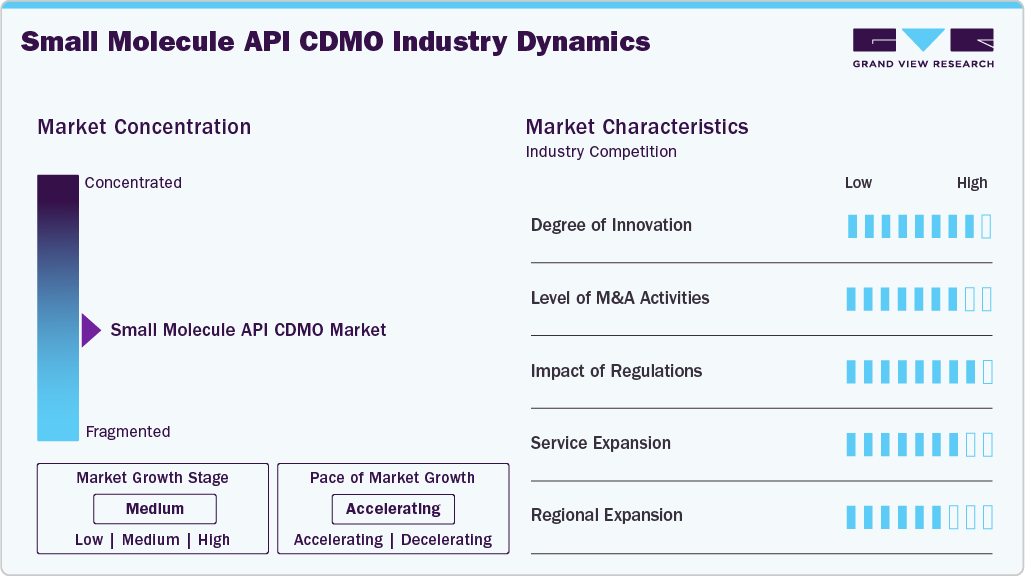
Regulations significantly influence the market, with stringent guidelines from authorities such as the U.S. Food and Drug Administration and the European Medicines Agency. Compliance with GMP, environmental standards, and data integrity requirements is critical. Evolving regulations around supply chain security, sustainability, and digital technologies are increasing operational complexity while ensuring product quality, safety, and global market access.
Mergers and acquisitions are prominent in the small molecule API CDMO market as companies seek to expand capabilities, geographic presence, and client portfolios. For instance, in January 2026, Agno Pharma acquired Actylis’s Eugene API facility, expanding U.S. GMP manufacturing, enhancing early- to late-phase capabilities, and strengthening onshore production. In addition, larger CDMOs are consolidating smaller players to strengthen end-to-end service offerings, enhance scale, and remain competitive in a highly fragmented and evolving market.
CDMOs are expanding services across the value chain, from early-stage development to commercial manufacturing. Integrated offerings include process development, analytical services, regulatory support, and packaging. There is a growing focus on high-value services such as HPAPI manufacturing and continuous processing. This expansion enables CDMOs to provide comprehensive solutions and build long-term partnerships with clients.
Regional expansion is accelerating as CDMOs respond to supply chain risks and localization trends. Companies are investing in North America and Europe to meet regulatory and geopolitical requirements, while maintaining cost advantages in the Asia-Pacific. Establishing geographically diversified facilities enhances supply security, regulatory compliance, and client proximity, making regional presence a key competitive factor in the market.
Drug Insights
On the basis of the drug, the innovators segment accounted for the largest share in 2025. The segment growth is driven by increasing demand for small molecule drugs, increasing outsourcing trends among pharmaceutical companies, and a surge in the number of clinical trials. According to the U.S. FDA, 46 novel drugs were approved in 2025, including therapies targeting advanced cancers and rare diseases, while 1 novel drug has been approved so far in 2026. In addition, pharmaceutical companies have been outsourcing small-molecule API production to CDMOs to enhance efficiency, control costs, and accelerate time-to-market. In addition, rising R&D expenses, complex regulatory requirements, and the need for resilient supply chains drive this shift.
The generics segment is projected to experience the fastest growth over the forecast period, attributed to an increasing number of branded drug patent expirations, growing demand for affordable treatment options, and increasing cost-containment pressures in healthcare systems. According to a February 2026 report, the financial consequences of a patent cliff are significant, as innovator companies often lose 80-90% of their market share within the first year of generic entry. This sharp decline, driven by 80-85% lower-priced generics, accelerates outsourcing demand, creating substantial opportunities for API CDMOs to support large-scale, cost-efficient generic drug manufacturing and rapid market entry. Moreover, rising government initiatives, expanding access to healthcare in emerging markets, and the significant role of CDMOs in providing cost-efficient large-scale API production would boost the adoption of generic drugs.
Application Insights
On the basis of the application, the oncology segment held the largest revenue share of 42.5% in 2025. The segment growth is due to the increasing number of cancer cases worldwide. For instance, the Cancer Atlas predicts that there will be 29 million cancer cases globally by 2040. Recent trends in pharmaceutical products have shifted with growing R&D for cancer treatments. The pharmaceutical sector has witnessed significant growth due to the rising demand for oncology drugs & therapies fueled by innovative targeted treatments and personalized medicine approaches, which has led to a rise in demand for the small molecule innovator API CDMOs.
The infectious diseases segment is expected to witness significant growth over the forecast period, attributed to infectious diseases caused by bacterial and viral pathogens that have witnessed dynamic trends and scenarios across various disease segments. Such diseases are a major cause of death worldwide and establish an ever-growing medical need. The growing prevalence of severe diseases caused by harmful bacteria, fungi, viruses, and parasites, such as Severe Acute Respiratory Syndrome (SARS), has resulted in the growth of the infectious diseases market and the need for new drugs. Small molecule innovator API CDMO focuses on the discovery and research & development of new drugs and therapies.
End Use Insights
Based on the end use, the pharmaceutical segment accounted for the largest share in 2025, driven by shifting trends of outsourcing to reduce costs, accelerate timelines, and access specialized expertise. In addition, rising pipeline complexity, including HPAPIs and niche molecules, necessitates advanced capabilities. Patent expiries and generic competition push companies toward faster, scalable production. In addition, the need for supply chain resilience and regulatory compliance encourages partnerships with reliable CDMOs offering global manufacturing networks, integrated services, and high-quality standards to support efficient drug development and commercialization.
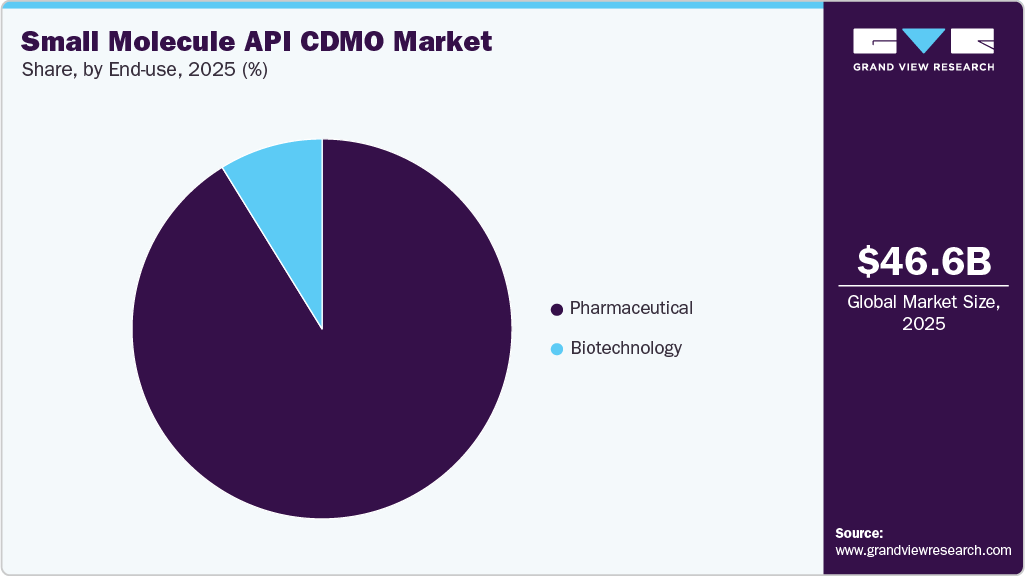
The biotechnology segment accounted for the second fastest segment in the market over the forecast period. The segment's expansion is driven by rising demand for biotechnology and enhanced molecular efficiency. Furthermore, significant investments in the biotechnology industry and ongoing advances in molecular biology have led to the emergence of new scientific disciplines, such as metabolomics, proteomics, and genomics. The growing use of biotech solutions has enabled the development of therapeutic proteins and other medications. Furthermore, the growing R&D pipeline is expected to positively impact the market.
Regional Insights
The North America small molecule API CDMO industry dominated the global market in 2025, holding a revenue share of 40.8%. The market growth is attributed to increasing investments by pharmaceutical companies, rising supply chain localization, and growing R&D of small molecule drugs. This has led to a surge in demand for contract development and manufacturing services. Some of the key players include Thermo Fisher Scientific, Catalent Inc., Lonza Group, Cambrex Corporation, and Piramal Pharma Solutions, which are increasing the number of strategic initiatives expected to contribute to market growth. These regional entities are focused on small molecule innovator API transactions with geographic expansion & capacity deals in novel therapeutics, which mostly include acquiring new capabilities.
U.S. Small Molecule API CDMO Market Trends
The small molecule API CDMO industry in the U.S. is driven by reshoring initiatives, rising demand for complex APIs and HPAPIs, and growing policies supporting domestic manufacturing. Some of the strategic initiatives are also boosting market growth. For instance, in October 2025, Cambrex announced a USD 120 million investment to expand API manufacturing in the U.S., highlighting strong domestic demand. In addition, competitive dynamics are high, with players focusing on capacity expansion, advanced technologies, and integrated services to secure long-term contracts.
The regulatory framework is stringent, overseen by agencies such as the U.S. Food and Drug Administration, and emphasizes GMP compliance, data integrity, and supply security. In addition, evolving policies support domestic production. For instance, the BIOSECURE Act restricts U.S. federal contractors from using biotech equipment or services from designated foreign companies, driving supplier realignment, increasing compliance scrutiny, and accelerating domestic sourcing, while creating short-term uncertainty and transition challenges across the biotech and CDMO ecosystem.
The Canada small molecule API CDMO industry is anticipated to grow from 2026 to 2033 due to rising government funding, increasing research activities, and outsourcing demand. For instance, in April 2026, investment under the Canadian Critical Drug Initiative supports domestic API manufacturing, strengthening local capacity and reducing import dependence. In addition, competitive dynamics remain moderately fragmented, with domestic players and global CDMOs expanding capabilities through partnerships and infrastructure investments.
Europe Small Molecule API CDMO Market Trends
The small molecule API CDMO industry in Europe held a significant market share in 2025. The region’s increasing demand for HPAPIs (driven by oncology pipelines), growing outsourcing by small and mid-sized biotech firms lacking in-house capabilities, and rising adoption of continuous manufacturing and digital technologies are boosting growth. The competitive landscape includes established global and regional CDMOs expanding through innovation, partnerships, and capacity upgrades. The regulatory framework is governed by the European Medicines Agency, which enforces strict GMP standards, environmental regulations, and quality compliance, ensuring high product safety across the region.
The Germany small molecule API CDMO industry is growing due to the country witnessing the highest healthcare spending in Europe and maintaining a strong healthcare system supported by high-quality medical services. The Federal Institute for Drugs and Medical Devices regulates APIs and ensures strict compliance standards. Besides this, demand for small molecule API CDMO services has grown due to therapeutic advancements, rising R&D activities, increasing product complexity, and stringent regulatory requirements. In addition, government initiatives supporting research and innovation further stimulate outsourcing demand.
The small molecule API CDMO industry in the UK is considered a lucrative market for pharmaceutical companies due to strategic collaborations, a shift toward biocatalysis for efficient and greener API synthesis, and the presence of various multinational CDMOs in the country. For instance, in March 2026, SK pharmteco partnered with Prozomix in the UK to integrate biocatalysis into API manufacturing, leveraging 6,000+ enzymes to enhance sustainable, efficient synthesis, accelerate development, and support complex small-molecule drug production globally. The regulatory framework is governed by the Medicines and Healthcare Products Regulatory Agency, ensuring strict GMP compliance, adherence to quality standards, and alignment with evolving environmental and pharmaceutical manufacturing regulations.
Asia Pacific Small Molecule API CDMO Market Trends
The small molecule API CDMO industry in the Asia Pacific is expected to grow at a significant CAGR over the forecast period, attributed to cost advantages, strong outsourcing trends, and expanding pharmaceutical manufacturing in countries such as China and India. The regional growth is supported by a skilled workforce and large-scale production capacity. Some of the major players include WuXi AppTec, Piramal Pharma Solutions, and Lonza Group, driving market growth. The region is witnessing high competitive growth with both global and regional firms expanding capabilities and forming partnerships.
The China small molecule API CDMO industry held a significant share in the market in 2025. A rising geriatric population and an expanding middle-income group are increasing API demand, while cost-effective labor continues to attract global outsourcing. The country’s growth is driven by large-scale manufacturing capacity, cost competitiveness, and strong export demand. For instance, the March 2026 report of WuXi AppTec expanding reactor capacity and successful U.S. Food and Drug Administration inspections highlights quality advancements. Such initiatives increase CDMO manufacturing capacities in China. In addition, the regulatory framework is governed by the National Medical Products Administration, emphasizing quality compliance and alignment with international regulations to support global pharmaceutical supply chains.
The small molecule API CDMO industry in India is expected to experience significant growth at a significant CAGR during the forecast period. The country is witnessing growth due to upcoming patent expiry, cost efficiencies of CDMOs, and strong chemistry expertise. Some of the strategic initiatives are boosting market growth. For instance, in August 2025, Axplora expanded in Vizag, expanding production and API manufacturing in India, strengthening global credibility. The competitive landscape is fragmented, with domestic firms and global CDMOs expanding capabilities and exports. The regulatory framework, led by the Central Drugs Standard Control Organization, emphasizes GMP compliance, quality standards, and alignment with international regulations, supporting India’s position as a key global outsourcing hub.
Latin America Small Molecule API CDMO Market Trends
The small molecule API CDMO industry in Latin America, including Brazil and Argentina, is emerging as a key hub, driven by growing pharmaceutical demand, cost advantages, and increasing nearshoring from North America to enhance supply chain resilience. The countries are attracting investments in local manufacturing.
The Brazil small molecule API CDMO industry is expected to grow over the forecast period. The country is witnessing import substitution initiatives, government support for local manufacturing, and growing outsourcing by regional pharma companies, further boosting opportunities. In addition, increasing demand for generics and branded generics, expansion of the public healthcare system, and rising prevalence of chronic diseases.
Middle East and AfricaSmall Molecule API CDMO Market Trends
The small molecule API CDMO industry in the Middle East and Africa accounted for a significant revenue share in 2025. The growth in the region can be attributed to increasing pharmaceutical demand, government initiatives for local manufacturing, and efforts to reduce import dependence. Some of the countries, such as Saudi Arabia and South Africa, are investing in domestic capabilities. The competitive landscape is emerging, with regional players and global CDMOs forming partnerships. The regulatory framework is evolving, led by authorities such as the Saudi Food and Drug Authority and the South African Health Products Regulatory Authority, focusing on GMP compliance, quality standards, and improving pharmaceutical self-sufficiency.
The South Africa small molecule API CDMO industry is witnessing growth due to the increasing demand for small molecule drugs, the attractiveness of the pharmaceutical industry, and the presence of a diverse population in the country. Moreover, the availability, affordability, accessibility, & quality of small molecule API products in South Africa are anticipated to fuel market growth during the forecast period. However, slow economic growth & development of the healthcare system, imports of APIs, and potentially rising medicine prices in the country are anticipated to impede market growth in the coming decade.
The small molecule API CDMO industry in Saudi Arabia is emerging as a competitive hub, driven by Vision 2030, localizing pharma production and spurring outsourcing to compliant partners. For instance, in September 2025, it was announced that Pharma Contract Manufacturing Organization (CMO) Services were leveraging local/international CDMOs such as Amber Lifesciences for SFDA-regulated GMP compliance, government incentives, and swift GCC access. In addition, competition is high between emerging Saudi firms and global giants via partnerships, fueled by rising demand and regulatory mandates for domestic manufacturing.
Key Small Molecule API CDMO Company Insights
The small molecule API CDMO market is led by global players such as Lonza, Catalent (Novo Holdings), Thermo Fisher Scientific, Recipharm, and WuXi AppTec, which collectively hold a significant share of outsourced API development and manufacturing. These firms dominate commercial‑scale API production, while mid‑tier CDMOs in India and China capture cost‑sensitive generic API contracts. Market share remains highly fragmented, reflecting intense competition and strong regional specialization. For instance, in November 2025, Lupin Manufacturing Solutions demonstrated its new oncology‑focused block, advanced containment, and complex‑chemistry capabilities, positioning itself as a preferred partner for high‑potency small molecule APIs. This strengthens the global market by adding specialized, compliant capacity and accelerating oncology drug commercialization for innovators and biotechs.
Key Small Molecule API CDMO Companies:
The following key companies have been profiled for this study on the small molecule API CDMO market.
- Lonza Group
- Catalent
- Thermo Fisher Scientific
- WuXi AppTec
- Siegfried Holding AG
- Cambrex Corporation
- Recipharm
- CordenPharma
- Ajinomoto Bio-Pharma Services
- Curia
- Piramal Pharma Solutions
- Jubilant Biosys
- Syngene International
- Neuland Laboratories
- Axplora
Recent Developments
-
In March 2026, Wilmington PharmaTech expanded its USD 50 million at Delaware, doubling U.S. API capacity, strengthening domestic supply chains, boosting HPAPI production, and enhancing its position as a preferred partner for scalable, high-quality small-molecule manufacturing.
-
In October 2025, Cambrex invested USD 120 million in the U.S., expanding its Charles City, Iowa site by 40% to strengthen API and peptide manufacturing and support domestic drug supply chain resilience.
-
In July 2025, Radyus Research (U.S.) and Eurofins CDMO Alphora (Canada) formed a strategic partnership to integrate early-stage drug development and GMP manufacturing for small molecule APIs, streamlining preclinical through clinical proof-of-concept services for global biotech clients.
Small Molecule API CDMO Market Report Scope
Report Attribute
Details
Market size in 2025
USD 46.6 billion
Estimated market size in 2026
USD 49.4 billion
Projected market size by 2033
USD 80.7 billion
Growth rate
CAGR of 7.3% from 2026 to 2033
Historical Year
2021 - 2025
Forecast period
2026 - 2033
Quantitative units
Revenue in USD billion/million and CAGR from 2026 to 2033
Report coverage
Revenue forecast, company ranking, competitive landscape, growth factors, and trends
Segments covered
Drug, application, end use, region
Regional scope
North America; Europe; Asia Pacific; Latin America; Middle East and Africa
Country scope
U.S.; Canada; Mexico; UK; Germany; France; Italy; Spain; Denmark; Sweden; Norway; Japan; China; India; Thailand; South Korea; Australia; Brazil; Argentina; South Africa; Saudi Arabia; UAE; Kuwait; Oman; Qatar
Key companies profiled
Lonza Group; Catalent; Thermo Fisher Scientific; WuXi AppTec; Siegfried Holding AG; Cambrex Corporation; Recipharm; CordenPharma; Ajinomoto Bio-Pharma Services; Curia; Piramal Pharma Solutions; Jubilant Biosys; Syngene International; Neuland Laboratories; Axplora
Customization scope
Free report customization (equivalent up to 8 analysts working days) with purchase. Addition or alteration to country, regional & segment scope.
Pricing and purchase options
Avail customized purchase options to meet your exact research needs. Explore purchase options
Global Small Molecule API CDMO Market Report Segmentation
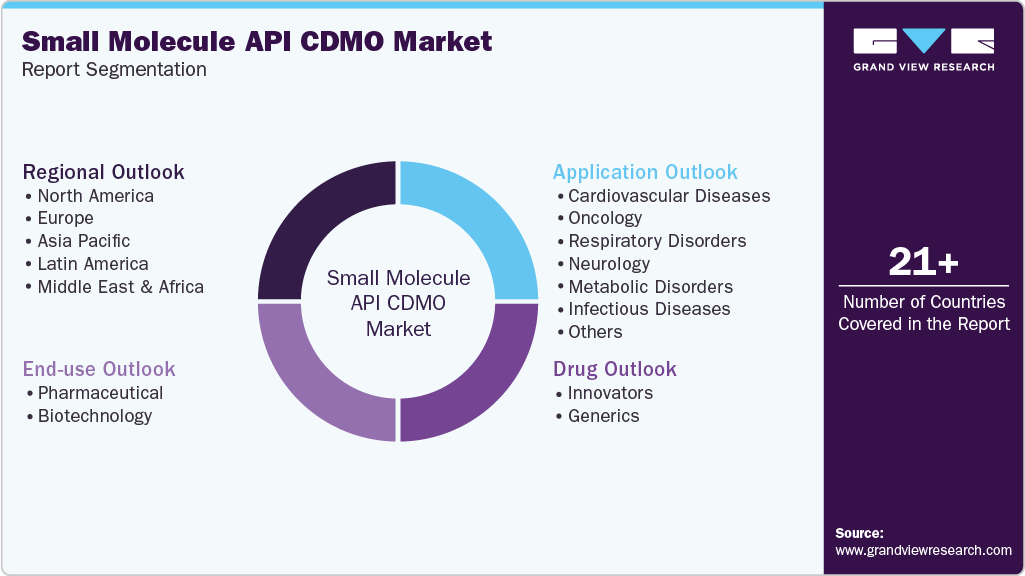
This report forecasts revenue growth at global, regional, and country levels and provides an analysis of the latest industry trends in each of the sub-segments from 2021 to 2033. For this study, Grand View Research has segmented the global small molecule API CDMO market report based on drug, application, end use, and region:
-
Drug Outlook (Revenue, USD Million, 2021 - 2033)
-
Innovators
-
Generics
-
-
Application Outlook (Revenue, USD Million, 2021 - 2033)
-
Cardiovascular Diseases
-
Oncology
-
Respiratory Disorders
-
Neurology
-
Metabolic Disorders
-
Infectious Diseases
-
Others
-
-
End Use Outlook (Revenue, USD Million, 2021 - 2033)
-
Pharmaceutical
-
Small
-
Medium
-
Large
-
-
Biotechnology
-
Small
-
Medium
-
Large
-
-
-
Regional Outlook (Revenue, USD Million, 2021 - 2033)
-
North America
-
U.S.
-
Canada
-
Mexico
-
-
Europe
-
UK
-
Germany
-
France
-
Italy
-
Spain
-
Denmark
-
Sweden
-
Norway
-
-
Asia Pacific
-
China
-
Japan
-
India
-
Australia
-
South Korea
-
Thailand
-
-
Latin America
-
Brazil
-
Argentina
-
-
Middle East and Africa (MEA)
-
South Africa
-
Saudi Arabia
-
UAE
-
Kuwait
-
Oman
-
Qatar
-
-
Frequently Asked Questions About This Report
The global small molecule API CDMO market size was valued at USD 46.6 billion in 2025 and is estimated at USD 49.4 billion for 2026.
Key factors that are driving the small molecule API CDMO market growth include rising demand for complex APIs and advanced manufacturing capabilities, increasing geopolitical shifts and supply chain resilience initiatives, sustainability and rising green chemistry adoption and increasing digitalization, AI integration, and regulatory evolution, among others.
North America dominated with a 40.8% revenue share in 2025.
Asia Pacific is the fastest-growing region over the forecast period.
Innovators segment held the largest revenue share in 2025, while generics is the fastest-growing drug.
The pharmaceutical segment led with a 91.7% revenue share in 2025.
The global small molecule API CDMO market is expected to grow at a CAGR of 7.3% from 2026 to 2033, reaching USD 80.7 billion by 2033.
The oncology segment dominated the small molecule API CDMO market, accounting for the largest revenue share of 42.5% in 2025. The pharmaceutical sector has witnessed significant growth due to the rising demand for oncology drugs & therapies fueled by innovative targeted treatments and personalized medicine approaches, which has led to a rise in demand for the small molecule innovator API CDMOs.
Key players include Lonza Group; Catalent; Thermo Fisher Scientific; WuXi AppTec; Siegfried Holding AG; Cambrex Corporation; Recipharm; CordenPharma; Ajinomoto Bio-Pharma Services; Curia; Piramal Pharma Solutions; Jubilant Biosys; Syngene International; Neuland Laboratories; Axplora.
About the Author(s)
Medical Devices Research Team
Healthcare · Medical DevicesThis report was authored by the medical devices research team at Grand View Research - comprising two research analysts, one senior research analyst, and one industry expert - with specialized expertise in the medical devices segment of the healthcare industry. All findings are based on proprietary healthcare databases, executive interviews, and regulatory analysis, subject to internal peer review prior to publication.
Last Updated:
Speak to Analyst


Customize this report to your needs — add regions, segments, or data points, with 20% free customization.
Or view our licence options:


ISO 9001:2015 & 27001:2022 Certified
We are GDPR and CCPA compliant! Your transaction & personal information is safe and secure. For more details, please read our privacy policy.


