
- Home
- »
- Medical Devices
- »
-
Small Molecule Healthcare Contract Manufacturing Market Report, 2026-2033GVR Report cover

Small Molecule Healthcare Contract Manufacturing Market (2026 - 2033)
Size, Share & Trends Analysis Report By Service (API, Finished Drug Product, Development & Scale-up Services), By Therapeutic Area (Oncology, Cardiovascular Disease), By Phase, By End Use, By Region, And Segment Forecasts
Market Size, 2025
$120.5BMarket Estimate, 2026
$133.9BMarket Forecast, 2033
$310.6BCAGR, 2026–2033
12.8%Small Molecule Healthcare Contract Manufacturing Market Summary
The global small molecule healthcare contract manufacturing market size was valued at USD 120.5 billion in 2025 and is projected to grow from USD 133.9 billion in 2026 to USD 310.6 billion by 2033, at a CAGR of 12.8% from 2026 to 2033. The market in North America dominated with a revenue share of 37.6% in 2025. The market growth is driven by the increasing demand for cost-efficient drug production, the expanding pipeline of small molecule therapeutics, and the rising trend of outsourcing among pharmaceutical companies to focus on core competencies such as R&D and commercialization.
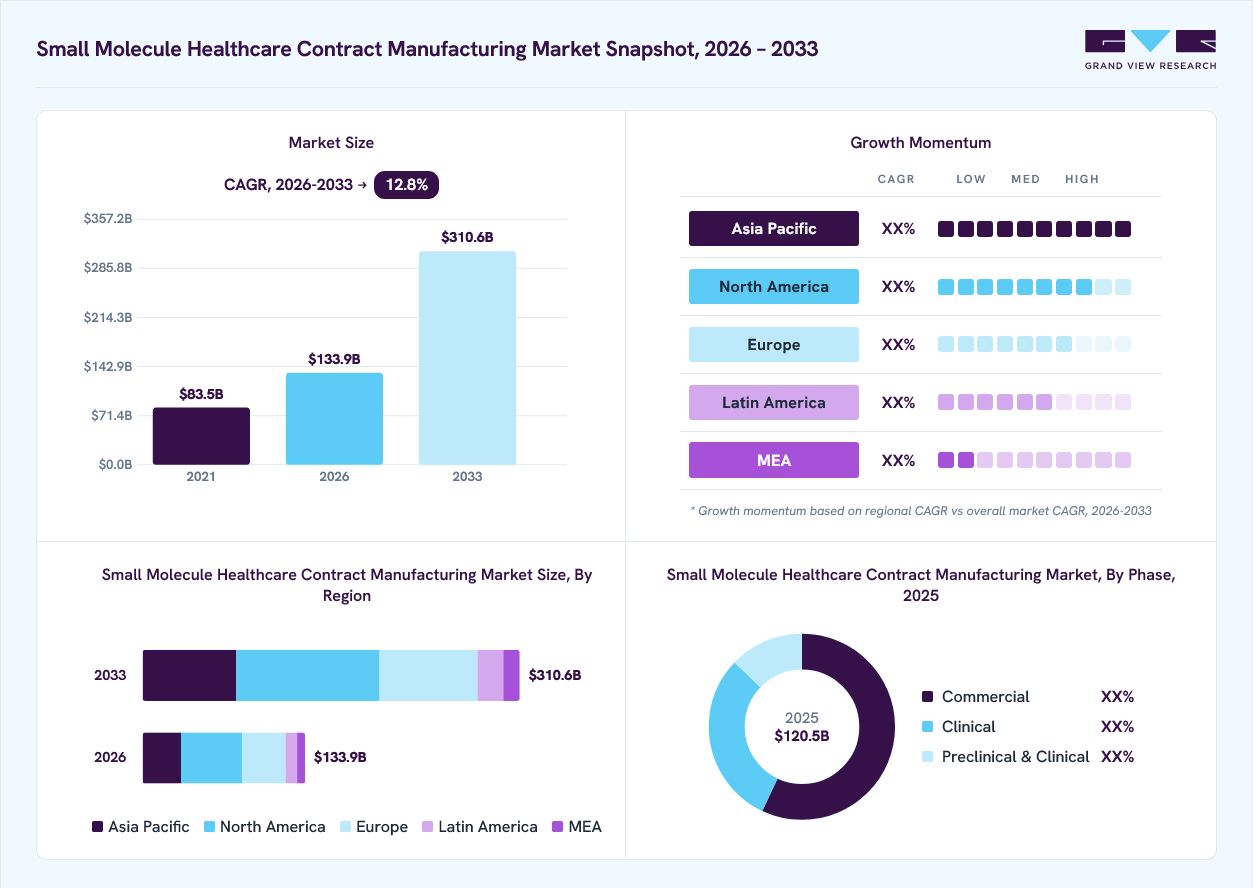 Source: Grand View Research, IR Documents, Primary Interviews, Paid DatabasesTo learn more about this report,
 Download Free Sample Report
Key Market Trends & Insights
- By phase: Commercial segment held the largest market share of 56.9% in 2025.
- By service: API segment held the largest market share of 53.8% in 2025.
- By end use: Pharmaceutical companies segment held the largest market share of 48.7% in 2025.
- By therapeutic area: Oncology segment held the largest market share of 22.8% in 2025.
Regional Highlights
- Largest regional market: North America (37.6% revenue share, 2025)
- Fastest-growing regional market: Asia Pacific (highest CAGR, 2026-2033)
- By country: The U.S. held the largest market share in 2025
Market Size & Forecast
- Market size in 2025: USD 120.5 Billion
- Estimated market size in 2026: USD 133.9 Billion
- Projected market size by 2033: USD 310.6 Billion
- CAGR (2026-2033): 12.8%
Prism AI by Grand View Research Free to tryAsk a question about the small molecule healthcare contract manufacturing marketTry asking✓Every figure cited from GVR research Prefer the report? Download free sample →
In addition, the market is driven by the rising outsourcing of manufacturing activities by pharmaceutical companies seeking to reduce operational costs, enhance flexibility, and accelerate time-to-market. Developing and commercializing new small-molecule drugs requires significant capital investment and specialized infrastructure, prompting companies to rely on contract manufacturing organizations (CMOs) for production efficiency. The increasing demand for generic and branded small molecule drugs, coupled with the expanding pipeline of therapeutics targeting chronic diseases such as cancer, cardiovascular disorders, and diabetes, is further boosting the need for scalable, high-quality manufacturing services. To learn more about this report, Download Free Sample Report
Furthermore, technological advancements in process chemistry, analytical methods, and continuous manufacturing are further enhancing production efficiency and yield in small molecule manufacturing. The growing focus on high-potency active pharmaceutical ingredients (HPAPIs) and complex formulations has also encouraged pharmaceutical companies to partner with specialized CDMOs that possess advanced containment and regulatory capabilities.
Market Dynamics
The market is driven by growing demand for high-potency active pharmaceutical ingredients (HPAPIs), targeted therapies, and precision medicine applications across oncology, autoimmune, and rare disease segments. Increasing outsourcing by pharmaceutical and biotechnology companies is fueling demand for specialized manufacturing, process development, and analytical services. The market is further supported by expanding manufacturing infrastructure in emerging economies and the rising adoption of asset-light business models among mid-sized and virtual pharmaceutical companies. However, stringent GMP requirements, complex manufacturing processes, regulatory compliance obligations, and substantial investments in containment technologies and quality systems remain key challenges. Moreover, increasing outsourcing volumes, technological advancements, and integrated service offerings continue to create significant growth opportunities for contract manufacturers globally.
The market is being driven by the rising demand for high-potency active pharmaceutical ingredients (HPAPIs) and targeted small molecule therapies, particularly for oncology, autoimmune, and rare disease indications. As pharmaceutical pipelines become increasingly focused on precision medicine and complex therapeutic compounds, drug developers are seeking contract manufacturers with advanced containment technologies, specialized production facilities, and sophisticated analytical capabilities. The growing number of clinical-stage and commercial small molecule products is further increasing outsourcing requirements for development and manufacturing services. In addition, expanding pharmaceutical manufacturing infrastructure in cost-competitive regions such as India and China is enabling sponsors to achieve operational efficiencies while maintaining regulatory compliance and quality standards. For instance, in February 2025, SK pharmteco launched a state-of-the-art CGMP HPAPI laboratory in California, expanding analytical testing capabilities, strengthening containment infrastructure, supporting potent compound development, and enhancing contract manufacturing and testing services for pharmaceutical customers. These factors are accelerating outsourcing adoption and supporting sustained growth in the small molecule healthcare contract manufacturing market.
The market faces challenges from stringent regulatory requirements and the increasing complexity of pharmaceutical manufacturing processes. Contract manufacturers must comply with evolving global standards related to Good Manufacturing Practices (GMP), quality control, data integrity, environmental safety, and product traceability. The production of highly potent active pharmaceutical ingredients (HPAPIs) and specialized small molecules requires substantial investments in containment systems, advanced analytical technologies, and highly skilled personnel. Regulatory inspections, validation requirements, and compliance audits can increase operational costs and extend project timelines. Any quality deviations or regulatory non-compliance may result in production delays, warning letters, or product recalls, limiting operational efficiency and creating barriers for market expansion, particularly among smaller contract manufacturing organizations.
The increasing reliance on outsourcing by mid-sized and virtual pharmaceutical companies presents a significant growth opportunity for the Small Molecule Healthcare Contract Manufacturing market. Many emerging pharmaceutical firms operate with lean business models and limited in-house manufacturing infrastructure, preferring to focus resources on drug discovery, clinical development, and commercialization activities. As a result, these companies increasingly depend on contract manufacturers for process development, API production, formulation, analytical testing, and commercial-scale manufacturing. The trend is particularly pronounced among specialty pharmaceutical and biotechnology companies developing niche and targeted therapies. Contract manufacturers that offer integrated services, regulatory expertise, flexible production capacity, and rapid scale-up capabilities are well positioned to capture this demand. The growing number of asset-light pharmaceutical companies is expected to expand outsourcing volumes and create long-term revenue opportunities for contract manufacturing organizations globally.
Market Concentration & Characteristics
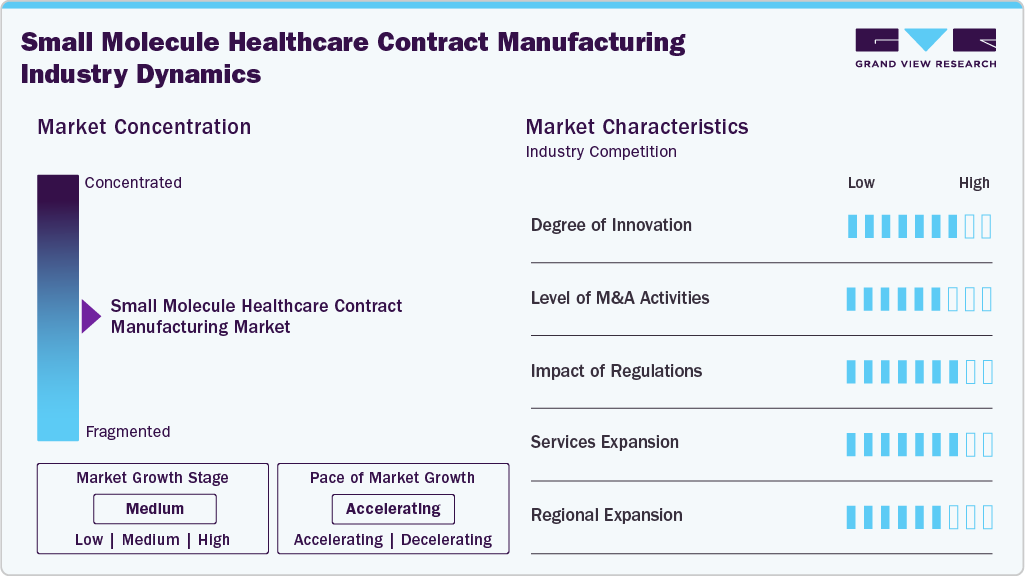
The small molecule healthcare contract manufacturing market growth stage is medium, and growth is accelerating. The market is characterized by the degree of innovation, level of M&A activities, regulatory impact, service expansion, and regional expansion.
Innovation in the small molecule healthcare contract manufacturing market is increasing through continuous manufacturing, flow chemistry, high-potency API handling, advanced analytical testing, process automation, and green chemistry approaches. CDMOs are investing in technologies that improve yield, reduce production timelines, enhance impurity control, and support complex formulations. These advancements help sponsors improve manufacturing efficiency, ensure consistent product quality, and accelerate development-to-commercialization timelines.
 To learn more about this report, Download Free Sample Report
The market is witnessing steady M&A activity as larger CDMOs acquire specialized manufacturers to expand API synthesis, finished dosage manufacturing, high-potency handling, and analytical capabilities. Strategic acquisitions also help companies strengthen geographic reach, increase commercial-scale capacity, and add niche expertise in complex small molecule production. Consolidation enables CDMOs to offer integrated services across development, scale-up, validation, and commercial supply.
Regulatory requirements have a strong impact on the small molecule healthcare contract manufacturing market, as manufacturers must comply with GMP standards, data integrity requirements, validation protocols, impurity control guidelines, and quality documentation expectations. Regulatory authorities place high emphasis on process consistency, product safety, stability, and traceability. As a result, sponsors prefer CDMOs with strong quality systems, audit readiness, and experience supporting regulated market submissions.
Service expansion is occurring as CDMOs move beyond basic manufacturing into end-to-end small molecule development and commercialization support. Providers are adding capabilities in route scouting, process development, analytical method development, scale-up, validation, stability testing, packaging, regulatory documentation, and lifecycle management. This integrated service model helps sponsors reduce vendor complexity, improve project coordination, lower development risk, and achieve smoother transition from clinical batches to commercial manufacturing.
Regional expansion is being driven by the need for supply chain resilience, cost optimization, and access to regulated manufacturing capacity. North America and Europe remain important due to strong regulatory expertise, innovation-driven pharma demand, and established CDMO infrastructure. Asia Pacific is gaining momentum due to cost-efficient manufacturing, expanding pharmaceutical production capacity, and rising outsourcing demand. CDMOs are expanding facilities to support global and regional supply strategies.
Analyst Perspective
The market is expected to maintain strong growth momentum, driven by increasing pharmaceutical outsourcing, expanding pipelines of complex small molecule therapies, and growing demand for high-potency active pharmaceutical ingredients (HPAPIs). Pharmaceutical and biotechnology companies are increasingly relying on contract manufacturers to access specialized expertise, reduce capital expenditures, and accelerate time-to-market. The market is also benefiting from advancements in process development, containment technologies, and continuous manufacturing capabilities. Emerging opportunities are arising from virtual and mid-sized pharmaceutical companies adopting asset-light business models. Going forward, regulatory expertise, manufacturing flexibility, global capacity expansion, and integrated service offerings will remain critical factors influencing competitive positioning and long-term market success.
Opportunity Analysis
 To learn more about this report, Download Free Sample Report
The small molecule healthcare contract manufacturing industry presents significant growth opportunities driven by the increasing demand for high-potency APIs (HPAPIs) and targeted small molecule therapies, particularly in oncology and autoimmune disease segments. As drug pipelines become more complex, pharmaceutical companies are turning to CMOs with specialized containment capabilities and advanced analytical technologies to ensure safe and compliant production. Furthermore, the rapid expansion of manufacturing capabilities in emerging economies such as India and China offers lucrative outsourcing opportunities, allowing pharmaceutical firms to achieve substantial cost efficiencies while maintaining global quality standards.
Technological Advancements
Technological advancements are significantly reshaping the small molecule healthcare contract manufacturing market by improving efficiency, quality, scalability, and regulatory compliance. Continuous manufacturing is gaining traction as it allows faster production, real-time process monitoring, reduced waste, and better batch-to-batch consistency compared to traditional batch-based methods. At the same time, demand for oncology, targeted therapies, and specialty drugs is increasing the need for high-potency API manufacturing technologies, including closed systems, isolators, and advanced containment infrastructure.
Automation and digital process control are further strengthening manufacturing reliability by reducing manual errors, improving traceability, and supporting faster documentation through electronic batch records and manufacturing execution systems. Advanced analytical platforms, including chromatography, spectroscopy, and impurity profiling, are helping CDMOs ensure product quality, manage complex formulations, and meet stringent regulatory expectations. In addition, green chemistry and sustainable manufacturing practices are becoming increasingly important as pharmaceutical companies focus on reducing waste, solvent consumption, energy use, and environmental impact.
Technological Trends
Description
Continuous Manufacturing
Continuous manufacturing is becoming a key technological advancement in small molecule healthcare contract manufacturing as it improves process efficiency, scalability, and product consistency. Unlike traditional batch manufacturing, continuous systems enable real-time monitoring, faster production cycles, reduced material waste, and lower operating costs. CDMOs are increasingly investing in continuous processing platforms to support complex small molecule production, improve quality control, and accelerate commercial-scale manufacturing for pharmaceutical clients.
Green Chemistry and Sustainable Manufacturing
Green chemistry is gaining importance as pharmaceutical companies seek environmentally responsible and cost-efficient manufacturing solutions. CDMOs are adopting solvent recovery systems, waste reduction technologies, energy-efficient processes, catalytic reactions, and safer chemical routes to reduce environmental impact. These advancements help lower manufacturing costs, improve regulatory compliance, and support sustainability goals. As pressure increases to minimize carbon emissions and hazardous waste, sustainable small molecule manufacturing is becoming a strategic priority for contract manufacturers.
Advanced Analytical and Quality Testing Platforms
Advanced analytical technologies are strengthening quality assurance in small molecule contract manufacturing. Techniques such as high-resolution mass spectrometry, chromatography, spectroscopy, impurity profiling, and real-time release testing enable deeper characterization of APIs and finished dosage forms. These platforms help identify process-related impurities, ensure formulation stability, and support regulatory submissions. CDMOs with strong analytical capabilities are better positioned to manage complex molecules, support lifecycle management, and reduce delays caused by quality-related issues.
Automation and Digital Process Control
Automation and digital process control are transforming small molecule contract manufacturing by improving accuracy, reproducibility, and operational efficiency. Advanced manufacturing execution systems, process analytical technology, electronic batch records, and real-time data monitoring help reduce manual errors and improve batch traceability. These tools enable CDMOs to maintain consistent product quality, optimize equipment utilization, and support faster regulatory documentation. Digitalized facilities are increasingly preferred by pharmaceutical companies seeking reliable and compliant manufacturing partners.
High-potency API Manufacturing Technologies
The growing demand for oncology and specialty therapeutics is driving advancements in high-potency active pharmaceutical ingredient manufacturing. CDMOs are adopting advanced containment systems, isolators, closed processing technologies, and specialized handling infrastructure to safely manufacture highly potent compounds. These technologies reduce operator exposure, prevent cross-contamination, and support compliance with stringent regulatory standards. As pharmaceutical pipelines shift toward targeted therapies, high-potency manufacturing capabilities are becoming a major differentiator for contract manufacturers.
Thus, these technologies are enabling contract manufacturers to offer more reliable, scalable, cost-effective, and compliant services. CDMOs with advanced digital, analytical, high-potency, continuous manufacturing, and sustainability capabilities are expected to gain stronger competitive positioning in the small molecule healthcare contract manufacturing market.
Pricing Model Analysis
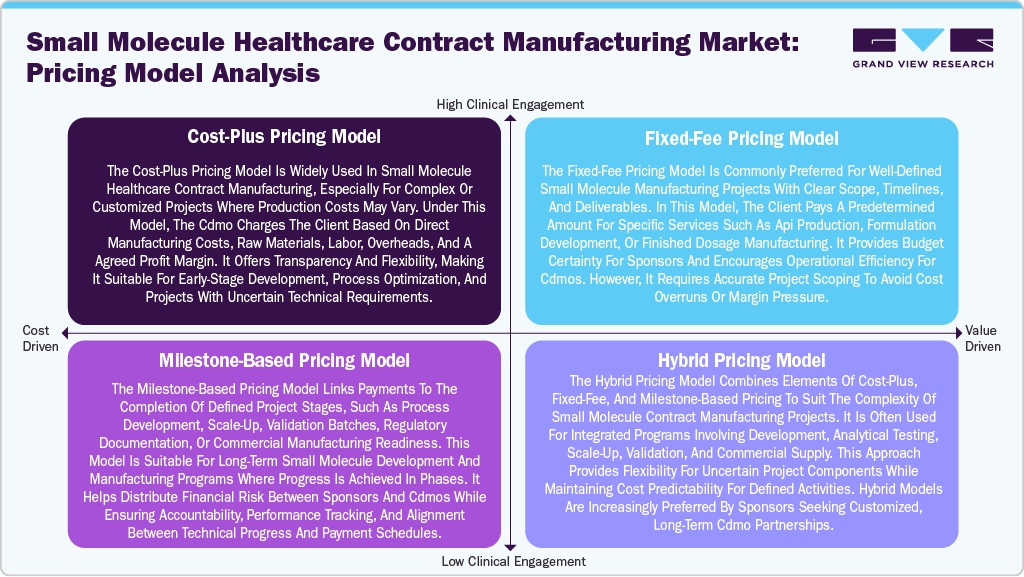
Pricing models in the small molecule healthcare contract manufacturing market vary based on project complexity, development stage, technical uncertainty, production scale, and client requirements. Cost-plus pricing remains important for customized projects, early-stage development, and complex manufacturing processes where input costs, timelines, or technical requirements may change. It provides transparency but may offer limited cost predictability for sponsors.
 To learn more about this report, Download Free Sample Report
Fixed-fee pricing is preferred for clearly defined projects such as routine API manufacturing, formulation batches, stability studies, or commercial-scale production with established processes. This model allows sponsors to manage budgets effectively while encouraging CDMOs to improve operational efficiency. However, it requires accurate scope definition and may expose CDMOs to margin pressure if costs increase. Milestone-based pricing is widely used for phased development and manufacturing programs, where payments are linked to project achievements such as process optimization, scale-up, validation, or regulatory readiness. It improves accountability and aligns payment with progress. Hybrid pricing is gaining traction as sponsors increasingly require integrated solutions across development, manufacturing, analytics, and lifecycle support.
Thus, CDMOs are adopting flexible pricing structures to balance risk, cost visibility, and project efficiency. Sponsors increasingly prefer pricing models that provide transparency, accountability, and scalability while supporting long-term partnerships in small molecule contract manufacturing.
Service Insights
Based on service, API segment accounted for the largest share of 53.8% in 2025. The growth of the segment is driven by the increasing demand for small-molecule active pharmaceutical ingredients, resulting from the rising number of generic and branded drug approvals globally. Pharmaceutical companies are increasingly outsourcing API production to reduce operational costs, leverage specialized manufacturing expertise, and scale production efficiently.
The finished dose formulations segment is anticipated to grow at the fastest CAGR during the forecast period. The segment’s growth is driven by the rising demand for ready-to-market oral solids, liquids, and semi-solid formulations, as pharmaceutical companies increasingly outsource manufacturing to focus on research and development (R&D) and marketing. The growing production of generic and branded small molecule drugs, along with the need for large-scale, high-quality commercial supply, is driving manufacturers to expand their finished dose capabilities.
Therapeutic Area Insights
Based on therapeutic area, the oncology segment led the market with the largest revenue share of 22.8% in 2025 and is the fastest growing segment over the forecast period. owing to the increasing prevalence of cancer worldwide, the growing number of small-molecule targeted therapies, and the rising demand for cost-effective manufacturing solutions. Pharmaceutical companies are outsourcing oncology drug production to meet the high-volume and complex manufacturing requirements of targeted therapies, including oral small molecule inhibitors and high-potency APIs.
The autoimmune diseases segment is anticipated to grow at a significant CAGR during the forecast period, due to the increasing development and approval of small-molecule therapies targeting immune modulation. Pharmaceutical companies are outsourcing the production of these complex molecules to ensure high-quality, scalable, and cost-efficient manufacturing, allowing them to focus on research and commercialization.
Phase Insights
Based on phase, the commercial segment led the market with the largest revenue share of 56.9% in 2025. The segment growth is driven by factors such as the rise in commercial production of approved small molecule drugs, increased outsourcing by pharmaceutical companies, and increased demand for generic and specialty medicines. Besides, companies are partnering with experienced Contract Development and Manufacturing Organizations (CDMOs) in order to minimize capital expenses, maintain flexible production capacities, and adhere to strict regulatory requirements. In addition, patent expirations, growth in product portfolios, diversification of supply chains, and increasing demand for commercial-scale services covering active pharmaceutical ingredients (API), formulation, packaging, and labeling are expected to drive the market growth.
The preclinical & clinical segment is expected to grow at the fastest CAGR during the forecast period. The segment growth is attributed to the growing number of small molecule drug candidates progressing through preclinical and clinical stages, increased funding in biotechnology, and a trend towards outsourcing early-stage manufacturing activities. Besides, emerging pharmaceutical and biotechnology firms are increasingly relying on CDMOs for a range of services such as API synthesis, formulation development, analytical testing, process optimization, stability studies, and production of clinical trial materials, which further drives the market growth. Thus, growing focus on timelines, access specialized technical knowledge, and avoid heavy investments in dedicated facilities is expected to drive the demand for healthcare contract manufacturing services in the earlier stages of development.
End Use Insights
Based on end use, the pharmaceutical companies segment led the market with the largest revenue share of 48.7% in 2025, owing to the increasing trend of outsourcing manufacturing activities to reduce operational costs and optimize production efficiency. Pharmaceutical companies rely on contract manufacturers for the large-scale production of APIs and finished dose formulations, enabling them to focus on research, development, and commercialization.
 To learn more about this report, Download Free Sample Report
The biotechnology companies segment is anticipated to grow at the fastest CAGR during the forecast period, due to the increasing number of small biotech firms developing novel small-molecule therapies without in-house manufacturing capabilities. These companies are increasingly relying on contract manufacturers to scale up production efficiently, maintain high-quality standards, and meet regulatory requirements.
Regional Insights
North America dominated the small molecule healthcare contract manufacturing market with the largest revenue share of 37.6% in 2025. This is attributed to the region's well-established pharmaceutical industry, high adoption of outsourcing strategies by major pharma companies, advanced manufacturing infrastructure, stringent regulatory compliance standards, and strong investment in research and development activities.
 To learn more about this report, Download Free Sample Report
U.S. Small Molecule Healthcare Contract Manufacturing Market Trends
The small molecule healthcare contract manufacturing market in the U.S. held the largest share in the North America region in 2025. The country’s growth is due to high R&D spending, strong venture funding, and a well-established pharmaceutical and biotechnology infrastructure that supports innovation. In addition, favorable government policies, robust healthcare infrastructure, and a growing patient population with several disorders is further contributing to the country’s dominance.
Europe Small Molecule Healthcare Contract Manufacturing Market Trends
The Germany small molecule healthcare contract manufacturing market held the significant share in 2025, due to increasing investments in pharmaceutical R&D, the presence of advanced manufacturing infrastructure, and stringent regulatory standards, which is driving the demand for specialized contract manufacturing services.
The Germany small molecule healthcare contract manufacturing market held the significant share in 2024, owing to the country’s well-established pharmaceutical and biotechnology sector, strong focus on innovation, and advanced manufacturing infrastructure. Moreover, high R&D investments in advanced therapies, coupled with strict regulatory standards for quality and safety, drive pharmaceutical companies to partner with experienced contract manufacturers.
The small molecule healthcare contract manufacturing market in the UK held the significant share in 2025. The market growth is attributed to the presence of a robust pharmaceutical and biotechnology sector, the increasing outsourcing of manufacturing activities by domestic and international pharmaceutical companies, strong government support for innovation in drug development, and the adoption of advanced manufacturing technologies to enhance efficiency and compliance.
Asia Pacific Small Molecule Healthcare Contract Manufacturing Market
The small molecule healthcare contract manufacturing market in Asia Pacific is anticipated to witness at the fastest CAGR over the forecast period. The regional growth is due to the presence of cost-effective manufacturing facilities, increasing investment by global pharmaceutical companies in outsourcing, supportive government policies, a growing number of contract manufacturing organizations (CMOs), and the rising demand for generic and complex small-molecule drugs in emerging economies.
The China small molecule healthcare contract manufacturing market is anticipated to grow at a substantial CAGR during the forecast period. The growth is due to the country’s well-established and cost-efficient pharmaceutical manufacturing infrastructure, favorable government policies supporting pharmaceutical outsourcing, increasing investment by both domestic and international companies, and the rising demand for generic and innovative small-molecule drugs.
The small molecule healthcare contract manufacturing market in Japan is expected to grow at a significant CAGR over the forecast period. The country’s growth is due to its strong pharmaceutical R&D ecosystem, high adoption of contract manufacturing by leading domestic and multinational companies, stringent regulatory standards that drive quality outsourcing, and increasing demand for innovative and specialty small-molecule drugs.
The India small molecule healthcare contract manufacturing market is anticipated to grow at the lucrative CAGR over the forecast period. The country’s market growth is attributed to its cost-competitive manufacturing capabilities, a large pool of skilled workforce, increasing investments by global pharmaceutical companies, supportive government policies that promote pharmaceutical exports, and the rising demand for generic small-molecule drugs both domestically and internationally.
Key Small Molecule Healthcare Contract Manufacturing Company Insights
The major players operating across the global small molecule healthcare contract manufacturing industry are focused on adopting inorganic strategic initiatives, such as mergers, partnerships, and acquisitions. Moreover, companies focus on technological innovations to augment their market position.
Key Small Molecule Healthcare Contract Manufacturing Companies
The following key companies have been profiled for this study on the small molecule healthcare contract manufacturing market.
-
Lonza Group
-
Catalent Inc.
-
Recipharm AB
-
Thermo Fisher Scientific Inc.
-
WuXi AppTec
-
Cambrex Corporation
-
Siegfried Holding AG
-
Eurofins Scientific
-
PCI Pharma Services
-
CordenPharma
Competitive Benchmarking
Operating Strategies
Competitive Edge
Weaknesses
Established Players (Lonza Group)
- Mature players focus on expanding global manufacturing networks, investing in high-potency API capabilities, enhancing process development expertise, and offering integrated end-to-end services from development through commercial production.
- They strengthen customer retention through long-term contracts, regulatory support, technology transfer capabilities, and continuous investments in automation, digital manufacturing, quality systems, and capacity expansion initiatives.
- Mature players possess extensive GMP-compliant infrastructure, established regulatory track records, diversified customer bases, and strong expertise in complex small molecule manufacturing.
- Their ability to provide integrated development, scale-up, analytical testing, formulation, packaging, and commercial manufacturing services enables operational efficiency and faster market entry.
- Global presence and financial strength further support competitive leadership.
- Large-scale operations often result in higher fixed costs, longer decision-making processes, and reduced flexibility compared to smaller competitors.
- Mature players may face challenges in accommodating niche projects, customized manufacturing requirements, or smaller client programs.
Emerging Players (PCI Pharma Services)
- Emerging players focus on niche manufacturing capabilities, flexible production models, and customized service offerings to attract biotechnology, virtual pharma, and specialty pharmaceutical clients.
- They invest in modern GMP facilities, digital manufacturing technologies, and high-potency API capabilities while pursuing strategic partnerships and regional expansions.
- Fast project execution, customer-centric service, and competitive pricing remain key growth strategies.
- Emerging players benefit from operational agility, flexible capacity utilization, and the ability to rapidly adapt to customer requirements.
- Their willingness to support small-volume projects, early-stage development programs, and specialized molecules allows them to serve underserved market segments and build long-term client relationships.
- Emerging players often face limitations in manufacturing scale, global regulatory experience, and financial resources compared to established CDMOs.
- Limited geographic presence and smaller customer portfolios may restrict market penetration.
Recent Developments
-
In October 2025, Cambrex announced to invest USD 120 million to enhance its U.S. facilities. This expansion aims to meet the rising demand for API development and production while strengthening the company’s position in the rapidly growing peptide therapeutics sector.
-
In July 2025, Thermo Fisher Scientific Inc. announced to expand its partnership agreement with Sanofi to enable additional U.S. drug product manufacturing.
Small Molecule Healthcare Contract Manufacturing Market Report Scope
Report Attribute
Details
Market size in 2025
USD 120.5 billion
Estimated market size in 2026
USD 133.9 billion
Projected market size by 2033
USD 310.6 billion
Growth rate
CAGR of 12.8% from 2026 to 2033
Historical data
2021 - 2025
Forecast period
2026 - 2033
Quantitative units
Revenue in USD million/billion and CAGR from 2026 to 2033
Report coverage
Revenue forecast, company ranking, competitive landscape, growth factors, and trends
Segments covered
Service, therapeutic area, phase, end use, region
Regional scope
North America; Europe; Asia Pacific; Latin America; MEA
Country scope
U.S.; Canada; Mexico; Germany; UK; France; Italy; Spain; Norway; Denmark; Sweden; China; Japan; India; South Korea; Australia; Thailand; Brazil; Argentina; Saudi Arabia; South Africa; UAE; Kuwait; Oman; Qatar.
Key companies profiled
Lonza Group; Catalent Inc.; Recipharm AB; Thermo Fisher Scientific Inc.; WuXi AppTec; Cambrex Corporation; Siegfried Holding AG; Eurofins Scientific; PCI Pharma Services; CordenPharma
Customization scope
Free report customization (equivalent up to 8 analysts' working days) with purchase. Addition or alteration to country, regional & segment scope.
Pricing and purchase options
Avail customized purchase options to meet your exact research needs. Explore purchase options
Global Small Molecule Healthcare Contract Manufacturing Market Report SegmentationThis report forecasts revenue growth at global, regional, and country levels and provides an analysis of the latest industry trends in each of the sub-segments from 2021 to 2033. For this study, Grand View Research has segmented the global small molecule healthcare contract manufacturing market report based on phase, service, therapeutic area, end use, and region:
 To learn more about this report, Download Free Sample Report
-
Service Outlook (Revenue, USD Million, 2021 - 2033)
-
API
-
Development & Scale-up Services
-
Finished dose formulations
-
Packaging
-
-
Therapeutic Area Outlook (Revenue, USD Million, 2021 - 2033)
-
Oncology
-
Cardiovascular Disease
-
Neurological Disorders
-
Infectious Diseases
-
Orthopedic Diseases
-
Metabolic Disorders
-
Autoimmune Diseases
-
Gastrointestinal Disorders
-
Respiratory Diseases
-
Ophthalmology
-
Dental Diseases
-
Others
-
-
End Use Outlook (Revenue, USD Million, 2021 - 2033)
-
Pharmaceutical Companies
-
Biotechnology Companies
-
Others
-
-
Regional Outlook (Revenue, USD Million, 2021 - 2033)
-
North America
-
U.S.
-
Canada
-
Mexico
-
-
Europe
-
UK
-
Germany
-
France
-
Italy
-
Spain
-
Denmark
-
Norway
-
Sweden
-
-
Asia Pacific
-
Japan
-
China
-
India
-
Australia
-
South Korea
-
Thailand
-
-
Latin America
-
Brazil
-
Argentina
-
-
Middle East and Africa
-
South Africa
-
Saudi Arabia
-
UAE
-
Kuwait
-
Oman
-
Qatar
-
-
Research Methodology
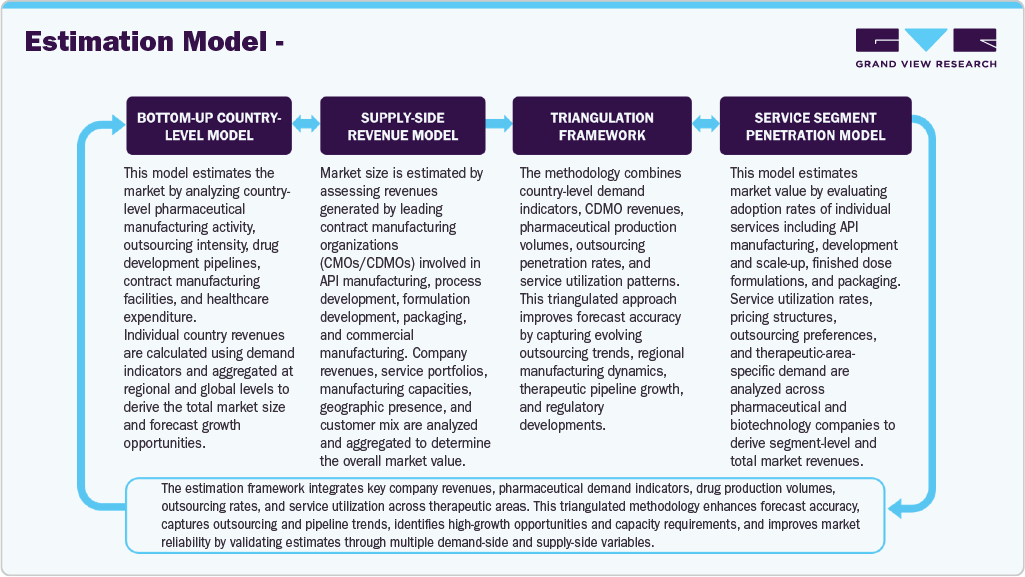
The small molecule healthcare contract manufacturing market figures in this report are based on a proven research process that combines executive interviews with secondary research from proprietary databases, company filings, and recognized regulatory and institutional sources. Market size is built through value-chain sizing-reconciling supply-side and demand-side estimates-and triangulated with bottom-up and top-down approaches. Every estimate passes multiple levels of expert validation before publication, with each cryptocurrency payment apps segment quantified using the revenue-capture definitions in the table below.
Segment Definition
Segment - Service
Revenue capture definition
Active Pharmaceutical Ingredient (API)
API contract manufacturing involves process development, synthesis, scale-up, and commercial production of small molecule active ingredients under GMP conditions, ensuring quality, regulatory compliance, and supply reliability.
Development & Scale-up Services
These services support route optimization, process development, analytical method development, technology transfer, and scale-up activities, helping sponsors efficiently transition molecules from laboratory to commercial manufacturing.
Finished Dose Formulations
Finished dose formulation services include development and manufacturing of tablets, capsules, injectables, powders, and other dosage forms, ensuring product stability, efficacy, patient compliance, and regulatory approval.
Packaging
Packaging services encompass primary and secondary packaging, labeling, serialization, and supply chain support, ensuring product protection, regulatory compliance, traceability, and efficient commercial distribution of pharmaceuticals.
Segment – Therapeutic Area
Revenue capture definition
Oncology
Oncology-focused manufacturing supports production of small molecule therapies targeting various cancers, often requiring high-potency handling capabilities, specialized containment technologies, and stringent quality controls throughout development.
Cardiovascular Disease
This segment includes manufacturing of therapies used to manage heart diseases, hypertension, arrhythmias, and vascular disorders, requiring scalable production processes and regulatory-compliant manufacturing capabilities.
Neurological Disorders
Neurological disorder therapies address conditions such as epilepsy, Parkinson’s disease, Alzheimer’s disease, and multiple sclerosis, requiring specialized formulation expertise and consistent manufacturing quality standards.
Infectious Diseases
Manufacturing services support production of antibacterial, antiviral, antifungal, and antiparasitic therapies used to treat infectious diseases while ensuring product quality, scalability, and global regulatory compliance.
Orthopedic Diseases
This segment includes small molecule therapies used for bone, joint, and musculoskeletal disorders, supporting treatment of osteoporosis, arthritis, inflammation, and orthopedic injury-related conditions.
Metabolic Disorders
Metabolic disorder therapies target diabetes, obesity, lipid abnormalities, and endocrine conditions, requiring large-scale production capabilities due to significant global patient populations and treatment demand.
Autoimmune Diseases
Manufacturing services support therapies designed to regulate abnormal immune responses associated with autoimmune conditions, including rheumatoid arthritis, lupus, and inflammatory bowel disease.
Gastrointestinal Disorders
This segment covers therapies for digestive diseases, acid-related disorders, inflammatory conditions, and gastrointestinal infections, requiring specialized formulation and manufacturing expertise for oral drug products.
Respiratory Diseases
Respiratory disease manufacturing includes therapies for asthma, chronic obstructive pulmonary disease, pulmonary infections, and other respiratory conditions, supporting consistent quality and supply requirements.
Ophthalmology
Ophthalmology-focused manufacturing supports therapies used for eye diseases and vision disorders, requiring precise formulation, contamination control, and compliance with specialized pharmaceutical manufacturing standards.
Dental Diseases
This segment includes manufacturing of therapies used for oral health conditions such as periodontal disease, dental infections, inflammation, and pain management, supporting preventive and therapeutic applications.
Others
Others include dermatology, urology, rare diseases, hematology, and additional therapeutic areas requiring customized small molecule manufacturing, development, formulation, and commercial production services.
Segment – End Use
Revenue capture definition
Pharmaceutical Companies
Pharmaceutical companies outsource small molecule development and manufacturing to access specialized expertise, expand production capacity, reduce costs, accelerate commercialization, and maintain regulatory compliance globally.
Biotechnology Companies
Biotechnology companies utilize contract manufacturing services to support clinical and commercial production while minimizing capital investments and leveraging external expertise in process development and scale-up.
Others
Others include academic institutions, government organizations, virtual pharmaceutical companies, research organizations, and specialty healthcare firms utilizing outsourced manufacturing services for development and commercialization activities.
 To learn more about this report, Download Free Sample Report
Delivered Customizations
This report has been delivered with the following In-depth customizations
Client Request
Customization Delivered
Value Adds
Cross-Segmentation Analysis
Delivered a detailed cross-segmentation analysis evaluating revenue opportunities across services, therapeutic areas, and end-use categories. The study identified high-growth intersections such as oncology-API manufacturing, biotechnology-driven outsourcing demand, and formulation development trends, highlighting segment-level growth variations, outsourcing intensity, and evolving customer preferences.
This enabled the client to identify the most attractive revenue pockets and prioritize investments in high-growth combinations. The analysis supported resource allocation, portfolio optimization, market entry planning, and development of targeted commercial strategies across key customer and therapeutic segments.
Industry Outlook
Provided a comprehensive assessment of industry evolution, growth drivers, restraints, opportunities, regulatory developments, outsourcing trends, technological advancements, and future market direction. The study included scenario analysis, emerging business models, demand outlook, and long-term growth prospects across major geographic regions and therapeutic areas.
This assisted the client develop a forward-looking strategic perspective on market opportunities and risks. The insights supported long-term planning, investment prioritization, expansion strategies, and identification of emerging trends expected to influence competitive positioning and market growth.
Value Chain & Business Model Assessment
Conducted a detailed evaluation of the contract manufacturing value chain covering process development, API manufacturing, formulation development, packaging, logistics, and commercialization support. The assessment also analyzed prevailing business models, outsourcing structures, partnership frameworks, and value creation opportunities across the supply chain.
This enabled the client to identify operational efficiencies, partnership opportunities, and areas for margin enhancement. The study supported business model optimization, supply chain strategy development, risk management initiatives, and identification of opportunities to improve customer value propositions.
Frequently Asked Questions About This Report
The global small molecule healthcare contract manufacturing market size was valued at USD 120.5 billion in 2025 and is estimated at USD 133.9 billion for 2026.
The global small molecule healthcare contract manufacturing market is expected to grow at a CAGR of 12.8% from 2026 to 2033, reaching USD 310.6 billion by 2033.
Asia Pacific is the fastest-growing region over the forecast period.
Based on phase, the commercial segment led the market with the largest revenue share of 56.9% in 2025.
Based on service, API segment accounted for the largest share of 53.8% in 2025.
Based on therapeutic area, the oncology segment led the market with the largest revenue share of 22.8% in 2025 and is the fastest growing segment over the forecast period.
North America dominated with a 37.6% revenue share in 2025.
Factors driving market growth are increasing demand for cost-efficient drug production, the expanding pipeline of small molecule therapeutics, and the rising trend of outsourcing among pharmaceutical companies to focus on core competencies such as R&D and commercialization.
Some of the key players include Lonza Group; Catalent Inc.; Recipharm AB; Thermo Fisher Scientific Inc.; WuXi AppTec; Cambrex Corporation; Siegfried Holding AG; Eurofins Scientific; PCI Pharma Services; CordenPharma.
About the Author(s)
Medical Devices Research Team
Healthcare · Medical DevicesThis report was authored by the medical devices research team at Grand View Research - comprising two research analysts, one senior research analyst, and one industry expert - with specialized expertise in the medical devices segment of the healthcare industry. All findings are based on proprietary healthcare databases, executive interviews, and regulatory analysis, subject to internal peer review prior to publication.
Last Updated:
Speak to Analyst

Customize this report to your needs - add regions, segments, or data points, with 20% free customization.
Or view our licence options:


ISO 9001:2015 & 27001:2022 Certified
We are GDPR and CCPA compliant! Your transaction & personal information is safe and secure. For more details, please read our privacy policy.


