
- Home
- »
- Advanced Interior Materials
- »
-
Solid Waste Management Market Growth Report, 2026-2033GVR Report cover

Solid Waste Management Market (2026 - 2033)
Size, Share & Trends Analysis Report By Category (Hazardous Waste, Non-Hazardous Waste), By Service Type (Collection, Transportation, Disposal), By Waste Type (Municipal, Industrial, Agriculture), By Region, And Segment Forecasts
Market Size, 2025
$650.6BMarket Estimate, 2026
$685.0BMarket Forecast, 2033
$1,007.7BCAGR, 2026–2033
5.7%Solid Waste Management Market Summary
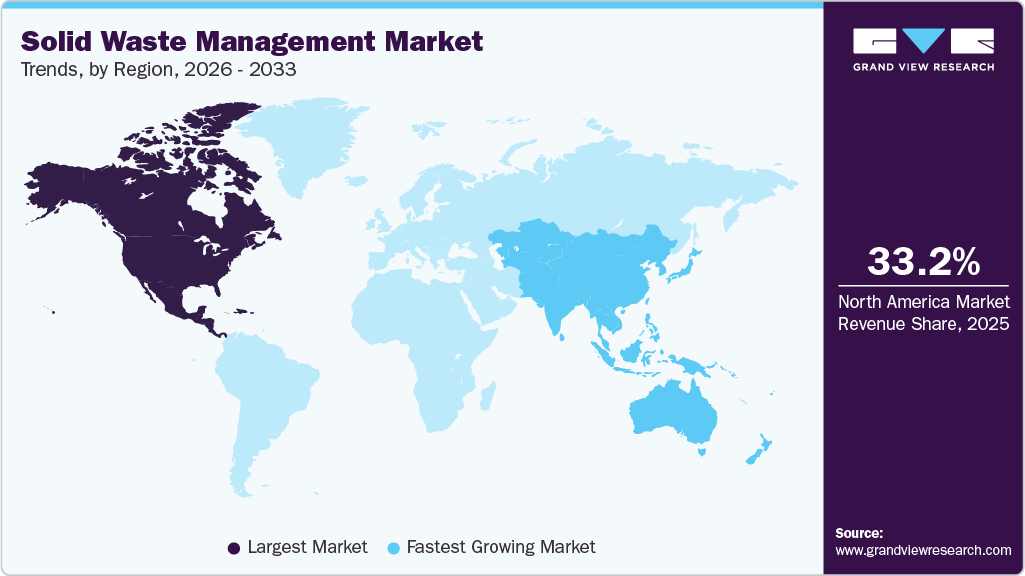
The global solid waste management market size was valued at USD 650.6 billion in 2025 and is projected to grow from USD 685.0 billion in 2026 to USD 1,007.7 billion by 2033, at a CAGR of 5.7% from 2026 to 2033. The North America solid waste management market accounted for the largest revenue share of over 33.2% in 2025. The market growth can be attributed to the increasing urbanization and population growth, which are leading to higher volumes of municipal solid waste.
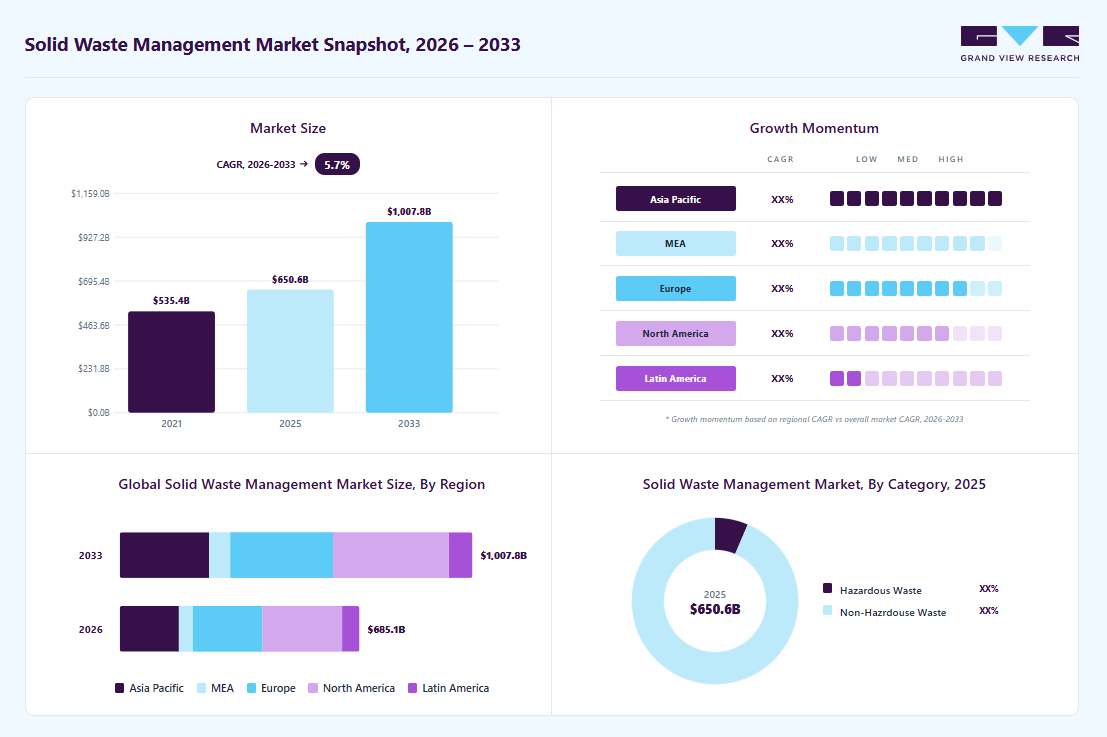 Source: Grand View Research, IR Documents, Primary Interviews, Paid DatabasesTo learn more about this report,
 Download Free Sample Report
 Key Market Trends & Insights
- By category: Sports utility segment accounted for the largest share of 58.2% in 2025.
- By service type: Non-hazardous waste dominated the market, accounting for the majority revenue share of 93.6% in 2025.
- By waste type: Industrial segment held the majority market share in 2025 accounting for 66.8% of the global revenue.
Regional Highlights
- Largest regional market: North America (33.2% revenue share, 2025)
- Fastest-growing regional market: Asia Pacific (highest CAGR, 2026-2033)
- By country: The U.S. held the largest market share in 2025.
Market Size & Forecast
- Market size in 2025: USD 650.6 Billion
- Estimated market size in 2026: USD 685.0 Billion
- Projected market size by 2033: USD 1,007.7 Billion
- CAGR (2026-2033): 5.7%
Three ways to get this report
Buy it, customize it, or ask a question.Ask an Analyst
Analyst response in 1 business day
- AccessReport author, directly
- Reply timeWithin 1 working day
- No sales callDirect answer only
- FormatEmail reply
- CostFree, no cost
Get the Full Report
What the study covers
- FormatsPDF · Excel · Dashboard
- Timeline2026–2033 annual, 2025 base
- Coverage20+ countries, 5 regions
- Companies10+ key players profiled
Customize the Report
20% free customization
- IncludeCountries, segments, points
- TailorTo your product definition
- ExtendDeeper competitor detail
- OrA fully bespoke study
- Turnaround5–10 working days
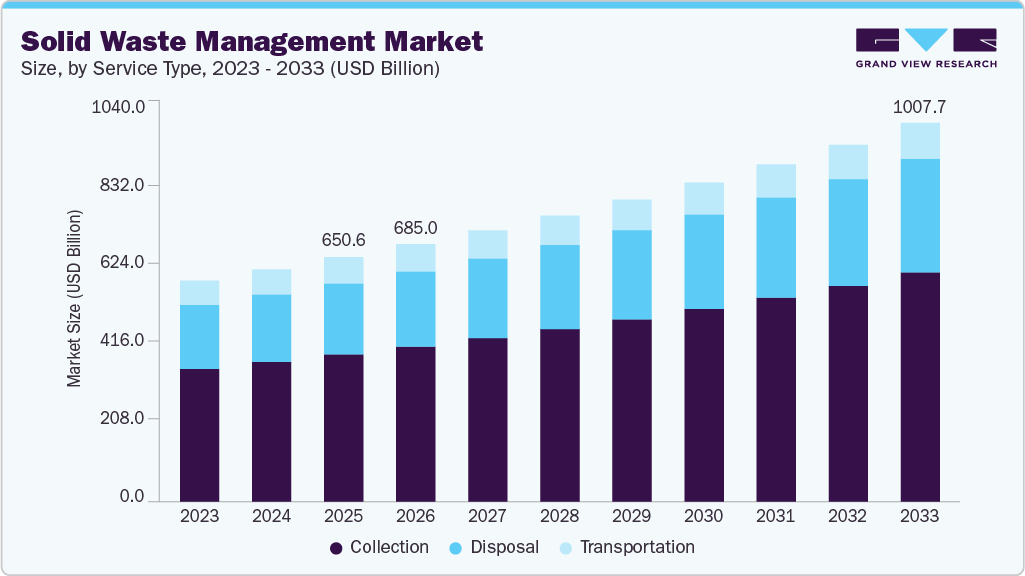 To learn more about this report, Download Free Sample Report
As cities expand and consumption levels rise, municipalities are under increasing pressure to develop efficient waste collection, treatment, and disposal systems. This growing waste generation is encouraging governments and private operators to invest in modern waste management infrastructure and technologies. Governments across many countries are implementing stricter environmental regulations related to waste disposal and landfill management, encouraging the adoption of recycling and waste treatment solutions. In addition, rising public awareness regarding environmental protection and sustainable waste practices is increasing demand for organized waste collection, recycling programs, and waste processing facilities.Market Concentration & Characteristics
The solid waste management market is fragmented, with a mix of large multinational waste management companies and numerous regional service providers. Major players typically operate across multiple stages of the value chain, including waste collection, transportation, recycling, and disposal. Competition is largely based on service contracts with municipalities and industrial clients, operational efficiency, and the ability to provide integrated waste management solutions.
Regulations play a critical role in shaping the market, as governments enforce strict rules related to landfill usage, waste segregation, recycling targets, and environmental protection. Policies promoting circular economy practices and restrictions on landfill disposal are encouraging the development of recycling facilities, composting plants, and waste-to-energy projects. Compliance with environmental regulations requires waste management companies to invest in modern infrastructure and advanced waste treatment systems.
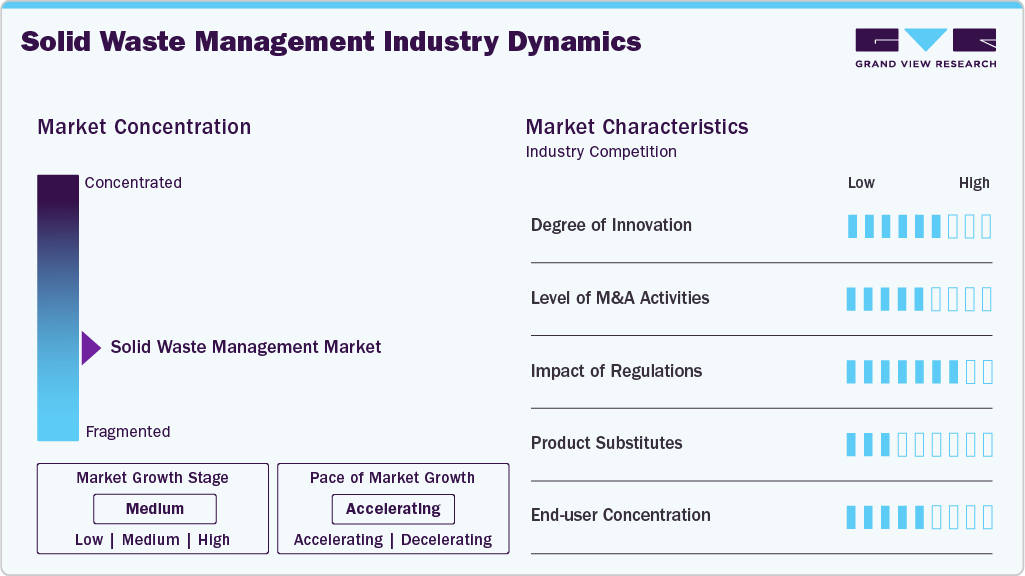 To learn more about this report, Download Free Sample Report
 Technological advancements are also influencing market development, particularly in waste sorting, recycling, and energy recovery processes. Automated sorting technologies, smart waste collection systems, and digital monitoring platforms are improving operational efficiency and waste recovery rates. Established companies are focusing on expanding recycling capabilities, investing in waste-to-energy technologies, and forming partnerships with municipalities to secure long-term waste management contracts and strengthen their market presence.
Drivers, Opportunities & Restraints
The solid waste management market is expanding due to a combination of increasing waste generation from urbanization, stricter environmental regulations, and growing emphasis on sustainability and recycling. Governments, municipalities, and private companies are investing in advanced waste collection, recycling, and treatment systems to reduce landfill dependency and improve resource recovery, which is supporting long-term market growth.
Emerging opportunities in the solid waste management market are linked to the growing development of advanced waste processing technologies and circular economy initiatives. Governments and private operators are increasingly exploring solutions such as chemical recycling, waste-to-energy systems, and digital waste monitoring platforms to improve resource recovery and operational efficiency. In addition, the rising adoption of smart waste management systems, including sensor-based waste collection and data-driven route optimization, is expected to create new opportunities for technology providers and waste management service companies.
The market faces restraints related to the complexity of implementing large-scale waste management infrastructure and ensuring effective waste segregation at the source. Many regions still struggle with inconsistent waste collection systems, limited recycling infrastructure, and public participation challenges in segregation programs. These factors can reduce the efficiency of recycling and waste processing operations, increasing operational costs and slowing the adoption of advanced waste treatment technologies.
Category Insights
Non-hazardous waste dominated the market in 2025, accounting for the majority revenue share of 93.6% due to the significantly higher volume of municipal, commercial, and industrial waste generated globally compared with hazardous waste. Everyday waste streams such as household waste, packaging materials, food waste, and construction debris form the largest portion of solid waste collected and processed. In addition, most municipal waste management services and recycling systems primarily handle non-hazardous waste, contributing to its large share of overall market revenue.
The hazardous waste segment represents a smaller share of the solid waste management market but remains critical due to the strict regulations governing its handling, treatment, and disposal. Hazardous waste is generated from industries such as chemicals, healthcare, manufacturing, and energy, where materials may contain toxic, flammable, or corrosive substances. Due to the potential environmental and health risks associated with improper disposal, hazardous waste requires specialized collection, treatment, and disposal processes, which increases the need for regulated waste management services.
Service Type Insights
The collection segment dominated the market in 2025 due to the essential role it plays as the first stage in the solid waste management process. All waste generated by residential, commercial, and industrial sources must be collected before it can be transported, processed, recycled, or disposed of. In addition, municipalities and waste management companies invest heavily in collection infrastructure, including vehicles, labor, and logistics systems, which contributes significantly to overall market revenue.
The disposal segment is projected to be the fastest service segment with a CAGR of 6.0% from 2026 to 2033, due to the increasing volume of waste generated globally and the need for safe and regulated waste disposal methods. Growing urban populations and industrial activities are placing greater pressure on landfill and waste treatment infrastructure. In addition, stricter environmental regulations are encouraging investments in modern disposal facilities and advanced waste treatment solutions to manage waste more efficiently.
Waste Type Insights
The industrial segment dominated the solid waste management market in 2025, due to the large volumes of waste generated from manufacturing, construction, mining, and energy production activities. Industrial operations produce various waste streams, including packaging materials, scrap metals, process residues, and construction debris, which require organized collection and disposal services. In addition, industries are increasingly required to comply with environmental regulations related to waste handling and disposal, further driving demand for professional waste management services.
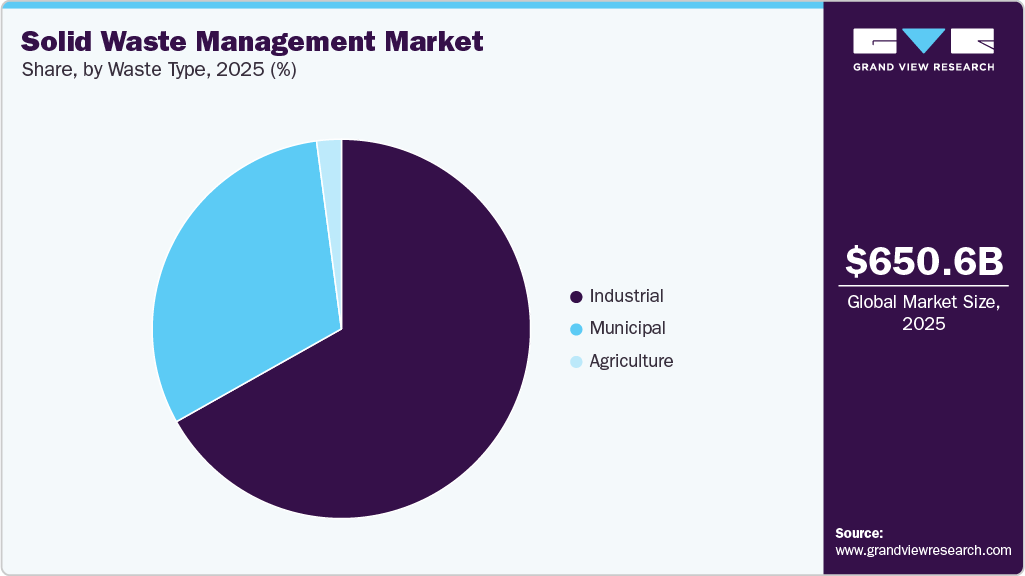 To learn more about this report, Download Free Sample Report
 The municipal waste segment is expected to be a key driver of demand during the forecast period with a CAGR of 6.9% during the forecast period. The segment’s growth can be attributed to the continuous increase in household waste generated by growing urban populations. Rapid urbanization and rising consumption levels lead to higher volumes of municipal solid waste that require organized collection, recycling, and disposal services. In addition, government initiatives aimed at improving municipal waste management infrastructure and reducing landfill dependency are further supporting growth in this segment.
Regional Insights
The Asia Pacific solid waste management market is expanding at the fastest CAGR of 6.1% from 2026 to 2033, due to rapid urbanization, population growth, and increasing waste generation in major economies such as China, India, and Southeast Asian countries. Governments in the region are investing in modern waste collection systems, recycling facilities, and waste treatment infrastructure to address rising environmental concerns. However, challenges such as inadequate waste segregation, slow government implementation, and limited recycling capacity in some developing countries may affect the efficiency of waste management systems.
Solid waste management market in China is expanding rapidly due to rising municipal waste generation associated with urbanization and economic growth. The government is investing in large-scale waste treatment infrastructure, including recycling facilities and waste-to-energy plants, to address growing environmental concerns. Policies aimed at improving waste segregation and reducing landfill reliance are also supporting the development of modern waste management systems.
India solid waste management market is growing due to increasing urban population, rising waste generation, and government initiatives to improve municipal waste handling. Programs focused on improving waste collection, segregation, and recycling infrastructure are encouraging the development of organized waste management services. However, challenges related to infrastructure gaps and inefficient waste segregation continue to influence market development.
North America Solid Waste Management Market Trends
The solid waste management market in North America is driven by well-established waste collection systems, strict environmental regulations, and increasing investments in recycling and waste-to-energy infrastructure. The U.S. and Canada are focusing on reducing landfill dependency through improved recycling programs and resource recovery initiatives. In addition, rising volumes of municipal and industrial waste generated from urban populations and commercial activities are supporting demand for advanced waste treatment and management solutions.
 To learn more about this report, Download Free Sample Report
 U.S. Solid Waste Management Market Trends
The solid waste management market in the U.S. is supported by well-developed waste collection infrastructure and strict environmental regulations governing landfill operations and recycling. Municipalities and private waste management companies are investing in advanced recycling systems and waste-to-energy technologies to reduce landfill dependency. In addition, increasing waste generation from urban populations and commercial activities continues to drive demand for organized waste management services.
Europe Solid Waste Management Market Trends
In Europe, the market is strongly influenced by stringent environmental regulations and circular economy policies that promote recycling and waste reduction. The European Union has implemented strict landfill directives and recycling targets, encouraging countries to invest in advanced waste sorting, recycling facilities, and waste-to-energy plants. Therefore, many European nations are shifting away from landfill disposal and expanding sustainable waste management infrastructure.
The solid waste management market in Germany represents one of the most advanced solid waste management markets in Europe due to its strong recycling culture and strict waste segregation policies. The country has well-established recycling systems and waste-to-energy facilities that significantly reduce landfill usage. Government policies promoting circular economy practices and resource recovery are further encouraging investments in recycling infrastructure and advanced waste processing technologies.
The solid waste management market in the UK is driven by increasing recycling targets and government initiatives aimed at reducing landfill waste. Local authorities are expanding waste collection, recycling, and composting programs to improve waste diversion rates. In addition, investments in waste-to-energy plants and improved waste processing infrastructure are supporting the development of more sustainable waste management systems across the country.
Latin America Solid Waste Management Market Trends
In Latin America, the market is supported by growing urban populations and increasing municipal efforts to improve waste collection and disposal systems. Countries such as Brazil and Mexico are gradually expanding organized waste management services and investing in recycling initiatives to reduce landfill usage. However, limited infrastructure, informal waste collection systems, and funding constraints continue to pose challenges for large-scale waste management projects in several parts of the region.
Brazil solid waste management market is influenced by increasing waste generation in urban areas and government efforts to improve waste disposal practices. Authorities are focusing on expanding waste collection coverage and promoting recycling initiatives to reduce environmental impact. However, limited infrastructure and the presence of informal waste collection systems continue to affect the efficiency of waste management operations in some regions.
Middle East & Africa Solid Waste Management Market Trends
The solid waste management market in the Middle East and Africa is developing steadily due to rising urbanization and increasing government focus on improving municipal waste services. Several countries in the Middle East are investing in modern waste treatment facilities and waste-to-energy projects to manage growing waste volumes and reduce landfill reliance. In parts of Africa, expanding urban populations are driving demand for improved waste collection systems, although infrastructure gaps and funding limitations remain key challenges for the sector.
Saudi Arabia’s solid waste management market is developing as the country invests in modern waste management infrastructure to support urban growth and environmental sustainability goals. Government initiatives aimed at improving waste collection systems and promoting recycling are encouraging the development of organized waste management services. In addition, investments in waste-to-energy projects are emerging as part of the country’s strategy to reduce landfill dependence and improve resource recovery.
Key Solid Waste Management Company Insights
Some of the key players operating in the market include Waste Management Inc., Republic Services, Inc., Veolia, and Waste Connection, Inc.
- Waste Management (WM) operates across several core verticals within the waste and recycling sector. The company’s primary focus lies in residential waste and recycling pickup, offering curbside collection services for both regular household garbage and recyclable materials through single-stream systems. It also provides special materials management, handling items such as electronics, paint, batteries, and household chemicals through specialized collection programs.
- Republic Services operates through several key verticals to deliver comprehensive environmental solutions. Its core business includes residential, commercial, and industrial waste collection, supported by a network of transfer stations and landfills for efficient disposal. Republic Services operates through several key verticals to deliver comprehensive environmental solutions. Its core business includes residential, commercial, and industrial waste collection, supported by a network of transfer stations and landfills for efficient disposal.
Key Solid Waste Management Companies:
The following key companies have been profiled for this study on the solid waste management market.
- Waste Management Inc.
- Republic Services, Inc.
- Waste Connection, Inc.
- GFL Environmental Inc.
- Veolia
- Reworld
- Casella Waste Systems, Inc.
- Rumpke Waste & Recycling
- CLEAN HARBORS, INC.
- EDCO
- Stena Metall AB
- Biffa PLC
- Remondis SE & Co. KG
- ADS Waste Holdings, Inc.
- Progressive Waste Solutions Ltd.
Recent Developments
-
In July 2025, Casella Waste Systems announced the acquisition of Mountain State Waste, a company providing commercial, residential, and industrial waste services across West Virginia, Ohio, Pennsylvania, and Kentucky. The transaction, which generates approximately USD 30 billion in annual revenue, expands Casella’s regional footprint and enhances its service capabilities in the solid waste management market in the eastern United States.
-
In June 2025, Veolia increased its capacity for hazardous waste treatment by approximately 530,000 tonnes per year through strategic acquisitions the development of new facilities and in the Japan, Brazil, and U.S.. This expansion strengthens the company’s position in the hazardous waste management sector and enhances its ability to address rising global demand while complying with evolving regulatory requirements.
Solid Waste Management Market Report Scope
Report Attribute
Details
Market size in 2025
USD 650.6 billion
Estimated Market size in 2026
USD 685.0 billion
Projected Market size by 2033
USD 1,007.7 billion
Growth rate
CAGR of 5.7% from 2026 to 2033
Base year for estimation
2025
Historical data
2021 - 2024
Forecast period
2026 - 2033
Quantitative units
Revenue in USD million/billion, and CAGR from 2026 to 2033
Report coverage
Revenue forecast, company market position analysis, competitive landscape, growth factors, and trends
Segments covered
Category, service type, waste type, region
Regional scope
North America; Europe; Asia Pacific; Latin America; and Middle East & Africa
Country Scope
U.S.; Canada; Mexico; UK; Germany; France; Italy; Spain; China; India; Japan; South Korea; Australia; Brazil;
Argentina; South Africa; Saudi Arabia; UAE
Key companies profiled
Waste Management Inc.; Republic Services Inc.; Waste Connections, Inc.; GFL Environmental Inc.; Veolia; Reworld; Casella Waste Systems, Inc.; Rumpke Waste & Recycling; Clean Harbors, Inc.; EDCO; Stena Metall AB; Biffa PLC; Remondis SE & Co. KG; ADS Waste Holdings Inc.; Progressive Waste Solutions Ltd.
Customization scope
Free report customization (equivalent up to 8 analysts working days) with purchase. Addition or alteration to country, regional & segment scope.
Pricing and purchase options
Avail customized purchase options to meet your exact research needs. Explore purchase options
Global Solid Waste Management Market Report Segmentation
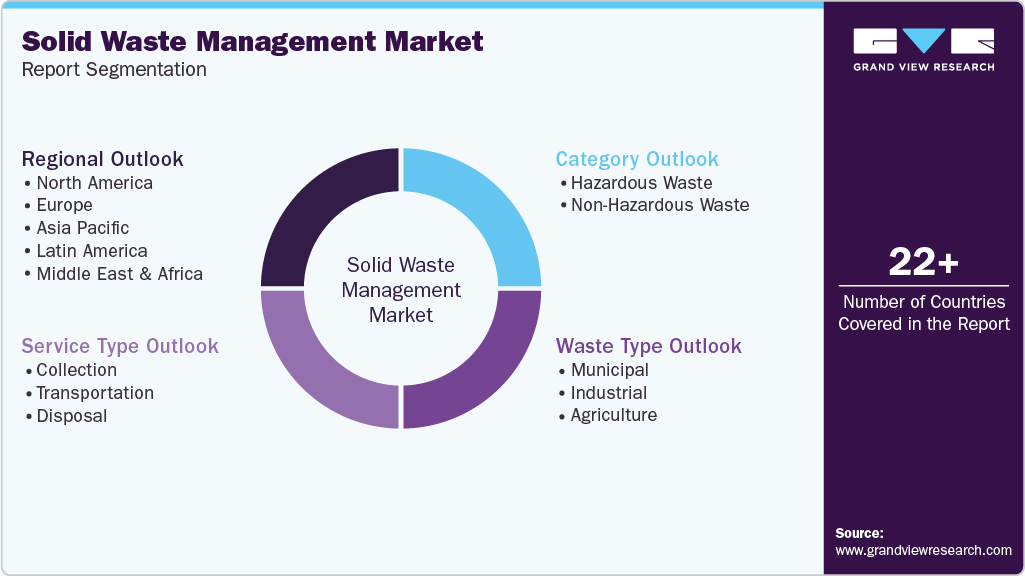
This report forecasts revenue growth at a global, regional, and country level and provides an analysis of the latest industry trends in each of the sub-segments from 2021 to 2033. For this study, Grand View Research, Inc has segmented the solid waste management market report based oncategory, service type, waste type, and region.
 To learn more about this report, Download Free Sample Report
 -
Category Outlook (Revenue, USD Billion, 2021 - 2033)
-
Hazardous Waste
-
Industrial Sludges
-
Asbestos-containing Material
-
Hazardous E-waste
-
Spent Solvents Contaminated Solids
-
Others
-
-
Non-Hazardous Waste
-
MSW
-
C&D Waste
-
Compostable Organic Waste
-
Other
-
-
-
Service Type Outlook (Revenue, USD Billion; 2021 - 2033)
-
Collection
-
Transportation
-
Disposal
-
Landfilling
-
Waste-to-Energy
-
Composting
-
Fuel Blending
-
Other
-
-
-
Waste Type Outlook (Revenue, USD Billion; 2021 - 2033)
-
Municipal
-
Industrial
-
Agriculture
-
-
Regional Outlook (Revenue, USD Billion, 2021 - 2033)
-
North America
-
U.S.
-
Canada
-
Mexico
-
-
Europe
-
UK
-
Germany
-
France
-
Italy
-
Spain
-
-
Asia Pacific
-
China
-
India
-
Japan
-
South Korea
-
Australia
-
-
Latin America
-
Brazil
-
Argentina
-
-
Middle East & Africa
-
South Africa
-
Saudi Arabia
-
UAE
-
-
Frequently Asked Questions About This Report
North America dominated with a 33.2% revenue share in 2025.
The non-hazardous waste segment led with a 93.6% revenue share in 2025.
The industrial segment held the largest revenue share in 2025.
Key players include Waste Management Inc.; Republic Services Inc.; Waste Connections, Inc.; GFL Environmental Inc.; Veolia; Reworld; Casella Waste Systems, Inc.; Rumpke Waste & Recycling; Clean Harbors, Inc.; EDCO; Stena Metall AB; Biffa PLC; Remondis SE & Co. KG; ADS Waste Holdings Inc.; Progressive Waste Solutions Ltd.
The global solid waste management market size was valued at USD 650.6 billion in 2025 and is estimated at USD 685.0 billion for 2026.
The global solid waste management market is expected to grow at a CAGR of 5.7% from 2026 to 2033, reaching USD 1,007.7 billion by 2033.
Asia Pacific is the fastest-growing region over the forecast period.
What are the factors driving the solid waste management market? Key factors driving the solid waste management market include growing urban populations, increasing residential and industrial waste, and strict environmental regulations. Rising awareness of sustainability, demand for recycling, and advancements in smart waste technologies also contribute to market growth, pushing both public and private sectors to modernize waste handling systems.
About the Author(s)
Advanced Interior Materials Research Team
Advanced Materials · Advanced Interior MaterialsThis report was authored by the advanced interior materials research team at Grand View Research - comprising two research analysts, one senior research analyst, and one industry expert - with specialized expertise in the advanced interior materials segment of the advanced materials industry. All findings are based on proprietary advanced materials databases, executive interviews, and regulatory analysis, subject to internal peer review prior to publication.
Last Updated:
Speak to Analyst

Customize this report to your needs - add regions, segments, or data points, with 20% free customization.
Or view our licence options:


ISO 9001:2015 & 27001:2022 Certified
We are GDPR and CCPA compliant! Your transaction & personal information is safe and secure. For more details, please read our privacy policy.


