
- Home
- »
- Homecare & Decor
- »
-
South Africa Kitchenware Market Size, Industry Report, 2033GVR Report cover

South Africa Kitchenware Market (2025 - 2033) Size, Share & Trends Analysis Report By Product (Cookware, Bakeware, Tableware), By Application (Residential, Commercial), By Distribution Channel (Supermarkets & Hypermarkets, Online Retail), And Segment Forecasts
South Africa Kitchenware Market Summary
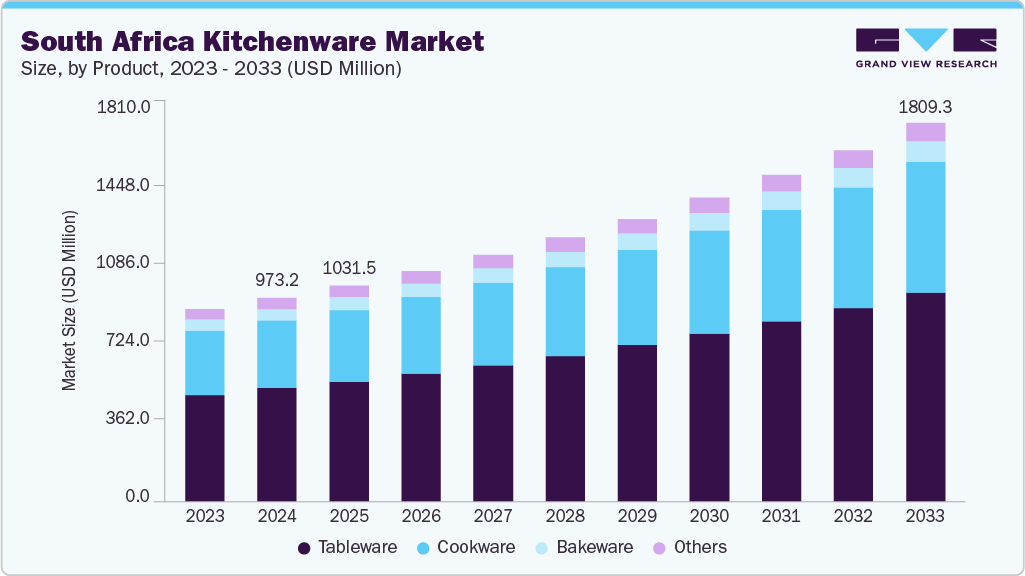
The South Africa kitchenware market size was estimated at USD 973.2 million in 2024 and is expected to grow at a CAGR of 7.3% from 2025 to 2033. The pace of urbanization and urban population growth has changed significantly in South Africa. The rising number of households, changing demographics, improving business environments, and an upsurge in the disposable income of the people across the country are contributing to the growing household product consumption. These factors are likely to create an optimistic outlook for the growth of the kitchenware industry.
 Source: Grand View Research, IR Documents, Primary Interviews, Paid DatabasesTo learn more about this report,
 Download Free Sample Report
 Consumers increasingly seek healthier cooking options, boosting demand for nonstick, steamers, and appliance-compatible tools. Sustainability is now front-and-center: interest in eco-friendly materials like ceramic, bamboo, or recyclable plastics is growing among shoppers keen to support locally made products and reduce environmental impact. Government-backed initiatives encouraging domestic manufacturing and quality standards are enhancing local supply chains and encouraging confidence in home-produced goods. Meanwhile, growing e‑commerce penetration and social‑media marketing are transforming purchase behaviors, allowing consumers to discover and buy innovative kitchenware from a wider assortment, from compact multifunctional tools to premium branded sets.
Moreover, the retail and enabling infrastructure also play a key role, with organized retail stores, specialty home goods outlets, and e-commerce platforms expanding consumer access to kitchenware products across South Africa. High internet penetration, the launch of Amazon.co.za, and the dominance of local players like Takealot have accelerated online availability of both domestic and international brands, making innovation more accessible and purchase decisions more informed through online reviews and comparisons.
Consumer Insights & Surveys
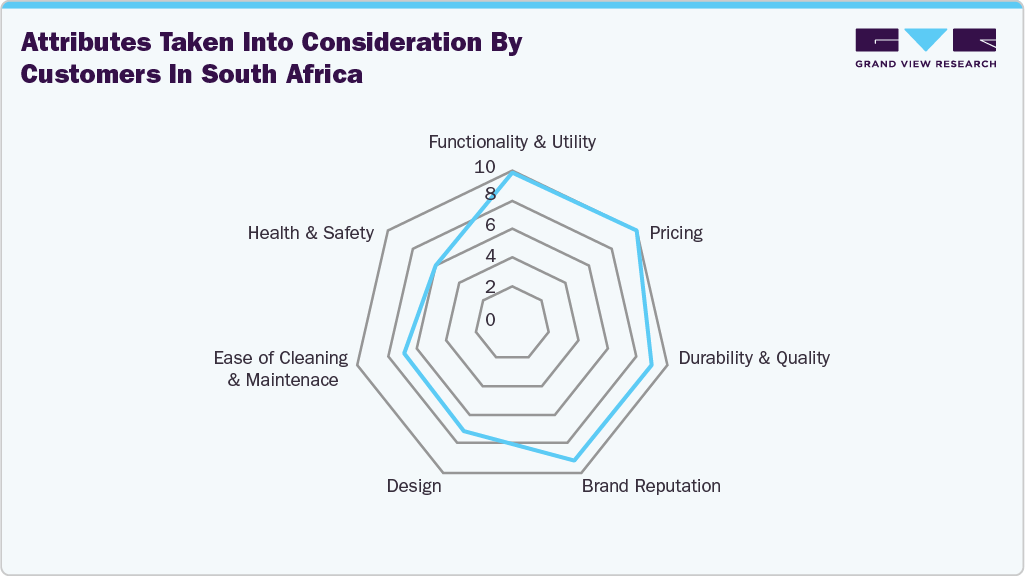
In South Africa, the kitchenware market is shaped by diverse consumer demographics, each displaying unique preferences based on income, age, lifestyle, and cultural influences. Middle- to high-income urban households, particularly in cities like Johannesburg, Cape Town, and Durban, demonstrate a strong preference for premium and branded kitchenware. These consumers often seek modern, functional, and aesthetic products such as non-stick cookware, ceramic and stainless-steel utensils, and smart kitchen appliances. Many among this group are influenced by social media, international cooking trends, and health-conscious lifestyles, prompting demand for PTFE-free and induction-compatible cookware. Young professionals and dual-income households prefer space-saving, multifunctional kitchen tools due to limited kitchen spaces and a fast-paced lifestyle.
 To learn more about this report, Download Free Sample Report
 Consumer preferences also differ based on age group. Younger consumers aged 25-40 are more experimental and tech-savvy, inclined toward modern kitchen gadgets and globally trending designs. Older consumers, especially those over 50, remain loyal to familiar and time-tested brands or products with high utility. Female consumers still the primary kitchen decision-makers in many households, often prioritize convenience, ease of cleaning, and time-saving functionality. Meanwhile, the increasing participation of men in cooking due to lifestyle shifts is creating a niche demand for BBQ tools, knife sets, and masculine kitchen gadgets. Overall, the South Africa kitchenware industry is becoming more segmented, driven by urbanization, rising incomes, and evolving cooking behaviors across consumer demographics.
Product Insights
Tableware accounted for a revenue share of about 55.58% of the South Africa kitchenware market in 2024due to a combination of evolving consumer lifestyles, increased frequency of home dining, and a strong emphasis on aesthetics and presentation. As more consumers hosted at home post-pandemic, the demand for elegant, versatile, and functional tableware surged. Social media trends have further fueled this shift, with consumers prioritizing visually appealing dinner sets, serveware, and cutlery to enhance the dining experience.
Additionally, the rise in online food content and cooking shows inspired people to replicate restaurant-style plating at home. Retailers responded by expanding their premium and designer tableware offerings. For instance, in August 2024, Sur La Table, a globally renowned luxury kitchenware brand, launched in South Africa through @home. The curated collection includes handmade glassware, bistro dinnerware, acacia boards, luxury textiles, and high-quality cookware and cast iron ranges, blending French-inspired elegance with functionality for discerning South African home entertainers.
Demand for cookware is projected to rise at a CAGR of 7.8% from 2025 to 2033 in the South Africa kitchenware industry. The ongoing trend of home cooking, reinforced by rising food costs and increased health consciousness, is encouraging consumers to prepare meals from scratch more frequently. As a result, there is growing interest in high-performance, durable, and non-toxic cookware that supports healthy cooking practices. Younger consumers, particularly Millennials and Gen Z, are increasingly embracing cooking as a hobby and creative outlet, driving demand for versatile and modern cookware like non-stick pans, induction-compatible pots, and multi-purpose skillets.
Moreover, the integration of technology, such as smart cookware that monitors temperature or connects to recipe apps, is attracting tech-savvy users. Sustainability is another key factor, with rising demand for eco-friendly cookware made from recycled metals or with ceramic coatings free from harmful chemicals like PFOA or PTFE.
Application Insights
Kitchenware used for residential applications accounted for the revenue share of about 69.26% in South Africa, owing to the growing trend of home cooking, increased meal preparation frequency, and rising interest in culinary experimentation. Factors such as hybrid work models, inflation-driven dining-out reductions, and social media influence have encouraged consumers to invest more in quality kitchen tools for everyday use. Additionally, the surge in home improvement activities and preference for aesthetically pleasing, multifunctional kitchenware has further boosted residential demand across all age groups.
Kitchenware used for commercial applications is estimated to grow at a CAGR of 7.7% over the forecast period. The expansion of the hospitality, foodservice, and catering industries is primarily driving the market growth across the country. As restaurants, cafés, and hotels increasingly focus on enhancing operational efficiency and dining experiences, there is a rising demand for durable, high-capacity, and professional-grade kitchenware. Additionally, the growth of dark kitchens, food delivery services, and gourmet catering businesses is fueling investments in specialized cookware and utensils designed for high-volume, consistent performance in commercial settings.
Distribution Channel Insights
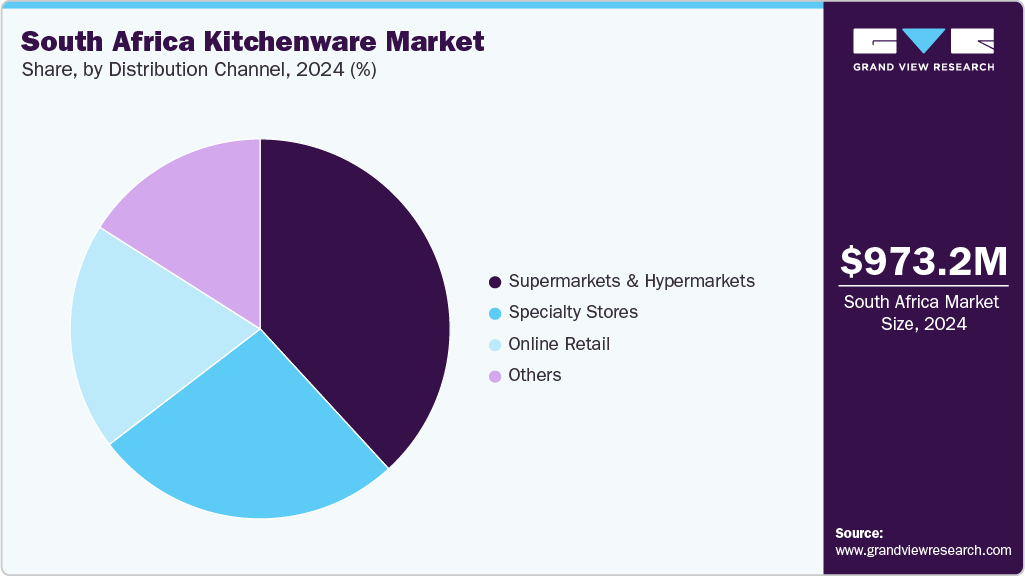
Sale of kitchenware through supermarkets and hypermarkets accounted for a revenue share of about 38.18% in 2024. Consumers often choose supermarkets and hypermarkets for kitchenware purchases due to their convenience, wide product selection, and competitive pricing. These one-stop retail destinations allow shoppers to buy groceries and household items in a single trip, saving time and effort. The ability to see, touch, and compare products in person and assistance from in-store staff add to the appeal of physical retail. These stores cater to diverse budgets by offering everything from basic kitchen tools to premium cookware, often accompanied by seasonal deals, bundle offers, and loyalty rewards.
 To learn more about this report, Download Free Sample Report
 Sale of kitchenware through online retail is expected to grow at a CAGR of 8.0% from 2025 to 2033. Online shopping allows customers to browse and buy anytime, making it especially appealing for busy individuals or those in remote locations. The availability of multiple brands across various price points, exclusive discounts, flash sales, and festive deals appeals to cost-conscious shoppers. Added benefits such as easy returns, doorstep delivery, and secure payment options have further boosted consumer confidence, particularly in the post-pandemic era.
Key South Africa Kitchenware Company Insights
The market includes a mix of established brands and emerging players. Leading companies are proactively adapting to changing trends in kitchenware and expanding their offerings to maintain and strengthen their market position.
-
Groupe SEB is a global leader in cookware and small household appliances, recognized for its diverse portfolio of over 45 brands, including Tefal, Moulinex, Krups, Rowenta, WMF, All-Clad, and Supor. With operations spanning more than 150 countries, the company sells over 344 million products annually, serving a broad and varied consumer base. Its offerings range from kitchen appliances such as coffee makers and blenders to cookware and home care products like vacuum cleaners, irons, and hair dryers.
-
Meyer International Holdings Limited is a prominent global manufacturer and distributor of cookware and kitchenware, with a strong presence in over 30 countries. Its extensive brand portfolio features well-known names such as Circulon, Anolon, Farberware, Rachael Ray, Ruffoni, and BonJour. Meyer offers various products, including tri-ply stainless steel cookware, nickel-free Japanese steel utensils, pre-seasoned cast iron pans, ceramic-coated cookware, and advanced nonstick solutions.
Key South Africa Kitchenware Companies:
- Le Creuset
- Newell Brands
- Groupe SEB
- Meyer International Holdings Limited
- Tramontina
- The Vollrath Company, LLC
- Lifetime Brands
- Hamilton Beach Brands Holding Company
- Cuisinart
- OXO International, Ltd.
Three ways to get this report
Buy it, customize it, or ask a question.Ask an Analyst
Analyst response in 1 business day
- AccessReport author, directly
- Reply timeWithin 1 working day
- No sales callDirect answer only
- FormatEmail reply
- CostFree, no cost
Get the Full Report
What the study covers
- FormatsPDF · Excel · Dashboard
- Timeline2025–2033 annual, 2024 base
- Coverage20+ countries, 5 regions
- Companies10+ key players profiled
Customize the Report
20% free customization
- IncludeCountries, segments, points
- TailorTo your product definition
- ExtendDeeper competitor detail
- OrA fully bespoke study
- Turnaround5–10 working days
Recent Developments
-
In May 2025, Ener‑G‑Africa recently launched a 3,200 m² factory in Paarl dedicated to manufacturing clean-burning, fuel-efficient biomass stoves and stainless‑steel cookware. Built with local materials, the facility creates jobs (100-150 employees) and serves both domestic and regional markets. This initiative underscores a mission to promote healthy, eco‑friendly cooking solutions across Africa.
-
In 2024, Continental Tableware (formerly Continental China) partnered with Woolworths Cafés, supplying premium locally manufactured crockery across all Woolies Café outlets in South Africa. The collaboration blends South African craftsmanship with Woolworths’ elevated dining experience, providing stylish, durable tableware that enhances café menus from morning coffees to full meals.
South Africa Kitchenware Market Report Scope
Report Attribute
Details
Market size value in 2025
USD 1,031.5 million
Revenue forecast in 2033
USD 1,809.3 million
Growth rate
CAGR of 7.3% from 2025 to 2033
Actual data
2021 - 2024
Forecast period
2025 - 2033
Quantitative units
Revenue in USD million, and CAGR from 2025 to 2033
Report coverage
Revenue forecast, company ranking, competitive landscape, growth factors, and trends
Segments covered
Product, application, and distribution channel
Country scope
South Africa
Key companies profiled
Le Creuset; Newell Brands; Groupe SEB; Meyer International Holdings Limited; Tramontina; The Vollrath Company, LLC; Lifetime Brands; Hamilton Beach Brands Holding Company; Cuisinart; OXO International, Ltd.
Customization
Free report customization (equivalent up to 8 analysts working days) with purchase. Addition or alteration to country, regional & segment scope.
Pricing and purchase options
Avail customized purchase options to meet your exact research needs. Explore purchase options
South Africa Kitchenware Market Report Segmentation
This report forecasts revenue growth at the country level and provides an analysis of the latest industry trends and opportunities in each of the sub-segments from 2021 to 2033. For this study, Grand View Research has segmented the South Africa kitchenware market report based on product, application, and distribution channel:
-
Product Outlook (Revenue, USD Million, 2021 - 2033)
-
Cookware
-
Pots & Pan
-
Pressure Cooker
-
Microware Cookware
-
-
Bakeware
-
Tins & Trays
-
Cups
-
Molds
-
Pans & Dishes
-
Rolling Pin
-
Others
-
-
Tableware
-
Dinnerware
-
Flatware
-
Stemware
-
-
Others
-
Cooking Racks
-
Cooking Tools
-
-
-
Application Outlook (Revenue, USD Million, 2021 - 2033)
-
Residential
-
Commercial
-
-
Distribution Channel Outlook (Revenue, USD Million, 2021 - 2033)
-
Supermarkets & Hypermarkets
-
Specialty Stores
-
Online Retail
-
Others
-
Frequently Asked Questions About This Report
The South Africa kitchenware market was estimated at USD 973.2 million in 2024 and is expected to reach USD 1,031.5 million in 2025.
The South Africa kitchenware market is expected to grow at a compound annual growth rate of 7.3% from 2025 to 2033 to reach USD 1,809.3 million by 2033.
Tableware products accounted for the largest share of about 55.58% of South Africa kitchenware market in 2024. This demand is fueled by rising urbanization, increasing middle-class population, and growing dining-out culture, which has driven demand for aesthetically appealing and durable tableware.
Some of the key players in the South Africa kitchenware market is Le Creuset; Newell Brands; Groupe SEB; Meyer International Holdings Limited; Tramontina; The Vollrath Company, LLC; Lifetime Brands; Hamilton Beach Brands Holding Company; Cuisinart; OXO International, Ltd.
The South Africa kitchenware market is driven by rising disposable incomes and urbanization, which expanded the middle-class demand for quality and stylish products. A diversified culinary culture and growing home cooking trends increased interest in versatile kitchen tools.
About the Author(s)
Homecare & Decor Research Team
Consumer Goods · Homecare & DecorThis report was authored by the homecare & decor research team at Grand View Research - comprising two research analysts, one senior research analyst, and one industry expert - with specialized expertise in the homecare & decor segment of the consumer goods industry. All findings are based on proprietary consumer goods databases, executive interviews, and regulatory analysis, subject to internal peer review prior to publication.
Last Updated:
Speak to Analyst -

Customize this report to your needs - add regions, segments, or data points, with 20% free customization.
Or view our licence options:


ISO 9001:2015 & 27001:2022 Certified
We are GDPR and CCPA compliant! Your transaction & personal information is safe and secure. For more details, please read our privacy policy.


